logo elektroda
logo elektroda
X
logo elektroda

[Solved] Dell N5110 Laptop Overheating & Fan Constantly Running: Causes & Solutions (Max 90 chars)

Maniutek2233 6627 12
ADVERTISEMENT
Treść została przetłumaczona polish » english Zobacz oryginalną wersję tematu
  • #1 20443015
    Maniutek2233
    Level 5  
    Posts: 6
    Rate: 1
    Hello. For a long time I defended myself from registering on the electrode, but I will finally take a chance :)
    As the topic is not closed and archaeologists have dug it up, let me ask a question. I have a grandfather Dell N5110 and from old age it heats up incredibly and at the same time lingers a bit. I change the paste regularly and it doesn't see much dust either. Cooling is also not the worst because you can cook eggs behind the fan, so I think the efficiency is ok (I can be wrong of course, I hope that someone will correct me). Therefore, can anyone suggest what could be the cause of boiling procka and graphics? And what can possibly be done about it? I will add that there were flooding that I later cleaned myself (I'm not an outstanding specialist but I tried my best). I would like to skip the suggestions of changing the laptop for a new one :) Same with carrying to service, the way back and forth will be more expensive than the patient :) . Also any ideas would be welcome. Greetings to all readers :)


    ----
    Taken from the topic: Laptop fan keeps running, why?
    by dt1 on 17 Feb 2023 09:45
  • ADVERTISEMENT
  • Helpful post
    #2 20443122
    hindoos
    Level 36  
    Posts: 3637
    Help: 286
    Rate: 652
    And does it have a reason to run at elevated speeds? What is the load on the CPU?
  • Helpful post
    #3 20443142
    gbksiazczak
    Level 31  
    Posts: 1459
    Help: 165
    Rate: 317
    There are several diagnostic tools
    - that is, the software looks at the hardware,
    - you need to use one of them, because it may turn out
    it may turn out that in the background "grandpa is carrying unnecessary weight"
    and has reason to get hot, even sweaty.
  • #4 20443193
    Maniutek2233
    Level 5  
    Posts: 6
    Rate: 1
    Thanks for the quick response. Firstly, I wanted to see if anyone would take up the subject:) . I will try at the weekend to get the software to communicate with the hardware. Can you suggest anything? Is the data from hwmonitor enough or rather occt? Or something else? My grandfather will be grateful if he lives a little longer:) I also apologise in advance for some of the strange and trivial questions that may arise on my part in the future.
    Regards.
  • ADVERTISEMENT
  • Helpful post
    #5 20443491
    crux
    Level 12  
    Posts: 50
    Help: 3
    Rate: 20
    You have a basic diagnostic tool built into Windows. Turn on the Task Manager and in the Processes tab, check which application is putting a high load on the CPU. If you change the paste regularly and the cooling system is in working order, I bet some process in the background.
    In the Performance tab, check the current CPU clocking, whether it is constant or fluctuates smoothly depending on the load. If the processor is running at a high speed all the time, it is either because of an application or, for example, in the battery settings you have set Top performance instead of Top performance (description from Windows 10).
  • #6 20444503
    Maniutek2233
    Level 5  
    Posts: 6
    Rate: 1
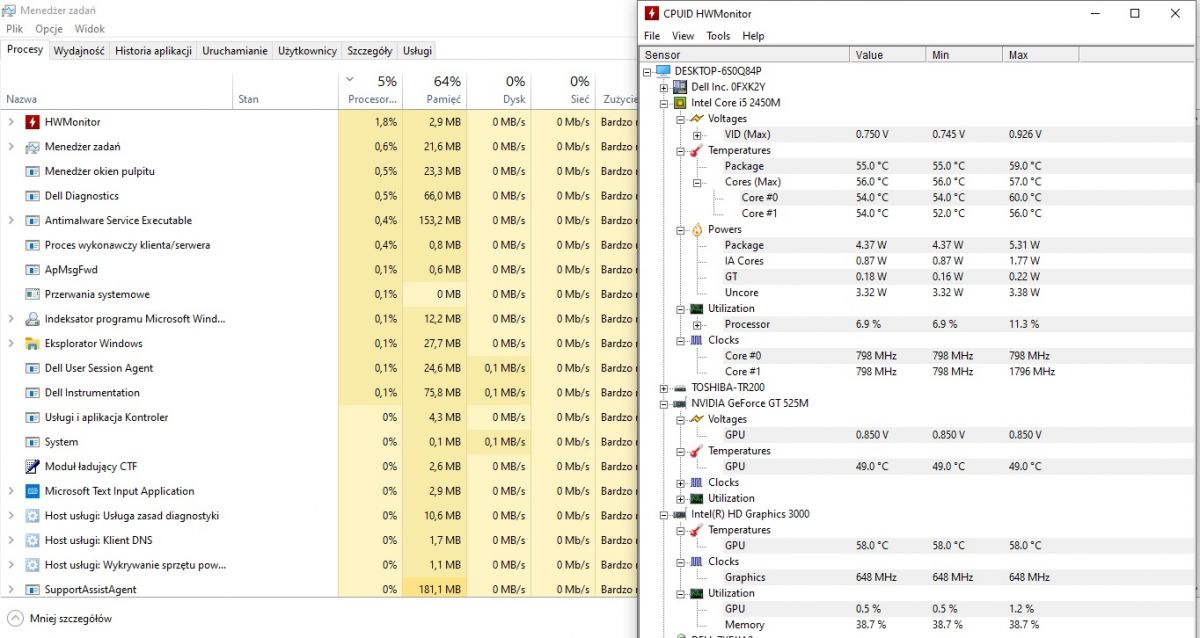
    Hello. First, I should start with the hardware configuration I guess :) Windows is tenth, 4Gb RAM, the rest as in the attached picture. The battery is basically dead, although it shows 100% so grandpa is running on the power adapter. When unplugged, it crashes like a landline :)
    If it works, I'll make a new one for it.

    Dell N5110 Laptop Overheating & Fan Constantly Running: Causes & Solutions (Max 90 chars)
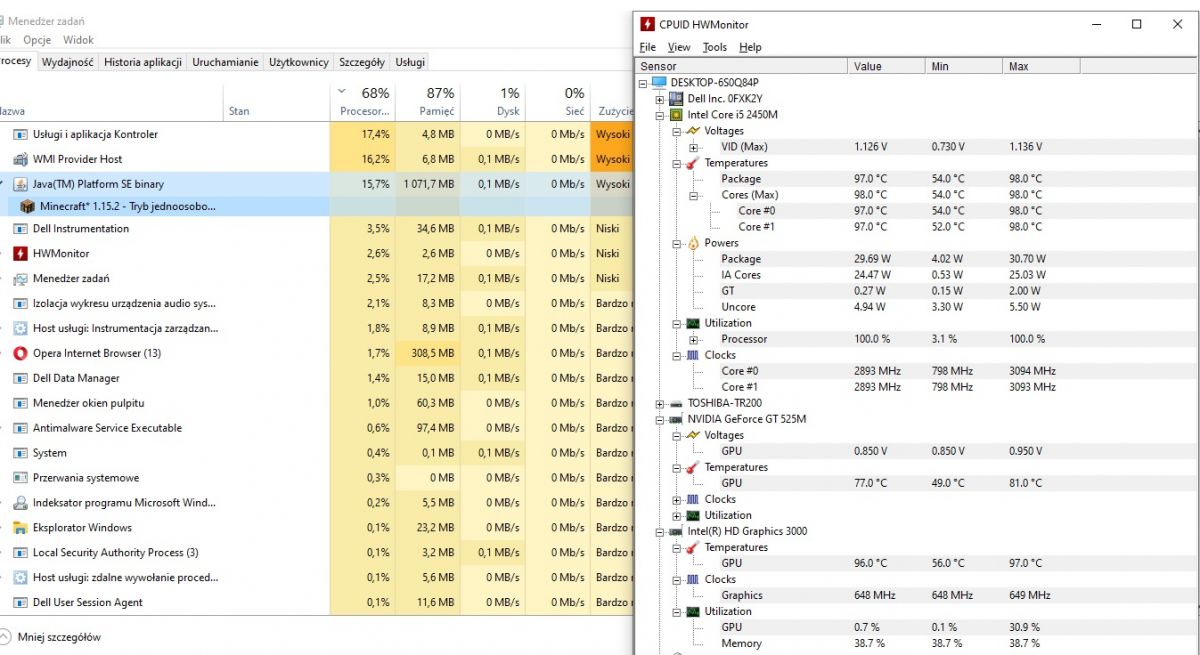
    This screenshot is taken calmly, without load. And now, turning on anything, e.g. Opera, the load increases to the max, crashes, loads for a good half a minute and then returns to normal.
    I changed the power plan to balanced, because the processor was clocked at max, now it changes the frequency smoothly. Unfortunately, when you turn on any game (Minecraft here), everything immediately increases to the max, the fan almost jumps out of the housing and the temperature is still 95-98 degrees.
    Dell N5110 Laptop Overheating & Fan Constantly Running: Causes & Solutions (Max 90 chars)

    I am a bit puzzled by the fact that some processes are multiplied on the list several or a dozen times (you can see it well in the "details" tab), such as opera, conhost.exe, svchost.exe (dozens of times) but on the desktop I have similar, so maybe it has to be.
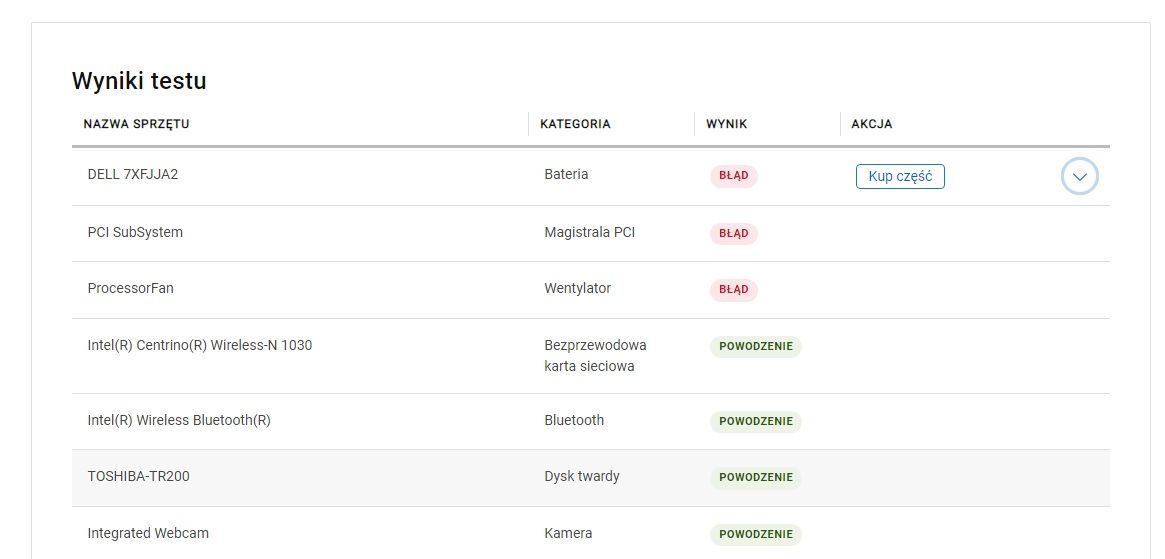
    One more thing. Yesterday I also did a quick diagnosis on the Dell website and here's what came out:
    Dell N5110 Laptop Overheating & Fan Constantly Running: Causes & Solutions (Max 90 chars)

    While the battery is dead and counterfeit and the fan in the next full test was ok, I'm wondering about the PCI bus error.
    Regards.
  • ADVERTISEMENT
  • Helpful post
    #7 20444798
    crux
    Level 12  
    Posts: 50
    Help: 3
    Rate: 20
    Looking at the temperatures and the size of the load at a given moment, the cooling system is clearly not working. The temperature rises, the processor slows down, protecting it from complete destruction, hence the hangs probably.
    If, as you wrote, you change the paste regularly and the fan runs at high speed, there is still insufficient contact between the processor and the heat sink / cooling system.
  • #8 20444824
    hindoos
    Level 36  
    Posts: 3637
    Help: 286
    Rate: 652
    On the other hand, the temperature emitted is supposedly high, if the discharge was weak, summer air would blow.
  • #9 20444854
    crux
    Level 12  
    Posts: 50
    Help: 3
    Rate: 20
    Actually, you may be right, so it depends on how subjectively high the air temperature is. Just recently I had the problem described here in my laptop after replacing the processor, fortunately I managed to solve it. During the load tests, of course, I checked by touch how hot the air that blows the fan is. According to the processor sensors, at 100% full load of 4 cores (after 3 minutes), after applying the -100mV offset, the temperature reached 88 degrees and the air was very warm, but not hot so that I couldn't hold my hand. So I guess it's a subjective thing. Maybe the author can help.
  • #10 20444897
    Maniutek2233
    Level 5  
    Posts: 6
    Rate: 1
    The method of applying the hand is very warm, but does not burn. I agree that it may be subjective. Later, I will open it and measure the temperatures at the entrance and exit.
  • #11 20458299
    Maniutek2233
    Level 5  
    Posts: 6
    Rate: 1
    crux wrote:
    Looking at the temperatures and the size of the load at a given moment, the cooling system is clearly not working. The temperature rises, the processor slows down, protecting it from complete destruction, hence the hangs probably.
    If, as you wrote, you change the paste regularly and the fan runs at high speed, there is still insufficient contact between the processor and the heat sink / cooling system.


    Looks like you're right. I measured the temperatures on the heat pipe at the processor and at the fan outlet. They are basically the same. But as the hw monitor shows 80 degrees on the processor, the meters on the heat pipe and fan show max 45. So you probably have to take care of putting the paste on correctly :)
    Thanks .
  • ADVERTISEMENT
  • Helpful post
    #12 20459529
    crux
    Level 12  
    Posts: 50
    Help: 3
    Rate: 20
    Maniutek2233 wrote:

    Looks like you're right. I measured the temperatures on the heat pipe at the processor and at the fan outlet. They are basically the same. But as the hw monitor shows 80 degrees on the processor, the meters on the heat pipe and fan show max 45. So you probably have to take care of putting the paste on correctly :)
    Thanks .


    >>> HERE you have a CPU temperature test depending on how the paste is applied, too little paste and with no paste at all. The last two cases, of course, with significant temperature increases. Also check that the pressure of the cooling system is correct. Good luck :)
  • #13 20540842
    Maniutek2233
    Level 5  
    Posts: 6
    Rate: 1
    Re-applying the paste helped a little, but the craze is not there. Well, it will come in handy for testing😁.

Topic summary

✨ The Dell N5110 laptop is experiencing overheating issues, with temperatures reaching 95-98 degrees Celsius during load, and the fan running constantly. Despite regular thermal paste replacement and minimal dust accumulation, the cooling system appears ineffective. Users suggest that insufficient contact between the CPU and heat sink may be a contributing factor. Temperature measurements indicate discrepancies between reported CPU temperatures and actual heat pipe readings, suggesting potential issues with thermal paste application and cooling pressure. Recommendations include verifying proper thermal paste application and ensuring adequate cooling system pressure.
Generated by the language model.

FAQ

TL;DR: Dell N5110 overheating? Under 100% load, temps can hit 88°C; "the temperature reached 88 degrees." Fix heatsink contact, repaste, ensure pressure, and check background CPU load in Task Manager. [Elektroda, crux, post #20444854] Why it matters: This FAQ helps Dell N5110 owners stop thermal throttling and constant-fan noise without replacing the laptop.

Quick Facts

Why does my Dell N5110 run hot and the fan never stops?

Two common causes are high background CPU load and poor heatsink contact. Check Task Manager for processes pinning the CPU, then address cooling. If paste is fresh but temps stay high, reseat the cooler to improve pressure. As one expert noted, "the cooling system is clearly not working" when contact is insufficient. [Elektroda, crux, post #20444798]

How do I check if software is causing the heat and noise?

Use Windows' built-in tools.
  1. Press Ctrl+Shift+Esc to open Task Manager.
  2. In Processes, sort by CPU to spot culprits.
  3. In Performance, watch CPU clock; switch power plan if it stays maxed. This quickly separates software load from hardware cooling issues. [Elektroda, crux, post #20443491]

What temperatures are typical vs overheating on the N5110?

In the thread, Minecraft pushed the system to 95–98°C, the fan ramped to maximum, and the laptop lagged. That range indicates thermal throttling risk and insufficient cooling headroom. Switching from a maximum-performance plan to Balanced helped the CPU clock scale with load instead of staying pinned. Aim to keep temps lower under gaming. [Elektroda, Maniutek2233, post #20444503]

How can I tell if thermal paste or heatsink pressure is the problem?

Compare CPU sensor temperature with heatpipe or exhaust temperature. A big delta, like CPU at ~80°C but heatpipe around 45°C, points to poor thermal interface or mounting pressure. That mismatch means heat isn’t transferring from the die into the heatpipe effectively. Reseat the heatsink and reapply paste correctly. [Elektroda, Maniutek2233, post #20458299]

What’s the right way to repaste this laptop?

Clean old paste thoroughly, apply a thin central dot, and tighten screws evenly to ensure firm, even pressure. Too little paste or uneven pressure can raise temperatures significantly. As advised, "check that the pressure of the cooling system is correct" after repasting to restore proper contact. [Elektroda, crux, post #20459529]

Should I change Windows power plan to reduce heat?

Yes. Switching from a max-performance plan to Balanced allows the CPU to downclock when idle. In the thread, this change stopped the CPU from running at maximum frequency constantly and made clocks scale smoothly with load. That reduces idle heat and fan noise while keeping performance on demand. [Elektroda, Maniutek2233, post #20444503]

Can undervolting help reduce temperatures on the N5110?

Undervolting can lower CPU voltage and heat. One user reported 88°C at 100% load after a −100 mV offset. This shows meaningful thermal relief without hardware changes. Apply changes conservatively and stress test for stability. As they noted, "the temperature reached 88 degrees" under sustained load. [Elektroda, crux, post #20444854]

My battery shows 100%, but it dies when unplugged. Is that related?

That symptom indicates a worn battery that cannot sustain load despite what the gauge reports. The system will run on the AC adapter, but the bad battery won’t fix thermal behavior. Replace the battery if you need mobility; focus on cooling for heat issues. [Elektroda, Maniutek2233, post #20444503]

Dell diagnostics flagged a PCI bus error. Could that cause overheating?

In the case discussed, the Dell fan test passed while a PCI bus error appeared separately. That suggests the fan hardware was fine, and thermal concerns pointed to interface or load issues instead. Prioritize CPU cooling checks and process load before chasing bus errors. [Elektroda, Maniutek2233, post #20444503]

I see many svchost.exe and conhost.exe entries. Is that the problem?

Multiple instances are normal in Windows 10. The key is whether any instance actually uses high CPU. Use Task Manager’s Processes view to identify heavy tasks and the Performance tab to confirm clock behavior. Duplicate entries alone don’t explain overheating. [Elektroda, crux, post #20443491]

The exhaust feels hot, but the machine still throttles. What does that mean?

Hot exhaust confirms heat is reaching the fins, yet throttling can persist from high load or imperfect contact. One report described air as "very warm, but not hot" even with elevated sensor temps. Verify paste and pressure, then reassess load and power plan. [Elektroda, crux, post #20444854]

Repasting helped only a little—what should I try next?

Reseat the heatsink and verify even mounting pressure across the CPU heatspreader. Adjust paste amount if coverage was thin or excessive. Small changes in application and clamp force can materially shift temperatures. Continue controlled tests after each change to isolate the improvement. [Elektroda, crux, post #20459529]
Generated by the language model.
ADVERTISEMENT