logo elektroda
logo elektroda
X
logo elektroda

Potential Impact of Slight Movement on 2.5 External HDD After Ejection

gamemaniaco1987 1617 23
Best answers

Can a slight bump or movement of a 2.5-inch external HDD after Windows safe eject damage the drive?

A slight hand bump that only moved the external 2.5-inch HDD on the table is unlikely to have damaged it; the bigger risk would be a real head-to-platter contact or some other obvious fault, not minor vibration [#21260351][#21354572] Windows “eject” does not cut power to the drive, it only interrupts communication, so the enclosure LED can stay on because the drive is still powered [#21258812] If the drive still shows the correct model/capacity and behaves normally, the safest way to confirm is to read SMART with a tool such as CrystalDiskInfo or another SMART utility [#21258607][#21258753][#21260351] If SMART cannot be read or the drive is no longer recognized correctly, then there may be a problem; otherwise the event probably did not cause damage [#21258607][#21258787]
Generated by the language model.
ADVERTISEMENT
  • #1 21258516
    gamemaniaco1987
    Level 2  
    Posts: 92
    Rate: 1
    I finished copying the files to my 2.5" external HDD. I ejected the HDD in Windows 10 but the enclosure case LED was on and then I went to pull the USB 3.0 cable but when the cable came out of the PC port my hand hit the side of the HDD case and the case moved slightly to the right of the table. Did this event cause damage to the HDD?

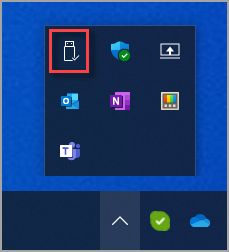
    Safe eject hardware icon in Windows 10.
  • ADVERTISEMENT
  • #2 21258607
    xury
    Automation specialist
    Posts: 7071
    Help: 876
    Rate: 1486
    And are you asking because it stopped working or what? Instead of a screen shot it would have been better to write what the drive is.

    Read up on SMART and check it out. You will know.
  • #3 21258670
    kaleron

    HDD and data recovery specialist
    Posts: 7022
    Help: 954
    Rate: 2309
    And how does the drive behave? If it was working correctly immediately before the event and no longer immediately after, then you probably have the answer.... The picture, yes, has no diagnostic value and you posted it unnecessarily. A description of the drive's behaviour would be more useful.
    Company Account:
    Kaleron sp. z o. o.
    Hirszfelda 4/18, Jelcz-Laskowice, 55-231 | Tel.: 713XXXXXX (Show) | Company Website: https://kaleron.pl
  • ADVERTISEMENT
  • ADVERTISEMENT
  • ADVERTISEMENT
  • #6 21258787
    kaleron

    HDD and data recovery specialist
    Posts: 7022
    Help: 954
    Rate: 2309
    If you have too much time, then
    pidar wrote:
    For comparison
    you can use a few hundred other programs...check the SMART with any one of them and post a screenshot on the forum. If you can manage to read the SMART at all, because in truth, I'm more looking forward to whether the drive is recognised and returns SMART at all, or not, rather than the SMART content itself.
    Company Account:
    Kaleron sp. z o. o.
    Hirszfelda 4/18, Jelcz-Laskowice, 55-231 | Tel.: 713XXXXXX (Show) | Company Website: https://kaleron.pl
  • #7 21258794
    gamemaniaco1987
    Level 2  
    Posts: 92
    Rate: 1
    The impact was with my hand on the side of the HDD case. It was on the table and moved to the left after the impact, but it didn't fall to the floor. I pulled the USB 3.0 cable from the PC and it came out immediately. My hand hit the case. I know that HDDs are fragile when impacted.

    After ejecting a 2.5" HDD in Windows 10, why does its LED stay on? Some people say that there are several models of the same brand and some models turn off after ejecting in Windows and other models do not turn off after ejecting in Windows.
  • #8 21258801
    Kasek21
    Level 43  
    Posts: 45501
    Help: 4962
    Rate: 3503
    Probably the drive is 100% functional and the question is only theoretical xD
  • #9 21258807
    artaa
    Level 43  
    Posts: 15050
    Help: 1811
    Rate: 1683
    Most portable drives are SMRs i.e. they are broken by design already from the factory ;-)
  • #10 21258812
    kaleron

    HDD and data recovery specialist
    Posts: 7022
    Help: 954
    Rate: 2309
    artaa wrote:
    SMR or are they broken by virtue of an idea already out of the factory
    It's a fact:)

    Added after 2 [hours] 47 [minutes]:

    gamemaniaco1987 wrote:
    Why, when you eject a 2.5-inch hard drive in Windows 10, its LED stays on?
    - because it gets power. "Ejecting" is not disconnecting power to the drive, it is interrupting communication with the device. Can you post how this drive is behaving? Specify its model and check the SMART (with any program - colleagues have already indicated their favourite tools, I don't want to add more to avoid unnecessary confusion). Because if your question is just theoretical, then yes - you could have damaged the drive this way. It's not difficult.
    Company Account:
    Kaleron sp. z o. o.
    Hirszfelda 4/18, Jelcz-Laskowice, 55-231 | Tel.: 713XXXXXX (Show) | Company Website: https://kaleron.pl
  • #12 21259984
    gamemaniaco1987
    Level 2  
    Posts: 92
    Rate: 1
    Why do some 2.5" HDDs not turn off after ejecting in Windows 10? Is this behavior common? Two people told me that they have several models of the same brand, some turn off, others do not, and this is a problem if when the hand hits the HDD case, the mechanical arm and the needle scratch the HDD. My HDD is very quiet. I only saw the LED turn on after ejecting in Windows 10. I have the models Seagate ST500LM030, WD WD10JPVX-08JC3T5, HGST HTS541010A99E662 enclosure cases USB 3.0 Orico 25pw1 and Kesu 2530 If Windows 10 eject fails and does not power off the HDD, is there any other protection against hand shocks on the side of the case not damage or generates bad sectors in hdd?
  • #13 21260351
    kaleron

    HDD and data recovery specialist
    Posts: 7022
    Help: 954
    Rate: 2309
    gamemaniaco1987 wrote:
    My HDD is very quiet
    anything else? It is recognised with the correct model and capacity? Can you see the logical structure? If you don't describe the behaviour of the drive in detail, it's anyone's guess. As there is no head knocking (there is no needle in hard drives - the needle is in the turntable), or other suspicious errors, it is not a mechanical failure, that is, it was not caused by you hitting it with your hand.
    gamemaniaco1987 wrote:
    ST500LM030
    , it's an SMR. It could have been harmed by an abrupt shutdown if it was storing something in Media Cache. The design in all respects fatal.
    gamemaniaco1987 wrote:
    is there any other handguard
    - yes - be careful. Generally this is a good protection and with any other activity.
    Company Account:
    Kaleron sp. z o. o.
    Hirszfelda 4/18, Jelcz-Laskowice, 55-231 | Tel.: 713XXXXXX (Show) | Company Website: https://kaleron.pl
  • #14 21278392
    gamemaniaco1987
    Level 2  
    Posts: 92
    Rate: 1
    I have a 2.5" HDD USB 3.0 enclosure case. I ejected it in Windows 10 but kept the USB 3.0 cable connected to the PC and the case. Then my hand hit the side of the case. Will this shock cause friction between the read/write heads and the platters, scratching them?
    My 2.5" HDDs are 2013 models WD10JPVX-08JC3T5 and HGST HTS541010A99E662

    Old HDDs from 2013 have outdated firmware and an older processor. Will this impact the parking speed after ejecting in Windows 10 the 2.5" HDD USB3.0 enclosure case?
    My models are: WD10JPVX-08JC3T5 and HGST HTS541010A99E662
  • #15 21333497
    gamemaniaco1987
    Level 2  
    Posts: 92
    Rate: 1
    From what year approximately all 2.5" HDDs of any manufacturer and model added in their firmware the function to park the heads after Windows ejects "safely remove hardware"? 2.5" hdd enclosure case usb3.0
  • #16 21354331
    gamemaniaco1987
    Level 2  
    Posts: 92
    Rate: 1
    I have a Kesu 2530 and Orico 25PW1 USB3.0 enclosure case. I use Seagate ST500LM030 and WDC WD10JPVX-08JC3T5, APPLE HDD HTS541010A99E662 2.5" hard drives.

    In Windows 10 there is an eject function to safely remove hardware. When this function is executed, and the HDD case does not appear in Windows, for example "E:" even with the USB3.0 cable connected to the PC on/case.

    After all this happened, my hand hit the USB3.0 enclosure case and it moved on the table.

    Did this hit cause friction between the 2.5" HDD read/write heads and the magnetic platters, scratching them?
  • #17 21354336
    sanfran
    Network and Internet specialist
    Posts: 9787
    Help: 953
    Rate: 2945
    gamemaniaco1987 wrote:
    Why do some 2.5" hard drives not shut down when ejected in Windows 10?
    .
    Because Win10 doesn't disconnect power on the port. It is enough that the drive icon disappears from the resources and the light stops flashing. The drive is parked and ready to be unplugged.
  • #18 21354338
    gamemaniaco1987
    Level 2  
    Posts: 92
    Rate: 1
    >>21354336 2.5" HDD parks or does not park the heads after ejecting safely remove hardware in Windows, but keeping the USB 3.0 cable from the enclosure case USB 3.0 connected to the PC/enclosure after ejection? I use enclosure USB 3.0 and HDD 2.5".

    Or parking some cut power and physical disconnect drive?
  • #19 21354341
    butterfield21
    Level 8  
    Posts: 26
    Help: 2
    Rate: 3
    In fact, any movement of the case, even a minor one, can affect the hard drive. 2.5 drives are very sensitive, especially to micro-vibration, which can disrupt the precise positioning of the platters inside. Although an LED may not indicate any problem, a shock, even a very short one, can cause a momentary disruption in the rotation of the platters. This can, in the worst case scenario, lead to damage, so it is always worth being careful, especially with such small movements.
  • #20 21354344
    Ture11
    Level 39  
    Posts: 5406
    Help: 573
    Rate: 1116
    Generally, hard drives park the head when power is removed.

    2.5" drives are generally designed to be portable, so they also have an acceleration sensor - if the drive feels it is falling - it quickly parks the heads. If there is no power - it already has the heads parked too (this takes milliseconds, from the moment the power is removed).

    I won't answer your question precisely (because I don't know), but I guess you think the hard drive is more fragile than it is in practice.


    gamemaniaco1987 wrote:
    My 2.5" HDDs are 2013 models
    .

    I had a laptop in 2011 whose 2.5" drive notoriously software parked the head. This probably wore out the drive more than all the shaking. Nevertheless, despite the laptop tipping over several times, the drive never died.

    Added after 5 [minutes]: .

    butterfield21 wrote:
    microvibrations that can interfere with the precise positioning of the plates inside
    .

    Are you suggesting that the platers shift relative to each other during light vibration?

    I also had a drive that had a crooked platter bearing after a laptop crash. It rubbed against the head parking bracket on acceleration and you could see with the naked eye that the platters were not spinning evenly.... But the data somehow tried to read and 2GB of data survived.

    In general, it is worth buying a cheap used drive and checking under the computer what type of vibration will harm the drive. I once did such an experiment, dropping a working disk on a table or tapping it on the tabletop. It was unimpressive and continued to work. I do not recommend this if you have important data on it :D .
  • #21 21354348
    gamemaniaco1987
    Level 2  
    Posts: 92
    Rate: 1
    2.5" HDD parks or does not park the heads after ejecting safely remove hardware in Windows, but keeping the USB 3.0 cable from the enclosure case USB 3.0 connected to the PC/enclosure after ejection? I use enclosure USB 3.0 and HDD 2.5" laptop SATA. My models are: WD10JPVX-08JC3T5, HGST HTS541010A99E662, and ST500LM030.
  • #22 21354572
    kaleron

    HDD and data recovery specialist
    Posts: 7022
    Help: 954
    Rate: 2309
    butterfield21 wrote:
    microvibration, which can interfere with the precise placement of the plates inside.
    - to affect the placement of the plates, you need to apply a really big force. This is something you won't cause with more than a minor vibration or a free fall from the table. A much greater risk is to bring the heads into contact with the platter surfaces, which can damage both the surfaces and the heads themselves.
    Company Account:
    Kaleron sp. z o. o.
    Hirszfelda 4/18, Jelcz-Laskowice, 55-231 | Tel.: 713XXXXXX (Show) | Company Website: https://kaleron.pl
  • #23 21354580
    gamemaniaco1987
    Level 2  
    Posts: 92
    Rate: 1
    2.5" HDD parks or does not park heads after safe removal of hardware in Windows, but keeping USB 3.0 cable from USB 3.0 enclosure connected to PC/enclosure after ejection? I am using a USB 3.0 enclosure and a 2.5" SATA laptop HDD. My models are: WD10JPVX-08JC3T5, HGST HTS541010A99E662 and ST500LM030.
  • #24 21381864
    gamemaniaco1987
    Level 2  
    Posts: 92
    Rate: 1
    2.5" hdd parks heads only when disconnecting all usb power cables?

Topic summary

✨ The discussion revolves around the potential impact of minor physical movement on a 2.5" external HDD after it has been ejected in Windows 10. The original poster describes an incident where their hand accidentally hit the HDD case while disconnecting the USB 3.0 cable, raising concerns about possible damage to the drive. Participants suggest checking the drive's SMART status using various diagnostic tools to assess its health. They note that while 2.5" HDDs are sensitive to vibrations, the likelihood of damage from a slight movement is low, especially if the drive was functioning normally before the incident. The conversation also touches on the behavior of HDDs post-ejection, with some models not powering down despite being ejected, which could lead to concerns about mechanical impacts. Recommendations include ensuring proper ejection procedures and using tools to monitor drive health.
Generated by the language model.

FAQ

TL;DR: In under 30 seconds, you can verify a bumped 2.5-inch external HDD; as one expert put it, "ejecting is not disconnecting power". This FAQ is for Windows 10 USB 3.0 enclosure users who want to know whether a slight post-eject movement likely harmed the drive, what the LED means, and which checks matter first. [#21258812]

Why it matters: A small bump after safe eject is usually less important than whether the drive is still recognized correctly, exposes SMART, and shows no new read, partition, or detection problems.

Alternative What it tells you Best use after a bump
CrystalDiskInfo SMART health and model data Check whether the drive returns SMART at all
USBLogView Plug/eject event history Confirm Windows saw connection and safe removal events
Windows File Explorer Model, capacity, partitions visible in practice Verify the disk still mounts and shows its logical structure

Key insight: The thread’s strongest takeaway is simple: safe eject in Windows 10 usually stops communication, not USB power. If the LED stays on, that alone does not prove damage. [#21354336]

Quick Facts

  • The thread discusses three 2.5-inch SATA HDD models in USB 3.0 enclosures: Seagate ST500LM030, WD WD10JPVX-08JC3T5, and HGST HTS541010A99E662. [#21259984]
  • One technician states that capturing a full CrystalDiskInfo SMART screen from a working disk takes less than 30 seconds, making it the fastest first check after a minor shock. [#21258753]
  • A key distinction in Windows 10 is that safe eject can remove the drive letter, such as "E:", while the USB cable remains connected and the enclosure LED may stay on. [#21354331]
  • The thread explicitly identifies the Seagate ST500LM030 as an SMR drive and warns that abrupt shutdowns can matter more than a light hand bump. [#21260351]

1. Why does a 2.5-inch external HDD LED stay on after I eject it with Safely Remove Hardware in Windows 10?

Because Windows 10 safe eject does not necessarily cut USB power. In the thread, one reply states plainly that ejecting means interrupting communication with the device, not disconnecting power, so the LED can stay on while the drive is no longer mounted. Another post adds that the icon can disappear from Windows resources while the enclosure still remains powered through the USB 3.0 cable. [#21258812]

2. How can I tell whether a slight bump to a USB 3.0 external HDD enclosure after ejection actually damaged the drive?

Check behavior, not the LED. A useful test is: 1. reconnect the drive, 2. confirm the correct model and capacity appear, 3. read SMART and verify the logical structure is still visible. The thread repeatedly says the real question is whether the disk is recognized, returns SMART at all, and shows no symptoms such as missing partitions or unusual noises immediately after the bump. [#21260351]

3. What is SMART on a hard drive, and how do I check it with CrystalDiskInfo for an external USB HDD?

"SMART" is a drive-monitoring system that reports health and diagnostic attributes, including whether the device is recognized well enough to expose internal status data. To check it with CrystalDiskInfo, install the program, select the external HDD, and capture the full SMART screen. One poster says the whole procedure on a working disk takes less than 30 seconds. [#21258753]

4. What is SMR in drives like the Seagate ST500LM030, and why do people say it can be problematic?

"SMR" is a magnetic recording method that increases areal density by overlapping tracks, which can complicate write behavior and make some workloads less tolerant of interruptions. In the thread, the Seagate ST500LM030 is explicitly called an SMR model, and one expert says an abrupt shutdown can hurt it if the drive was still writing temporary data into Media Cache. [#21260351]

5. How do I check whether my external HDD is still recognized correctly after a shock, including model, capacity, partitions, and SMART data?

Verify four basics: correct model name, full capacity, visible logical structure, and readable SMART. One reply asks exactly for those checks, stressing that recognition with the right model and capacity matters more than theory. If the drive mounts normally, shows its partitions, and returns SMART, the thread treats that as a strong sign the slight impact did not cause an immediate mechanical failure. [#21260351]

6. What happens during Windows 10 safe eject for a USB 3.0 hard drive enclosure: does it stop communication, cut power, or park the heads?

In this thread, safe eject stops communication first, not USB power. One post states directly that Win10 does not disconnect power on the port, and another says the drive icon disappearing is enough for safe removal while the light may stop flashing. The discussion therefore separates three things: communication can stop, power can remain present, and parking behavior depends on the drive and enclosure rather than the LED alone. [#21354336]

7. Why do some 2.5-inch HDDs in USB 3.0 enclosures appear to spin down after ejecting in Windows 10 while others stay powered?

Because different drive-and-enclosure combinations behave differently after communication stops. The thread notes that some models from the same brand turn off after Windows eject, while others keep power and keep the LED on. It also states that this is not unusual, because safe eject in Windows 10 is not the same as removing power from the USB 3.0 enclosure. [#21258794]

8. What is Media Cache on an SMR hard drive, and how could an abrupt disconnect affect data integrity?

"Media Cache" is a temporary write area in an SMR hard drive that buffers data before it is reorganized onto the main recording zones, making interrupted writes a bigger risk than a light case bump. In the thread, one expert says the ST500LM030 could be harmed by abrupt shutdown if it was storing something in Media Cache at that moment. [#21260351]

9. CrystalDiskInfo vs USBLogView: which tool is better for diagnosing external HDD problems after unplugging or a minor impact?

CrystalDiskInfo is better for drive health, while USBLogView is better for USB event history. The thread recommends CrystalDiskInfo when you need SMART, model, and health visibility, but suggests USBLogView when you want to inspect plugging in and safe ejection behavior under Windows. Use CrystalDiskInfo first if you suspect damage; use USBLogView if you suspect an eject or reconnect sequence issue. [#21259474]

10. How do I safely remove a 2.5-inch SATA HDD in an Orico 25PW1 or Kesu 2530 enclosure to minimize the risk of bad sectors or head damage?

Use a simple three-step routine. 1. Finish all file copies and run Windows 10 Safely Remove Hardware. 2. Wait until the drive disappears from Windows resources, such as the E: entry. 3. Only then unplug the USB 3.0 cable or move the enclosure. The thread emphasizes that abrupt disconnect is the bigger concern, especially for the ST500LM030 SMR model, while careful handling remains the main practical protection against accidental bad sectors or head contact. [#21259984]

11. What symptoms should I look for after a minor hit to an external HDD case, such as clicking, missing partitions, slow detection, or SMART errors?

Look for incorrect detection, missing logical structure, inability to read SMART, or abnormal head noise. One reply says that if there is no head knocking and no suspicious errors, the issue is not a mechanical failure caused by the hand impact. Another repeated theme is that being recognized normally with the right model and capacity matters more than the bump itself. [#21260351]

12. How much shock can a 2.5-inch laptop HDD typically tolerate when it is idle, ejected, or still spinning inside a USB enclosure?

The thread does not give a measured shock rating in g, but it does give a practical boundary: a slight hand bump that only moved the enclosure on the table is treated as less dangerous than a real drop. One participant even describes a damaged drive that still attempted reads and another anecdote where about 2GB survived after a crash. The consistent warning is that contact between heads and platters is the real failure mode. [#21354572]

13. From what period did 2.5-inch HDD firmware commonly start parking heads automatically after Windows safe removal, if the USB cable remains connected?

The thread does not establish a universal start year. It only gives one dated clue: a poster had a laptop in 2011 whose 2.5-inch drive parked the head in software repeatedly, showing that automated parking behavior existed by at least 2011. Beyond that, the discussion does not prove a manufacturer-wide timeline for all 2.5-inch drives left connected through USB after safe eject. [#21354344]

14. How do older 2013 laptop drives like the WD10JPVX-08JC3T5 and HGST HTS541010A99E662 behave after eject in USB 3.0 enclosures compared with newer models?

The thread does not show a clear old-versus-new divide. The user identifies the WD10JPVX-08JC3T5 and HGST HTS541010A99E662 as 2013 models, but the replies focus on enclosure behavior, continued USB power, and whether the drive is recognized after eject. One response also notes that older drives already used automatic head parking behavior before 2013, so age alone does not explain whether an enclosure LED stays on. [#21278392]

15. What practical protections are available against accidental hand bumps to an external HDD enclosure besides just being careful?

The thread gives very few hardware protections beyond careful handling. One poster says the real safeguard is simply to be careful, and others suggest procedural protection instead: use safe eject, verify the drive disappears from Windows, and check SMART afterward. A separate reply mentions that some 2.5-inch portable drives include an acceleration sensor that can react quickly during a fall, but that still does not replace gentle handling on a desk. [#21354344]
Generated by the language model.
ADVERTISEMENT