



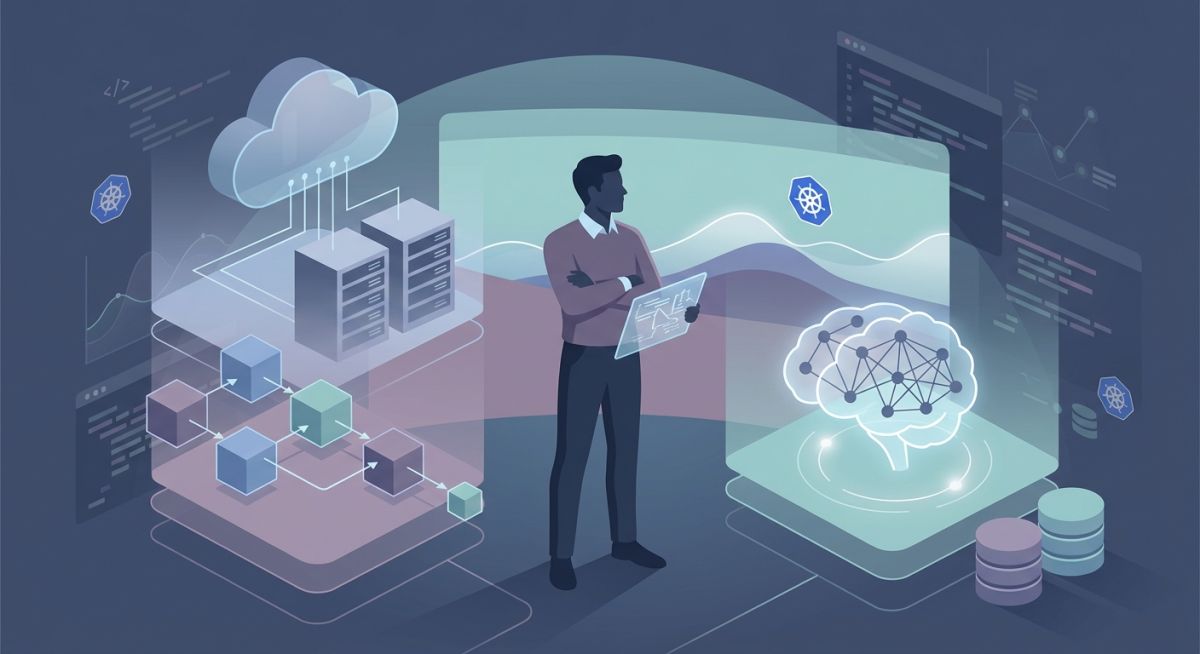
The IT job market is undergoing one of the most interesting transformations of recent years. What matters today is not trendy technologies, but the ability to deploy to production and maintain a working application. Let's analyse the job offers from Hacker News February 2026 with the GPT5.2 language model.
1. Highest demand: production engineers, not 'demo' engineers.
* Senior Backend Engineer
* Platform / Infrastructure Engineer
* SRE / DevOps
* Data Engineer
* AI Engineer (production)
Companies are massively looking for people who:
can maintain a system 24/7,
understand scale, reliability and cost,
know what breaks in the real world, not just in tutorials.
Conclusion: juniors are plentiful, but there is a shortage of people who have already broken something and know how to fix it.
2. AI? Yes - but only practical implementations and not pretty 'demos'
* LLM / AI Platform Engineers
* ML Engineers implementing models into production
* AI Ops / LLM Ops
* Engineers for agents and process automation
The biggest problem for companies today is not how to build a model, but:
* how to monitor hallucinations,
* how to test AI regressions,
* how to maintain costs and stability.
3. Infrastructure, infrastructure and infrastructure, preferably paid for
* Kubernetes
* Cloud + bare metal
* GPU, networking, storage
* Rust, Go, C++, Python (but systemic)
* Observability, SLO, incident response
Again, companies need people who understand what's going on underneath.
This is the most difficult path, but with the highest stakes.
4. Industries that recruit the fastest
Highest demand:
* LegalTech & GovTech (courts, compliance, regulation)
* Healthcare & Insurance
* FinTech (back-office, settlement, risk)
* Logistics & supply chain
* Industry, energy, materials, R&D
5. Fullstack? But not as before.
Today a fullstack is a person who:
* understands the backend, database and frontend,
* can independently prove the function to production,
* thinks productively, not just technically.
This includes:
* data models,
* migrations,
* performance,
* monitoring,
* UX in the context of business.
6. So where is it worth developing in 2026?
* Backend: Go, Python, TypeScript, Java
* Systems: Linux, networking, concurrency
* Data: PostgreSQL (advanced), SQL, pipelines
* AI: LLMs + evals + deployment
* Infra: Kubernetes, Terraformes, observability
* Soft skills: ownership, communication, systems thinking
Forgetting:
* frontend "UI only",
* cloud certifications alone without practice,
* learning AI without understanding data and systems.
Companies are increasingly asking:
"Will this person be able to independently prove the system, not just write code?"
Therefore, the most valued engineers today are those who:
* take responsibility,
* understand the product,
* are able to make technical decisions under uncertainty.
The best chances are for people who:
* go deeper than the tutorial or AI answers
* learn systems, not just frameworks,
* choose difficult but real production problems.
Source, global job listings Hacker News February 2026
https://news.ycombinator.com/item?id=46857488
My comment:
Generally to me the job market looks very tough. Incredibly high technology requirements and requiring 100 years of experience, basically having little to do with what was going on 5 years ago (simple programming or simple cloud solutions). It's as if someone has turned the job market maybe not 180 degrees, but at least 90. If you can't find a job in IT, don't worry, it's not your fault, it's the market that has turned. It's as if you have to learn most of it all over again, plus you have nothing to learn from, because most of the things companies require come from experience with production products preferably 'enterprise' style or infrastructure, how are you supposed to get that experience? This is where AI won't help, because it hasn't been trained on real business problems (which are often company secrets). At the same time, they will not hire you to get the required experience because they are looking for someone with a lot of experience. A vicious circle from which it is impossible to break out.
1. Highest demand: production engineers, not 'demo' engineers.
* Senior Backend Engineer
* Platform / Infrastructure Engineer
* SRE / DevOps
* Data Engineer
* AI Engineer (production)
Companies are massively looking for people who:
can maintain a system 24/7,
understand scale, reliability and cost,
know what breaks in the real world, not just in tutorials.
Conclusion: juniors are plentiful, but there is a shortage of people who have already broken something and know how to fix it.
2. AI? Yes - but only practical implementations and not pretty 'demos'
* LLM / AI Platform Engineers
* ML Engineers implementing models into production
* AI Ops / LLM Ops
* Engineers for agents and process automation
The biggest problem for companies today is not how to build a model, but:
* how to monitor hallucinations,
* how to test AI regressions,
* how to maintain costs and stability.
3. Infrastructure, infrastructure and infrastructure, preferably paid for
* Kubernetes
* Cloud + bare metal
* GPU, networking, storage
* Rust, Go, C++, Python (but systemic)
* Observability, SLO, incident response
Again, companies need people who understand what's going on underneath.
This is the most difficult path, but with the highest stakes.
4. Industries that recruit the fastest
Highest demand:
* LegalTech & GovTech (courts, compliance, regulation)
* Healthcare & Insurance
* FinTech (back-office, settlement, risk)
* Logistics & supply chain
* Industry, energy, materials, R&D
5. Fullstack? But not as before.
Today a fullstack is a person who:
* understands the backend, database and frontend,
* can independently prove the function to production,
* thinks productively, not just technically.
This includes:
* data models,
* migrations,
* performance,
* monitoring,
* UX in the context of business.
6. So where is it worth developing in 2026?
* Backend: Go, Python, TypeScript, Java
* Systems: Linux, networking, concurrency
* Data: PostgreSQL (advanced), SQL, pipelines
* AI: LLMs + evals + deployment
* Infra: Kubernetes, Terraformes, observability
* Soft skills: ownership, communication, systems thinking
Forgetting:
* frontend "UI only",
* cloud certifications alone without practice,
* learning AI without understanding data and systems.
Companies are increasingly asking:
"Will this person be able to independently prove the system, not just write code?"
Therefore, the most valued engineers today are those who:
* take responsibility,
* understand the product,
* are able to make technical decisions under uncertainty.
The best chances are for people who:
* go deeper than the tutorial or AI answers
* learn systems, not just frameworks,
* choose difficult but real production problems.
Source, global job listings Hacker News February 2026
https://news.ycombinator.com/item?id=46857488
My comment:
Generally to me the job market looks very tough. Incredibly high technology requirements and requiring 100 years of experience, basically having little to do with what was going on 5 years ago (simple programming or simple cloud solutions). It's as if someone has turned the job market maybe not 180 degrees, but at least 90. If you can't find a job in IT, don't worry, it's not your fault, it's the market that has turned. It's as if you have to learn most of it all over again, plus you have nothing to learn from, because most of the things companies require come from experience with production products preferably 'enterprise' style or infrastructure, how are you supposed to get that experience? This is where AI won't help, because it hasn't been trained on real business problems (which are often company secrets). At the same time, they will not hire you to get the required experience because they are looking for someone with a lot of experience. A vicious circle from which it is impossible to break out.
Cool? Ranking DIY