Microchip ATM90E26 is an integrated circuit dedicated to use in modern power consumption monitoring systems. It allows for easy integration with advanced monitoring systems of the power network within, e.g. our home. The use of such a system together with, for example, photovoltaic systems allows you to monitor the level of generated energy, and as a consequence - gives significant financial savings. The presented development module based on this system allows for the construction of advanced systems for monitoring the level of energy used, and thanks to the universal, hobbyist-friendly libraries, it can be easily integrated with, for example, Arduino, Particle or Raspberry Pi.
With the increasing consumption of electricity from the grid, it is necessary to closely monitor it in order to be able to plan, for example, a home budget in a sustainable way. Renewable energy home systems such as rooftop PV systems also partly help. However, it is good to integrate the PV installation management systems with the monitoring system of the amount of energy taken from the grid.
Today, energy transmission, distributed generation and storage systems are extremely complex. Only the use of programmable systems for their monitoring and control allows us to ensure a position appropriate to actually influence, in fact, the amount of our bills.
The presented module is dedicated to hobbyists who want to construct a precise meter of energy consumption from the network, which can be integrated e.g. with home automation systems. The use of such a system allows not only to track changes in the amount of energy consumed over time, but also to adjust our habits to the amount of available energy, which translates into a reduction in dependence on the power grid, especially if our house is equipped with e.g. a photovoltaic installation on the roof.
Due to the fact that the presented module is also dedicated to hobbyists, dedicated libraries and other tools are available that significantly simplify the design of this type of system.
Energy consumption monitoring As you know, the purchase cost is not equal to the total cost of using any device - apart from it, we have to bear the energy costs that will power it. Monitoring the energy consumption of home appliances can allow you to estimate the real operating costs of individual devices and, for example, persuade you to get rid of your old energy-consuming TV and buy a new, much more economical one.
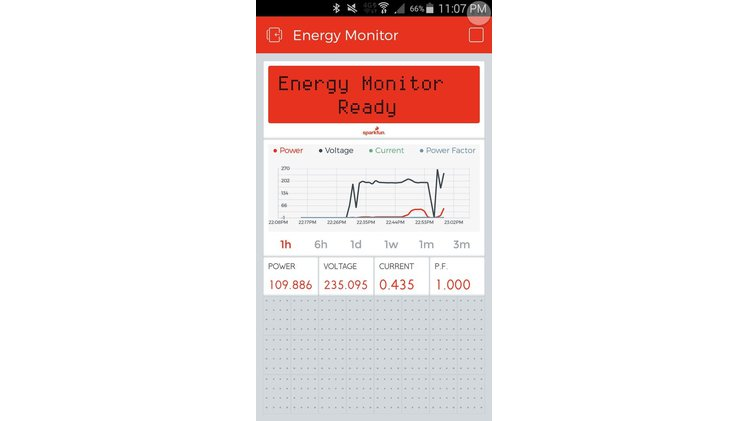
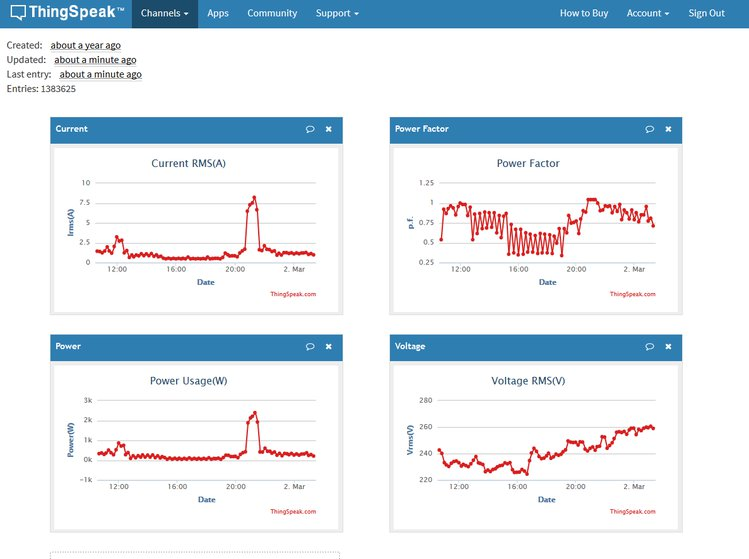
Login and monitoring The presented module allows for the monitoring and logging of energy consumption in the monitored network on an ongoing basis. It is very easy to configure the system with this module to log data in any way. We can connect this module e.g. via WiFi with data logging systems such as Thingspeak or Blynk.
The energy monitoring system has a built-in ESP8266 chip, which is used for communication via WiFi with applications such as the mentioned Thingspeak or Blynk. In addition, for example, Blynk allows for two-way communication, so you can remotely calibrate the energy meter.
As data on energy consumption can, for example, allow you to see when someone is in it and when it is empty, we would not like it to fall into the wrong hands. Therefore, instead of transmitting data to cloud services, you can store them on a local log, e.g. on a hard drive.
Basic features * CPU: ATM90E26,
* Communication capabilities: the system was tested with Wi-Fi, Bluetooth, LoRa and 3G,
* Measurement accuracy: the nominal accuracy of the system is 1: 5000, but the final accuracy of the device depends on the current transformers and transformer used for voltage measurement,
* Compatibility: Arduino, mbed and all other modules with SPI interface,
* Power consumption: dependent id of used controller and communication,
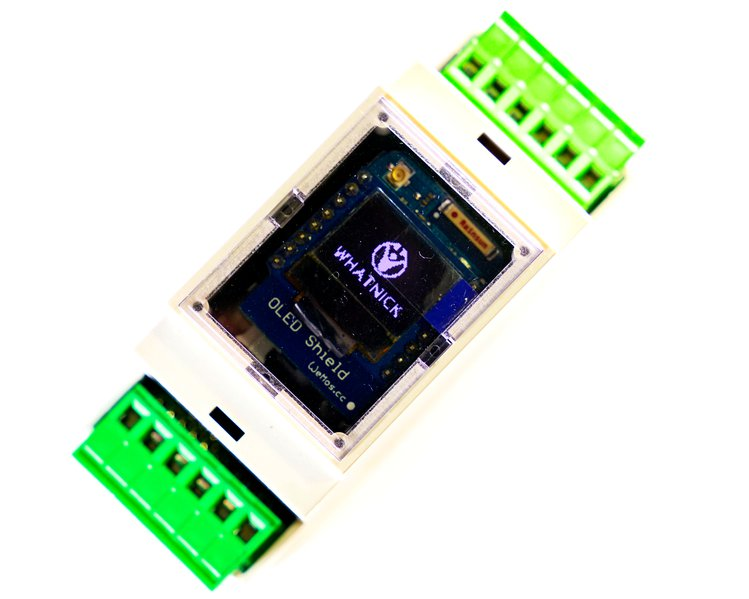
* Dimensions: depending on the module version; it is to be available, among others in a housing for a DIN rail weighing about 120 g.
The presented current consumption monitor measures not only the flowing current, but also the voltage in real time. Thanks to this, it accurately determines not only the power consumed at a given moment, but also, for example, the power factor. The AT90E26 samples the value of the voltage and flowing current with a frequency of 8 kHz and a resolution of 16 bits. Thanks to this, the RMS values of the flowing current can be calculated very precisely.
Open design The presented hardware and software project is fully open. Even the design of the DIN rail housing for this system will be opened as soon as it is finally ready. All source codes for Arduino are available on GitHub.
Flexible configuration The layout is very flexible - you can make your own modifications at each level. You can change both the software and hardware (even the processor). The project was created with amateurs in mind and does not require advanced skills except for soldering the basic SMD components. The smallest elements used are in size 0603.
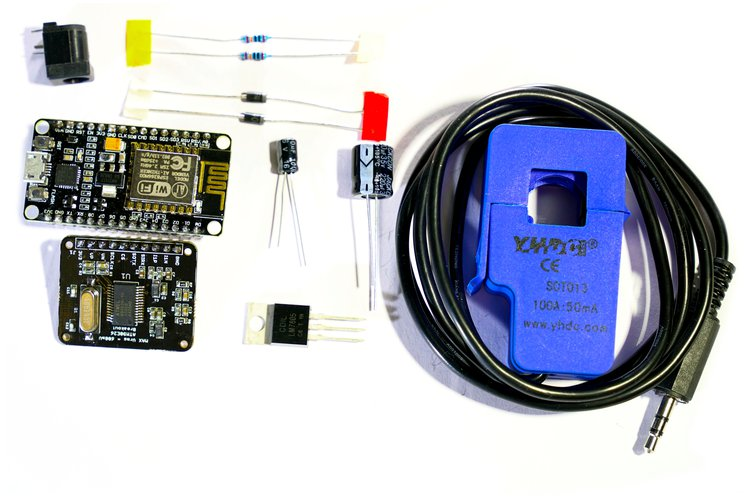
The content of the development kit offered as part of the crowdfunding campaign depends on the selected level of payment. In the basic sets, we will only get the system responsible for measuring the energy consumed - it must be combined with another microcontroller or module to control and log data. In the most extensive version, the entire complete system will be in a dedicated DIN rail housing.
Source:
https://www.crowdsupply.com/whatnick/atm90e26-energy-monitor-kits







Comments
This circuit is not very popular and the price of the dev kit is quite prohibitive. [Read more]
Here, the basic PCB with this chip is around $ 15 - probably pretty good [Read more]
ATM90E26 Devkit - Price $ 60-80 at the bottom of the page https://www.crowdsupply.com/whatnick/atm90e26-energy-monitor-kits unless I misread something. https://obrazki.elektroda.pl/4432426600_15... [Read more]
Yes, yes, I mean this module will be cheap: https://obrazki.elektroda.pl/1449928500_1504867324_thumb.jpg [Read more]
Such a current transformer works well only with the sinusoidal nature of the current ... in the case of a half-rectified signal, the error can be even 100% due to the inductance of the transformer its... [Read more]
Take a look at the LA 55P from LEM. I use it as a current probe for an oscilloscope. It measures both DC and AC and AC + DC [Read more]
This converter is based on the hall effect and therefore devoid of these drawbacks, which translates into a price 5x more than a conventional current transformer. [Read more]
Expensive and complicated, like most in DIY. Not better. + ESP if someone already needs wifi. [Read more]
And where does the phase shift give this counter? Electricity etc? In addition, there is also a system in this meter that covers only the housing ;-P [Read more]
But the factory one has no time recording or distance transmission. [Read more]