logo elektroda
logo elektroda
X
logo elektroda

Interesting story of the repair of the De-Ice Circuit Board Cessna Citation 560

acctr  10 2700 Cool? (+22)
📢 Listen (AI):

TL;DR

  • A de-ice control module from a Cessna Citation 560 arrived with a faulty 78M05 linear regulator and a burned 20 ƒ DALE resistor.
  • Without service diagrams, the resistor value was inferred by enlarging a photo of the same board sold on eBay for $12,000.
  • The repair replaced the regulator and resistor using careful measurements and professional soldering techniques on the damaged PCB.
  • The board was repaired physically, but it still required inspection, testing, and FAA/EASA sign-off before it could return to the aircraft.
  • Three FAA inspectors later visited the workshop to verify the module’s origin, and the shop refused to disclose customer data.
Generated by the language model.
In recent days, an interesting story of a certain repair has played out on the channel of the US-based service NorthridgeFix, which is based in Los Angeles.
Its author, Alex, regularly posts videos in which he demonstrates live the process of diagnosing and repairing damaged electronics. These videos are both educational and entertaining, documenting various cases involving the servicing of various devices.

This story is about the repair of a de-icing control module (De-Ice Circuit Board) from a $10 million Cessna Citation 560 aircraft. Alex received the board for repair with a faulty voltage regulator and a faulty resistor.
These are a 78M05 linear stabiliser and a 20 ƒ DALE resistor.
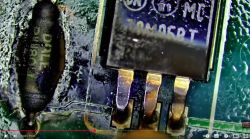
Close-up of damaged 78M05 voltage regulator and DALE 20Ω resistor on PCB

In the absence of service diagrams, he had to work out the value of the burnt resistor by enlarging a photo of the same board, which someone was selling on eBay for $12,000.
In the posted video, he demonstrated replacing the regulator and resistor, using a variety of professional techniques and tools for doing so.

He showed this in his first material, after whose publication he was met with a wave of criticism in the comments, accusing him of not being able to work on aerospace parts without FAA (Federal Aviation Administration) certification.
Noteworthy are the close-up photos of the electronics, where you can see what quality components are used in aviation, what the PCB looks like and how the author approached the purchase of parts (although he is not a certified Cessna electronics service technician, it is not everyone's cup of tea to buy a stabiliser for tens or hundreds of zloty). Also of interest is the damage on the board, including the burnt out laminate and how it was repaired (not sure if it complies or not with FAA standards). It looks as if the integrated voltage regulator failed, then a resistor acted as a fuse, but this is only one possible scenario.


Alex dispelled the myth surrounding allegations of working on aircraft electronics, explaining in the second video that anyone can physically repair such a board (even the aircraft owner), but the board absolutely cannot return to the aircraft until it has been inspected, tested and approved (signed off) by an FAA/EASA certified repairer or technician. This is the ultimate legal responsibility.
Alex completed the repair of the second component (resistor and voltage stabiliser), taking meticulous measurements, and then sent the board back to the customer, who is required to have it air certified.


This was followed by another video, perhaps the most surprising of all - it includes an account of a visit by three inspectors from the US FAA to his workshop :D
The inspectors visited to verify where the module from the Cessna he was repairing had come from, and to ensure that the part would not go back into the aircraft without proper certification.
The author received confirmation that, as a non-certified FAA technician, he was permitted to repair such motherboards. The key rule is that a repaired panel cannot be fitted to an aircraft without being signed off and certified by a qualified FAA technician.
The inspectors insisted that the workshop owner give them the name of the company or person who sent them the plate for repair, as they wanted to investigate whether this entity was selling uncertified parts as fully operational and safe. The workshop owner refused to disclose customer data, explaining that this is private information and its role is limited to repairs, not to check the legitimacy of the customer's business.
The FAA has expressed concern that people are prepared to risk the safety of expensive aircraft ($10 million) and people by buying uncertified parts for $2000-$3000, rather than certified ones for $15000-$20000.




About Author
acctr
acctr wrote 4505 posts with rating 1988 , helped 387 times. Been with us since 2022 year.

Comments

_ACeK_ 15 Oct 2025 08:55

:smile: Very interesting story. I once watched a video on the early days of the company Fairchild Semiconductor . One of its main sources of income was orders from the US military. The same chips sold... [Read more]

szeryf3 15 Oct 2025 14:35

So there is a market for aftermarket aircraft parts? And I thought there wasn't. I once saw a film about aftermarket parts for very expensive cars. And this field is developing very well. [Read more]

BANANvanDYK 15 Oct 2025 16:03

Daniel Rakowiecki encountered this situation twice. The first time with an airport radar, by which he was smeared in the local newspaper. The second time with a forklift controller, people claimed that... [Read more]

Citizen75 15 Oct 2025 16:51

Soon, servicing any device outside the manufacturer's service centre may end in a lawsuit. -> Link to information [Read more]

madamsz1 15 Oct 2025 18:20

And sometimes all the difference is in that $10,000 per stamp. I remember when the railway installed cameras on the level crossing. I look at them, they're expensive, they're like 5-6 thousand zlotys.... [Read more]

E8600 16 Oct 2025 10:15

Nowadays, when there are more and more programmable circuits, ensuring that even after correct diagnosis and repair, the equipment still does not work will be ubiquitous. If manufacturers cared mainly... [Read more]

BANANvanDYK 16 Oct 2025 15:21

I have more than once come across a note in the owner's manual that repairs can only be carried out by the manufacturer's service department. It is nice when the manufacturer and service is in Poland,... [Read more]

amator2 22 Oct 2025 12:59

In my opinion, the repair was not done properly. The charred laminate between the resistor leads was just flooded with soldermask without cleaning. I know 20 ohms is a small resistance, but it shouldn't... [Read more]

puchalak 23 Oct 2025 08:00

I agree. Charred laminate is often quite low impedance - it should be removed to a healthy, and sometimes even out and restored. But another issue - the lack of any analysis of why this happened. Measuring... [Read more]

CosteC 25 Oct 2025 21:06

It is really difficult to make a complex module that will work properly without complex calibration.... And why should they care about anything else? Is it communism to make the welfare of the public... [Read more]

FAQ

TL;DR: A Cessna 560 de‑ice board repair sparked debate: certified parts cost $15k–$20k vs $2k–$3k, and “anyone can physically repair such a board,” but only FAA/EASA can sign it off. [Elektroda, acctr, post #21720568]

Why it matters: This FAQ helps engineers and owners understand legal, technical, and quality pitfalls when repairing aviation electronics without certification—what’s allowed, what isn’t, and how to do safe triage.

Quick-Facts:

Quick Facts

What is a de‑ice control module on a Cessna Citation 560?

It is the control board that manages wing and surface de‑icing functions. In the discussed case, it contained a 78M05 regulator and a 20 Ω resistor that failed, affecting the module’s low‑voltage rail and protective path. [Elektroda, acctr, post #21720568]

Can I legally repair an aircraft circuit board without FAA certification?

Yes, you may perform the physical repair. However, the board cannot be installed back on an aircraft until an FAA/EASA‑certified technician inspects, tests, and signs it off. “Anyone can physically repair such a board,” but sign‑off is mandatory. [Elektroda, acctr, post #21720568]

Why did the FAA visit the repair shop in this story?

Three FAA inspectors verified the board’s provenance and emphasized that the module must not return to service without proper certification. They also sought the sender’s identity to check potential sales of uncertified parts as airworthy components. [Elektroda, acctr, post #21720568]

How much more expensive are certified aviation parts?

In this case, the cited spread was large: uncertified parts around $2,000–$3,000 versus certified parts around $15,000–$20,000. Buyers chasing savings risk safety and regulatory violations. That price gap drove much of the controversy. [Elektroda, acctr, post #21720568]

How was the burnt resistor value determined without a schematic?

The repairer enlarged photos of a matching board for sale on eBay and read the part markings. That visual reverse‑engineering guided selection of a 20 Ω DALE resistor as the replacement component. [Elektroda, acctr, post #21720568]

Is replacing a 78M05 regulator enough to fix such failures?

It can restore the 5 V rail, but root‑cause analysis is critical. A regulator failure may overheat series resistors acting like fuses. Measure downstream loads and inspect for carbonized laminate to prevent repeat faults. [Elektroda, acctr, post #21720568]

What’s the correct way to handle charred PCB laminate on safety‑critical boards?

Remove all carbonized material to healthy substrate, backfill with epoxy, re‑mask, and standoff‑mount heat‑stressed parts. Charred laminate can be conductive at low impedance and cause latent failures. [Elektroda, amator2, post #21728042]

What edge cases make a bench repair unsafe even if it powers on?

Low‑impedance carbon tracking, unapproved materials, or missing calibration can pass bench tests yet fail under vibration and temperature. “The potential consequence could be the death of people,” if systems aren’t validated in‑system. [Elektroda, puchalak, post #21728909]

Do aviation repairs require approved tools and materials?

Quality systems often expect controlled tools, certified solder, fluxes, cleaning agents, and strain‑relieved terminations. Using non‑approved items risks reliability and compliance shortfalls during certification review. [Elektroda, BANANvanDYK, post #21721132]

Is there really a market for aftermarket aircraft parts?

Yes, the thread discussion highlights an active aftermarket and the risks of uncertified components. Inspectors voiced concern over fitting cheaper parts to multi‑million‑dollar aircraft without proper documentation. [Elektroda, szeryf3, post #21721054]

3‑step: How did the YouTuber execute the repair?

  1. Identified failed parts (78M05 and 20 Ω resistor) and inferred specs from reference photos.
  2. Replaced components using pro bench techniques and measured rails.
  3. Returned the board to the customer for mandatory certification testing. [Elektroda, acctr, post #21720568]

Why do manufacturers resist third‑party or DIY repairs?

Posters argue it protects business, calibration integrity, and safety, especially with programmable or complex modules. One view: manufacturers prioritize their interests and avoid discounts on controlled parts. [Elektroda, CosteC, post #21731570]

Could a quick bench fix still violate return‑to‑service rules?

Yes. Even if the repair works electrically, it cannot return to an aircraft until an authorized person signs it off after inspection and tests. That legal step is non‑negotiable. [Elektroda, acctr, post #21720568]

What practical inspection should follow regulator and resistor replacement?

Verify 5 V regulation under load, check for excessive draw, inspect for heat damage, and assess any burnt laminate. Confirm no conductive residues remain before any certification attempt. [Elektroda, amator2, post #21728042]

What happens if tools or materials aren’t approved during repair?

Non‑approved tools, alloys, or fluxes can introduce stress, contamination, or flammability risks. Certification reviewers may reject the board, forcing rework or replacement. “Approved tools and materials” mitigate these risks. [Elektroda, BANANvanDYK, post #21721132]

Is posting about such repairs likely to draw regulator attention?

Yes. In the case described, public videos led to an FAA visit to verify sourcing and prevent uncertified parts from being installed. Transparency can invite oversight. [Elektroda, acctr, post #21720568]
Generated by the language model.
%}