The WEP 8858 portable hot air rework station, sold as a “plastic welder” or “100-650W digital soldering station,” is tested for motherboard SMD work.
Its temperature and blower are set separately, then outputs are logged with a MAX6675 probe and graphed at 100°C, 350°C, and 450°C.
Imported from China, it can cost under 100 PLN, and the station briefly claims 700 W before settling around 120 W during heating.
It can lift flash chips, coils, and QFN parts from a motherboard, but removal is slower than with stronger stations and even the cheap 858.
The 450°C setting barely outperforms 350°C in the sensor data, while blower changes show little measurable effect in these tests.
AI summary based on the discussion. May contain errors.
Here I will present the WEP 8858 portable hot air, also often advertised as a 'plastic welder' or as a '100-650W digital soldering station'. I will check how it handles the soldering of components from the motherboard and then try to measure its power consumption and the temperature reached and show this in the form of accessible graphs. I will do the tests for temperatures of 100 °C, 350 °C and 450 °C.
The WEP 8858 can be imported from China for even less than 100 PLN. In our country it will be a bit more expensive, I have even seen prices double.
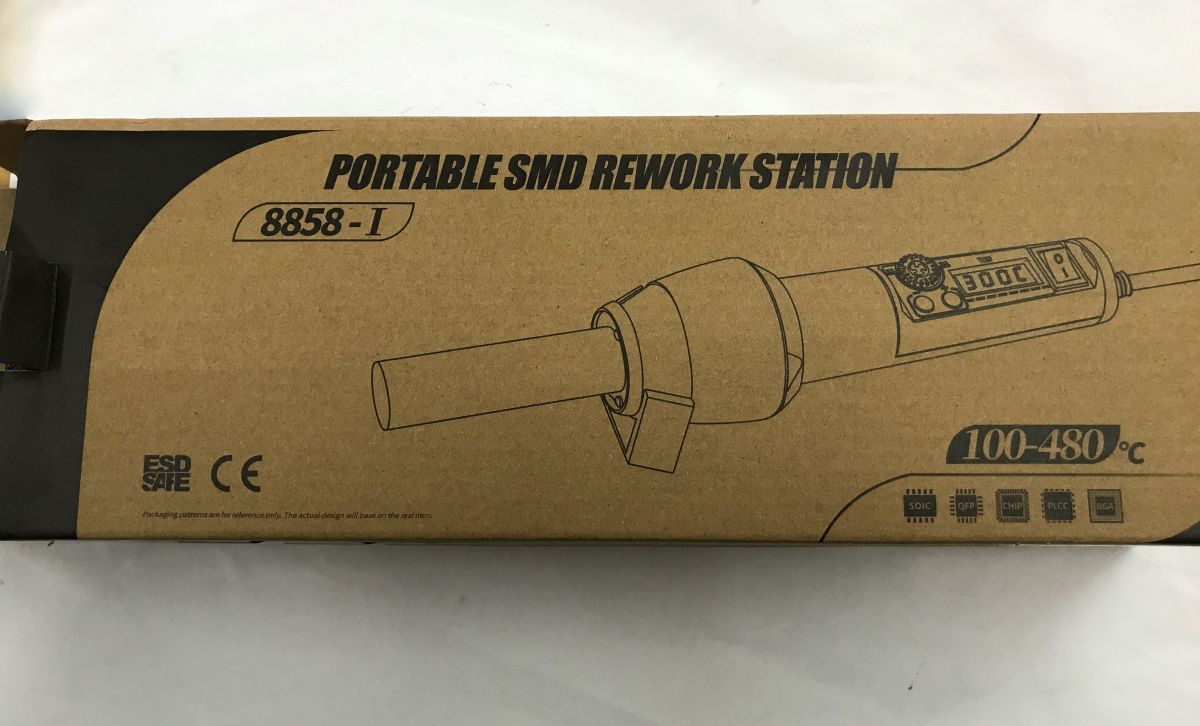
Set contents My copy is marked 8858-I - Portable SMD Rework Station. The information on the packaging does not suggest a 'plastic welder', but straightforward work in electronics with SMD components.
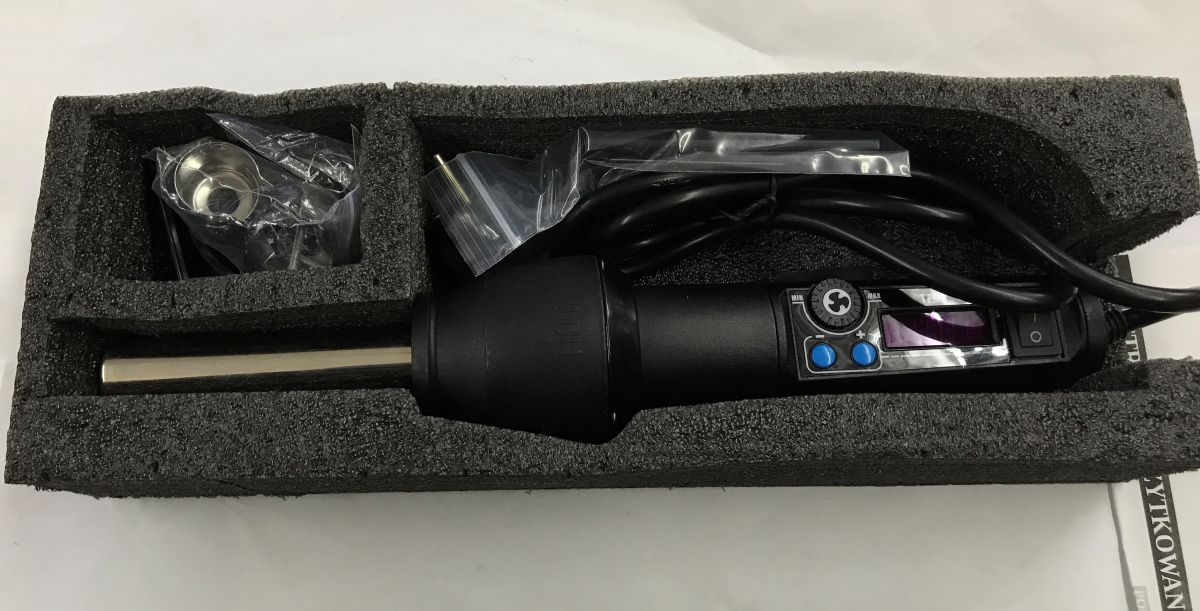
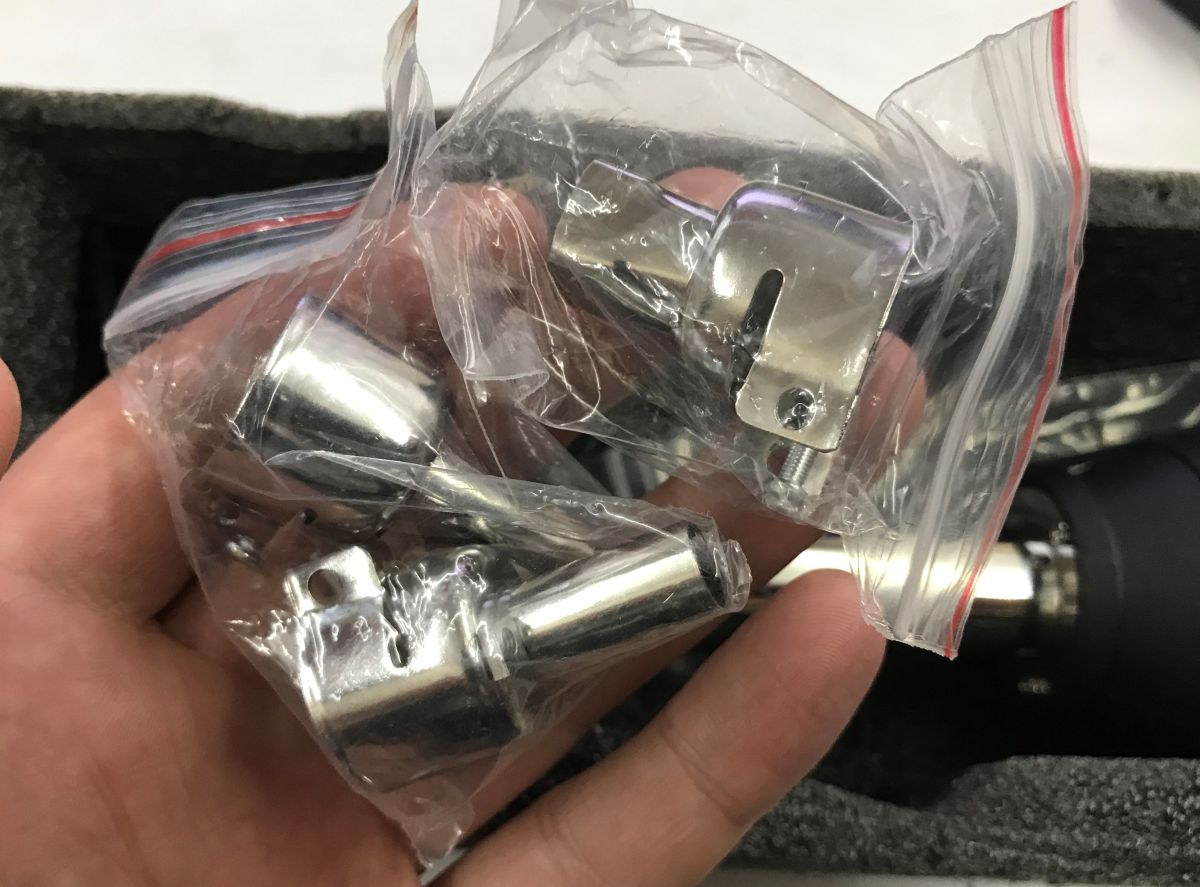
The unit is quite well protected for transport. In addition to the hot air itself, we get three nozzles - a 12mm x 12mm square one and 9mm and 7mm round ones. A stand is also included.
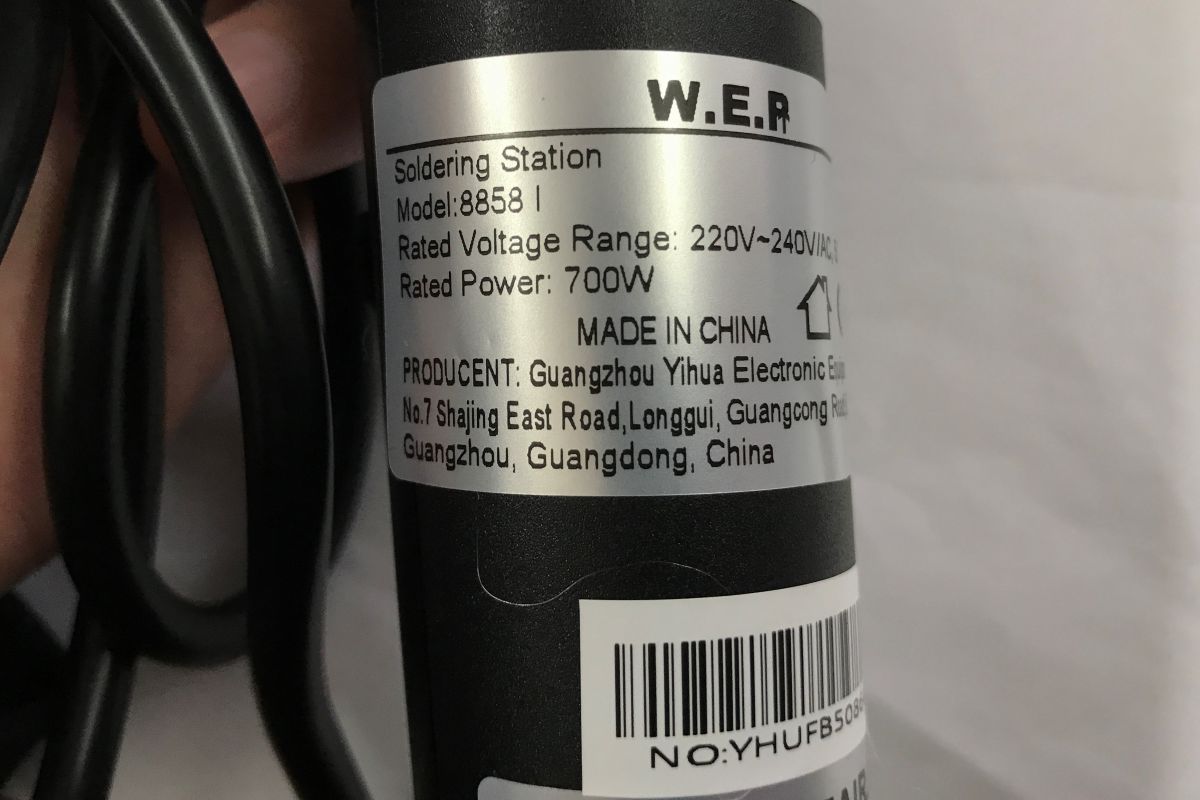
Nameplate:
The Polish-language manual mentions, among other things, calibration and replacement of the heating element. It is good that this has been provided for. I do not recommend buying disposable products.
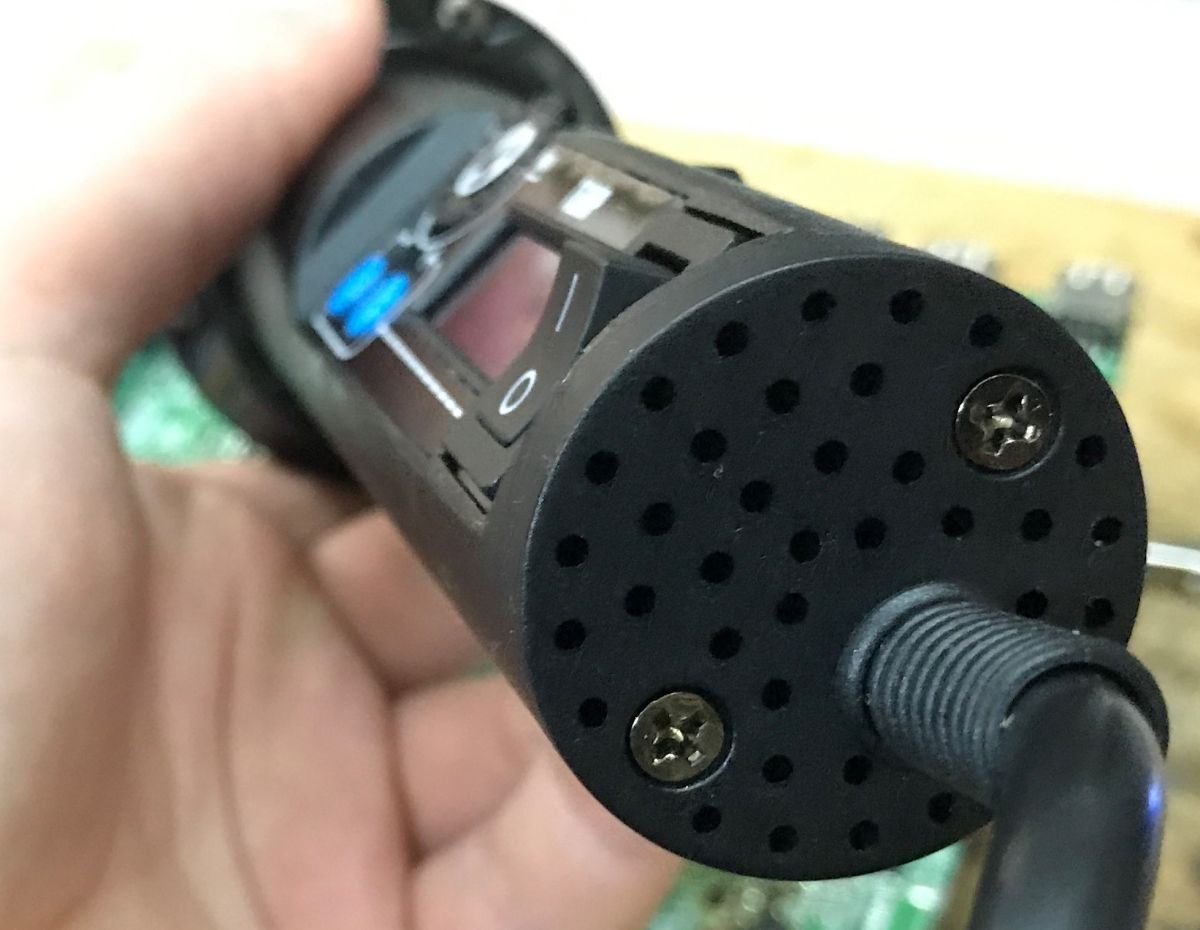
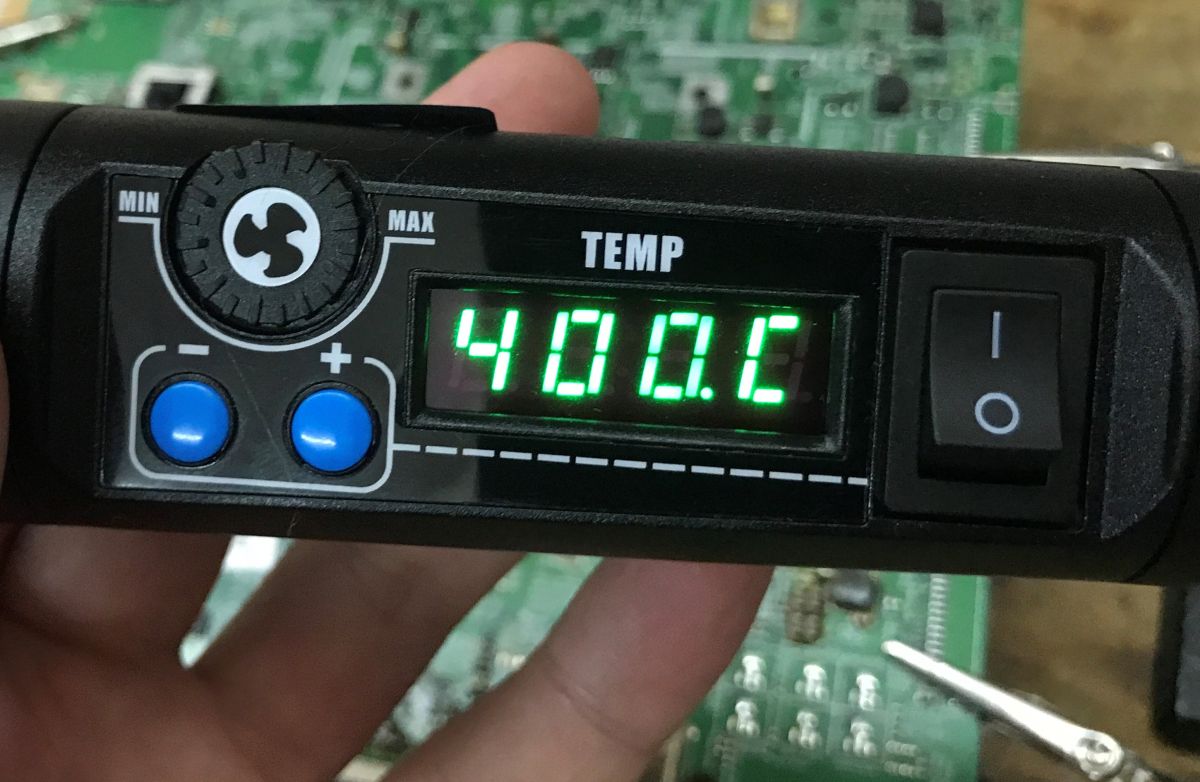
One line from the specification, however, puzzles me. Does this station really have an "LED Nixie" display? Unless they mean "Nixie styled LED display" here.
Tests with motherboard The whole thing is simple and convenient to use. The blower is adjusted with a potentiometer, the temperature with buttons. When you have finished working, you do not disconnect the whole thing from the mains, because the station first still cools itself by blowing air without heating, as per the instructions.
You can confidently test. Just on what? I have chosen a large PCB:
The more copper, the more massive the board, and the more layers, the harder it is to solder the component.
A motherboard from a computer would probably be even better, but I didn't have any on hand.
First test - 300 °C, full blast.
I gave up after 5 minutes. It was not possible to solder the component.
I increased the temperature to 450 °C:
The component came off after 2 and a half minutes. No revelation.
Second test - 400 °C:
Here I helped myself with flux, an element in an enclosure such as a flash memory chip came off in two minutes. This means that, if anything, it would be possible to upload firmware in case the clip from the CH341 fails. The minimum functionality is.
Third test - 400 °C:
Next something more difficult, a coil from one of the inverters. Such a component is quite large and sits on a larger copper spout, which acts as a heat sink and absorbs heat.
I heated for three and a half minutes, but the element was able to be removed.
Fourth test - 450 °C:
This time the coil came off in one and a half minutes.
Fifth test - 450 °C:
A tiny component in a QFN housing.
The situation is difficult because the component is also soldered underneath. It was successful in one and a half minutes.
Sixth test - 450 °C:
A slightly larger component. Also with a mass underneath. This can be seen when it is pulled off.
Just under two minutes.
Seventh test - 450 °C - no nozzle, larger QFN component.
Two minutes.
Conclusions a little further on.
Temperature measurements I made the measurements based on the configuration from this topic:
OpenBeken configuration for hot air testing - MAX6675, temperature and power logging Measurements were taken at full blow and at 50% blow.
Here I have prepared two sets of measurements:
- measurements only for WEP 8858, at three temperatures, I also checked the different levels of blowing
- a summary comparison of all the stations I have had so far
Let's start with the measurements of the 8858 only.
Interactive version: https://openshwprojects.github.io/hotairwep8858.html The first thing that strikes me is the small difference between heating at 350 °C and 450 °C. The curves intersect there, but it's all within error. It seems that the 450 °C setting only approached 300 °C by a 'throw on the belt'. A lower setting, 350 °C, on the probe gave a temperature only about 25 °C lower.
Someone might think that the temperature setting doesn't work at all - but no, you can see from the results with the 100 °C setting that it has some effect after all. At 100 °C, the results are actually very accurate. The full-blow setting achieved some 98 °C, the half-blow setting 90-95 °C, also within the margin of error.
The differences between full blow and half blow are negligible in my sensor tests.
It can be equally interesting to analyse the power consumed. Those promised 700 W are only there at the beginning. Even when heating to 450 °C (which, by the way, is remarkably similar to the 350 °C setting), the power drawn most of the time is around 120 W.
Summary Indeed, this device is able to perform basic operations on the motherboard, you can, for example, solder a flash memory bone or a punctured transistor there, but it is a bit more difficult and slower than the other stations tested. For products from the higher end, such as the Sugon or Quick tested earlier, there is no point in comparing the 8858, but the budget hot air 858, for example, also trumps the product in this topic.
At 100 °C I have no complaints, my thermocouple then recorded 95 °C so literally within the margin of error, perfect, only surprised by the 450 °C setting which doesn't seem much warmer than 350 °C at all.
I also tried to catch the differences between the different blower settings, but my method was unlikely to be precise enough to make anything noticeable.
Do you think the seller is right to offer this gadget as a tool for SMD work, or should he stay with "plastic welder" after all?
About Author
p.kaczmarek2 wrote 14795 posts with
rating 12945 , helped 659 times.
Been with us since 2014 year.
And what does it look like at lower blowing?
This is where you would have to try plastic welding.... ;) If it works - then yes. Surely, however, you would need to have some experience with welding... [Read more]
p.kaczmarek2
25 Dec 2025 15:11
It all rather depends on the specific situation, both the station and the tile, but in general I treat the blower as a heat carrier - a smaller blower will heat spot more strongly, but also slower, especially... [Read more]
FAQ
TL;DR: Tests show ~120 W sustained draw at 350–450 °C, and “450 °C doesn’t seem much warmer than 350 °C.” [Elektroda, p.kaczmarek2, post #21789684]
Why it matters: If you’re choosing a portable hot‑air tool for motherboard work or plastic repair, you need realistic temperature and power expectations.
Is the WEP 8858 actually usable for SMD motherboard work?
Yes, for basic jobs. The author desoldered QFN, coils, and flash packages in about 1.5–3.5 minutes at 400–450 °C with flux. It is slower and weaker than stronger stations and even the budget 858 performs better. Use it for modest rework, not heavy thermal loads. [Elektroda, p.kaczmarek2, post #21789684]
Why does 450 °C feel similar to 350 °C on this unit?
Measured curves at 350 °C and 450 °C nearly overlap on the probe, suggesting limited thermal headroom. The author noted, “450 °C doesn’t seem much warmer than 350 °C.” Expect marginal gains above 350 °C due to heater limits and airflow. [Elektroda, p.kaczmarek2, post #21789684]
How long does it take to remove common parts like QFN or coils?
Expect about 1.5–2.5 minutes for QFN and 1.5–3.5 minutes for larger coils at 400–450 °C, high airflow, with flux. A flash-memory package came off in ~2 minutes at 400 °C with flux. Heavier copper planes increase time. [Elektroda, p.kaczmarek2, post #21789684]
What power does the WEP 8858 really draw versus its rating?
Startup can hit the advertised ~700 W, but sustained draw during 350–450 °C work hovered near ~120 W. That sustained figure largely dictates real heating capacity and explains slower desolder times on heavy boards. [Elektroda, p.kaczmarek2, post #21789684]
What comes in the package and what nozzles fit?
The 8858-I set includes the handpiece, a stand, and three nozzles: 12×12 mm square, 9 mm round, and 7 mm round. These cover small QFN, general SMD, and slightly larger targets; switching nozzles helps focus heat. [Elektroda, p.kaczmarek2, post #21789684]
Is the 8858 a plastic welder or an SMD rework tool?
Packaging and manual position it as a portable SMD rework station, not a plastic welder. The author tested electronics tasks; plastic welding was not evaluated here. Prioritize it for PCB rework. [Elektroda, p.kaczmarek2, post #21789684]
How accurate is the 100 °C setting for heat‑sensitive jobs?
Very close. With 100 °C set, the thermocouple read about 90–98 °C depending on airflow. That accuracy suits gentle tasks like preheating or adhesive softening without damaging plastics near components. [Elektroda, p.kaczmarek2, post #21789684]
Does airflow level matter, and are there risks at very low airflow?
Use higher airflow to carry heat and reduce dwell time. The author avoids very low settings on cheap stations because heaters can overheat internally, risking premature failure. “I’m concerned about time” and heater stress at low flow. [Elektroda, p.kaczmarek2, post #21789814]
How should I shut down the 8858 safely?
Do not unplug immediately after heating. The unit auto-cools by blowing unheated air to protect the heater. Let it finish its cool-down cycle on the stand before switching off mains or moving it. [Elektroda, p.kaczmarek2, post #21789684]
What’s a quick method to reflash a board when the CH341 clip fails?
Three-step method: 1. Desolder the SOIC‑8 flash at ~400 °C with flux and high airflow. 2. Program it off‑board with the CH341. 3. Resolder the chip and verify boot. The author uses this when in-circuit programming fails. [Elektroda, p.kaczmarek2, post #21789814]
What is OpenBeken and how was it used in these tests?
OpenBeken here refers to a shared configuration for logging hot‑air tests. The author used it with a MAX6675 thermocouple to record temperature and power, then published interactive graphs for 350 °C and 450 °C runs. [Elektroda, p.kaczmarek2, post #21789684]
What are QFN and SOIC‑8, and why do they challenge hot‑air tools?
QFN has pads underneath, so heat must penetrate evenly; SOIC‑8 has accessible gull‑wings. The author lifted QFN parts in ~1.5–2 minutes at 450 °C, noting under‑body solder mass complicates removal. Flux improves wetting and speed. [Elektroda, p.kaczmarek2, post #21789684]
How does the 8858 compare with an 858 or a Sugon 8630 PRO?
Performance is below high‑end stations like Sugon 8630 PRO and even the budget 858 “trumps it.” Lower sustained power limits heat delivery on dense boards, increasing dwell times and risk of laminate bulging. [Elektroda, p.kaczmarek2, post #21789684]
Does flux make a measurable difference with this tool?
Yes. With flux at 400 °C, a flash memory in a leaded package came off in about two minutes. Flux reduces surface tension and oxide barriers, speeding lift-off and reducing required peak temperature. [Elektroda, p.kaczmarek2, post #21789684]
Any tips to avoid PCB damage during spot heating?
Practice on scrap boards first. Use adequate airflow, moderate temperatures, and flux to reduce dwell. The author warns unskilled spot heating at high temperature without flux can bulge laminate. Keep the tool moving slightly. [Elektroda, p.kaczmarek2, post #21789814]
What did another user suggest about the 'plastic welder' claim?
A respondent noted you’d need to actually try plastic welding before judging that use case. Skills matter; otherwise, conclusions may be unwarranted. Treat the claim cautiously until tested. [Elektroda, 398216 Usunięty, post #21789797]
AI summary based on the discussion. May contain errors.












Comments
And what does it look like at lower blowing? This is where you would have to try plastic welding.... ;) If it works - then yes. Surely, however, you would need to have some experience with welding... [Read more]
It all rather depends on the specific situation, both the station and the tile, but in general I treat the blower as a heat carrier - a smaller blower will heat spot more strongly, but also slower, especially... [Read more]