logo elektroda
logo elektroda
X
logo elektroda

The inside of the Polish retro power supply Polwat PWS-100 RM 24V/4A - has it survived the years of

p.kaczmarek2 2352 27

TL;DR

  • A teardown of the Polish PWS-100RM rail-mounted industrial power supply, recovered from scrap and rated for 24 V/4 A.
  • Inside, it uses a UC3844 flyback design with a full EMI filter, NTC inrush limiter, CNY75GA optocouplers, TL431 feedback, and a service-friendly chassis connection.
  • The label suggests a 2001 unit, and the load test pushed it to 5.44 A, with four 1 Ω resistors dropping output to about 21.75 V.
  • ESR checks found all electrolytic capacitors acceptable, and thermal imaging showed the Schottky diode and NTC heating most, while the switching transistor stayed cooler.
  • Despite heavy dirt and moisture traces, the supply still appears fully operational, though a longer test with proper heatsinks and lower current would be useful.
Generated by the language model.
ADVERTISEMENT
This content has been translated flag-pl » flag-en View the original version here
📢 Listen (AI):
  • The inside of the Polish retro power supply Polwat PWS-100 RM 24V/4A - has it survived the years of
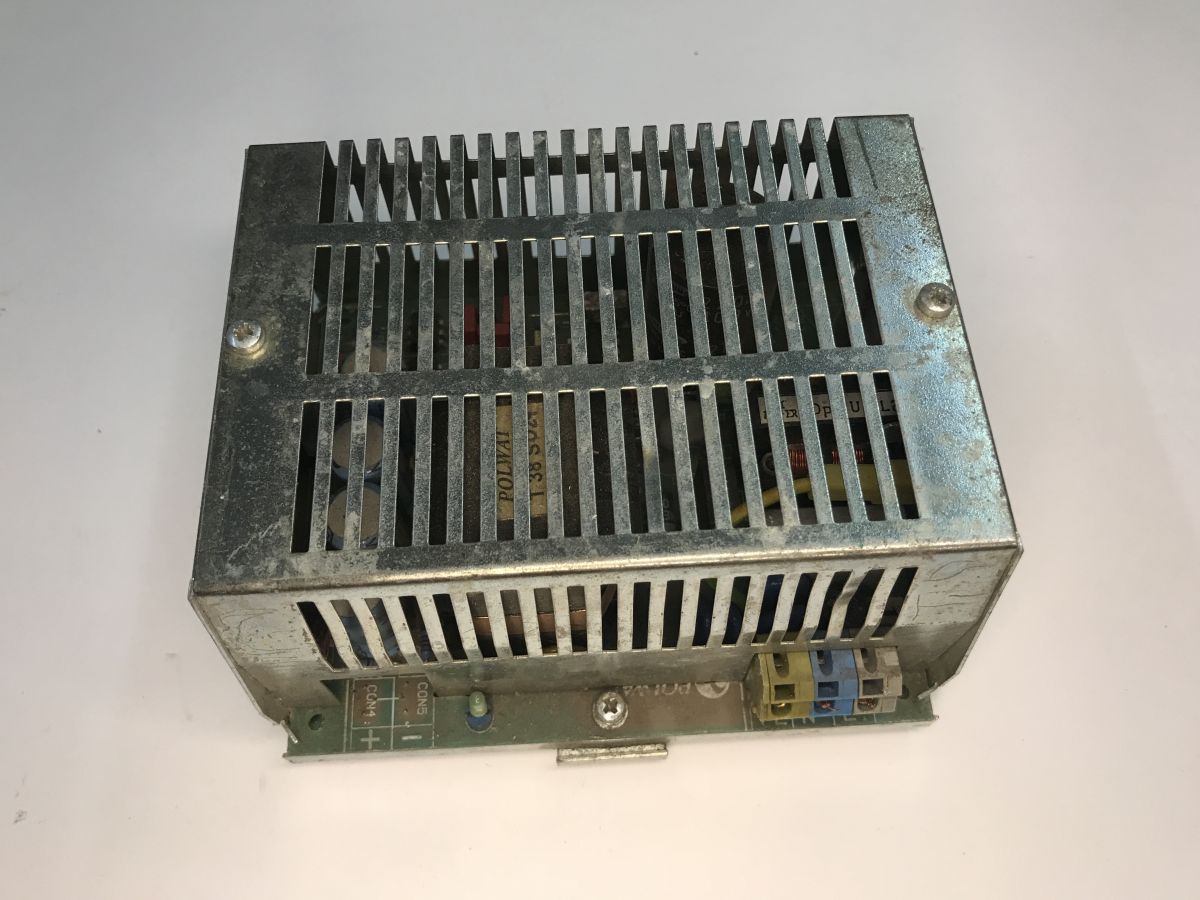
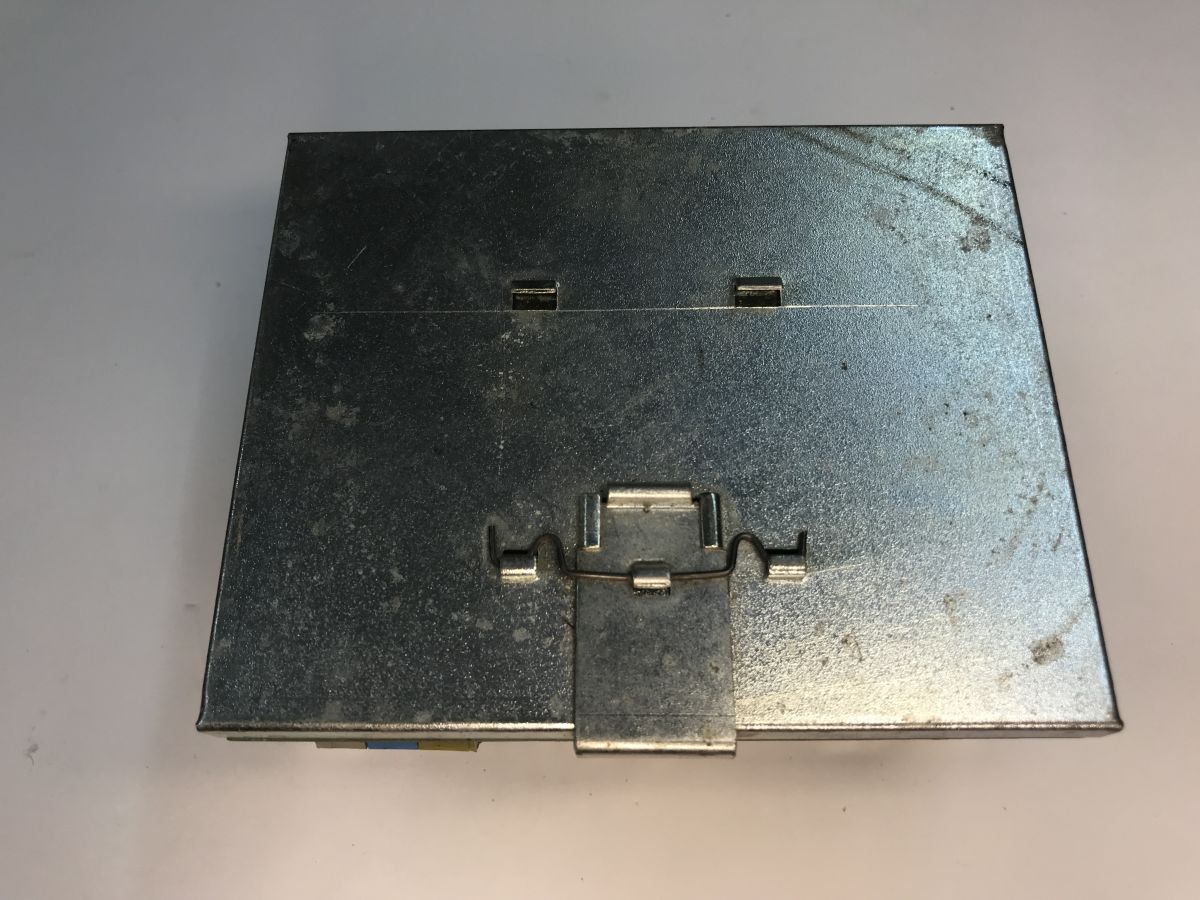
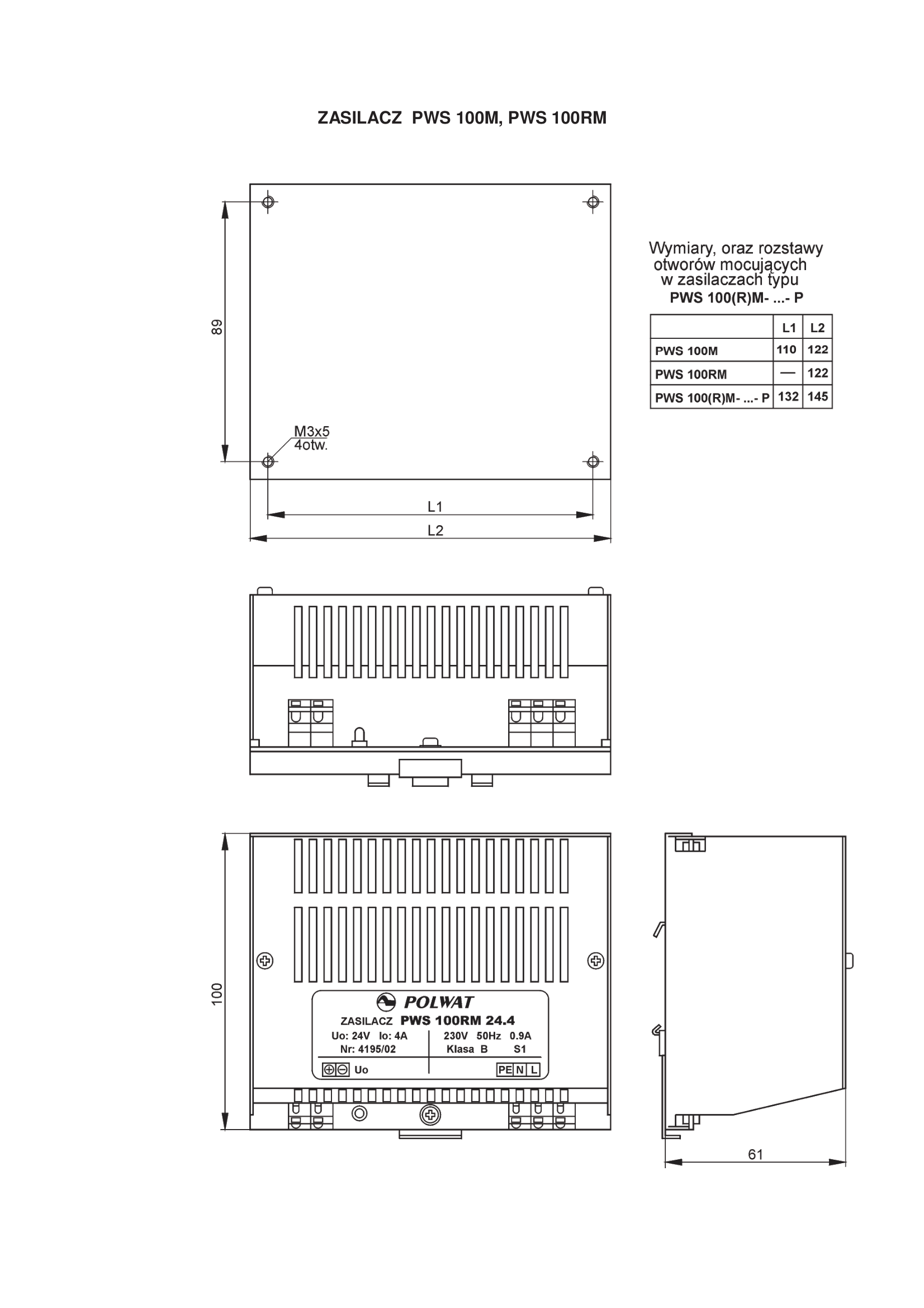
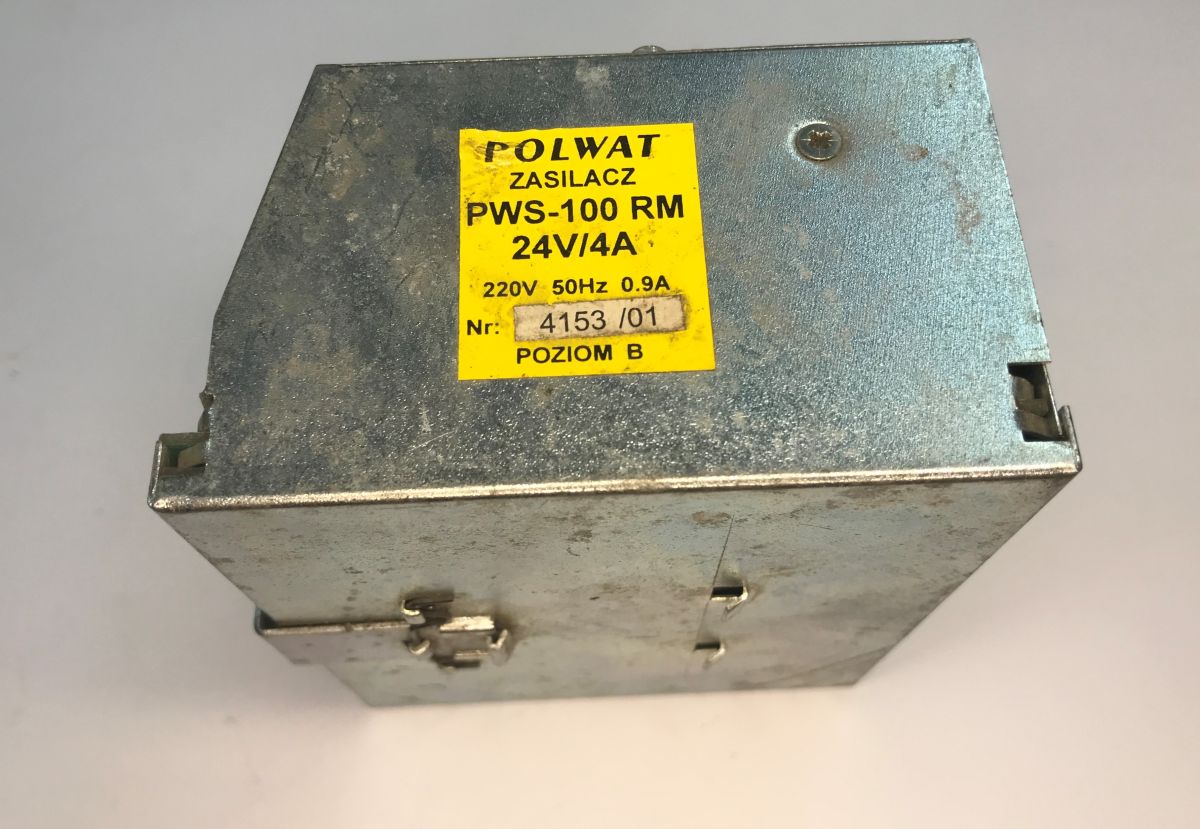
    Today we take a look inside an old power supply made by a Polish company from Gliwice. I recovered the whole thing from scrap metal, so I'm going to check how this power supply has coped with years of use in an industrial device, examine whether it's still in working order at all, and finally show what heats up the most in it. The power supply shown here is the PWS-100RM model and is mounted on a TS-35 rail. It comes in different versions differing in output voltage, these include 5, 12, 24 and 48 V, although the documentation shows that the manufacturer is also happy to make a version with a different voltage.
    The inside of the Polish retro power supply Polwat PWS-100 RM 24V/4A - has it survived the years of
    The whole thing is designed to work as a stand-alone module. The label on my copy seems to suggest that this is piece number 4153 from 2001, so potentially this equipment is a good 25 years old! That could be right, as the manufacturer's company, as far as I can see, started in 1991.
    The inside of the Polish retro power supply Polwat PWS-100 RM 24V/4A - has it survived the years of
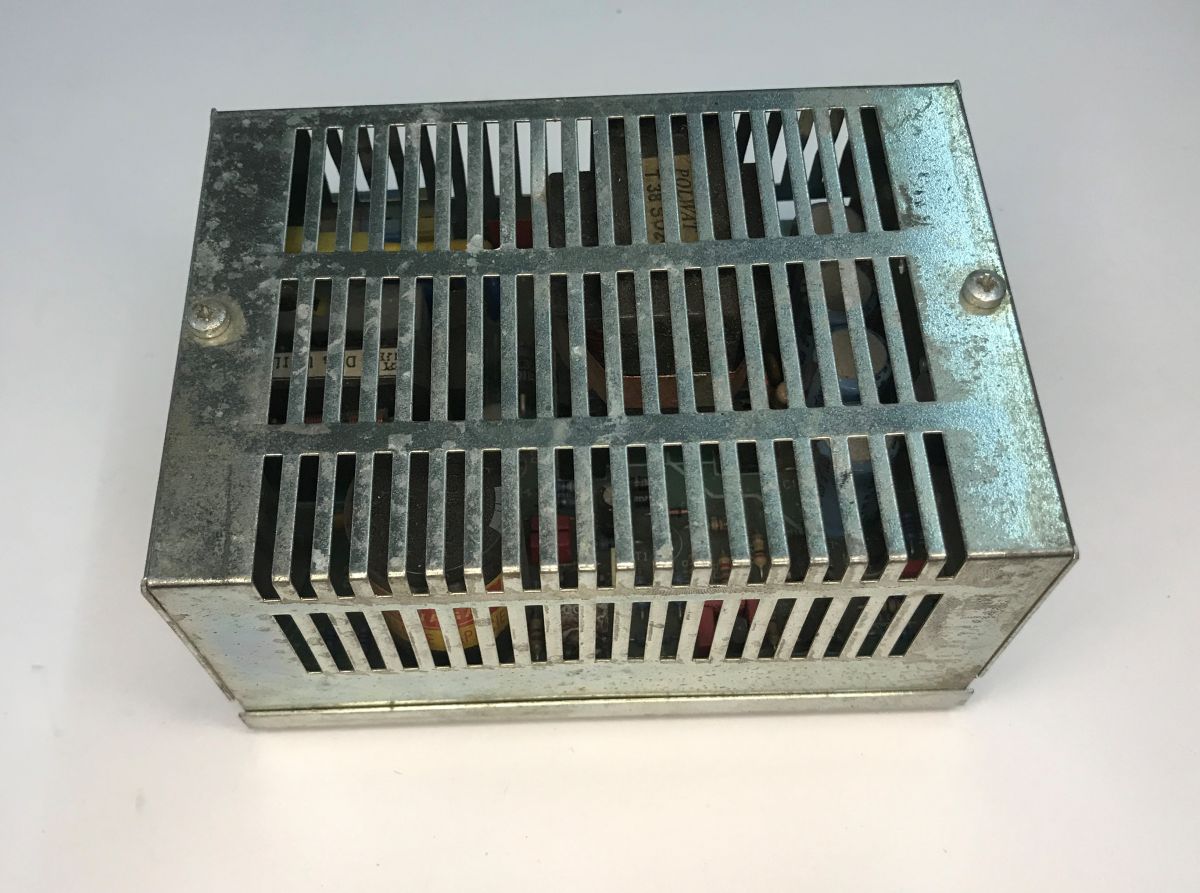
    Externally the whole thing is quite modest, one of the terminals (terminals) is broken off in my copy. Apart from that, there is only an LED indicating the presence of power. The hardware is fully passively cooled, which in an industrial environment, however, can be a plus, as it eliminates the problem of fans seizing and clogging up over time.
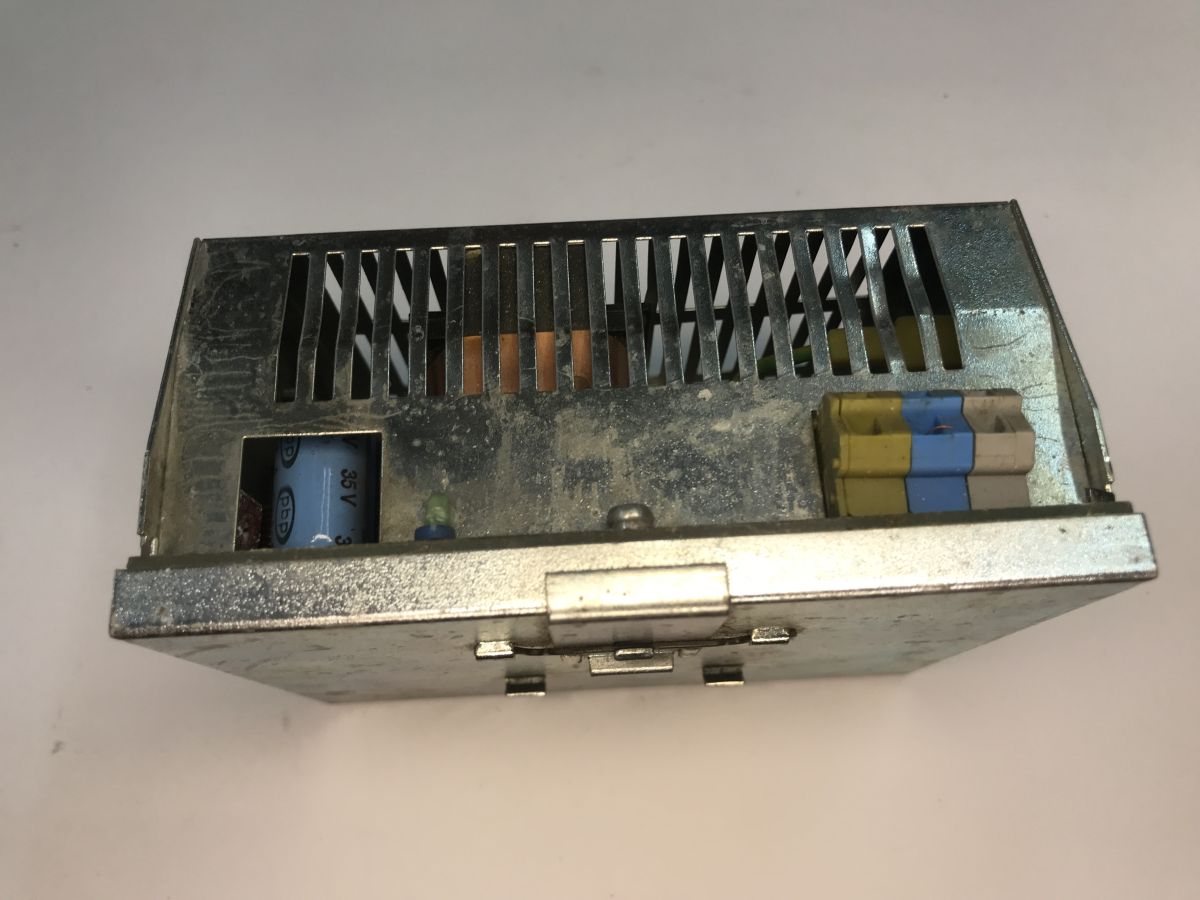
    The inside of the Polish retro power supply Polwat PWS-100 RM 24V/4A - has it survived the years of The inside of the Polish retro power supply Polwat PWS-100 RM 24V/4A - has it survived the years of The inside of the Polish retro power supply Polwat PWS-100 RM 24V/4A - has it survived the years of
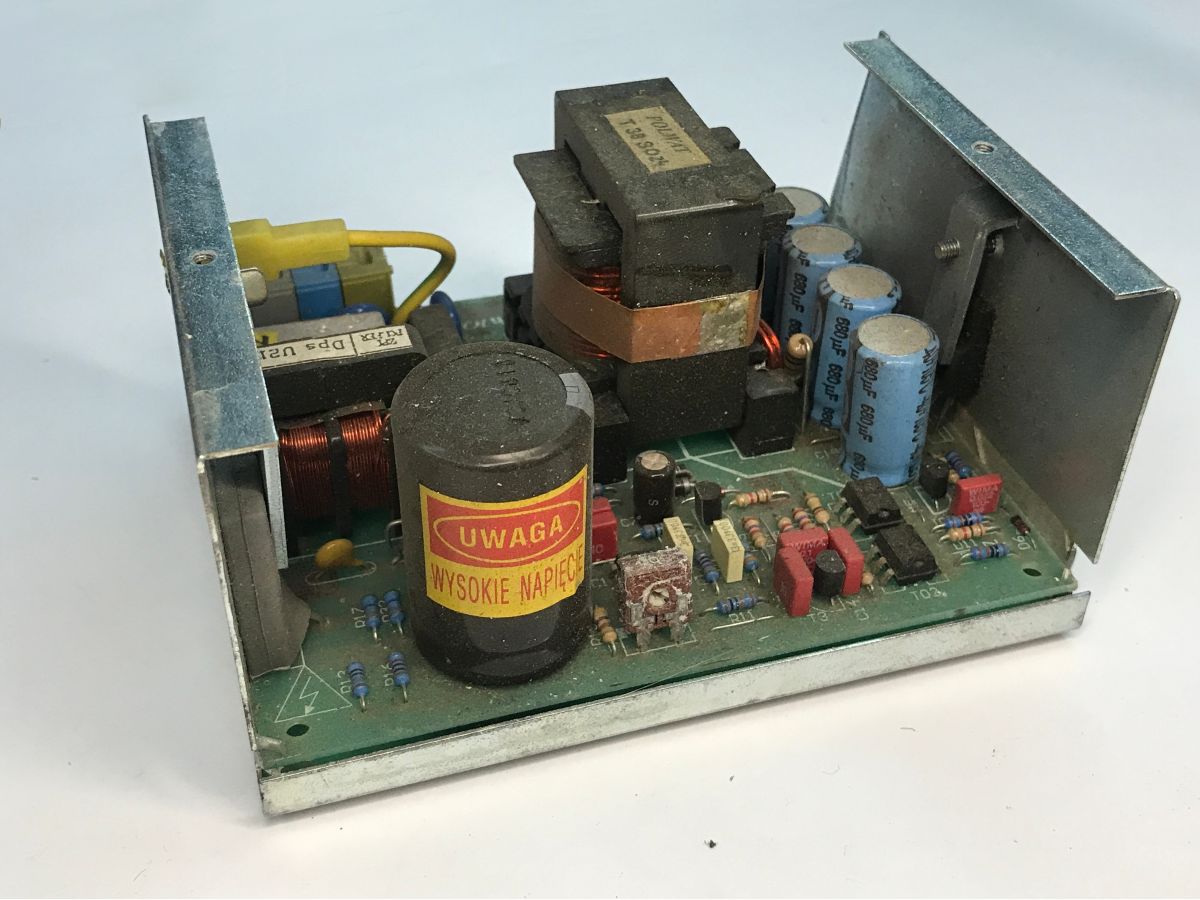
    We remove the casing. You can immediately see that this is no budget Chinese power supply. No one has spared the copper here, the EMI filters seem to be fully present. You can also see significant dirt and traces of moisture.
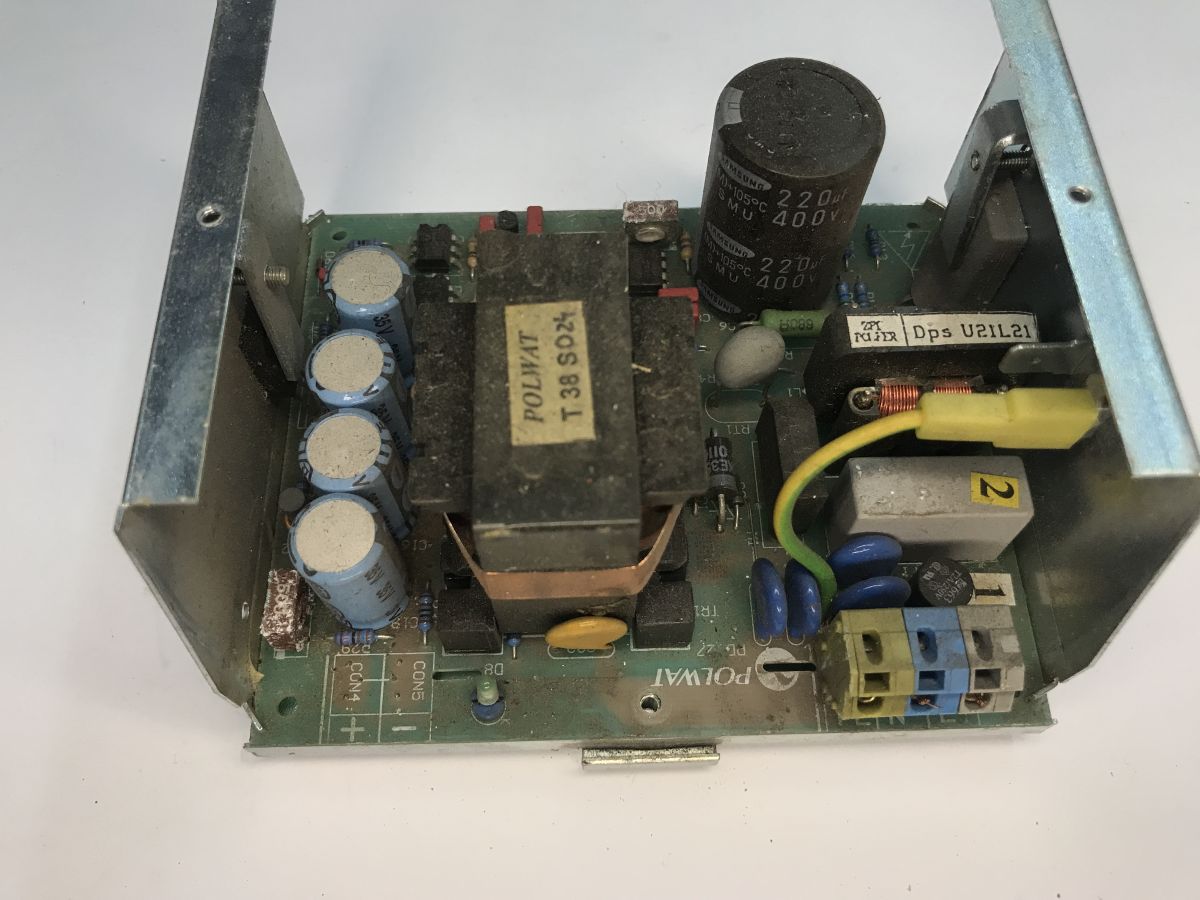
    The inside of the Polish retro power supply Polwat PWS-100 RM 24V/4A - has it survived the years of
    It's been a long time since I've seen a Polish "caution" sign on a 400 V mains voltage filtering capacitor.
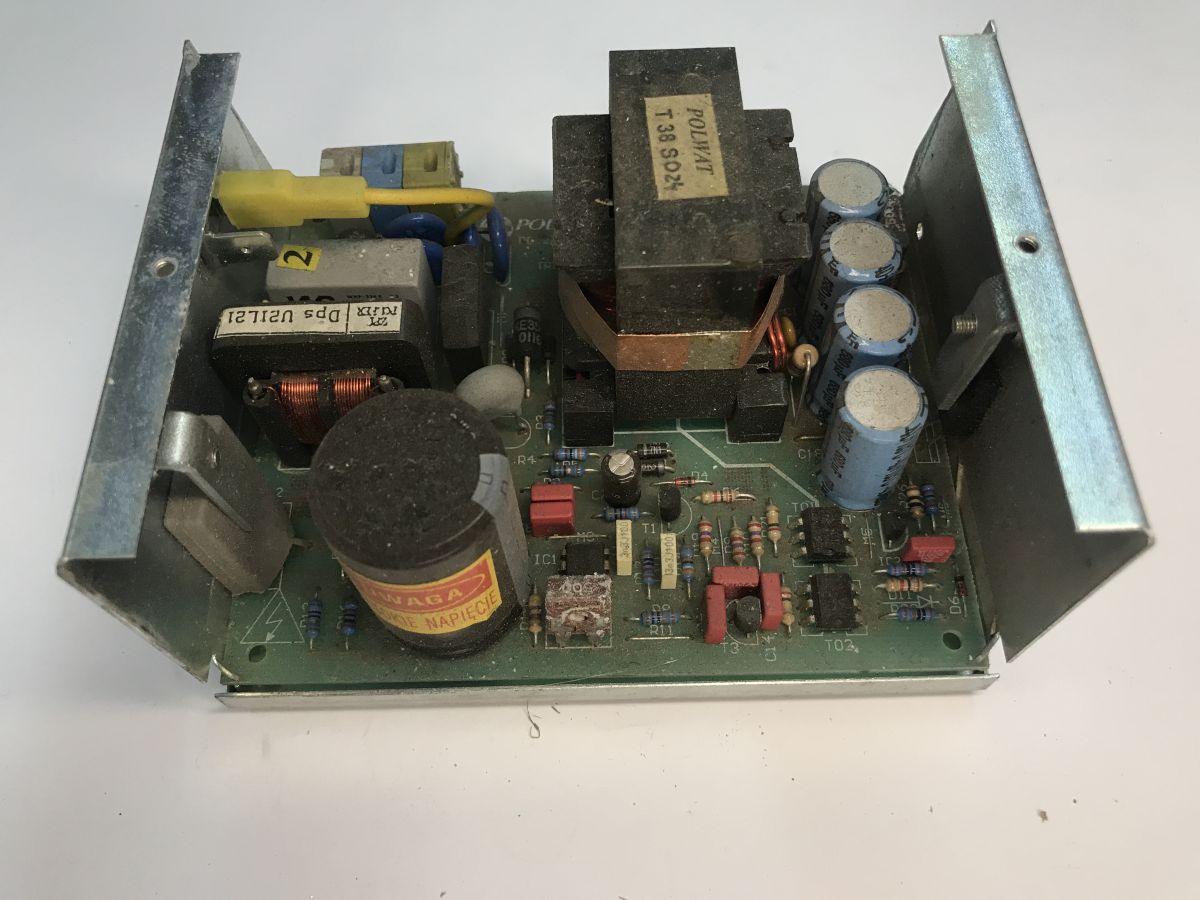
    The inside of the Polish retro power supply Polwat PWS-100 RM 24V/4A - has it survived the years of
    The board is single-sided, simple but fulfilling. The thicknesses of the current paths and the appropriate insulation spacing instantly inspire confidence. There is a manufacturer's logo on the description layer.
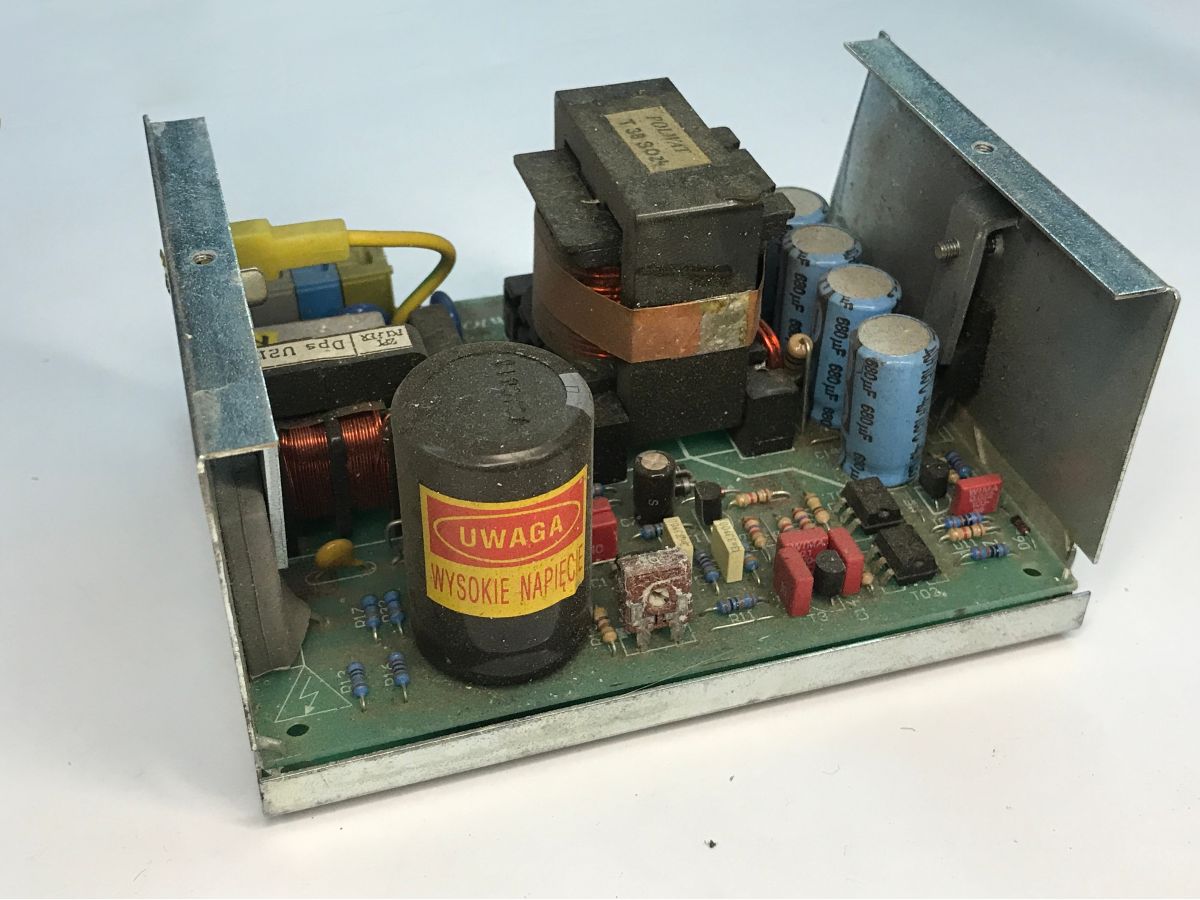
    The inside of the Polish retro power supply Polwat PWS-100 RM 24V/4A - has it survived the years of
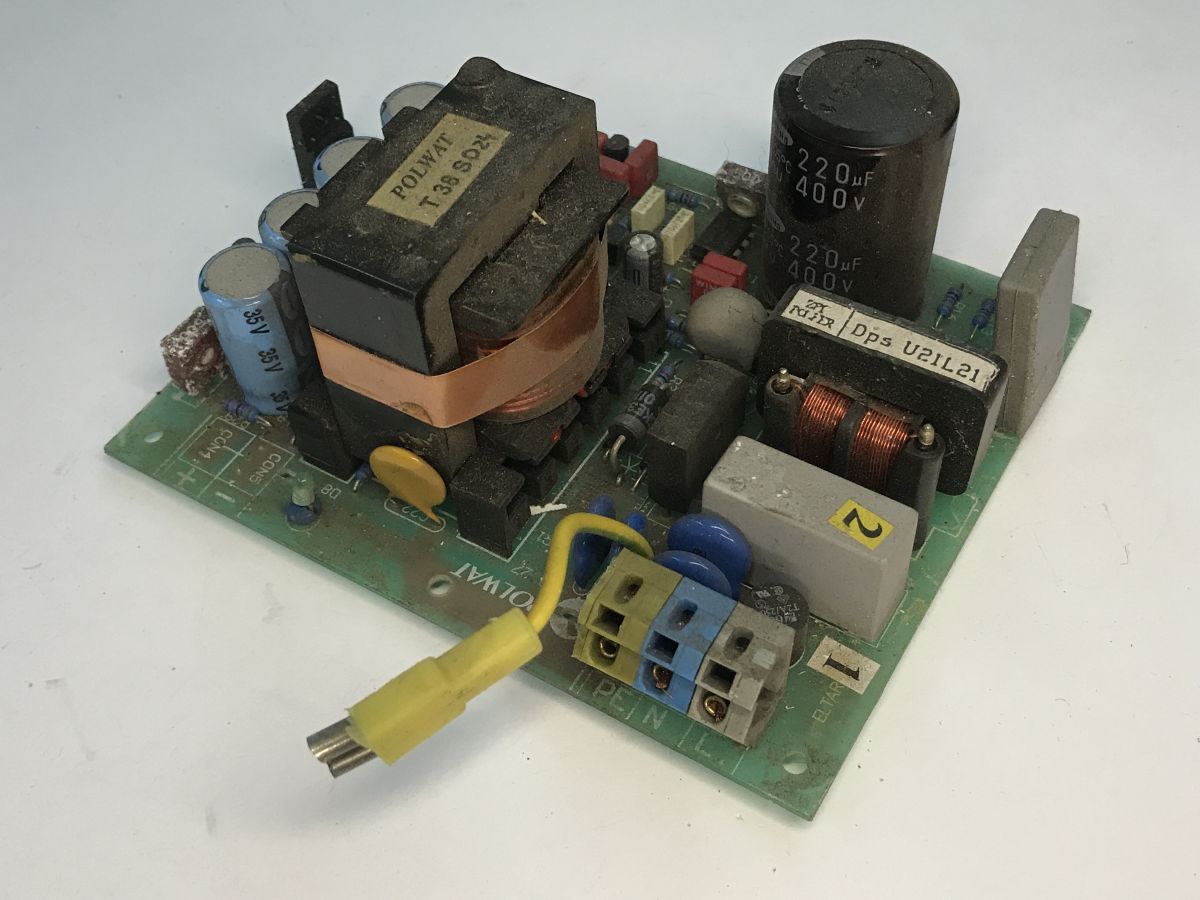
    I like the fact that the PE is connected to the chassis by a connector rather than soldered. It looks like the whole thing has been thought out for servicing. In cheaper power supplies they would just solder it on.
    The inside of the Polish retro power supply Polwat PWS-100 RM 24V/4A - has it survived the years of
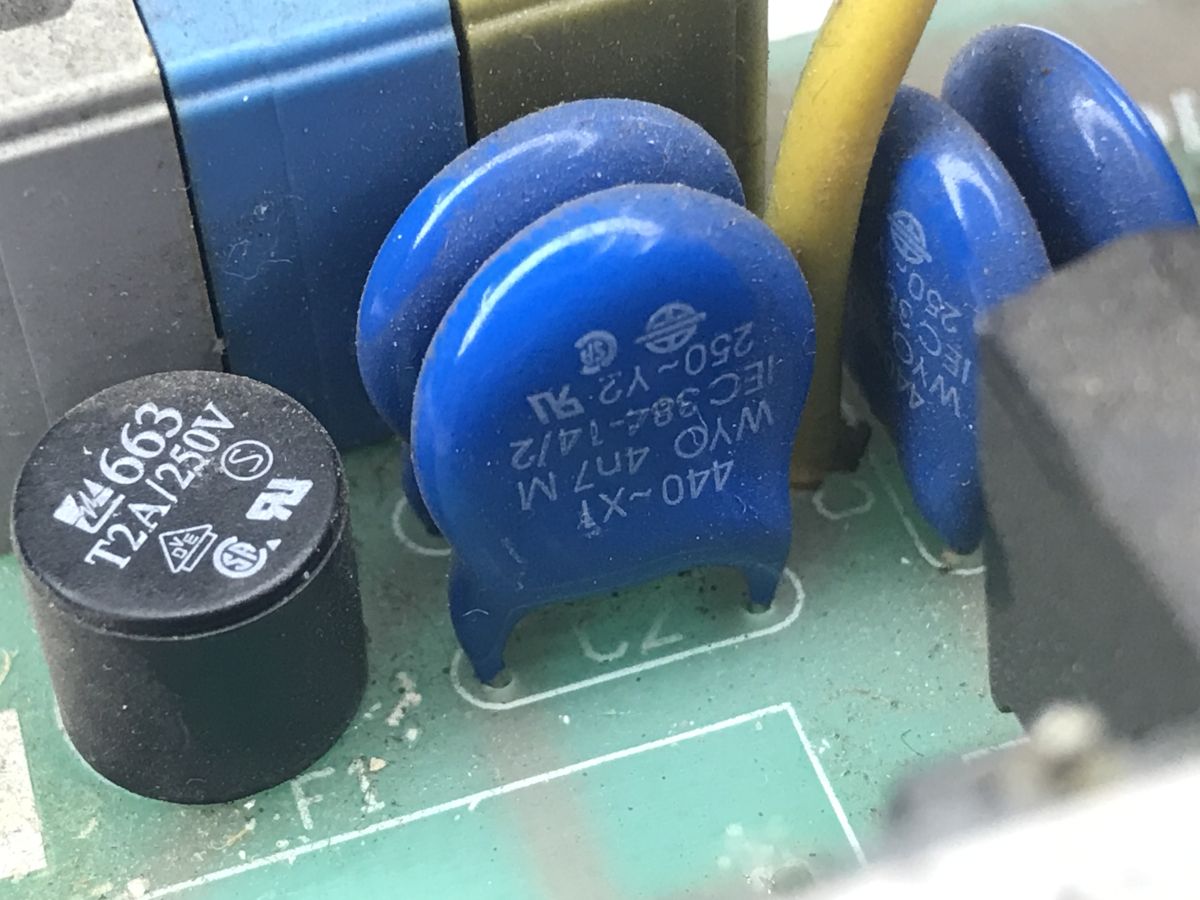
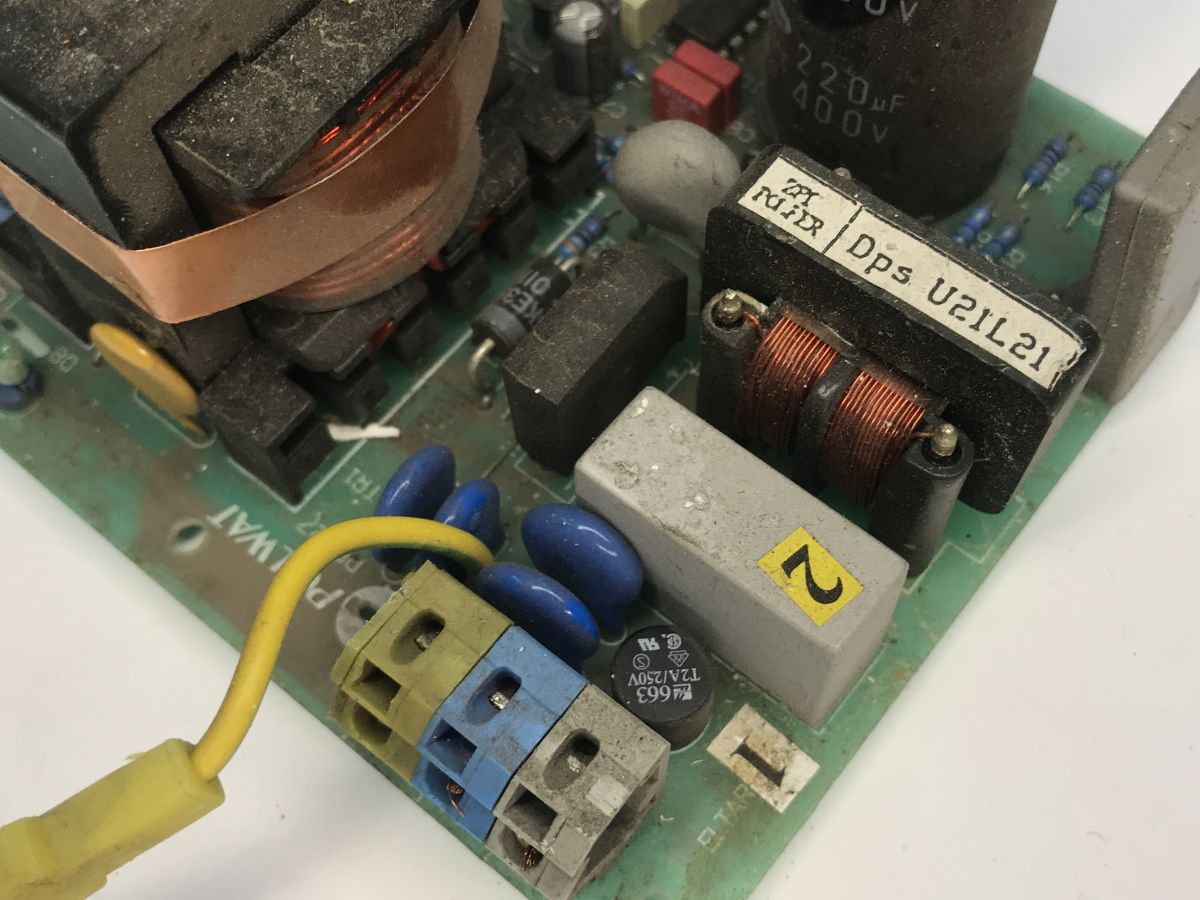
    There is, of course, adequate protection on the input - a T2A/250V fuse and varistors to protect against surges from the mains:
    The inside of the Polish retro power supply Polwat PWS-100 RM 24V/4A - has it survived the years of
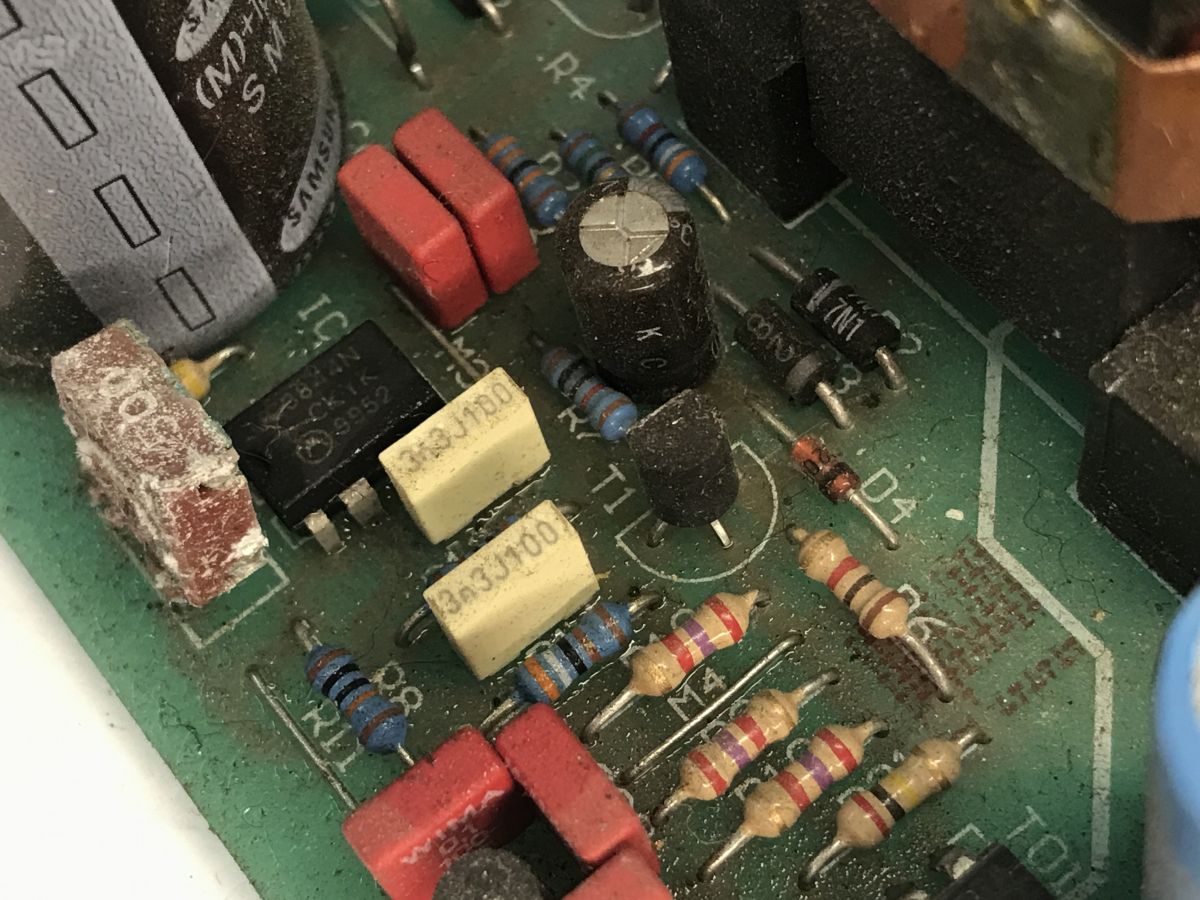
    The power supply is based on the immortal UC3844 chip and is realised in flyback topology.
    The inside of the Polish retro power supply Polwat PWS-100 RM 24V/4A - has it survived the years of
    On the primary side, the RT, or thermistor resistor (NTC) limiting the inrush current, is conspicuous; it is soldered after the rectifier bridge, before the primary winding.
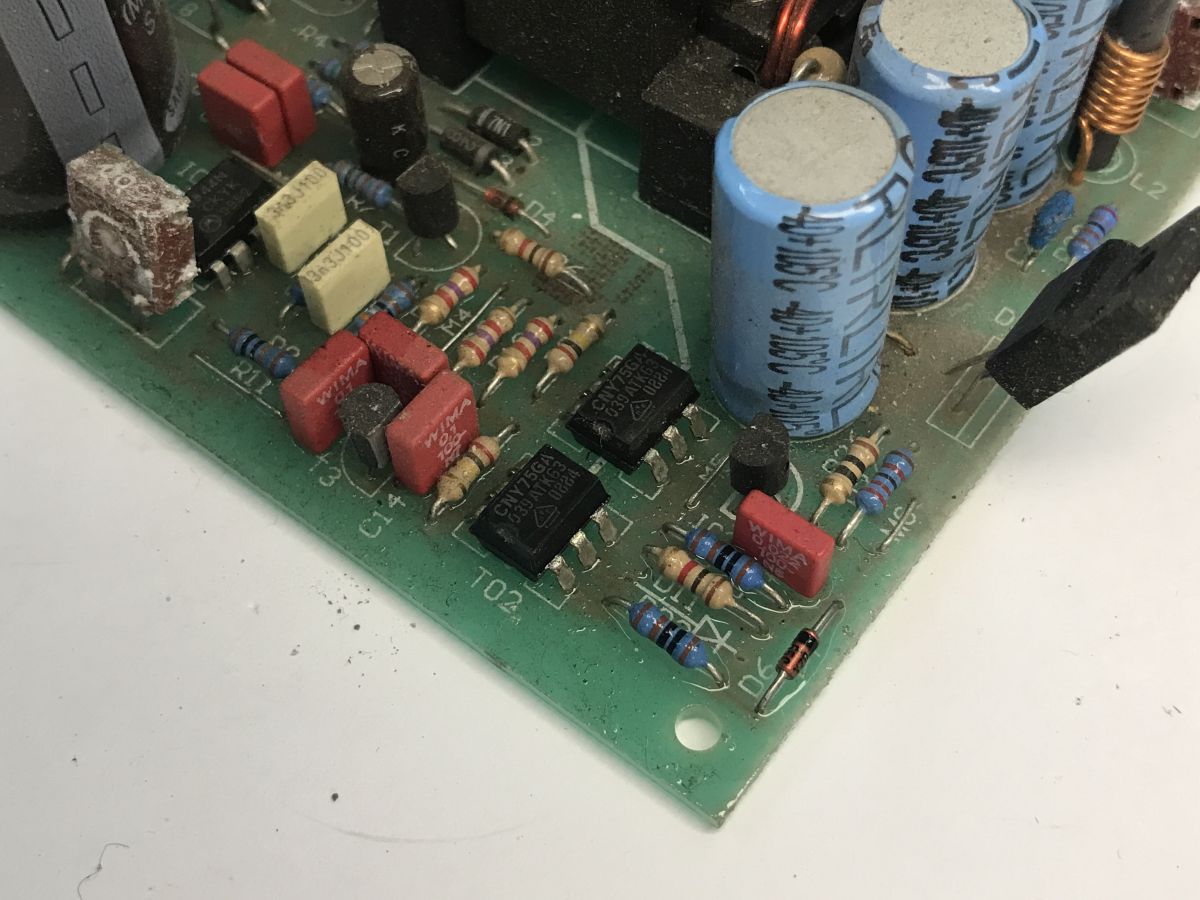
    Feedback is provided by CNY75GA optocouplers, and I also see a TL431 (reference voltage) circuit there:
    The inside of the Polish retro power supply Polwat PWS-100 RM 24V/4A - has it survived the years of
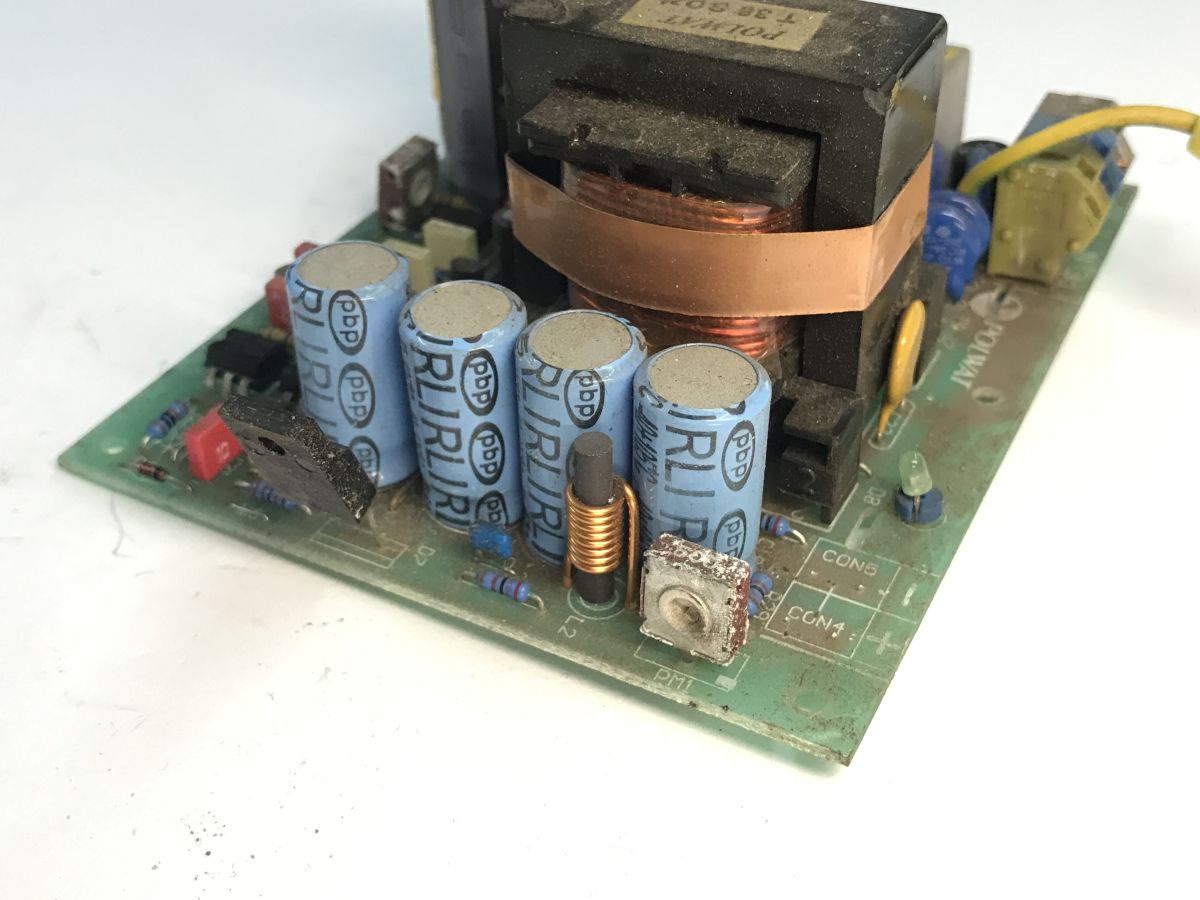
    On the secondary side we have a small choke, a Schottky diode in a TO-220 housing and as many as four electrolytic capacitors. A potentiometer is used to adjust the output voltage over a small range.
    The inside of the Polish retro power supply Polwat PWS-100 RM 24V/4A - has it survived the years of
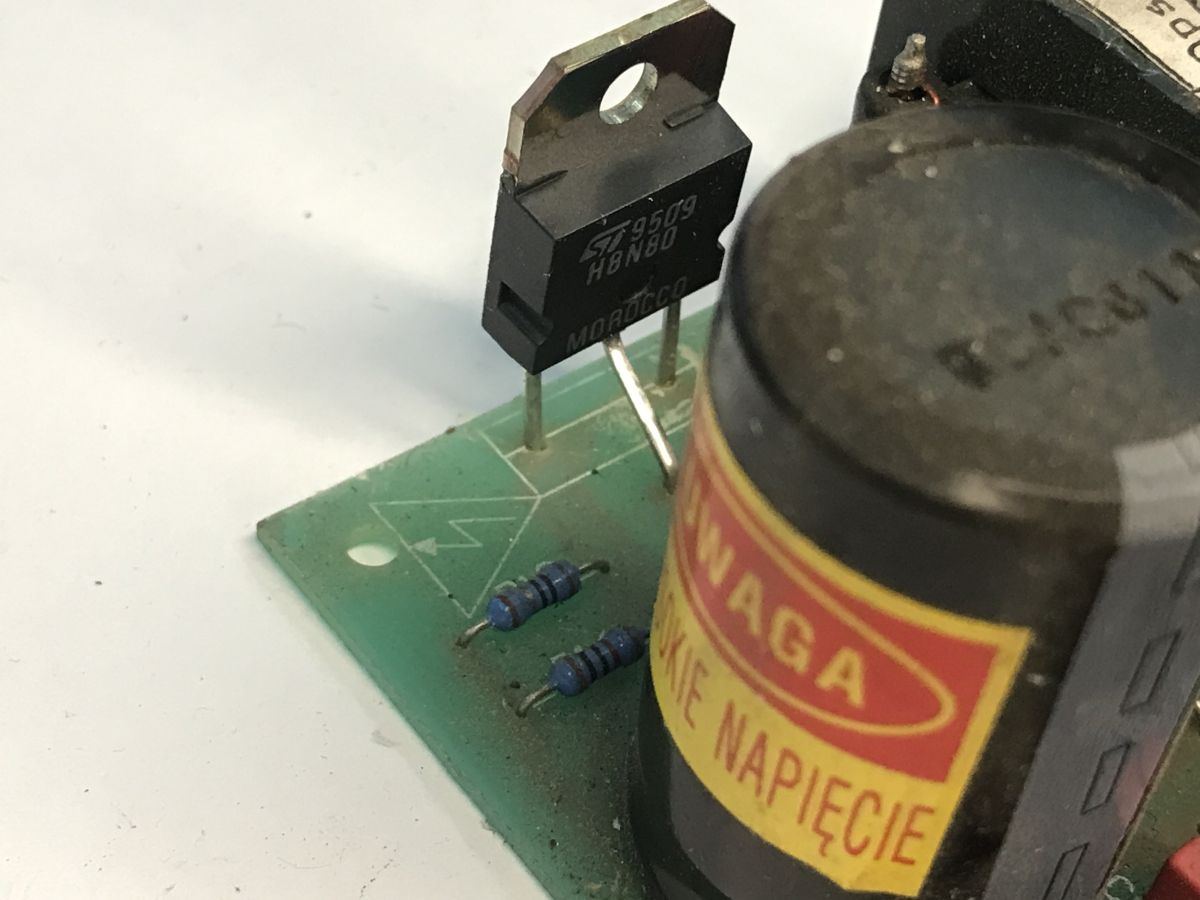
    It remains to determine the keying transistor - it appears to be an ST Microelectronics H8N80 N-MOSFET (800 V, 8 A).
    The inside of the Polish retro power supply Polwat PWS-100 RM 24V/4A - has it survived the years of


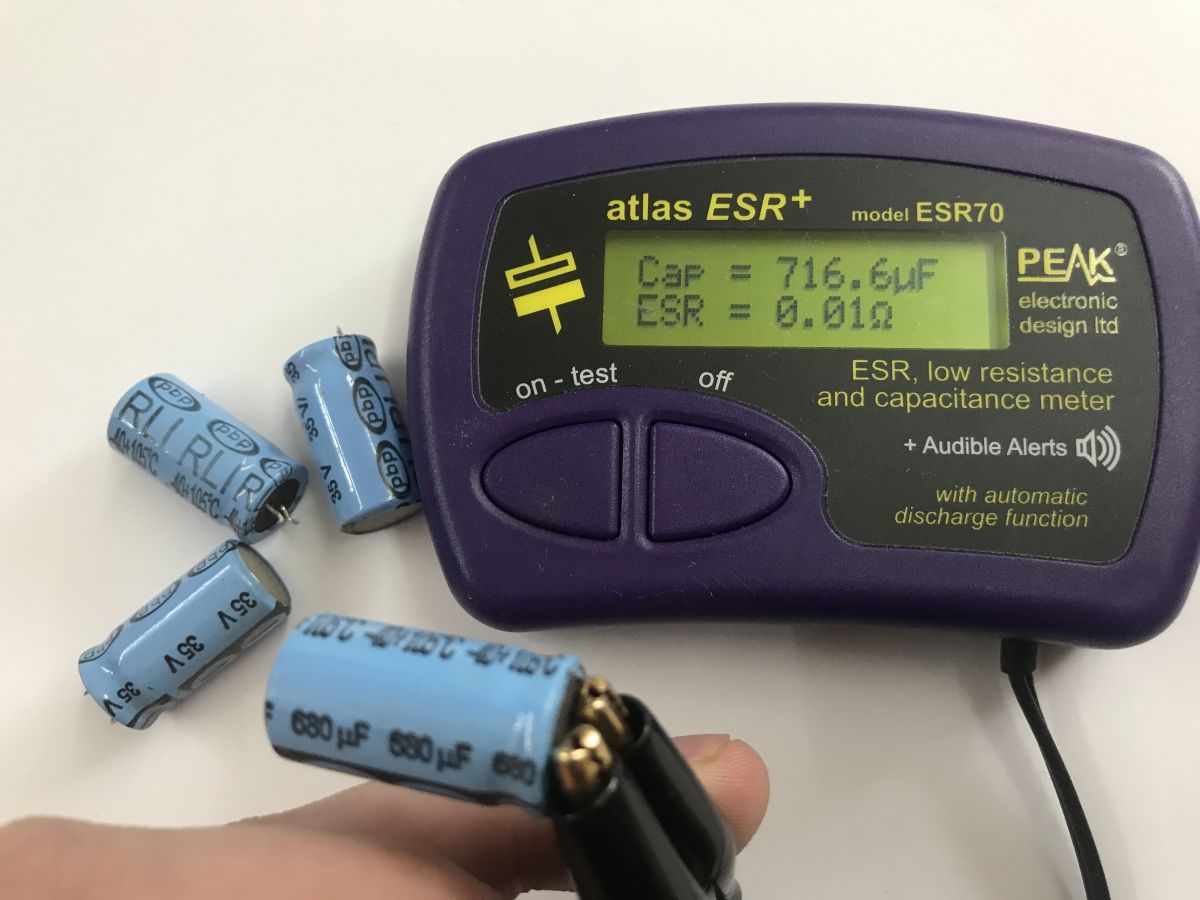
    Out of curiosity, I checked the most fail-safe component of such power supplies - the capacitors. They are not swollen, but perhaps they have lost their performance? I used my ESR70 for this.
    The inside of the Polish retro power supply Polwat PWS-100 RM 24V/4A - has it survived the years of
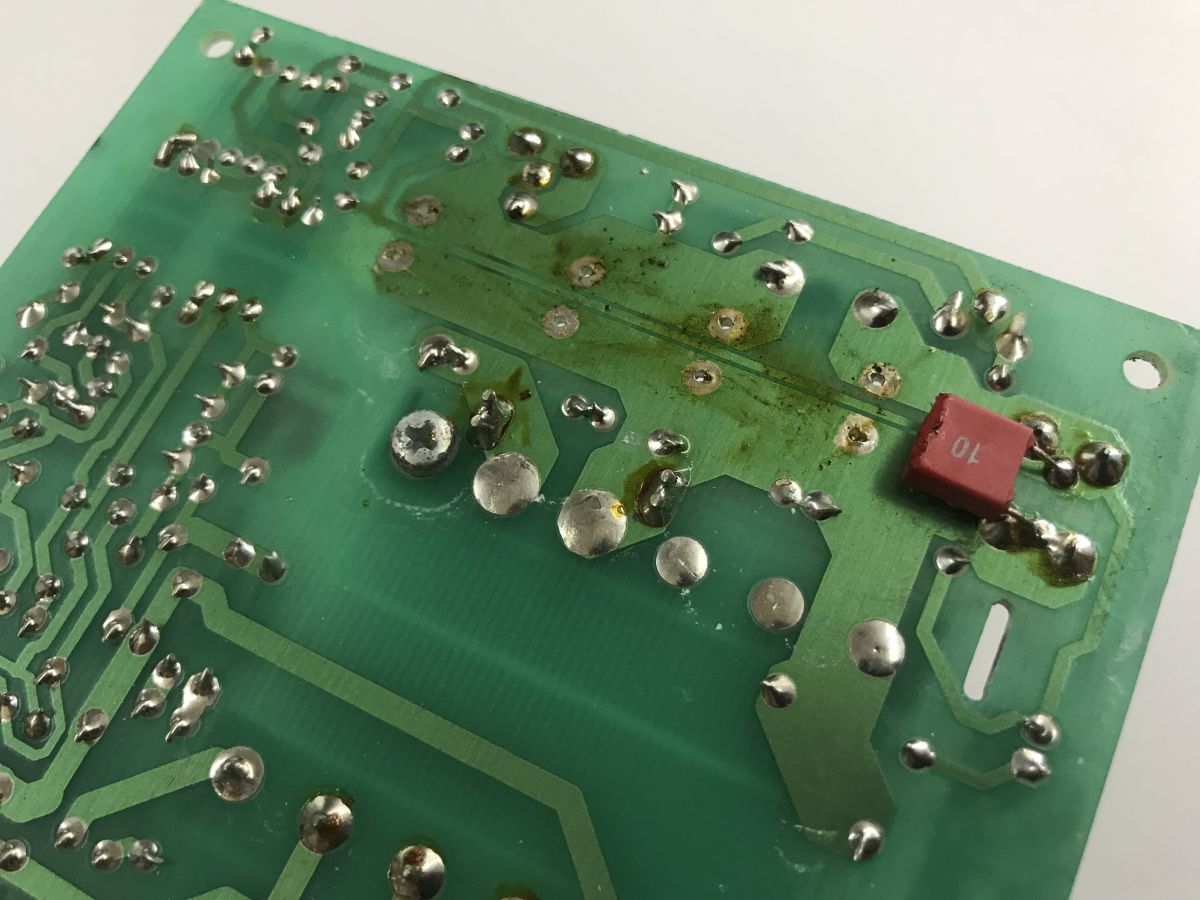
    All the capacitors are fine, they can be soldered in place. By the way - that fix, the fine decoupling capacitor, is not from me, it was like that from the factory.
    The inside of the Polish retro power supply Polwat PWS-100 RM 24V/4A - has it survived the years of

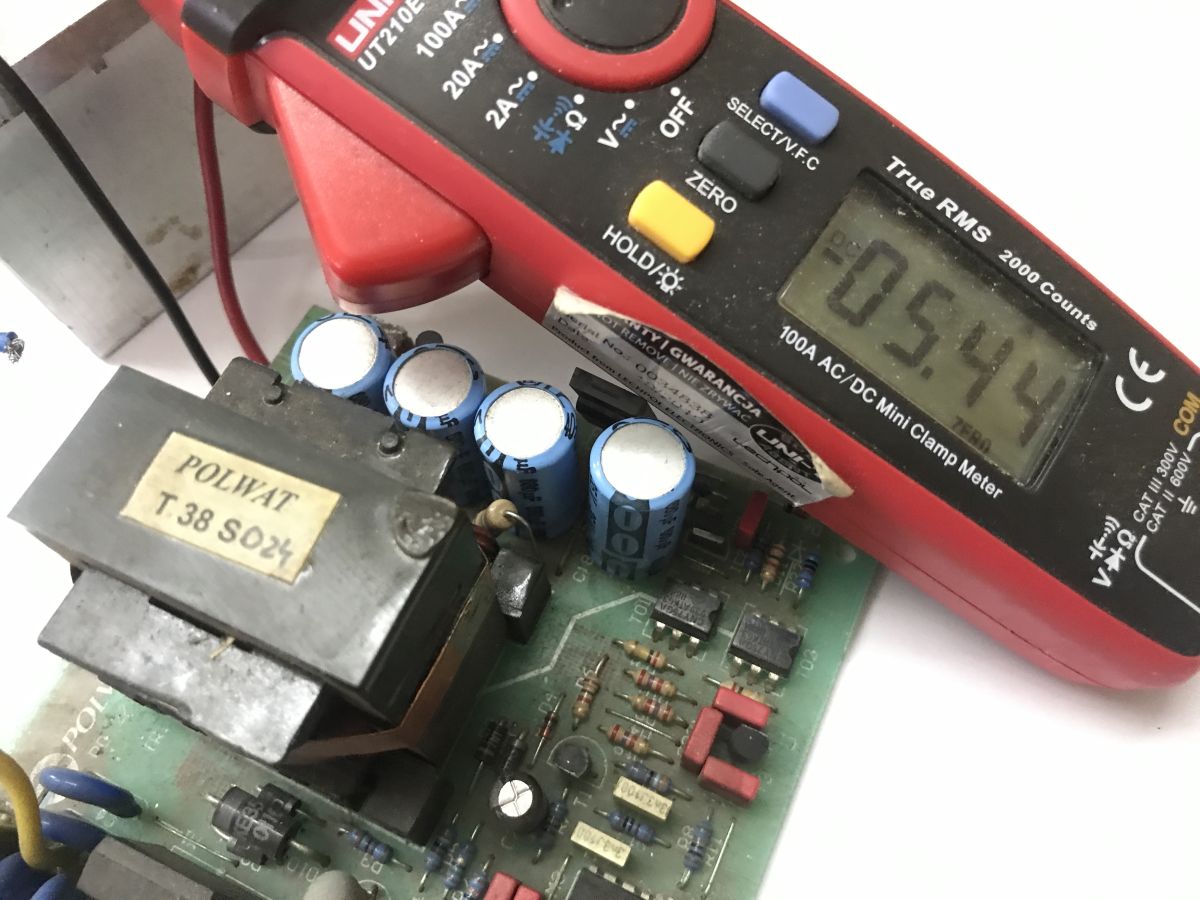
    Time then for a more serious test. The power supply is scrap, I didn't expect it to be in working order, and I wasn't prepared to test it, so I loaded it with an exorbitant 5.44 A and saw what would happen. The no-load voltage is 24 V, with four 1 Ω power resistors each connected it drops to about 21.75 V.
    The inside of the Polish retro power supply Polwat PWS-100 RM 24V/4A - has it survived the years of
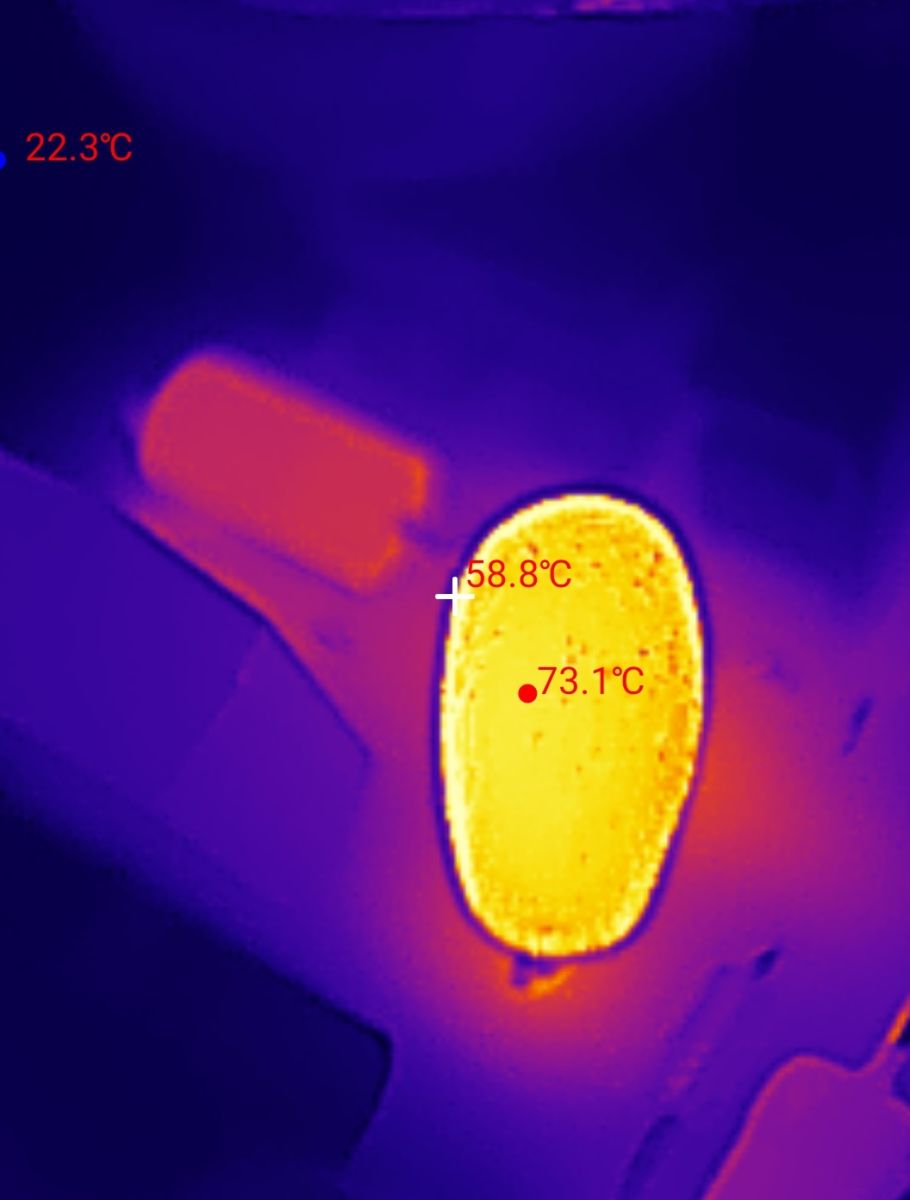
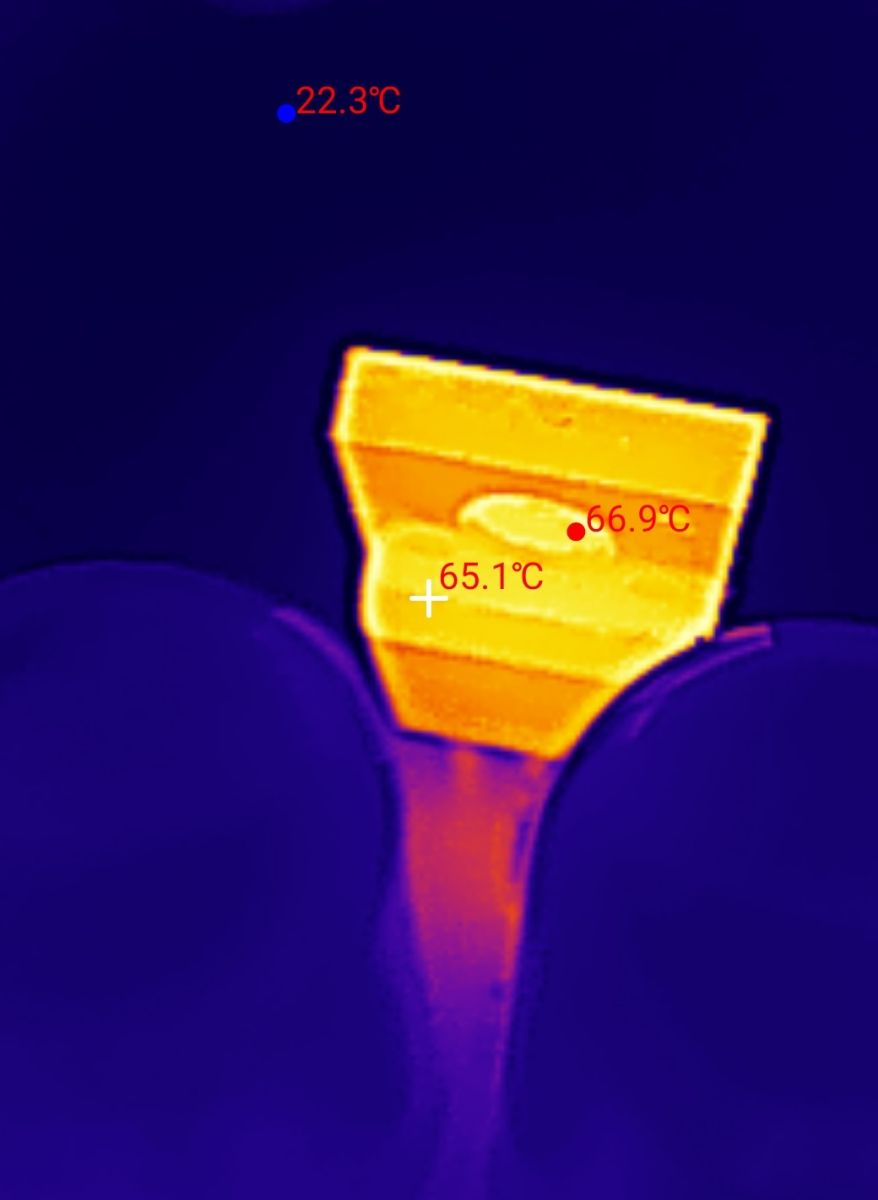
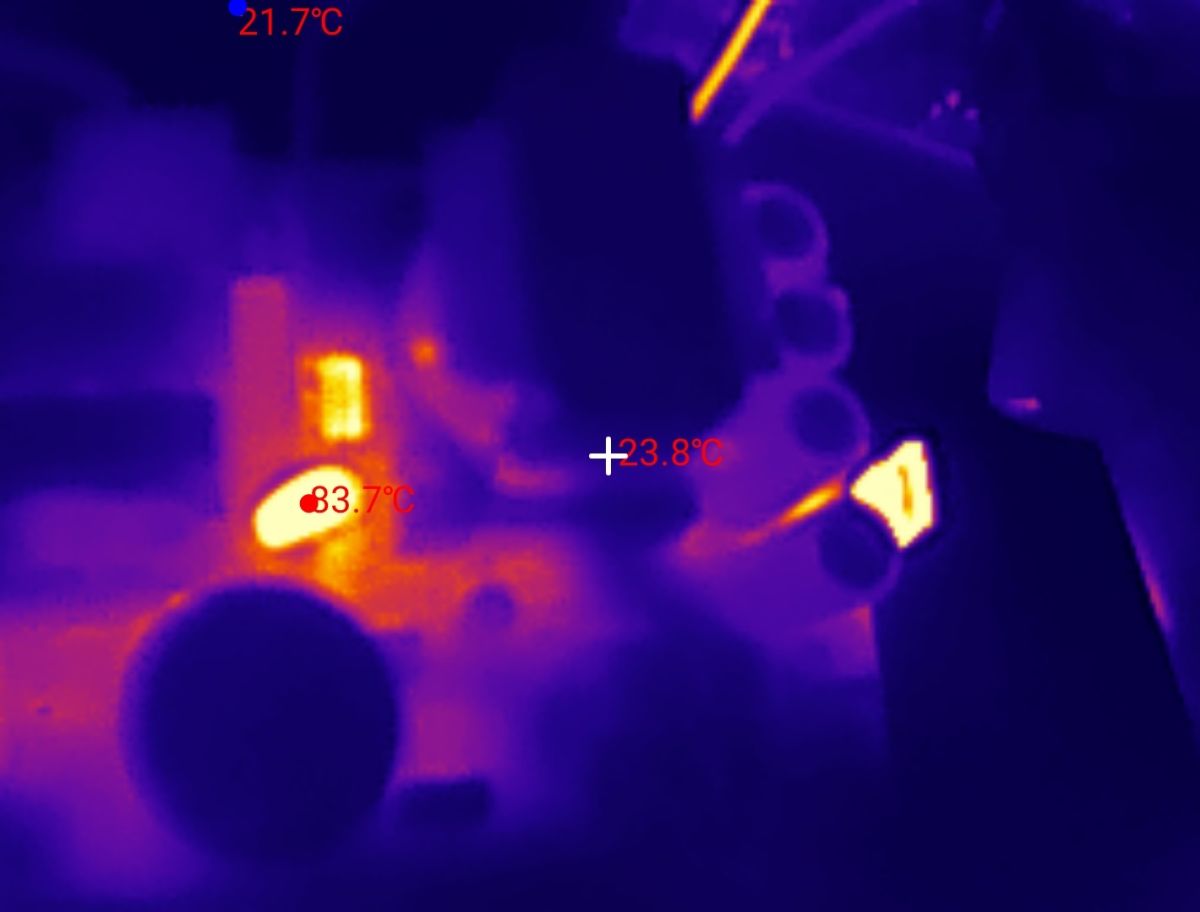
    The most heated ... schottky diode and the thermistor (NTC) resistor. The keying transistor itself heats up slightly less.
    The inside of the Polish retro power supply Polwat PWS-100 RM 24V/4A - has it survived the years of
    The inside of the Polish retro power supply Polwat PWS-100 RM 24V/4A - has it survived the years of The inside of the Polish retro power supply Polwat PWS-100 RM 24V/4A - has it survived the years of
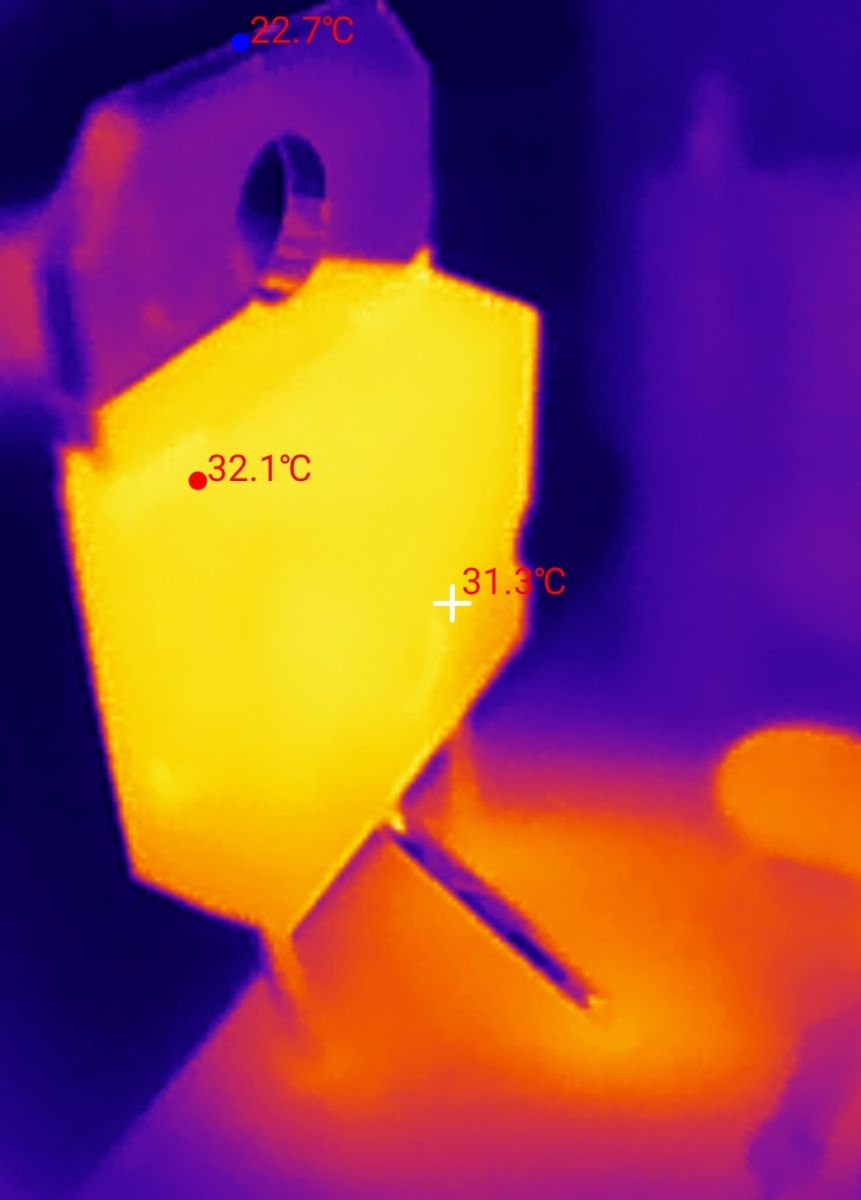
    The thermal imaging camera images above clearly show the temperature distribution after load. The main transistor heats up significantly less:
    The inside of the Polish retro power supply Polwat PWS-100 RM 24V/4A - has it survived the years of

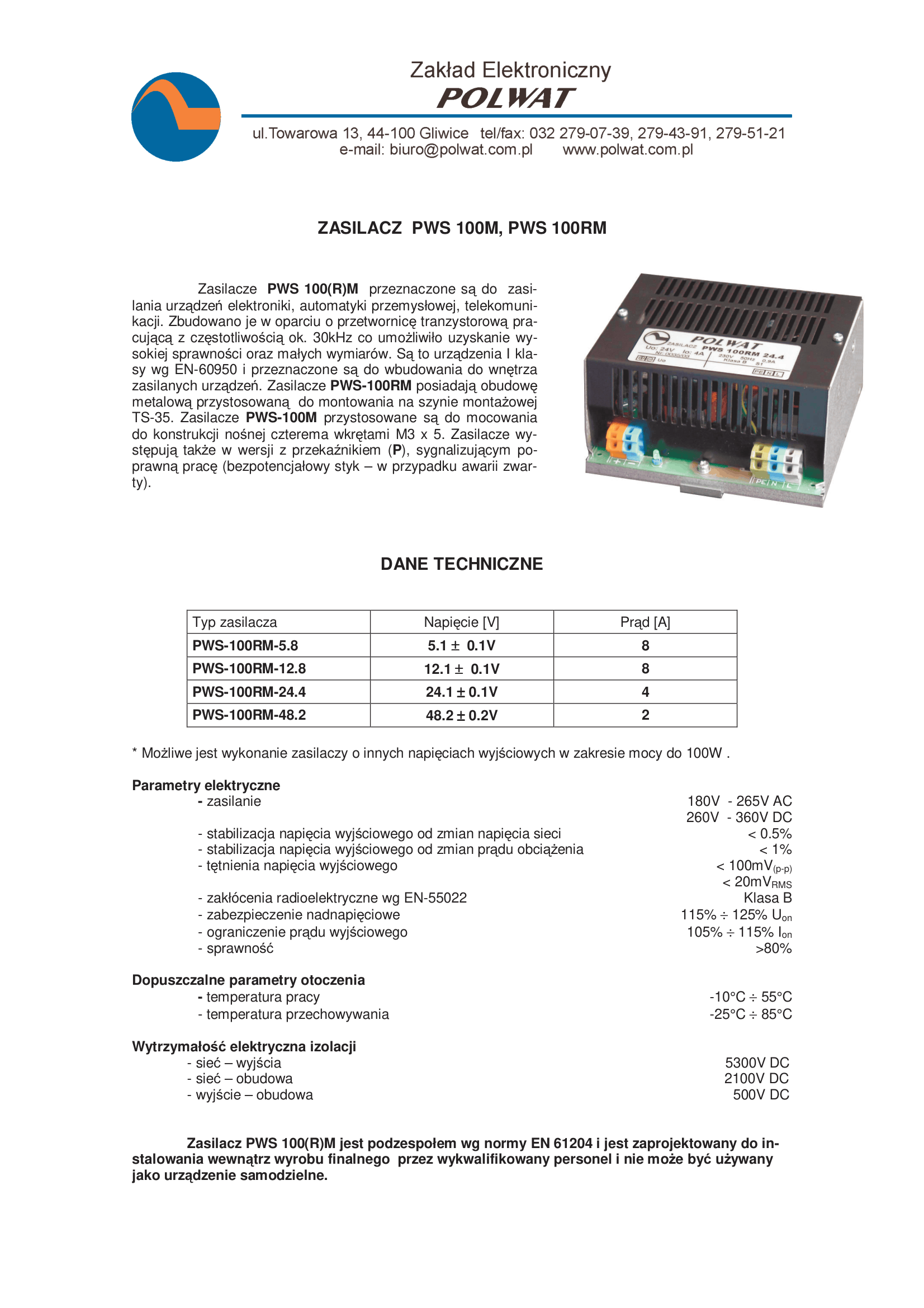
    Finally, it is still worth taking a look at the power supply parameters from the original manufacturer's documentation:
    The inside of the Polish retro power supply Polwat PWS-100 RM 24V/4A - has it survived the years of The inside of the Polish retro power supply Polwat PWS-100 RM 24V/4A - has it survived the years of
    It is well apparent that this is no ordinary no-name power supply from China. The manufacturer specifies its parameters in detail, including ripple levels, radio interference and the electrical insulation strength of the mains-to-housing, mains-to-output and output-to-housing.

    In summary, it appears that the power supply, despite its poor visual condition, is fully operational. A longer test would be useful, already with the appropriate heatsinks in place and at a lower current, but I do not currently have such a load at hand.

    The design seems very solid and well thought-out, confirming the good reputation of older, industrial devices of Polish manufacture. If, after years of service, and probably some time spent on the scrap heap, the equipment is still working and holding its parameters, this testifies to the selection of good quality components and an adequate safety margin in the design.

    My plans are to clean the board thoroughly, apply thermal conductive paste and perhaps use this power supply in one of my projects.

    And have you guys had the opportunity to use this type of power supply in your factories or home workshops? How do you rate their failure rate?

    Cool? Ranking DIY
    Helpful post? Buy me a coffee.
    About Author
    p.kaczmarek2
    Moderator Smart Home
    Offline 
    p.kaczmarek2 wrote 14604 posts with rating 12620, helped 654 times. Been with us since 2014 year.
  • ADVERTISEMENT
  • #2 21899661
    Simon79
    Level 21  
    Posts: 424
    Help: 29
    Rate: 397
    p.kaczmarek2 wrote:
    I plan to thoroughly clean the board, apply thermally conductive paste and perhaps use this power supply in one of my projects.

    Well designed equipment when refreshed can last another 25 years, unlike today's inverters made in china, not to mention EMC.
  • #3 21899673
    p.kaczmarek2
    Moderator Smart Home
    Posts: 14604
    Help: 654
    Rate: 12620
    After removing the chassis, I checked the solders to see if I could see traces suggesting a previous component replacement. This time, however, it was not possible to draw a firm conclusion as many of the solders in this power supply have traces of rosin.
    Helpful post? Buy me a coffee.
  • ADVERTISEMENT
  • #5 21899727
    TechEkspert
    Editor
    Posts: 7169
    Help: 16
    Rate: 5539
    Impressive, heavyweight equipment :) I once came across a switch mode power supply from a Polish TV receiver Jowisz 04 it was an even bigger monster.
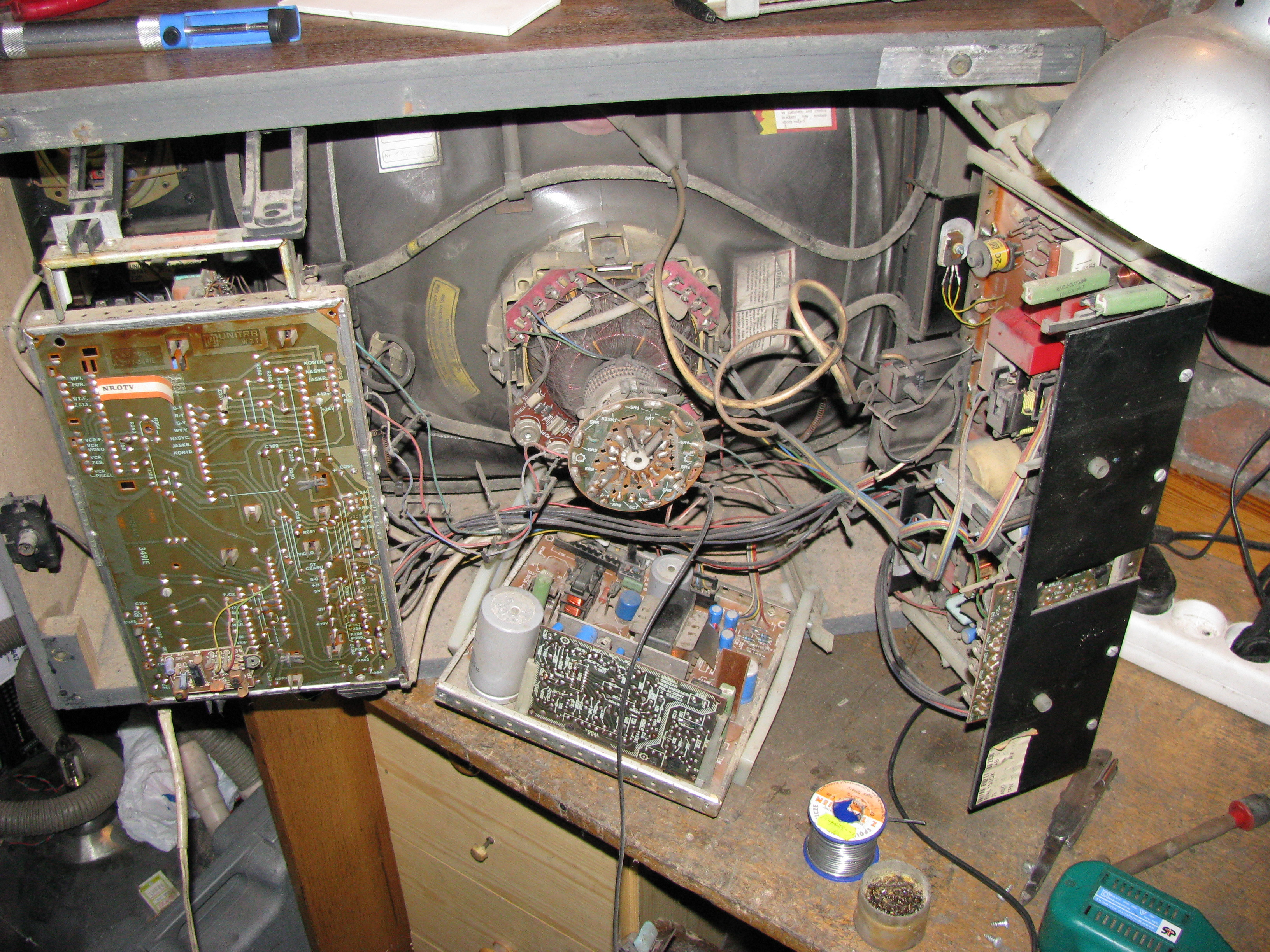
    I found a photo on elektroda.pl

    https://www.elektroda.pl/rtvforum/topic1454462.html
    The power supply is the hardware under the neck of the cathode ray tube:

    The inside of the Polish retro power supply Polwat PWS-100 RM 24V/4A - has it survived the years of
  • #6 21899838
    Olkus
    Level 32  
    Posts: 3921
    Help: 132
    Rate: 917
    Decent power supply, now something in this class of build quality costs a bit. Simple forward 1T, easily repaired and as you can see has stood the test of time very well :)
    I would also wash and keep, can be used.

    Regards,
    A.
  • ADVERTISEMENT
  • #7 21899905
    krzbor
    Level 29  
    Posts: 1755
    Help: 41
    Rate: 1063
    ArturAVS wrote:
    MeanWell from https://www.elektroda.pl/rtvforum/topic3827629.html#19586151 after ~5 c years refused to work.

    You've got me worried. I also "bet" on these power supplies hoping they would live a long time. If you fix it then describe it on the electrode - I wonder what screwed up.
  • #8 21899929
    rafcio363
    Level 30  
    Posts: 2247
    Help: 94
    Rate: 265
    I had a similar 12V 10A beautiful design until it was nice to look in there.
  • #9 21900085
    kris8888
    Level 41  
    Posts: 6924
    Help: 532
    Rate: 1890
    krzbor wrote:
    You have worried me. I also "bet" on these power supplies hoping they will live a long time. If you are going to repair it, please describe it on the electrode - I wonder what screwed up.

    I've already repaired two of these, post #27 from the same Arthur topic:
    https://www.elektroda.pl/rtvforum/topic3827629.html

    And as for the title power supply, you can see that we can make solid stuff in Poland, much better than the Chinese mass-produced stuff. The company still offers a wide range of professional power supplies, good that they can withstand Chinese competition.

    It would still be useful to measure the ripple and interference generated by this power supply at different load values.

    TechEkspert wrote:
    I once came across a switched-mode power supply from a Polish TV receiver Jowisz 04 it was an even bigger monster.
    This power supply was a disaster. It worked synchronously with the horizontal deflection circuit. Without a properly working H-deflection circuit and the impulses from it, it was not possible to run this power supply in a simple way, let alone quickly diagnose faults in it.
    A long time ago, I repaired some of these power supplies and got dogged by it every time.
  • #10 21900530
    TechEkspert
    Editor
    Posts: 7169
    Help: 16
    Rate: 5539
    Yes this Jupiter power supply was a nuisance, it had two high power resistors, in the form of a ceramic plate, which were damaging themselves by making a break.

    I guess the synchronicity was supposed to be a safety feature, but it was a nuisance to the service technician.

    I associate the power supply with a Polish set-up circuit from CEMI in the UL series and this circuit was on a separate module - a vertical board inside the power supply.
  • #11 21900546
    Janusz_kk
    Level 39  
    Posts: 5789
    Help: 219
    Rate: 1446
    TechEkspert wrote:
    Synchronicity was probably supposed to be a protection,

    But from where, it was all about interference, if the power inverter was running loose it would have to be very carefully disconnected and tightly sealed in a metal cage otherwise it would seep, stripes would fly across the screen, thanks to synchronous operation the state switching took place during spot blanking and was not visible.
  • ADVERTISEMENT
  • #12 21900588
    TechEkspert
    Editor
    Posts: 7169
    Help: 16
    Rate: 5539
    Interesting, I hadn't seen that. All in all, this power supply was enclosed in a metal hollow cage made of thin sheet metal.
  • #13 21900624
    coberr
    Level 20  
    Posts: 845
    Help: 21
    Rate: 434
    Great power supply. When I look at these idiotic EU regulations and the artificial and also idiotic generation of whole masses of electro-waste - it drives me nuts....
    ABSOLUTELY EVERYTHING there contradicts itself!!!
    And such and similar equipment could easily go on for years to come....
    But it's cheaper and better to import CRAP FROM CHINA....

    To the author of the topic - Mr Kaczmarek - let me draw your attention to one fact.
    You all measure electrolytic capacitors during tests/repairs and that is all you are interested in. ABSOLUTELY NO ONE is interested in measuring the input filter capacitance value of the power supply after repairs. And this should also be measured. VIRTUALLY NO ONE DOES THIS. And quite often the loss of capacitance of MKT capacitors is monstrous (especially if the power supply of any kind is running continuously). Nobody will also pay attention to the fact - that, admittedly, film capacitors can regenerate - but when taking such a monstrous number of overvoltages and "peaks" - this regeneration always takes place through LOSS OF CAPACITY of these capacitors. Folks - start measuring at least the input filter capacitors of your power supply (I am already leaving out the EMC protection components) after repairs. Especially in power supplies - working with standby mode.
  • #14 21900630
    p.kaczmarek2
    Moderator Smart Home
    Posts: 14604
    Help: 654
    Rate: 12620
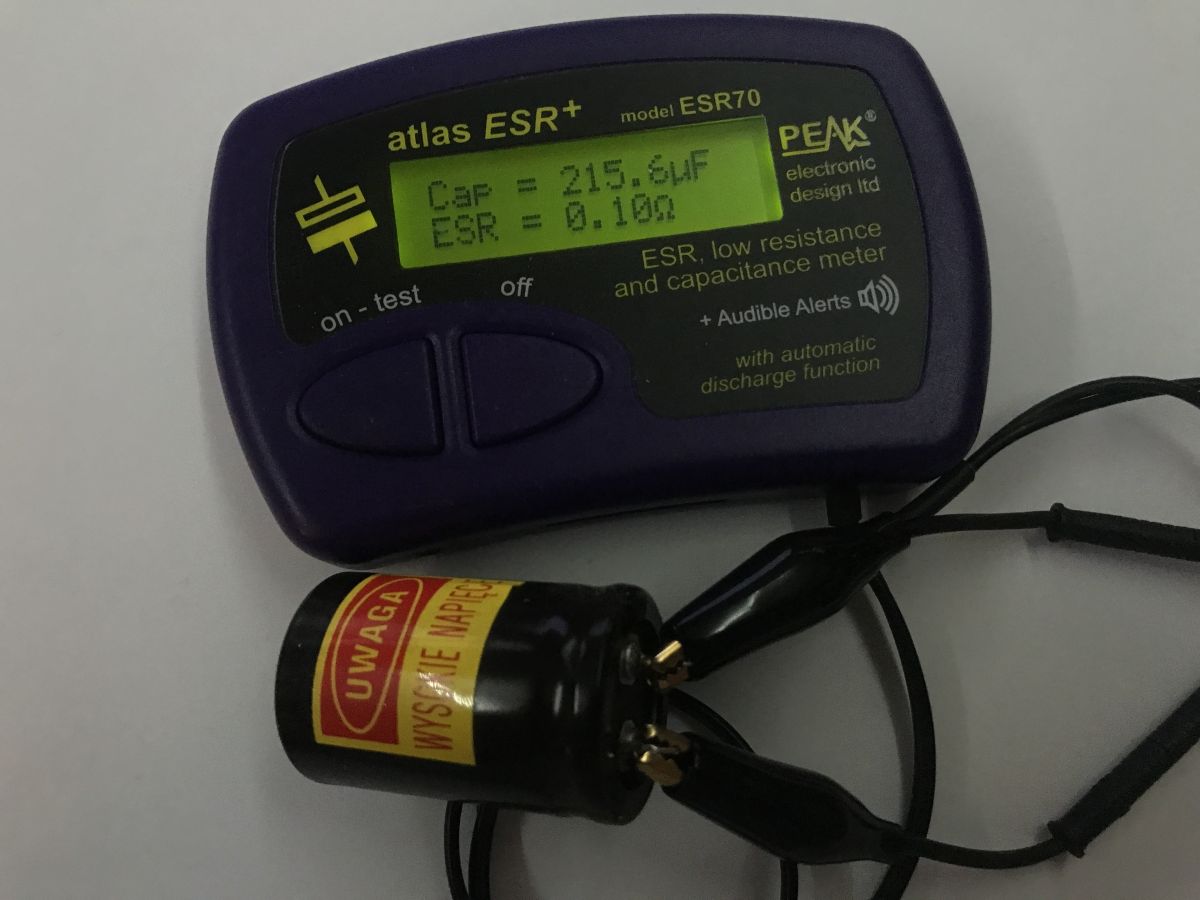
    As I started reading your message, I thought you were going to write about the capacitor at the flyback converter controller, the one that is usually fed from the additional winding (and via resistors from the 320V line to start), but oh well, that one at 400V can be checked too.
    Atlas ESR+ ESR70 meter testing a capacitor; display reads Cap 219.6 µF and ESR 0.10 Ω.
    Helpful post? Buy me a coffee.
  • #15 21900720
    żarówka rtęciowa
    Level 38  
    Posts: 3909
    Help: 364
    Rate: 390
    Hello

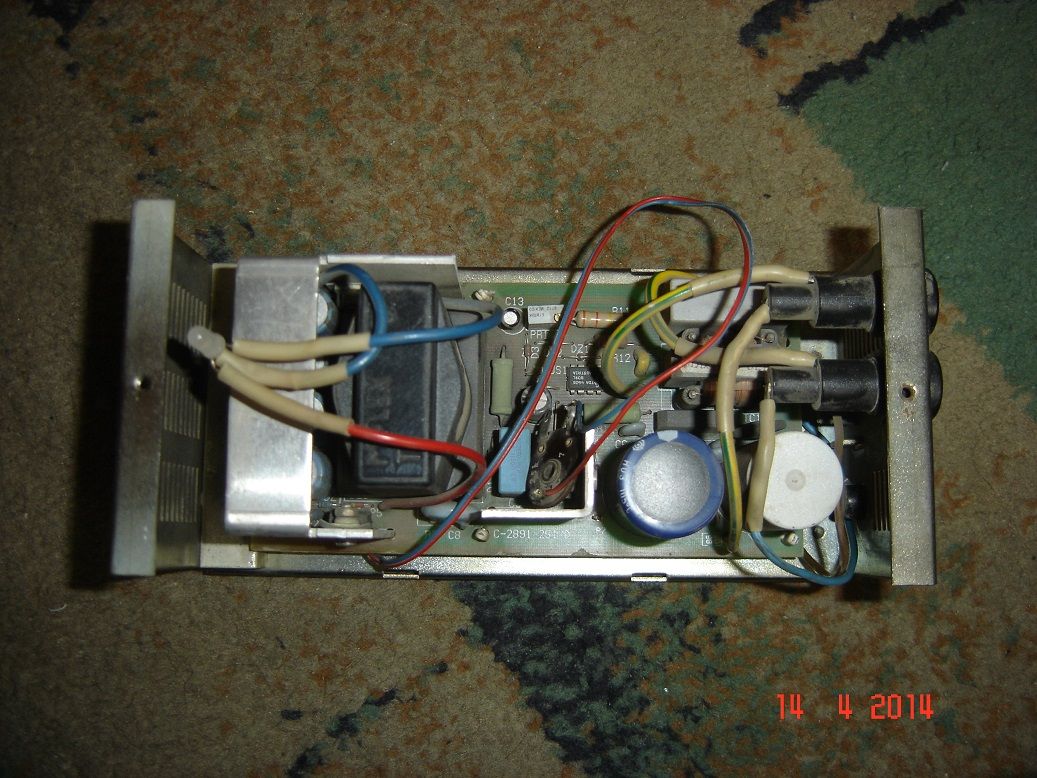
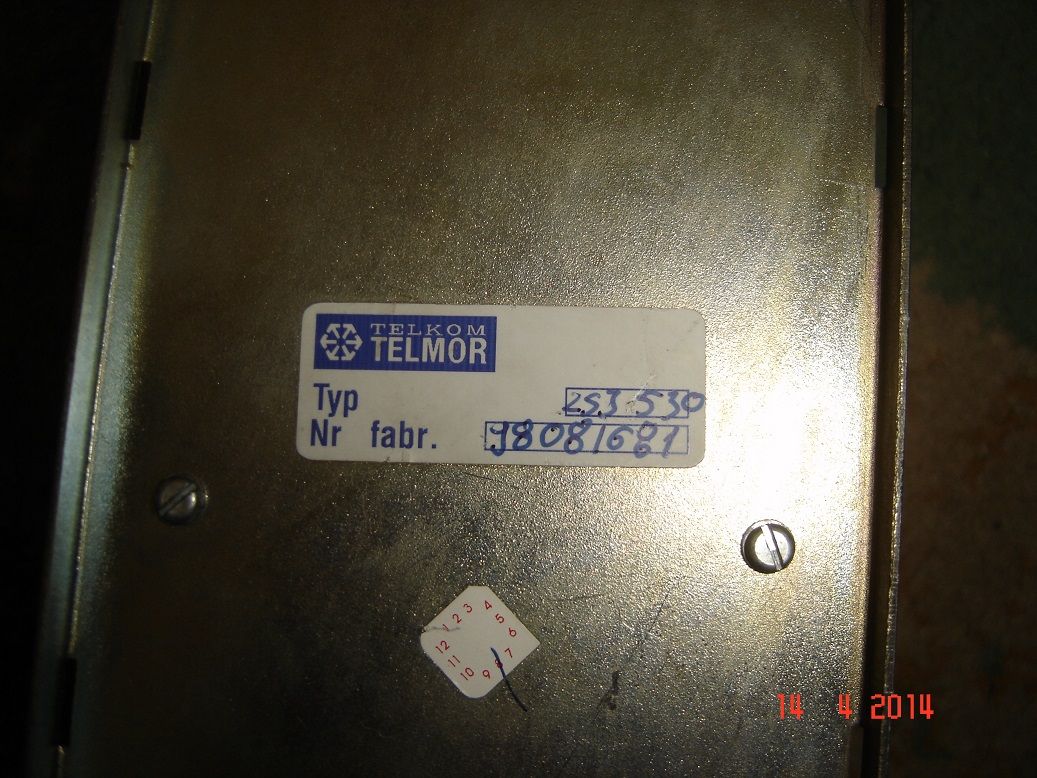
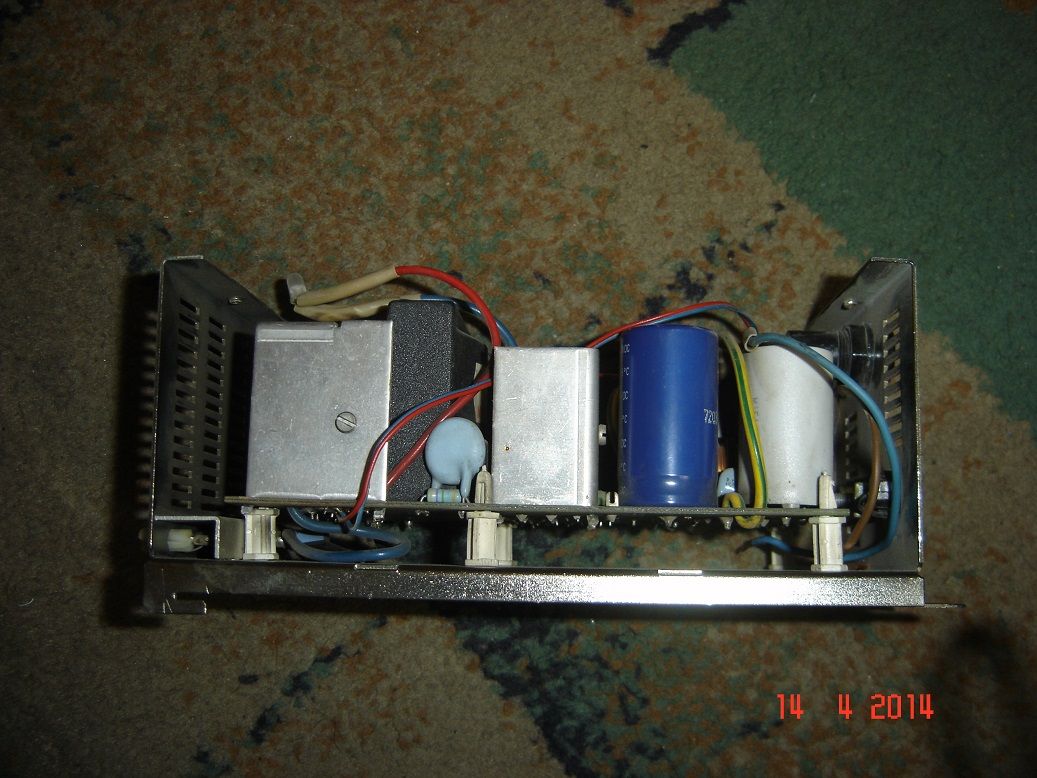
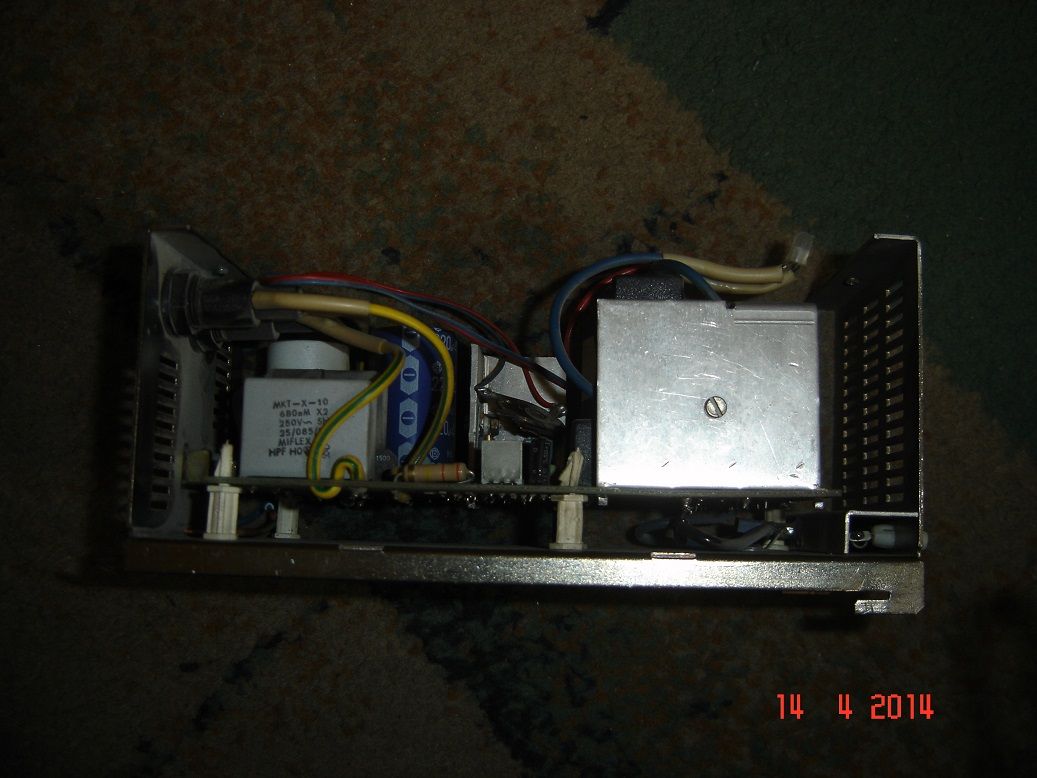
    Similar power supplies were produced by other Polish companies, here a 24V found in a scrap yard in 2014. I do not currently own it. It was intended for powering collective antenna systems. Pulse transformer manufactured by Miflex, similar ones were found in Neptun series colour TVs from model 505 onwards.


    Inside a switch-mode power supply with PCB, wires and capacitors; “14 4 2014” date stamp in corner Metal device casing with “TELKOM TELMOR” label and fields for “Typ” and “Nr fabr.” Interior of a switching power supply in a metal case with a large blue capacitor Inside a switch-mode power supply in a metal case with transformer and wires; date 14 4 2014 in the corner. Inside a switch-mode power supply in a metal case with transformer and wires; date 14 4 2014 in the corner.


    Olkus wrote:
    Simple forward 1T, easily repaired and as you can see has stood the test of time very well :)


    This is a flyback, or barrier inverter. This has its advantages such as: no large choke on the output.
  • #16 21900916
    pan_buka
    Level 12  
    Posts: 22
    Rate: 30
    Cool stuff, I love the teardown of professional electronics, especially the slightly older ones. I just wonder how much this power supply cost in 2000 - I suspect it wasn't cheap. No wonder it doesn't fit in with today's times: today it's supposed to be cheap, fast, poorly made, preferably if the equipment is unrepairable and the MTTF calculated so that failure occurs just after the warranty expires. Then it's just a container of electronic waste and we buy another one. Ecology level hard.
  • #17 21900933
    Olkus
    Level 32  
    Posts: 3921
    Help: 132
    Rate: 917
    żarówka rtęciowa wrote:
    This is a flyback, or barrier inverter. This has its advantages such as: no large choke on the output.


    Right. I was confused by the UC3844, rather more common with forward topologies and this transistor at 800V, these are also often found in forwards. I didn't look at that the output choke is indeed tiny....
    As for the advantages, forward rather better than flyback - less interference, capacitors less "tired".
    p.kaczmarek2 wrote:
    As I started reading your message, I thought you were going to write about the capacitor at the flyback converter controller, the one that is usually fed from an additional winding (and via resistors from the 320V line to start), but oh well, that one on 400V can be checked too.

    There, it was mainly about those X-classes switched on between L and N in the statement. As they lose capacitance more interference goes to the grid. I myself recently came across one that had several nF instead of 680nF.

    Regards,
    A.
  • #18 21900972
    mkpl
    Level 37  
    Posts: 5659
    Help: 306
    Rate: 854
    @ p.kaczmarek2 measure the capacitance of the class X capacitors. I've been struggling with them a lot lately, because with the current amount of "inverters" generating harmonics to the grid these capacitors die after 2 years. At least the ones we currently use (it's hard to get something "different").

    As far as quality is concerned, the power supplies from the impulse basin (Gliwice) are still doing well. Of the manufacturers, Polwat and the other company I work for :) remain after years

    Power supplies of similar quality are still produced, but the price then, as today, was rather on the high end. This is mainly due to the components used and full quality control. MW does a spot check every 100 or so pieces. Out-of-control pieces may not even see the mains supply until they are sold.

    Magnetics are also a big problem. We use cores that are commercially available and without grinding (because it doesn't pay off), while MW orders its own casing and core shapes and its own cubes.

    By way of trivia, this powlat has a fairly low conversion frequency. Which, from a weight and efficiency point of view, is bad, but the lifespan, however, is significantly increased.
  • #19 21901121
    TechEkspert
    Editor
    Posts: 7169
    Help: 16
    Rate: 5539
    I used to use MW power supplies when a repetitive unit was hitting more locations.
    I checked on http://www.polwat.com.pl/ and PWS-40 and PWS 40RM look interesting.
    Does Polwat have a sales network or do they sell in-house?

    @mkpl if you can let us know what other companies in the impulse basin are active, such information could be useful.
  • #20 21901152
    mkpl
    Level 37  
    Posts: 5659
    Help: 306
    Rate: 854
    @TechEkspert Merawex yet there is Alker (they make transformers) and all originated from ZDEMP and the polytechnic.
  • #21 21901192
    Mateusz_konstruktor
    Level 37  
    Posts: 4208
    Help: 269
    Rate: 1104
    coberr wrote:
    To the author of the topic - Mr Kaczmarek - I will point out one fact.
    You all measure electrolytic capacitors during testing/repairs and that is all you are interested in. ABSOLUTELY NO ONE is interested in measuring the capacitance value of the power supply input filter after repairs. And this should also be measured. And quite often the loss of capacitance of the MKT capacitors is monstrous (especially if the power supply unit is working continuously). No one will also draw attention to the fact - that, although film capacitors can regenerate themselves - but in the case of absorbing such a monstrous number of overvoltages and "peaks" - this regeneration always takes place through LOSS OF CAPACITY of these capacitors. People - start measuring at least the input filter capacitors of your power supply (I am already leaving out the EMC protection components) after repair. Especially in power supplies - working with standby mode.

    A colleague is not charging.
    Quote:
    07 May 2023 20:33

    Mateusz_konstruktor wrote:

    ...
    Despite appearances, the issue is not as simple as it looks.
    Due to the age of the equipment, it makes as much sense as possible to address the noise filter capacitors, something that is overlooked by many repairers.
    The inside of the Polish retro power supply Polwat PWS-100 RM 24V/4A - has it survived the years of
    These capacitors degrade and the filter ceases to effectively filter the interference then transferred to the mains supply.
    The end result is noisy or even impossible radio reception, as well as various types of interference with other mains-powered devices.
    Here is an example from my practice, a repair from last week and this is equipment only a few years old.
    The inside of the Polish retro power supply Polwat PWS-100 RM 24V/4A - has it survived the years of
    Of the original 470nF capacitance, only about 75nF remains.
    ...

    Link to source thread on Elektroda: https://www.elektroda.pl/rtvforum/topic3976165.html .
  • #22 21901248
    TechEkspert
    Editor
    Posts: 7169
    Help: 16
    Rate: 5539
    Oh that's right Merawex, I remember their 48V buffer power supplies for telecoms equipment, very good equipment taking into account the battery temperature.

    The new Merawex power supplies can test the resistance of the battery (with alternating current).

    In CCTV and SKD, on the other hand, I perceive the quality of Pulsar power supplies quite well.
  • #23 21901403
    mkpl
    Level 37  
    Posts: 5659
    Help: 306
    Rate: 854
    >>21901248

    All compliant 54-4 must have a resistance check.
    Correct measurement of resistance using the AC method is quite cumbersome. The classical approach is subject to a considerable error due to the inductance of the conductors (with an ac resistance of several mΩ), so it is measured in a vector, taking into account the real and imaginary part. Besides, the method of artificially loading the battery and measuring the rate of voltage drop is still in use. Practice shows that battery resistance and capacity are converging, but nevertheless different and complementary tales.
  • #24 21901745
    gregor124
    Level 28  
    Posts: 1544
    Help: 97
    Rate: 827
    >>21899725
    coberr wrote:
    you all measure electrolytic capacitors during tests/repairs and that is all you are interested in. ABSOLUTELY NO ONE is interested in measuring the input filter capacitance of the power supply after repairs. And this should also be measured. And quite often the loss of capacitance of the MKT capacitors is monstrous (especially if the power supply unit is working continuously). No one will also draw attention to the fact - that, although film capacitors can regenerate themselves - but in the case of absorbing such a monstrous number of overvoltages and "peaks" - this regeneration always takes place through LOSS OF CAPACITY of these capacitors. People - start measuring at least the input filter capacitors of your power supply (I am already leaving out the EMC protection components) after repair. Especially in power supplies - working with standby mode.


    And here I'll agree, I've seen a lot of power supplies from AppleII, I myself have had one working faultlessly for 45 years now. And I don't remember ever seeing one where the capacitors have lost capacitance. The only thing that needs to be replaced in them are the ones in the input filter.
    Of course, I'm writing about original power supplies, because these Chinese fakes were known for their low quality already in the era, i.e. the 1980s.
    As for the measurement of interference, they generally generated much lower ones, because they did not use PWM for regulation, but rather frequency variation.
    Helpful post? Buy me a coffee.
  • #25 21902579
    coberr
    Level 20  
    Posts: 845
    Help: 21
    Rate: 434
    >>21900630
    my colleague didn't understand - maybe I expressed myself inaccurately - I meant the capacitors of the mains anti-interference filter. Virtually NO ONE CHECKS THEM. and they very often lose their parameters almost completely.
    In this case - due to the fact that the power supply has not been used for years - they may be in quite good condition. Another capacitor that is always worth checking is the capacitor of the suppression and steepness circuits on the key. and another one on the output rectifier diodes (not the filtering ones either :) ).
    At the very end, one can be interested in EMC protection capacitors - they are probably the "least frequent".
    But the real plague started a few years ago - especially when at least two inverters feeding energy into the grid compete for "supremacy". This is when all interference filter capacitors are "hit" drastically, and THIS IS THE REAL PLAGUE NOW - right after ELECTROLITES. But it is quiet everywhere about it.... nothing happened...

    TO those people who have lashed out at me so much here :
    I am glad - that sometimes there is someone who pays attention to this fact and knows - that such situations can occur. BUT THERE ARE STILL MANY - GODS OF ELECTRONICS - especially if you watch e.g. the sick You tube - who have no idea of what they are doing :) . (especially when it comes to inverters)
    When it comes to old age equipment - please do not compare old age computers - APPLE class - which you only fire up occasionally for a few hours - with equipment - which is connected to the network practically NON STOP. What is happening in the network today compared to what it was years ago is two different stories.
  • #26 21902596
    p.kaczmarek2
    Moderator Smart Home
    Posts: 14604
    Help: 654
    Rate: 12620
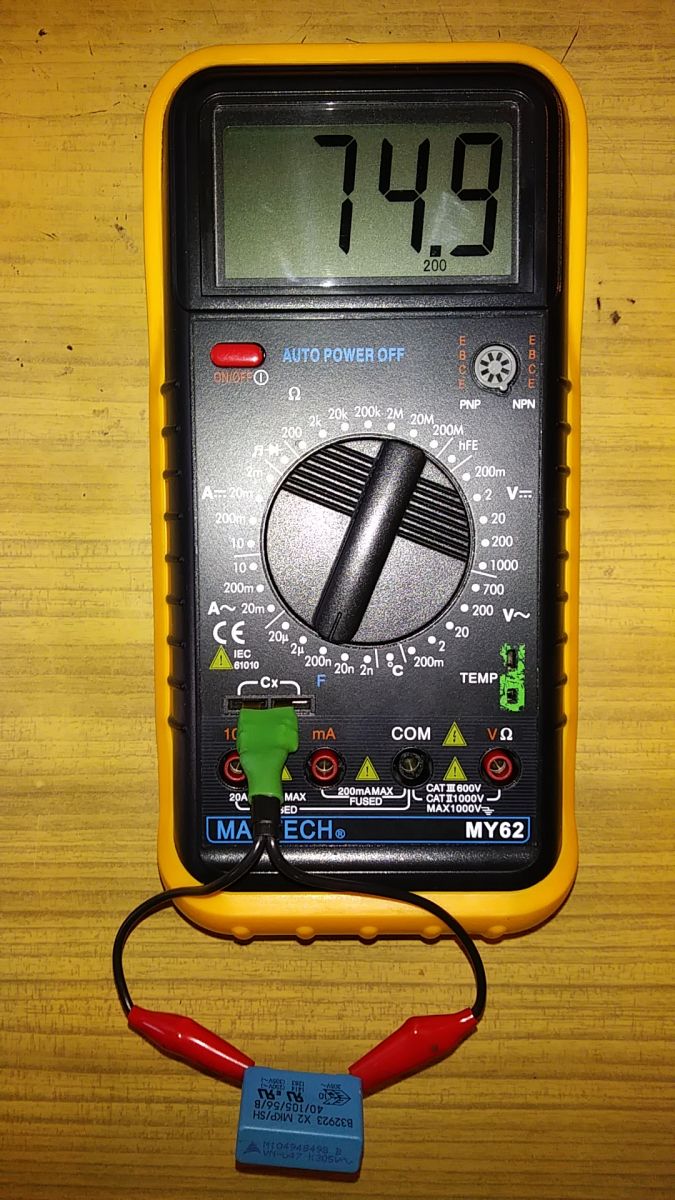
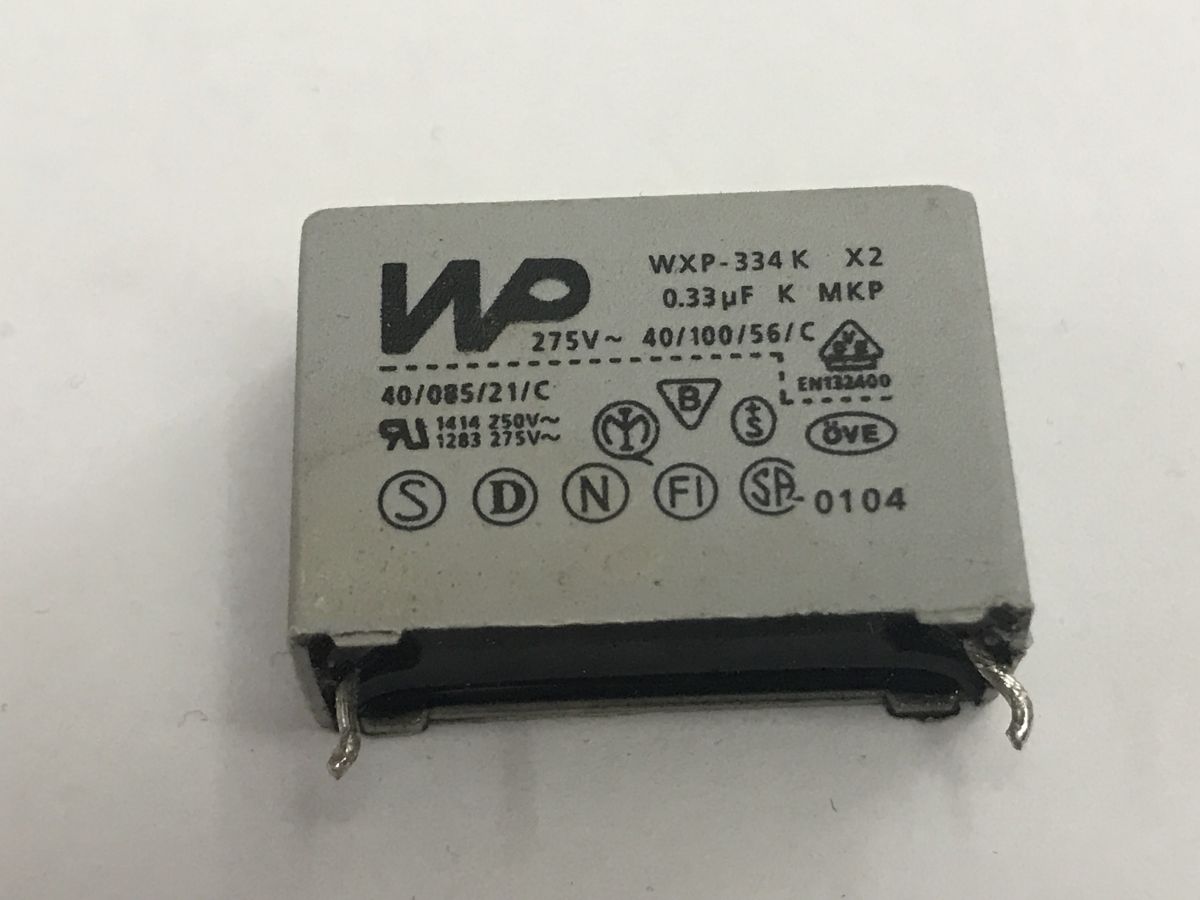
    My honour, I did indeed misunderstand. My ESR70 doesn't measure such small capacities, if I can measure with something else I'll show you.
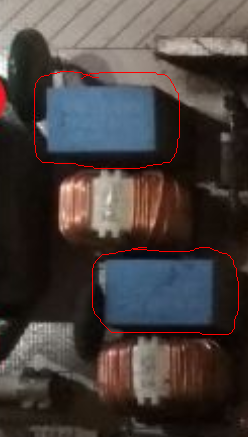
    WIMA WXP-334K X2 film capacitor 0.33 µF 275V~ with printed markings and leads Close-up of a PCB with blue disc varistors and a black cylindrical part labeled “T2A/250V”
    Helpful post? Buy me a coffee.
  • #27 21904082
    filipcichowskidev
    Level 12  
    Posts: 90
    Help: 4
    Rate: 157
    >>21900624
    I guess you've spent quite a bit of time in an industrial environment.

    In large companies, power supplies that are easily replaceable are not resuscitated. I am talking about DIN rail mounted power supplies. It's cheaper to buy a new Meanwell power supply and put in the place of the old one because a) downtime causes losses b) the man who re-services such a power supply also has to be paid. The Union doesn't make you replace these power supplies, just the maintenance engineer will scrap them.

    "China's scum..." Your emotions are speaking through you. An engineer in his job has to work on hard data and not on his visions. Compare emissions, ripple, power distortion of some Meanwell of similar power and this Polish wonder of technology and then you can talk. And the Chinese will make you the quality you are prepared to pay for.

    As for damage to the self-healing capacitors, I fully agree, although every UPS technician I know (I know 5 of them) routinely checks them when, for example, the UPS won't charge from the mains and the batteries are new. I've done some of these little ones between 2 and 10kW. The smaller ones are not even worth dismantling.
  • #28 21904084
    ArturAVS
    Moderator
    Posts: 26230
    Help: 2296
    Rate: 7771
    Mateusz_konstruktor wrote:
    Colleague not charging.

    Stop giving "horse" inserts. And don't use phrases you don't understand. It adds nothing to the topic.
📢 Listen (AI):

FAQ

TL;DR: At roughly 25 years old, the Polwat PWS-100 RM still worked, and one expert-style verdict was "fully operational." This FAQ helps repairers, automation technicians, and retro-electronics users judge whether an old 24 V/4 A DIN-rail PSU is still worth cleaning, testing, and reusing. [#21899471]

Why it matters: Old industrial power supplies can remain serviceable for decades, but only if construction quality, capacitor health, and thermal behavior still support safe reuse.

Power supply option Age / context Observed result Main takeaway
Polwat PWS-100 RM 24 V/4 A Unit marked from 2001 Still starts, holds 24 V no-load, survives 5.44 A overload test Strong build and repair-friendly layout
MeanWell unit mentioned in thread About 5 years Stopped working; symptoms pointed to dried electrolytics Newer brand-name gear can still fail earlier
Modern low-cost Chinese units/inverters Current-market comparison Criticized for weaker EMC and longevity Build quality may trail older industrial designs

Key insight: The thread’s strongest takeaway is simple: solid industrial design, generous copper, full input protection, and conservative parts selection matter more to lifespan than age alone.

Quick Facts

  • Nameplate and thread data point to a Polwat PWS-100 RM DIN-rail supply rated 24 V / 4 A, mounted on TS-35 rail, with other family variants listed as 5 V, 12 V, 24 V, and 48 V. [#21899471]
  • The tested unit showed 24 V at no load and about 21.75 V when stressed to 5.44 A using four 1 Ω power resistors, which is above its nominal 4 A rating. [#21899471]
  • Input-side protection includes a T2A/250V fuse, varistors, and an NTC inrush limiter placed after the rectifier bridge, indicating a protection-focused industrial design. [#21899471]
  • Control and power parts identified in the teardown include UC3844, CNY75GA optocouplers, TL431, a Schottky diode in TO-220, and an STMicroelectronics H8N80 MOSFET rated 800 V, 8 A. [#21899471]
  • Thermal images showed the Schottky diode and NTC resistor ran hottest under load, while the main switching transistor heated less, suggesting losses concentrate outside the primary switch. [#21899471]

How well has the Polish Polwat PWS-100 RM 24V/4A power supply survived roughly 25 years of industrial use and time in scrap conditions?

It survived unusually well and still appears fully usable. The unit seems to date from 2001, spent time in industrial service, was recovered from scrap, showed dirt and moisture marks, yet still powered up, held 24 V with no load, and passed a harsh 5.44 A test. The board, insulation spacing, EMI parts, and capacitors also looked stronger than expected for its age. [#21899471]

What is the actual internal topology of the Polwat PWS-100 RM, and why was it identified as a flyback supply based on the UC3844 controller?

The teardown identifies it as a flyback switch-mode supply built around a UC3844 controller. The author explicitly states that the PSU uses UC3844 and a flyback topology, with optocoupler feedback, TL431 regulation, a single main MOSFET, and a Schottky output rectifier. One later reply called it a “simple forward 1T,” so forum interpretation is not fully unanimous, but the teardown itself labels it flyback. [#21899471]

Which parts in the Polwat PWS-100 RM heat up the most under load according to the thermal camera images, and what does that say about the design?

The Schottky diode and the NTC resistor heated up the most under load. The thermal images showed both parts running hotter than the main switching transistor during the 5.44 A test, while the MOSFET heated “significantly less.” That points to output rectification and inrush-limiter losses being more thermally stressed than the primary switch in this operating condition. [#21899471]

How do you test old electrolytic capacitors in a power supply with an ESR70 meter before deciding whether to replace them?

You test them by measuring ESR first, then replacing only parts that fail. 1. Remove or isolate the capacitor enough for a reliable ESR70 reading. 2. Compare the measured condition against what a healthy capacitor should show for that value and role. 3. Refit capacitors that test good. In this case, the author checked the electrolytics with an ESR70, found no swelling, and concluded all capacitors were good enough to solder back in place. [#21899471]

What output voltage drop was observed on the PWS-100 RM when it was loaded to about 5.44 A with four 1 Ω resistors, and how should that result be interpreted?

The output fell from 24 V at no load to about 21.75 V at 5.44 A. That is a drop of roughly 2.25 V, or about 9.4%, during an overload condition because the unit is rated 4 A, not 5.44 A. The result suggests the PSU still regulates reasonably well under stress, but it should not be treated as proof of full-spec performance at continuous overload. [#21899471]

Why is the PE connection to the chassis made with a connector instead of being soldered directly, and how does that help with servicing?

A connector-based PE link makes servicing easier and cleaner. The author praised the fact that protective earth connects to the chassis through a connector rather than a soldered wire, because a technician can separate the chassis during teardown without desoldering the safety bond first. That choice signals a maintenance-friendly industrial layout instead of a cost-minimized assembly. [#21899471]

What is a TL431, and what role does it play in the feedback circuit together with the CNY75GA optocouplers in this power supply?

"TL431 is a programmable reference regulator that stabilizes output voltage, acts like an adjustable precision shunt, and commonly drives an optocoupler in isolated switch-mode feedback loops." In this PSU, the author spotted a TL431 and CNY75GA optocouplers in the feedback path, which indicates secondary-side voltage sensing and isolated error transfer back to the primary controller. [#21899471]

What is an NTC thermistor resistor, and why is it placed after the rectifier bridge to limit inrush current in a switch-mode power supply?

"NTC thermistor resistor is a temperature-dependent resistor that limits startup surge current, starts with higher resistance when cold, and then drops in resistance as it warms during normal operation." Here it is placed after the rectifier bridge and before the primary winding, where the author notes it limits inrush current into the primary side during power-up. [#21899471]

How can you check the solder joints in an old industrial power supply for signs of earlier repairs when rosin residue makes the inspection harder?

You inspect the solder side after disassembly, but residue can block a firm conclusion. 1. Remove the chassis to expose the solder side. 2. Look for mismatched solder texture, reheated pads, or replaced lead shapes. 3. If widespread rosin remains, treat the result as inconclusive until cleaning. That is exactly what happened here: the solder joints were checked, but heavy rosin traces prevented a definite repair history verdict. [#21899673]

What is the failure rate of Polwat PWS-series DIN-rail power supplies in factories or home workshops based on real user experience?

The thread does not provide a measurable failure rate. It offers only anecdotal evidence: the featured PWS-100 RM still works after roughly 25 years, one commenter said refreshed units can last another 25 years, and another called the design easily repairable and durable. Those comments support a positive reliability impression, but they do not establish a percentage or statistically valid field failure rate. [#21899838]

Polwat PWS-100 RM vs modern Chinese DIN-rail power supplies or inverters — which offers better build quality, EMC, and long-term durability?

The thread clearly favors the older Polwat design. Commenters describe it as well designed, heavy-duty, and strong in EMC, while modern Chinese inverters are criticized for weaker EMC and shorter life. The teardown supports that view with visible EMI filtering, generous copper, proper clearances, input protection, and a repair-friendly layout in a unit that still works after about 25 years. [#21899661]

What should be cleaned or refreshed first in an old DIN-rail PSU like the PWS-100 RM before putting it back into service, including dirt removal and thermal paste renewal?

Start with contamination removal and heat-transfer renewal. The unit showed significant dirt and traces of moisture, so the author planned to clean the board thoroughly first, then apply fresh thermal paste before reuse. That order makes sense because grime and old compound both impair inspection and thermal performance, while the thread’s electrical checks already showed the capacitors and basic operation were still acceptable. [#21899471]

How do the EMI filter, input fuse T2A/250V, and varistors improve mains protection in the Polwat PWS-100 RM?

They improve both survivability and noise control at the AC input. The author notes that the EMI filters appear fully populated, and explicitly identifies a T2A/250V fuse plus varistors for surge protection from the mains. Together, those parts help the PSU tolerate line disturbances, limit damage during fault events, and reduce conducted interference in industrial installations. [#21899471]

What is the STMicroelectronics H8N80 MOSFET used for in this power supply, and what replacement parameters matter most if it ever fails?

It is the main switching transistor on the primary side. The author identifies it as an STMicroelectronics H8N80 N-MOSFET rated 800 V and 8 A, used as the keying transistor in the SMPS. If it fails, the most critical replacement parameters are the same voltage class, current class, and matching SMPS switching role, because this part handles the primary-side energy switching. [#21899471]

How does the capacitor condition in this older Polwat unit compare with the MeanWell example mentioned in the thread where dried electrolytics caused failure after about five years?

The old Polwat came out looking better than the cited MeanWell example. In the Polwat, the electrolytics were checked with an ESR70, were not swollen, and were judged fit for reinstallation despite the unit being about 25 years old. By contrast, the cited MeanWell reportedly stopped working after about 5 years, with symptoms that suggested dried-out electrolytics. [#21899725]
Generated by the language model.
ADVERTISEMENT