logo elektroda
logo elektroda
X
logo elektroda

The Lucky Hawk 8204 USB power supply splitter, again about product safety

p.kaczmarek2 1389 11

TL;DR

  • Lucky Hawk 8204/LH 8207 is a £27 three-port USB power socket splitter sold with prominent “SAFETY” branding.
  • Teardown found the earth conductor completely unconnected, with the third cable core appearing as insulation only and no practical way to solder it in.
  • The USB section uses two flyback supplies with LP3773CL controllers; the datasheet says 5 W, and the strip carried only 1 A before dropping to 3.7 V.
  • Claims of grounded wiring, 4.1 A, 17 W, and fast charging look false, and the product is described as dangerous and essentially useless.
Generated by the language model.
ADVERTISEMENT
This content has been translated flag-pl » flag-en View the original version here
📢 Listen (AI):
  • The Lucky Hawk 8204 USB power supply splitter, again about product safety
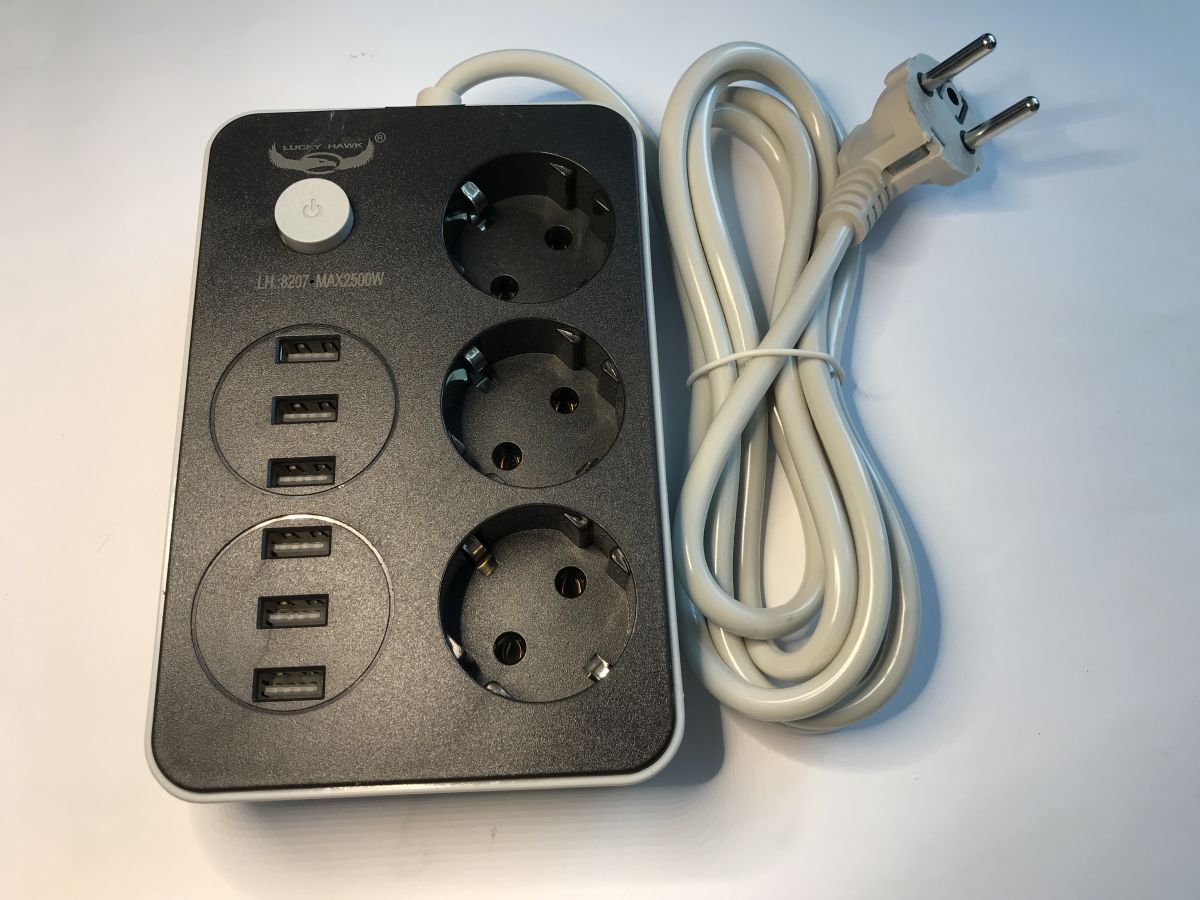
    Can a PLN 27 manifold bought from a Polish importer through one of Poland's best known mail order shops be dangerous? Today I present a product distinguished by the word SAFETY in its name, which translated from English means SAFETY. Will the Safety Power Socket from Lucky Hawk really prove to be safe? Let's find out!
    The Lucky Hawk 8204 USB power supply splitter, again about product safety The Lucky Hawk 8204 USB power supply splitter, again about product safety The Lucky Hawk 8204 USB power supply splitter, again about product safety The Lucky Hawk 8204 USB power supply splitter, again about product safety The Lucky Hawk 8204 USB power supply splitter, again about product safety
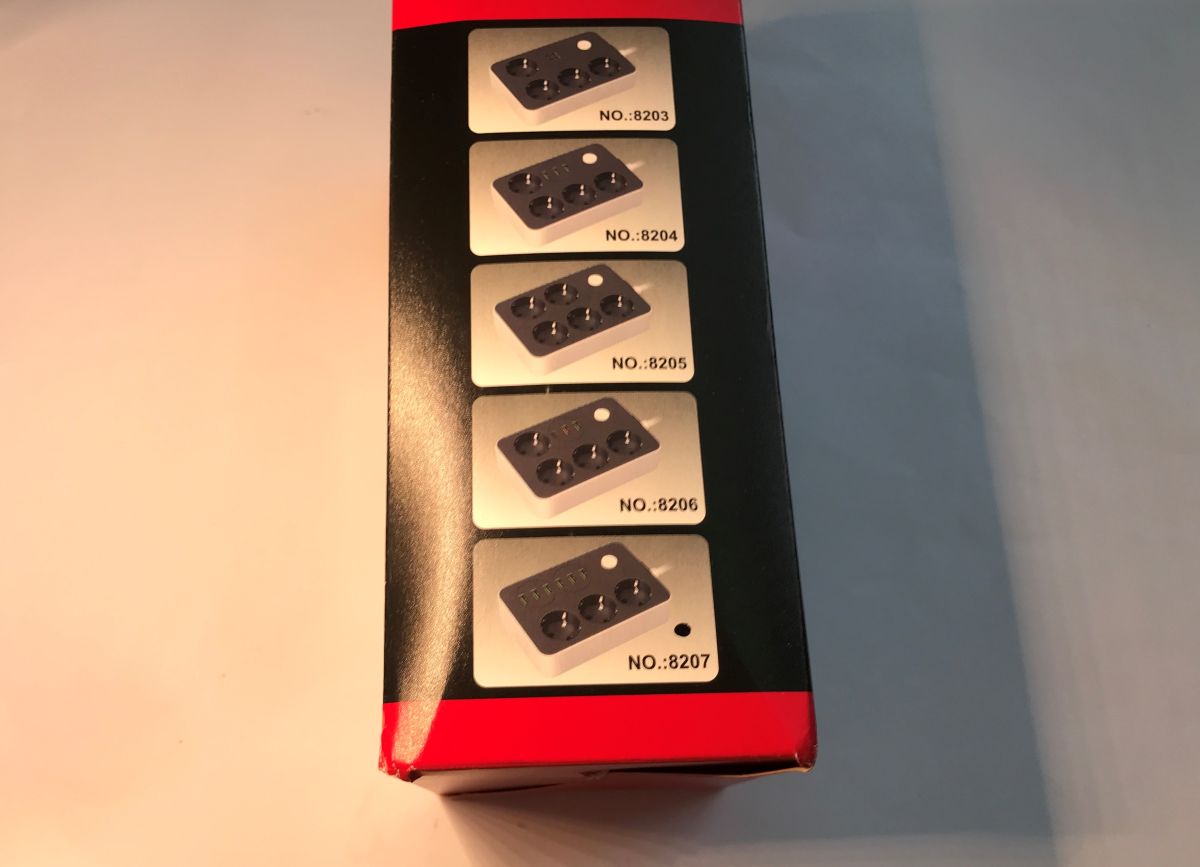
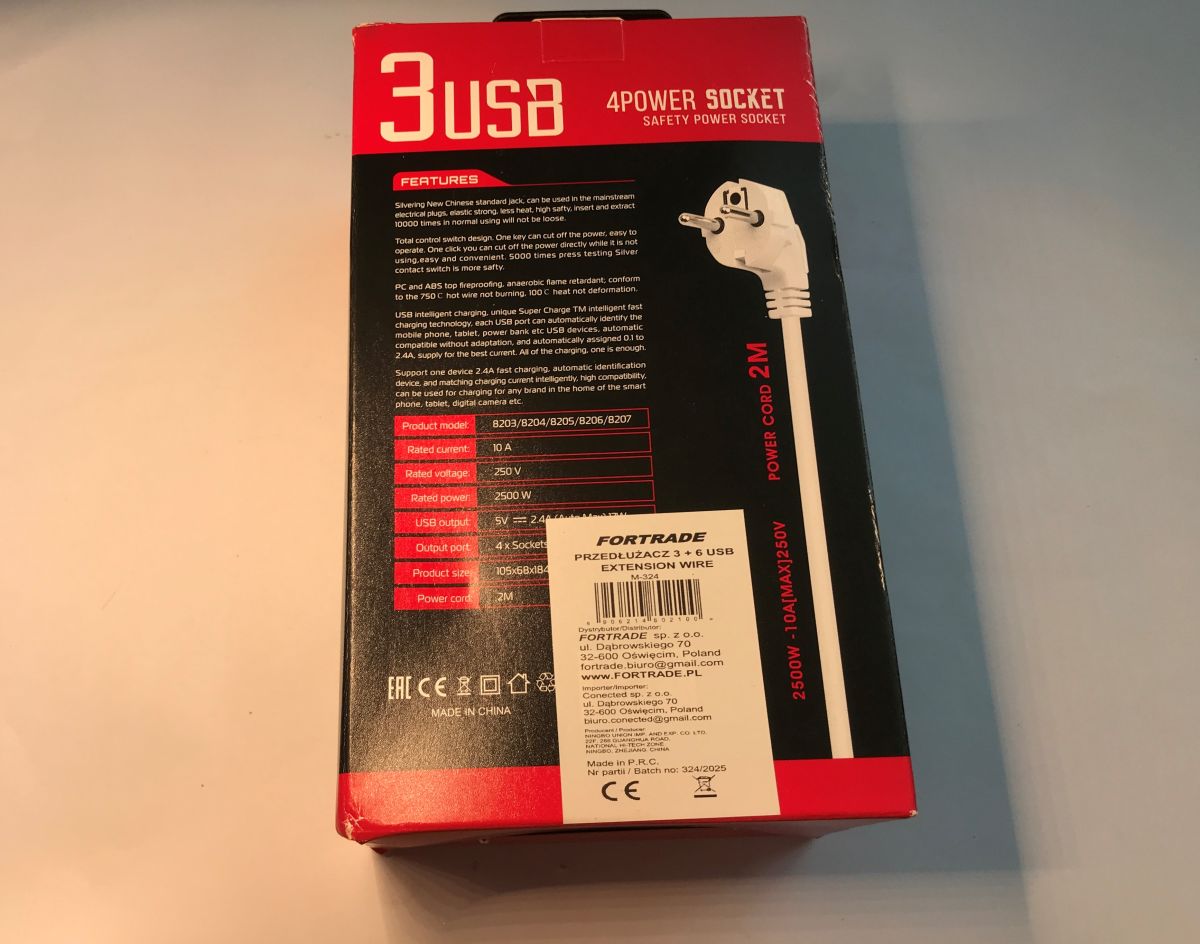
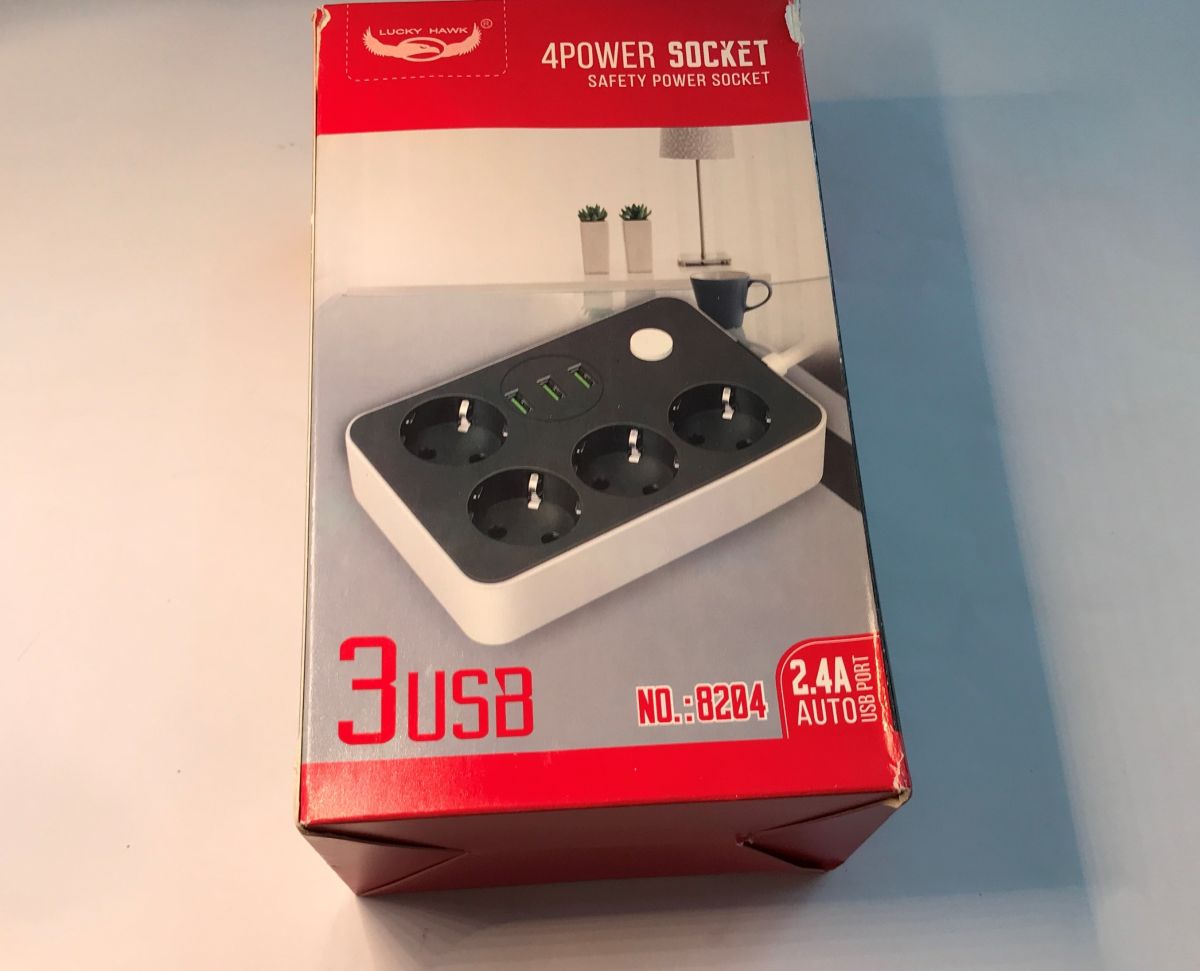
    Let's start with the packaging. Apart from that SAFETY, what strikes my eye is the USB current capacity - 2.4 A is a bit low for three ports, still without QC, but for such money.... there is an additional model on the case - LH 8207.
    The Lucky Hawk 8204 USB power supply splitter, again about product safety The Lucky Hawk 8204 USB power supply splitter, again about product safety The Lucky Hawk 8204 USB power supply splitter, again about product safety
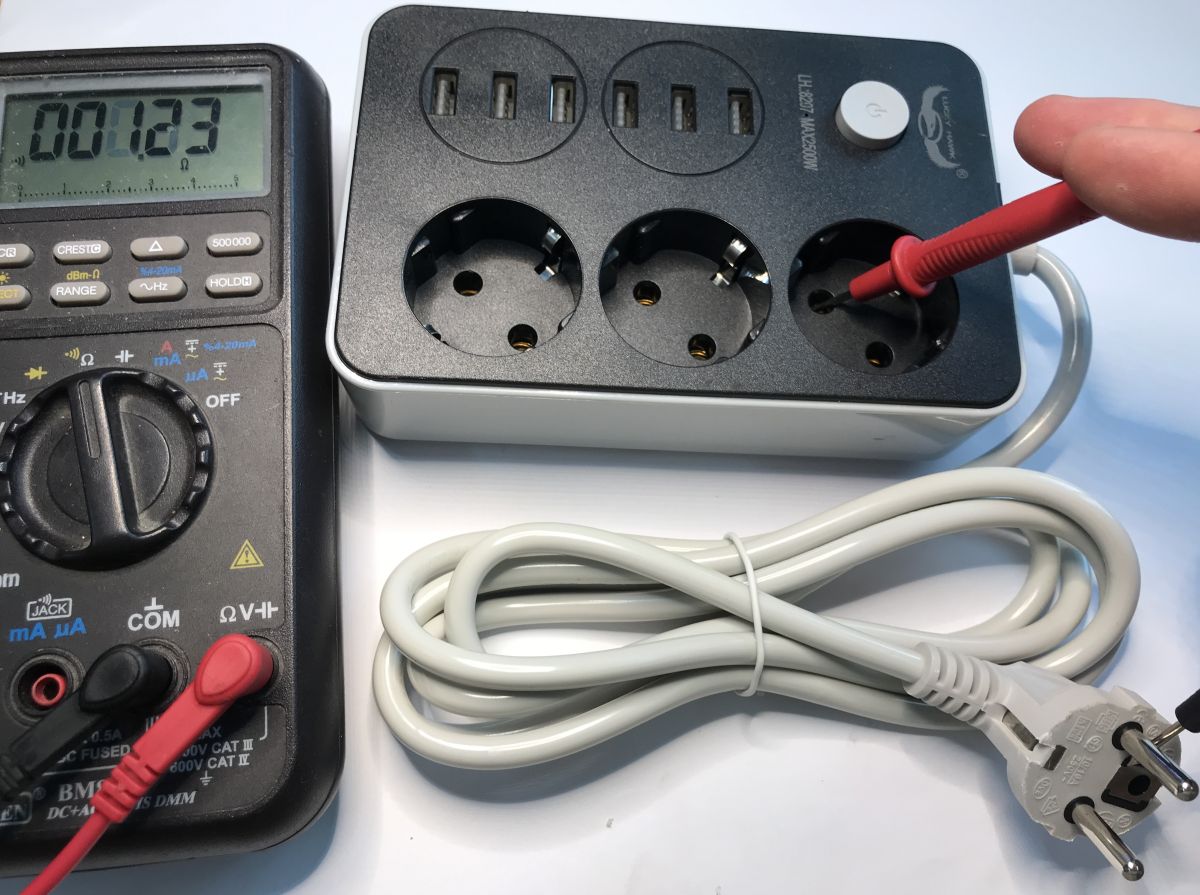
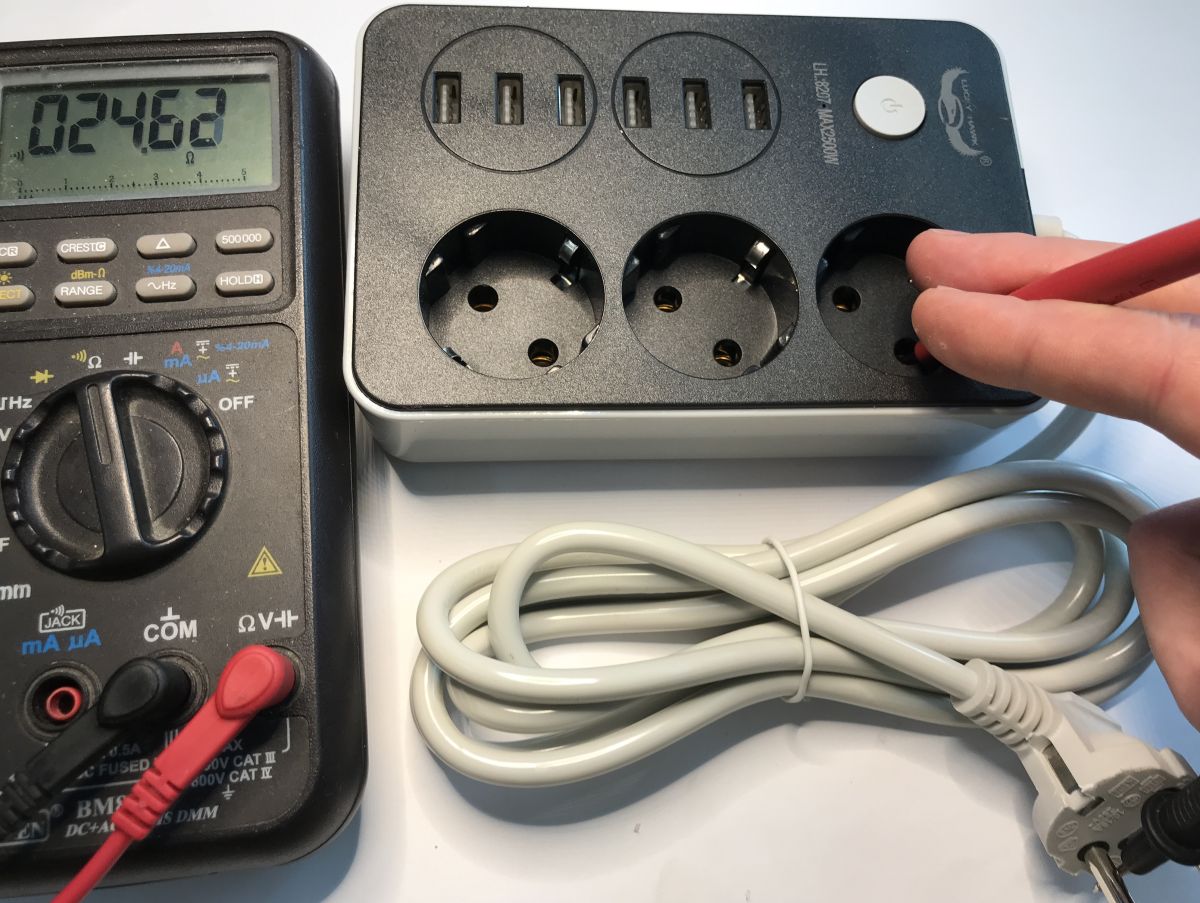
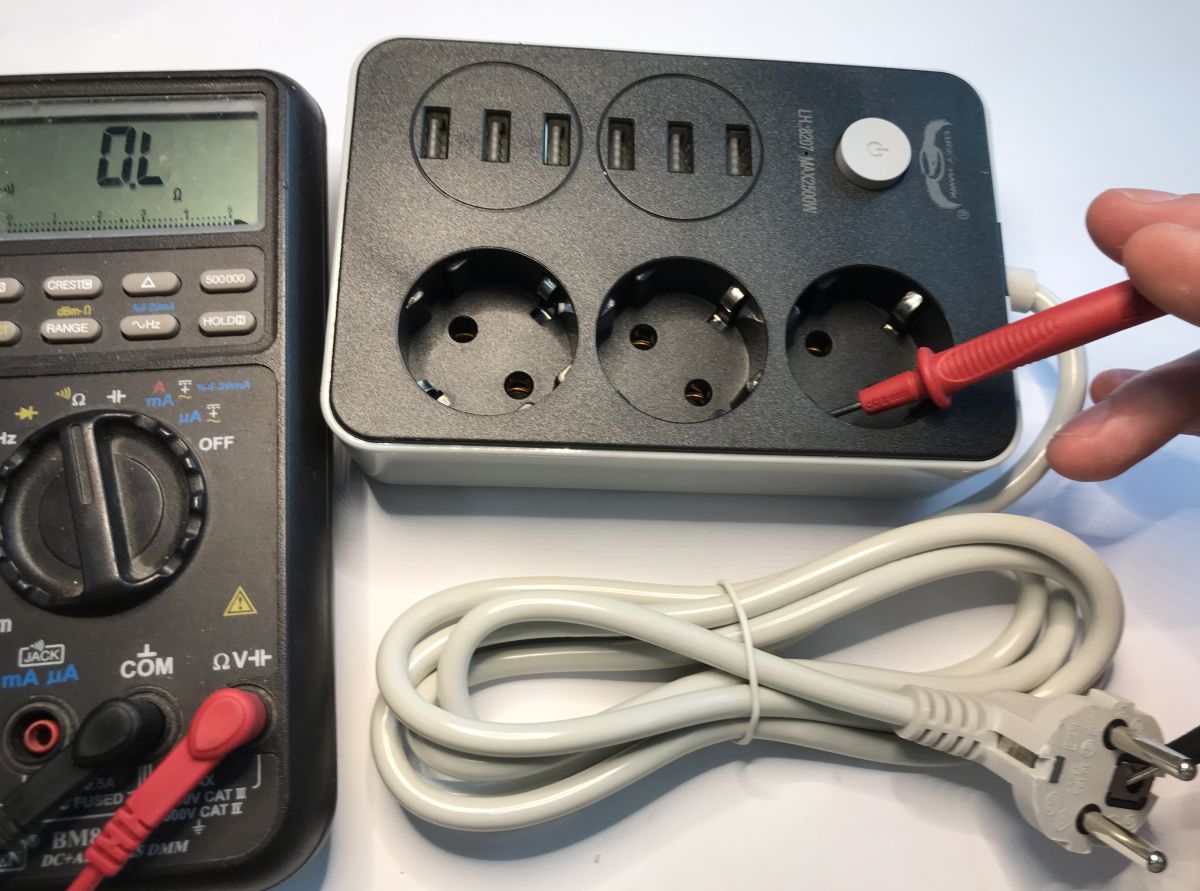
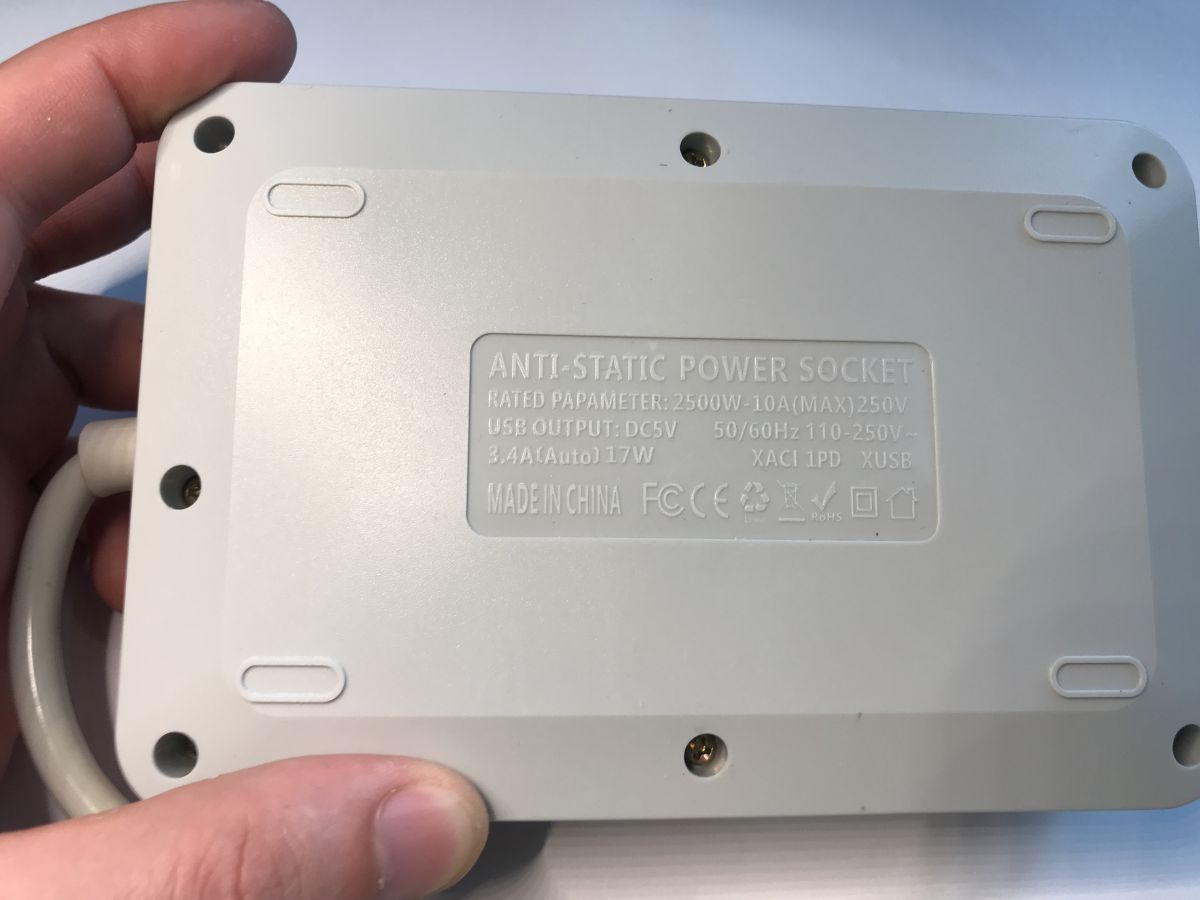
    The first thing I started with was a continuity test (I didn't test resistance, I didn't zero the measurement beforehand) of each line, well here's the first major problem, making this product the opposite of the title SAFETY - the earth is not connected. Probably something must have broken off inside, couriers throw packages, solders can be cold, and who would clip wires there, let's not judge in advance. We'll disassemble and repair it right away. All you need is a simple "Phillips" screwdriver.
    The Lucky Hawk 8204 USB power supply splitter, again about product safety
    We take a look and... well:
    The Lucky Hawk 8204 USB power supply splitter, again about product safety
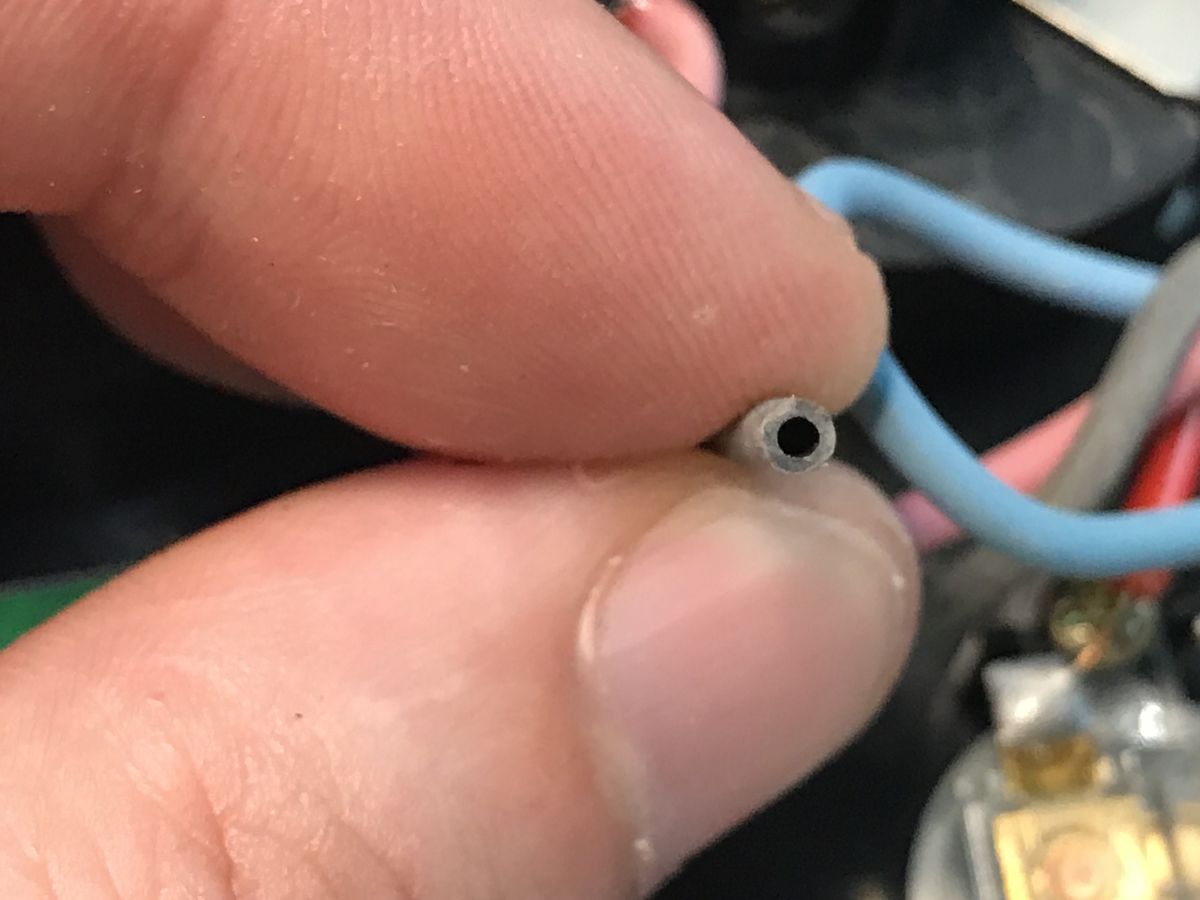
    Second photo, because it's hard to believe. It doesn't look good. There is no copper at all, but there is insulation. The cable itself must have already been manufactured in this form, I wonder if it is possible to manufacture something like this and not be aware of the problem? Then there was the assembly stage, where nobody vetoed the process either. There is not even an option here to solder it somewhere, the earths of each socket are separate.
    The Lucky Hawk 8204 USB power supply splitter, again about product safety
    Here it is already clear that this product is electro-junk, but let's still check the rest of its construction.
    The Lucky Hawk 8204 USB power supply splitter, again about product safety
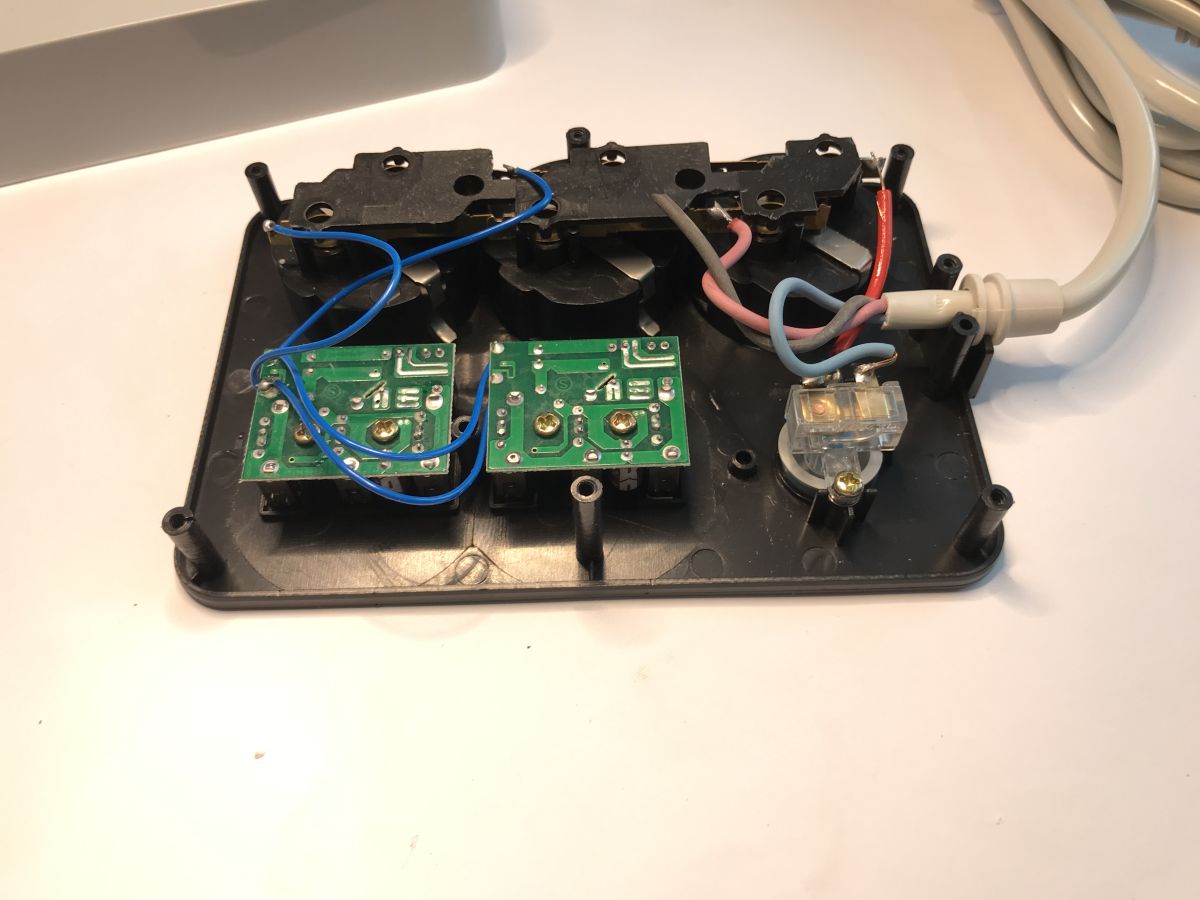
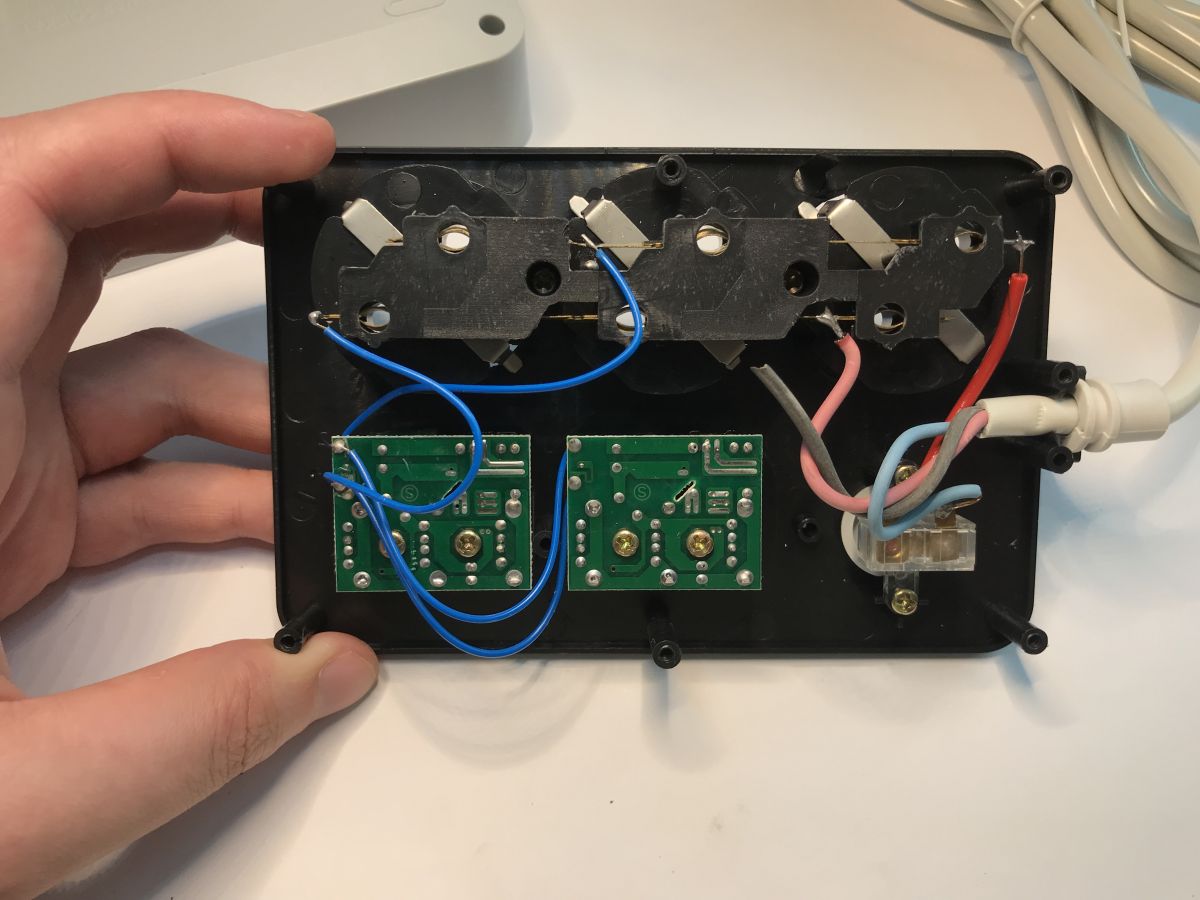
    On the plus side, there is a dual power supply module - so here we have, however, 2.4 A each for the three sockets.... a total of 4.8 A. That's something already.
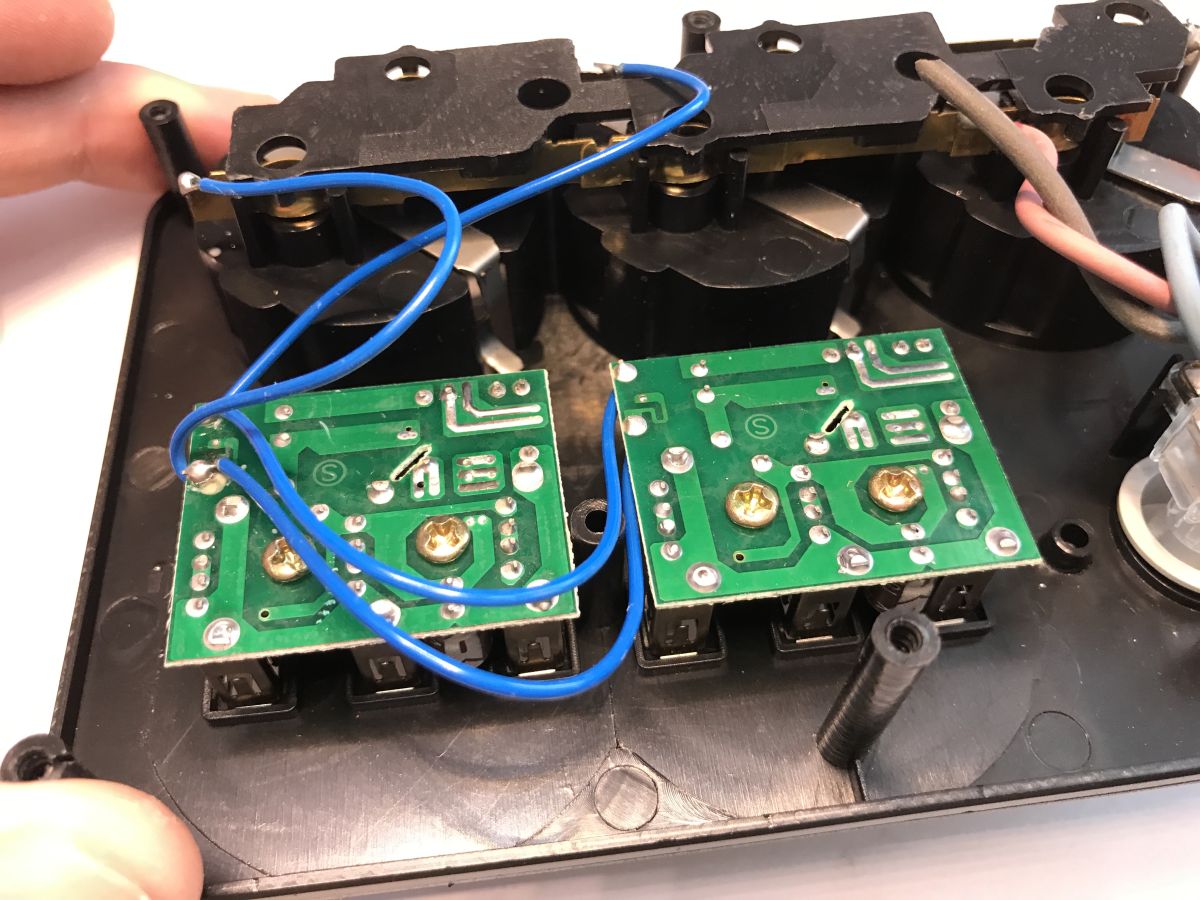
    The Lucky Hawk 8204 USB power supply splitter, again about product safety
    The thickness of the conductors also does not promise good operation of this device under higher loads:
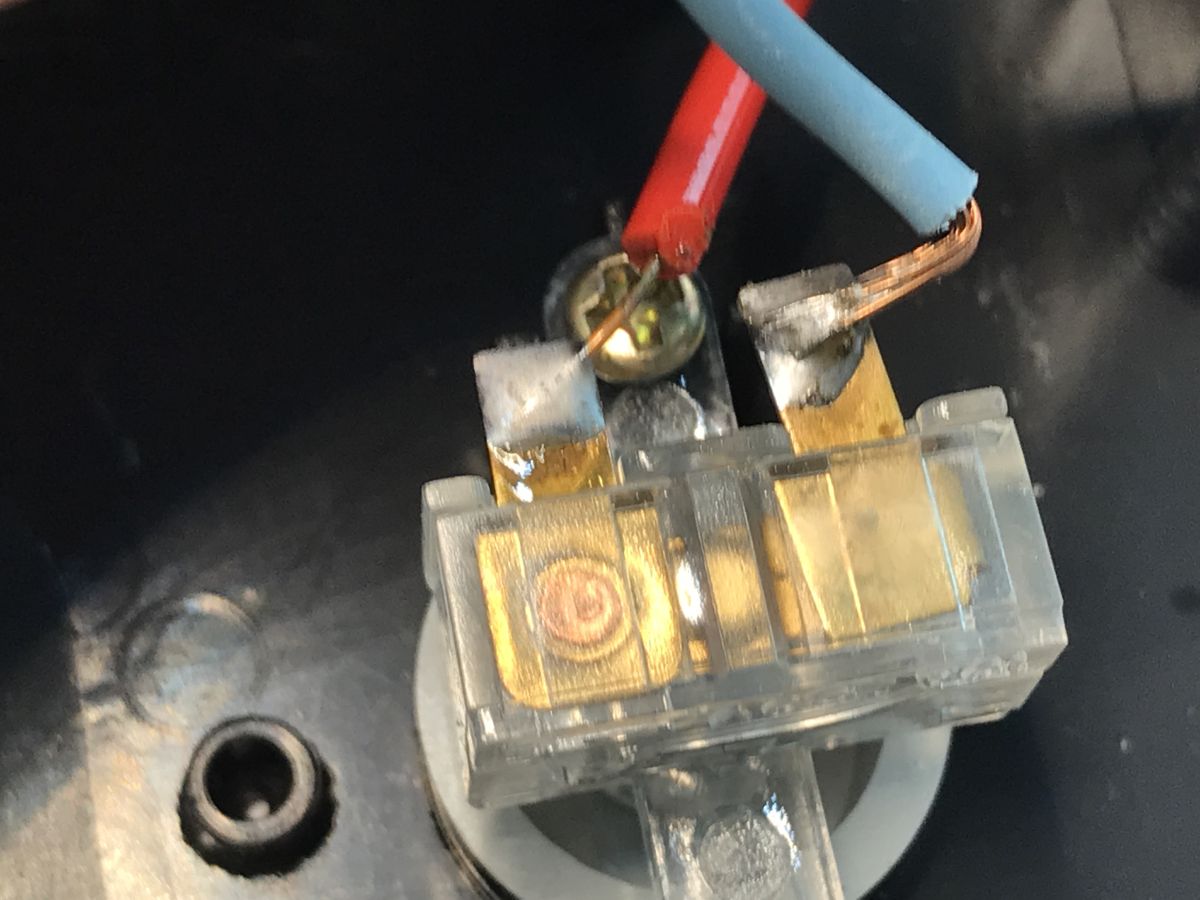
    The Lucky Hawk 8204 USB power supply splitter, again about product safety
    That 5 V power supply is left, let's remove the screws.
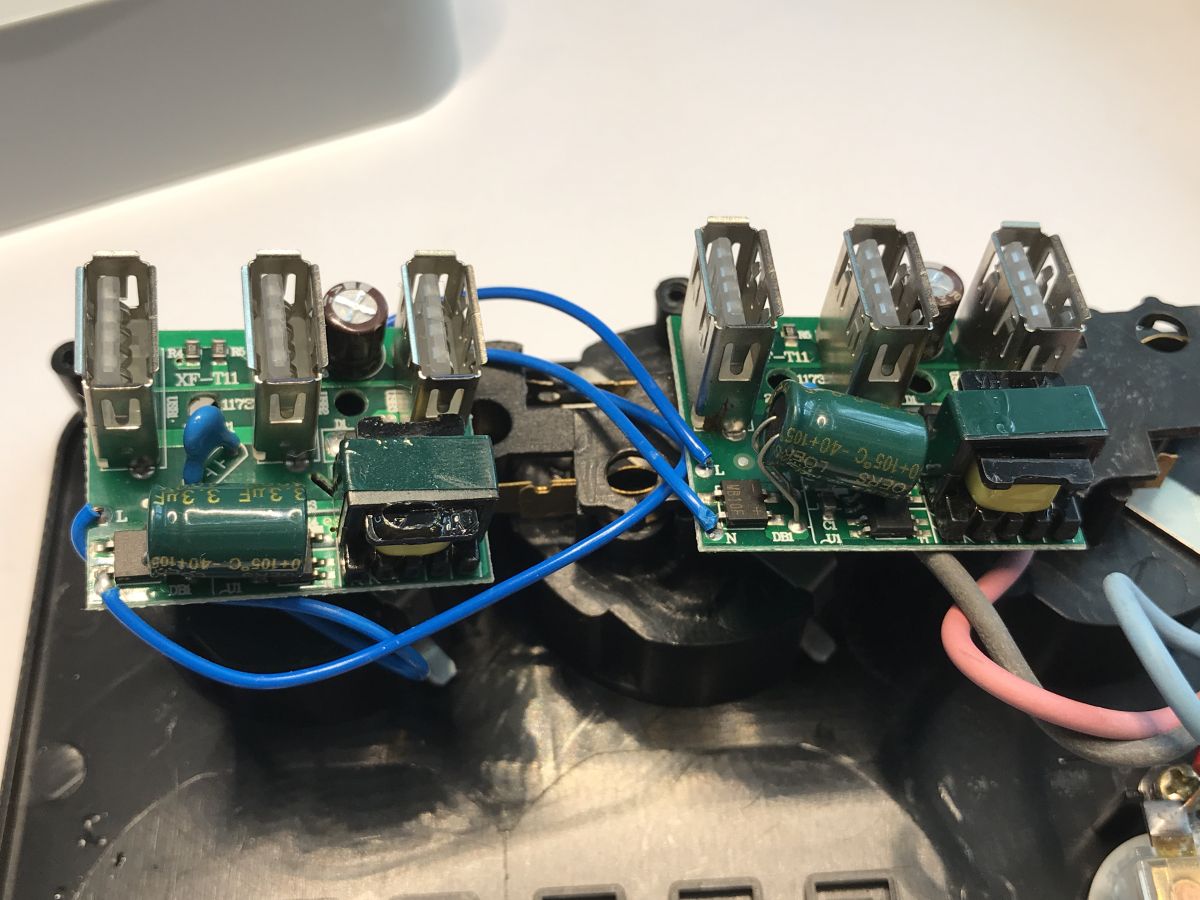
    The Lucky Hawk 8204 USB power supply splitter, again about product safety
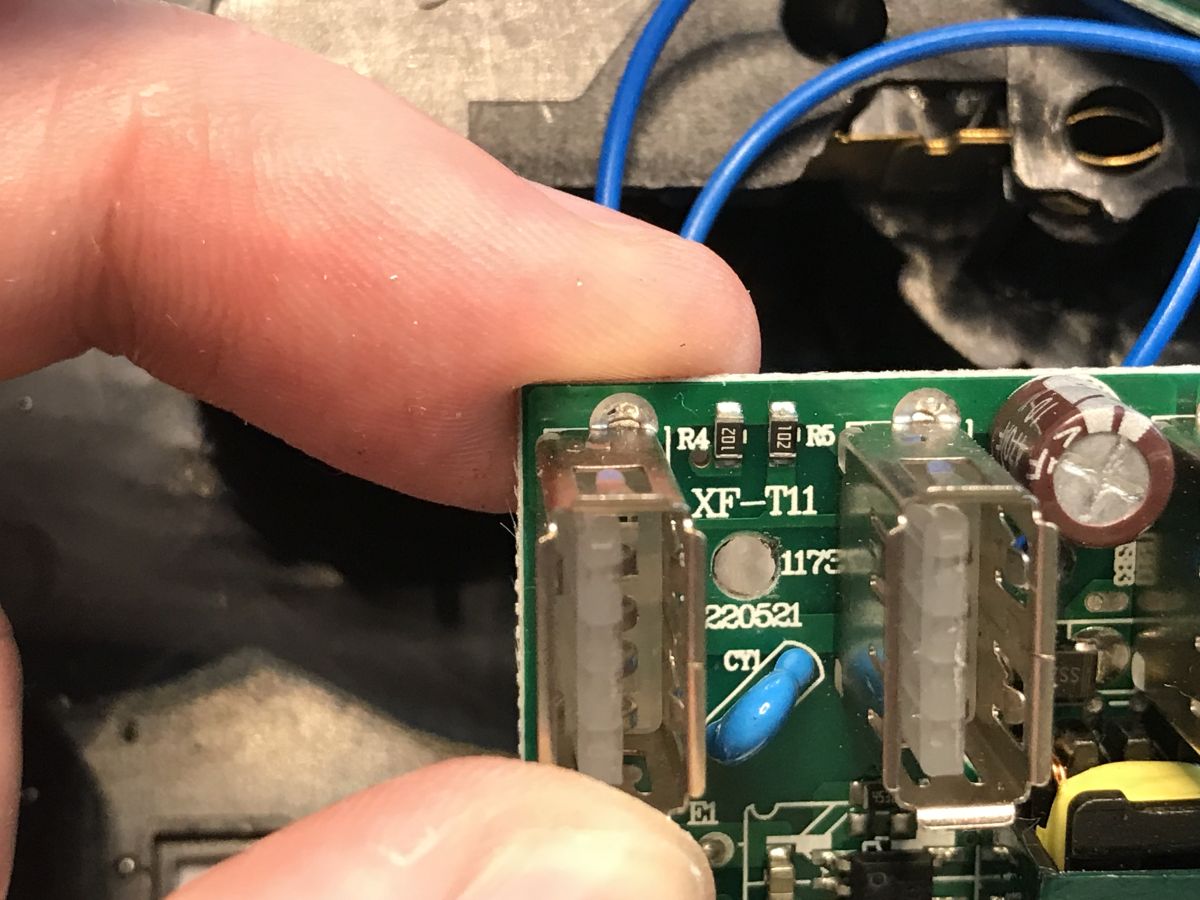
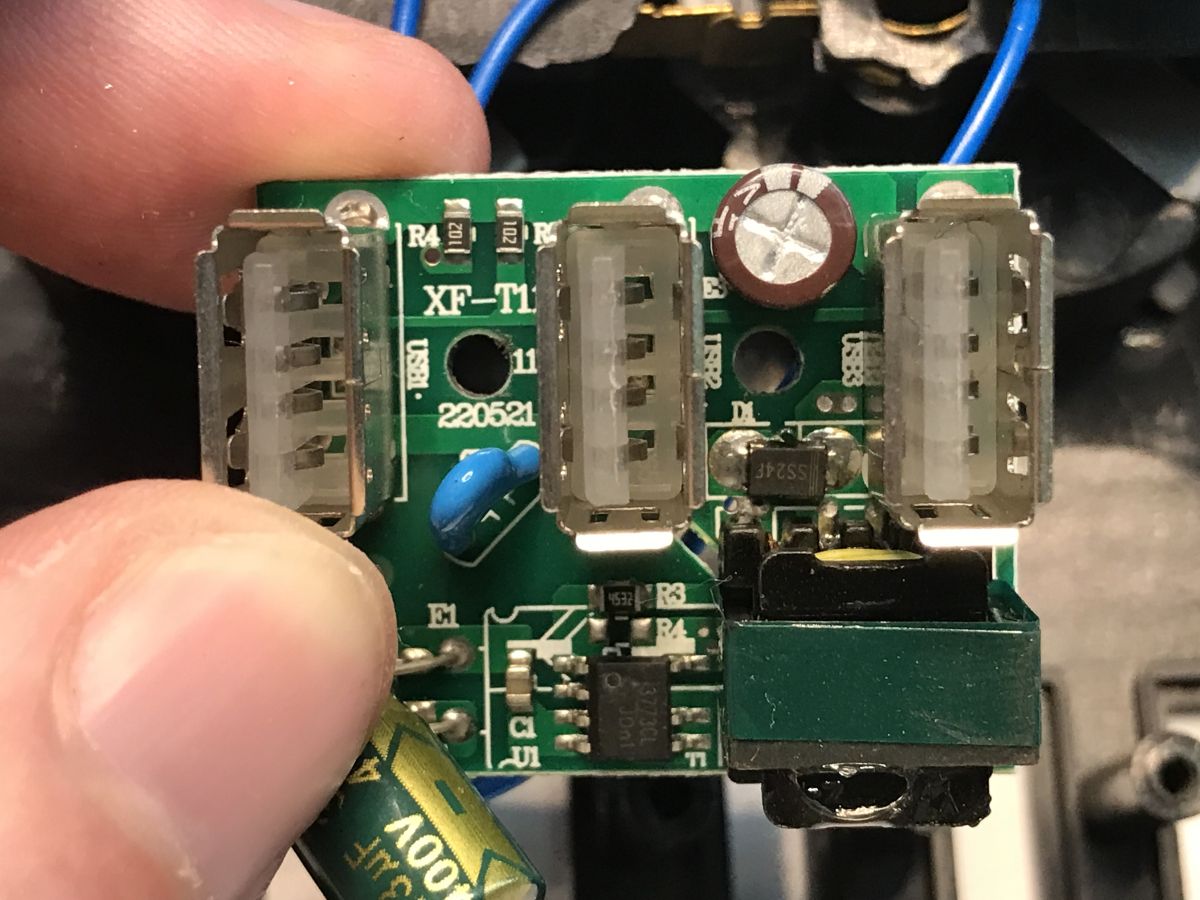
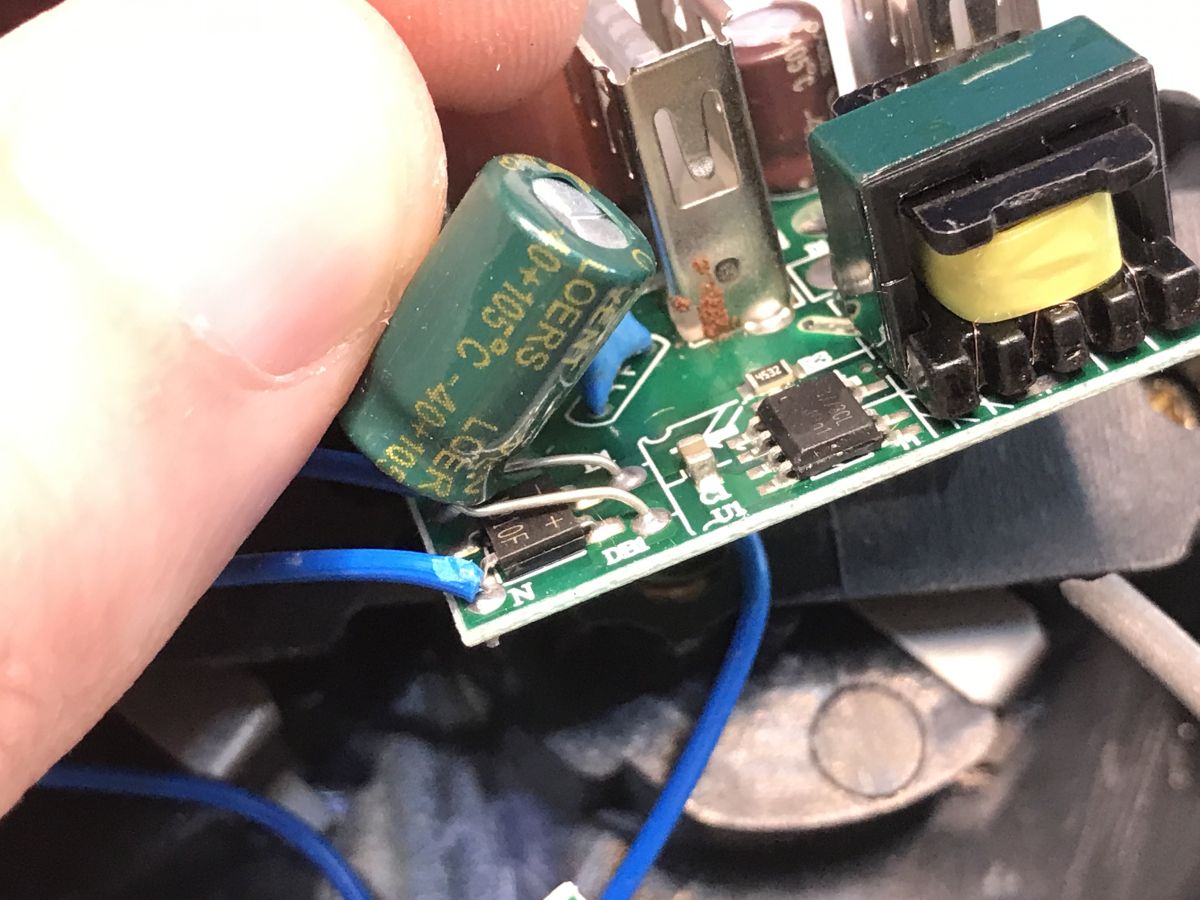
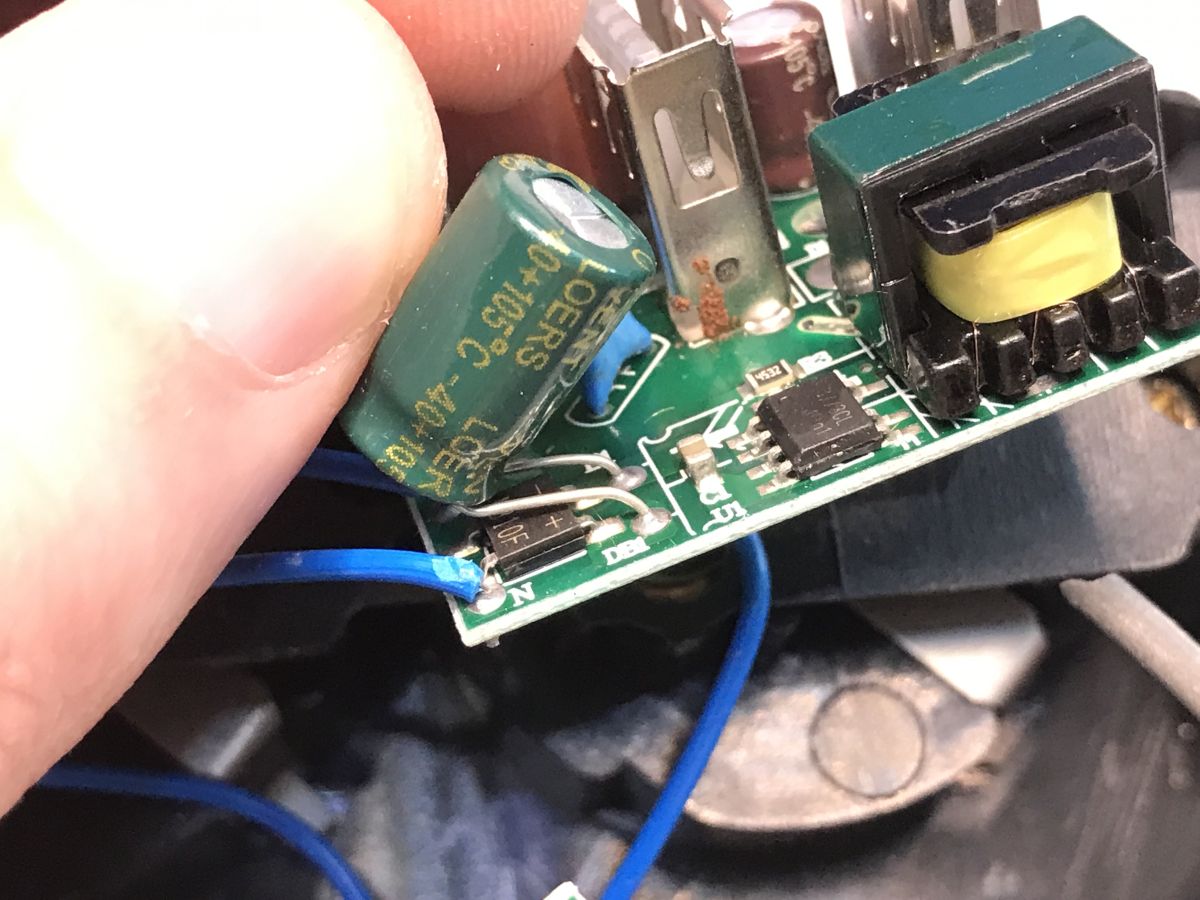
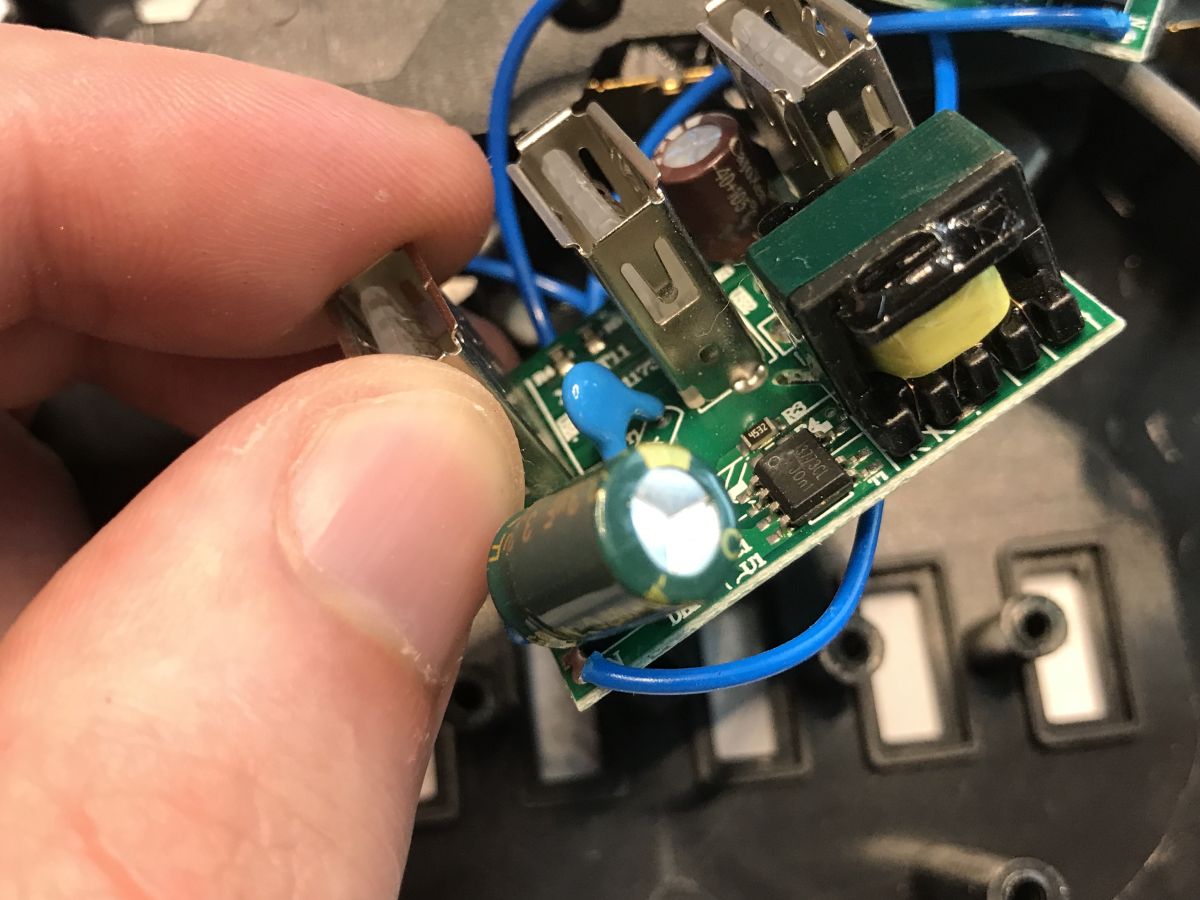
    The power supply is realised in flyback topology, keeping components to a minimum. The controller has an integrated transistor. Not even an optocoupler is needed.
    The Lucky Hawk 8204 USB power supply splitter, again about product safety The Lucky Hawk 8204 USB power supply splitter, again about product safety The Lucky Hawk 8204 USB power supply splitter, again about product safety The Lucky Hawk 8204 USB power supply splitter, again about product safety The Lucky Hawk 8204 USB power supply splitter, again about product safety
    The fuse is not visible:
    The Lucky Hawk 8204 USB power supply splitter, again about product safety
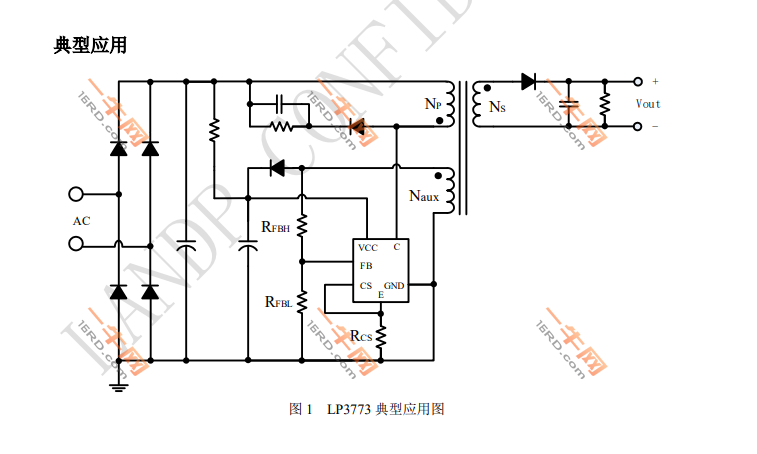
    Controller designation: LP3773CL. I checked its catalogue note and here is another surprise. According to it, it is a 5 W power supply.
    The Lucky Hawk 8204 USB power supply splitter, again about product safety
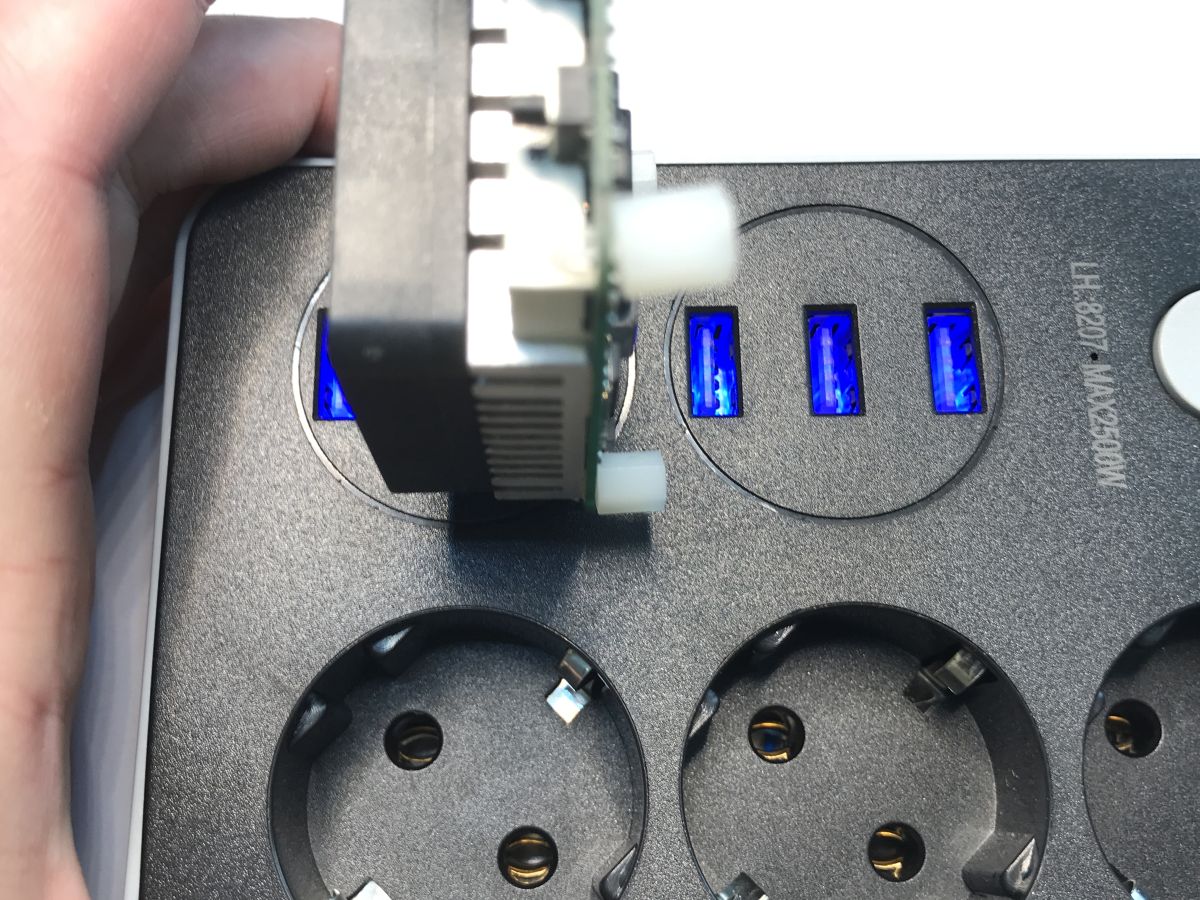
    Who is right? The catalogue note or the vendor?
    The Lucky Hawk 8204 USB power supply splitter, again about product safety
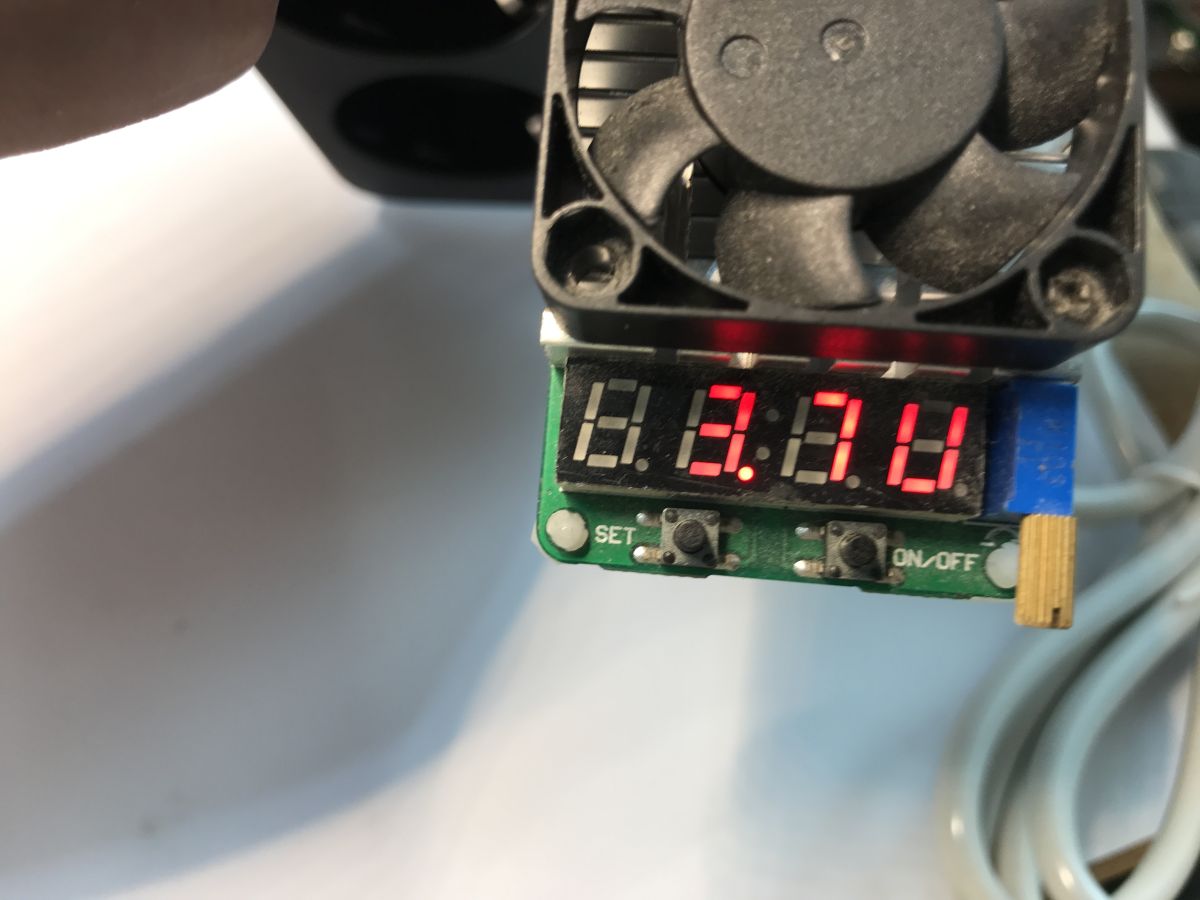
    Unfortunately, at about 1 A load the voltage drops to 3.7 V:
    The Lucky Hawk 8204 USB power supply splitter, again about product safety
    This is virtually a completely useless power supply.

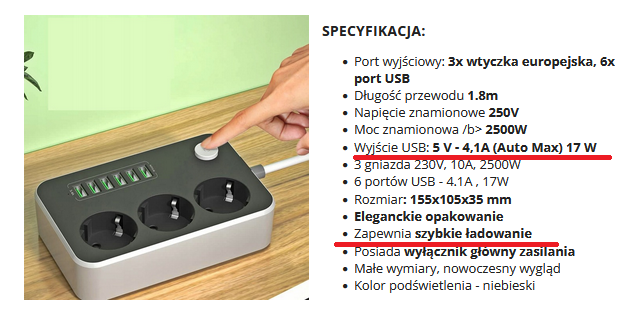
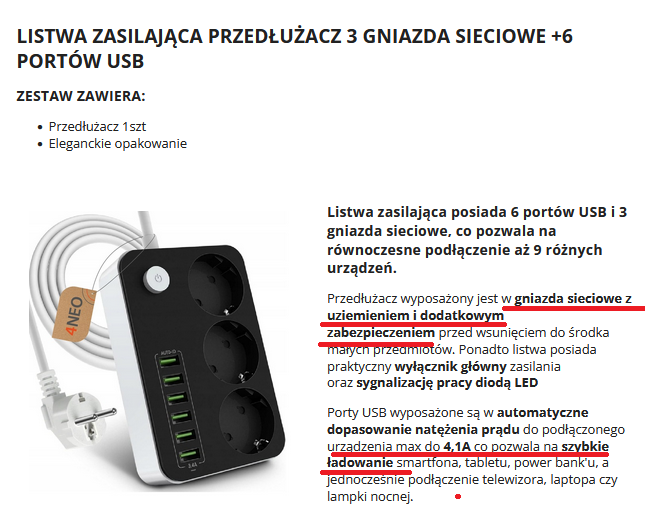
    Finally, some flowers from the description:
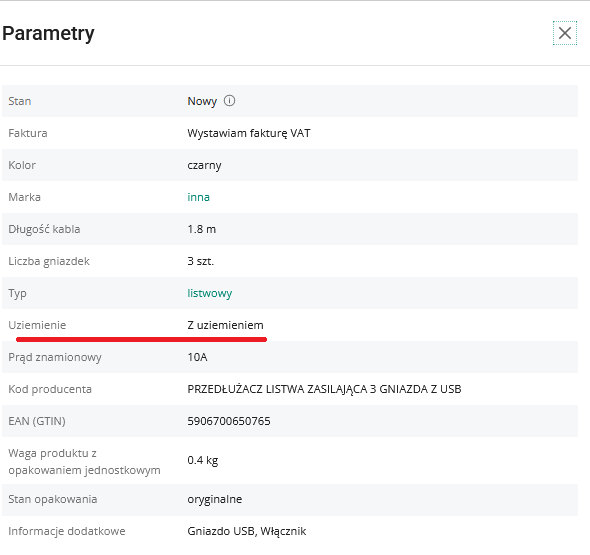
    The Lucky Hawk 8204 USB power supply splitter, again about product safety
    Grounded? Yes!
    The Lucky Hawk 8204 USB power supply splitter, again about product safety
    4.1 A... 17 W and fast charging...
    Screenshot of a listing for a power strip with 3 sockets and 6 USB ports, black housing.
    Additional protection. Since there is a "ground" and separately an additional protection, what is this additional protection? A button?

    And then there are the marks - 4.7 stars. There are a few critical comments, but who would read them?

    Screenshot of product ratings: average 4.70/5 with a star-distribution bar chart
    How many people on average give ratings? 1 in 5 buyers? 1 in 10? You can estimate that several hundred people bought this product and only a small fraction of them realised something was wrong. And how many people reported the problem? I document, react, and report, but that's one person....

    In summary , a deadly product, and a seller openly giving information that is not true. The earthing was not already there at the production stage of the cable, which puzzles me, because how is it, the factory produces such flowers and nobody pays attention to it? Still that insulation from the third conductor.... the second thing is this power supply, or rather two power supplies. Two power supplies are undoubtedly a plus, as they could have given one, but even two is not enough here. 5 watts for three USB sockets to share? I could still get over the lack of QC, it's only PLN 27, by the way my iPhone doesn't even support QC (I have an older model), but 1 A is not enough to charge it sensibly. At least 2 A I would need to have there. Simply put - it's very bad and the price doesn't justify it. If they wanted to make a cheap product, they could have just officially sold a groundless version with a 1 A power supply....
    This is not the first such product I have featured on the forum. I used to think this was a single situation , or single batch , but now I'm starting to get the impression, that this is an ongoing practice that has been going on for years and people are buying these types of strips en masse and then using them in their homes...
    2022 topic with a similar problem:
    LH-F05U-WHITE 8 "anti-voltage" strip? Drama. No grounding

    Have you also encountered this type of "factory defect" in extension cords?

    Cool? Ranking DIY
    Helpful post? Buy me a coffee.
    About Author
    p.kaczmarek2
    Moderator Smart Home
    Offline 
    p.kaczmarek2 wrote 14604 posts with rating 12620, helped 654 times. Been with us since 2014 year.
  • ADVERTISEMENT
  • #2 21900129
    MiG25
    Level 23  
    Posts: 538
    Help: 35
    Rate: 97
    p.kaczmarek2 wrote:
    Have you also encountered this type of "manufacturing defect" in extension cords?


    Yes, I once got a "new power cord" when buying a used Cisco PoE. This PoE had a "computer" power socket (rectangle with chamfered corners), commonly used to power monitors, printers.
    Well, and this extension cable was "not making contact" from the start. So I replaced it with a 'normal' cord from stock, and this one I simply cut off the non-contacting plug.... It turned out that there were only 2 wires (the third one for the earth-bolt was missing), and the other two were maybe 0.2 mm2.... And on the wire itself, it was like 3x0.75 mm2.... Also, one, no earth wire, and two, dread to think what would happen if something more current-consuming than PoE was connected with it....
    The cable itself was definitely not original with this PoE, just the seller either bought it in bulk from the Chinese to sell complete....
  • ADVERTISEMENT
  • #3 21900173
    forest1600
    Level 20  
    Posts: 616
    Help: 10
    Rate: 168
    Report such rubbish to the OCCP....
  • #4 21900227
    kassans
    Level 32  
    Posts: 1820
    Help: 130
    Rate: 411
    I'd rather buy an extension cord from a DIY store, where I'm more likely to get a safe product.

    @MiG25 That's why I prefer to buy cables e.g. from Del. Then I can be sure that it is a good quality cable.
  • #5 21900276
    CHCl3
    Level 9  
    Posts: 31
    Rate: 9
    p.kaczmarek2 wrote:
    because how is it, the factory produces such flowers and nobody pays attention to it?


    It's produced by a factory in China presumably and, looking at their safety standards, no one cares about such "fancies" as grounding.
    Is it cheap? Is it good? It's cheap!
  • #6 21900411
    robert nawrot
    Level 21  
    Posts: 502
    Help: 31
    Rate: 108
    MiG25 wrote:
    and with that, I simply cut the non-contacting plug.... It turned out that there were only 2 wires (missing the third one for the ground-pin)


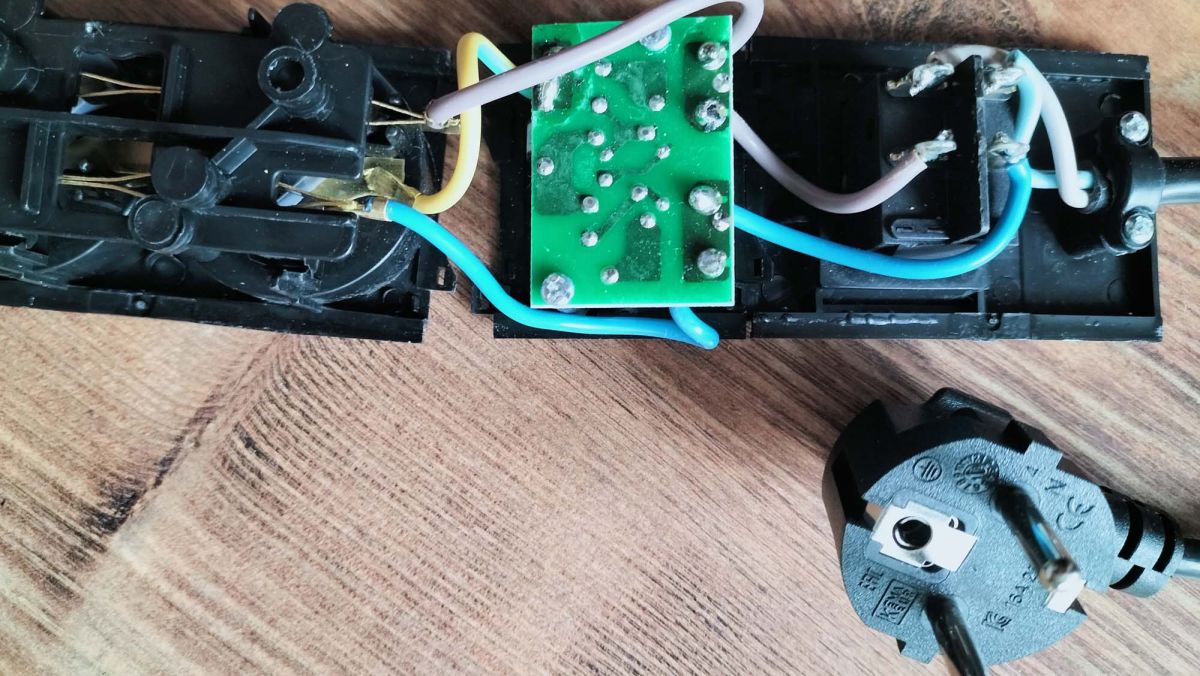
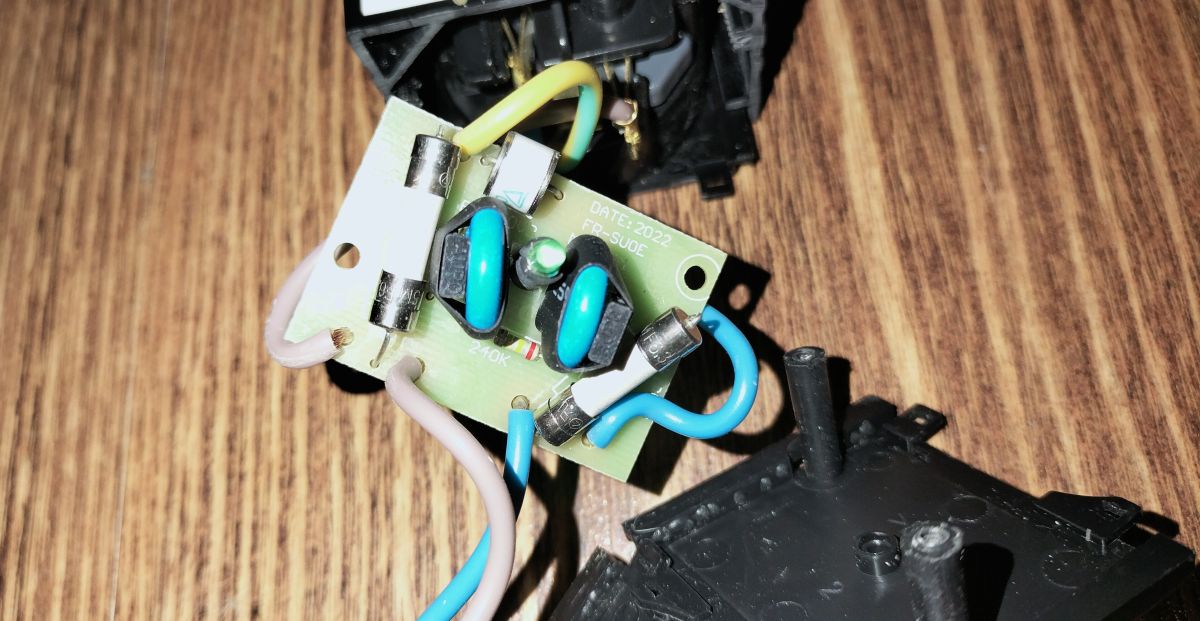
    The Lucky Hawk 8204 USB power supply splitter, again about product safety
    Circuit board inside a disassembled plug; blue, brown, and yellow‑green wires visible.

    I have a similar case and I have been suspected (so I think) of replacing a cable and one was bought.
    As you can see from the photo there is no place to connect the earth from the plug side and the plug is grounded and only 2 wires.
  • ADVERTISEMENT
  • #7 21900481
    MiG25
    Level 23  
    Posts: 538
    Help: 35
    Rate: 97
    And is it written somewhere on the cable that it is 2x or 3x? Mine certainly says 3x0.75mm2 , and they are both black ...
  • ADVERTISEMENT
  • #8 21900493
    robert nawrot
    Level 21  
    Posts: 502
    Help: 31
    Rate: 108
    There are 3 x 1.5 mm2 on the skirting board housing
  • #9 21903146
    PPK
    Level 30  
    Posts: 1944
    Help: 94
    Rate: 423
    Report. Often the 'Chinese CE mark' (meaning China Export) is very similar to the European Conformité Européenne.

    Added after 12 [minutes]:


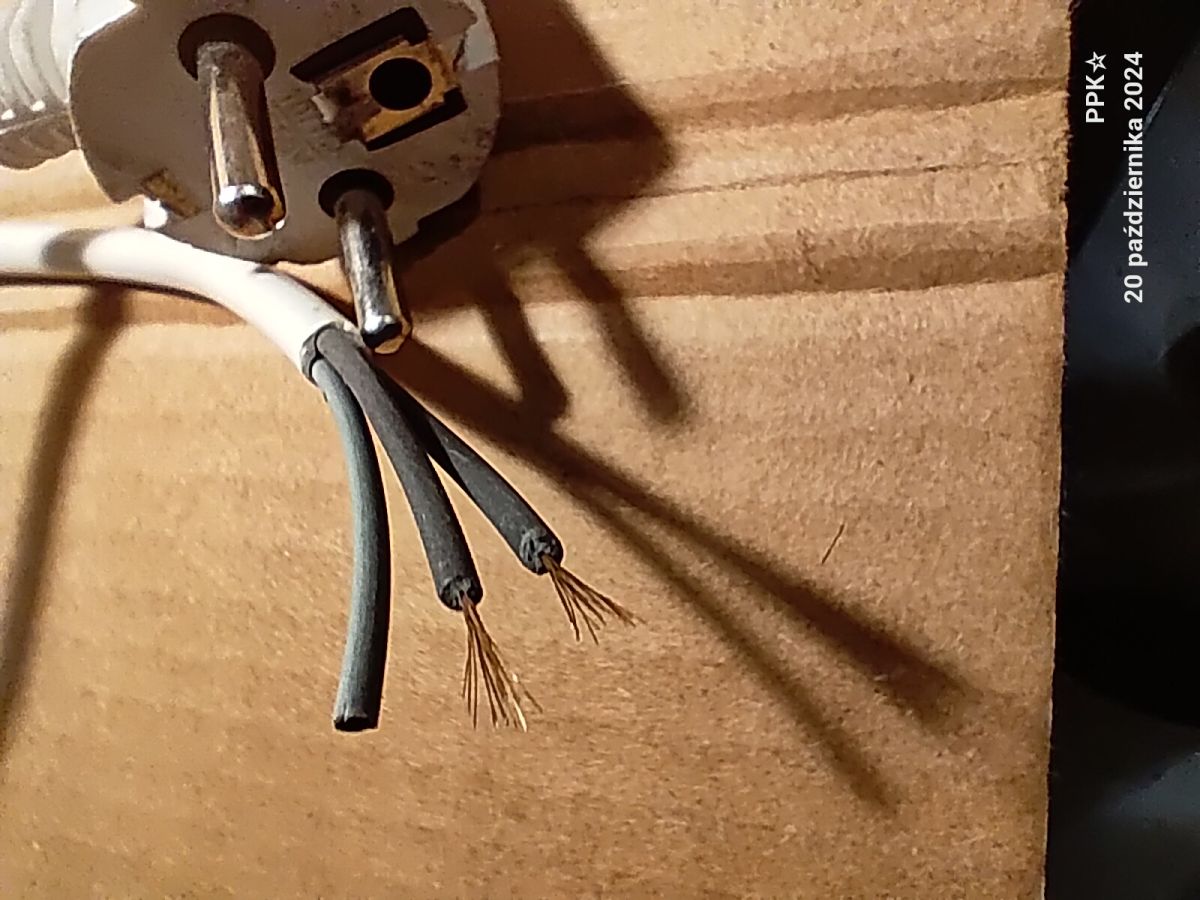
    Cable for an 800W curling iron from a well-known company - obviously made in PRC i.e. "people's" China. It hangs solemnly in the workshop.

    The Lucky Hawk 8204 USB power supply splitter, again about product safety
  • #10 21911817
    398216 Usunięty
    Level 43  
    Posts: 34151
    Help: 3924
    Rate: 9257
    PPK wrote:
    The cable for the 800W curling iron...
    And the strands in that steel cable I presume?
  • #11 21912190
    PPK
    Level 30  
    Posts: 1944
    Help: 94
    Rate: 423
    398216 Usunięty wrote:
    PPK wrote:
    The cable for the 800W curling iron...
    And the strands in this cable are steel I think?

    Rather copper on top but I'll check out of curiosity as they are a bit odd for copper.
  • #12 21912296
    398216 Usunięty
    Level 43  
    Posts: 34151
    Help: 3924
    Rate: 9257
    Well, just from the appearance of the wires themselves, I can conclude that they are steel wires "painted" a gold-copper colour (I doubt it has anything to do with copper). I myself came across such wires in a shuko power cable with the description on the plug 250V~/16A...
📢 Listen (AI):

FAQ

TL;DR: For home users checking a cheap USB power strip, this case shows a PLN 27 product sold as safe can be hazardous: “the earth is not connected.” The thread reports a missing protective conductor, weak USB power, and false-sounding marketing claims, so continuity testing before use matters. [#21900071]

Why it matters: A strip that looks grounded can still ship with no real earth path, turning a basic household accessory into an electrical safety risk.

Option Grounding confidence USB credibility Price/context
Lucky Hawk 8204/LH 8207 marketplace strip Failed in opened sample USB sagged to 3.7 V at about 1 A PLN 27
DIY-store extension cord Viewed as more likely safe in the thread Not discussed Higher trust channel
Better-known branded cable from stock Preferred for quality by commenters Not discussed Brand-driven choice

Key insight: The biggest problem is not slow charging. It is the missing earth conductor inside a strip sold as grounded and safe. [#21900071]

Quick Facts

  • The opened Lucky Hawk strip was bought for PLN 27 and marketed with three USB ports plus safety wording on the packaging. [#21900071]
  • A continuity check found no earth connection, and after opening the cable the poster showed insulation where the third conductor should be. [#21900071]
  • The internal USB section used two power modules, described as 2.4 A each, for a claimed total of 4.8 A. [#21900071]
  • Under load, the USB output dropped to about 3.7 V at roughly 1 A, which made the power supply effectively unusable for normal phone charging. [#21900071]
  • Other users reported similar defects, including cords marked 3x0.75 mm2 or 3x1.5 mm2 that still appeared to have only two internal wires. [#21900129]

How dangerous is the Lucky Hawk 8204 USB power supply splitter if the earth wire is missing inside the cable?

It is potentially very dangerous because the strip was sold as grounded, yet the protective earth path was absent. The thread shows the continuity test failed and the opened cable had no copper earth conductor at all. That removes the safety function users expect from earthed sockets. The poster sums it up as “a deadly product,” which fits the risk created by a false ground in a mains strip. [#21900071]

How do you check an extension strip like the Lucky Hawk 8204 for continuity of live, neutral, and earth before using it?

Use a simple continuity test before first use. 1. Check continuity from the plug pins to each socket contact for live, neutral, and earth. 2. If the earth path fails, stop using the strip immediately. 3. Open the housing with a Phillips screwdriver and inspect whether all three conductors are actually present. In this case, that basic test exposed the main defect before the strip was put into service. [#21900071]

Why would a power strip be advertised as grounded and safe when the grounding conductor is not actually connected?

Because the sales description and exterior markings can claim features that the internal build does not deliver. In this thread, the product was advertised as grounded, safe, and additionally protected, yet the opened cable lacked a working earth conductor. The poster also points to strong marketplace ratings, which can hide defects when only a small share of buyers checks wiring. [#21900071]

What is flyback topology in a small 5 V USB power supply, and why is it used in cheap extension strips?

“Flyback topology” is a switched power-supply design that converts mains voltage to a lower output, using few parts and low manufacturing cost. In the thread, the USB module is identified as a flyback supply with minimal components, an integrated-transistor controller, and no optocoupler. That makes it attractive for very cheap strips because it reduces part count and assembly cost. [#21900071]

What does the LP3773CL controller do, and how does its 5 W rating affect USB charging performance?

The LP3773CL is the USB power-supply controller, and the poster says its datasheet indicates a 5 W supply. A 5 W ceiling is weak for three USB ports, especially when the listing suggests 4.1 A or 17 W class performance. In practice, the thread shows the output already collapsing near 1 A, which matches the concern that the controller and design are undersized for the claims. [#21900071]

Why does the Lucky Hawk USB output drop to about 3.7 V at around 1 A load, and what does that mean for charging phones?

It drops because the USB supply appears too weak for the advertised load. The thread reports about 3.7 V at around 1 A, far below the expected 5 V output. That means many phones will charge very slowly, unreliably, or may stop negotiating normal charging altogether. The poster calls it “virtually a completely useless power supply,” which is a fair summary at that voltage. [#21900071]

What should you look for inside a USB power strip to judge whether the mains wiring and conductor thickness are safe?

Look for three real conductors, solid earth routing, and wire thickness that matches the intended mains load. In this case, the poster highlights two failures: no copper earth conductor inside the cable and conductors thin enough to raise concern about higher loads. Also check whether each socket earth is actually interconnected, because here the earth points were separate and not repairable by a simple resolder. [#21900071]

DIY store extension cords vs cheap online marketplace strips like Lucky Hawk — which is safer for home use and why?

The thread favors DIY-store extension cords as the safer home choice because buyers expect better screening and fewer counterfeit-like build defects. One commenter says they would rather buy from a DIY store, and another prefers known cable brands for quality confidence. By contrast, the opened Lucky Hawk sample combined missing earth, weak USB output, and misleading claims in a PLN 27 product. [#21900227]

How can three USB ports be marketed as 2.4 A or 4.1 A when the internal power supply appears too weak to deliver it?

They can be marketed that way because the label can show a total or headline number that the real hardware does not sustain. The thread notes packaging that mentions 2.4 A, sales graphics claiming 4.1 A and 17 W, and an internal controller associated with a 5 W supply. Load testing then showed only about 1 A before voltage fell to 3.7 V, exposing the gap between claim and reality. [#21900071]

What is an optocoupler, and why is its absence notable in a minimal flyback USB power supply design?

“Optocoupler” is an isolation component that transfers control information with light, keeping feedback separate from the mains side. Its absence is notable here because the poster points out just how stripped-down the flyback design is: minimal parts, integrated transistor, and no optocoupler. That does not prove failure by itself, but it highlights an extreme cost-cut design philosophy in a low-price strip. [#21900071]

Where should you report a dangerous extension cord or falsely described electrical product in Poland, such as to UOKiK/OCCP?

The thread explicitly says to report such products to UOKiK, the Polish competition and consumer authority often rendered as OCCP in English. That advice appears as a direct response after the dangerous strip was opened and documented. For a product sold as grounded and safe but found without earth continuity, reporting the listing and the physical defect is the clear action raised in the discussion. [#21900173]

How can you tell whether a mains cable marked 3x0.75 mm2 or 3x1.5 mm2 really contains a proper earth conductor inside?

You cannot trust the jacket marking alone; you must verify continuity or inspect the inside. One user reports a cord marked 3x0.75 mm2 that turned out to have only two wires, and another cites 3x1.5 mm2 on the housing despite a grounded plug with no place to connect earth. The safe test is continuity from plug earth to the device or strip earth contacts. [#21900129]

What are the warning signs that a power cord or IEC-style device cable has only two internal wires even though it looks grounded?

Warning signs include a grounded-looking plug that makes no earth contact, very thin conductors, and no termination point for earth inside the connector. One user cut off a faulty plug and found only two wires, roughly 0.2 mm2, despite a 3x0.75 mm2 marking. Another showed a similar cord where the grounded plug side had no place to attach a protective conductor. [#21900129]

How much USB current is realistically needed to charge an older iPhone from a multi-port strip without QC fast charging?

In this thread, the poster says at least 2 A would be needed for sensible charging on an older iPhone without QC. The tested strip failed that bar badly, because the output fell to about 3.7 V at around 1 A. So the practical takeaway is simple: if a multi-port strip cannot hold near 5 V at 1–2 A, it is not a credible charger for routine phone use. [#21900071]

Have other people also encountered this kind of factory defect in extension cords, where the grounding conductor is missing from the start?

Yes, multiple commenters describe the same type of defect. One received a supposedly new cord with only two internal wires and no earth conductor, despite a 3x0.75 mm2 marking. Another posted photos of a similar cable with a grounded plug but no place to connect earth on the plug side. That pattern suggests the Lucky Hawk case was not isolated to one single bad item. [#21900411]
Generated by the language model.
ADVERTISEMENT