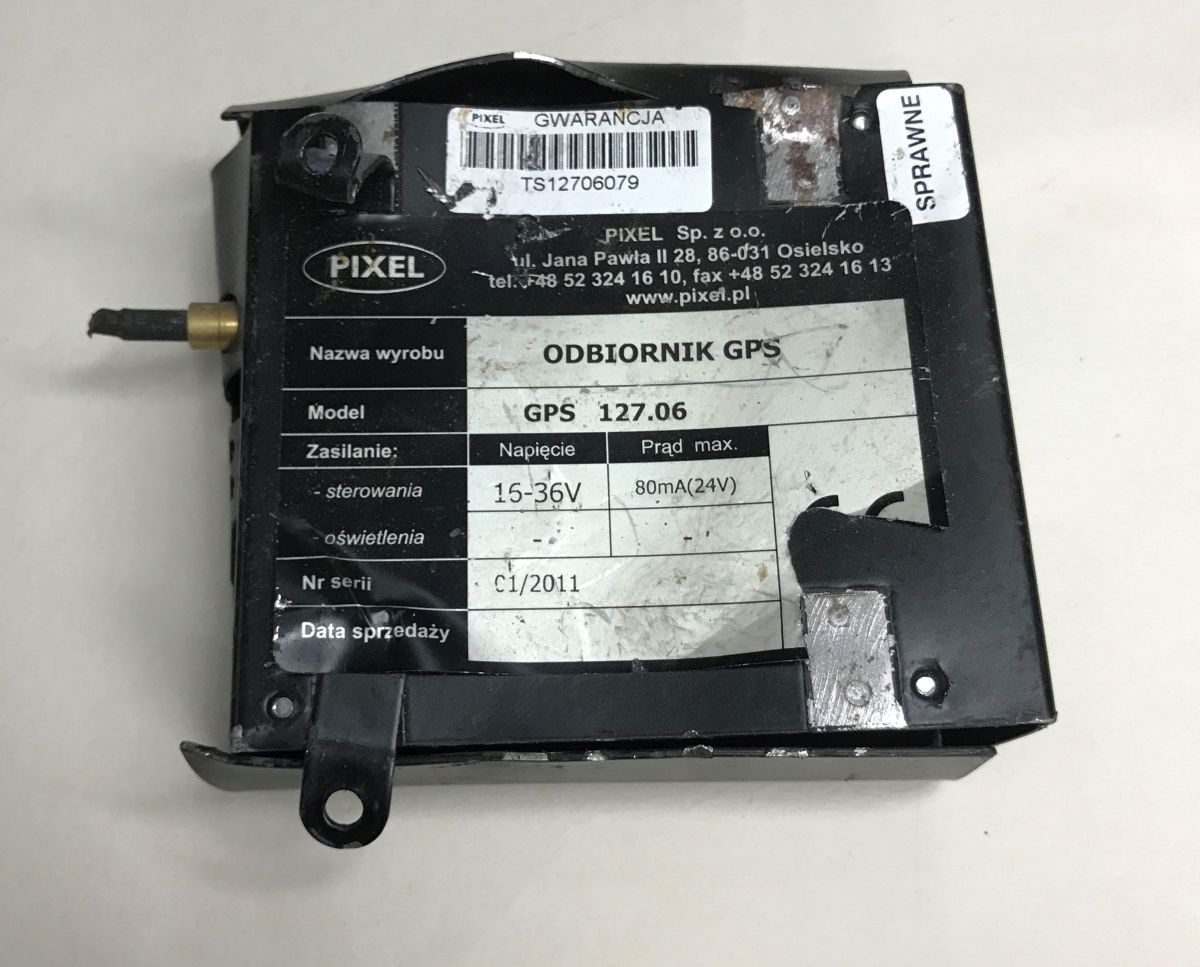
I got a bit of 'railway' equipment after liquidation, the whole thing rather qualifies as scrap, but you can still take a look inside and satisfy your curiosity. The case is all the more interesting as the item presented here appears to be our domestic product.
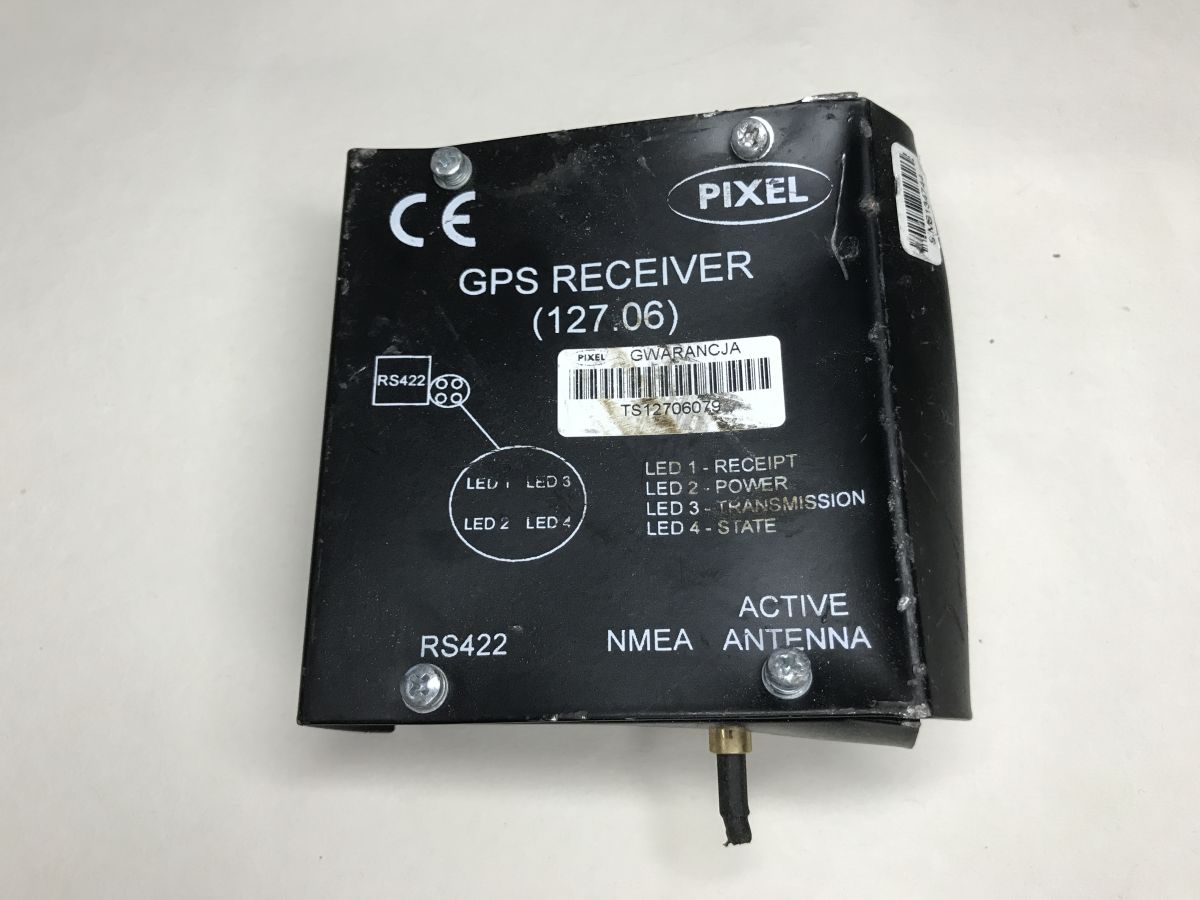
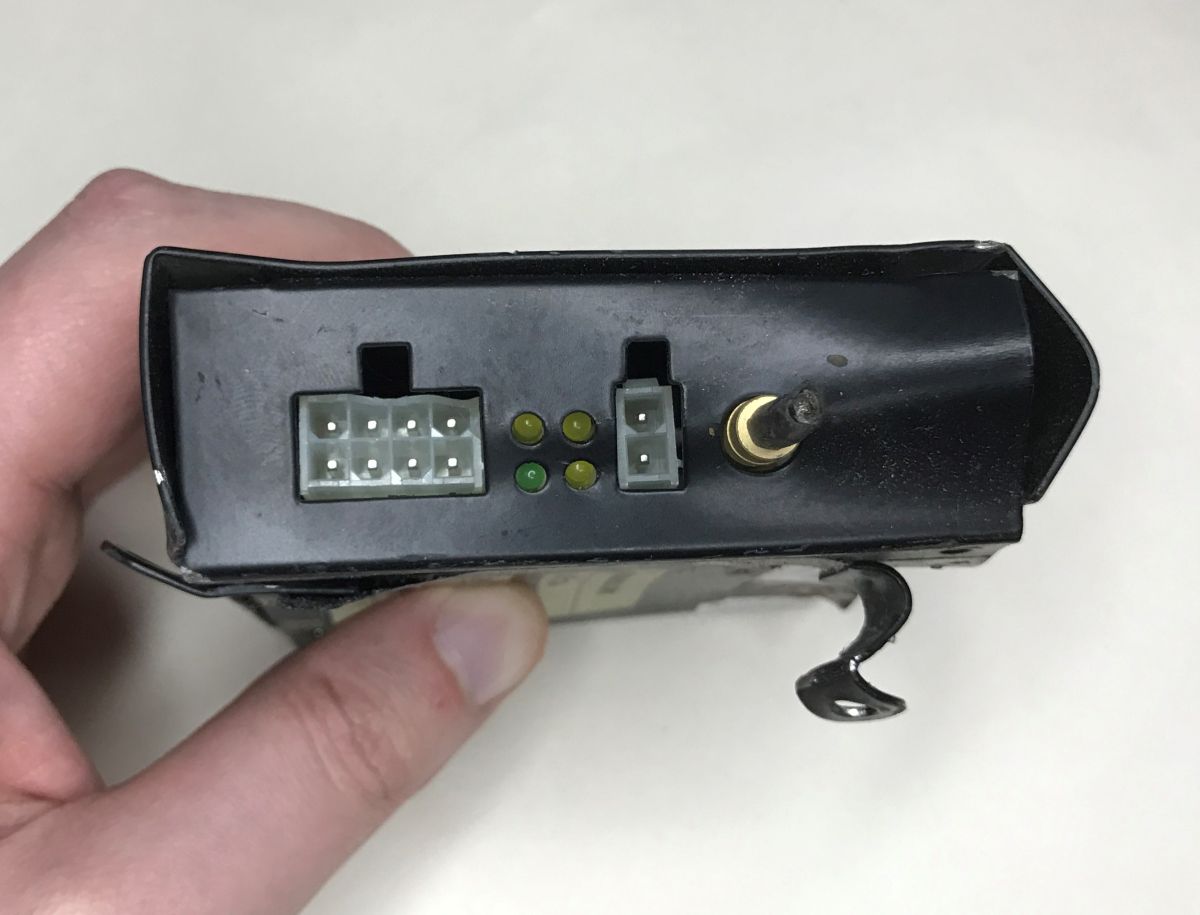
The module shown here is unlikely to count as retro electronics, dating from 2011, but it is still worth examining. On the side of the case it has an RS422 port (i.e. a variant of RS232), an NMEA (GPS message standard) and an antenna connector. I don't see a power port - my bet is that it's in the plug from RS422.
Let's take a look inside.
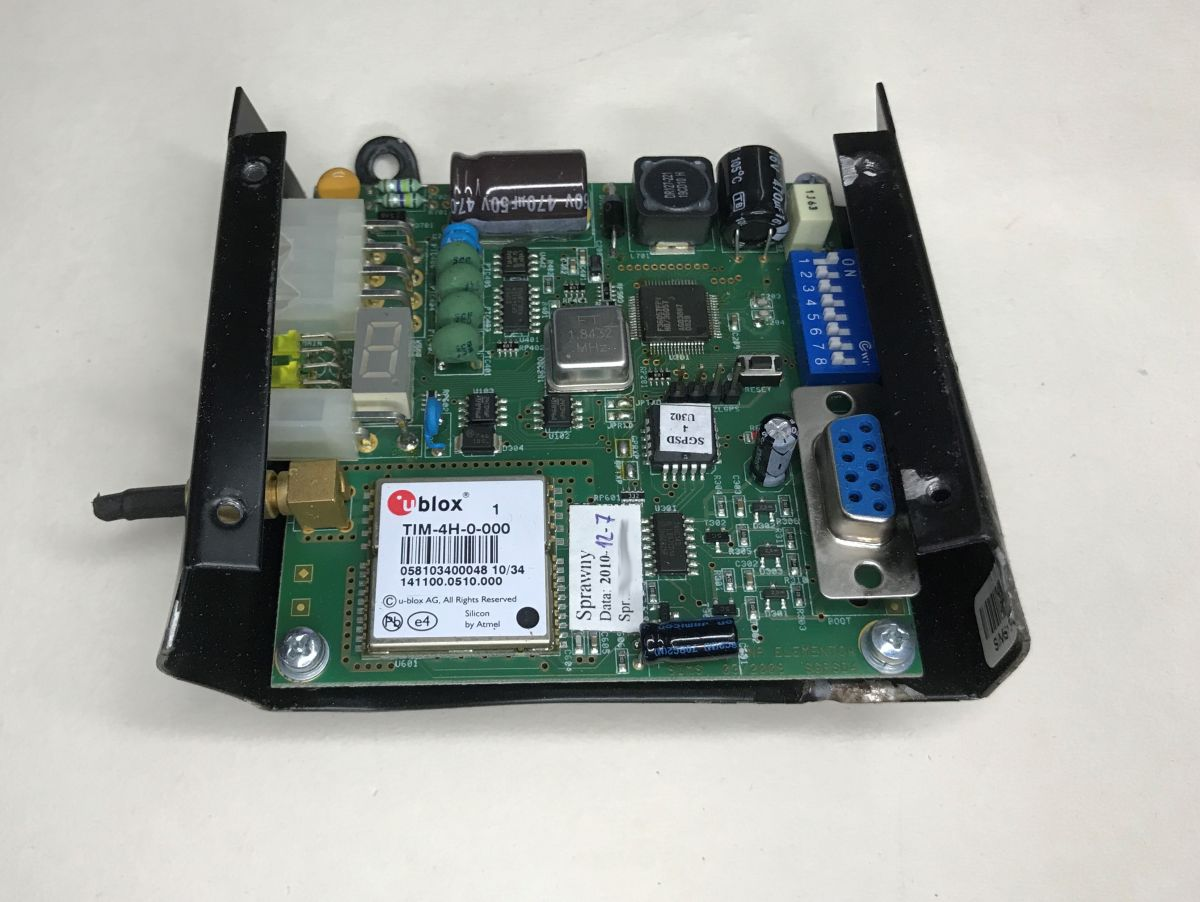
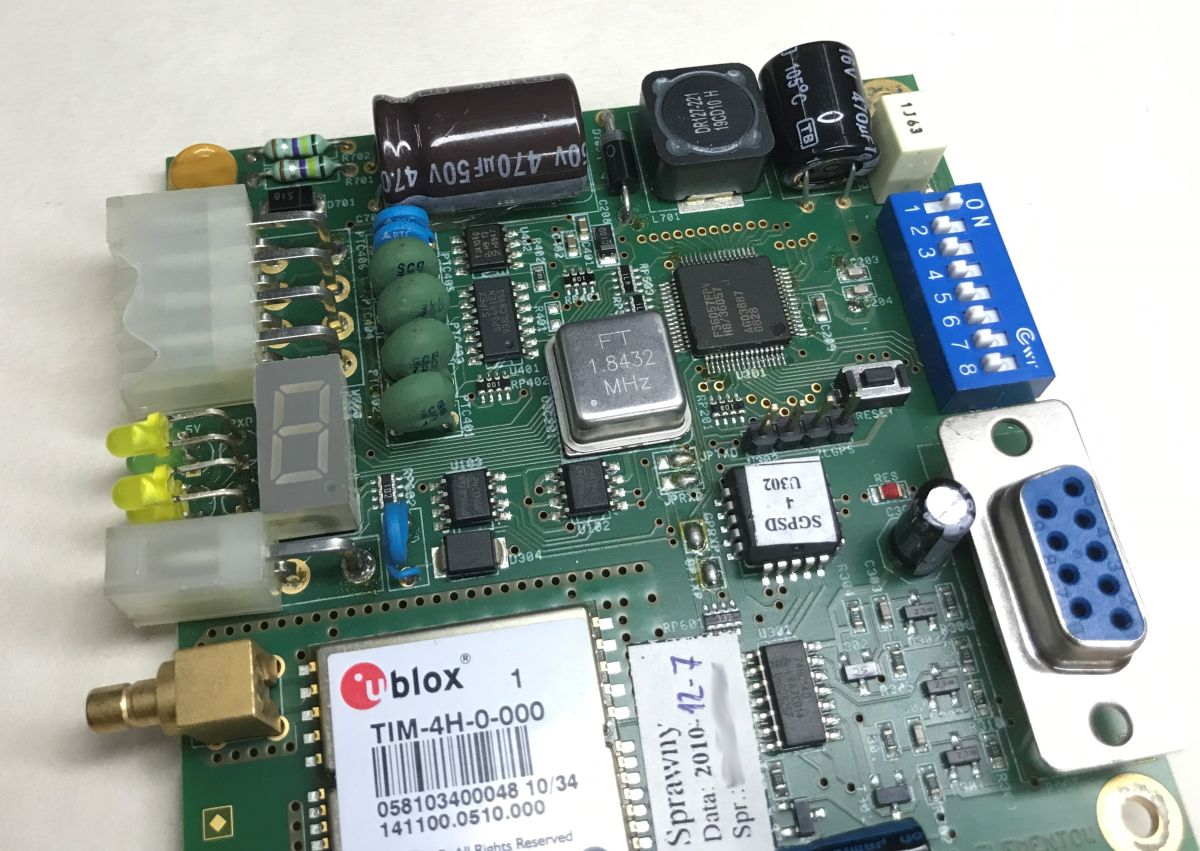
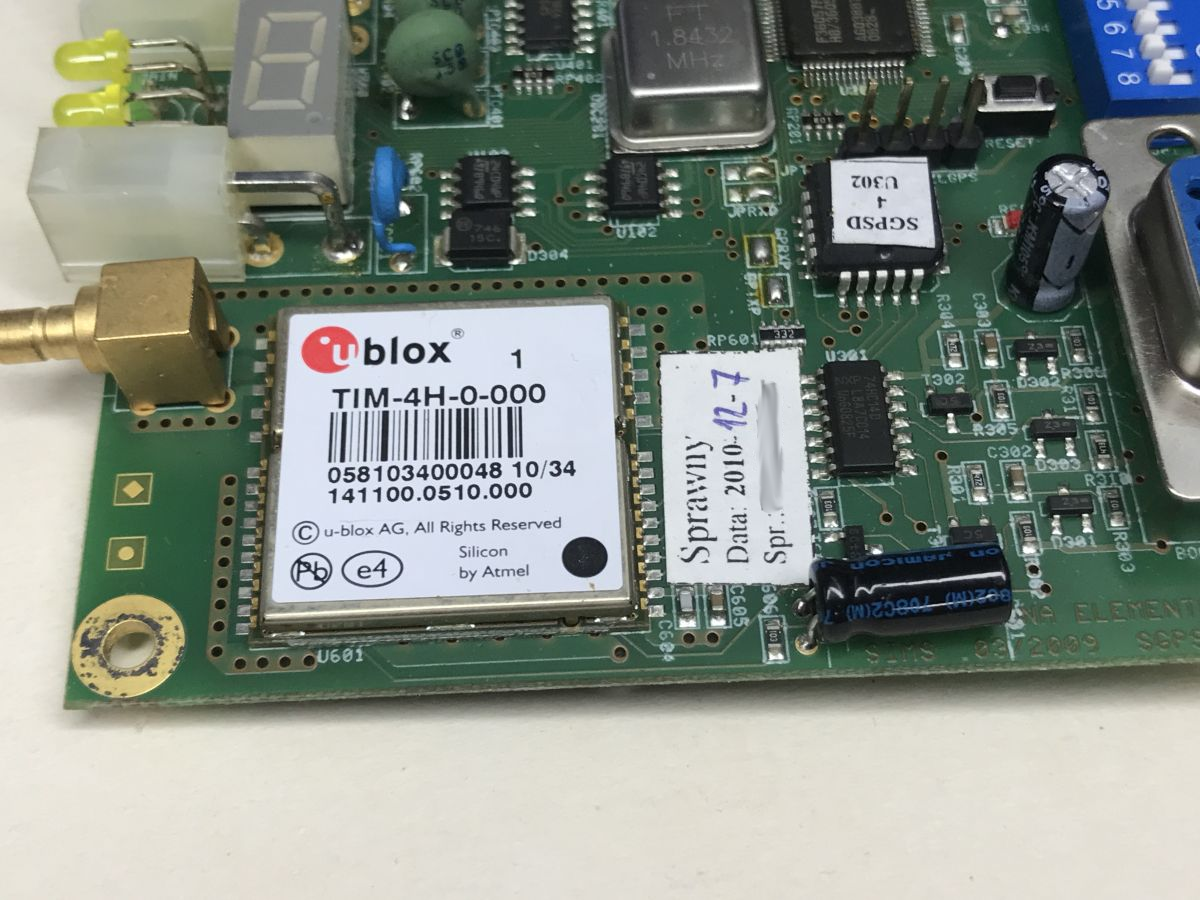
The board is a two-layer board, mainly surface-mounted, although a few through-hole components can also be found on it. Immediately striking is the section with the GPS module, where you can see a lot of vias, probably to reduce interference.
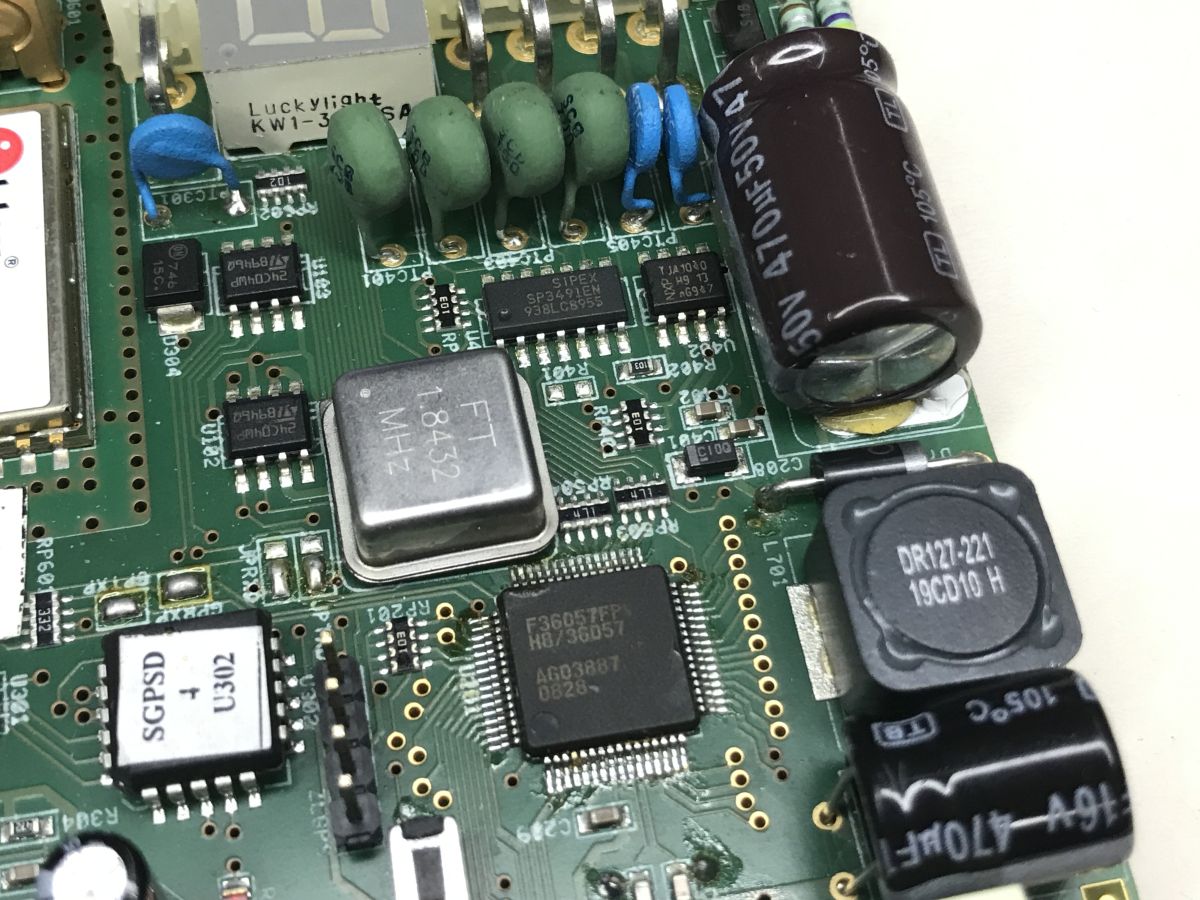
However, let's start with the power supply section. The first capacitor is at 50 V, the second at 16 V. I also see an inductor - could it be an inverter?
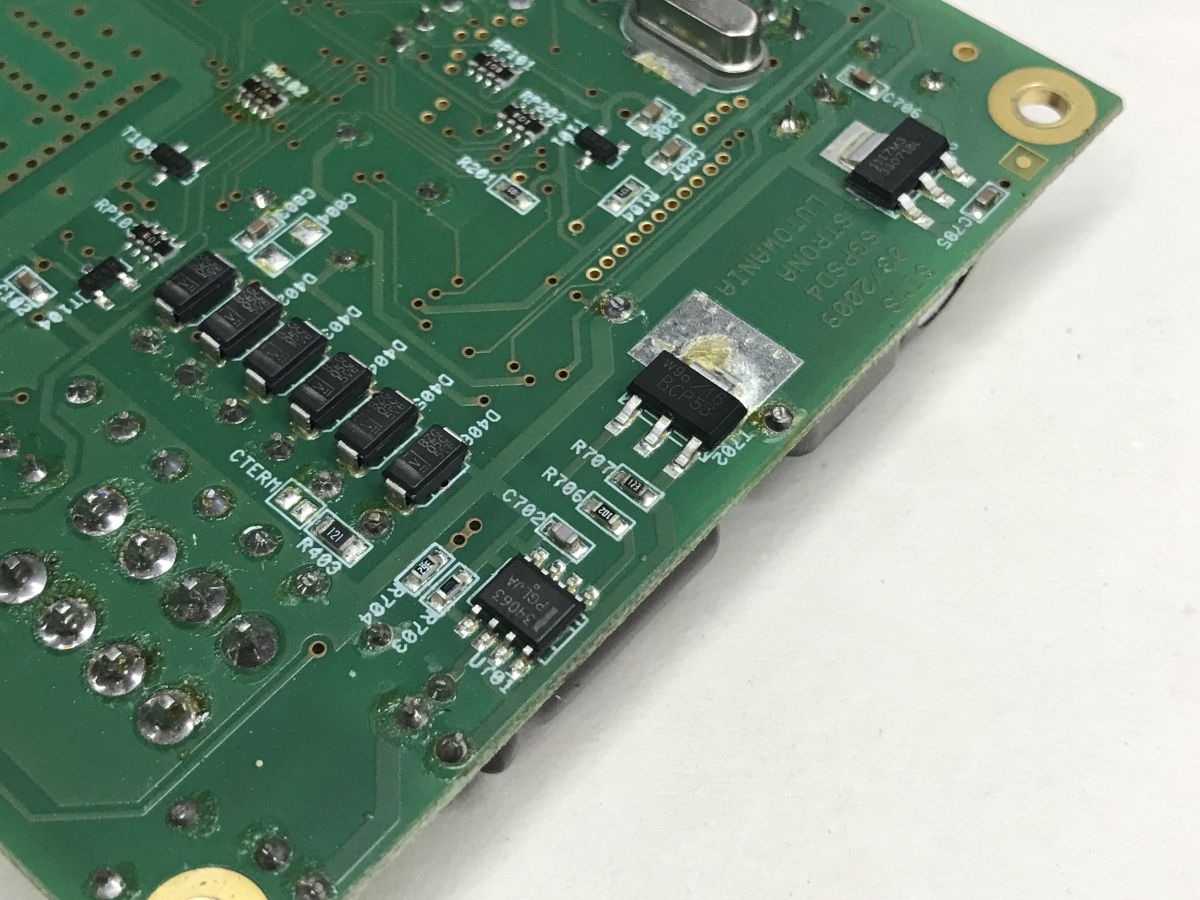
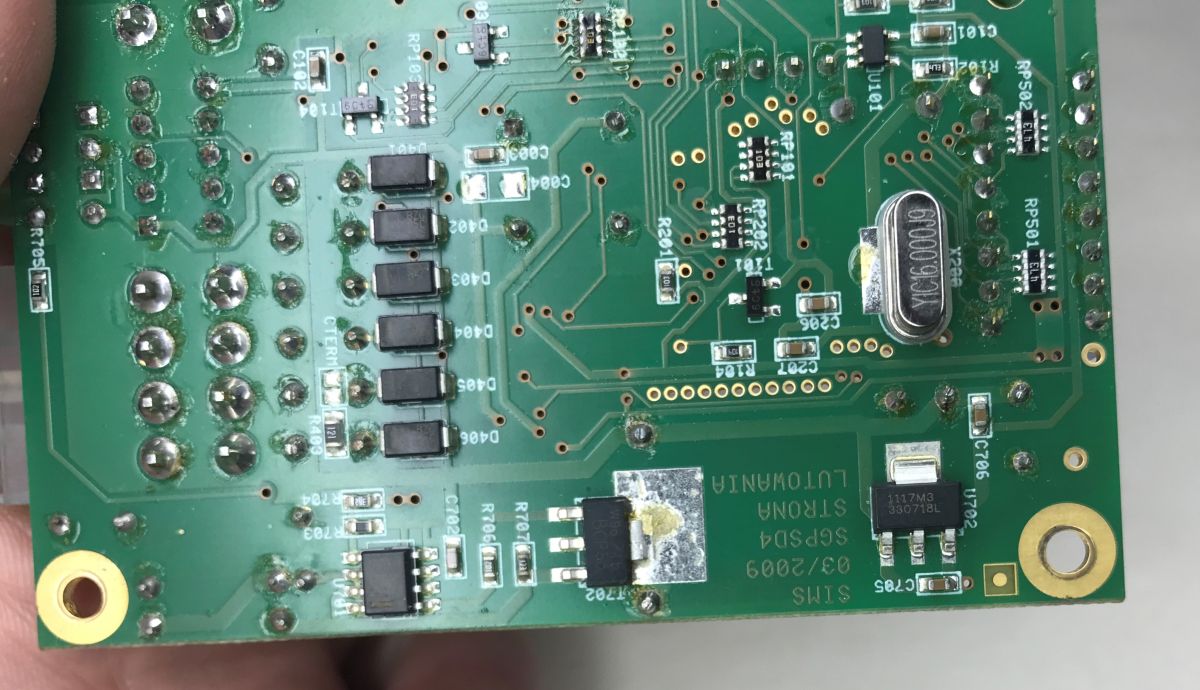
Yes, you can see it on the other side of the PCB:
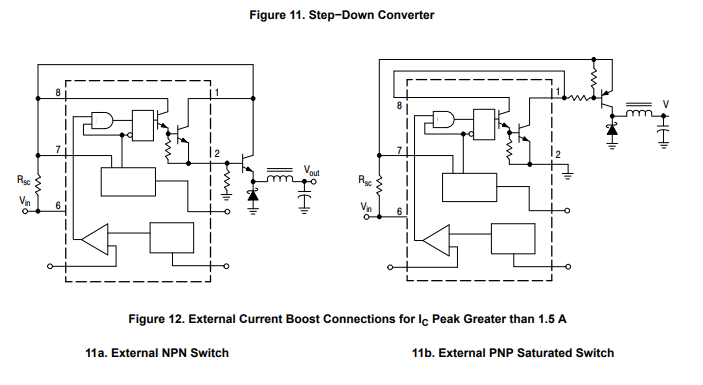
This is the MC34063, a fairly popular and versatile chip. Here it works in a voltage-decreasing role and I think it controls the BCP53 transistor, which means we have it in a version with an external keying transistor.
We look further down the line. The main MCU is probably the H8/36057F - a 16-bit microcontroller made by Renesas with 56 KB of Flash and 3 KB of RAM.
Right next to it you can see a 1.8432 MHz quartz resonator, two 24C04WP EEPROM bones and the chips responsible for communications, SP3491EN (RS-485/RS-422 transceiver) and TJA1040 (CAN transceiver).
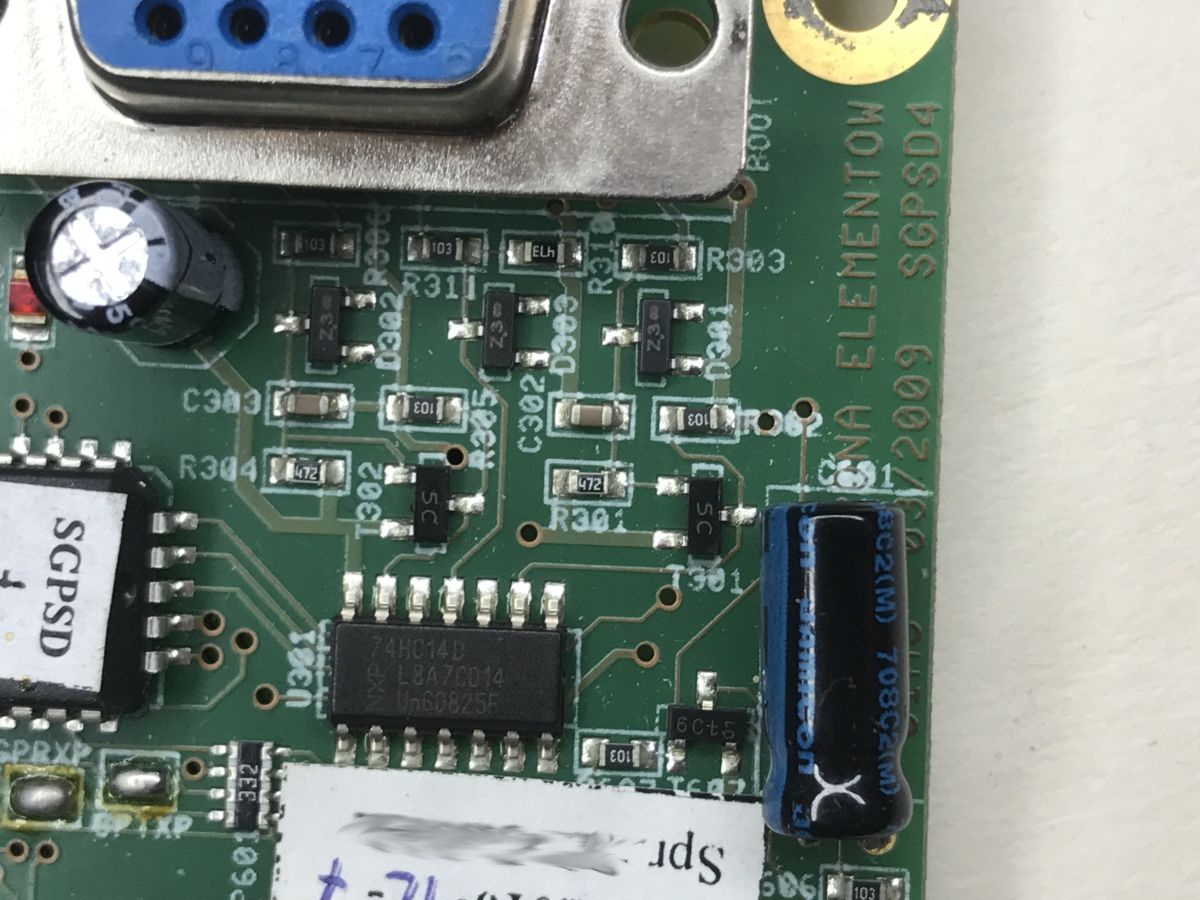
The GPS module itself is a TIM-4H-0-000 made by uBlox, although I can also see the logo of the then Atmel (later acquired by Microchip) there - probably from the chip? Right next to it I see a 74HC14D (HEX type inverter with Schmitt flipper inputs), perhaps for matching logic levels of signals.
There is also an RS232 connector in the area, which is not brought out to the chassis. Could it be for service?
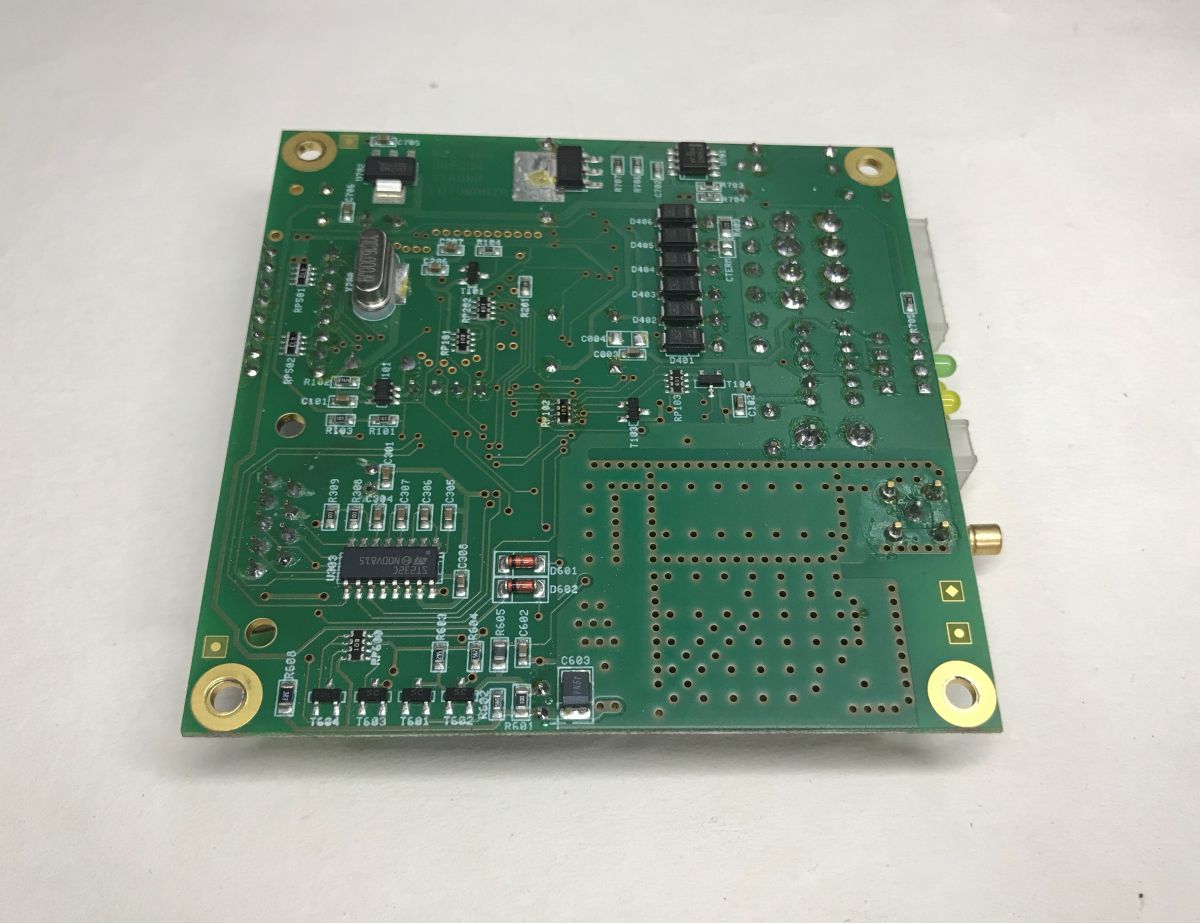
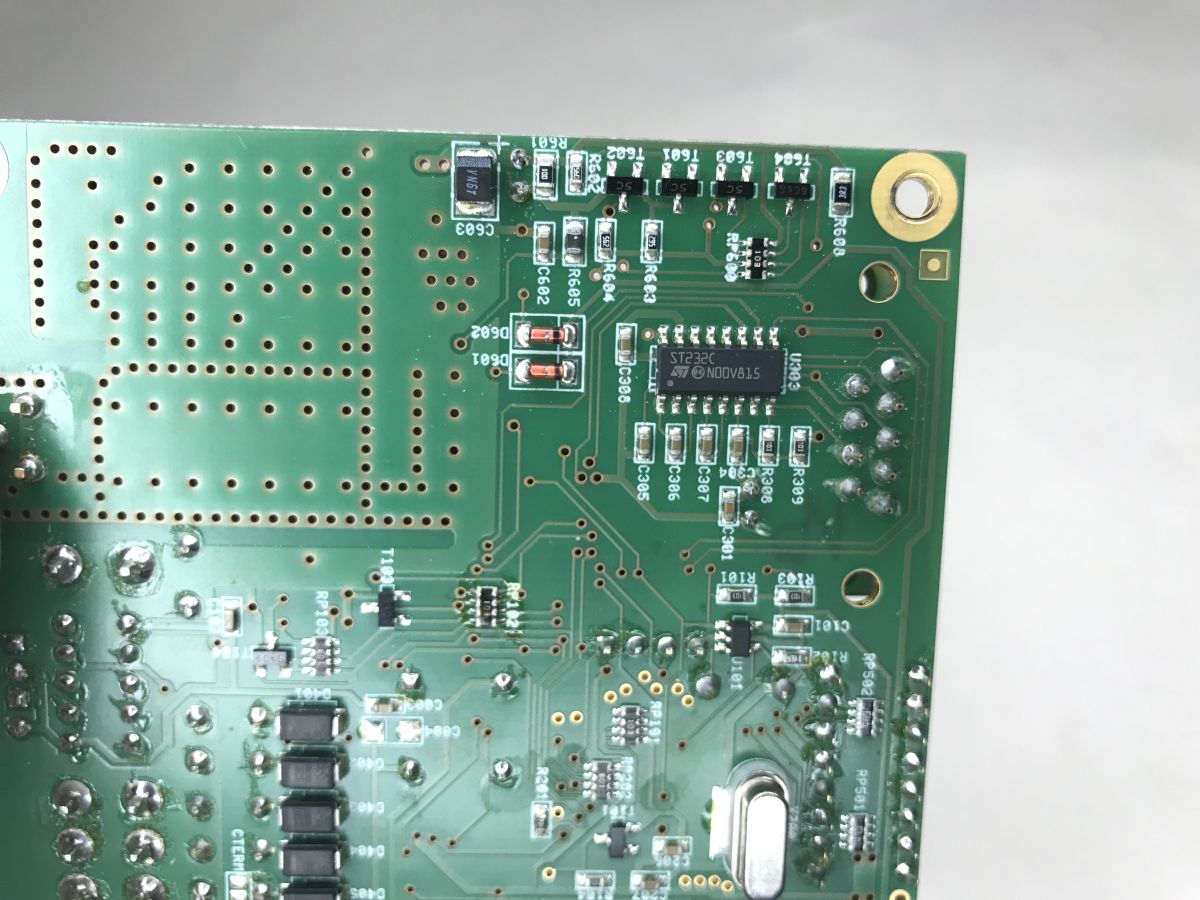
There is still the bottom of the PCB left. Next to the MCU we have a 3.3 V LDO there, power supply is known:
And also at the service connector section we have ST232C, which is a TTL to RS232 level converter. It would probably be possible to communicate with a simple USB to UART converter, if soldered into its corresponding legs.
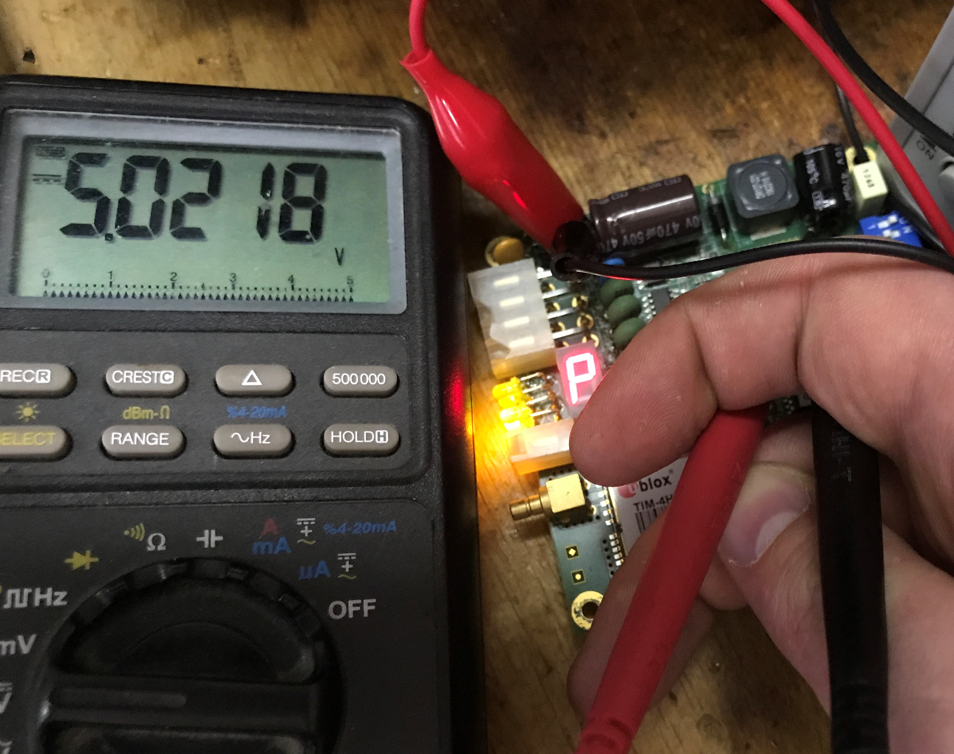
For the test, I powered the device from a laboratory power supply:
The 7-segment display counts down the digits and then displays the letter P. The 5 V LED is on and the GPS LED is flashing. There is the correct voltage after the step-down converter:
In summary , the module looks to be in working order, I don't know what happened to the casing on this scrap that it got so crushed. The PCB is not damaged at all. The module responds to voltage, counts down (?) and lights up the diodes. One could go one step further and try to communicate with it via RS232, but I don't have a converter at the moment, and I also don't know if it sends data itself. With this NMEA you could try, although this is not likely to be TTL level either, a brief voltage measurement on one of the pins shows negative values.
The module itself has subtitles in Polish, m. in. SIMS 03/2009 SGPSD4 LUTTING PAGE, which suggests that it was designed in our country, looking at the company it would also agree.
That's it for now, if anyone has any documentation for it or specifics on where to receive at least this NMEA stream then I can plug it in and give it a try, if not then the board will wait for some free long weekend.
It would be useful to connect an antenna and see if it catches a signal.
PS: How do I know it's "railway" equipment? This is information from a parts source - unverified.
About Author
p.kaczmarek2 wrote 14792 posts with
rating 12937 , helped 659 times.
Been with us since 2014 year.
GPS module is u-blox production: https://www.u-blox.com/en [Read more]
jk55
20 Jan 2026 21:54
These modules were also used in trams.The newer ones are from TIM-5H (for GALILEO).The RS socket inside can be connected directly to the PC and use the UBLOX software .It works from 10 to 24V. When you... [Read more]
japycz321
21 Jan 2026 21:33
u-center or u-center 2.
These tools talk to Ublox modules via COM ports. At the same time, I do not know how correctly they support such an old chip. The receiver itself probably has standard UBX, NMEA... [Read more]
Galareta
17 Feb 2026 20:25
99% of all gps used in snow groomers, railways, agricultural tractors etc. use these modules. There is no point in reinventing the wheel. [Read more]
Why it matters: Helps repairers and hobbyists identify interfaces, power, and safe hookup steps to read NMEA/CAN data without damaging hardware. This FAQ is for teardown readers, embedded engineers, and rail-maintenance techs who ask how to power, talk to, and reuse this unit.
A railway-oriented GPS module from a Polish maker, dated around 2011. It integrates a u‑blox TIM‑4H GNSS receiver, Renesas H8/36057F MCU, RS‑422, CAN (TJA1040), NMEA output, and an internal RS‑232 service header in a metal enclosure. [Elektroda, p.kaczmarek2, post #21813995]
Which connectors and buses can I use to communicate with it?
Use the side RS‑422 port for differential serial, the NMEA-labeled output for GPS messages, and the internal RS‑232 header near the ST232C for service. CAN signaling is provided via the TJA1040 transceiver on the board. [Elektroda, p.kaczmarek2, post #21813995]
How is power handled and where do I feed it?
Power is likely provided through the RS‑422 connector. Onboard regulation uses an MC34063 buck with external BCP53 switching transistor and a 3.3 V LDO. The board shows a lit “5 V” indicator under test supply. [Elektroda, p.kaczmarek2, post #21813995]
What GPS receiver module does it use?
It uses the u‑blox TIM‑4H‑0‑000 GPS module. The area shows dense stitching vias for RF integrity and a nearby 74HC14D for signal conditioning and level matching. [Elektroda, p.kaczmarek2, post #21813995]
What microcontroller and clock are onboard?
The MCU is Renesas H8/36057F with 56 KB Flash and 3 KB RAM. A 1.8432 MHz quartz resonator provides a standard UART‑friendly clock for precise baud rates. [Elektroda, p.kaczmarek2, post #21813995]
Measure the NMEA pin first. The teardown shows negative voltage there, indicating RS‑232 levels. Use an RS‑232 receiver or level shifter. Connecting a TTL‑only adapter risks damage to the adapter or port. [Elektroda, p.kaczmarek2, post #21813995]
What do the display and LEDs mean on power‑up?
On bench power, the 7‑segment display counts down digits, then shows “P.” The 5 V LED lights solid and the GPS LED flashes, indicating activity. This sequence suggests a normal boot and GPS subsystem polling. [Elektroda, p.kaczmarek2, post #21813995]
What does CAN bus refer to in this unit?
Here, CAN refers to the controller area network physical interface implemented by the TJA1040 transceiver on the board. It enables robust, differential signaling for vehicle and rail systems through the module’s wiring harness. [Elektroda, p.kaczmarek2, post #21813995]
RS‑422 vs. RS‑232 here—what’s the difference I should care about?
RS‑422 is differential and suited for longer runs and higher noise immunity, used on the side connector. RS‑232 is single‑ended and present on the internal service header and NMEA output, which showed negative swing during probing. [Elektroda, p.kaczmarek2, post #21813995]
Will it work on the bench without a GPS antenna attached?
It powers up and shows activity without an antenna, but satellite lock requires a proper antenna on the GPS connector. For meaningful NMEA data, attach the antenna before testing outdoors or near a window. [Elektroda, p.kaczmarek2, post #21813995]
Is the board reusable despite the crushed case?
Yes. The PCB is undamaged, responds to supply, boots with a display sequence, and drives LEDs. "The module looks to be in working order," making it a viable donor for lab experiments or interface capture. [Elektroda, p.kaczmarek2, post #21813995]
What are the 24C04WP EEPROMs used for?
Two 24C04WP EEPROMs provide non‑volatile storage for configuration, calibration, or logs managed by the H8 MCU. Their presence near the MCU suggests parameter retention across power cycles. [Elektroda, p.kaczmarek2, post #21813995]
What does the MC34063 do in this design?
The MC34063 runs as a step‑down converter with an external BCP53 switch transistor. Measurements confirm correct post‑converter voltage, then regulation feeds a 3.3 V LDO near the MCU. [Elektroda, p.kaczmarek2, post #21813995]
Any gotchas or edge cases before I hook up adapters?
Yes. The NMEA line swings negative, indicating RS‑232 levels. Do not connect a TTL‑level USB‑UART directly. Use a proper RS‑232 interface or the ST232C section to protect equipment and get valid data. [Elektroda, p.kaczmarek2, post #21813995]
AI summary based on the discussion. May contain errors.








Comments
GPS module is u-blox production: https://www.u-blox.com/en [Read more]
These modules were also used in trams.The newer ones are from TIM-5H (for GALILEO).The RS socket inside can be connected directly to the PC and use the UBLOX software .It works from 10 to 24V. When you... [Read more]
u-center or u-center 2. These tools talk to Ublox modules via COM ports. At the same time, I do not know how correctly they support such an old chip. The receiver itself probably has standard UBX, NMEA... [Read more]
99% of all gps used in snow groomers, railways, agricultural tractors etc. use these modules. There is no point in reinventing the wheel. [Read more]