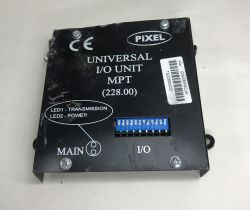
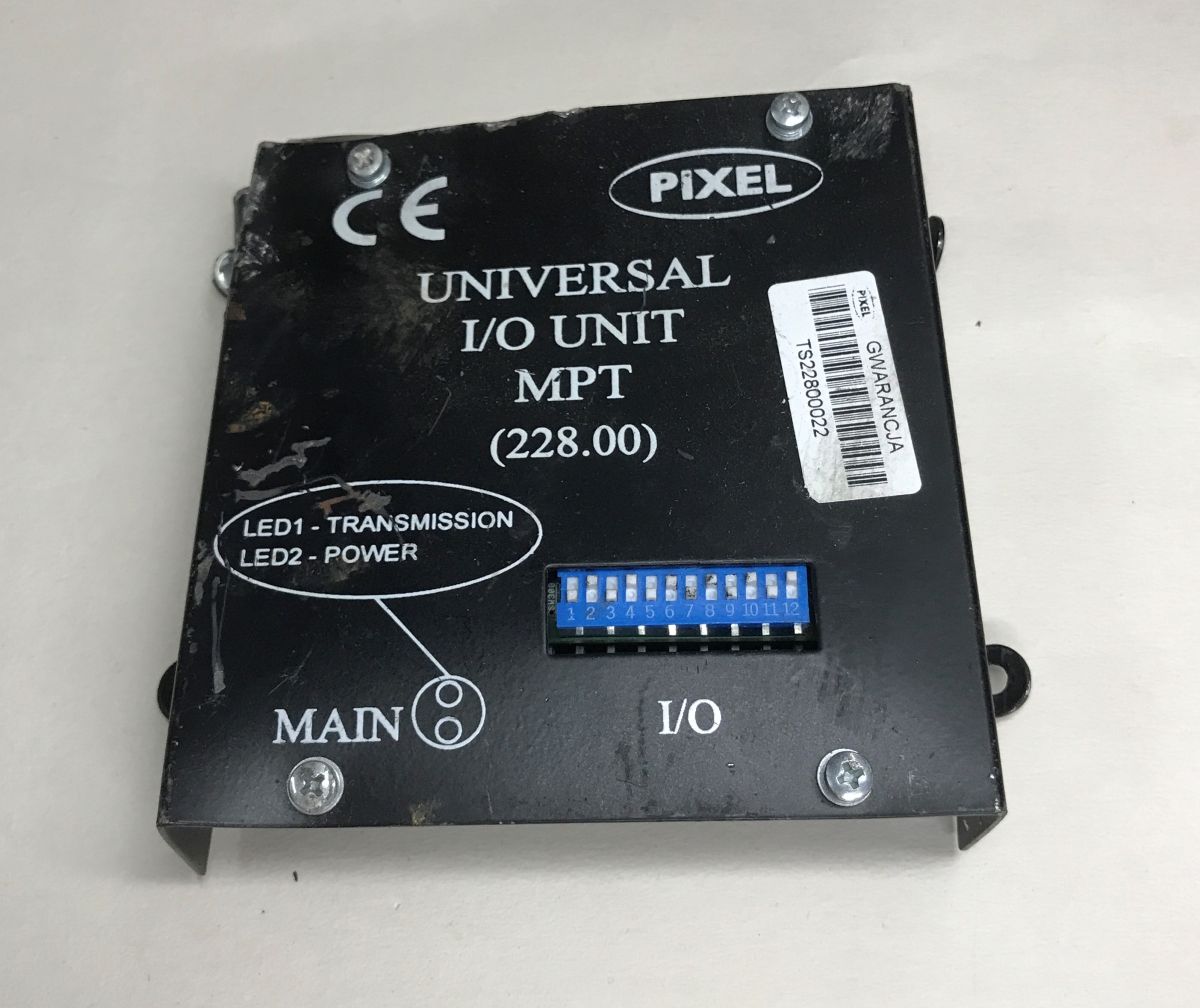
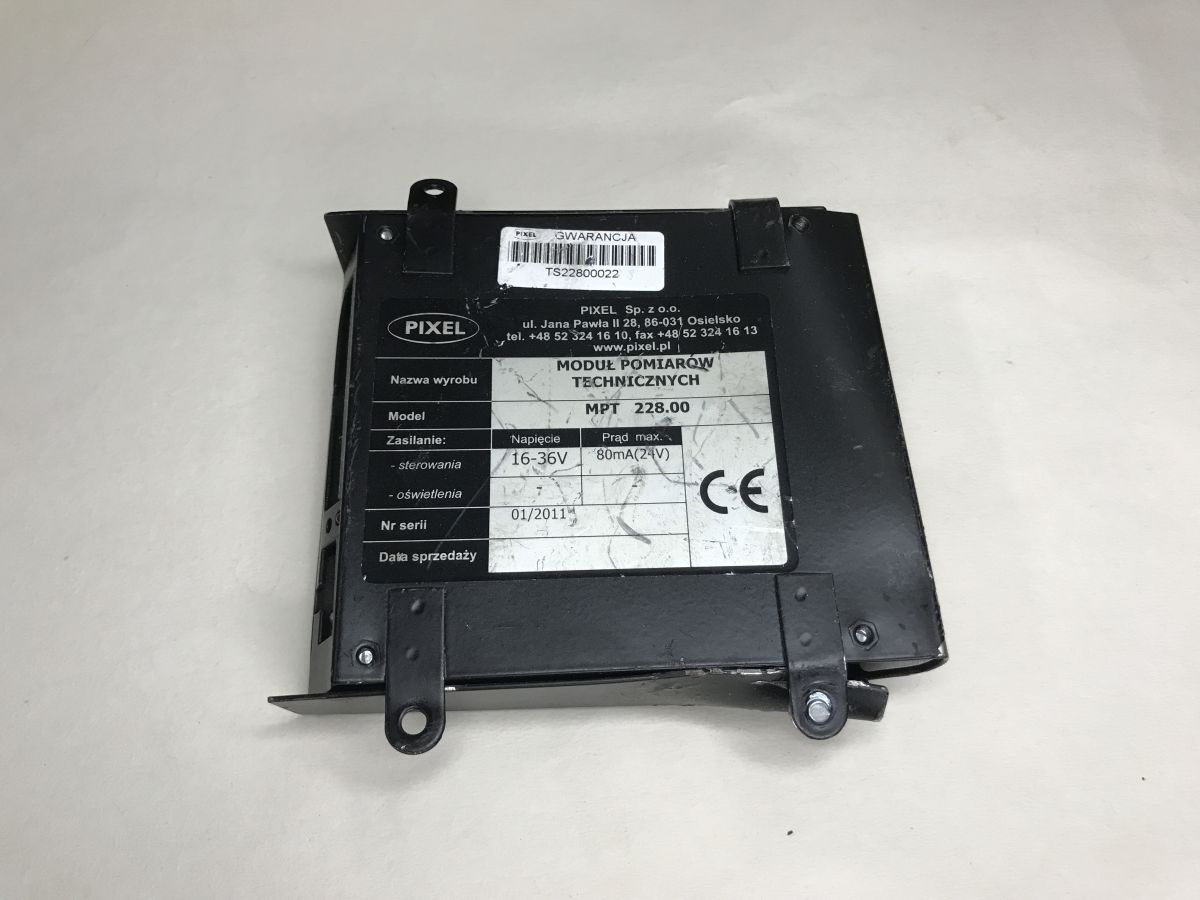
Here's the inside of another 'railway' equipment after decommissioning. This time the casing is pretty much squashed, but it's still worth a look inside - what is the so-called 'technical measurement module'? The English name is Universal I/O Unit MPT, which suggests it's an expansion card of some sort.
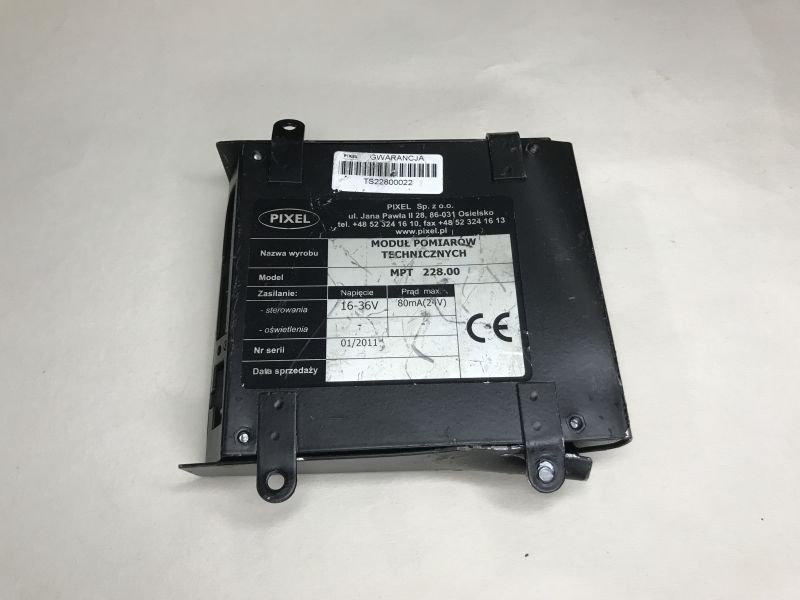
Operating voltage is 16-36 V, current up to 80 mA (at 24 V). It looks, to me, like a Polish design.
We remove the cover:
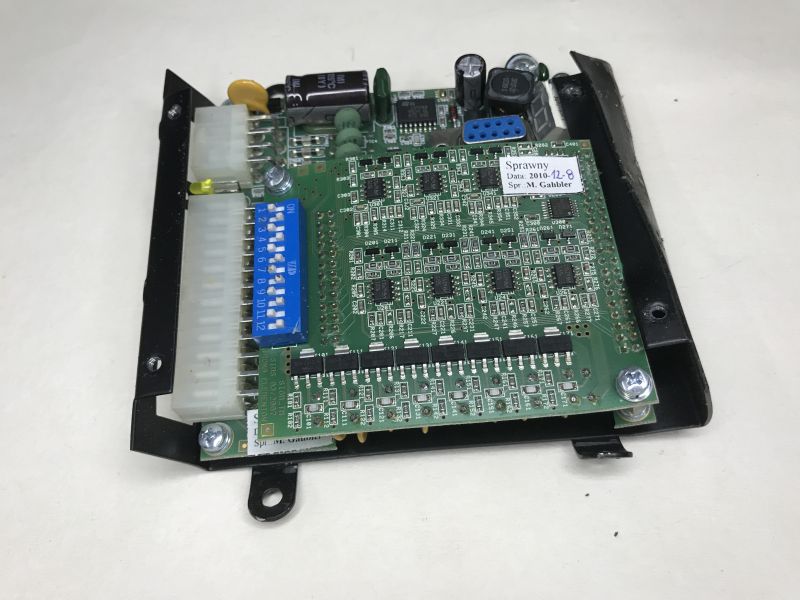
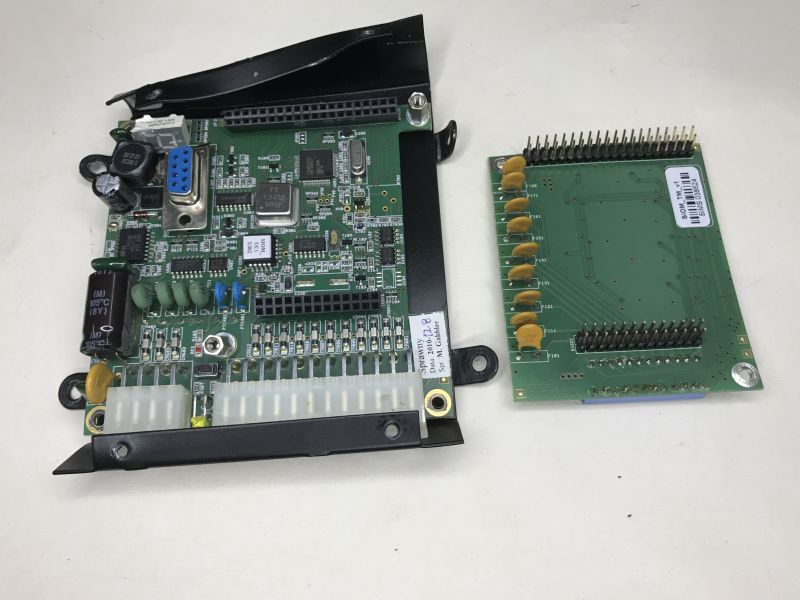
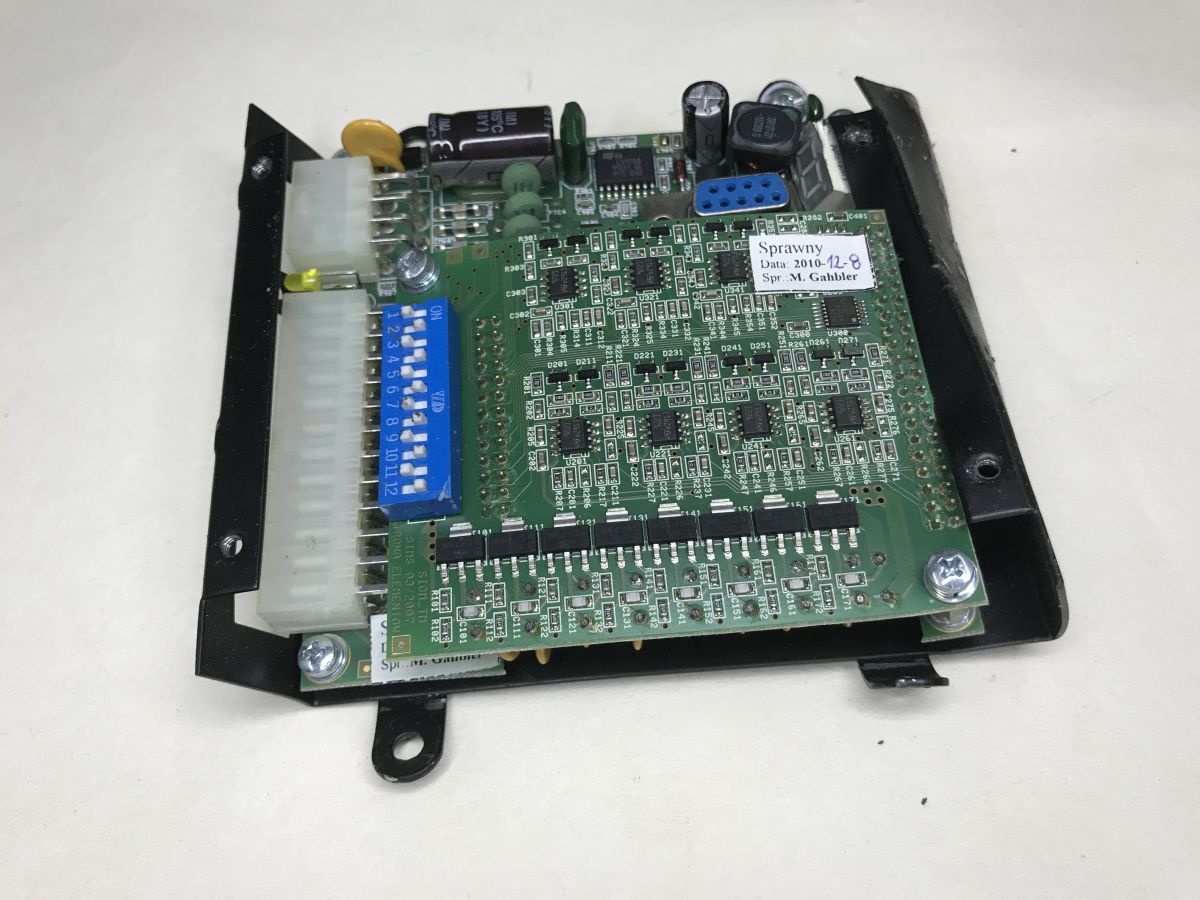
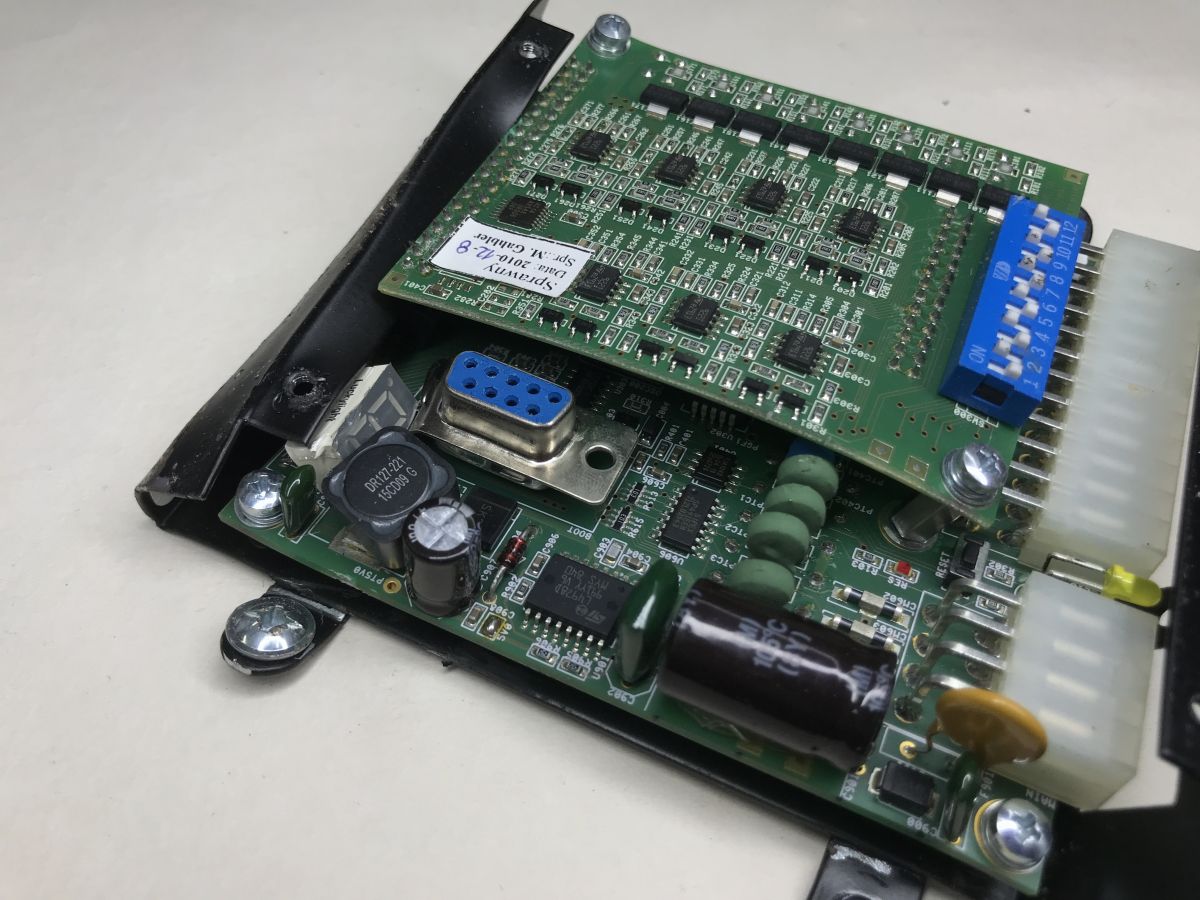
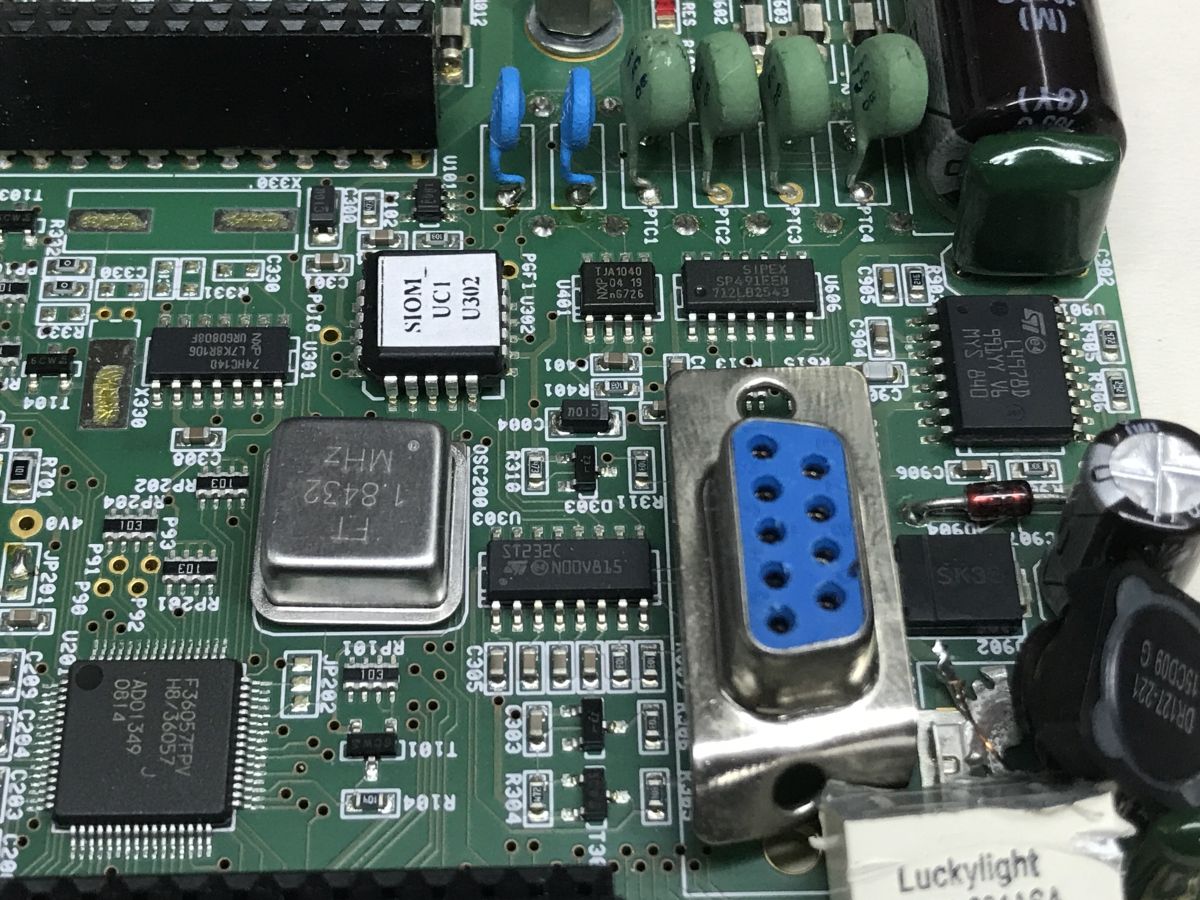
The centre resembles that of the GPS module shown earlier - we also have the programming connector and the LED display here, which has been hit quite hard. The boards here, however, are two.
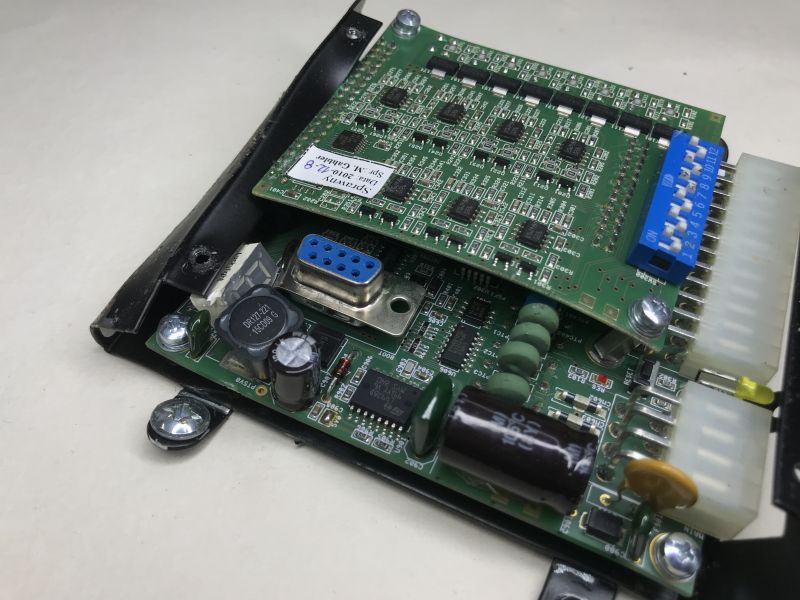
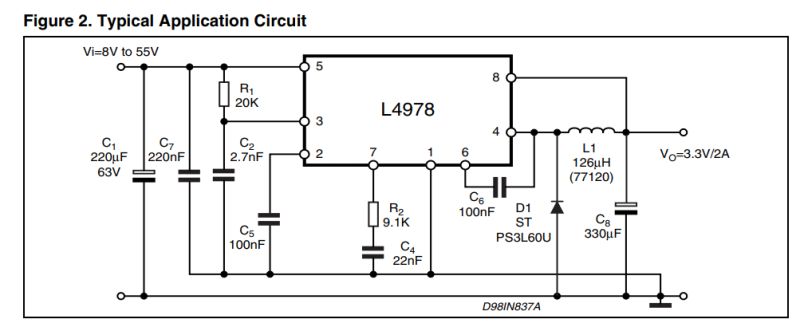
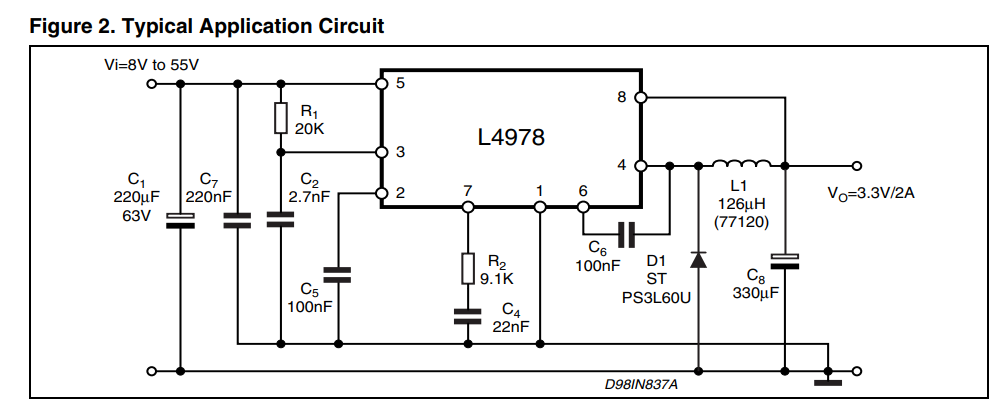
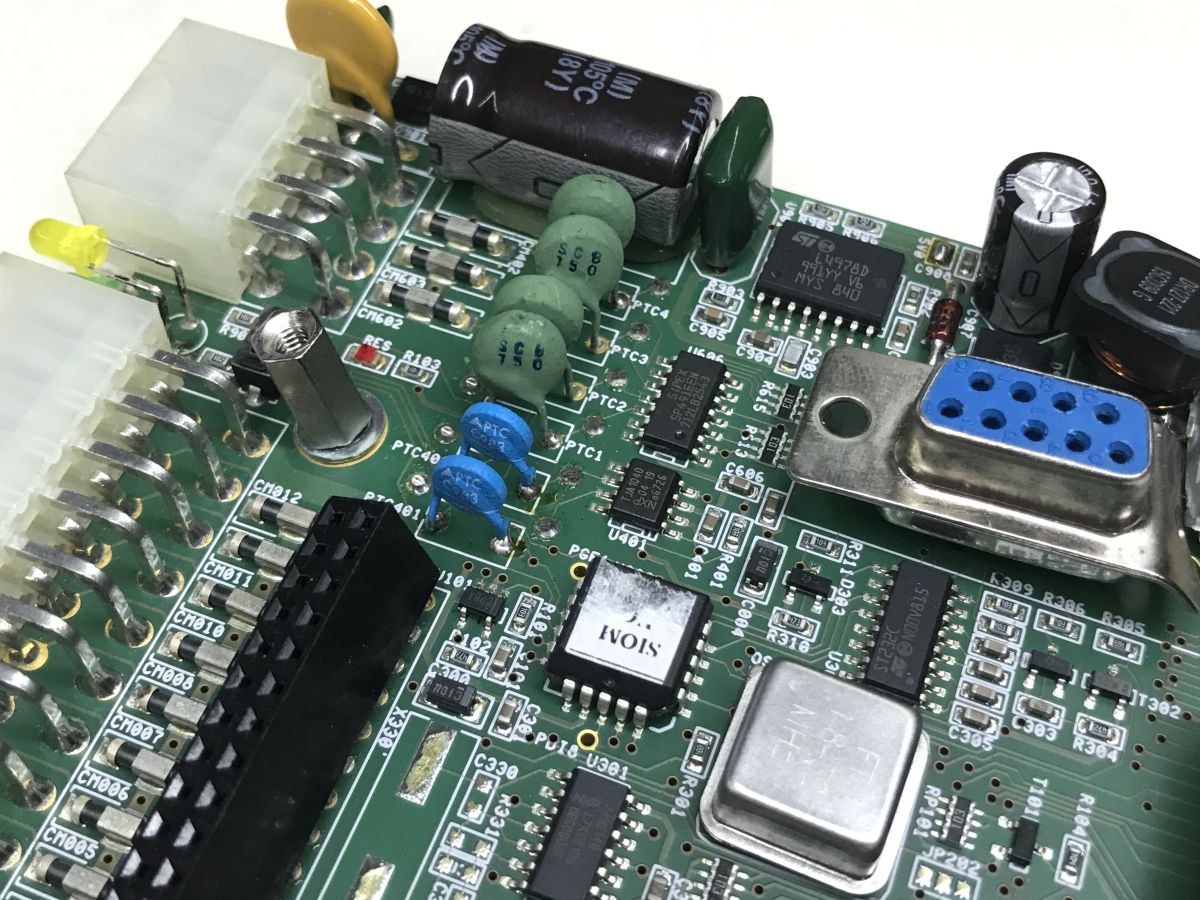
The power section is based on the L4978D, which is a DC-DC converter that reduces the voltage.
The coil has unfortunately also flopped.
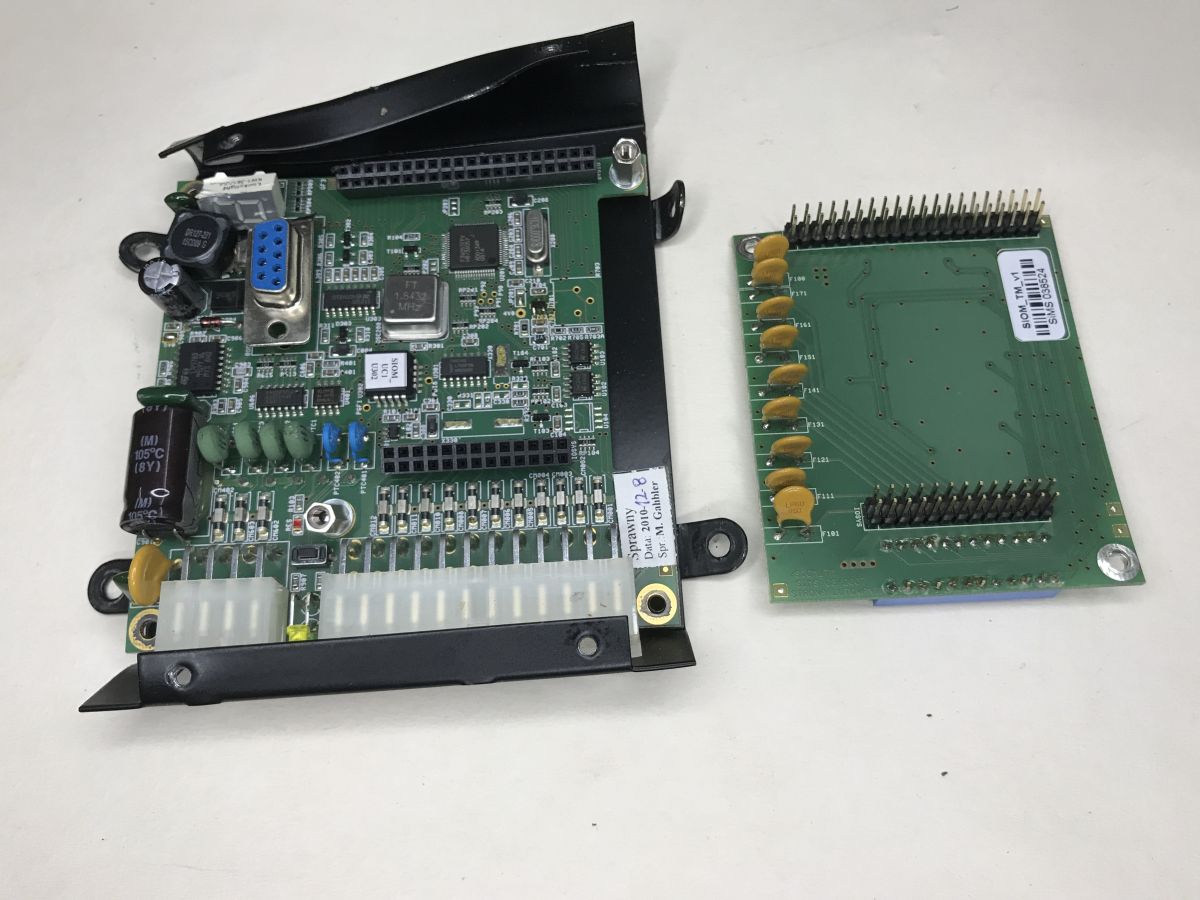
Let's remove the top PCB:
The coil, however, has also flopped:
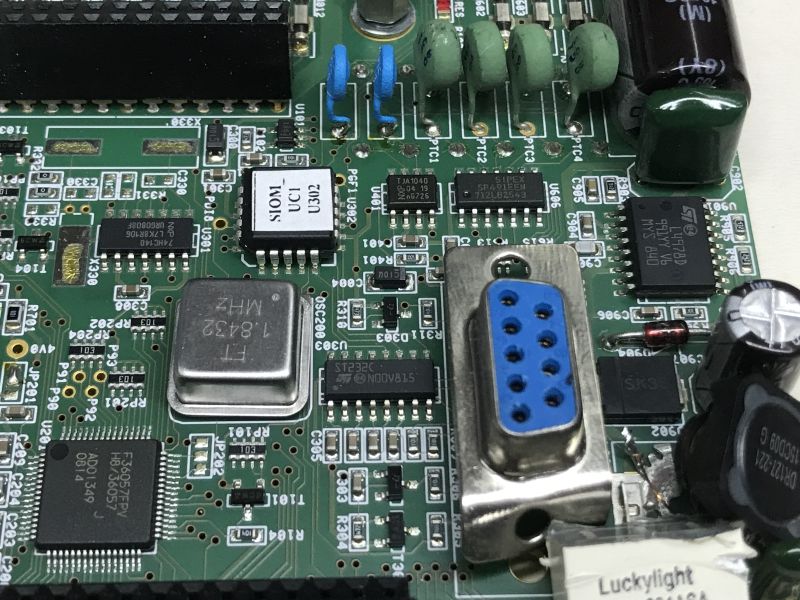
Here we see the main 16-bit MCU (H8/36057), the TTL-RS232 ST232C converter (from programming? This RS232 connector is not visible on the case), and the circuits from level conversion to the main communication bus (TJA1040 and SP491EEN), successively CAN and RS422. These lines are protected by PTC thermistors:
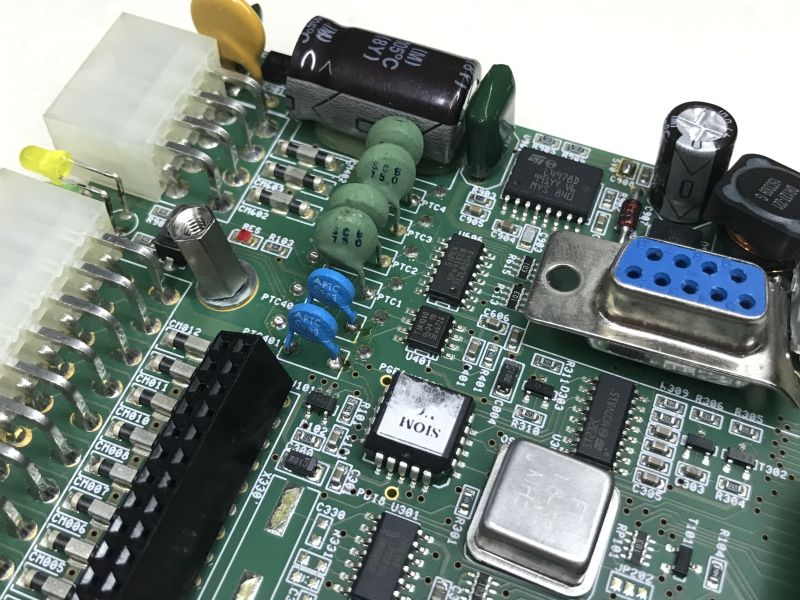
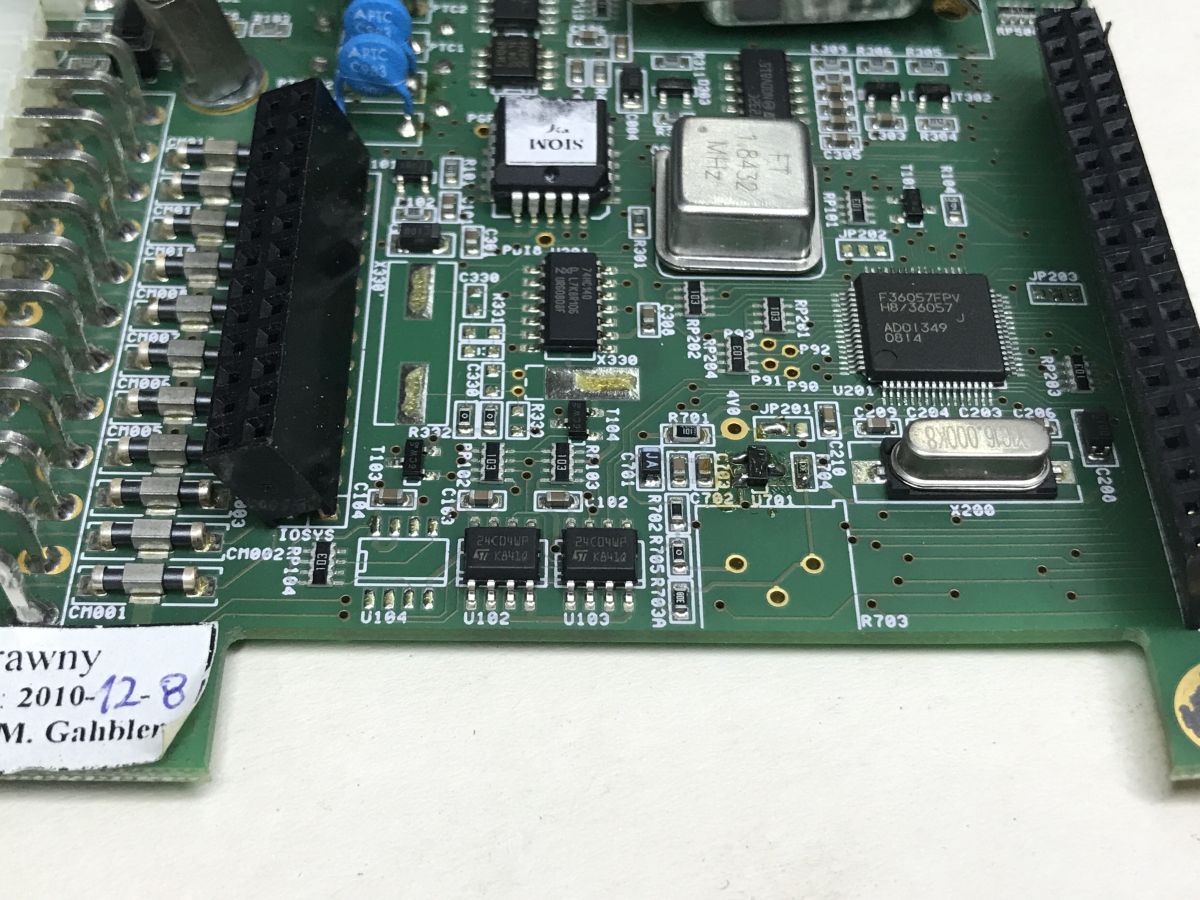
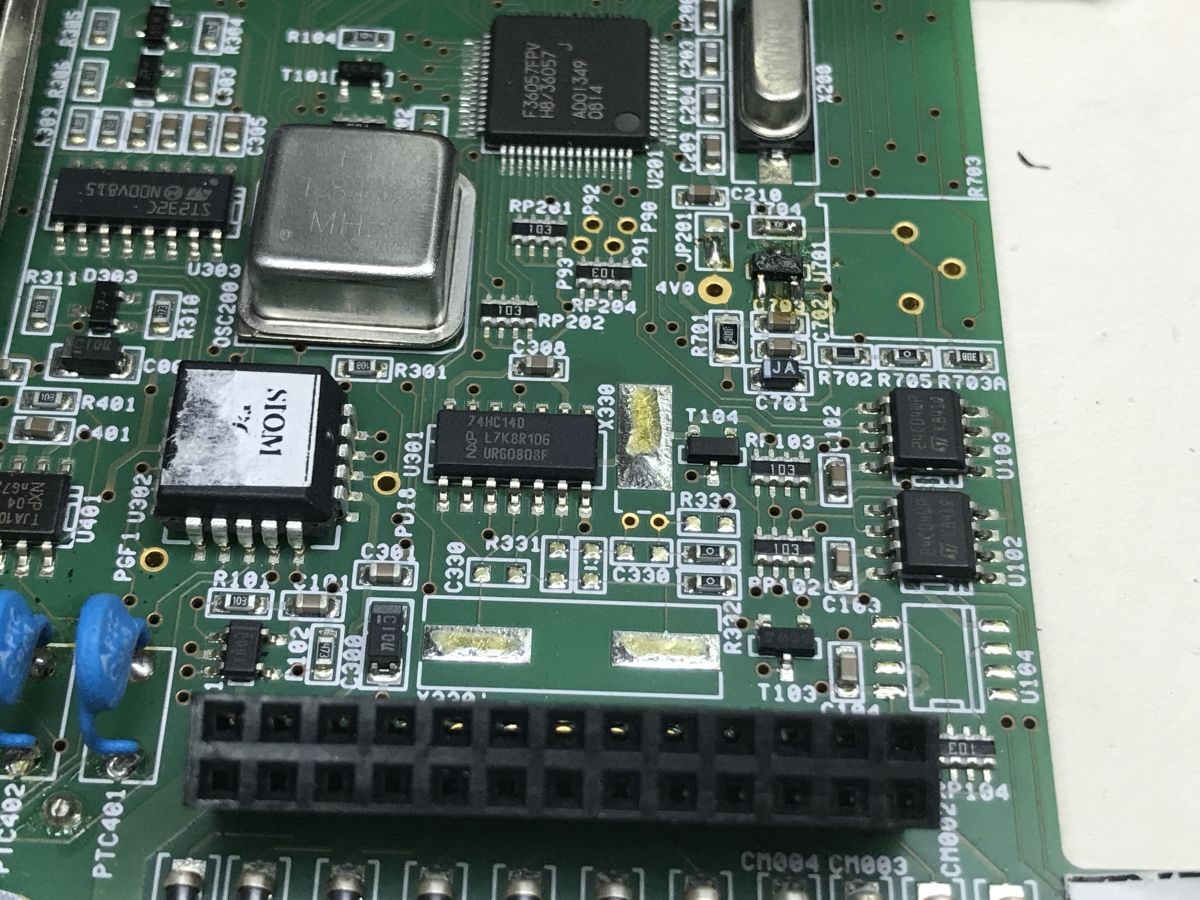
Two EEPROMs remain (with space for a third) - 24C04WP:
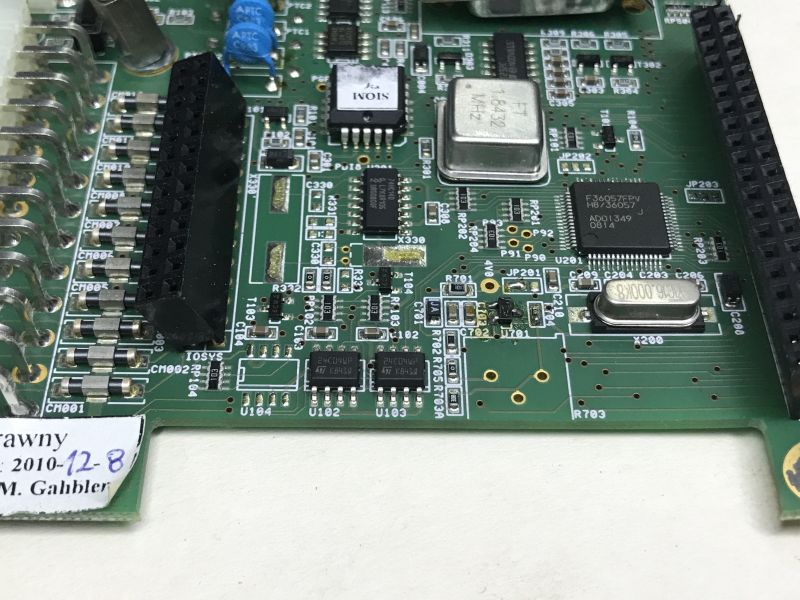
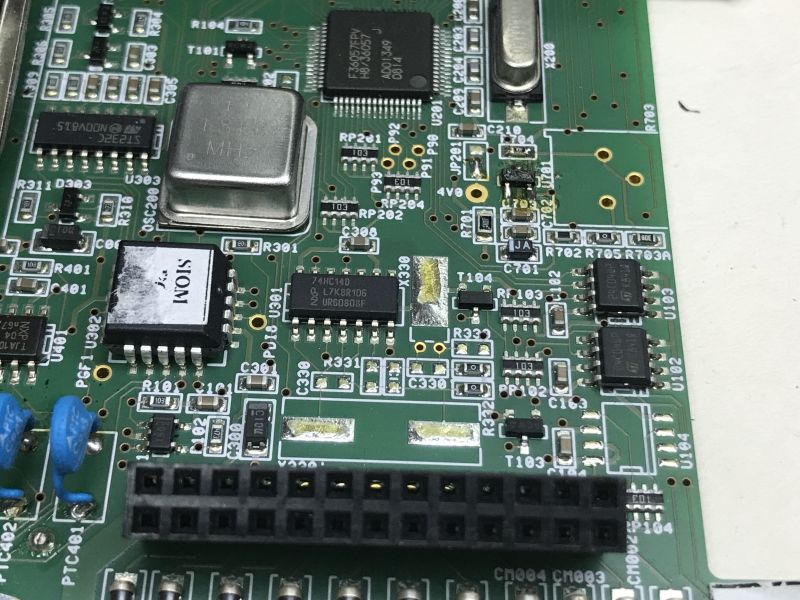
And then there's the 74HC14D - inverter, Schmitt flip-flop, probably in the buffer role?
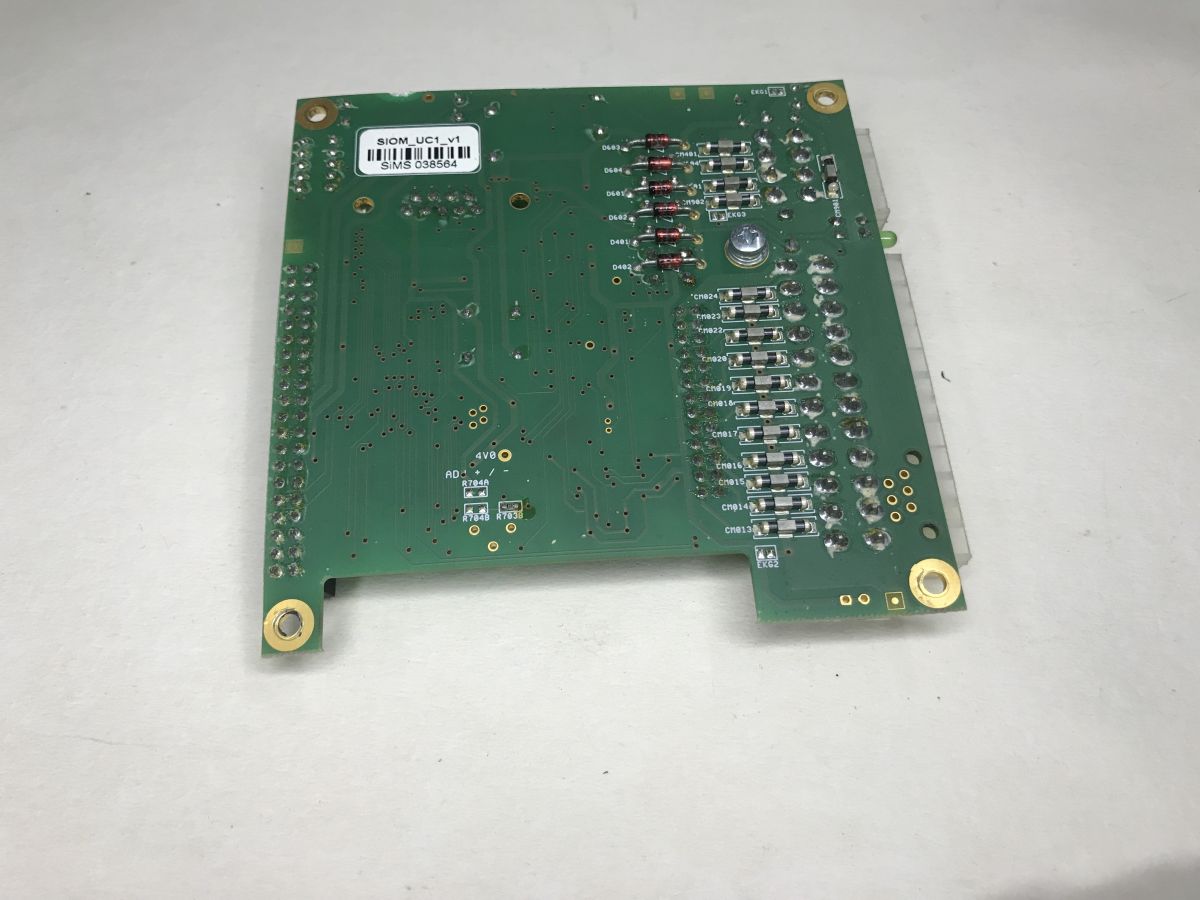
Bottom of PCB:
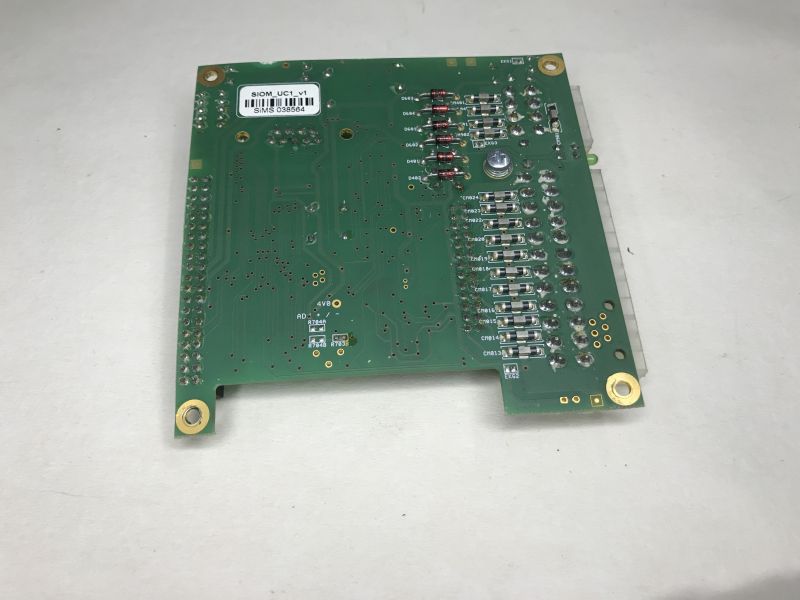
What remains is the IO overlay. From what I count, the connector on the outside is 2x12 and from the IO board is 2x13.
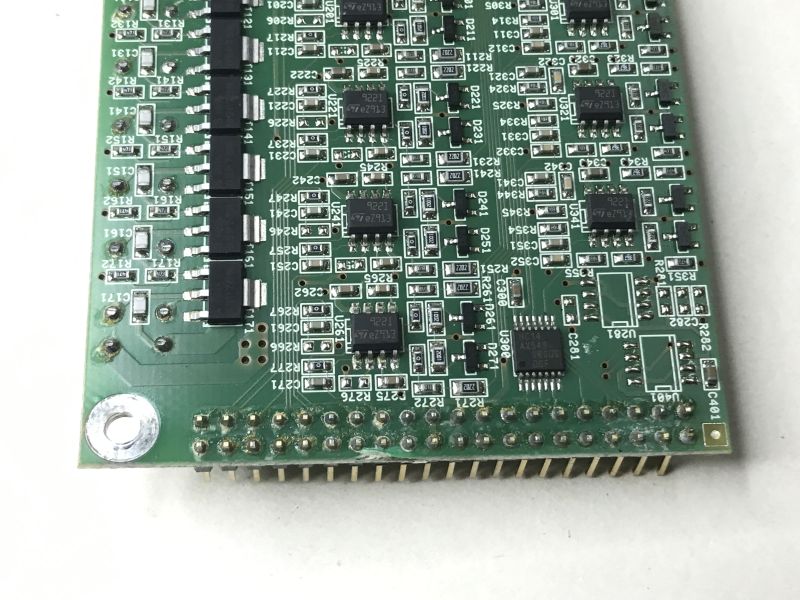
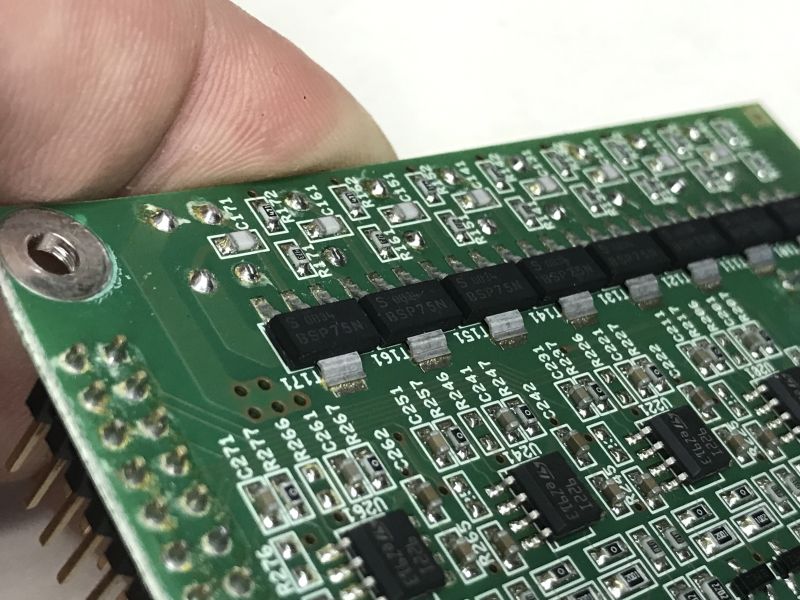
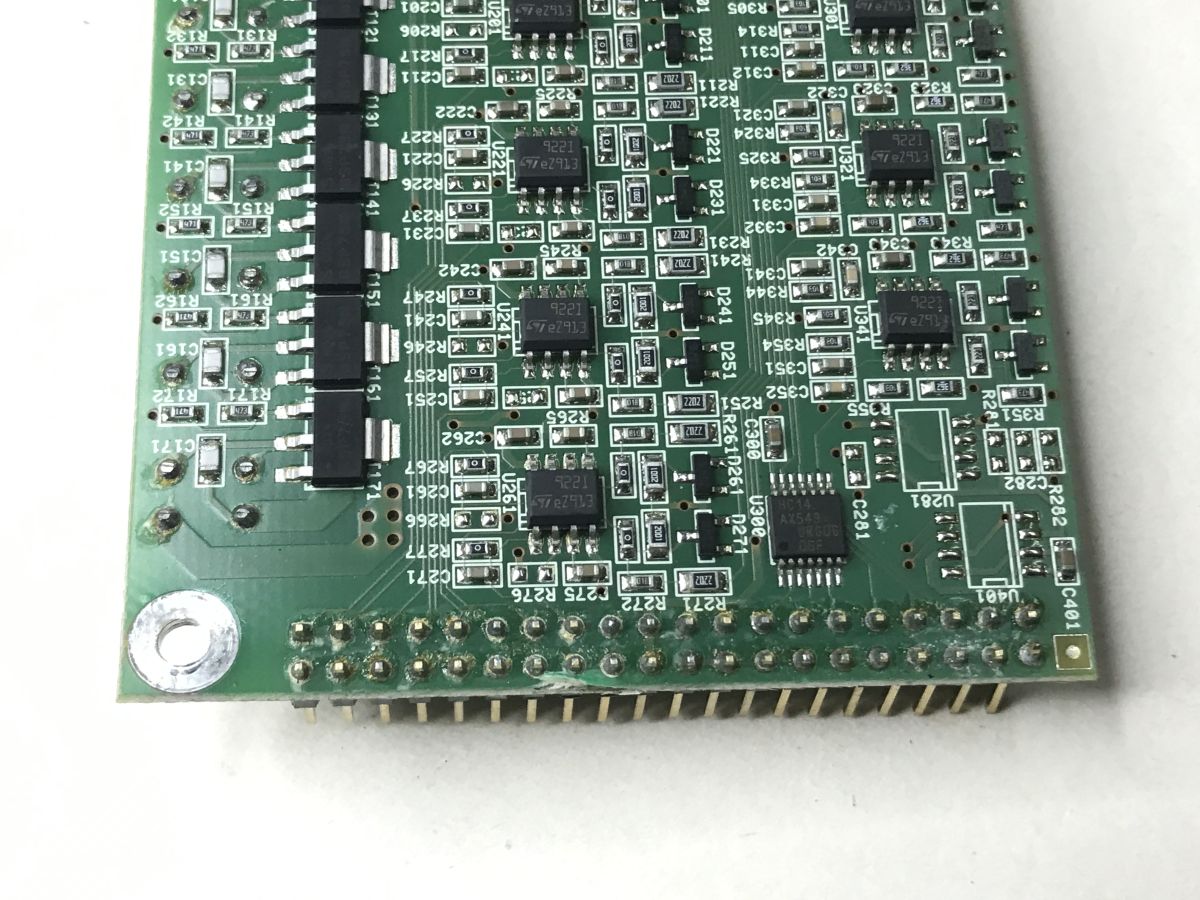
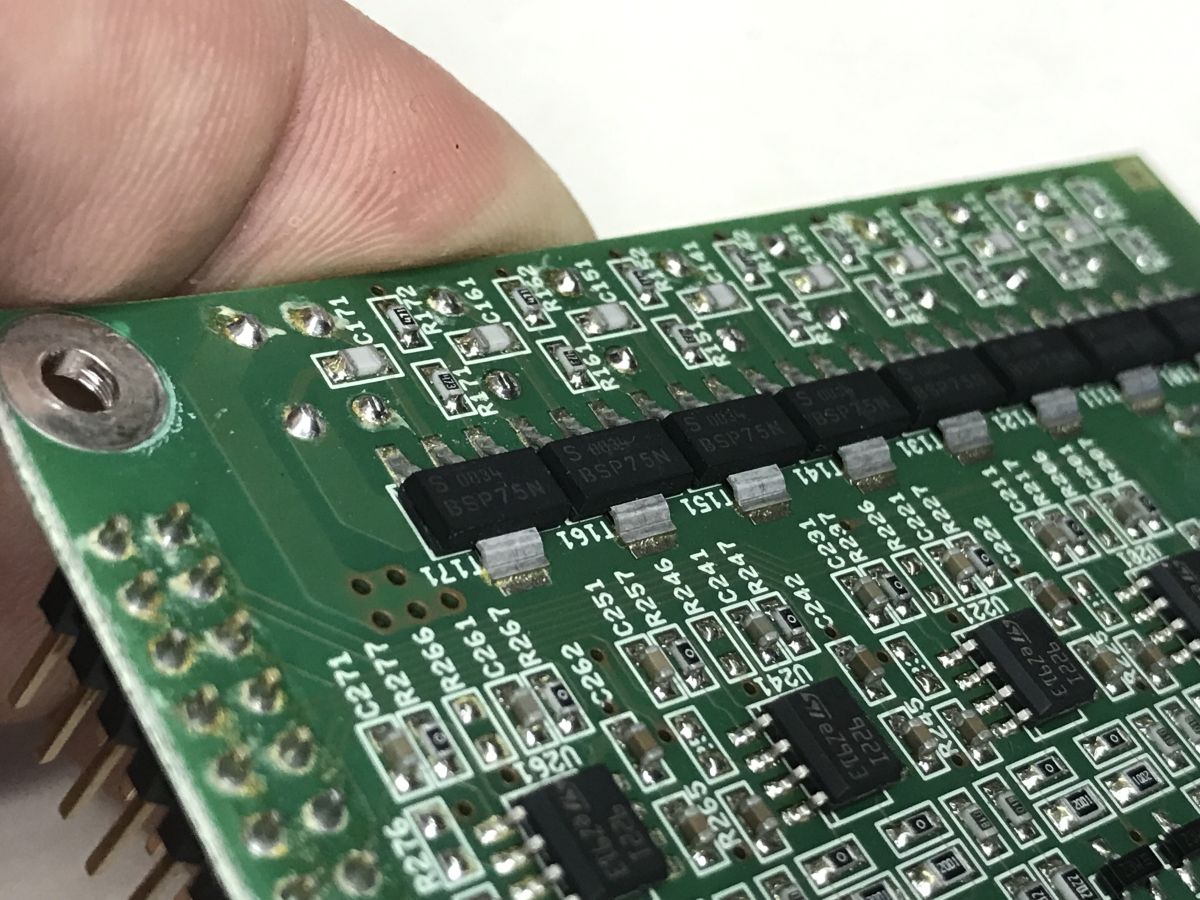
There is a single HC14 on the board, presumably in a buffer role. In addition to this we have 7 operational amplifiers 9221 (TS922IDT). There are 8 BSP75N transistors at the output:
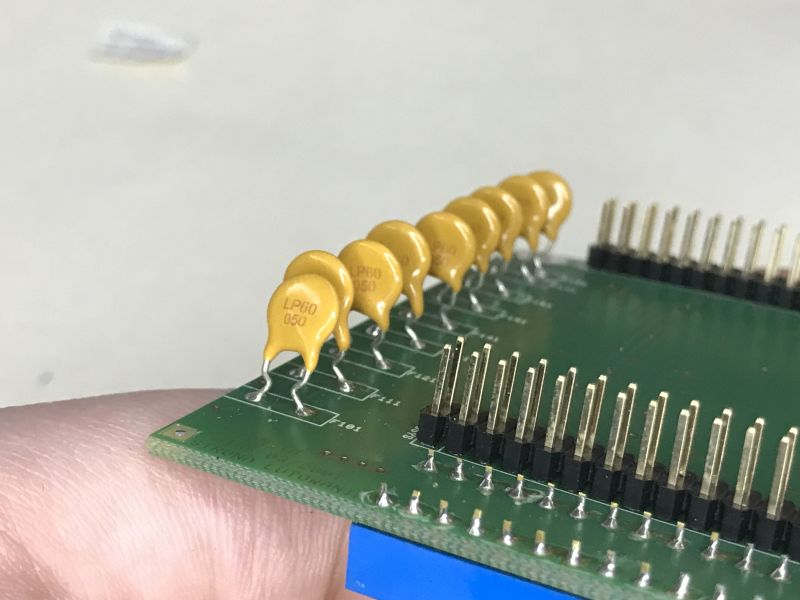
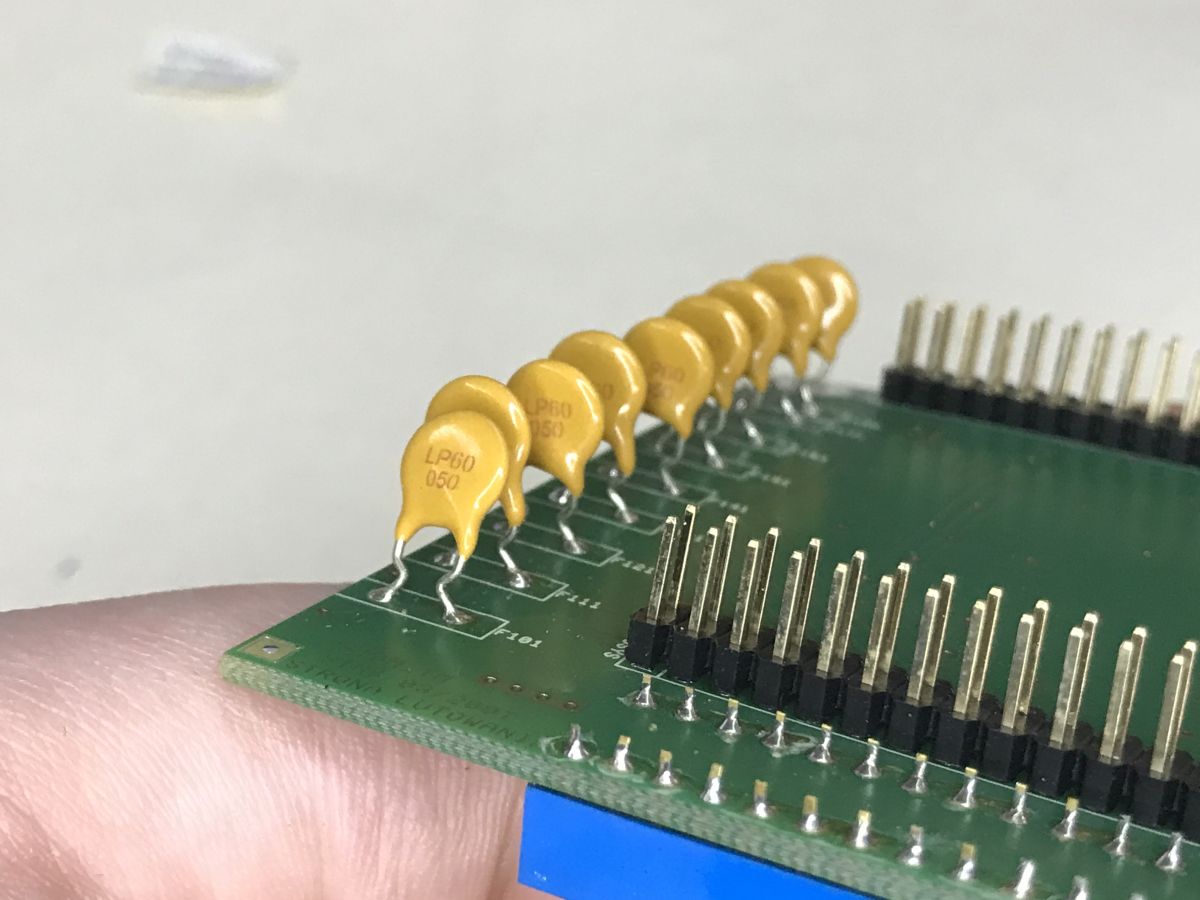
At the bottom we still have 0.50 A 60V LP60-050 polymer fuses:
It's difficult for me at the moment to make a fully reliable assessment of what the role of the TS922IDT is in this circuit. My guess is that it is the inputs. Is anyone reading able to supplement?
In summary , this was the IO module I received with a packet of 'railway' scrap, although I don't know exactly where it was used. The whole thing took a bit of a beating at checkout, so I don't know if I'll get it up and running, but the inverter at least I could recover, the CAN and RS232 transceivers will also come in handy. Interestingly, the whole thing has inscriptions in Polish, even on the PCB, so one could suspect that it was designed in our country.
If anyone has any additional information, feel free to comment.







Comments
Equipment sold by Pixel Bydgoszcz manufactured by SiMS Bydgoszcz. Mounted to passenger information system in public transport. Very solid. Virtually indestructible, but difficult to service. [Read more]
https://obrazki.elektroda.pl/3349287000_1769286157_thumb.jpg And what designation does this circuit have? Just asking out of curiosity. There is a similar one in the post about GPS Could there... [Read more]
And fact, I was also supposed to give a photo after peeling off. https://obrazki.elektroda.pl/7559417500_1769288289_bigthumb.jpg F16V8BQL - PLD, Programmable Logic Device. [Read more]
Hello, as to the presented device : "There is a single HC14 on the board, probably in the role of buffer. In addition, we have 7 operational amplifiers 9221 (TS922IDT). There are 8 BSP75N transistors... [Read more]
Thanks for the clarification. There is indeed more hidden in their catalogue note than I thought: https://obrazki.elektroda.pl/5990818800_1769375398_bigthumb.jpg https://obrazki.elektroda.pl/5468649400_1769375450_bigthumb.jpg... [Read more]
If you have any questions about devices for rail and automotive then write PW. I have been designing electronics for automotive and rail for several years. So I know this and that :) [Read more]
Interesting, an integrated driver and additionally a polymer fuse. Well, someone has protected themselves. [Read more]