





High-power 60V / 20A / 1200W workshop power supply based on XY6020L + S-1200-60 module
TL;DR 
- A high-power workshop bench PSU combines an XY6020L control module with an S-1200-60 60V/20A supply inside a reused e-bike service housing.
- The front panel came from a trimmed yellow number-plate frame, and the XY6020L was mounted on a plastic stand with a rubber washer and double-sided tape.
- The supply is rated for 0–60V, 0–20A, and a theoretical 1200W, with 0.01V and 0.01A resolution.
- Testing with 43V and 21A drove a scooter wheel to over 700W, and the S-1200-60 heatsink stayed at 31°C.
- The XY6020L is not very convenient for daily parameter changes, ripple measurements were inconclusive, and CC protection only reduces voltage instead of cutting output.
AI summary based on the discussion. May contain errors.
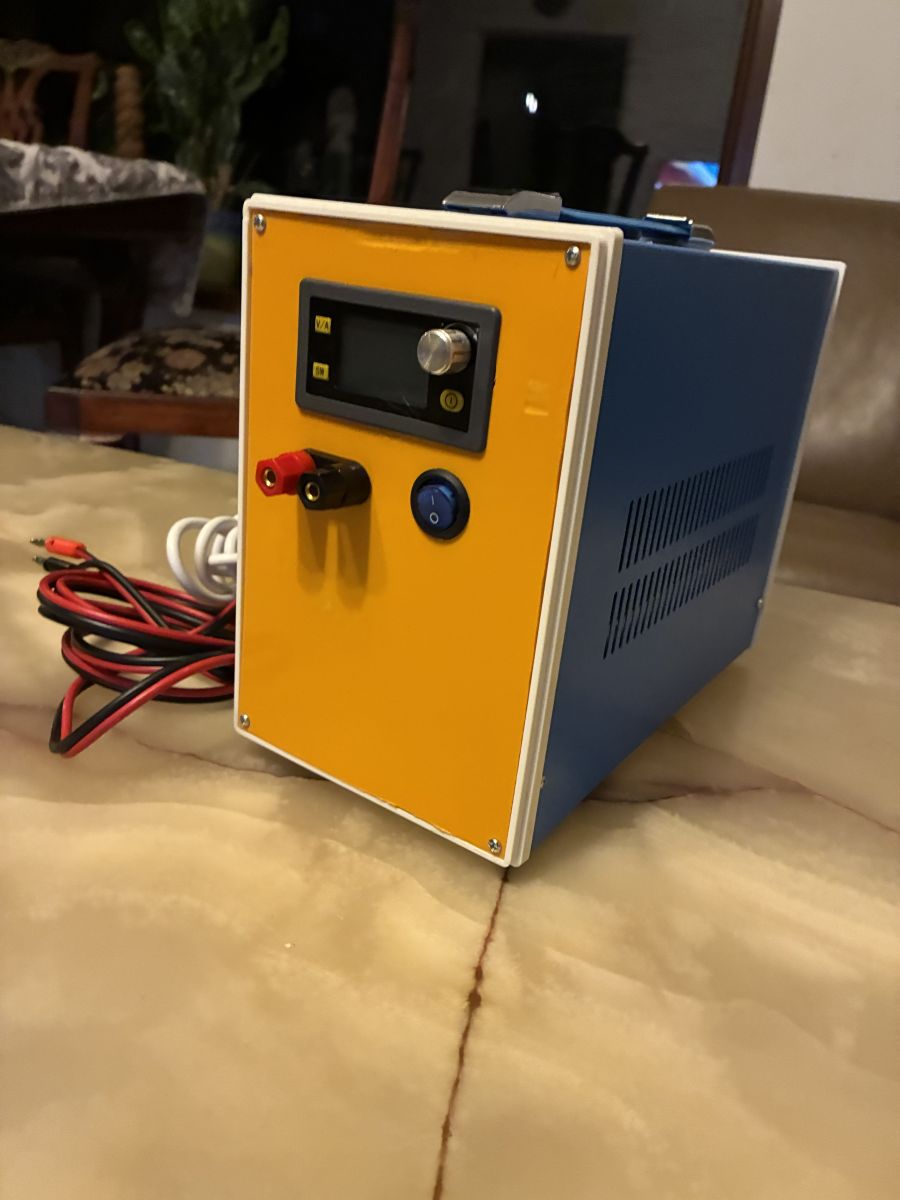
Hi everyone!
I would like to present the construction of a WAREHOUSE POWER SUPPLY quite powerful, as it is almost 1200W .
The power supply came about as an idea to get a cheaper equivalent to the Riden RD6018 kit.
Parameters of the power supply, are:
- voltage regulated 0 - 60V with 0.01V resolution
- regulated current 0 - 20A with 0.01A resolution
- theoretical total power 1200W (20A available over the entire output voltage range)
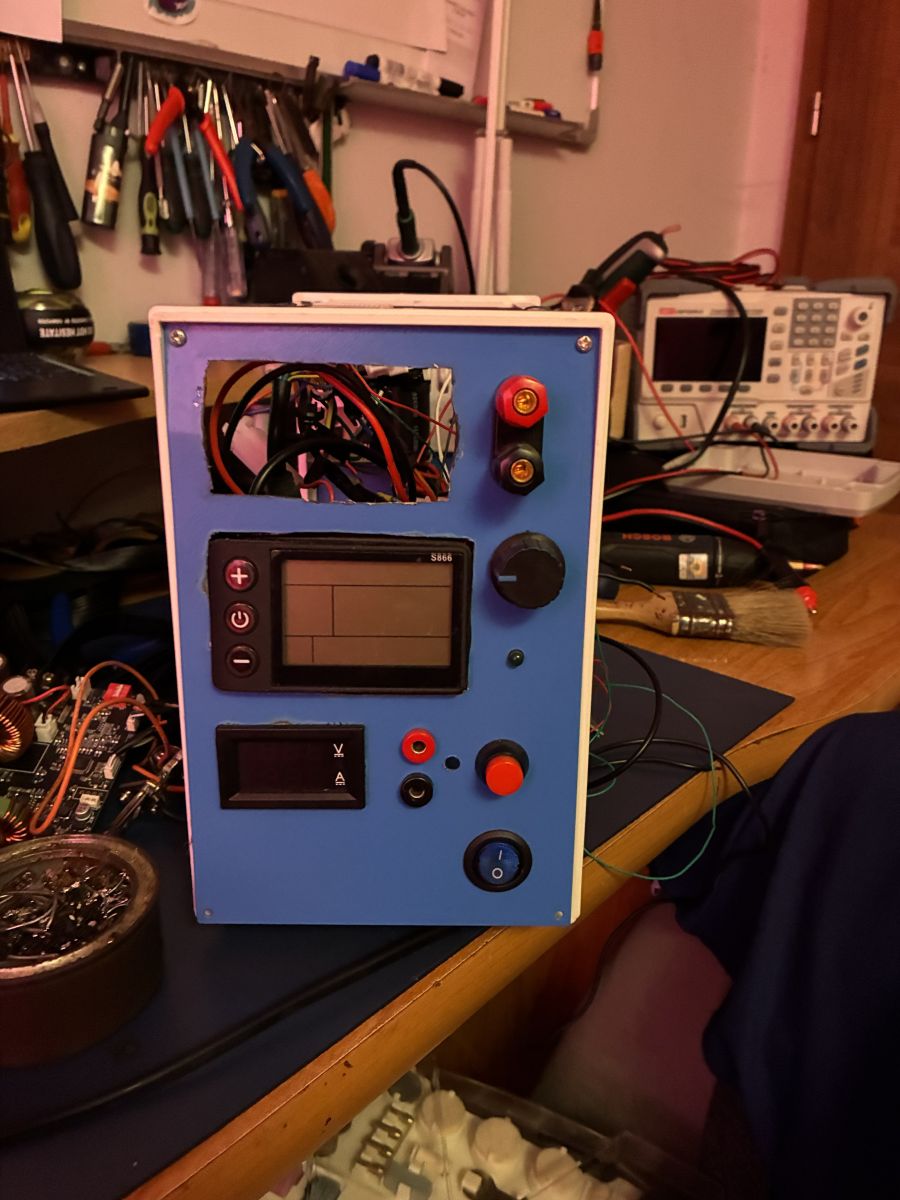
As a housing I used the housing from an unfinished (and abandoned under construction) electric vehicle service unit (e-bike, scooters).
I attach the front plate of the above mentioned device:
The power supply itself consists of two main - finished components:
XY6020L (a module known and discussed here on the forum):
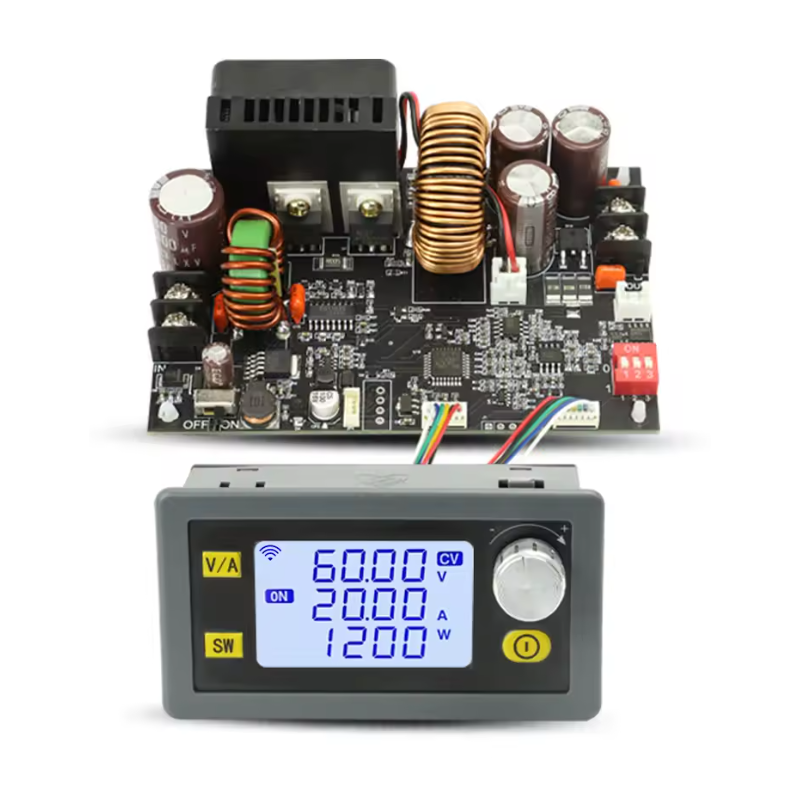
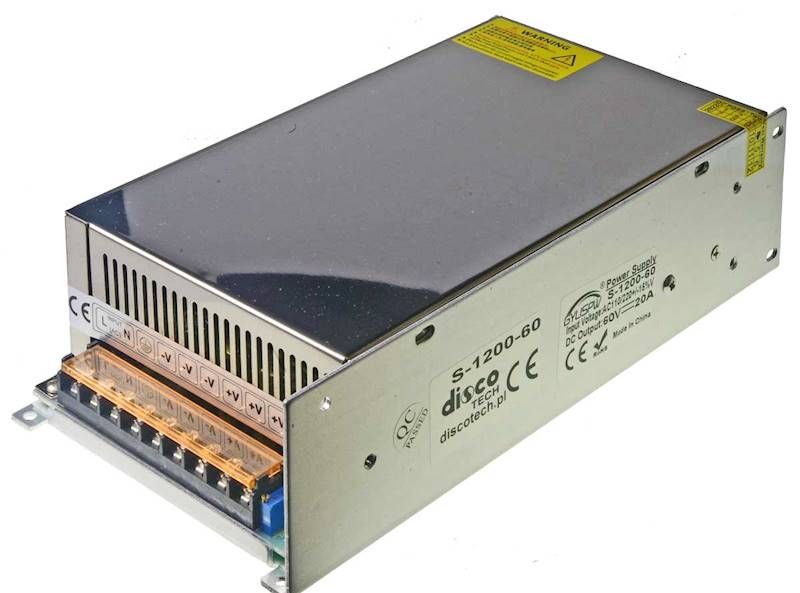
and from a somewhat less well-known, probably 1200W inverter with the designation
S-1200-60 (giving 60V with sensitive regulation and a maximum current of 20A):
The total cost of the power supply I closed in the amount:
XY6020L => ~120 PLN (possible cheaper from aliexpress, but I already had this module, I give the price from algo)
S-1200-60 => 295 PLN
Body: cost about 60 PLN , I do not know the manufacturer.
Yellow - plastic number plate mount => 9.90 PLN
Yes, you read correctly - I made the front plate of the housing from a yellow number plate mounting frame.
I just found it in the garage as I was looking for something to replace the front with, and somehow it came up.
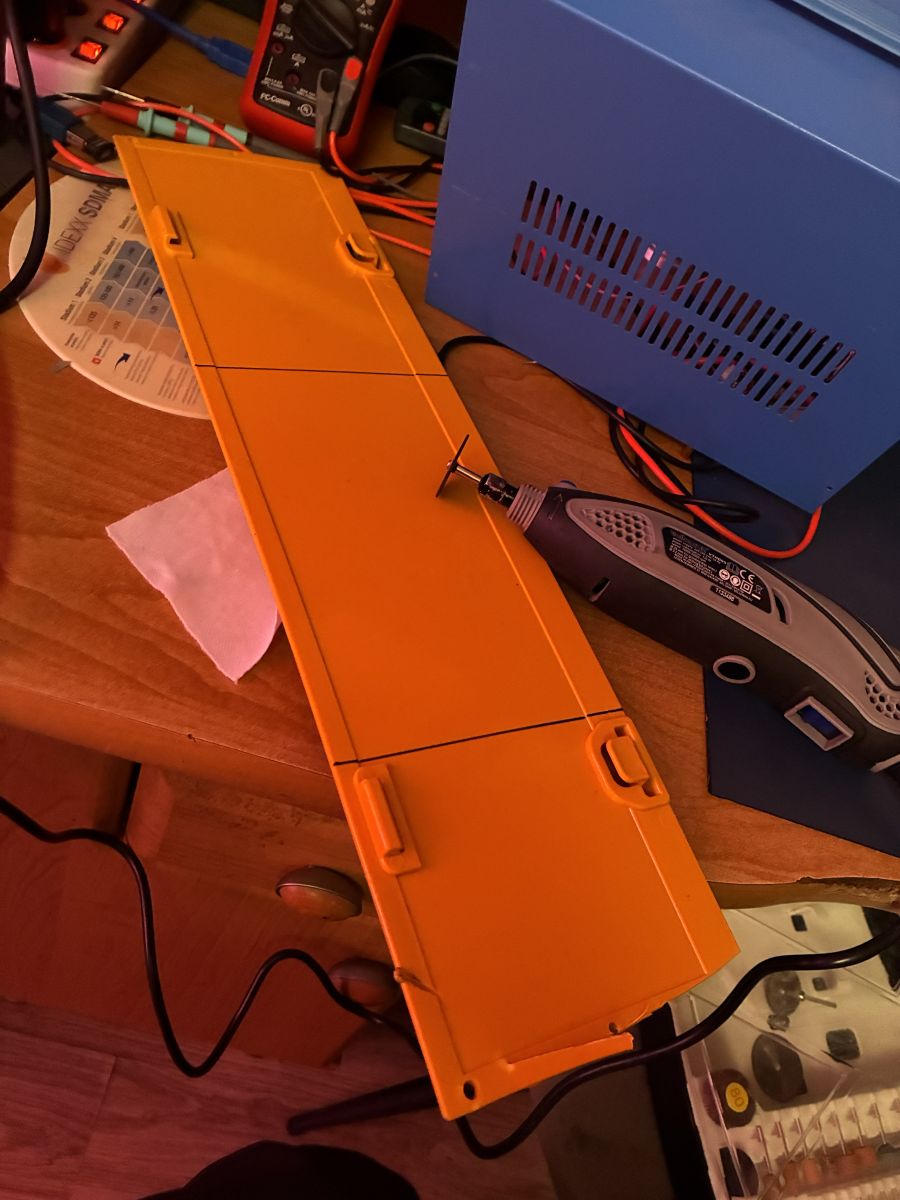
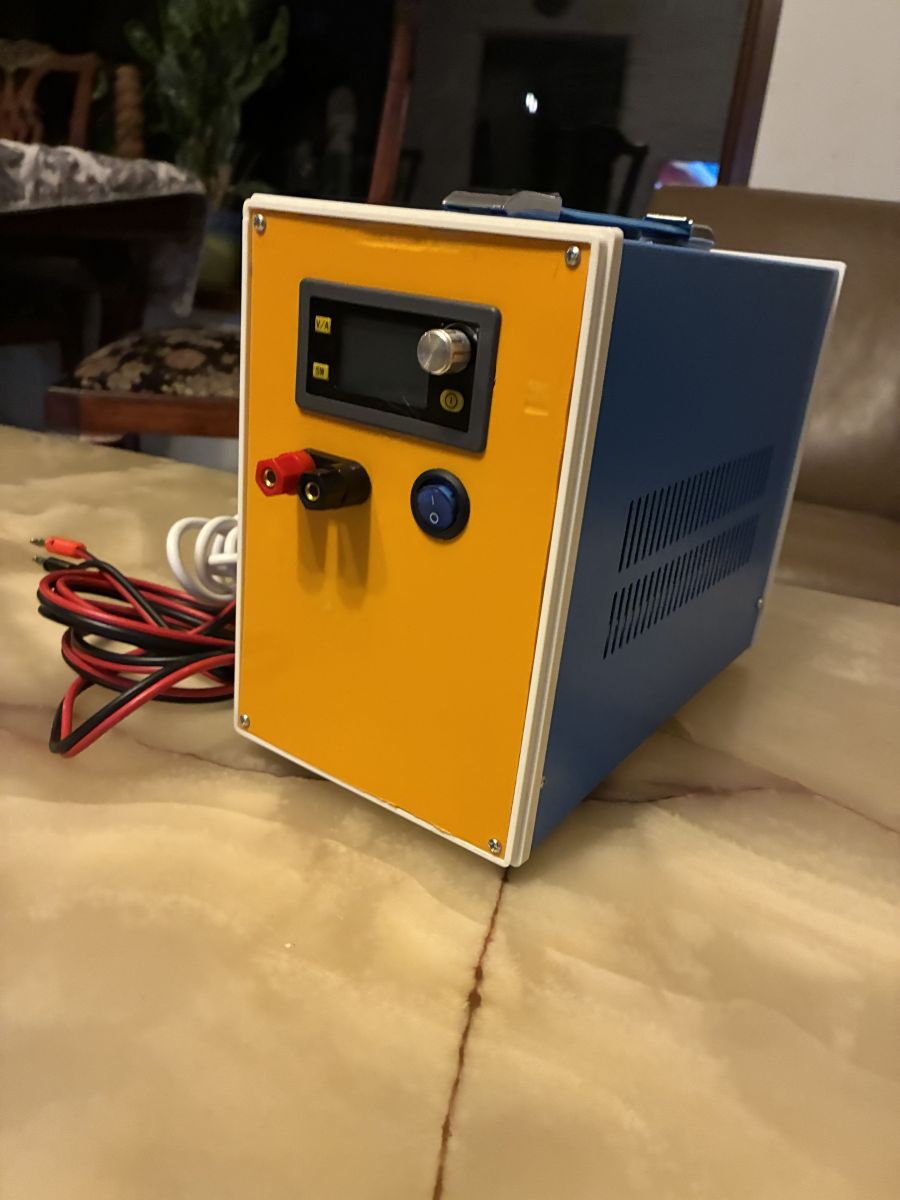
I trimmed accordingly, cut out space for the display, output connectors, ON/OFF button and the result:
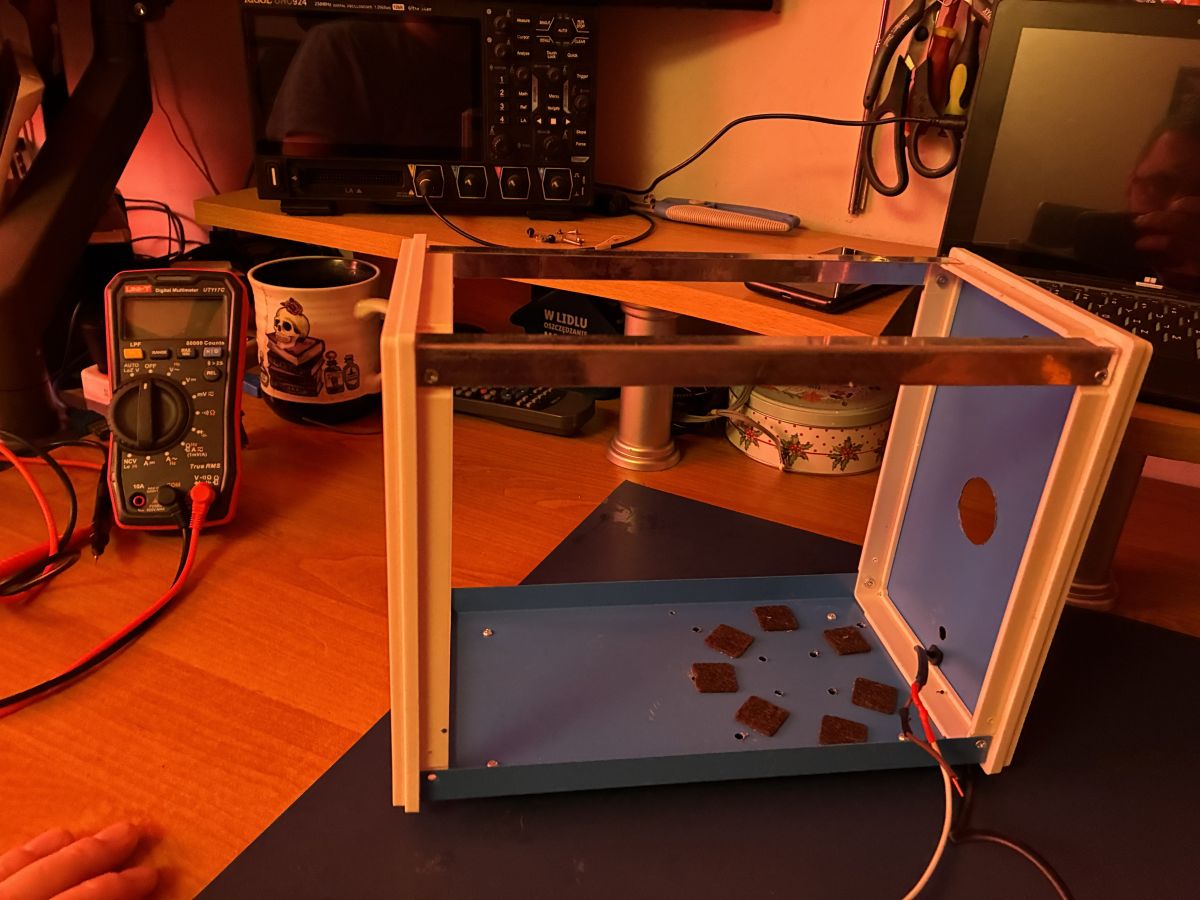
Interior prepared for new device:
Conceptual arrangement of components:
I had a conundrum: how best to fix the module inside the housing? Well, that's where the leftover frame, double-sided tape and
one of the rubber washers once bought in Lidl or Biedronka. Maybe I will attach pictures:
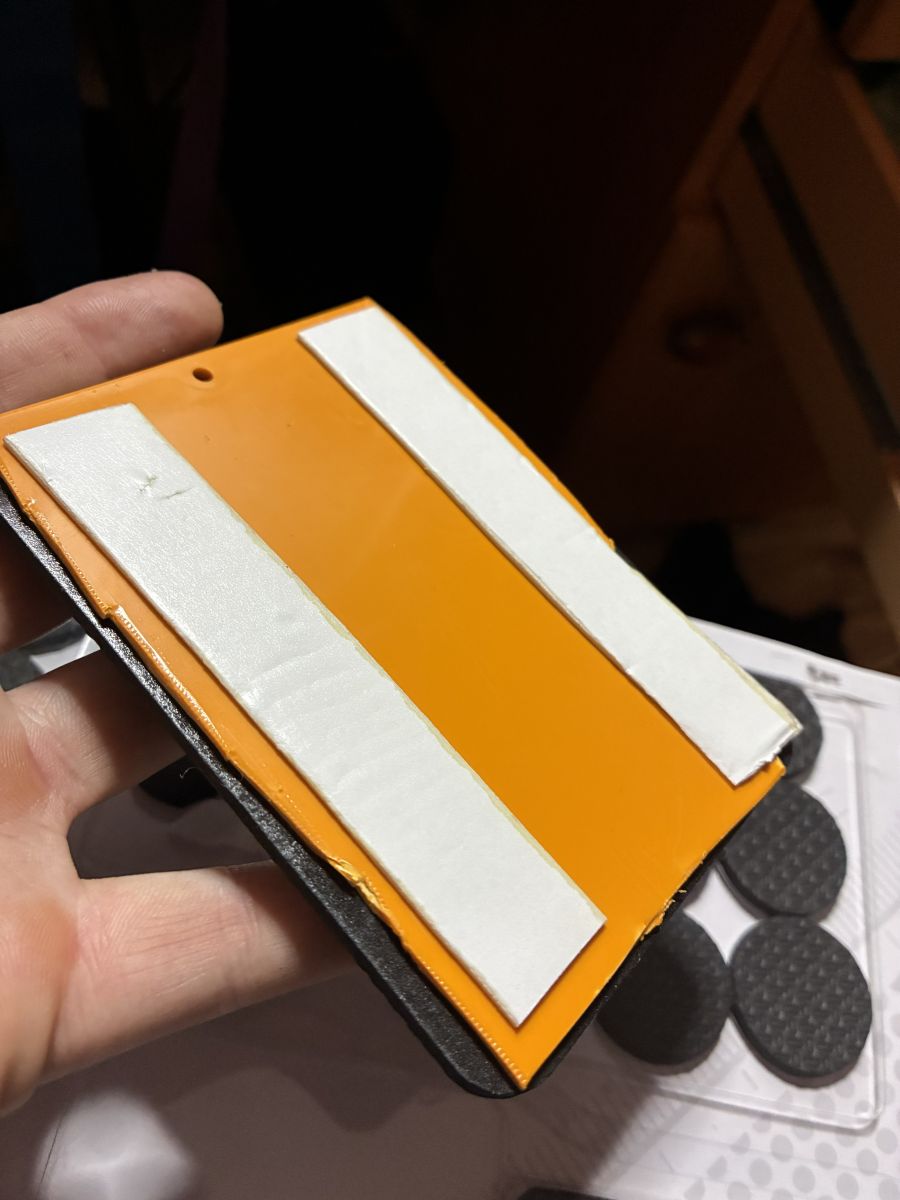
I screwed the module through a rubber washer to a plastic stand, which I glued to the S-1200 inverter housing with double-sided tape
with - as it turned out later - very high adhesive strength. The module is immovable, of course with a knife you can peel it off, but even in case of failure,
i did not stick on any of the mounting or ventilation elements of the inverter.
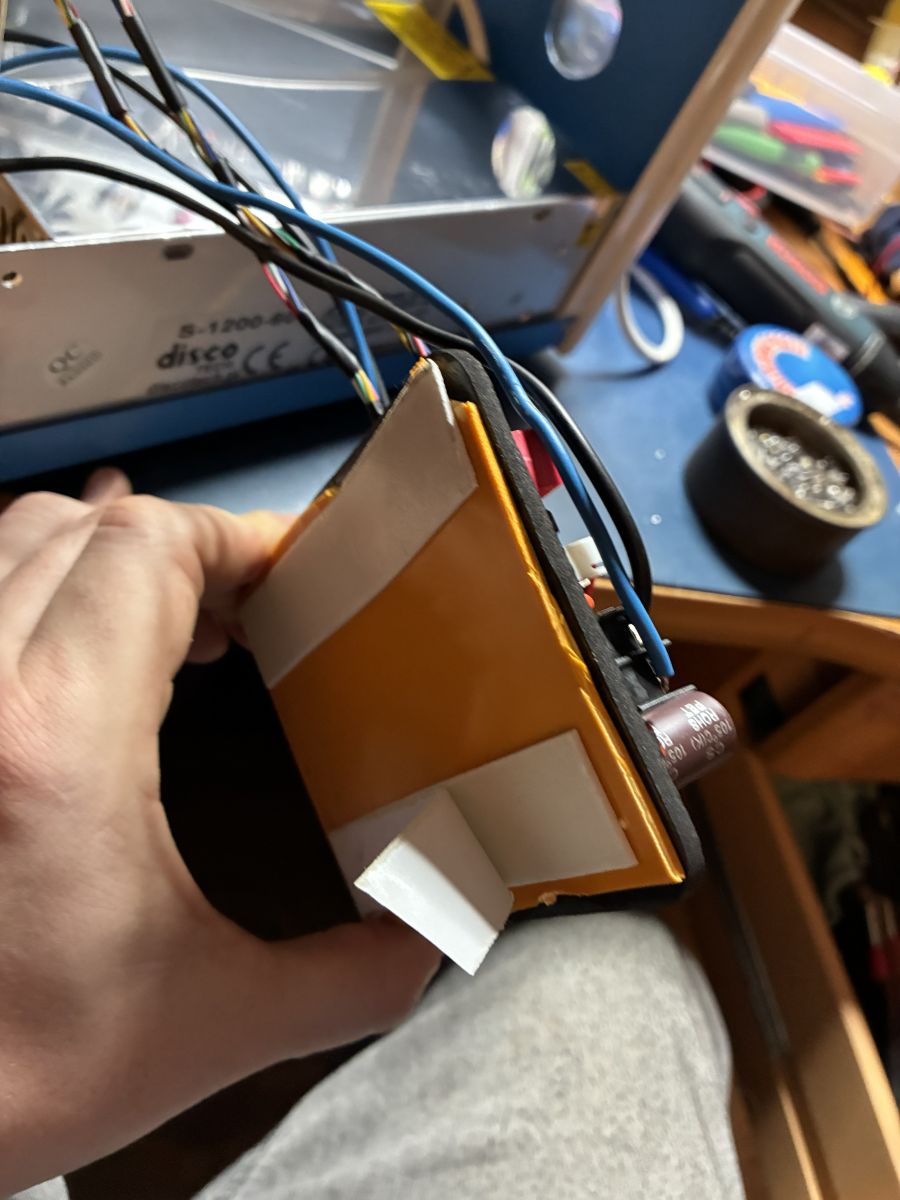
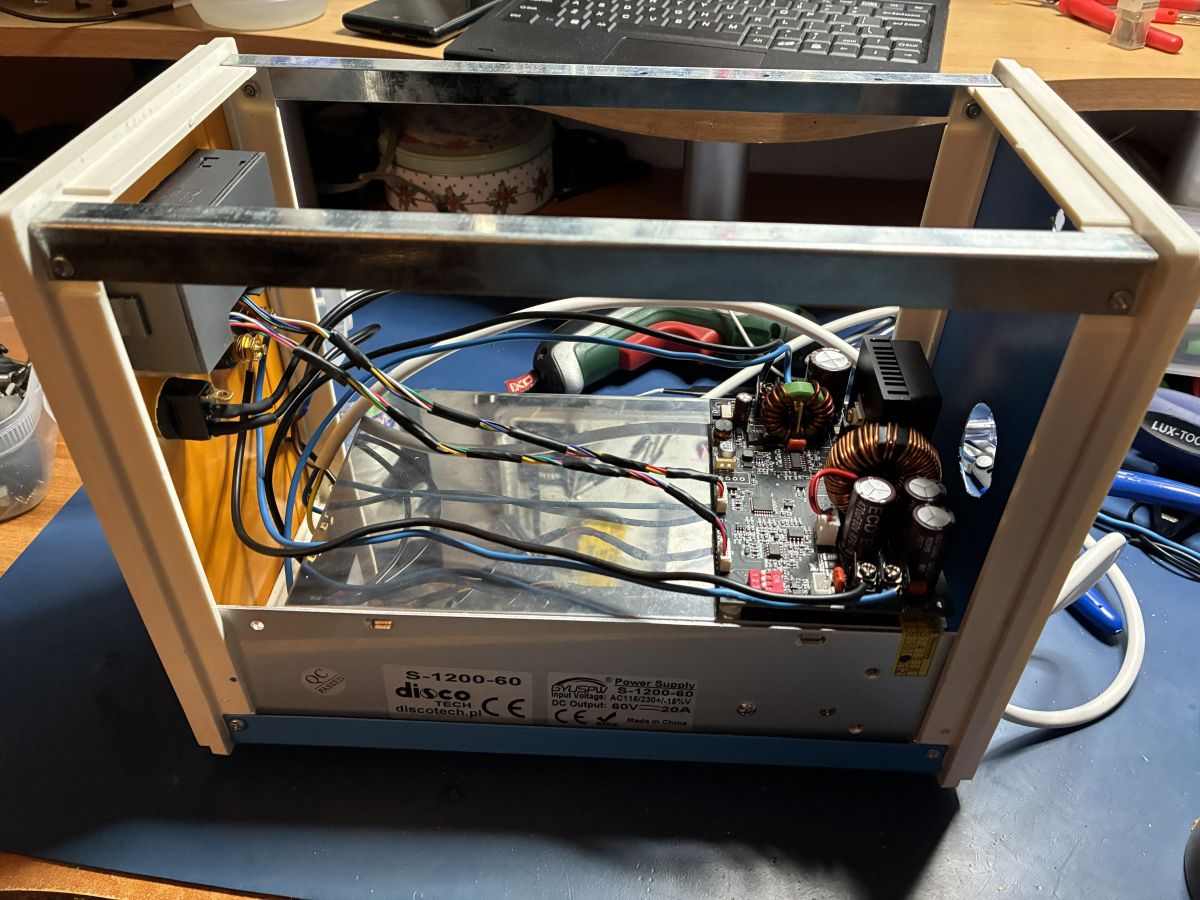
Finally the inside looks like this:
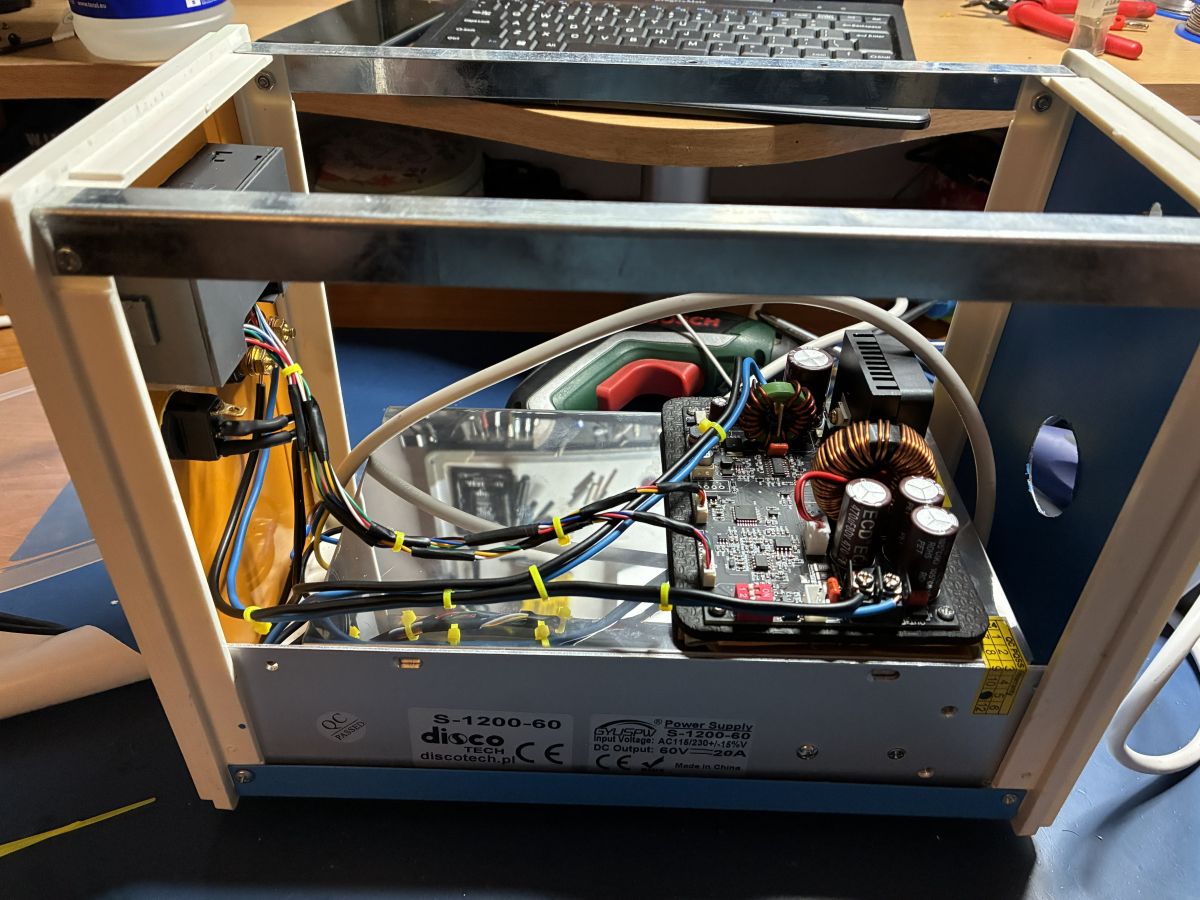
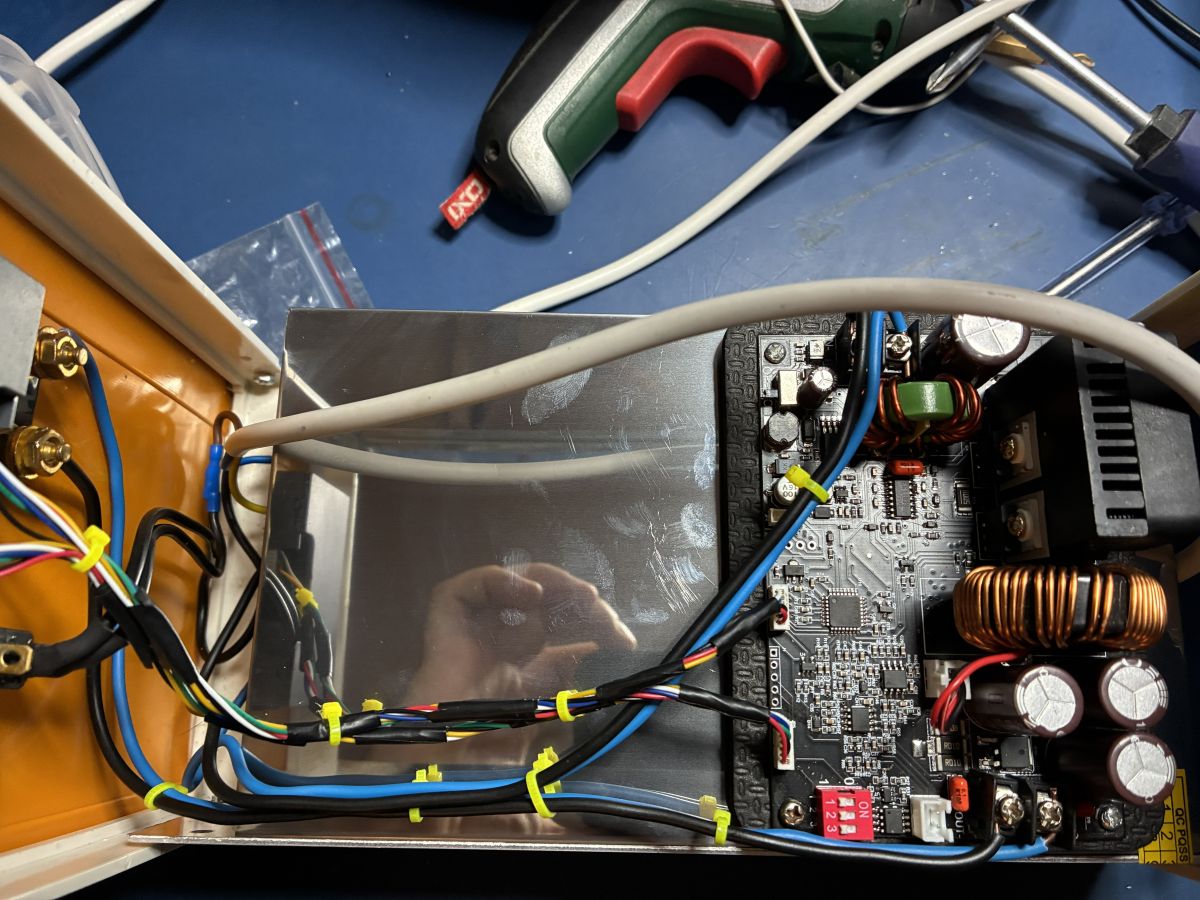
from above:
Generic device:
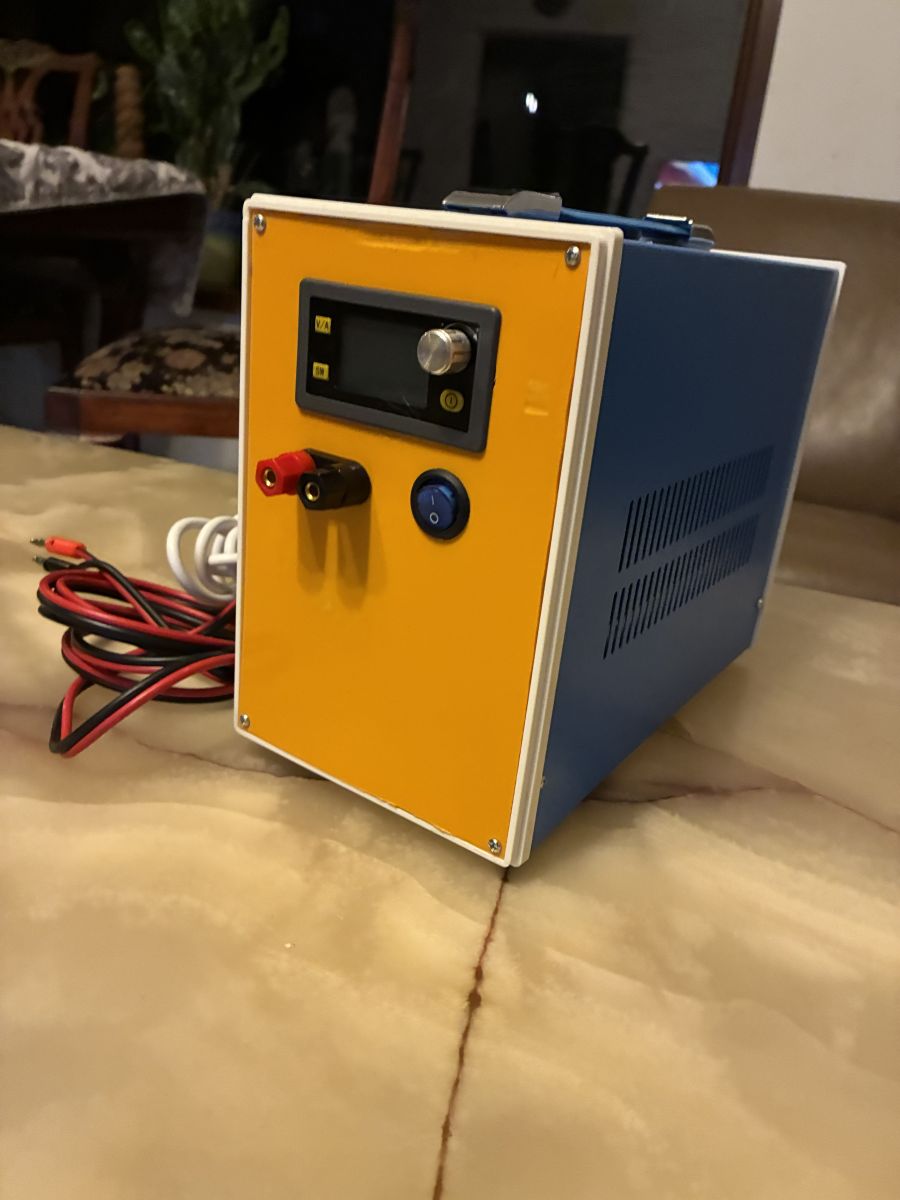
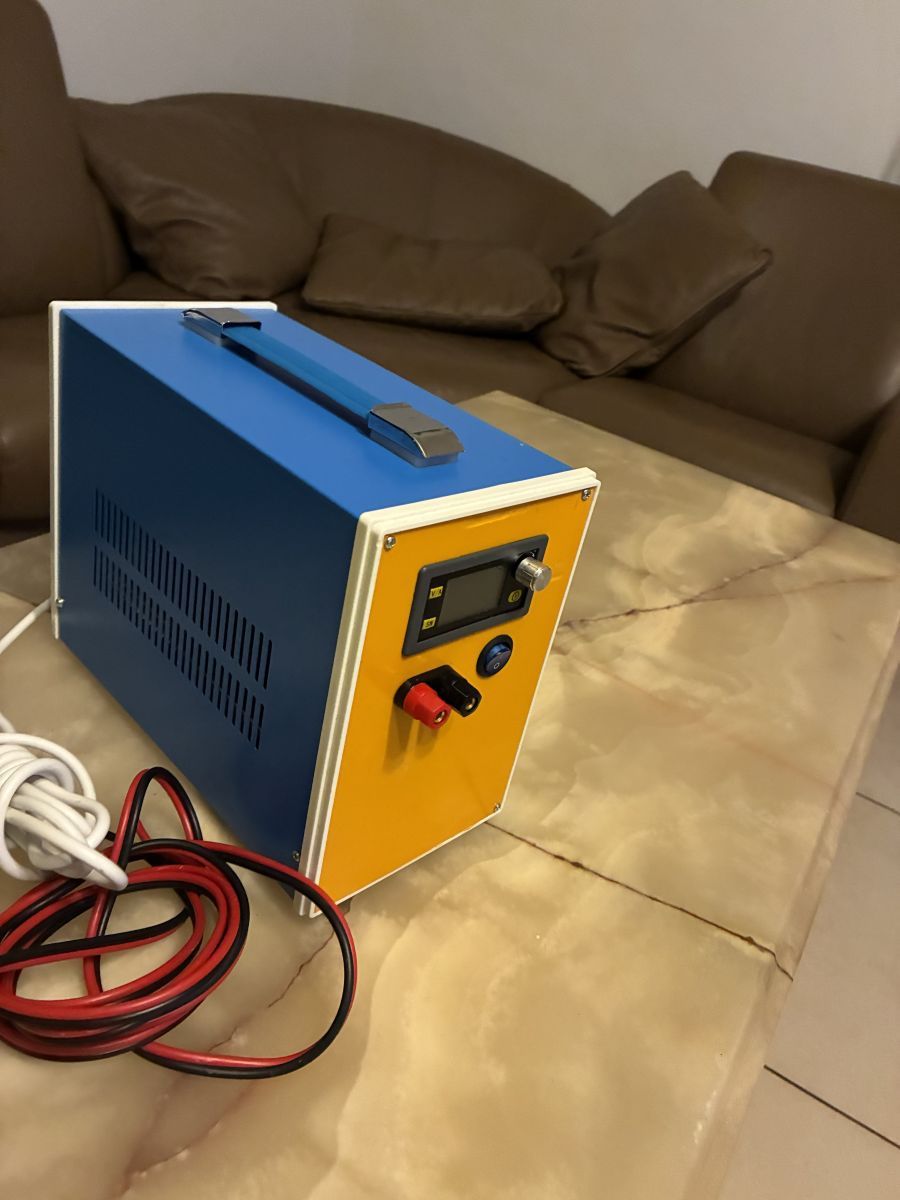
Summary
The power supply has power. I loaded it for several tens of seconds with 250W, 2x55W car halogens. But it was low, and I didn't know how to load more.
So it was necessary to get more involved.
I built myself a small test rig: a 350W e-bike controller (at peak double the rated power) + LCD S866, a 350W scooter wheel and gloves.
I set the voltage at 43V, the current at 21A (that's the maximum you can set on the module), the handlebars at maximum. Once the cruise control engaged in the controller, I could manually (literally) modulate the load. I will say this: I was unable to stop the wheel in my hands. On the LCD, the highest reading was over 700W after which the vise in which the wheel was screwed in farted out onto the floor (it twisted away from the load) which was the end of testing for me.
The module shows the temperature of the heatsinks - after my tests 31'C, the fan in the S-1200-60 did not switch on once, the XY6020 standard as any
load, the fan was gently audible.
I wanted to sit down for some ripple testing:
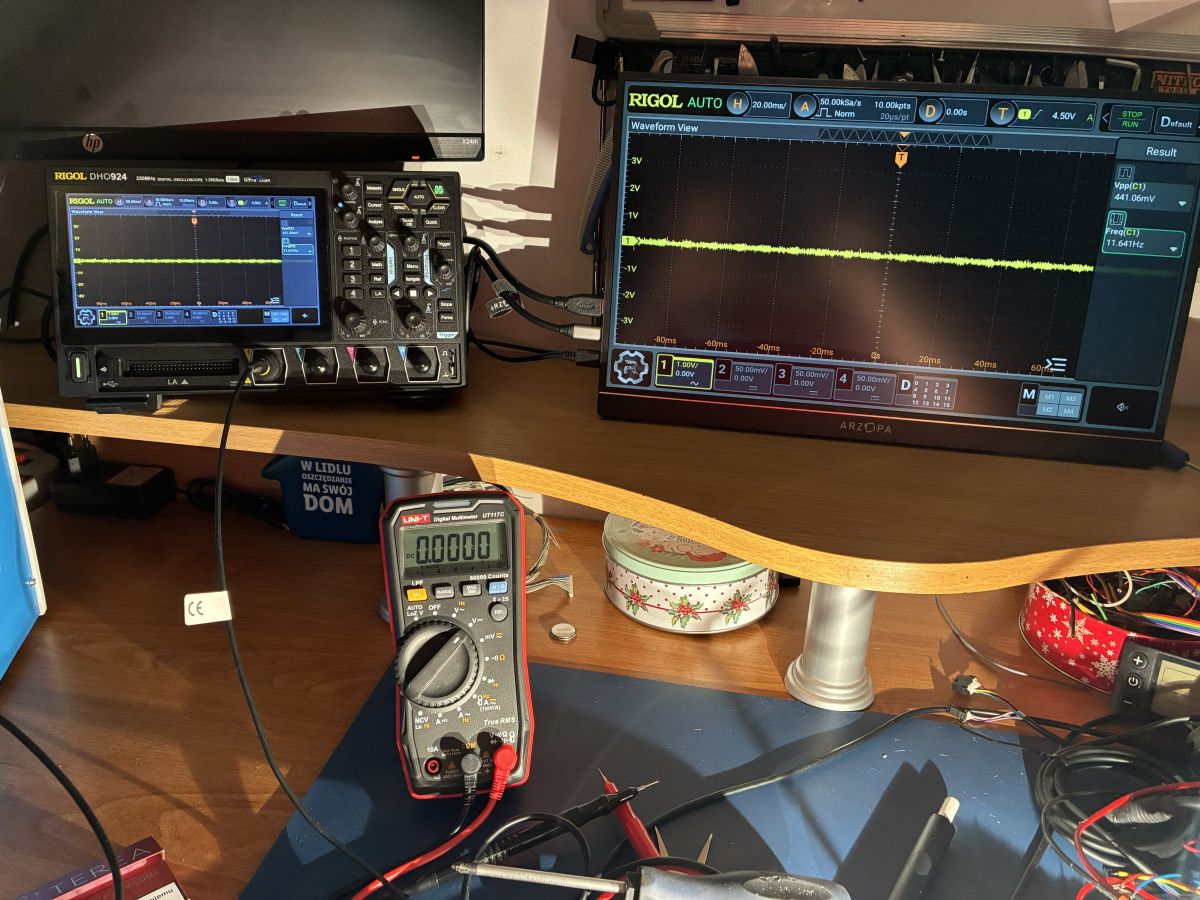
I have a possible measurement to compare to:
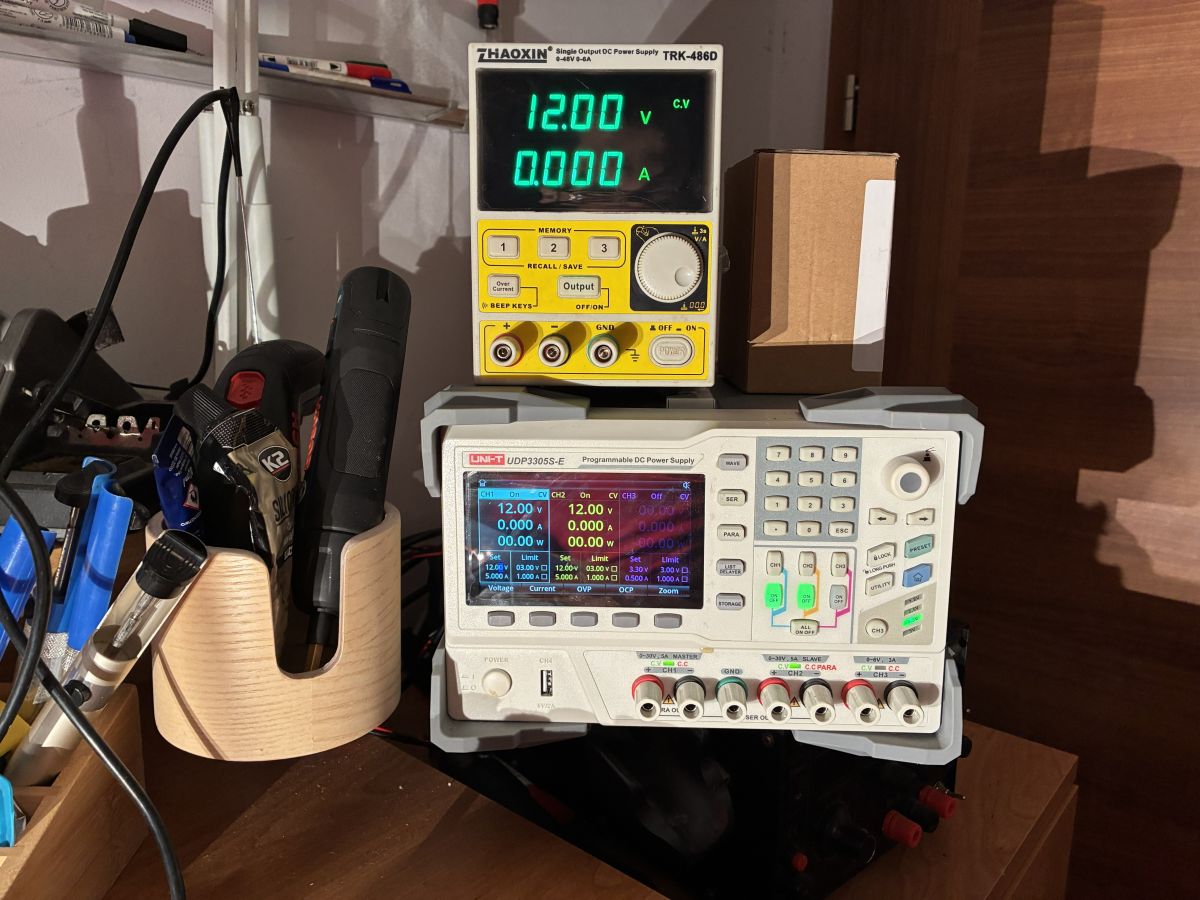
But I don't quite know how to do them right, because I don't have a fixed load (and a supply of gloves). I can tell you one thing: the ripples vs
UDP3305S are, I don't want to talk about the values because I don't know if I set the oscilloscope right (coupling AC, x10, the rest is in the picture with a 120W load).
If you'd like me to do some tests, go ahead - I'll post in the discussion when I find the time.
Overall, I'm happy with workshop equipment of this power. It's worth having on hand, sometimes it's been lacking.
The XY6020L module itself is rather uninviting to use as something you can use every day if you want to change parameters. At the same time, its
options to show the current parameters: power, capacity, temperature, time.
I have not performed tests of the correctness of the CC protection, nor have I presented here the accuracy of the indications with the Brymen 869S, but should anyone
need: I can. But at the same time I will say this: the overcurrent protection works ok, it does not cut off the power supply, it only reduces the voltage.
The accuracy of the voltage indication for a workshop power supply is consistent to tenths of a volt. For me ok.
Best regards,
Marcin
Comments
As a load, either a mechanical brake, a hydraulic brake, an electrodynamic brake or a fan with a clutch. In almost every case, there will be problems with the dissipation of the separated power. Pion... [Read more]
I use ordinary high wattage bulbs. One too few is 2 or more in parallel. Nice workmanship but if the module has fixing holes it would be worth using them and simply screwing on and not gluing on tape.... [Read more]
As a load you can still use a steel cable wound on something and if it gets too hot then into a bucket of water. Or 2 electrodes into a container of salted water, this also has good cooling. I have at... [Read more]
The bulbs illuminated another solution for me - resistors immersed in a bucket of water. The water picks up the heat, the bucket radiates, some heat is taken away by evaporation (sounds better than evaporation).... [Read more]
Exchanger from old gas cooker. Power 19-24kW. Computer windmill and you can cool the water in an electric kettle :) [Read more]
Some 20 m of mild steel wire fi 1.0 mm should be sufficient to test its performance. [Read more]
I have a question related to one photo https://obrazki.elektroda.pl/5702039200_1772307967_thumb.jpg What is the model of the monitor? Have you checked any other touchscreen ones? Apparently not... [Read more]
This is the ARZOPA Z1FC model. It is not touchscreen. 16.1'' and 144 Hz. A cool way to connect and transfer images via USB-C (for a laptop). With an oscilloscope all you need is the oscilloscope power... [Read more]
I made myself a 50V/20A on RD module On the primary flatpack 48V/15A turned up to 52V Due to RD efficiency and power balance, I have the full 20A available up to about 35V, above that "only" 15. The... [Read more]
Quite a nice design. I am missing the IEC socket with fuse on the back :) to complete the set But tried, including the wires inside. Regarding noise measurements: Typically you measure AC RMS noise... [Read more]
I have had a bad experience with this module, I bought it out of curiosity because it had quite a few options and after one switch on it crashed the ADC in the microcontroller by some miracle and I can't... [Read more]
Thanks for the good word and guidance. I will of course add in the discussion with the parameters as soon as I figure out some load. Some idea I have, but that's for testing :) I'll share the concept... [Read more]
I think it would be worth adding a fan to the back of the whole thing. Those speaker bananas I'm afraid might have a problem at 20A. The wires look a bit thin but maybe I'm wrong. I'm curious what the... [Read more]
You're asking because you couldn't hear the built-in fan. It blows like a hurricane but it's impossible to sleep in the house when it's running. I mean the one in the power supply, because the one on the... [Read more]
The oscilloscope talks to it over USB-C while receiving power at the same time? Or does it output the image over HDMI though? Write something more please. The load tables for non-thermally insulated... [Read more]
The specific heat of water is 4.19 kJ/kg-K. By the time 10 litres of water has boiled, it is safe to make estimated measurements. Current control can be achieved by gradually immersing the electrodes. Steel... [Read more]
As long as there is no chromium, especially if you use soda as an electrolyte. Hexavalent chromium is not very good for your health. [Read more]
At the polyclub we had some water barrels with a simple mechanism to lower the electrodes. I don't remember if any salts were added to the water there. I decided not to build or buy a 60V - 20A power... [Read more]
When the carousel starts up, films sometimes show the operator putting 2 electrodes into a 10-litre bucket of some kind of electrolyte. I just don't know if this current doesn't decrease over time and... [Read more]