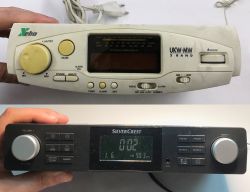
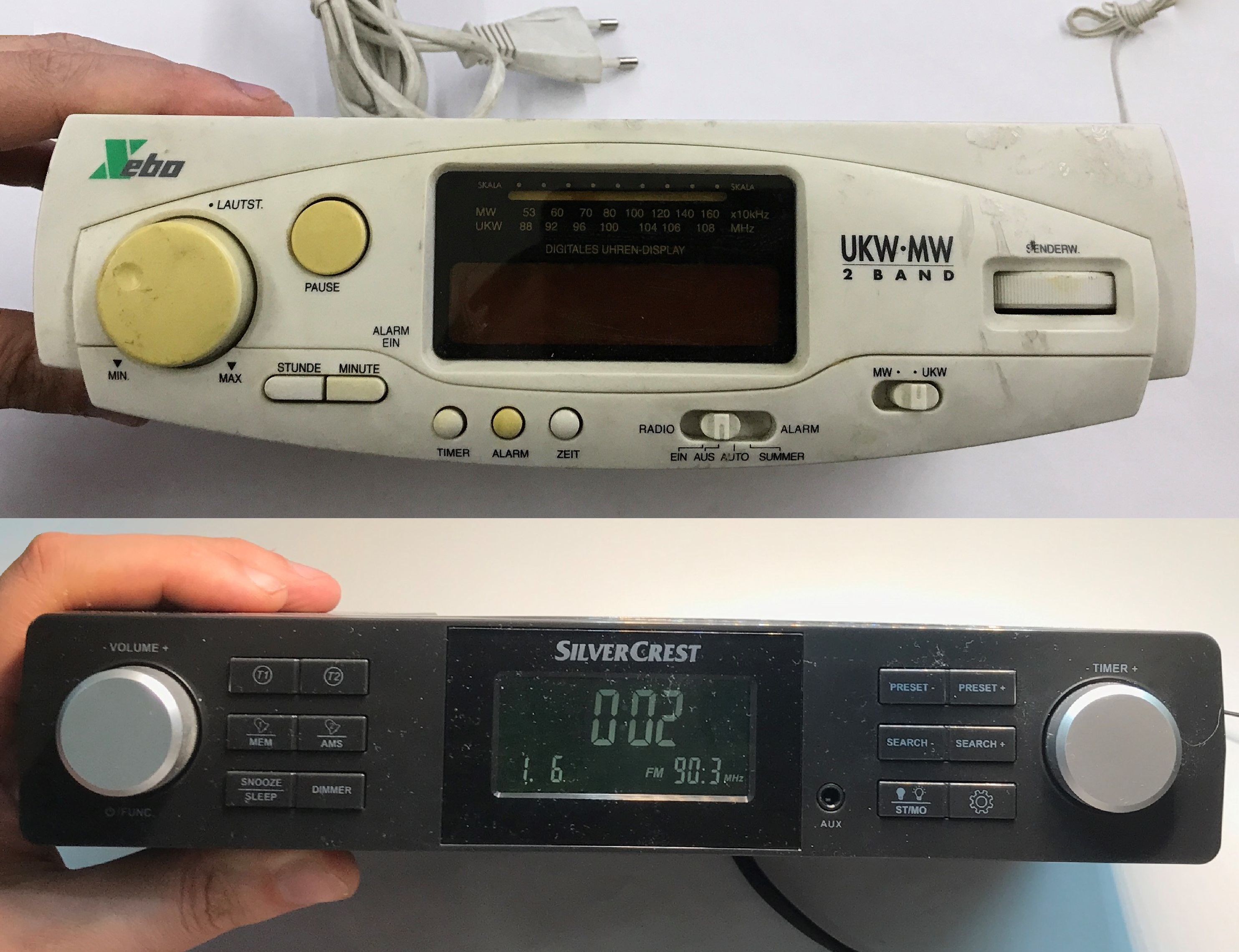
What is the evolution of the kitchen alarm clock radio? Do the newer models differ from the older ones in construction? How is the tuning, display, power supply implemented? Here, I will try to demonstrate this using the example of two kitchen radio receivers from different periods. Let's start with the older one.
URB 693A
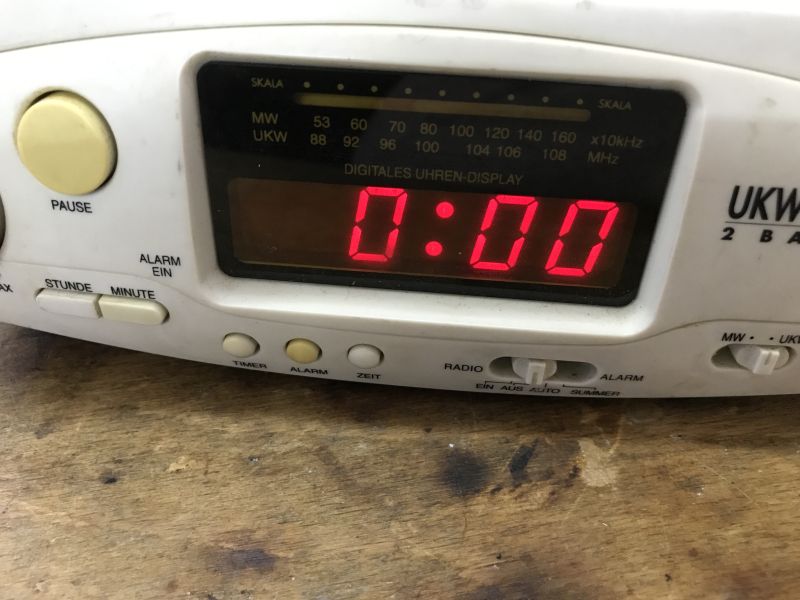
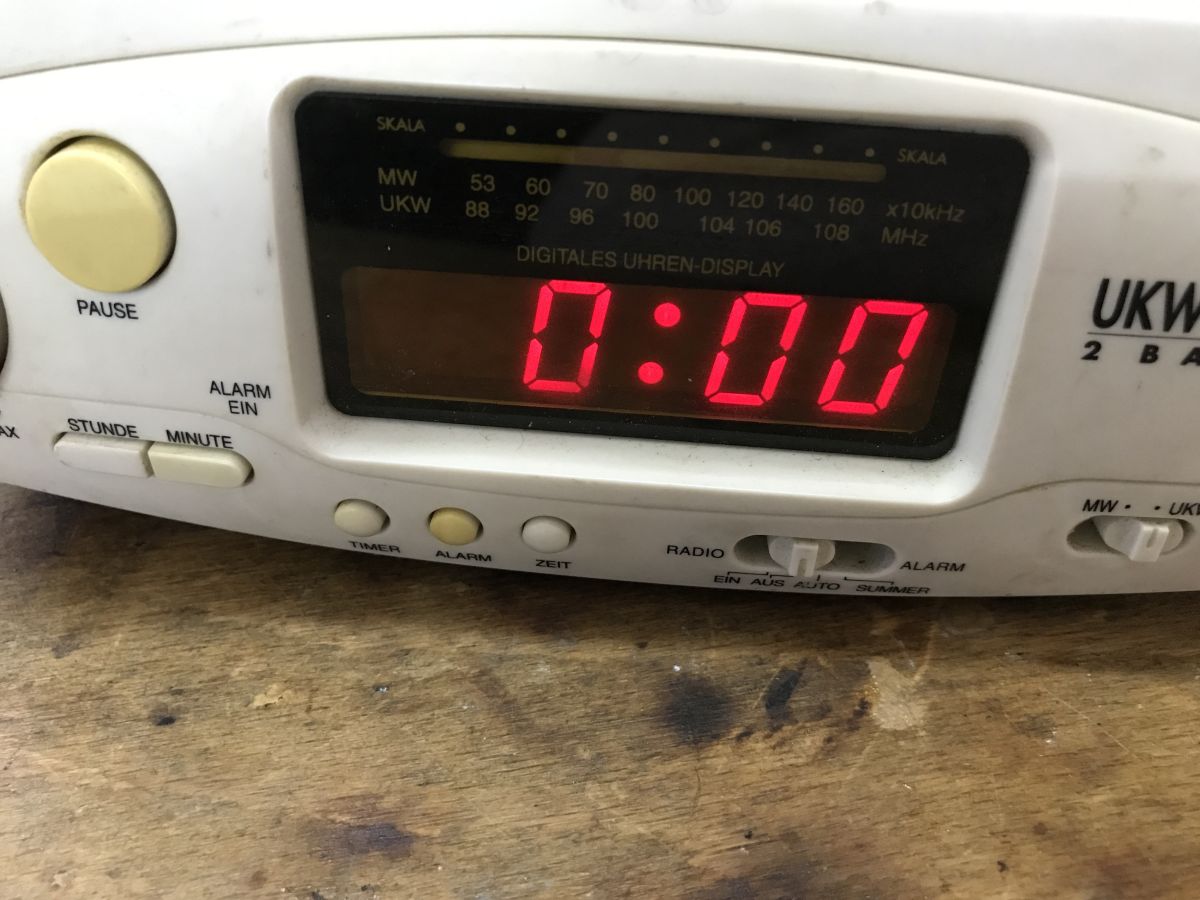
The URB 693A features a large 7-segment LED display and mechanical scale. The radio can operate in alarm clock and timer mode.
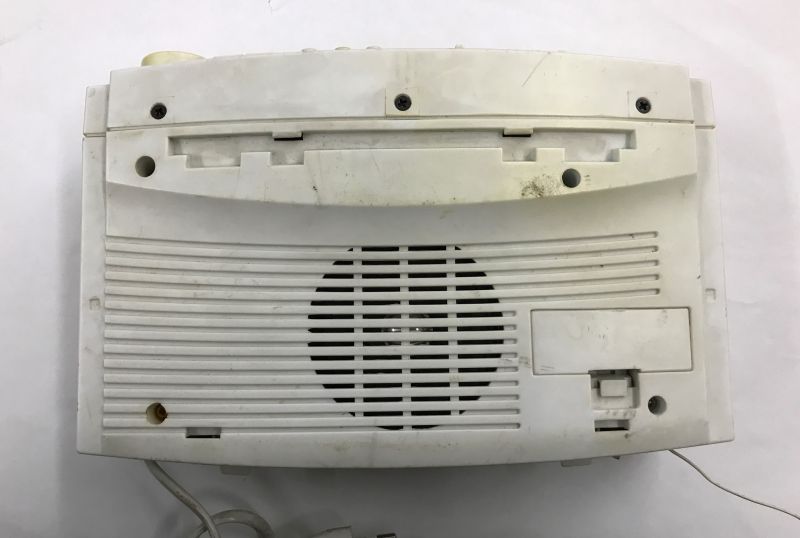
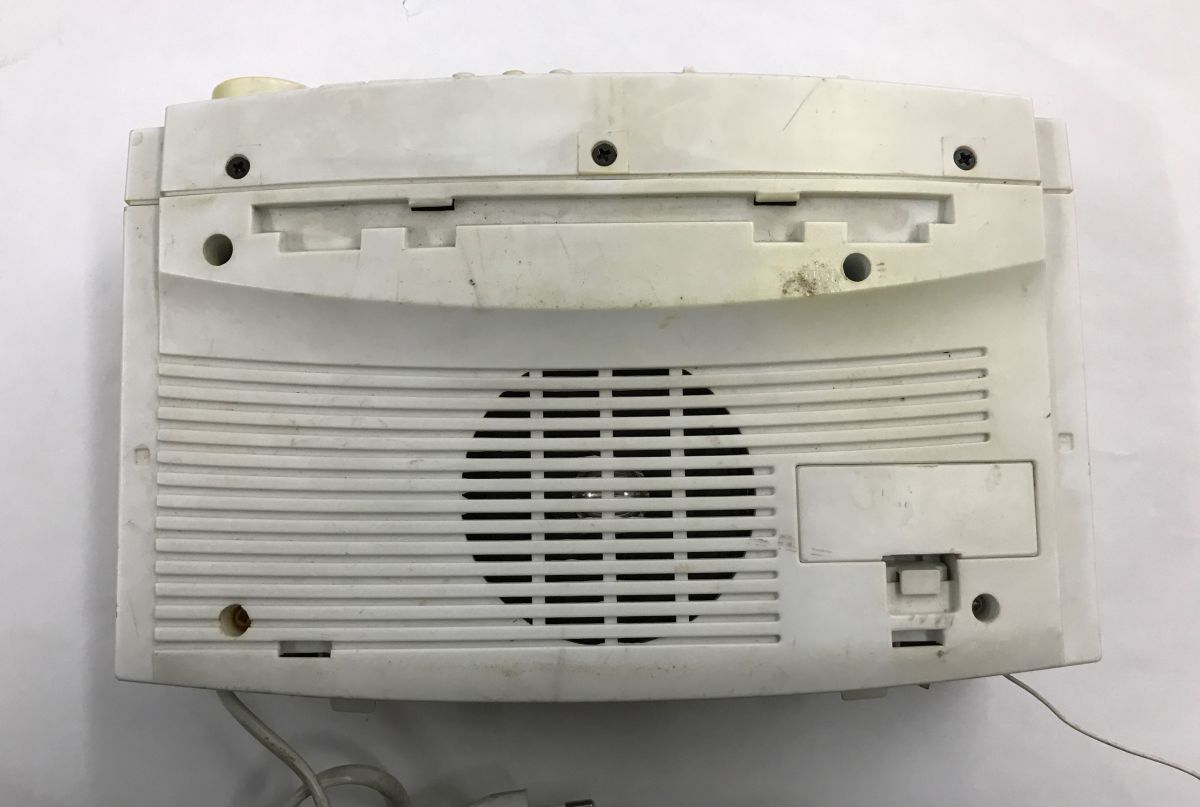
A glance at the underside reveals that the whole thing only plays in mono mode. You can also see the battery slot for keeping time.
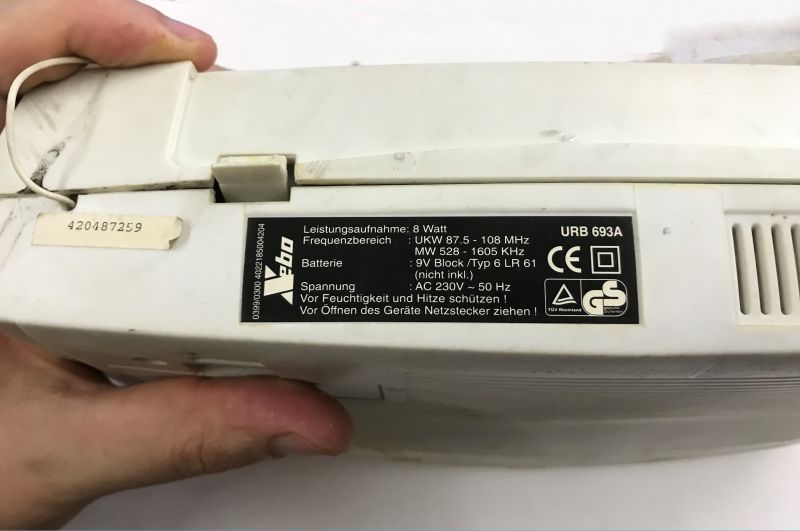
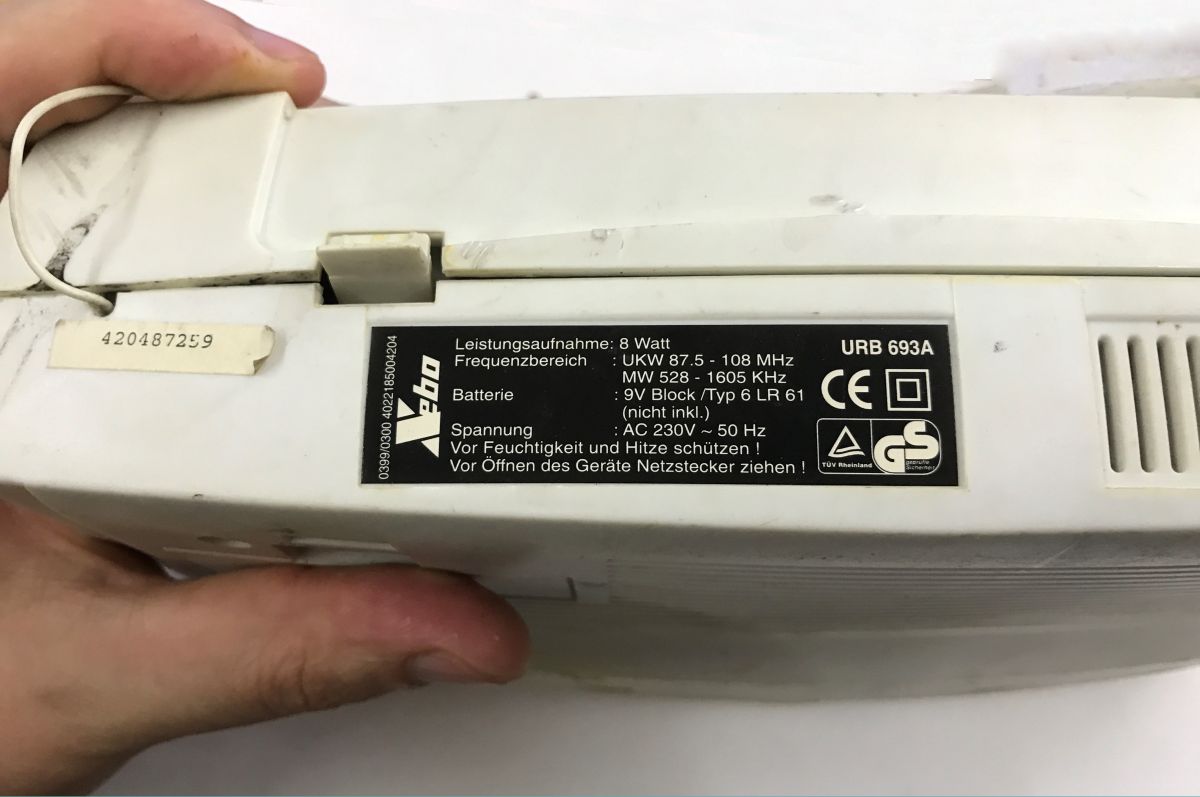
Nameplate:
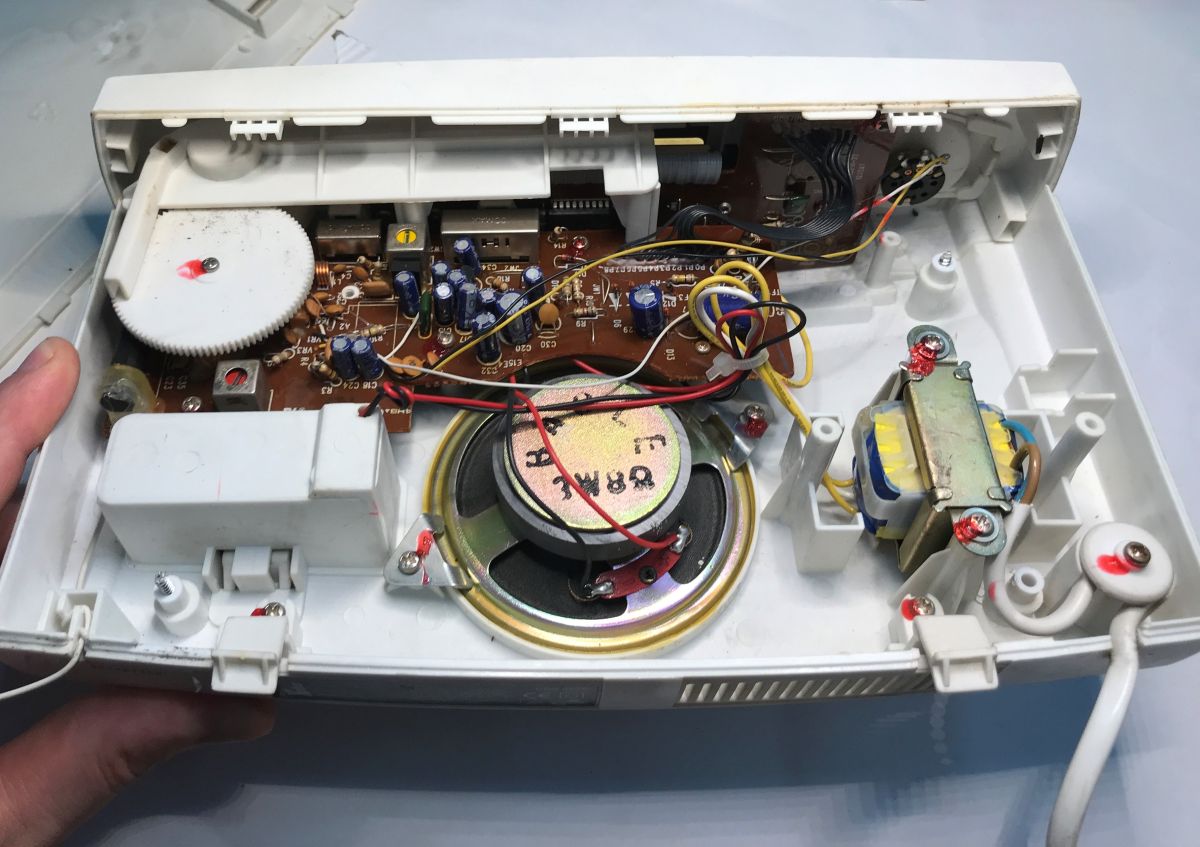
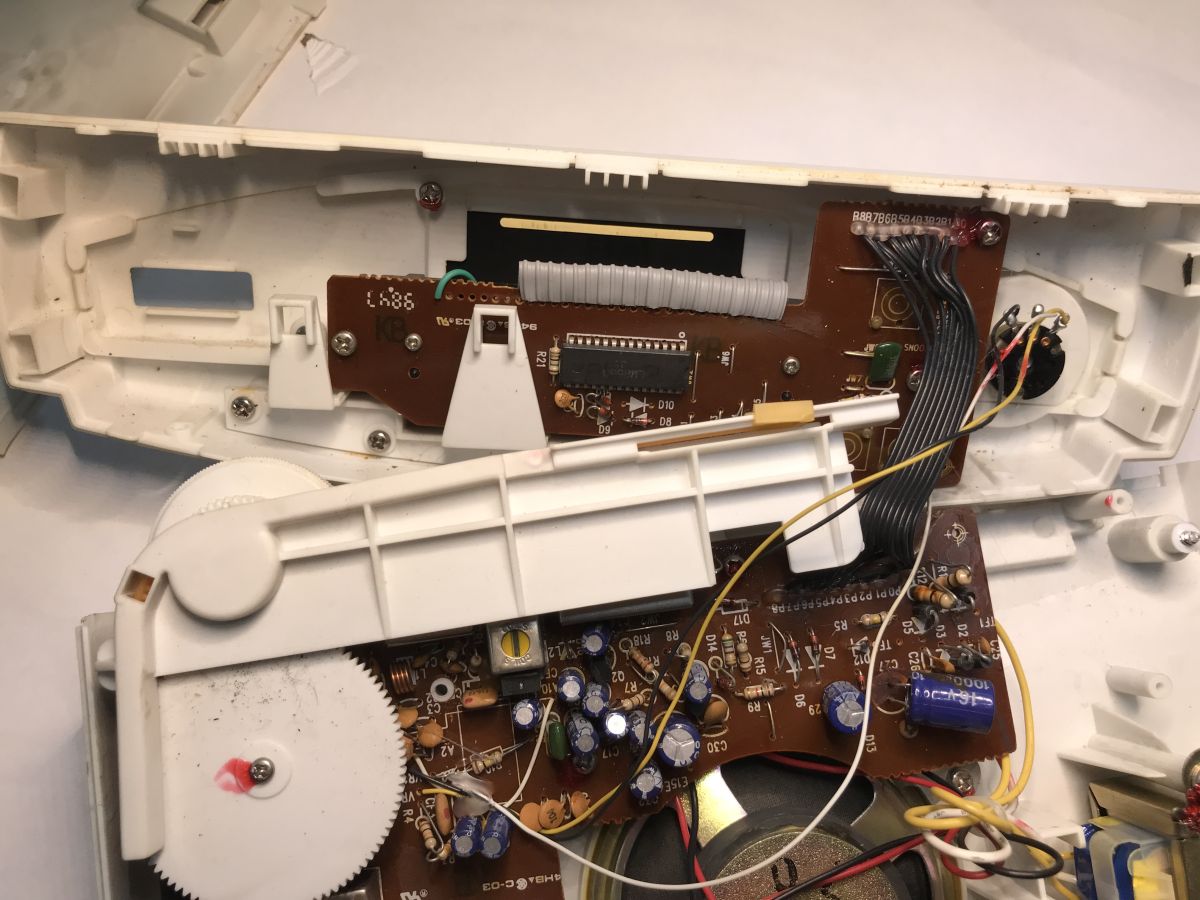
Let's take a look inside. The first thing that strikes the eye is the classic mains transformer, there is no switching power supply here. Apart from that, there is the already mentioned mechanical scale, a single speaker and a single-sided PCB.
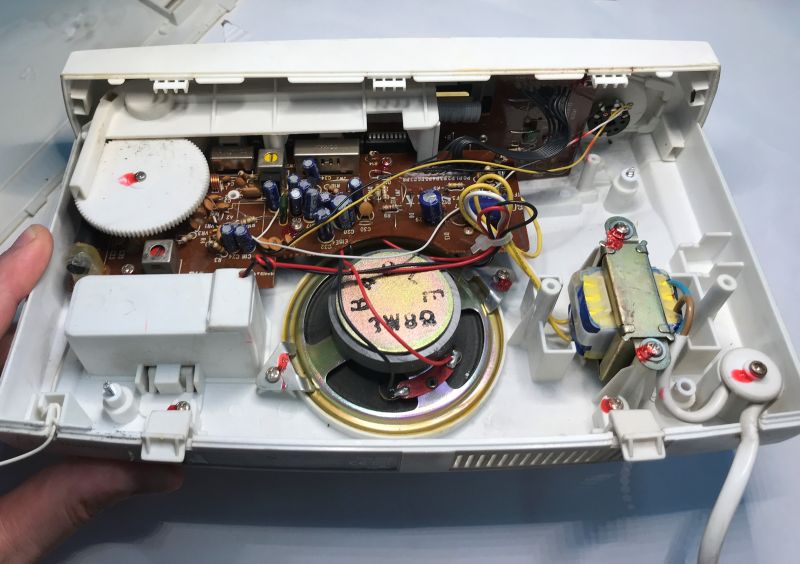
You can also see the screws secured to prevent loosening in transit.
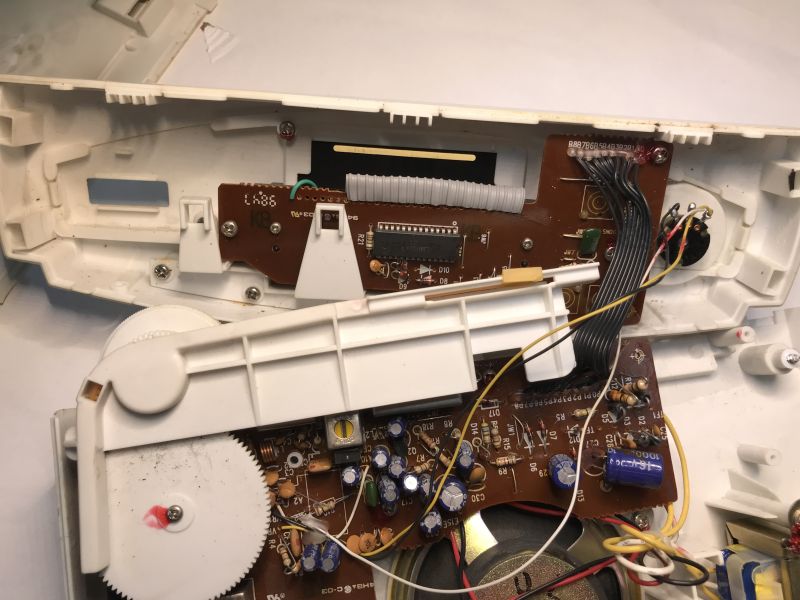
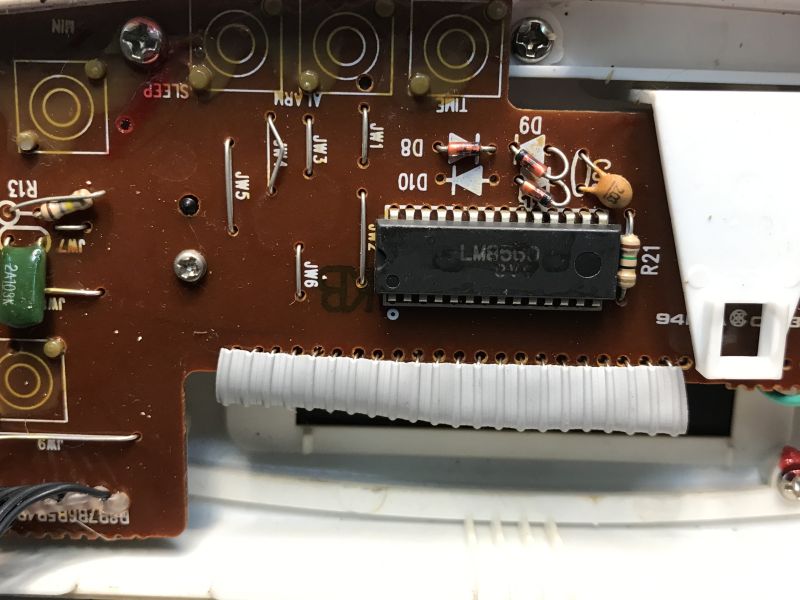
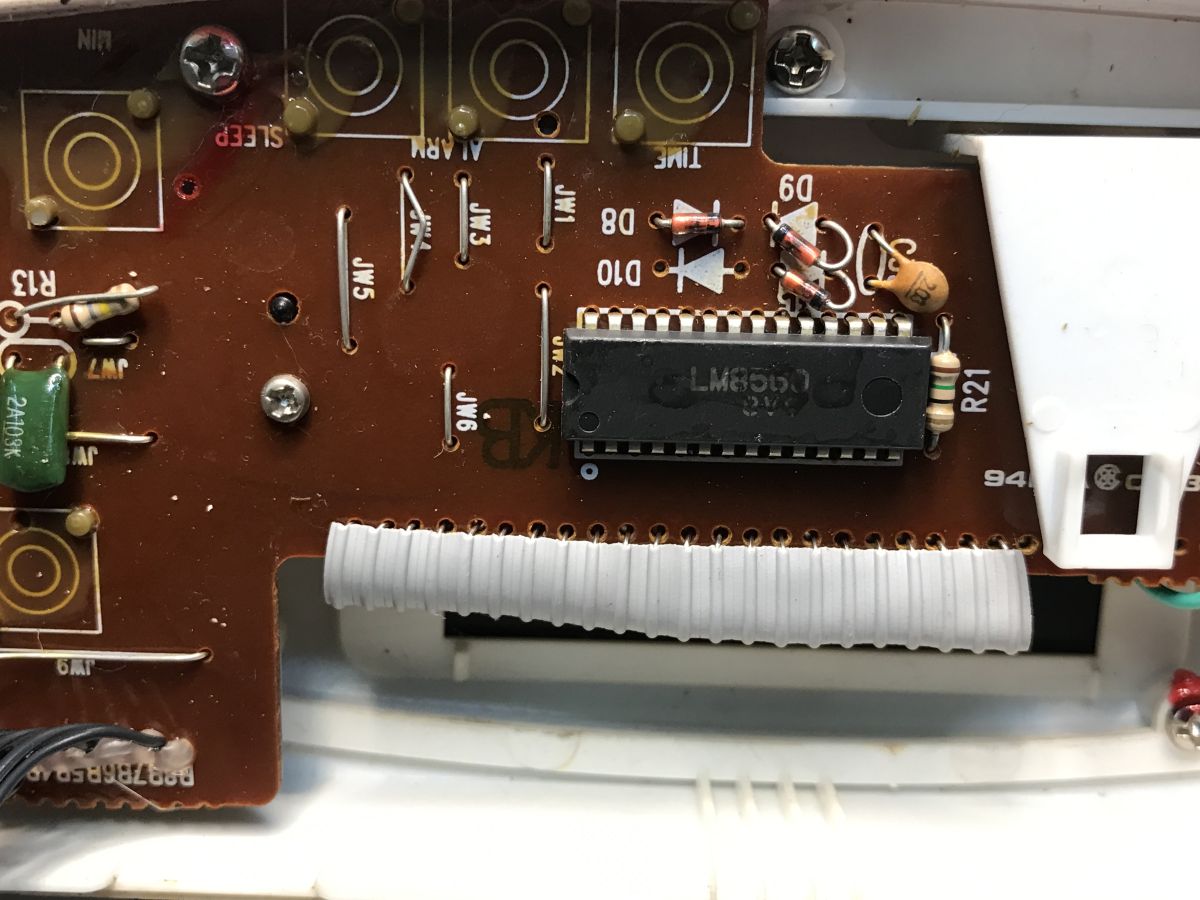
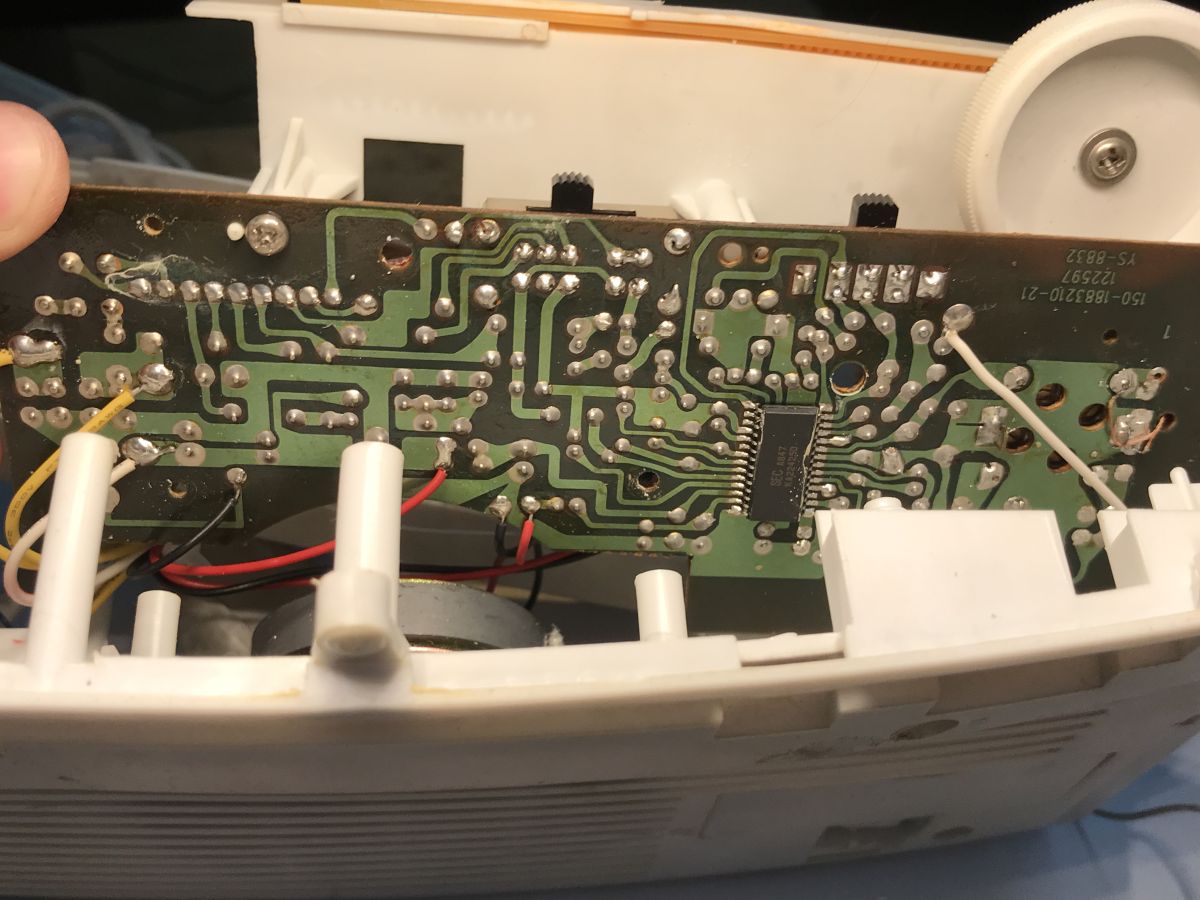
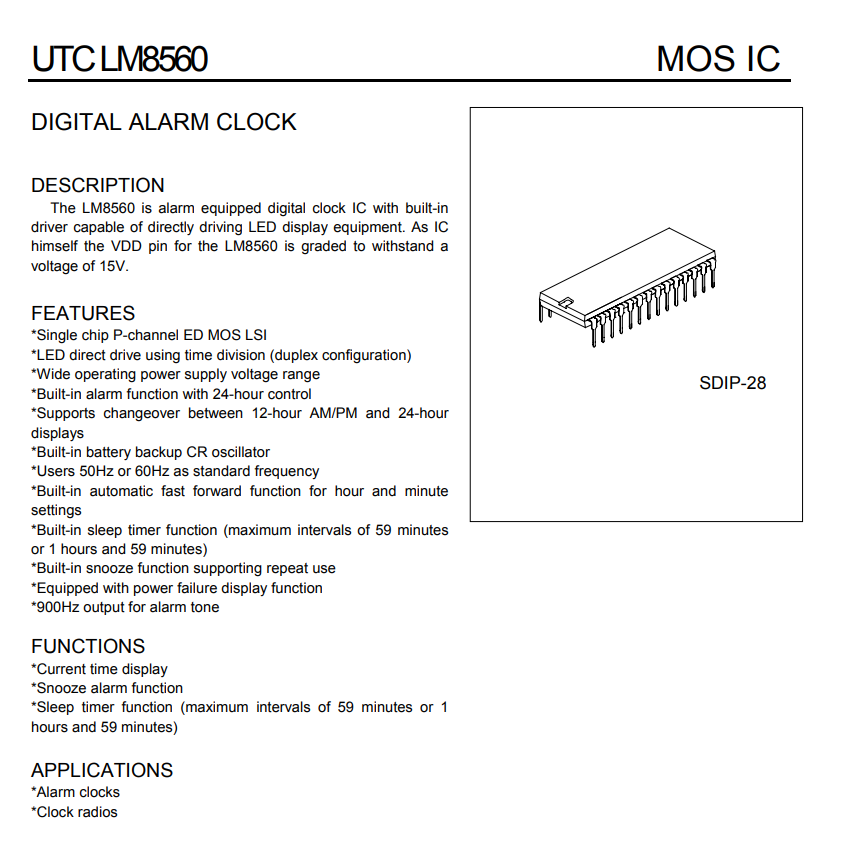
The display is controlled by the LM8560:
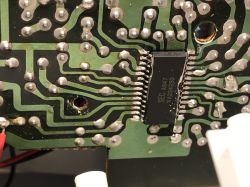
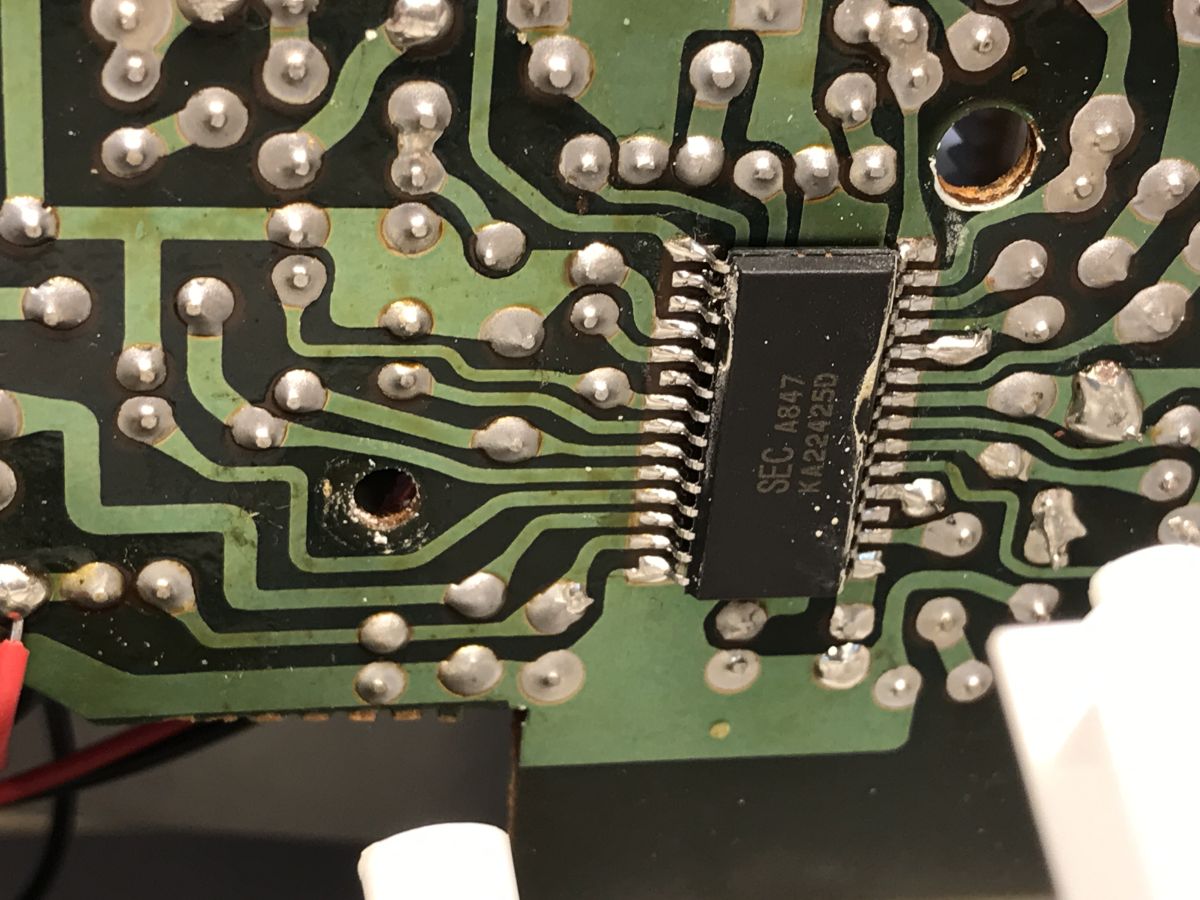
Separately is the KA22425D chip, an AM/FM radio controller, fully analag:
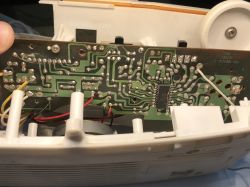
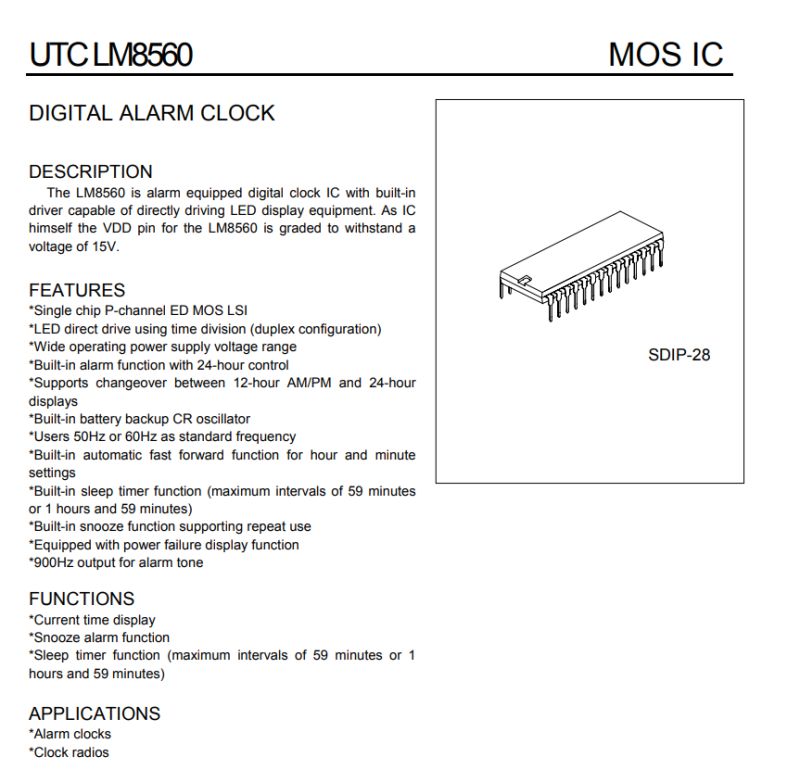
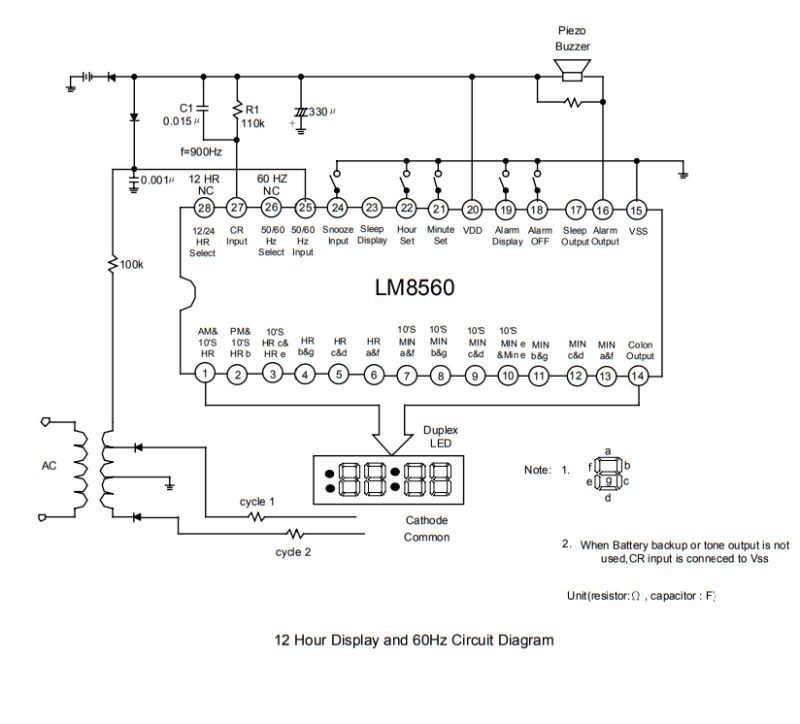
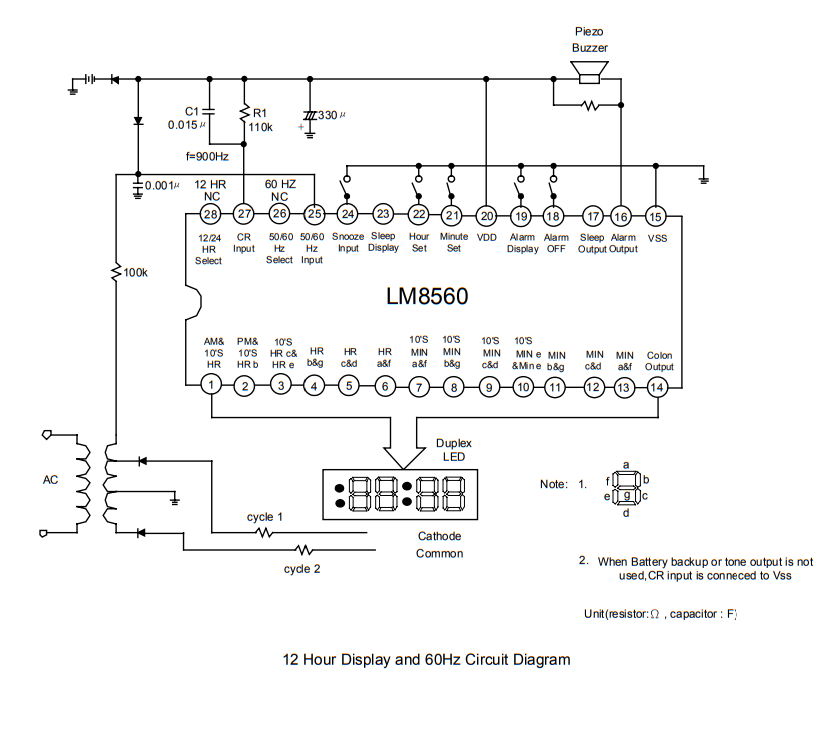
The LM8560 handles pushbuttons, display and timing. Timing is clocked by the frequency of the mains through a transformer and, in the event of a power failure, is sustained by the battery through a simple RC generator. The LM8560 can switch the radio on and off when used as an alarm clock.
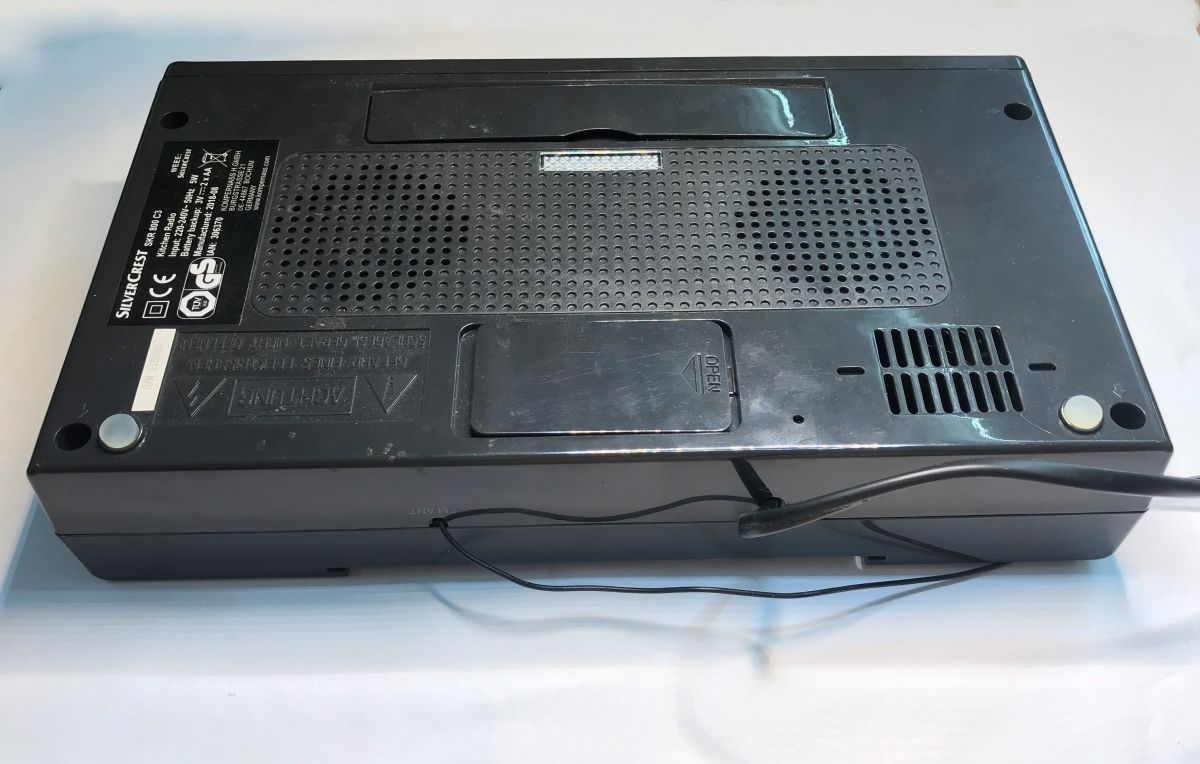
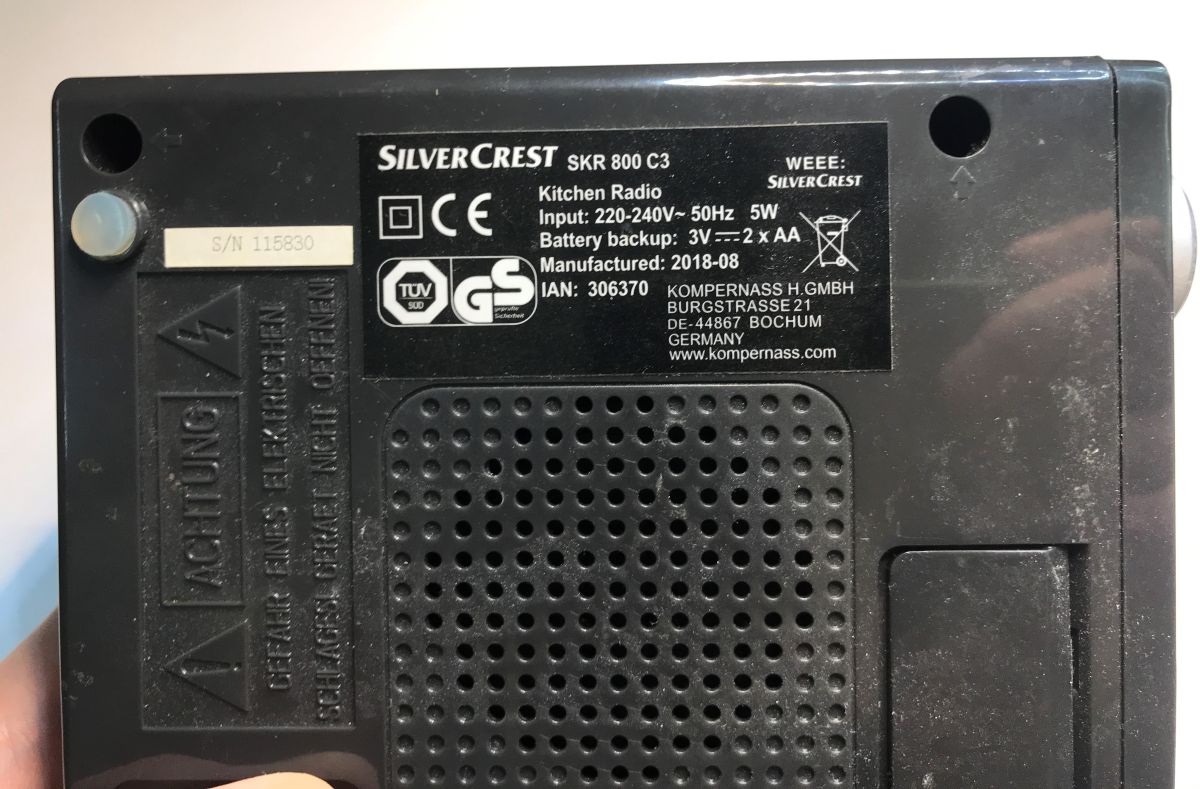
 SilverCrest SKR 800 C3
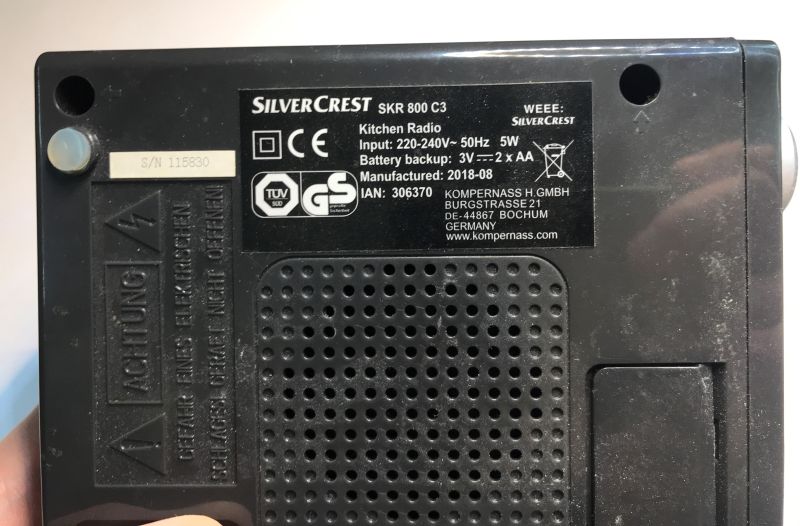
A newer radio, also with backup, but already stereo and with an additional light.
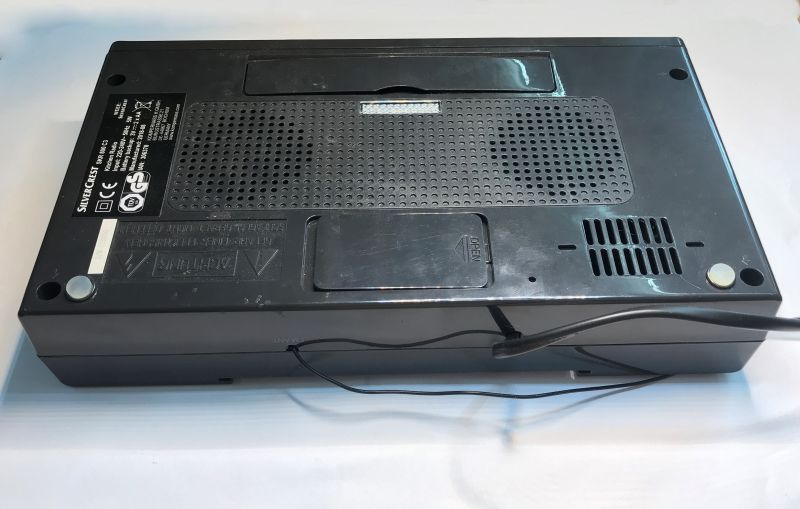
Plaque:
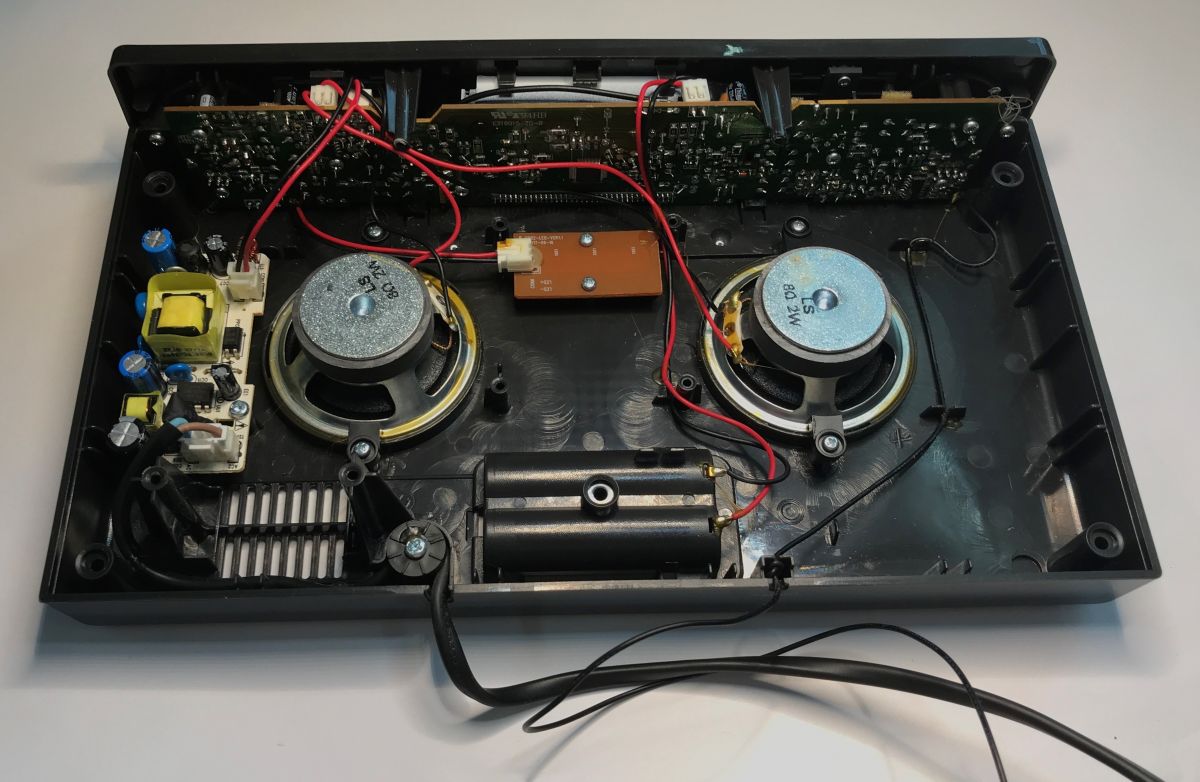
The first change inside is the replacement of the mains transformer by a lighter, cheaper and more efficient switching power supply.
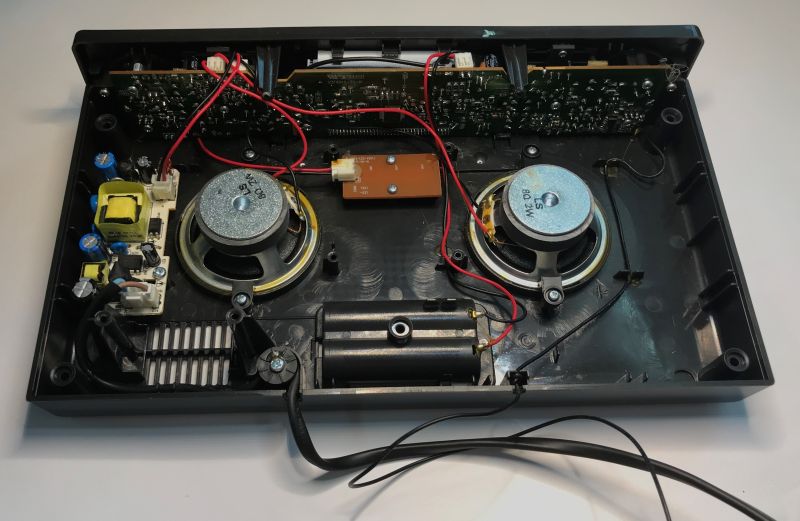
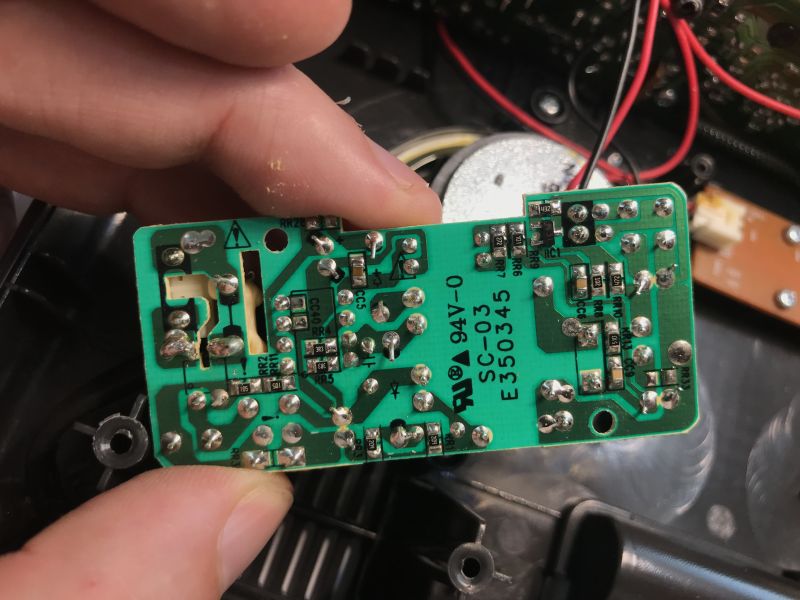
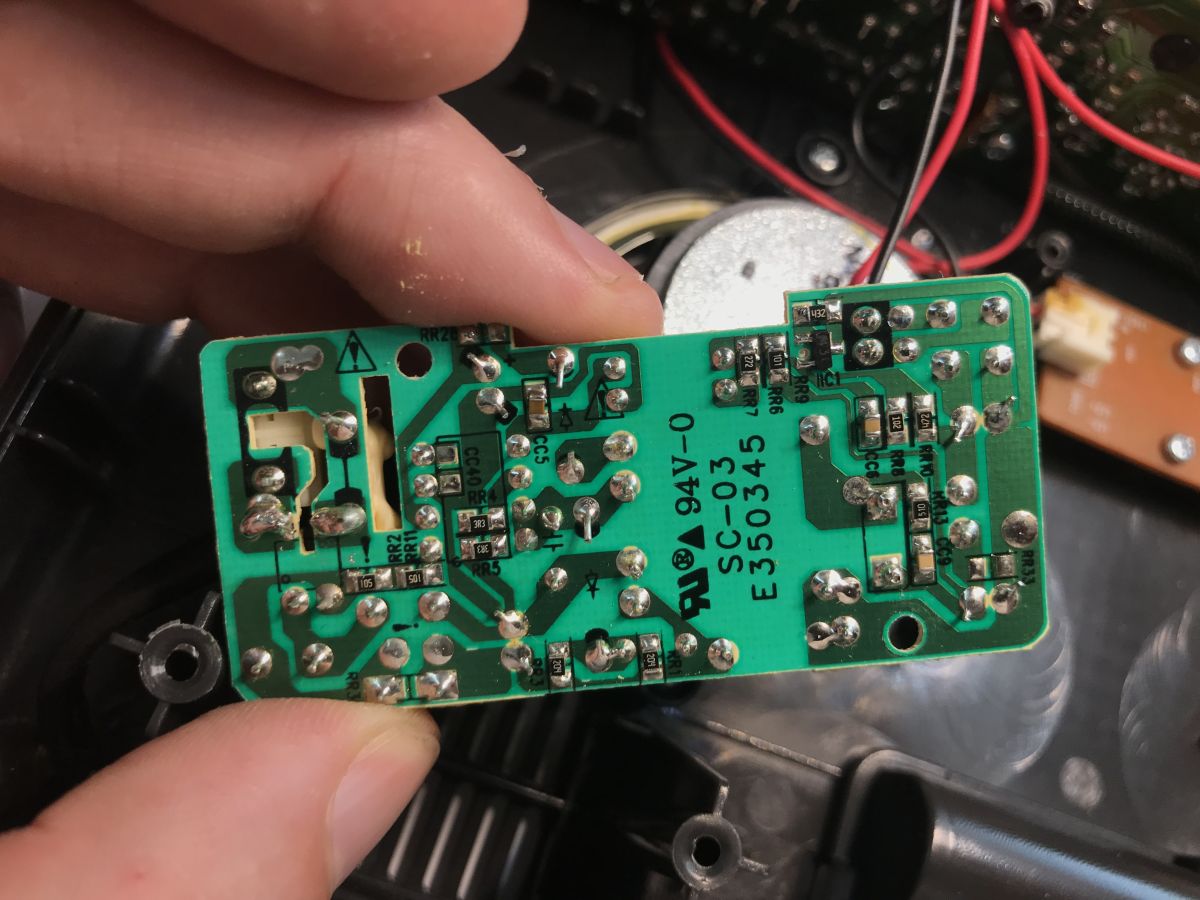
In this case, it is based on the SW2604A circuit - this is a flyback converter driver integrated together with a keying transistor. The feedback is taken from the secondary side via an optocoupler. I even see a noise filter on the primary side, many manufacturers omit it. TL431 in the role of reference voltage hides at the bottom of the PCB:
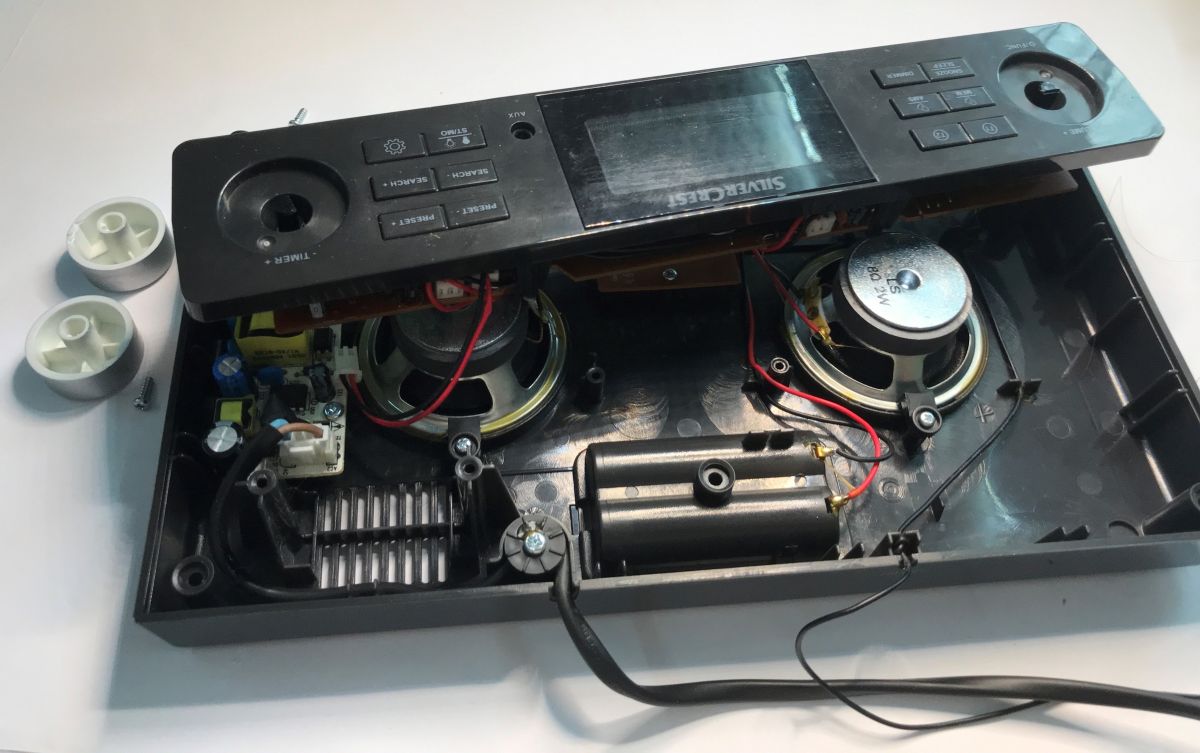
It's now time for the PCB proper. There is one, but a single-sided one anyway:
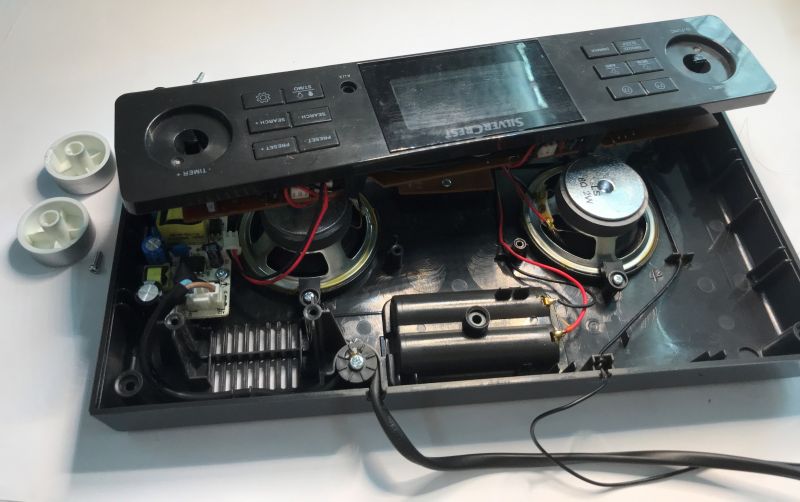
What strikes the eye immediately is the encoder - something like a 'digital potentiometer'. Instead of changing the resistance, it generates pulses which the microcontroller reads.
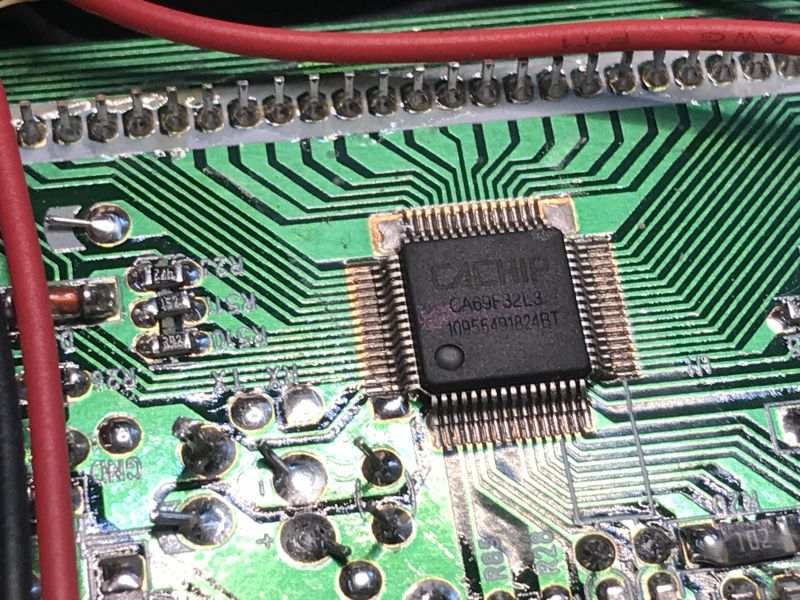
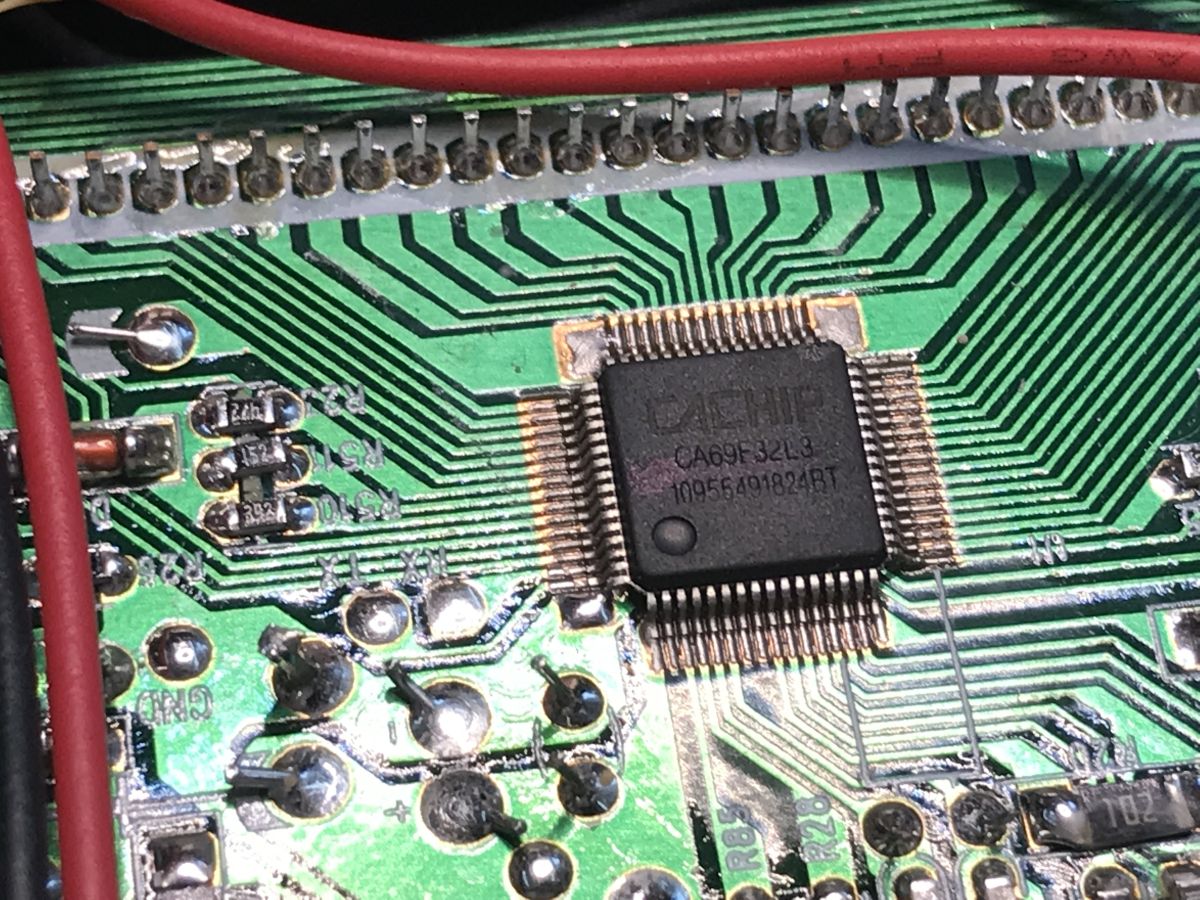
The microcontroller itself is here the CACHIP CA69F32L3. It controls the LCD display directly, so it must have a built-in controller, and it also handles the buttons. Separately we only have the radio circuit:
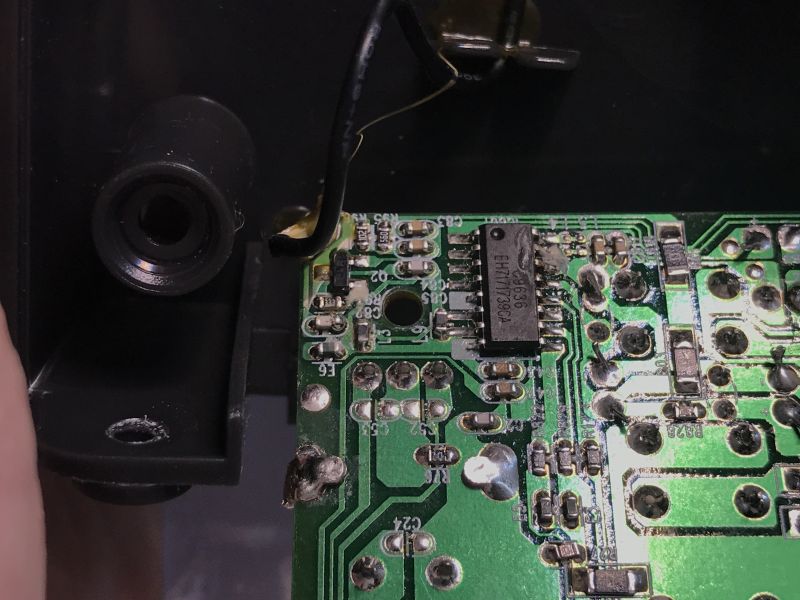
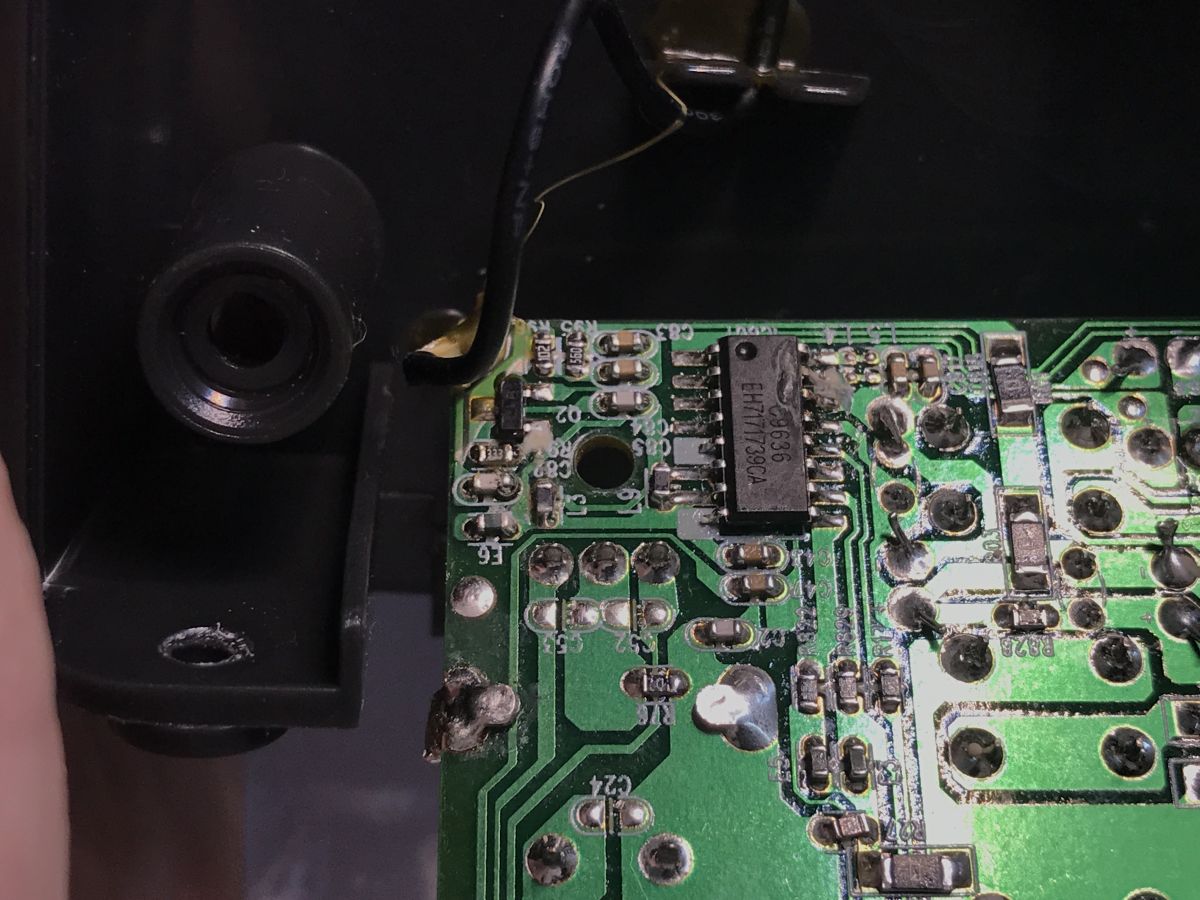
The C9636 is a single-chip AM/FM/SW/LW/RDS receiver with stereo function. It is digitally controlled via I2C. Below is a detailed specification from the manufacturer:
Quote:
C9636 electrically adjustable RDS radio receiving chip
C9636 is a single chip integrated with AM/FM/SW/LW/RDS electronic tuning function. Widely used in: multi-band electrically tuned radios.
● Monolithic integrated AM/FM/SW/LW radio receiver
● Support FM/AM/SW/LW frequency bands in all regions of the world.
● AM band 520-1710 KHz
● FM band 87-108 MHz
● Support FM single-band 64-108 MHz.
● SW band 2.30mhz-23.00mhz.
● LW band 144 KHz-288 KHz
● Support full-featured RDS.
● Support PLL electric tuning to automatically search for stations.
● Support manual single-step radio search.
● Support to quickly search for radio stations and save them when starting.
● Support digital display of frequency band information.
● Support I2C communication interface.
● Support mono audio output.
● Support stereo audio output.
● Support automatic stereo/mono switching.
● Support mute function
● Support 32-level electronic volume adjustment.
● Support 2 sets of stereo LINE_IN input.
● Built-in 5mW@32Ω headphone power amplifier output
● Working voltage: 2.2V-3.6V
● Package type: SOP16
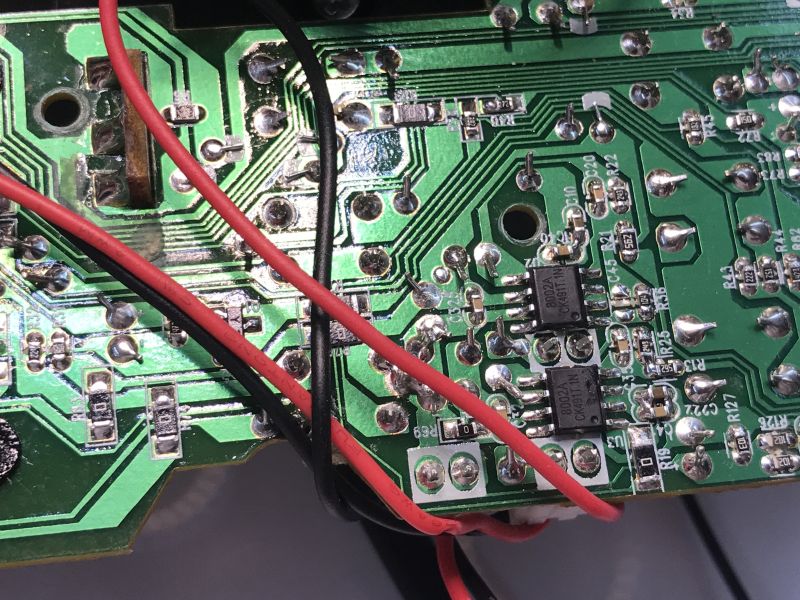
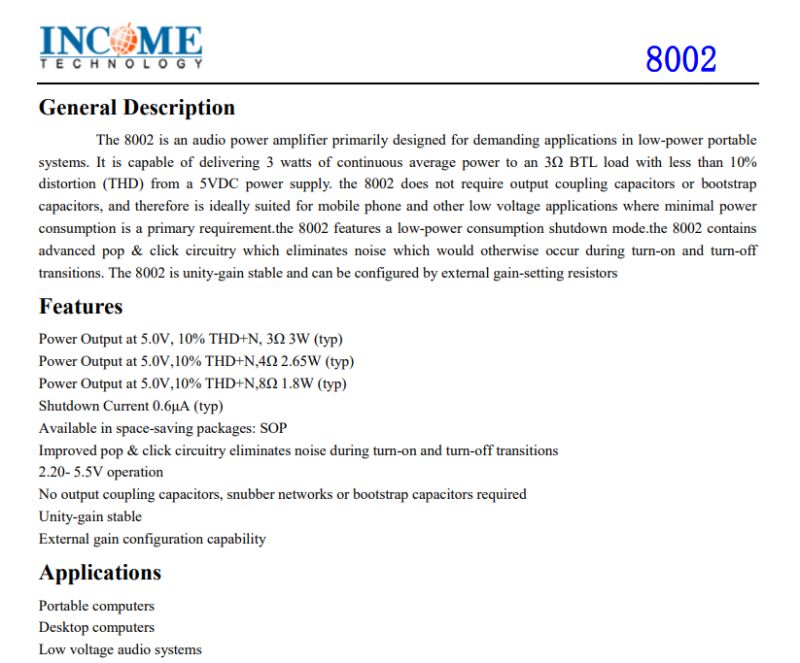
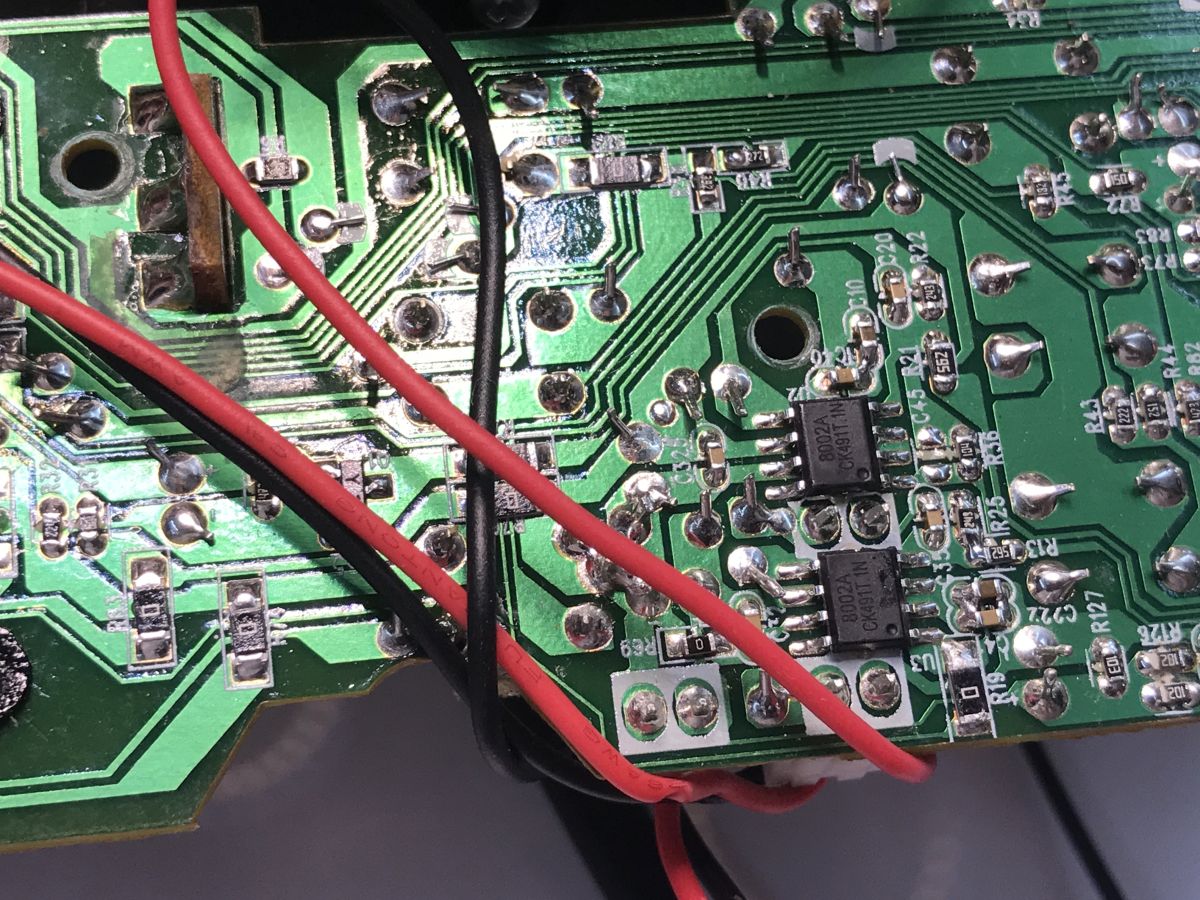
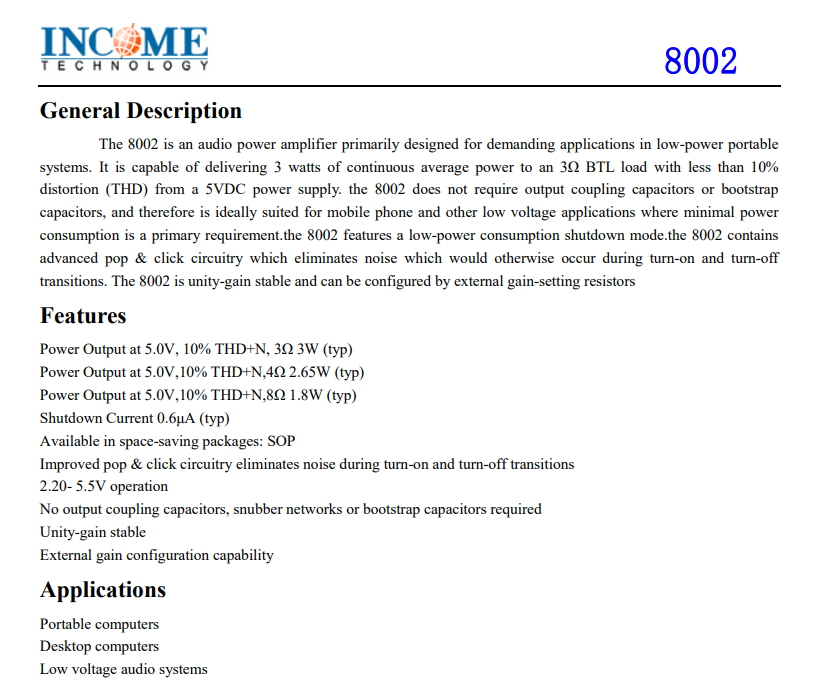
There are still two pieces of 8002A audio amplifier left - right next to the speakers:
Catalogue note:
 Summary
Although both devices belong to the same equipment category, the design differences between them are very clear. The most noticeable changes are:
- power supply - the heavy mains transformer used in the older model has been replaced by a lightweight and more efficient switching power supply (flyback topology).
- audio track - the older receiver only offers mono sound, while the newer model already supports stereo.
- degree of digitalisation - the older unit uses a simple analogue AM/FM radio path working with a clock chip (LM8560). The newer model is dominated by digital electronics: the radio receiver is integrated in a single chip (C9636), controlled via an I2C interface and offering functions such as RDS or automatic station search.
- in addition, there are clear differences in the way information is handled and presented:
- tuning - the mechanical tuning on the older model was replaced by digital control using an encoder.
- display - a more energy-efficient LCD was used instead of the LED display.
The whole thing shows well the direction of development of this type of equipment - from simple, analogue designs to highly integrated, digitally controlled systems with greater functionality and convenience of use.
The question is, which radio was better? I leave it to you to decide...








Comments
I think this white thing is from the '90s? Or maybe older - an old PCB like from the communist era. [Read more]
I have a 10-year-old SONY in my kitchen. It receives all stations on UKF, sometimes even 50-100km away). It's time for a change because the buttons have worn out and also the power supply is starting to... [Read more]
The 'kitchen radio' product is an interesting idea. A combination of a watch and a radio in a housing that fits around the kitchen cabinets. The product has fitted the need quite well. It used to be that... [Read more]
There has also been one kitchen radio at my place for years, quite similar to what I presented in the first post, but there is a funny story connected with it. https://obrazki.elektroda.pl/9966190100_1774370718_bigthumb.jpg... [Read more]
These new ones are for ....;) I once made myself a radio transmitter on FM. This allowed me, for example, to hear music from my computer or MP3 on the radio, or even to hear sounds from a microphone... [Read more]
Nothing after stereo if the radio has speakers in a common compartment and placed so close together. Anyway, both units give the impression of being shoddy. At my parents' house they play something like... [Read more]
You can always add a stereo base extension system - a solution known from the '80s in communist Poland. [Read more]
In my city, such "stereo" is of no use - the signal of the national and provincial stations is too weak for there to be stereo reception on a piece of cable. Stereo is only received by one city station,... [Read more]
Leaving aside the utter pointlessness of stereophony with such speaker placement, does this newer radio receive anything in the AM range? Scalak offers D, S, K reception, but I don't see a range switch.... [Read more]
No, I also have this SilverCrest and last time I repaired it it started whirring and losing stations and I noticed that the mains transformer was heating up terribly, just normal. Fortunately I had a small... [Read more]
I'm not a fan of radios that only play treble, so for the windowsill purchased a Ferguson Regent DAB+151. I was surprised by the bass like from a portable JBL, and the money is ridiculous. [Read more]