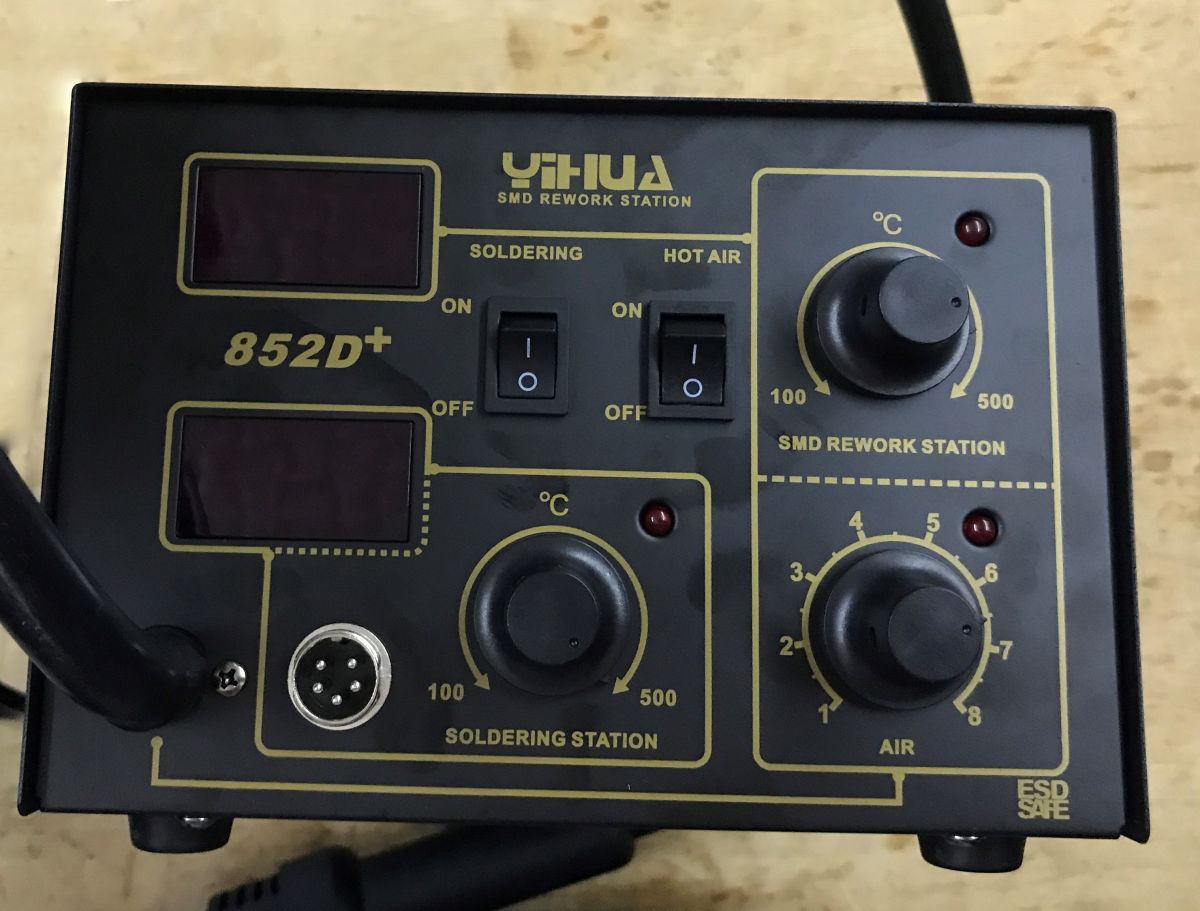
Practical testing of the Yihua 852D+ 2-in-1 soldering station, combining a 700 W hot-air gun and a 60 W 900M soldering iron.
The station was tested on a motherboard, measuring solder-iron heating, hot-air component removal, temperature readings, power draw, and the diaphragm pump's behavior.
At 350°C, cold-board hot-air desoldering removed a coil in 50 seconds; at 450°C, a CPU came off in under three minutes.
Measured display settings of 100°C, 350°C, and 450°C did not match probe temperatures, while power briefly peaked near 700 watts.
The biggest drawbacks were extreme noise and table vibrations from the diaphragm pump, and the soldering iron felt no better than cheap portable irons.
AI summary based on the discussion. May contain errors.
Two soldering irons in one kit and for only PLN 300 - is that a good deal? Here I'll introduce the Yihua 852D+ station and see how comfortable it actually is to work on a motherboard with it. I will test both a hot air and a flask soldering iron. I will take measurements at the 100°C, 350°C and 450°C temperature settings and check how much the sensor will actually heat up to. I will check the advertised asset of this station - the 24L/min diaphragm pump from the centre.
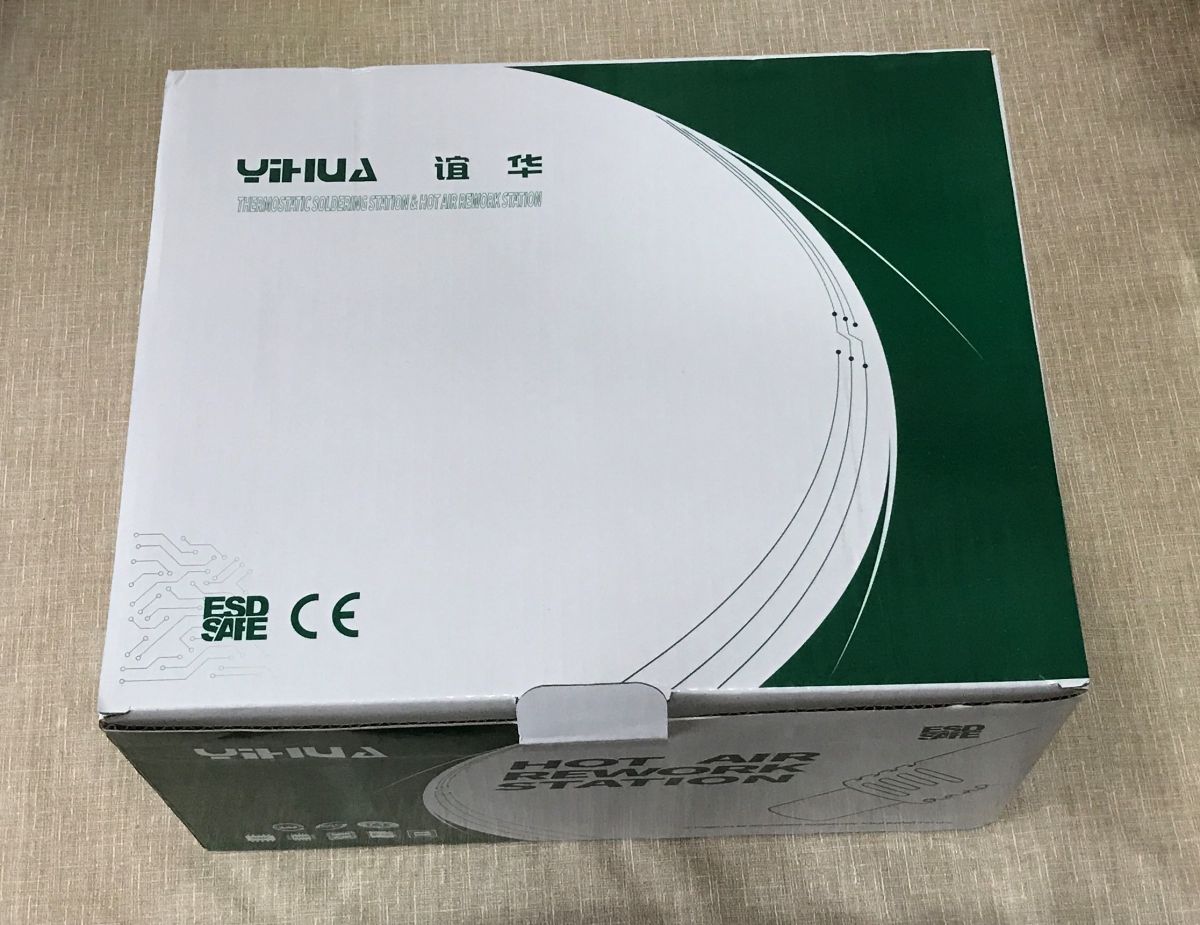
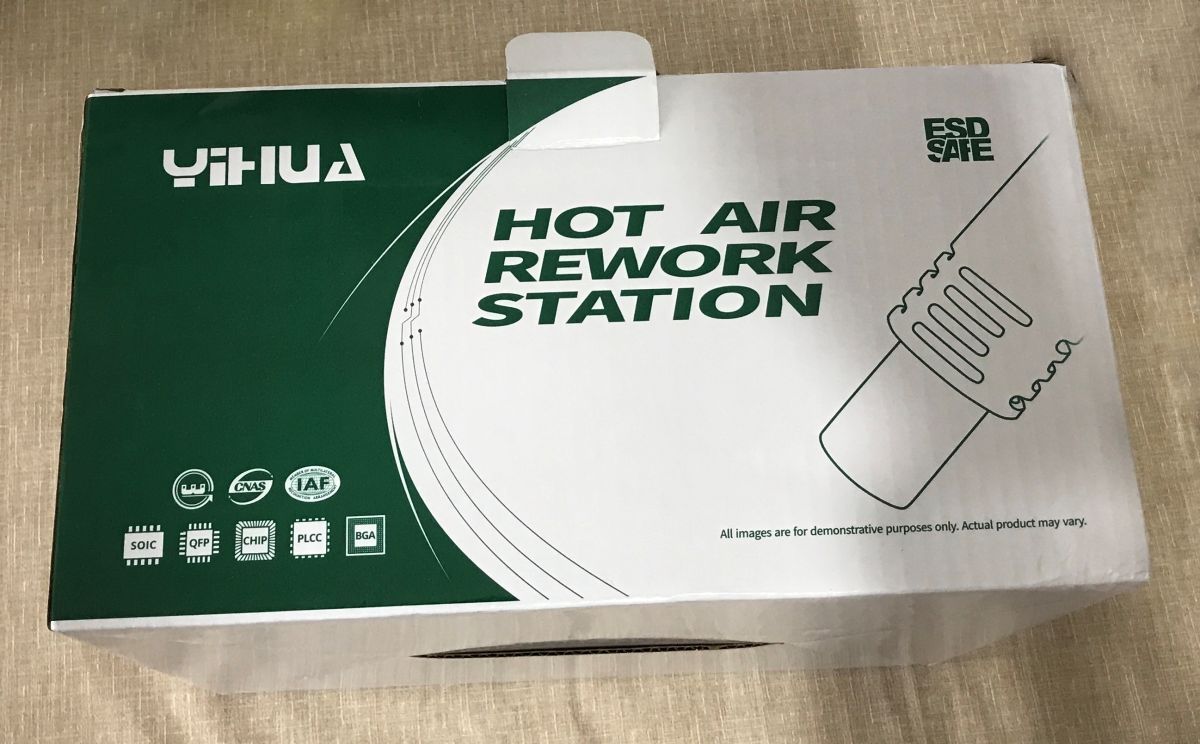
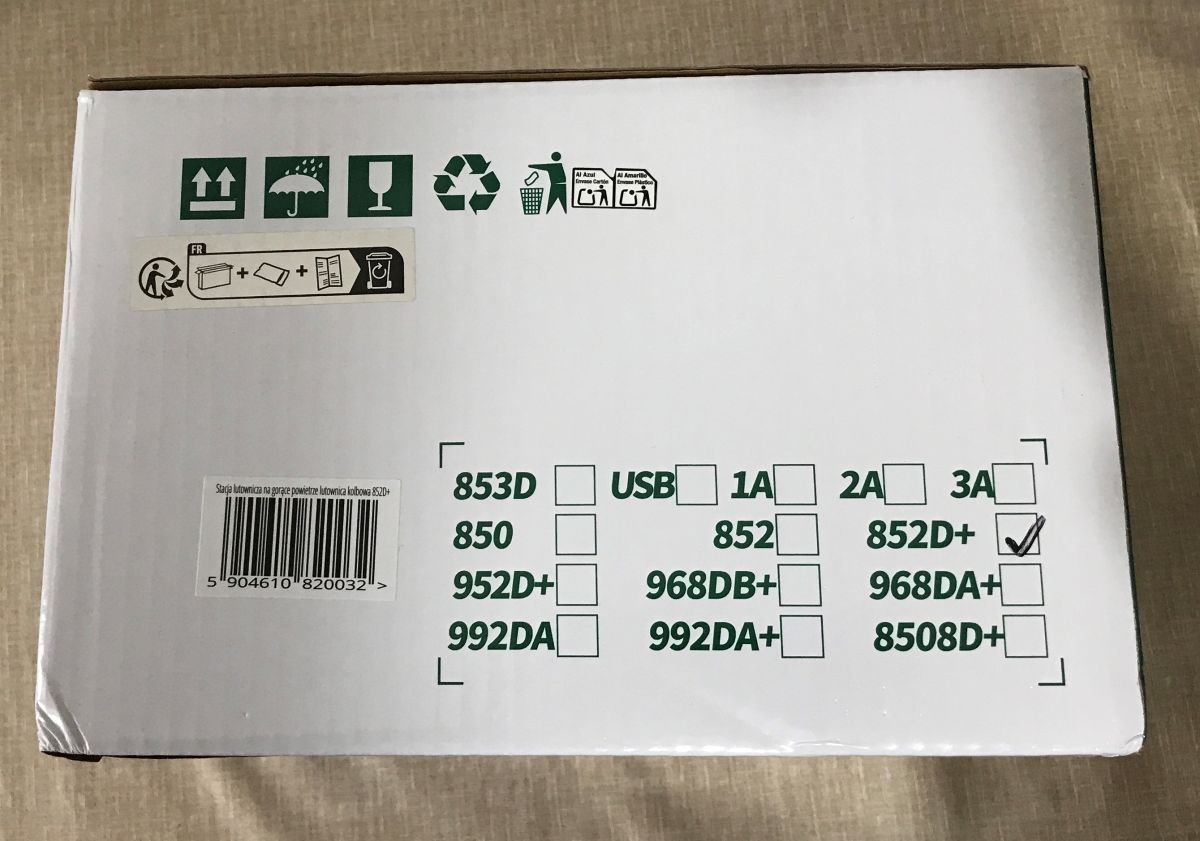
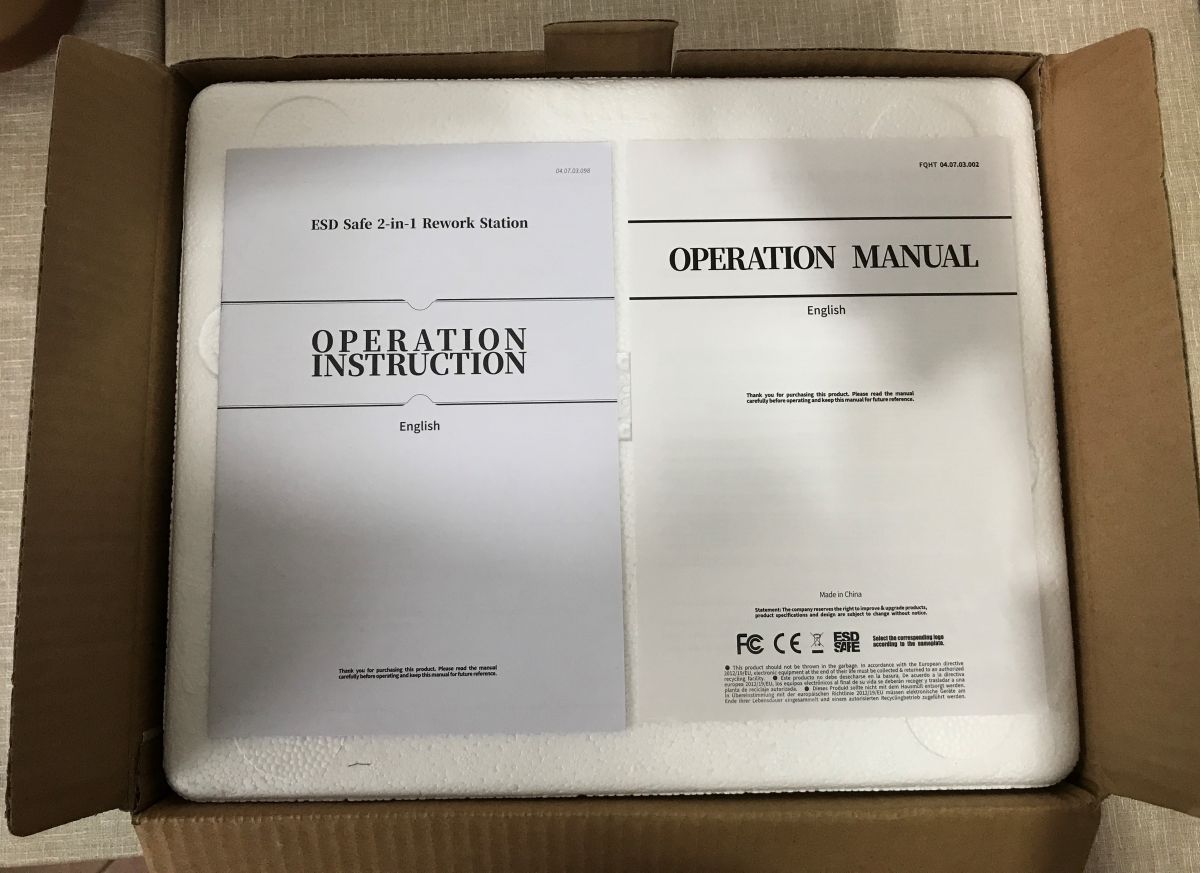
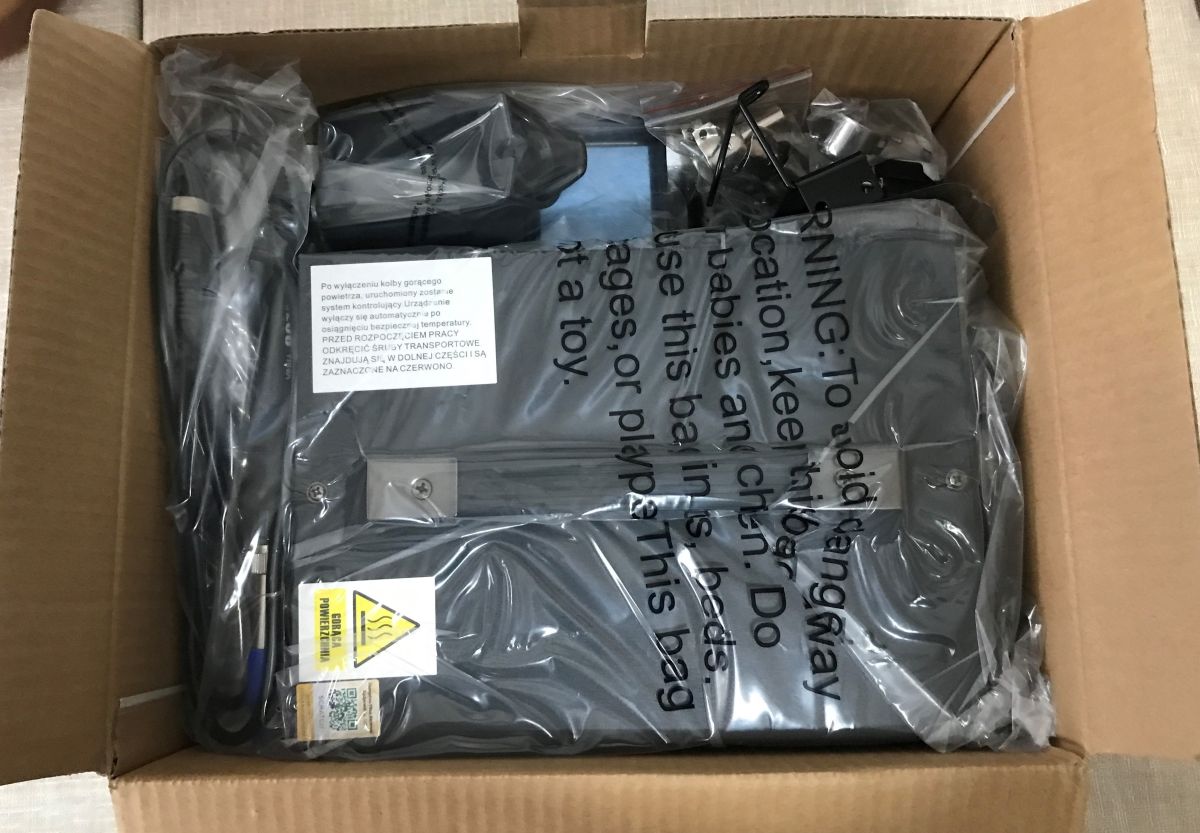
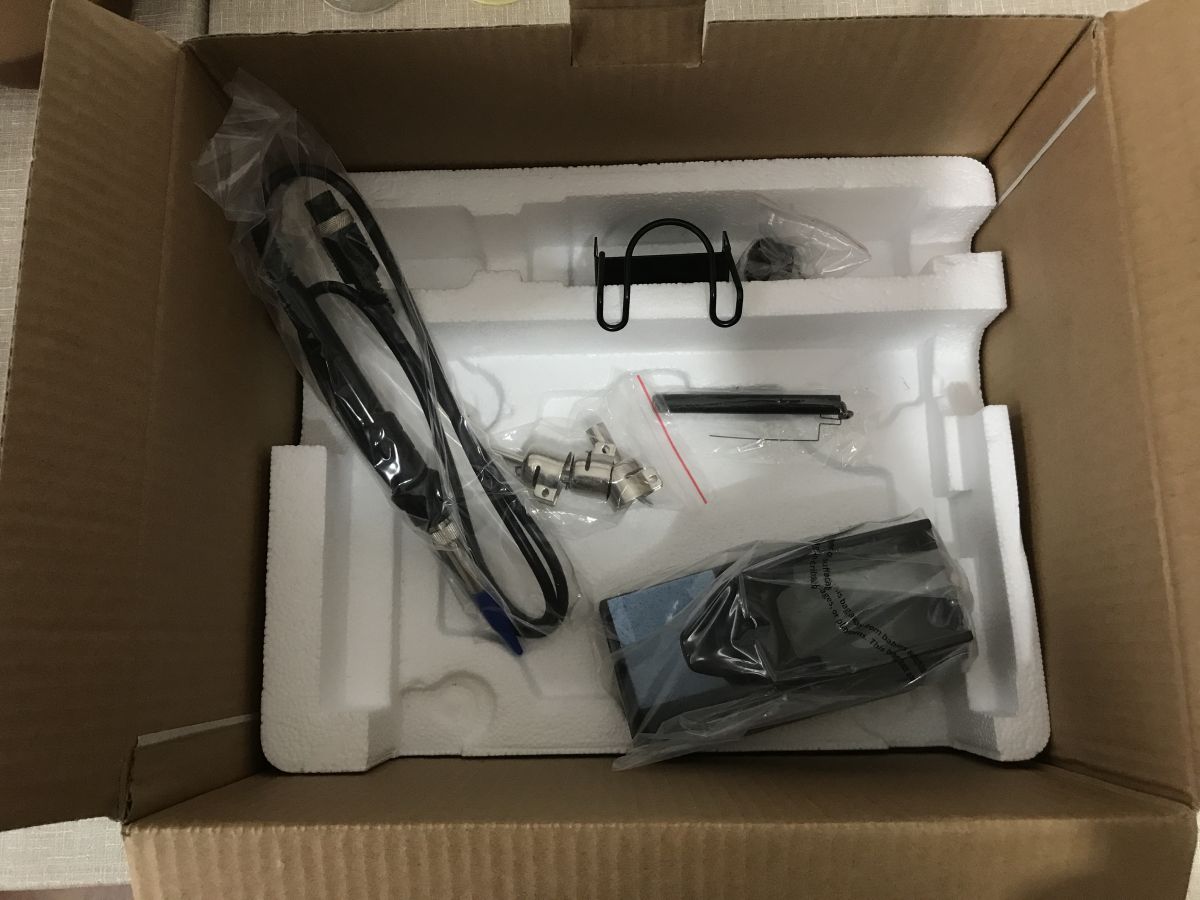
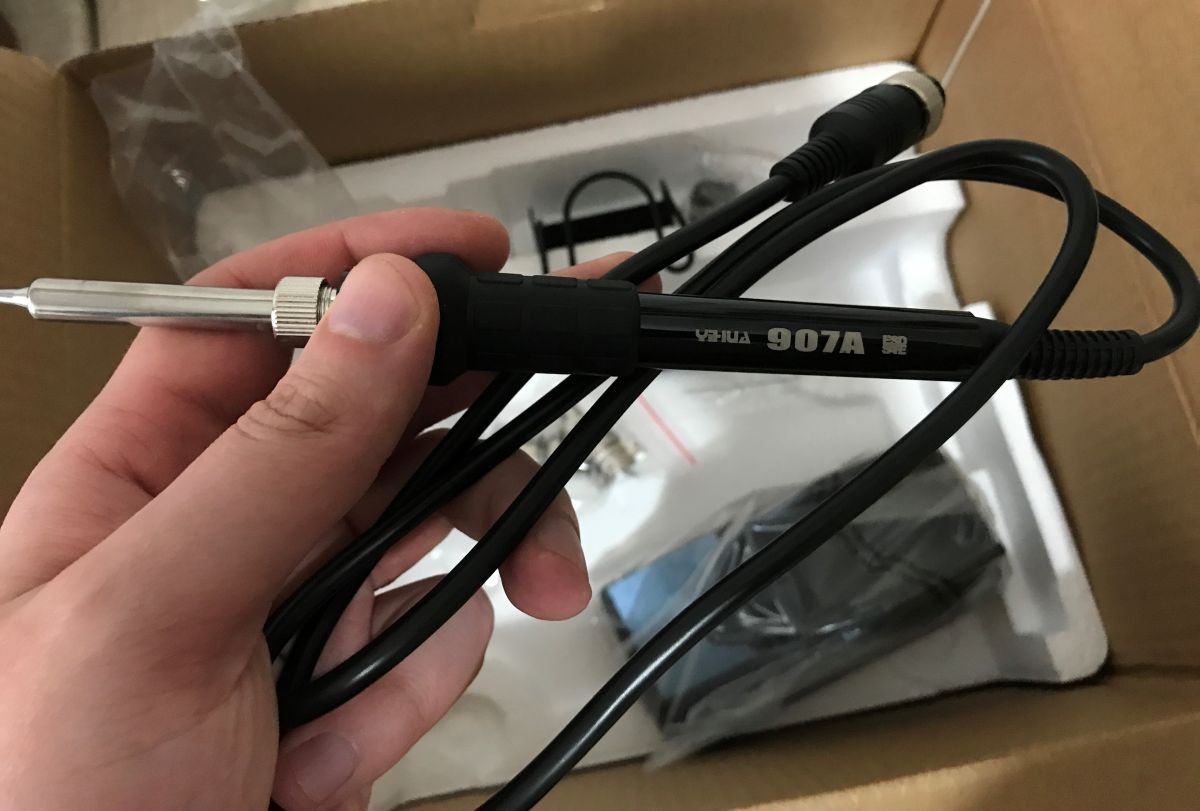
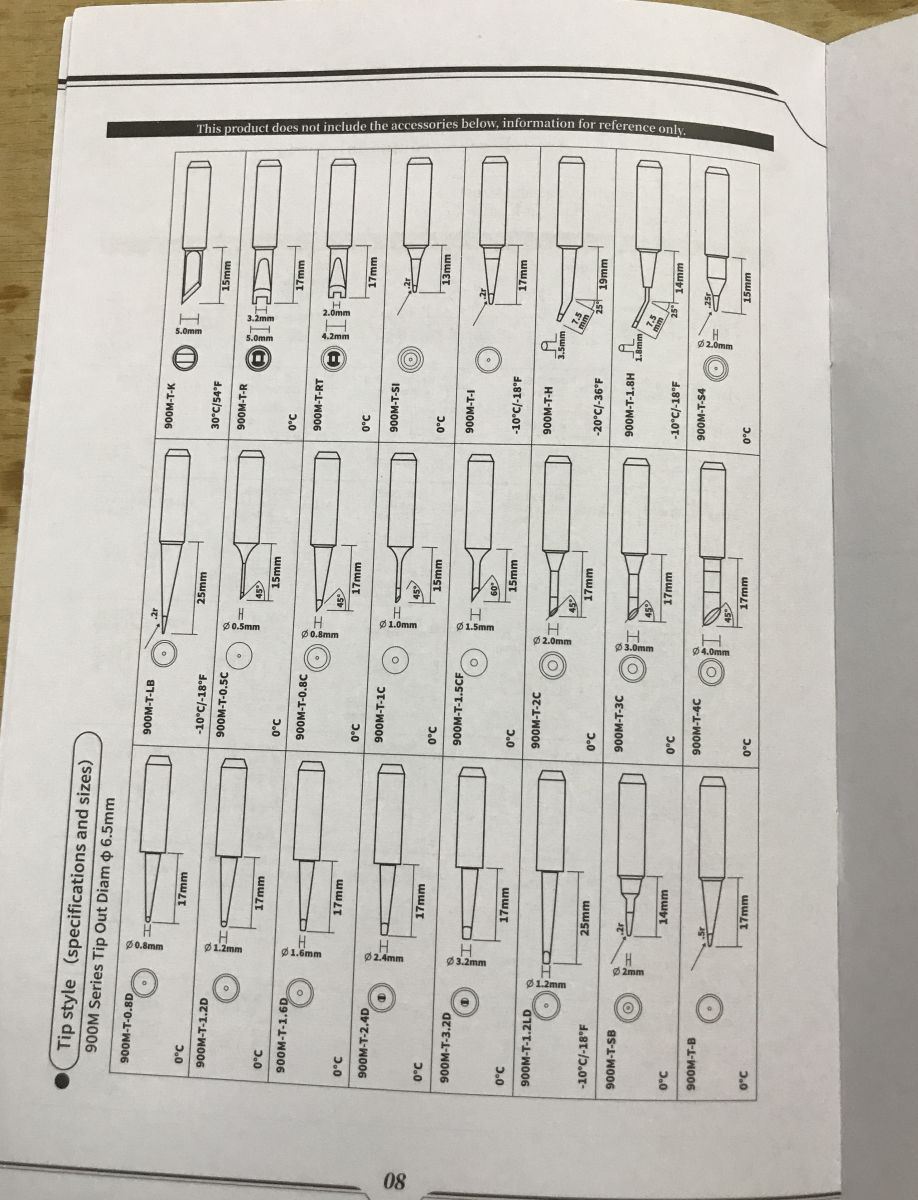
Let's start with the packaging and contents of the kit. The packaging is for a whole series of different stations, including one bearing the mysterious name of USB. It will be interesting to see what the hardware is. The whole thing inside is safely packed for travel, wrapped in polystyrene, and a single manual in duplicate will help us get started with the equipment. In addition, I received three nozzles and a sponge soldering iron stand.
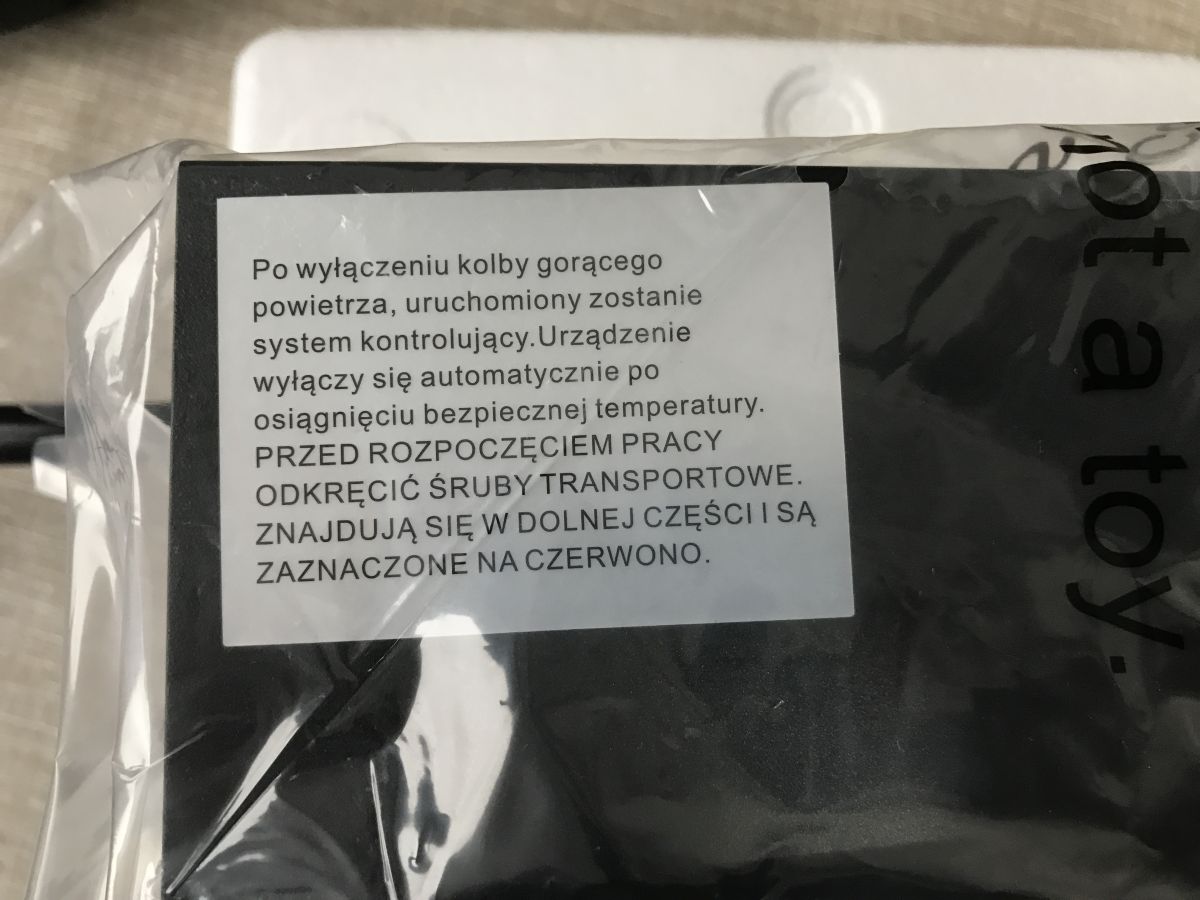
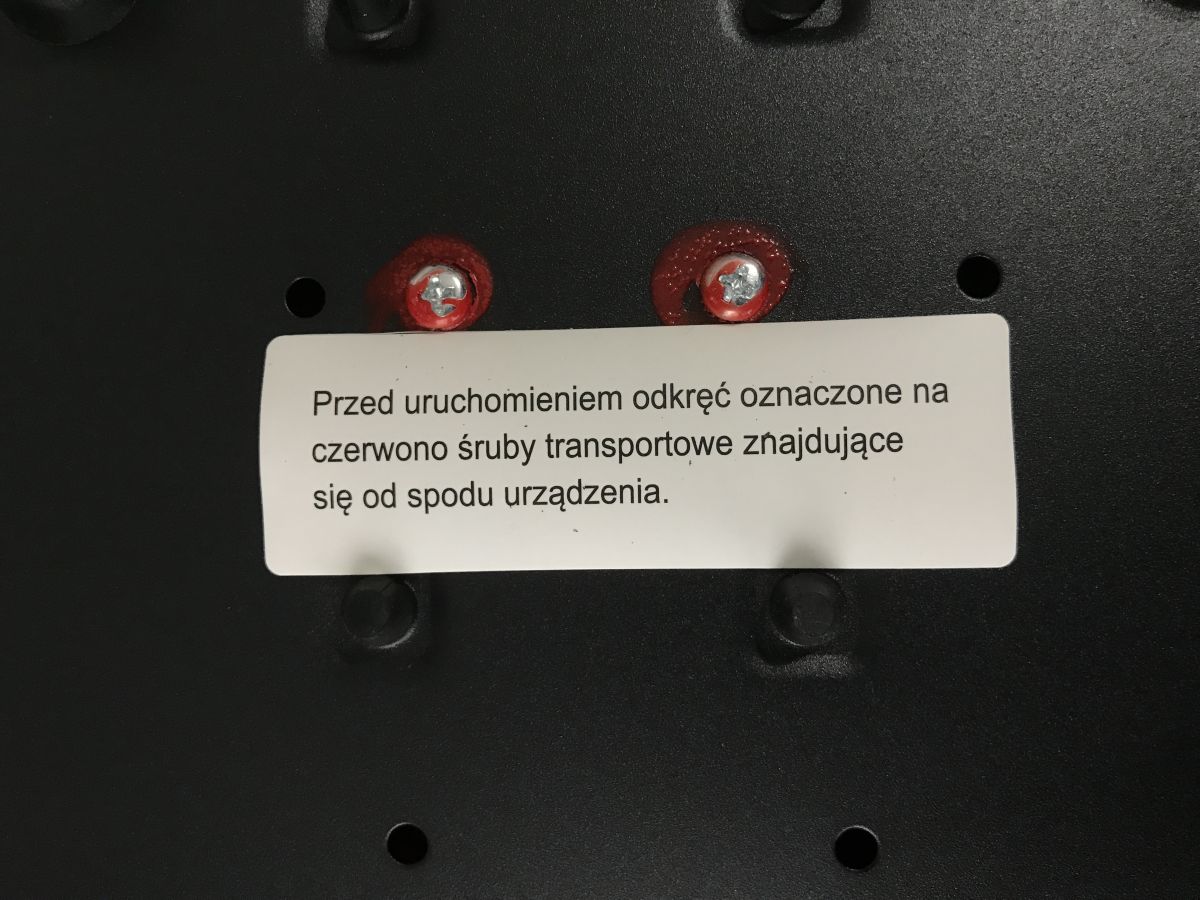
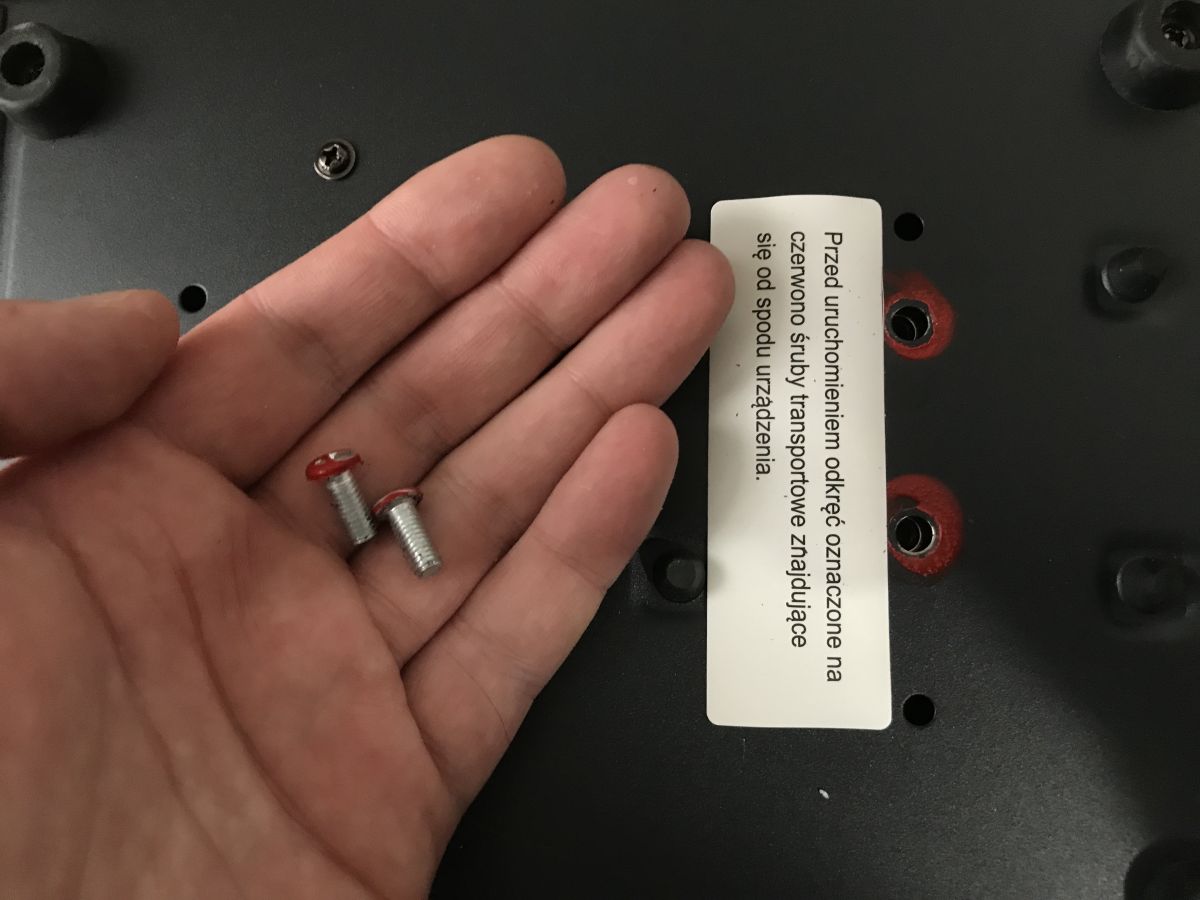
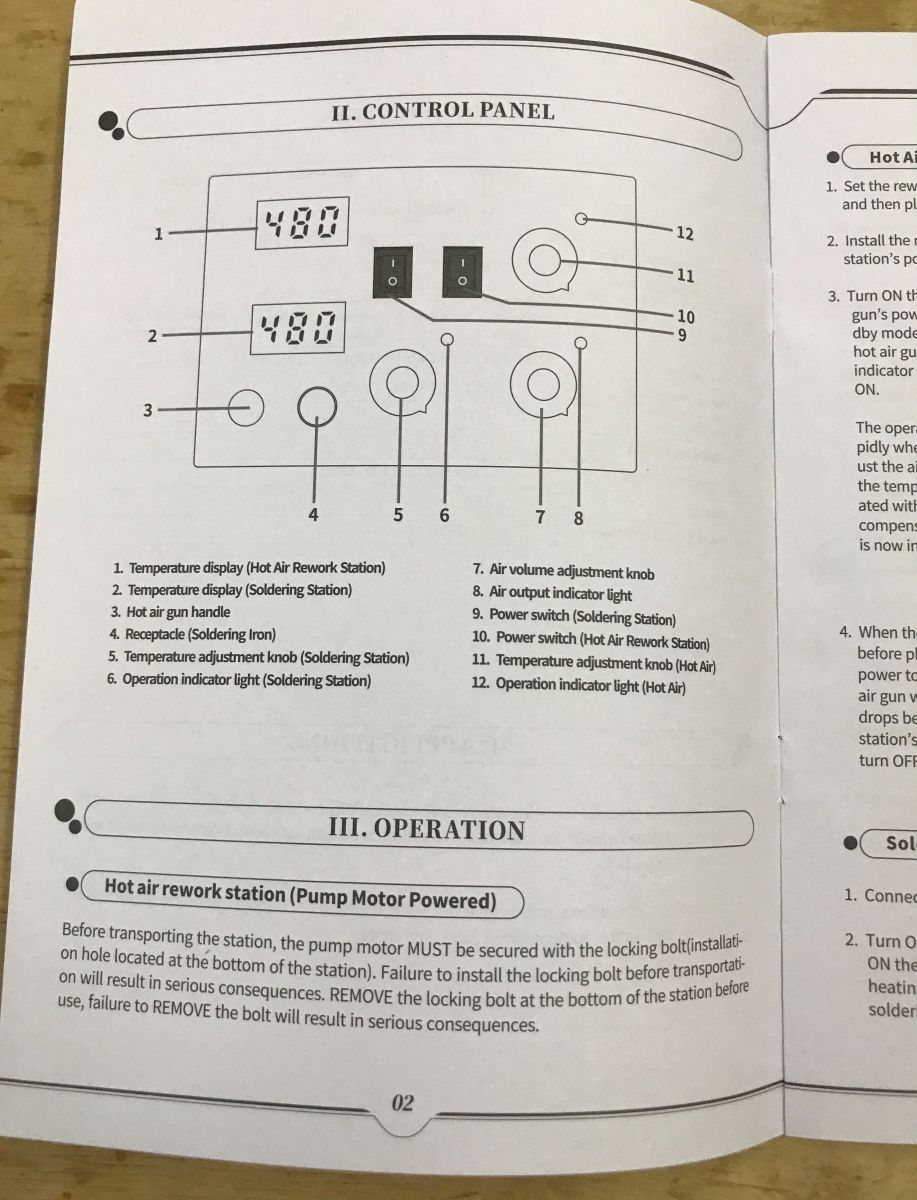
Before starting, unscrew the transport screws located at the bottom, these are marked in red.
This frees this mighty giant of soldering from its cage, but is the enthusiasm justified?
Ostensibly a diaphragm pump in an enclosure has better reviews than blowing from a flask, but let's find out.
Tests of the flask soldering iron At first glance, the soldering iron works well. You can solder goldpins, SMD capacitors, solder parts from an old TV board.... the stairs start when you have large mass spouts and it takes a lot of heat to get the solder hot.
I artificially prepared a test environment - a large motherboard with a copper spout, and a wire soldered to it.
I started the test with a cold soldering iron. I set it to 400°C. After a minute the solder joint started to melt, but the soldering iron did not give. After a minute and a half I removed the wire.
Same thing at 500°C:
Similarly, also more than a minute needed.
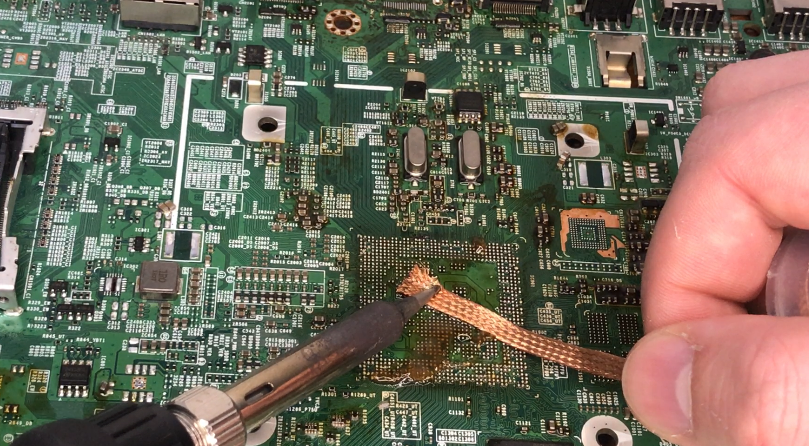
I tried more difficult tasks, such as cleaning the pads after the BGA, but here the soldering iron can no longer cope - the board is too massive:
Hot air tests First a warning - the tests presented here do not show the correct method for flying out components and can be destructive to the PCB. Every test starts with a cold board and flask.
The first test was at 350 °C and involved soldering the coil off the board. From cold PCB and soldering iron, it took 50 seconds to remove the component. However, something else caught my eye - noise and vibration :
I've never had this, and I test a lot of hot air.... everything shakes! It's that diaphragm pump....
Test number 2, the chip in 50 seconds:
Attempt number 3, still the same settings, but without the nozzle. The elements are coming off nicely.
Ok, now 400 °C. Continuing full blow. Managed to remove the tiny BGA chip in 40 seconds.
Larger RAM? One minute and 20 seconds. That can be done too.
Another 450 °C. In less than three minutes, the CPU was successfully removed.
Second test - HDMI in over a minute:
Heats well, just that comfort is poor.
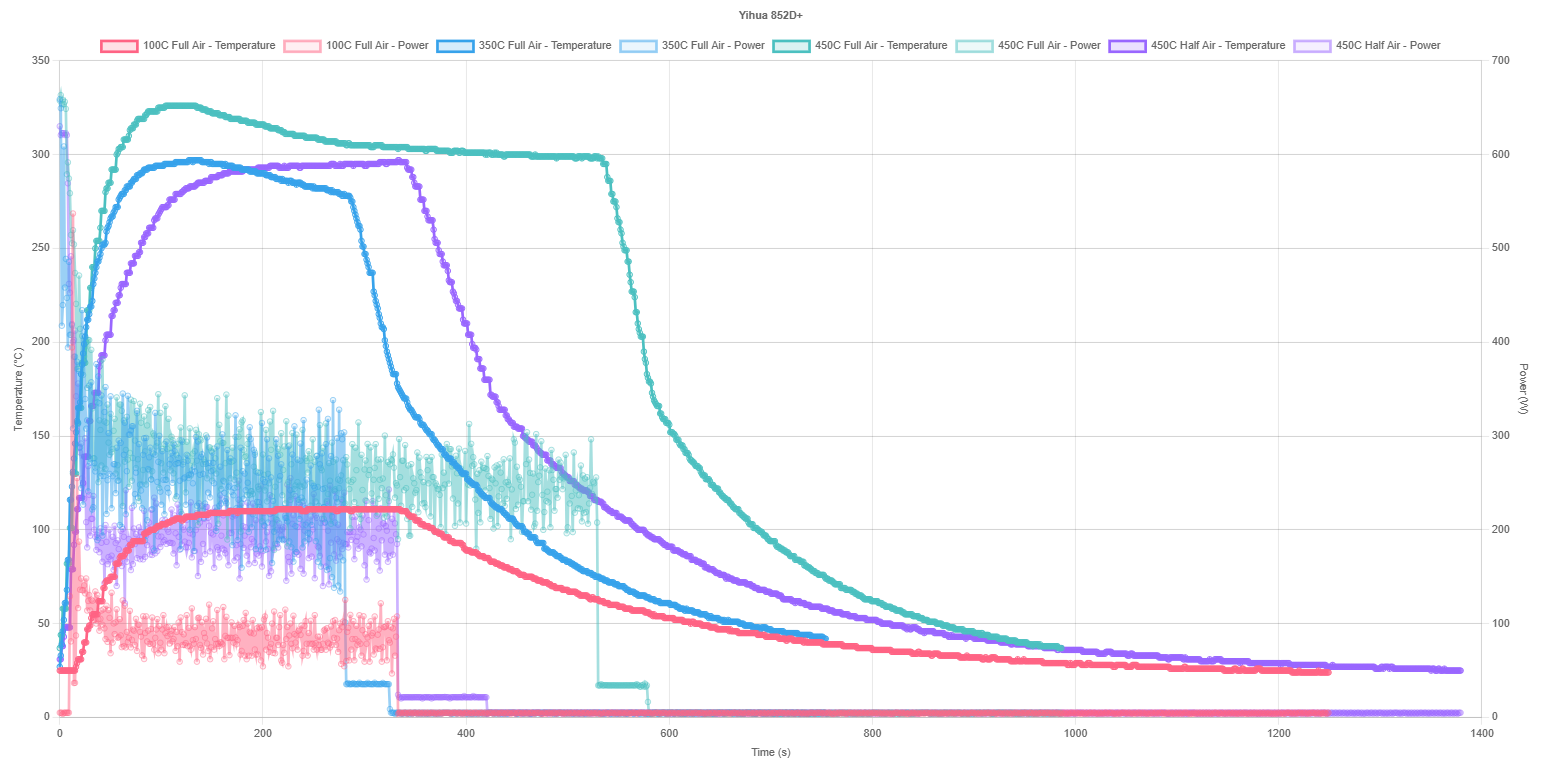
Measurements I took temperature and power measurements based on my post presented in a separate topic: OpenBeken configuration for hot air testing - MAX6675, temperature and power logging I wanted to test the actual temperature on the sensor at settings of 100 °C, 350 °C and 450 °C. In addition, I compared the half blow setting to the full blow setting.
https://openshwprojects.github.io/hotair/852Dplus.html 100 °C is overshooting a little. The other temperatures, as is usual in my tests, are much lower in practice at the probe. Less blowing in theory means more spot and slower heating, although my probe didn't show this as much.
Comparison with other stations:
https://openshwprojects.github.io/hotair/version11/450c.html https://openshwprojects.github.io/hotair/version11/350c.html Similarly, as with other stations, these temperatures from the display are not reached. These are only approached by the Sugon 8630 PRO and the Quick 861DW. Also the classic 858 slightly beats this station, although it could probably be better calibrated. It's also interesting to see how much power the station draws, at the initial stage it's almost 700 watts and then quickly drops and stays in the 200-300 watt range. Overall, it's not so bad, there's not the problem of, for example, the cheap and lightweight JCD, that you could heat and heat and the binder wouldn't melt anyway, because the temperature on the PCB was underestimated by a good 100 °C.
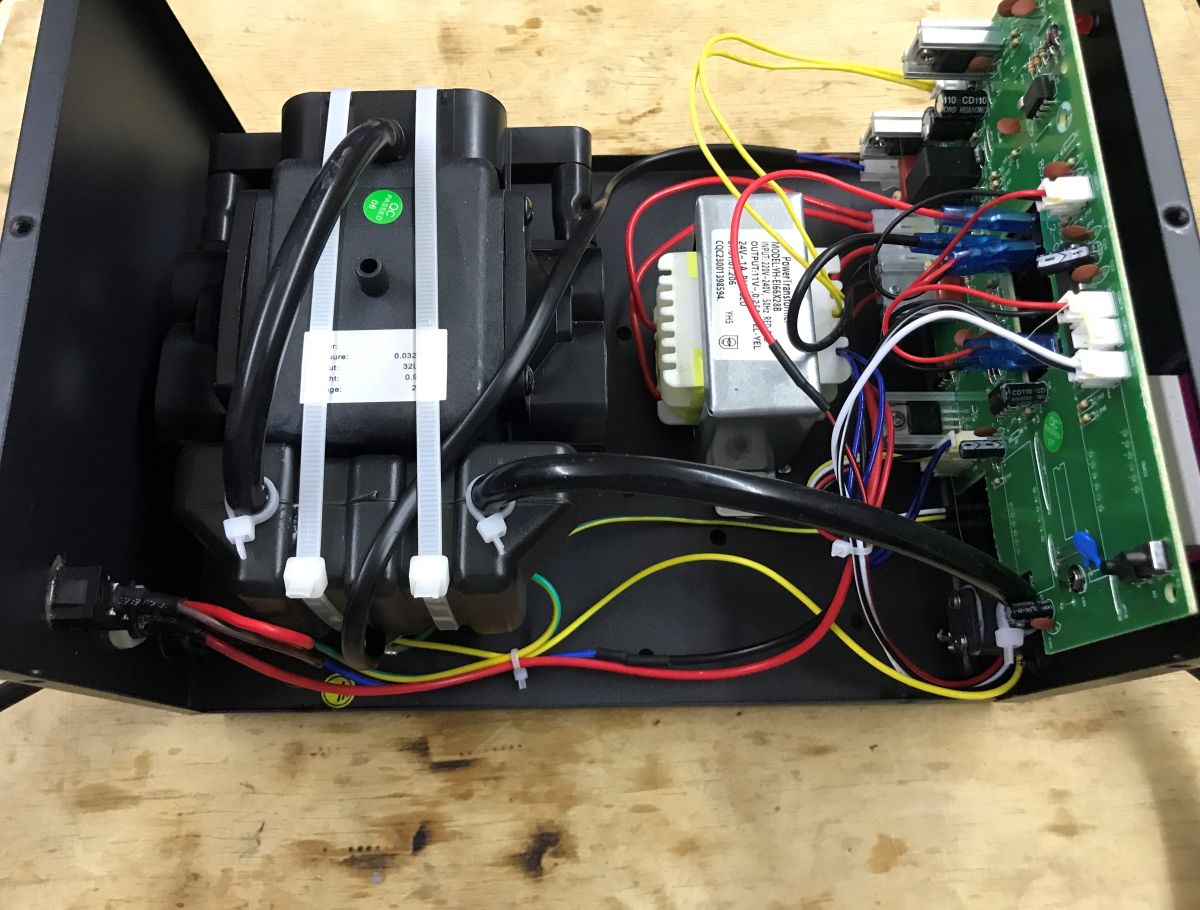
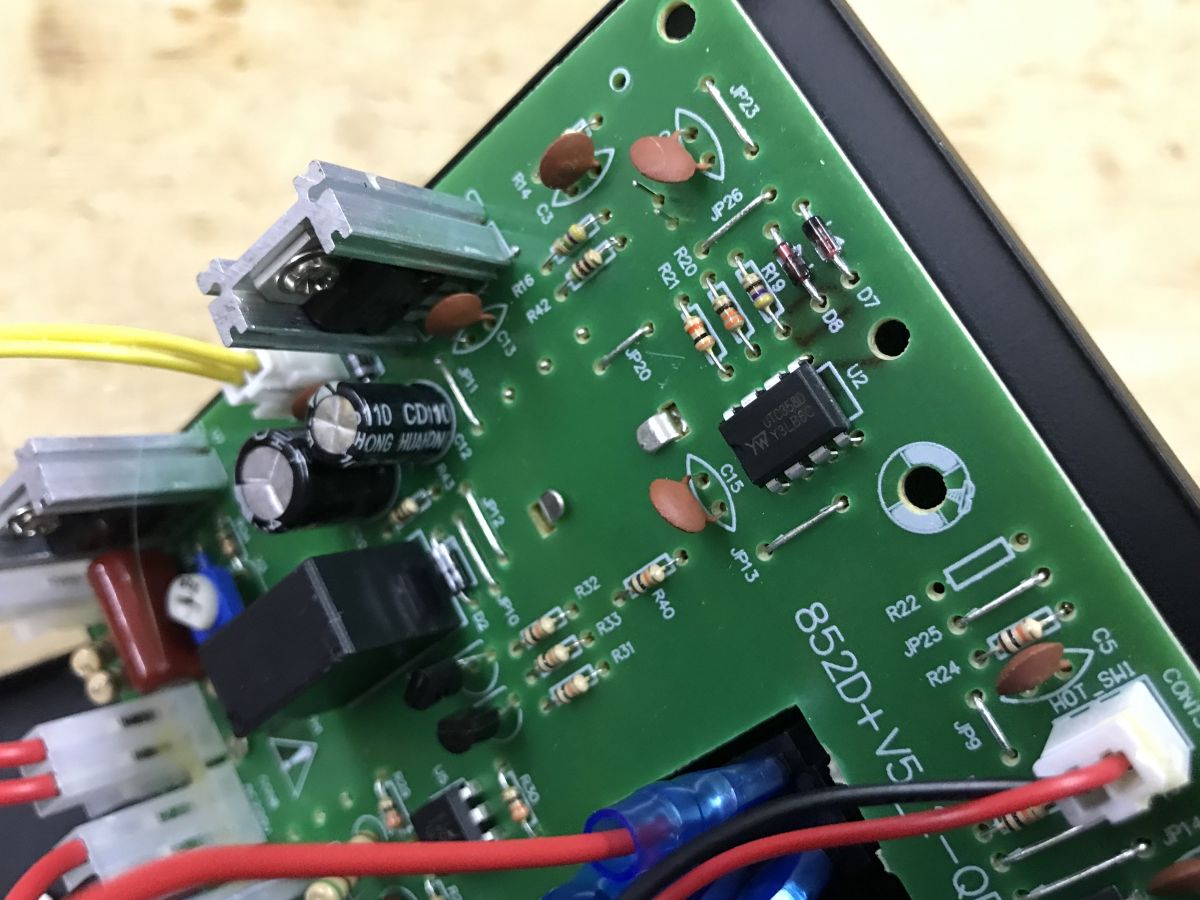
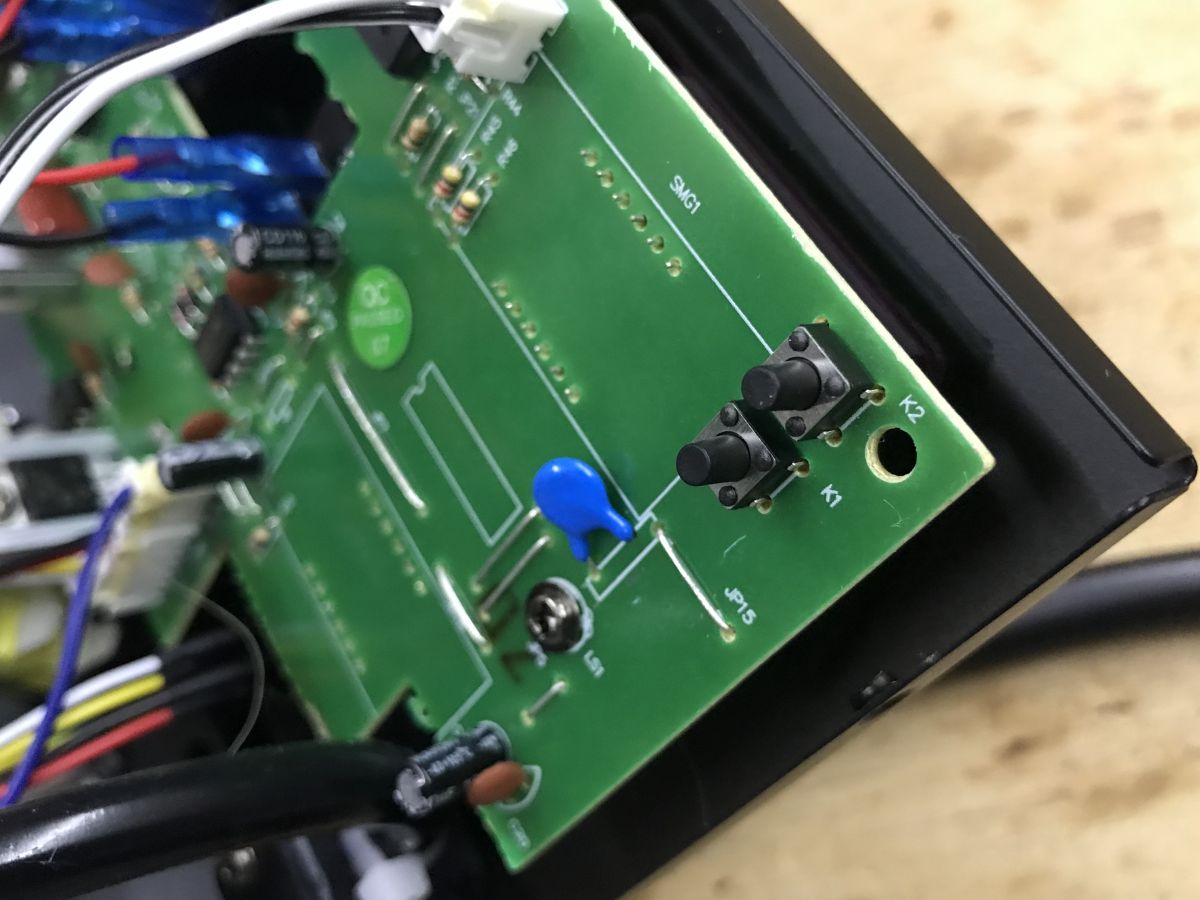
Interior of Yihua 852D+ Let's take a look inside. The first thing that catches the eye is the diaphragm pump attached with tritones. In addition, we see the classic massive mains transformer. All the electronics are one panel.
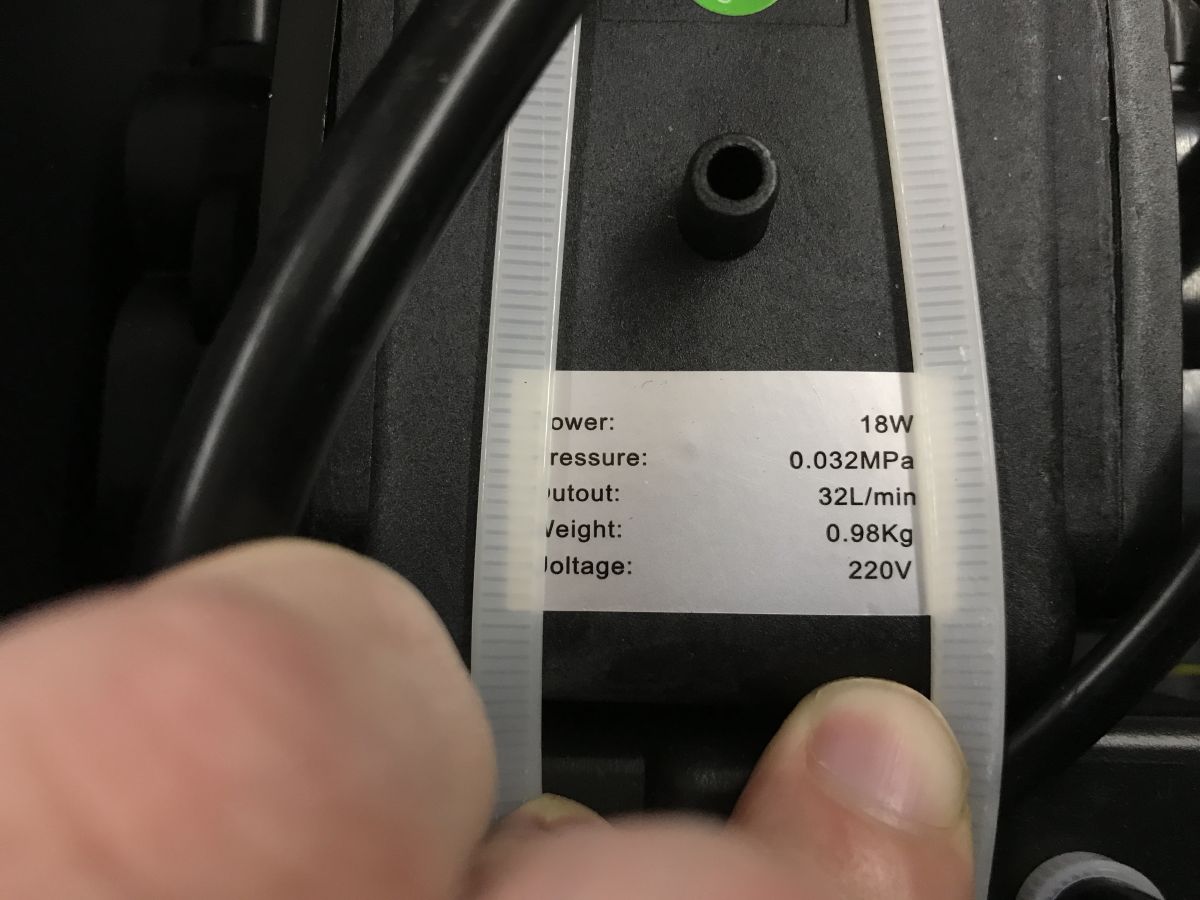
Diaphragm pump 18 W, 32L/min... yes, 32L/min, not 120.
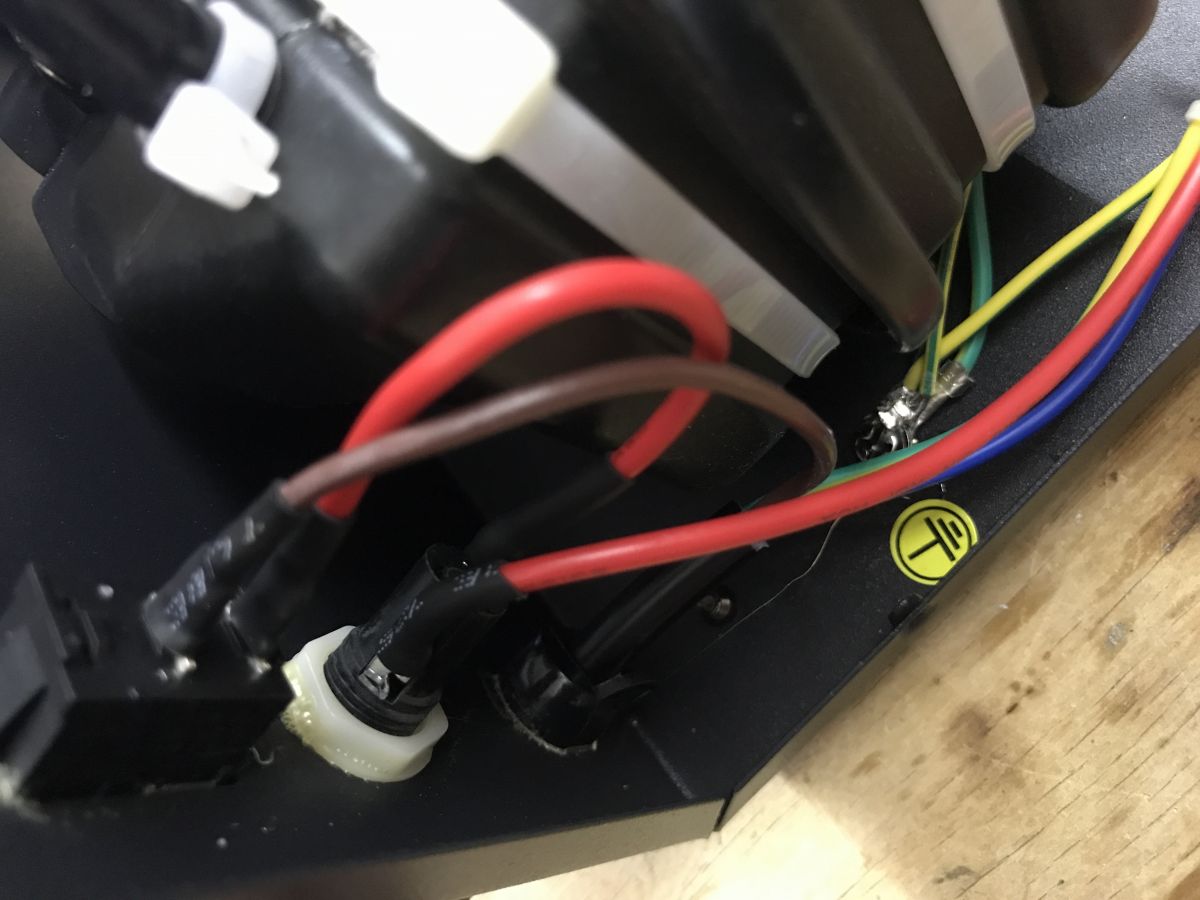
The housing is earthed:
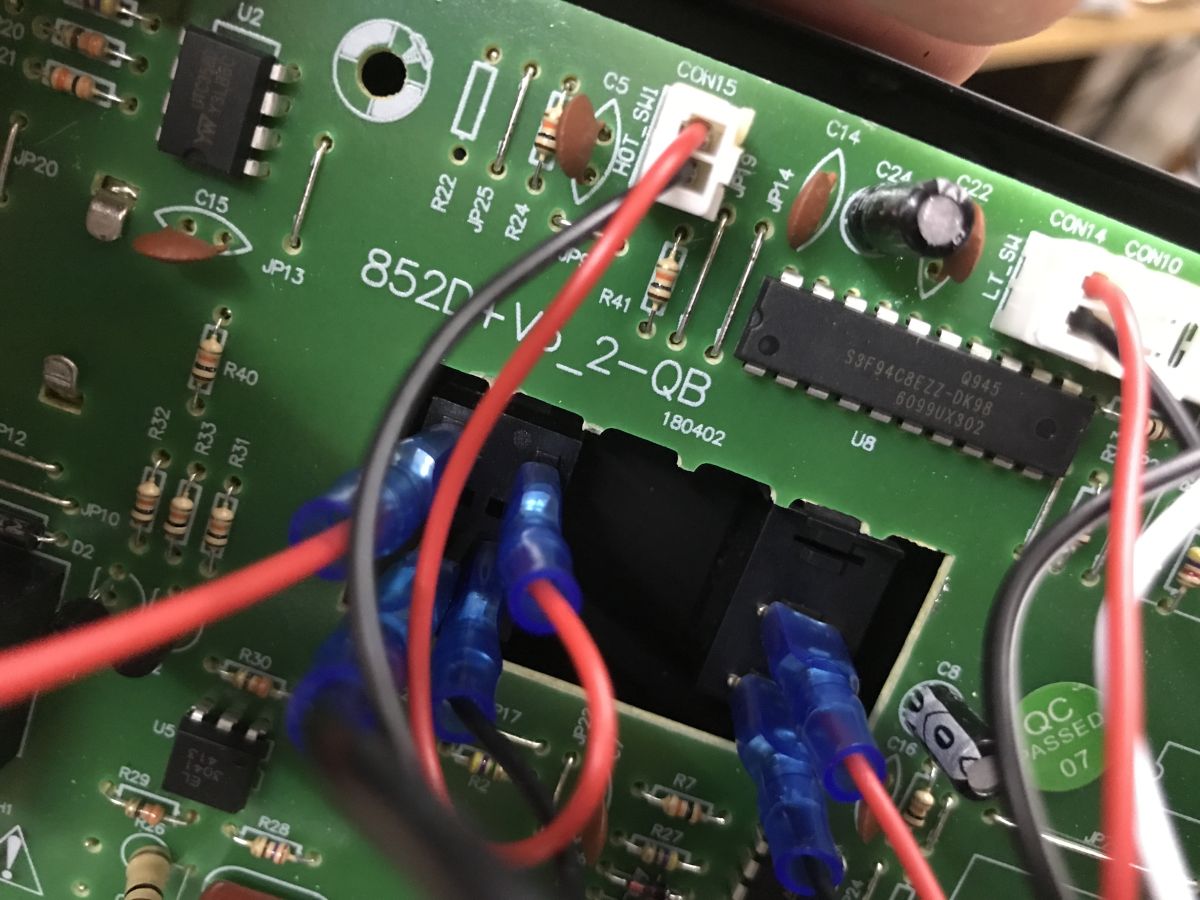
PCB designation: 852D+V5_2-QB , you can see the UTC358D operational amplifier on the PCB:
Could it be the calibration buttons?
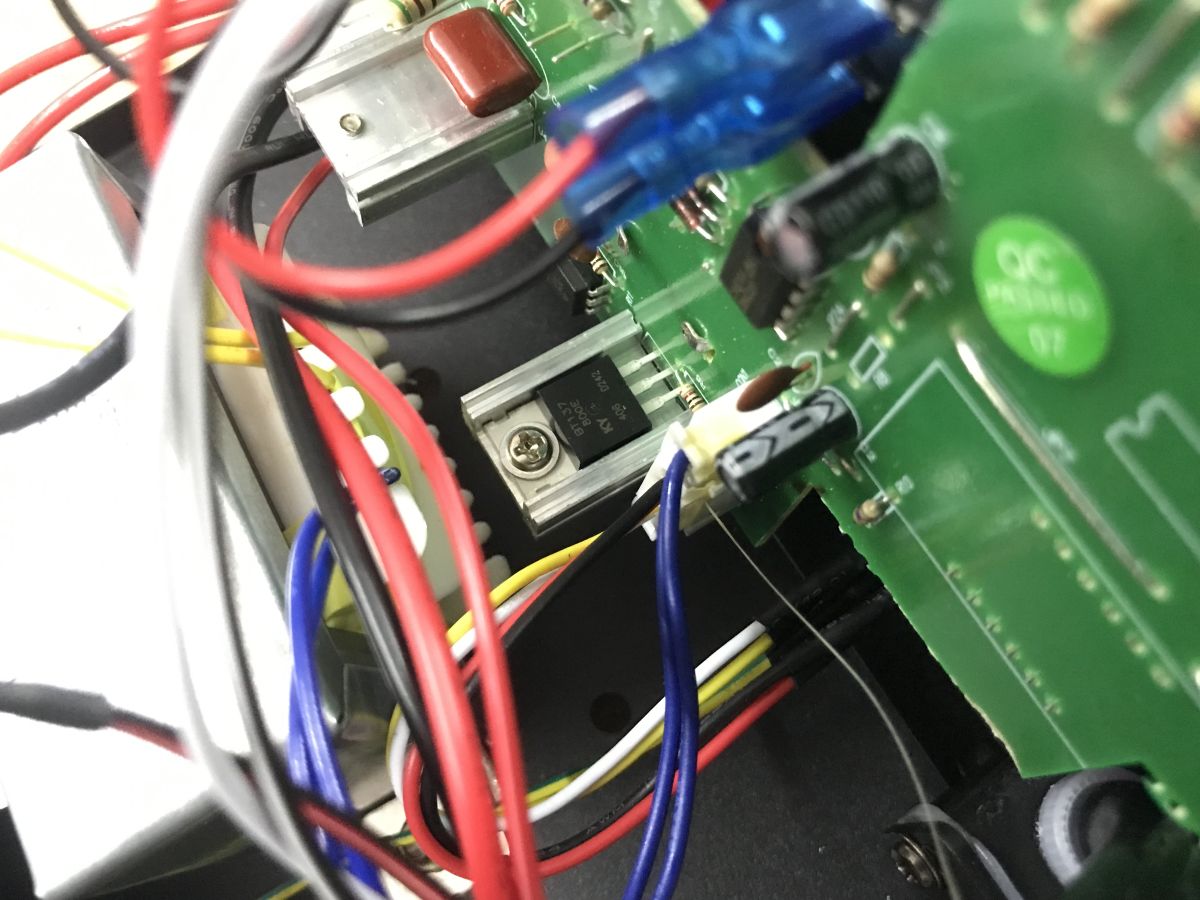
BT137 triac for power regulation:
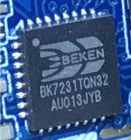
The station is based on the S3F94C8EZZ-DK98 8-bit microcontroller:
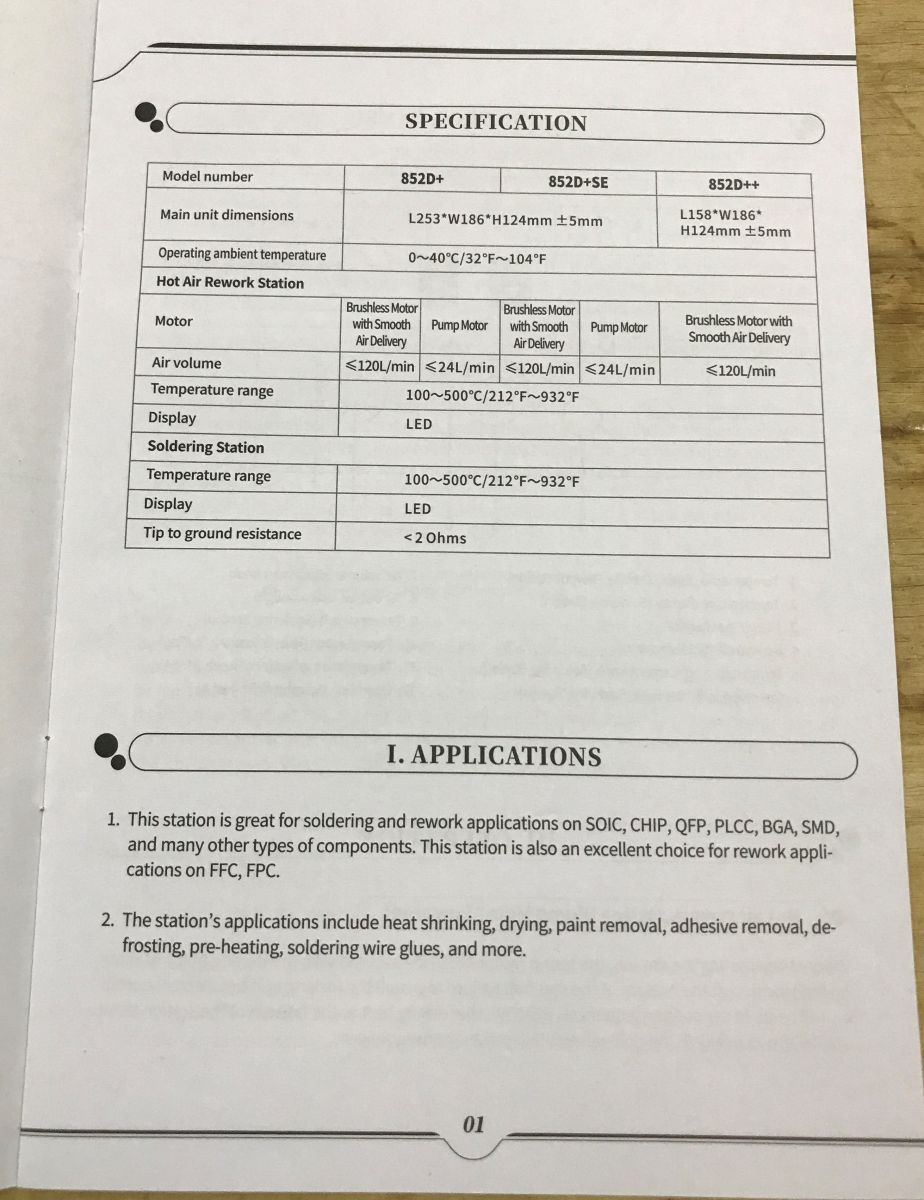
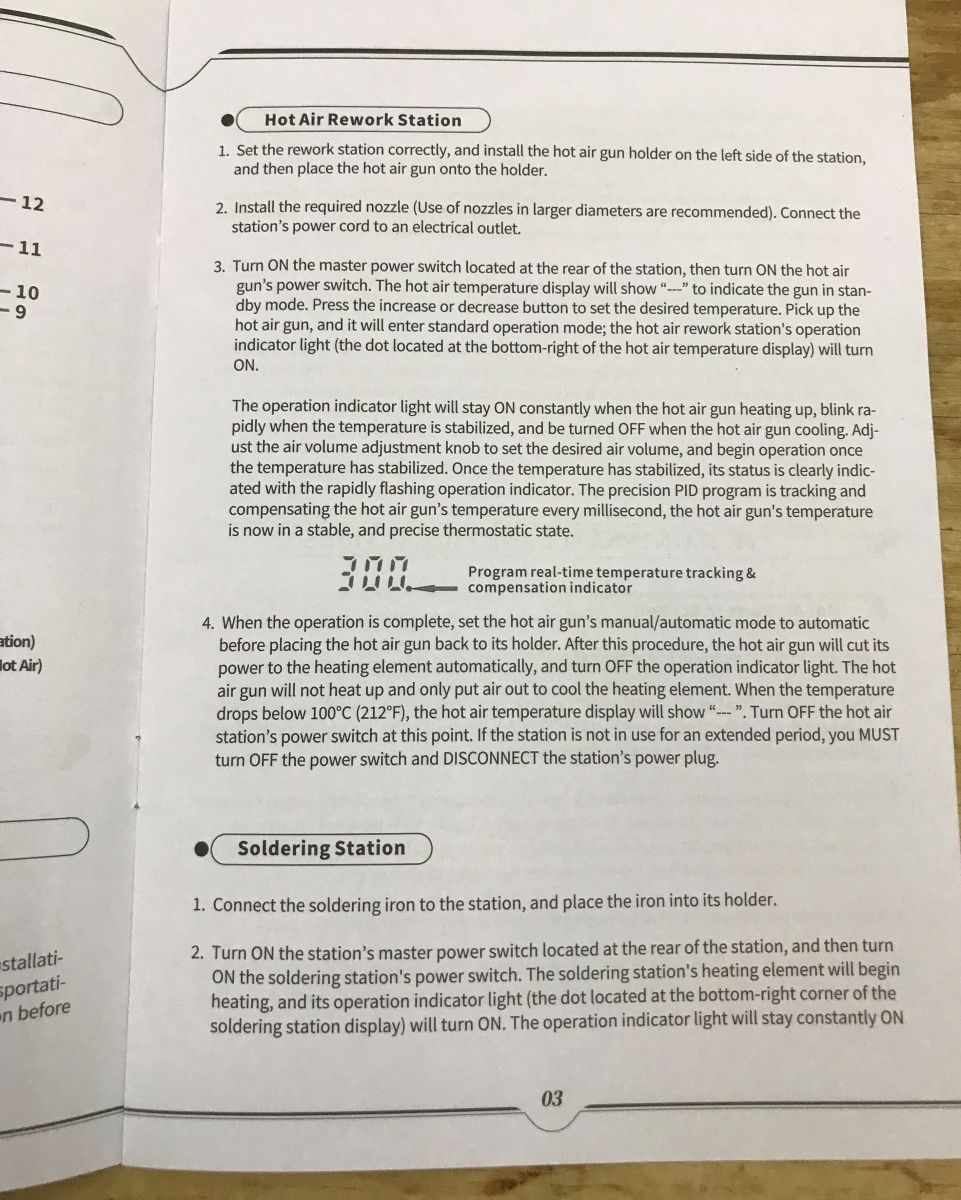
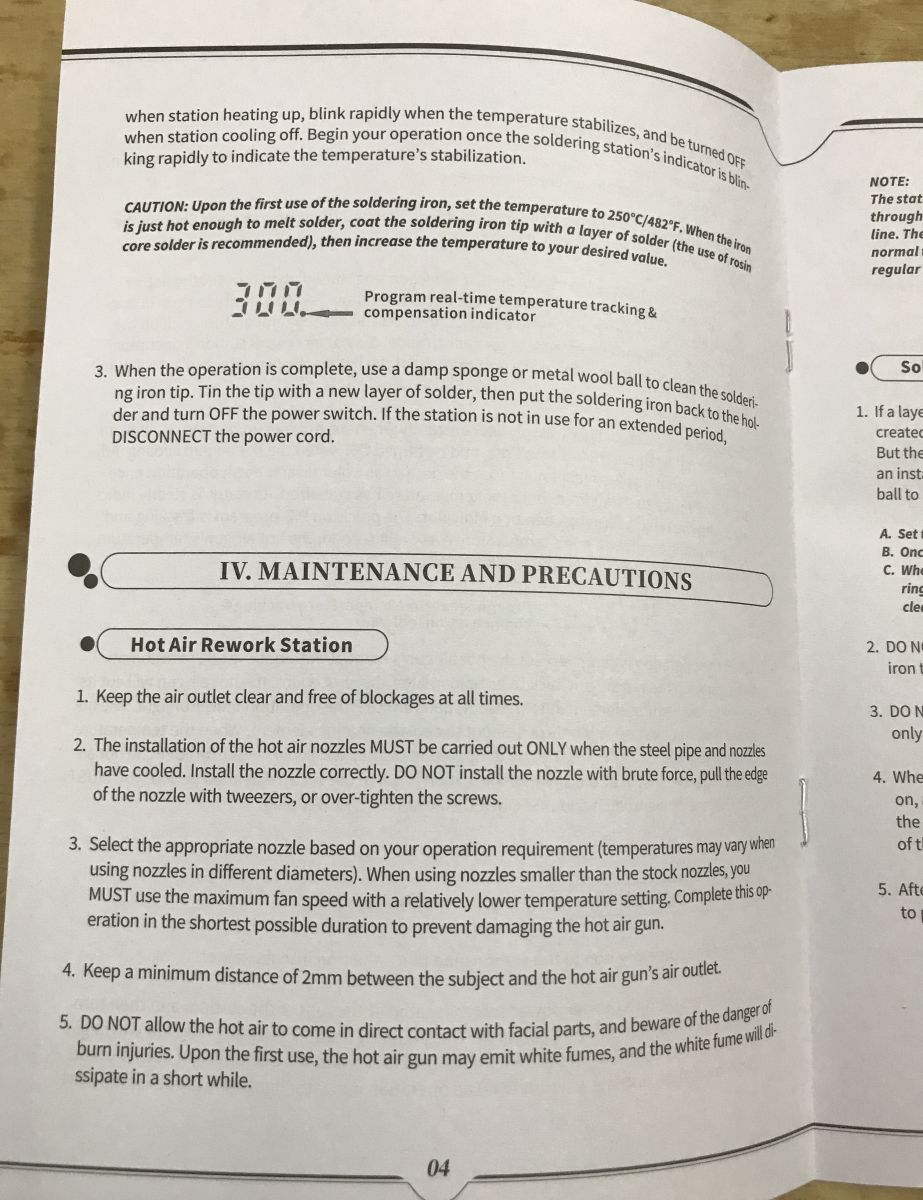
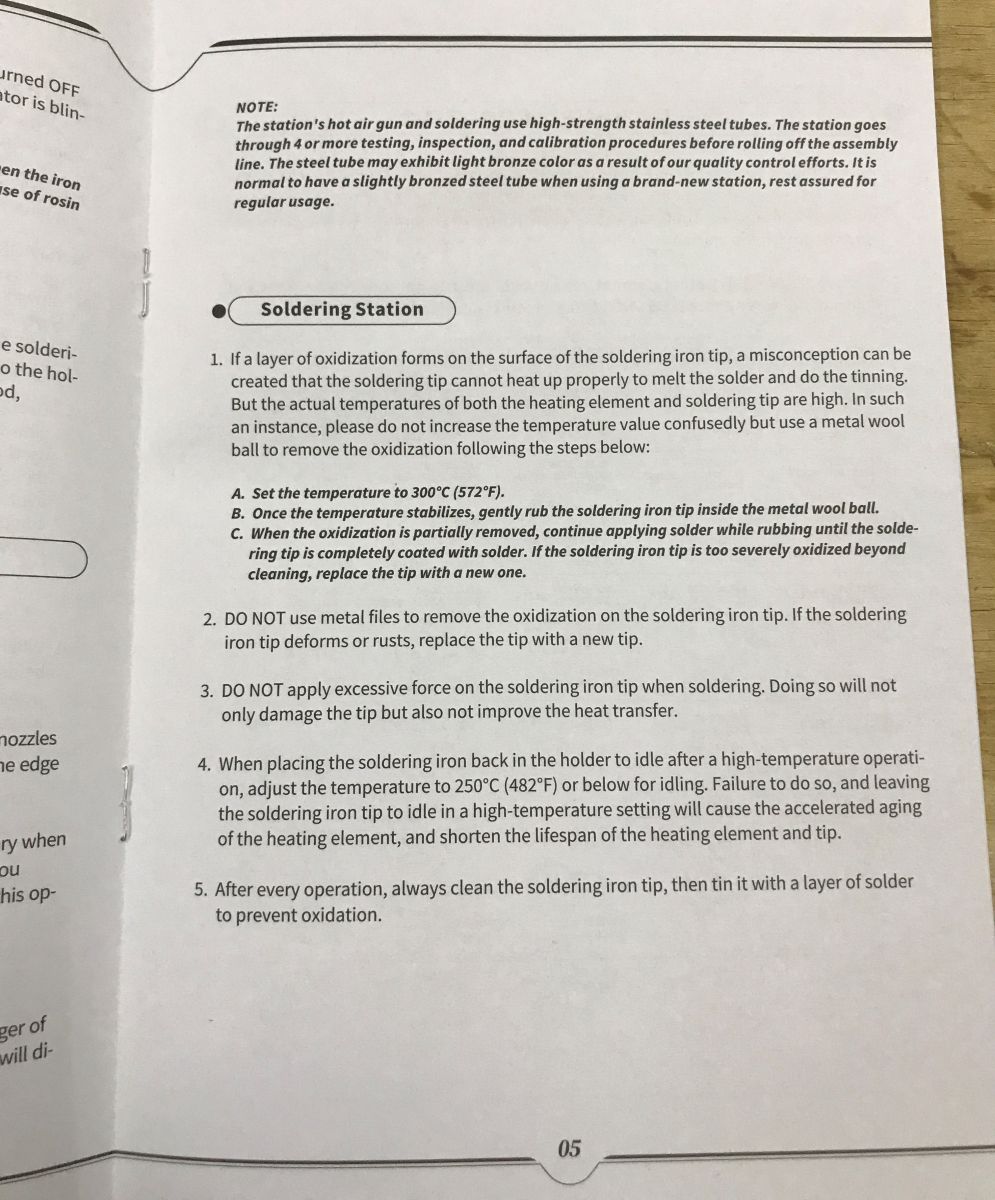
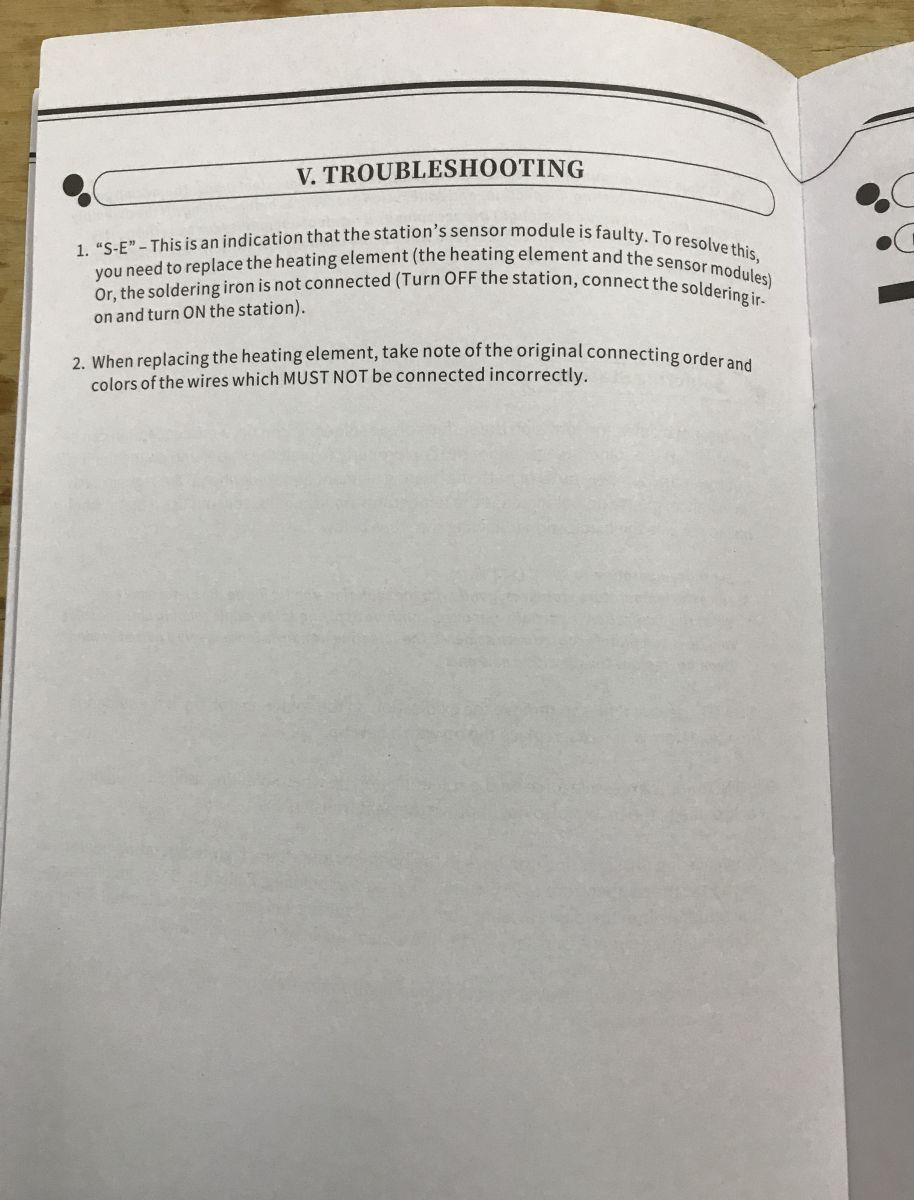
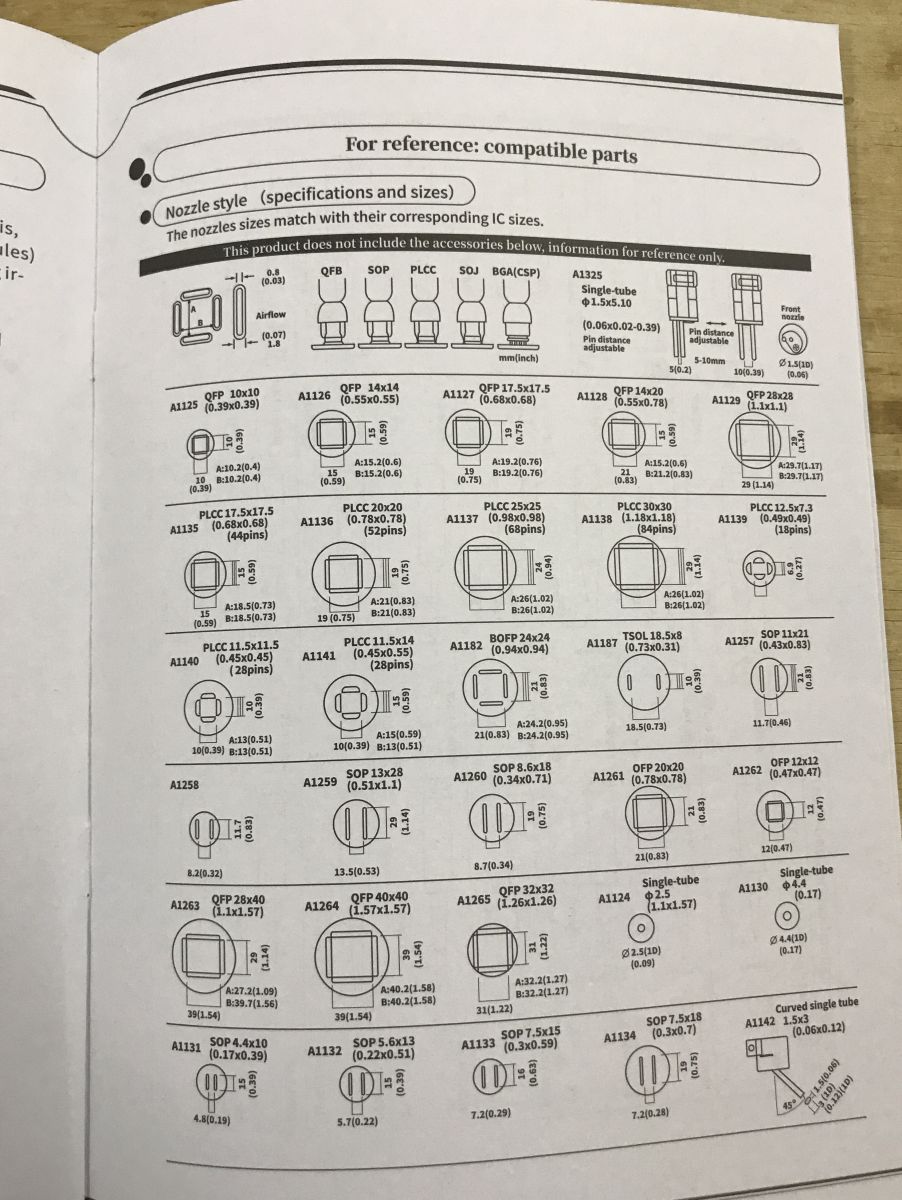
Instructions Clear photos of the English-language manual:
The instructions also explain the blowing power - this depends on the version, we have either up to 120L/min or 24L/min. What's more, both versions come on the same model of station - am I interpreting this correctly? My version is pump-based, so I have about up to 24L/min.
Summary I wasn't convinced by this 24L/min diaphragm pump though. I think I would prefer the cheapest classic 858 with a 120L/min fan.
Basically, I have two complaints here:
- this station is extremely noisy and spreads strong vibrations over the table, I have not encountered something like this in either the cheaper 858 or the very expensive Sugon and Quick
- the cob part of this station doesn't offer any revelations, it's no different for me from cheap portable soldering irons, and it only has 60 watts, if I were to buy a set, I would prefer something more powerful. I'm not even pushing for T12 arrowheads here, but the power has to be there.
The rest rather as expected, but so what, as the difficulties detected worsen my working comfort.
And what is your opinion? Is such a station a good choice? Diaphragm pump - is it worth it?
About Author
p.kaczmarek2 wrote 14795 posts with
rating 12944 , helped 659 times.
Been with us since 2014 year.
Does the 900 series mainsail have this "60 watts"?
The transformer is poor enough.... [Read more]
Nargo
17 Apr 2026 12:43
I have this station at home, I use it occasionally for lack of space.
I use the Hot Air instead of the tanning machine for heat shrink sleeves and SMD soldering.
The flask has a big drawback for me in... [Read more]
398216 Usunięty
17 Apr 2026 13:23
I apologise enormously, but I find the soldering iron test (first two videos) ... unreliable.
Why? And who uses an SMD soldering tip to solder such a large pad? The situation here is similar - a thin... [Read more]
James596
17 Apr 2026 14:32
I had the opportunity to use such a set.
In fact, it is a howler, it also telephones impossibly. For occasional use, OK.
With more intensive use, after a while the hot-air lost its properties, soldering... [Read more]
Xenlin93
18 Apr 2026 02:40
Nobody wants to appear. The only thing good about Yihua / WEP / Zhaoxin is the low price. These negative reviews don't come "out of thin air" because people have become so fixated on a cheap Chinese product....... [Read more]
398216 Usunięty
18 Apr 2026 14:24
One swallow does not make a spring....
And seriously - I understand your colleague's resentment of this soldering iron, but (bearing in mind the above quoted proverb) is this immediately indicative of... [Read more]
nostromo
18 Apr 2026 21:06
I have had an original Zhaoxin 852D station for 15 years. Other companies made counterfeits (Chinese counterfeit Chinese). It works perfectly. The only problem I've had is that the air adjustment potentiometer... [Read more]
Xenlin93
18 Apr 2026 23:06
Of course it doesn't but these are not isolated cases. We had 4 of them in the service and for pi times door 2 years of daily grind of 8-10h a day 6 cobs flew apart if my memory serves me right. The problem... [Read more]
398216 Usunięty
19 Apr 2026 07:56
This is acutely patented by Yihuia or similar flasks. As far as I know there have been several different designs of the flask itself - including the mount you write about. My 900'ka doesn't have a screw... [Read more]
Xenlin93
19 Apr 2026 12:10
Yihua's patent with these flasks is precisely this plastic nut being the weakest link. And most often they break right there. Maybe we didn't understand each other exactly what I mean, that's why I'm pointing... [Read more]
partyzancik
19 Apr 2026 21:33
After unscrewing the screws marked in red, the pump housing rose higher above the bottom of the housing ? Maybe it rubs when working and is noisy. The housing feet are typically rubber or plastic ? [Read more]
Mateusz_konstruktor
23 Apr 2026 19:49
On the other hand, an even earlier name was 'PT', with particular emphasis on the PT852 model. These are successive variants, differing in detail and having their origins many years back. Hardly anyone... [Read more]
filipcichowskidev
18 May 2026 20:43
Under such a board it is already better to take a stencil, spread paste and solder with hot or reflow oven. [Read more]
FAQ
TL;DR: At 24 L/min, the pump version works, but "everything shakes" and the 60 W 900M iron struggles on heavy copper. This FAQ helps PCB rework users decide whether the Yihua 852D+ is good value or whether a classic 858, Quick 861DW, or Sugon 8630 PRO is the better buy. [#21885538]
Why it matters: Buyers often compare combo stations by wattage alone, but this thread shows that airflow design, vibration, tip choice, and real probe temperature matter more in daily rework.
Model or type
Air system
Reported airflow
Noise/vibration
Thread verdict
Yihua 852D+ pump version
Diaphragm pump in base
24 L/min manual / pump marked 32 L/min
High
Usable, but uncomfortable
Classic 858
Fan in handle
120 L/min class
Lower
Preferred for comfort
Sugon 8630 PRO
Higher-end hot air
Closer to set temperatures
Not criticized
Better benchmark
Quick 861DW
Higher-end hot air
Closer to set temperatures
Not criticized
Better benchmark
Key insight: The main issue is not that the Yihua 852D+ cannot desolder parts. It can. The real drawback is that its diaphragm-pump design adds noise and table vibration while the 900M iron remains weak on large thermal masses.
Quick Facts
The tested station combines 700 W hot air with a 60 W 900M iron, and the hot air initially draws almost 700 W before settling near 200–300 W. [#21885538]
Real hot-air work from a cold PCB was possible: a coil came off in 50 s at 350°C, a small BGA in 40 s at 400°C, RAM in 1 min 20 s, and a CPU in under 3 min at 450°C. [#21885538]
The pump version is inconsistent in labeling: the manual mentions versions up to 24 L/min or 120 L/min, while the internal pump itself is marked 18 W, 32 L/min. [#21885538]
Setup matters before power-on: remove the transport screws from the bottom first, or the pump assembly stays mechanically constrained for shipping. [#21885538]
User reports add two practical limits: the iron cable feels too short, and the 900M iron will not comfortably solder a 2.5 mm² wire splice. [#21885664]
How does the Yihua 852D+ perform in real work compared with its advertised 700 W hot air and 60 W 900M soldering iron specs?
It performs acceptably on hot-air rework, but the 60 W 900M iron is the weak half. The hot air removed a coil in 50 seconds at 350°C, a small BGA in 40 seconds at 400°C, and a CPU in under 3 minutes at 450°C. The iron handled small parts, but it struggled badly on large motherboard pads and heavy copper areas. Real usability was therefore mixed, despite the 700 W and 60 W headline specs. [#21885538]
Why does the Yihua 852D+ hot air station cause so much noise and table vibration when the diaphragm pump is running?
It is noisy and vibrates because the airflow comes from a diaphragm pump mounted inside the base, not from a small fan in the handle. During the 350°C tests, the reviewer noted strong noise and table shake and said, "everything shakes." Another user also described the station as a howler that vibrates heavily. That points to the pump mechanism and its mounting as the main comfort problem. [#21885538]
What should you do with the transport screws on the bottom of the Yihua 852D+ before first use?
Remove the transport screws from the bottom before first use. The reviewer marked them in red and explicitly said to unscrew them before starting. Those screws lock the unit for shipping, so leaving them in place can keep the internal assembly constrained. This is the first setup step before any hot-air or iron test. [#21885538]
How accurate is the Yihua 852D+ temperature display at 100°C, 350°C, and 450°C in real measurements at the probe?
The display reads higher than the probe temperature at 350°C and 450°C, while 100°C overshoots slightly. The reviewer measured the station externally and said the higher setpoints were, as usual in these tests, much lower at the probe. He also noted that 100°C overshot a little. In short, the displayed values were not fully reached in real probe measurements. [#21885538]
What airflow does the pump version of the Yihua 852D+ actually provide, and why do some manuals mention 24 L/min while others mention 120 L/min?
The tested pump version should be treated as a 24 L/min-class station, even though the internal pump was marked 32 L/min. The manual shown in the thread describes two versions under the same model family: one up to 120 L/min and one up to 24 L/min. The reviewer concluded that his pump-based version was the lower-airflow one. That explains the conflicting numbers in listings and manuals. [#21885538]
Why did the 900M iron in the Yihua 852D+ struggle with large ground pads and heavy copper areas on a motherboard?
It struggled because large ground pads and thick copper planes pull heat away faster than this iron could replenish it. In the test, a wire soldered to a large motherboard pad needed over 1 minute at 400°C and similarly long at 500°C. The reviewer also could not clean BGA-area pads on a massive board. This is a classic thermal-mass limit, not a small-part soldering limit. [#21885538]
How much difference does the soldering tip shape make on a 900M iron when soldering large pads or thick wires?
Tip shape makes a major difference on a 900M iron, especially on large pads. A forum reply called the original iron test unreliable because it used a thin SMD-style tip on a large pad, which reduces heat transfer. The same reply said a wider, more solid tip gives much better results and reported years of acceptable use from 900M irons, even at about 18 V instead of 24 V. [#21885685]
What is a diaphragm pump in a hot air soldering station, and how is it different from a handle-mounted fan design?
"Diaphragm pump" is an air pump that moves air with a flexing membrane, sits in the station base, and sends airflow through a hose to the handle. In this thread, that design caused much more noise and vibration than fan-in-handle stations. The reviewer preferred even a cheap classic 858 with a 120 L/min fan because it felt more comfortable in normal PCB rework. [#21885538]
What is a 900M soldering iron tip system, and how does it compare with T12 tips for power transfer and ease of tip changes?
"900M tip system" is a replaceable tip family for basic soldering irons that uses separate tips and heater geometry, which makes tip choice important for heat transfer. In the thread, users said the 900M iron can work well with the right tip, but changing tips is less straightforward than on T12 systems. The reviewer still wanted more power than this 60 W implementation offered. [#21885685]
Yihua 852D+ vs classic 858 hot air station: which is better for PCB rework, noise, airflow, and everyday comfort?
The classic 858 came out ahead for comfort, noise, and perceived airflow. The reviewer said he would prefer the cheapest classic 858 with a 120 L/min fan over this 24 L/min diaphragm-pump Yihua. He specifically criticized the Yihua for extreme noise and strong table vibration. For everyday PCB rework, the thread favors the simpler 858 unless you specifically want the combo format. [#21885538]
What are the common failure points of the Yihua 852D+ diaphragm pump, including cracked diaphragms and loss of airflow over time?
The main reported failure point is the diaphragm itself, which can crack and stop airflow. One experienced reply described a design fault in how the drive transfers motion to the diaphragms and said the failure tends to appear at the worst moment. Another user reported that, with heavier use, the hot air gradually lost effectiveness and soldering became harder. Spare diaphragms are available, but the thread suggests the underlying weakness remains. [#21885685]
How can you calibrate or check the real temperature of a Yihua 852D+ using an external probe such as a MAX6675-based setup?
You can verify it with an external thermocouple setup and compare probe readings to the station display.
Set the station to fixed points such as 100°C, 350°C, and 450°C.
Measure the real probe temperature at half and full airflow.
Compare the measured values with the display and note the offset.
The reviewer used a MAX6675-based logging setup and found that the displayed higher temperatures were lower in real probe measurements. [#21885538]
What components are inside the Yihua 852D+, including the transformer, BT137 triac, UTC358D, and S3F94C8EZZ-DK98 microcontroller?
Inside, the station uses a diaphragm pump, a large mains transformer, a single main PCB, a BT137 triac, a UTC358D operational amplifier, and an S3F94C8EZZ-DK98 8-bit microcontroller. The pump itself was marked 18 W and 32 L/min. The reviewer also confirmed that the metal housing was earthed. Those details show a conventional mains-powered analog-plus-MCU control layout. [#21885538]
How well does the Yihua 852D+ hot air handle tasks like removing coils, RAM chips, BGAs, CPUs, and HDMI ports from a cold PCB?
It handles those jobs adequately, but not quickly by higher-end standards. From a cold PCB, it removed a coil in 50 seconds at 350°C, a small chip in 50 seconds, a tiny BGA in 40 seconds at 400°C, RAM in 1 minute 20 seconds, a CPU in under 3 minutes at 450°C, and an HDMI port in over a minute. That is workable performance for occasional rework. [#21885538]
What is the best alternative to the Yihua 852D+ if you want less vibration and stronger hot air performance, such as a Quick 861DW, Sugon 8630 PRO, or even a cheap 858?
If you want less vibration on a budget, the thread points first to a classic 858. If you want stronger performance and temperatures closer to the display, the reviewer named the Sugon 8630 PRO and Quick 861DW as better references. He explicitly said the classic 858 slightly beat the Yihua and that those higher-end models came closer to real set temperatures. The best choice depends on whether price or performance matters more. [#21885538]
AI summary based on the discussion. May contain errors.







Comments
Does the 900 series mainsail have this "60 watts"? The transformer is poor enough.... [Read more]
I have this station at home, I use it occasionally for lack of space. I use the Hot Air instead of the tanning machine for heat shrink sleeves and SMD soldering. The flask has a big drawback for me in... [Read more]
I apologise enormously, but I find the soldering iron test (first two videos) ... unreliable. Why? And who uses an SMD soldering tip to solder such a large pad? The situation here is similar - a thin... [Read more]
I had the opportunity to use such a set. In fact, it is a howler, it also telephones impossibly. For occasional use, OK. With more intensive use, after a while the hot-air lost its properties, soldering... [Read more]
Nobody wants to appear. The only thing good about Yihua / WEP / Zhaoxin is the low price. These negative reviews don't come "out of thin air" because people have become so fixated on a cheap Chinese product....... [Read more]
One swallow does not make a spring.... And seriously - I understand your colleague's resentment of this soldering iron, but (bearing in mind the above quoted proverb) is this immediately indicative of... [Read more]
I have had an original Zhaoxin 852D station for 15 years. Other companies made counterfeits (Chinese counterfeit Chinese). It works perfectly. The only problem I've had is that the air adjustment potentiometer... [Read more]
Of course it doesn't but these are not isolated cases. We had 4 of them in the service and for pi times door 2 years of daily grind of 8-10h a day 6 cobs flew apart if my memory serves me right. The problem... [Read more]
This is acutely patented by Yihuia or similar flasks. As far as I know there have been several different designs of the flask itself - including the mount you write about. My 900'ka doesn't have a screw... [Read more]
Yihua's patent with these flasks is precisely this plastic nut being the weakest link. And most often they break right there. Maybe we didn't understand each other exactly what I mean, that's why I'm pointing... [Read more]
After unscrewing the screws marked in red, the pump housing rose higher above the bottom of the housing ? Maybe it rubs when working and is noisy. The housing feet are typically rubber or plastic ? [Read more]
On the other hand, an even earlier name was 'PT', with particular emphasis on the PT852 model. These are successive variants, differing in detail and having their origins many years back. Hardly anyone... [Read more]
Under such a board it is already better to take a stencil, spread paste and solder with hot or reflow oven. [Read more]