Three 10 Ah powerbanks—JR-L005, JR-PBF17, and JR-PBF19—are compared for a lightweight short-trip choice.
The test checks rated capacity, QC/PD support, built-in cables, charging behavior, heat, and whether USB-C works bidirectionally.
JR-L005 costs £50, supports only 5 V and no QC, while JR-PBF17 and JR-PBF19 cost about £80 and deliver 22.5 W.
All three delivered about 7.4 Ah at 5 V, but series charging—powerbank and phone charging together—made QC fail or reset the unit.
AI summary based on the discussion. May contain errors.
Today we will look at choosing a lightweight and handy powerbank for a short trip. All the models tested have the same capacity - 10 Ah - but differ in other features such as maximum charging power, the number and type of connectors available or the presence of built-in cables. We will also compare their prices. Finally, I will check the actual capacity of each device to see if it corresponds to the value declared by the manufacturer.
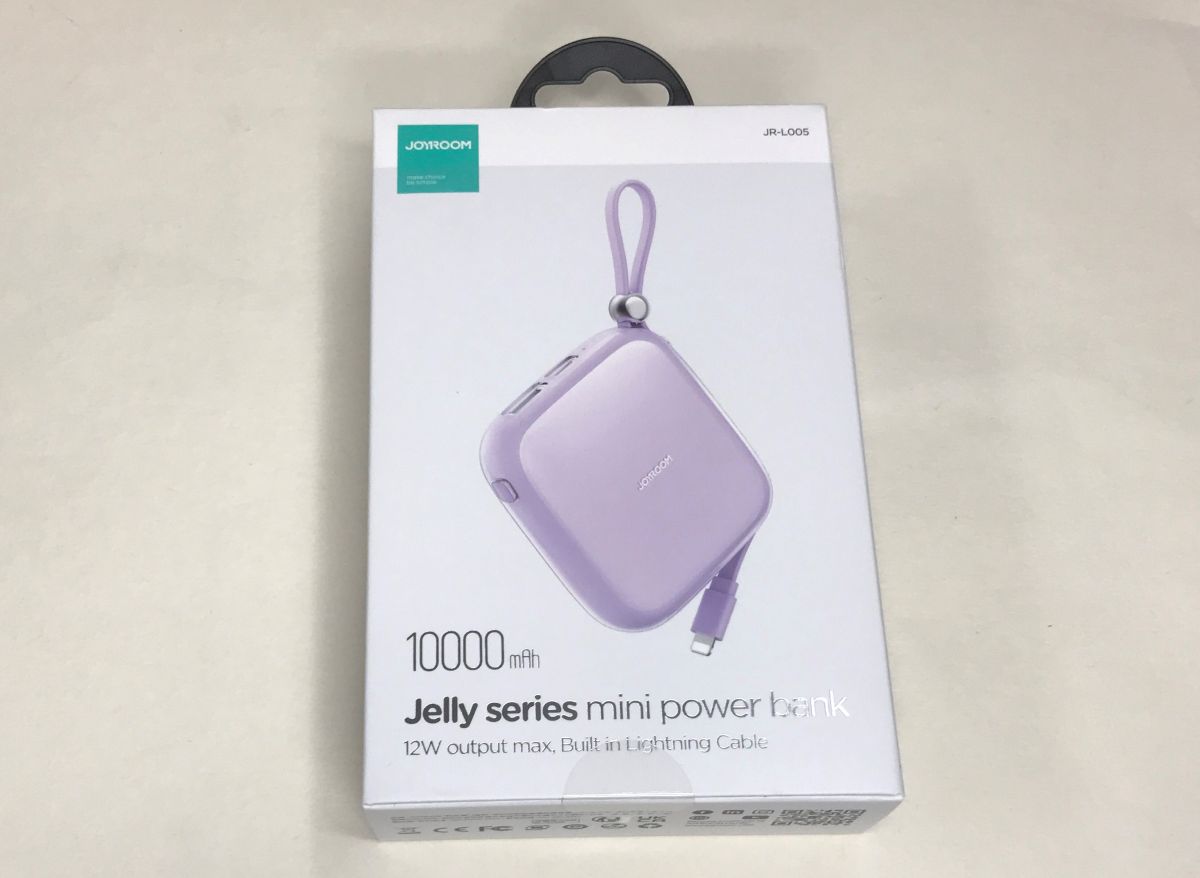
Let's start with the JR-L005 12W from the Jelly mini series, distinguished by its rather feminine design and the aesthetically concealed Lightning cable, suggesting use with Apple equipment. All for just £50.
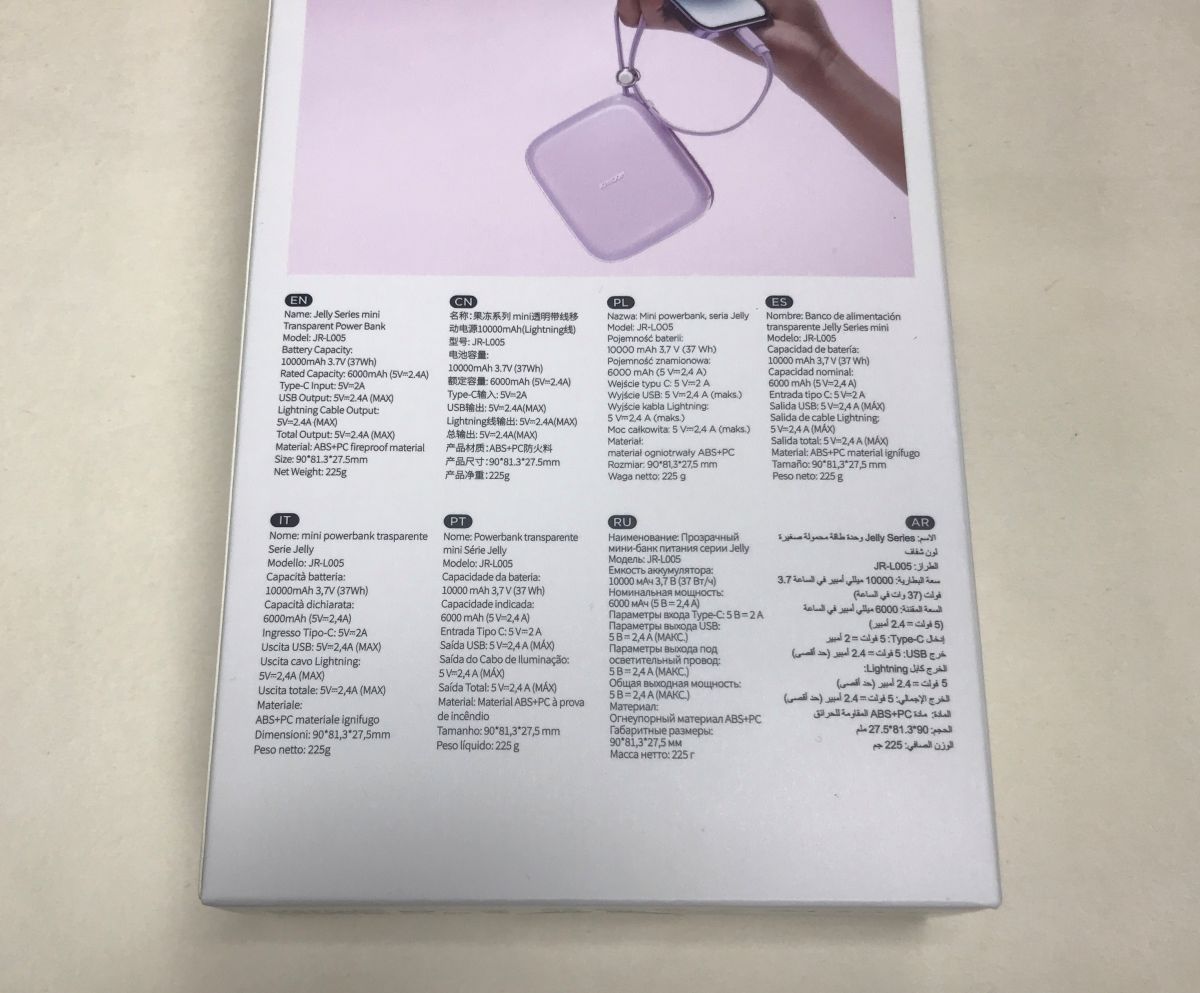
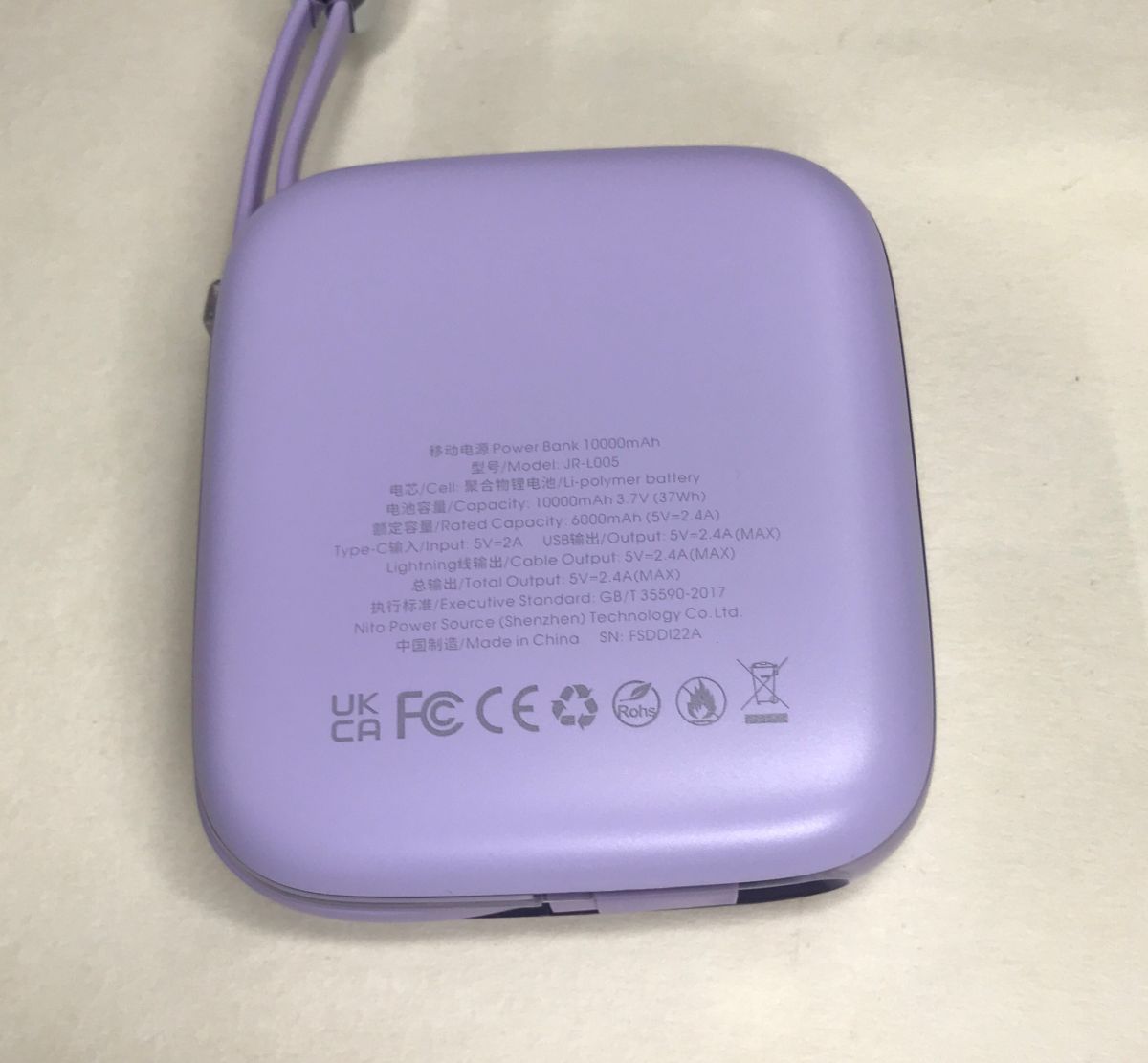
On the back of the packaging, you can read that the capacity is 10 Ah at 3.7 V (on cells), so expect 37 Wh of energy there. At 5 V output, with a load of 2.4 A, it will only be 6 Ah. The powerbank only supports 5 V, there is no QC. It weighs 225 grams.
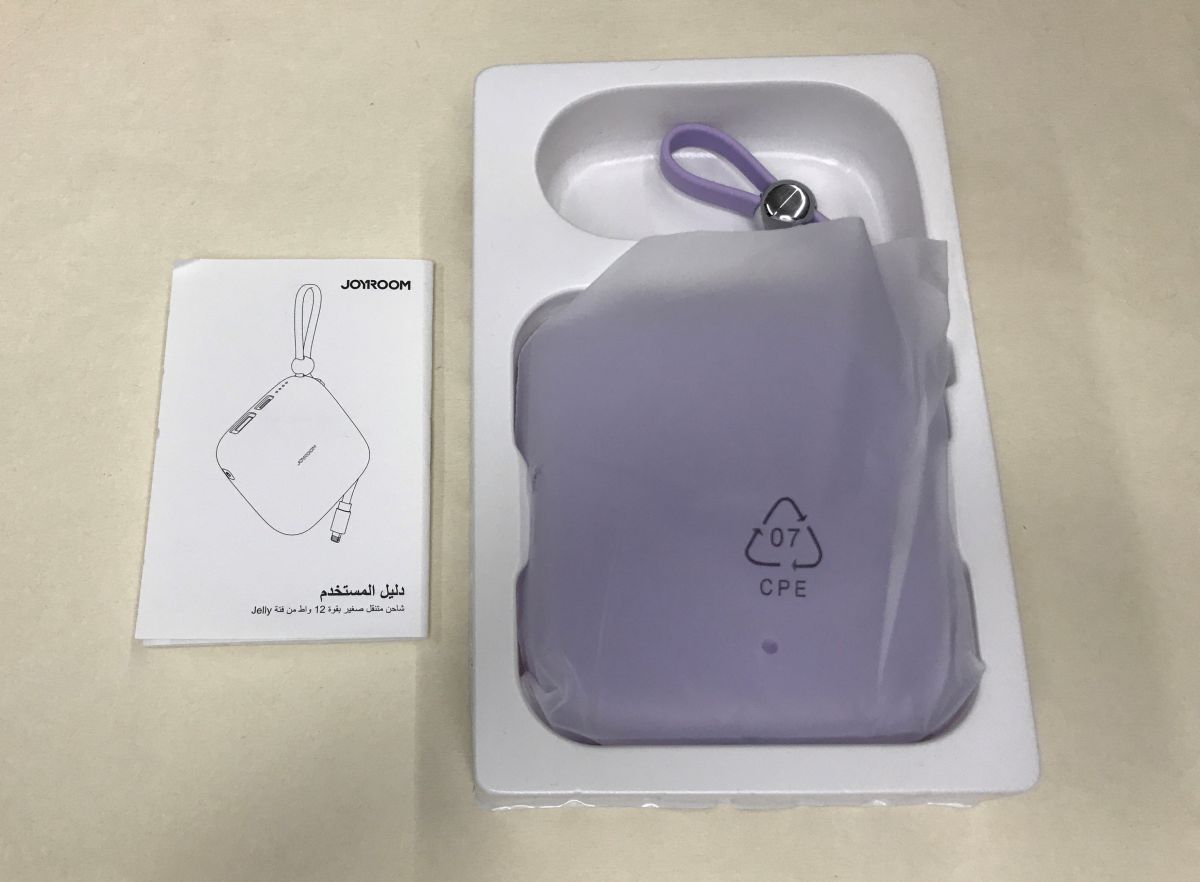
Nothing else is included, the cable is built into the powerbank.
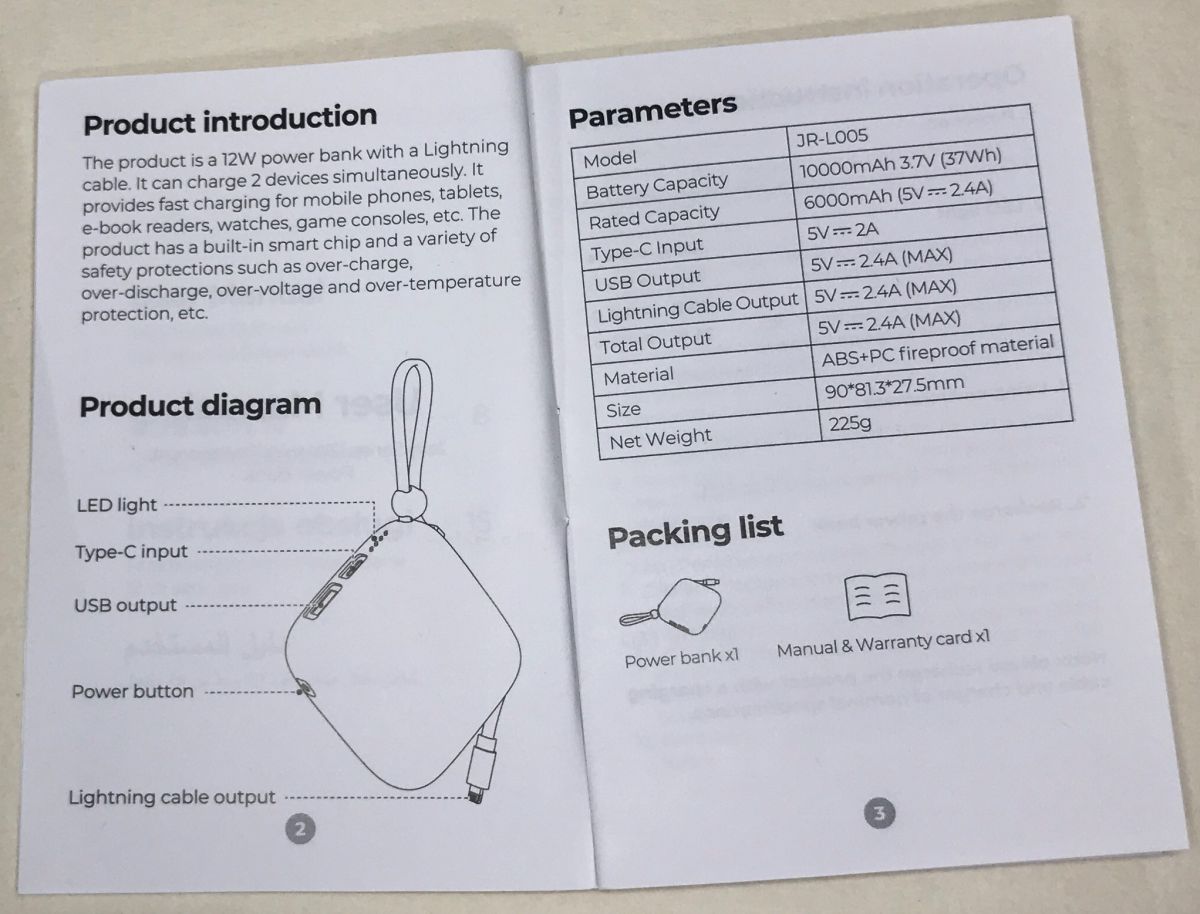
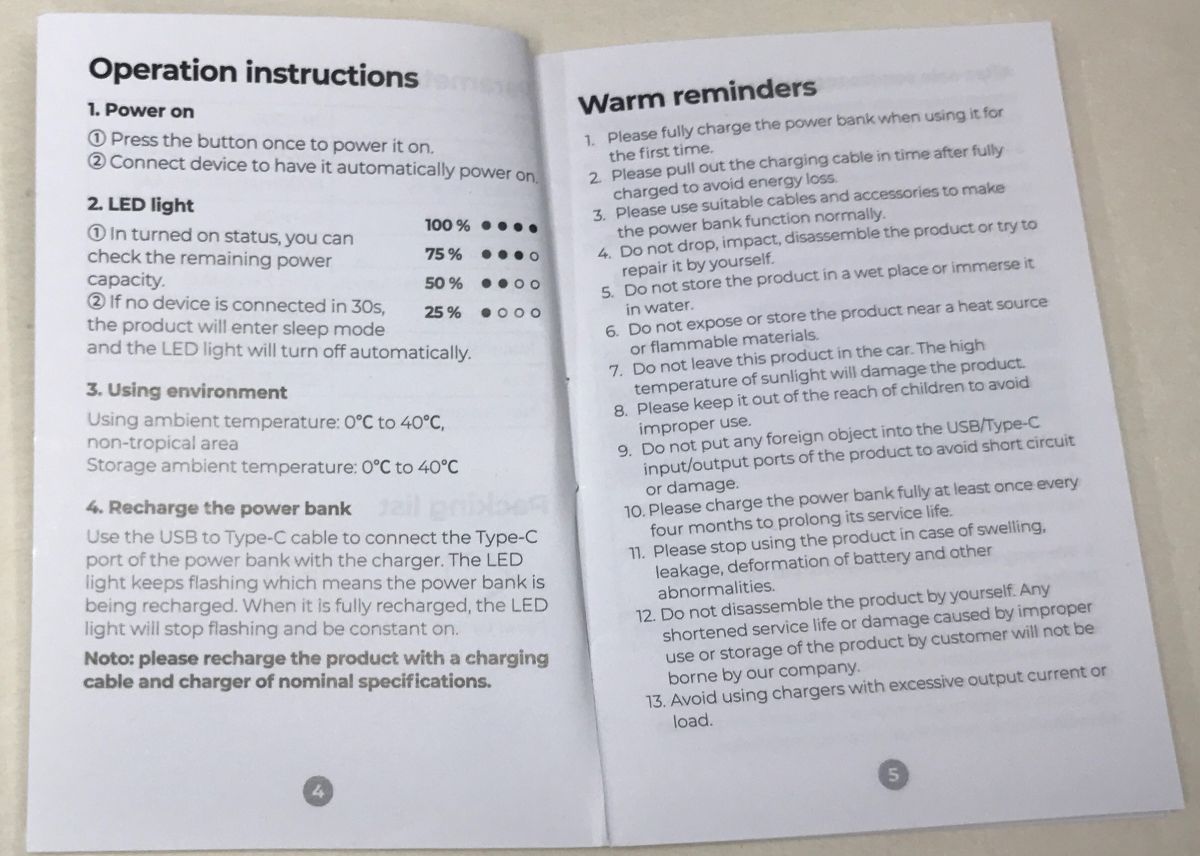
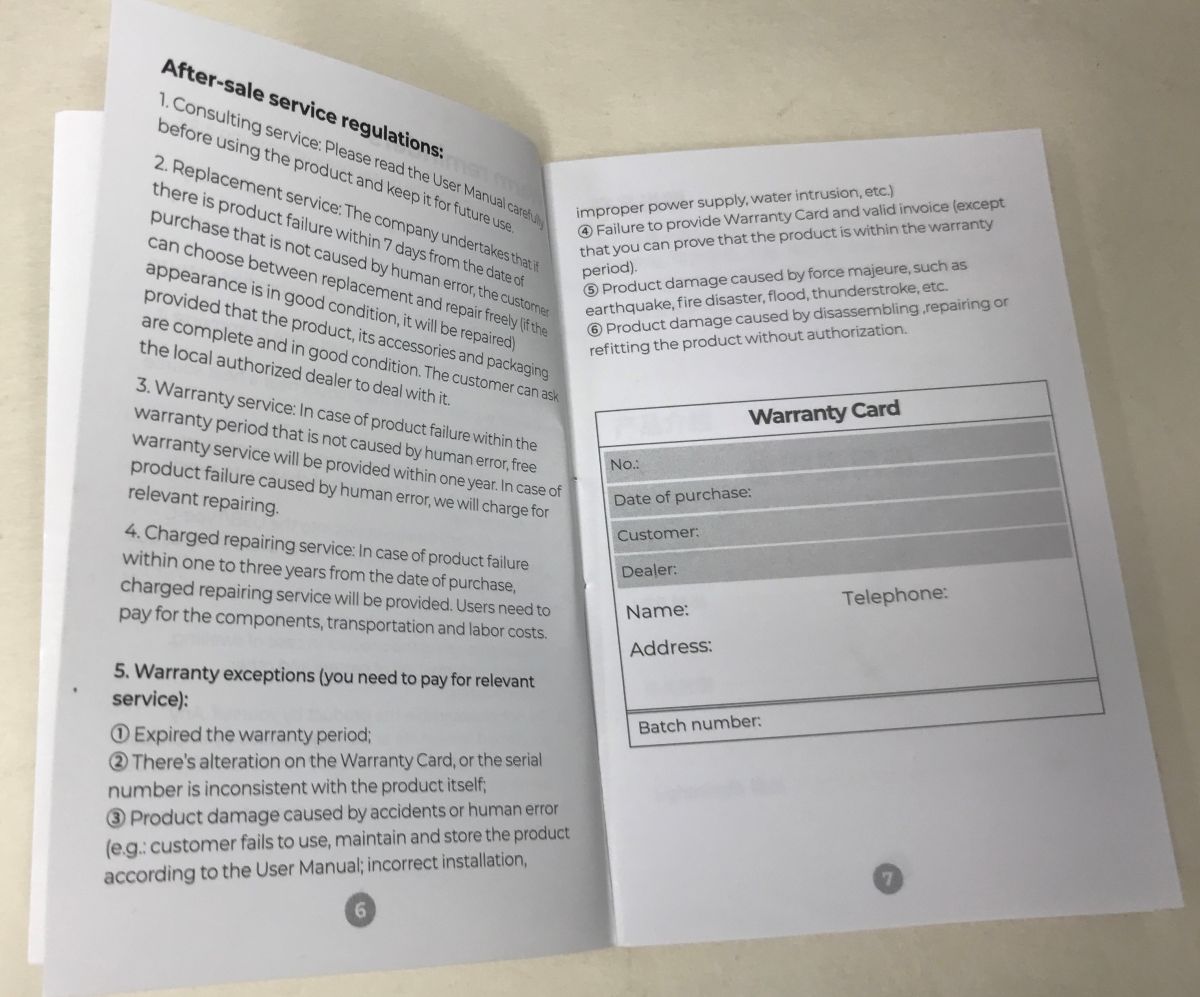
There is also a manual available which talks about a charge indicator and includes some .... form of guarantee? I wonder who respects that.
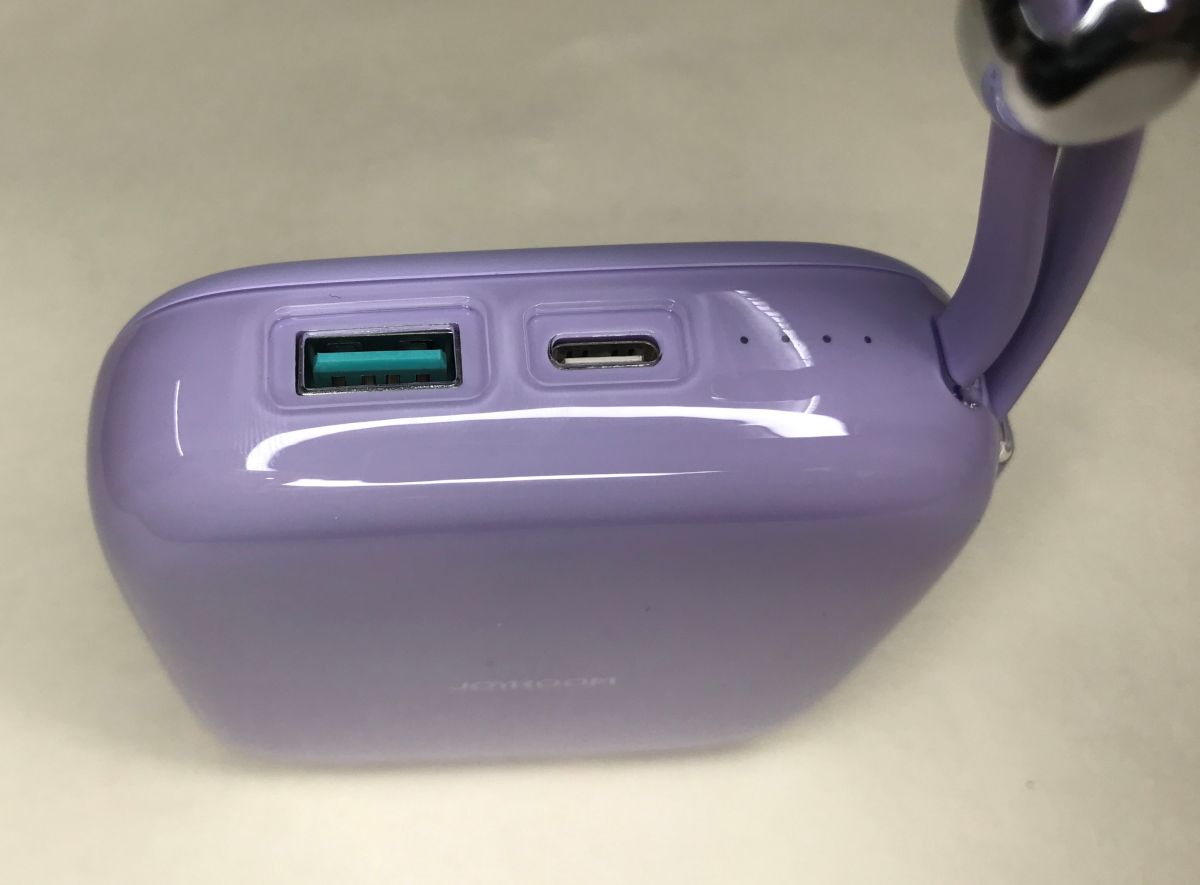
And then there's the powerbank itself - you have to admit that it's not the cheapest plastic. The whole thing is pleasant to the touch, slim, and doesn't smell cheap like some products.
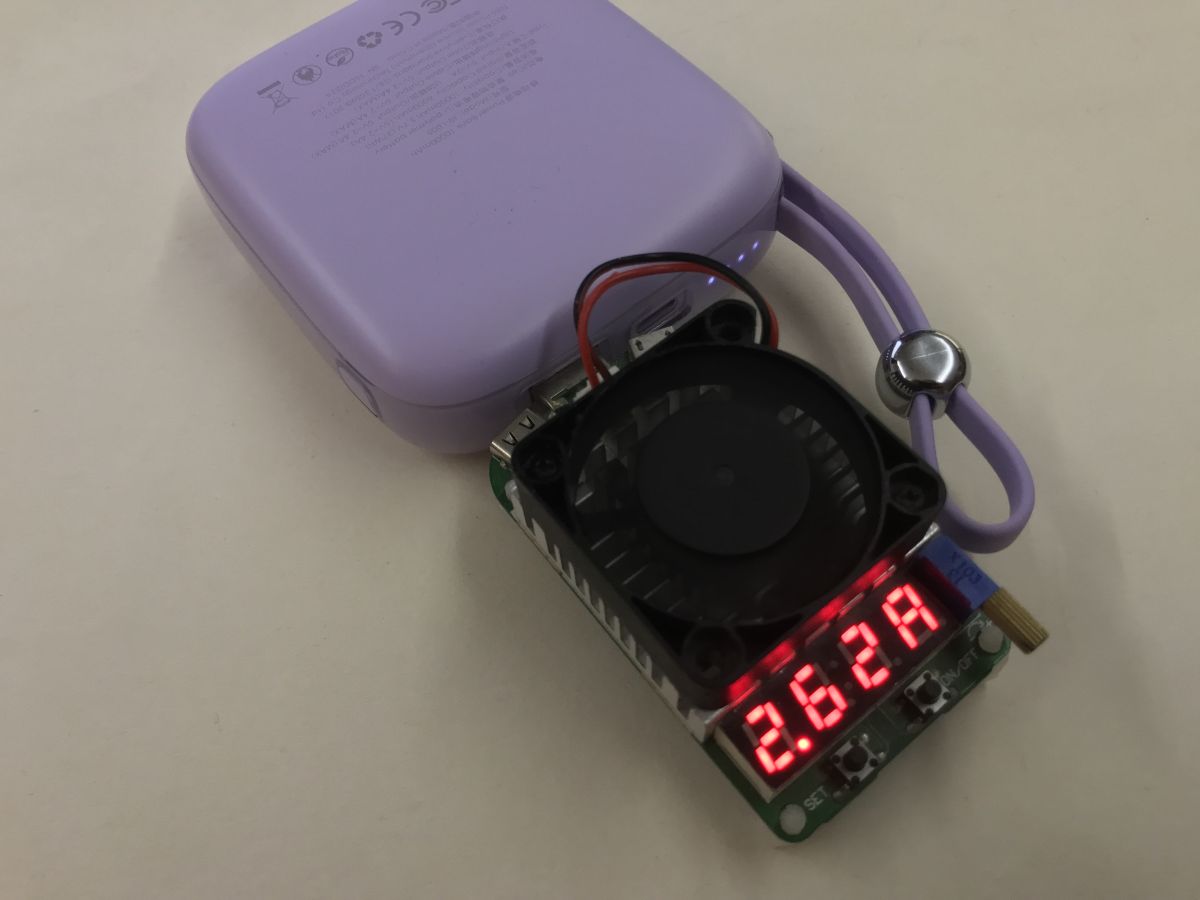
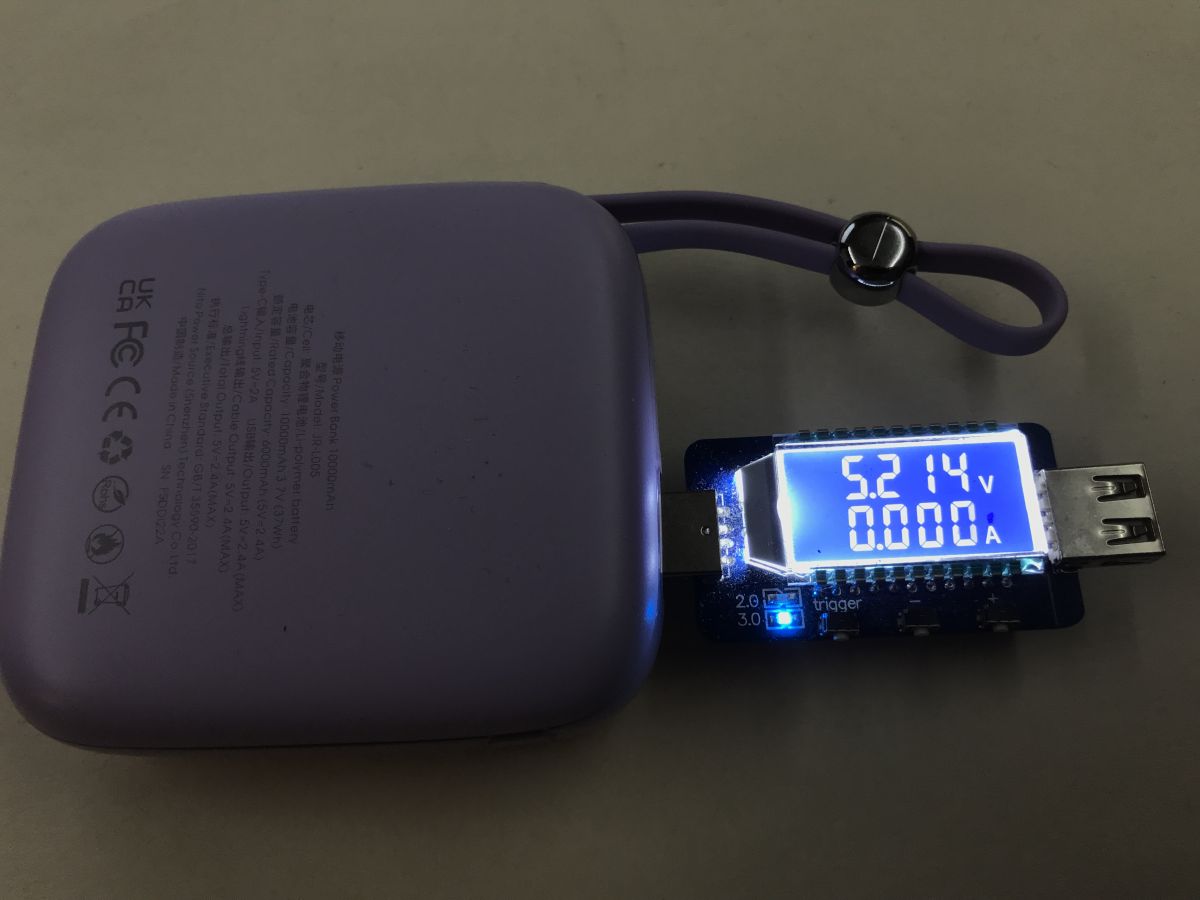
Up to 2.5 A can be drawn from the total, confirming the parameters:
Also according to the description, the powerbank does not offer QC:
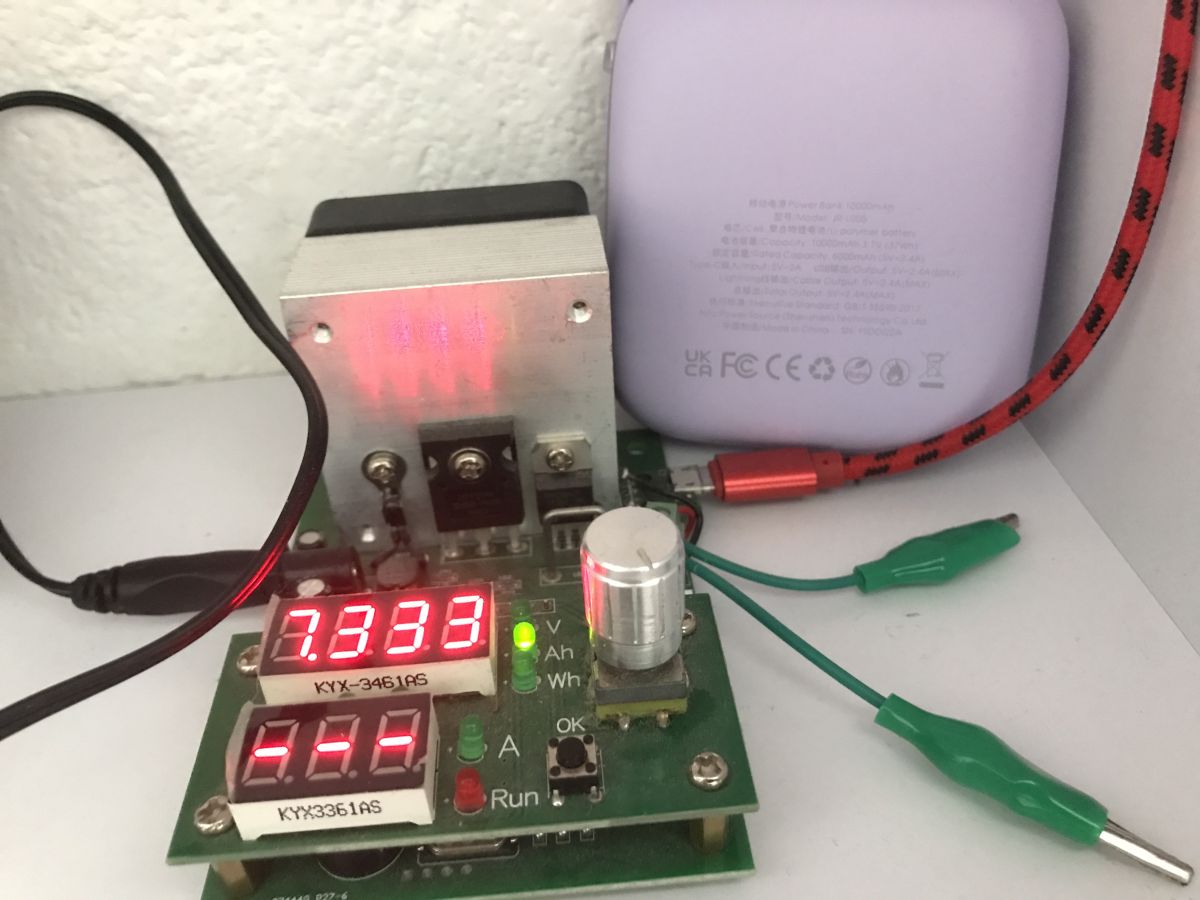
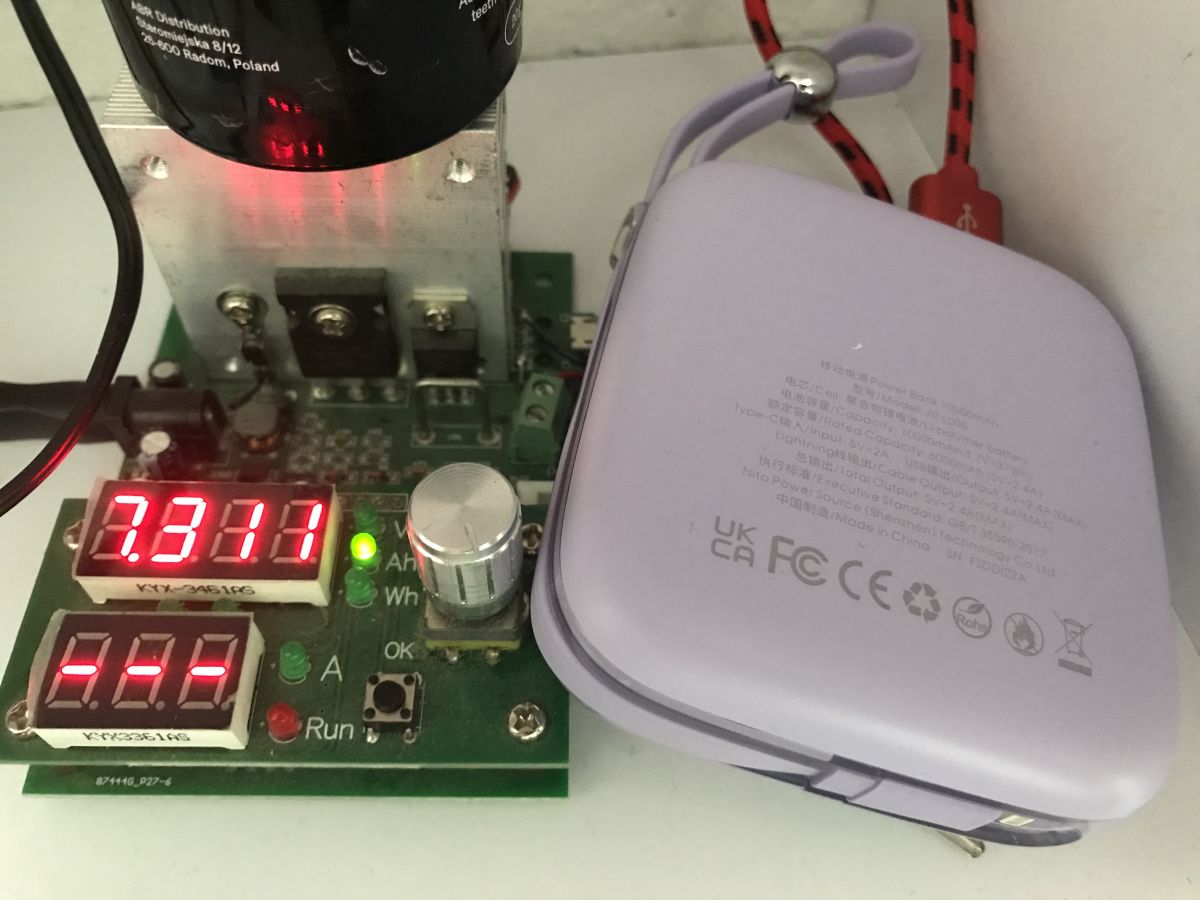
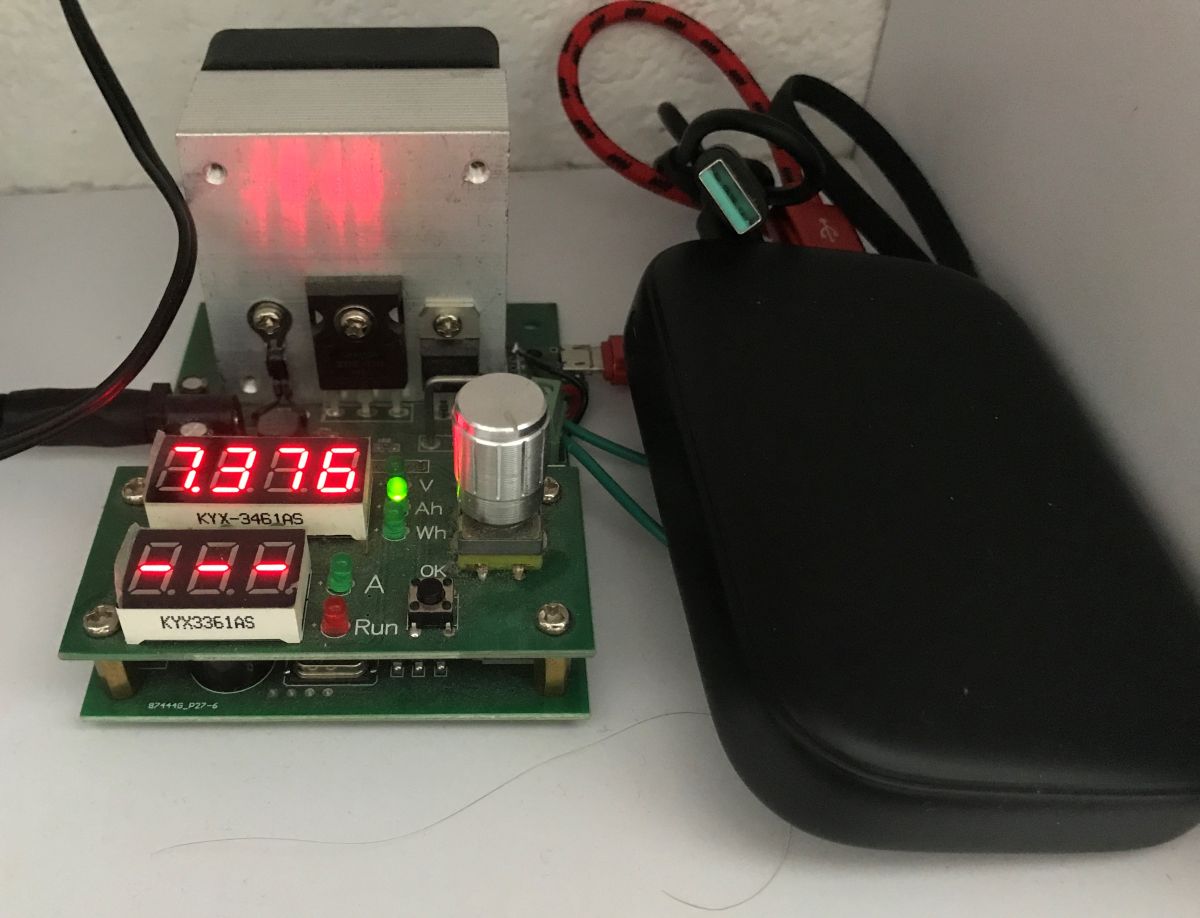
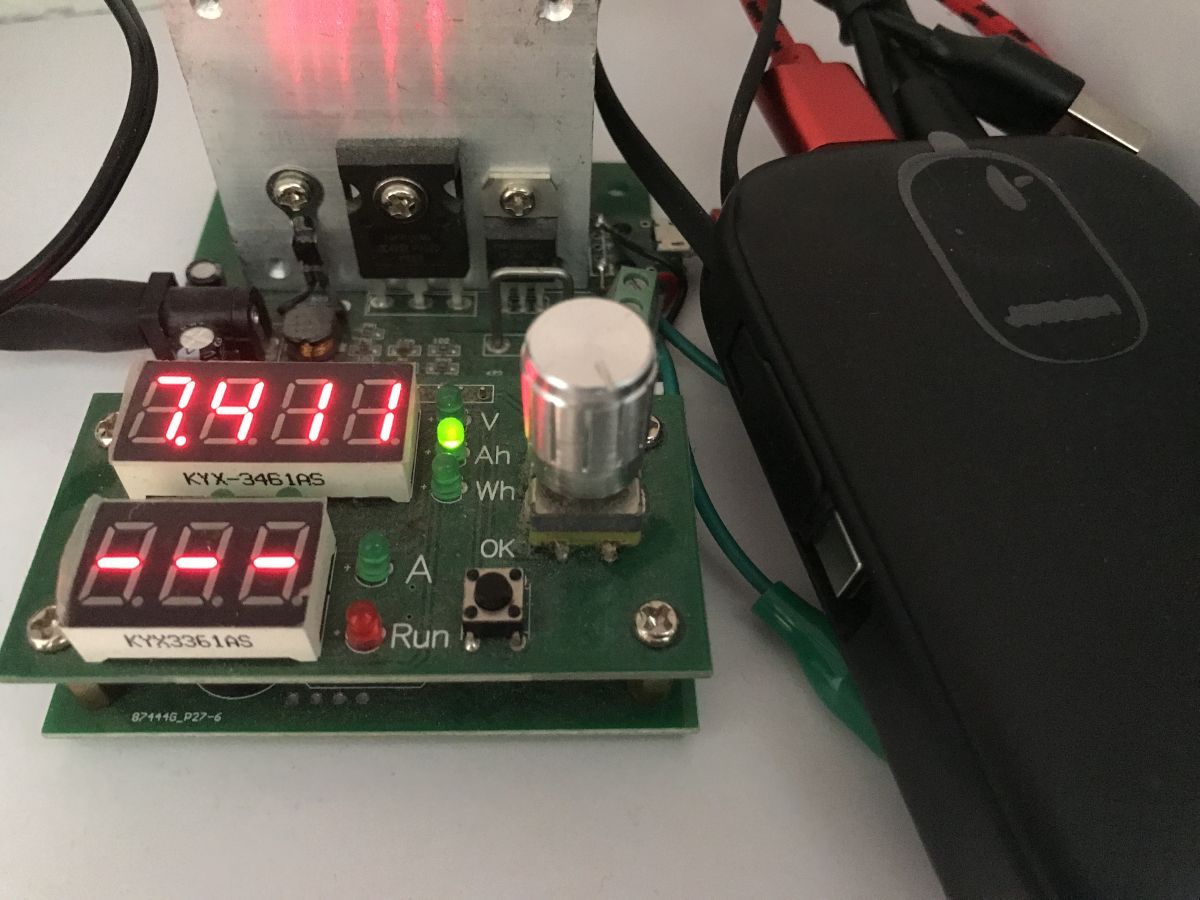
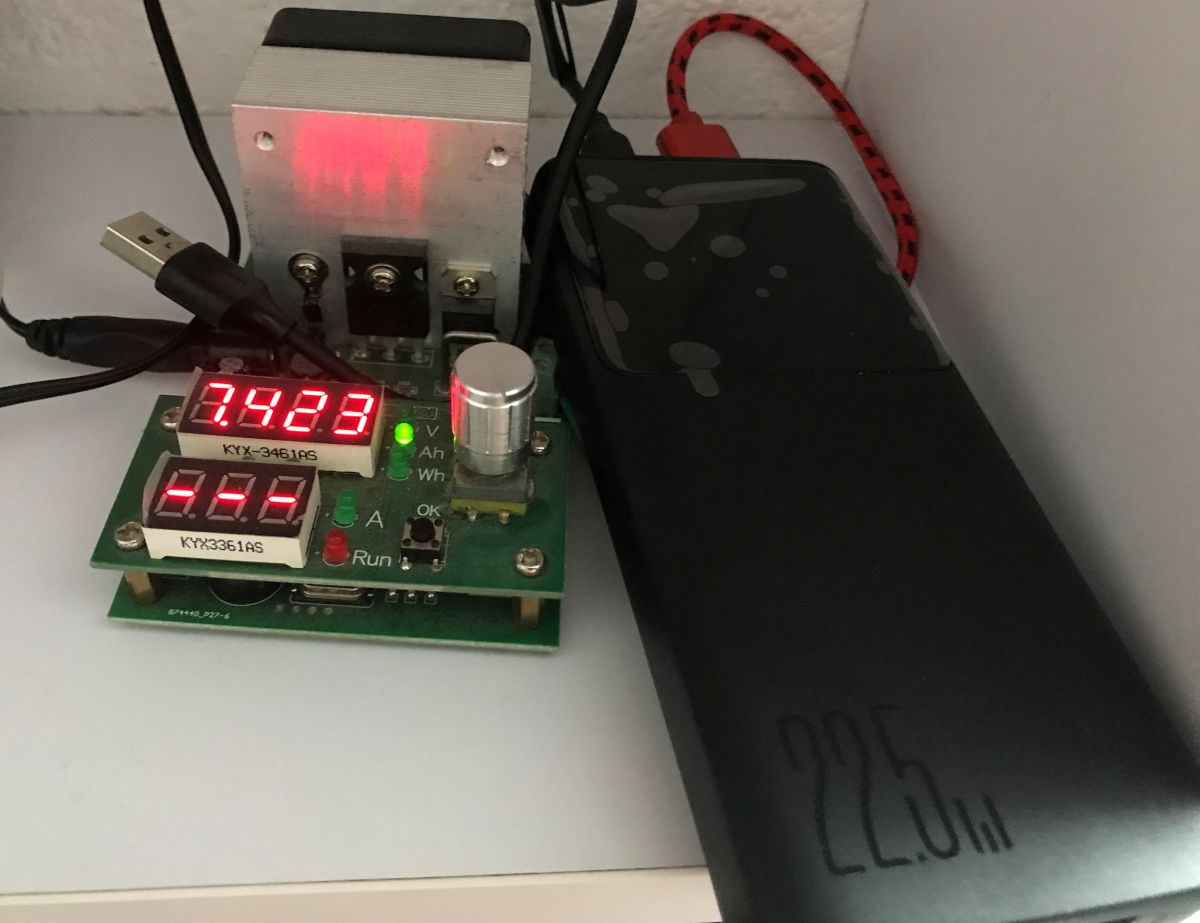
The first test showed 7333 mAh at 5 V, the load was 1.5 A:
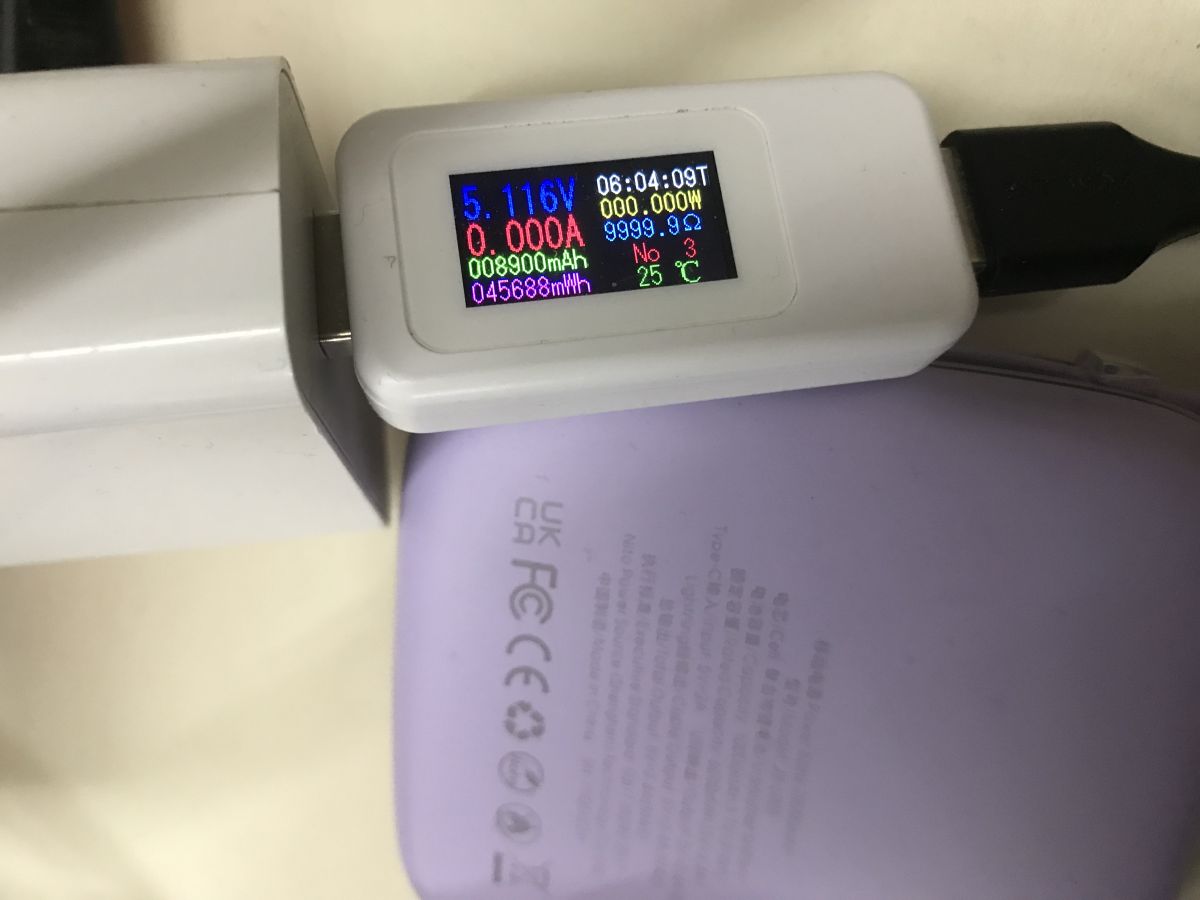
Out of curiosity, I also checked what the charge would be - at 5.1 V 8.9 Ah was drawn, one could estimate the efficiency of the converters here.
A second test confirmed the result:
The JR-L005 emerges from the tests defensively and fulfils what is on the label. Only that QC is missing...
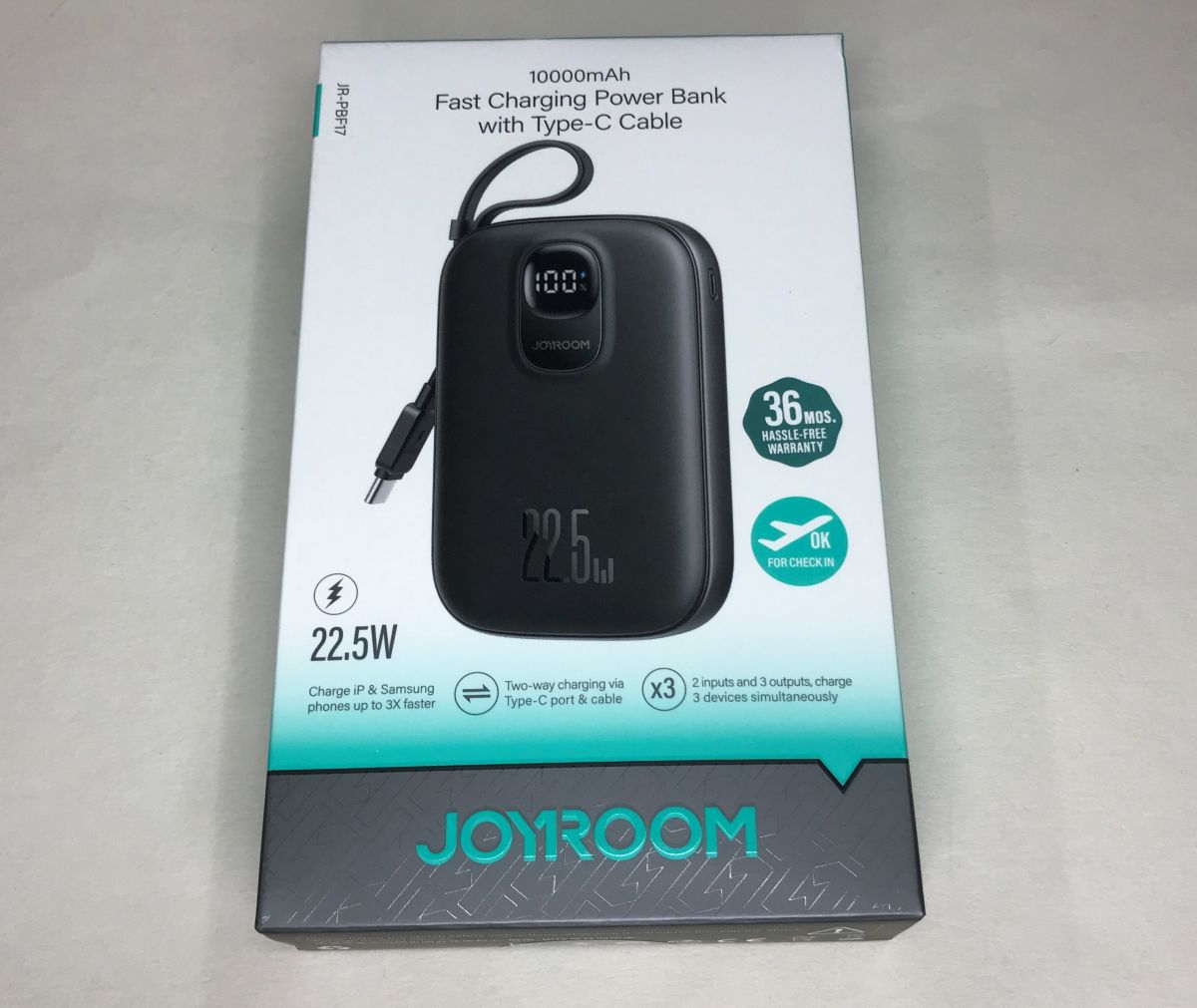
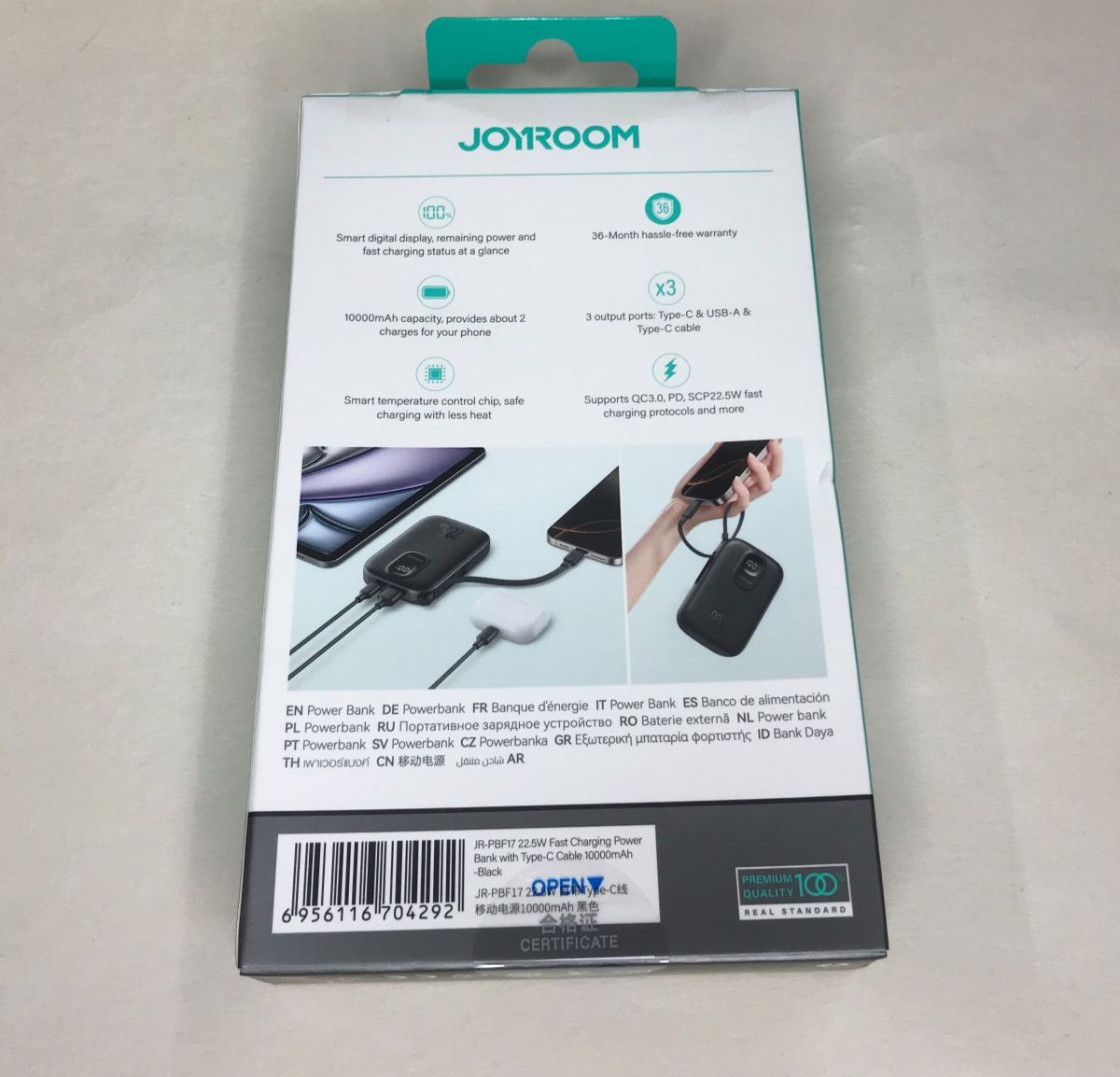
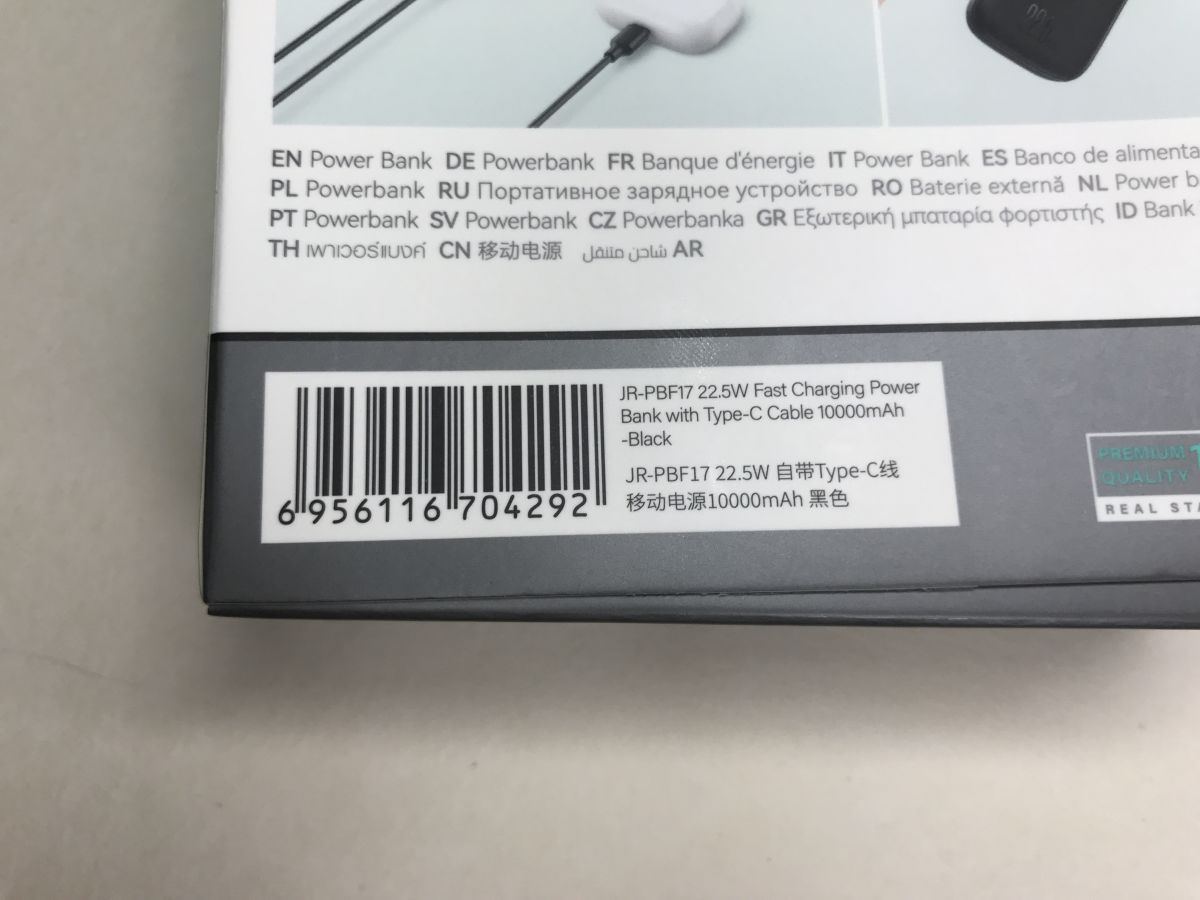
The second player is the JR-PBF17, this time 22.5W and with a USB C cable. Also slightly traceably larger, well, and more expensive - £80. What are we paying extra for here? What does the higher number of watts mean?
Those 'Fast Charging' words in the title.... are often a misnomer, but probably not here! The powerbank is said to offer QC3.0 and PD support, allowing modern devices to charge faster. This standard is based on the hardware negotiating with the powerbank to provide a higher voltage.
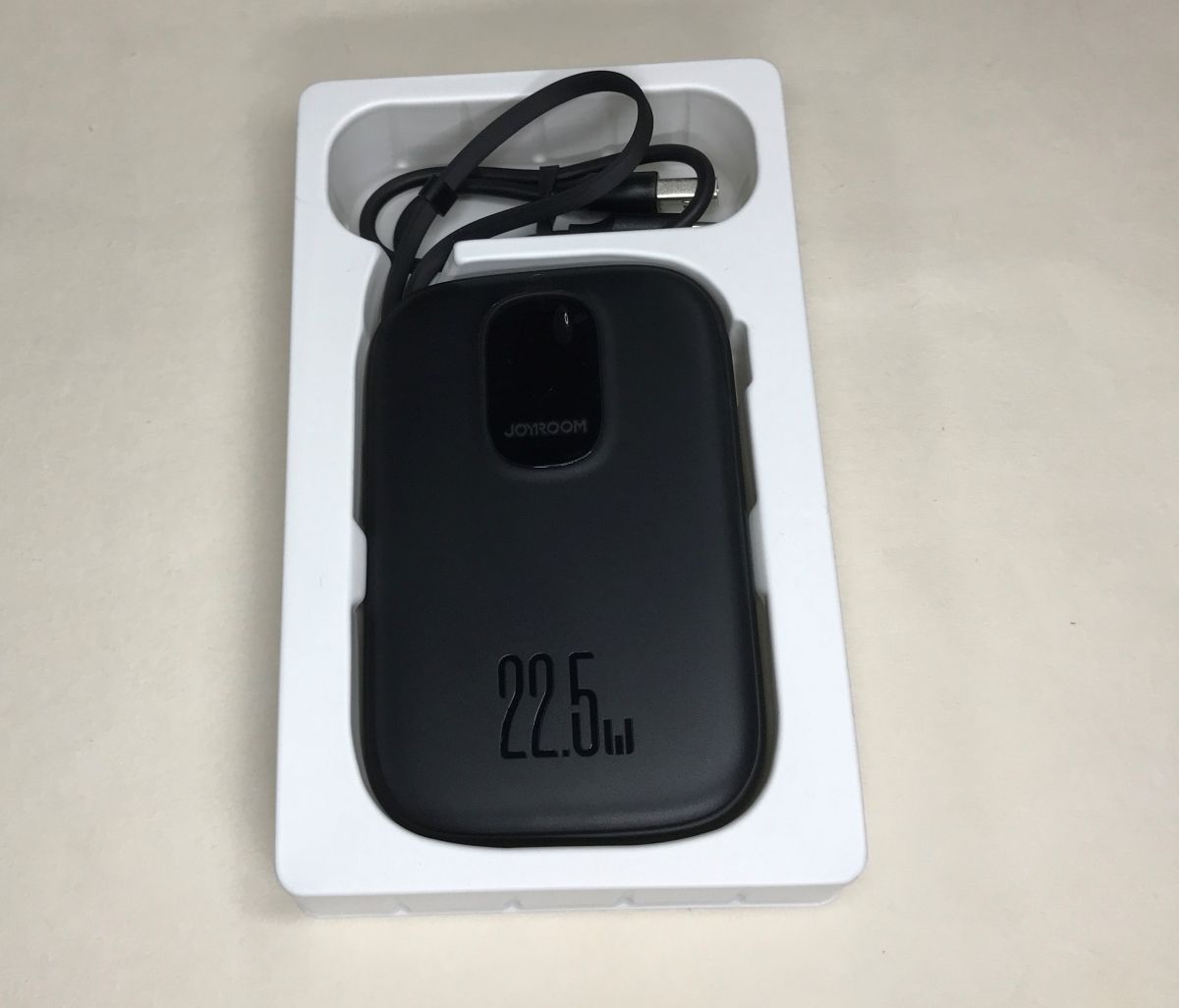
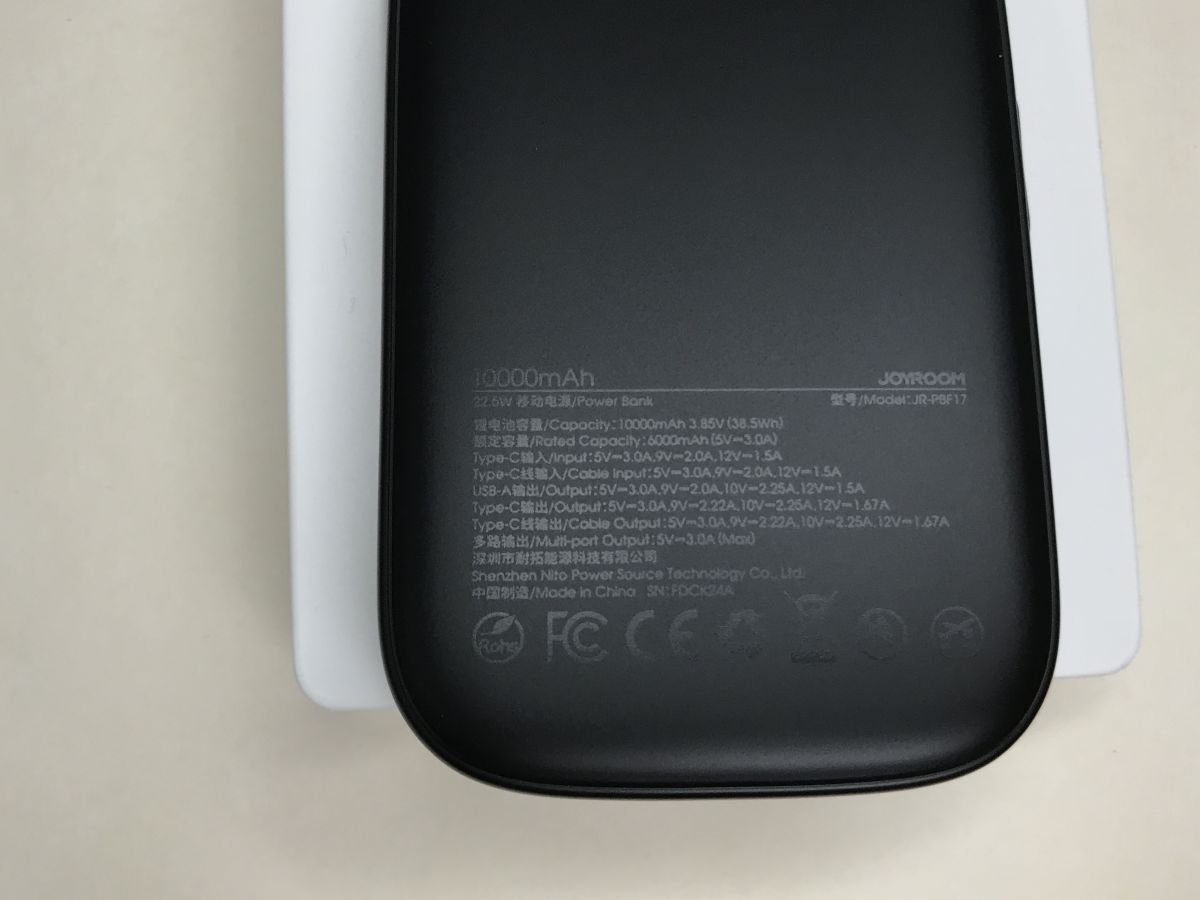
I see that here separately is the bulk cable and separately the one built into the powerbank. The supported voltages are written on the powerbank itself:
It should be possible to get 12 volts.
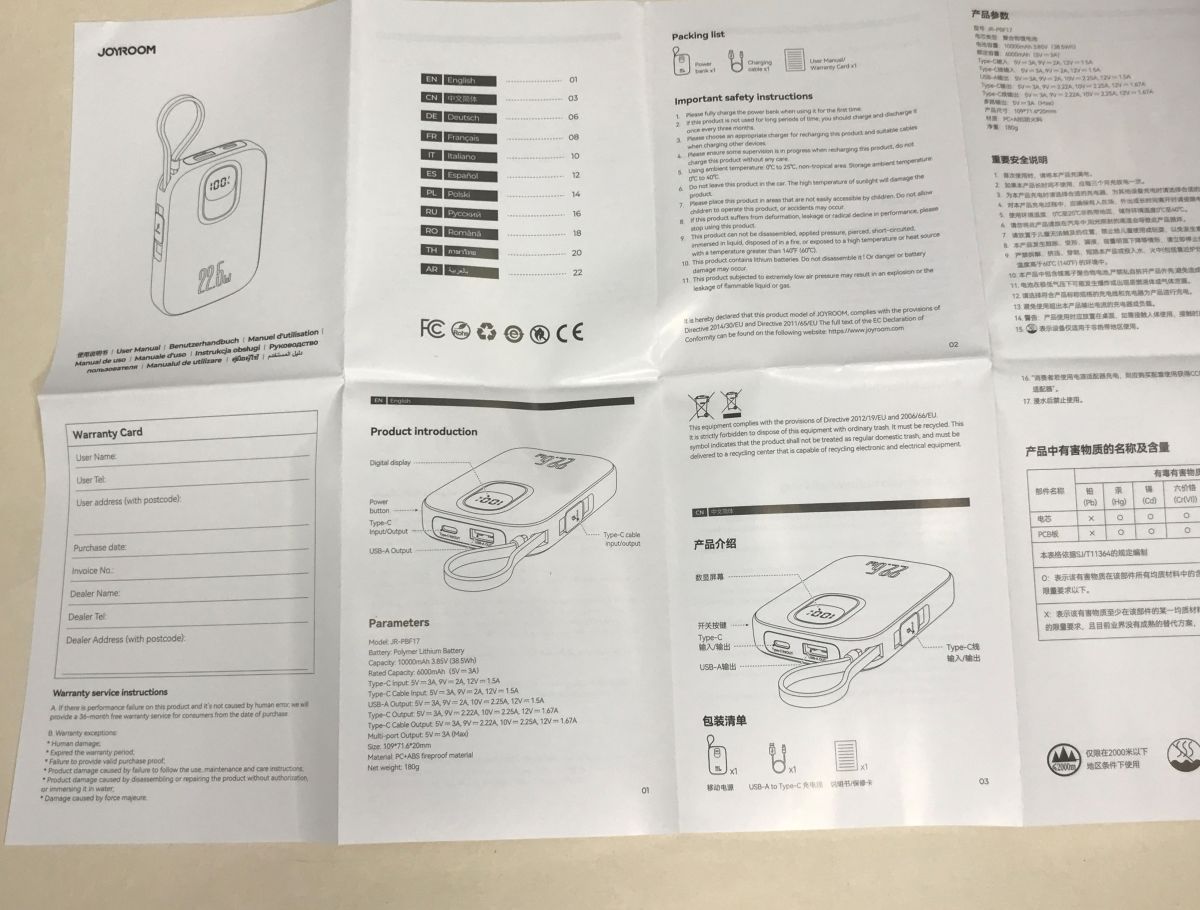
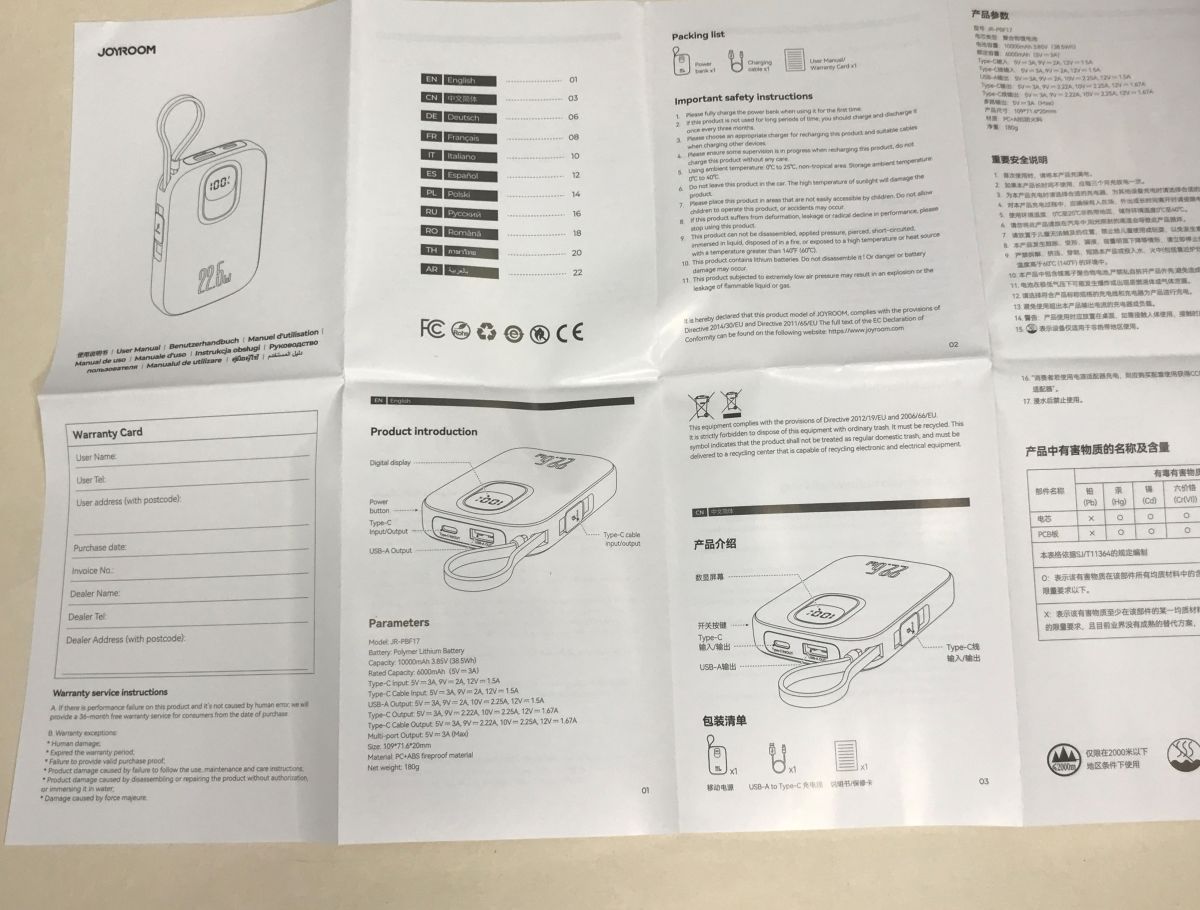
Instructions:
According to the instructions, we can expect 37 Wh and 6 Ah at 5 V.
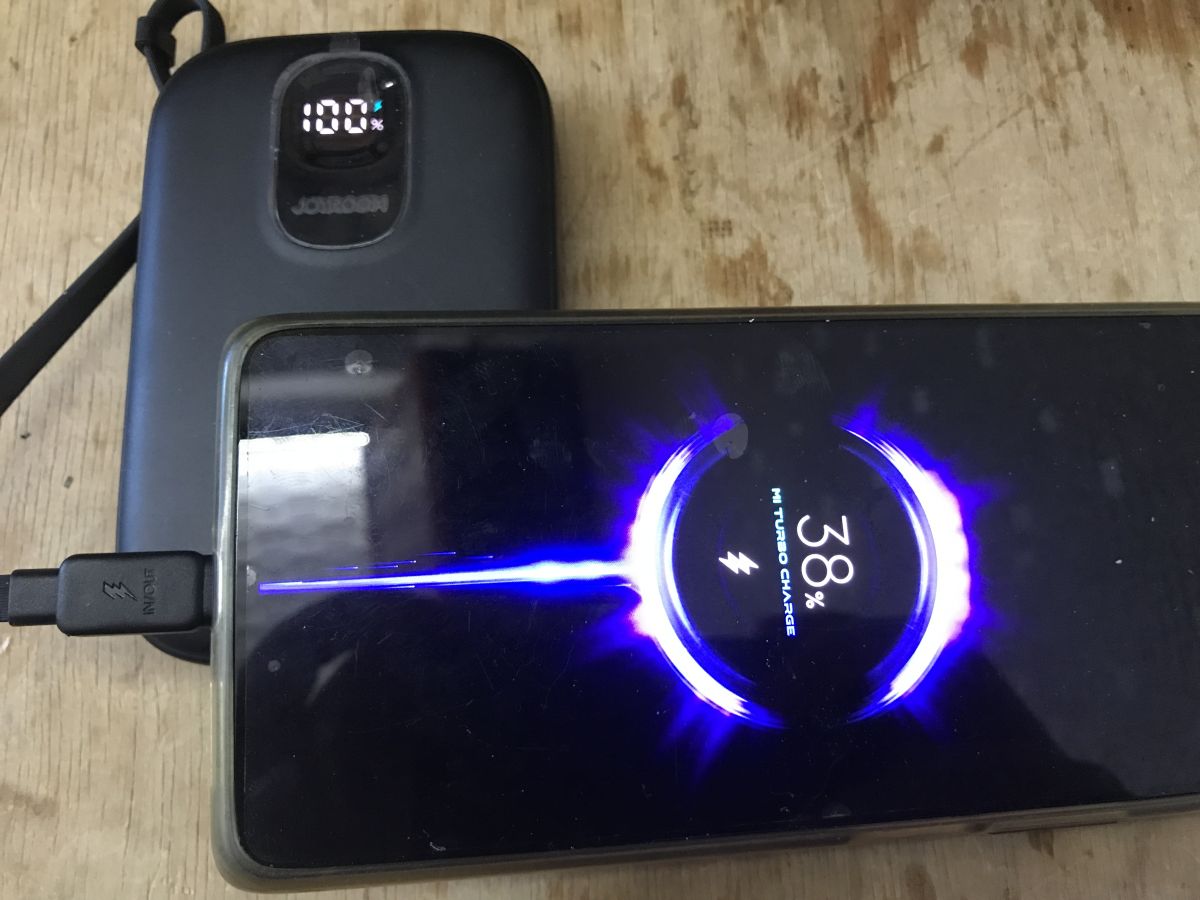
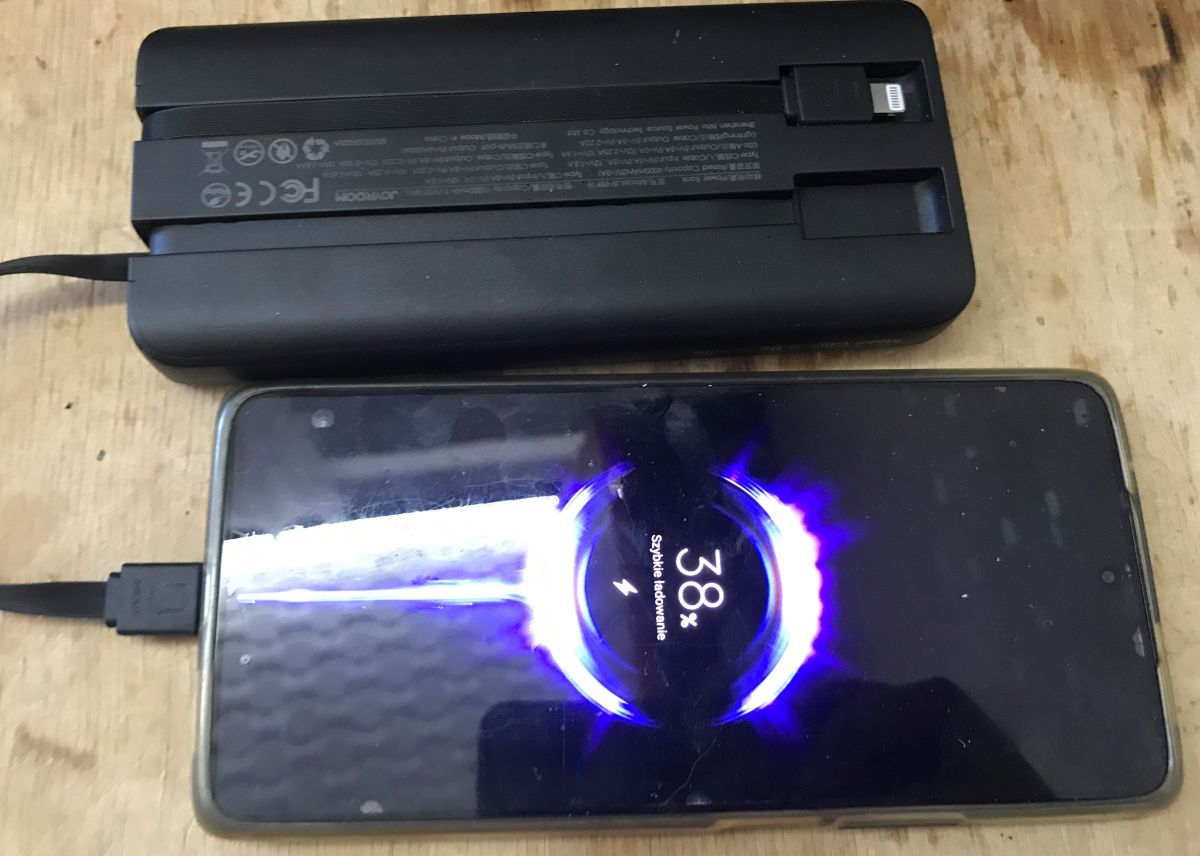
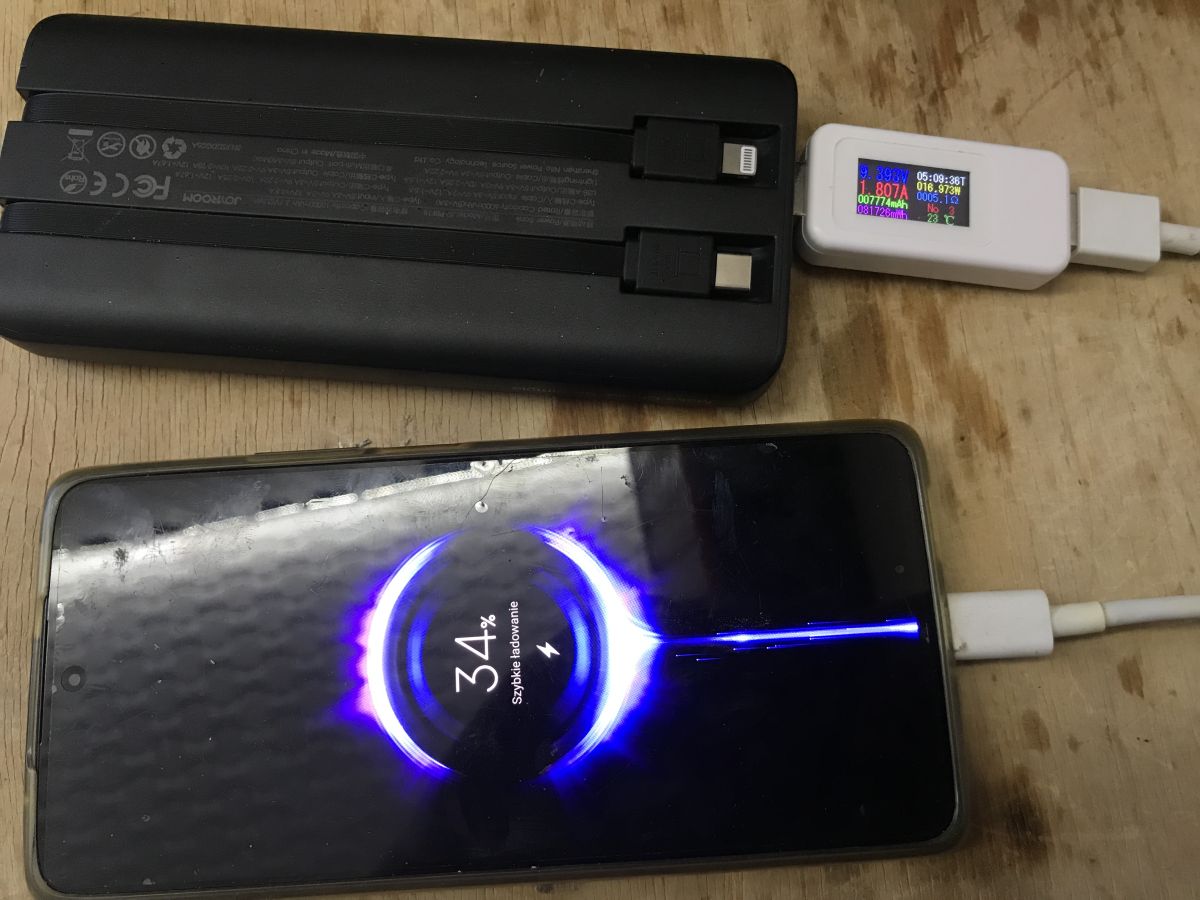
Indeed, Xiaomi includes that fastest charge, the Turbo, at 9 V reaches over 2 A:
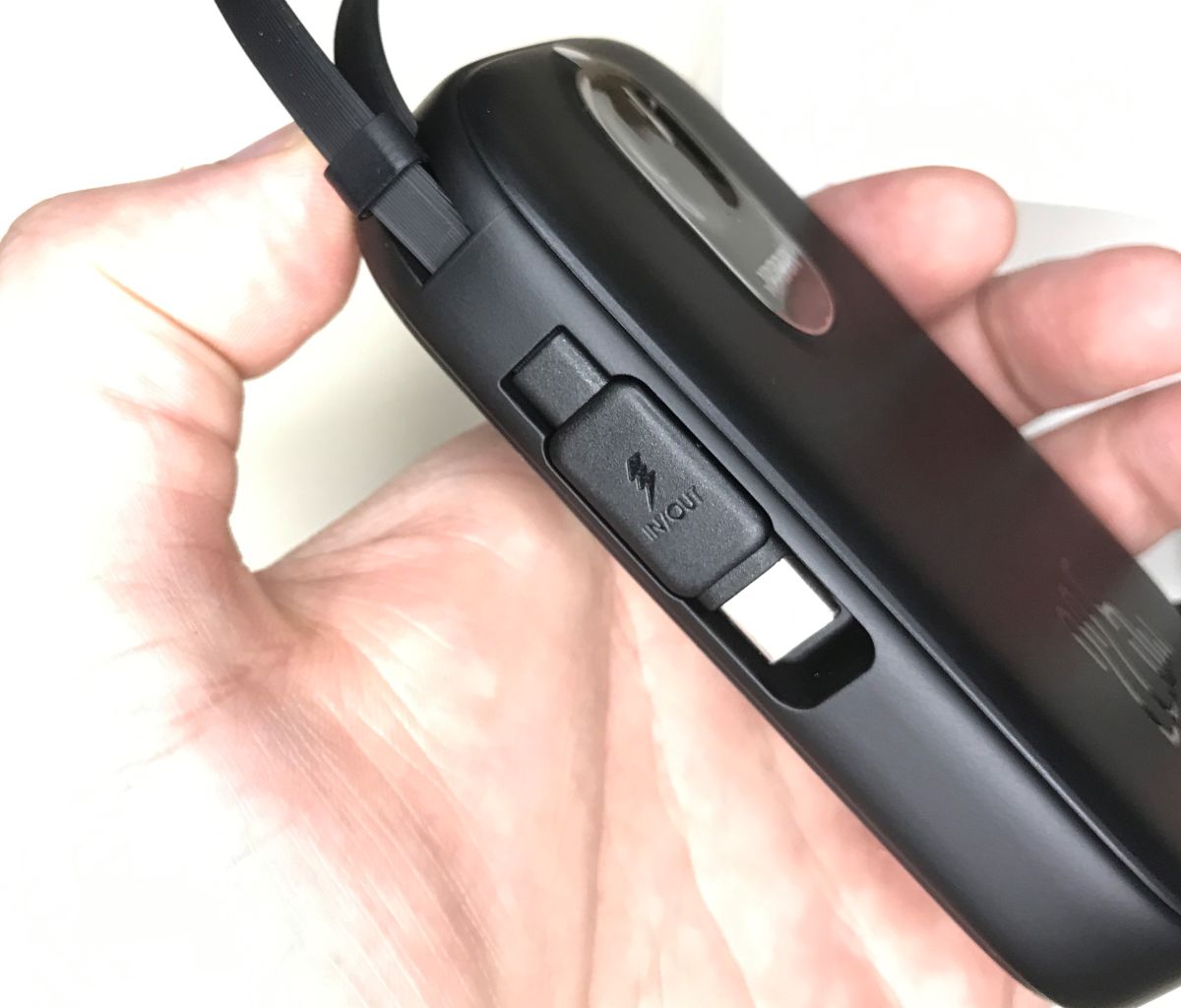
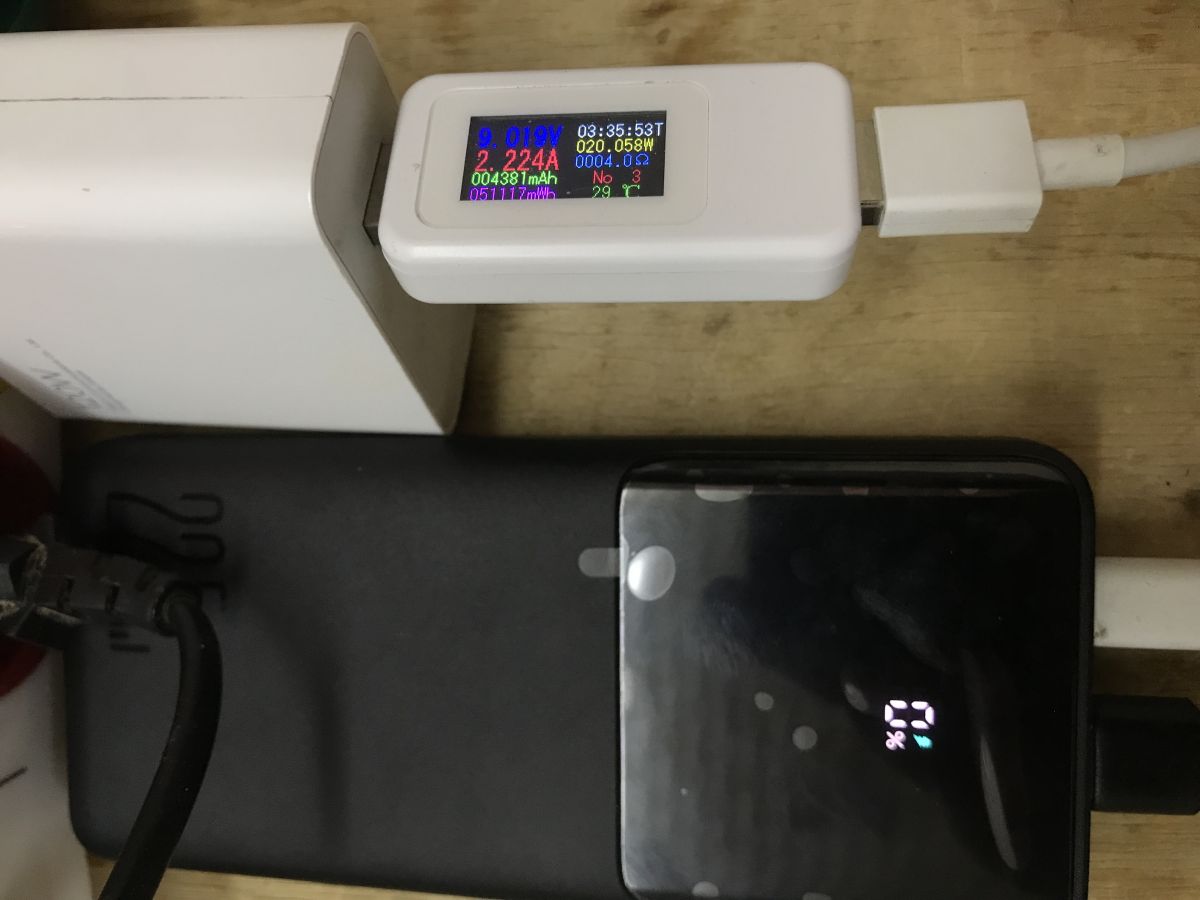
Built-in cable also allows the powerbank to be charged. Can also draw higher voltage from a QC-compatible power supply.
But then I was tempted to try to charge the powerbank from the QC power supply and connect the phone to the powerbank at the same time. That's when the crunch happened - the power alternately switched on and off, the display reset:
This is the first major flaw detected, but we are looking further.
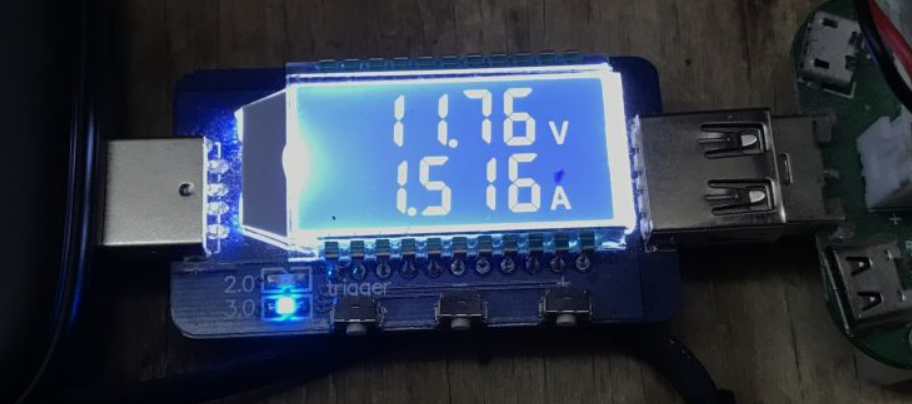
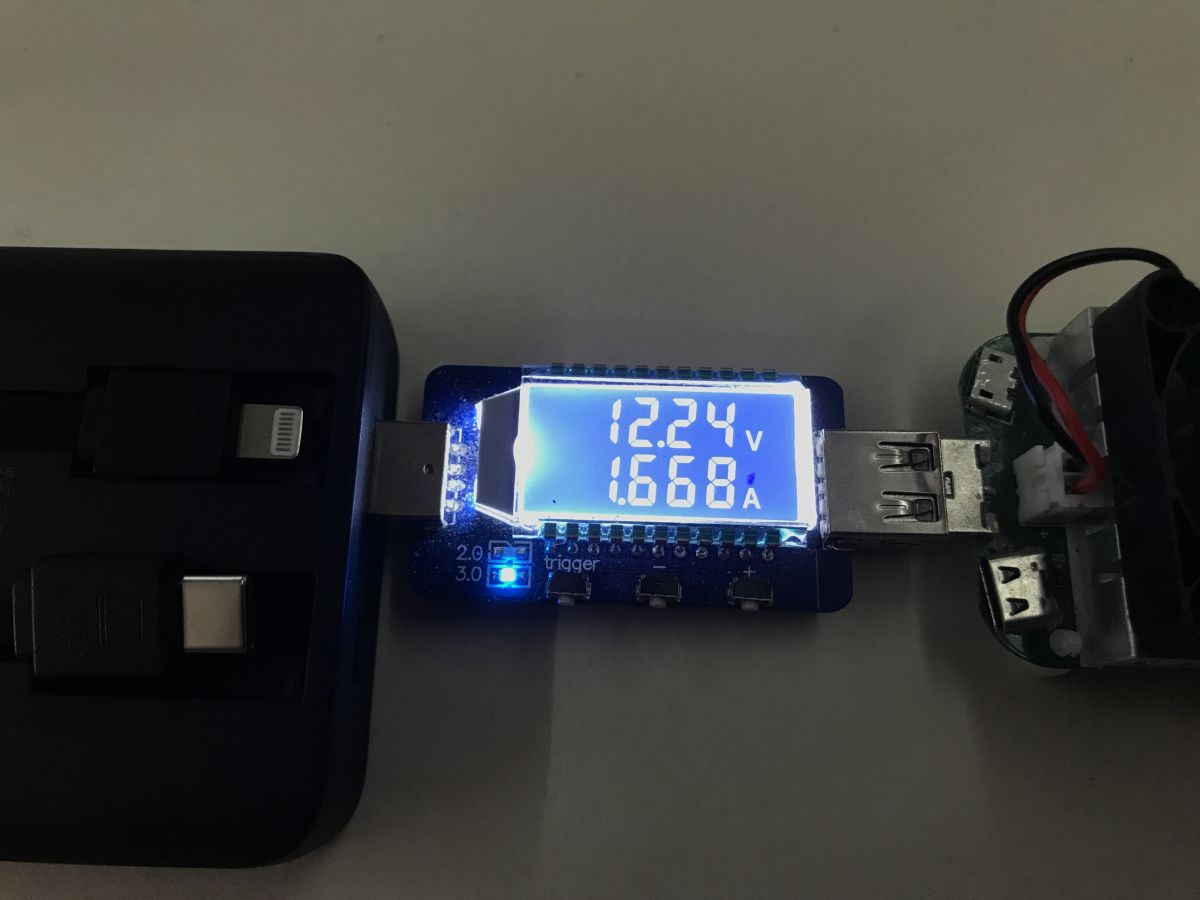
More than 1.5 A at 12 V can be drawn from USB A, which is in line with the announcement:
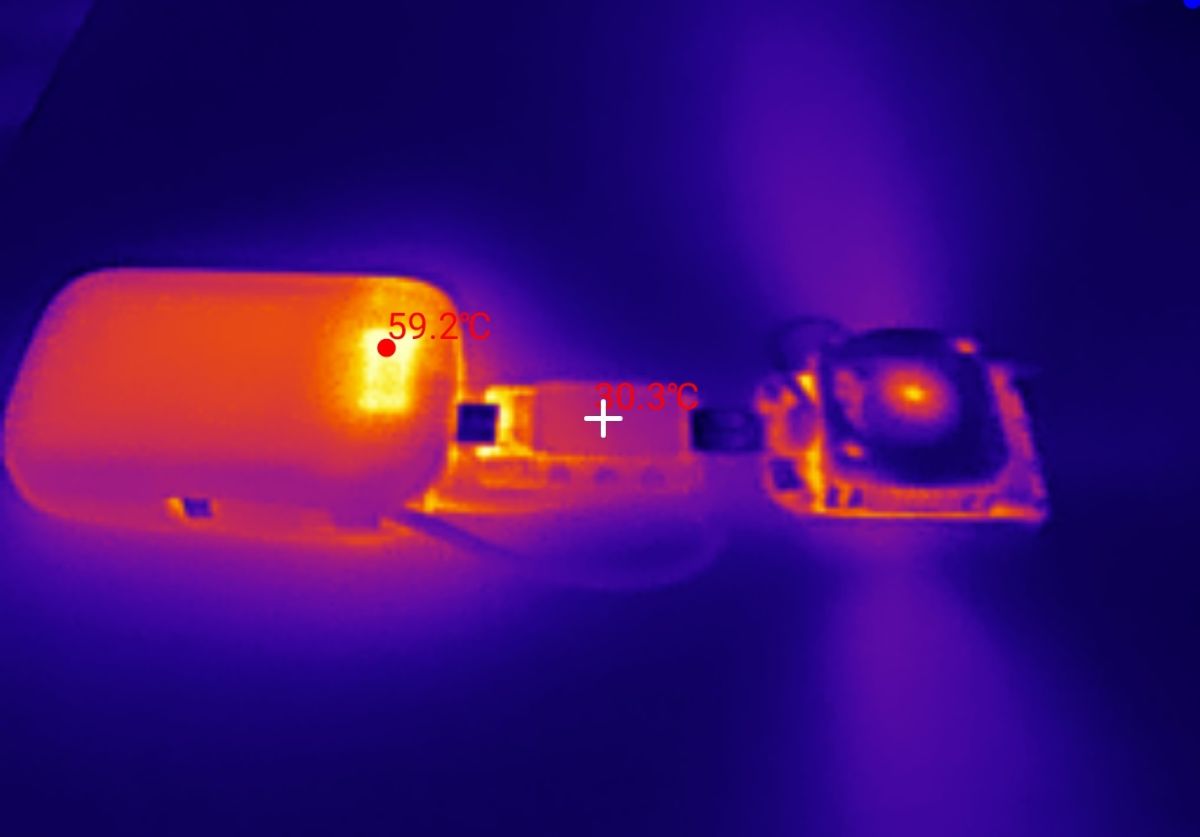
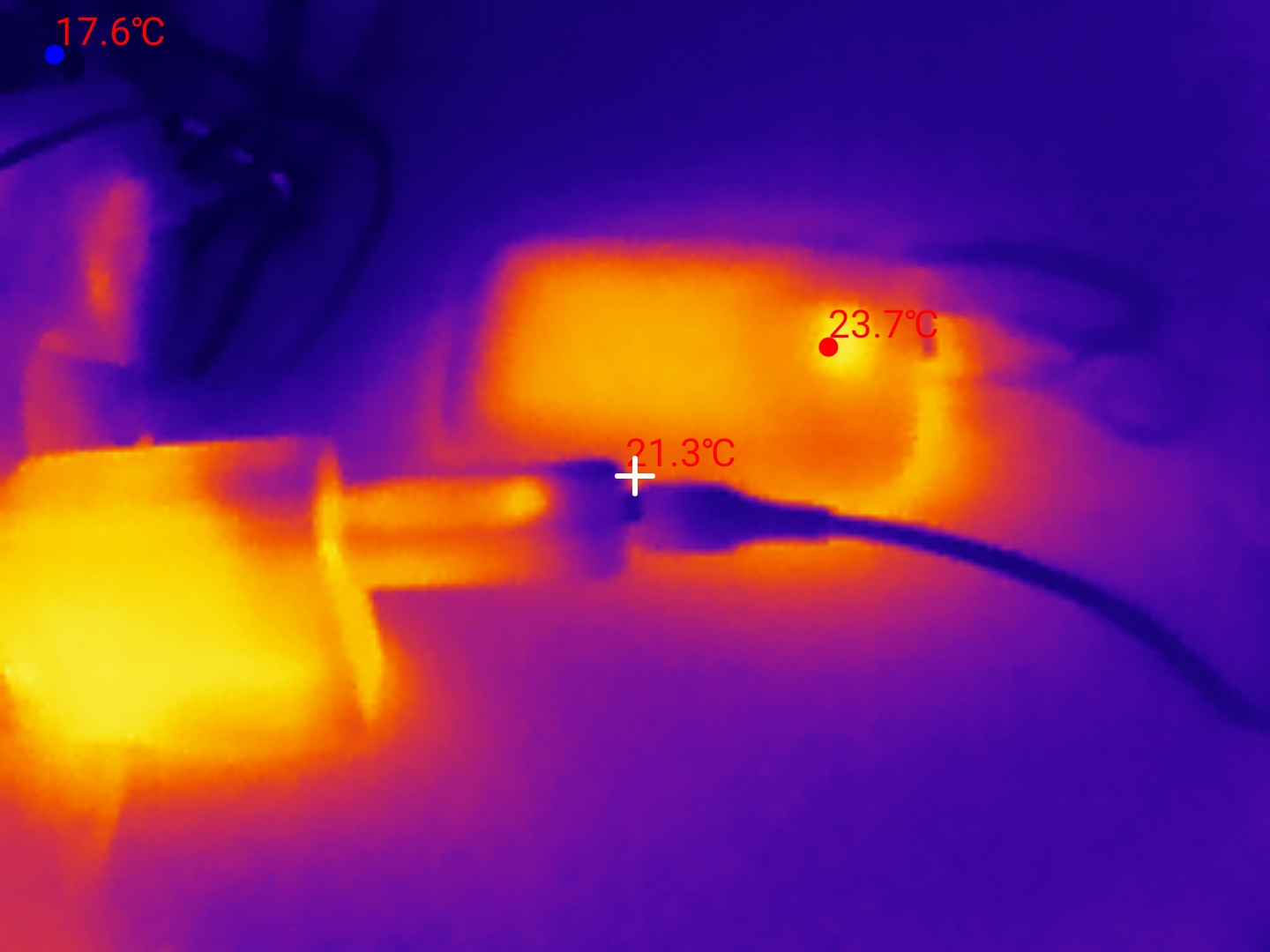
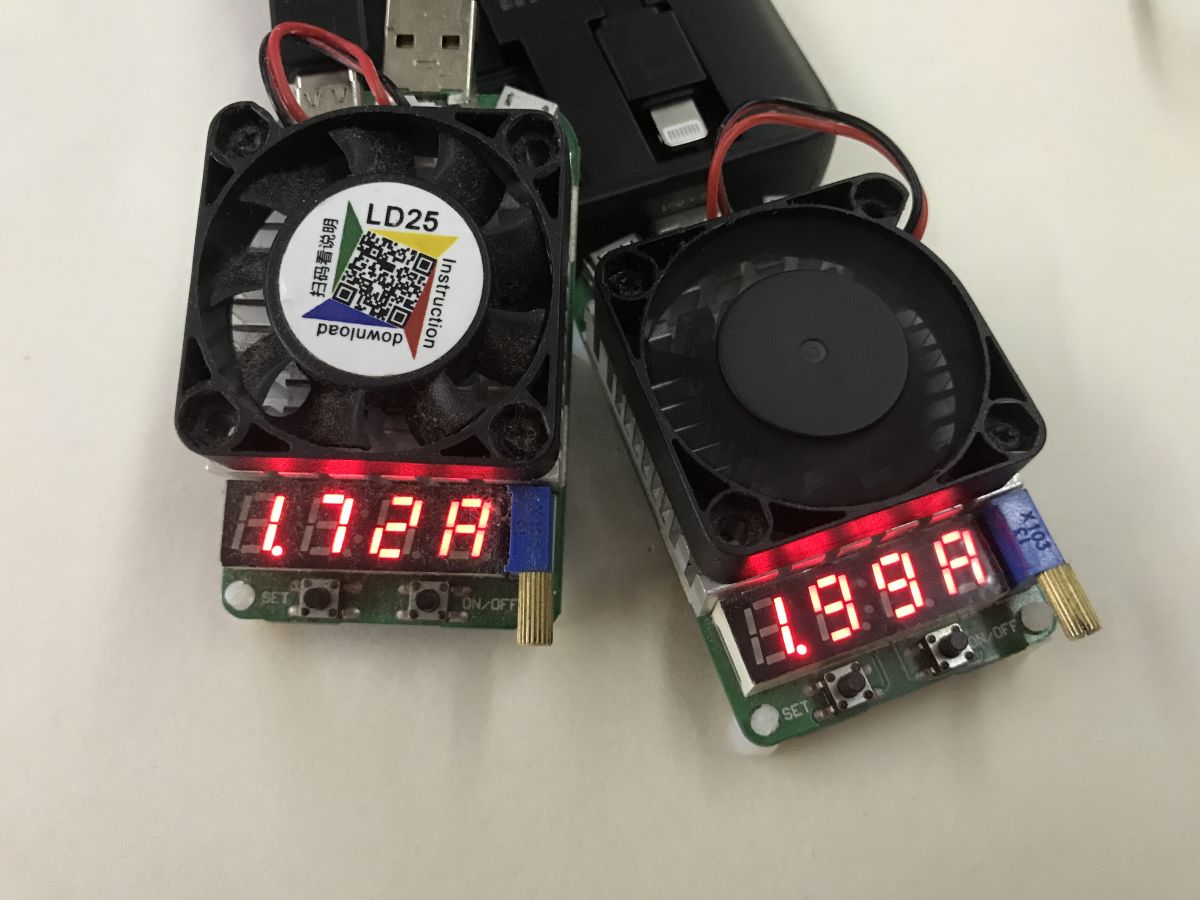
The whole thing heats up to 60 degrees outside, I wonder how much inside. You can even see on the thermal imaging traces of warm air ejected from the LD35 artificial load:
Time for proper capacity testing.
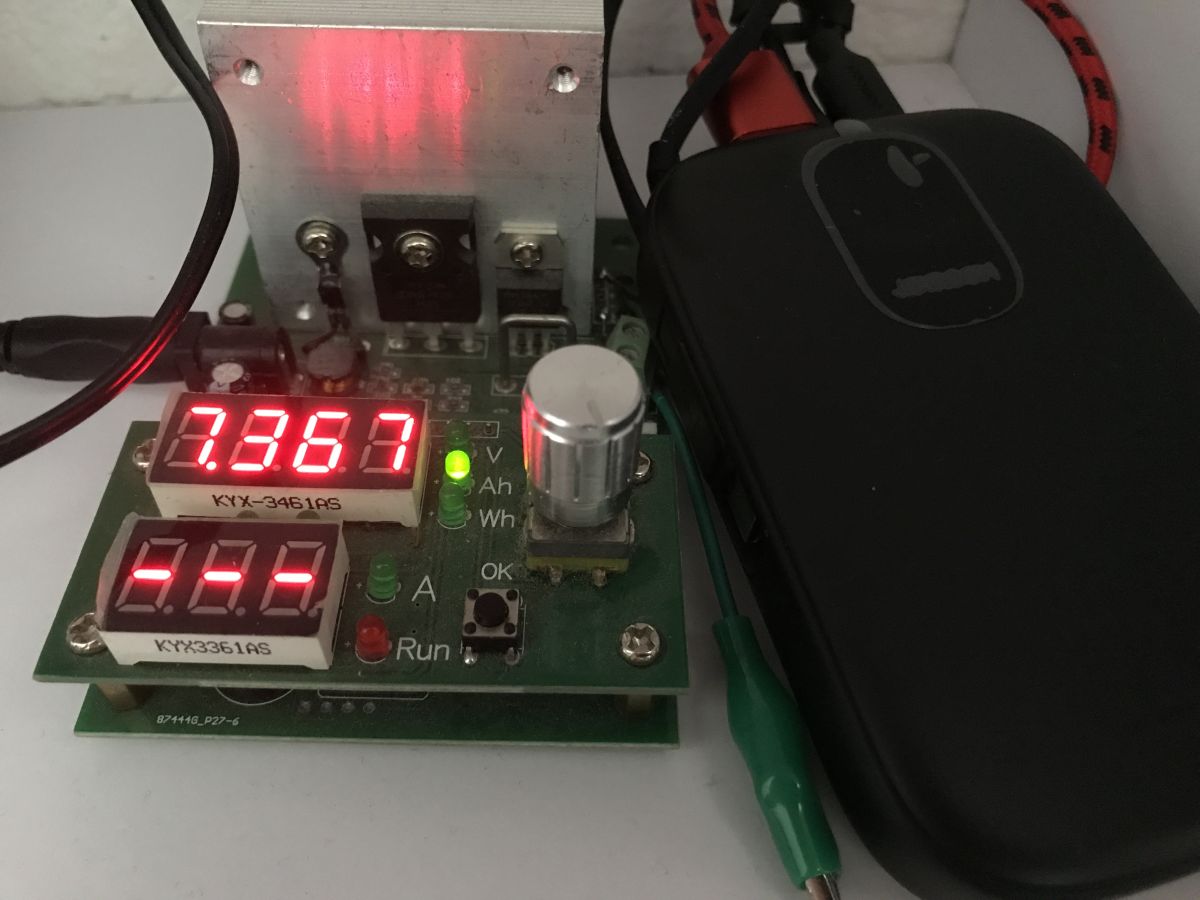
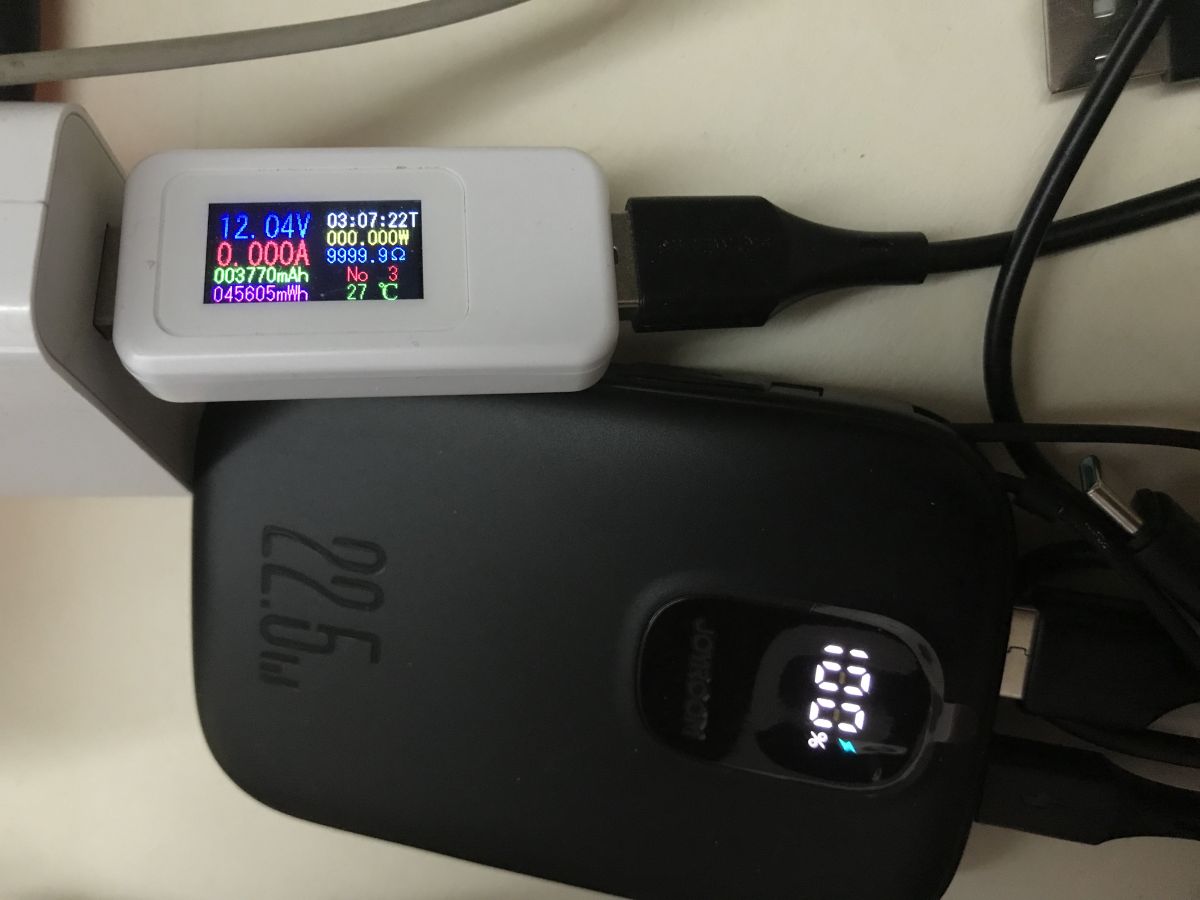
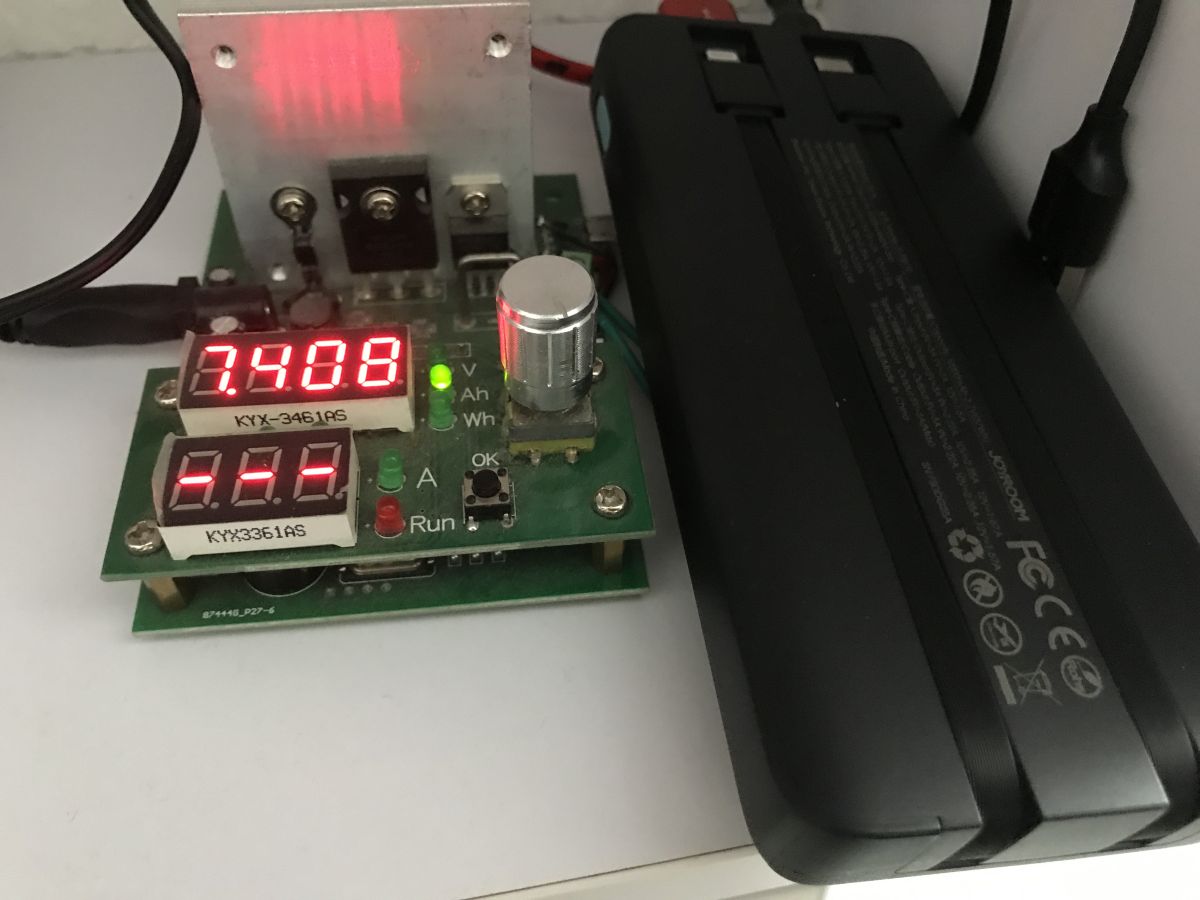
At 5 volts, I measured a good 7.4 Ah. The powerbank offers what it promised. Still the one in the other direction - I charged the powerbank at 12 V reaching 3.7 Ah.
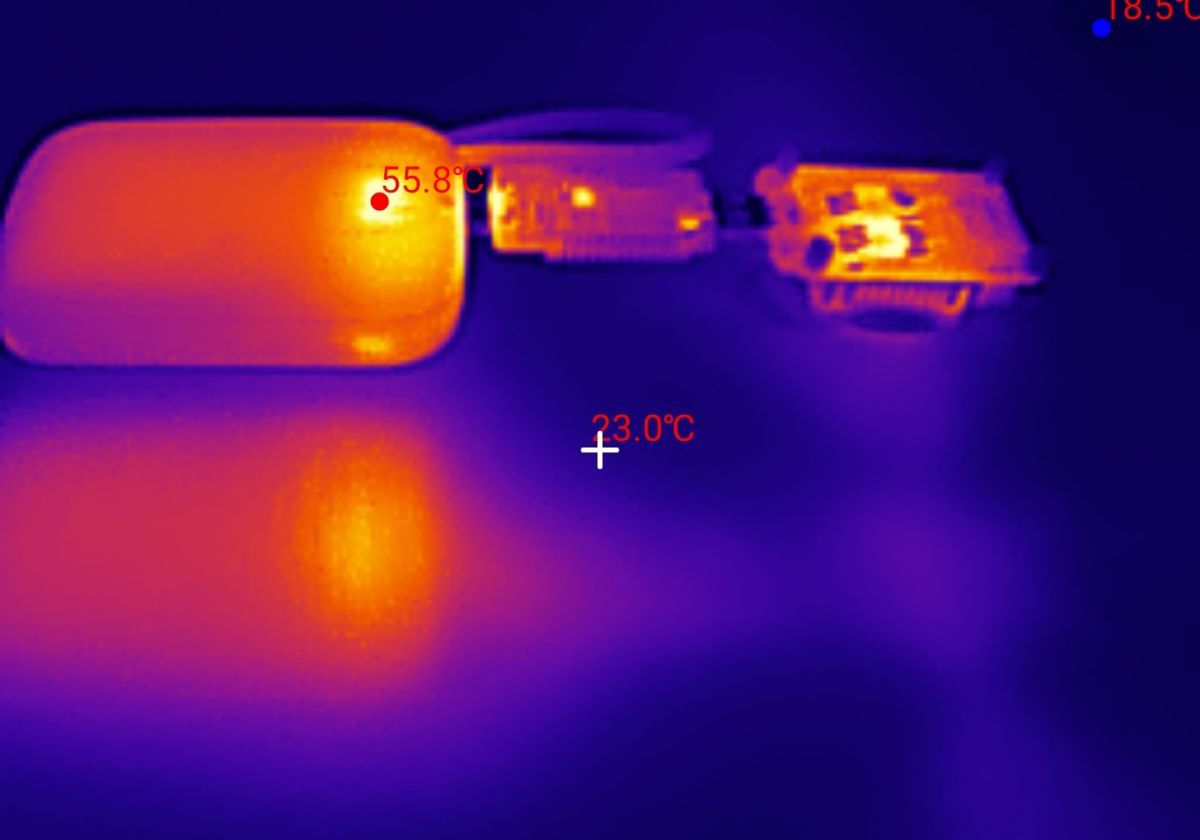
No excessive heating when charging:
In summary, the JR-PBF17 is QC-compatible and this is 'both ways'. I have no major complaints, although I did not check the USB C cable with the QC trigger, I only checked the USB A port.
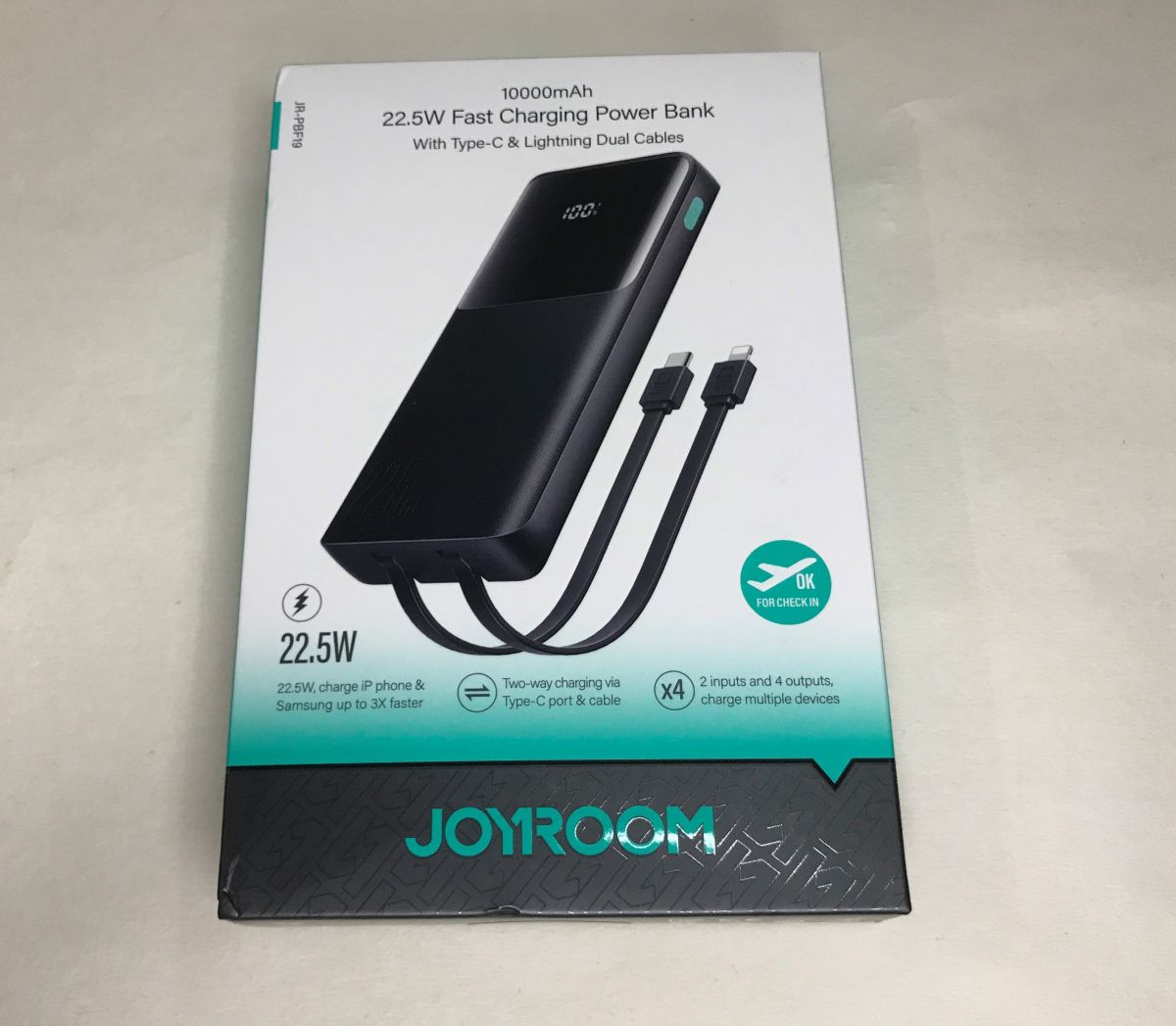
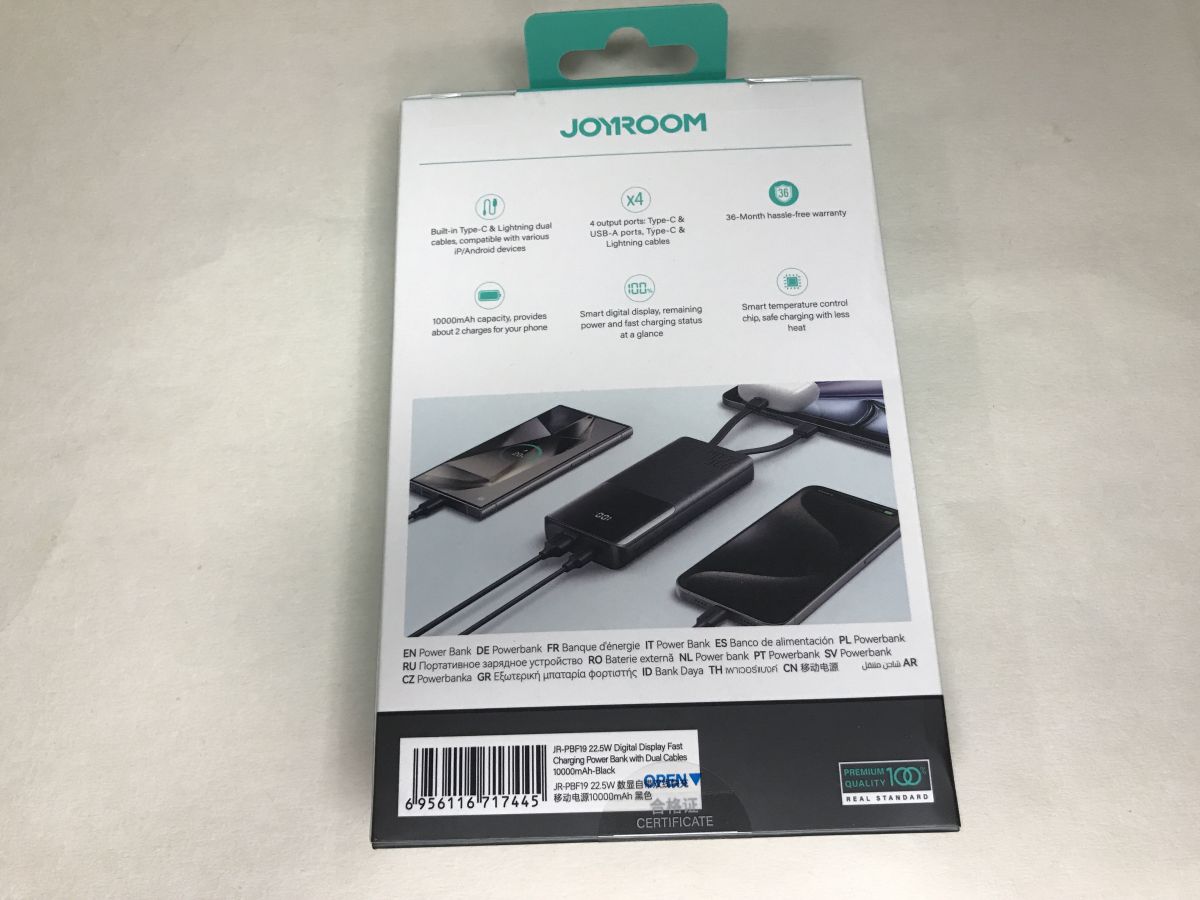
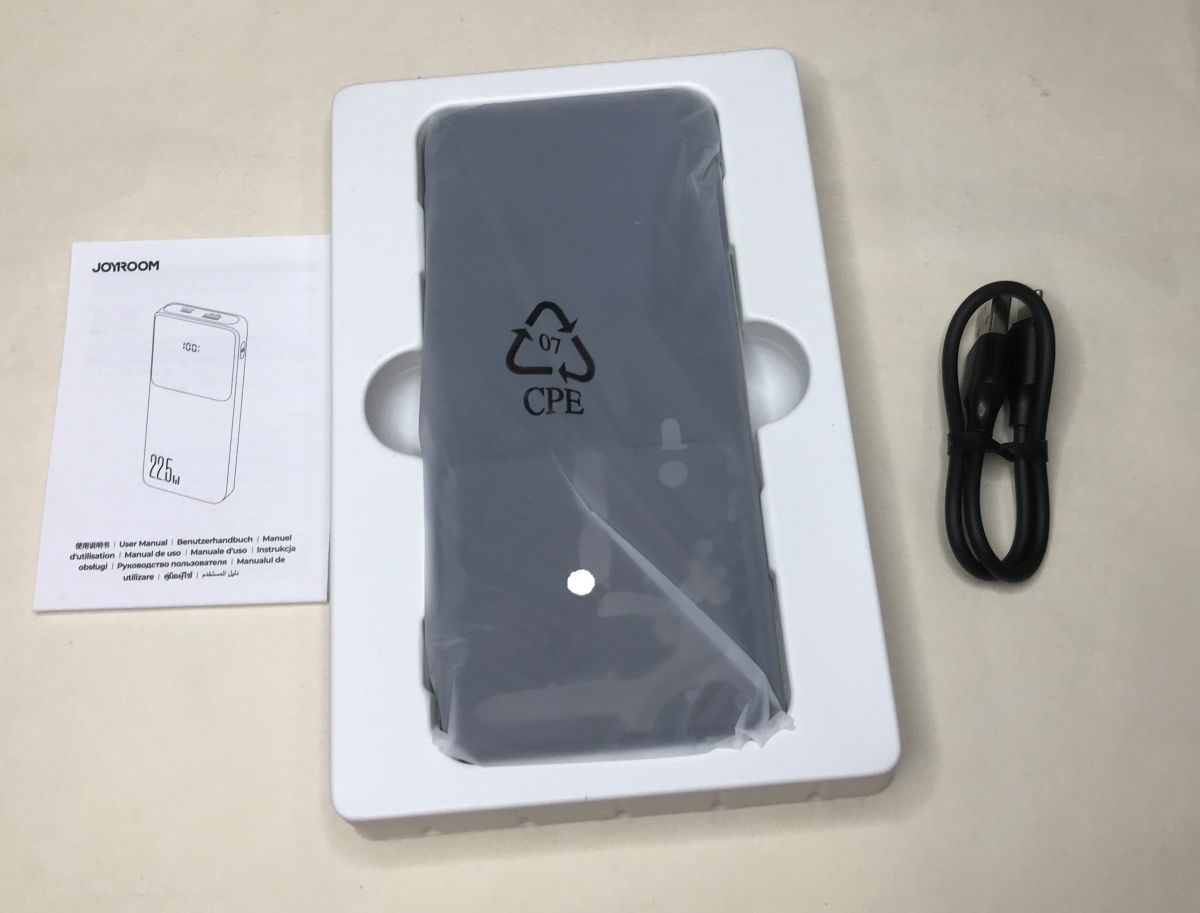
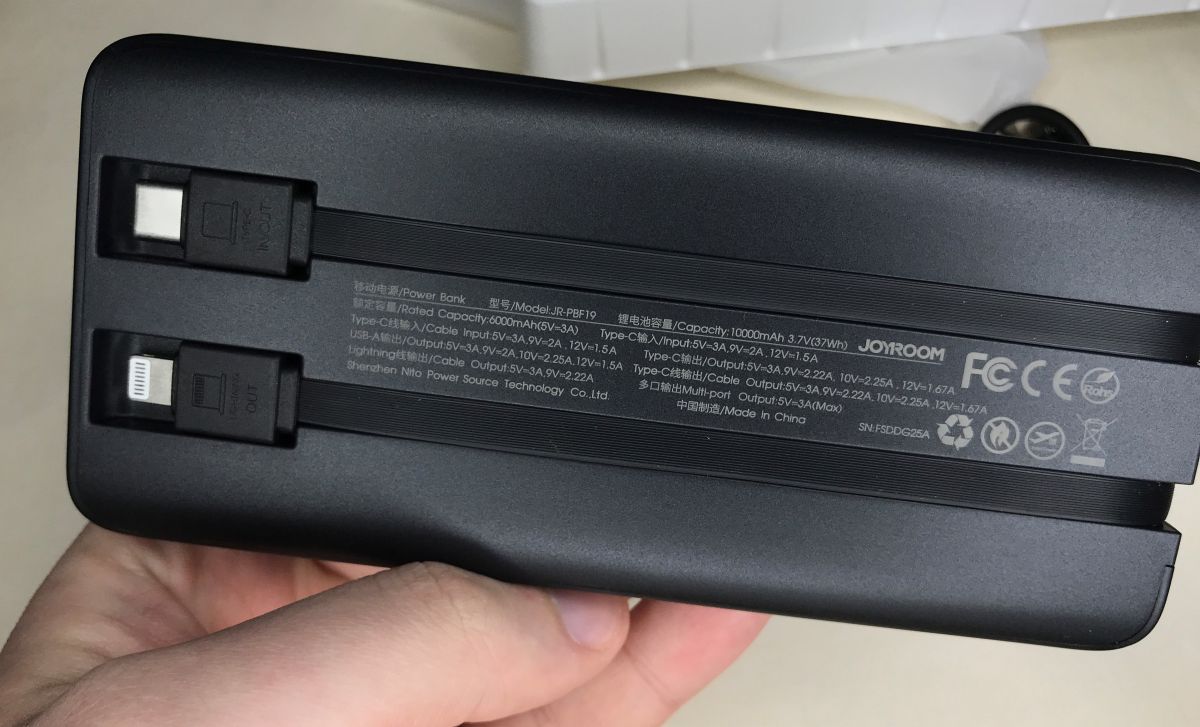
JR-PBF19 is the third powerbank tested today, also 10 Ah capacity and also 22.5 watts. It was, however, a dime more expensive, and now the question is, what are we paying extra for? Could it be for a set of built-in, aesthetically concealed cables with different terminals? This is undoubtedly convenient.
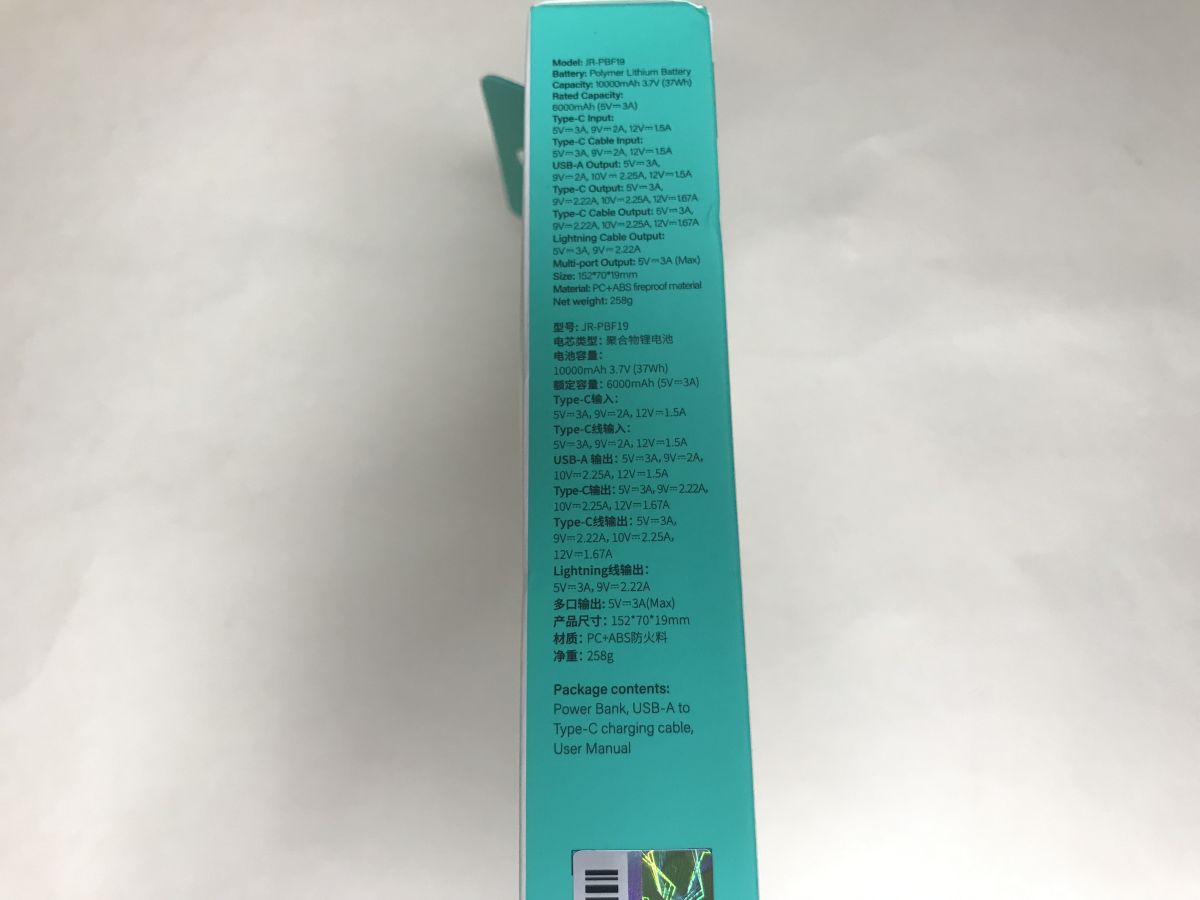
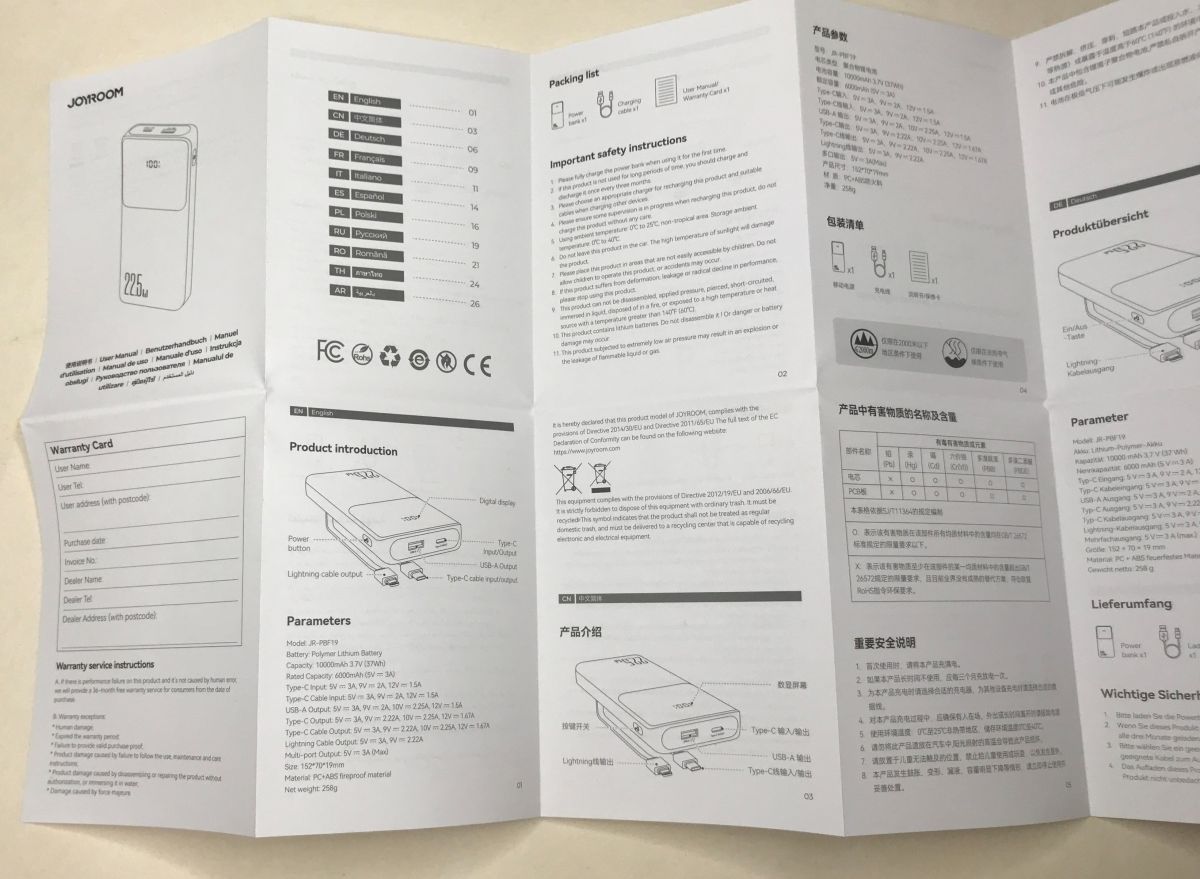
Here again we can expect (according to the manufacturer) 6 Ah at 5 V with a 3 A load. 37 Wh in total is to be had on the cells.
The cables are supposedly built in, and they still gave one USB C in bulk. Generous.
And here's the powerbank itself - everything you need, and output for iPhone, and USB C:
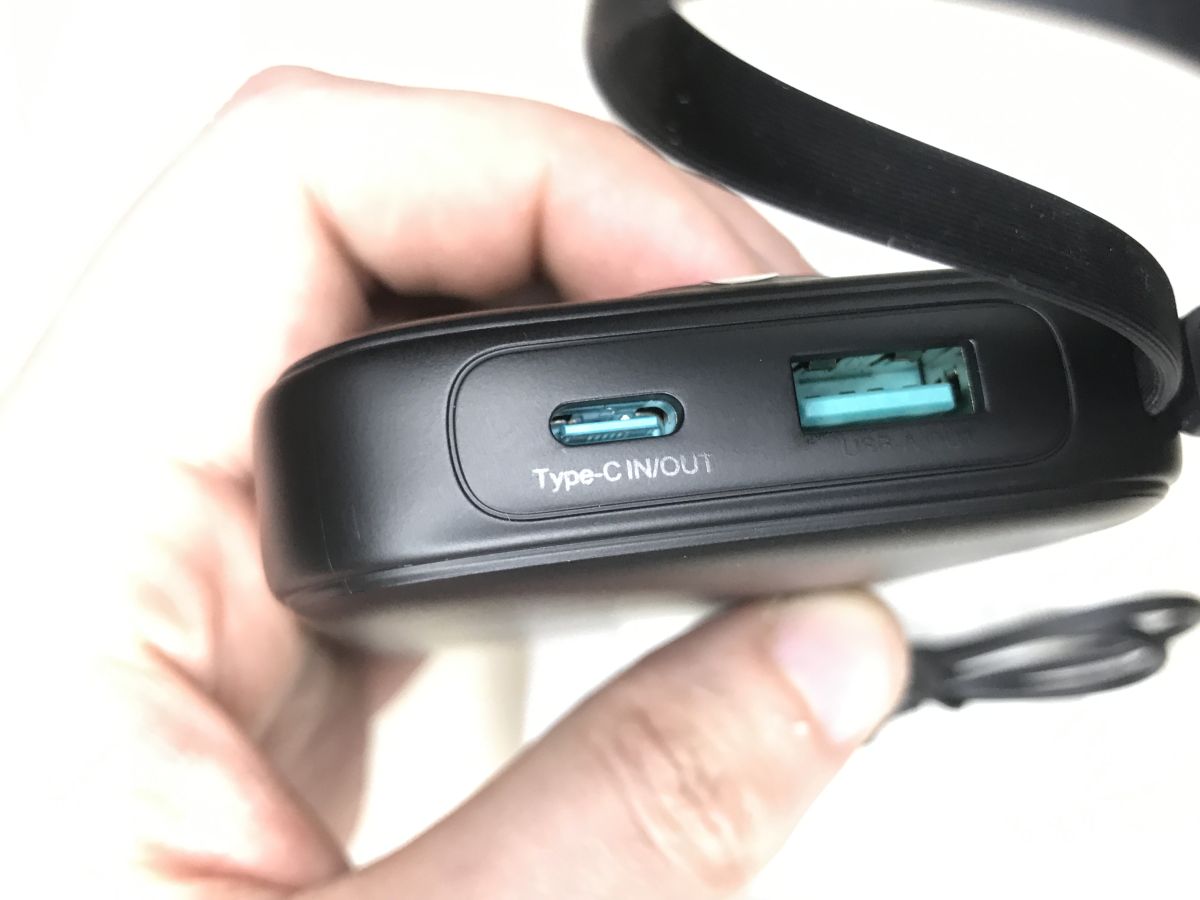
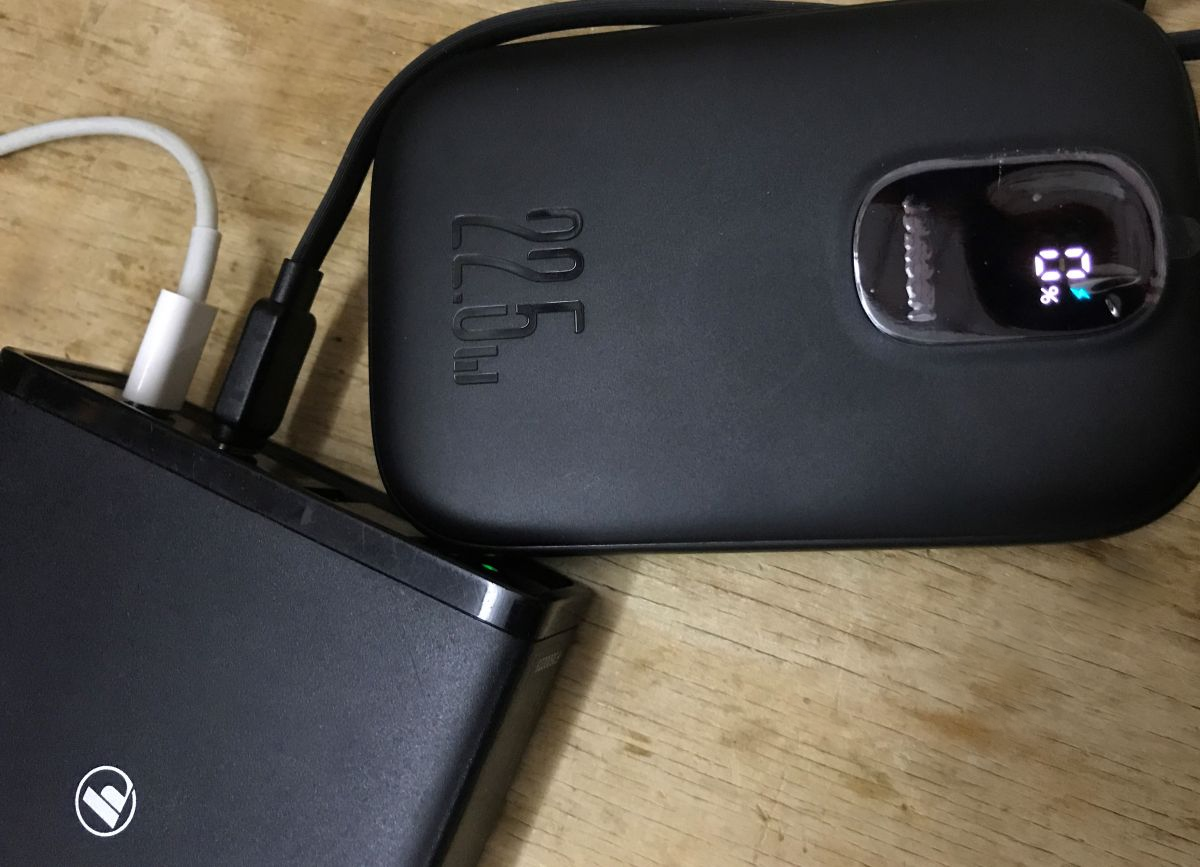
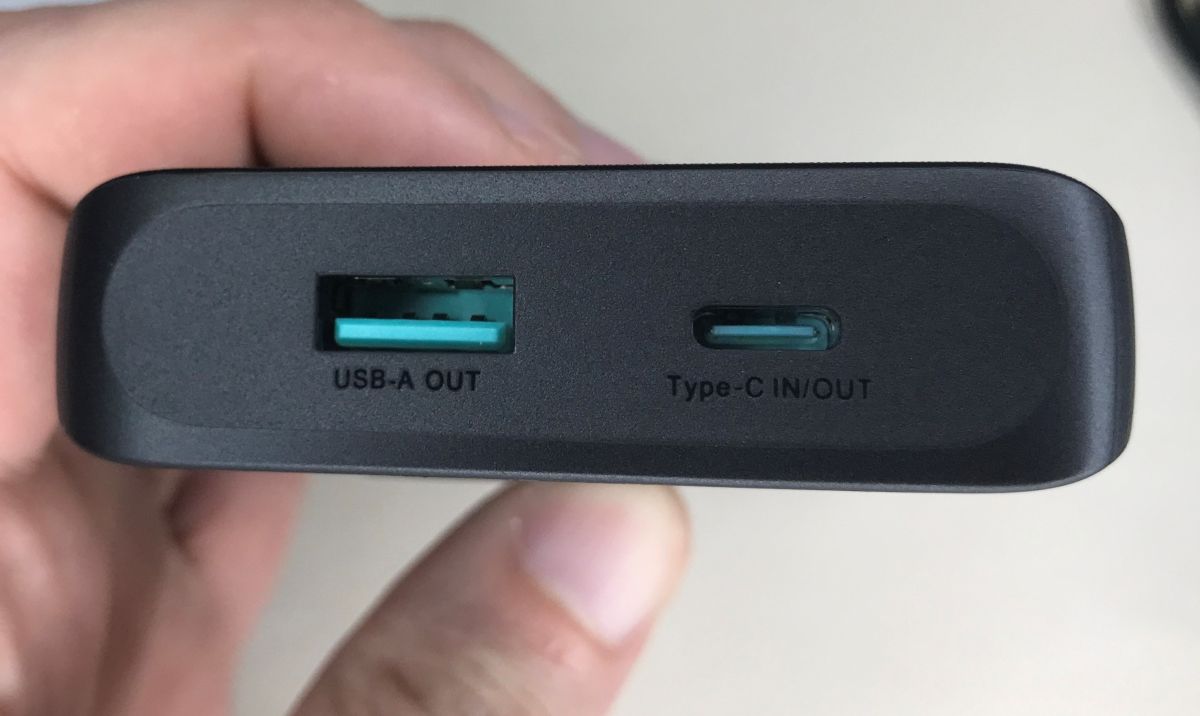
The USB C input is again bi-directional:
Instructions and parameters:
Time for testing.
Load at 5 V - fine, over 3.5 A:
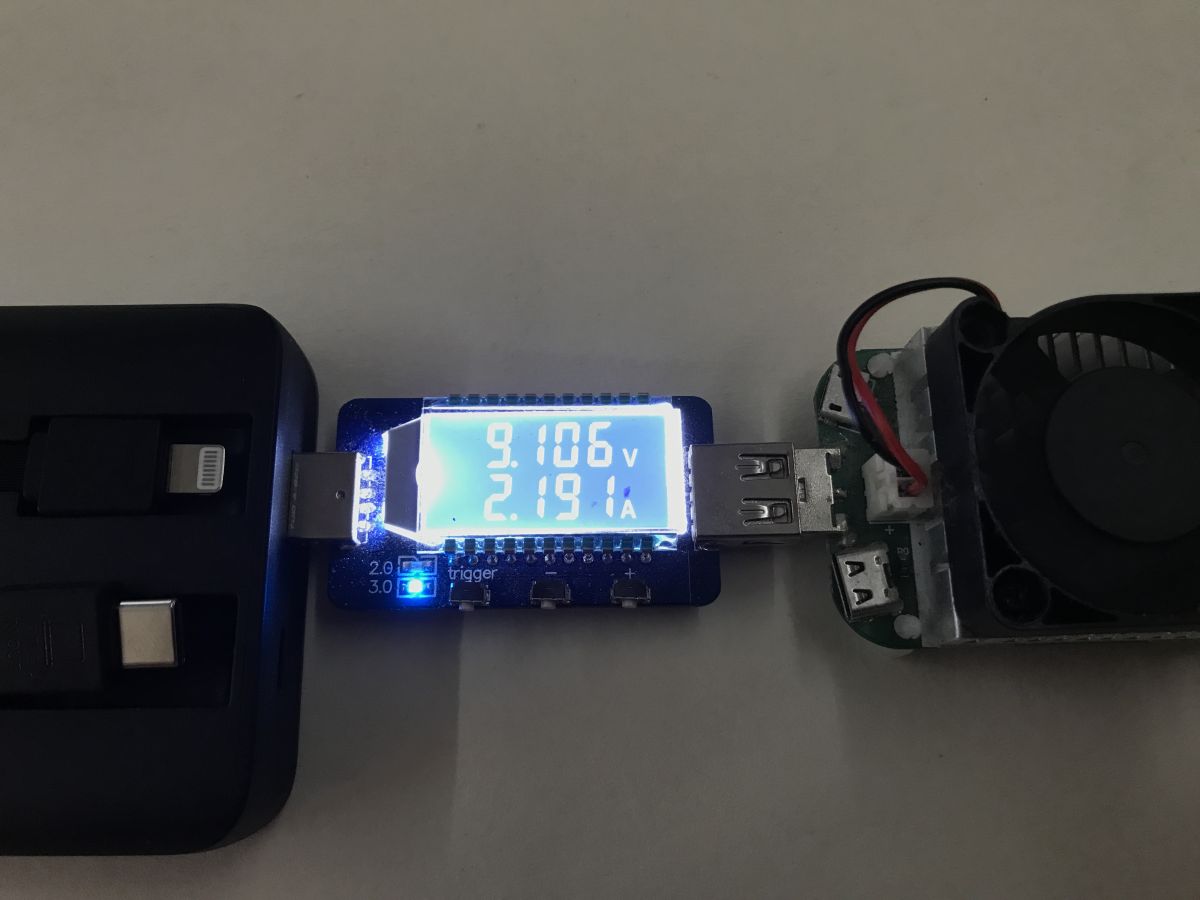
With USB A, at 12 V it managed to draw over 1.5 A, and at 9 V as much as 2.1 A.
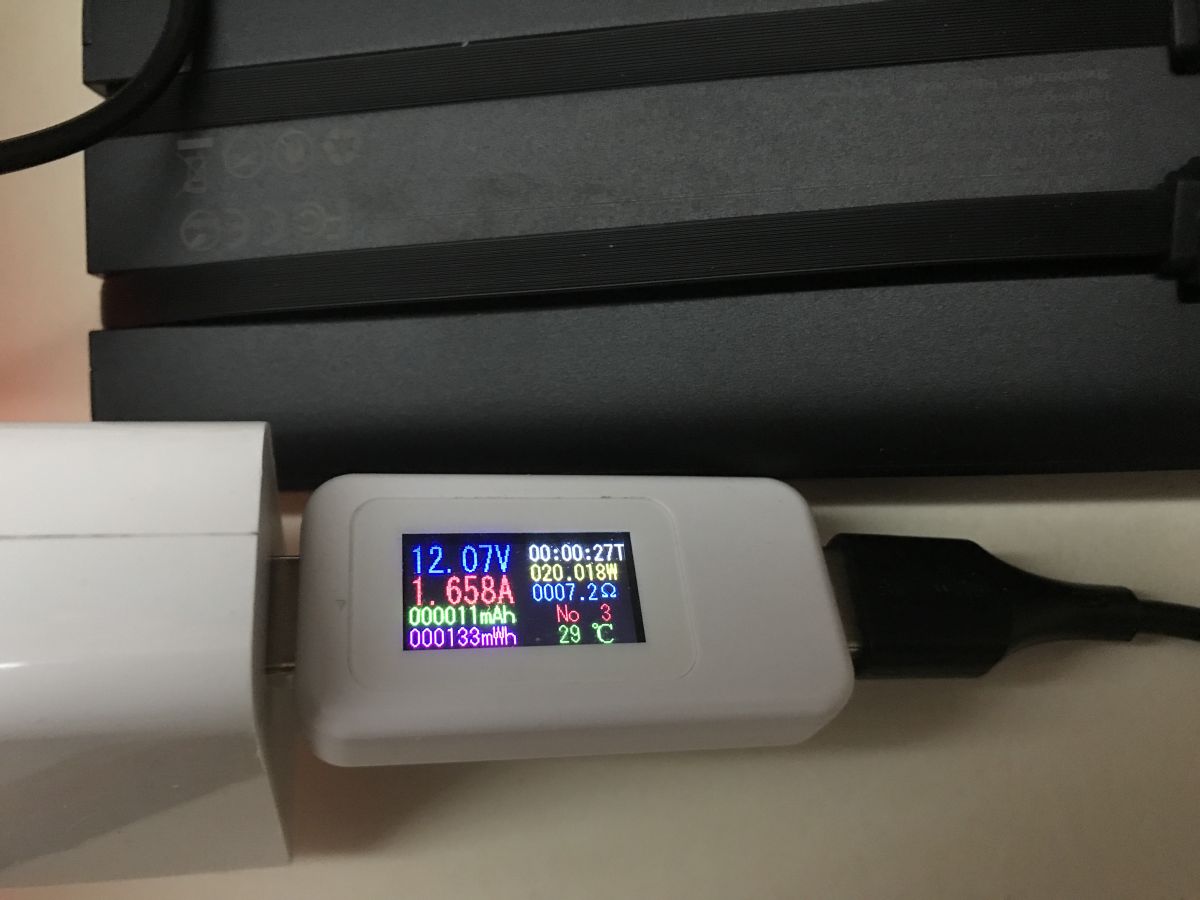
The powerbank also charges at a higher voltage. I recorded over 1.5 A at 12 volts.
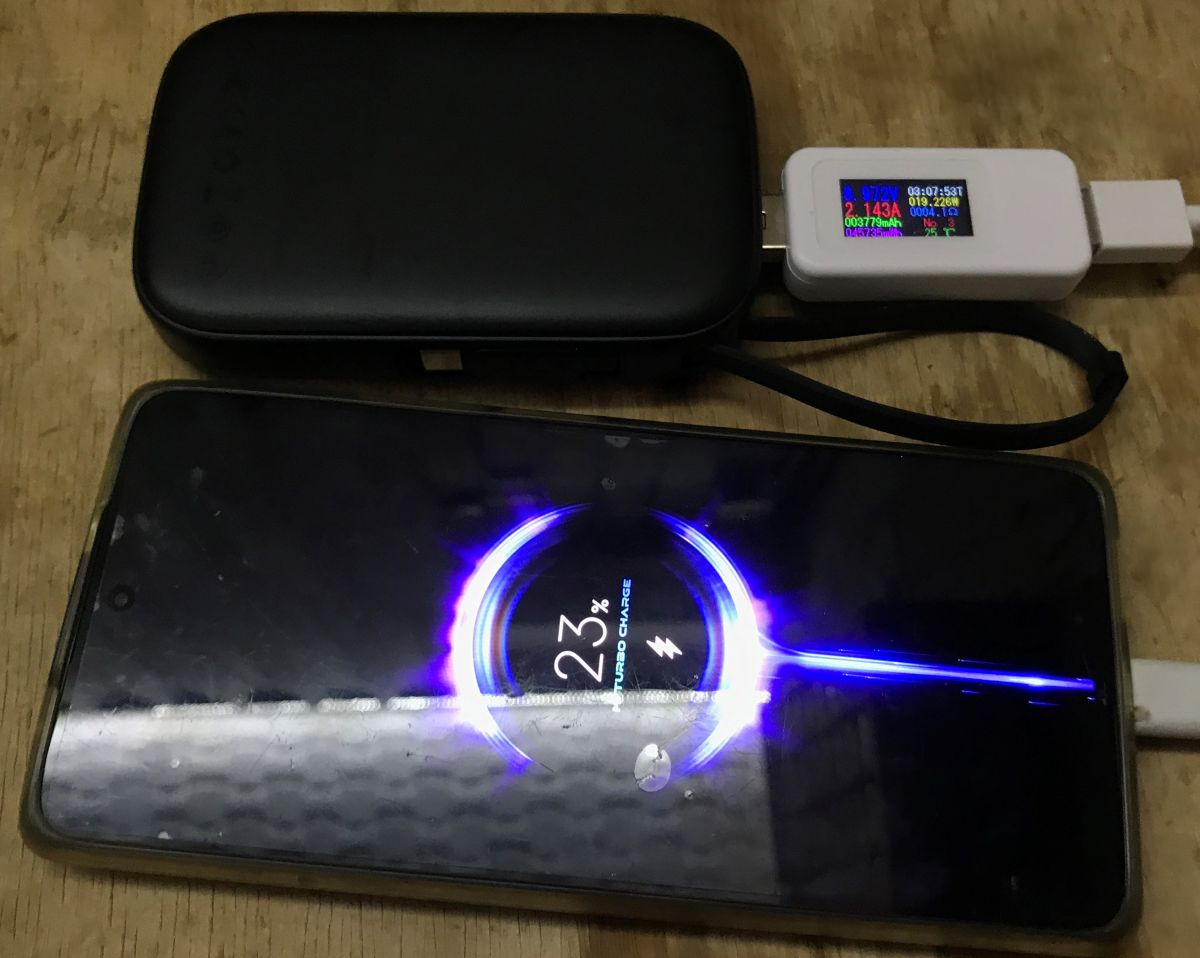
Xiaomi also switches on a higher voltage:
Charging measurement:
I only noticed one downside - connecting the powerbank to charge momentarily disables the QC at its output, then the voltage of 5 V remains there.
Capacity tests:
Approximately 7.4 Ah at 5 V. This confirms the performance promised by the manufacturer.
In summary, here are three powerbanks with the same capacity, but with slightly different functionalities:
- JR-L005 is the cheapest, looks nice, but does not support QC and this is a fundamental problem
- JR-PBF17 is slightly more expensive, it already supports QC, so it is suitable for newer equipment and will provide faster charging for them
- JR-PBF19 is traceably more expensive, but offers up to two built-in cables for versatility in the face of unpredictable situations
Each of these powerbanks holds the promised capacity, no complaints here. Both copies with QC also manage to enable charging of the powerbank itself with a higher voltage. The only problematic issue is "series" charging, i.e. the phone connected to the powerbank connected to the power supply. Then the QC on the output either does not work at all or the powerbank resets.
Do you use powerbanks with QC? What models do you have tried and tested?
About Author
p.kaczmarek2 wrote 14827 posts with
rating 13015 , helped 659 times.
Been with us since 2014 year.
TL;DR: For a short trip, the JR-PBF17 is the best balance: it delivered about 7.4 Ah at 5 V, supports QC/PD, and, as the reviewer effectively concludes, "it offers what it promised." Choose JR-L005 only for basic 5 V charging, and JR-PBF19 if built-in cable variety matters more than price. [#21908633]
Why it matters: Travelers usually care less about the printed 10 Ah and more about real 5 V output, charging speed, cable convenience, and failure behavior when charging multiple devices.
Model
Best for
Real measured output at 5 V
Fast charging
Noted drawback
JR-L005
Lowest-cost basic use
~7.33 Ah
No QC
Only 5 V charging
JR-PBF17
Best overall value
~7.4 Ah
QC 3.0 + PD
Can reset during pass-through-like use
JR-PBF19
Maximum cable convenience
~7.4 Ah
QC/PD-class higher-voltage charging
QC drops to 5 V when input charging starts
Key insight: All three powerbanks met their claimed usable capacity class, but fast-charging support changes the real travel experience far more than the printed 10 Ah. The main practical weakness is unstable behavior when input charging and phone output charging happen at the same time.
Quick Facts
All three models are rated 10 Ah on 3.7 V cells, or about 37 Wh, but the packaging/manual for the faster models also states only 6 Ah at 5 V output under load. [#21908633]
JR-L005 weighs 225 g, costs about £50, supports only 5 V output, and measured about 7,333 mAh at 5 V in repeated testing. [#21908633]
JR-PBF17 costs about £80, supports QC 3.0 and PD, reached 12 V output testing, and delivered about 7.4 Ah at 5 V. [#21908633]
JR-PBF19 is slightly more expensive than JR-PBF17, includes multiple built-in cables, exceeded 3.5 A at 5 V, and also measured about 7.4 Ah at 5 V. [#21908633]
The harshest failure case was not capacity but power-path behavior: JR-PBF17 repeatedly switched on and off when the charger and phone were connected simultaneously, while JR-PBF19 dropped fast charging back to 5 V when input charging started. [#21908633]
JR-L005 vs JR-PBF17 vs JR-PBF19: which 10 Ah powerbank is the best choice for a short trip?
The JR-PBF17 is the best all-round choice for a short trip. It matched the stronger JR-PBF19 at about 7.4 Ah at 5 V, but adds QC 3.0 and PD without the JR-PBF19 premium for extra built-in cables. Choose JR-L005 only if you want the cheapest option and can accept basic 5 V charging. Choose JR-PBF19 if you value having built-in USB-C and iPhone-oriented cable options more than price. [#21908633]
Why does the Joyroom JR-PBF17 reset or switch power on and off when the phone and charger are connected at the same time?
It resets because its power-path behavior appears unstable when it tries to charge itself and fast-charge a phone at the same time. In the test, connecting a QC charger to the powerbank while a phone was attached caused alternating power on/off behavior and display resets. That makes this series-charging scenario the biggest functional flaw found on the JR-PBF17, even though normal output and capacity tests were good. [#21908633]
How can I measure the real capacity of a 10 Ah powerbank at 5 V instead of relying only on the label?
Measure the output at 5 V under a controlled load, not the cell rating. Use this 3-step method:
Fully charge the powerbank.
Connect a USB meter and a stable load, such as about 1.5 A at 5 V.
Discharge it until cutoff and record delivered mAh or Ah at the USB output.
That method gave about 7,333 mAh for JR-L005 and about 7.4 Ah for JR-PBF17 and JR-PBF19. It reflects real usable output, not the internal 3.7 V cell label. [#21908633]
What is QC 3.0 in a powerbank, and how is it different from ordinary 5 V charging?
QC 3.0 lets the powerbank negotiate higher output voltage with compatible devices, unlike ordinary fixed 5 V charging. "QC 3.0 is a fast-charging standard that raises voltage above 5 V after device negotiation, increasing charging power without only raising current." In this thread, JR-PBF17 and JR-PBF19 reached 9 V and 12 V test conditions, while JR-L005 stayed at 5 V only. That makes JR-L005 much less suitable for newer fast-charging phones. [#21908633]
What is USB PD in the JR-PBF17 and JR-PBF19, and how does it affect charging speed?
USB PD support means these models can negotiate higher-power charging profiles over USB-C, which improves charging speed on compatible devices. "USB PD is a USB-C power-delivery standard that negotiates voltage and current digitally, enabling faster and more flexible charging than fixed 5 V output." In the thread, JR-PBF17 is explicitly described as supporting PD and QC, and both faster models showed higher-voltage charging behavior, including 9 V and 12 V operation. [#21908633]
How much real output capacity at 5 V should I expect from a 10 Ah 3.7 V powerbank like the Joyroom models?
Expect roughly 7.3 to 7.4 Ah at 5 V from these 10 Ah Joyroom models. JR-L005 measured about 7,333 mAh at 5 V, and both JR-PBF17 and JR-PBF19 measured about 7.4 Ah at 5 V. The thread also notes that the manufacturer states about 6 Ah at 5 V for some models, so real results can vary by load and test conditions. Practical output is always lower than the 10 Ah cell label. [#21908633]
Why does a manufacturer list 10 Ah on the cells but only around 6 Ah at 5 V on the output?
Because the 10 Ah figure is quoted at the cell voltage, not at the USB output voltage. The thread states 10 Ah at 3.7 V equals about 37 Wh on the cells, while the manufacturer expects about 6 Ah at 5 V under load. Voltage conversion and converter losses reduce the output-side amp-hour number. That is why a powerbank can honestly be sold as 10 Ah internally but show much less capacity at the 5 V USB port. [#21908633]
Which model makes more sense for Apple devices: the Joyroom JR-L005 with Lightning cable or the JR-PBF19 with multiple built-in cables?
The JR-PBF19 makes more sense for most Apple users who also carry other devices. JR-L005 has a neatly hidden Lightning cable and a slim design, but it only offers basic 5 V charging. JR-PBF19 adds broader cable flexibility, higher-power charging, and similar real capacity at about 7.4 Ah at 5 V. JR-L005 only wins if your priority is the lowest price and a simple iPhone-focused backup battery. [#21908633]
How do built-in cables on the JR-PBF19 affect convenience and durability compared with carrying separate USB-C or Lightning cables?
Built-in cables improve convenience but can limit flexibility if one cable wears out. In the thread, JR-PBF19 stands out because it hides multiple built-in cable ends and still includes an extra USB-C cable in the box. That makes it better for short trips and unpredictable charging situations, especially when you want fewer loose accessories. The trade-off is that convenience becomes part of the device, so cable failure would affect the whole powerbank experience. [#21908633]
What causes QC fast charging to drop back to 5 V when a powerbank like the JR-PBF19 is plugged in for charging?
Input charging interrupts or disables the higher-voltage fast-charge negotiation on the output. The thread reports that when JR-PBF19 was connected for charging, QC on its output was momentarily disabled and the output stayed at 5 V. That behavior suggests the powerbank prioritizes its own charging state or resets the negotiation session. It is a practical limitation of simultaneous input and output use, not a capacity problem. [#21908633]
How hot is too hot for a powerbank during high-power discharge, and is around 60°C on the outside safe?
Around 60°C on the outside is already hot enough to treat as a caution zone. The JR-PBF17 reached about 60°C externally during higher-power testing, and the reviewer explicitly questioned how hot it might be inside. The thread does not report shutdown, fire, or swelling, so it does not prove immediate danger. It does show that sustained high-load operation can create substantial heat, and that is the thermal edge case to watch. [#21908633]
What charging voltages and currents can the Joyroom JR-PBF17 and JR-PBF19 actually deliver through USB-A and USB-C?
Both faster models delivered higher-voltage output beyond normal 5 V. JR-PBF17 provided over 1.5 A at 12 V from USB-A, and a Xiaomi phone drew over 2 A at 9 V. JR-PBF19 exceeded 3.5 A at 5 V, delivered over 1.5 A at 12 V from USB-A, and reached about 2.1 A at 9 V. The thread also shows both models accepting higher-voltage charging through USB-C in the charging direction. [#21908633]
How can I test whether a Xiaomi phone is really negotiating 9 V or 12 V fast charging from a powerbank?
Use a USB meter that shows live voltage and current between the powerbank and the phone. Follow this 3-step check:
Connect the phone through the meter.
Start charging from a QC-capable port.
Watch whether voltage rises from 5 V to about 9 V or 12 V.
In the thread, the Xiaomi phone triggered Turbo charging and showed over 2 A at 9 V on the faster Joyroom models. That confirms real fast-charge negotiation, not just a marketing label. [#21908633]
Why is the JR-L005 considered less future-proof even though its measured capacity matches the declared value?
It is less future-proof because it lacks QC and only supports 5 V charging. Its measured output was good at about 7,333 mAh at 5 V, so capacity is not the issue. The limitation is charging speed and compatibility with newer devices that expect negotiated 9 V or 12 V fast charging. That means JR-L005 can still serve as a backup battery, but it gives up one of the most useful features for modern travel charging. [#21908633]
What tried-and-tested QC powerbanks are worth considering as alternatives to the Joyroom JR-L005, JR-PBF17, and JR-PBF19 for travel?
This thread does not name any other tried-and-tested travel powerbanks, so it does not support recommending external alternatives. Within the tested set, the QC-capable options are JR-PBF17 and JR-PBF19. JR-PBF17 is the better value choice, while JR-PBF19 is the convenience choice because of its extra built-in cables. If QC matters, the thread gives no reason to choose JR-L005 over those two models. [#21908633]
AI summary based on the discussion. May contain errors.







Comments