




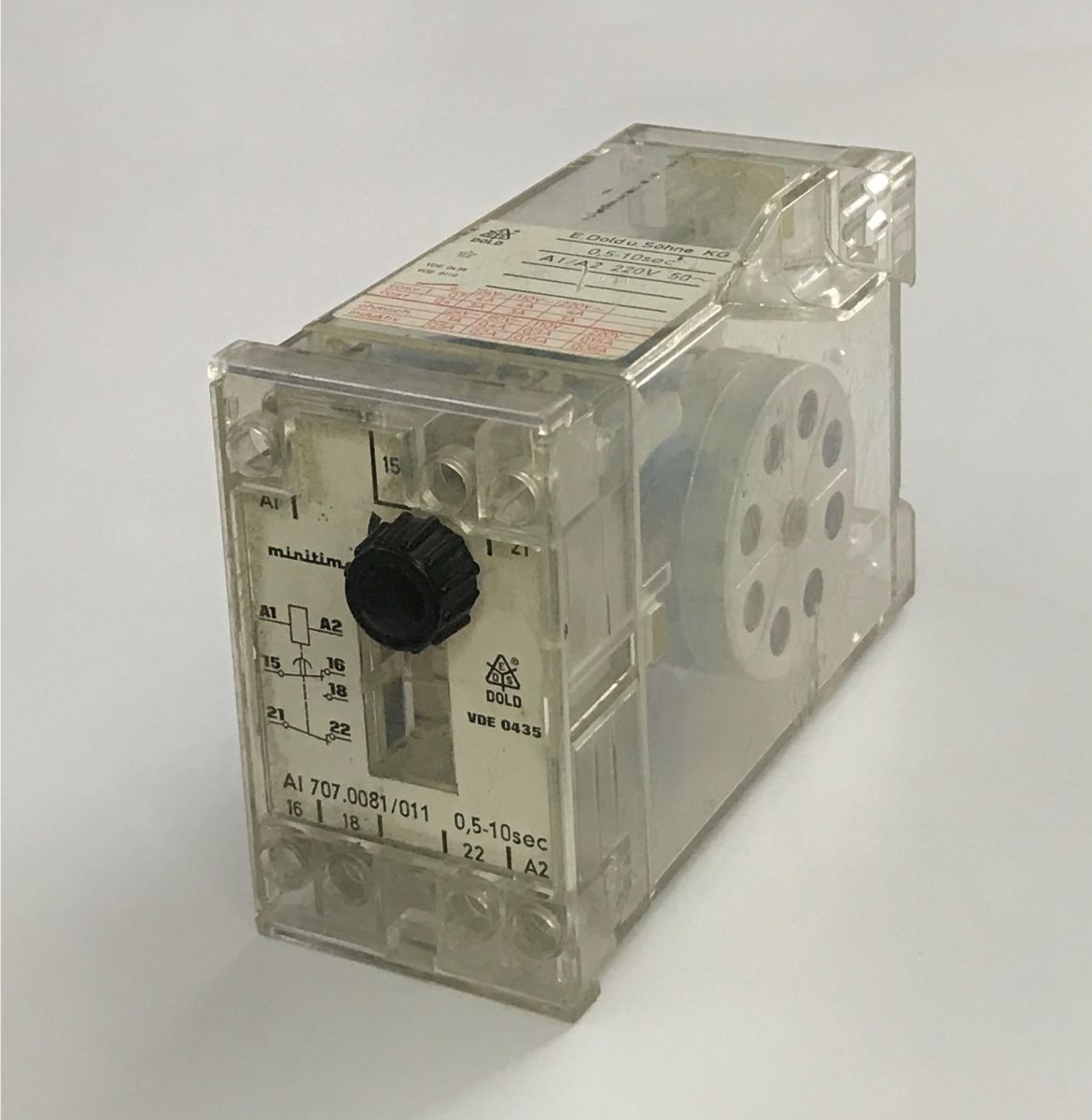
Time for a break from the ubiquitous microcontrollers and 'smart' devices. Today we're taking a look inside another retro piece of equipment, this time made by German company E. Dold & Söhne KG. This will be a timer relay that delays the switching on/off of a receiver for an adjustable time between 0.5 and 10 seconds. I will demonstrate its operation here with short videos, show the interior and the principle of operation.
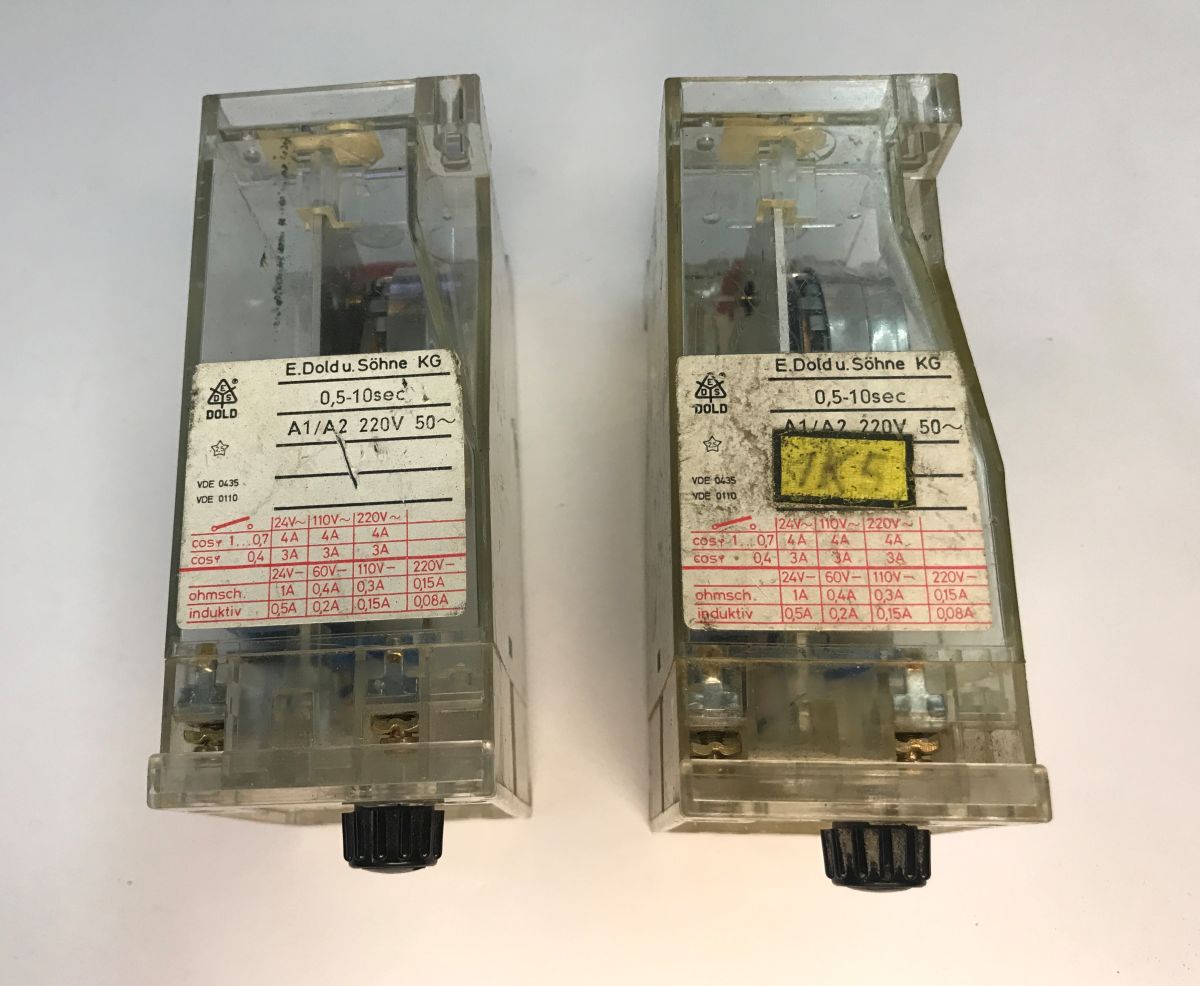
The transparent casing already explains a bit to us. This type of device is fully electromechanical and there is no microcontroller or even a simple NE555-type pulse generator inside. These are not the times, moreover it would be redundant.
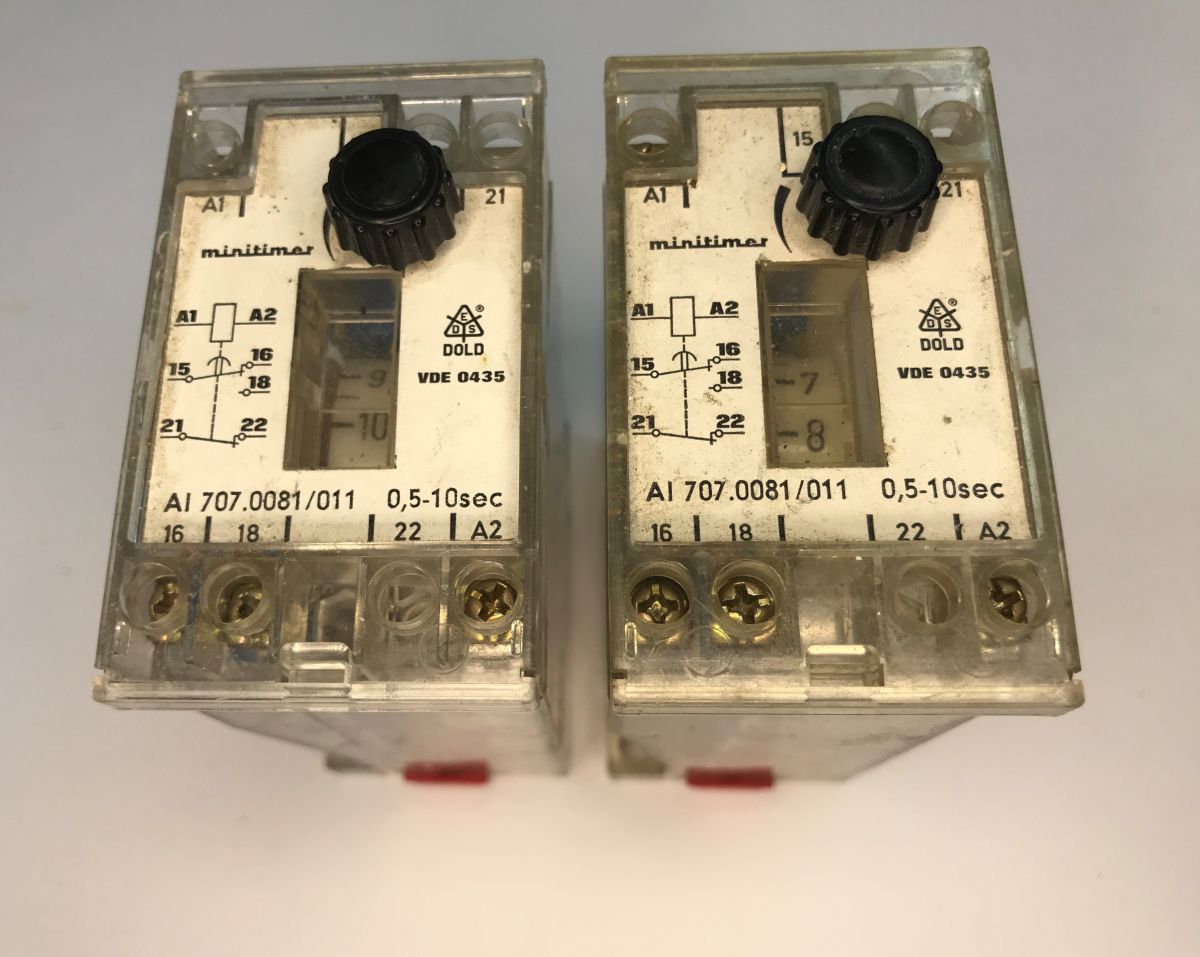
The front shows the name 'minitimer', the standard to which it was made (VDE 0435) and the internal schematic. Power is supplied to the A1 and A2 screw terminals, nominally 220 V. On the right we have a knob for adjusting the response time, and in the centre a window where, when the power is off, the currently set time value can be seen. When the equipment is powered up, you can in turn see how much time is left to switch on. In addition, the device has terminals 15, 16 and 18, where 15 is a common contact, 16 is a normally closed contact (NC, opens when time expires) and 18 is a normally closed contact (NO, closes when time expires). Potentially there is still room for pair 21 and 22, but in this version it is not occupied.
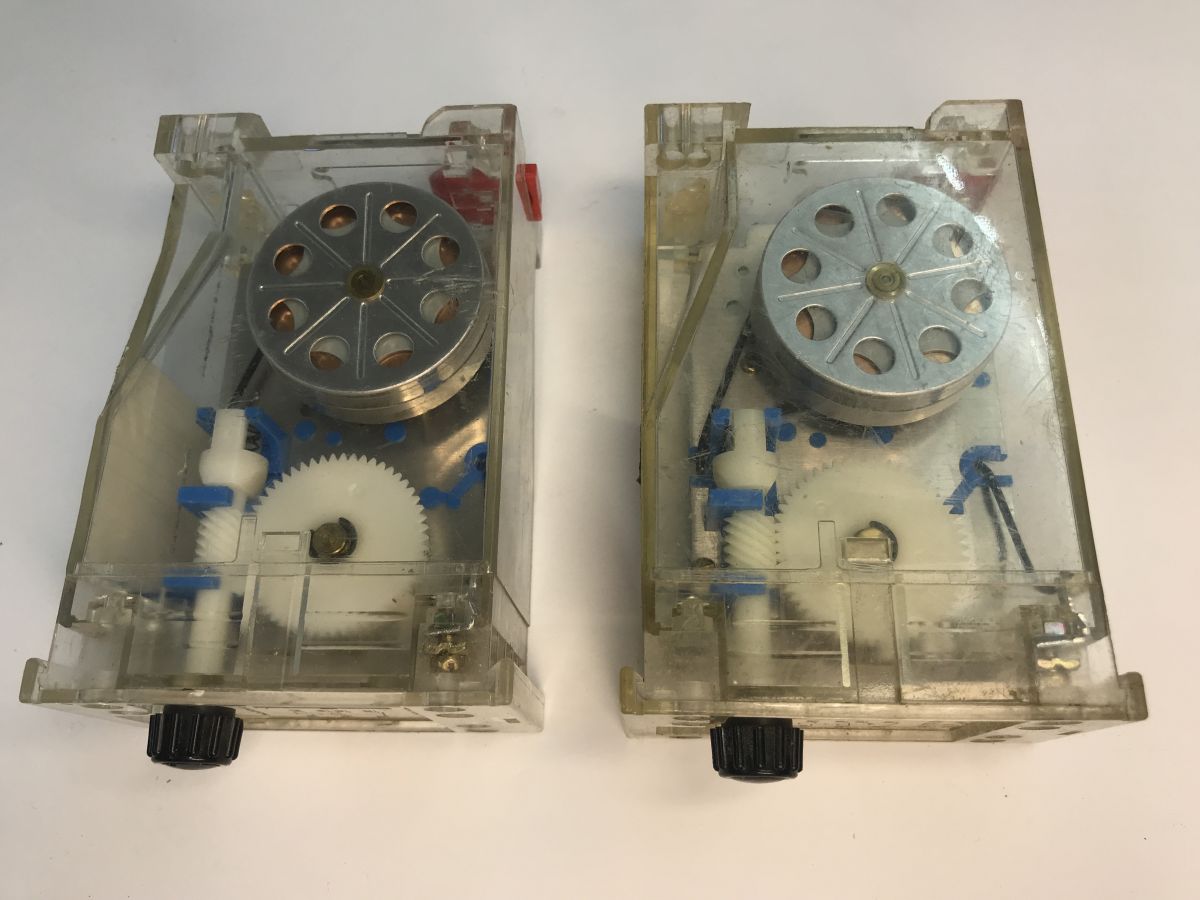
The transparent casing immediately reveals the general principle of such equipment. It is vain to look for any electronics here, there is not a single transistor, and the whole thing works mechanically. The time-setting knob drives a spring-loaded clock mechanism via a worm gear. Just how is it that the device can perform multiple cycles without another winding?
We'll check soon - just a video presentation to come:
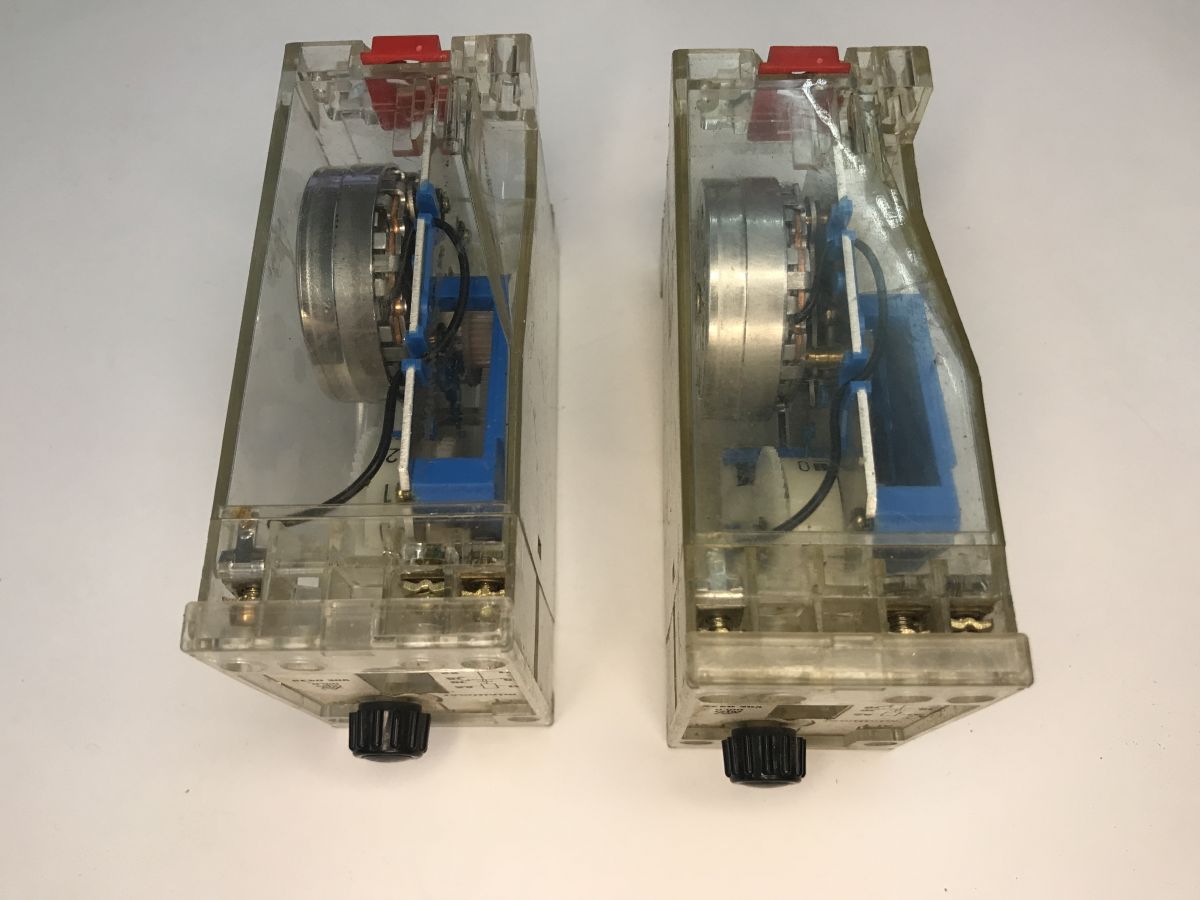
Side view - synchronous motor:
From the other side - you can see how the drive is switched on, you can see the movement of the NO/NZ contact (normally open/normally closed, possibly normally open/closed):
Let's go back to the question posed - how is it that the device can perform multiple cycles without another screw-up? Let's remove the casing and check.
The video here shows perhaps the most interesting part of the mechanism. Here we have an AC motor that is connected to an electromagnet. When power is applied, it pulls the pinion towards itself, so that the rotary motion is fed further through the gears and the mechanism can 'count down' until the contacts short circuit or open. When power is lost, the pinion moves up again and the spring retracts the mechanism to the setting selected by the user.
Below, the same thing, but with the motor locked (resting against the table):
And without locking:
Gallery:
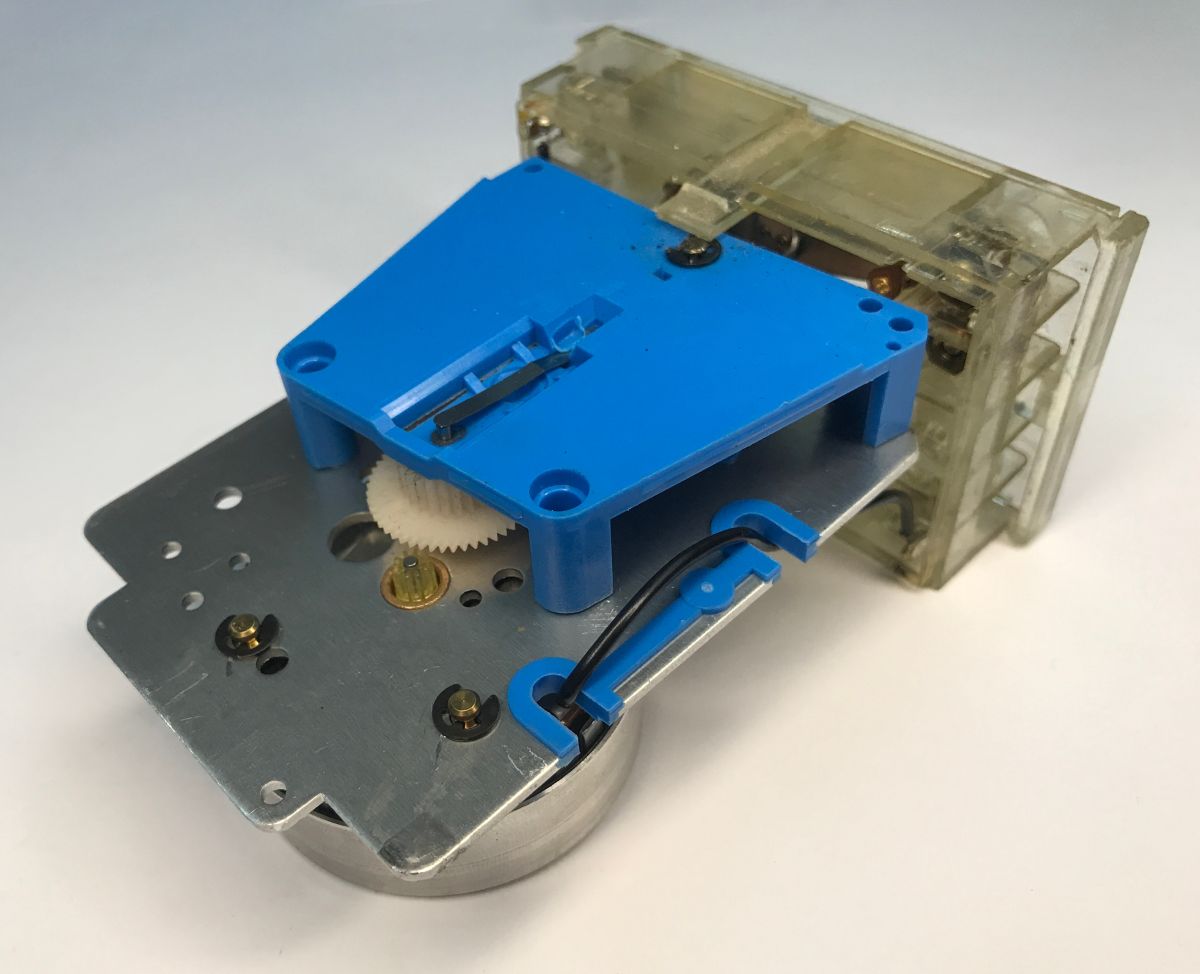
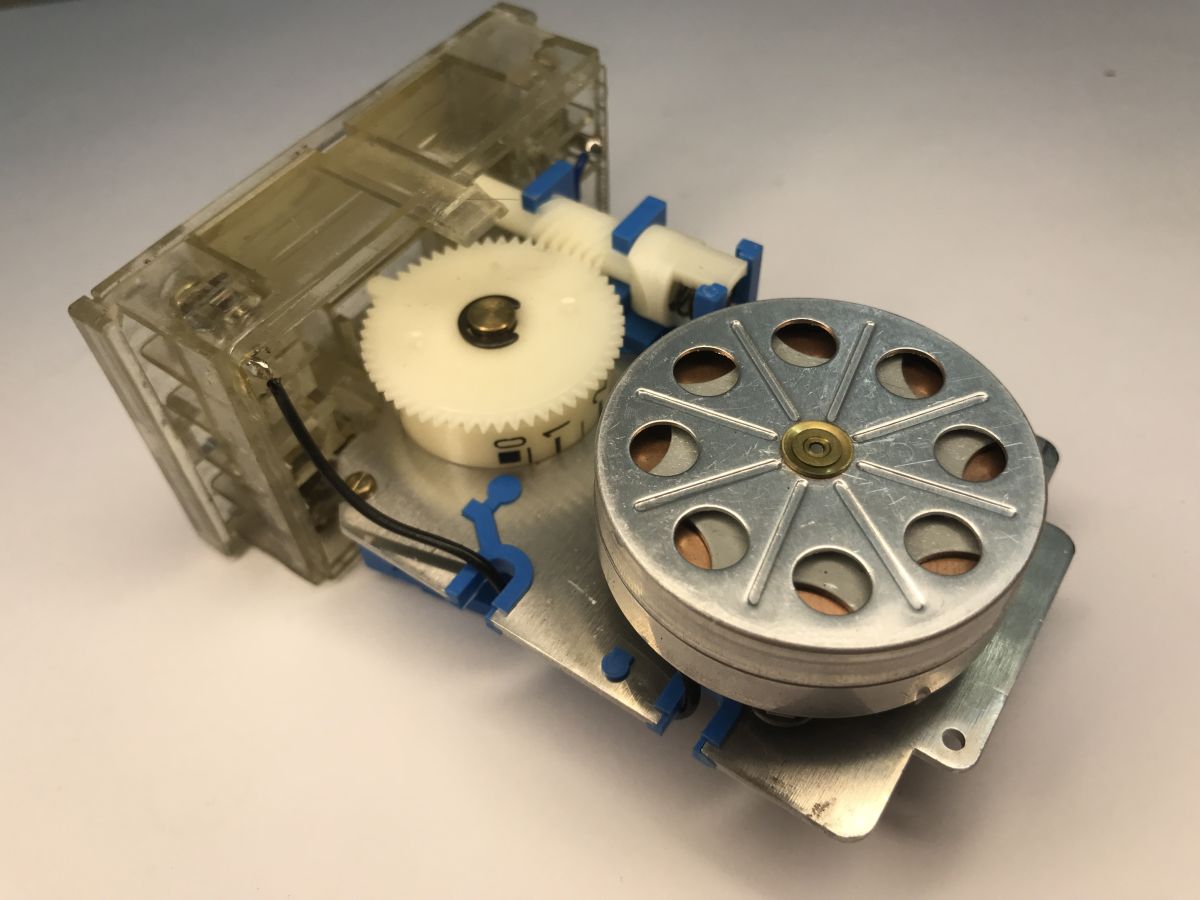
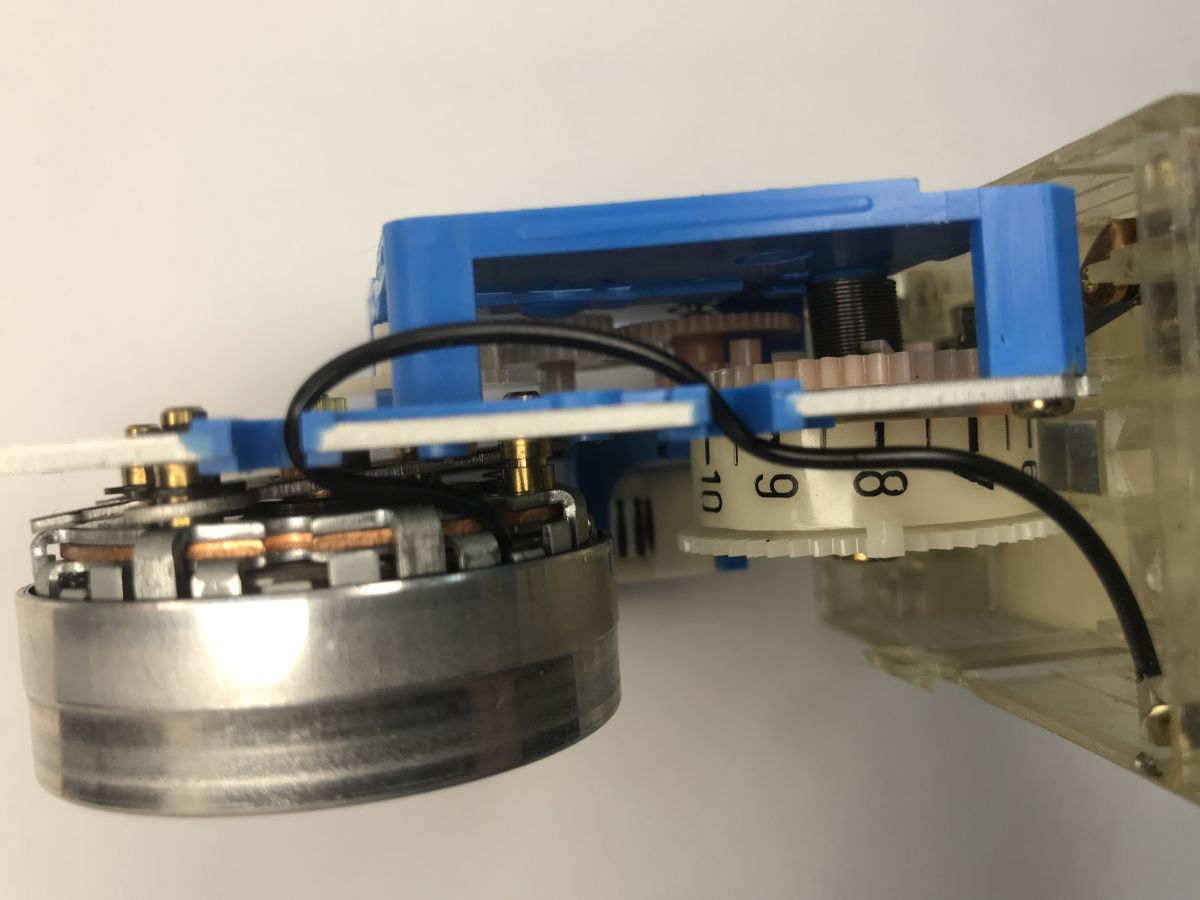
On the other side you can see the simple gears used just to transfer movement from the motor to the actual timekeeping mechanism. There is nothing overly complicated here - several gears with matched ratios slow down the rotation of the motor to match the desired range of adjustment. Modifying this mechanism allows the manufacturer to easily create different versions of the product differing in the range of possible deceleration.
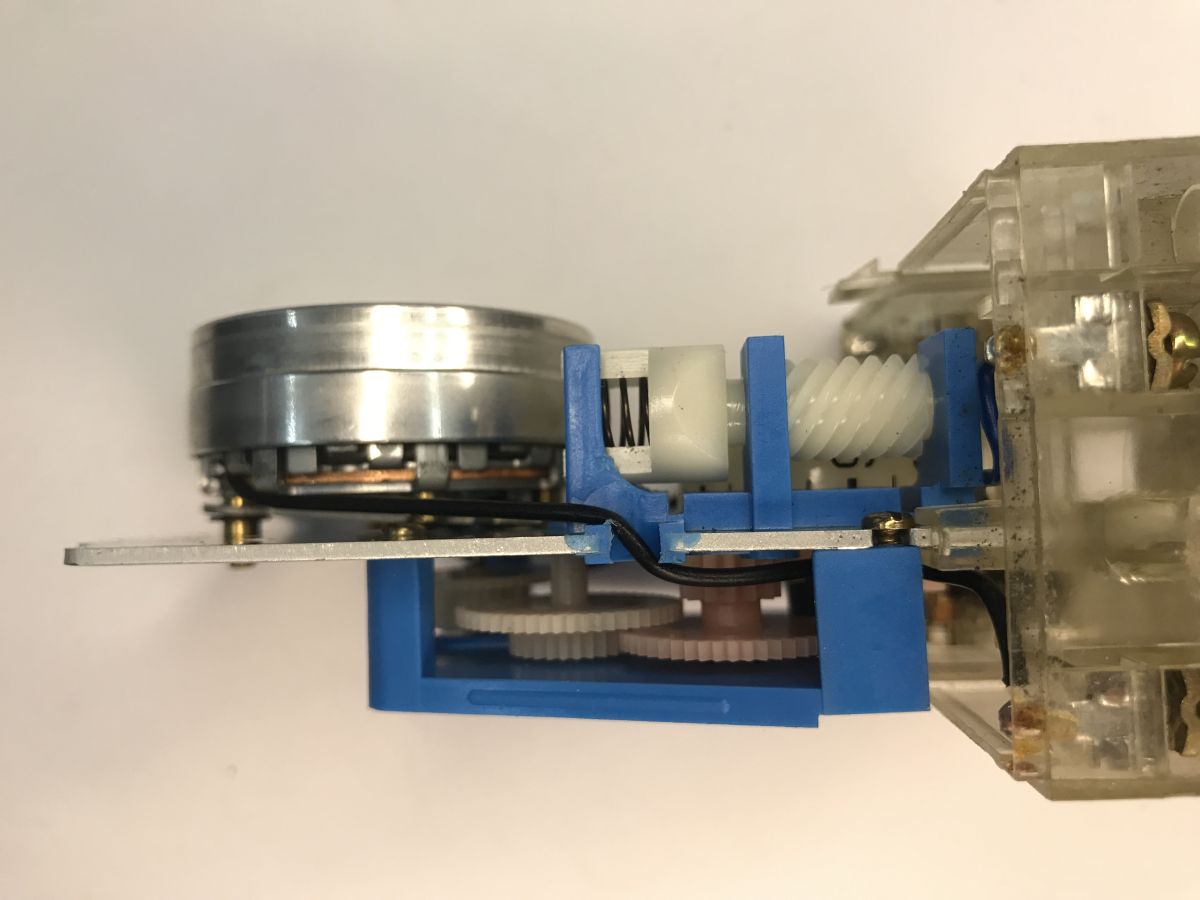
It remains to do the rest of the disassembly, the motor is connected directly to the power terminals, it is an AC motor, it runs on mains voltage:
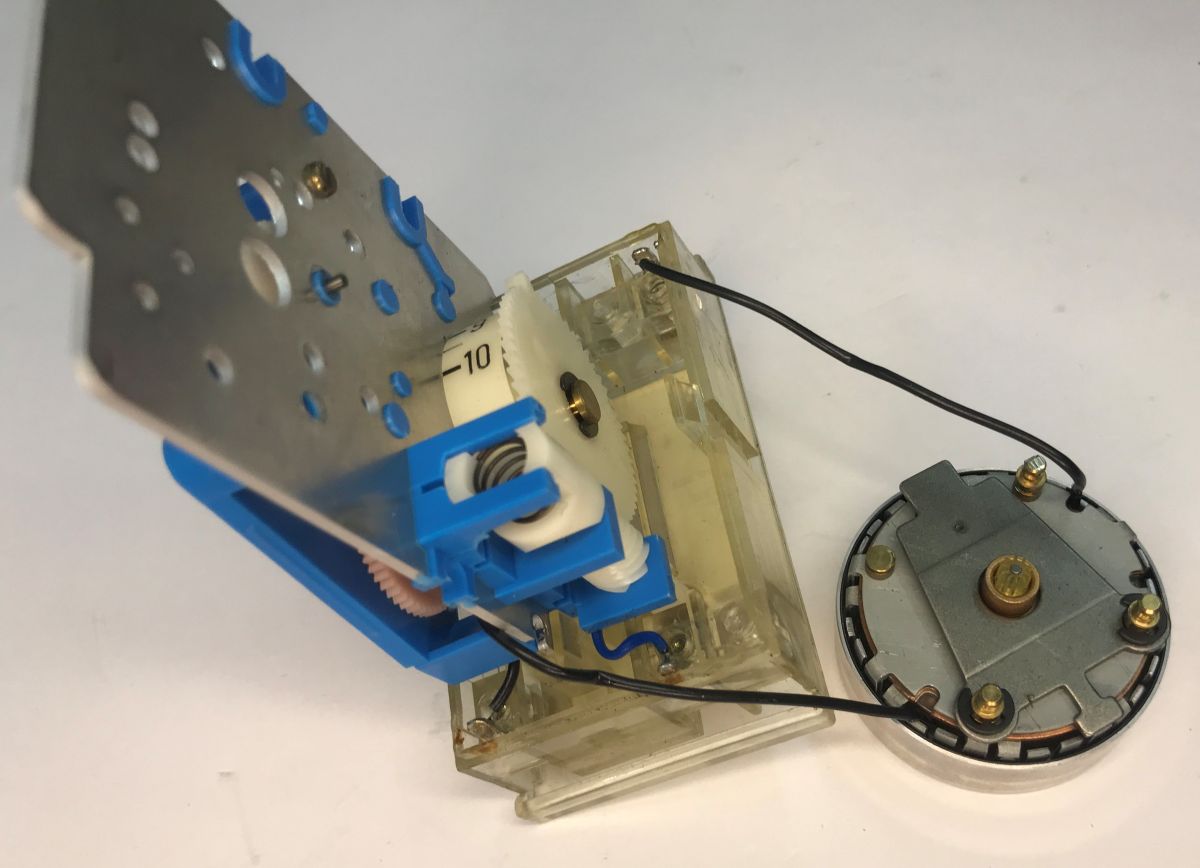
Gearboxes and the spring already discussed:
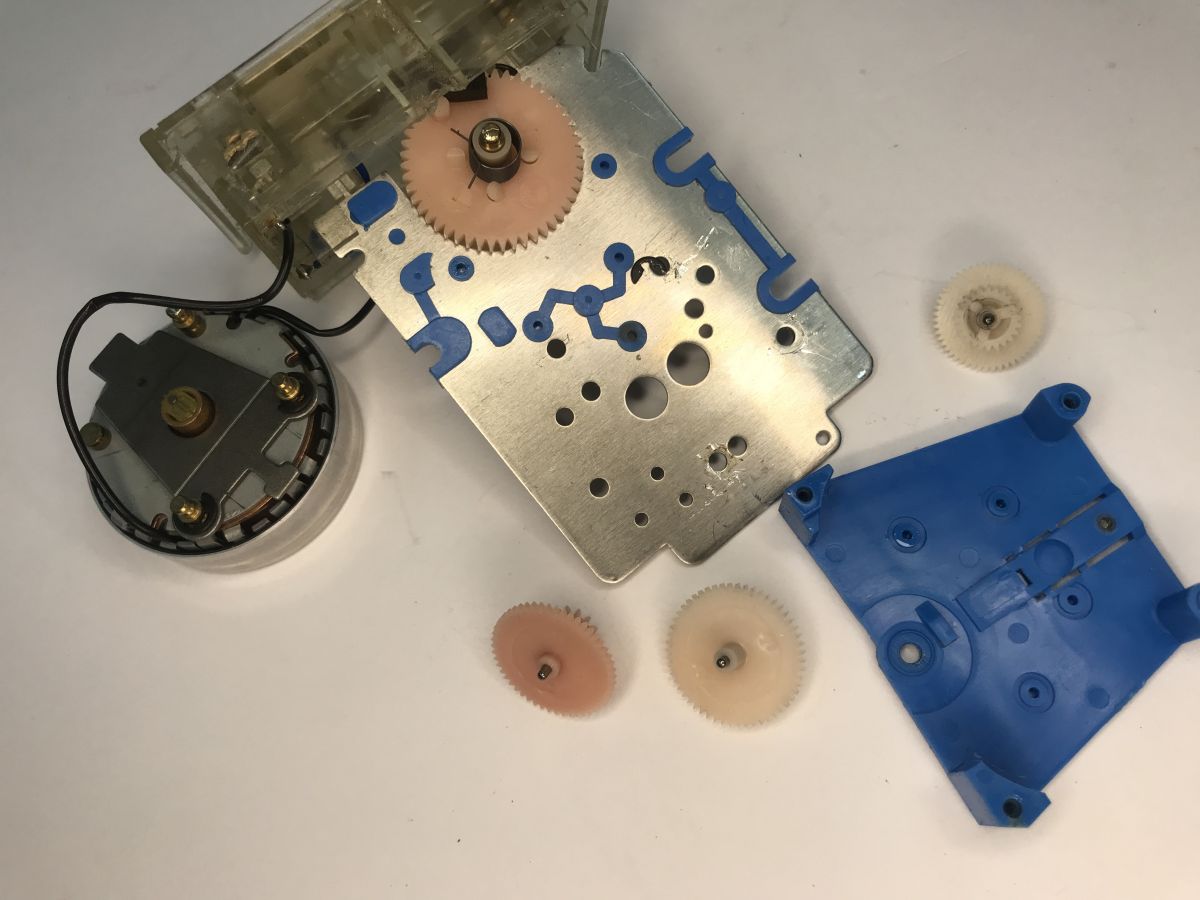
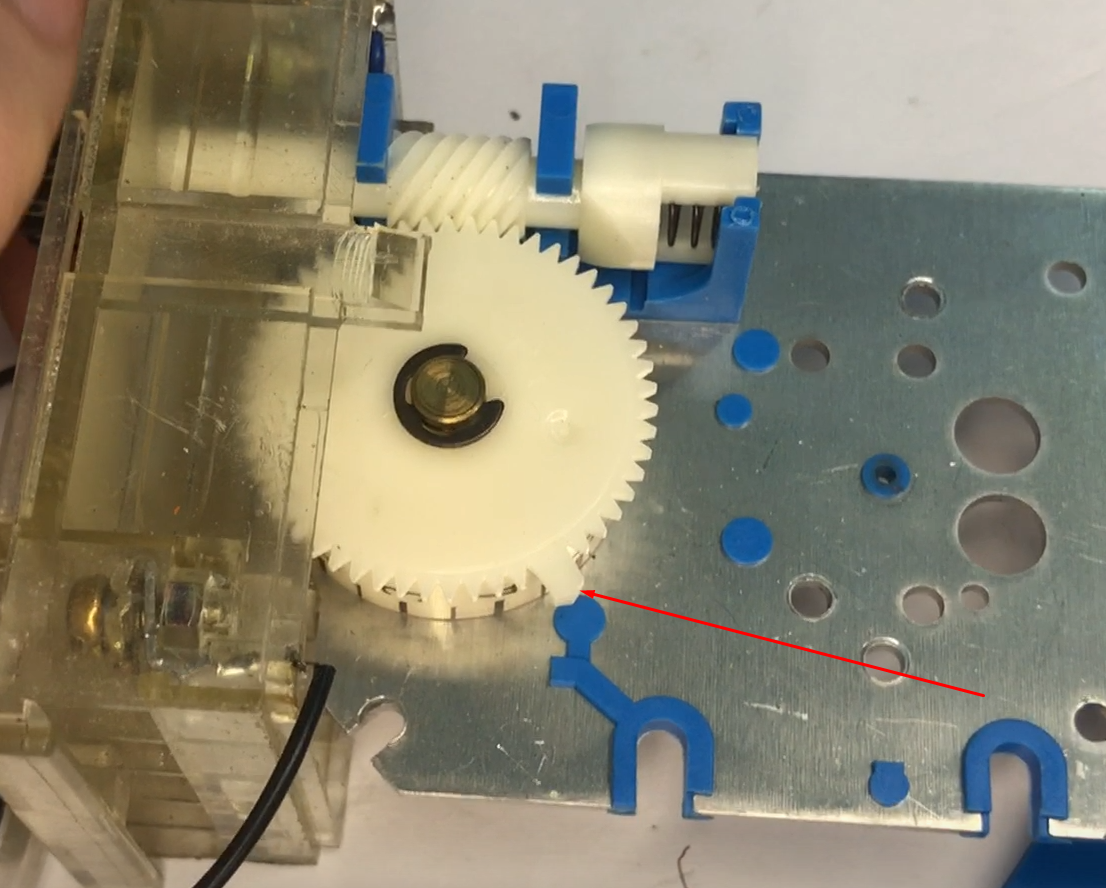
The video shows the mechanism that short-circuits/opens the contacts (pawl on the cog):
Here you can also see the timeout locking pawl:
Finally, you can still see the engine:
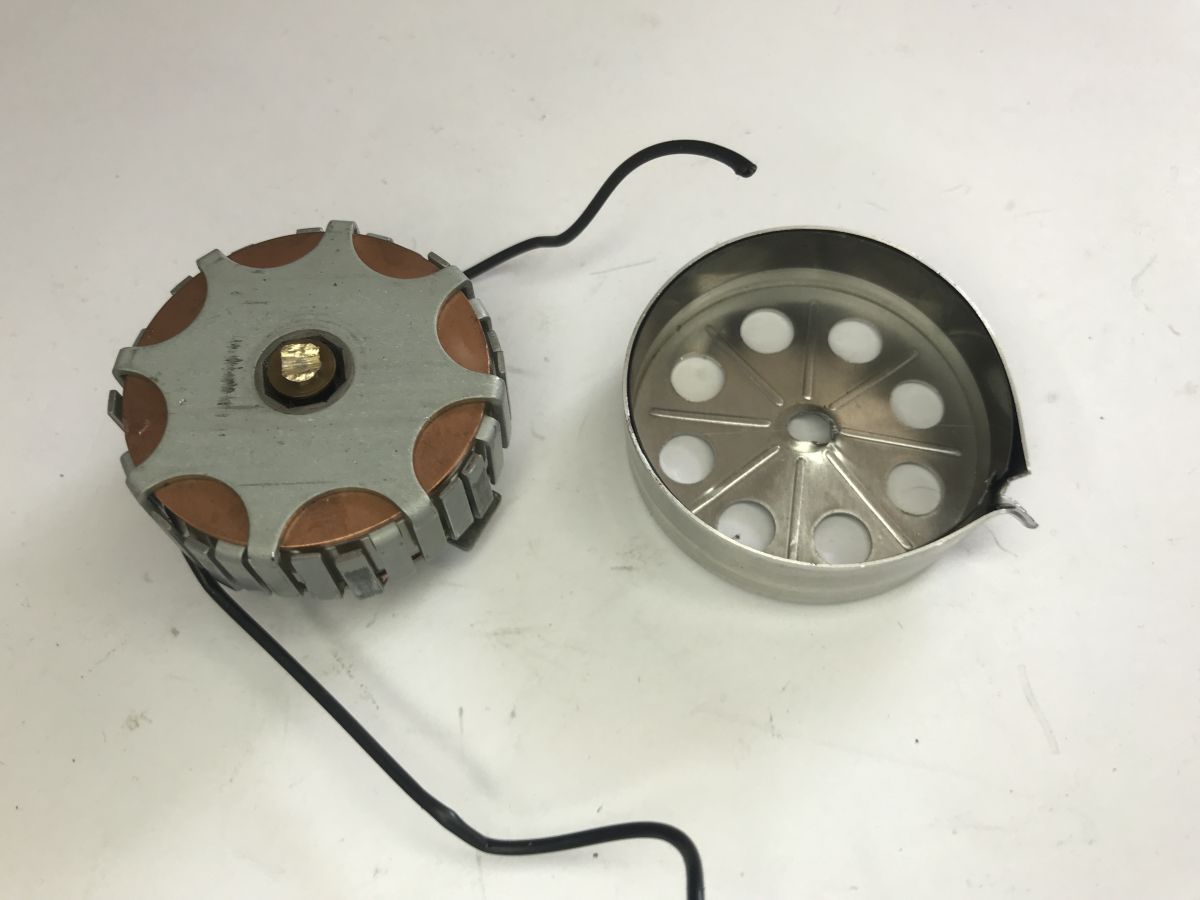
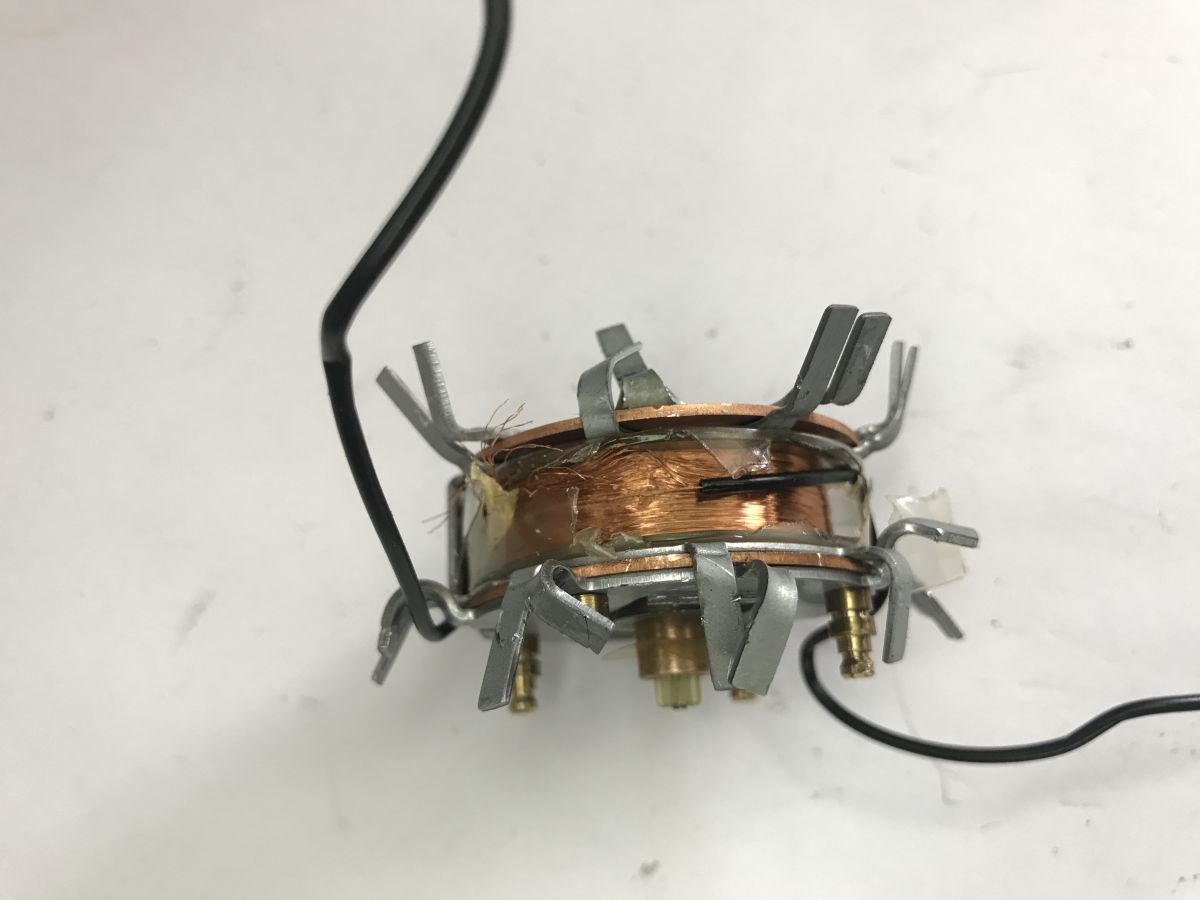
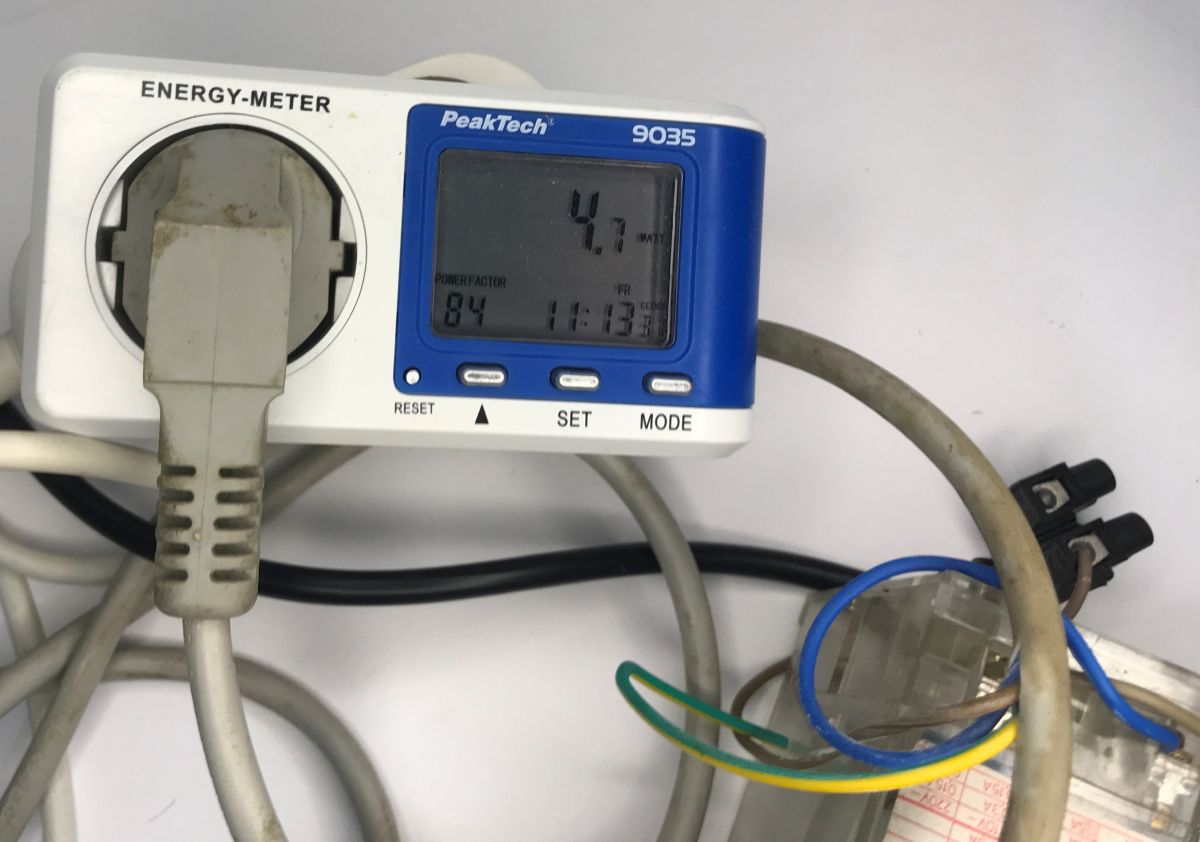
Out of curiosity, I also measured the power consumption - almost 5 watts, and this was for the entire duration of the device's operation, including after the countdown timer had expired. Quite a result, especially as a modern "smart socket" with a Wi-Fi module and relay draws less than 1 W....
In summary, this was a gallery from inside an old time relay. It may not have been anything extraordinary, but I personally see a kind of beauty in such all-electromechanical solutions and wanted to share it. What surprised me most was the way the electromagnet releases/engages the gearbox from the motor. Undoubtedly such devices have their own unique charm.
Do you use/have you used this type of relay, how do you rate its failure rate? What applications do you see for a delay of 0.5 - 10 seconds?
Cool? Ranking DIY Helpful post? Buy me a coffee.