S10/G10 520-in-1 portable console/gamepad bundles over 500 retro games in a cheap handheld shell with a 320x240 TFT screen and RCA TV output.
It uses a simple layout with microUSB charging, an on/off switch, a BL-5C battery, and a short manual plus charging and TV cables.
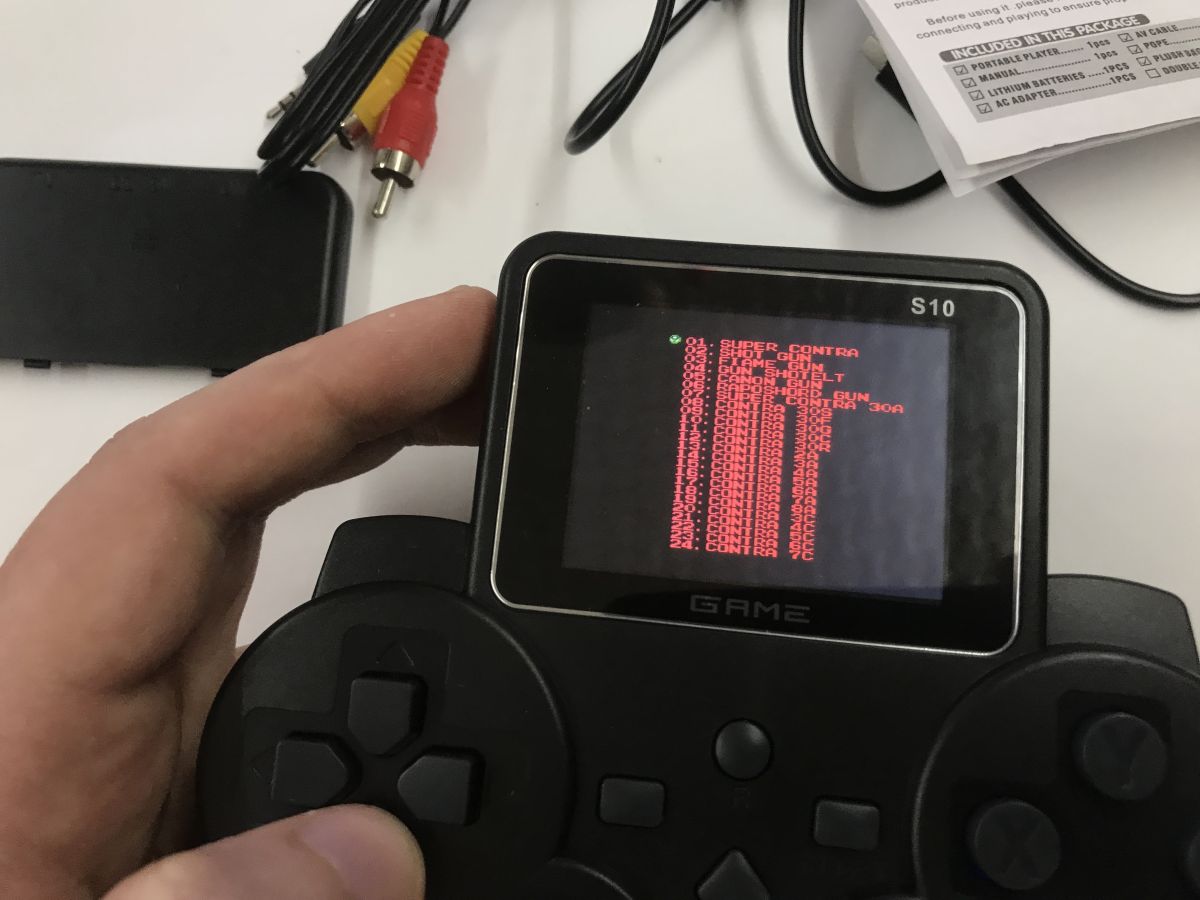
The game menu shows 520 items, and some entries like Contra expand into extra variants, effectively adding more titles.
Game emulation worked without problems during testing, and the console can run from USB alone without a battery while drawing less than 0.2A.
TV mode works over RCA, but plugging in the TV blanks the handheld screen and it does not return after unplugging the cable.
AI summary based on the discussion. May contain errors.
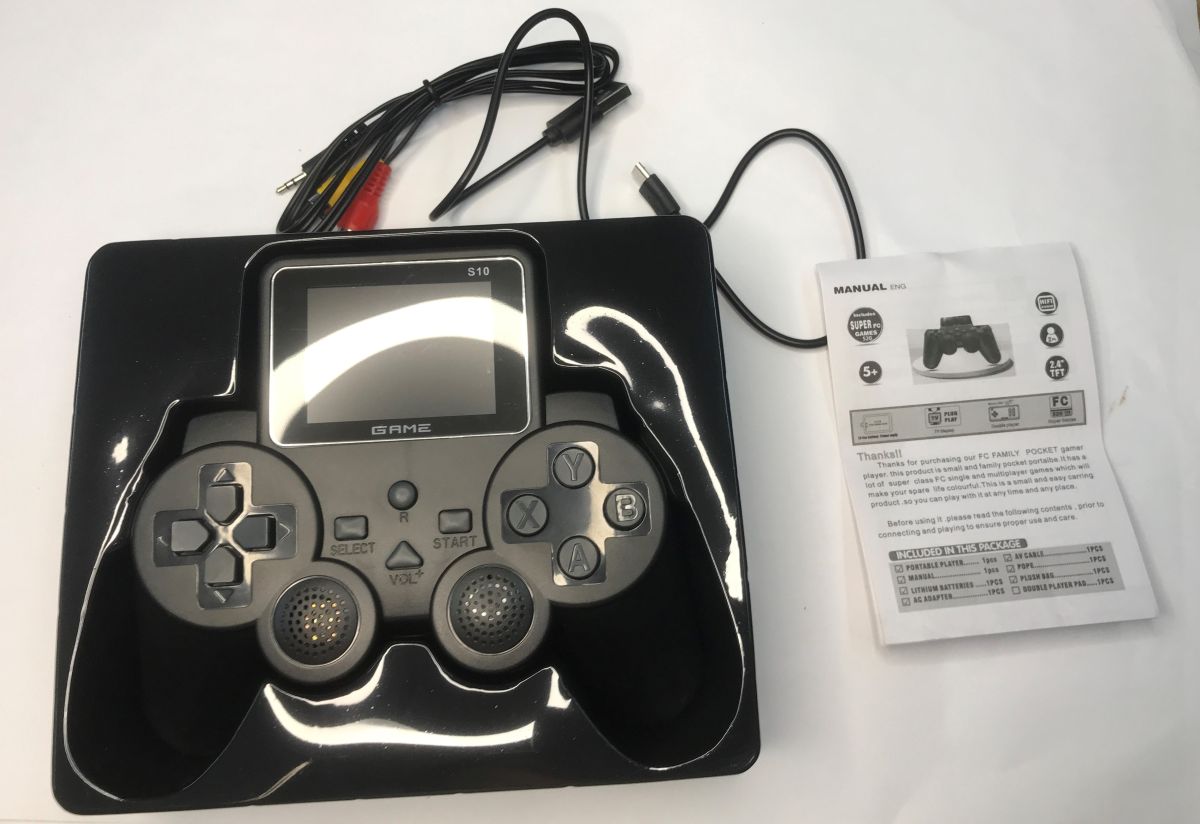
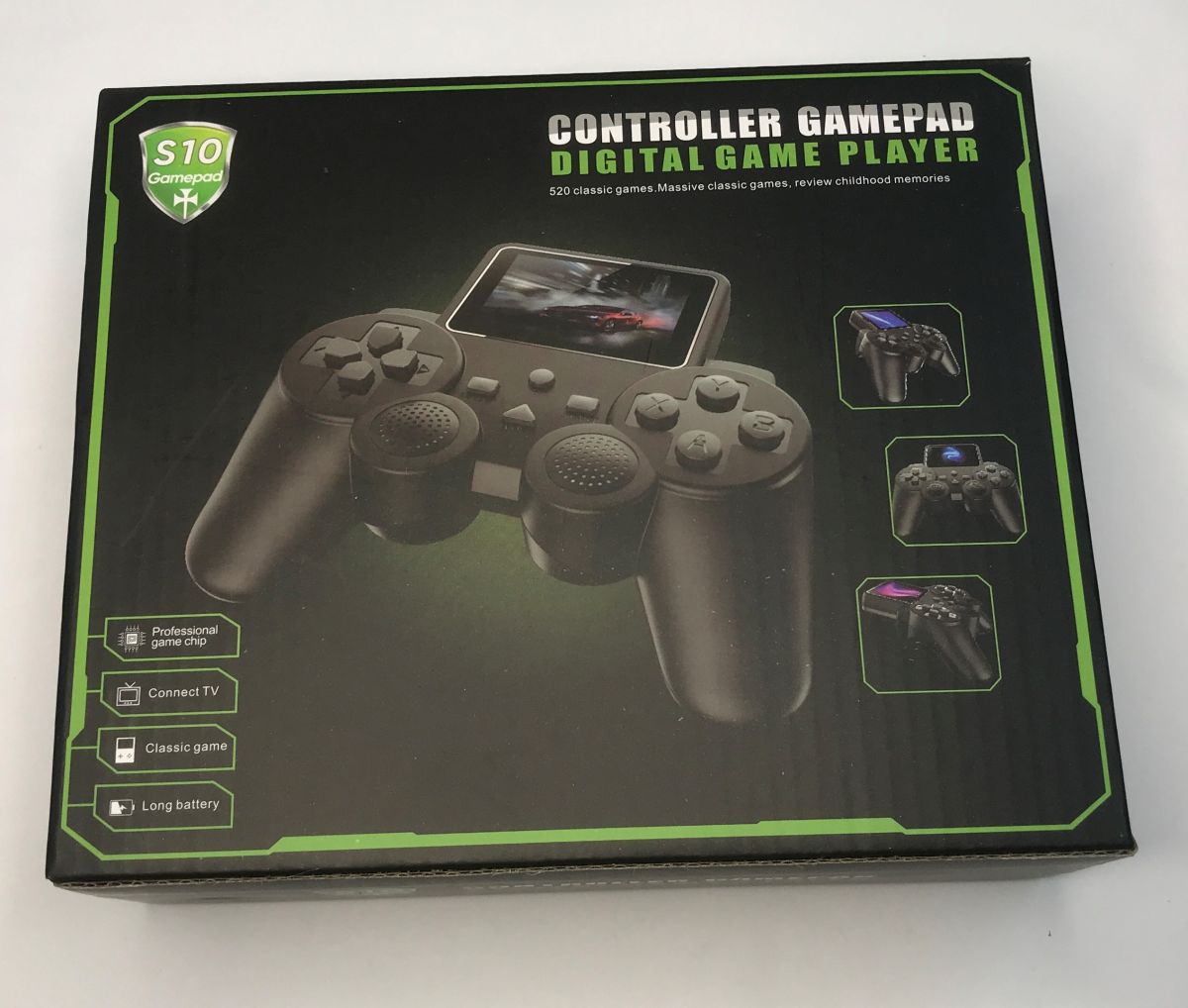
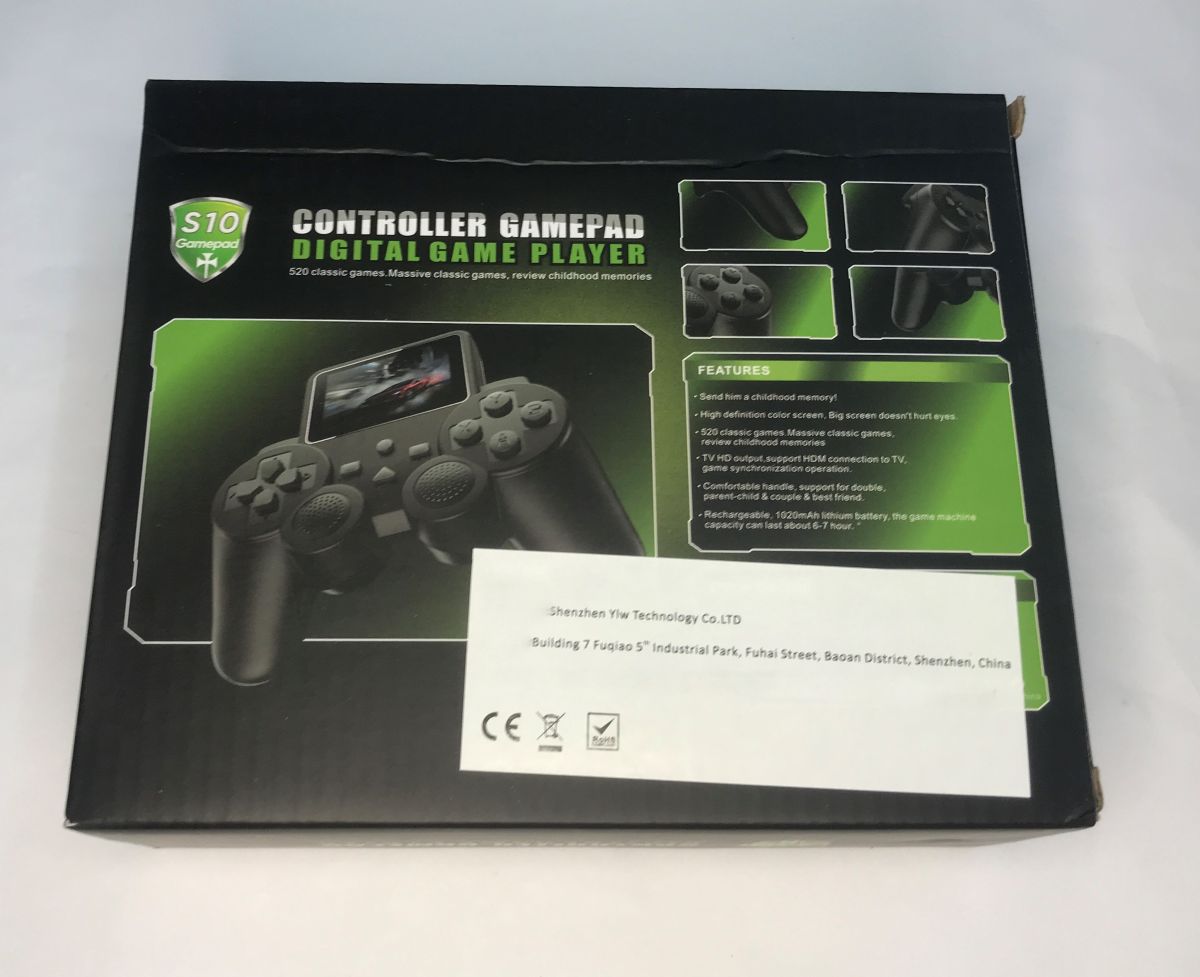
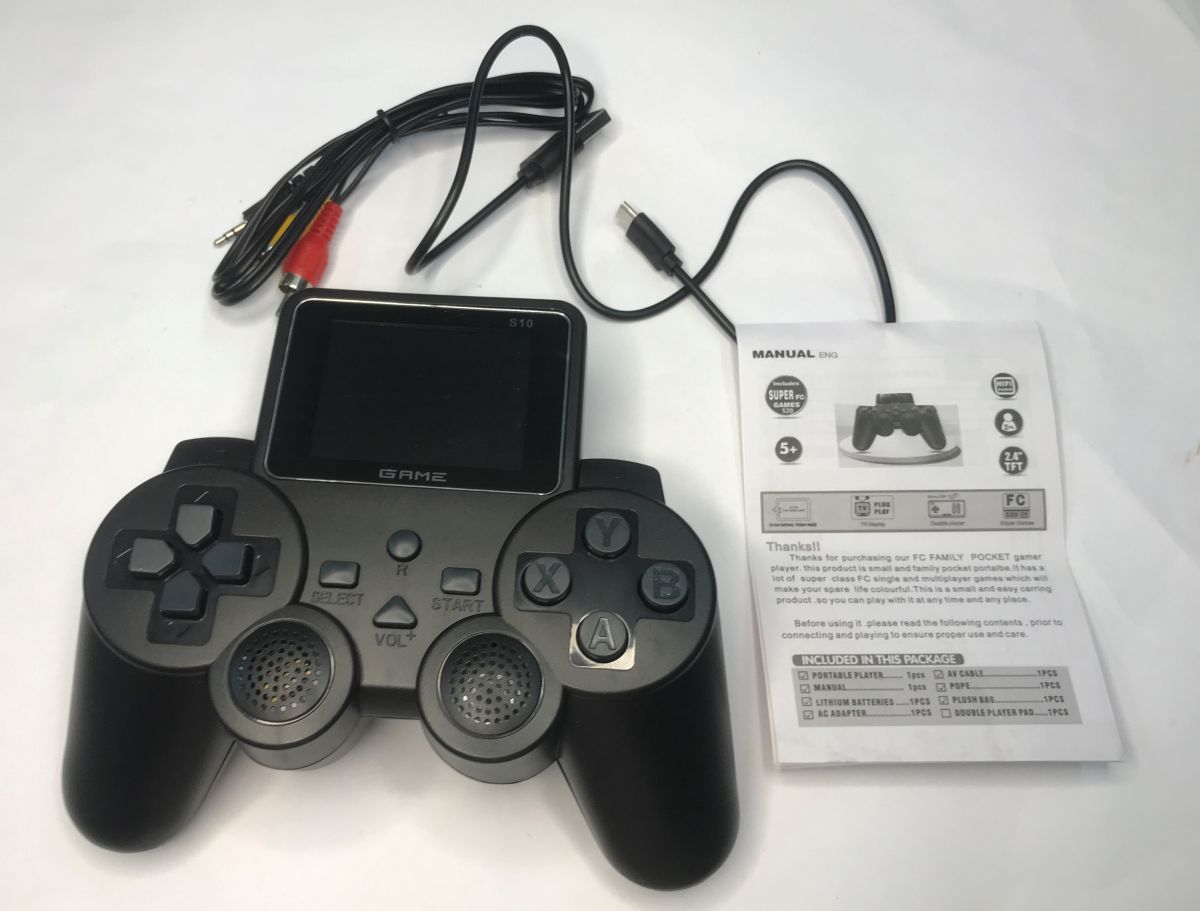
I would like to invite you to a short presentation, test and interior of the S10 GamePad portable console with over 500 retro games. The whole thing was bought for a few tens of zlotys, lightweight and equipped with a TFT display 320x240, microUSB input (for charging) and video output (for connecting a TV via RCA connectors).
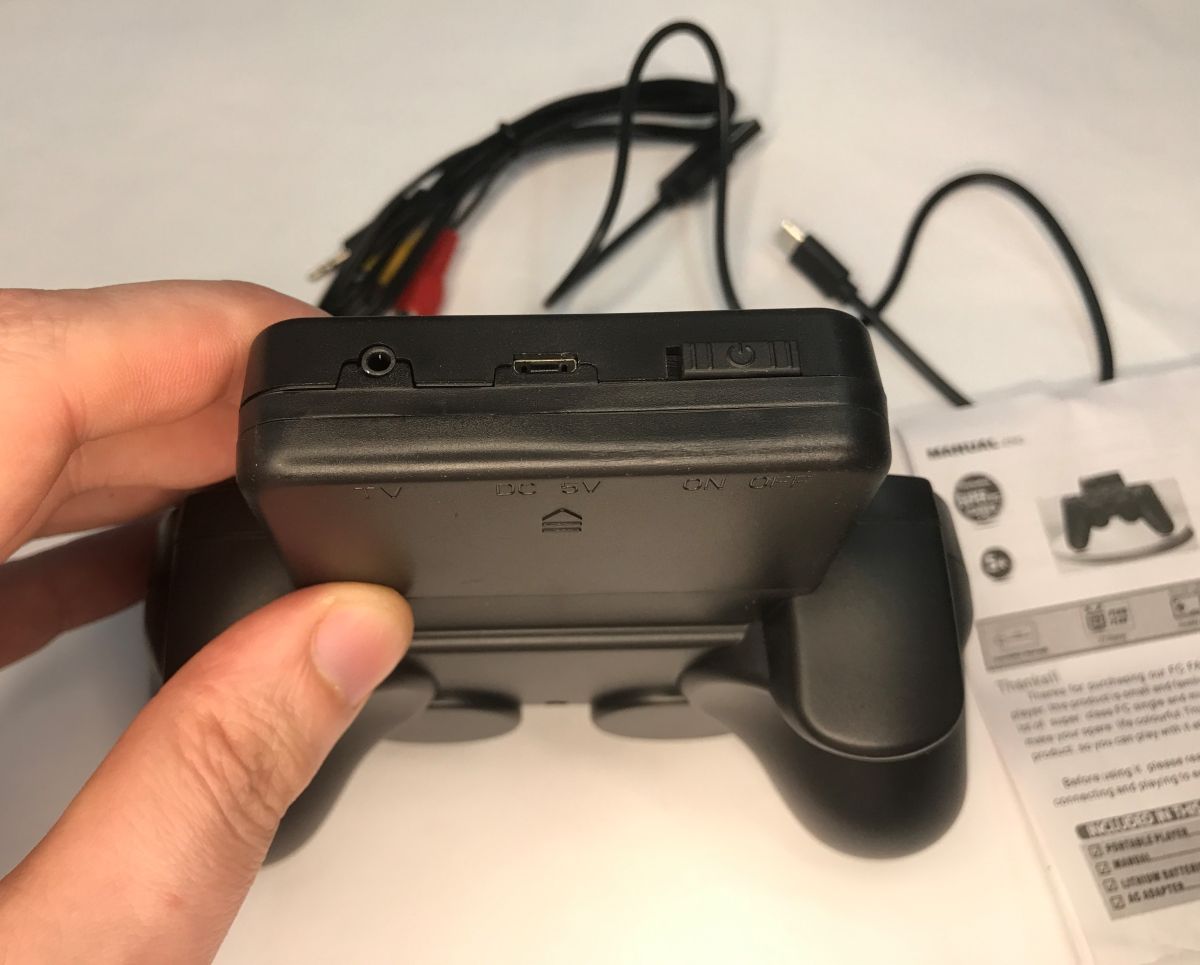
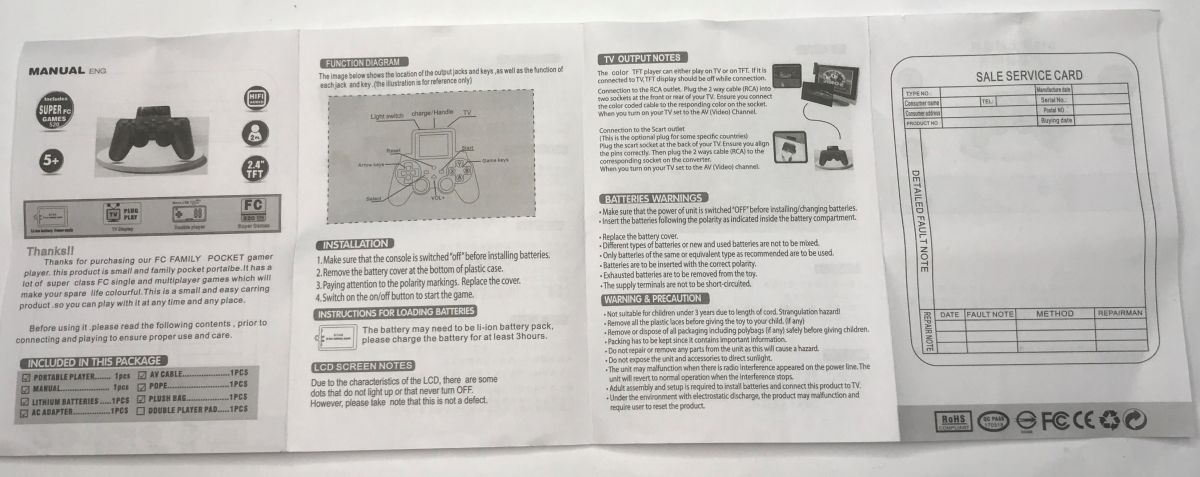
My first impressions are quite mixed, the plastic and buttons are of low quality, but for this price I wouldn't expect more. It also comes with a short manual and a cable for the TV - classic old RCA connectors, no HDMI option here. However, this could be a plus - it will even work with an old CRT. In addition, we also have a charging cable, this will also come in handy.
The pad doesn't have many buttons, and on the back we only have the obvious charging input and video output. Apart from that, there is of course an on/off button.
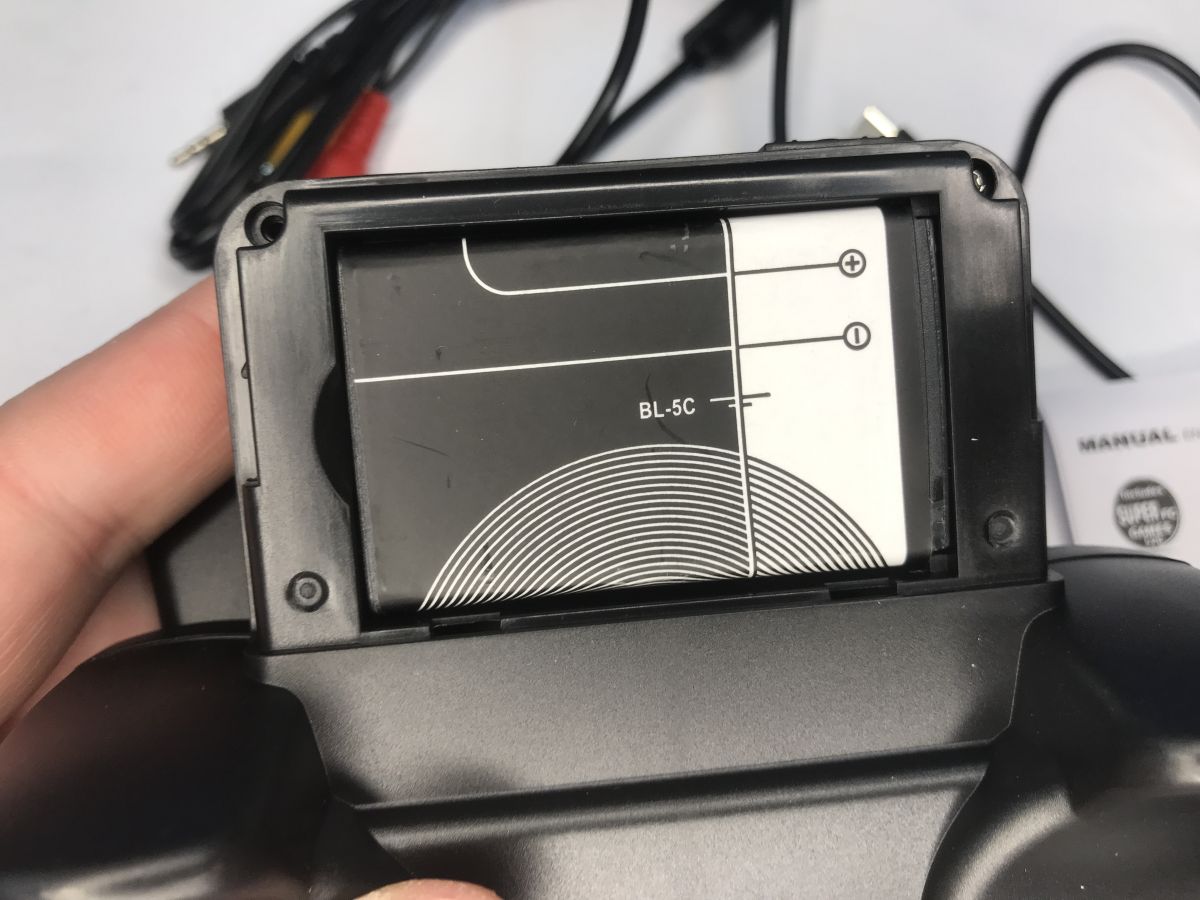
The pad is powered by a BL-5C battery, the same one used in Nokia phones.
Manual:
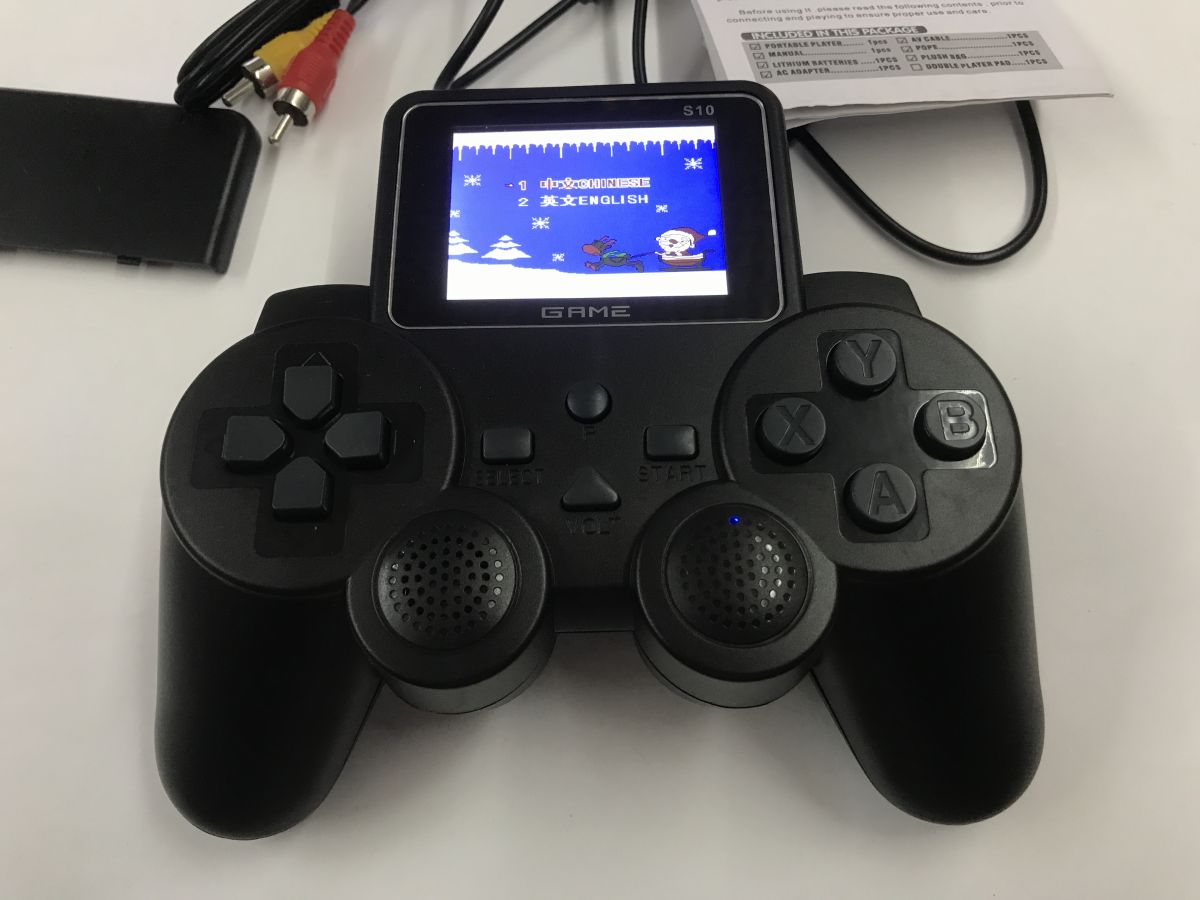
Time for the practical test. At the outset we have a choice of language - Chinese or English.
The games menu contains 520 items, does anyone see any familiar titles?
Once an item is selected, a surprise awaits - additional versions of the same game. For example, under the item Contra there are further subtypes of this game, so we potentially have even more than 520 games.
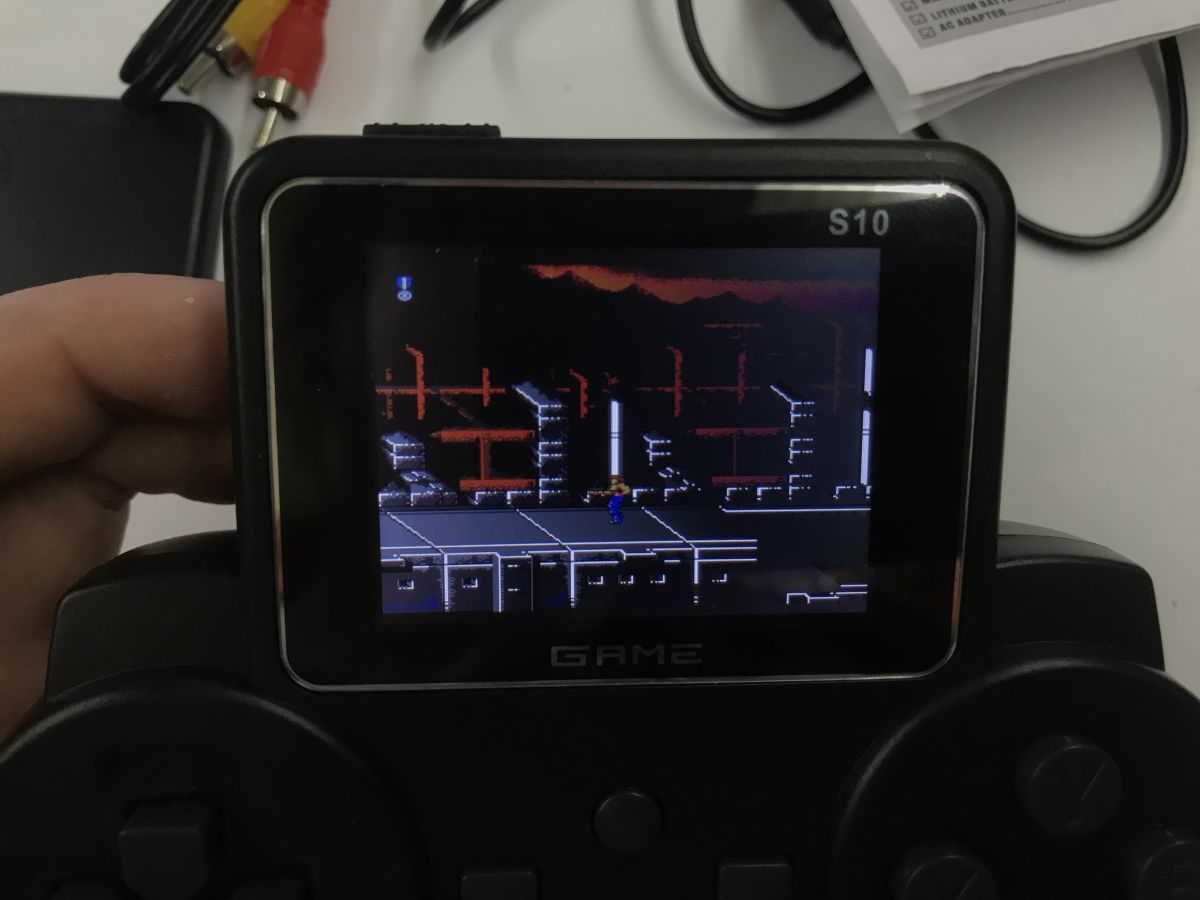
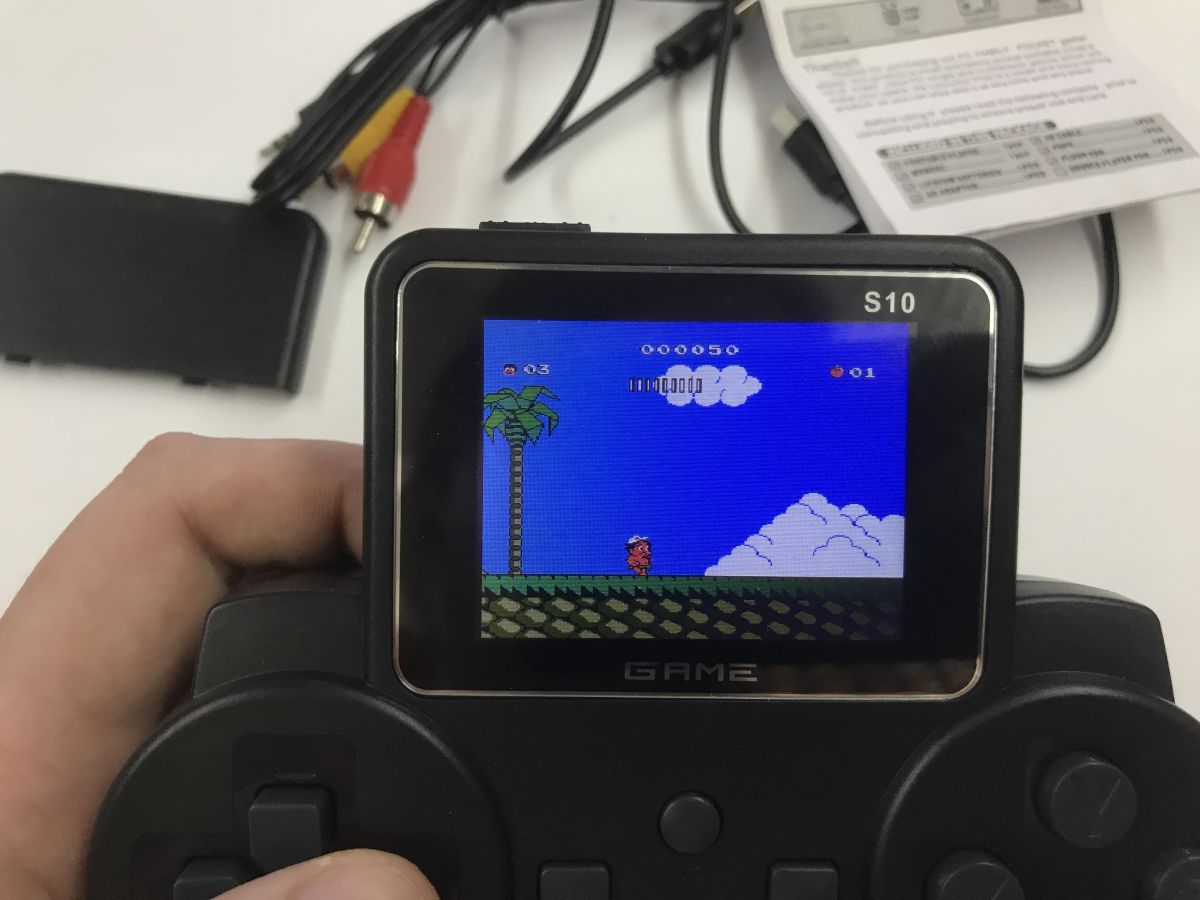
As for the games themselves, I have no complaints, I did not experience any problems with the emulation.
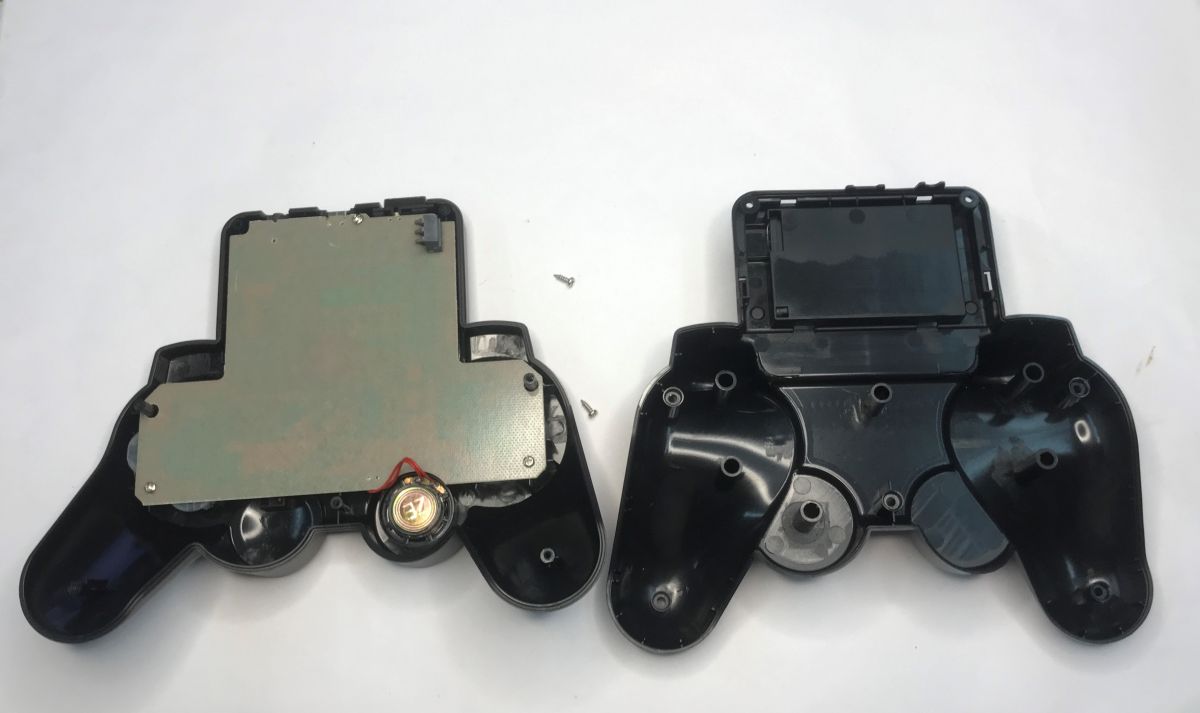
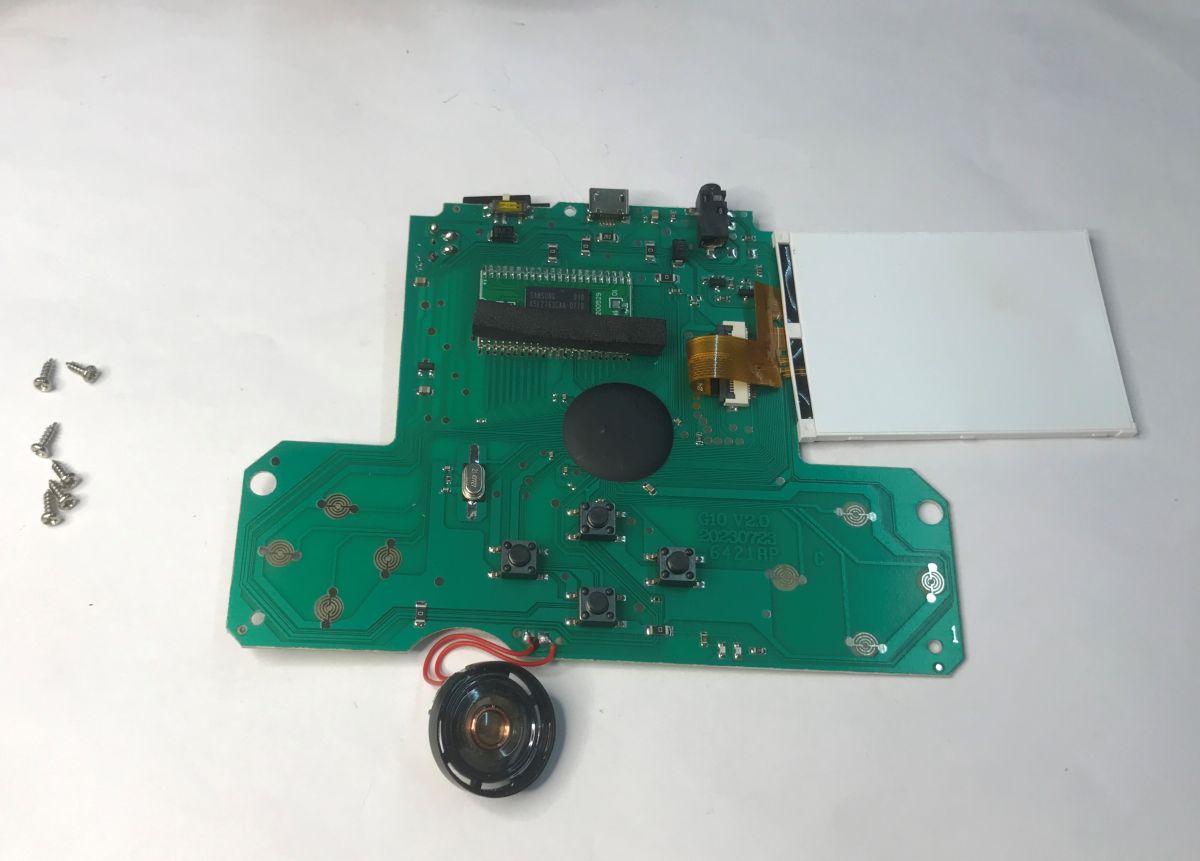
It is now time to check the inside of the console. Unscrew the screws - there is a simple, single-sided plate inside.
PCB designation: G10 V2.0 20230723 Unfortunately there's not much else here. Probably the main circuit hides under the 'black dot'.
The K5L2763CAA-D770 is the memory, I couldn't find its datasheet, but it looks like it's an integrated Flash + RAM solution.
That's basically it - no wonder it's so cheap.
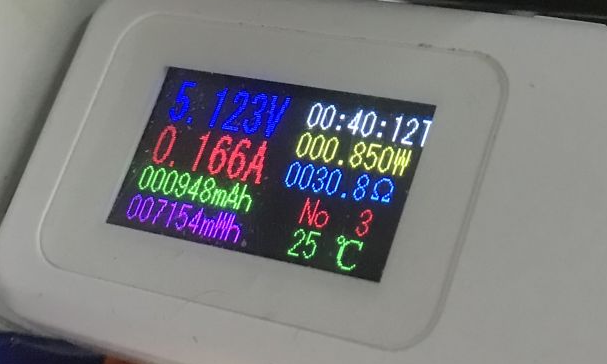
Additional tests. The first thing that was important to me was whether the console would run without a battery, when powered by USB. The answer is yes - less than 0.2A is drawn.
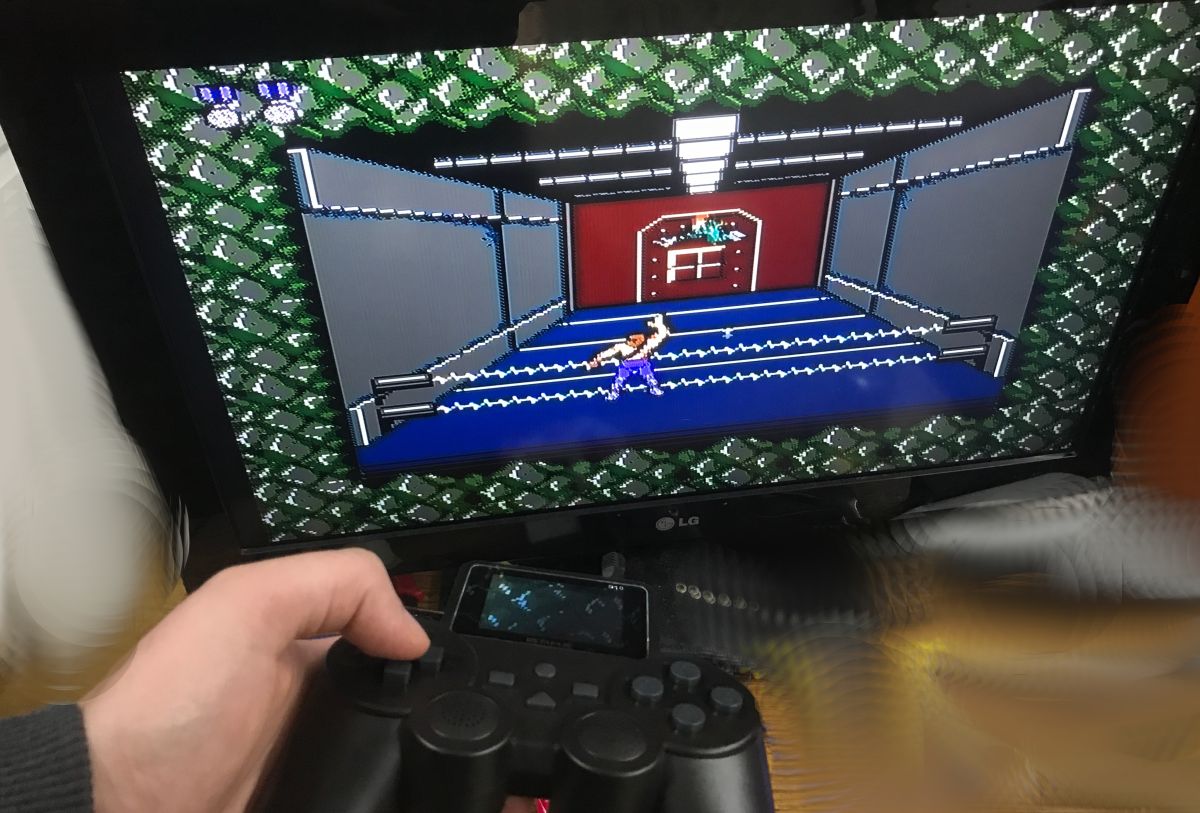
The second issue is TV mode - everything works, worse is that when you connect the TV the console blank out the normal screen and then won't go back to it, even when you remove the cable. It's not needed for normal operation though, so there's no reason to complain.
In summary , the console can't compare to more expensive solutions, but for basic 2D games it is enough. It lacks a bit of game catching and advanced emulator options - or is it me who hasn't found them? There's not even a search by name - anyway, how would you type it in there? The screen is also quite small, but this situation is saved by the RCA output, which is also compatible with CRT TVs. That's a plus. It's also hard for me to ignore the fact that I still remember buying one cartridge for 35 zloty when I was a kid (those were the prices we had), and here, for a similar amount, is a whole console with a huge set of games. Well, times are changing.
Is it worth it? I leave it to you to decide. What would you recommend at this price, or maybe it is better to pay more for a better console, such already with a microSD card?
About Author
p.kaczmarek2 wrote 14795 posts with
rating 12944 , helped 659 times.
Been with us since 2014 year.
I wonder if it would be possible to read the flash and if there would be something interpretable there. [Read more]
p.kaczmarek2
06 Jun 2026 16:46
Good idea, but that would mean I guess I need to think about a better programmer for ripping memory. For this type of bone the CH341 is unlikely to be sufficient.
Flash analysis alone could potentially... [Read more]
E8600
06 Jun 2026 17:06
I wonder if it is flash or emmc after all?
As for the battery from Nokia, in a similar console the intended capacity is 200 mAh. [Read more]
gregor124
06 Jun 2026 17:30
It is likely that this K5L2763CAA-D770 is almost the same as the K5L2731CAM-D770, i.e. "128Mb NOR Flash + 32Mb UtRAM".
Only that with 64Mb UtRAM.
Probably the way it reads, writes will be very similar.
If... [Read more]
TechEkspert
06 Jun 2026 18:47
I wonder if under the black dot is an ASIC or a microcontroller/microprocessor, of the less likely options under the dot are two structures. [Read more]
gregor124
06 Jun 2026 19:10
You should be able to tell by the frequency of the quartz.
Could be an ASIC, it seems, they already made NES clones in glucet many years ago ;)
In general, this memory looks like something like a big... [Read more]
TechEkspert
06 Jun 2026 22:14
Quartz - photo indicates a possible NES-on-a-Chip (NOAC) NTSC. [Read more]
E8600
06 Jun 2026 23:02
AI has helped, in the past it was not so easy to search for strange content.
https://www.reddit.com/r/embedded/comments/1hmp5b9/how_can_i_access_the_data_thats_on_this_chip/?tl=pl
https://habr.com/r... [Read more]
gregor124
06 Jun 2026 23:30
Such chips are made by Taiwanese company VRtechnology, there are several versions and it looks like they are ASICs with CPU6502.
These chips (at least some of them) even have PAL/NTSC selectable
More... [Read more]
pan_deejay
08 Jun 2026 20:20
Beware of overcharging the battery pack. In many of these cheap models, the voltage from the charger goes only through the diode and resistor directly to the battery. In consoles with the name "SUP" on... [Read more]
FAQ
TL;DR: With 520 menu items, the S10/G10 is a very cheap retro handheld whose best summary is: "good enough for basic 2D games". This FAQ is for buyers and tinkerers who want the real trade-offs, teardown clues, power behavior, and likely memory architecture before spending a few tens of zlotys. [#21916380]
Why it matters: Cheap 520-in-1 consoles look similar online, but the thread shows that build quality, TV behavior, serviceability, and memory design vary enough to affect whether one is worth buying or opening.
Aspect
S10/G10 520-in-1
Pricier handheld with microSD
Purchase level
A few tens of zlotys
Higher cost
Game storage approach
Built-in set, 520 menu items
microSD-based library
Video output
RCA TV-out, CRT-friendly
Not stated in thread
Controls/build
Low-quality plastic and buttons
Expected better at higher price
Emulator options
No search, limited advanced options
Expected more features
Key insight: The S10/G10 is attractive because it is cheap, runs its built-in 2D games acceptably, and even outputs to RCA TV. Its real limits are low-quality controls, weak UI features, and a board built around a black-epoxy mystery chip plus integrated Samsung memory. [#21916380]
Quick Facts
TFT display: 320×240, microUSB charging input, and RCA video output for TV use; the analog output is a practical advantage if you still use a CRT. [#21916380]
The console uses a BL-5C removable battery, the same family mentioned for older Nokia phones. [#21916380]
USB-only operation works without the battery installed, and the measured current draw is below 0.2 A. [#21916380]
The PCB is marked G10 V2.0 20230723, and the visible memory chip is Samsung K5L2763CAA-D770. [#21916380]
Forum analysis compares the crystal clues to classic TV standards: 21.47727 MHz points to NTSC and 26.601712 MHz to PAL. [#21916626]
What are the real pros and cons of the S10/G10 520-in-1 portable console for cheap retro gaming?
The S10/G10 is a low-cost handheld that plays its built-in 2D games well enough, but its hardware feels cheap. Its strongest points are the 520-item menu, working RCA TV output, USB charging, and acceptable game performance. Its weak points are low-quality plastic and buttons, a small 320×240 screen, no HDMI, no game-name search, and no clear advanced emulator options. It fits buyers who want a throwaway retro toy, not a polished daily handheld. [#21916380]
How do you open the S10/G10 handheld and identify the main parts on its PCB step by step?
You open it by removing the screws and then inspecting a very simple single-sided PCB. 1. Unscrew the shell and lift the back cover. 2. Read the board marking, which is G10 V2.0 20230723. 3. Identify the visible parts: the BL-5C battery bay, the Samsung K5L2763CAA-D770 memory chip, and the black epoxy “black dot” that likely hides the main logic. The author found little else exposed on the board. [#21916380]
Why does the S10/G10 blank its built-in screen after connecting the RCA TV cable, and how can you restore the display afterward?
The thread shows that RCA TV mode switches output away from the built-in LCD and leaves the handheld screen blank. The important failure fact is that removing the cable alone does not bring the image back. No verified recovery procedure appears in the discussion, so the only safe conclusion is that unplugging the RCA lead is insufficient and a tested restore method was not documented. [#21916380]
How much power does the S10/G10 draw when running only from microUSB without a BL-5C battery installed?
It draws less than 0.2 A when powered only from microUSB without the BL-5C battery installed. That result matters because it confirms the console can boot and run directly from USB power, not only from its removable battery pack. For bench testing, modding, or quick checks, that low current draw makes USB-only operation practical. [#21916380]
What is hidden under the black epoxy 'black dot' on cheap handheld consoles like the G10 V2.0 board?
The black epoxy covers the main integrated circuit, most likely the console’s core logic. "Black dot" is an epoxy-covered chip-on-board package that hides a bare silicon die bonded directly to the PCB, reducing cost and making part identification harder. In this thread, the likely options discussed are an ASIC or a microcontroller or microprocessor, with an ASIC presented as a plausible fit for clone-console hardware. [#21916616]
What is UtRAM, and how does a Flash + RAM combo chip like the Samsung K5L2763CAA-D770 work in a portable game console?
UtRAM is the RAM portion of a combined memory chip that sits beside onboard Flash in one package. "UtRAM is integrated volatile memory that stores working data beside non-volatile Flash, letting one chip hold both program content and runtime memory." In the thread, the K5L2763CAA-D770 is described as a Flash + RAM solution, and a related part is cited as 128 Mb NOR Flash + 32 Mb UtRAM, with the discussed chip thought to carry 64 Mb UtRAM. [#21916583]
How can you read or dump the memory from the K5L2763CAA-D770 used in the S10/G10 console?
You would need to treat it as a dedicated memory-dump job, not a simple hobby clip-on read. The thread suggests using a better programmer and notes that, if someone is determined, a programmer for this chip “can be designed quite easily.” A raw dump could help reveal whether the console runs an emulator or a more native solution, because the Flash contents may expose ROM layout or executable structure. [#21916562]
Why is a CH341 programmer unlikely to be enough for ripping memory from the K5L2763CAA-D770, and what kind of programmer would be better?
A CH341 is unlikely to be enough because the chip appears to be a more complex combined memory device, not a simple low-pin-count serial Flash. The thread explicitly says CH341 is “unlikely to be sufficient” for this kind of part. A better fit would be a purpose-built programmer designed for the chip’s read and write method, especially if it follows the interface style of the related Samsung combo-memory family. [#21916562]
Is the K5L2763CAA-D770 closer to NOR Flash or eMMC, and what clues help identify it correctly?
It looks closer to a NOR Flash plus RAM combo than to eMMC. The strongest clue in the thread is the comparison to K5L2731CAM-D770, described as 128 Mb NOR Flash + 32 Mb UtRAM. Another clue is the board context: a cheap clone-style game console with a black-dot main chip and a memory device that behaves more like a big cartridge than a modern removable-storage subsystem. [#21916583]
How similar is the Samsung K5L2763CAA-D770 to the K5L2731CAM-D770, especially in read/write method and memory layout?
The forum analysis says the K5L2763CAA-D770 is likely very similar in structure and access method to the K5L2731CAM-D770. The cited baseline part combines 128 Mb NOR Flash with 32 Mb UtRAM, while the discussed chip is thought to differ mainly by having 64 Mb UtRAM. The practical conclusion is that the read and write approach should be very similar, which helps when planning a custom dump setup. [#21916583]
What does the quartz frequency in a clone console tell you about whether the hardware is NTSC, PAL, ASIC-based, or something else?
The crystal frequency gives a fast clue about the target video standard and can narrow the hardware type. In the thread, 21.47727 MHz is tied to NTSC and 26.601712 MHz to PAL. One commenter says this can help tell what sits under the black dot, because clone consoles have long used ASIC-style solutions matched to TV timing. It is a useful hint, not a complete identification method by itself. [#21916626]
How good is the emulation quality on the S10/G10 520-in-1, and why do some menu entries contain multiple versions of the same game?
The emulation quality appears acceptable for the included games, because the author reports no problems during testing. The menu lists 520 items, but some entries open into extra variants of the same title. The direct example is Contra, where selecting one item reveals more subtypes, so the apparent game count and the real content count are not the same thing. That structure inflates variety without changing the basic hardware. [#21916380]
S10/G10 built-in 520-in-1 games vs a pricier handheld with microSD card support — which is the better buy?
The better buy depends on whether low price or flexibility matters more. Choose the S10/G10 if you want a complete, ready-to-play bundle for a few tens of zlotys, RCA TV output, and acceptable 2D gameplay. Pay more for a microSD-based handheld if you care about better controls, stronger build quality, easier game management, and richer emulator options. The thread clearly leans toward the pricier class for users who want more than basic play. [#21916380]
What is an ASIC, and how is it different from a microcontroller or microprocessor in retro game clone hardware?
An ASIC is a custom chip tailored for a narrow job, while a microcontroller or microprocessor is more general-purpose. "ASIC is a dedicated integrated circuit that implements a fixed hardware function, while a microcontroller or microprocessor runs broader programmable tasks with external or internal firmware." In this thread, the black-dot device is discussed as possibly an ASIC because cheap NES-style clones have used such solutions for years. [#21916626]
What would you recommend instead of the S10/G10 at a similar price if someone wants better build quality or more emulator features?
The thread does not name a specific alternative at the same price, so the safest recommendation is category-level: spend more on a handheld with microSD support. That directly addresses the S10/G10’s visible limits, including low-quality buttons, no game-name search, and sparse emulator controls. If your budget is fixed at only a few tens of zlotys, the S10/G10 remains viable; if features matter, the thread itself suggests paying more. [#21916380]
AI summary based on the discussion. May contain errors.







Comments
I wonder if it would be possible to read the flash and if there would be something interpretable there. [Read more]
Good idea, but that would mean I guess I need to think about a better programmer for ripping memory. For this type of bone the CH341 is unlikely to be sufficient. Flash analysis alone could potentially... [Read more]
I wonder if it is flash or emmc after all? As for the battery from Nokia, in a similar console the intended capacity is 200 mAh. [Read more]
It is likely that this K5L2763CAA-D770 is almost the same as the K5L2731CAM-D770, i.e. "128Mb NOR Flash + 32Mb UtRAM". Only that with 64Mb UtRAM. Probably the way it reads, writes will be very similar. If... [Read more]
I wonder if under the black dot is an ASIC or a microcontroller/microprocessor, of the less likely options under the dot are two structures. [Read more]
You should be able to tell by the frequency of the quartz. Could be an ASIC, it seems, they already made NES clones in glucet many years ago ;) In general, this memory looks like something like a big... [Read more]
Quartz - photo indicates a possible NES-on-a-Chip (NOAC) NTSC. [Read more]
AI has helped, in the past it was not so easy to search for strange content. https://www.reddit.com/r/embedded/comments/1hmp5b9/how_can_i_access_the_data_thats_on_this_chip/?tl=pl https://habr.com/r... [Read more]
Such chips are made by Taiwanese company VRtechnology, there are several versions and it looks like they are ASICs with CPU6502. These chips (at least some of them) even have PAL/NTSC selectable More... [Read more]
Beware of overcharging the battery pack. In many of these cheap models, the voltage from the charger goes only through the diode and resistor directly to the battery. In consoles with the name "SUP" on... [Read more]