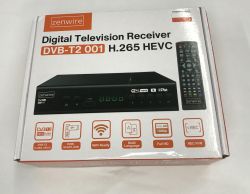
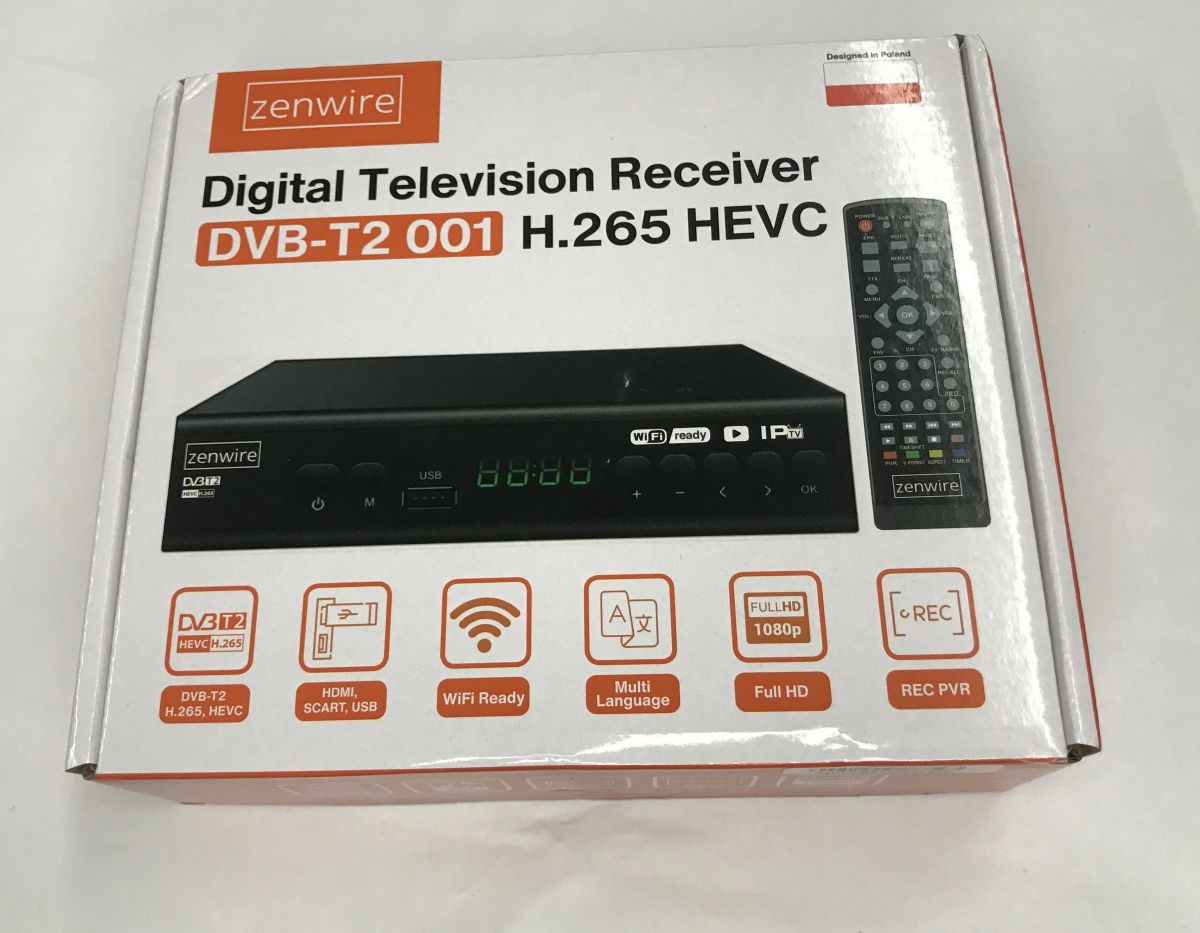
The product presented today stands out thanks to the clearly visible Polish flag on the packaging and is adorned with the caption "designed in Poland". I wonder what was actually designed here in our country – the logo? Nevertheless, there’s nothing to complain about; the price is low, just 60 zł, and it allows you to breathe new life into an old TV that’s incompatible with the modern aerial signal standard. The set is complete; it even includes an HDMI cable and batteries for the remote control. It also has SCART and RCA outputs, just in case you have a really old set-top box. It can receive MUX1, MUX2, MUX3, MUX4, MUX6, MUX8, supports 16:9 and 4:3 aspect ratios, teletext, parental controls and multimedia playback from USB. And all this with a power consumption of no more than 6 W.
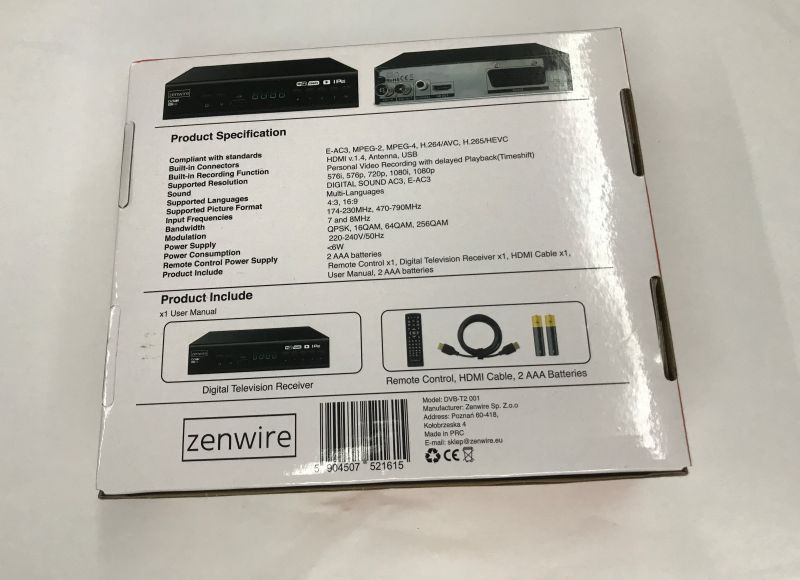
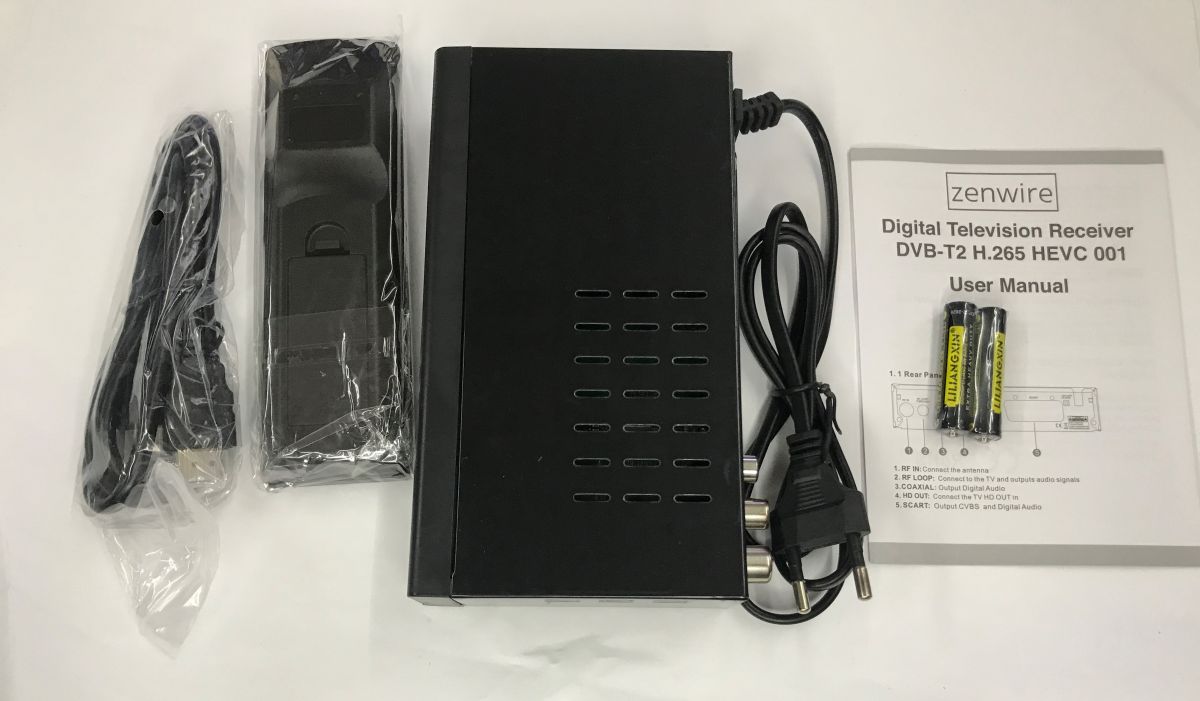
The set is complete; it even comes with batteries – which is handy, especially when the set-top box is bought by someone less tech-savvy who might not remember such details.
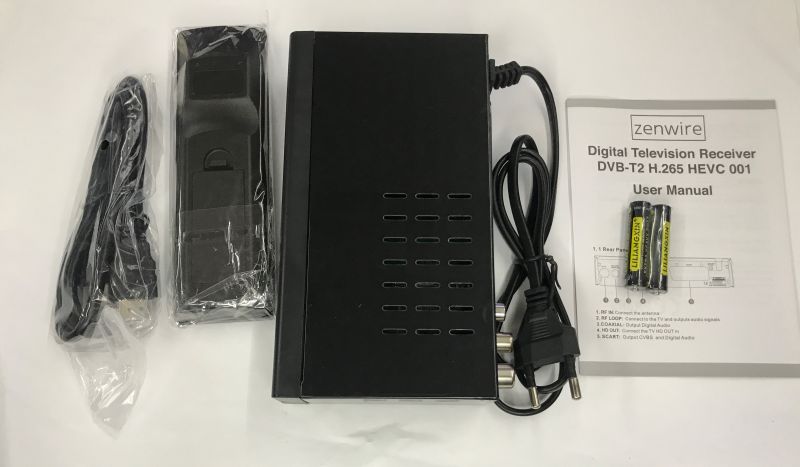
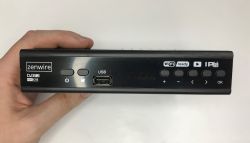
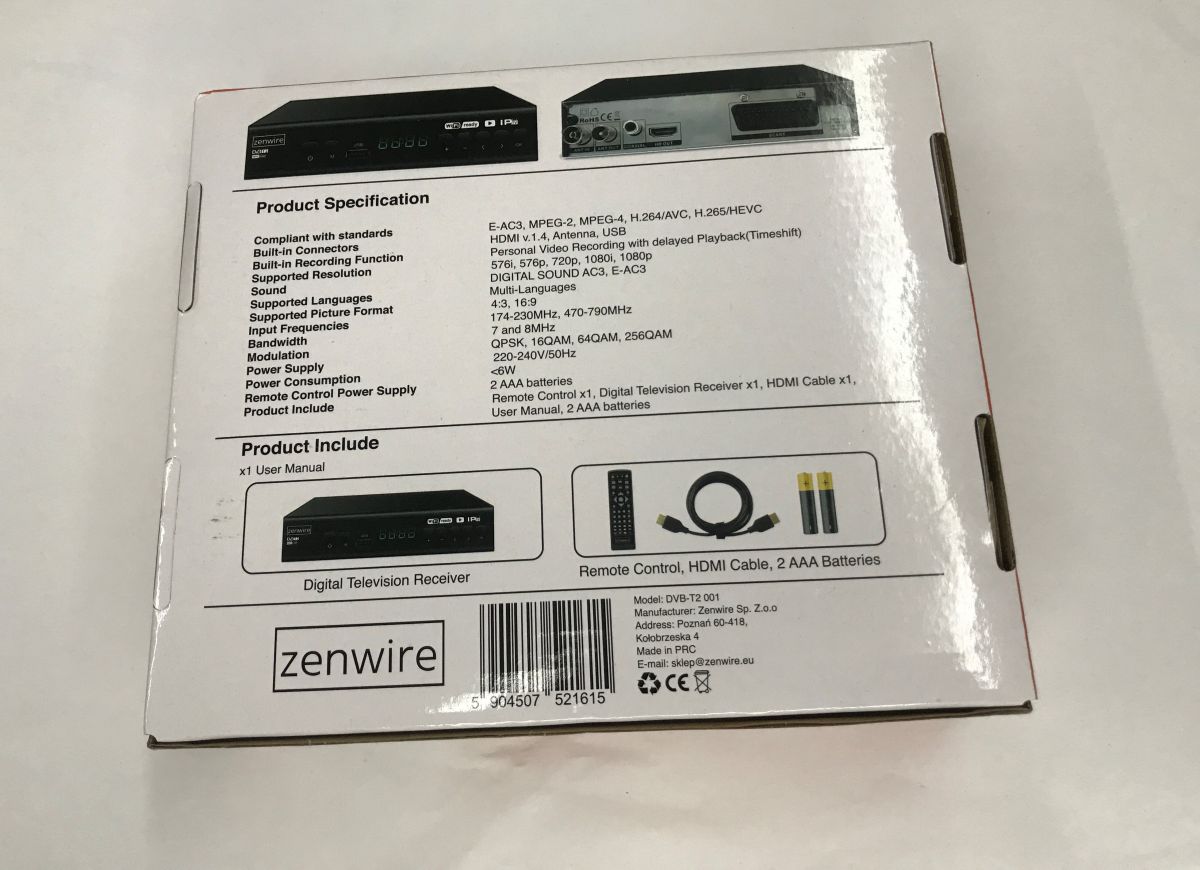
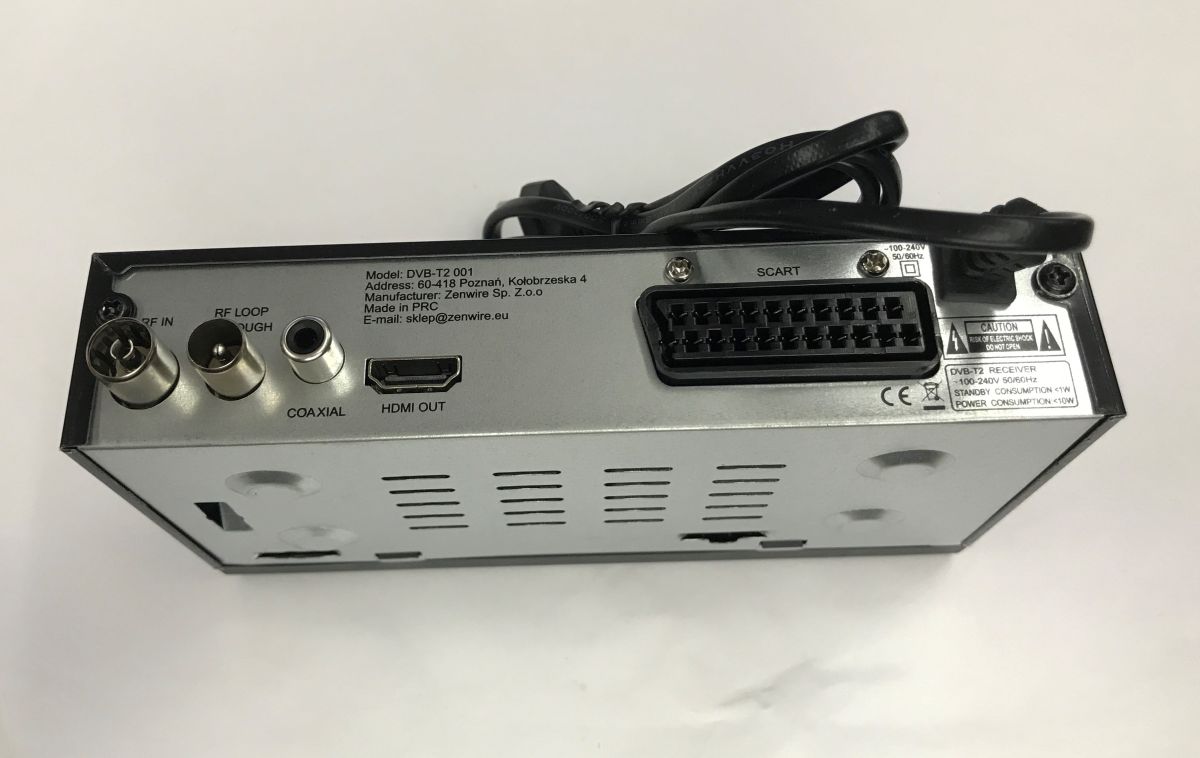
The set-top box is very light, though what catches my eye more are the inscriptions on the back of the casing. Made in PRC. Well, yes... I wonder what that Polish flag meant.
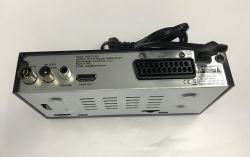
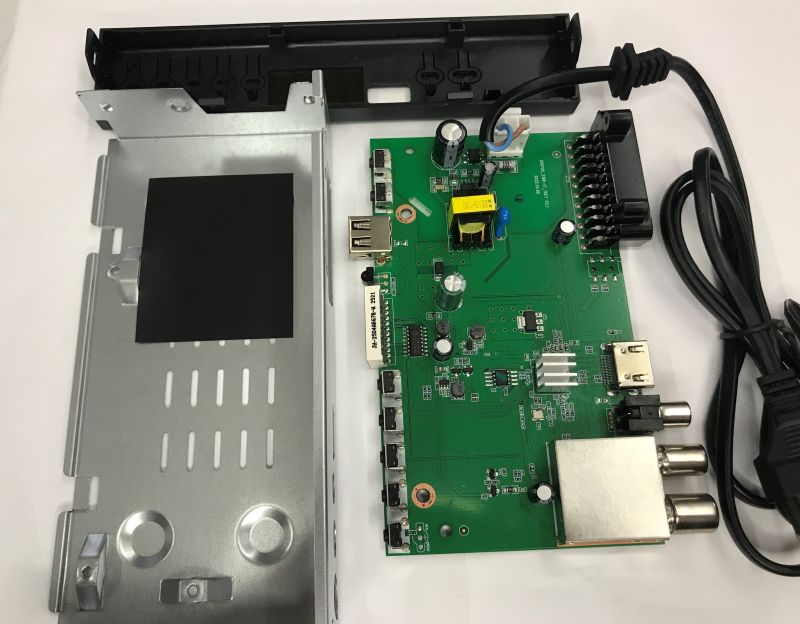
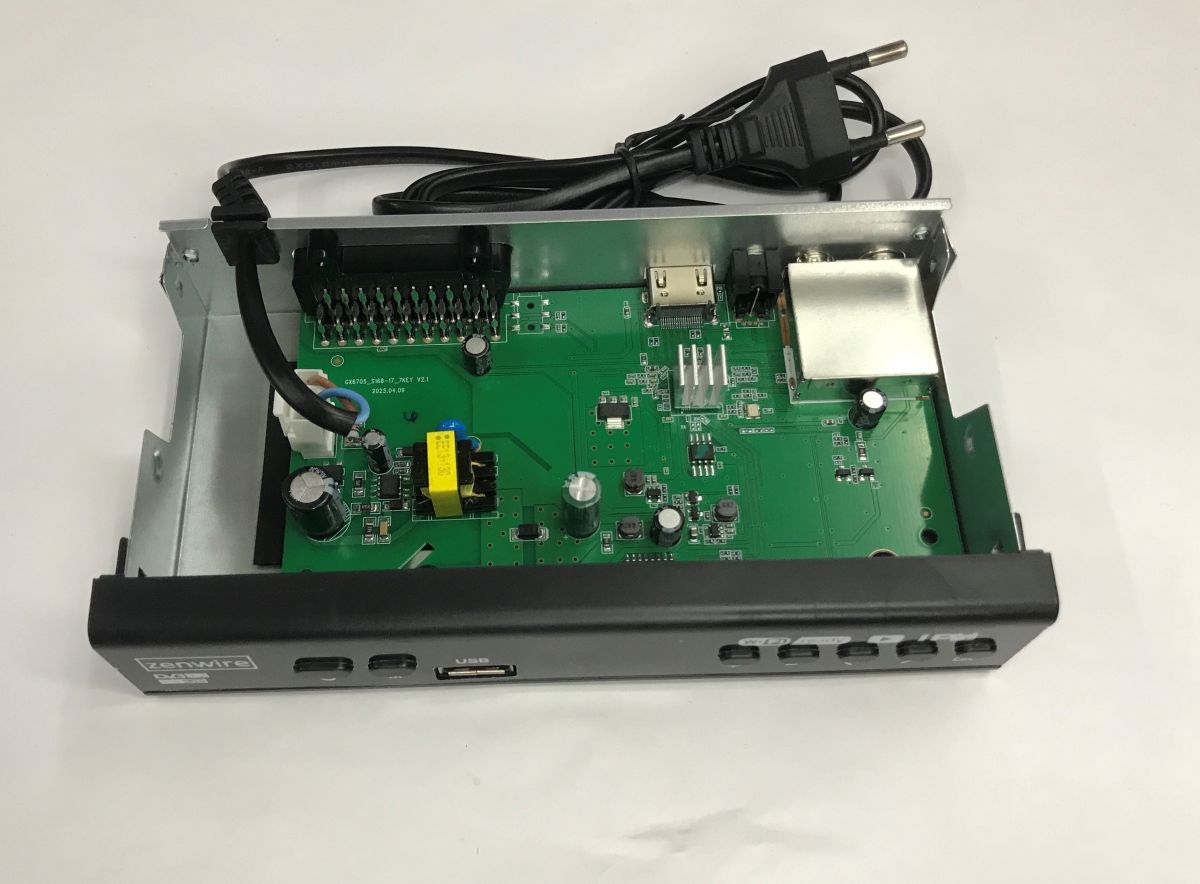
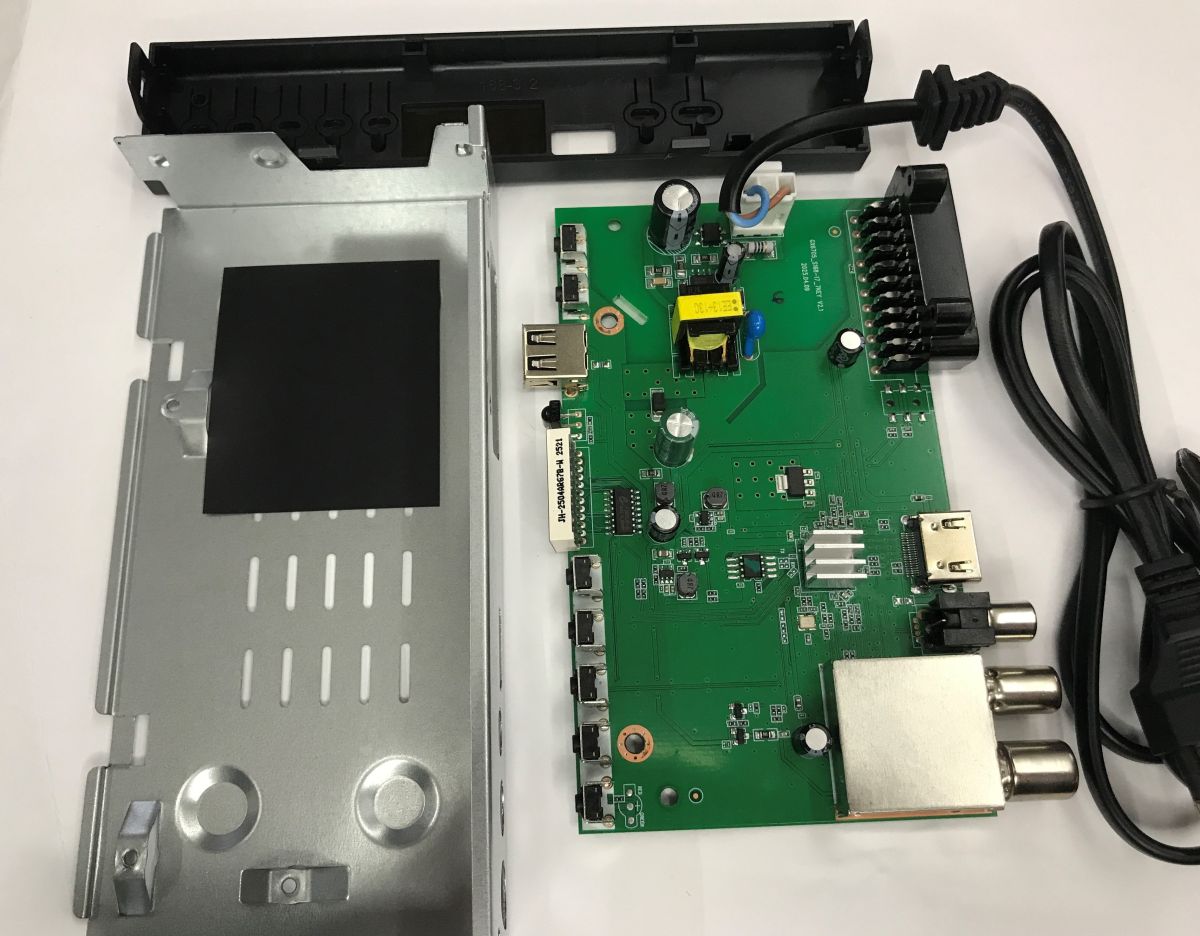
PCB marking: GX6705_S168-17_7KEY V2.1 2025.04.09. There is a single board; the power supply is integrated with the low-voltage section.
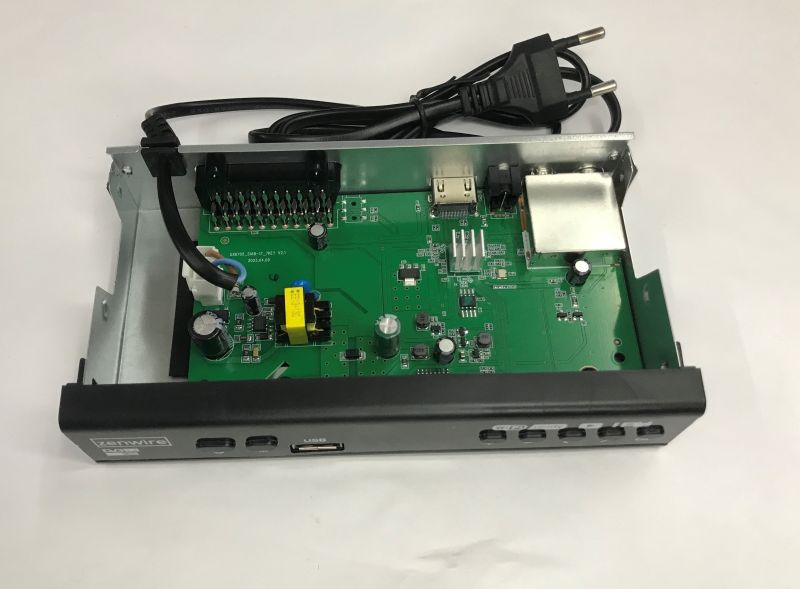
As standard, we have one main microprocessor, Flash memory, separate print heads, and a display controller, probably something similar to the TM1650.
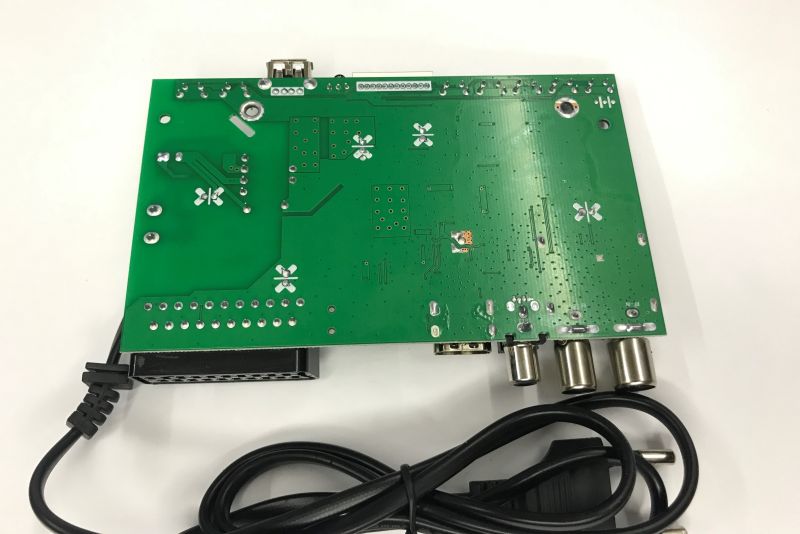
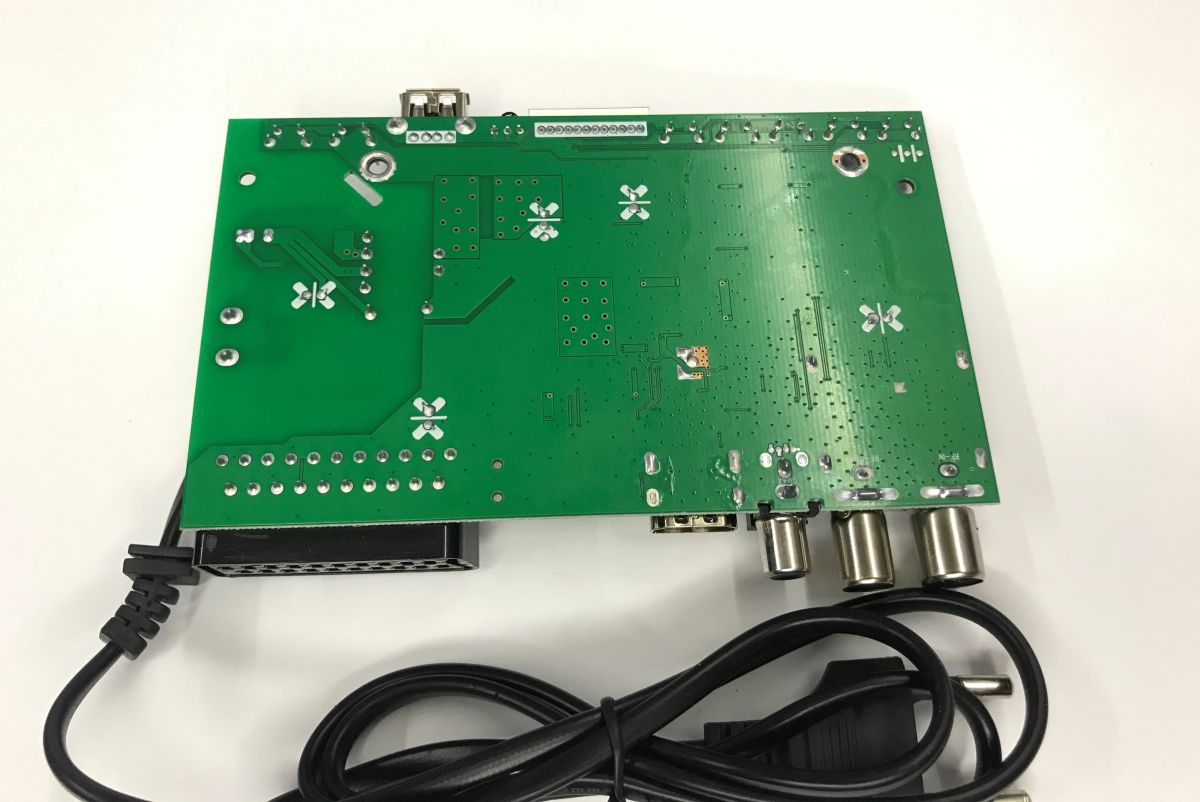
There is nothing else on the underside of the PCB:
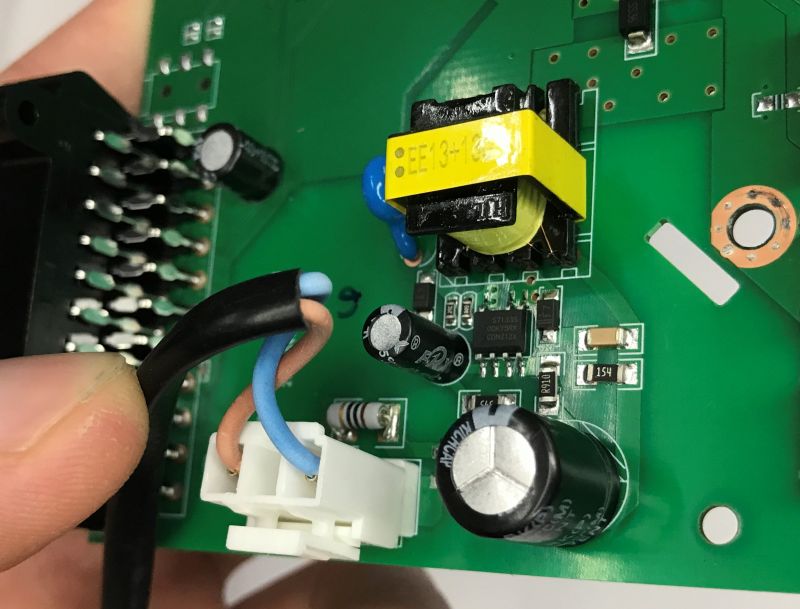
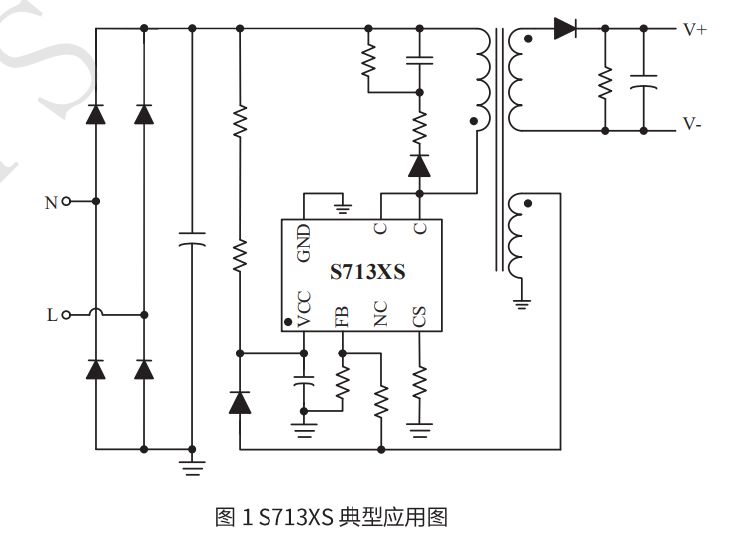
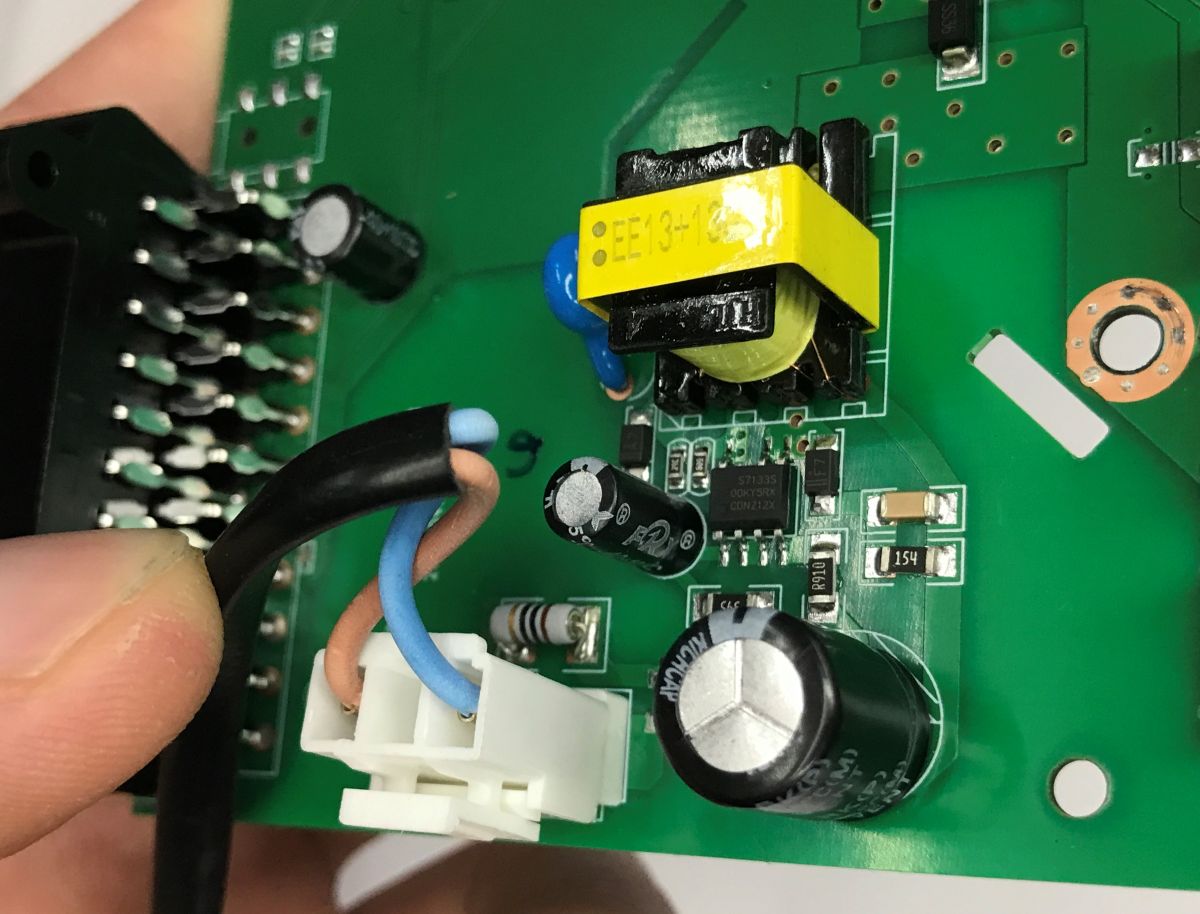
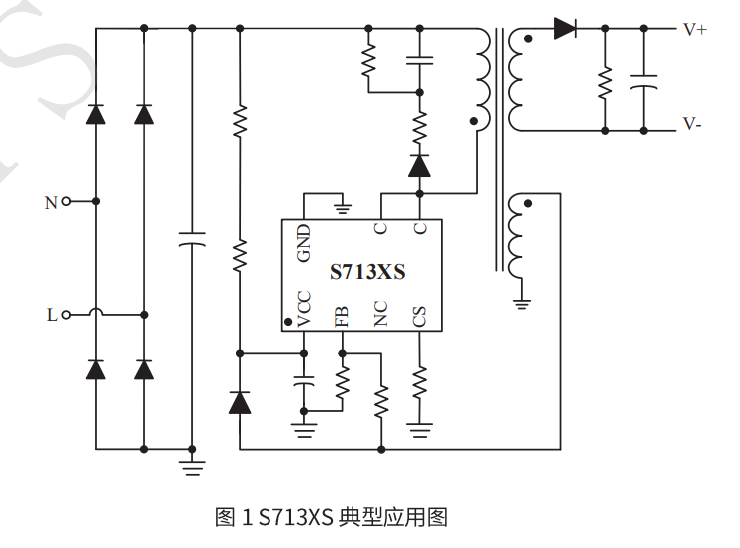
The power supply is based on the S7133S, implemented in a flyback topology, providing 5 V:
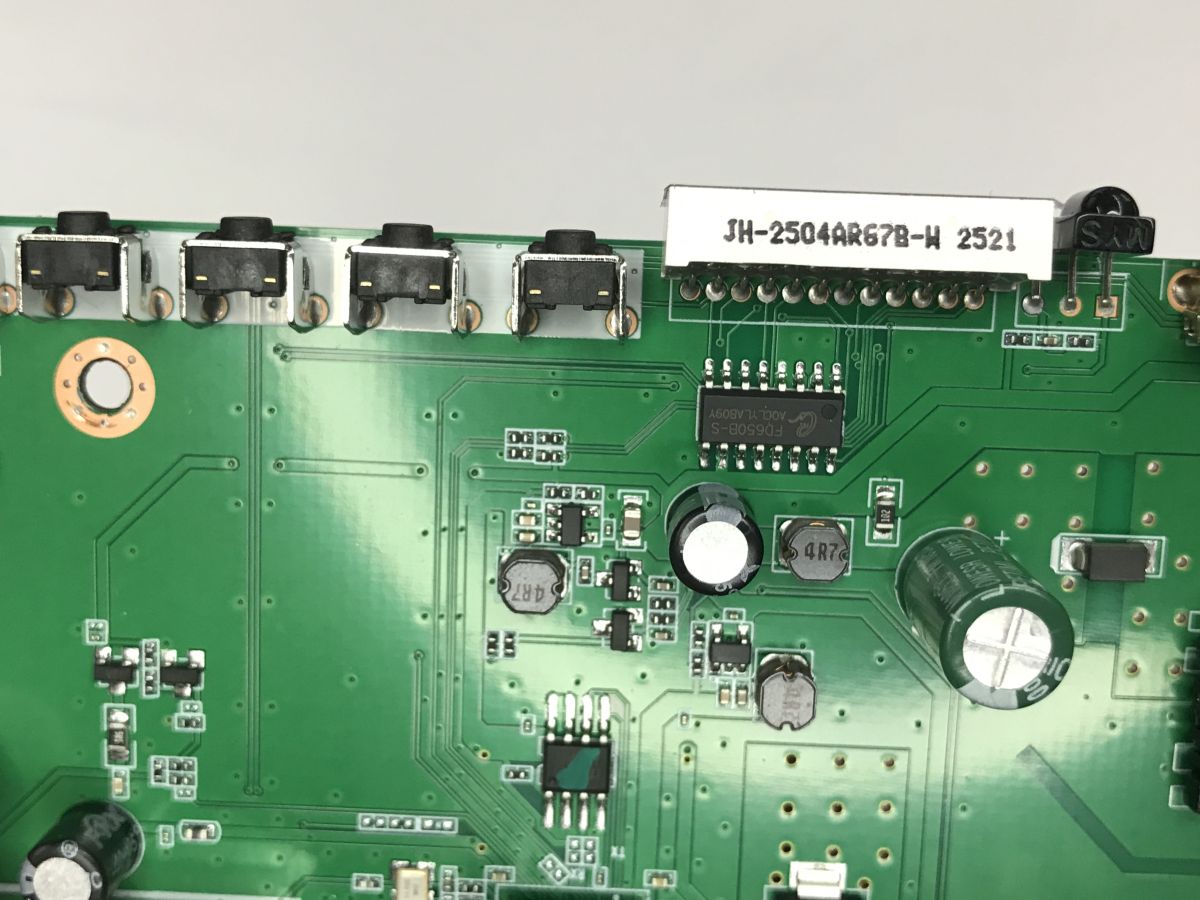
The display is controlled by the FD650B-S,
I have already discussed a similar chip .
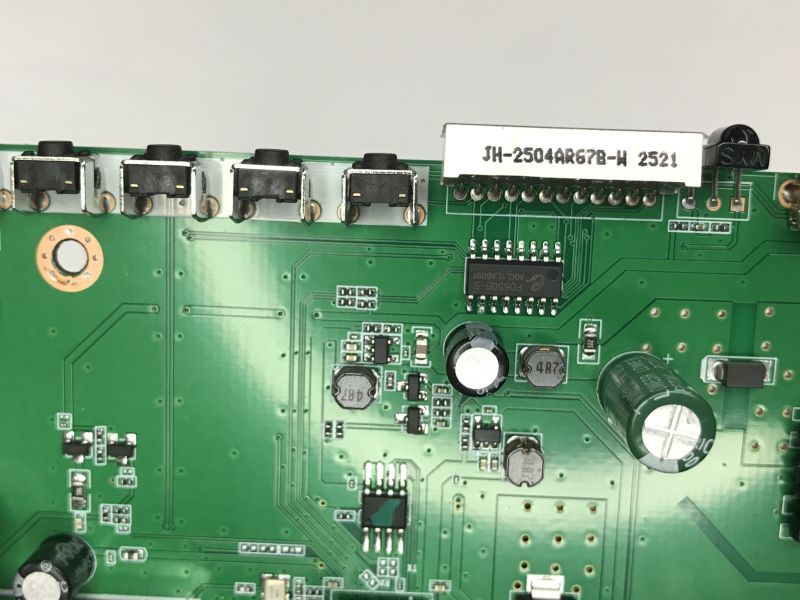
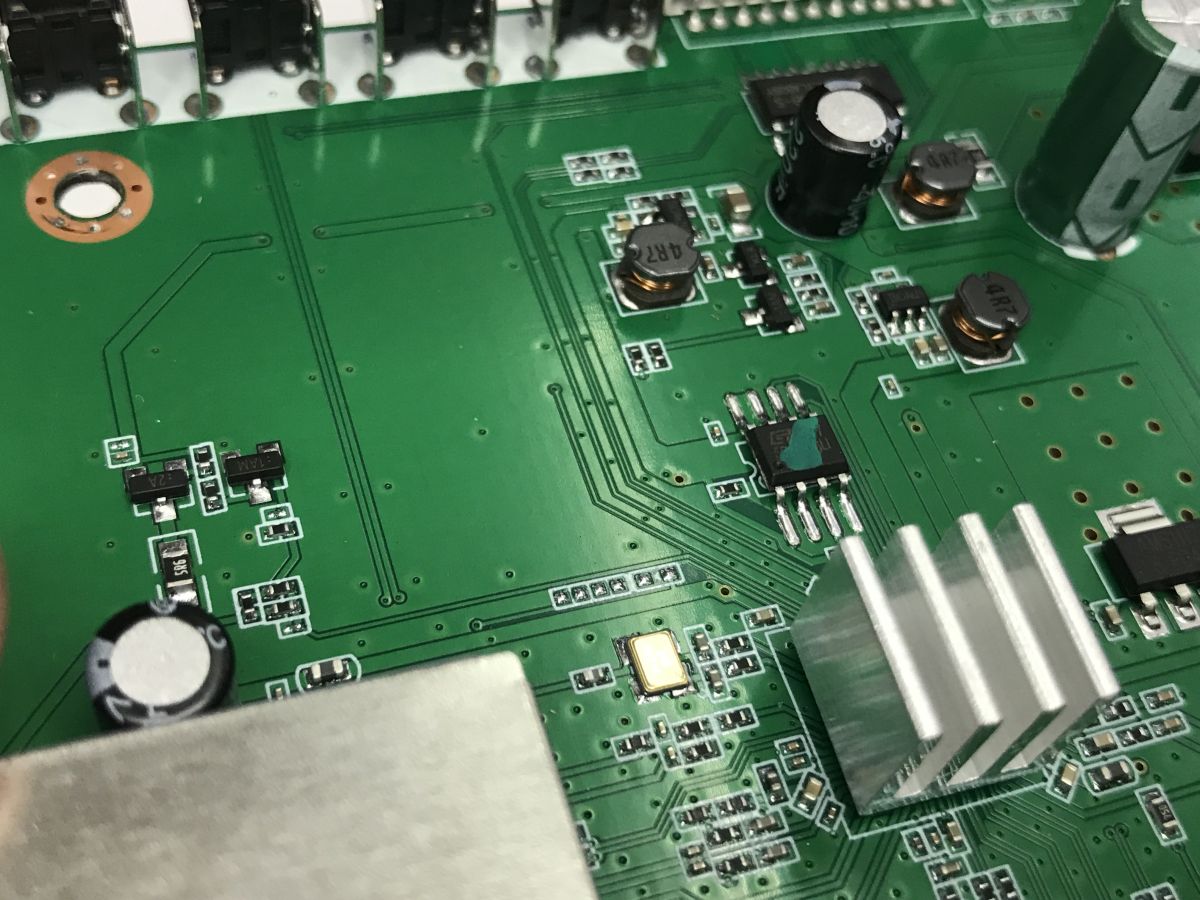
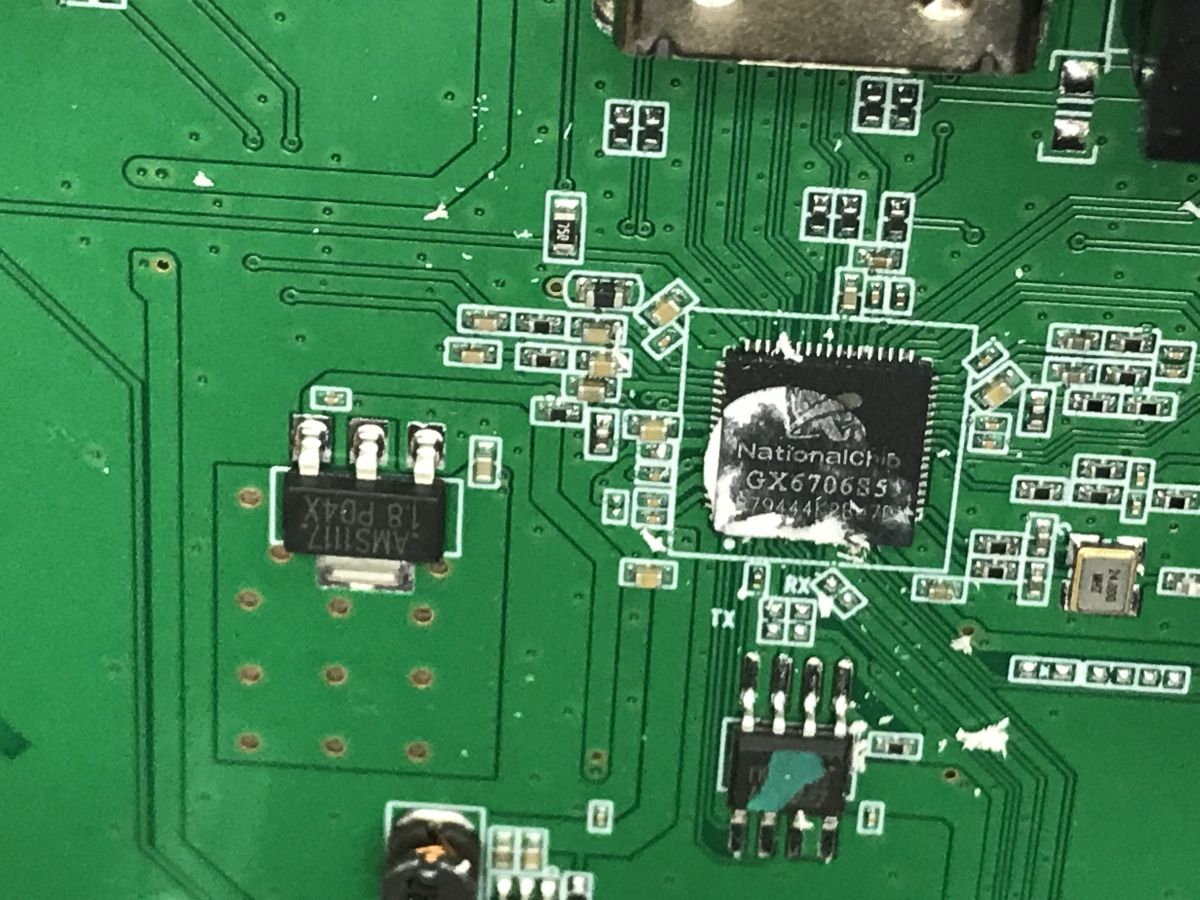
The photo also shows converters generating 3.3 V and 1.7 V (I assume) from 5 V, for the microprocessor.
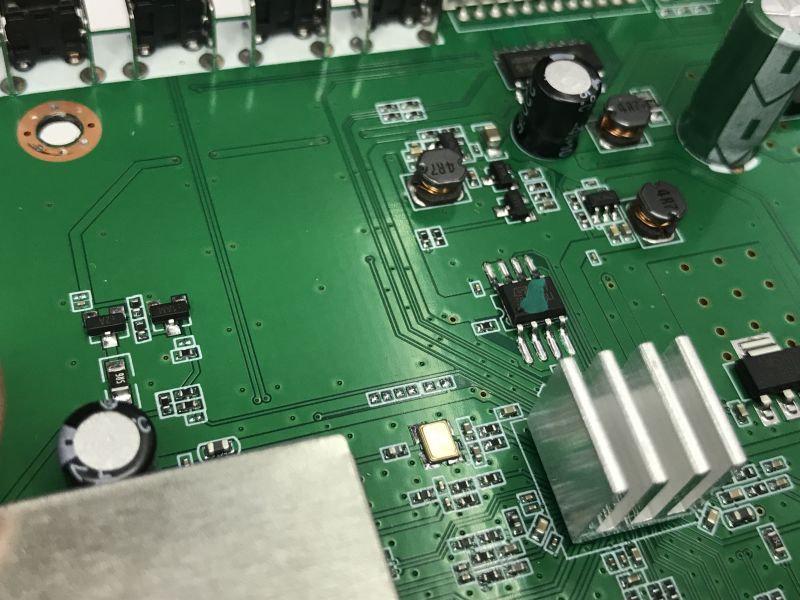
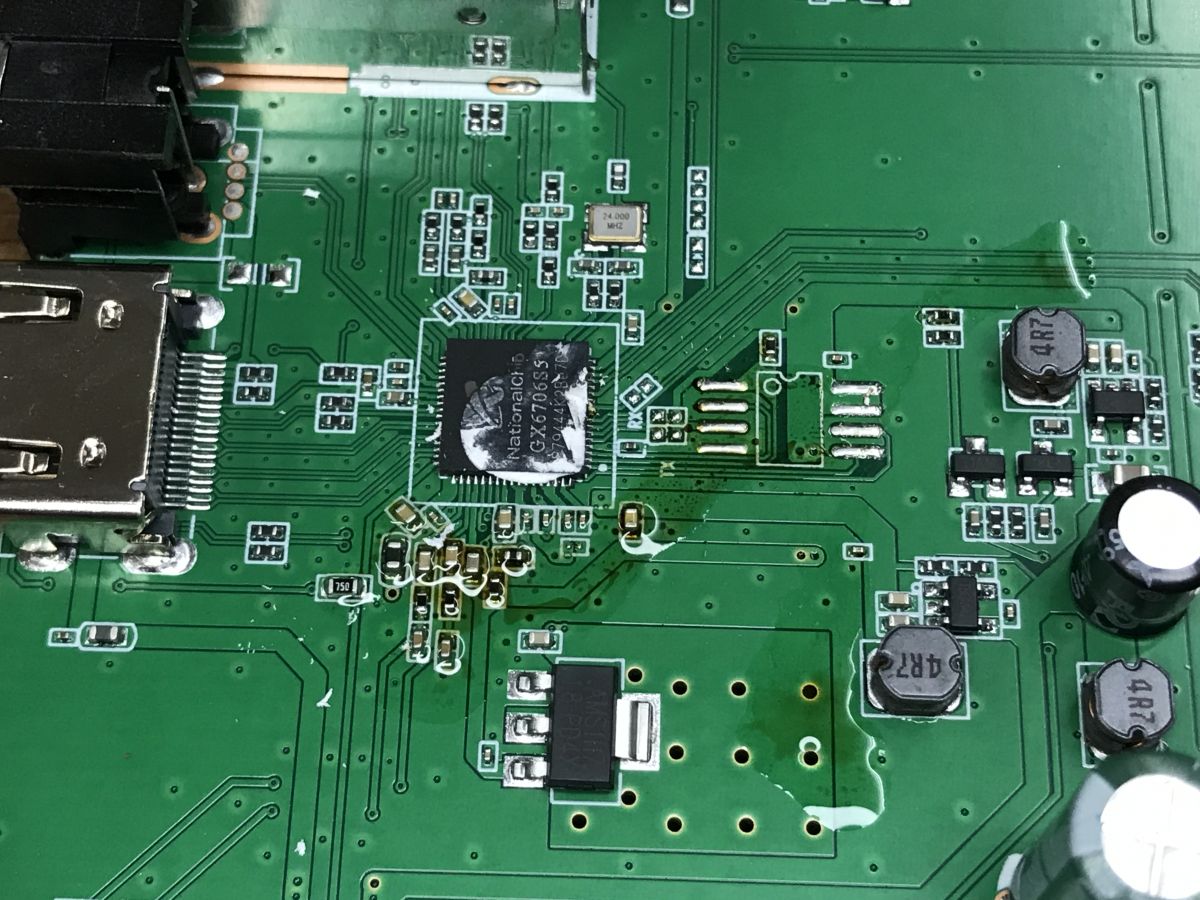
Next to the main SoC is a Flash memory chip with an SPI interface in an SO8 package.
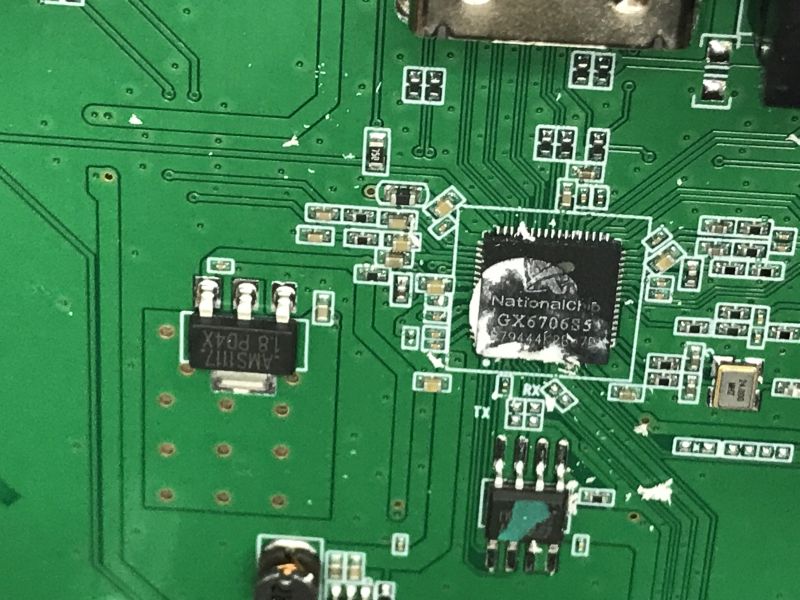
The main chip is the GX6706S5 (GX6706).
I decided to desolder it and flash the memory via CH341:
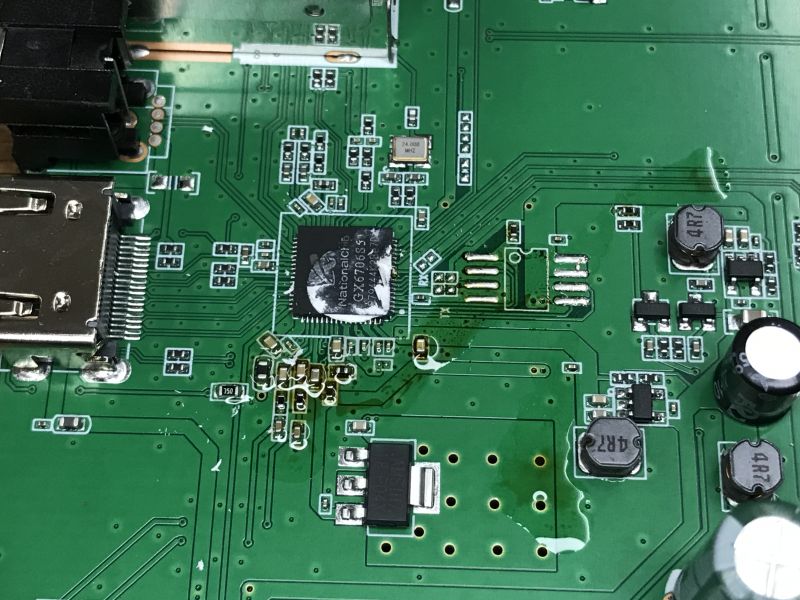
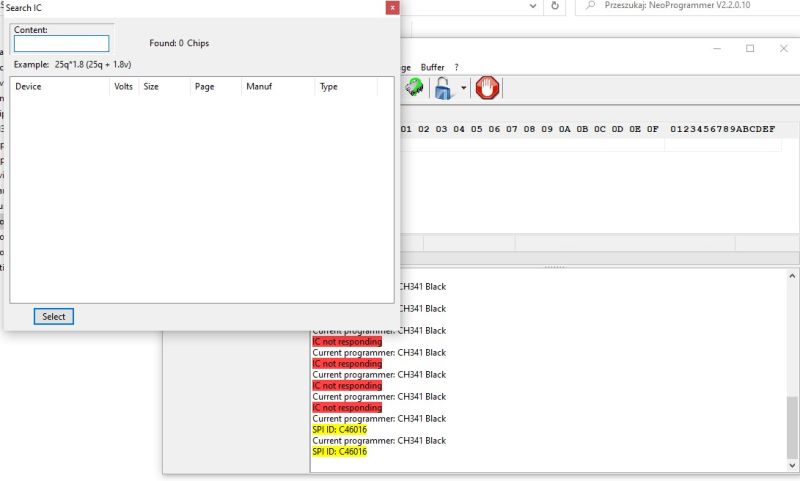
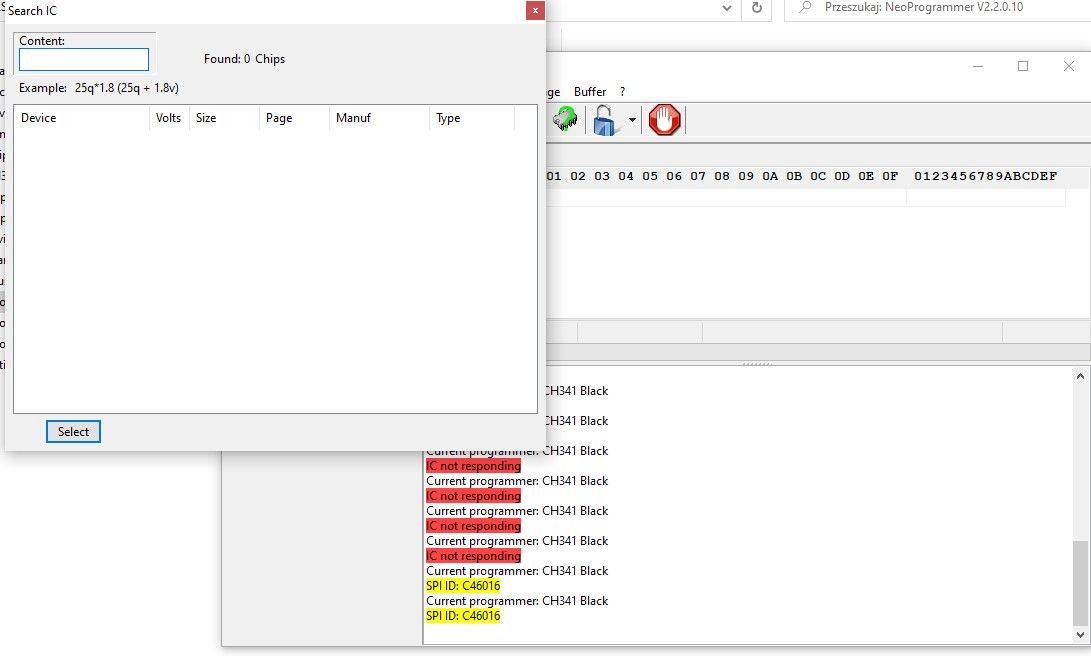
NeoProgrammer does not recognise exactly which IC it is, but it reads its JEDEC ID – C46016, which indicates a size of 4 MB, and is able to read its contents correctly.
Backup:
https://github.com/openshwprojects/FlashDumps/commit/0138c07a7923b1038cd27aa7b15b22284995df6d
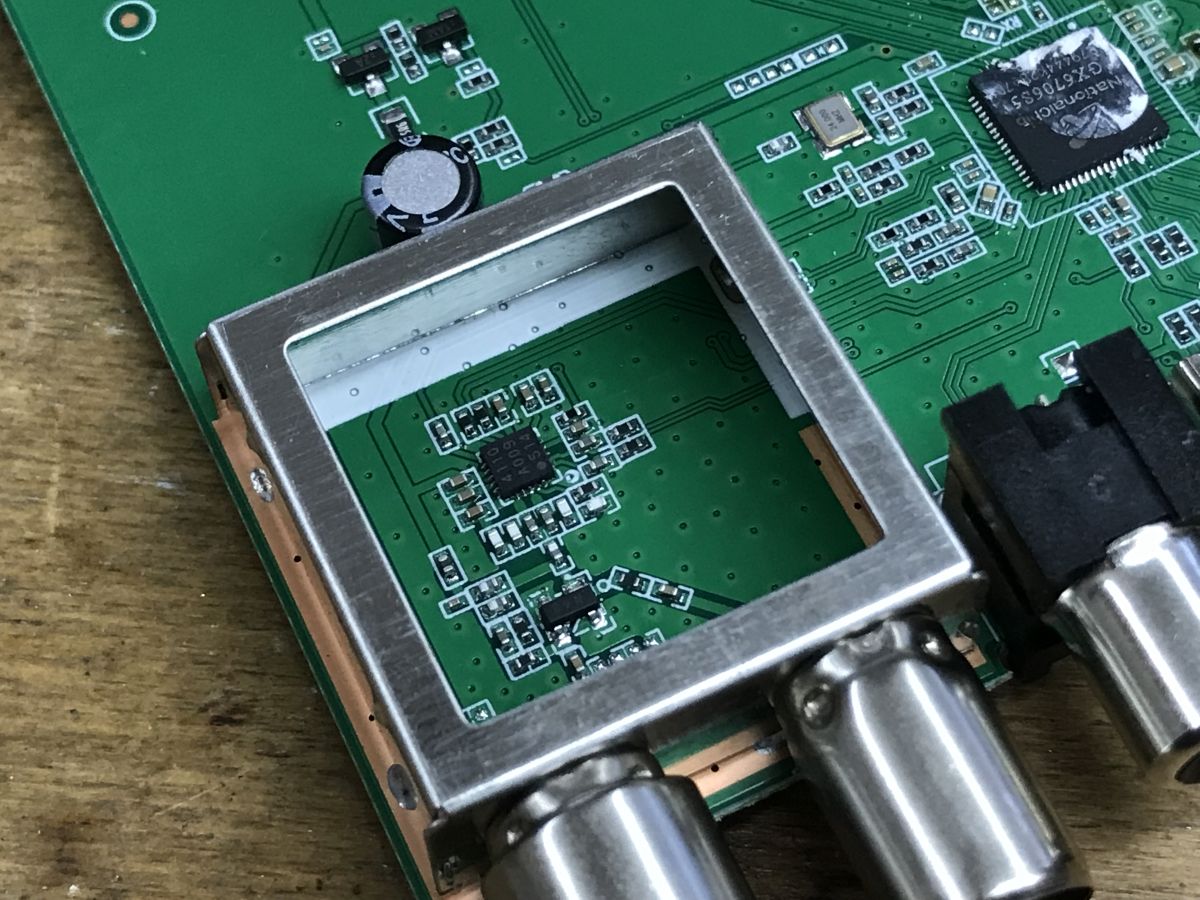
There is still a chip from the print head left – I cannot identify it: 4110 A009
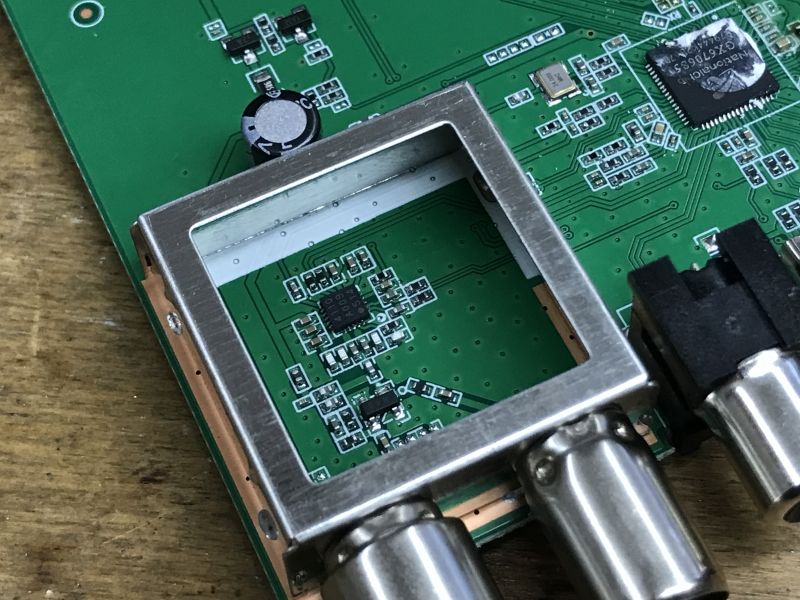
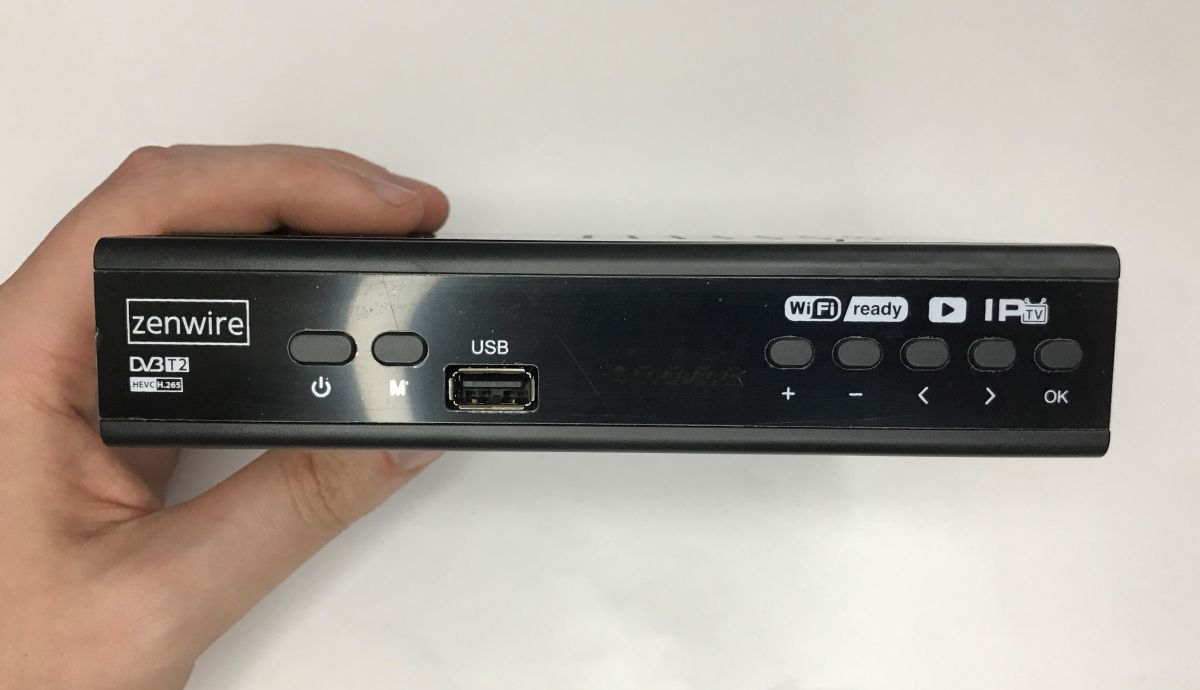
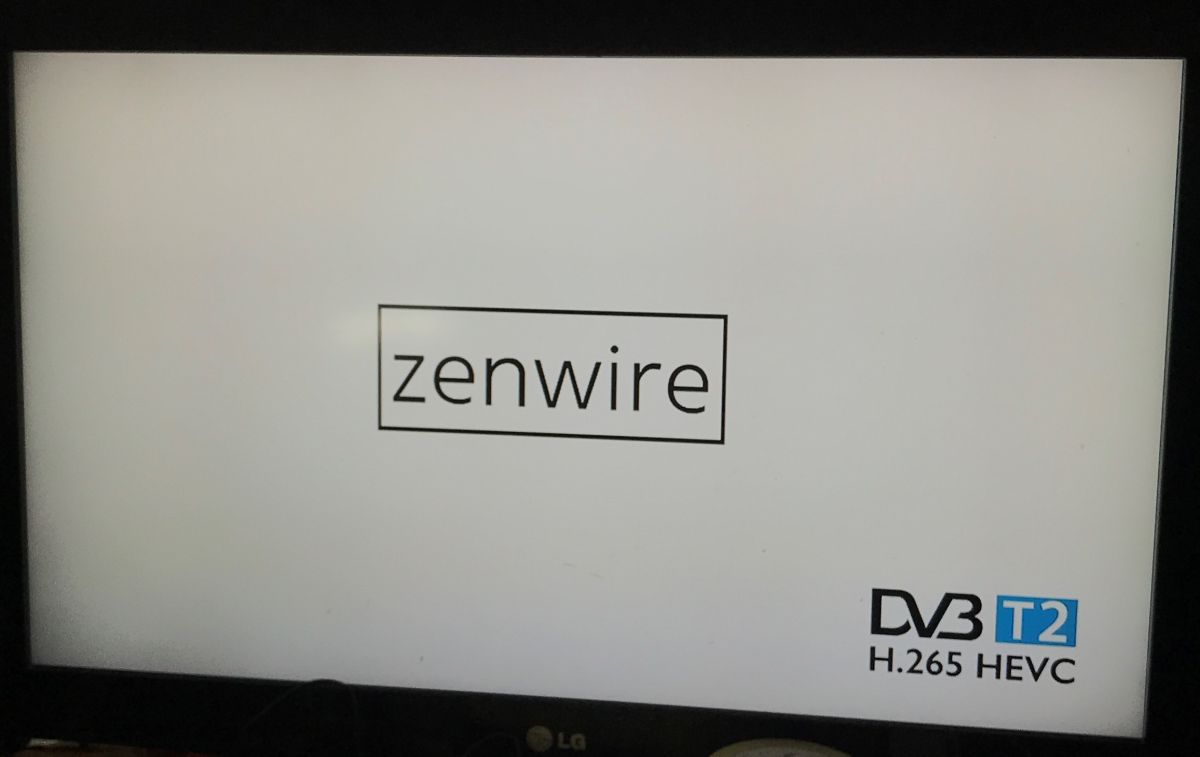
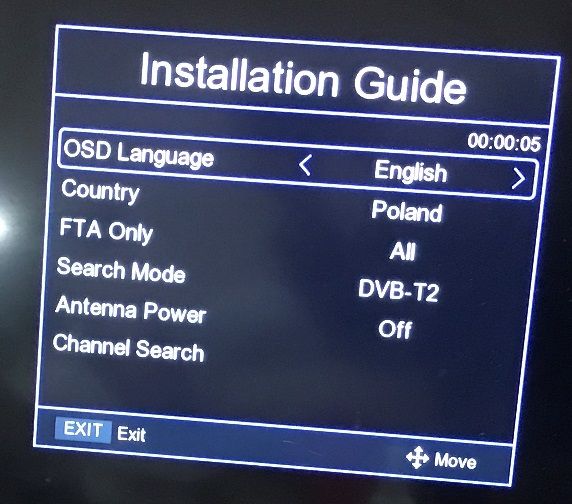
That’s basically it; the device works, you can change the language, etc.:
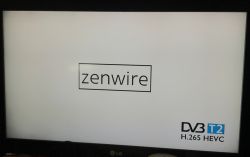
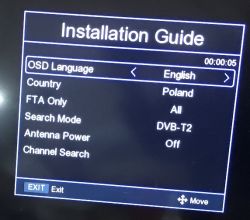
I have already analysed the Flash memory from the GX6706 in a separate thread:
Internal components and analysis of the DVB-T2/HEVC DVBT005-SH Shark decoder’s flash memory
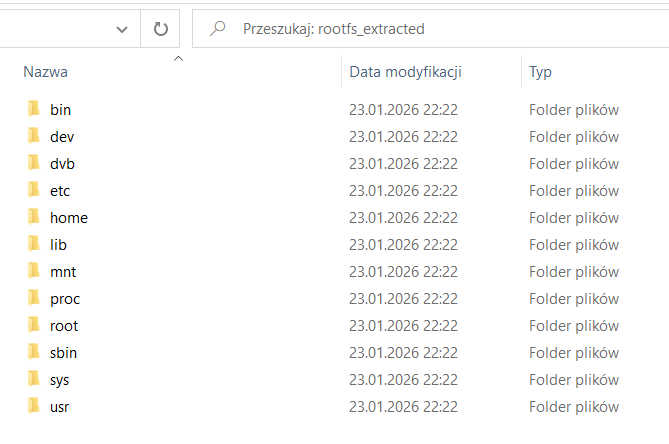
It’s similar here; you can extract the file system:
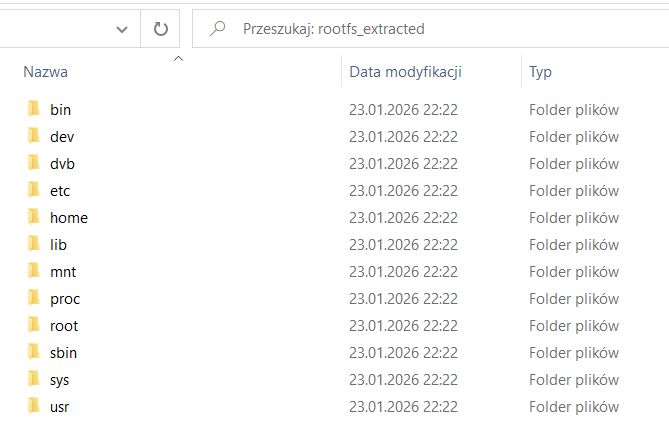
Sample files, dvb/theme/gpio.xml:
This looks like pin configurations, including those for the FD650.
panel.xml:
This is the configuration of the front panel itself; I can see two options here – FD650 and 1642. I wonder what the second chip is.
keymap.xml – this looks like the remote control buttons:
iptv_servers.xml – IPTV server URLs:
I don’t know how the local link is supposed to work for them; after all, it’s a LAN address. Perhaps it’s a remnant from production testing? The second link to Pastebin doesn’t work for me either; it shows a 404 error.
citylist.xml – a list of cities, but for what purpose?
The ‘language’ subfolder contains translation files, e.g. Polski.xml (I’ve shortened the content; the full version is 43 KB):
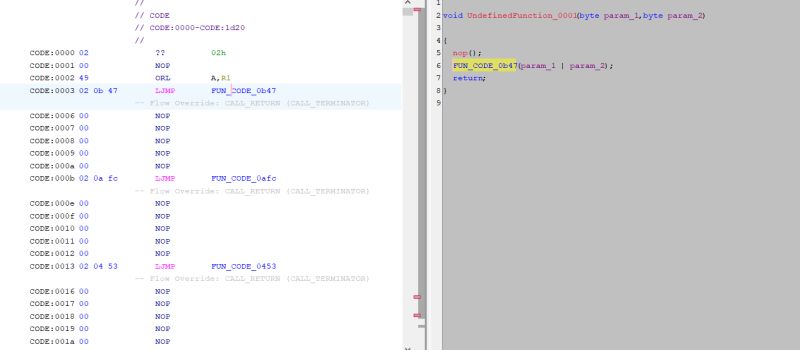
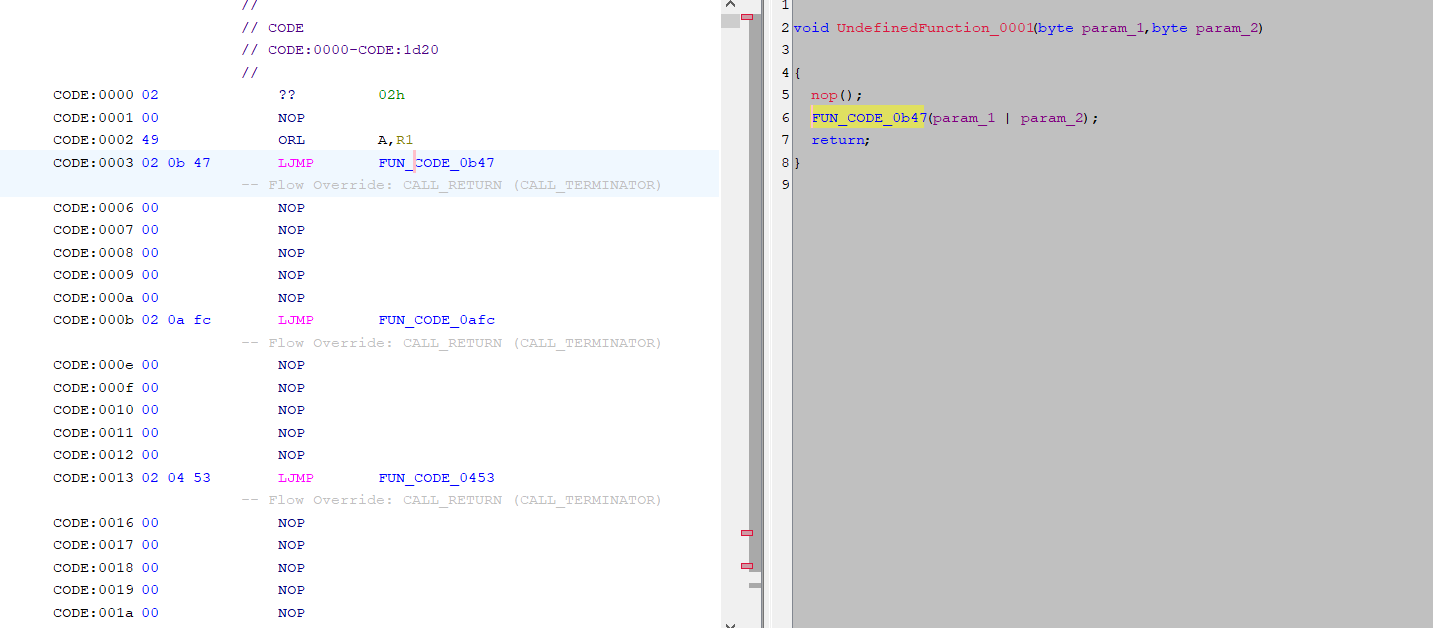
Also in lib/firmware is the gxlowpower.fw file, which is a mere 8 KB in size. It appears to be a program for the 8051, for standby mode with GX. It supports a 7-segment display (shows the time) and responds to wake-up via a button or remote control.
 To sum up
 , I hadn’t planned this, but I’ve essentially come across a clone of what I’ve already presented – another
GX6706, just like in the DVBT005-SH Shark . For this reason, I’ve shortened the description a bit, as it’s enough to simply refer to the previous post. One of the more interesting touches here was probably the Polish flag on the packaging, which I’m not quite sure what it’s meant to signify – is it some sort of creative marketing along the lines of ‘we import devices from the PRC, stick a flag on them and sell them’? I don’t know, I’m not familiar with the business side of electronics.
The basics are there: you can receive TV, there are Polish translations too, and that’s what counts.
Have you come across any DVB-T2 devices based on the GX6706 yet?








Comments
On set-top boxes with this menu, you can copy the flash content to a USB stick directly from the menu. It’s simple, but you need to make a small change in the update settings first. https://obrazki.elektroda.pl/5154331800_1781338249_thumb.jpg... [Read more]
It looks like an interesting chip. I can’t identify it either, but there aren’t many lines between the SoC and this chip in the head unit. That would suggest it isn’t outputting MPEG-TS, just a standard... [Read more]
The printhead model is SI2141 SI2141 https://obrazki.elektroda.pl/9813518000_1781339824_thumb.jpg [Read more]
If it is this chip, then I was indeed right: https://obrazki.elektroda.pl/3143077600_1781347044_thumb.jpg It might even be possible to get it working, although there isn’t a full datasheet. [Read more]
It just means that the order was sent from a Polish email address.... [Read more]
The Si2141 would be suitable; it’s mentioned in ecos.bin: https://obrazki.elektroda.pl/2936816900_1781348926_bigthumb.jpg I can see that this is probably some sort of universal driver, as it also... [Read more]
There’s also a driver for this chip: Link . I once extracted the relevant part for the AV2012 from this exceptionally versatile code. I might even buy the tuner shown here one day. Identifying the pinouts... [Read more]
These new DVB-T2 set-top boxes may contain memory modules that are not supported by the CH341. [Read more]
I wonder if you could specify exactly which types of memory you’re referring to? Are you talking about those with a parallel interface? [Read more]
I'm curious too – what sort of memory is it? Or perhaps the programme doesn't support it? [Read more]
I once wanted to read data from a Manta; I desoldered the memory module but couldn’t get it to work. I thought the programmer was faulty, but then I found out somewhere that this particular memory module... [Read more]
If you’re referring to the memory mentioned in this post 20173560 https://obrazki.elektroda.pl/6990287400_1781452525_thumb.jpg then it can be read without any problems using the "SiberiaProg... [Read more]
I recently had an issue with a memory module, and it turned out that the JEDEC ID read function was simply blocked, but all other Flash operations on it were still supported. Because of this, the software... [Read more]
That is why this is the quickest and easiest option. If possible... [Read more]
Yes, I remember that post – I couldn’t read it, and it wasn’t the first time I’d tried. I bought the CH341 programmer a long time ago specifically for DVB-T1 set-top boxes. That was four years ago, so... [Read more]