





A look inside the FIRST ART. No. 102 radio alarm clock. A clock without a quartz crystal, a radio wi
TL;DR 
- The FIRST ART. No. 102 radio alarm clock teardown reveals a transformer-powered, through-hole design that keeps time without a quartz crystal.
- Texas Instruments’ TMS3450NL clock IC uses the AC mains frequency as its primary timebase, multiplexes the LED display, and provides alarm, snooze, and 12/24-hour functions.
- A 9V 6F22 battery preserves settings during power outages through the TMS3450NL’s battery-backed RC oscillator.
- The TA7613AP integrates the AM/FM receiver, including RF and IF stages, local oscillator, and a Class B speaker amplifier, while a ferrite rod antenna handles AM reception.
- The single-sided board uses ageing analogue components and wax-stabilised tuning coils, with no microcontroller, SMD parts, or separate quartz oscillator.
AI summary based on the discussion. May contain errors.
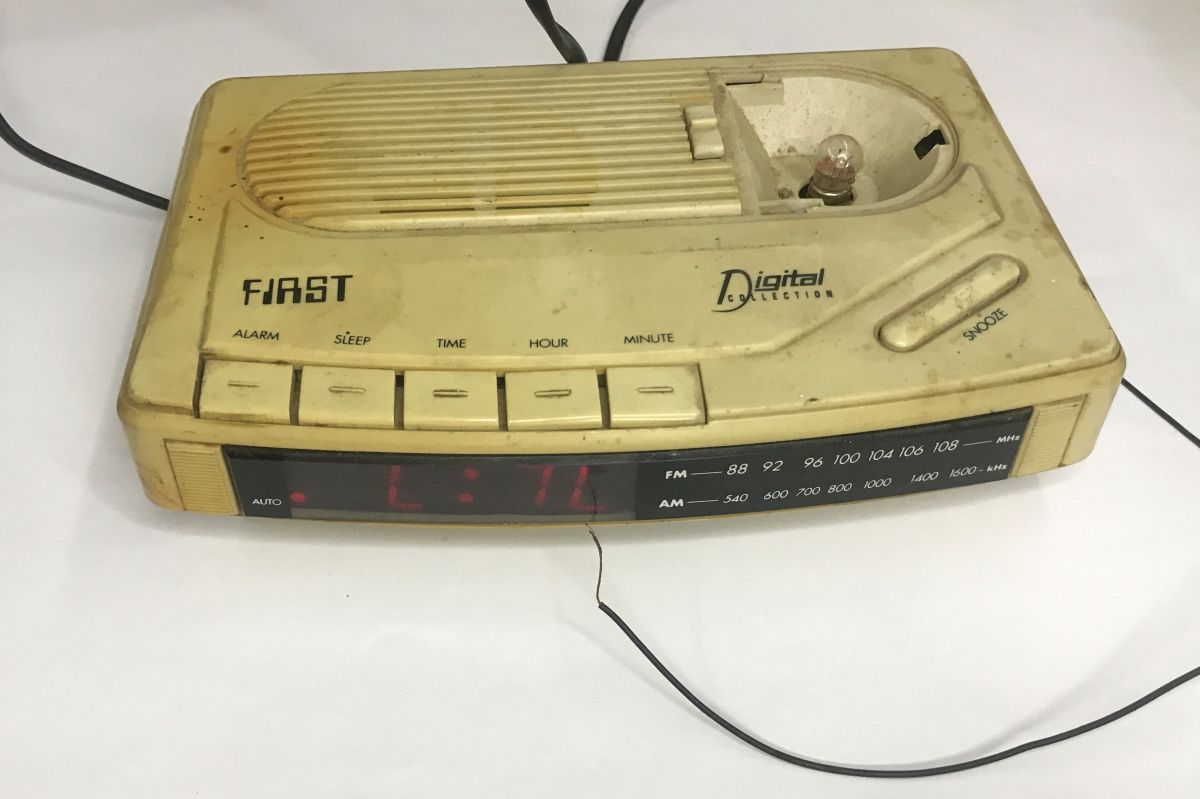
I invite you to a presentation of an old FIRST ART alarm clock – No. 102. I’ll show you the inside and explain how it works. Classic devices like this used to be found in many bedrooms, waking us up for work or school, so they carry a good dose of nostalgia. The distinctive light bulb on top of the device really catches the eye.
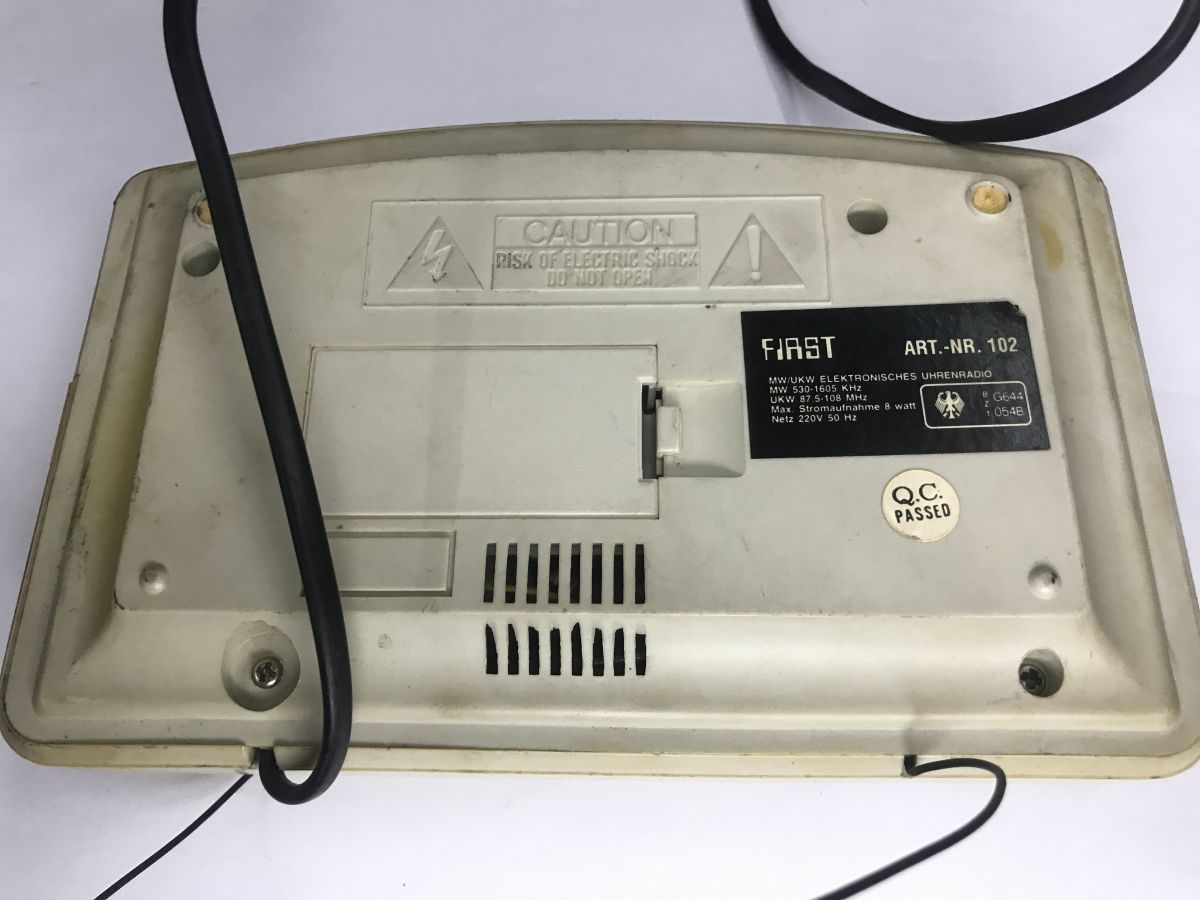
On the underside, there is a rating plate showing the model and power specifications, as well as a cover for the battery compartment.
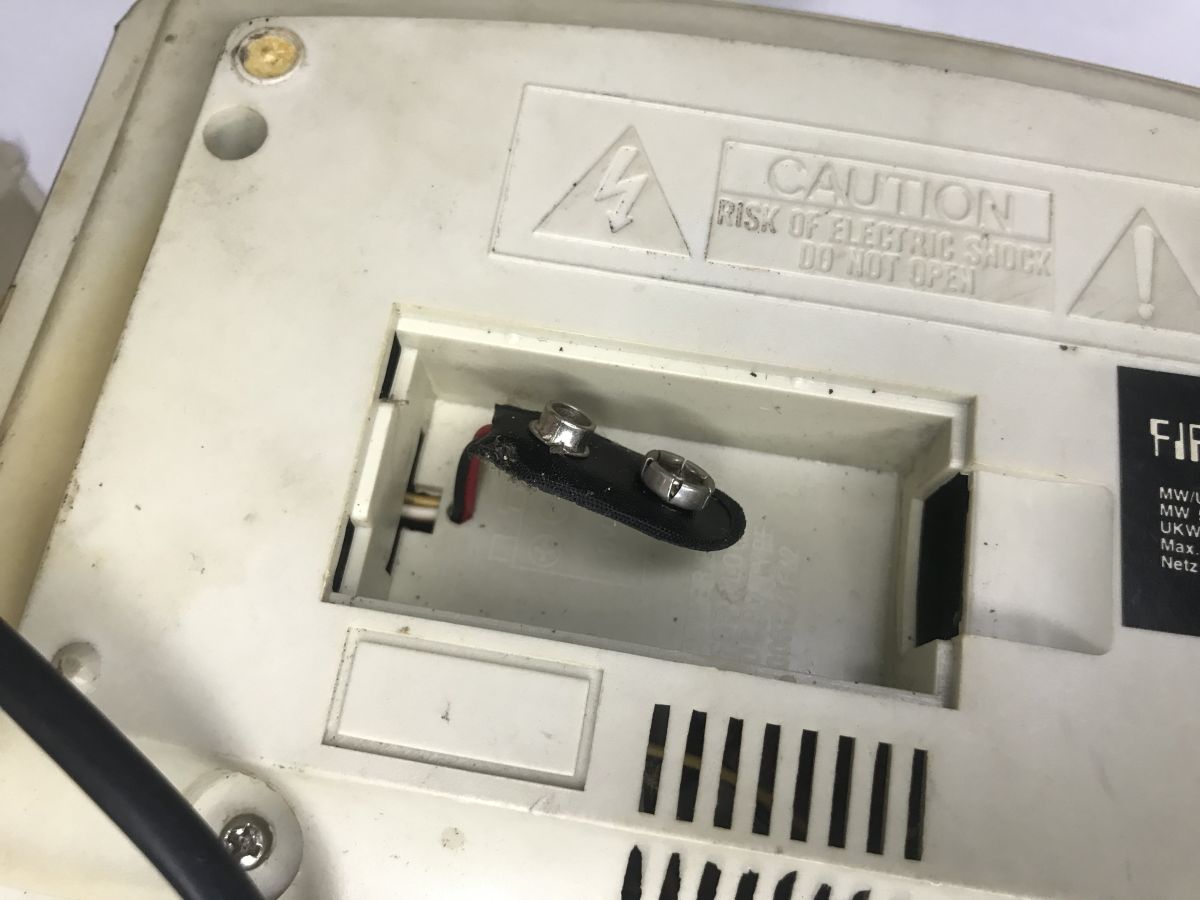
Concealed beneath the flap is a connector for a 9V battery (6F22), which was used to maintain the clock settings in the event of a power cut.
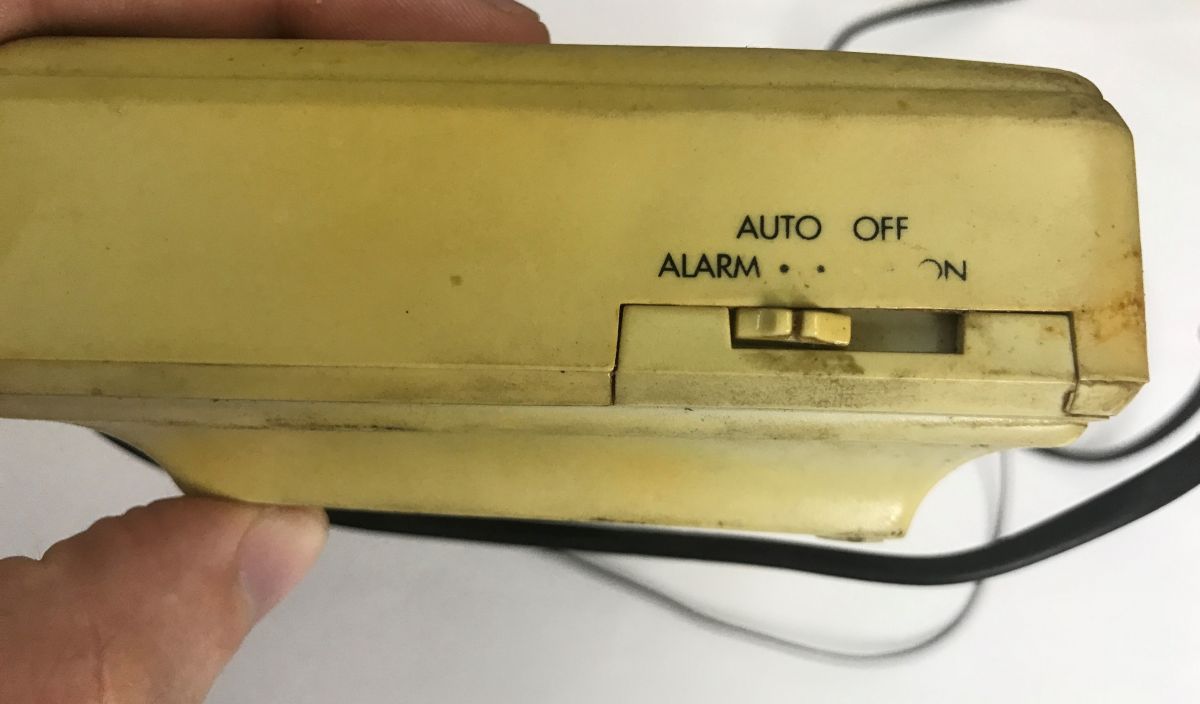
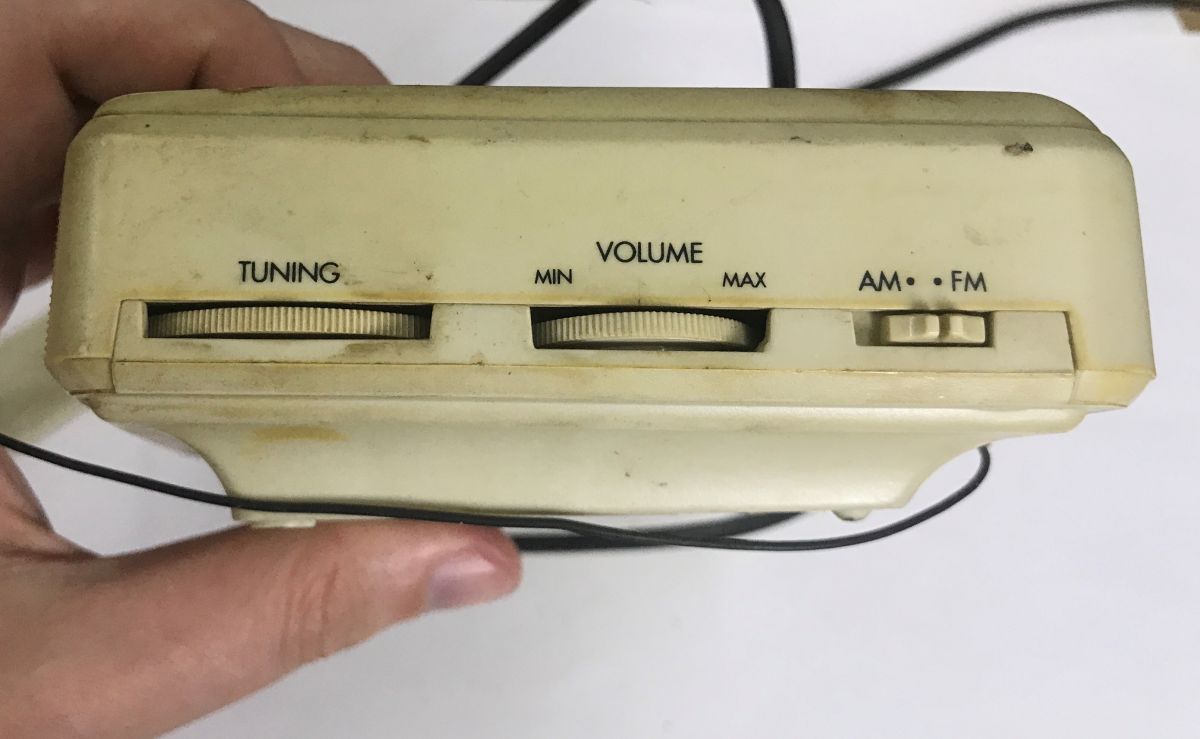
On the sides, the controls are entirely analogue – on one side, switches for AM/FM bands and alarm modes (Auto/On/Off); on the other, knobs for volume and radio station tuning.
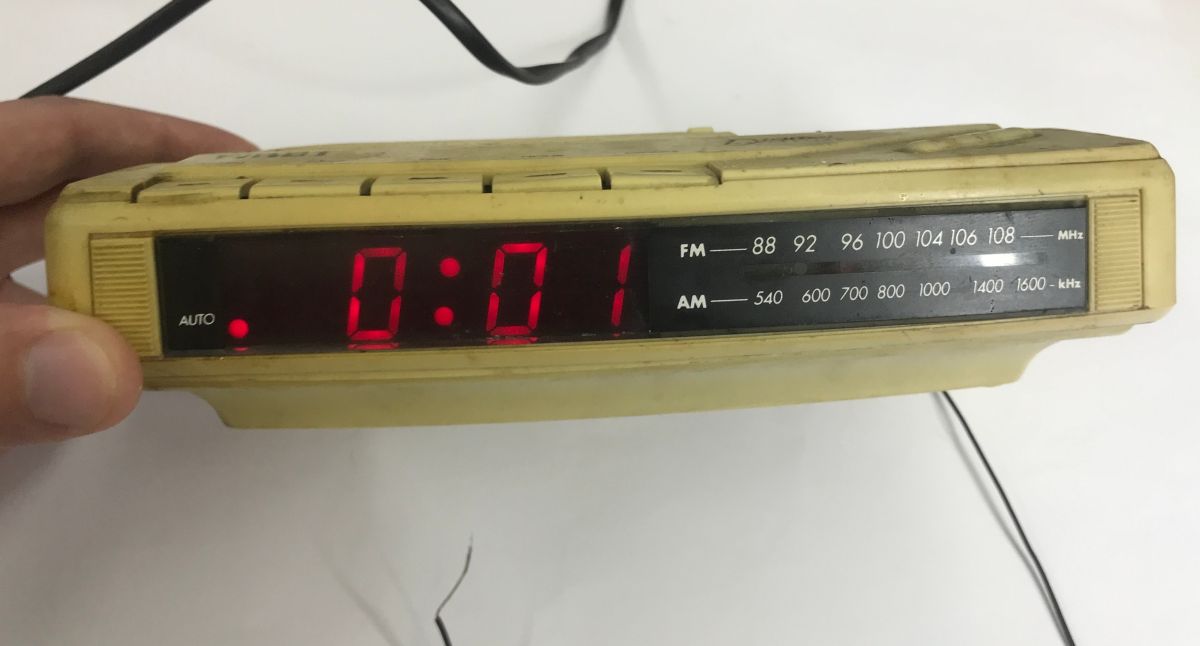
And here’s the front view – a clear, 7-segment LED display and a mechanical scale.
Time to take a look inside. You can tell straight away that the unit is getting on a bit.
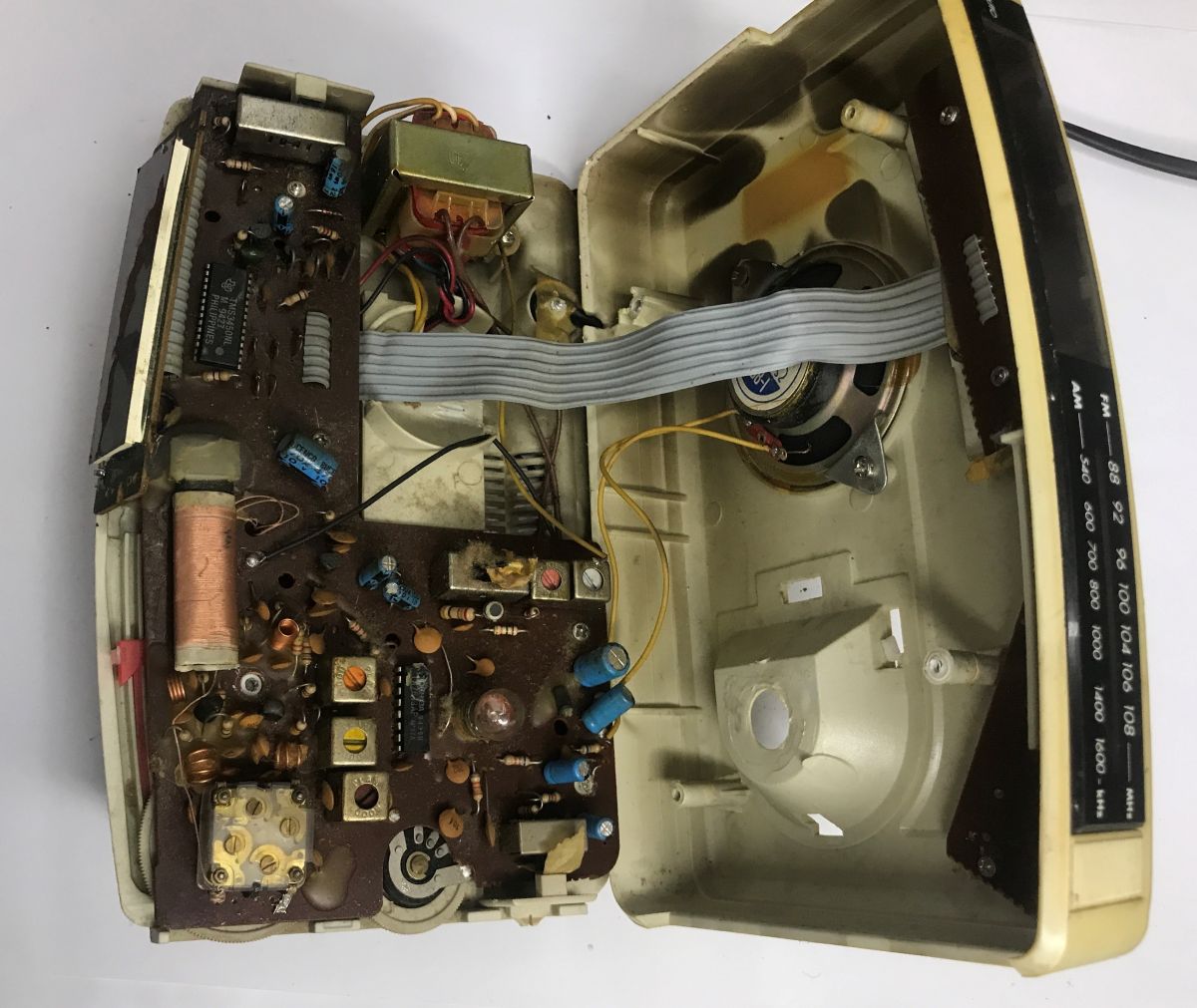
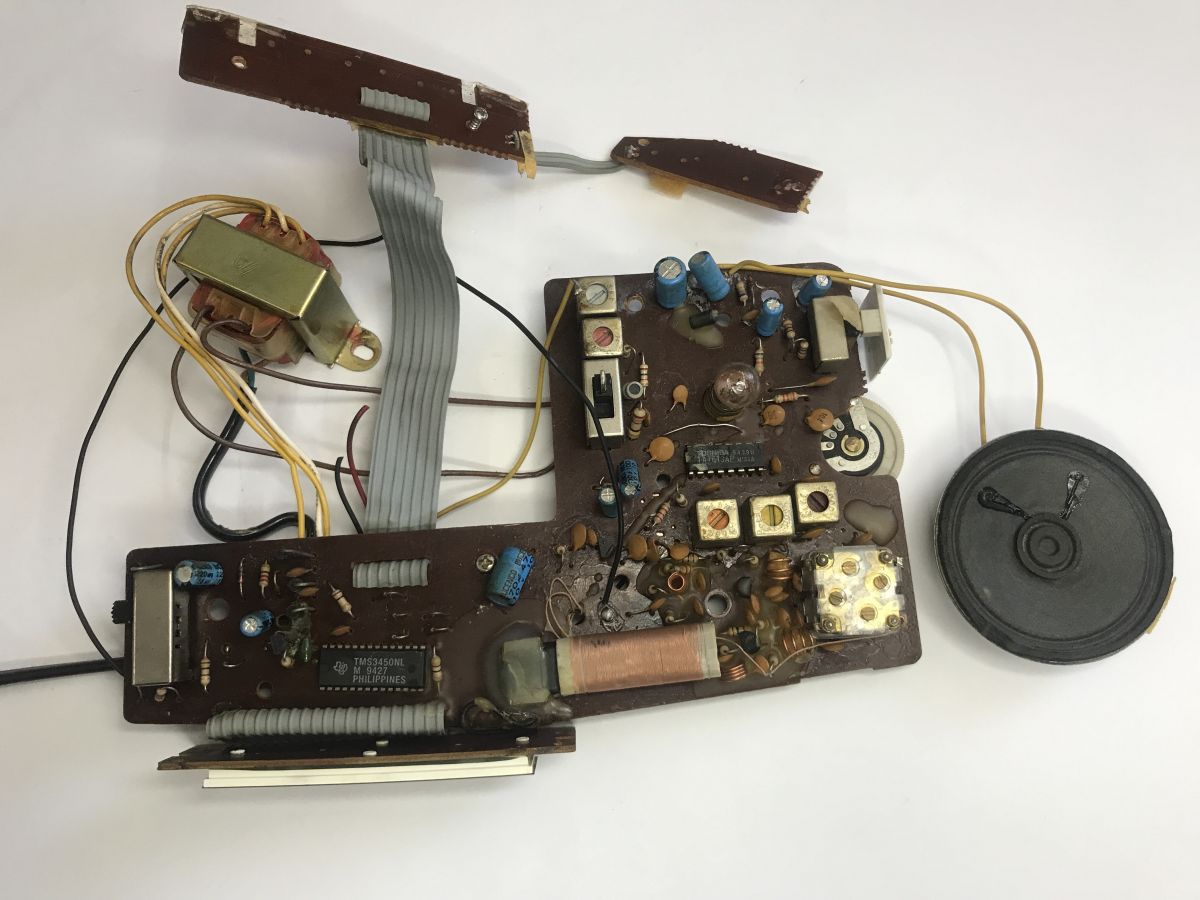
The whole thing is really quite dirty. You can see straight away that, for example, the speaker – due to the holes in the casing – has been a real dust magnet. Inside, we find the classic design of devices from those years, powered by a simple mains transformer. Apart from the aforementioned single speaker producing monaural sound, a long ferrite antenna responsible for AM reception catches the eye. You can also see traditional components of the radio circuit, such as the coils, which were filled with paraffin wax after factory tuning to prevent them from going out of tune due to vibrations. Two integrated circuits can also be seen on the board – one most likely responsible for the main clock functions, and the other for operating the radio tuner.
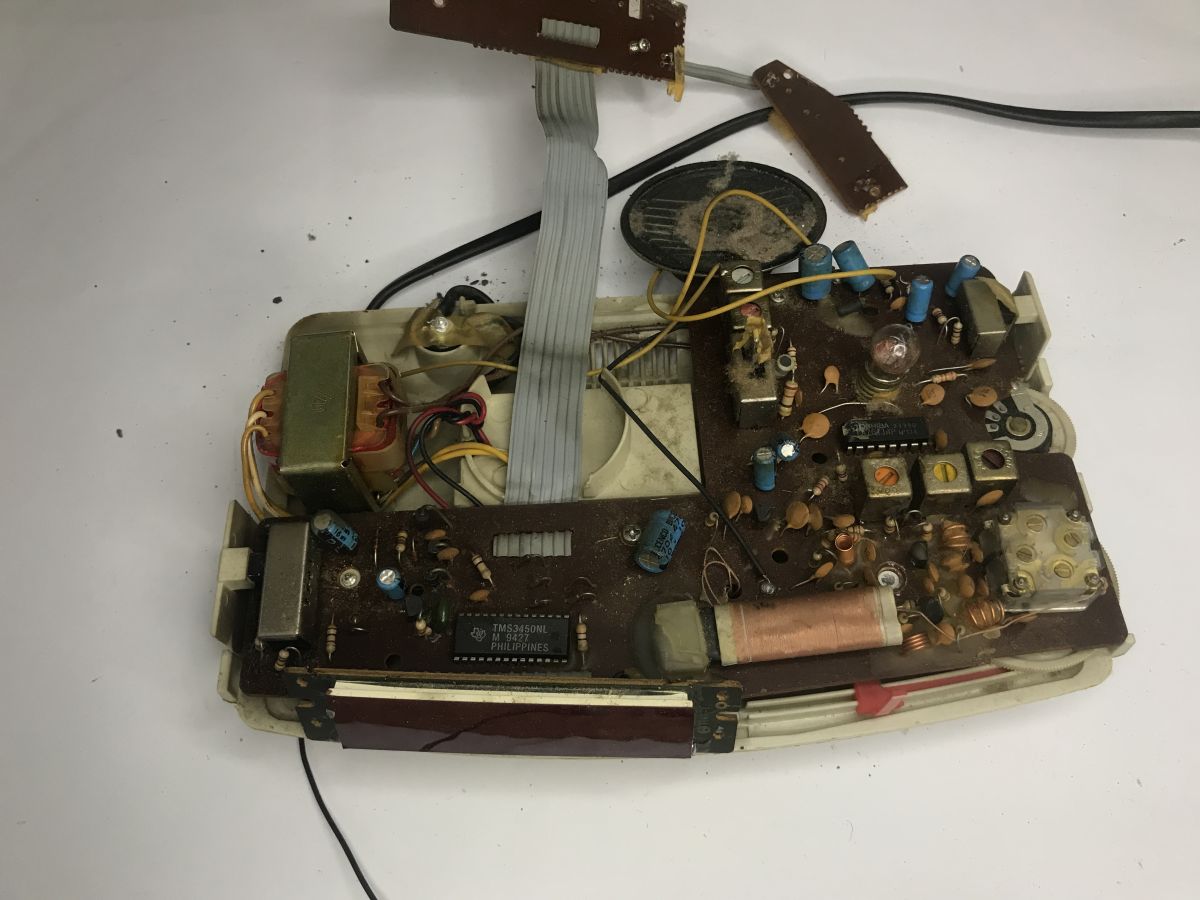
That’s better straight away:
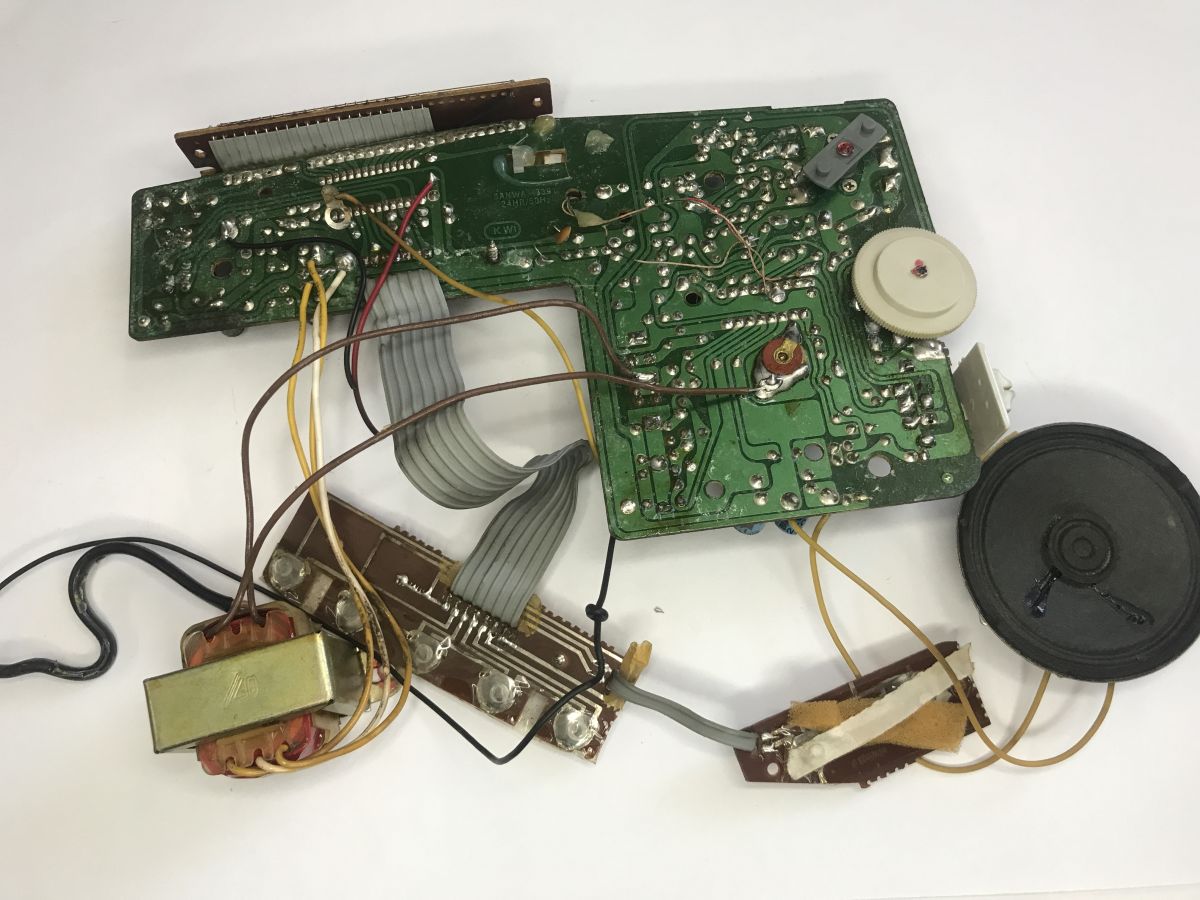
There are no components on the underside of the board. Those days are long gone; there was no need for them. Well, perhaps with the exception of that single ceramic capacitor.
At the heart of the radio alarm clock is the TMS3450NL. The TMS3450NL is a digital clock circuit from Texas Instruments, designed specifically to support LED displays and alarm functions.
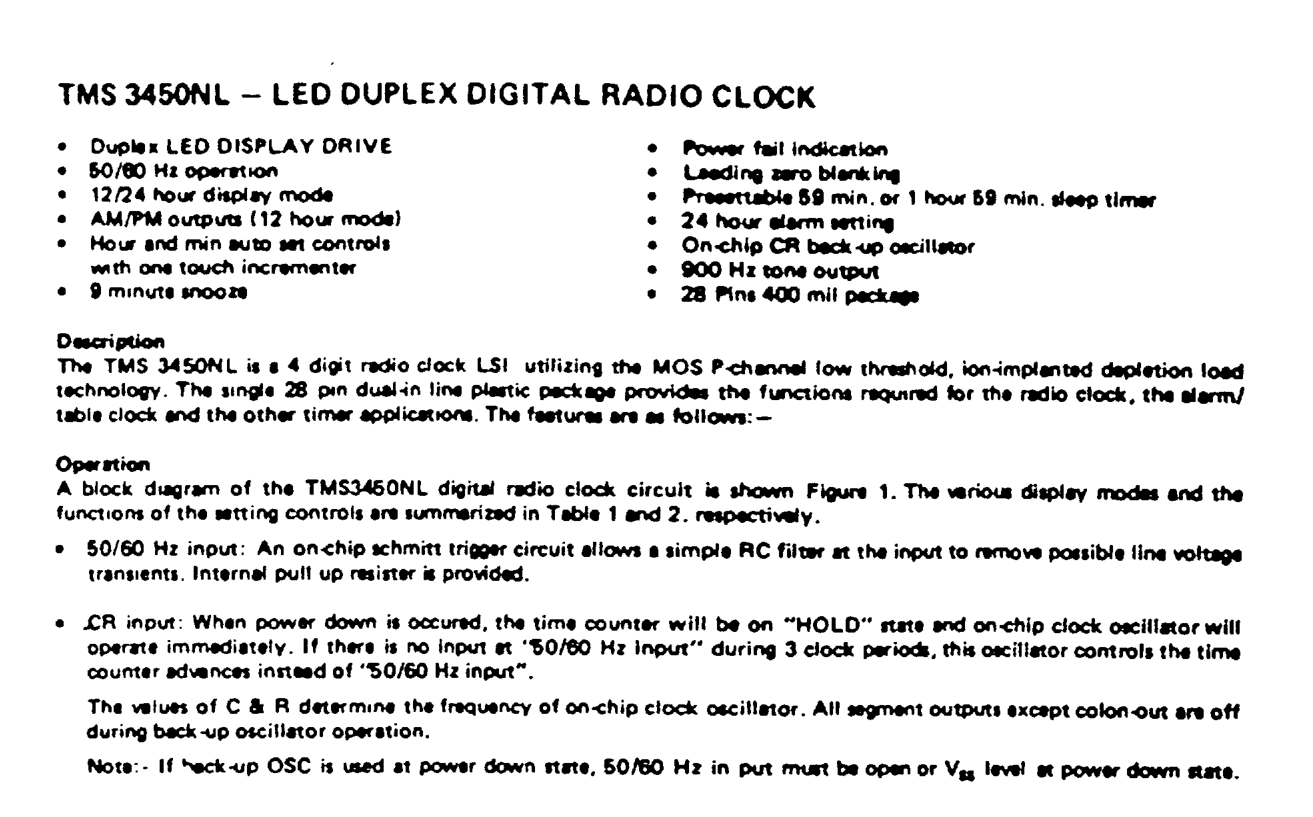
The above excerpt from the data sheet outlines the main features of this chip. These include, amongst others, support for 12- and 24-hour formats, a snooze function, and a built-in oscillator (CR back-up oscillator), which allows the countdown to continue during mains power interruptions.
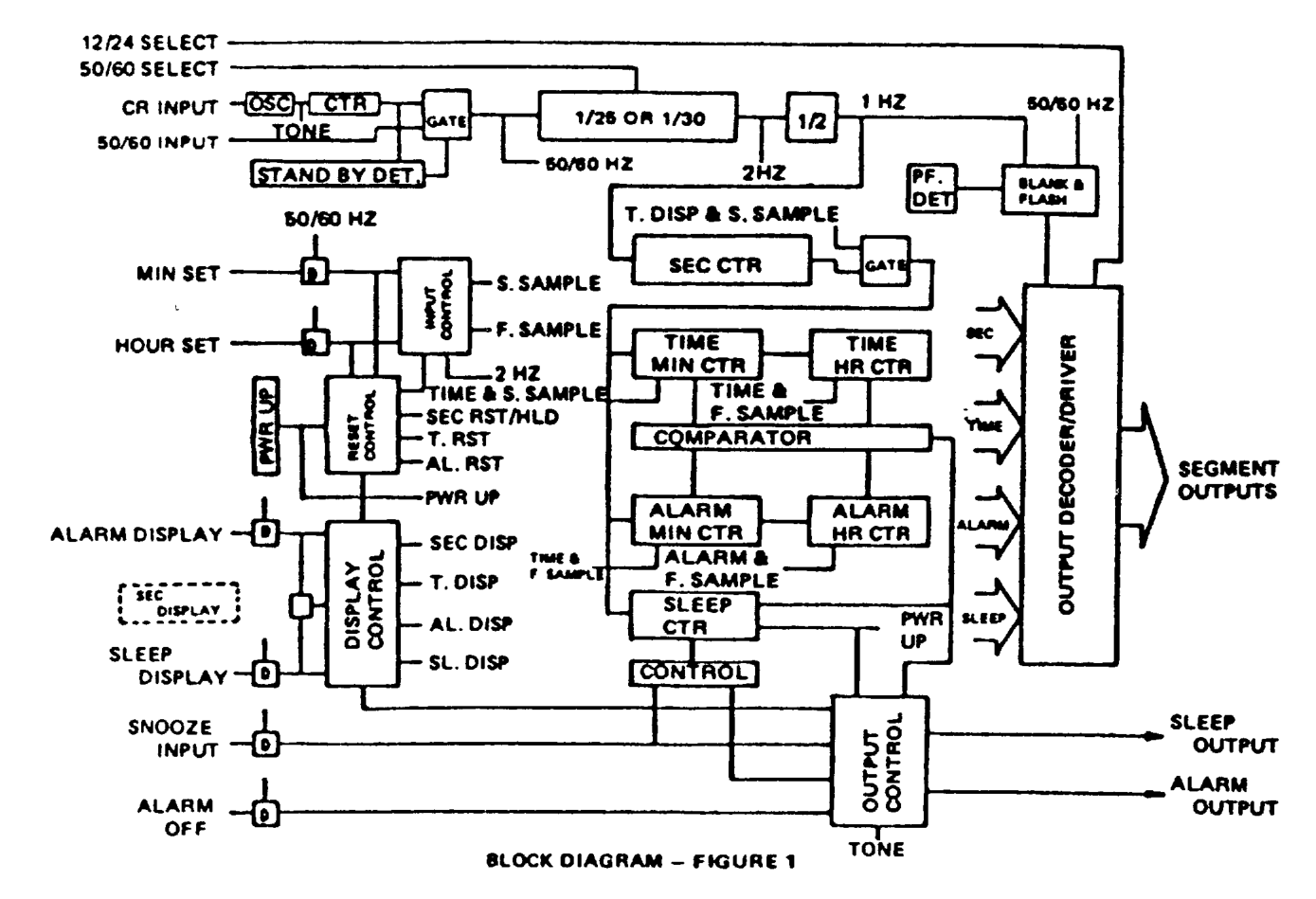
The block diagram reveals exactly what lies within the chip. The circuit consists of a series of timers and an alarm, mains voltage detectors, and a comprehensive logic circuit controlling the display and the audible signal.
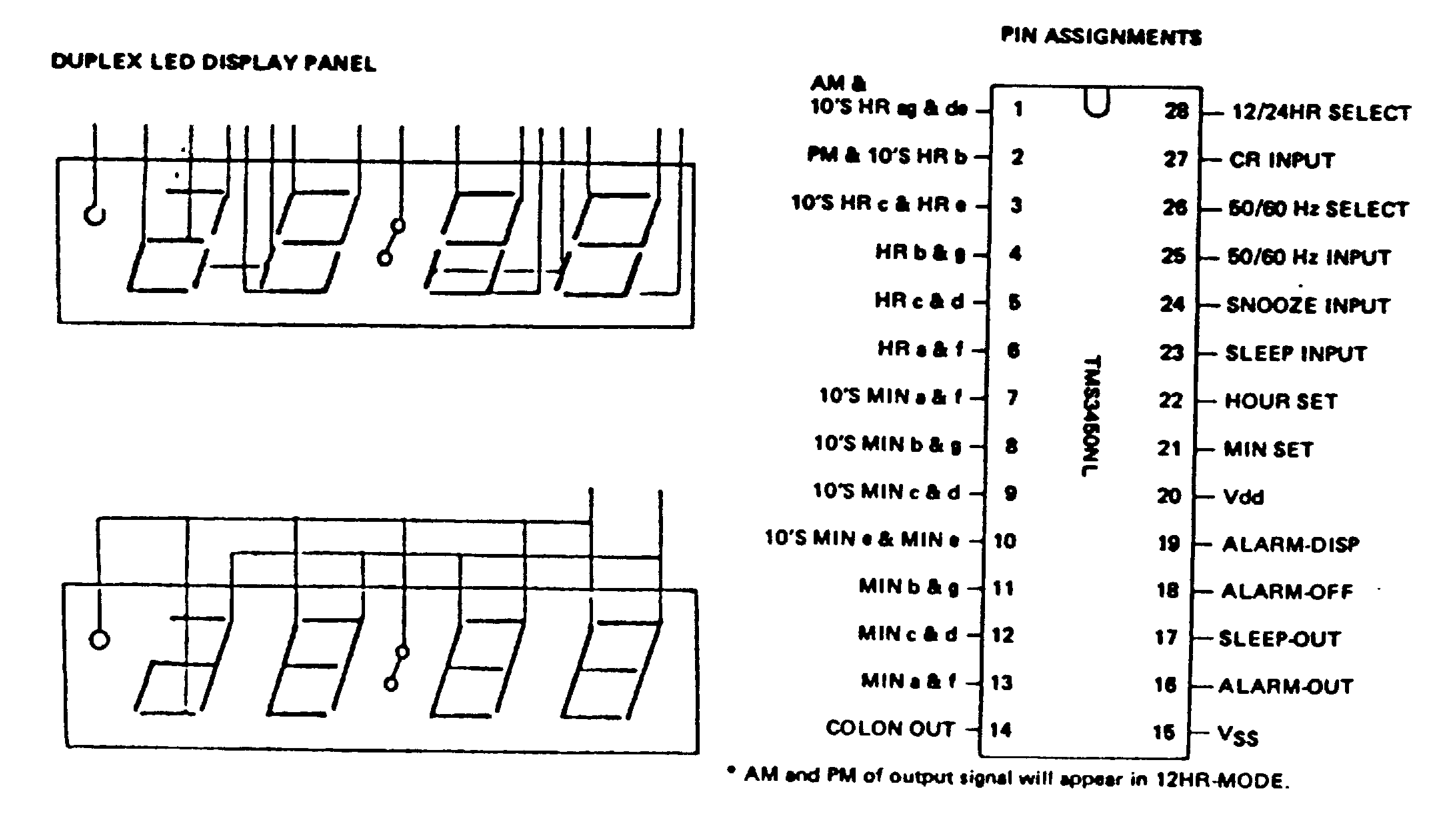
The pinout, in turn, illustrates just how many functions have been integrated into this single package. In addition to the outputs that directly control the LED display segments (in multiplexed mode), the circuit features inputs for the hour setting (HOUR SET) and minutes (MIN SET), as well as separate configuration pins for the time format and the input frequency of 50/60 Hz.
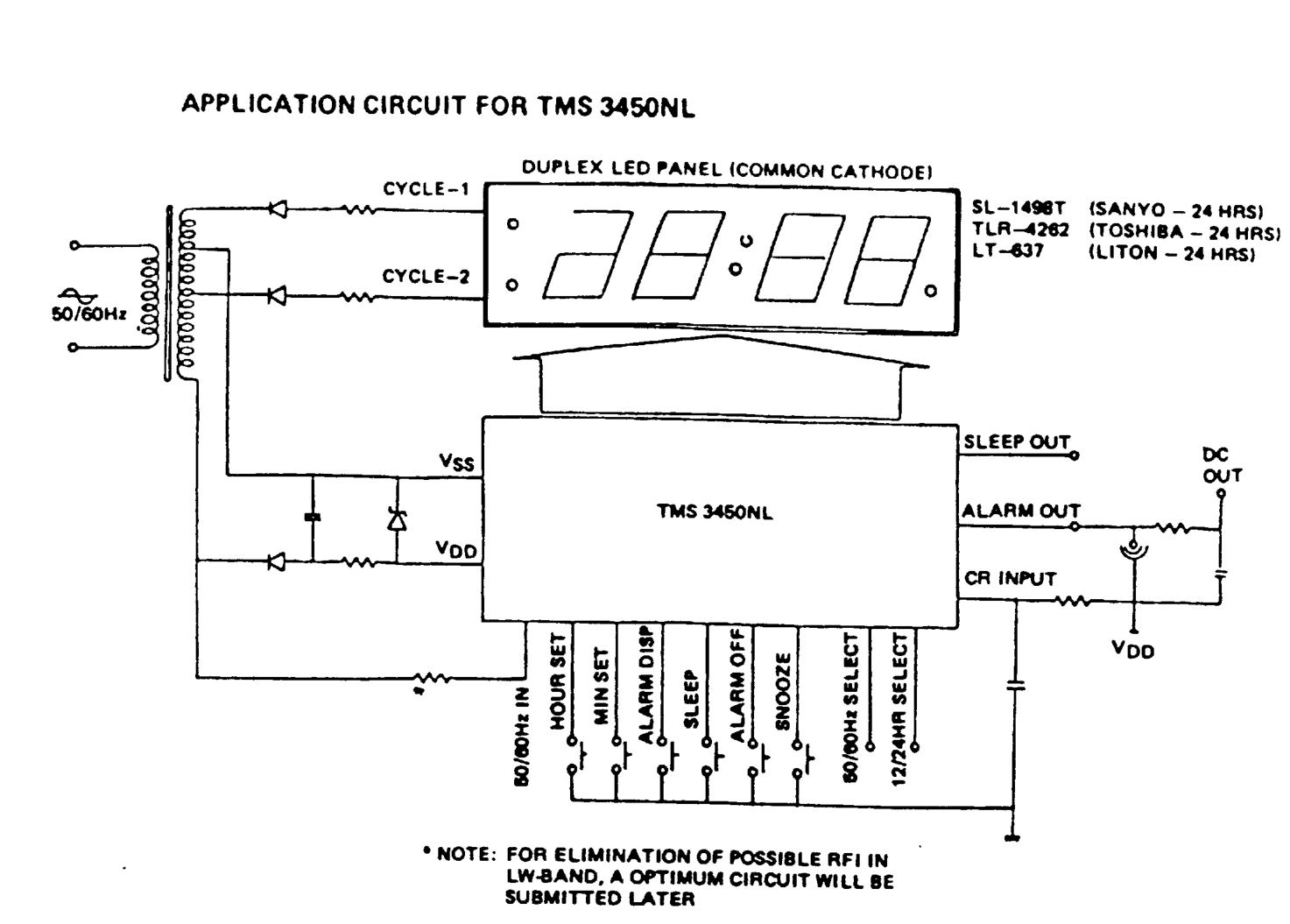
The final figure from the TMS3450NL documentation shows an example application of the chip (schematic) in the target device. It illustrates how Relatively few external components are needed to build a fully functional clock that uses the frequency of the mains supply as a free time reference.
In addition, there is a radio integrated circuit, namely the TA7613AP:
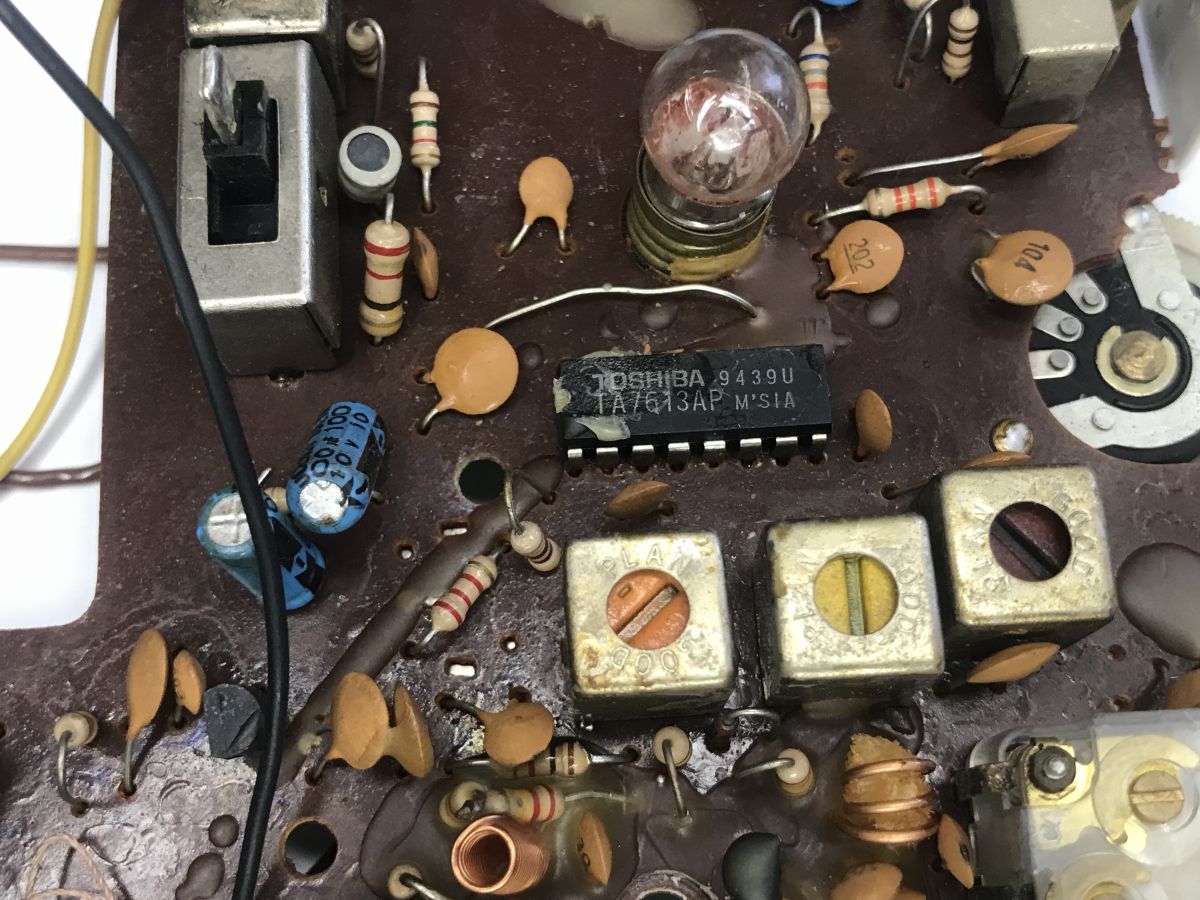
What sets it apart is the integration of the entire AM/FM radio receiver into a single, easy-to-use integrated circuit.
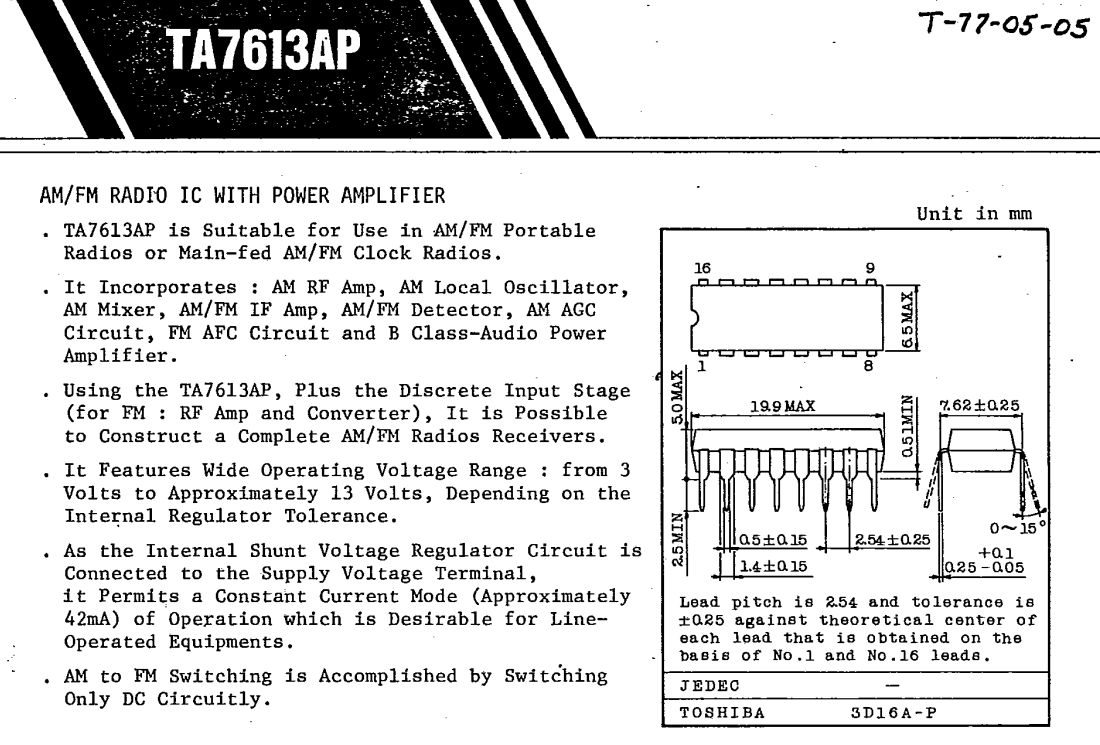
As can be seen from its specifications, this chip handles a large part of the work involved in receiving stations. It incorporates, amongst other things, an RF amplifier and a local oscillator for AM waves, a mixer, intermediate frequency (IF) amplifiers and – which is extremely convenient – a built-in Class B audio power amplifier, thanks to which there is no need for a separate circuit to drive the speaker in the alarm clock.
To sum up, this is yet another retro device in which one will search in vain for components such as microcontrollers or miniature SMD components. The design essentially consists of two specialised integrated circuits, around which classic through-hole components are arranged on a single-sided circuit board. This design, powered by a traditional transformer, meant that the equipment was extremely simple and cheap to manufacture for its time. Even additional quartz oscillators were dispensed with; instead, the mains frequency was used directly to measure time, with a backup provided by a battery-powered RC oscillator.
p.kaczmarek2 wrote 14817 posts with
rating 12988 , helped 659 times.
Been with us since 2014 year.
Comments