

logo elektroda
logo elektroda
X
logo elektroda

The heart of a classic disco effect: the American DJ RollerTron 250 with DMX protocol

p.kaczmarek2 72 1

TL;DR LABEL_AI_GENERATED

  • The American DJ RollerTron 250 teardown reveals a classic DMX-controlled disco effect whose removable mirror head also lets it operate as a colour changer.
  • Independent motor-driven metal gobo and dichroic colour discs combine any pattern with any colour, while compact boards surround the lamp chamber.
  • The 5.4 kg fixture uses a standard 24V 250W ELC reflector halogen bulb and provides 3-pin XLR DMX In/Out, microphone sensitivity control, and blackout remote input.
  • Its 2004-era electronics use a mains transformer, THT components, an LM324N microphone circuit, 74HC14 gates, and a Sanyou 12V relay.
  • The display, buttons, and roller mechanisms work, but the burnt-out, blackened 24V 250W ELC bulb prevents the fixture from producing light.
AI summary based on the discussion. May contain errors.
ADVERTISEMENT
Treść została przetłumaczona polish » english Zobacz oryginalną wersję tematu
Listen:
  • The heart of a classic disco effect: the American DJ RollerTron 250 with DMX protocol
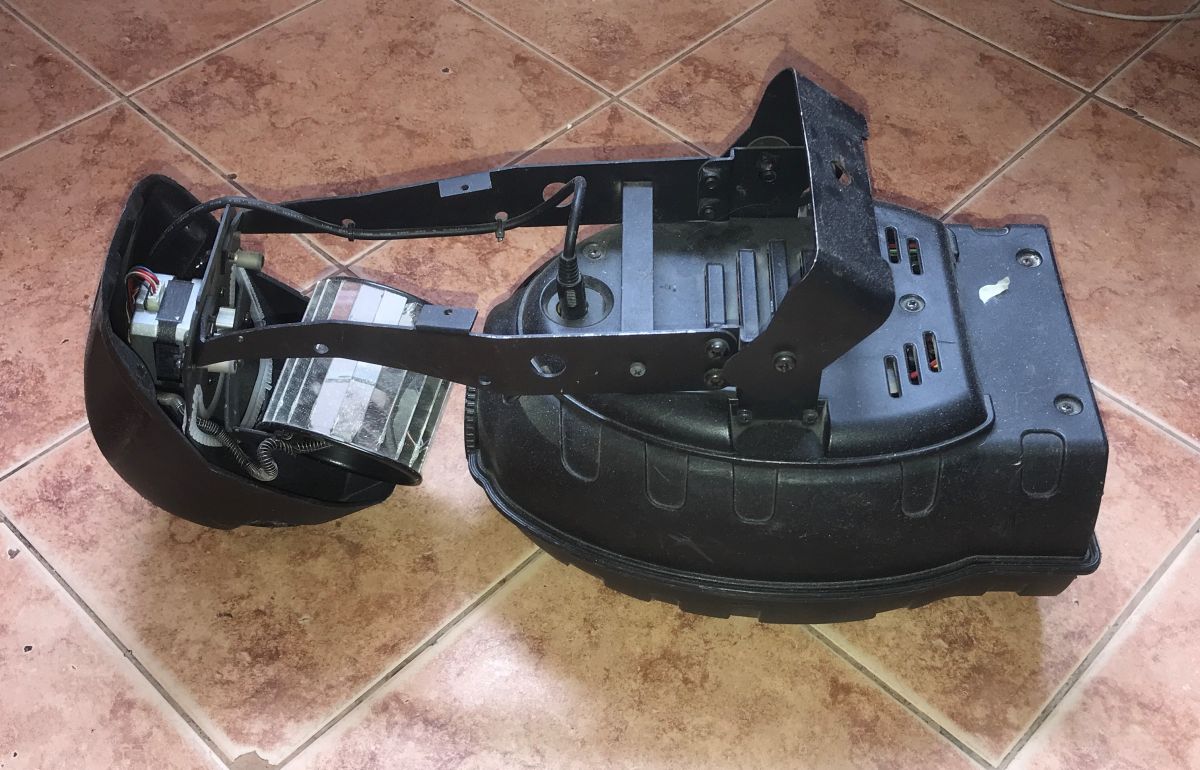
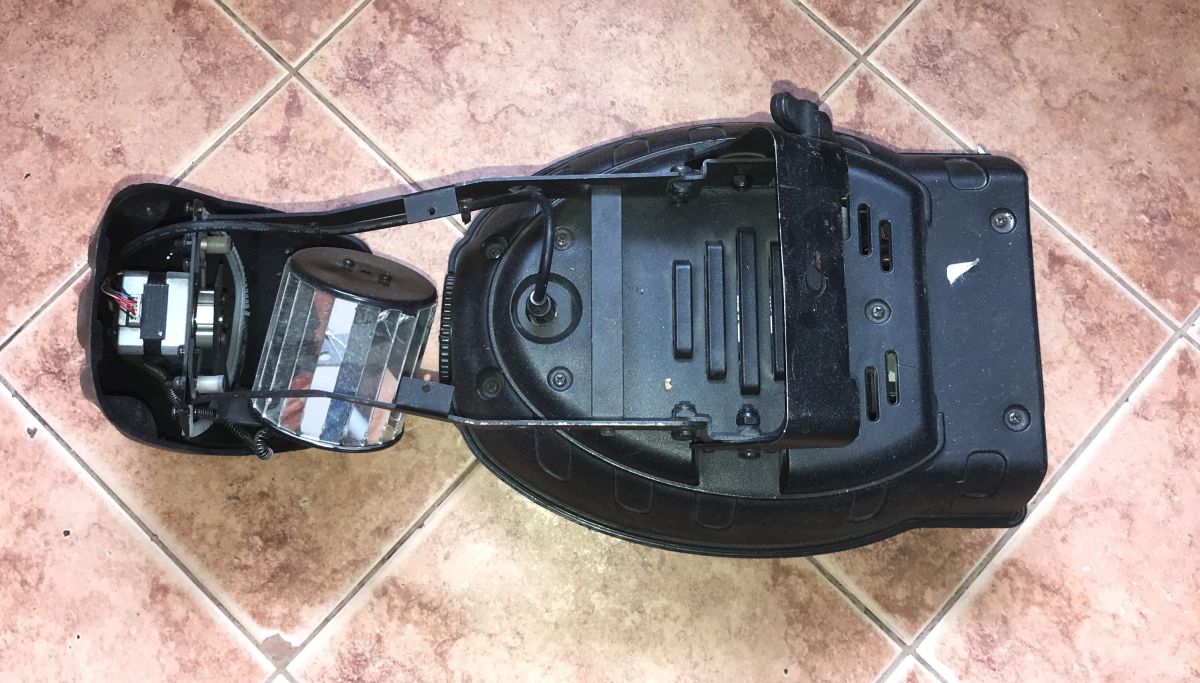
    A while ago, I showed you the BrokenSwing 501 analogue disco lighting effect, which is based on two stepper motors and a power-hungry 250 W halogen bulb. Today it’s time for a similar piece of kit – the RollerTron 250 by American DJ. It offers simple control via an external remote (blackout), synchronisation to the beat of the music, as well as digital control via the DMX protocol. The whole unit is housed in a casing weighing 5.4 kg, and an interesting feature is the option to unscrew the mirror head, turning the unit into a standard colour changer.
    The heart of a classic disco effect: the American DJ RollerTron 250 with DMX protocol
    Even from the outside, the unit looks more modern. The differences compared to the previous model shown are evident at a glance. There are two motors on the outside – one clearly visible, and the other concealed within the mirrored shaft.
    The heart of a classic disco effect: the American DJ RollerTron 250 with DMX protocol
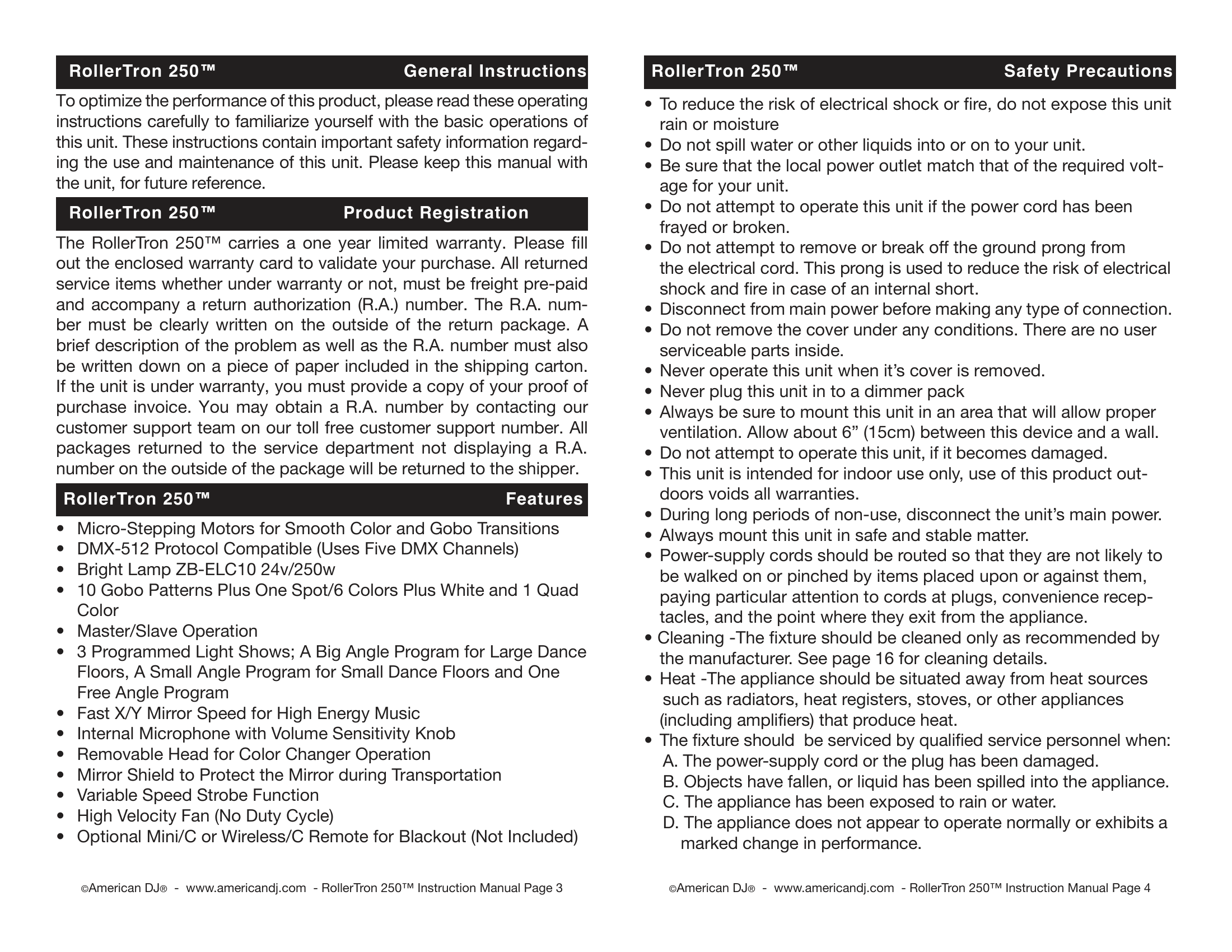
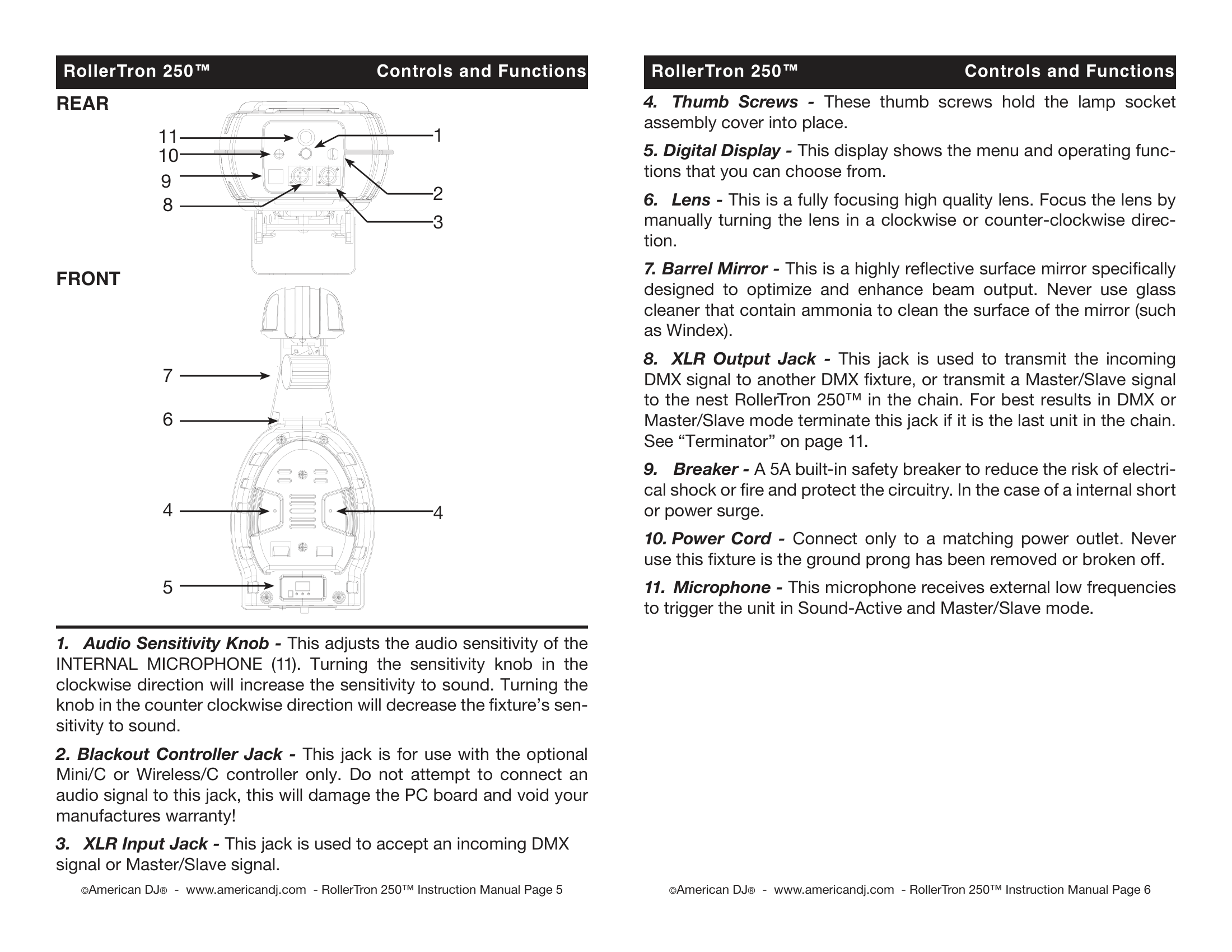
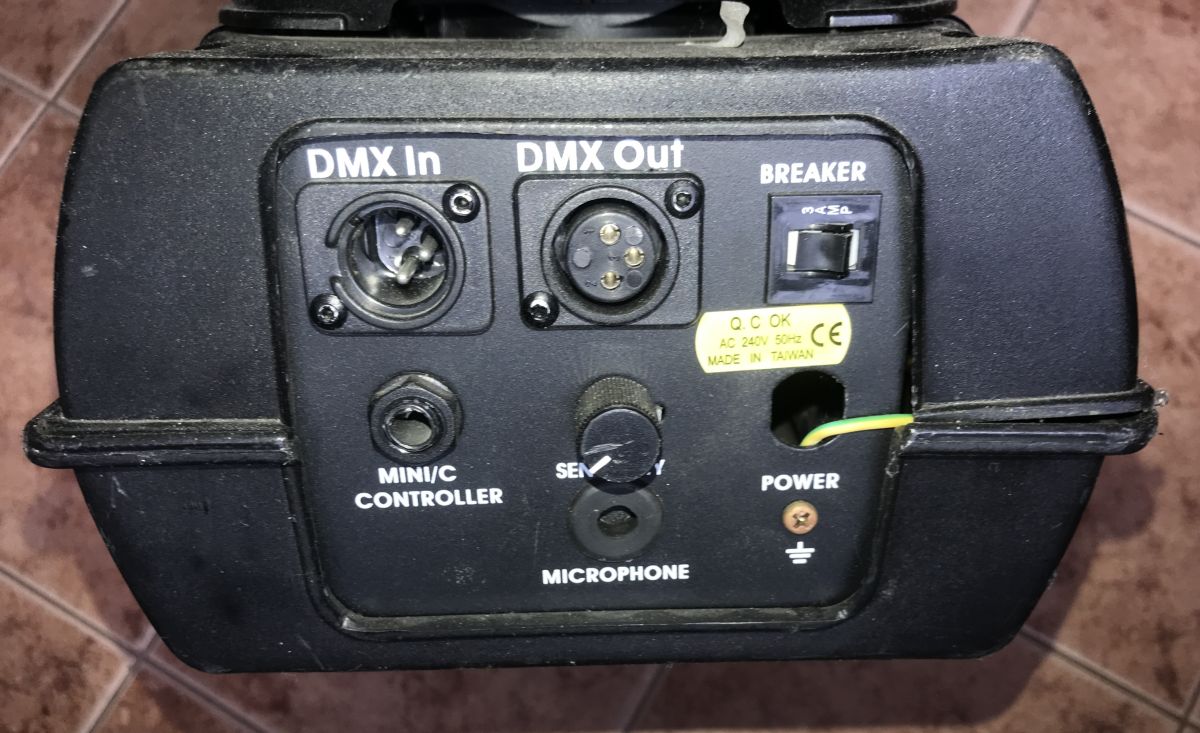
    At the rear of the unit, we can see the DMX In and Out sockets (standard 3-pin XLR), a 1/4" jack socket for an external controller, as well as a sensitivity control for the built-in microphone and a switch with an integrated 3A thermal fuse.
    The heart of a classic disco effect: the American DJ RollerTron 250 with DMX protocol
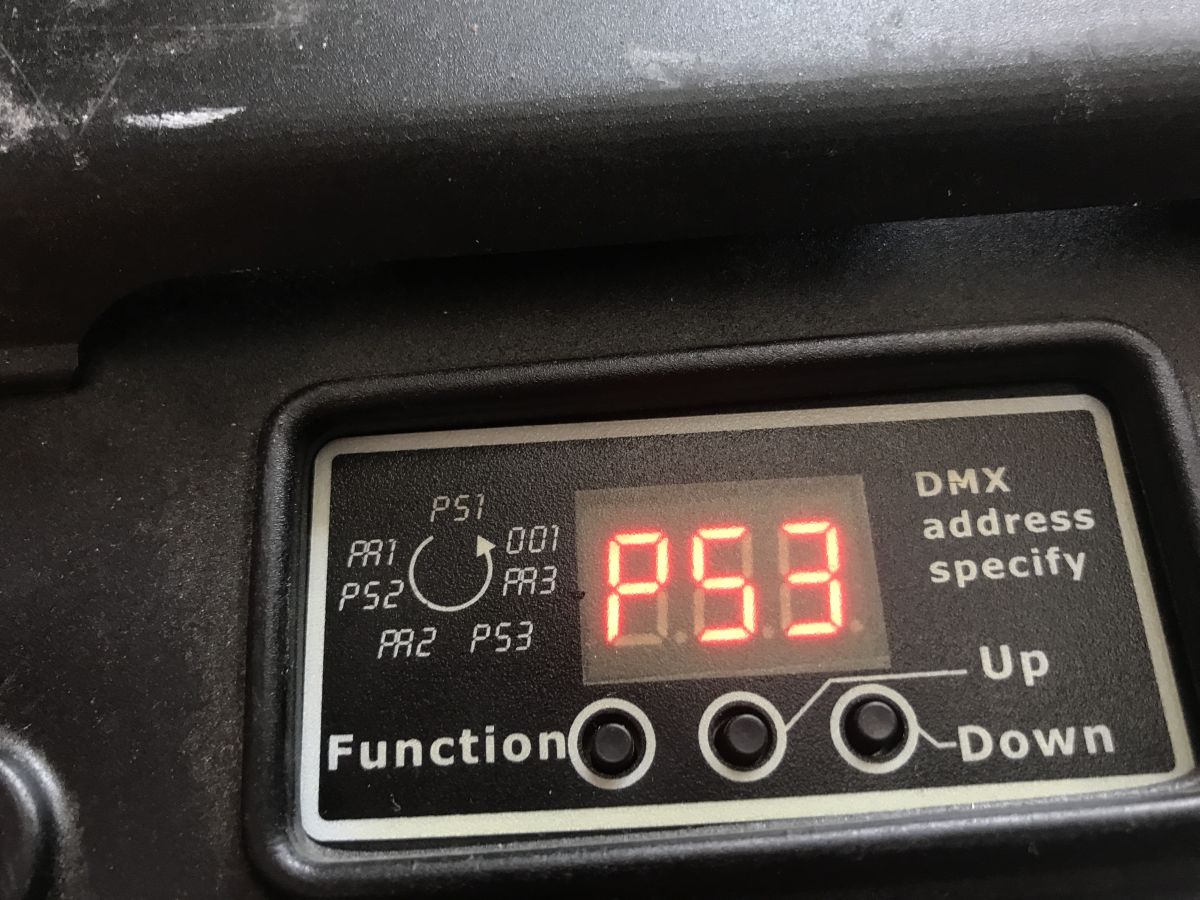
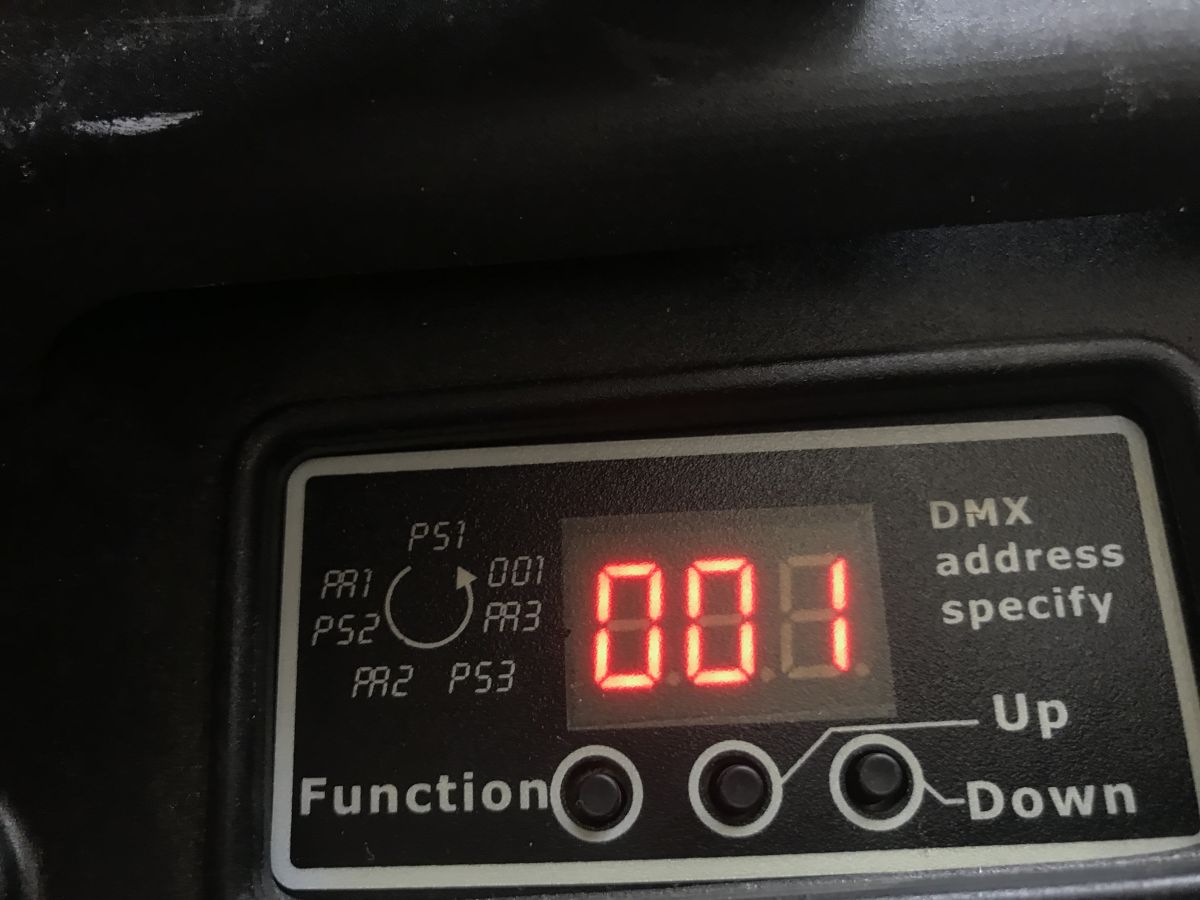
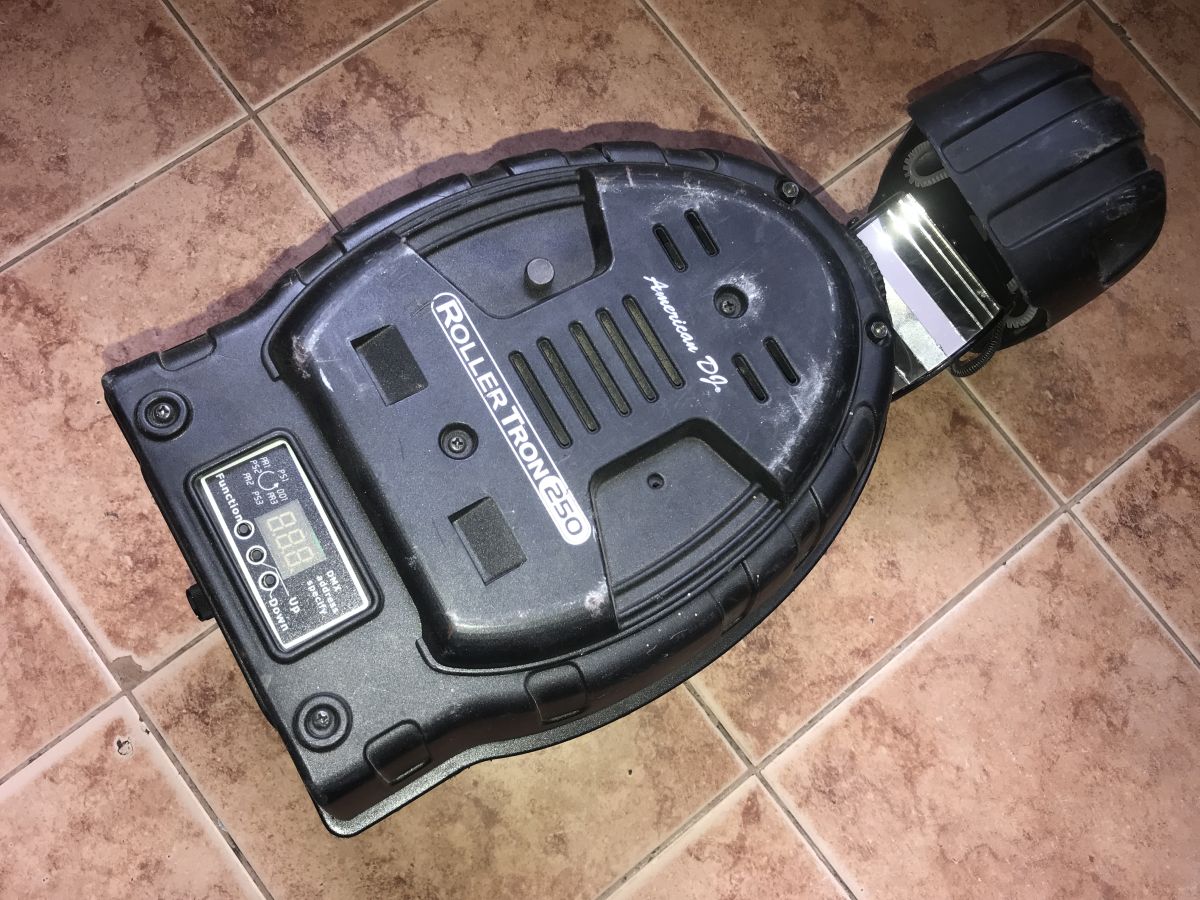
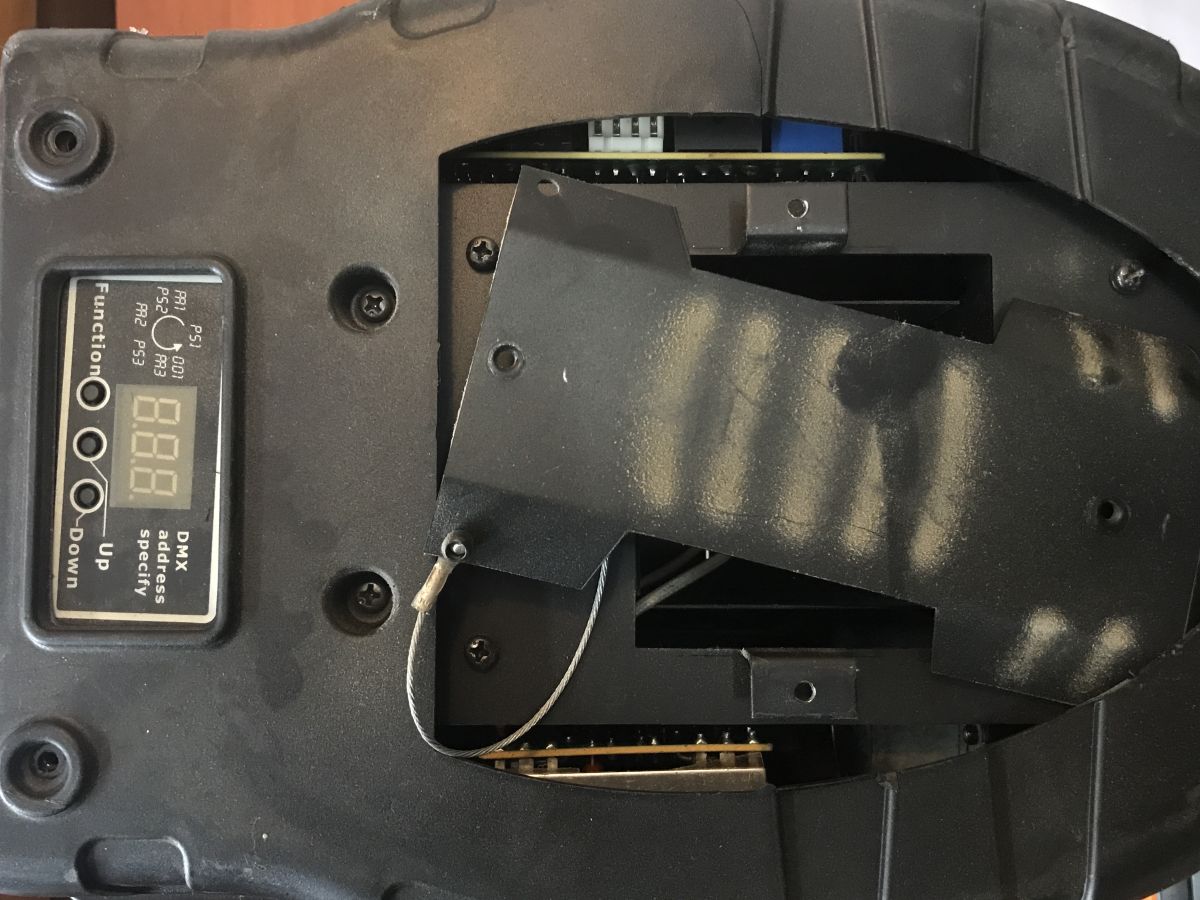
    On the top panel, there is a simple display with three buttons (Function, Up, Down), used to set the DMX address and select the built-in programmes.
    The heart of a classic disco effect: the American DJ RollerTron 250 with DMX protocol
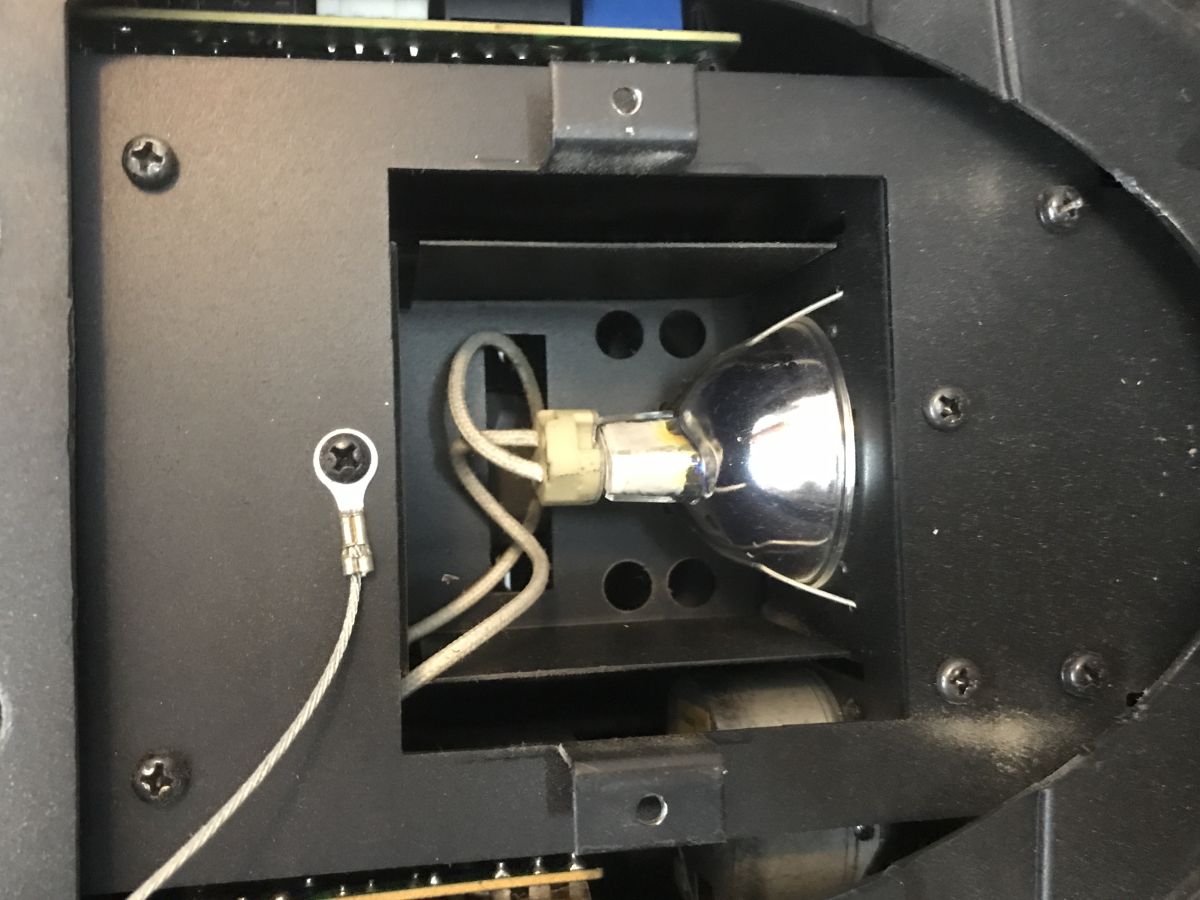
    For now, let’s take a look inside the bulb – the manufacturer has made things easier by providing a flip-open cover secured with quick-release screws, which is also suspended from a steel cable to prevent it from falling.
    The heart of a classic disco effect: the American DJ RollerTron 250 with DMX protocol
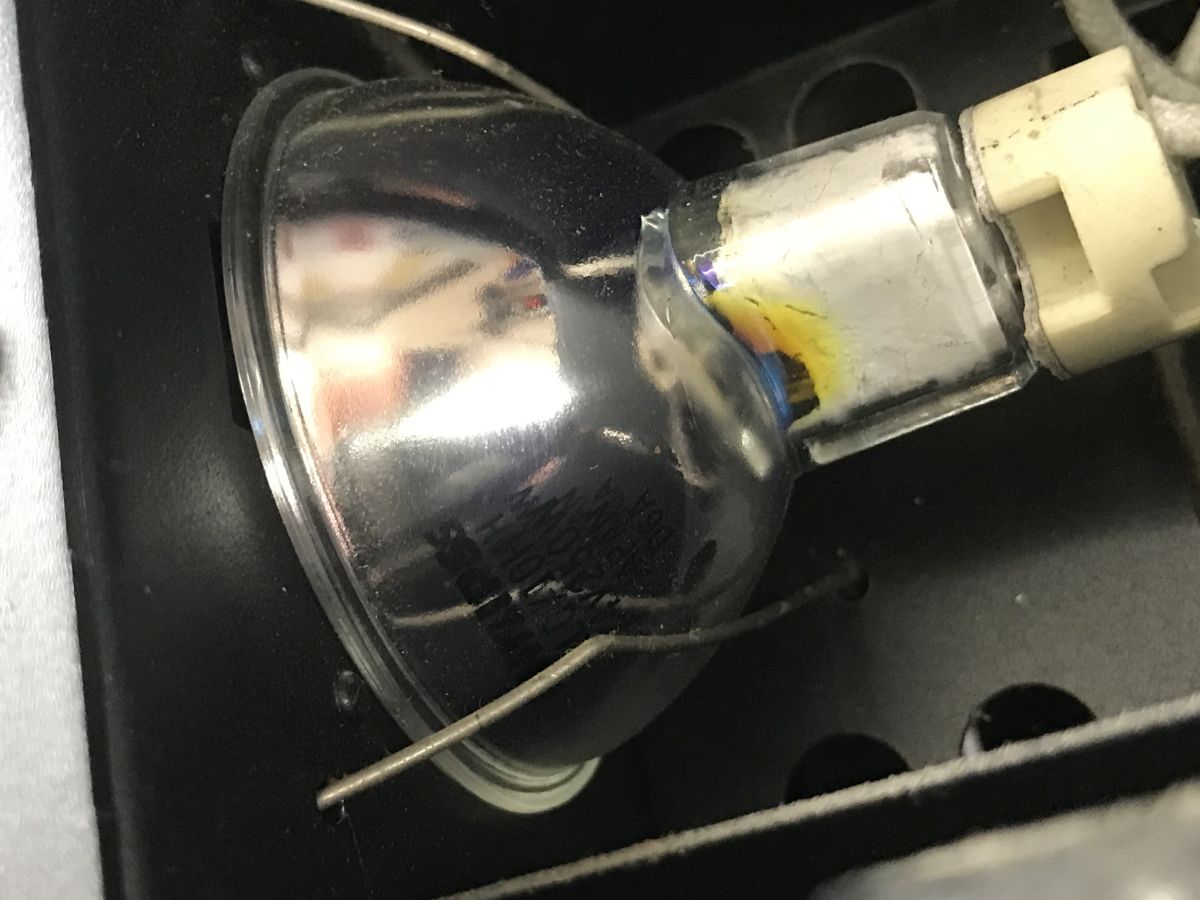
    The socket holds a standard 24V 250W ELC halogen bulb with a reflector. This particular bulb is present, but unfortunately it is clearly burnt out, as evidenced by the milky-black coating on the glass.
    The heart of a classic disco effect: the American DJ RollerTron 250 with DMX protocol
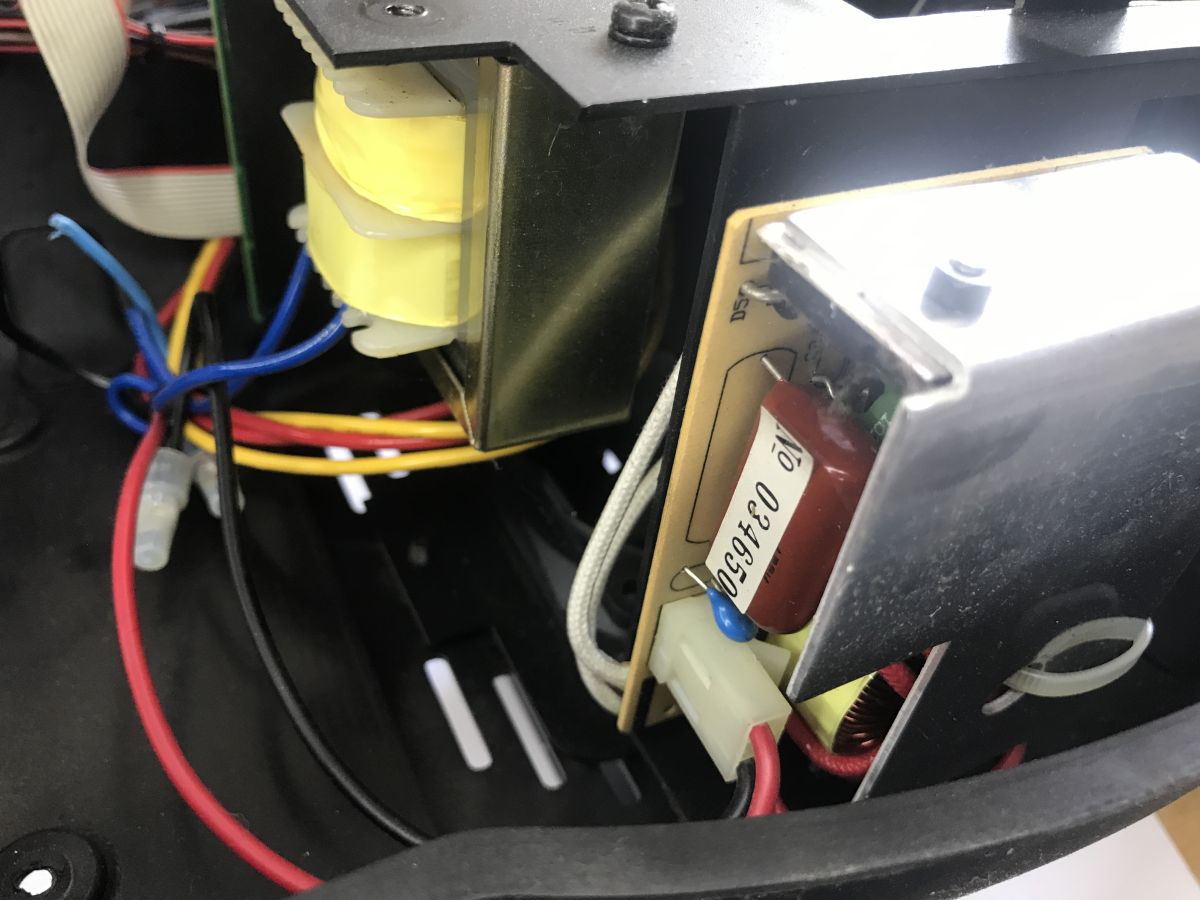
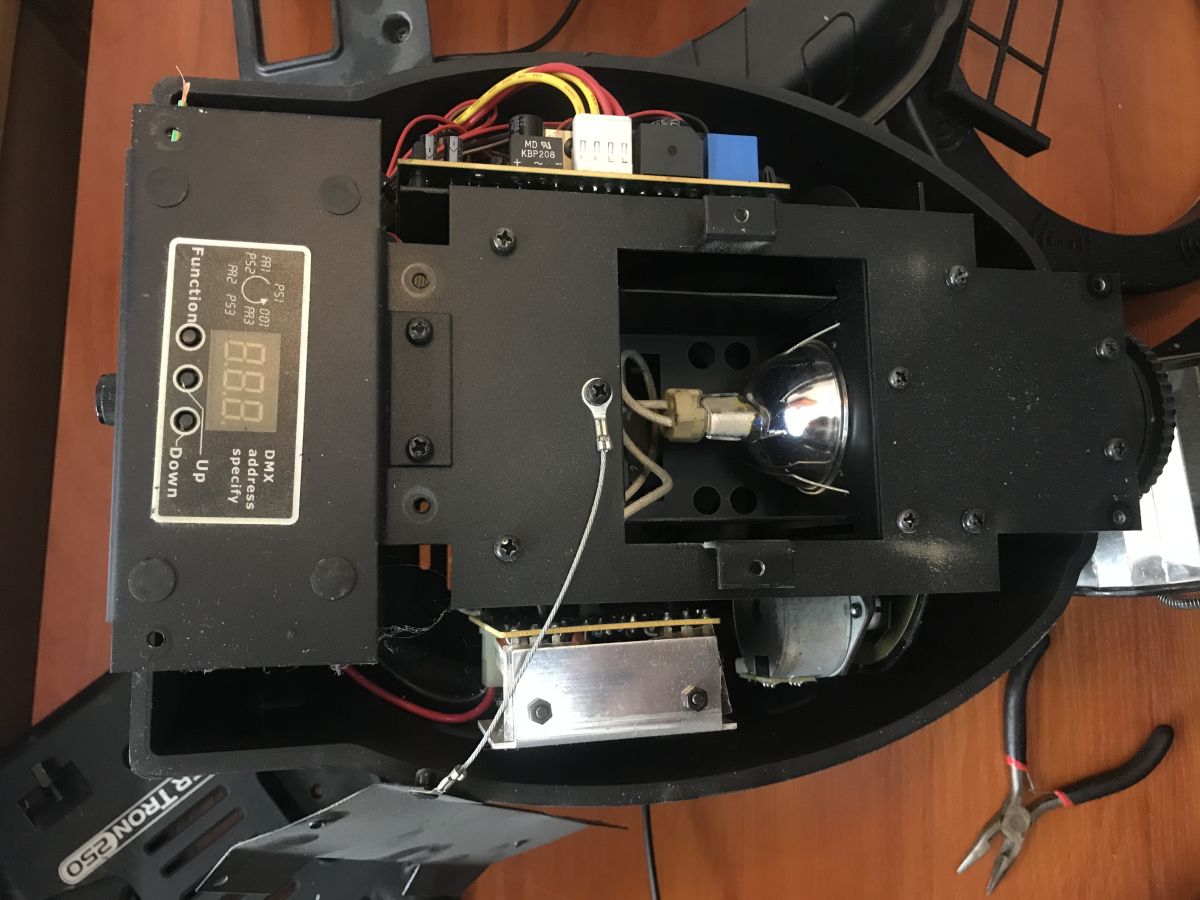
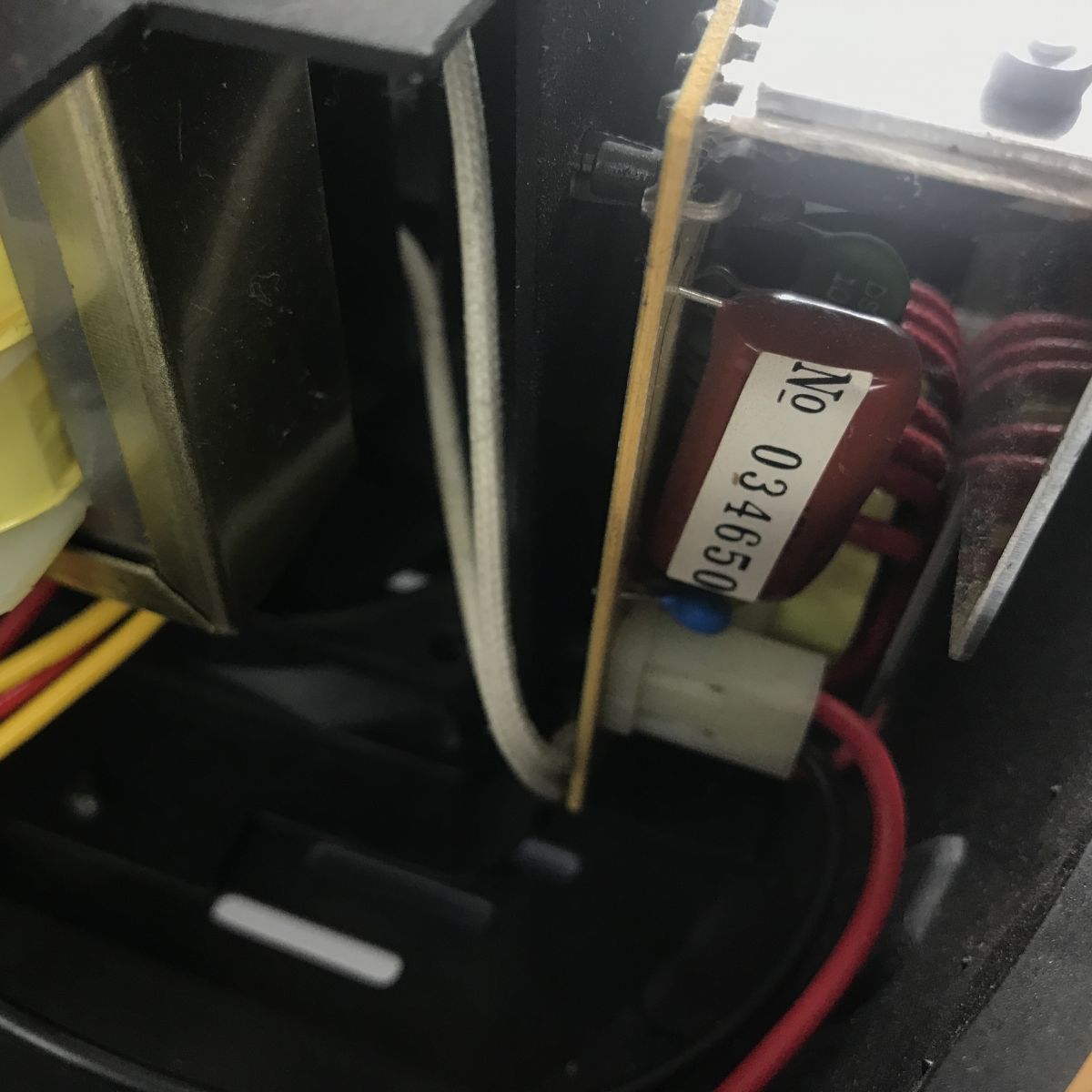
    We therefore continue with the dismantling and remove the top cover. The interior here is much more crammed than in the old Trix – the electronics have been split into several smaller circuit boards arranged around the bulb chamber; you can also see an aluminium heat sink on the left-hand side and a simple power supply with a rectifier bridge.
    The heart of a classic disco effect: the American DJ RollerTron 250 with DMX protocol The heart of a classic disco effect: the American DJ RollerTron 250 with DMX protocol
    However, the power supply is still based on a mains transformer; I can’t see a switching solution here.
    The heart of a classic disco effect: the American DJ RollerTron 250 with DMX protocol
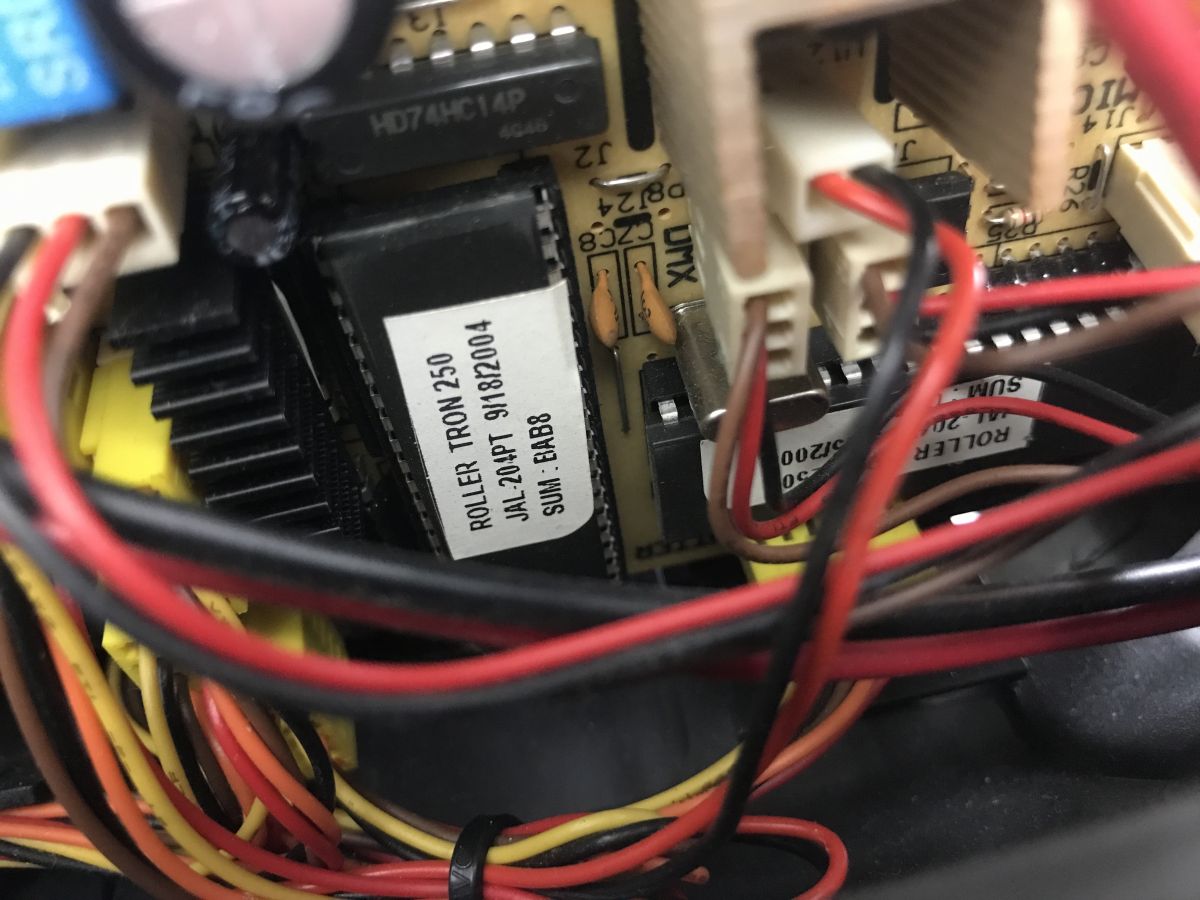
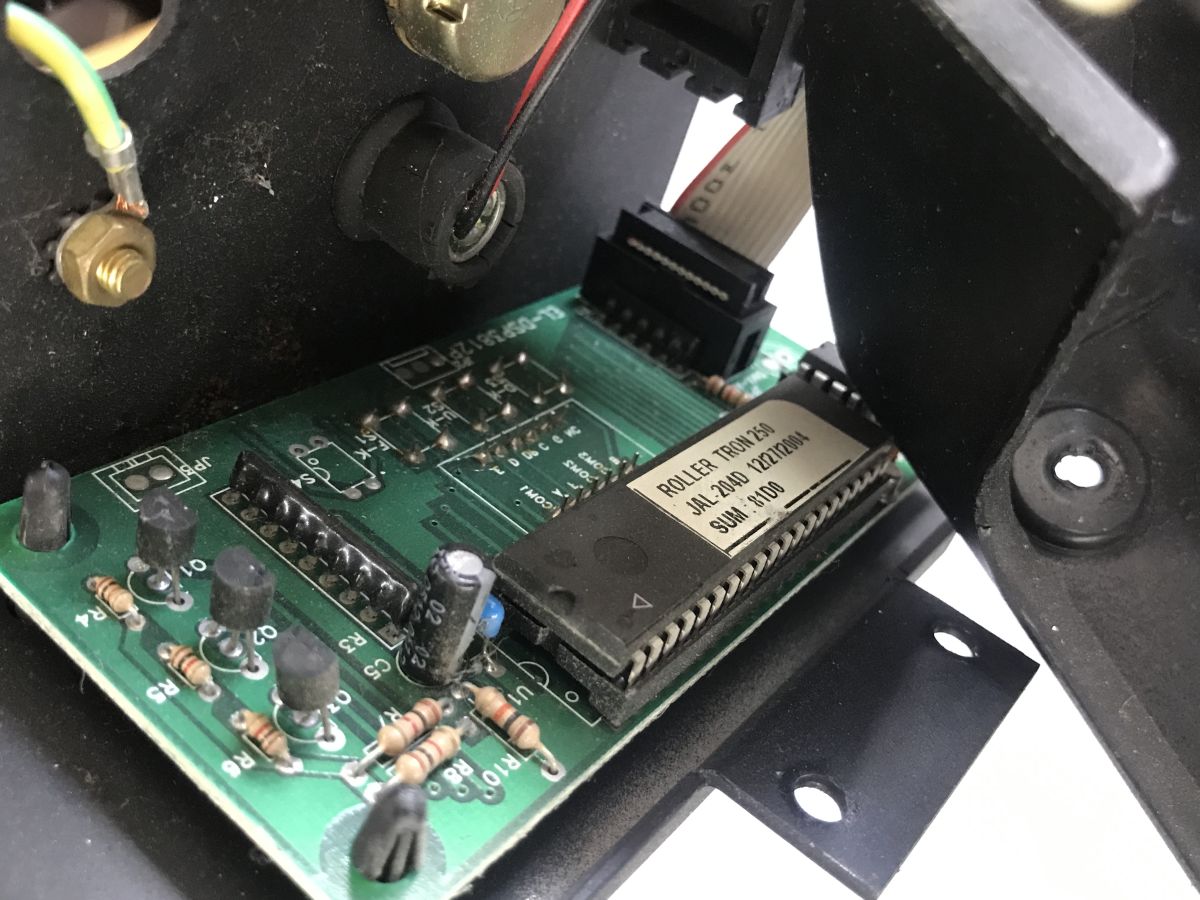
    Looking deeper inside, we can see a control board with a microcontroller. A factory sticker bearing the inscription “ROLLER TRON 250” remains on the circuit board, and the date visible there (12/27/2004) clearly reveals the period from which the electronics in this device originate.
    The heart of a classic disco effect: the American DJ RollerTron 250 with DMX protocol The heart of a classic disco effect: the American DJ RollerTron 250 with DMX protocol
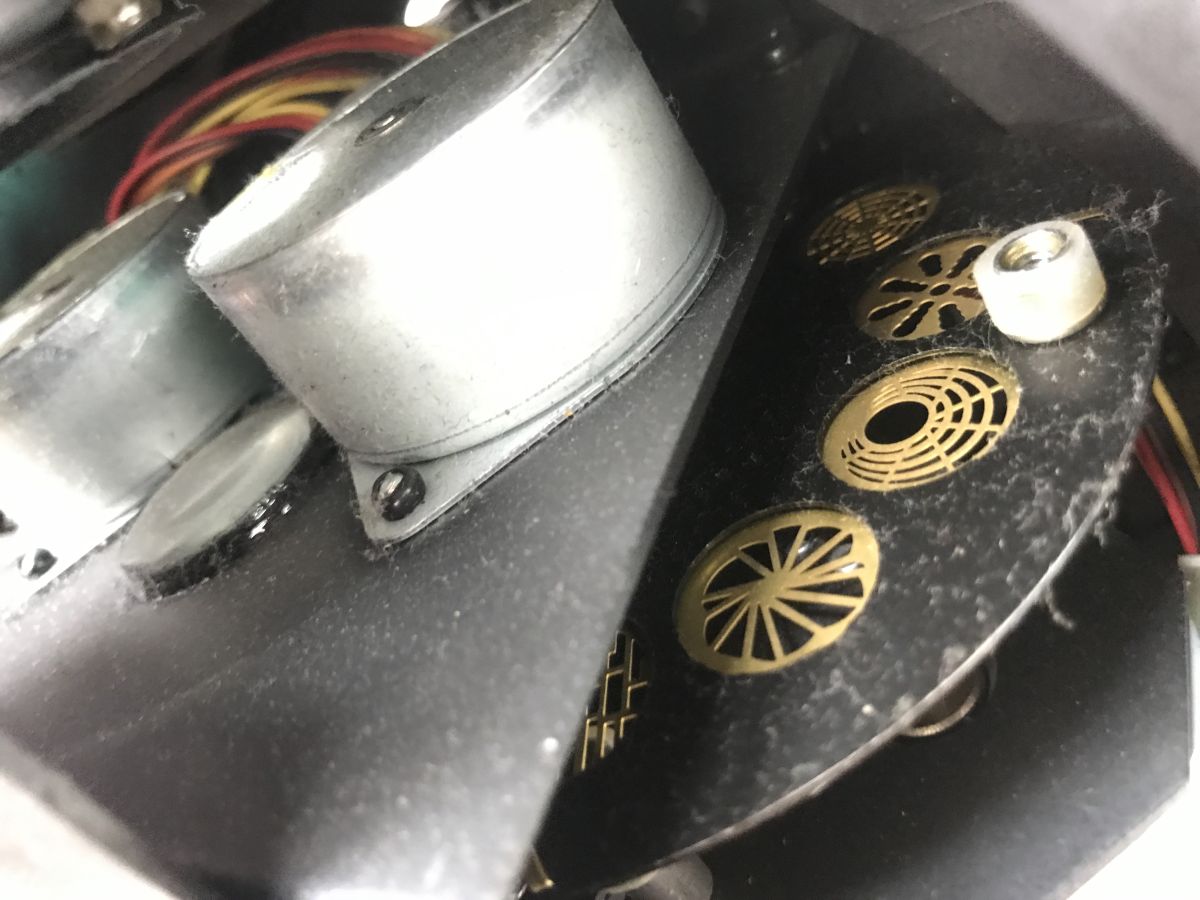
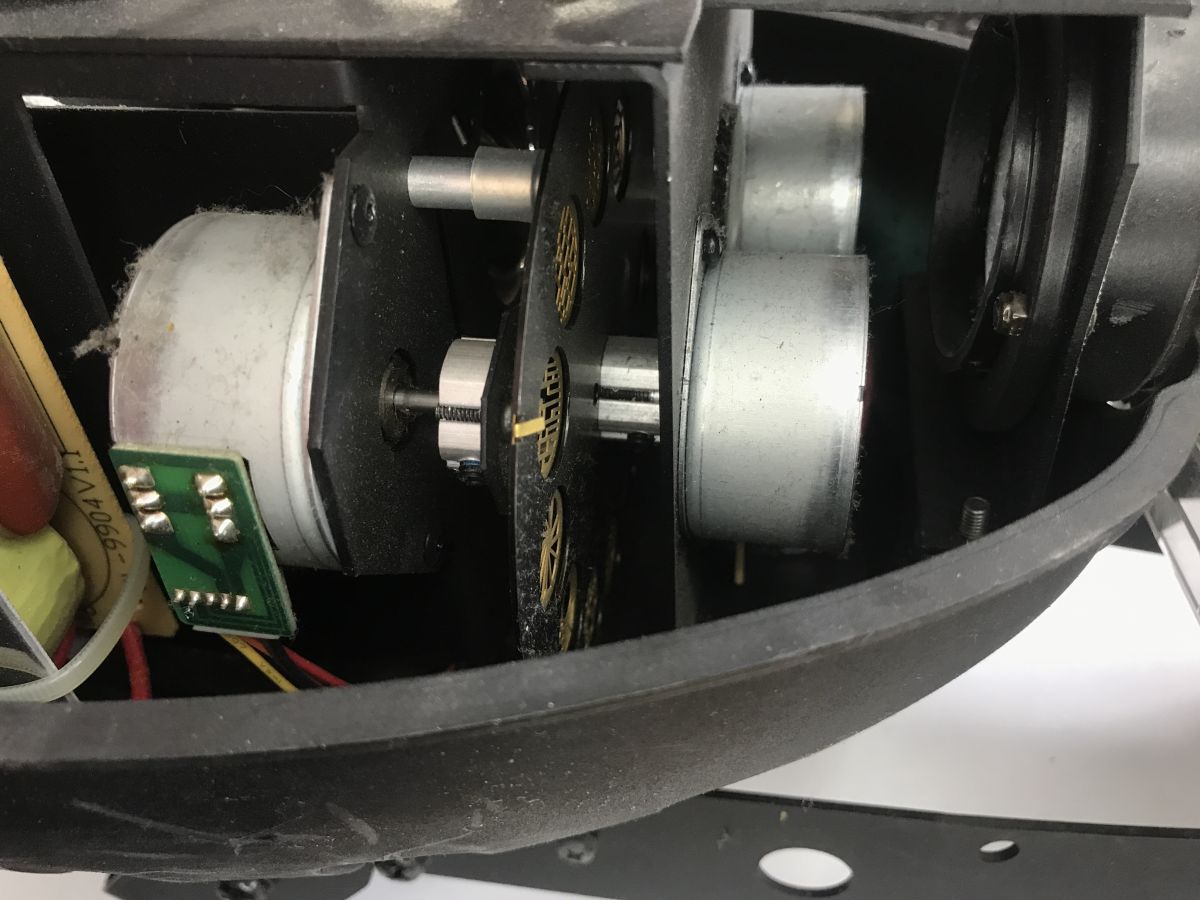
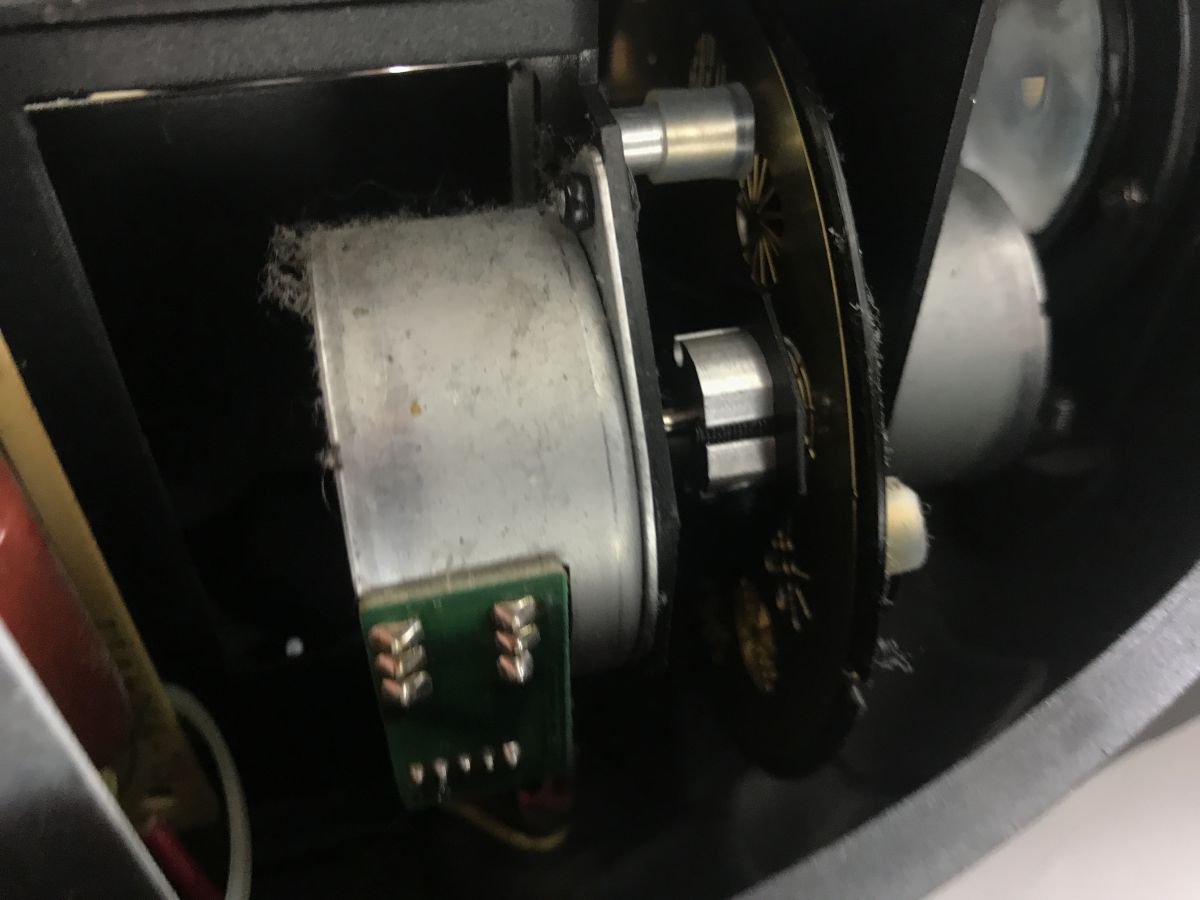
    Now for the most interesting part – the motor with a metal gobo disc fitted. Brass plates with cut-out patterns have been fitted into the holes in the disc. The mechanism has already accumulated a considerable layer of dust, which is entirely normal for devices that draw in air via a fan.


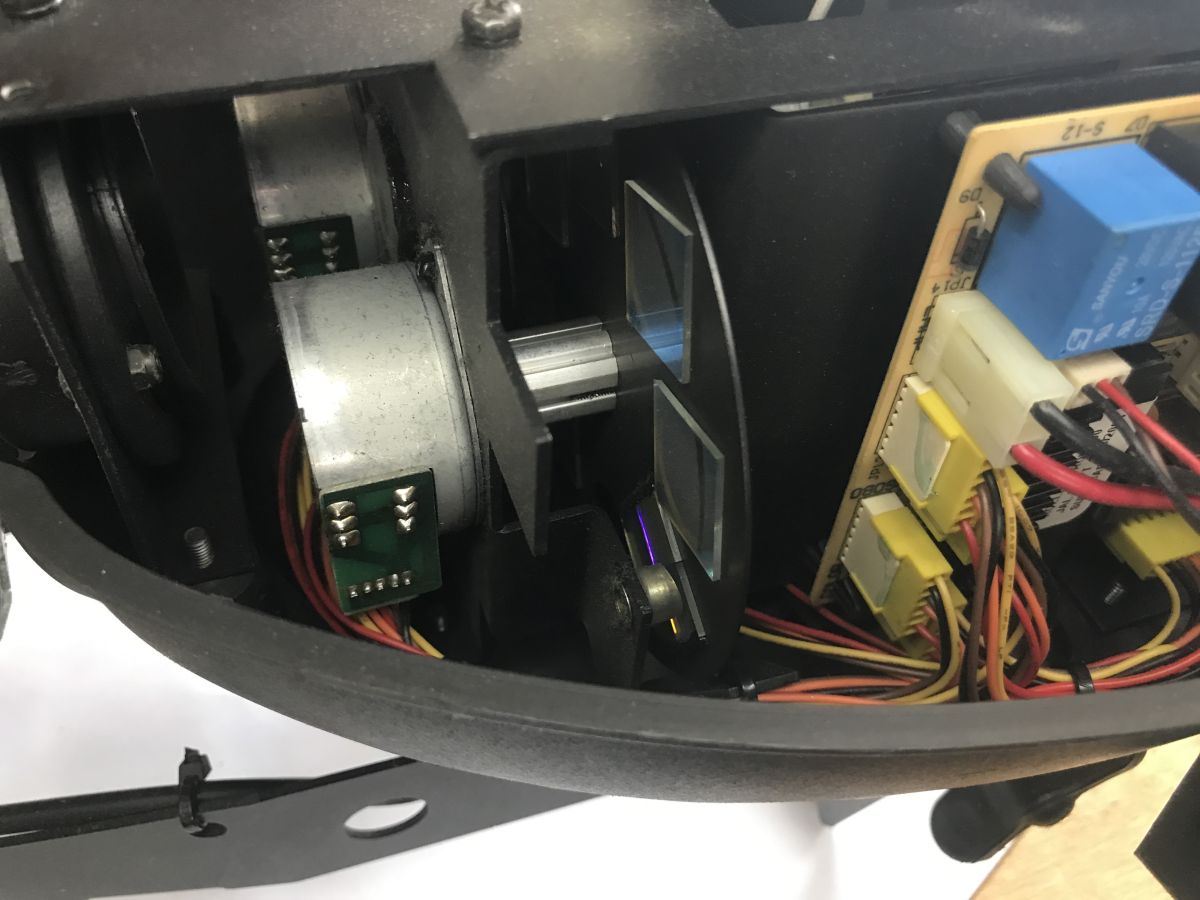
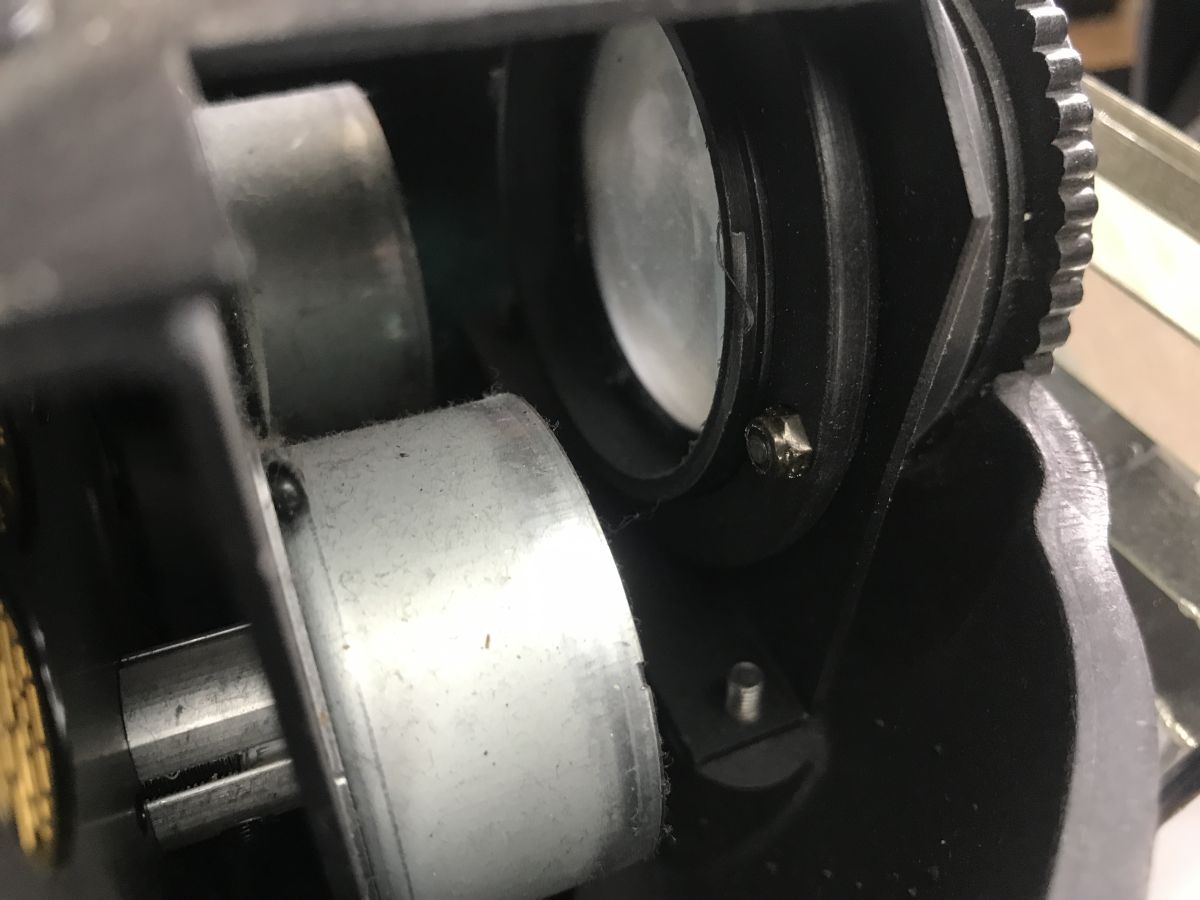
    And that’s not all, because on the other side there’s another motor and a separate colour disc, onto which square dichroic filters have been affixed. Thanks to this setup (independent discs), you can mix any gobo pattern with any colour.
    The heart of a classic disco effect: the American DJ RollerTron 250 with DMX protocol The heart of a classic disco effect: the American DJ RollerTron 250 with DMX protocol The heart of a classic disco effect: the American DJ RollerTron 250 with DMX protocol
    A short video demonstrating how the colour disc works.


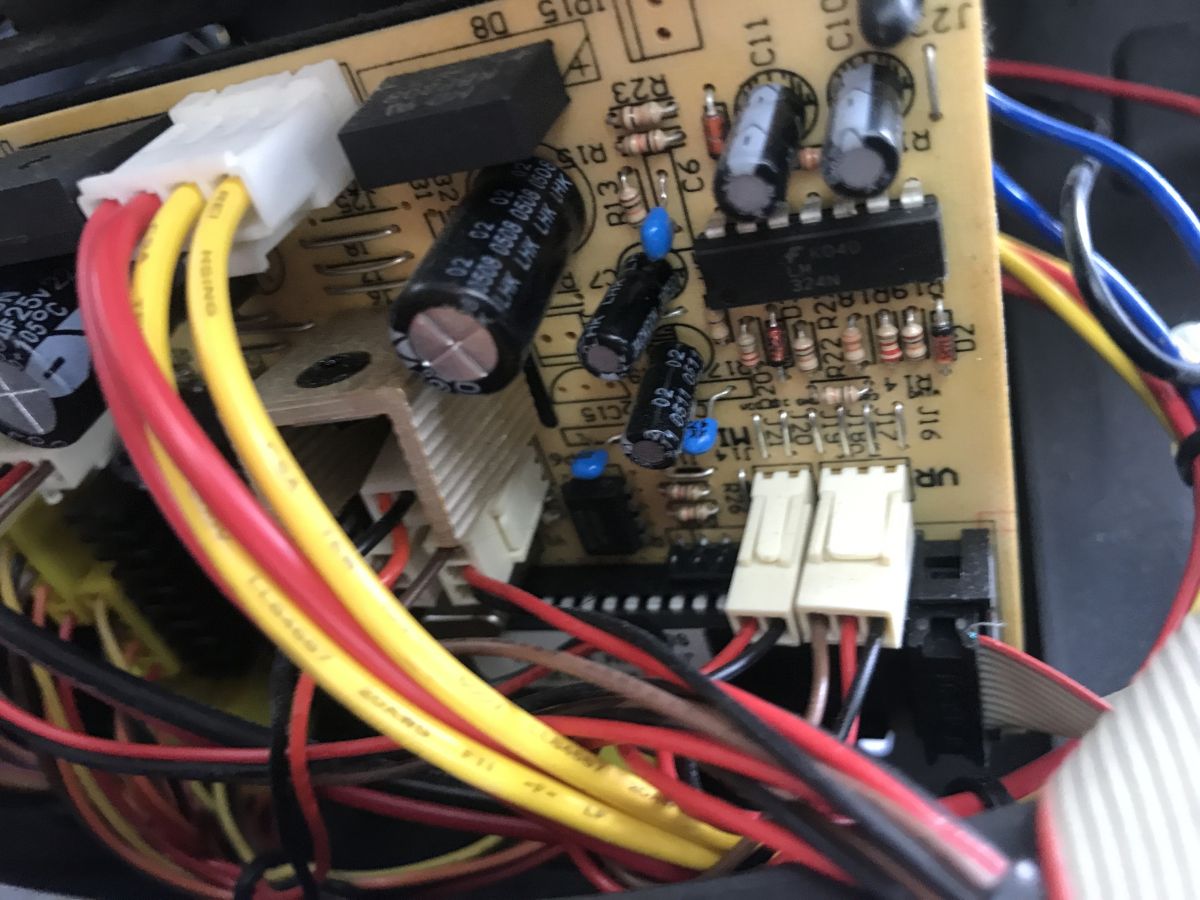
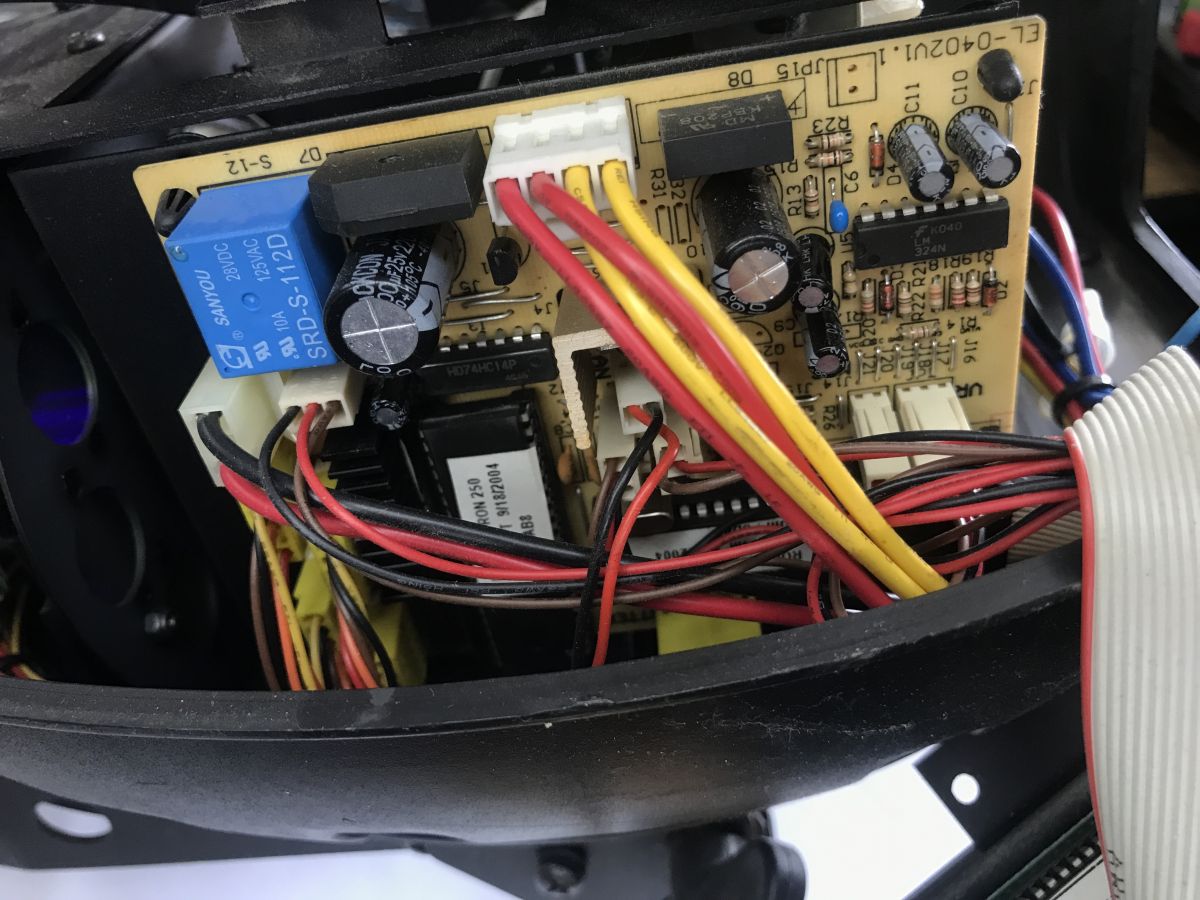
    Additional photos of the electronics below – you can’t see much, but you can make out the classic through-hole (THT) assembly and the relay A Sanyou 12V power supply (presumably powering the bulb), an LM324N operational amplifier (driving the microphone circuit) and 74HC14 series gates.
    The heart of a classic disco effect: the American DJ RollerTron 250 with DMX protocol The heart of a classic disco effect: the American DJ RollerTron 250 with DMX protocol The heart of a classic disco effect: the American DJ RollerTron 250 with DMX protocol
    Generally speaking, the device works – the display shows addresses correctly and responds to the buttons (as can be seen in the photos), the rollers turn; it’s just that wretched bulb that’s burnt out.
    The heart of a classic disco effect: the American DJ RollerTron 250 with DMX protocol The heart of a classic disco effect: the American DJ RollerTron 250 with DMX protocol The heart of a classic disco effect: the American DJ RollerTron 250 with DMX protocol
    Additional video – reel movement:


    Documentation:
    The heart of a classic disco effect: the American DJ RollerTron 250 with DMX protocol The heart of a classic disco effect: the American DJ RollerTron 250 with DMX protocol The heart of a classic disco effect: the American DJ RollerTron 250 with DMX protocol
    Full version attached.

    To sum up , this was an interesting glimpse into the inner workings of a classic disco effect. The unit was massive, slightly more complex than the previous one, and once again featured a sturdy casing and clever mechanics providing a whole range of different lighting effects. Once the 24V 250W ELC halogen bulb has been replaced, the unit will likely come back to life and be back in action on the dance floor.
    Have you come across this type of equipment, or have you used the DMX protocol ?
    Attachments:
    • 1499218865_rollertron_250.pdf (990.75 KB) You must be logged in to download this attachment.

    Cool? Ranking DIY
    Helpful post? Buy me a coffee.

    About Author
    p.kaczmarek2
    Moderator Smart Home
    Offline 
    p.kaczmarek2 wrote 14803 posts with rating 12965, helped 659 times. Been with us since 2014 year.
  • ADVERTISEMENT
  • Early-2000s disco effect with costly 250 W consumption

    #2 21955812
    gulson
    System Administrator
    Posts: 29569
    Help: 150
    Rate: 6143
    I’d just like to add that the RollerTron 250 is a lighting effect that was very characteristic of clubs and discos in the early 2000s – in other words, back in my day.
    All in all, it produced an interesting effect for very little money.
    Mostly in small clubs and discos.
    250W for the dance floor?... these days you could go bankrupt on the electricity bill, especially if it’s not the only ‘retro effect’.
Listen:
ADVERTISEMENT