

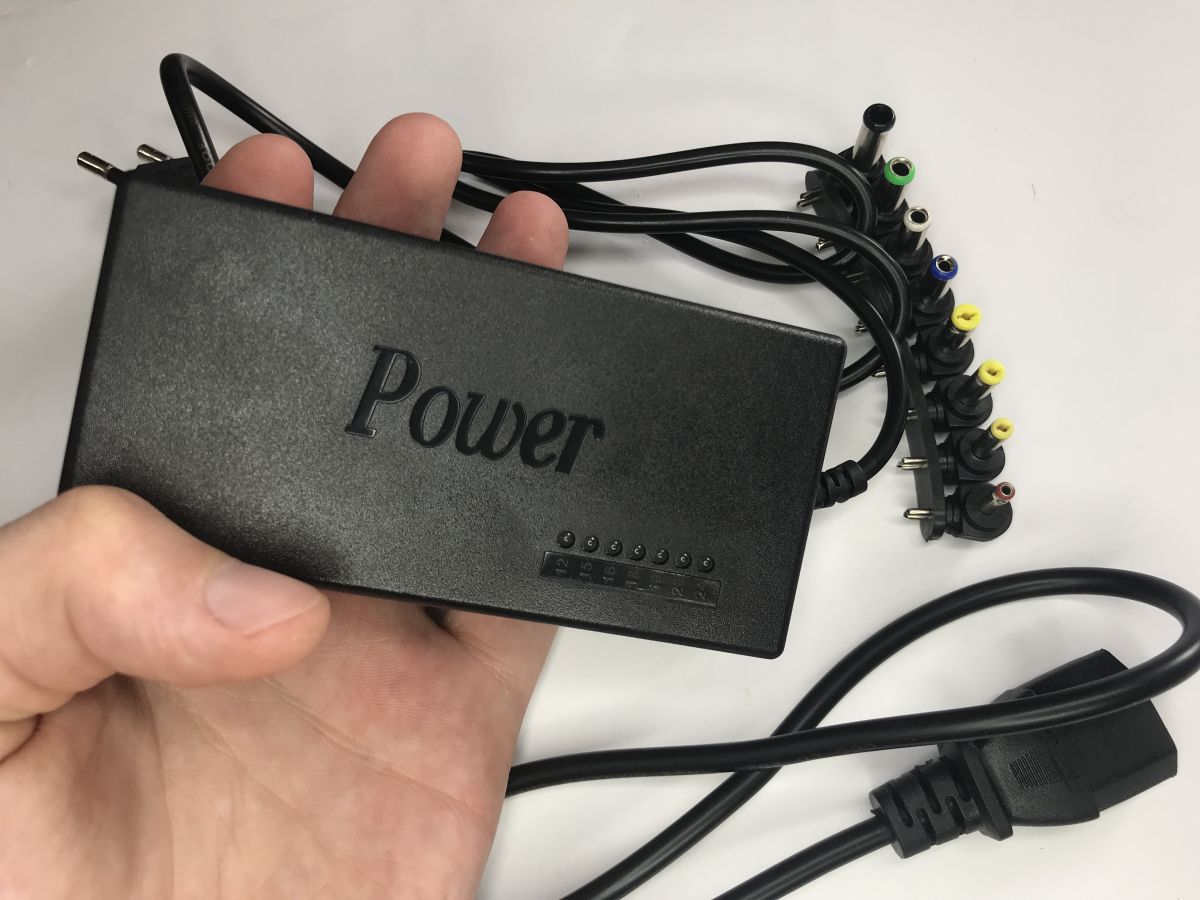
Today we’re testing a universal laptop power supply with an output of up to 96 W, offering voltages from 12 to 24 V and 8 different plug types. The whole lot was bought from a Polish importer for just 45 zł + postage. Is buying this sort of kit a good deal for someone who tinkers with laptops as a hobby? Let’s find out!

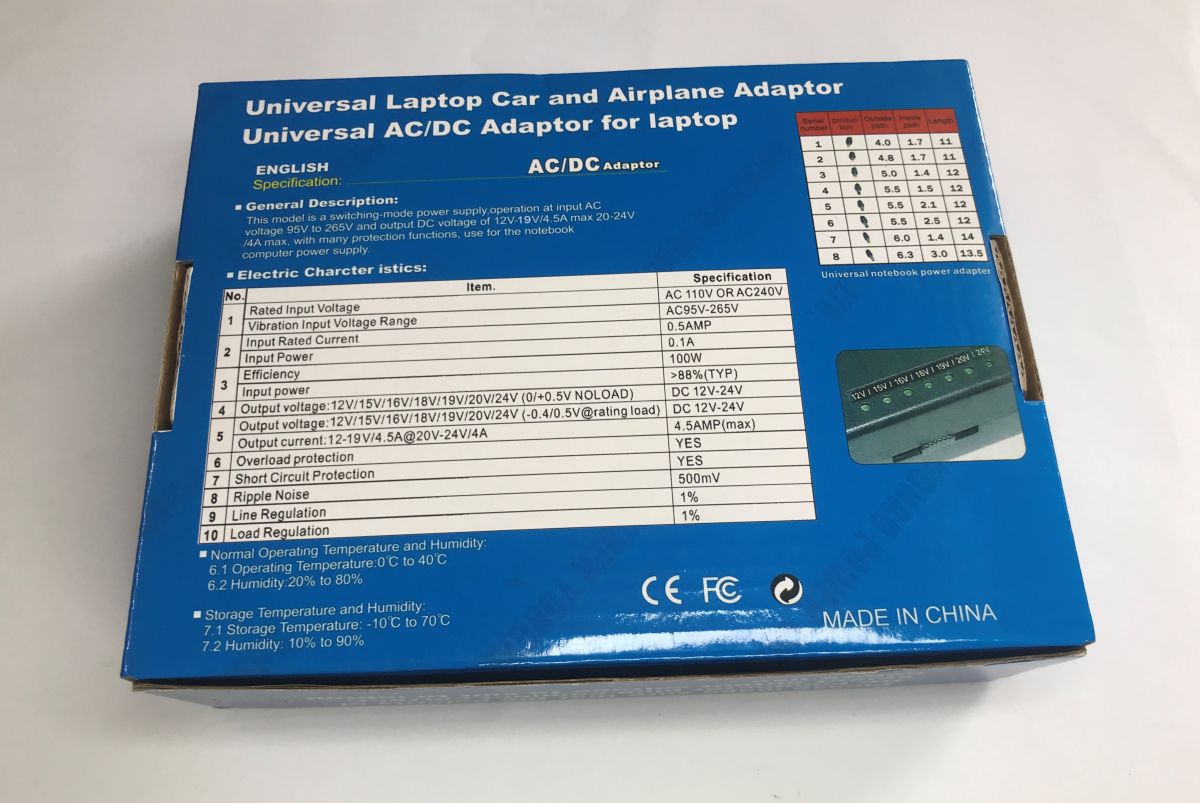
On the box, there are traces of the company responsible for selling this product to me. A Polish-language sticker mentions a power rating of up to 120 W, whilst the packaging itself states only 100 W. A slight discrepancy of 20 per cent? Let’s not jump to conclusions, though – it could be a printing error. The available connectors and more detailed specifications, such as the power supply’s efficiency, are also listed on the outside.
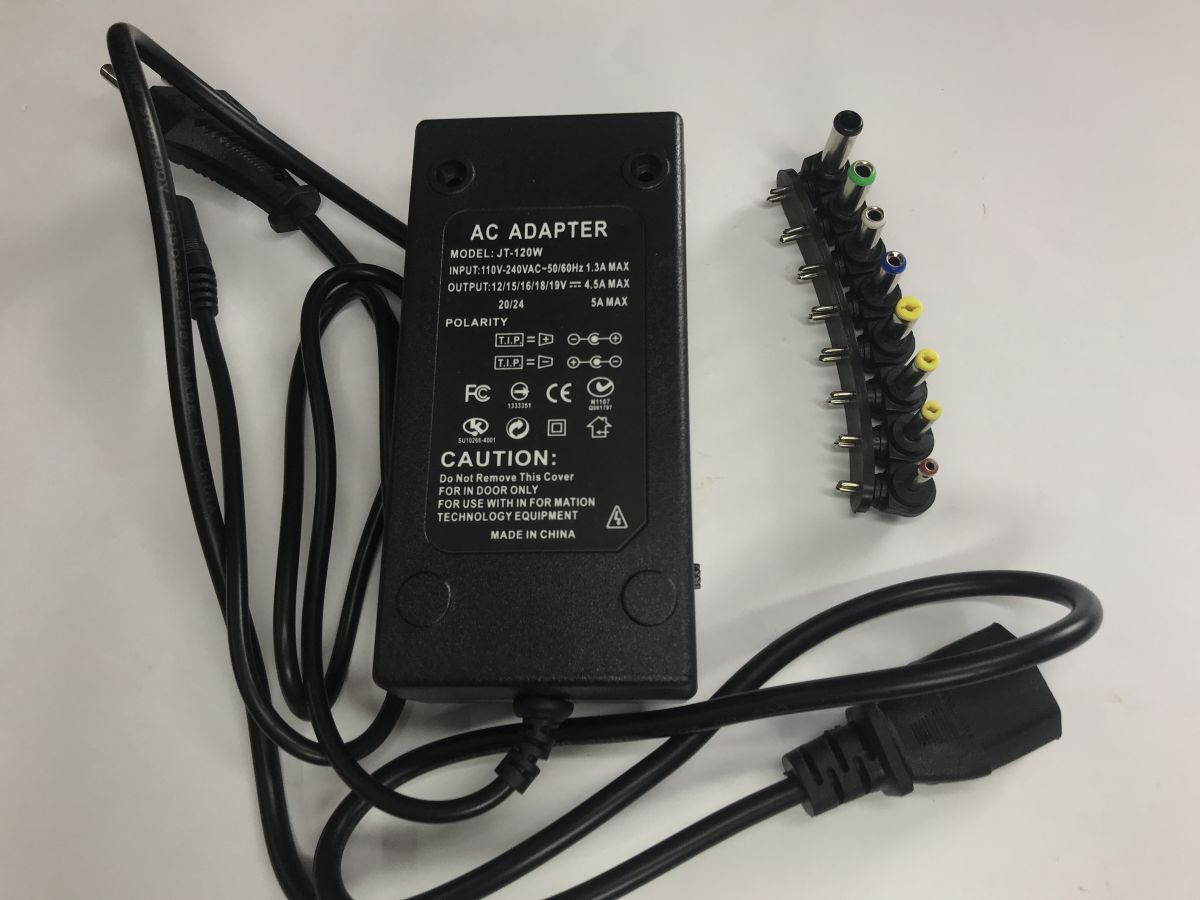
The voltages are selected using a switch on the casing; they are labelled. This should be quite convenient to use.
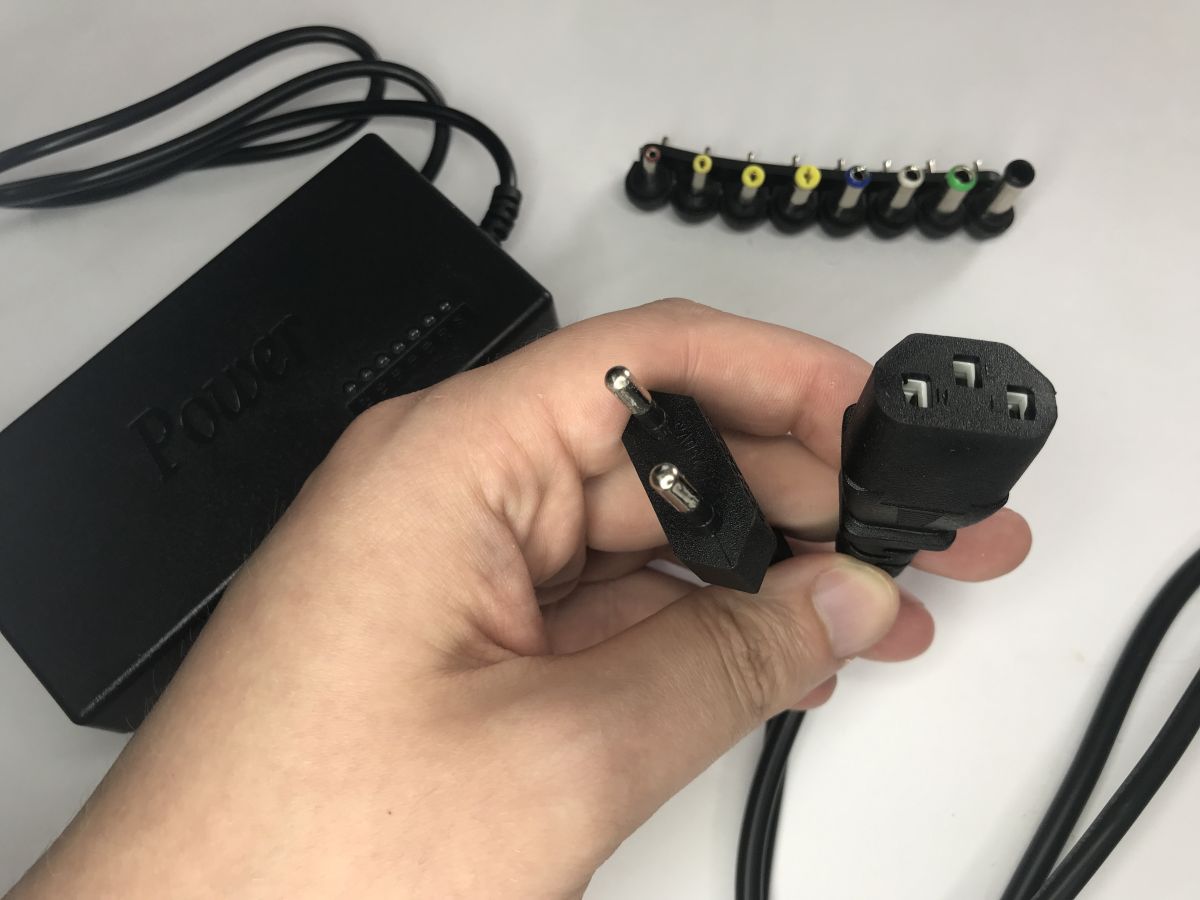
The first issue arises with the power cable. On one end, there is a plug that undoubtedly provides an earth connection, yet the plug itself lacks this earth connection. What sort of invention is this, and what is the idea behind it? The cable itself is a deadly trap. I can imagine a situation where someone plugs it into a socket behind a cupboard and then another, unaware user assumes that earthing is present...
The voltage selector, however, looks fine in itself. The current switch setting is indicated by a lit LED. Let’s take a look inside.
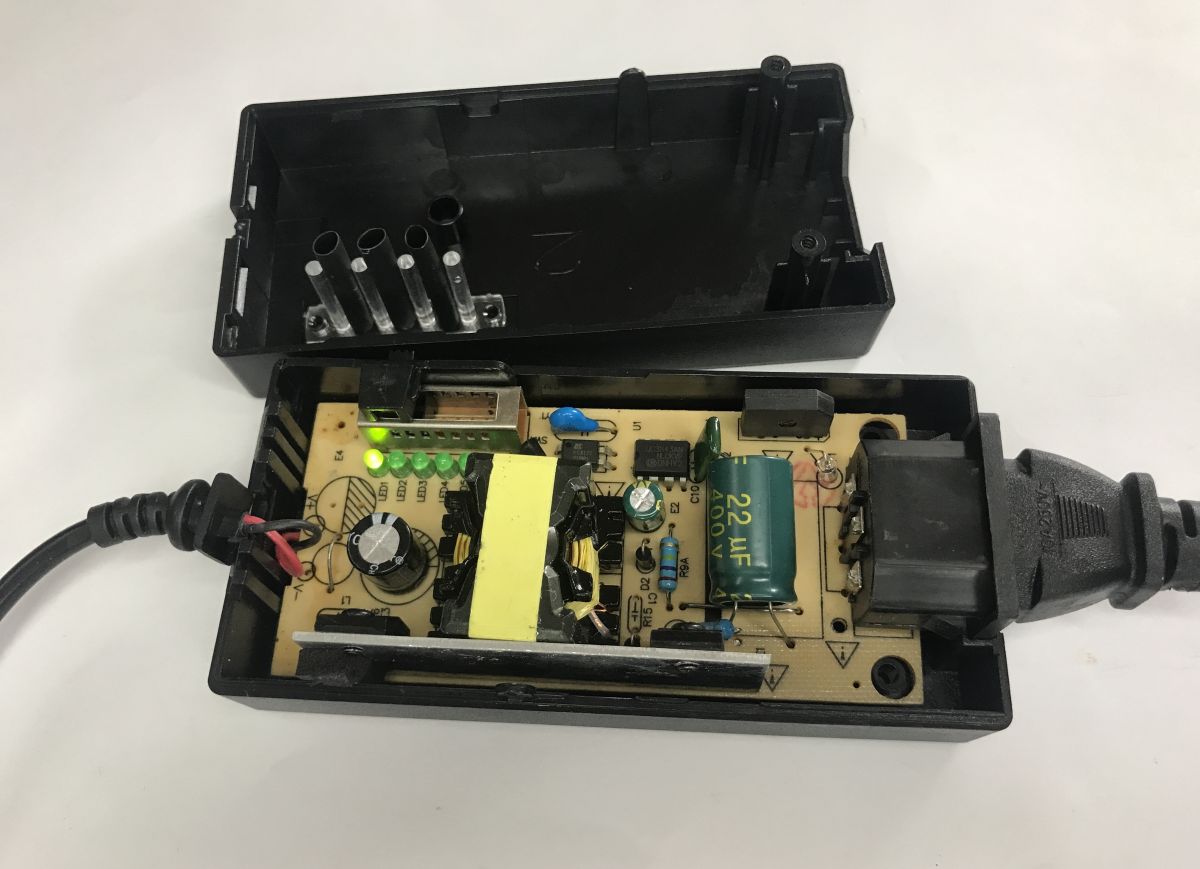
Inside, it’s… rather empty. There isn’t even room on the PCB for EMI filters at the power supply input, but this cost-cutting wasn’t enough for the manufacturer, who also omitted the filter and a second electrolytic capacitor on the secondary side. Even the capacitors that are present seem to have a lower capacitance than intended.
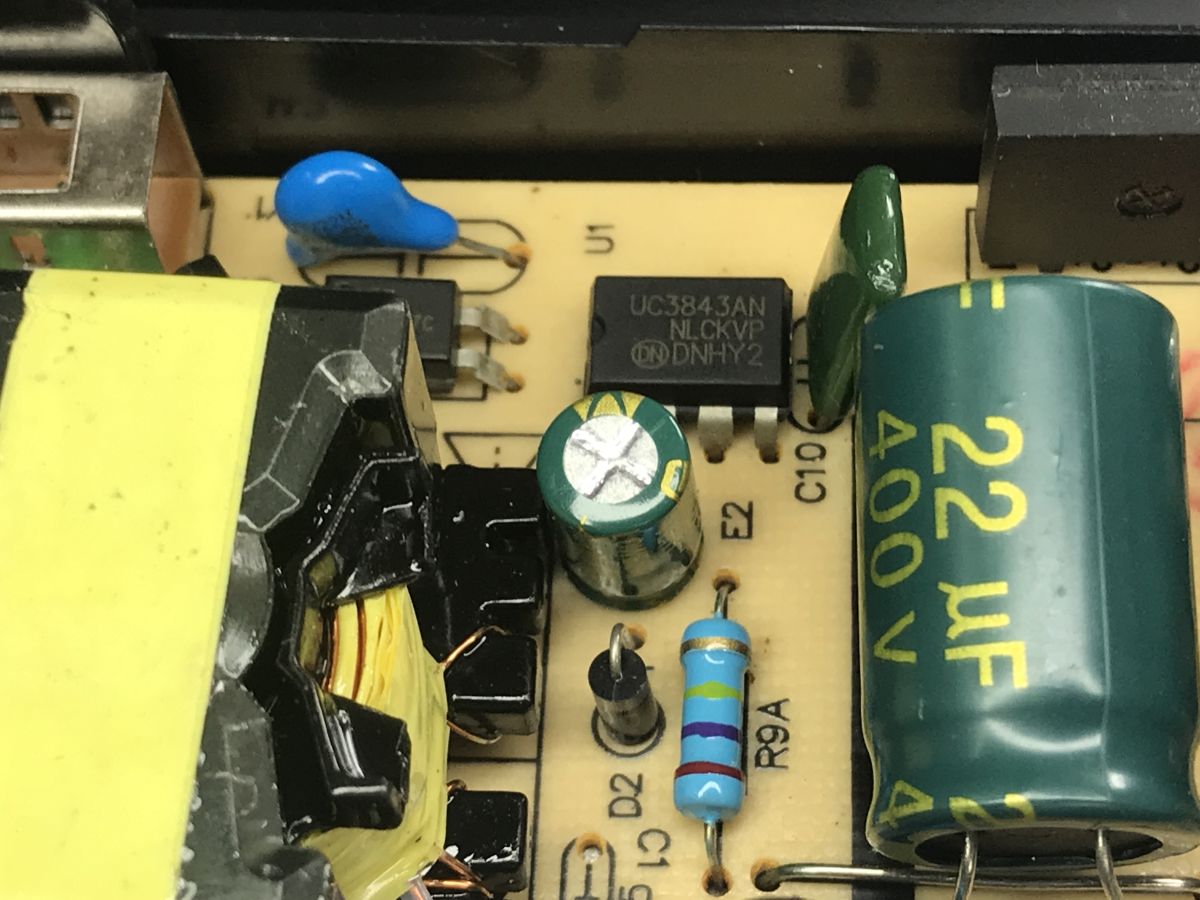
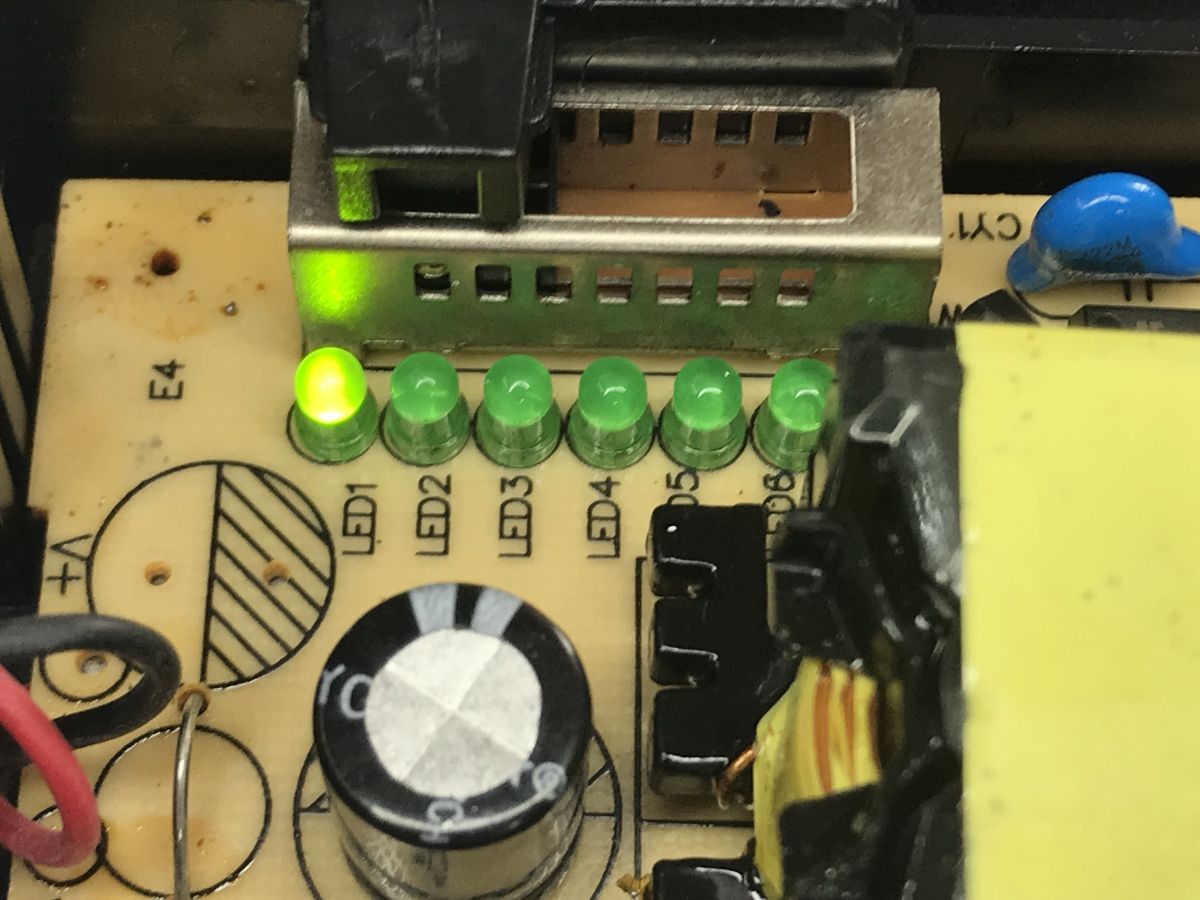
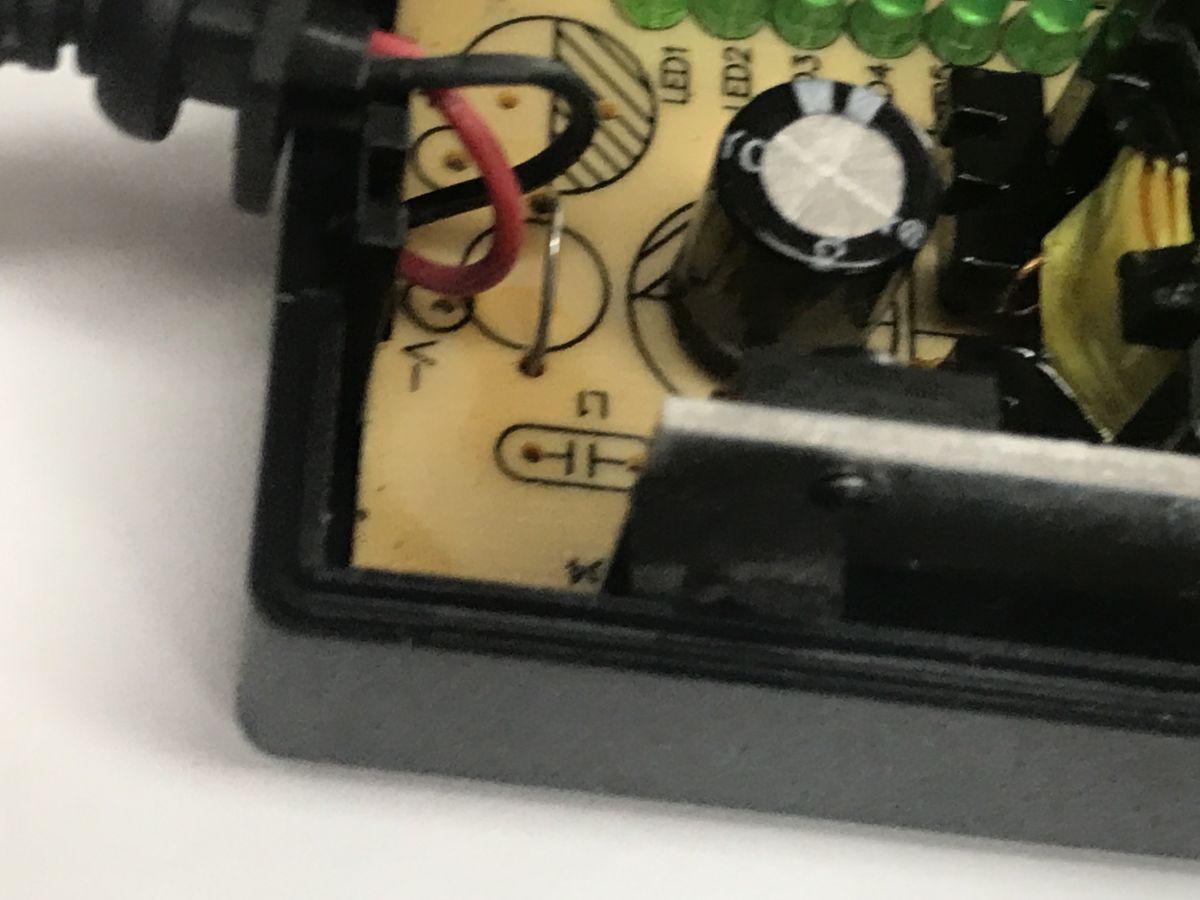
The power supply is based on the UC3843; it is a typical flyback design with optocoupler-based feedback, and on the secondary side there is a TL431 reference voltage. The voltage is selected simply by adjusting the resistor divider; the diodes are connected directly to it. On the primary side, I’m surprised by the absence of a single resistor – is it for the snubber or the thermal protection?
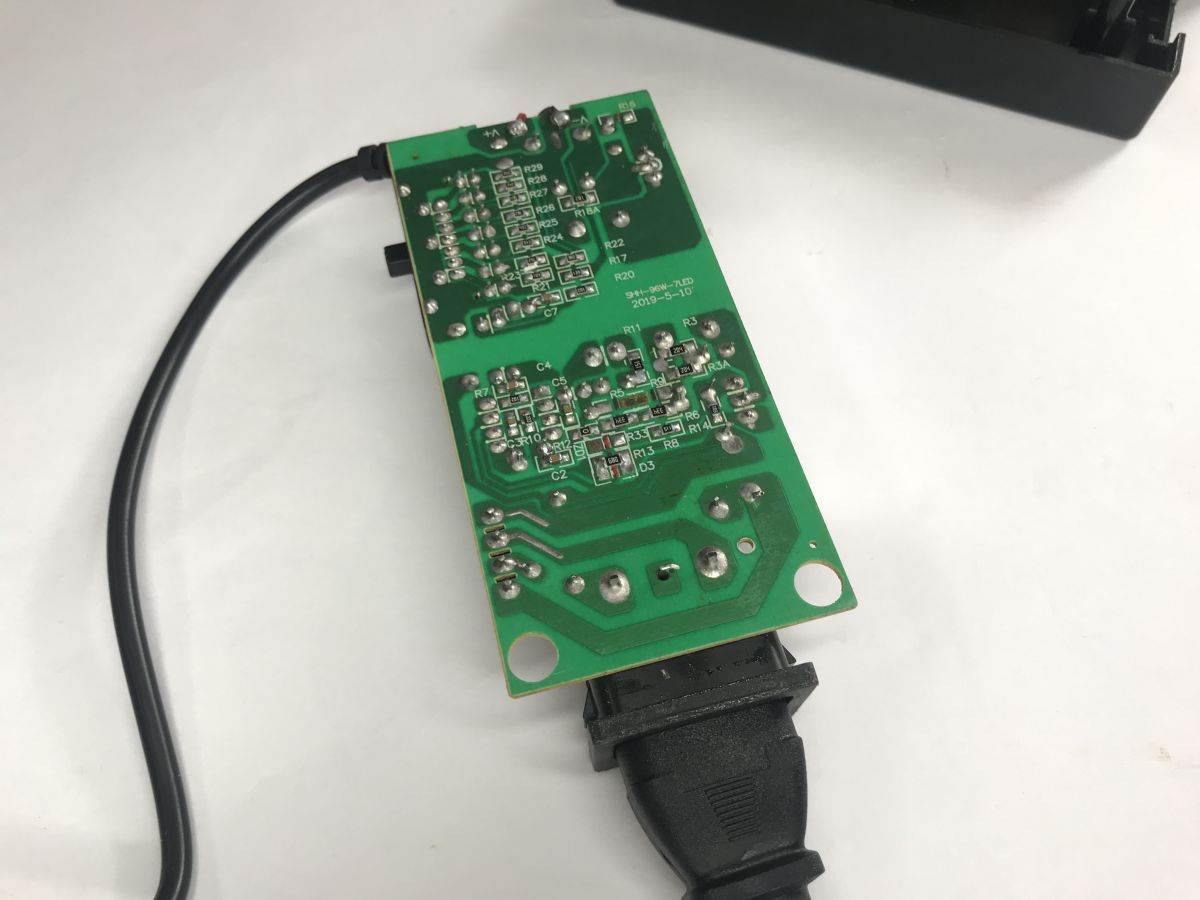
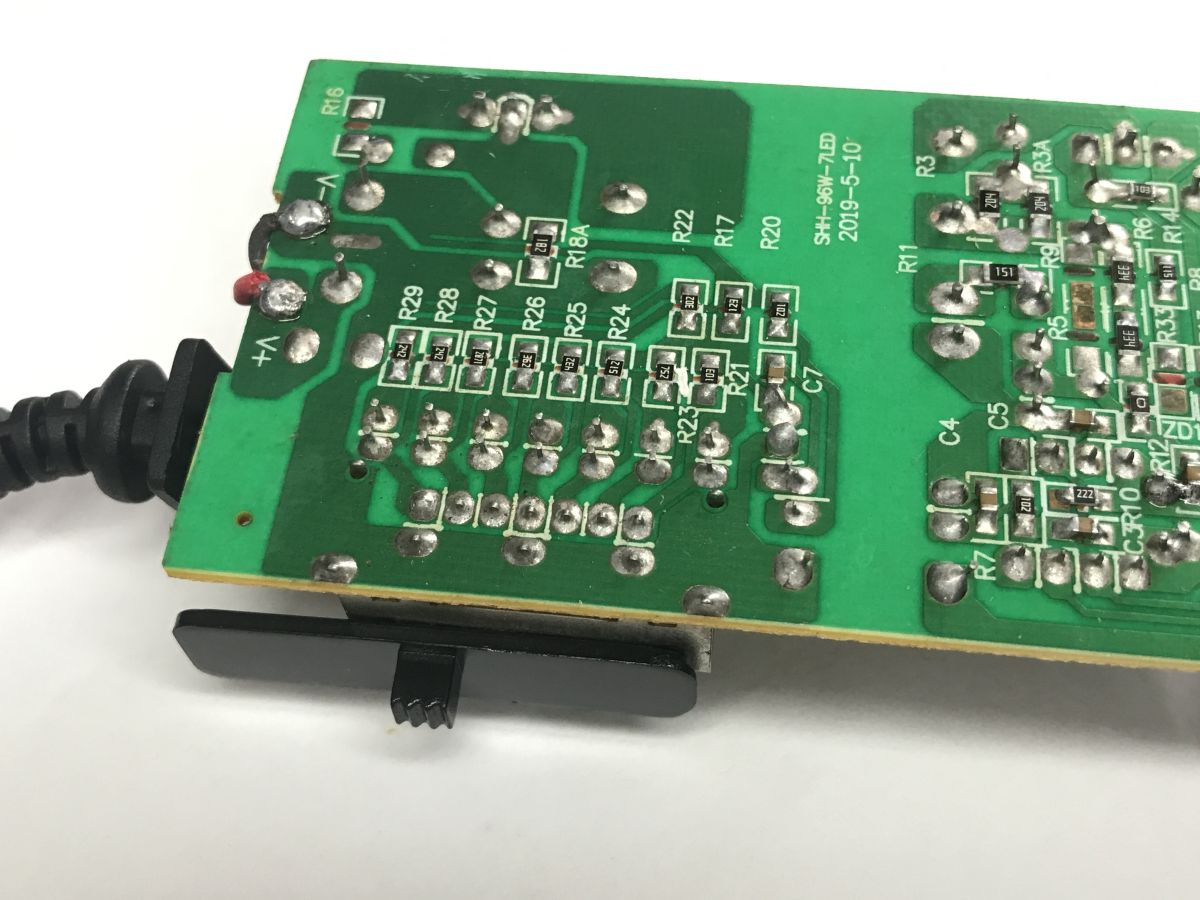
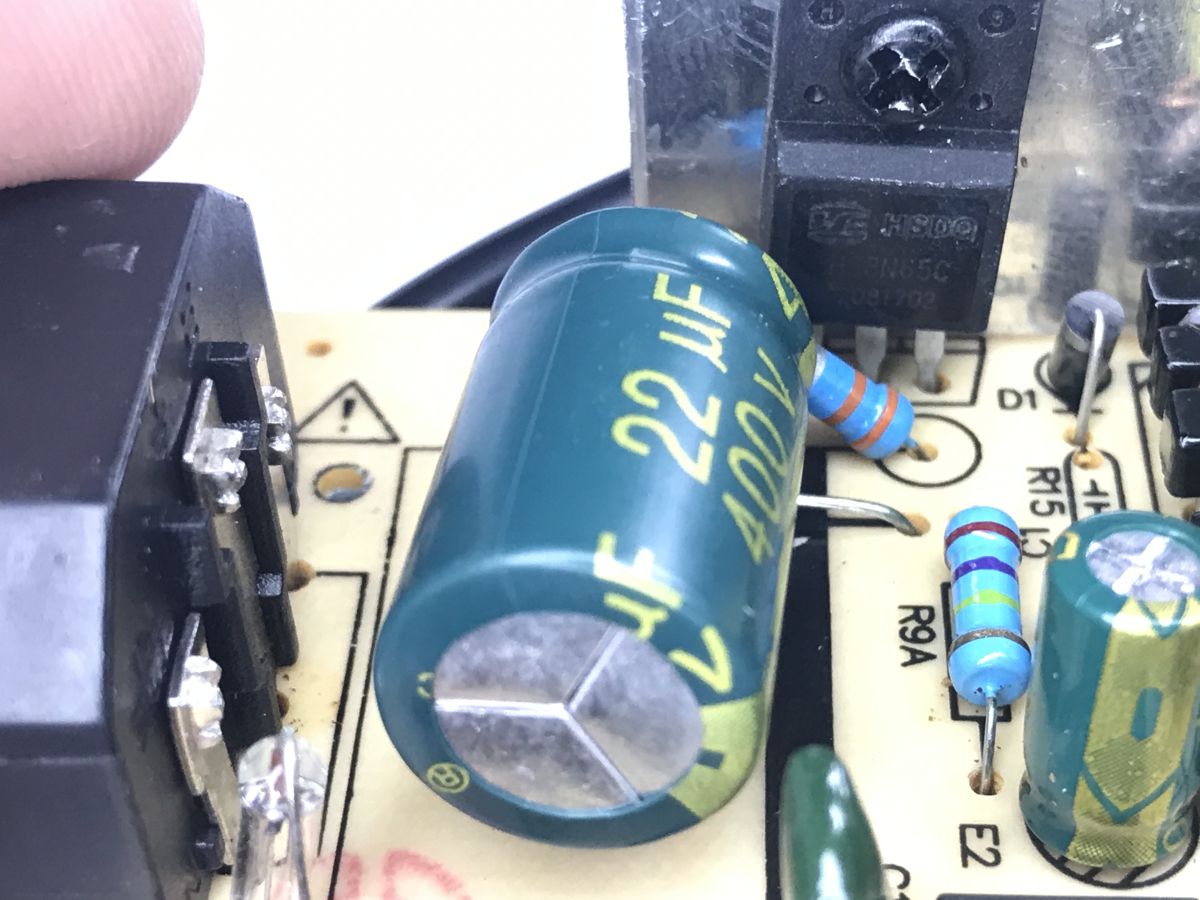
The main switching transistor is an N-channel MOSFET: HS8N65C (8A, 650V). The rectifier diode on the secondary side is an SP20100C (20A, 100V).
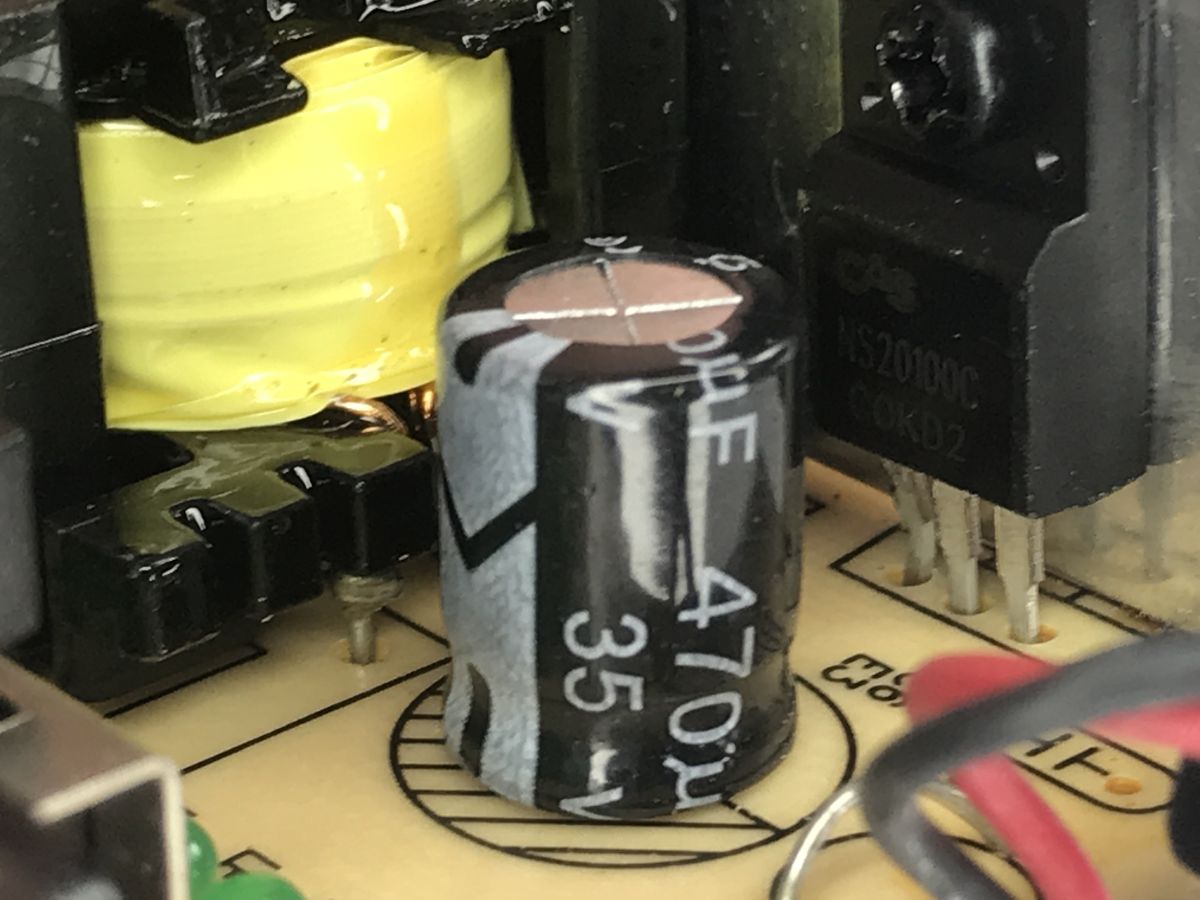
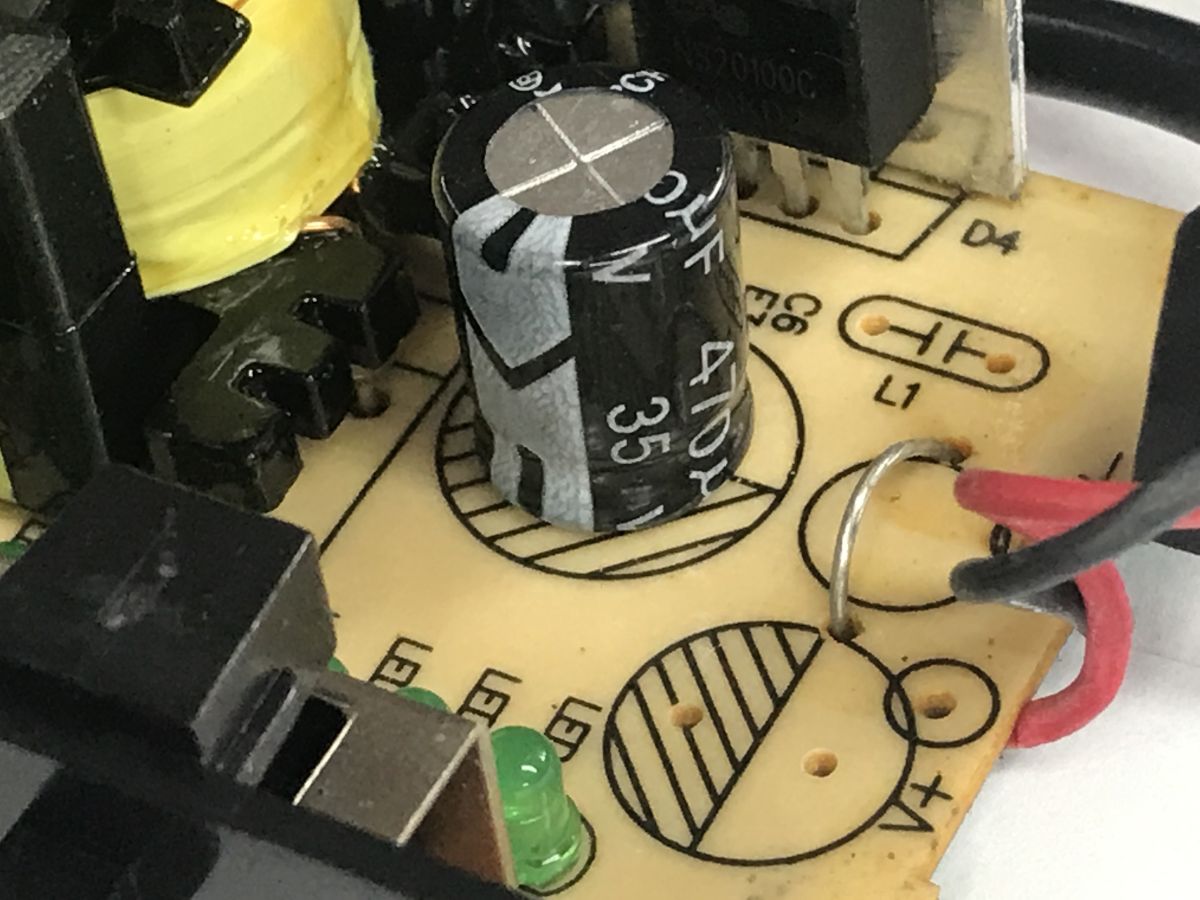
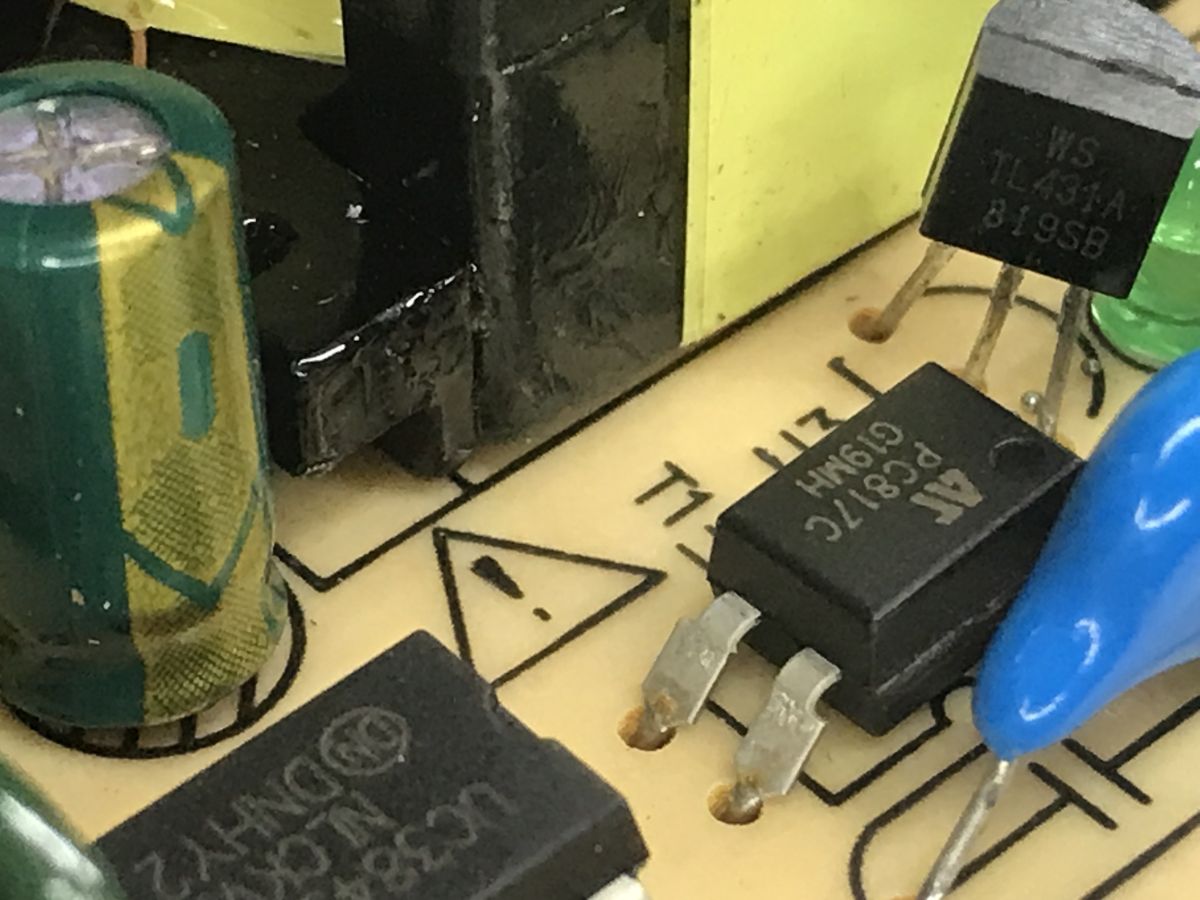
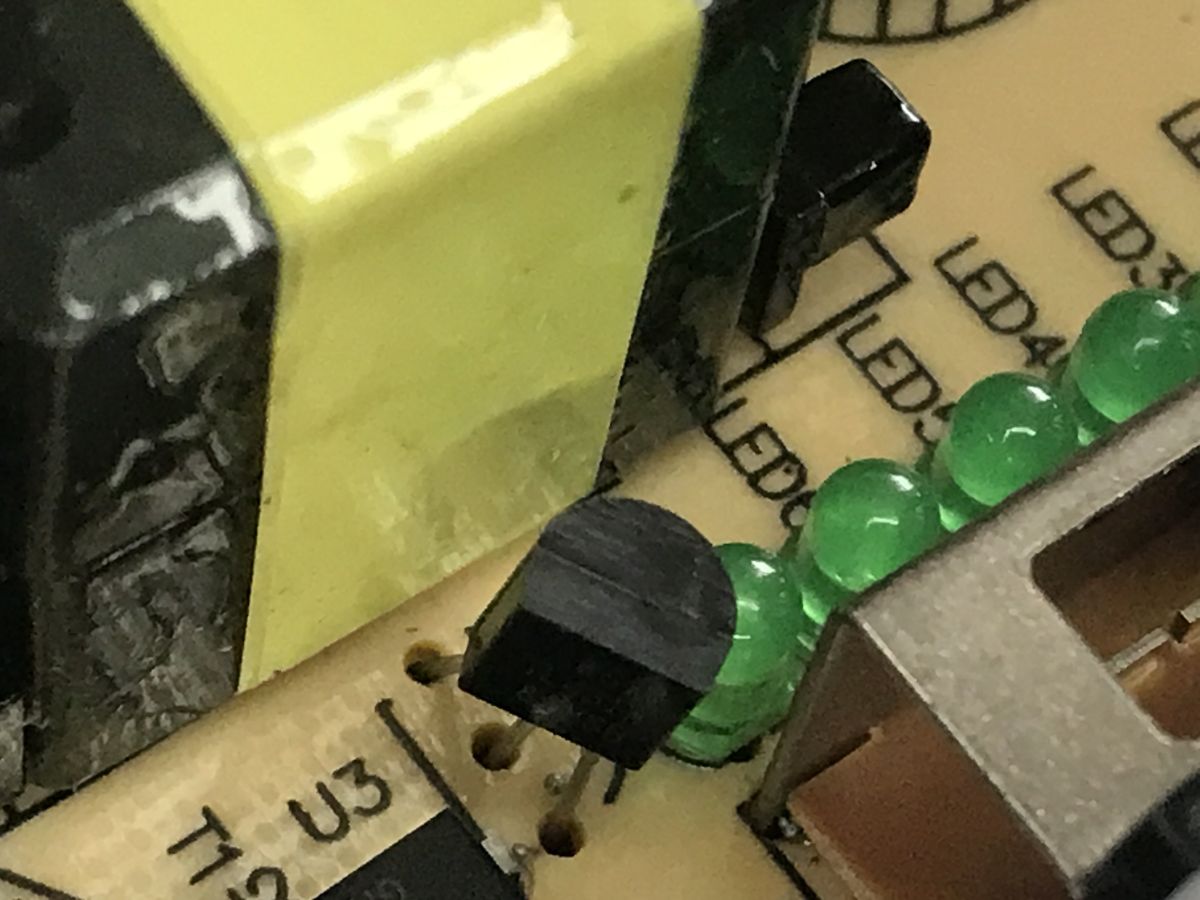
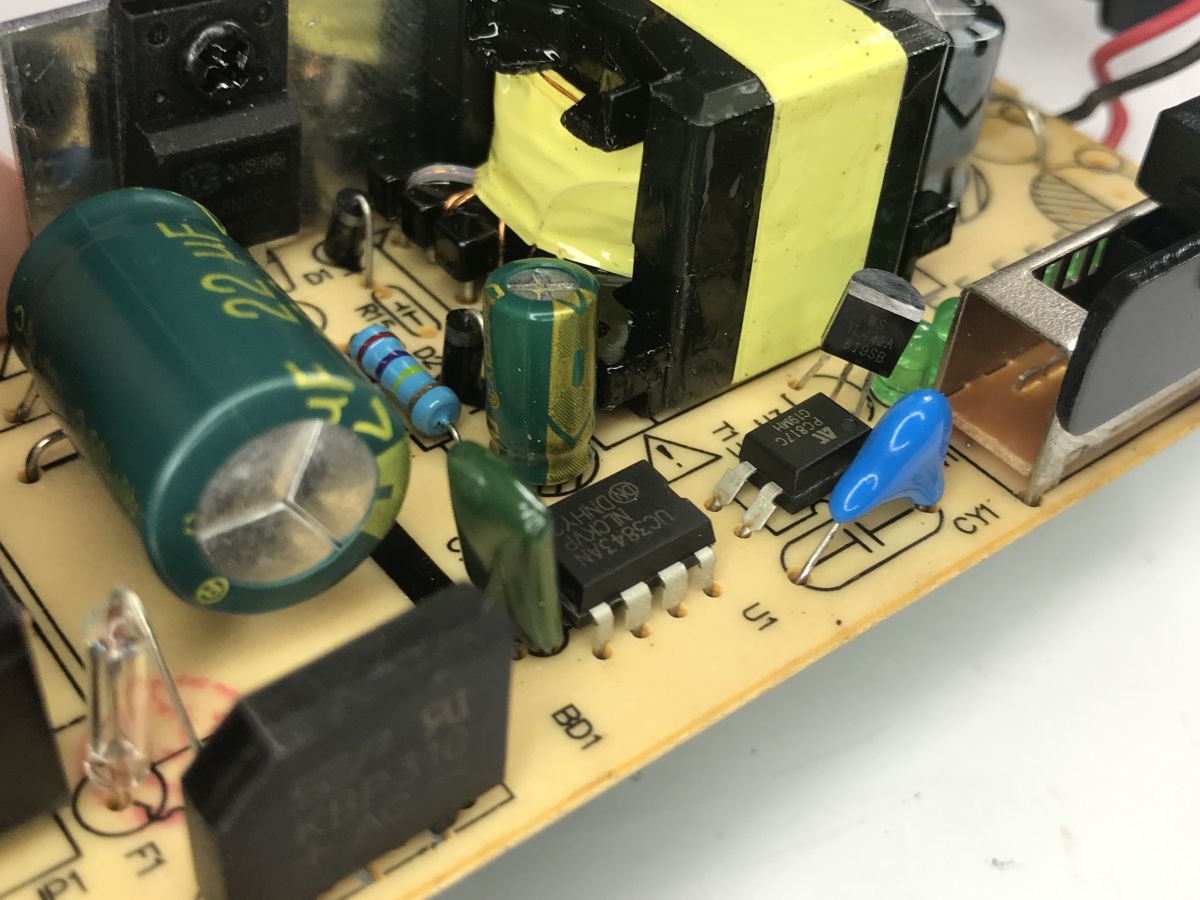
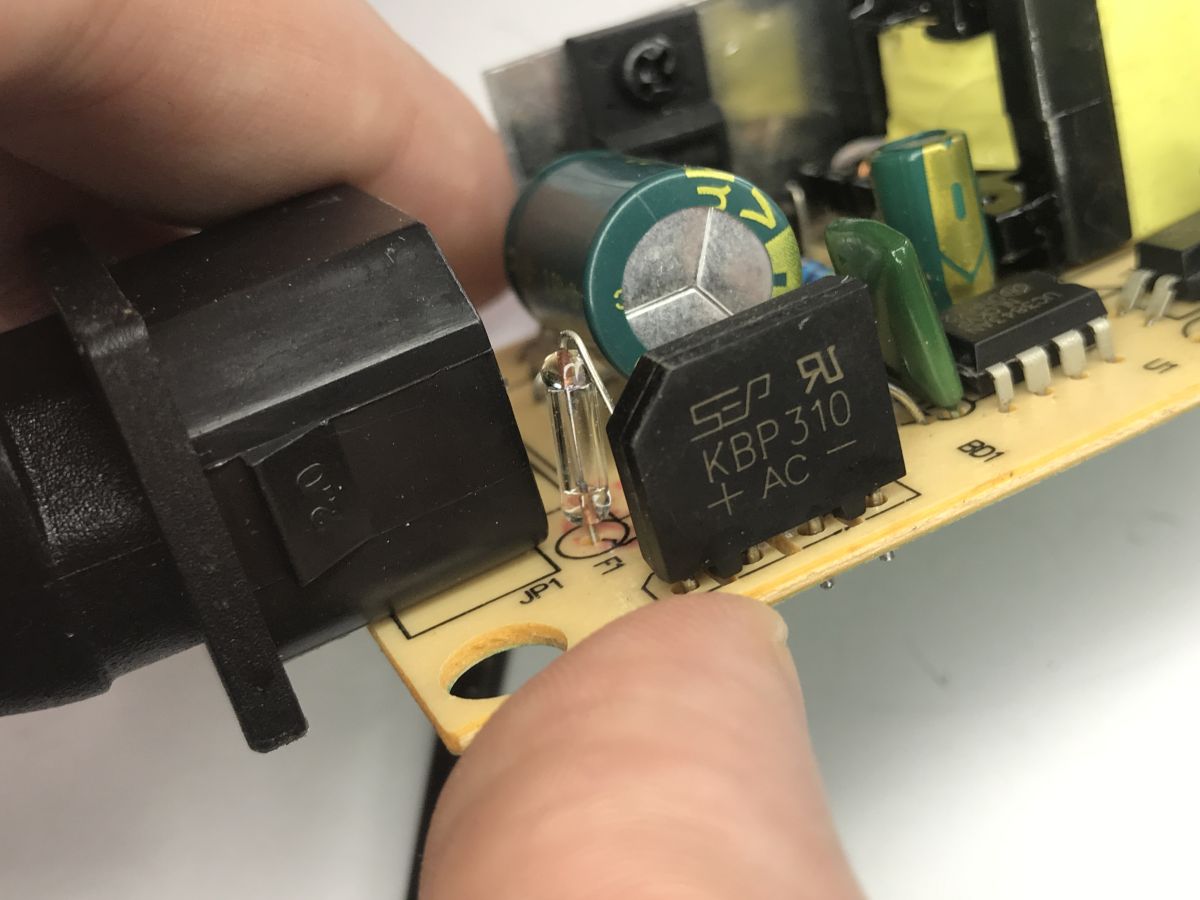
The overall picture isn’t exactly encouraging, but let’s take a closer look. First, the voltages. The lowest is 12 V. To check this more thoroughly, I’ve already tested them under load.
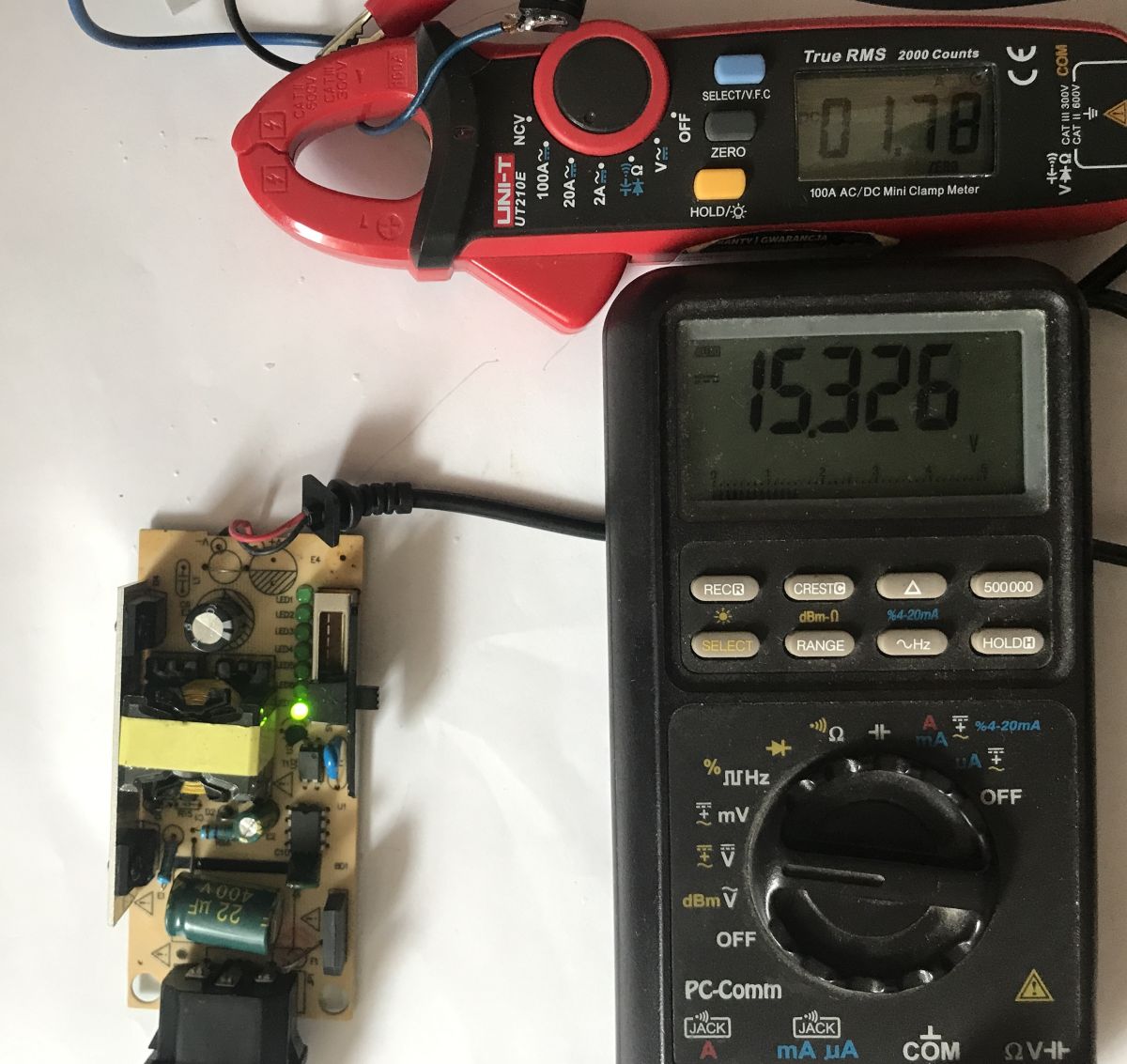
Instead of 12 V, I got 15.3 V! That’s a very, very high reading. I could understand 12.5 V, or perhaps 13, and so on, but 3.3 V more?
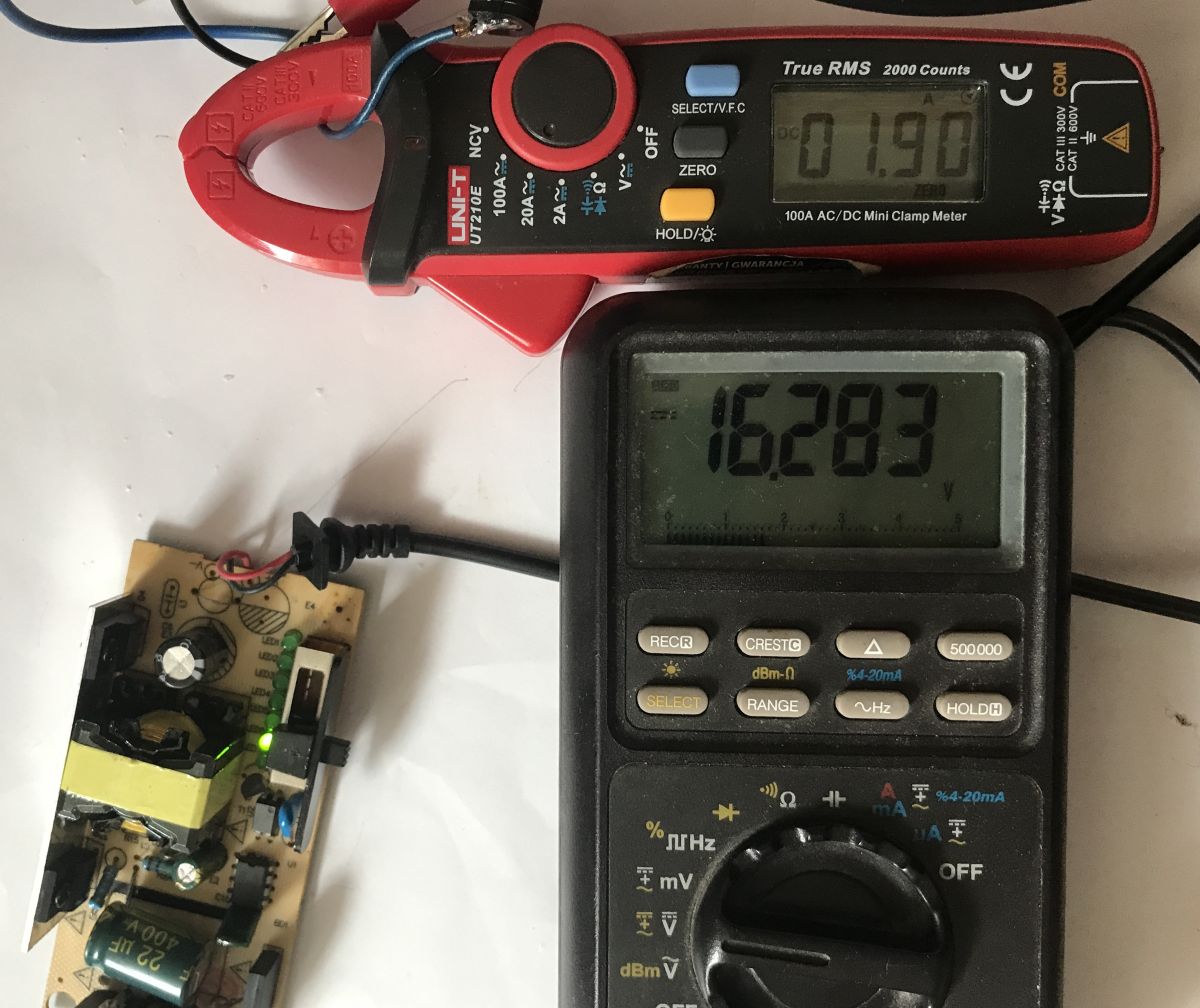
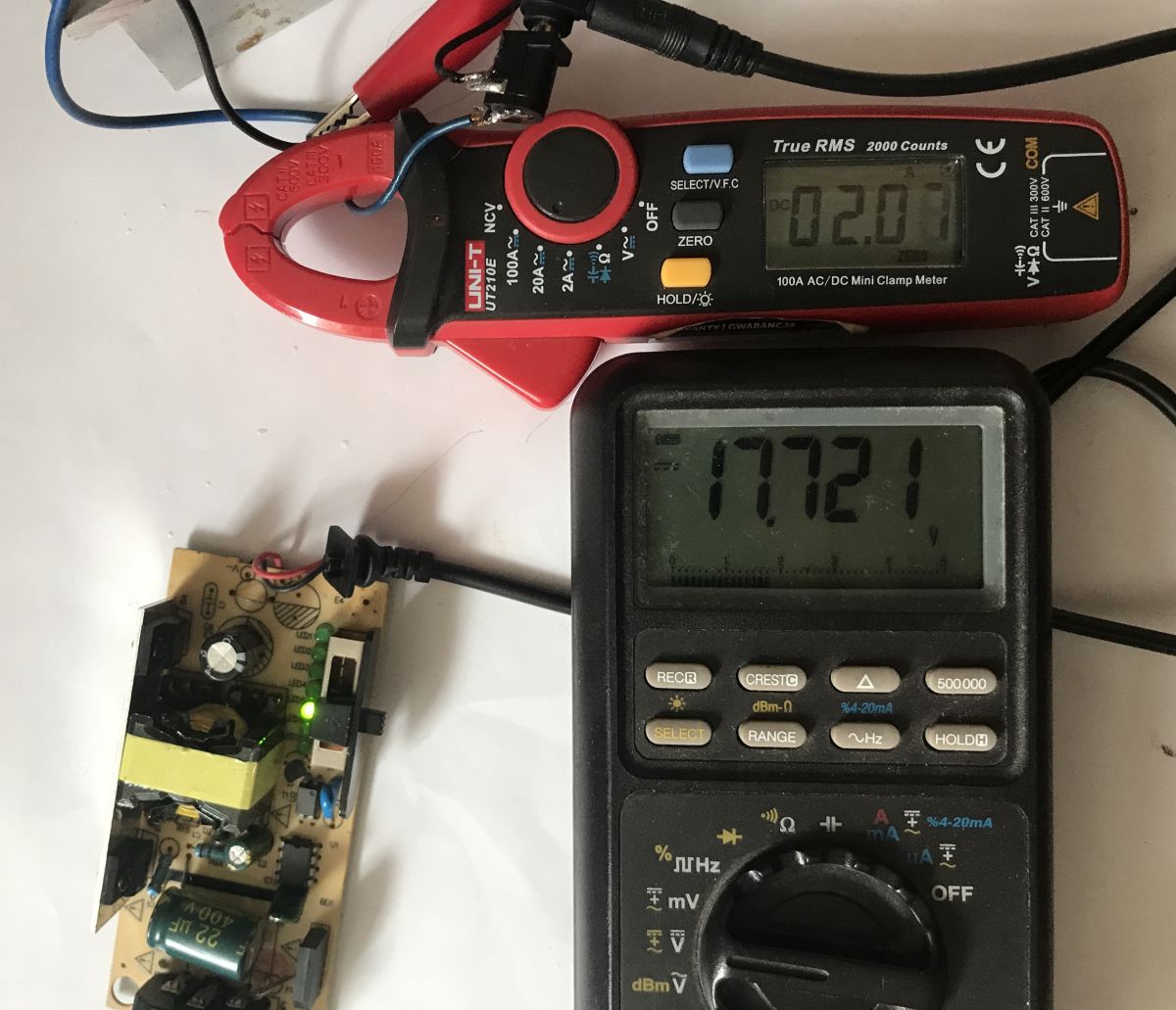
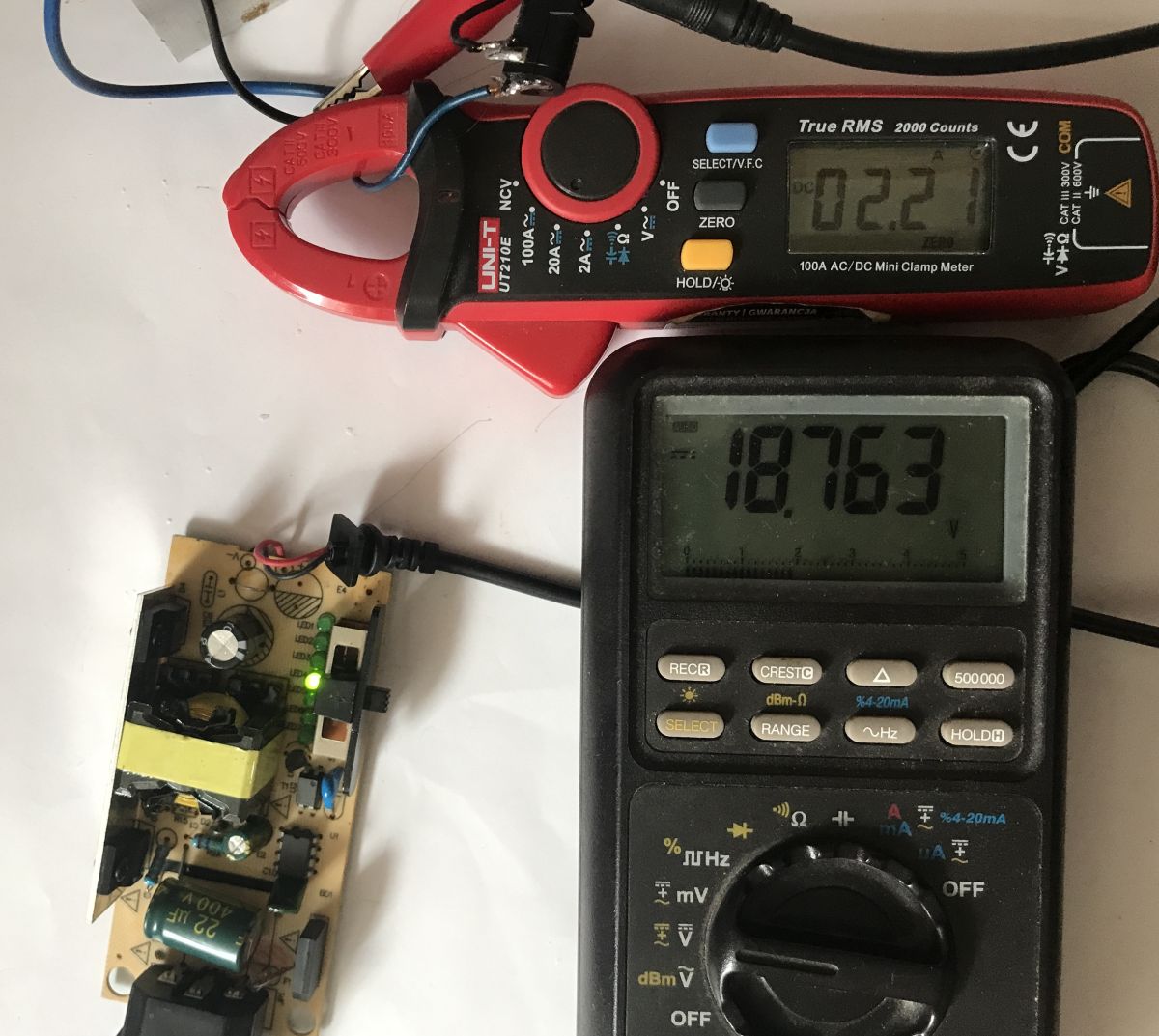
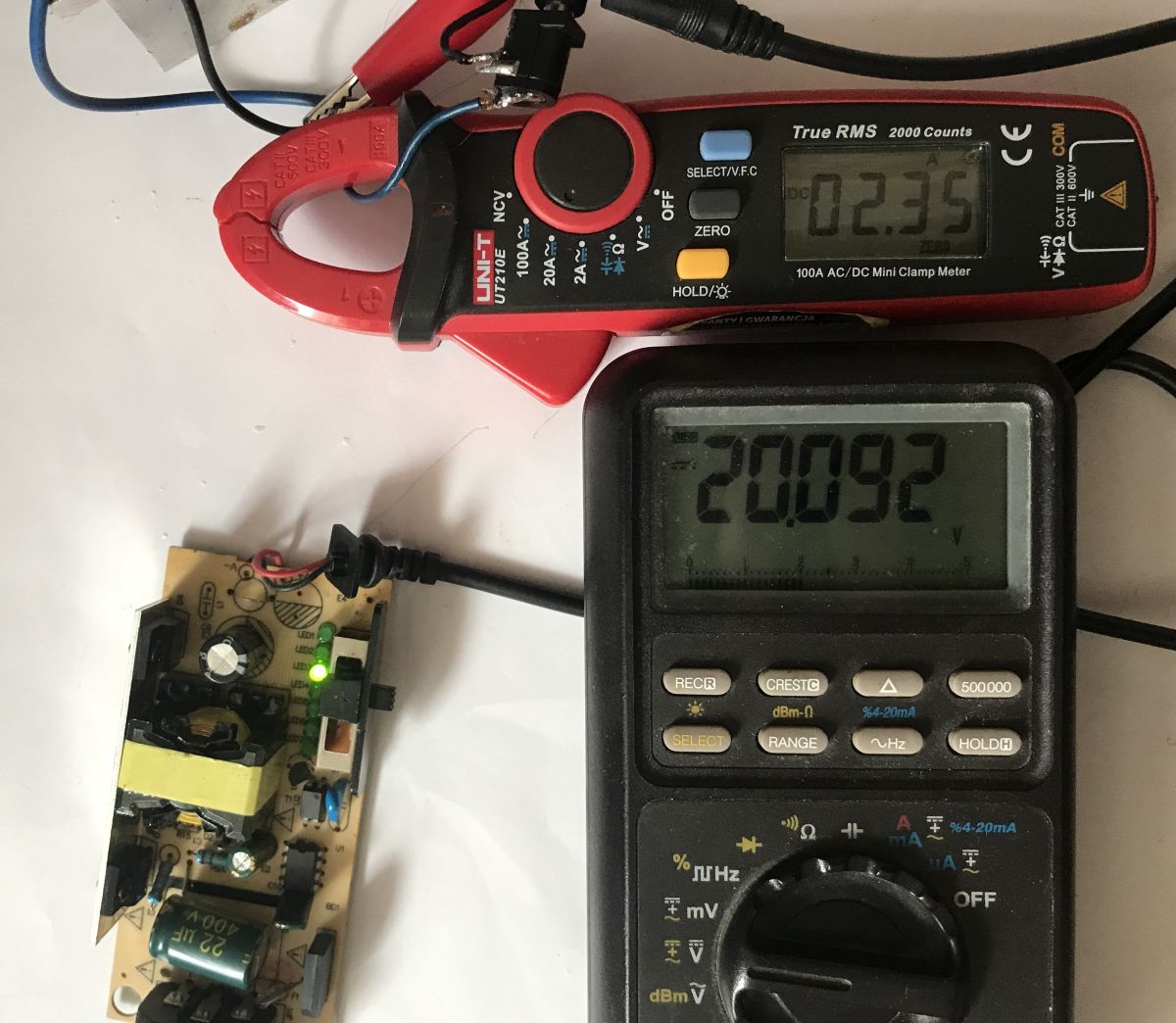
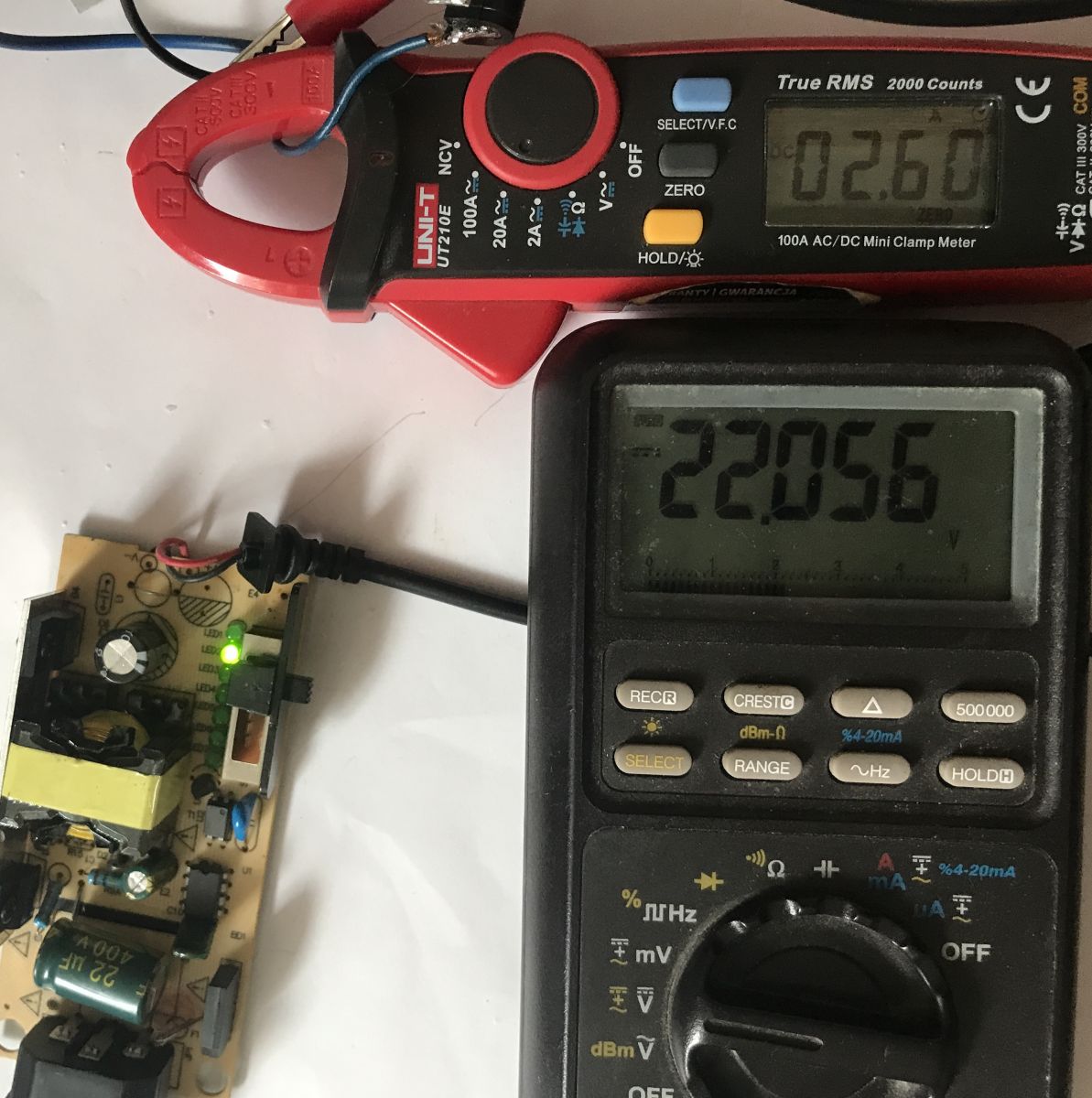
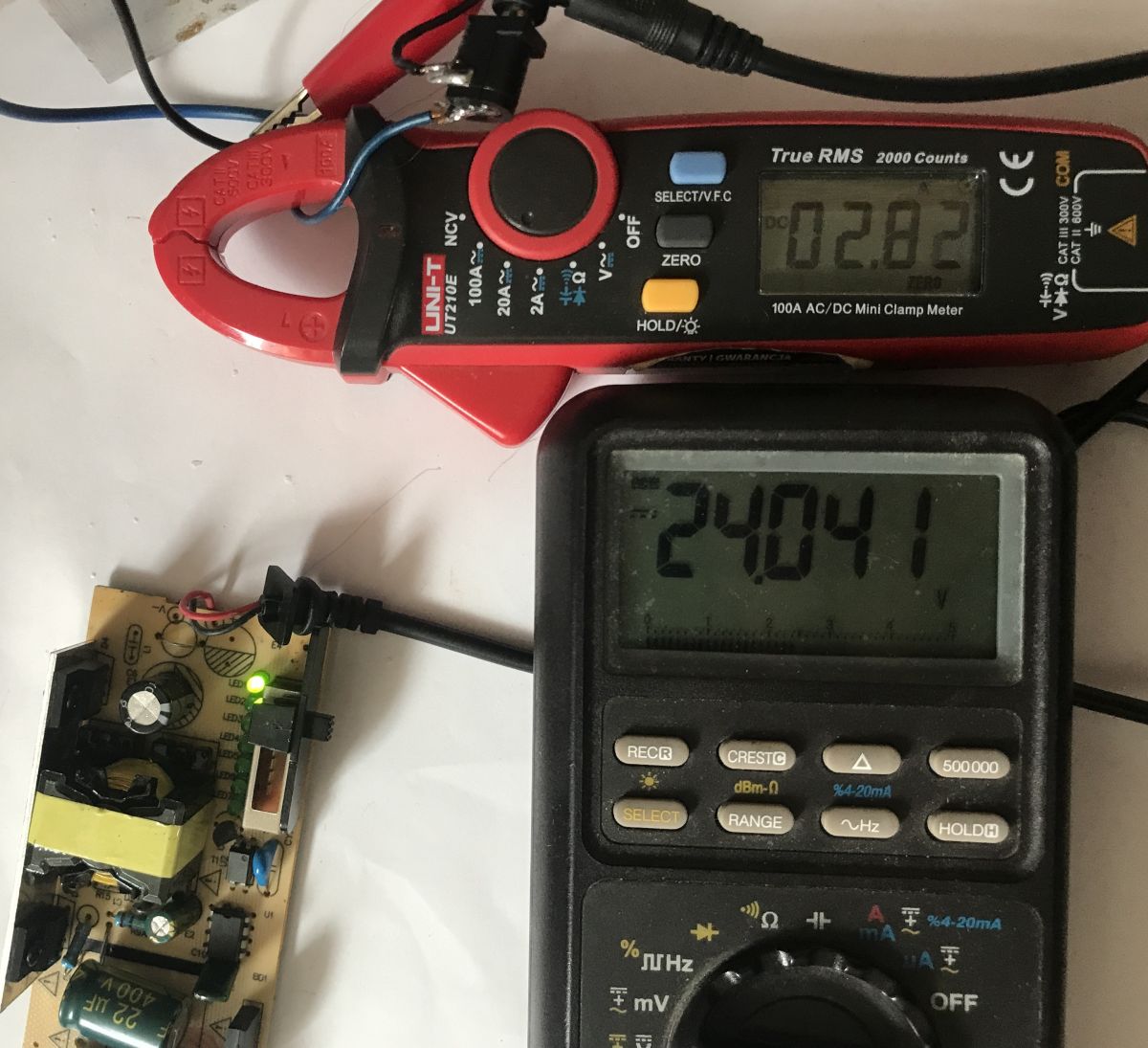
This problem recurs at lower voltages; only at the highest voltage does it behave as expected. 24 V is perfectly matched, whereas instead of 20 V we get 22 V, and so on. All this under load!
I selected a voltage of 22 V and applied a current of 2.6 A. It comes out at 57 W. Well below the promised 96 W... I waited half an hour.
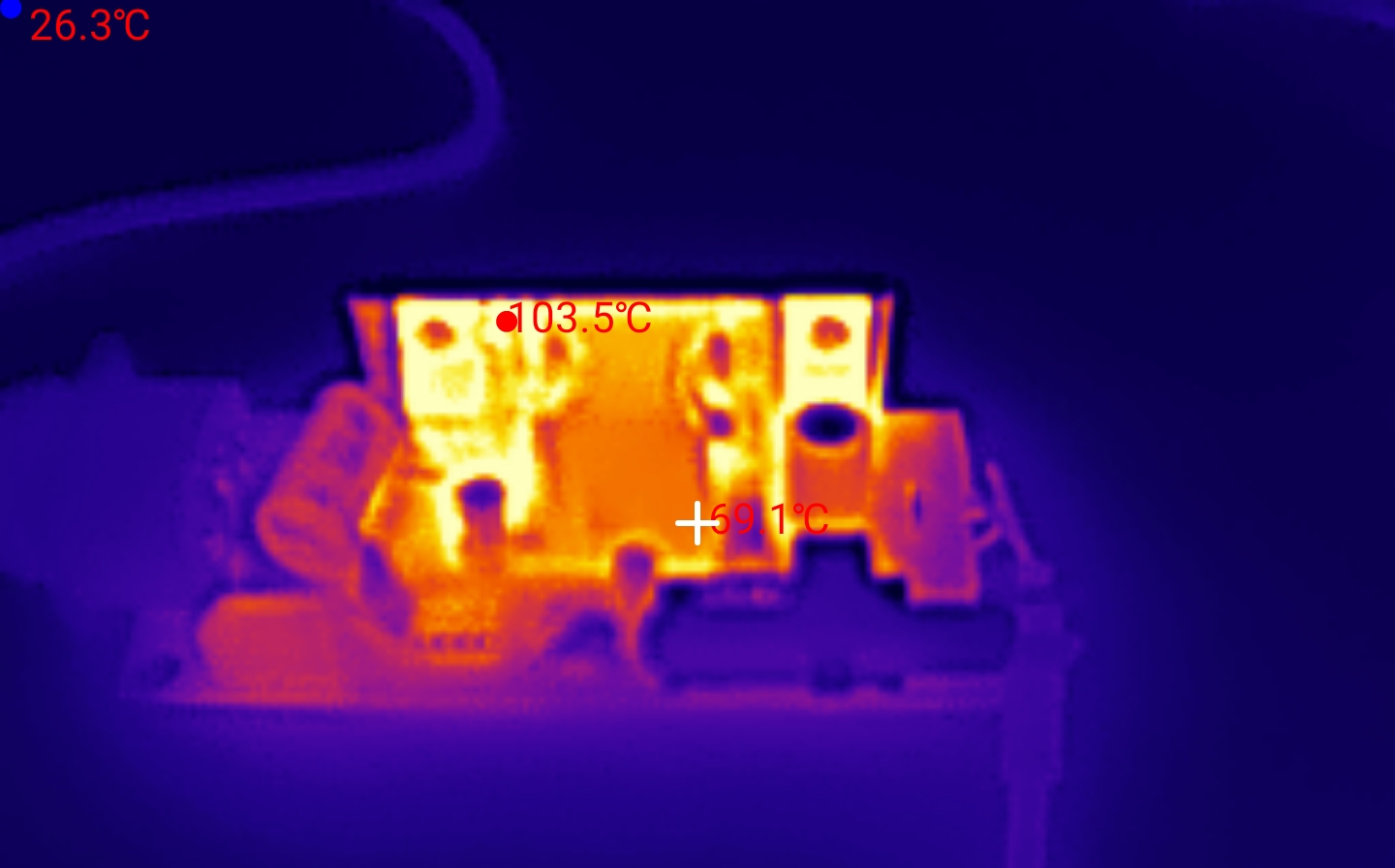
The whole thing heats up to over 100°C; I didn’t even bother to stick anything on the heat sink to reduce the error caused by its high emissivity a little, but in this situation, you don’t really need much precision to tell that something’s wrong. The IPA sprayed on it also evaporates straight away.
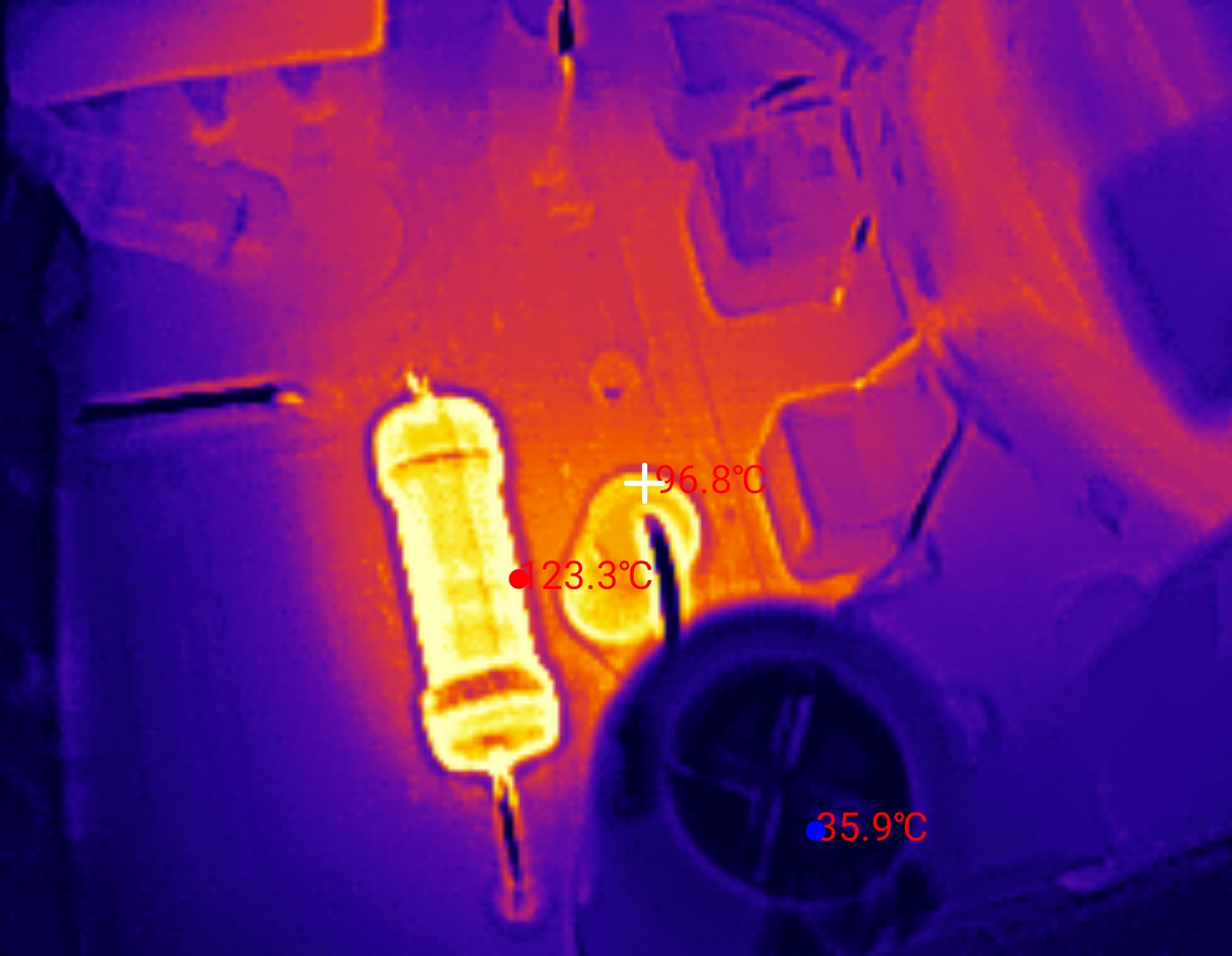
123°C on the shunt resistor used for current measurement? I don’t think I’ve seen that before...
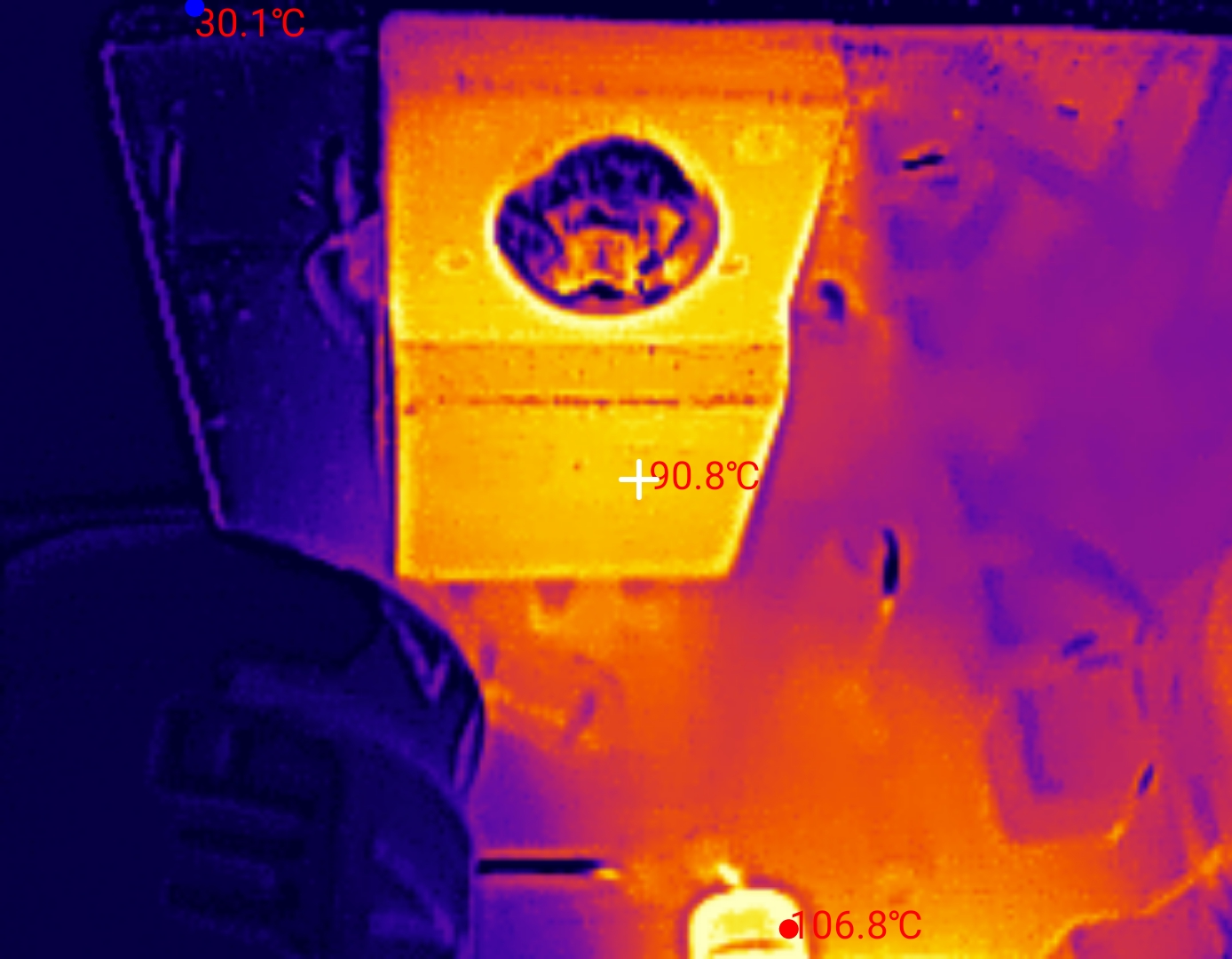
The main switching transistor is also ‘boiling’.
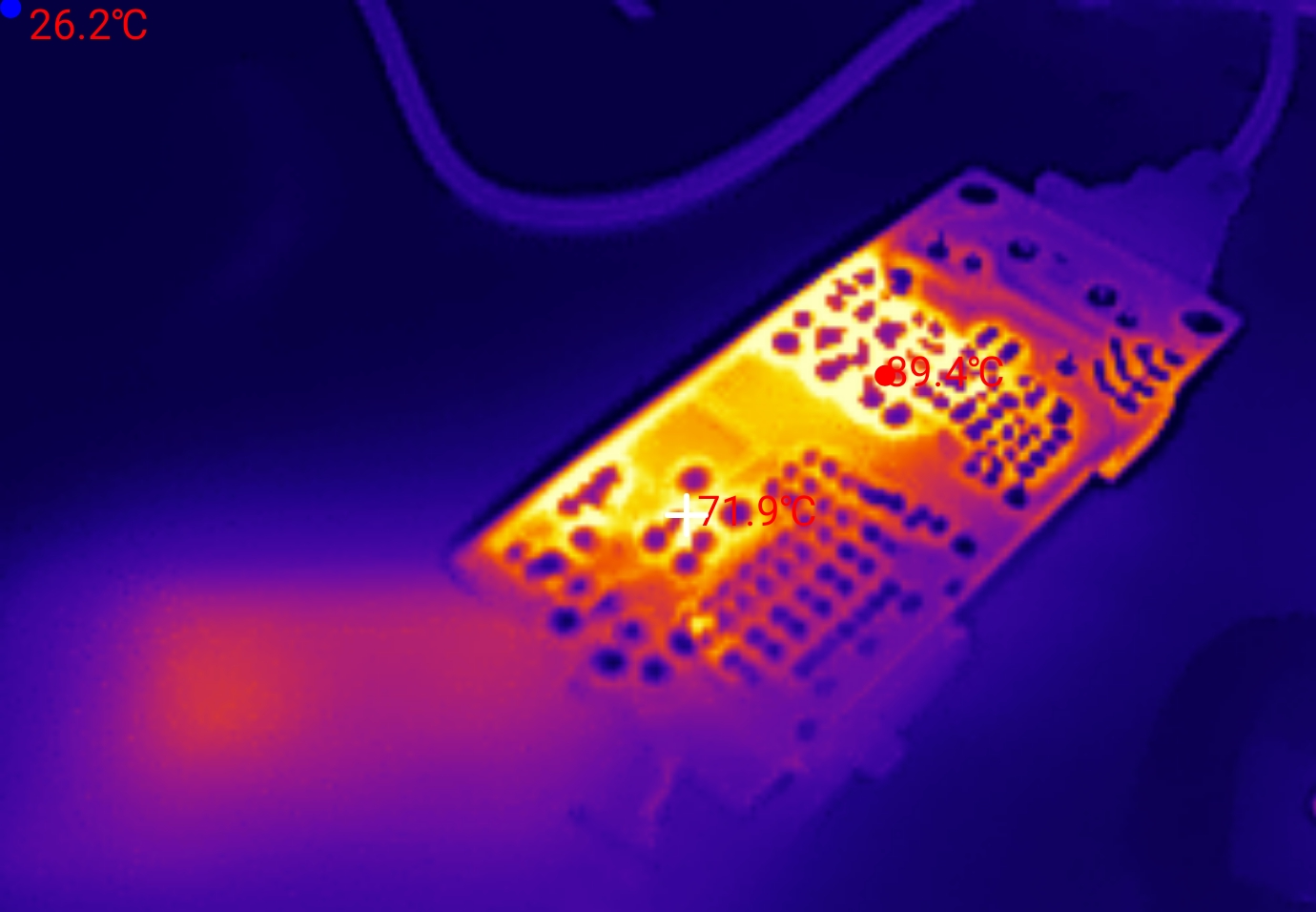
The underside of the PCB has two hot spots, one up to 80°C, the other up to 90°C.
Furthermore, I didn’t observe any voltage drop as the unit heated up, so someone must have omitted the thermistor responsible for the promised protection.
To sum up – the product does not live up to the seller’s claims, poses a risk to the equipment and the user, and overheats even at 50% of the promised load. It’s essentially just a toy. No one who works with laptops as a hobby (let alone professionally) should opt for this product. And then there are those over-rated voltages… the voltages listed on the casing are also misleading. I think I’ll just cover them up completely, so I don’t get taken in one day and end up supplying 15.3 V to a device designed for 12 V. Overall, it’s very poor; only the price might make it worth buying, but even that isn’t enough. And as for the power cable included in the set, I reckon you’ll need to cut it up and remove the plugs as soon as you receive the parcel, so it doesn’t pose a hazard…
Do you use this type of power supply, or can you recommend a better model?
Cool? Ranking DIY Helpful post? Buy me a coffee.