







Join me for a review of three power banks. It will also include a comparison of two models bought for practically the same price – the difference is barely 10 zł. We’ll find out whether it’s actually worth going for a slightly cheaper, unbranded model, or whether it’s better to opt for something tried and tested. Both have a power output of 22.5 W. Finally, I’ll present a third option: a slightly more powerful power bank with an output of up to 60 W, capable of delivering a voltage of up to 20 V.
Given the ubiquity of power-hungry devices requiring fast charging, I’ve selected all the power banks shown here to support QC. QC stands for Quick Charge, one of the most popular fast-charging standards, which allows the charging voltage to be raised above the standard 5 V (e.g. to 9 V or 12 V), significantly reducing the time needed to charge our devices.
I should also add that I will measure the capacity at the power bank’s output, at a voltage of 5 V, and then convert it to the value at the cell level.
No name/GB35590-2017 20,000 mAh 22.5 W with QC for 70 zł
According to the manufacturer’s specifications, the casing, measuring 14.4 x 6.8 x 2.7 cm, houses a lithium-polymer battery with a capacity of 20,000 mAh. The power bank is equipped with a total of four ports (two USB-A output ports, one MicroUSB input port and a universal Type-C port), which offer charging at an elevated voltage of up to 12 V (max. 1.5 A) and the standard 5 V (max. 3 A).
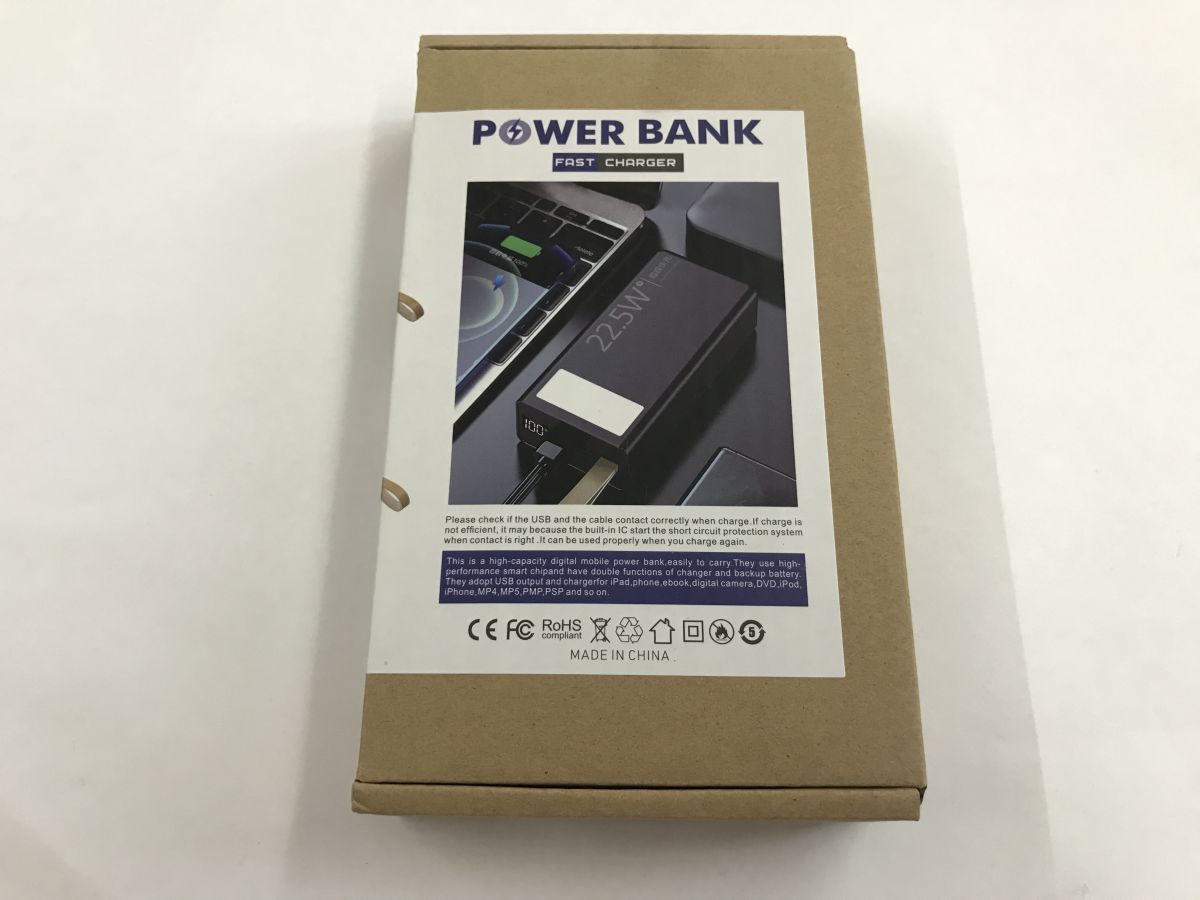
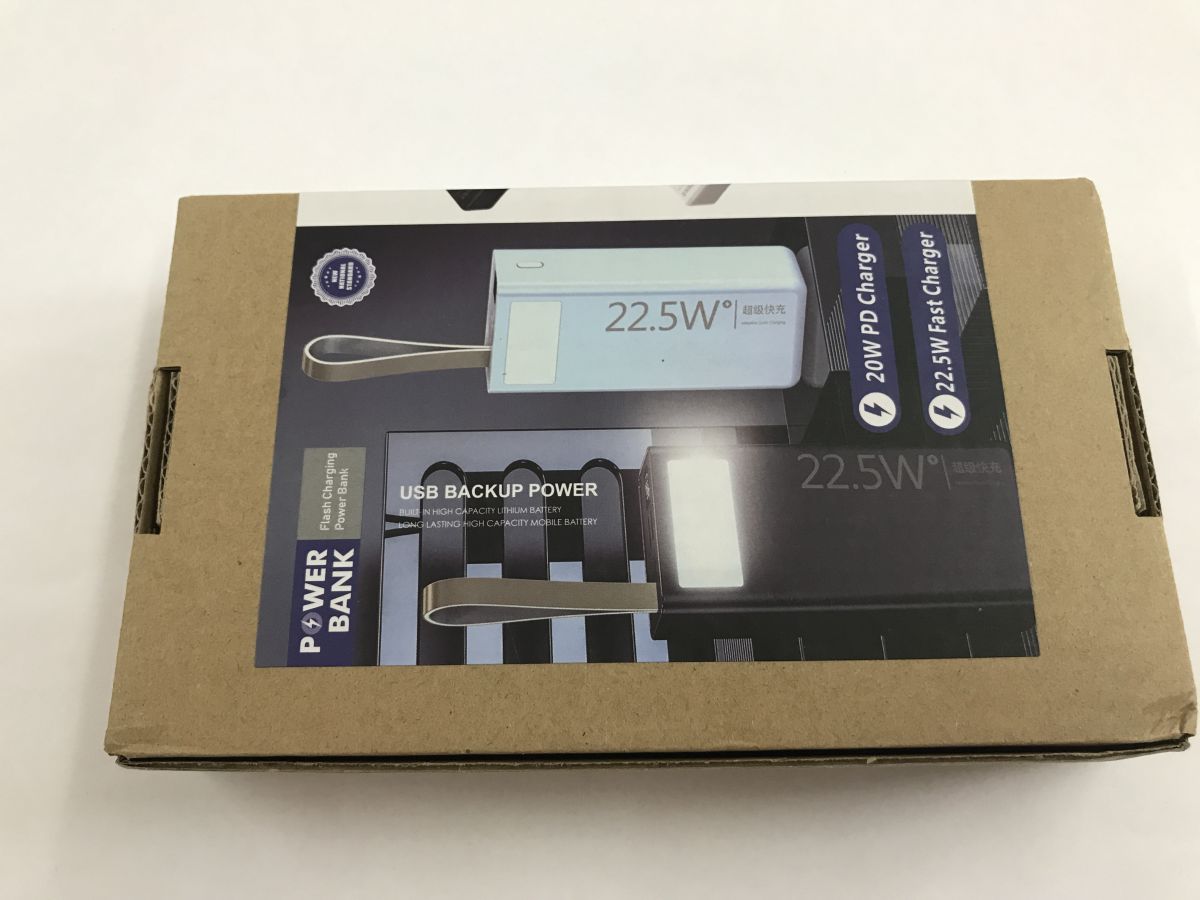
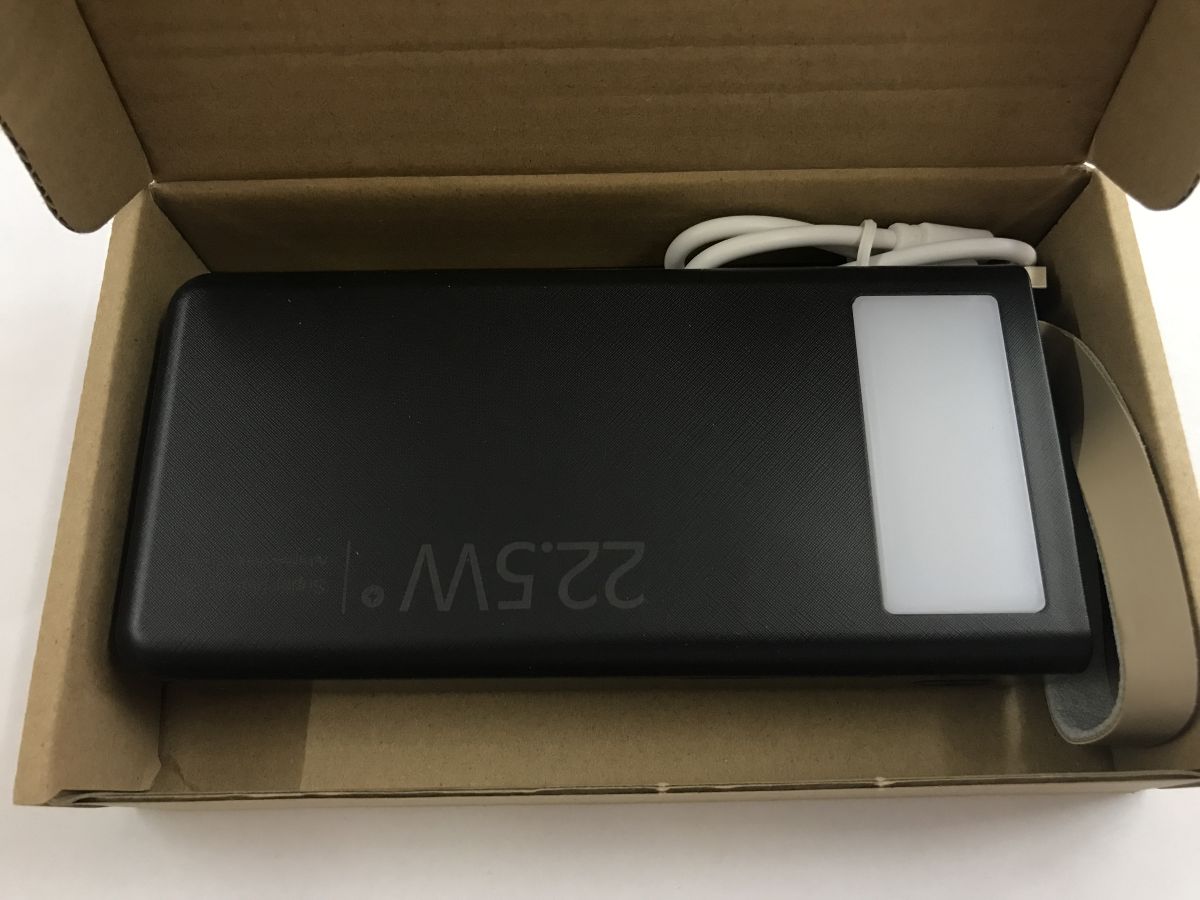
The device arrives in a very simple, almost plain cardboard box, with nothing but a label stuck on it. Even at first glance, it’s clear that this is a typical Chinese ‘no-name’ product. Inside, apart from the power bank itself, there is a short, white USB cable. The device itself is made of matt plastic, and on the side there is a practical carrying strap and a fairly large LED light panel that doubles as a torch.
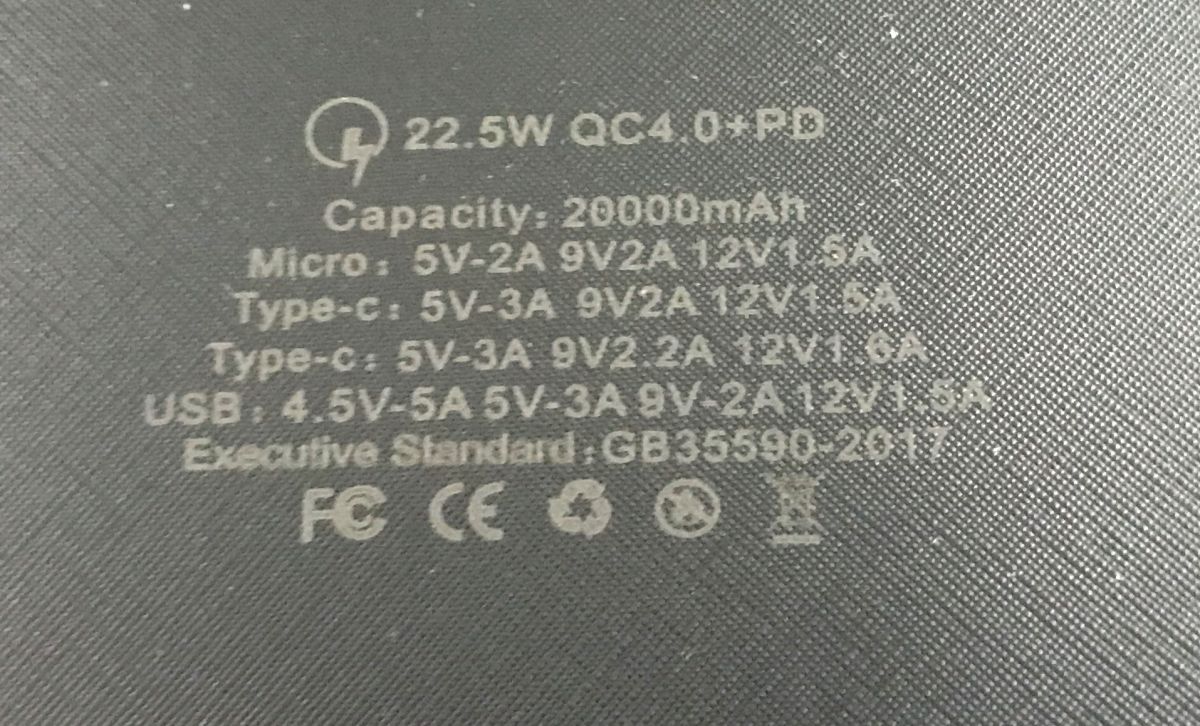
On the underside of the casing, you’ll find the full port specifications, supported voltages and the impressive-sounding “QC4.0+PD” printed. The GB35590-2017 standard is also marked there.
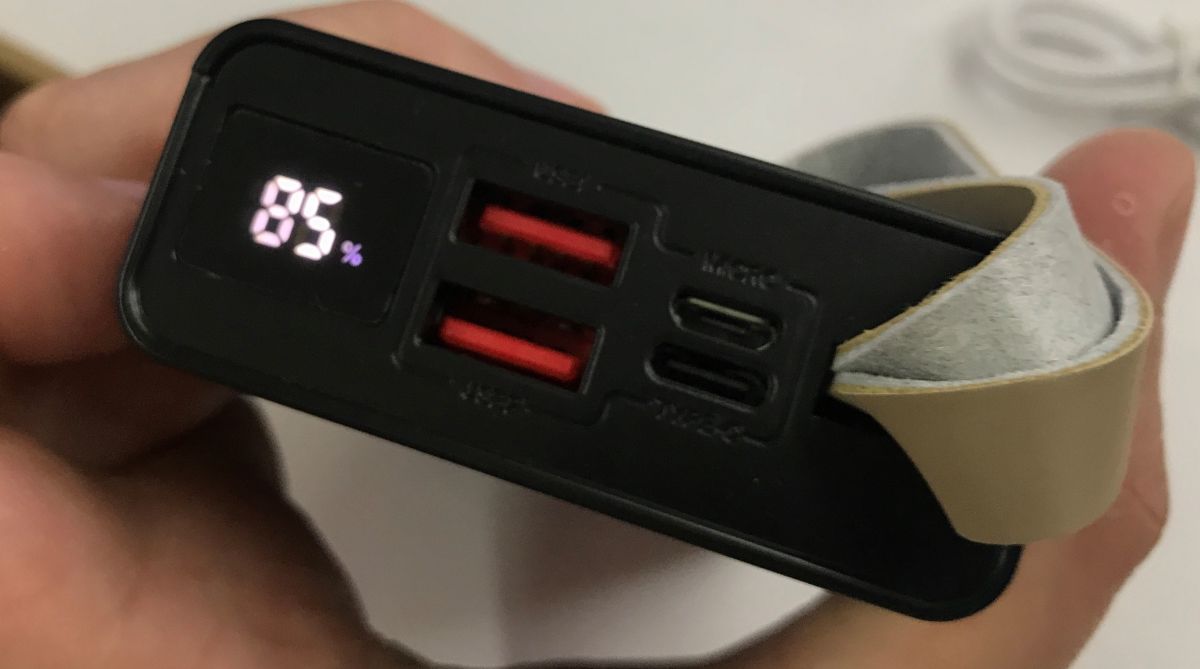
On the front, next to the set of ports (two red USB-A output ports, one MicroUSB input port and one universal Type-C port), there is a clear digital percentage display showing the current battery charge level.
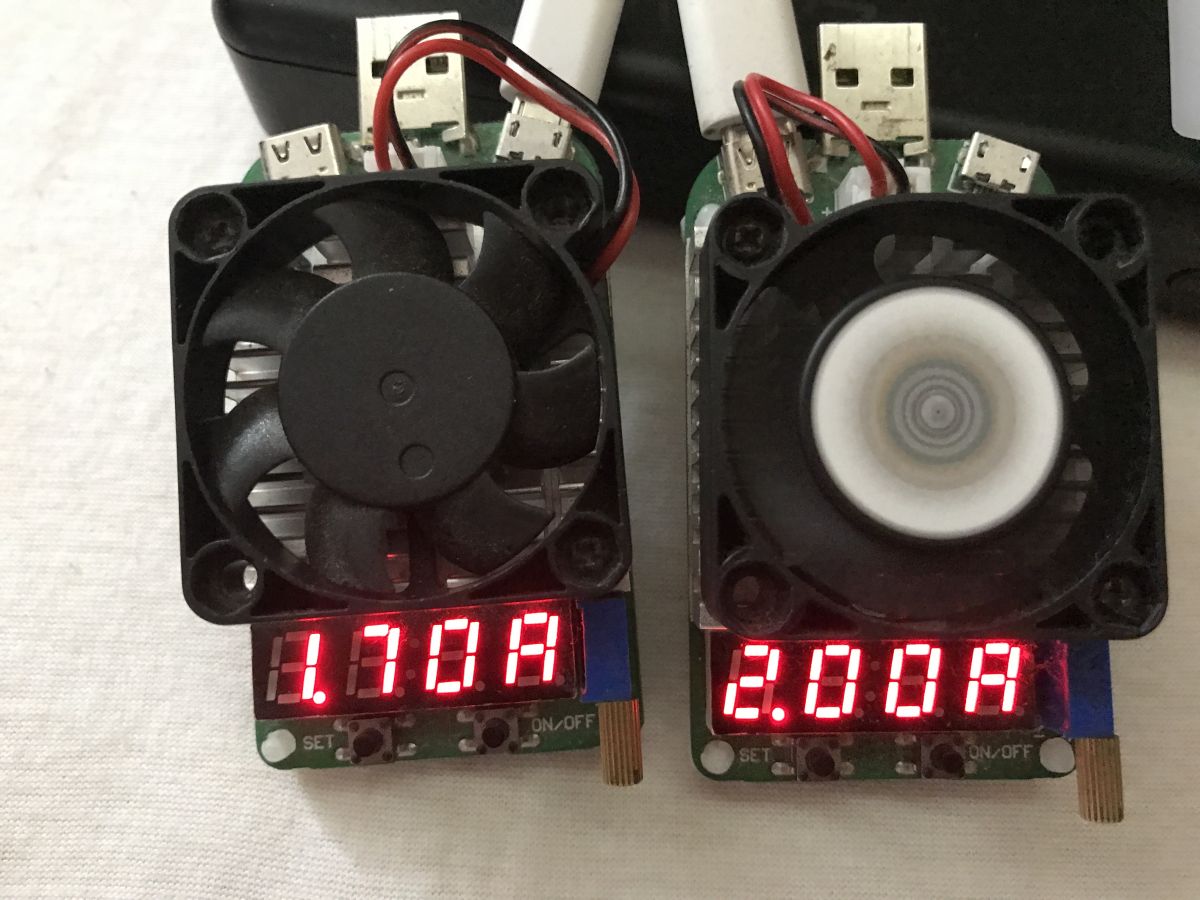
It can deliver up to 3.7 A at 5 V:
QC kicks in and delivers over 1.5 A, although I didn’t have a decent meter to hand to check this:
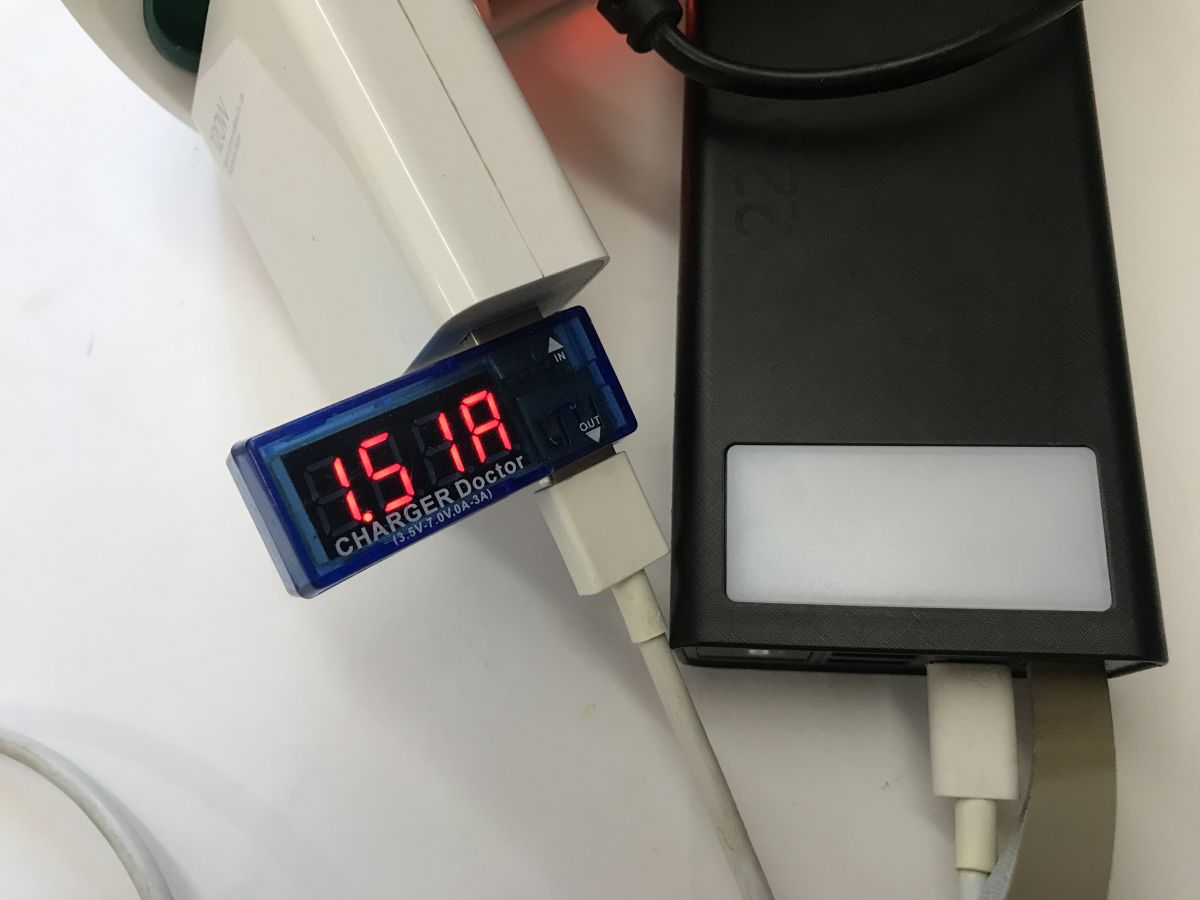
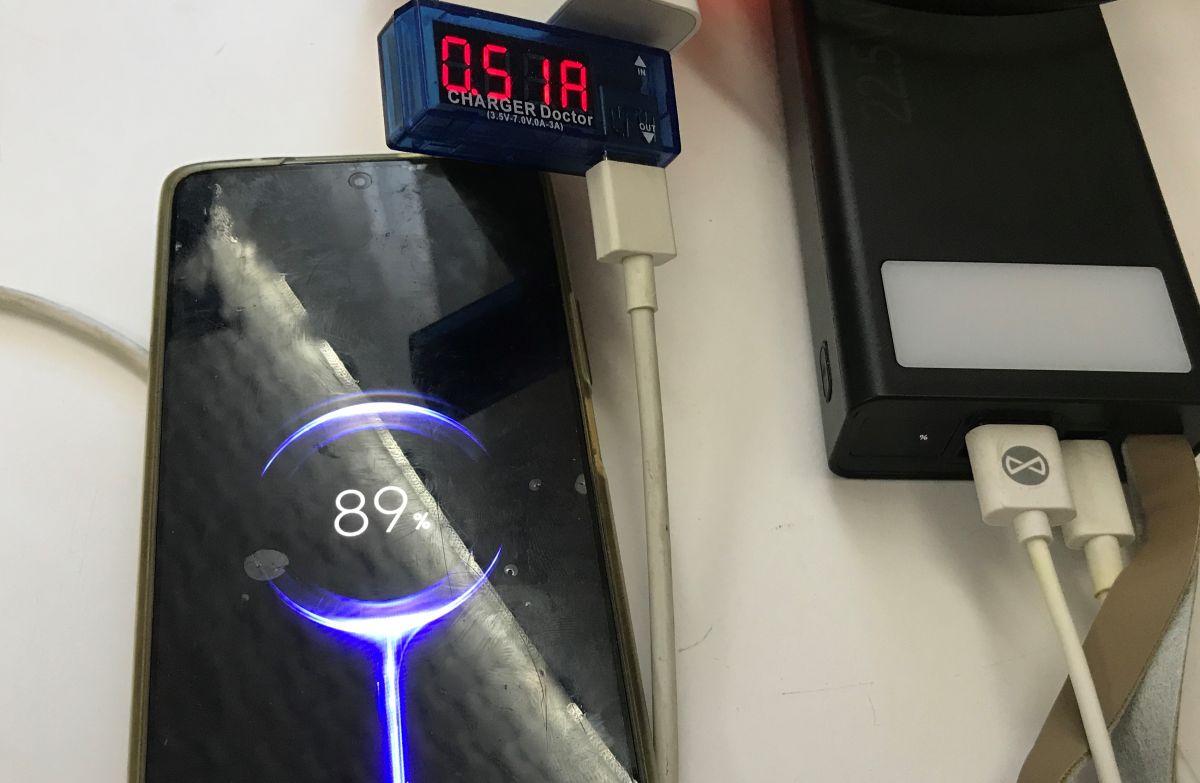
QC switches off when I connect the power supply to the power bank.
I checked the capacity several times, additionally measuring how many mAh are drawn whilst charging the cells.
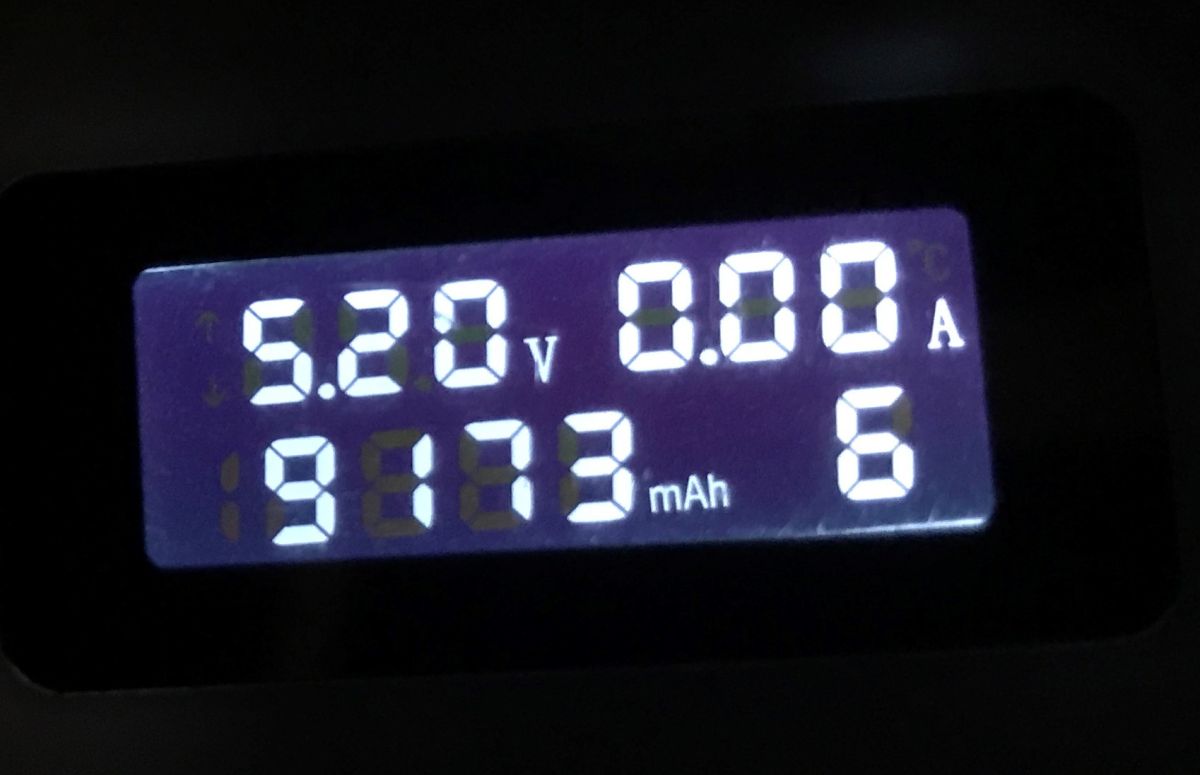
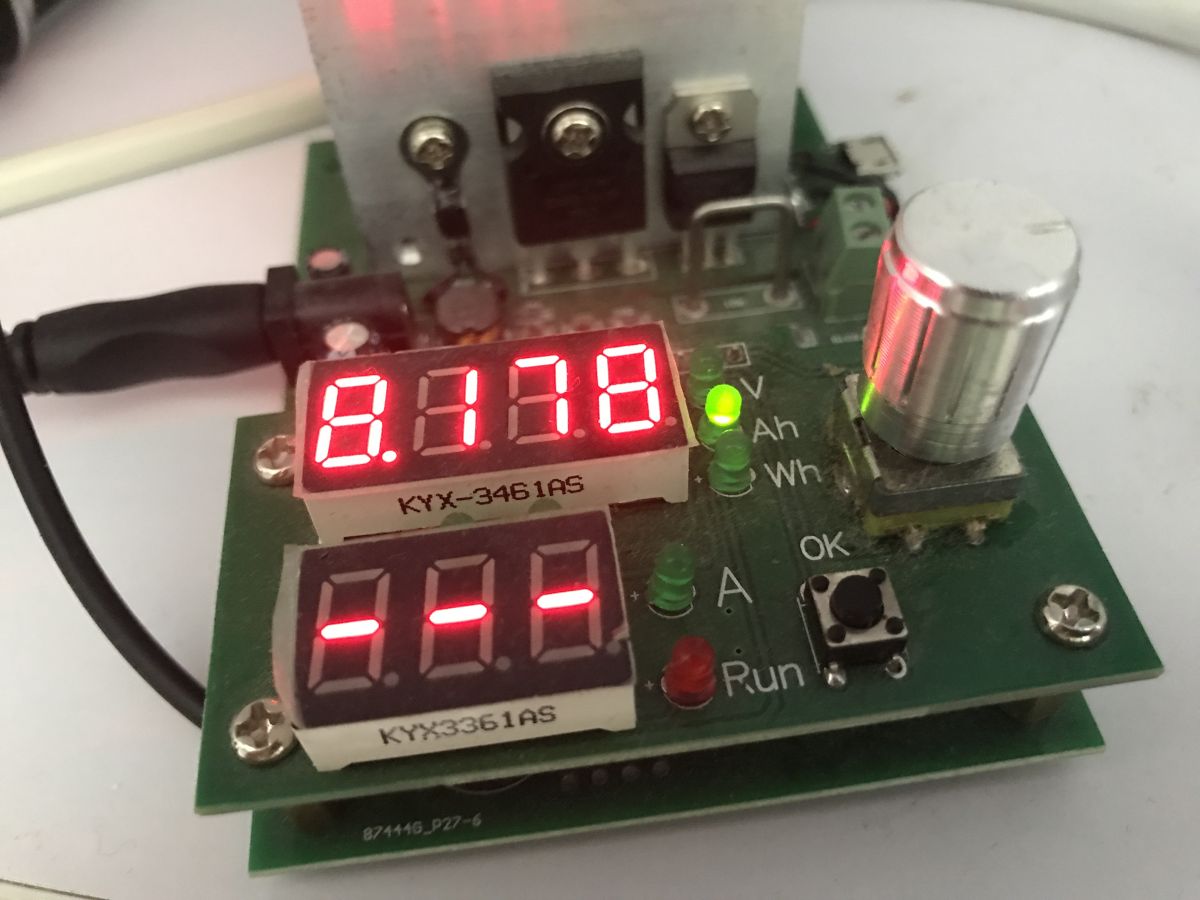
The figures are indisputable. 8,178 mAh at 5V gives us, taking into account my conversion factor from previous threads , this gives approximately 8.178/0.65 Ah = 12.5 Ah per cell.
PPXJ20 - Baseus Star-Lord 20,000 mAh 22.5 W with QC for 80 zł
The Baseus PPXJ080001 (Star-Lord) model offers a rated capacity of 20,000 mAh with a maximum charging power of 22.5 W. There are a total of three output ports available, and the connectors include a universal Type-C socket, a standard USB-A port and a MicroUSB port.
It was a no-name product before, but now it’s a more well-known brand. Will it be any different from our previous tests? The price is very similar… let’s unbox it and have a look.
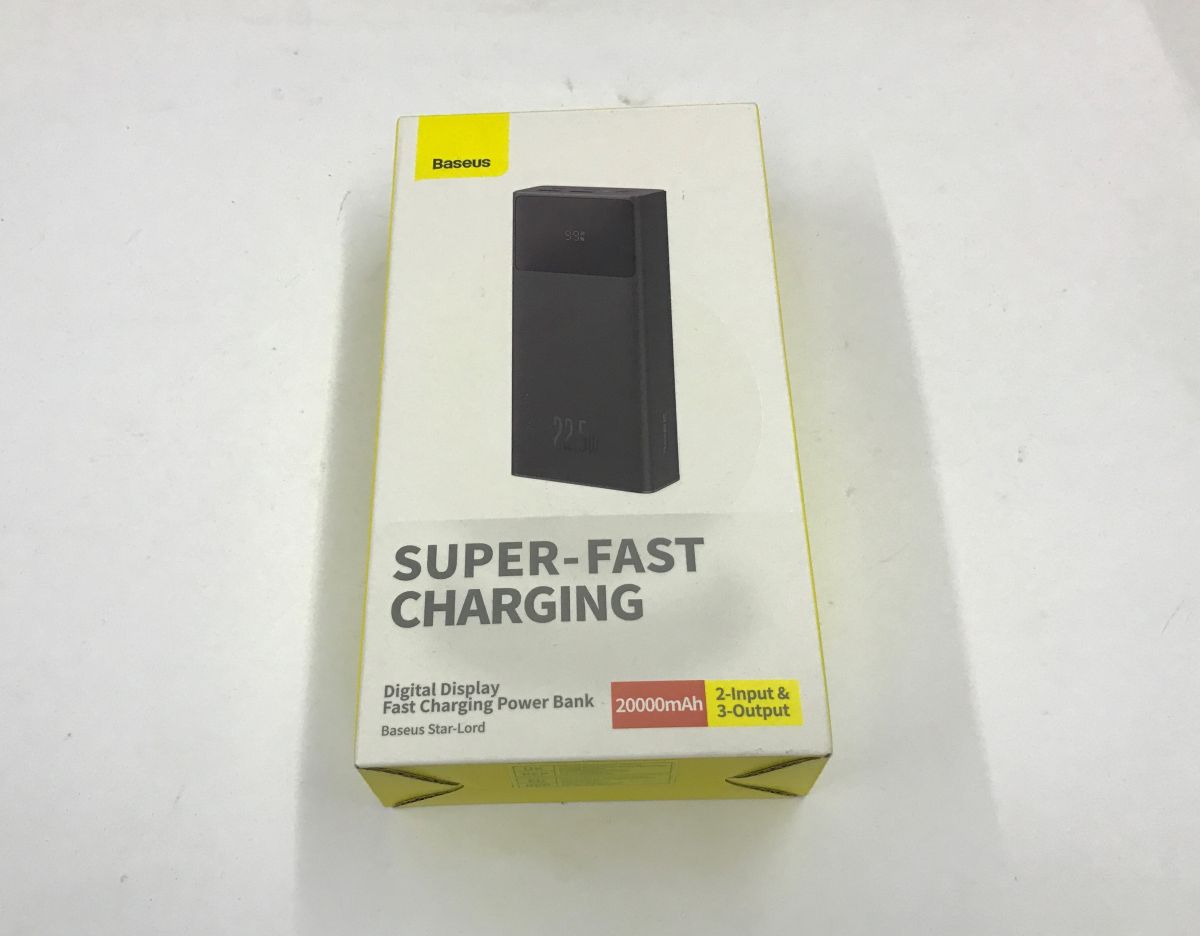
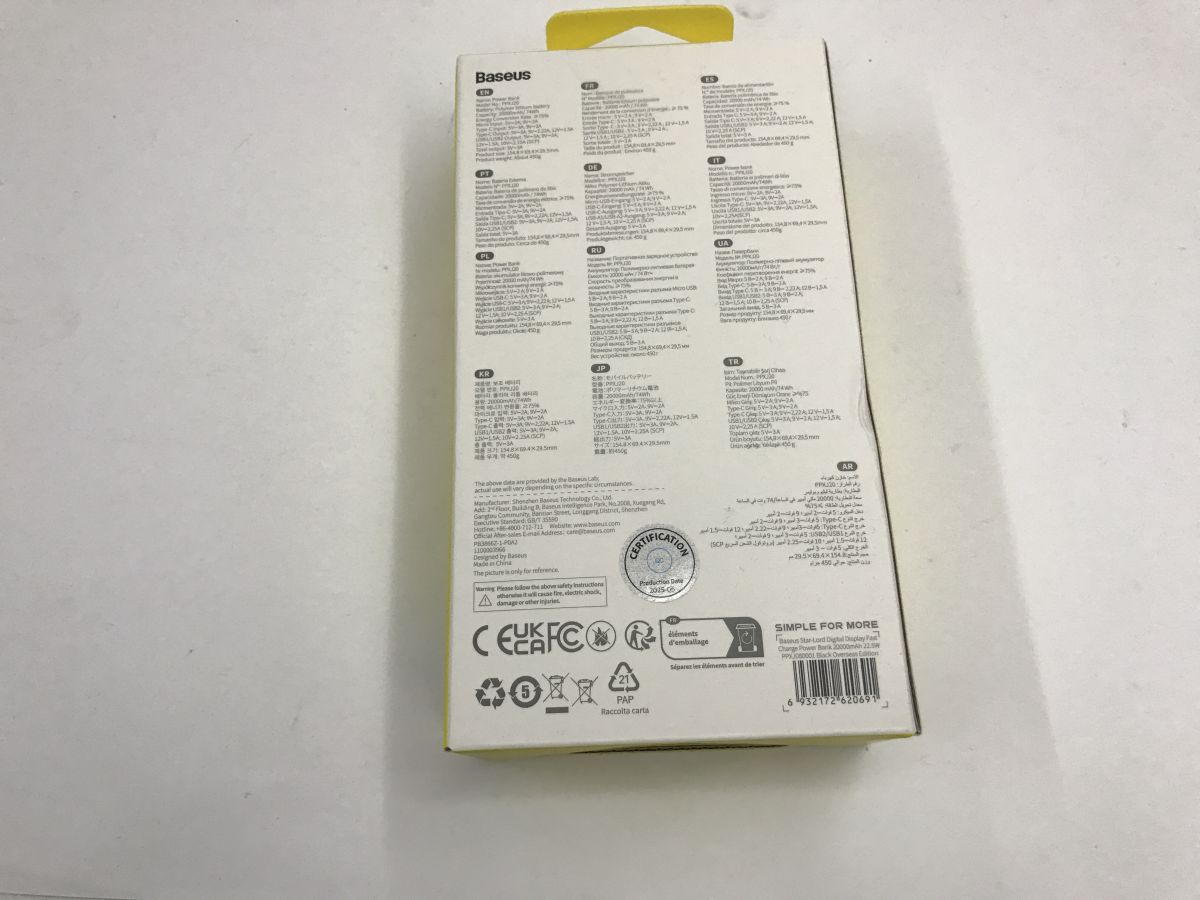
The packaging itself looks more trustworthy; at least it states the model name – Star Lord. If there are any issues, it’ll be easier to post a negative review on the forum.
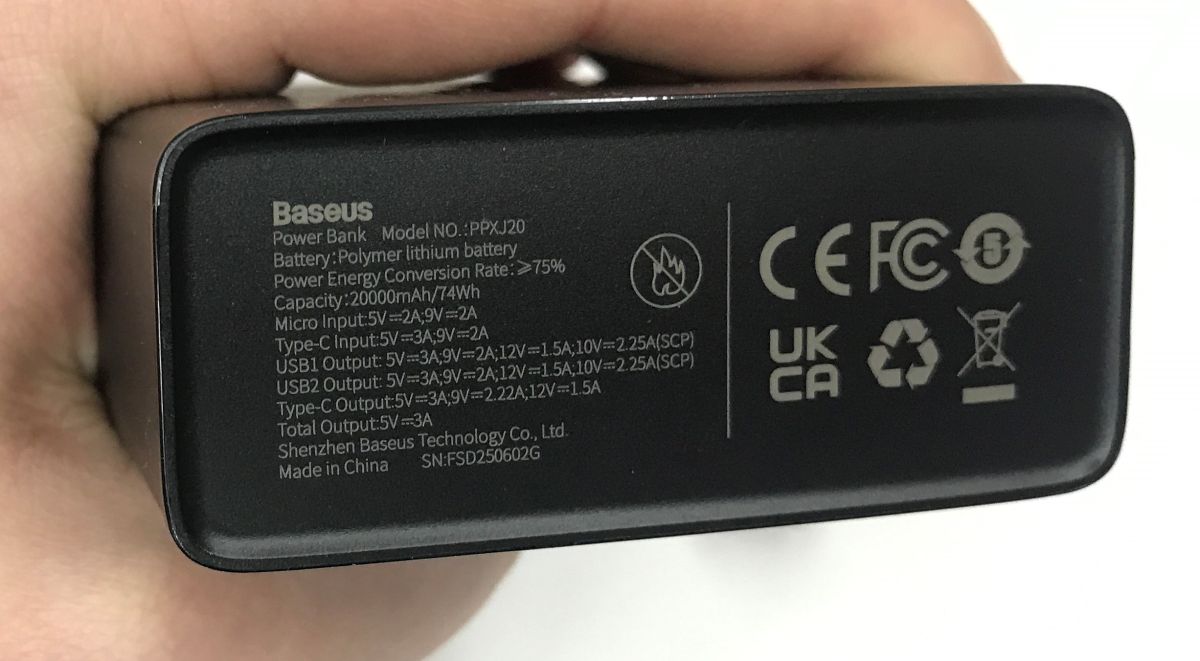
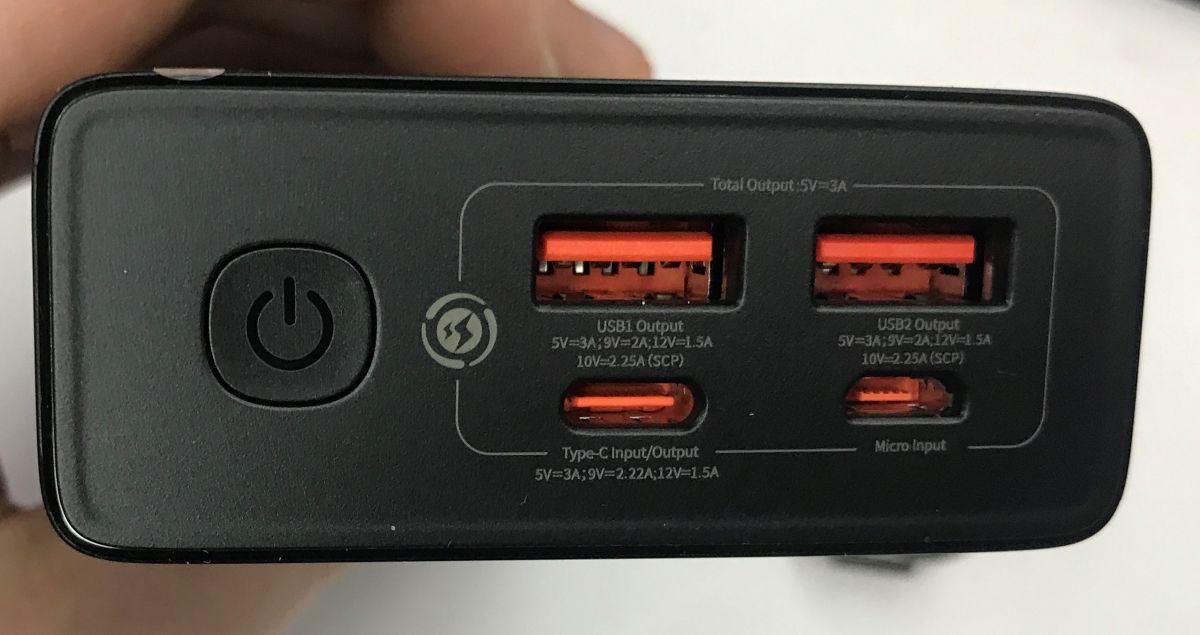
It looks more like a branded product here too. The text beneath the ports is clear, and the model name is printed on the casing, although here it’s slightly different – PPXJ20.
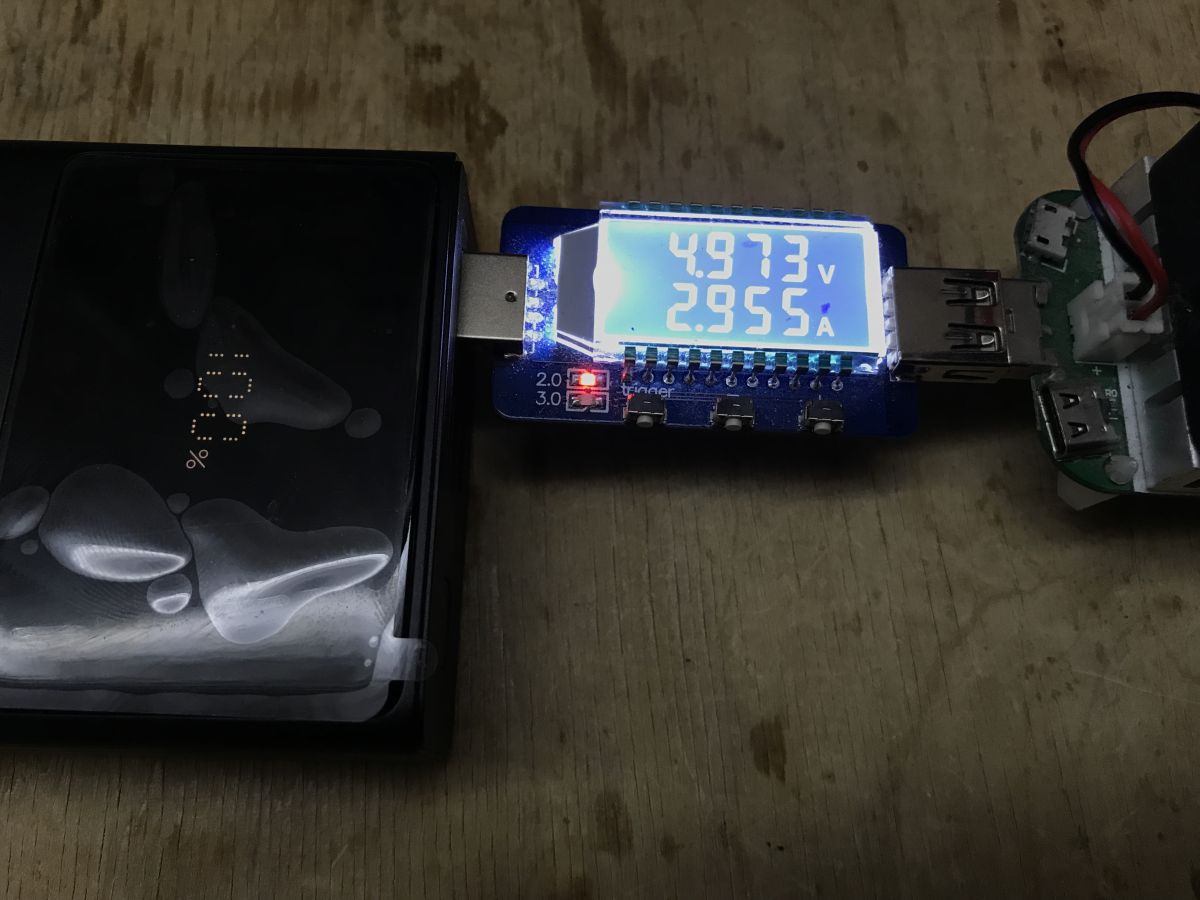
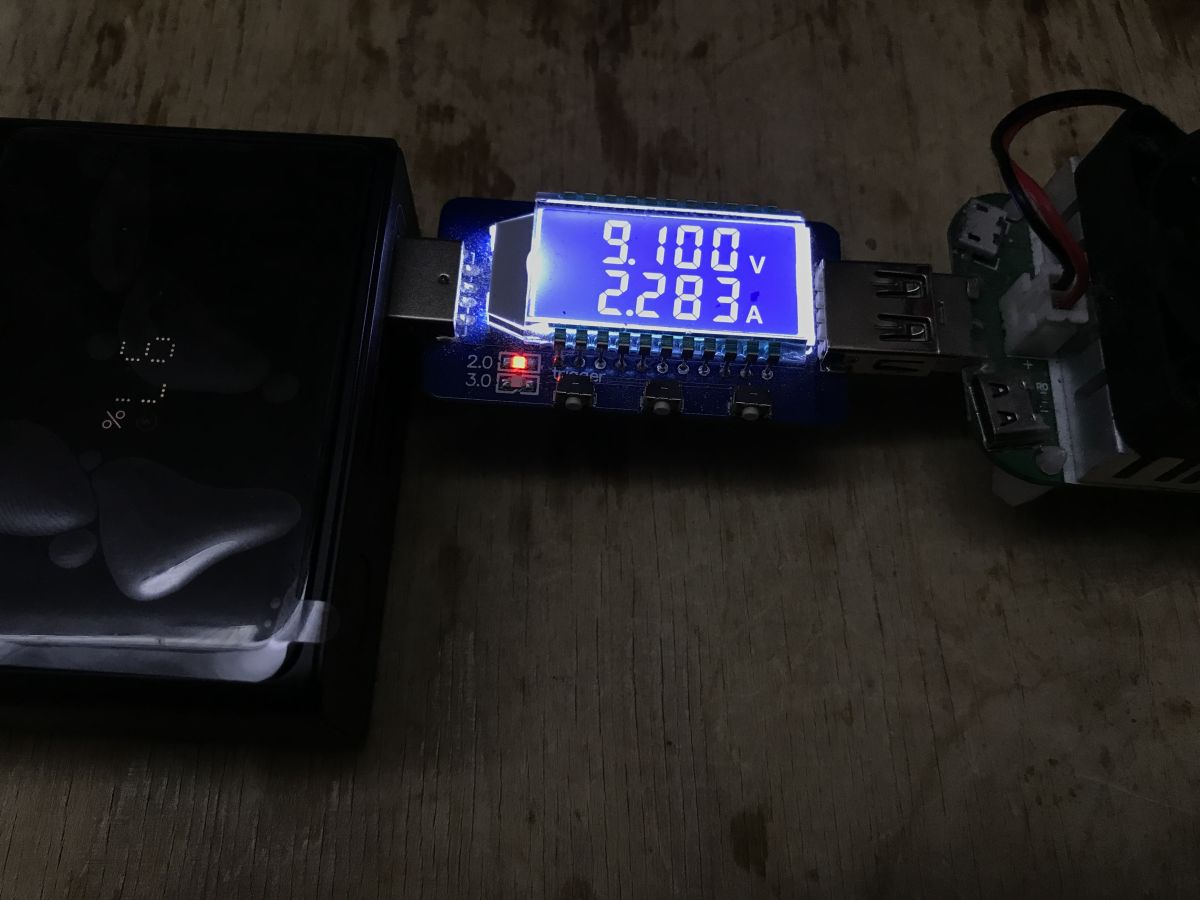
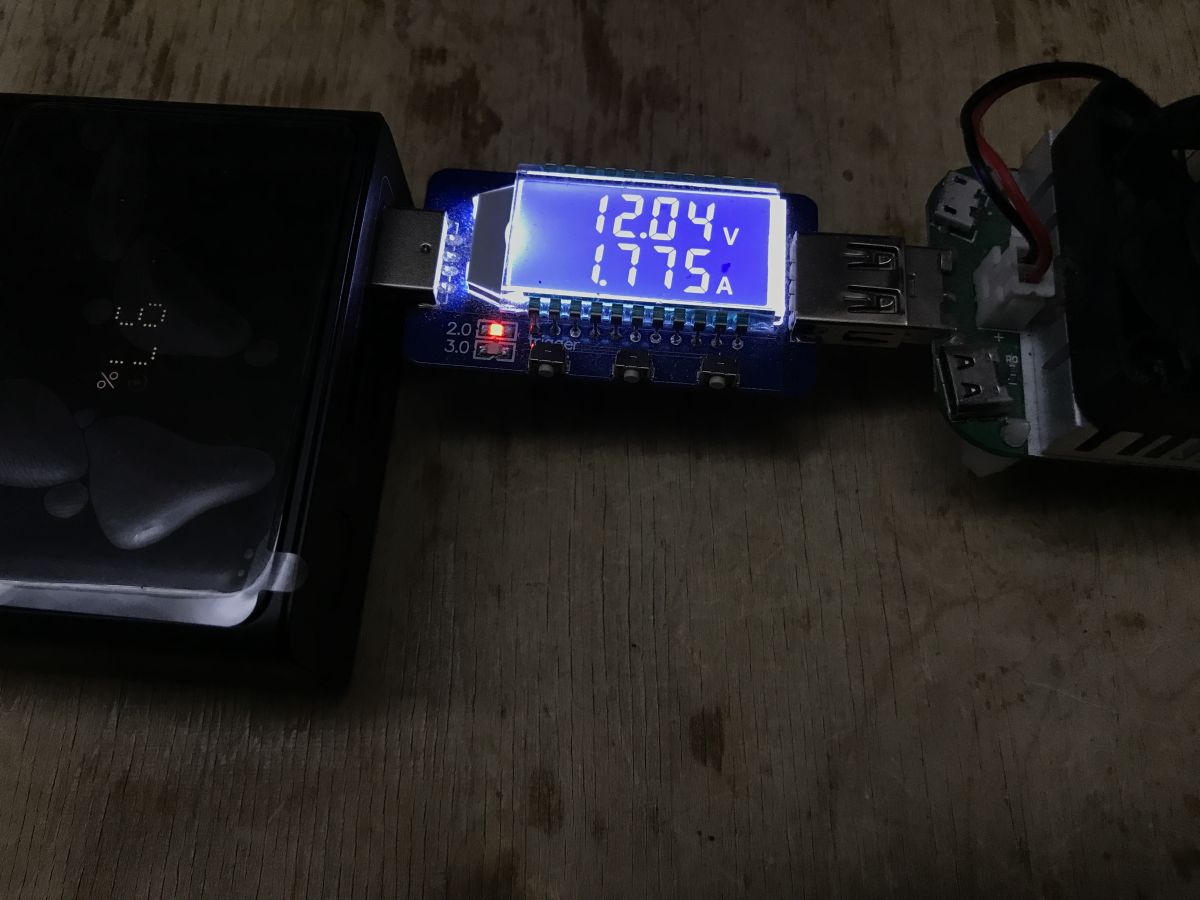
I started with current performance tests. At 5 V, it can consistently draw almost 3 A, so essentially it’s perfectly fine.
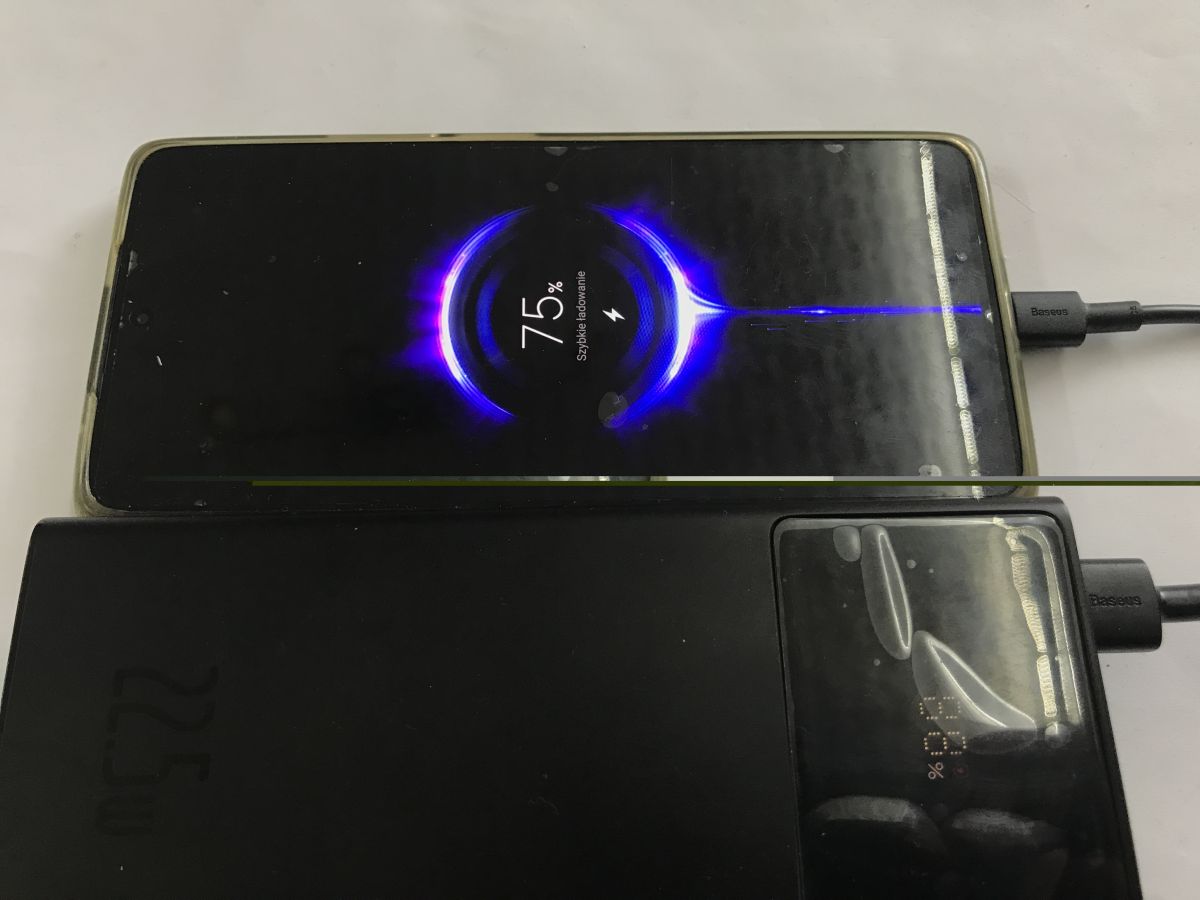
The phone activates QC correctly.
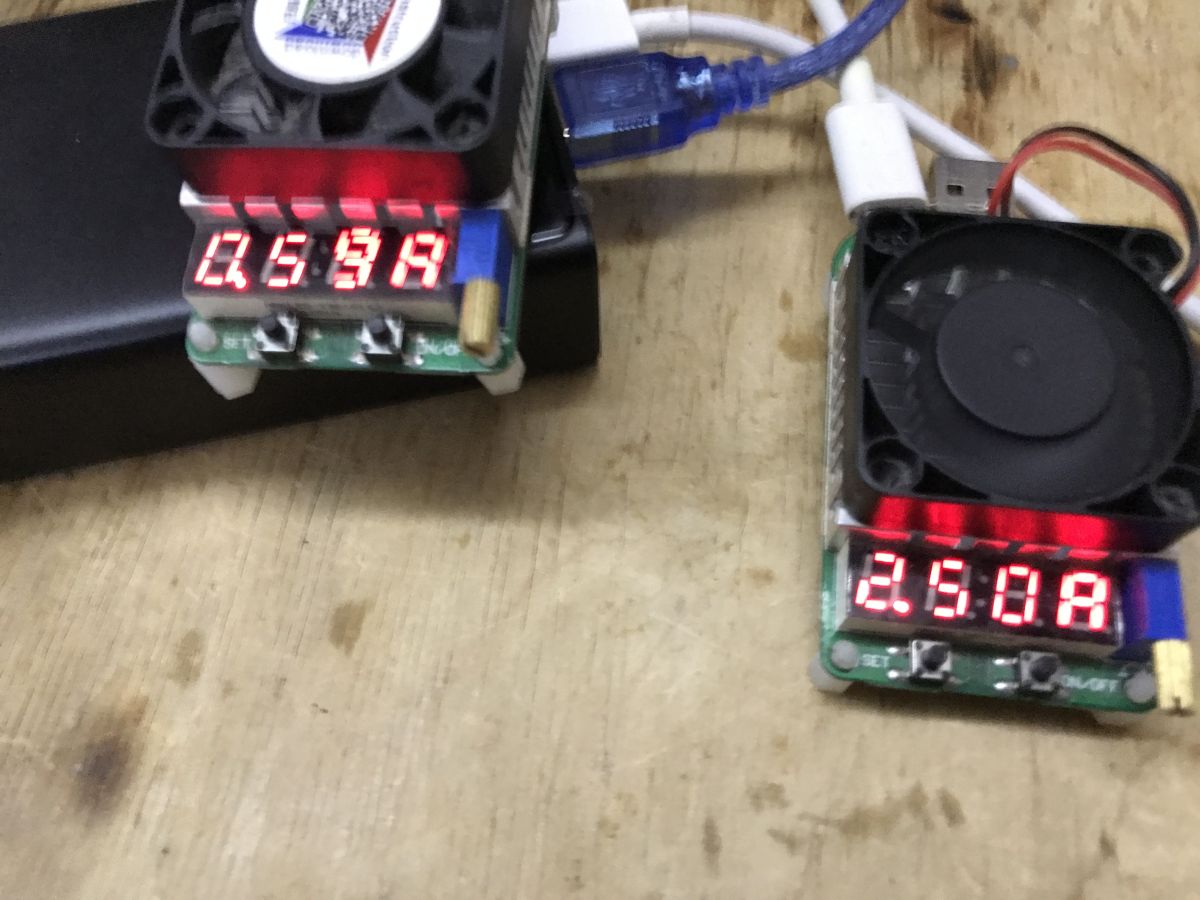
The specified maximum current is shared between the ports. It cannot be split between the two ports to draw more current.
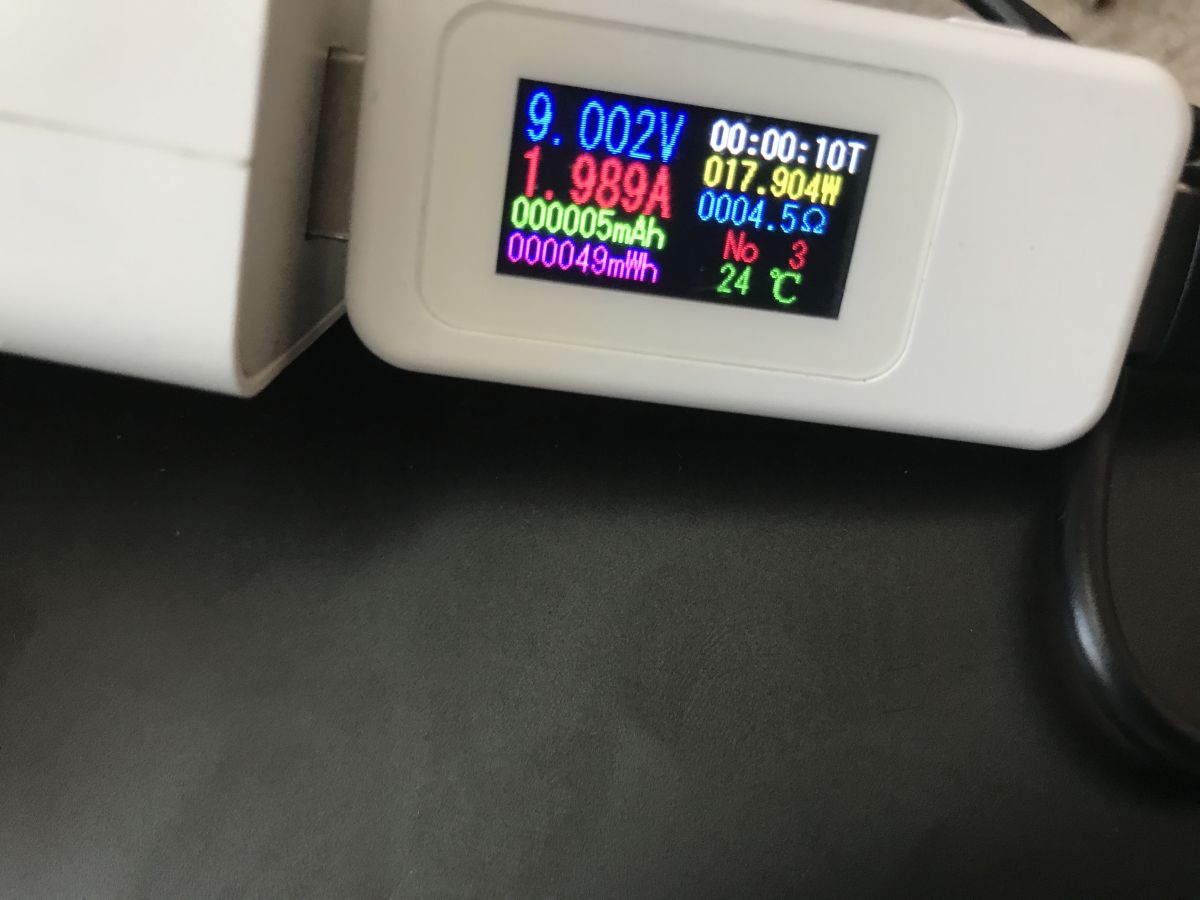
A power bank connected to a suitable charger is also capable of drawing a higher voltage; at 9 V, it can draw as much as 2 A, giving 18 W of charging power.
It’s time to move on to the actual capacity test. Again, I carried out the test several times to rule out measurement errors or undercharged cells.
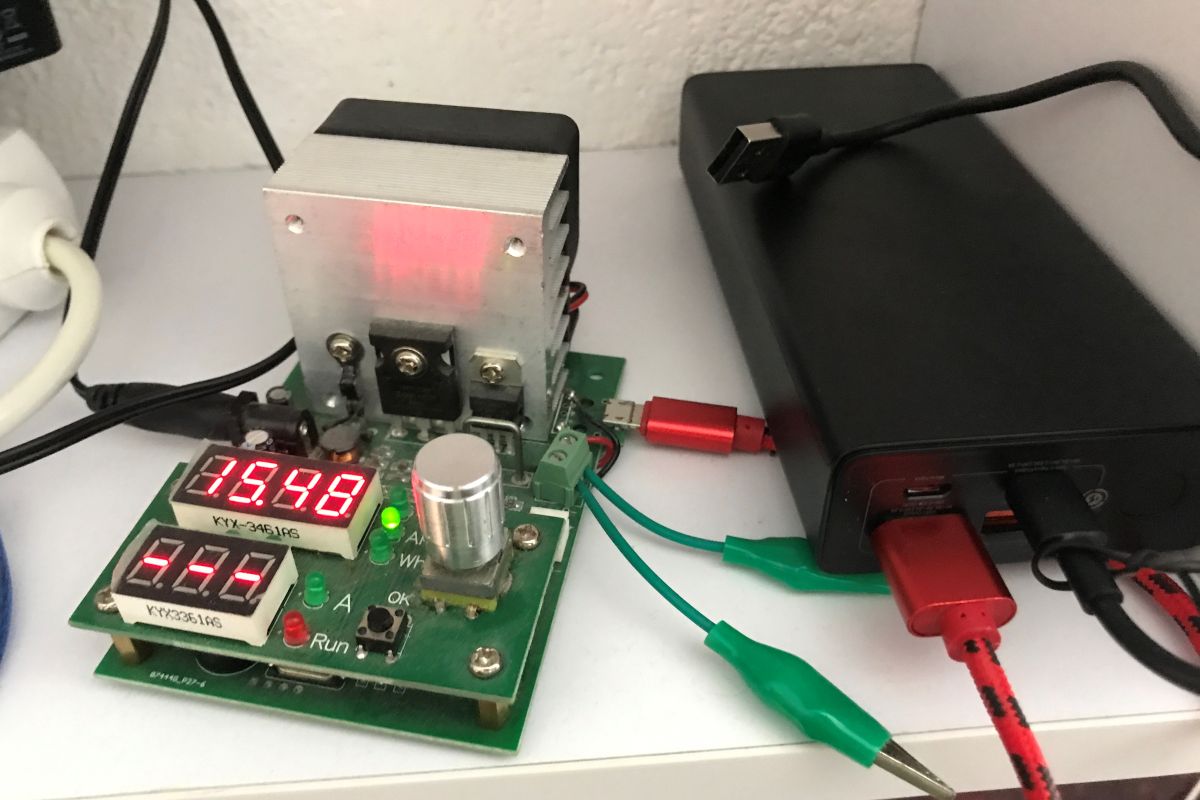
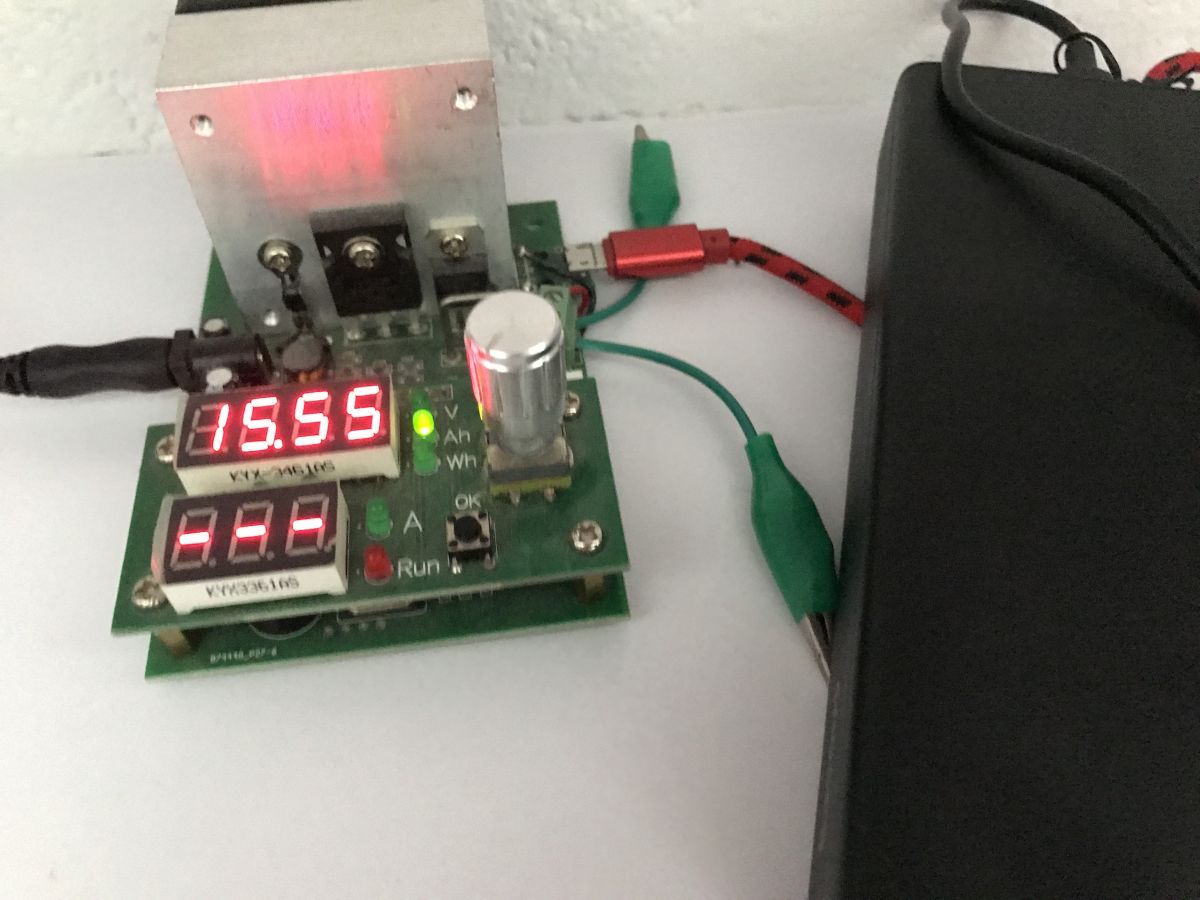
Around 15.5 Ah, which, when calculated using the same formula (15.5 / 0.65), gives us a good 23.8 Ah per cell – which actually exceeds the capacity stated in the specifications. It seems, however, that the brand does matter; it’s better to trust something that has a specific model name and manufacturer, rather than a completely no-name product.
BS-30KP365 - 30,000 mAh Baseus 65W
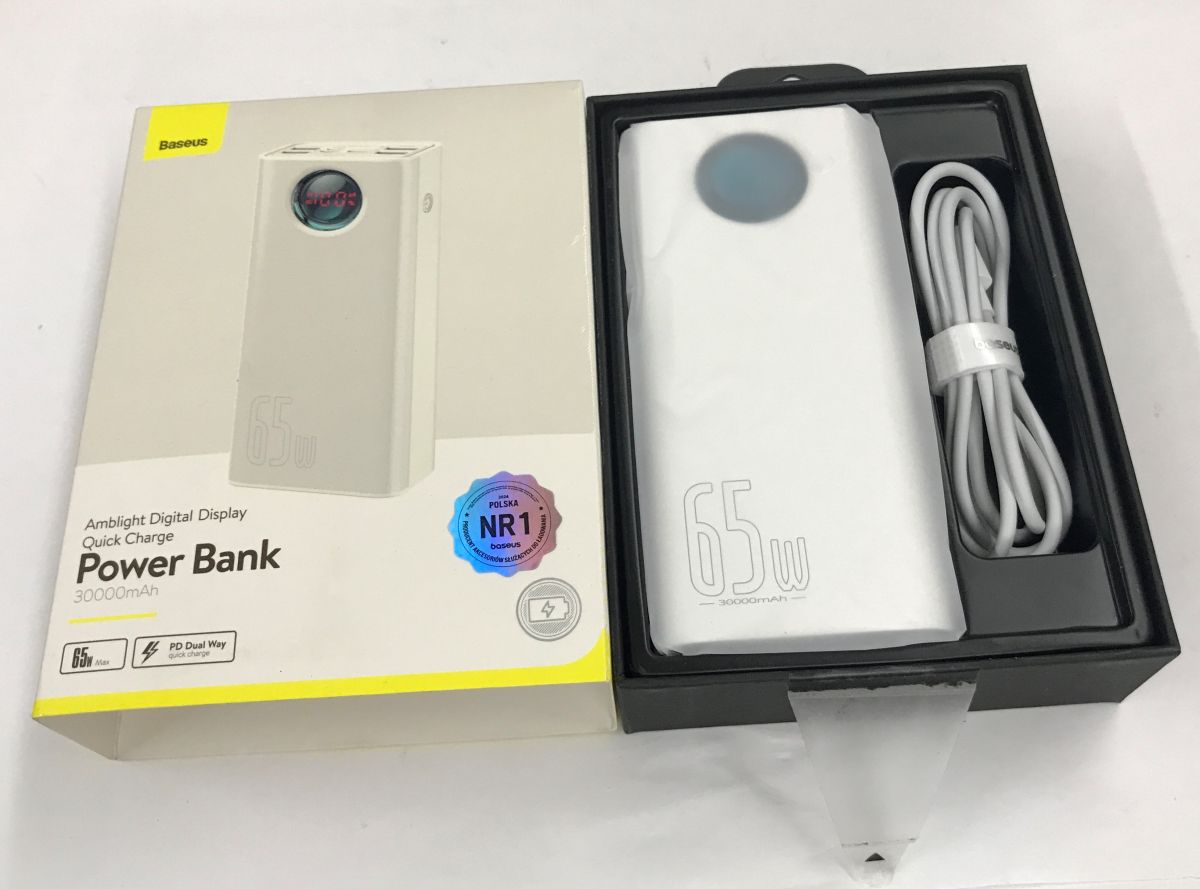
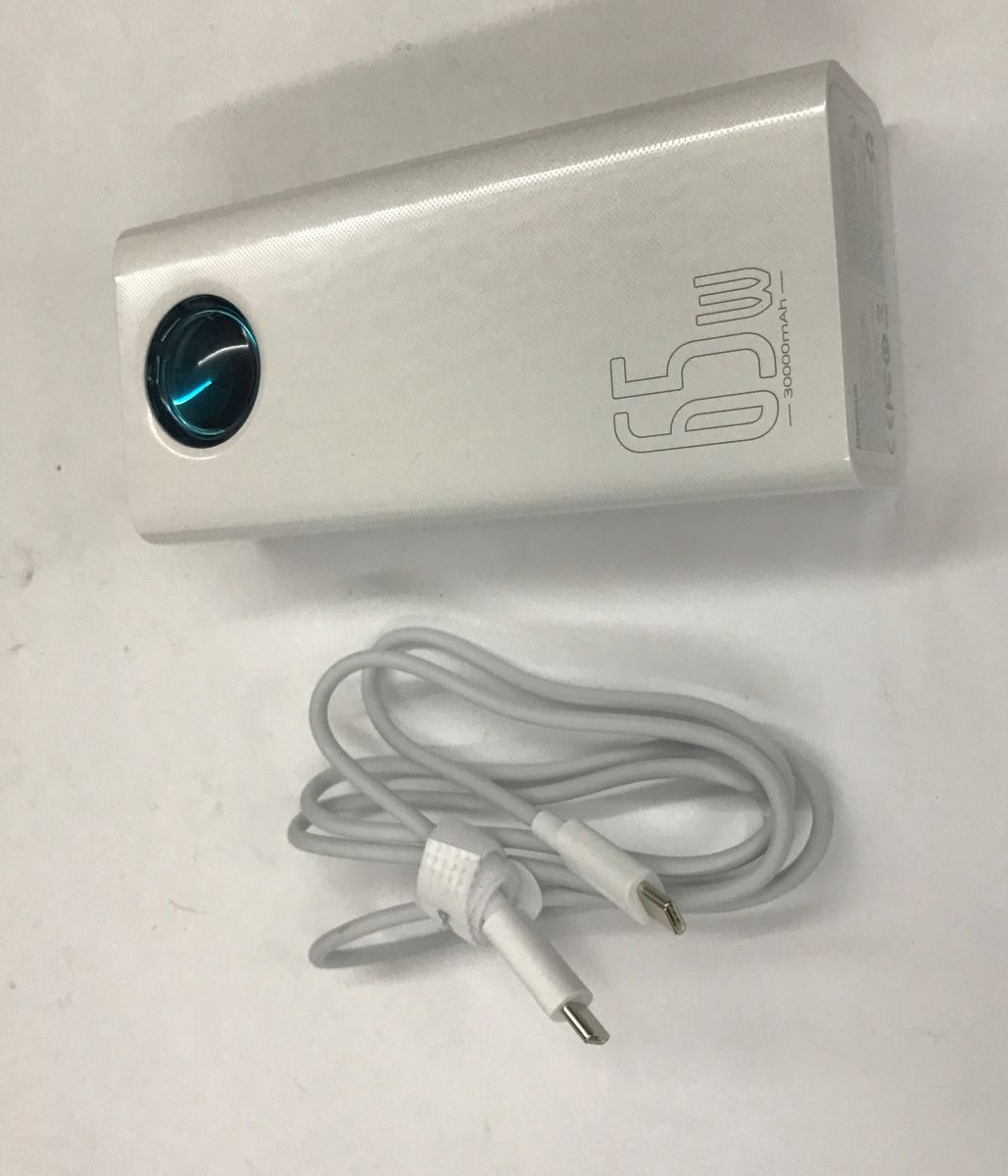
The third, more promising model is the Baseus Amblight (BS-30KP365) with a capacity of as much as 30,000 mAh. It offers an impressive total power output of 65 W and a very wide range of ports, including four USB-A outputs (one of which is QC-compatible up to 20 V and 1.5 A), a bidirectional Type-C port (supporting 20 V and 3.25 A output) and additional charging inputs in the form of MicroUSB and Lightning. The box also includes a dedicated Type-C to Type-C cable supporting 100 W (20 V, 5 A), which will make it easier to fully charge this power bank – a process that, according to the manufacturer, takes around 10 hours.
Unfortunately, I don’t currently have a load to fully test the claimed 65 W, but I’ll be able to successfully measure its actual capacity. Let’s start, however, with a quick look at the packaging.
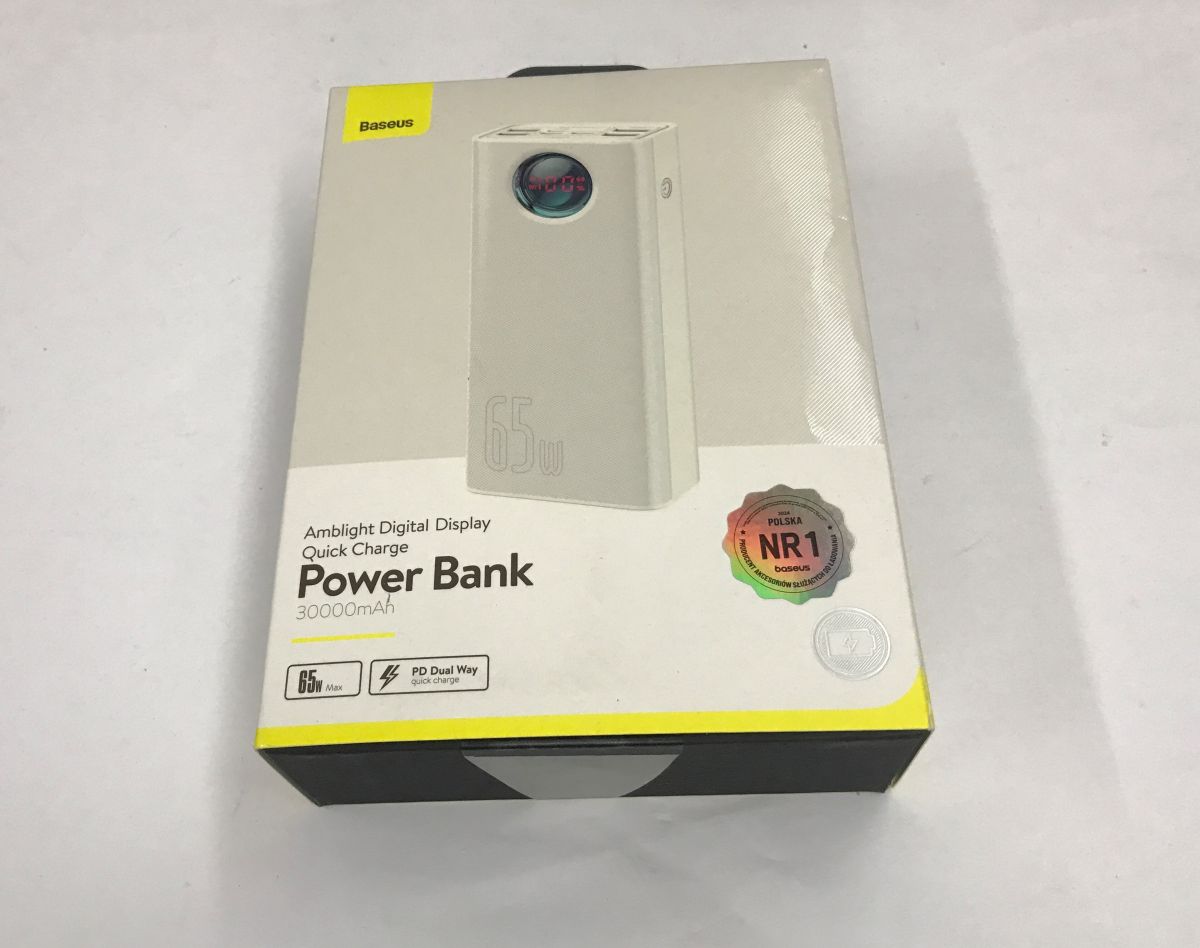
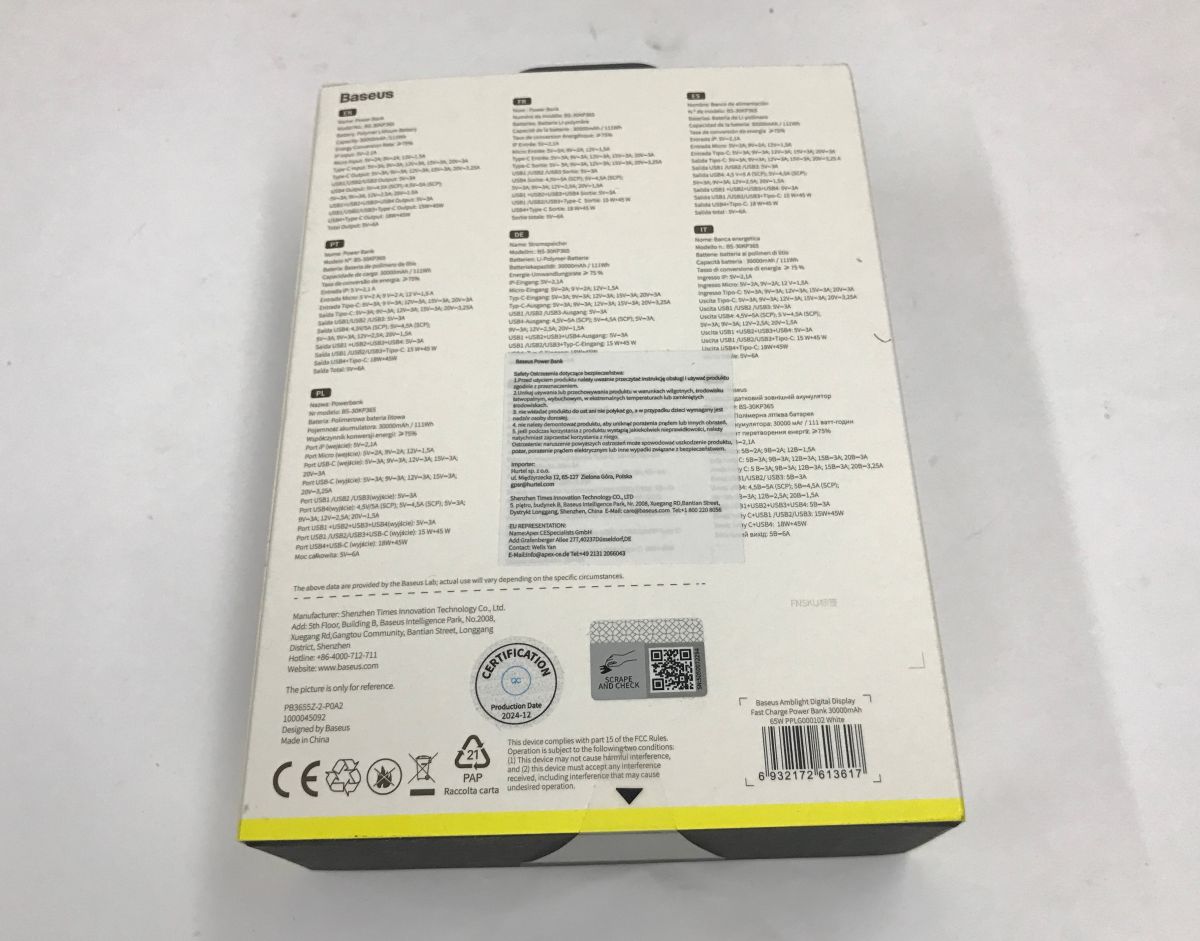
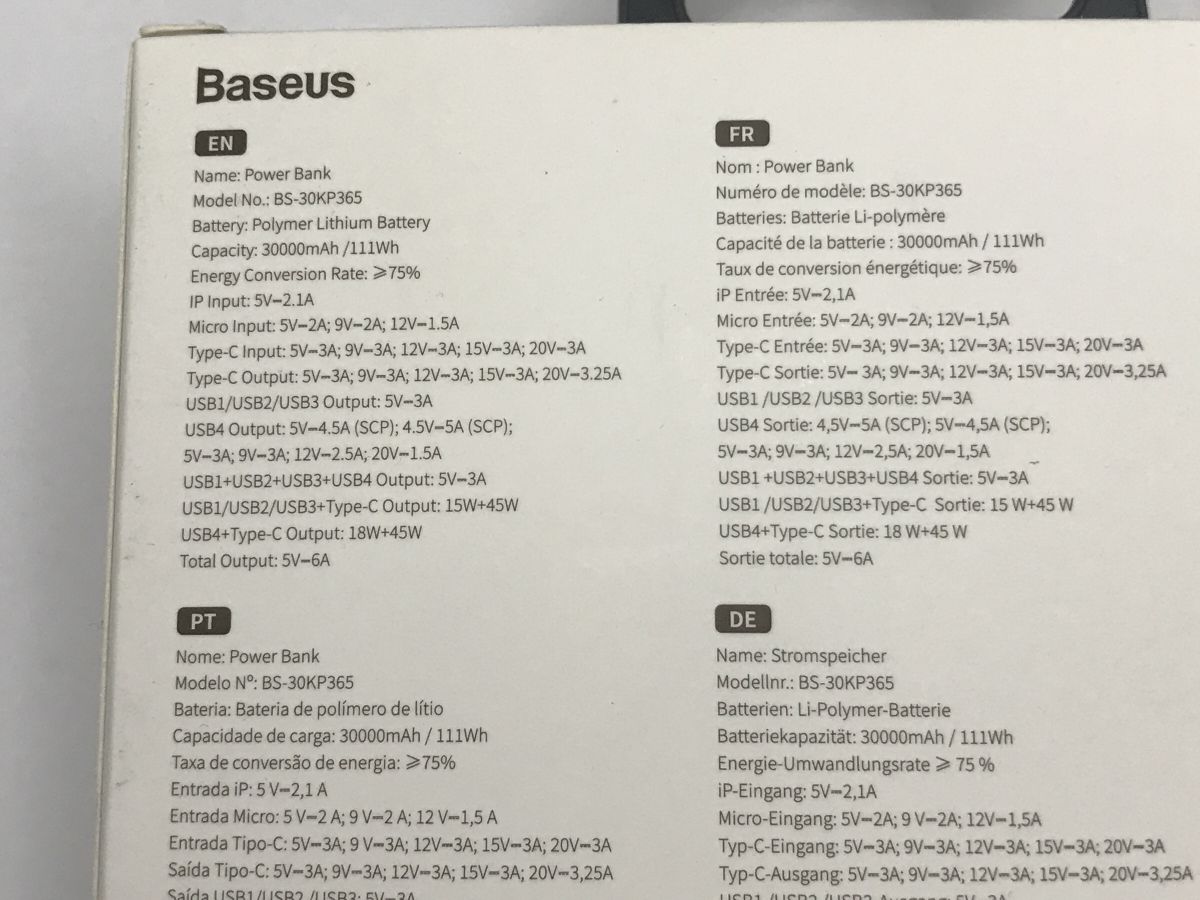
The set includes a cable, and it’s
Port descriptions? Model name? Everything is labelled in detail and clearly.
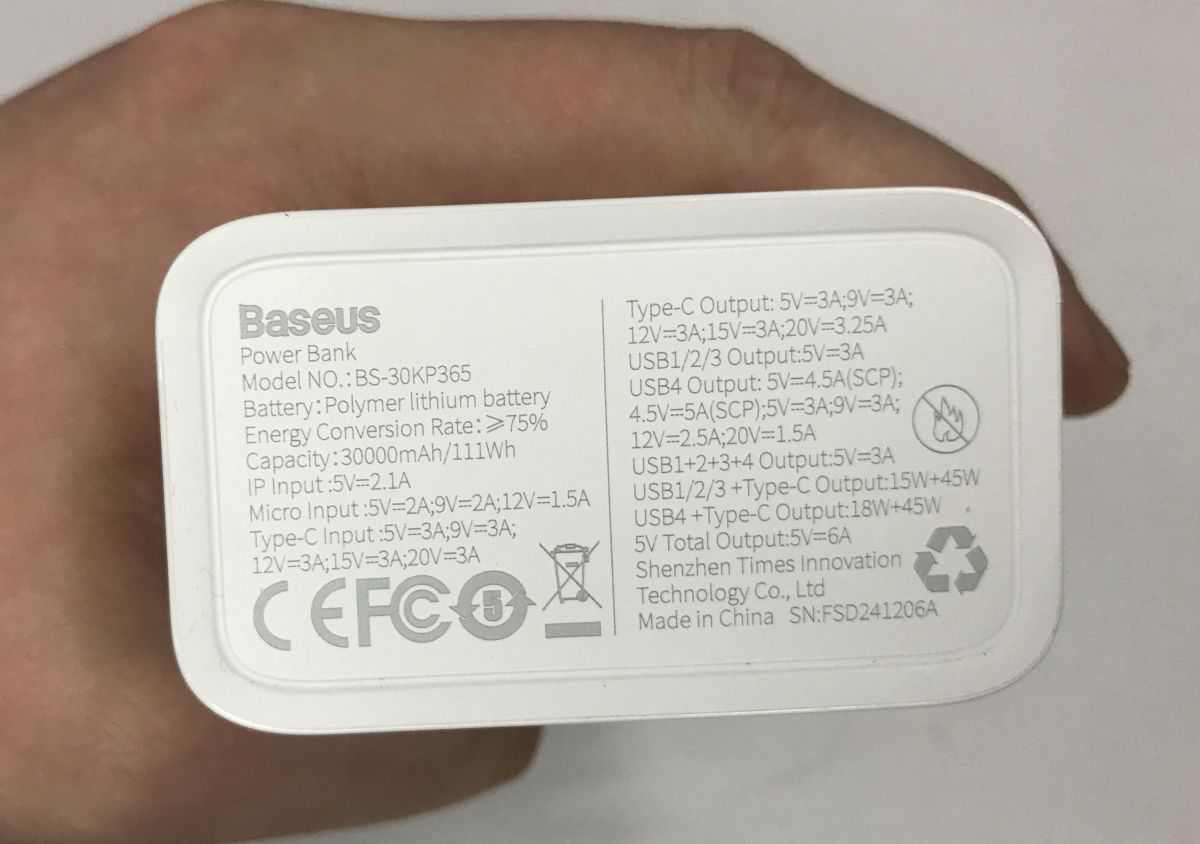
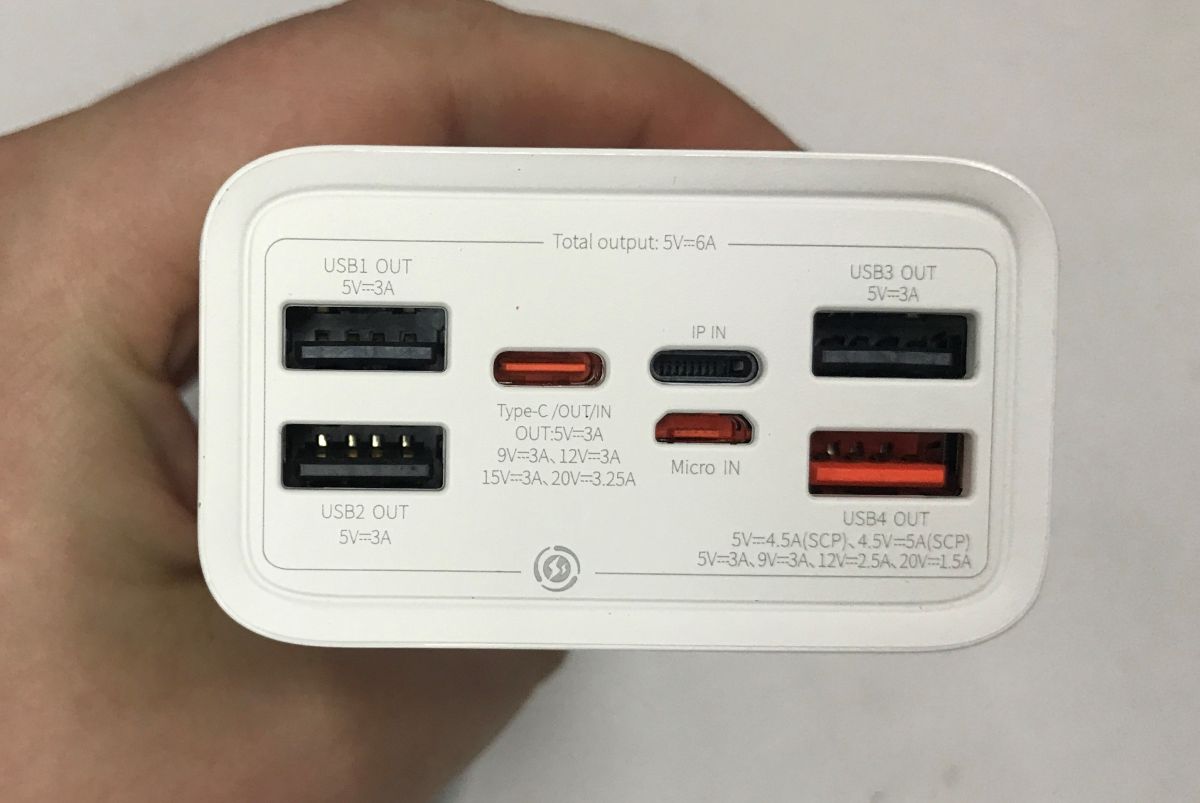
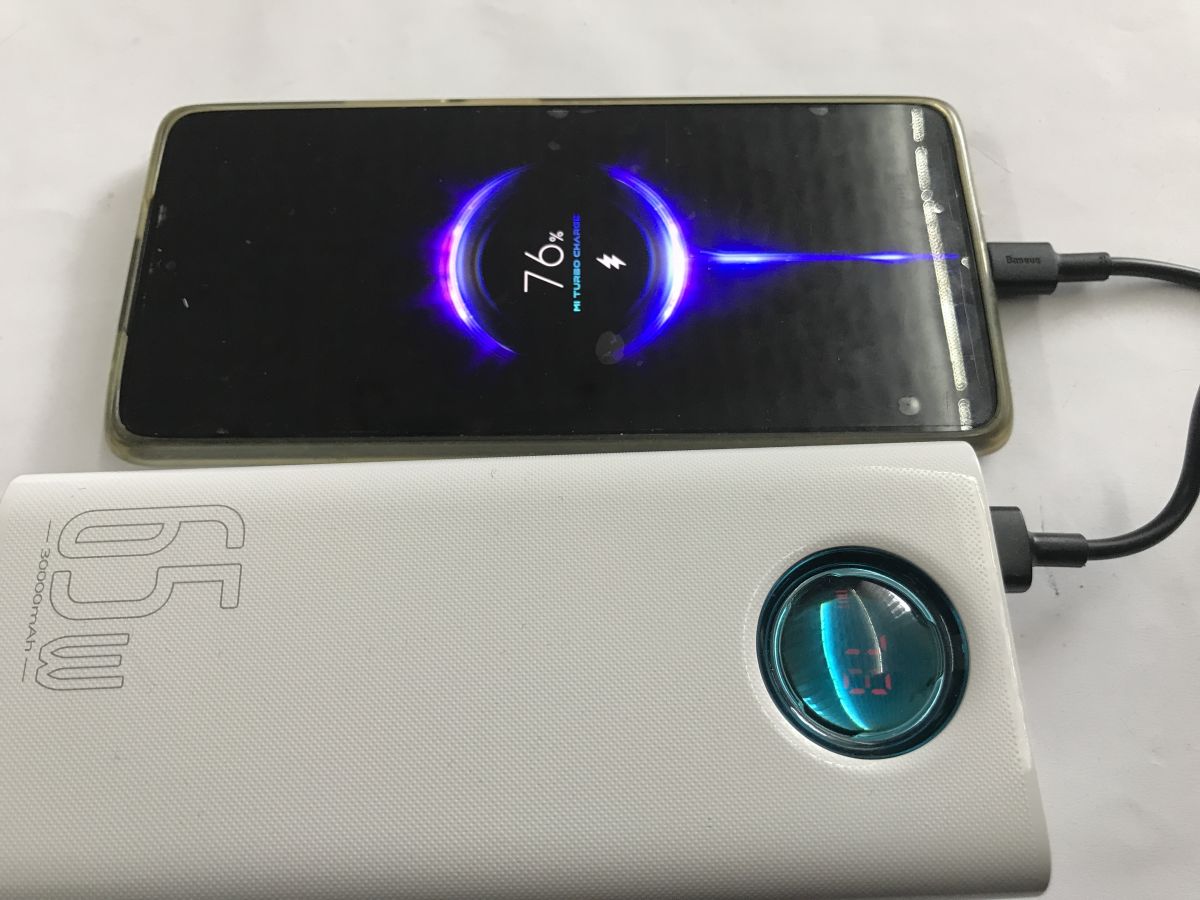
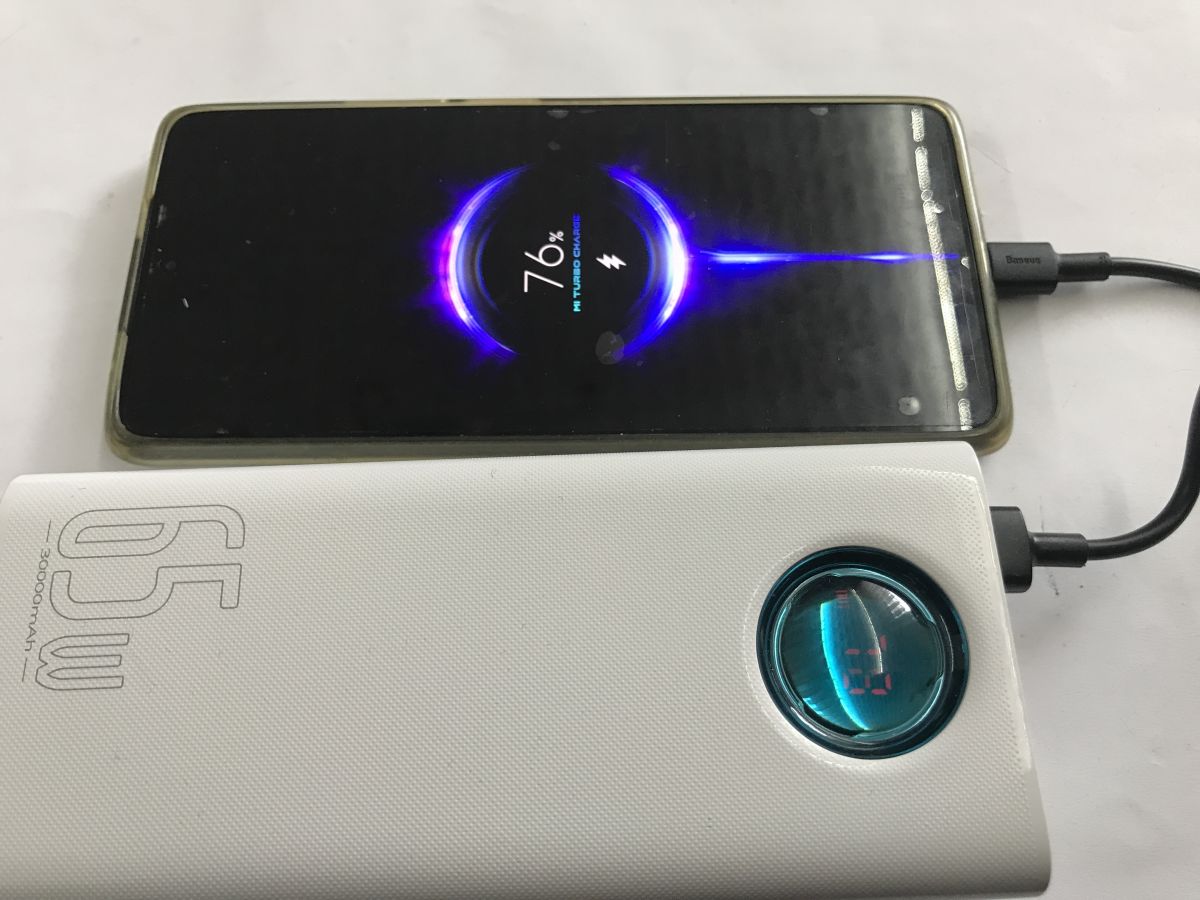
First, something simple – charging my Xiaomi. And here’s the first plus point – it supports not only standard QC, but also the even faster MI Turbo Charge.
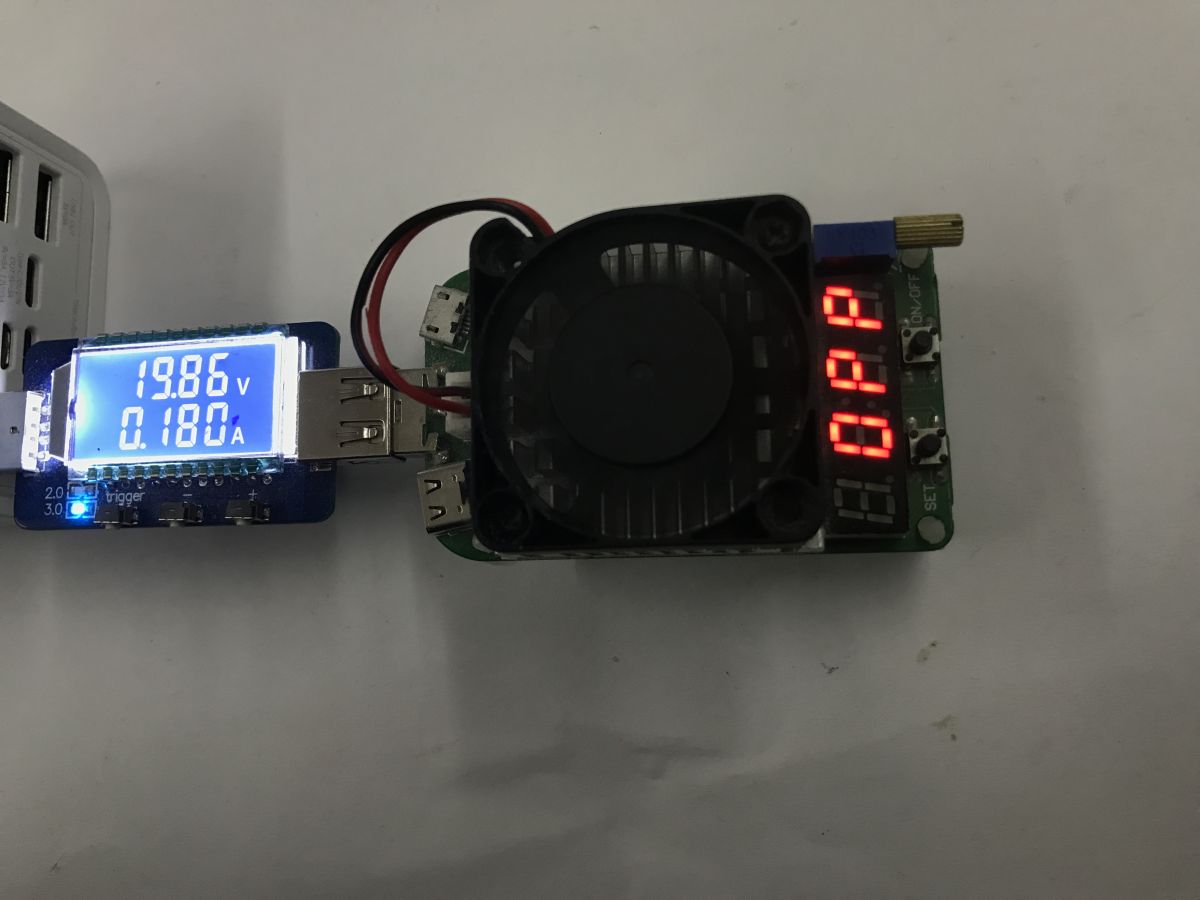
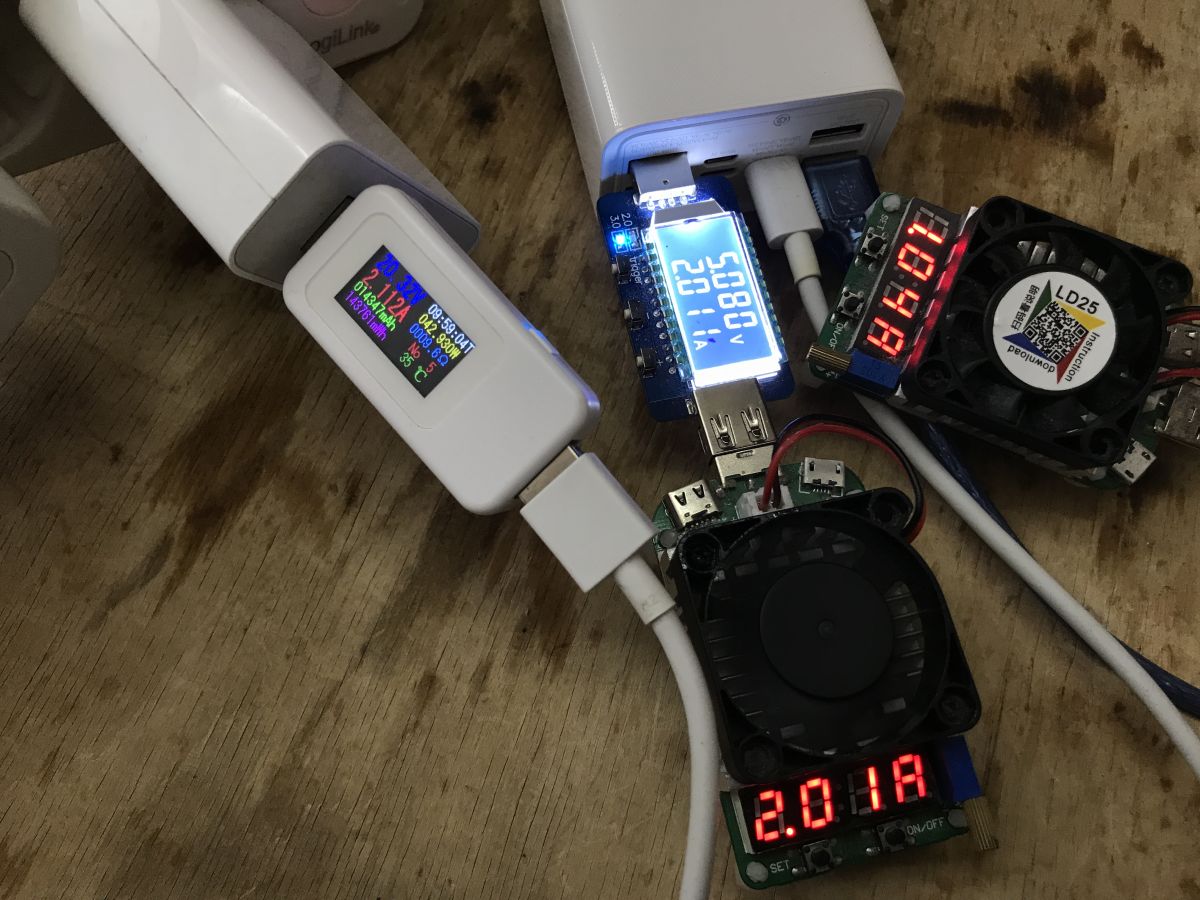
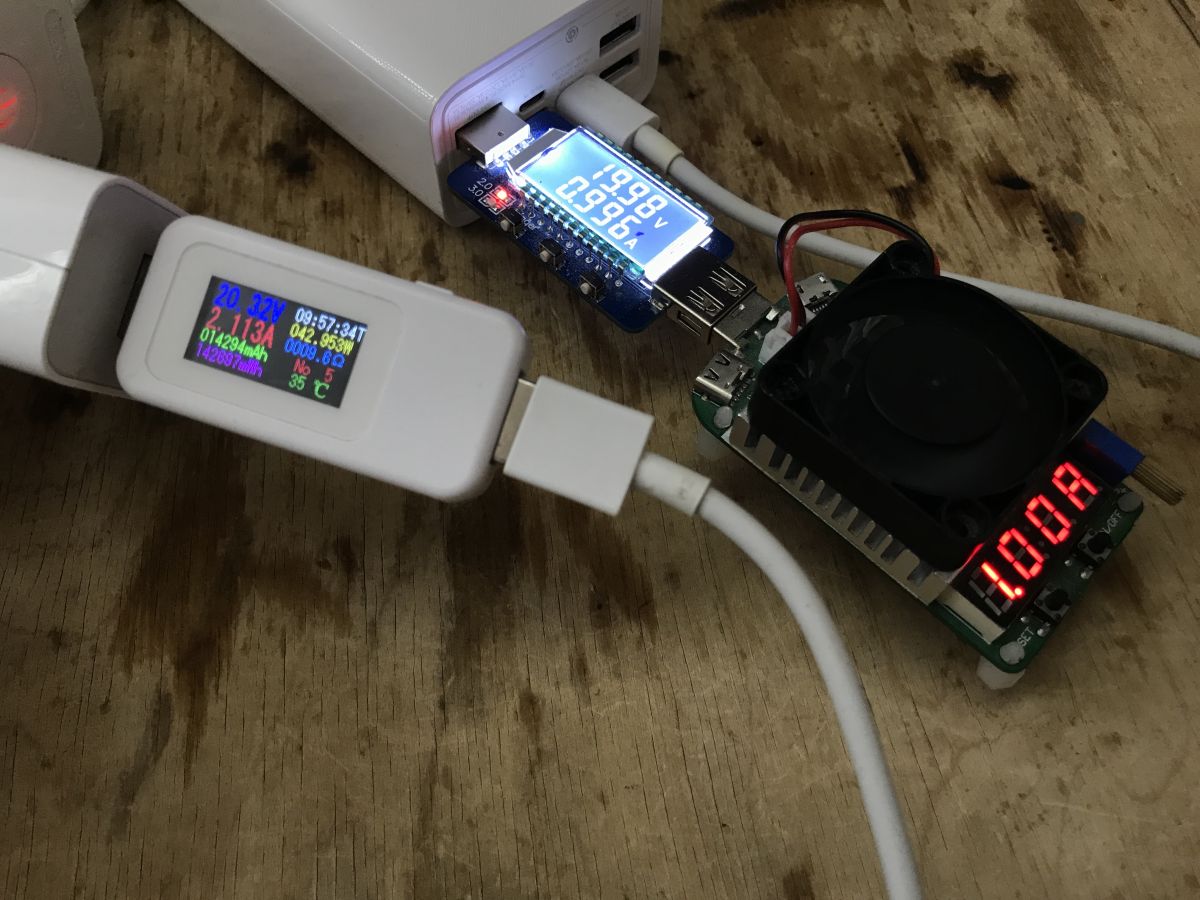
Now, current output and QC. Yes, you can set it to 20 V. You can even draw nearly 2A at that point, but my load cuts out at that stage, so I wasn’t able to reach the limit.
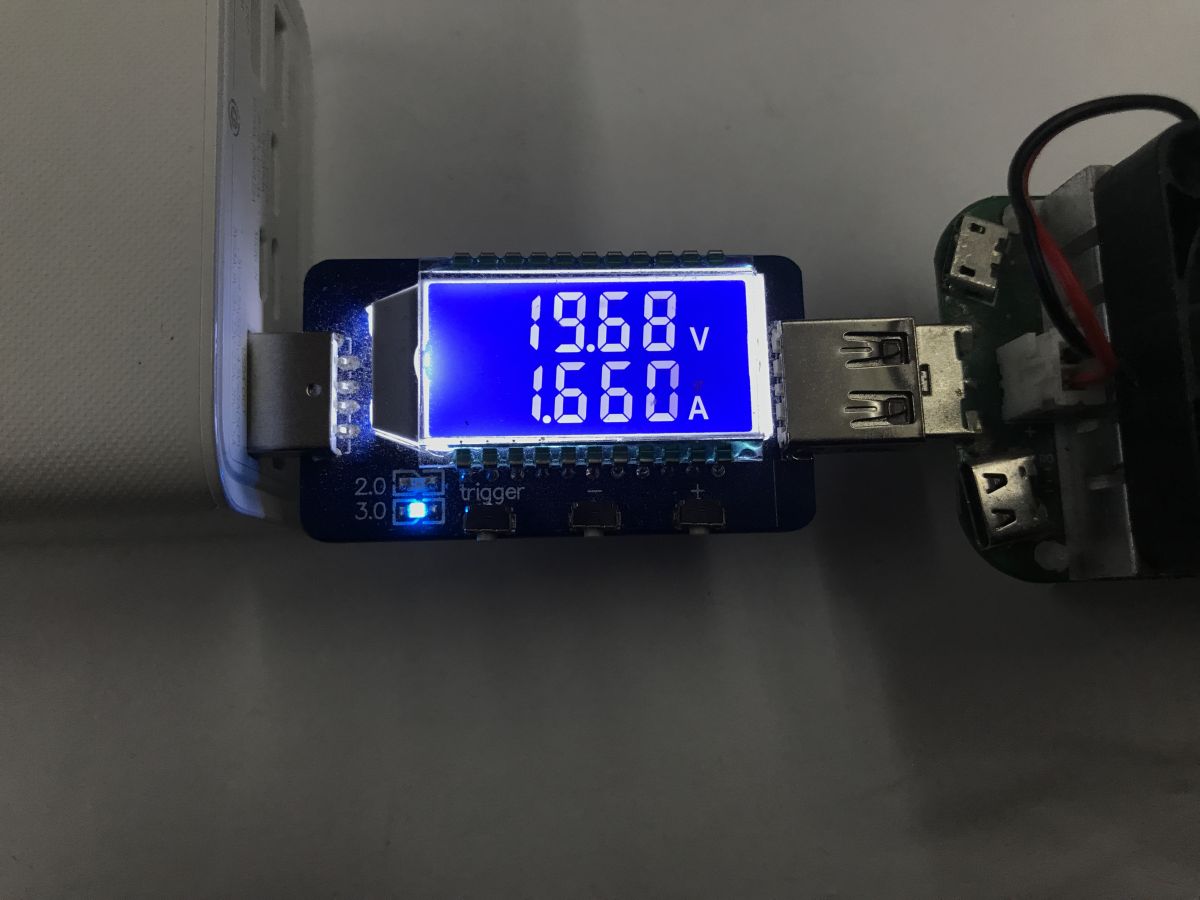
I’m getting an OPP error (Over Power Protection) on the LD35.
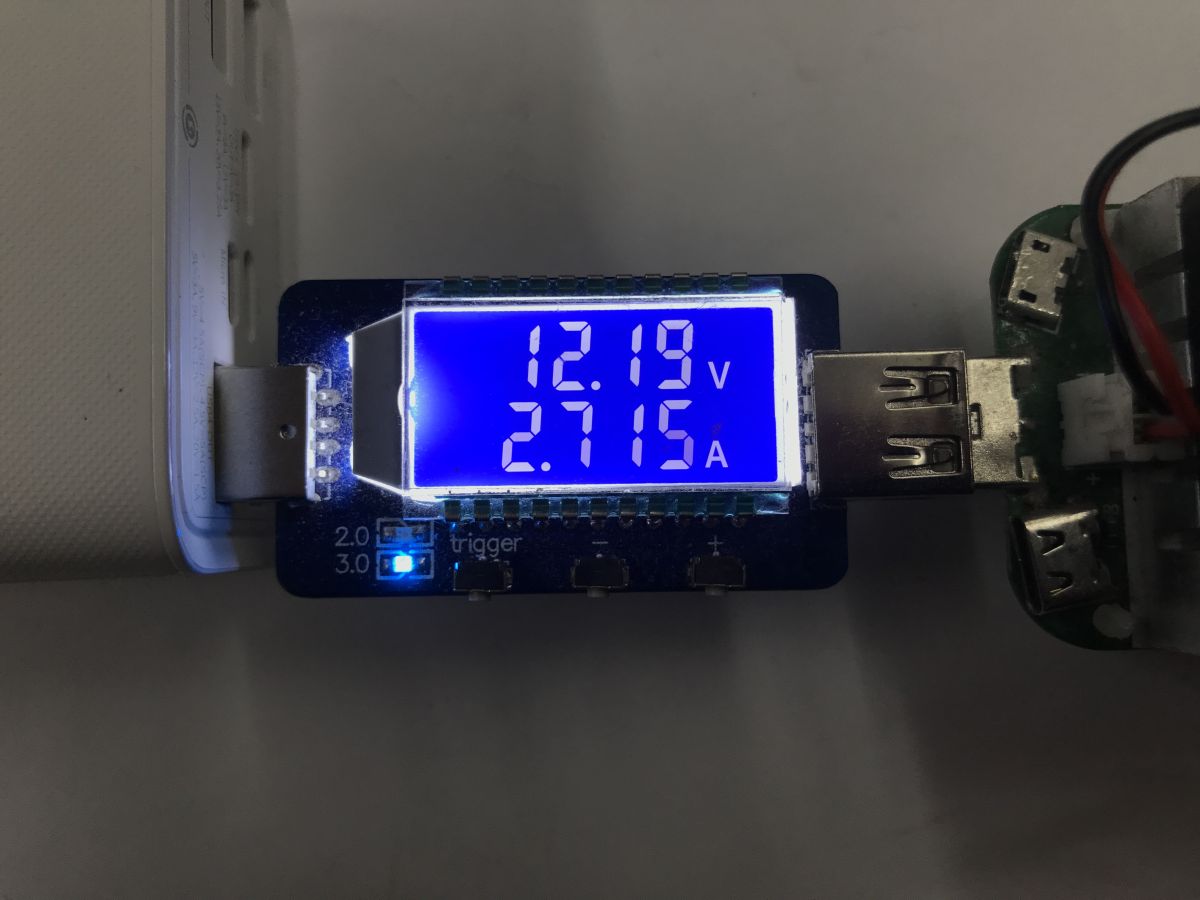
At 12V, I can draw just under 3A:
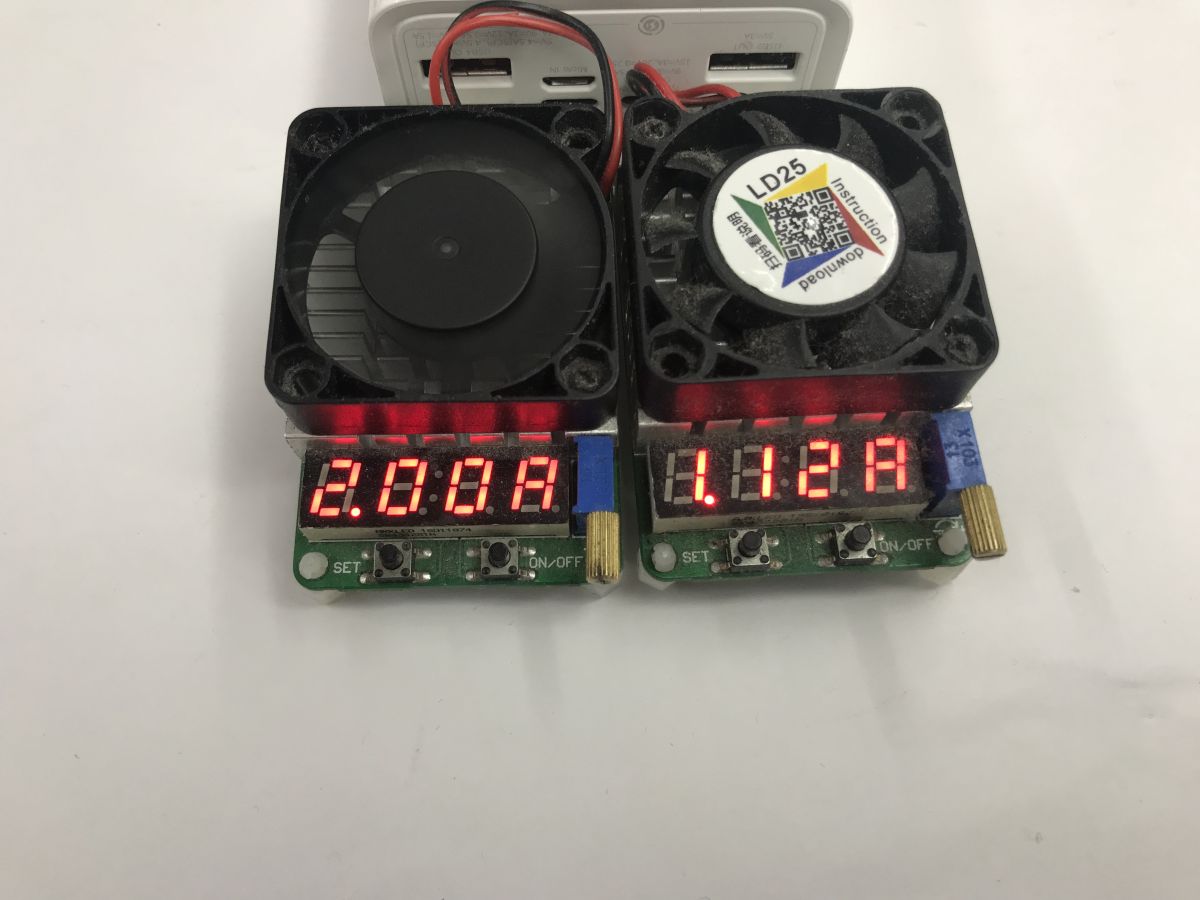
I also checked the 5V output – here’s an interesting point: drawing over 3A from the USB-A ports triggered the power bank’s current limit.
The device is capable of drawing a good 20 V from a Xiaomi charger:
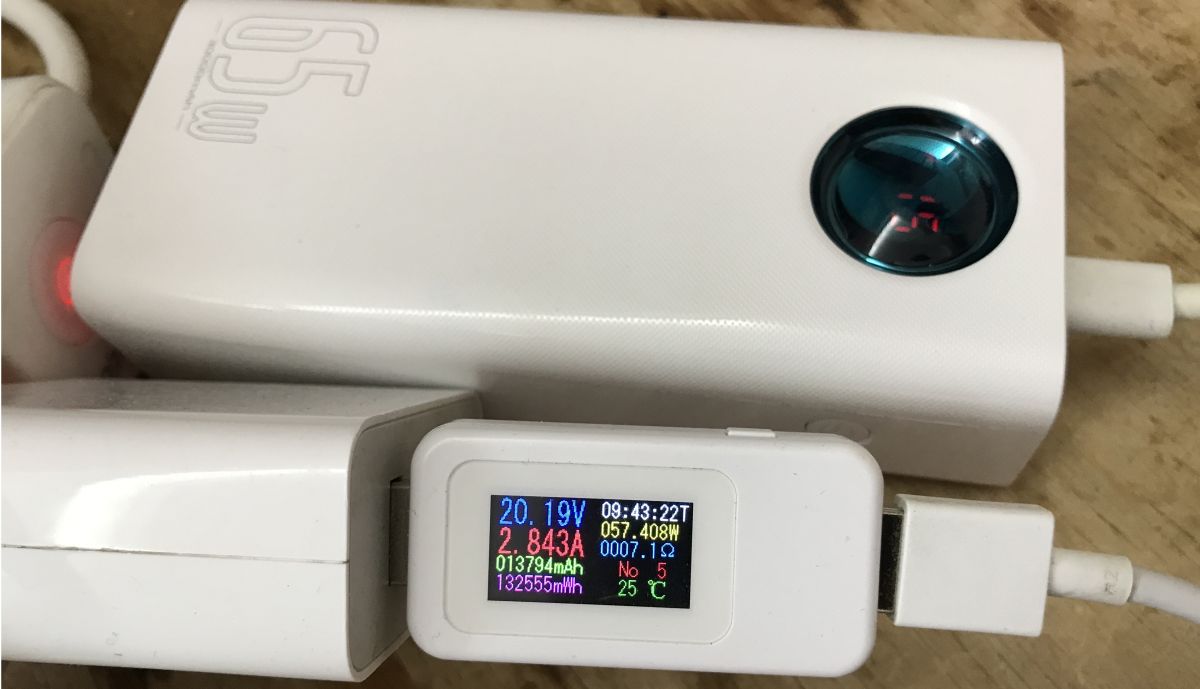
What’s more, there’s ‘pass-through’ charging, i.e. 20 V goes from the Xiaomi charger, and then the Xiaomi device itself, connected downstream of the power bank, also receives the increased voltage. Normally, power banks do not allow this and will disable QC if something is connected to both the input and output.
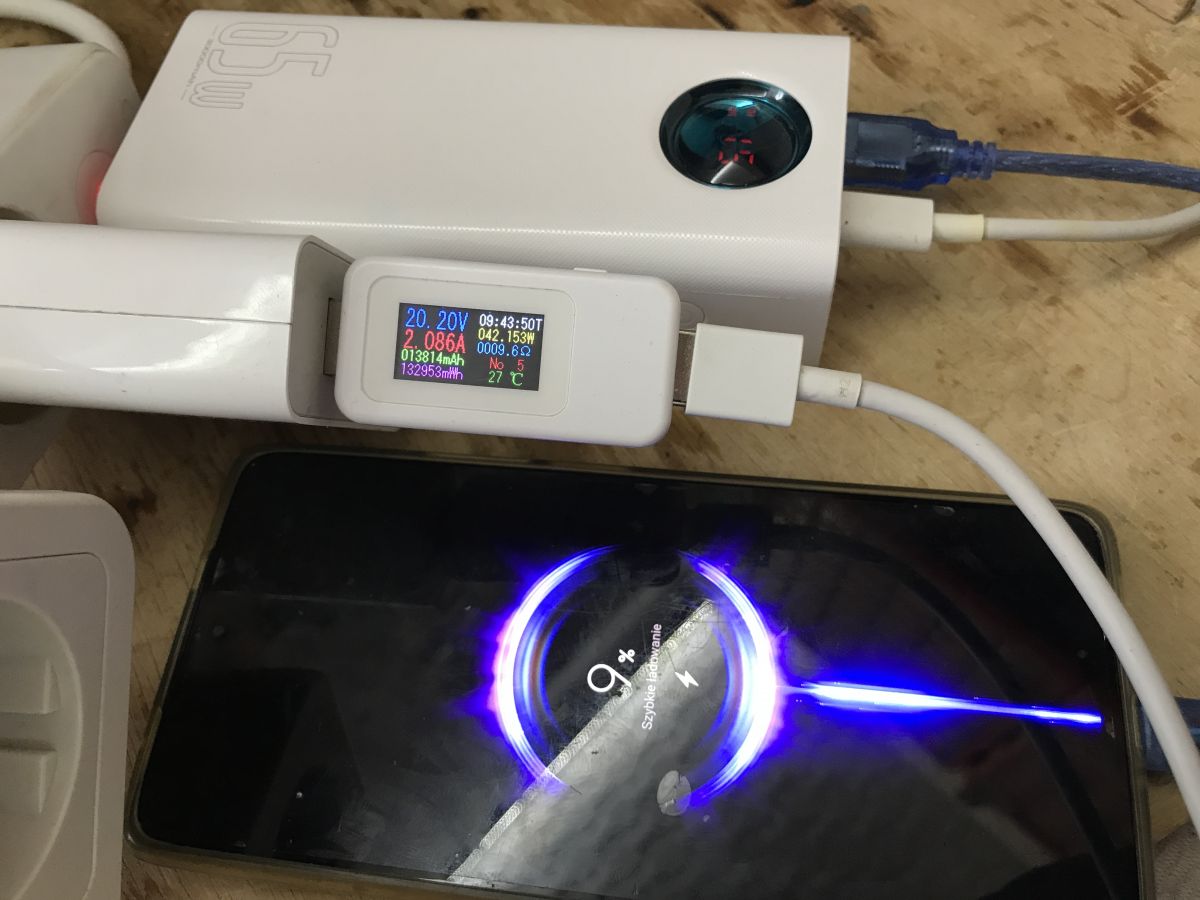
I looked into this in more detail and here’s an interesting point: this behaviour only holds true as long as one output port is in use. If I connect a load to the second port, the voltages drop and QC cannot be enabled.
The capacitance tests remain:
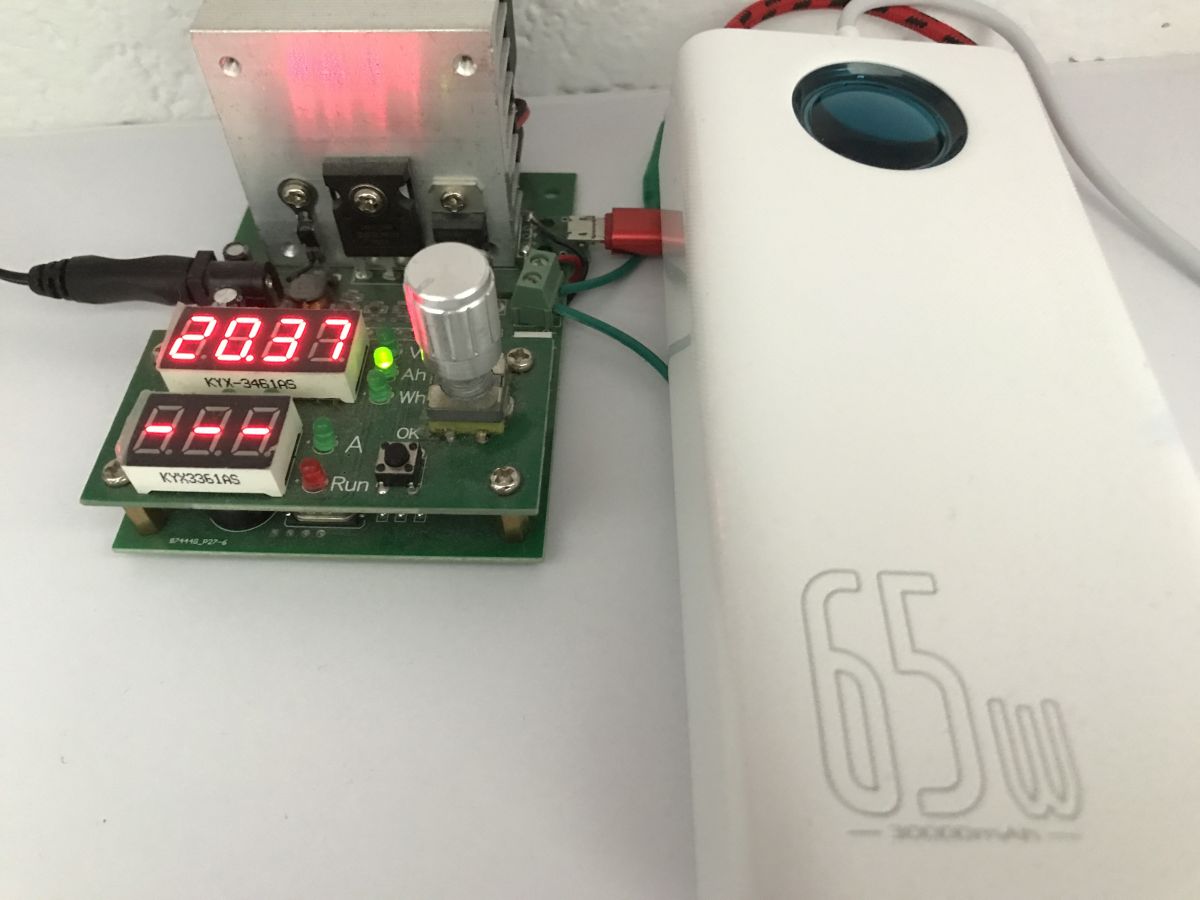
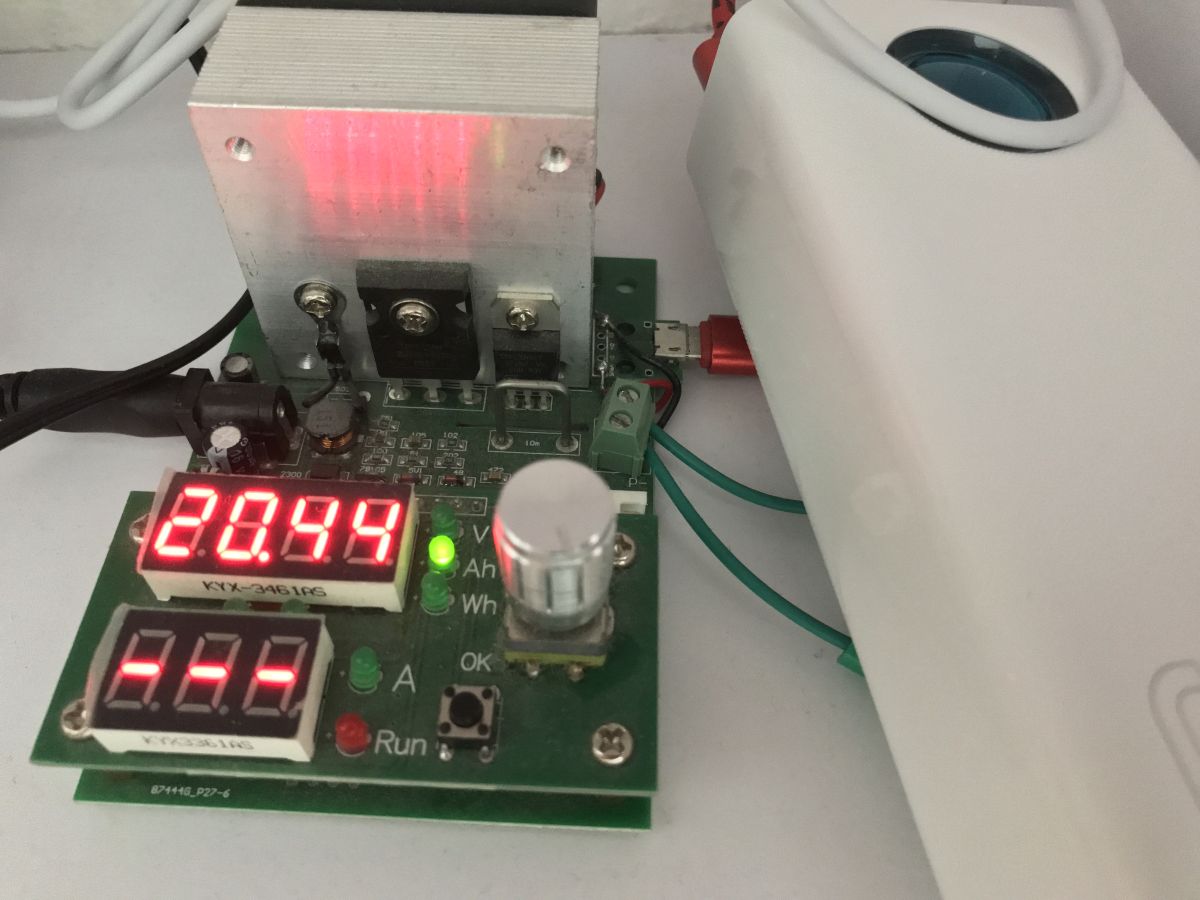
In this case, I measured values ranging from 20.37 Ah to 20.94 Ah at a voltage of 5 V. Applying our standard conversion factor again (dividing by 0.65), this gives us a good result of between 31.3 Ah and 32.2 Ah of usable capacity per cell. This is further proof that branded equipment not only lives up to its promises but actually offers a slight margin above the promised 30,000 mAh.
To sum up, it seems best to steer clear of cheap, unbranded power banks. The price difference between the unbranded model we tested and a basic Baseus model is often just a dozen or so zlotys, yet the gap in actual capacity is significant. It’s clear that the lack of a specific brand name and model is a red flag. No wonder – after all, how are you supposed to leave a negative review for something like that? Baseus, on the other hand, proves once again with both its models (22.5 W and 65 W) that it’s possible to produce equipment that meets its specified parameters for a reasonable price. Buying the cheapest, anonymous alternatives simply misses the point here.
Another issue is the durability of these Baseus power banks, but I won’t be able to assess that any time soon. What’s your view on this – how do you choose a power bank?
Cool? Ranking DIY Helpful post? Buy me a coffee.

