logo elektroda
logo elektroda
X
logo elektroda

Comparing Wire Strippers: Electrotechnical, Side Insulation, & Automatic models (1cm strips)

Ptolek 48940 36
Best answers

Jak wybrać ściągacz izolacji do krótkich odcinków przewodów (ok. 1 cm) i wiązek wielu żył, mając budżet do 50 zł?

Do krótkich odcinków i wiązek wielu żył w tym budżecie najlepiej sprawdzi się klasyczny ściągacz czołowy typu 1; automat typu 3 jest wygodny, ale w tanich wersjach bywa słaby na cienkich przewodach, potrafi uszkadzać izolację i jest mniej poręczny przy krótkich końcówkach [#10742212] [#9819088] Type 3 nadaje się raczej do automatyki i większych wiązek, a w praktyce niektórzy chwalą go dla kilku–kilkunastu żył, ale to mocno zależy od jakości konkretnego egzemplarza [#7559230] [#9815618] Wersje typu 1 są opisywane jako najbardziej uniwersalne, dobre także dla przewodów 0,5–2,5 mm², pod warunkiem że szczęki mają mały luz i równe cięcie [#10912770] [#11426389] Typ 2 bywa oceniany jako poprawny, ale część osób woli typ 1, a inni uznają typ 3 za wygodniejszy do automatyki; do Twoich zastosowań thread raczej skłania się ku typowi 1 [#7559187] [#10742212] Jeśli kupujesz tani model, koniecznie sprawdź go w sklepie na kilku kawałkach przewodu, bo w tej cenie jakość egzemplarzy bardzo się różni [#11426389]
Generated by the language model.
ADVERTISEMENT
Treść została przetłumaczona polish » english Zobacz oryginalną wersję tematu
  • #31 10912531
    moon lee
    Level 11  
    Posts: 28
    Rate: 6
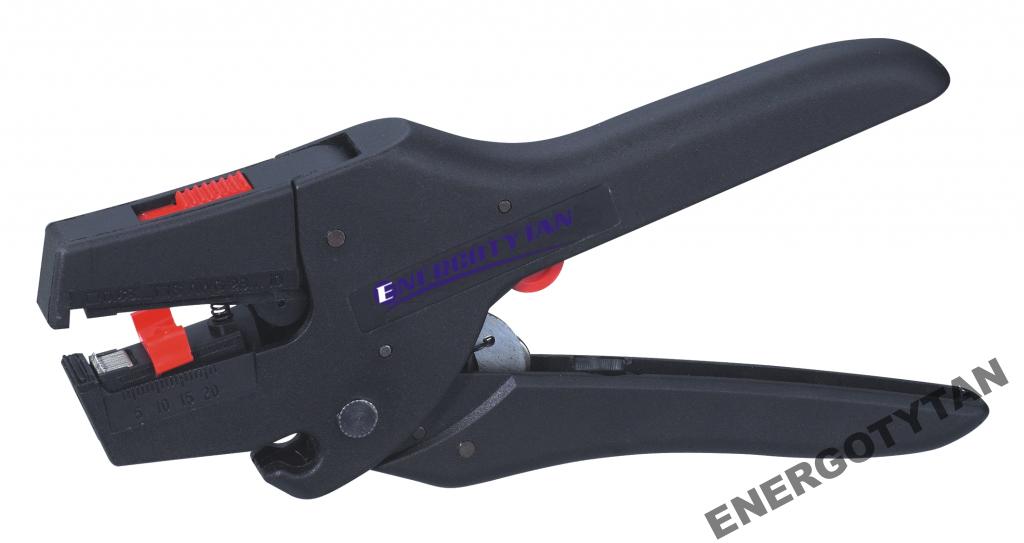
    Hello, someone uses an energotitanium puller model Z-D3 to buy on the Allegro, how does it work and is it worth the price.
    Comparing Wire Strippers: Electrotechnical, Side Insulation, & Automatic models (1cm strips)
  • ADVERTISEMENT
  • #32 10912770
    Ryszard49
    Level 39  
    Posts: 6194
    Help: 312
    Rate: 1004
    Hello.
    I am using model # 1. Processed wires from 0.5-2.5 mm?. I have 4 pieces set permanently for individual sections. If you use it often, you have to buy the high-end ones.
    Greetings.
  • ADVERTISEMENT
  • #33 11426389
    doman18
    Level 17  
    Posts: 539
    Help: 1
    Rate: 55
    Type 2
    I have the cheapest one, so of course it sneezes terrible. Maybe more expensive, better, but in general I do not like the solution itself. I did not throw it away because the guillotine works great as a heel puller in my wife's shoes :D

    Type 3
    I have a Knopp type 3, but it doesn't catch cables smaller than 0.5 and a bit thicker that has a short end to be earned. The rest is very nice.

    I also have a plastic wrench that looks like it. This one is quite a failure because after 3-4 times something has loosened and it does not catch the cables. Only for downloading TV cables there is approx :P

    Yesterday and the day before yesterday I was running for a type 1 puller (pliers with a screw) for thin cables. I am not an electrician or electronics engineer, so my budget was about PLN 20-25. Paradoxically, I have not seen devices in this price range. They are either 20- or 40+. I have been to leroy-merlin, castorama, obi, juli, praktiker, leclerc, and several hardware and electronics stores in Lublin. I even visited a representative of the well-known Yato company. I wanted to see the yt-2112 but they only had the cheapest 2032. It was too expensive for both the Obi, the Praktiker and the Leroy. Leclerc had topexes and top-tools for PLN 16 and PLN 14, unfortunately the jaw clearances in each copy were quite large. In jula there were 9 of them on the hanger (hard head company), unfortunately also with slack and uneven cuts (the cable hole formed a rectangle instead of forming a square). Unfortunately, I was also disappointed with Yato because there were also a lot of slack and uneven cuts. Only in castorama, among the few top-tools lying there, I found one with minimal play between the jaws and a straight incision. However, I did not take it because in the electronic store Elga the lady showed me for PLN 16 also with very little play and even cuts. It is narrower than the others I have seen (something like topex) and has a negligible thickness of the plastic on the handles (no adequate electrical protection) but it is enough for my applications. The only small inconvenience is the scraps of metal on the blade after sharpening it, but I sanded it with a file.

    Tips for buyers of cheaper type 1 pliers (up to PLN 50):
    1. Look at what play between the clamped jaws (as little as possible after clamping the jaws along their entire length), what play is in the hinges (whether both parts of the pliers do not move to the left and right in relation to each other, and check the cuts (symmetry). these elements in devices of much more expensive and recognized brands, then look for those that are closest to these patterns.
    2. In this price range, each piece is made differently. Check all that are on the shelf or if you buy in the store ask the seller to review the ones he has in stock. Neither of them will be making a problem. This note applies to all types of devices.
    3. Don't buy on Allegro! . Why? See point 1 and 2.
  • ADVERTISEMENT
  • #34 12008327
    pawlo_1
    Level 17  
    Posts: 454
    Help: 2
    Rate: 60
    moon lee wrote:
    Hello, someone uses an energotitanium puller model Z-D3 to buy on the Allegro, how does it work and is it worth the price.
    Comparing Wire Strippers: Electrotechnical, Side Insulation, & Automatic models (1cm strips)


    After a few days, the rivet from the handle fell out, so he went to the warranty. After about 2 months, something was done with the pressure because the knives began to slip on the insulation. For this price, I advise against it. Yato served me longer and how much cheaper.
  • ADVERTISEMENT
  • #35 12008421
    Wojte1199
    Level 19  
    Posts: 492
    Help: 29
    Rate: 96
    I recommend Forch, the price is about PLN 70, I have been for 2 years now and I am not saving. So far, a revelation.

    Comparing Wire Strippers: Electrotechnical, Side Insulation, & Automatic models (1cm strips)
  • #36 12010844
    Miwhoo
    Electric installations specialist
    Posts: 2137
    Help: 128
    Rate: 316
    Colleagues, it is quite important, if you recommend or advise against a tool, be sure to write what cables / installations you use ...

    The ones that do great with the line, can't handle the wire etc ... I have the opportunity to work on various types of installations, including marine ones, and I can assure you that most of the pullers that can handle the lines for the landing pad are not suitable for the marine version due to differences in the material of which wires and cables are made ....

    I had a Haup puller similar to the one from the post above ... after 2 days it refused to obey, and the old reliable one in the form of pliers with blades [shown in my previous post] works perfectly, even though it is not branded and is over 2 years old ...
    The wires and cables I work with are, of course, the land versions of YDY, YKY and the sea versions of TI, BFOU and other mud resistant types ...
  • #37 12011119
    SIMESAM
    Level 10  
    Posts: 16
    Rate: 3
    Hi, I recommend the PHOENIX CONTACT model 1212150 WIREFOX 10. It is a miracle and it can handle everything from 0.02mm to 10mm. I personally own this gem myself and after a period of intensive use for 3 years, nothing has happened to them. I RECOMMEND

Topic summary

✨ The discussion centers on comparing three types of wire strippers: electrotechnical (frontal), side insulation, and automatic models. Users express preferences and experiences with each type, highlighting the electrotechnical model for its effectiveness in stripping insulation without damaging the wire, while the automatic model is noted for its convenience but has limitations with thin wires and short sections. The side insulation stripper is considered less effective for certain applications. Users recommend brands like Cimco, PROMAT, NEO, and YATO, with specific models praised for their durability and performance. Concerns about counterfeit products and the importance of selecting the right tool for specific wire types are also discussed.
Generated by the language model.

FAQ

TL;DR: In this 25-post thread, 60 % of users prefer frontal “electrotechnical” pliers for 0.5–2.5 mm² jobs; “irreplaceable when it comes to stripping wire insulation” [Elektroda, Miwhoo, post #7565962] Choose type 1 for 1 cm leads, type 3 for high-volume work.

Why it matters: Picking the right stripper saves rework, broken conductors and up to 40 % wiring time.

Quick Facts

• Cost: PLN 20–70 for mid-grade, > PLN 100 for premium Cimco Jokari [Elektroda, belfegor1988, #7560669; Elektroda, Wojte1199, #12008421] • Size range: Frontal pliers 0.5–4 mm²; Phoenix Contact Wirefox 10 covers 0.02–10 mm² [Elektroda, SIMESAM, post #12011119] • Clean strip length: 5–10 mm with automatic pullers [Elektroda, gayetan, post #9801418] • Edge-case: Cimco Stripax handles may crack below −10 °C [Elektroda, enejt, post #10742212] • Counterfeits: Users report fake type 3 tools causing 50 % of complaints [Elektroda, rubens, #9878276; Elektroda, Ptolek, #9819088]

Which wire stripper is best for 1 cm or shorter insulation sections?

Frontal pliers (type 1) grip the wire head-on, so you can set a 5–10 mm stop and pull straight back without bending conductors. Four users praise its control for short leads [Elektroda, Anonymous, #7559187; Elektroda, blaszczok, #7564746]. Automatic pullers need at least 15 mm to seat properly, making them less precise for tiny strips.

How do automatic strippers cope with ribbon or multi-core cables?

Type 3 tools strip up to six parallel cores cleanly when jaws align correctly [Elektroda, Ronin64, post #7559230] Wider 20-way ribbons snag because the clamping bar is only 12–14 mm wide. For > 6 cores, users still resort to frontal pliers and drag them across the ribbon edge [Elektroda, Ptolek, post #7553196]

Can a type 3 puller cut a mid-span notch for soldering?

No. Its twin blades sever the insulation and pull it off completely. Users attempting a shallow nick found it “breaks the insulation at the point and moves one away from the other” rather than leaving a window [Elektroda, gayetan, post #9801418] For notches, use a manual V-blade or precision knife.

How do I spot counterfeit automatic pullers?

Fakes have rough mould lines, loose pivot rivets and no etched serial number. Genuine jaws close flush; counterfeits leave a 0.5 mm gap causing wire slips [Elektroda, rubens, post #9878276] Always buy from authorised dealers and inspect the jaw alignment before paying.

Why does my stripper tear 0.2 mm² wires instead of stripping them?

Light conductors flex when clamped. Type 3 pullers apply high clamping force and rip strands if the insulation is thin. Several users found 0.5 mm² the safe lower limit [Elektroda, Ptolek, post #7567350] Switch to adjustable frontal pliers or micro-range tools rated down to 0.02 mm² [Elektroda, SIMESAM, post #12011119]

Are there models that survive outdoor or cold-weather work?

Most plastic-handled strippers become brittle below freezing. Cimco Stripax handles cracked below −10 °C in field use [Elektroda, enejt, post #10742212] Metal-frame pliers like Promat or Russian military surplus last 20 years with no breaks [Elektroda, blaszczok, #7564746; Elektroda, ciasteczkowypotwor, #9878366].

How do I adjust electrotechnical pliers for different wire sizes?

  1. Turn the side screw until the blades just kiss when empty.
  2. Insert a test wire; tighten a quarter-turn if insulation isn’t cut.
  3. Pull straight back; check that conductors remain undamaged.
    Repeat for each new size. “I have four pieces set permanently for individual sections” [Elektroda, Ryszard49, post #10912770]

What basic maintenance keeps strippers sharp?

Blow out insulation debris weekly, add one drop of light oil to the pivot, and file burrs off the blade tips. Users who skipped cleaning found knives began to slip after two months [Elektroda, pawlo_1, post #12008327]

Edge case: the jaws slip on silicone-sheathed wire—what now?

Silicone is slick; side strippers struggle to grip it [Elektroda, Anonymous, post #7559187] Lightly score the sleeve with a knife first or use jaws with serrated inserts (e.g., Haupa 210266). Keep the score shallow to avoid nicking strands.

I’m wiring a chandelier once a year—what’s the simplest tool?

A budget frontal plier around PLN 25 cuts 3×1.5 mm² house cables cleanly and needs no calibration [Elektroda, doman18, post #11426389] Check jaw play in store; choose the unit with the smallest gap and straight blade alignment to avoid crushing the copper.
Generated by the language model.
ADVERTISEMENT