logo elektroda
logo elektroda
X
logo elektroda
Dostępna jest polska wersja

Czy wolisz polską wersję strony elektroda?

Nie, dziękuję Przekieruj mnie tam

golf IV, 1.6 SR, - Rippling revolutions, arrows from the collector.

cieplik1986 115851 30
Best answers

Can a cracked intake/vacuum tube cause unstable idle, misfires, and backfires in a VW Golf IV 1.6 SR, and what should be checked to eliminate false air?

Yes — a cracked tube can cause false air, unstable idle, loss of power, and backfires, so the tube should be replaced first [#12721743] Check the vacuum hose to the brake servo carefully, because it often cracks; you can isolate that circuit by disconnecting the servo hose and plugging it, then see whether the engine runs normally [#12725535][#12725756] Also replace the O-rings under the intake manifold, because manifold leaks can cause suction noise and rough running [#12725714][#12909188] After the leak repair, clean and adapt the throttle body, and if fault codes still point to the lambda circuit, replace the oxygen sensor with an original one [#12909162] In the thread, this combination improved the engine by 95% after replacing the manifold seals, and after lambda replacement plus throttle cleaning/adaptation the car ran evenly without vibration or hunting idle [#12909162][#13128509]
Generated by the language model.
ADVERTISEMENT
Treść została przetłumaczona polish » english Zobacz oryginalną wersję tematu
  • #1 12721691
    cieplik1986
    Level 9  
    I warmly welcome,
    I am a golf holder, a 4 SR 1.6 engine in gas, a year 2000. I am struggling with the problem of wobbling turnovers, sometimes lack of power. I was already a mechanic who after connecting to the computer showed an error - misfire on one of the cylinders. The mechanic mentioned:

    -świece
    - candles
    -cewkę

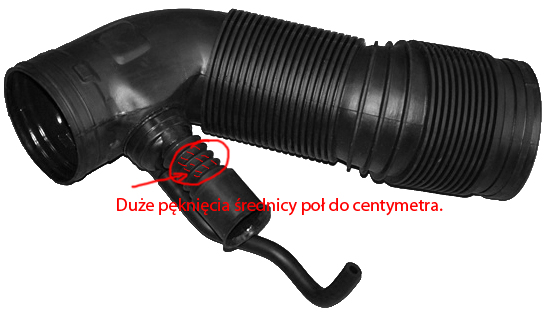
    The problem disappeared for a few days after which he returned. Today I noticed that after firing, shots are heard in the collector + of course, not even work. I started looking under the mask, it turned out that some element (the air filter tube) was temporarily wrapped with a cloth. When I unwrapped the cloth, the tube was cracked, almost in half. Below is a photo of what exactly is going on. I read on the forum that the cause of wobbling revolutions may be left air. Can this cracked tube affect the engine's operation? What wires should be taken to eliminate the left air? (if it's not this tube). I also learned that the cause of the shots may be a snap, in the collector one of the pushers does not close and the fuel explodes in the collector.
    Please help.
    Ps. A threadbare subject, but I wanted to present my specific problem, I apologize for the repeatability :-)
    golf IV, 1.6 SR, - Rippling revolutions, arrows from the collector.
  • ADVERTISEMENT
  • #2 12721743
    T5
    Admin of Cars group
    Replace the tube. Measure the fuel pressure.
  • #3 12724804
    cieplik1986
    Level 9  
    Hello, I mentioned the part mentioned earlier. It helped a little, the engine worked better, but the fluctuating speed did not eliminate it. When the engine is running, hissing is heard, is it supposed to be this way? after switching off the engine, it can be clearly heard and after about 10 seconds it stops.
  • #4 12725385
    T5
    Admin of Cars group
    cieplik1986 wrote:
    When the engine is running, hissing is heard, is it supposed to be this way?
    It depends on how this hissing. You can hear the air in the suction manifold and also the next leak may be good.
  • ADVERTISEMENT
  • #5 12725535
    psilos1
    Level 32  
    Check thoroughly the vacuum tube going to the brake servo - it often breaks.
  • #6 12725671
    cieplik1986
    Level 9  
    psilos1 wrote:
    Check thoroughly the vacuum tube going to the brake servo - it often breaks.


    The tube was checked, it was cracked, it is now made for heat + squeezed with a compression band on the joining. At the weekend I want to clean the throttle and adapt. On which wires, by the way should I pay special attention, which can pass? I will add that the problems with brakes also occur, sometimes after tanning. I press the brake almost with all my strength then the car stops ... I will add some gas and it will work for a while.
  • #7 12725714
    psilos1
    Level 32  
    Replace the o-rings under the collector
  • #8 12725756
    WITEK1952
    Level 28  
    Before replacing the seals of the collector, disconnect the servo cable from the servo and plug it in blindly. Then you will know if it is a collector or servo leak.
  • #9 12725882
    cieplik1986
    Level 9  
    WITEK1952 wrote:
    Before replacing the seals of the collector, disconnect the servo cable from the servo and plug it in blindly. Then you will know if it is a collector or servo leak.


    What symptoms will show whether it is a collector or servo?
  • #10 12725949
    Daro122
    Level 31  
    Suction noise at the plastic collector is more audible, and arrows in the collector can cause a burnt suction valve.
  • #11 12726260
    WITEK1952
    Level 28  
    When you plug the connector, the engine will work properly but there will be no brakes.
  • #12 12902398
    cieplik1986
    Level 9  
    Hello, I am just after replacing the seals under the suction collector. It helped 95%. The engine works much better, but it's not the perfect job. I remember that on the review the computer showed a lambda sensor error. Could this have an effect on the engine work or is it necessary to get ready for a replacement?

    The second topic is more serious and priority because it applies to brakes. The problem is that, for example, when the acceleration starts more than 3 thousand turns and the brakes are suddenly braked, the pedal becomes hard, as if there was no support. I will add that I tested the pump, when pressed with the engine turned off and turned on, the pedal moves back gently. I am asking for advice, what to check first in order not to buy and exchange servos. I am afraid of the situation that I will replace the servo and it will turn out that the brakes are still weak.
    Best wishes and thanks in advance.
  • ADVERTISEMENT
  • #13 12902469
    jerry1960
    Level 37  
    Check what the colleague of psilos 1 wrote: "Check the vacuum tube going to the brake servo - it often breaks."
  • #14 12902661
    konradx
    Level 18  
    You can have a buried membrane in the servo, a cracked nozzle / hose connecting the servo with the suction ring. The revolving speed is also an injected stepper motor. From what I remember, the 1.6SR is a one-shot Bosch injection, right? These arrows are in the suction or exhaust collector?
  • #15 12903386
    psilos1
    Level 32  
    konradx wrote:
    You can have a buried membrane in the servo, a cracked nozzle / hose connecting the servo with the suction ring. The revolving speed is also an injected stepper motor. From what I remember, the 1.6SR is a one-shot Bosch injection, right? These arrows are in the suction or exhaust collector?


    The stepper motor (if you can call it that) in the 1.6 sr engine is an integrated throttle part and it can not be dismantled. A lot is a multipoint.
  • #16 12904430
    cieplik1986
    Level 9  
    The shots were in the suction manifold. Today I'm starting the car, not working again, waving again. I understand that the next steps are dismantling the throttle, thorough cleaning and adaptation? Tomorrow I will also connect it to the computer. Earlier errors that popped up: falling out on one of the cylinders and something with lambda probe as I wrote earlier. The pressure was also tested and according to the mechanic it is as it should be.

    Regarding the brakes, tomorrow I will check the cables, etc. At first glance, everything seems to be ok. There are no cracks.
  • ADVERTISEMENT
  • #17 12908325
    cieplik1986
    Level 9  
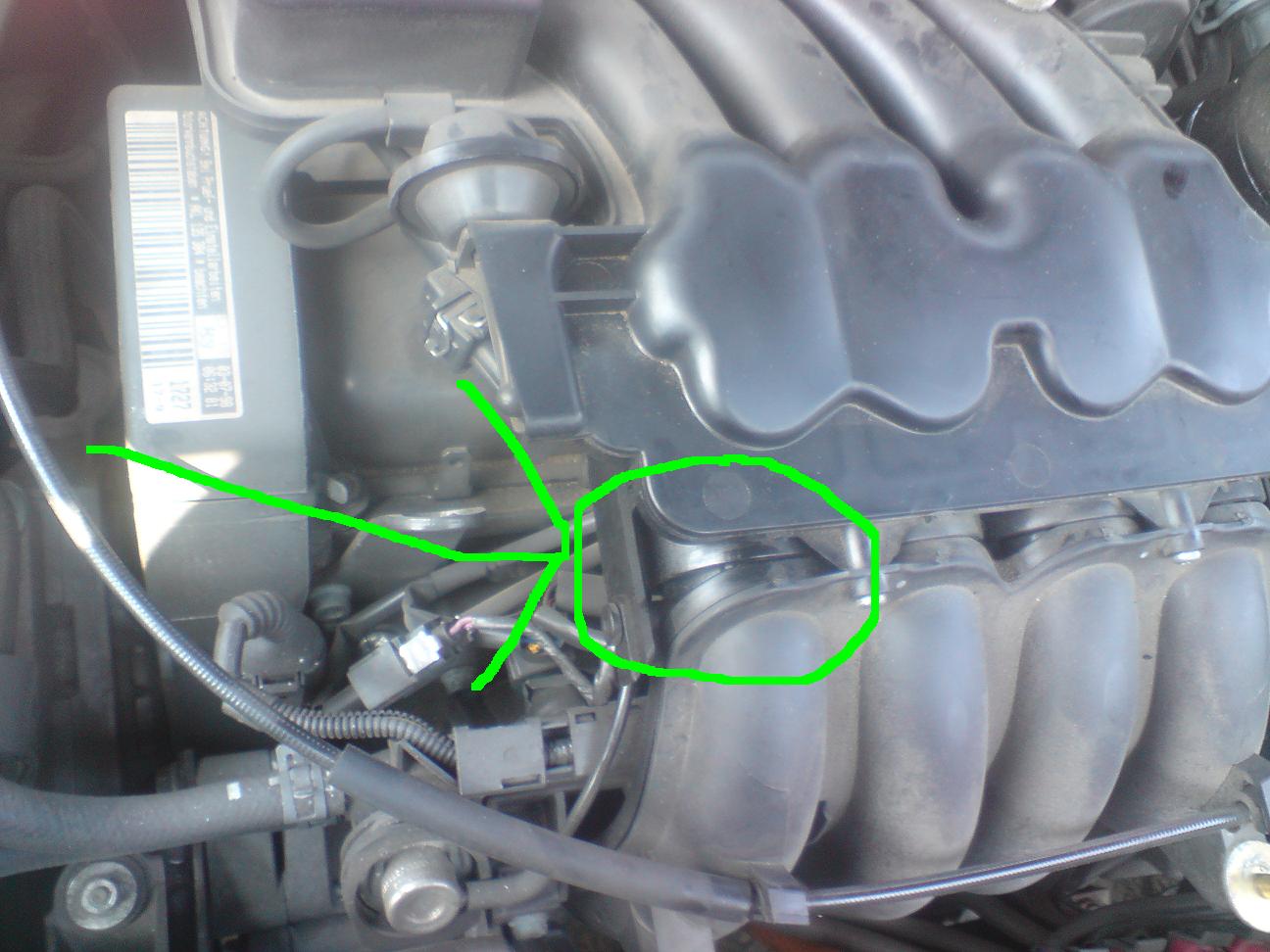
    Hello, I still have a question regarding the replacement of seals under the suction collector. Replaced the bottom green gaskets, or do you need to replace the upper thicker gaskets? Can it also affect the engine's operation? The picture shows where these gaskets are located. I know that they are in my average state, so I greased them with grease before re-turning.
    golf IV, 1.6 SR, - Rippling revolutions, arrows from the collector.
  • #18 12908353
    marseluss_2009
    Level 24  
    Pop on the engine while working on the engine, as you raise the turnover you found the guilty party.
  • #19 12908767
    psilos1
    Level 32  
    cieplik1986 wrote:
    The shots were in the suction manifold. Today I'm starting the car, not working again, waving again. I understand that the next steps are dismantling the throttle, thorough cleaning and adaptation? Tomorrow I will also connect it to the computer. Earlier errors that popped up: falling out on one of the cylinders and something with lambda probe as I wrote earlier.

    You have connected the VAG - give possible error codes. Everything seems to have been written about this engine and its problems link
    Have a nice read.
  • #20 12909141
    cieplik1986
    Level 9  
    16514 - lambda probe circuit
    17584 - catalytic converter correction
    16891 - regulation of idling

    Errors from yesterday.
  • #21 12909162
    psilos1
    Level 32  
    cieplik1986 wrote:
    16514 - lambda probe circuit
    17584 - catalytic converter correction
    16891 - regulation of idling

    Errors from yesterday.

    1; Replacement probe - only original, universal in this engine are good for nothing.
    2; Cleaning and adapting the throttle.
    Throttle adaptation is possible ONLY if the ECU does not eject errors or start by replacing the probe.
  • #22 12909180
    cieplik1986
    Level 9  
    Ok, thank you so much, I'll exchange the probe. And what about the second seals under the collector? replace it prophylactically? I peed at the poster and it does not affect my work.
  • #23 12909188
    psilos1
    Level 32  
    cieplik1986 wrote:
    Ok, thank you so much, I'll exchange the probe. And what about the second seals under the collector? replace it prophylactically? I peed at the poster and it does not affect my work.

    Expensive are not ... even prophylactic will not hurt
  • #24 13068137
    krzyzakmalbork
    Level 10  
    psilos1 wrote:
    They are not expensive
    and you will be surprised if they are not expensive. I charge for the collector top down + a gasket for throttles cos ok 290 PLN in aso. Massacre

    and so the culprit of the rolling turnover turned out to be a support pressure sensor. He gave an erroneous signal to the ECU and the revolutions were waving :)
  • #25 13068301
    psilos1
    Level 32  
    krzyzakmalbork wrote:
    psilos1 wrote:
    They are not expensive
    and you will be surprised if they are not expensive. I charge for the collector top down + a gasket for throttles cos ok 290 PLN in aso. Massacre

    Well, this is not a ....
  • #26 13068343
    krzyzakmalbork
    Level 10  
    psilos1 wrote:
    Well, this is not a ....
    not at all :) as I saw these few rubber gaskets :) Just look after replacement productions ;)
  • #27 13068368
    psilos1
    Level 32  
    krzyzakmalbork wrote:
    psilos1 wrote:
    Well, this is not a ....
    not at all :) as I saw these few rubber gaskets :) Just look after replacement productions ;)

    Alternatives, of course, are available ... but in comparison to the original ones, it is unstable crap.
  • #28 13068381
    krzyzakmalbork
    Level 10  
    psilos1 wrote:
    impermanent crap.
    That's why I took aso ;)
  • #29 13068400
    psilos1
    Level 32  
    krzyzakmalbork wrote:
    psilos1 wrote:
    impermanent crap.
    That's why I took aso ;)

    Sometimes it's worth it - peace for a few consecutive years is priceless ..
  • #30 13068483
    krzyzakmalbork
    Level 10  
    psilos1 wrote:
    Sometimes it's worth it - peace for a few consecutive years is priceless ..

    +1

Topic summary

✨ The discussion revolves around issues faced by a 2000 Volkswagen Golf IV with a 1.6 SR engine, specifically concerning fluctuating engine revolutions and power loss. The owner experienced misfires, identified through computer diagnostics, and noted symptoms such as hissing sounds and backfiring in the intake manifold. Initial repairs included replacing a cracked air filter tube and checking vacuum lines, which provided temporary relief. Further troubleshooting revealed lambda sensor errors and potential issues with the brake servo, leading to hard brake pedal symptoms. Recommendations included replacing o-rings under the intake manifold, cleaning and adapting the throttle, and ensuring proper vacuum connections. After replacing the lambda probe and performing maintenance, the engine's performance improved significantly, with stable operation reported over subsequent driving experiences.
Generated by the language model.

FAQ

TL;DR: Vacuum leaks cause 60 % of rough-idle complaints in Golf IV 1.6 SR engines [VW SSP 202, 2000]; “Replace the tube.” [Elektroda, T5, post #12721743] Seal intake hoses, clean & adapt the throttle, measure 3.5 bar fuel pressure, and fit an OE lambda probe to regain smooth revs.

Why it matters: Ignoring minor hissing today can burn valves and double your repair bill tomorrow.

Quick Facts

• OE fuel-rail pressure: 3.4 – 3.6 bar [VW SSP 202, 2000] • Complete intake-manifold & throttle gasket kit: approx. 290 PLN at VW dealer [Elektroda, krzyzakmalbork, post #13068137] • Genuine Bosch 4-wire lambda sensor lifespan: ≈160 000 km [Bosch, 2019] • Brake-servo vacuum hose I/D: 11 mm; replace if surface cracks are visible [ATE, 2018] • Typical throttle-body adaptation time with VCDS: <60 s [ROSS-TECH, 2021]

How do I pinpoint vacuum leaks around the brake-servo hose?

Spray carb-cleaner at joints while the engine idles. A jump of >50 rpm marks the leak. Focus on the 11 mm hose from manifold to servo check-valve—this hose “often breaks” [Elektroda, psilos1, post #12725535]

What do error codes 16514, 17584, 16891 mean?

16514 = oxygen-sensor circuit fault; 17584 = catalyst efficiency correction; 16891 = idle-control deviation. All appear when the lambda sensor ages or vacuum leaks persist [Elektroda, cieplik1986, post #12909141]

When should I replace the lambda (oxygen) sensor?

After 160 000 km or when code 16514 repeats. Use only an OE sensor; universal types fail early [Elektroda, psilos1, post #12909162][Bosch, 2019].

How do I clean and adapt the throttle body on the 1.6 SR?

  1. Remove intake duct and spray throttle cleaner until the plate shines.
  2. Re-install, clear codes, then run VCDS adaptation (Group 098).
  3. Wait until “OK” appears—about 60 s [ROSS-TECH, 2021]. Dirtier throttles add up to 300 rpm idle swing [Elektroda, cieplik1986, post #13128509]

What symptoms indicate a failed brake-servo diaphragm?

Hard pedal after two rapid presses with the engine running, no leak noise plugged, confirms diaphragm rupture; engine idle improves when the servo hose is blindly capped [Elektroda, WITEK1952, post #12726260]

Are aftermarket intake-manifold gaskets worth it?

Users report premature shrinkage; OE set costs 290 PLN but seals for “a few consecutive years” [Elektroda, psilos1, post #13068400] Cheap copies save 40 % yet may leak within 12 months—false economy [DANA, 2020].

How can I test whether the leak is the servo or the manifold?

Disconnect the servo hose at the booster and plug it:
  1. Start engine; if idle steadies, leak is downstream.
  2. Press brake—pedal will be rock-hard (no assist).
  3. If idle still wavers, suspect manifold seals [Elektroda, WITEK1952, post #12725756]

What is the support pressure sensor and how does it affect idle?

The MAP (manifold absolute pressure) sensor feeds load data to the ECU. A faulty sensor skews fuel delivery and can cause 200–400 rpm hunting, as one owner found [Elektroda, krzyzakmalbork, post #13068137]

What fuel pressure should I measure on this engine?

Spec is 3.4–3.6 bar with pump running; a drop below 3.1 bar will mimic lean misfire [VW SSP 202, 2000]. Measure at the rail’s Schrader valve [Elektroda, T5, post #12721743]

Edge case: What if backfires occur in the intake manifold?

Repeated “arrows” can burn an intake valve. If compression on one cylinder is ≥15 % lower than others, pull the head for valve inspection [Elektroda, Daro122, post #12725949] "Ignoring it can melt the plastic manifold," warns a VW master tech [AutoBild, 2018].
Generated by the language model.
ADVERTISEMENT