logo elektroda
logo elektroda
X
logo elektroda

Cable Routing in 50 sqm Apartment: Replacing Electrical Installation with Suspended Ceiling

morrph 36465 40
Best answers

Can I run socket and lighting cables above a suspended ceiling during a 50 m² apartment renovation?

Yes, you can route socket and lighting cables in the space above a suspended ceiling, and there is no general rule that sockets must be wired only in the walls and lighting only in the ceiling [#14126003] A practical approach is to run the main cable routes on the existing ceiling or on the wall in the void above the planned false ceiling, then drop down to the outlets and light points where needed [#14125915][#14126137][#14126138] For the main runs, forum users suggested perforated troughs/raceways or collective mounting brackets, which can be fixed to the wall or ceiling and make branching to individual points easy [#14126137][#14126138][#14129516][#14129623] If the cables cross metal profiles or sharp edges, they should be protected at those points against mechanical damage [#14125971] Several replies also noted that this solution is often simpler and cheaper than chasing every wire into the walls, especially when the ceiling is already being lowered by about 50 cm [#14126138][#14131294]
Generated by the language model.
ADVERTISEMENT
Treść została przetłumaczona polish » english Zobacz oryginalną wersję tematu
  • #1 14125794
    morrph
    Level 9  
    Posts: 24
    Rate: 4
    Hello,

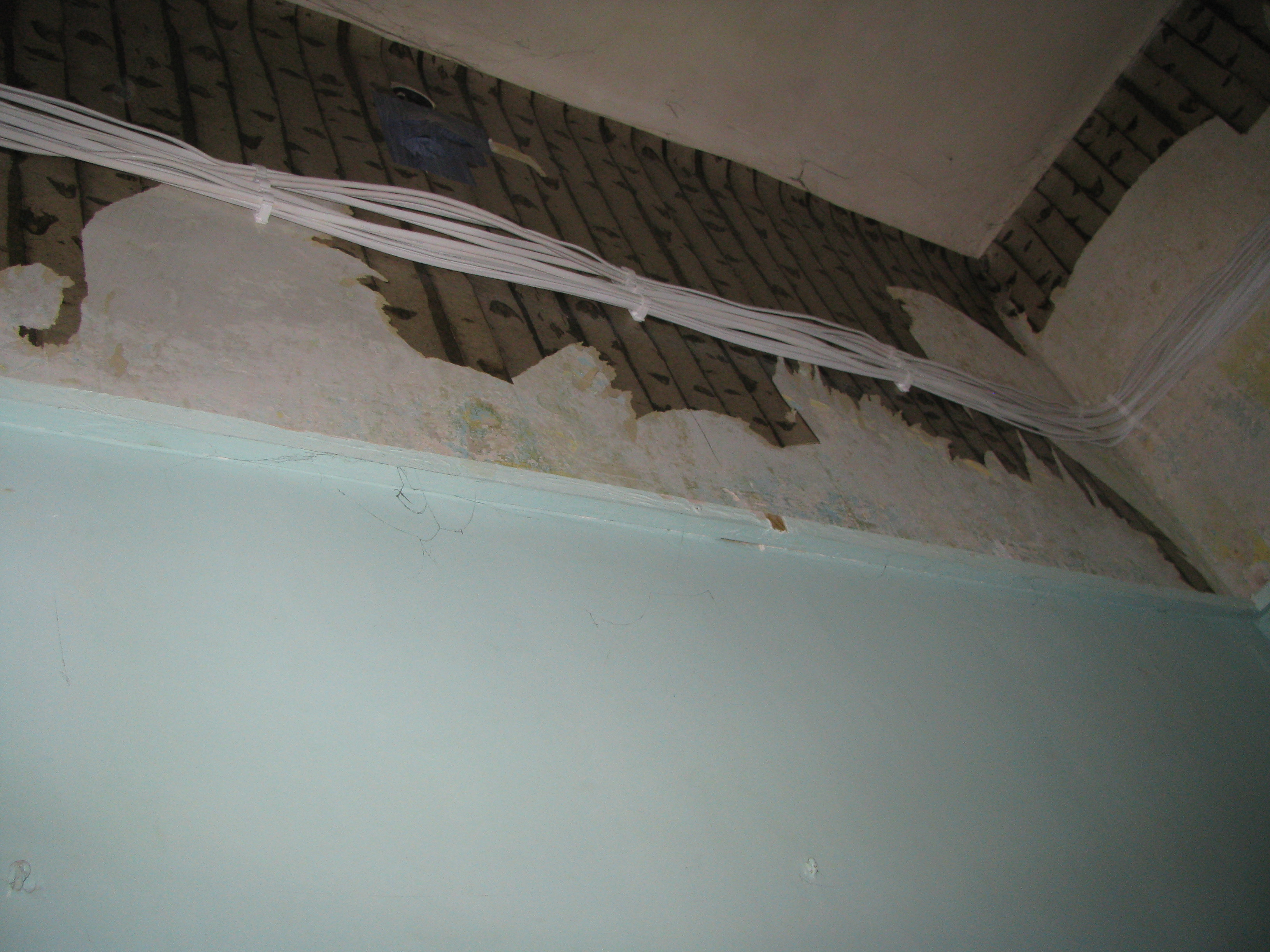
    I am waiting for a complete renovation of the 50 sqm apartment. I am trying to replace the entire electrical installation. In the whole apartment, I will lower the ceiling by about 50 cm. Are there any contraindications for cables to sockets and lighting to run in the ceiling? I would attach the cables to the CURRENT ceiling, i.e. they would NOT be on the boards. I would save mainly on forging in the walls, I would simply lead cables to the sockets directly from the ceiling.

    Regards.
  • ADVERTISEMENT
  • #2 14125863
    elpapiotr
    Electrician specialist
    Posts: 12199
    Help: 1013
    Rate: 3508
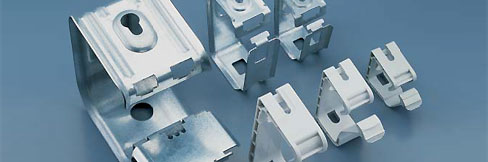
    Isn't it better to put it in the walls, not on the ceiling?
    Unless you are going to save, and lead the wires "shortcuts"

    EDIT - It was supposed to be on the walls, not the walls.
  • #3 14125894
    morrph
    Level 9  
    Posts: 24
    Rate: 4
    This would involve a lot of forging in the walls. If I let go of all the cables in the ceiling, it would be much less work because I would not have to crouch there, because the suspended ceiling will come anyway.
  • ADVERTISEMENT
  • #4 14125915
    elpapiotr
    Electrician specialist
    Posts: 12199
    Help: 1013
    Rate: 3508
    After all, I am not writing about forging, but about placing the wires on, for example, spacing brackets on the wall, ABOVE the planned suspended ceiling.
  • #5 14125933
    Anonymous
    Anonymous  
  • #6 14125947
    elpapiotr
    Electrician specialist
    Posts: 12199
    Help: 1013
    Rate: 3508
    szelton wrote:
    If you cover the wires with a conduit, you can attach them to the ceiling frame
    It's not a good solution, after all.
  • #7 14125960
    Anonymous
    Anonymous  
  • ADVERTISEMENT
  • #8 14125971
    elpapiotr
    Electrician specialist
    Posts: 12199
    Help: 1013
    Rate: 3508
    Normally :D
    But at the crossings of the profiles, they are protected against their sharp edges.
  • #9 14125974
    morrph
    Level 9  
    Posts: 24
    Rate: 4
    I understand, but is there any regulation that says that the wiring for sockets must be led in the walls, and lighting in the ceiling?
  • #10 14126003
    Leonidas1990
    Level 10  
    Posts: 17
    Rate: 1
    Rather, there is no such provision anywhere, because I have never met him, the wires from the sockets later, you will have to run "up the wall" anyway, so I would be inclined to the advice of my friend Elpapiotr.
  • #11 14126018
    elpapiotr
    Electrician specialist
    Posts: 12199
    Help: 1013
    Rate: 3508
    Oh my God. Is it so difficult to understand and imagine the cable routes?
    Probably obvious that it is good to "go" with the cable to the existing ceiling to the upper lighting outlet.
    Well, unless you just throw in a new one, loose, because they do anyway.
  • #12 14126045
    morrph
    Level 9  
    Posts: 24
    Rate: 4
    It's a bit strange, in my opinion the wires are safer in the ceiling than on the wall. Not to mention the fact that cable routing in the floor has recently been popular ..
  • #13 14126082
    elpapiotr
    Electrician specialist
    Posts: 12199
    Help: 1013
    Rate: 3508
    Is 25 cm from the existing ceiling and 25 cm from the planned one a safe distance?
  • #14 14126112
    morrph
    Level 9  
    Posts: 24
    Rate: 4
    In my case, yes, you are right, but when someone lowers the ceiling and a few cm, I don't think so ;-)
  • #15 14126132
    Anonymous
    Anonymous  
  • #16 14126137
    kkas12
    Level 43  
    Posts: 17356
    Help: 1073
    Rate: 4262
    You can also install troughs (or sections of troughs) on the ceiling and lead the cables from them where the accessories will be installed.
  • #17 14126138
    elpapiotr
    Electrician specialist
    Posts: 12199
    Help: 1013
    Rate: 3508
    morrph wrote:
    Hello,
    I am waiting for a complete renovation of the 50 sqm apartment. I am trying to replace the entire electrical installation. In the whole apartment, I will lower the ceiling by about 50 cm .
    Regards.

    Everything about it. We are not talking about a few centimeters, but about half a meter :D
    PS. In companies, behemoths, etc., perforated troughs are mounted on the walls above the suspended ceiling, and the cables are placed there.
    It is an unnecessary expense for you.
  • #18 14126159
    morrph
    Level 9  
    Posts: 24
    Rate: 4
    Okay :-D And is there any further condition as to how many cables can I put in one conduit / trough?
  • ADVERTISEMENT
  • #19 14126179
    jann111
    Level 33  
    Posts: 2058
    Help: 180
    Rate: 505
    morrph wrote:
    And is there any further condition as to how many cables can I put in one conduit / trough?

    Apply such that they all come in. :wink:
  • #20 14126186
    morrph
    Level 9  
    Posts: 24
    Rate: 4
    Ok, topic exhausted. Thanks :-D .
  • #21 14126192
    elpapiotr
    Electrician specialist
    Posts: 12199
    Help: 1013
    Rate: 3508
    But what are the conduits above the suspended ceiling for?
    I cannot comprehend it :cry:
  • #22 14126219
    BILGO
    Level 38  
    Posts: 4452
    Help: 393
    Rate: 723
    A colleague elpapiotr writes well, if we have enough space, the cables can be mounted on the wall between the existing and suspended ceilings .. ;)
    The passes then become redundant.
  • #23 14126255
    elpapiotr
    Electrician specialist
    Posts: 12199
    Help: 1013
    Rate: 3508
    Are conduits needed here?

    Cable Routing in 50 sqm Apartment: Replacing Electrical Installation with Suspended Ceiling
  • #24 14129026
    deus.ex.machina
    Level 32  
    Posts: 1923
    Help: 91
    Rate: 340
    Why don't you use the troughs? - attach them to the wall and after the trouble.
  • #25 14129108
    TWK
    Electrician specialist
    Posts: 2326
    Help: 220
    Rate: 509
    deus.ex.machina wrote:
    Why don't you use the troughs? - attach them to the wall and after the trouble.
    What for? How much is a meter of a trough and how many 2 or 4 handles shown by elpapiotr? How much time is the trough assembled and how much time such holders?
  • #26 14129393
    Leonidas1990
    Level 10  
    Posts: 17
    Rate: 1
    I agree with TEC, firstly, additional cost entry and secondly, time. We save on both :)
  • #27 14129516
    pol102
    VIP Meritorious for electroda.pl
    Posts: 3085
    Help: 163
    Rate: 368
    This can be done even faster than @elpapiotr proposes :)
    Cable Routing in 50 sqm Apartment: Replacing Electrical Installation with Suspended Ceiling

    I especially recommend the plastic ones, they are great to use even when working alone. You have to drill, but you can insert and remove the wires many times.
  • #28 14129533
    Leonidas1990
    Level 10  
    Posts: 17
    Rate: 1
    I agree with pol102 only that if the owner wants to go a little on the cost, better let him choose the elpapiotra option, it's always a little cheaper :)
  • #29 14129552
    pol102
    VIP Meritorious for electroda.pl
    Posts: 3085
    Help: 163
    Rate: 368
    Following this, let's drill pegs, tie the screws with wire and wrap the wires with them - cheaper after all.
  • #30 14129557
    Leonidas1990
    Level 10  
    Posts: 17
    Rate: 1
    well, going as high as possible, you do surface installation by mounting it on aluminum tape :)

Topic summary

✨ The discussion revolves around the feasibility of routing electrical cables in a 50 sqm apartment with a suspended ceiling, as the user plans to lower the ceiling by 50 cm. Various participants express concerns about the safety and practicality of running cables in the ceiling versus the walls. Suggestions include using conduits for protection, attaching cables to the ceiling frame, and utilizing troughs for organization. There is no specific regulation mandating that wiring for sockets must be in walls, but participants emphasize the importance of aesthetics and accessibility for future modifications. The conversation also touches on the cost-effectiveness of different installation methods and materials, with some advocating for simpler solutions to save time and money.
Generated by the language model.

FAQ

TL;DR: Running socket and lighting circuits in the 50 cm ceiling void is allowed; keep conduit fill ≤ 40 % [IEC 60364-5-52, 2021], clip cables every 40 cm, and shield edges—“cables must avoid sharp metal” [Elektroda, elpapiotr, post #14125971] Why it matters: smart routing cuts wall-chasing labor by ~60 % [Elektroda, morrph, post #14125894]

Quick Facts

• Minimum ceiling void recommended for safe routing: 25 cm clearance [Elektroda, elpapiotr, post #14126082] • Max. conduit fill: 40 % cross-section for mixed circuits [IEC 60364-5-52, 2021] • Typical clip/strap spacing: 30–40 cm for flat cable; 50 cm for conduit [Hager Guide] • PVC conduit cost: approx. €0.70 – €1.20 per m (Ø20 mm) [EU Market Report 2023] • Collective bracket (OBO Grip 10): ~PLN 5.5 each [Elektroda, pol102, post #14129665]

1. Can I run both socket and lighting cables above a suspended ceiling?

Yes. Polish and IEC rules allow any low-voltage fixed wiring in accessible voids, provided it is supported, protected, and follows safe zones at wall drops [IEC 60364-5-52, 2021; Elektroda, Leonidas1990, #14126003].

2. Do regulations force socket circuits to stay inside walls?

No clause requires wall-only routes. Dropping vertically in safe zones from the ceiling to each socket meets the wiring zone rule [PN-HD 60364-5-52:2011].

3. What clearance should I leave between existing and false ceilings?

Keep at least 25 cm to allow clips, bends, and future access [Elektroda, elpapiotr, post #14126082] Smaller gaps complicate tooling and heat dissipation.

4. Which support method is best: clips, conduit, or trays?

For a 50 m² flat, spaced wall clips cost least and install fastest [Elektroda, Leonidas1990, post #14129393] Conduit adds protection and re-pull capability. Mini cable trays give neat partitioning but raise cost by 20–35 % [EU Market Report 2023].

5. How many cables fit in one conduit or tray?

Stay under 40 % fill. Example: Ø20 mm conduit (area 314 mm²) safely holds three 3×2.5 mm² cables (≈86 mm² total) [IEC 60364-5-52, 2021].

6. How do I protect cables from metal frame edges in K/G walls?

Add grommets or flexible sleeve where cables cross profiles; “they are protected against sharp edges” [Elektroda, elpapiotr, post #14125971]

7. What spacing should I use for cable clips?

Flat PVC cable: every 30–40 cm; plastic conduit: every 50 cm; metal tray: every 1.5 m [Hager Guide].

8. Will thermal insulation above the ceiling derate the cables?

Yes. Insulated voids can raise conductor temperature by ≥10 °C, cutting current-carrying capacity by up to 20 % [IEC 60364-5-52, 2021]. Select the next cable size if heavily insulated.

9. Can power and data cables share the same tray?

Keep 50 mm separation or fit a metallic divider to avoid EMI per EN 50174-2. Edge-case: mixed bundles caused 45 % packet loss in a test lab [Fluke Networks, 2020].

10. How can I retrofit wiring before the plasterboard goes up?

  1. Fix main runs on wall above void using spacing clips. 2. Drop vertical conduits at socket and switch points. 3. Test continuity and insulation, then close ceiling. Total time ≈ 1 day for 50 m² crew of two.

11. Are plastic collective brackets (e.g., OBO Grip) worth it?

For short runs they speed work; one bracket holds up to 40 cables and reopens easily [Elektroda, pol102, post #14129623] In small flats the extra PLN 5–10 per bracket may outweigh labor savings.

12. What happens if I overfill the conduit?

Heat rises, cables jam, and insulation can fail. Tests show 70 % fill increases conductor temperature by 18 °C at 16 A load, exceeding PVC rating [UL White Paper, 2019].

13. Can I add extra cables later without tearing the ceiling?

Yes, when using accessible trays or oversized conduit with pull lines. If only clips are used, you must remove boards first [Elektroda, deus.ex.machina, post #14130260]

14. Does mounting look matter above a hidden ceiling?

Aesthetics rank lower, yet orderly routing eases future work and avoids the “traditional Polish hell” of tangled services [Elektroda, kkas12, post #14131268]
Generated by the language model.
ADVERTISEMENT