logo elektroda
logo elektroda
X
logo elektroda

Connection of the PE conductor from the GSW with the ring earthing tape

Greggy77 29898 43
Best answers

Should the PE conductor from the main earthing bus be connected to the ring earth electrode outside the building at the nearest test joint, or brought into the building and connected to the GSW?

Bring the ring earth electrode/tape to the GSW and connect the PE there; if you have a choice, connect the earth electrode directly in the ground rather than at the test/control joint [#14738659][#14741662] The standard cited in the thread allows a Type B arrangement as either a ring earth electrode outside the building in contact with the ground for at least 80% of its length, or a foundation earth electrode [#14740955] The PE conductor from the GSW should then go to the switchgear’s PE rail [#14738659][#14740039] Several replies also stress that the installation should be done according to the project and that both the ring earth electrode and any foundation earth electrode should be bonded at the GSW, or optionally in the ground [#14739113][#14746105]
Generated by the language model.
ADVERTISEMENT
Treść została przetłumaczona polish » english Zobacz oryginalną wersję tematu
  • #31 14747671
    Anonymous
    Anonymous  
  • ADVERTISEMENT
  • #32 14748083
    zbich70
    Level 43  
    Posts: 17116
    Help: 1164
    Rate: 6568
    Sorry buddy WojcikW but I don't understand what you want to achieve with your entries. So far, you are pushing some thesis that the current will flow through infinite resistance having an easier path and will choose yours anyway. But never mind...

    You discredit the foundation earth electrode in favor of the ring earth electrode for reasons unknown to me.
    Or maybe known? ;)
    Your entries sound as if you are a manufacturer, distributor of stainless, copper-plated, copper, etc. assortment. You don't like melting ordinary steel into concrete so much? Do you have a few tons of stainless steel in stock, and people, contrary to your expectations, do not buy it, because someone "dared" to them that the foundation is an ordinary "naked" ... ???

    P.S. You also did not refer to post #23... Which confirms my assumption about your intentions.
  • #33 14748126
    opornik7
    Electrician specialist
    Posts: 4494
    Help: 316
    Rate: 1556
    zbich70 wrote:
    Sorry Buddy WojcikW, but I don't understand what you want to achieve with your entries.

    Me too :(
    I expressed my opinion earlier on the previous page of the thread but I didn't want to mix it up ;) after my last post WojcikW . Maybe, Buddy, you'll finally put your cards on the table and you'll stop wreaking havoc?
  • #34 14748187
    emigrant
    Level 29  
    Posts: 1605
    Help: 107
    Rate: 324
    I have a copper-plated Galmar earth electrode and I am aware that it will simply rot after some time. I bought it at RST Bialystok, even they said it would rot in 20-30 years or maybe sooner. Only the joints are A2 stainless steel, although correctly the joints should be welded. Never mind. In my case, the tapestry lies at a depth of 120cm, the deeper the less oxygen, so the slower the oxidation of copper, if such a process will take place at 120cm. If there are these stray currents (I could be mistaken with something here), it will rot at an express pace.
    Reinforcement poured in concrete even in 100 years will be in an unchanged form, like brand new. The electrician said that in retrospect the resistance might increase 1.5-2?, so almost nothing.
  • ADVERTISEMENT
  • #35 14748238
    opornik7
    Electrician specialist
    Posts: 4494
    Help: 316
    Rate: 1556
    A wise man worth reading and listening to ;)
    For those who think differently, I recommend works on demolition of structures in order to determine the technical condition of footing and foundation reinforcement.
    And what the ring earth electrode looks like after a few/over a dozen years, the measurement specialists know perfectly well.
    It's over, period, amen from me.
  • ADVERTISEMENT
  • #36 14748566
    Łukasz-O
    Admin of electroenergetics
    Posts: 21783
    Help: 654
    Rate: 4278
    opornik7 wrote:

    And what the ring earth electrode looks like after a few/over a dozen years, the measurement specialists know perfectly well.
    It's over, period, amen from me.


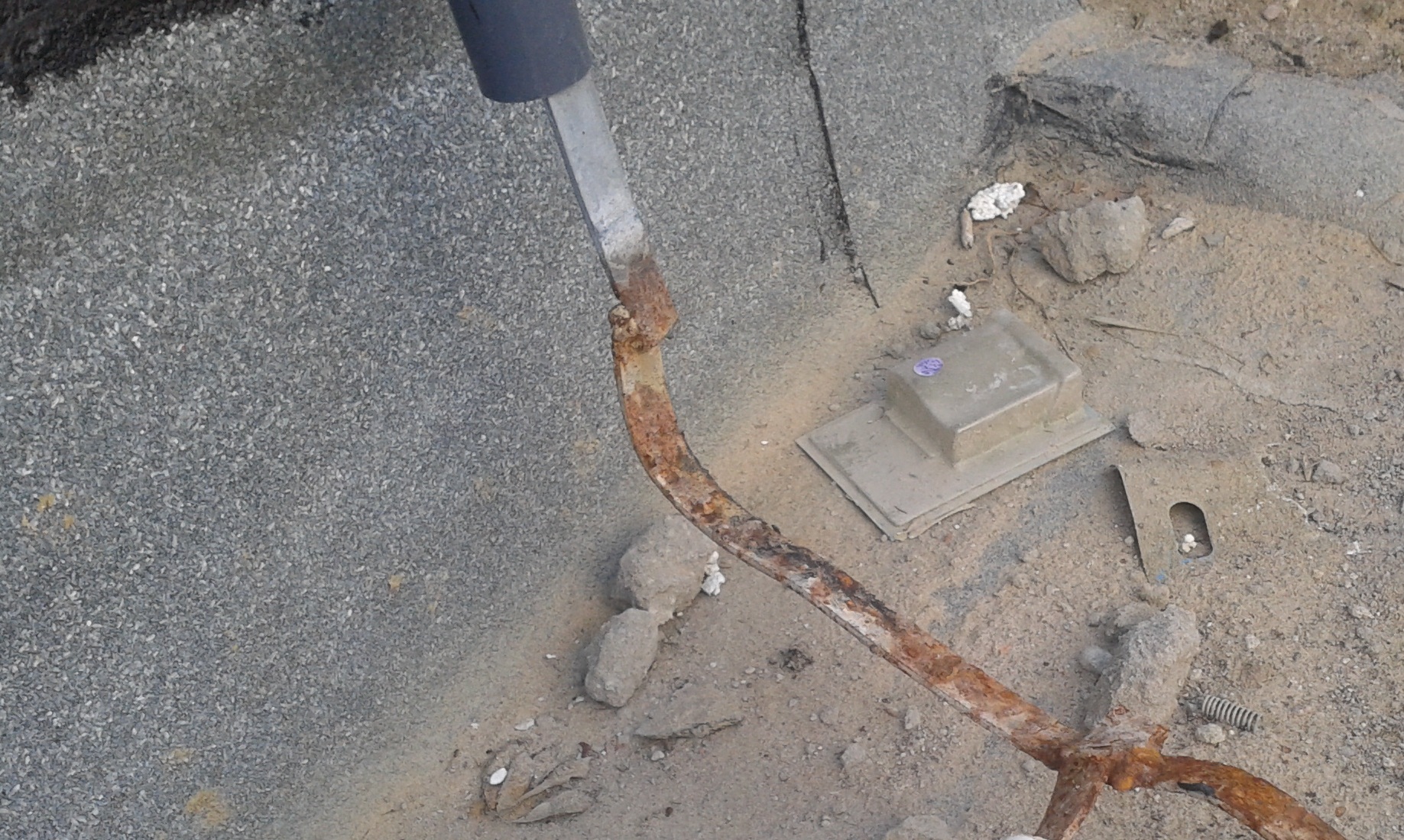
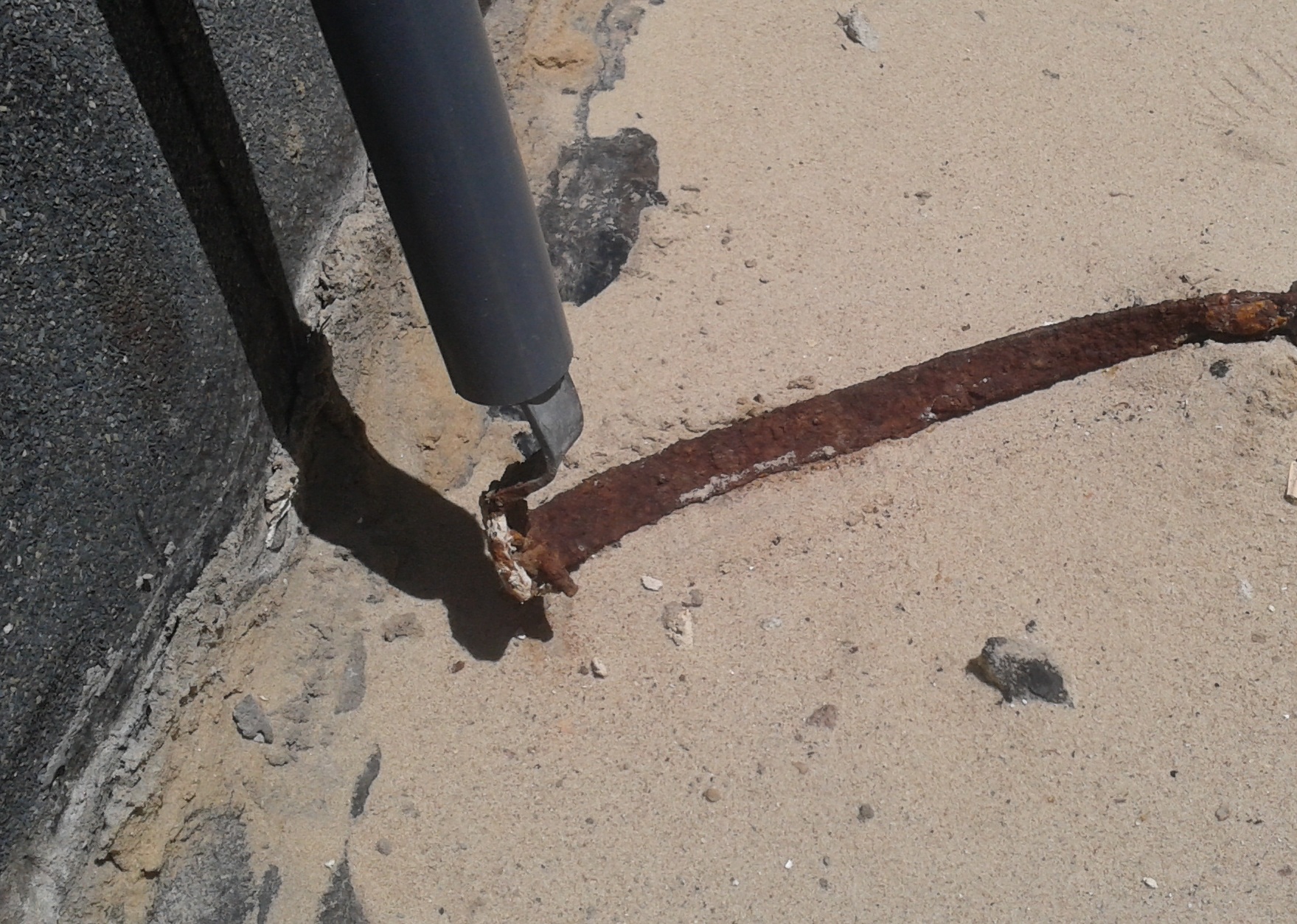
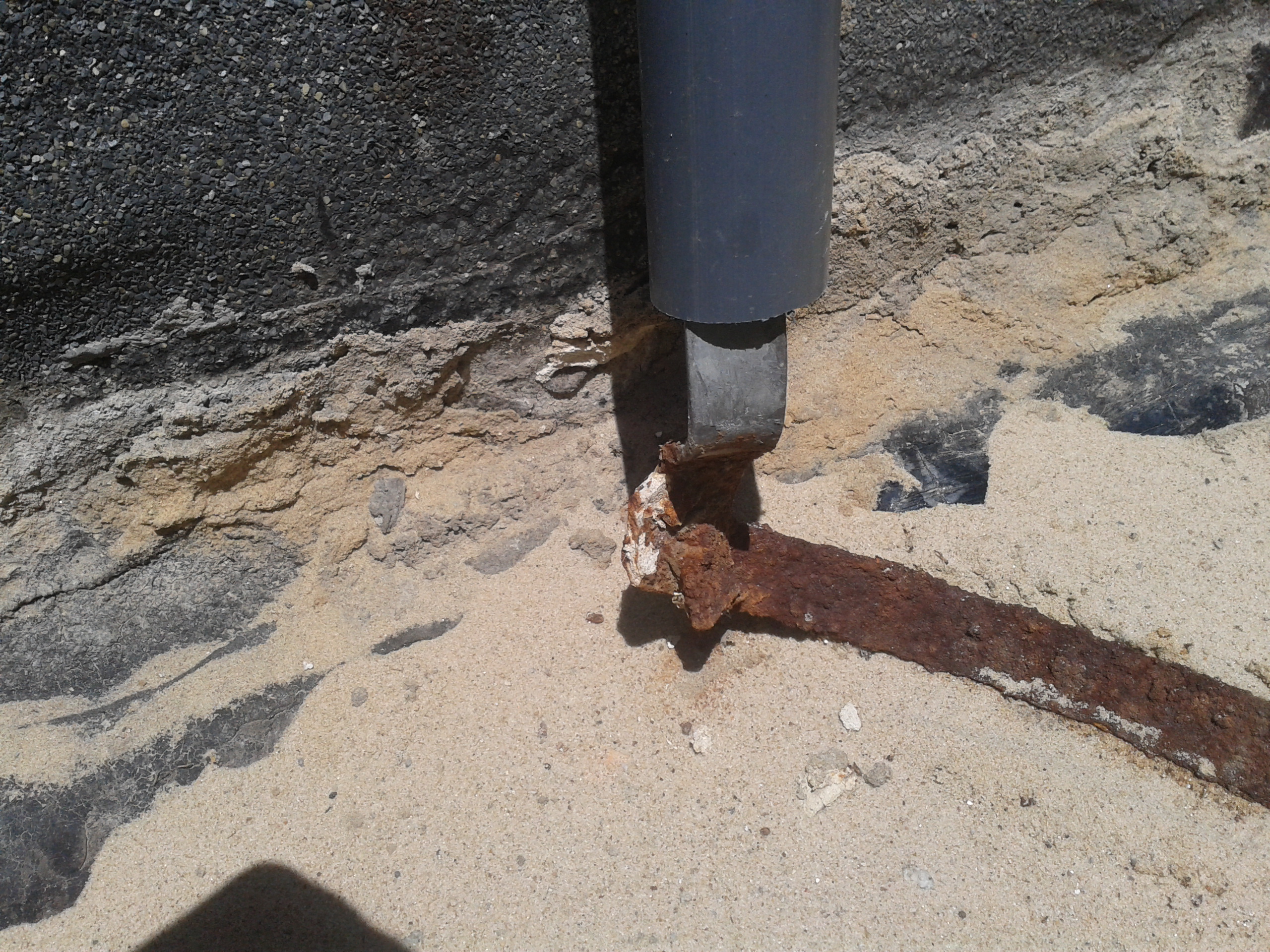
    It is me who, in addition to the above post, will illustrate what the excavated ring looks like after about eight years:
    Connection of the PE conductor from the GSW with the ring earthing tape Connection of the PE conductor from the GSW with the ring earthing tape Connection of the PE conductor from the GSW with the ring earthing tape

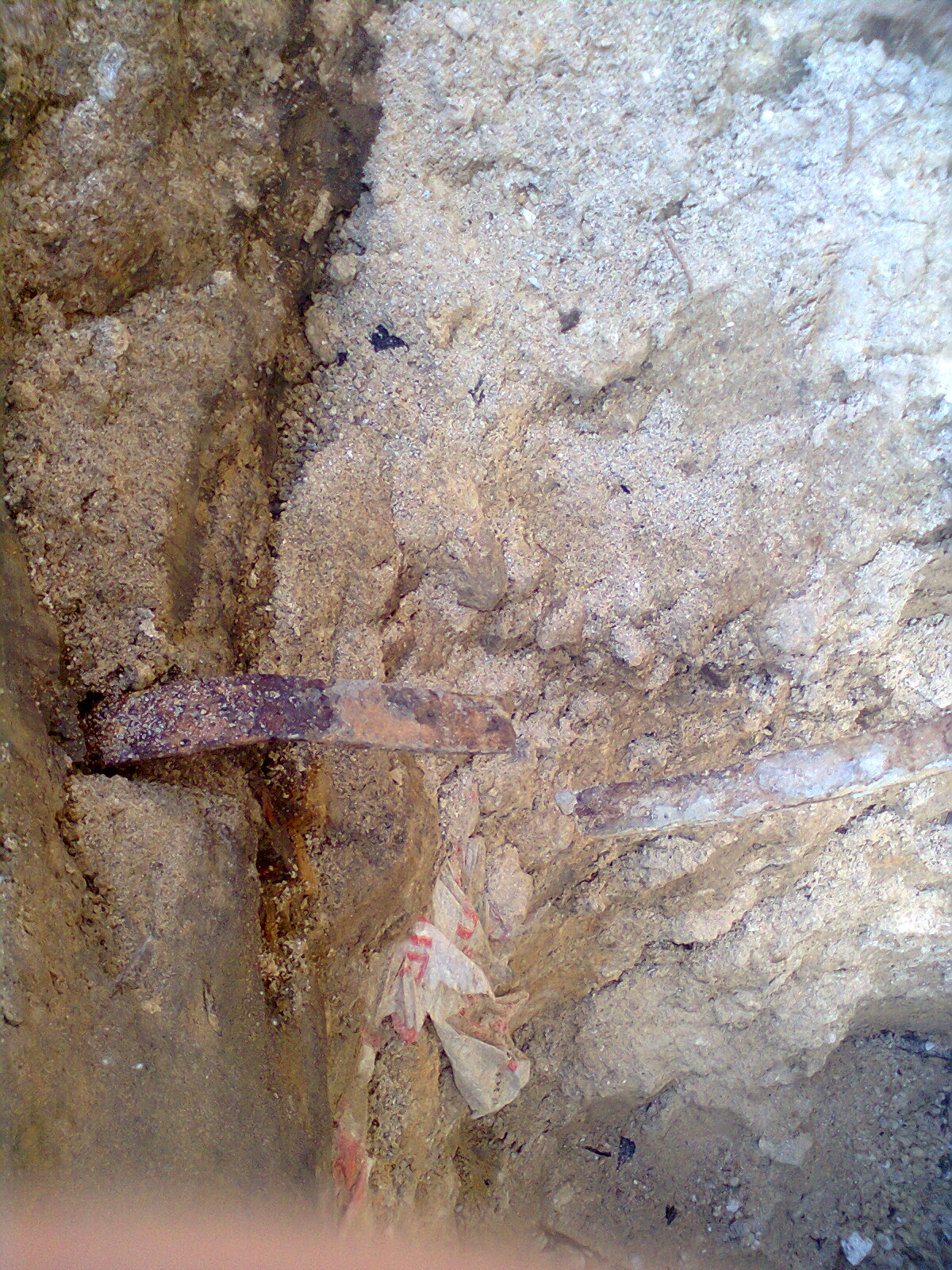
    In this photo you can see a 4mm tape cut with a normal spade while digging:
    Connection of the PE conductor from the GSW with the ring earthing tape

    Today's quality of zinc is not comparable to that of several decades ago.
  • #37 14752526
    Anonymous
    Anonymous  
  • ADVERTISEMENT
  • #38 14752677
    opornik7
    Electrician specialist
    Posts: 4494
    Help: 316
    Rate: 1556
    WojcikW wrote:
    The durability of the foundation earth electrode, made in accordance with the recommendations on Elektroda, will not exceed the durability of the ring earth electrode.

    You forgot to write that ...... in my opinion.
    Because the opinion of other colleagues, including mine, is different.
  • #39 14752755
    TWK
    Electrician specialist
    Posts: 2326
    Help: 220
    Rate: 509
    opornik7 wrote:
    Because the opinion of other colleagues, including mine, is different.
    Some time ago I was at the dismantling of a reinforced concrete foundation that had been in the ground for some 20-30 years. The vast majority of the reinforcement showed no trace of corrosion. The cooper laid next to this foundation was all ore. So I'm also of the opinion that the foundation earth electrode has a much greater durability.
  • #40 14752833
    Anonymous
    Anonymous  
  • #41 14752855
    TWK
    Electrician specialist
    Posts: 2326
    Help: 220
    Rate: 509
    WojcikW wrote:
    To be clear, a foundation earth electrode made contrary to the advice on Elektroda can be much more durable than a ring earth electrode.
    Which advice reduces its durability compared to other solutions?
  • #42 14753007
    Anonymous
    Anonymous  
  • #43 14753118
    Łukasz-O
    Admin of electroenergetics
    Posts: 21783
    Help: 654
    Rate: 4278
    What are installation inspections for?
    In addition, the places where tapes are projected on professional construction sites are secured. The same as the guide lines around the style with the ground.
    You're looking for a hole in the fence, and you're still wrong.
  • #44 14753234
    zdzisiek1979
    Level 39  
    Posts: 5408
    Help: 557
    Rate: 1241
    WojcikW wrote:
    The only way out is to run an insulated copper wire.


    And here I would question such an idea, and even more so underground. Capillary phenomenon. I suspect that even more intense than on the removal of the hoop itself.

    As for the zinc itself, I suspect that it has a lot to do with mechanical treatment. Brief scratches and cracking of the coating when bending corners.

    Added after 2 [minutes]:

    Łukasz-O wrote:

    In addition, the places where tapes are projected on professional construction sites are secured.


    Even reinforcement welds made for grounding purposes are protected against corrosion and then poured with concrete. I omit photo albums of these works as proof of work.

Topic summary

✨ The discussion revolves around the proper connection of a PE conductor (LGY 10mm2) from a Grounding and Surge Protection System (GSW) to a ring earthing tape in a residential setting. Participants debate whether to connect the PE wire outside the building to the hoop iron or to introduce the hoop iron inside and connect it to the GSW. Key considerations include aesthetics, safety during potential electrical failures, and adherence to design specifications. The importance of a ring earth electrode for effective lightning protection is emphasized, with suggestions to connect both the ring and foundation earth electrodes at the GSW. The conversation also touches on the durability and effectiveness of different earthing systems, including the potential corrosion of materials used in grounding installations.
Generated by the language model.

FAQ

TL;DR: Field tests show foundation electrodes lower earthing resistance by 30-50 % compared with ring strips [DEHN, 2020]; “a properly made foundation earth electrode has practically unlimited durability” [Elektroda, retrofood, post #14738987] Always bond PE, GSW and electrode per EN 62305-3 to avoid flash-over. Why it matters: Correct routing now prevents costly rewiring and protects life during a 200 kA strike.

Quick Facts

• EN 62305-3 Type B allows either ring or foundation electrode; ≥80 % of conductor must contact soil [EN 62305-3:2009]. • Minimum down-conductor cross-section: 50 mm² steel or 16 mm² Cu [PN-HD 60364-5-54:2011]. • Typical earth resistance target for residential LPS: ≤10 Ω; <5 Ω preferred for surge devices [IEC TS 60728-11]. • Hot-dip-galvanized strip corrodes ~0.13 mm/year in wet soil; full perforation can occur in 8-12 years [TU München, 2019]. • Average retrofit cost of external ring electrode: €12-18 per m including excavation [BDB, 2022].

Where should the LGY 10 mm² PE coming from the GSW be connected?

Route the PE to the nearest inspection point and bond it to the ring or foundation electrode using a welded or clamped 16 mm² conductor; avoid leaving the cable loose in screed [Elektroda, mireqla, post #14737260]

Is it better to bring the steel hoop (tape) inside to the GSW or join outside?

Both are permissible; bringing it inside simplifies inspection, while outside joints reduce internal fault currents during failure events [Elektroda, mireqla, post #14737260]

Do I need a foundation earth electrode if the project shows only a ring one?

Standards recommend a foundation electrode wherever feasible; it improves durability and lowers resistance [EN 62305-3] even if the design omits it [Elektroda, Greggy77, post #14740039]

Does a foundation electrode protect against lightning as well as a ring?

Yes; EN 62305-3 lists both as equivalent Type B layouts when properly bonded at ≥2 points to down-conductors [EN 62305-3:2009, 5.4.2.2].

What cross-section must the bonding conductor have?

Use at least 16 mm² Cu or 25 mm² Al for main equipotential bonding; 50 mm² steel is acceptable for down-conductors [PN-HD 60364-5-54:2011].

Can I keep the existing 10 mm² LGY as a parallel path?

Yes; a double bond improves redundancy, but upgrade the main link to ≥16 mm² to meet code [Elektroda, Greggy77, post #14737459]

How do dynamic lightning currents split between multiple electrodes?

Most current follows the lowest surge impedance path, yet extreme wave phenomena can divert part through higher-ohm routes, especially if a bond breaks [Elektroda, WojcikW, post #14752526]

What failure signs should I watch for in ring electrodes?

Look for white zinc oxide, tape thinning below 2 mm, and loose clamps; these precede total perforation within about 10 years in acidic soil [TU München, 2019].

How often must the earthing system be inspected?

Test resistance and visual connections every 5 years, or after any structural change, per EN 62305-3 Annex E.

Quick 3-step method to connect the hoop iron to GSW?

  1. Clean tape and GSW bar, remove paint. 2. Weld or use approved Exothermic clamp with 16 mm² Cu tail. 3. Seal joint with bituminous compound and label for inspection.

What statistic shows the benefit of proper bonding?

Buildings with compliant electrodes recorded 43 % fewer device failures after storms compared with those using ad-hoc stakes [InsuranceEurope, 2021].

Edge case: what happens if the hoop exits concrete unprotected?

Atmospheric moisture corrodes exposed steel within a year, raising resistance beyond 10 Ω and risking side flashes indoors [Elektroda, WojcikW, post #14753007]

Expert view on combining ring and foundation electrodes?

“Ring and foundation earth electrodes should be connected in GSW” [Elektroda, Anonymous, post #14739113], giving a single low-impedance reference plane.
Generated by the language model.
ADVERTISEMENT