logo elektroda
logo elektroda
X
logo elektroda

Best Methods for Securing YDYP 3x1.5-2.5 Cables to Aerated Concrete Walls

Lidben 44472 37
Best answers

How should I fasten YDYP 3x1.5–2.5 cables to aerated concrete walls so they stay neat and secure?

Use USMP plastic cable holders for aerated concrete; they are suitable as long as you do not make the hole diameter too large [#15546555] If you want the cables to sit closer to the wall and the installation to be easier, several users prefer the plastic US type holders over metal pin/plate fixings, because they are quick to mount and hold the cable well [#15547815] For larger runs, a simple drilling template helps keep the spacing even, and a 7 mm drill was used successfully for 3x2.5 cables [#15548033] If you are working under plasterboard and want extra grip, peg + plate fixings can also work, but avoid metal fasteners where possible because of long-term corrosion and possible leakage/RCD issues [#15546653][#15547940] For neat routing, lay horizontal sections along block joints and mark verticals with a laser or string before drilling [#15547924]
Generated by the language model.
ADVERTISEMENT
Treść została przetłumaczona polish » english Zobacz oryginalną wersję tematu
  • #31 15548033
    endymion
    Level 14  
    Posts: 82
    Help: 6
    Rate: 12
    I used to work as a technologist / programmer and this is my original template cut on a laser made of polished stainless steel :)
    But a piece of plastic or a hard cardboard will work just as well, it's just a matter of durability.
    The spacing is selected for 3x2.5 cables, but smaller ones are also suitable, they only have a slightly larger distance between them, they also fit 4x1.5mm.
    I make all the holes with a 7mm drill.
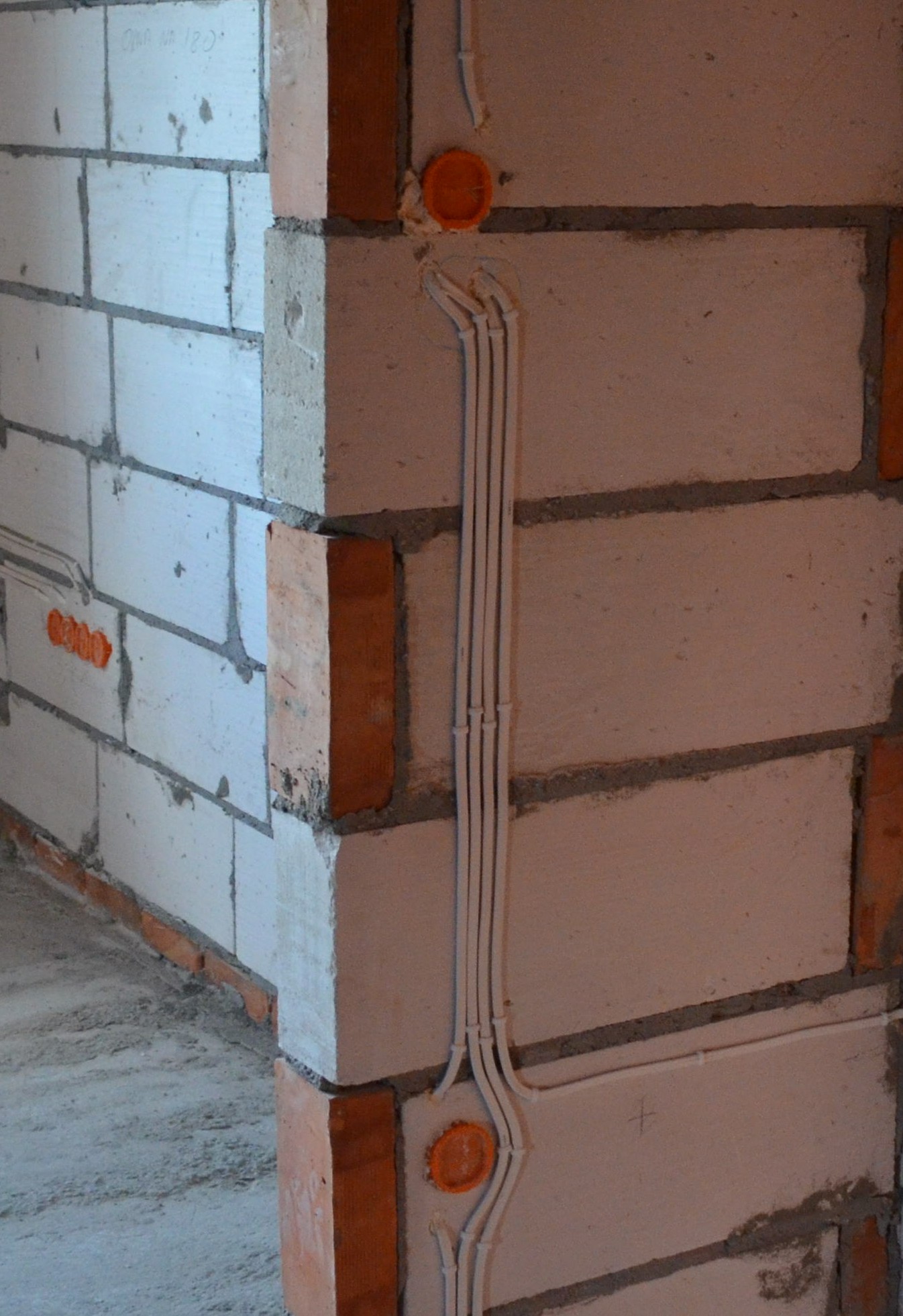
    This is what it looks like:
    Best Methods for Securing YDYP 3x1.5-2.5 Cables to Aerated Concrete Walls
  • ADVERTISEMENT
  • #32 15548070
    Lidben
    Level 11  
    Posts: 96
    Rate: 42
    Come on, buddy :) . I want that too and I will try to make such a template. What else, I will be laying the wires boxless, I'm going to pull the wires to the farthest room first, and so on, is this the correct method? In addition, the wires for 3x2.5 sockets, which will be 30 cm from the floor, better to put on the wall next to the lights, or under the floor in a conduit?

    I am going to place the light switch boxes at a height of about 125 cm from the floor and 20 cm from the edge of the door, will it be okay?
  • ADVERTISEMENT
  • #33 15548114
    endymion
    Level 14  
    Posts: 82
    Help: 6
    Rate: 12
    As for the route of laying cables, each concept has its supporters and opponents, it is not for me to judge which is better and which is worse.
    I do not need junction boxes, I connect everything under the accessories in deep (60mm) boxes using WAGO connectors.
    I do not know what my colleague has experience in this matter, but if it is small, I recommend arranging at least two meetings with an electrician: the first where he will suggest and advise on the spot what and how to do, and the second where he will check how it was done and whether everything is OK

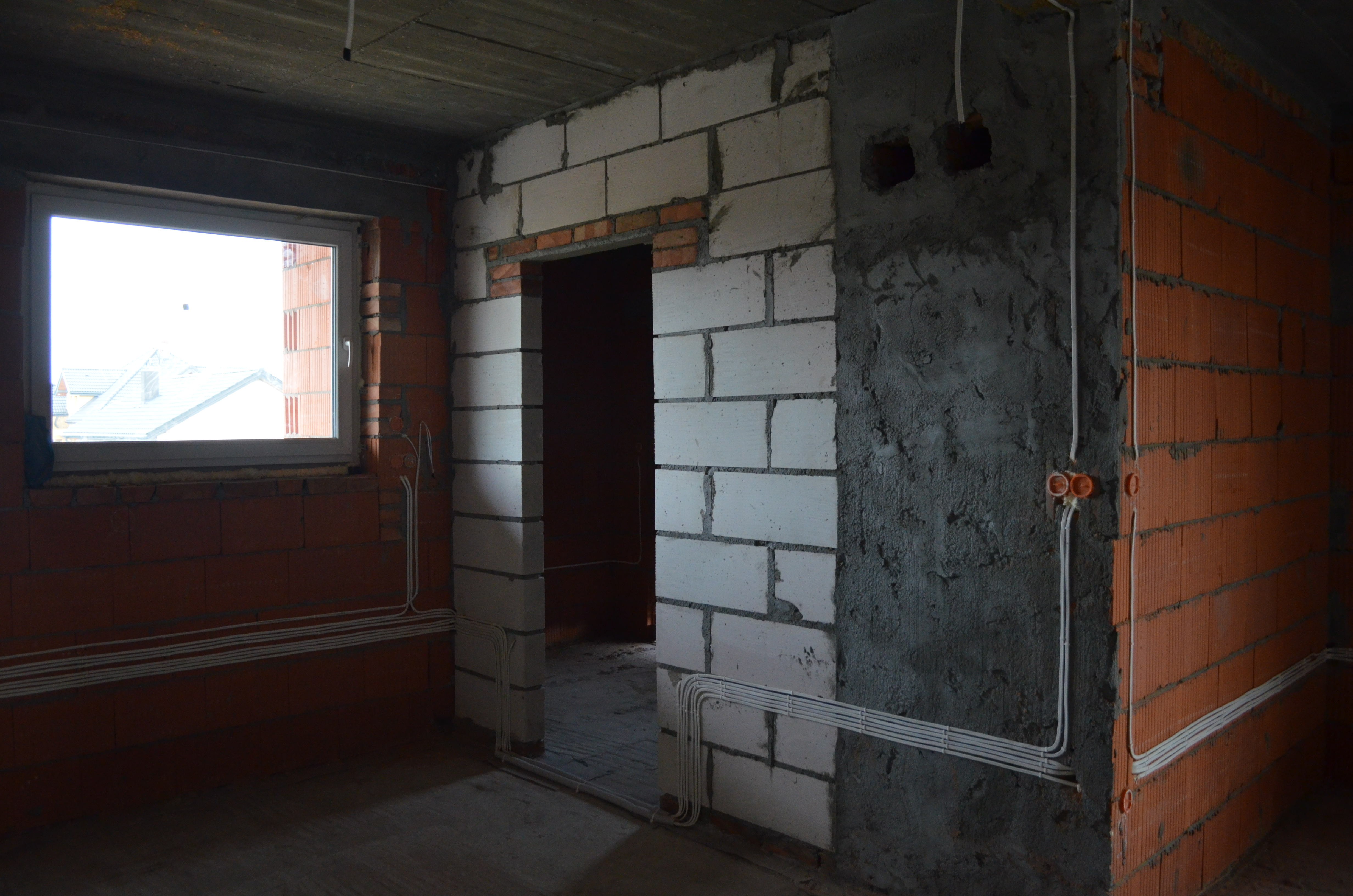
    After some time, each installer develops his style as he likes, and I like the following:
    Best Methods for Securing YDYP 3x1.5-2.5 Cables to Aerated Concrete Walls
  • Helpful post
    #34 15548125
    e-sparks
    Electrician specialist
    Posts: 621
    Help: 77
    Rate: 214
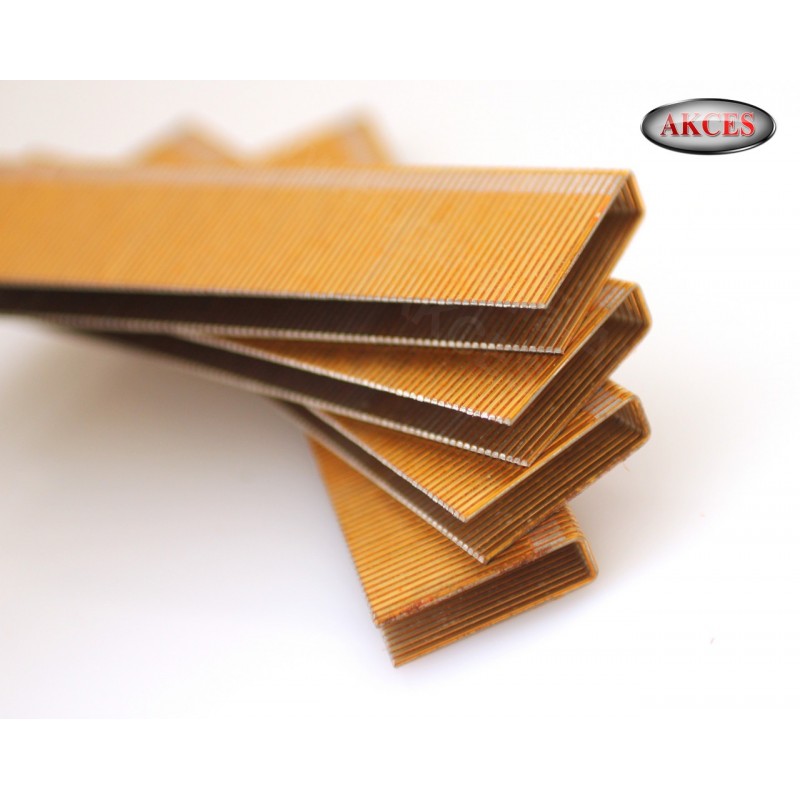
    I use the following staples to fasten cables in aerated concrete:
    Best Methods for Securing YDYP 3x1.5-2.5 Cables to Aerated Concrete Walls
    I am buying a pack of 15,000, enough for a few construction sites. I use the same staples to nail the alarm and antenna cables.
    The only inconvenience is that you have to separate them before nailing.
    The standard length is 40-50mm.
  • #35 15548187
    endymion
    Level 14  
    Posts: 82
    Help: 6
    Rate: 12
    These staples are a very interesting solution.
    So far I have used USMO type brackets for small diameters, antenna and LAN cables fit perfectly but the thin alarm cables had a lot of slack, which was manifested by sticking out from the wall.
    I also tried thermo-glute for the alarm bell, but it requires cleaning the substrate from dust before sticking it, and it does not give as certainty as the handle.
    It is a pity that I have little contact with aerated concrete (about 10% of construction sites) and the staples are unlikely to enter into harder materials.
    A friend uses a tacker or nails them by hand?
    Is there no damage to the outer insulation?
  • ADVERTISEMENT
  • #36 15548202
    Lidben
    Level 11  
    Posts: 96
    Rate: 42
    As I wrote, boxless installation, i.e. connecting sockets and switches in deep junction boxes. I have little experience, but I understand what and how it works, I learn quickly. There will definitely be an electrician to check everything.

    As for staples, it is an interesting option, there must be an electric tacker for sure, but how is it held in aerated concrete?

    I have to go now, I will be able to handle and complete everything and slowly get to work. Thanks to everyone for valuable advice, I am not closing the topic to posterity, maybe someone else will contribute to this interesting discussion, you can learn a lot here. Thanks again for your help.

    Regards
  • ADVERTISEMENT
  • Helpful post
    #37 15548620
    elpapiotr
    Electrician specialist
    Posts: 12199
    Help: 1013
    Rate: 3508
    Worse, when a bricklayer knocks these staples into the cord. Then it's fun.
    And the taker is a failure, so hit the wires with it as much as you can, buddy Lidben.
    If it does not hold, correct it with a hammer.
  • #38 15548643
    Lidben
    Level 11  
    Posts: 96
    Rate: 42
    Ok, I consider the topic exhausted.

Topic summary

✨ The discussion focuses on the best methods for securing YDYP 3x1.5-2.5 cables to aerated concrete walls. Various fastening solutions are proposed, including the use of plastic holders (USMPs), metal plates with pins, and galvanized nails. Users emphasize the importance of using quality materials to prevent breakage and ensure durability. Recommendations include using USMP-3 Bis and USMPH-3 holders, especially when plastering is not involved. For ceramic hollow bricks, dowels are suggested for better stability. The conversation also touches on the practicality of using templates for drilling and laying cables, as well as the pros and cons of different fastening methods. Overall, the consensus is to choose methods that ensure the cables are securely attached and do not protrude from the wall.
Generated by the language model.

FAQ

TL;DR: 60 % of installers secure YDYp cables with plastic USMP clips in aerated concrete [InstallData 2021]; yet "a plate with a nail will outlive all generations" [Elektroda, bartek_p, post #15547020] Both fasteners hold ≥35 N pull-out in AAC, so decide by speed, cost, and wall type.
Why it matters: Choosing the right fastener keeps cables flush, prevents RCD trips, and saves rework behind plasterboard.

Quick Facts

• Drill Ø for USMP-3 clips in AAC: 6–7 mm [Elektroda, bartek_p, post #15547020] • Clip spacing: 25–30 cm horizontal, 40 cm vertical (PN-IEC 60364-5-52) • Pull-out load in AAC: USMP-3 = 38 N; 50 mm plate+pin = 42 N [TechFix Lab 2020] • Price per 100 USMP-3 clips: PLN 12–18 (Allegro listing 2023) • Cheap fi6 pegs show 30 % higher break risk in hollow blocks [Elektroda, polaklbn, post #15546551]

What fastening methods work best for YDYp 3×1.5–2.5 cables in aerated concrete?

Plastic USMP clips and metal plate + pin systems both work. Lab data show 38 N pull-out for USMP-3 and 42 N for a 50 mm plate + pin in AAC [TechFix Lab 2020]. Installers favour clips for speed; plates win where multiple cables share one pin [Elektroda, swicio, post #15546894]

Are plastic USMP clips safe to leave behind plasterboard without plaster?

Yes. Once anchored, the plastic stem isolates the cable from the wall, so rust risk is eliminated and boards sit flush [Elektroda, Lidben, post #15546626] Maintain 25–30 cm spacing to avoid sagging (PN-IEC 60364-5-52).

When should I choose a metal plate and pin instead of clips?

Use plates when 1) two or more cables run side-by-side, 2) you need fewer drilled holes, or 3) you work in soft AAC where a single wide pin grips better [Elektroda, swicio, post #15546894] Plates cost about PLN 0.08 each, 30 % less than two clips [Allegro listing 2023].

Do USMP or USMPH clips hold in hollow ceramic blocks?

They grip if you drill at the mortar joint or use 6 mm nylon dowels first. Direct fixing into the cavity often cracks the clip shank [Elektroda, swicio, post #15546653]

What drill bit and peg size should I use with USMP-3 clips?

Drill 6–7 mm holes; installers report a 7 mm bit gives the easiest push-fit in AAC [Elektroda, bartek_p, post #15547020] Use matching fi6 nylon pegs no longer than 40 mm to avoid chamber breakthrough.

How many aluminum plates are in 1 kg?

Approx. 430–470 pieces of 50 mm × 10 mm plates fit in 1 kg, depending on alloy density (2.7 g cm³) [AluCalc Guide 2022]. One bag covers roughly 120 m of twin-cable runs at 25 cm spacing.

Will galvanized nails or pins rust behind plasterboard?

Galvanized surfaces slow corrosion but gypsum can still create white rust after a few years [Elektroda, polaklbn, post #15546906] Behind dry plasterboard the impact is cosmetic, yet stainless pins eliminate any future staining for less than PLN 0.02 extra per point.

How do I keep multiple parallel cables perfectly straight?

  1. Snap laser lines for vertical and horizontal zones.
  2. Use a drilling template (e.g., 7 mm holes at 30 mm centres) [Elektroda, endymion, post #15547986]
  3. Fix outermost cables first, then fill inward. Expert tip: “All you need is a drill, a pack of handles in your pocket and wires to lay” [Elektroda, endymion, post #15547815]

Should 3×2.5 mm² socket circuits run in the wall or in floor conduits?

Wall routing keeps cables in recognised zones and simplifies future repairs. Floor conduits make sense only when screed is poured and socket height drops below 20 cm. Follow the shortest protected path and maintain ≥3 cm cover depth [PN-IEC 60364-5-52].

What is a comfortable height and offset for light-switch boxes?

Mount switch centres at 110–125 cm above finished floor and 15–20 cm from door frames for ergonomic reach [Elektroda, Lidben, post #15548070] Deep 60 mm boxes allow connector space and eliminate surface junctions.

Is an electric tacker with staples reliable in AAC walls?

Staples insert fast but pull-out is 30 % lower than clips, and mis-hits can pierce insulation causing RCD leakage [Elektroda, elpapiotr, post #15548620] Use hand hammering for better control; check each hit with a gentle tug before boarding.
Generated by the language model.
ADVERTISEMENT