logo elektroda
logo elektroda
X
logo elektroda

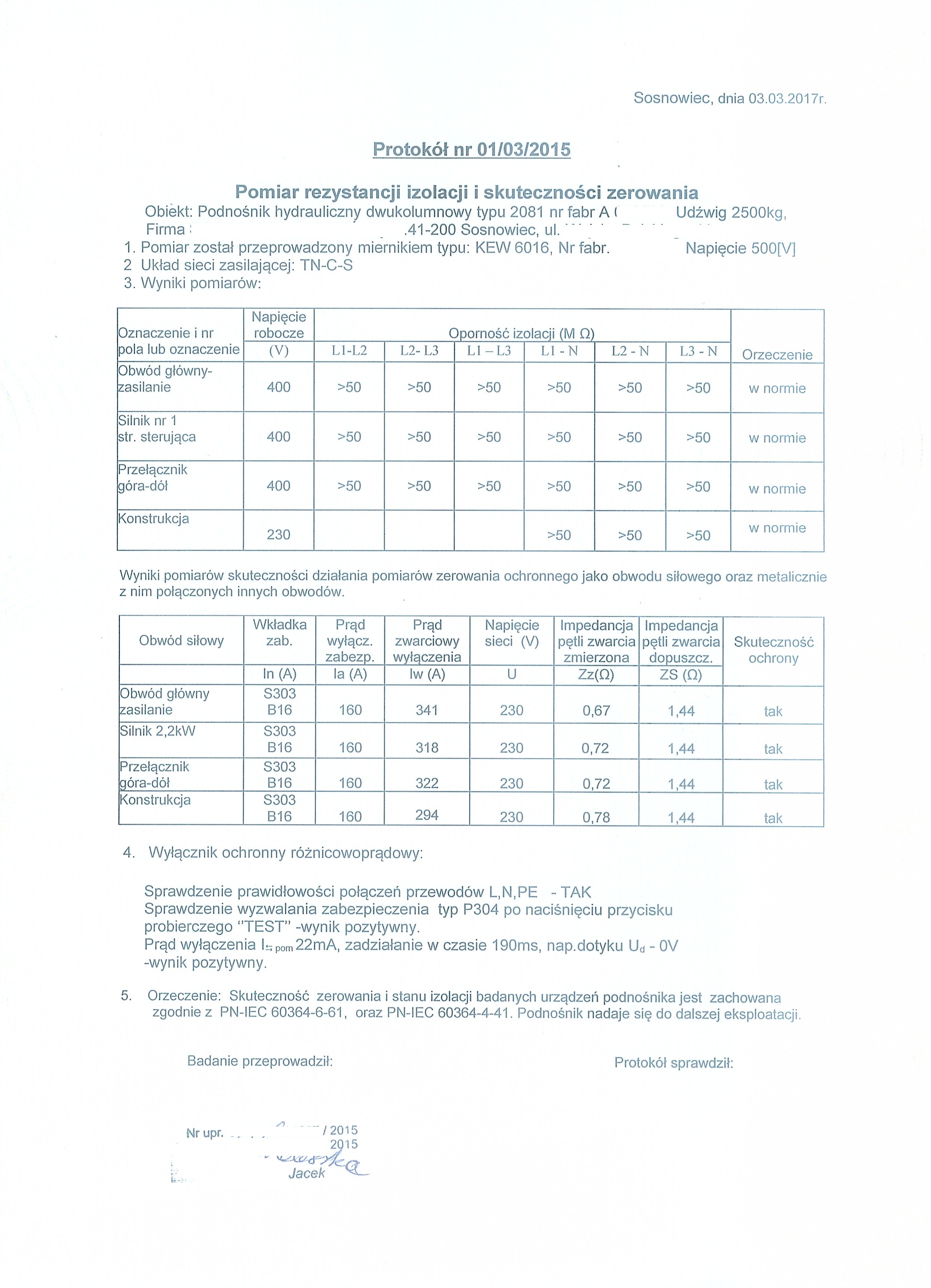
Protocol of periodic measurements of machines and devices - hydraulic lift.

elpapiotr 18336 13
Best answers

What should be corrected in a periodic measurement protocol for a hydraulic lift, and is a two-year measurement interval acceptable?

A few copy/paste errors can happen, but the protocol is otherwise typical; if you want to object to it, the standard that should be referenced is PN-HD 60364, and the 2-year measurement interval is appropriate unless special environmental conditions apply [#16429239] The document should be checked for the date and standards, the breaking current of the protection device for B-curve switches, and the unusually long RCD trip time compared with the previous protocol [#16411086] The person preparing it is the surveyor, not a UDT inspector [#16429239]
Generated by the language model.
ADVERTISEMENT
Treść została przetłumaczona polish » english Zobacz oryginalną wersję tematu
  • #1 16409741
    elpapiotr
    Electrician specialist
    Posts: 12201
    Help: 1015
    Rate: 3520
    Hello.

    I got it for inspection - a guest from UDT crashes one and the same every two years:

    Protocol of periodic measurements of machines and devices - hydraulic lift.

    Quality is poor, because the client has a poor scanner.
  • ADVERTISEMENT
  • #2 16409823
    jann111
    Level 33  
    Posts: 2058
    Help: 180
    Rate: 506
    Any questions? :D
    The litany of errors is obvious, but apparently the power of the paper is enough. :|
  • ADVERTISEMENT
  • #3 16409911
    elpapiotr
    Electrician specialist
    Posts: 12201
    Help: 1015
    Rate: 3520
    Hello.

    And what are the questions.
    Attachment included for educational purposes - that's how you write protocols!
  • #4 16409994
    mawerix123
    Level 39  
    Posts: 4150
    Help: 482
    Rate: 950
    How to read it is spelled ;)
    The client went with the house receipt documents and the clerk questioned the measurement reports because she found the cables on the geodetic map, and I marked the reports with a rough font for the woman and added an appropriate note in the comments, maybe now she will find ...

    As for the inserted TN-CS protocol and where PE in insulation measurements :?: , N to the motor, 230V control voltage and measurement from three phases to N .... etc. resetting at RCD

    Often protocols are picked up by people who cannot read them, only when something is happening is there more serious interest in what has been written.
  • #5 16410752
    Akrzy74
    Rest in Peace
    Posts: 7910
    Help: 363
    Rate: 1501
    This protocol is suitable for mummy, an anonymous text message with the url to the "specialist" also indicated. :lol:

    Ps. So who will "point out" the protocol? Criticizing is fun, but faulting criticism will certainly gain recognition (not only mine, I think). :wink:
  • ADVERTISEMENT
  • #6 16410768
    elpapiotr
    Electrician specialist
    Posts: 12201
    Help: 1015
    Rate: 3520
    No problem, and I see no obstacles to move it.
    The customer, on the other hand, is of the opinion that the responsibility for this lies with the measurement person (paid measurements), the more so as these protocols are repeated every 2 years, with minor modifications in the details.
  • #7 16410918
    Łukasz-O
    Admin of electroenergetics
    Posts: 21786
    Help: 654
    Rate: 4286
    Sorry, but I don't know what the hell's going on:
    Protokół wrote:
    The result of the measurement of the effectiveness of the protective reset measurements as a force circuit (...)
  • #8 16410941
    elpapiotr
    Electrician specialist
    Posts: 12201
    Help: 1015
    Rate: 3520
    Buddy Łukasz, there are more flowers there, you have to read. :D
  • #9 16410981
    Łukasz-O
    Admin of electroenergetics
    Posts: 21786
    Help: 654
    Rate: 4286
    Then I would have to copy the entire protocol :D
  • #10 16411086
    elpapiotr
    Electrician specialist
    Posts: 12201
    Help: 1015
    Rate: 3520
    Łukasz-O wrote:
    Then I would have to copy the entire protocol :D

    Why and what for?
    That's it. :D
    But:
    - date and standards
    - breaking current of protection (switches "B")
    - strange, rare time of RCD tripping (in the previous protocol it was given 10 times shorter)
  • #11 16411154
    Łukasz-O
    Admin of electroenergetics
    Posts: 21786
    Help: 654
    Rate: 4286
    Because there was probably C16 on another site. The surveyor changed only to B and left the rest :D
  • ADVERTISEMENT
  • #12 16411174
    elpapiotr
    Electrician specialist
    Posts: 12201
    Help: 1015
    Rate: 3520
    Łukasz-O wrote:
    Because there was probably C16 on another site. The surveyor changed only to B and left the rest :D
    Probably not.
    I explained this in post # 6
  • #13 16429239
    mechatronikowiec
    Level 8  
    Posts: 5
    Rate: 5
    Unfortunately, copy / paste errors do happen, but this protocol does not differ much from other utb protocols. If you want to attach yourself to something else, the applicable standard is PN-HD 60364 and that should be changed. The frequency of measurements every 2 years is appropriate, unless special environmental conditions exist.
    And of course it is not the "UDT guy cracking these protocols" but the surveyor :)
  • #14 16703552
    elpapiotr
    Electrician specialist
    Posts: 12201
    Help: 1015
    Rate: 3520
    Thank you for participating in the discussion.
    I close the topic.

Topic summary

✨ The discussion revolves around the protocol for periodic measurements of hydraulic lifts, specifically addressing issues encountered during inspections by UDT (Office of Technical Inspection). Participants highlight the importance of accurate documentation and the challenges posed by poorly written protocols. There are mentions of specific measurement standards, such as PN-HD 60364, and the necessity of adhering to them every two years unless special conditions apply. The conversation also touches on the responsibilities of measurement personnel and the common errors found in protocols, including copy/paste mistakes and misinterpretations of measurement results. Overall, the dialogue emphasizes the need for clarity and precision in technical documentation to avoid misunderstandings during inspections.
Generated by the language model.
ADVERTISEMENT