logo elektroda
logo elektroda
X
logo elektroda

White LED Strip (2m, 1A) Dimming, Warming Up, Uneven Lighting: Power Supply Issue or Wear?

SuwiN7 8883 12
ADVERTISEMENT
Treść została przetłumaczona polish » english Zobacz oryginalną wersję tematu
  • #1 16633334
    SuwiN7
    Level 9  
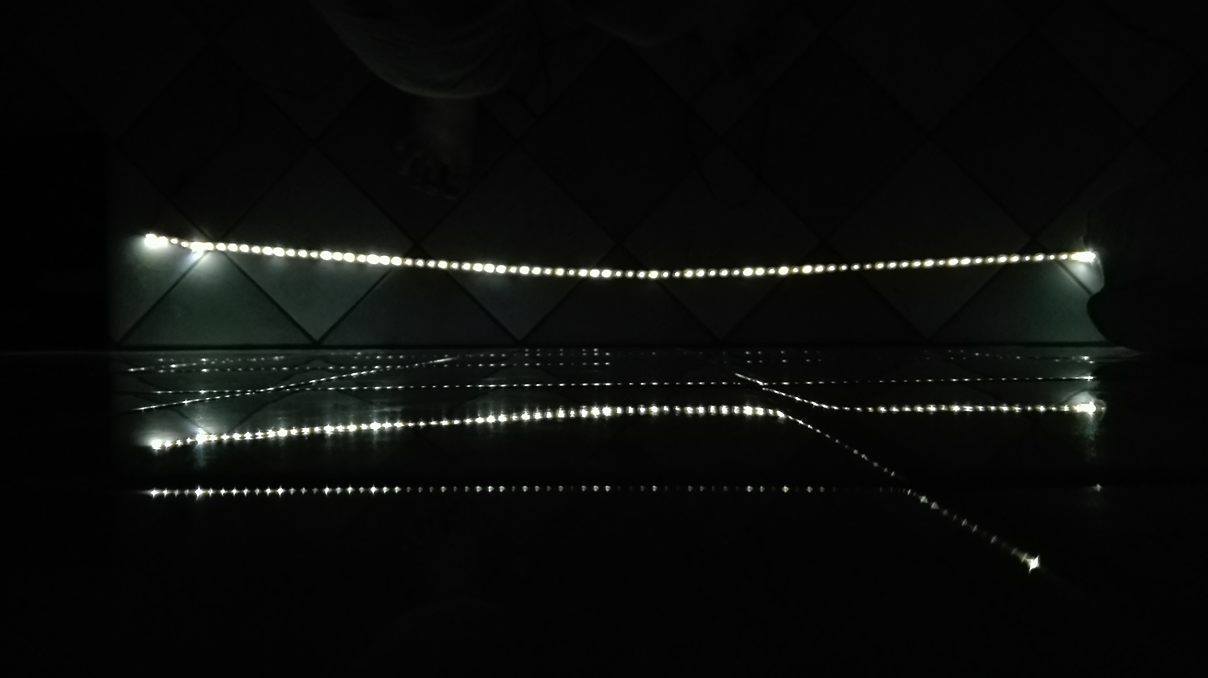
    Hello, I have a 2 m white led strip in bed. Original power supply attached to the bed 1A. Recently, a problem appeared because the tape lights up weakly (i.e. a few LEDs light up the rest dimly and others barely) and it heats up quite like this (it is not hot but warm).
    Unfortunately, I noticed it recently and did not pay attention whether it happened overnight or in the long run. I have already connected the power supply from both sides and nothing. Once the cable came out of the tape but I soldered and everything worked.
    The tape is less than 2 years old. But it has been shining all night for the past three months.

    Could this be a wear signal already ?? But shouldn't the diodes lose power evenly then ??

    I wonder what could be the problem because I bought a new tape and wants to connect it to this power supply but I do not want the situation to happen again. In a short time.
    And is there sense with less than 2m hooked on both sides ??

    You can't see but always something :P White LED Strip (2m, 1A) Dimming, Warming Up, Uneven Lighting: Power Supply Issue or Wear?
  • ADVERTISEMENT
  • #2 16633425
    tomrom1985
    Level 30  
    If they are heating up, maybe a damaged resistor, which means that the diodes want to take as much voltage as they can, because nothing limits them
  • #3 16633514
    HD-VIDEO
    Level 43  
    SuwiN7 wrote:
    Could this be a wear signal already ??


    It's time for tape.
    These diodes are of different random quality and mainly the temperature damages these diodes and the power supply must be checked
  • ADVERTISEMENT
  • #4 16633671
    SuwiN7
    Level 9  
    Approx. I will check the power supply with a meter and if it is ok I will mount a new tape.
    The power supply should show these 12w on the meter connected not ??
  • #5 16633675
    HD-VIDEO
    Level 43  
    It should show 12V, without connecting the tape
  • Helpful post
    #6 16633860
    398216 Usunięty
    Level 43  
    tomrom1985 wrote:
    maybe a broken resistor
    Mostly a damaged resistor has a break.
    And the photo shows that some of them glow normally, and some barely-barely; and such (barely-barely) lighting is a symptom of a damaged diode.
  • #7 16633894
    SuwiN7
    Level 9  
    HD-VIDEO wrote:
    It should show 12V, without connecting the tape


    I meant to check the power if it has these 1A (12W) only if I show it on the meter without load.
    I will not buy the meter until Friday.
    #Questions of the novice hehe :P
  • ADVERTISEMENT
  • #8 16634071
    398216 Usunięty
    Level 43  
    And there is no current on the power supply? Or power?
  • Helpful post
    #9 16634143
    1repcaK
    Level 21  
    Hello, it's rather tape consumption, I have aquarium lighting on leds and after a few years of use, the symptoms were identical. best regards
  • Helpful post
    #10 16634325
    fabians
    Level 14  
    The voltage should be measured with and without lighting. Then you can say something about the power supply. The tape, as you can see (at the right voltage) does not shine well ?! Signs of diode wear. Cheap Chinese has the diode of the lowest quality. I suggest you add a few zlotys and buy some branded ones.
  • ADVERTISEMENT
  • Helpful post
    #11 16635027
    szod
    Level 33  
    LED strips are best glued to something well conductive, e.g. aluminum flat bar, or a special profile for LED strips. During work, heat is emitted and if it is not dissipated well, it will accelerate the death of diodes. This is especially true for new, more powerful tapes. Branded tape costs more and it is a pity that it would fall due to savings on cooling.
  • Helpful post
    #12 16635039
    HD-VIDEO
    Level 43  
    There are also LED strips, or rather LED strips on an aluminum substrate, stronger diodes are installed there and they are properly cooled.
  • #13 16635248
    SuwiN7
    Level 9  
    The tape was added to the bed and you know how the savings on the material look (the price was not low, you could expect something better). Thanks to everyone for the answers and valuable advice. The new tape has come a bit to redo the old layout and I think it will be okay. best regards

Topic summary

✨ The discussion revolves around a 2m white LED strip experiencing dim lighting and uneven illumination, potentially due to power supply issues or diode wear. Users suggest that heating may indicate a damaged resistor, leading to excessive voltage draw by the diodes. The original power supply is rated at 1A, and users recommend checking its output with a multimeter. Symptoms of diode wear are noted, particularly in lower-quality strips, and it is advised to use better brands for longevity. Proper heat dissipation is emphasized, with suggestions to mount LED strips on conductive materials like aluminum to enhance cooling. The original poster plans to test the power supply and replace the LED strip while seeking assurance against future issues.
Generated by the language model.

FAQ

TL;DR: A 12 V strip showing uneven brightness usually points to worn LEDs, not the driver; “It should show 12V.” [Elektroda, HD-VIDEO, post #16633675]

Why it matters: This FAQ helps DIYers diagnose dim, warming, or patchy 12 V LED strips and avoid repeat failures.

Quick Facts

Why is my 12 V LED strip bright in some spots and dim in others?

Selective dimming usually means one or more LEDs failed in certain segments. A failed LED can drag down that section, creating patchy light. This symptom points to diode failure rather than a uniform driver issue. Replace the affected section or the whole strip for consistent results. “Barely-barely lighting is a symptom of a damaged diode.” [Elektroda, 398216 Usunięty, post #16633860]

Could this be normal wear-out of the strip?

Yes. Heat and LED quality drive wear-out. Over time, LEDs degrade and brightness becomes uneven. The thread consensus: it’s likely the strip’s end-of-life. Check the driver, but plan to replace the tape. “It’s time for tape.” [Elektroda, HD-VIDEO, post #16633514]

How do I quickly test a 12 V LED power supply?

Measure its output with no load first. You should read around 12 V DC at the output terminals. This confirms the supply’s nominal voltage before further tests. “It should show 12V.” Use a digital multimeter set to DC volts. [Elektroda, HD-VIDEO, post #16633675]

Should I also measure the supply under load?

Yes. Measure voltage with and without the strip attached. If it drops significantly under load, the supply may be weak. If it stays near 12 V but light is uneven, the strip is likely worn. This two-step check isolates the fault. [Elektroda, fabians, post #16634325]

Does running the strip all night accelerate failure?

Continuous duty adds heat and hours, accelerating wear. In the case discussed, the strip ran nightly for about three months and was under two years old. Long runtimes plus poor cooling hasten degradation. Plan for replacement if used as night lighting. [Elektroda, SuwiN7, post #16633334]

Is a bad resistor or a bad LED more likely here?

A failed series resistor often goes open, but the described symptom implicates LEDs. The photo and behavior match diode damage. Replace segments or the entire tape for reliability. Avoid chasing resistors unless you confirm with measurements. [Elektroda, 398216 Usunięty, post #16633860]

What’s the simplest prevention for LED strip overheating?

Improve thermal management. Bond the strip to an aluminum flat bar or LED profile to spread heat. Better cooling extends LED life and keeps brightness stable. This is crucial for higher-power tapes. [Elektroda, szod, post #16635027]

Are there strips designed with better cooling out of the box?

Yes. Some strips use aluminum substrates for improved heat dissipation. These handle stronger diodes and run cooler at a given output. They cost more but last longer under continuous use. [Elektroda, HD-VIDEO, post #16635039]

Will branded strips last longer than cheap ones?

Often yes. Low-cost strips can use lower-grade diodes that wear faster. Paying a bit more for a reputable brand improves consistency and longevity. Verify with measurements first, then upgrade if the driver is fine. [Elektroda, fabians, post #16634325]

What reading should I expect from a healthy 12 V supply at idle?

Around 12 V DC at the output with nothing connected. This confirms the driver’s nominal voltage. If the reading is far off, replace the supply before installing a new strip. “It should show 12V.” [Elektroda, HD-VIDEO, post #16633675]

My strip gets warm; is that normal or a failure sign?

Mild warmth is normal, but increasing heat with dimming indicates wear or poor cooling. Heat accelerates diode damage and uneven output. Improve heat sinking and consider replacing the tape if symptoms persist. [Elektroda, HD-VIDEO, post #16633514]

How do I diagnose dim LED strips in three steps?

  1. Measure supply at idle: confirm ~12 V.
  2. Measure under load: watch for voltage sag.
  3. If voltage holds but light is uneven, replace the strip. This process isolates driver versus LED wear. [Elektroda, fabians, post #16634325]

Can a 2 m strip on a 1 A supply still fail early?

Yes. Even if current seems adequate, poor thermal paths and continuous operation shorten life. In the case discussed, the 2 m strip on a 1 A supply dimmed and warmed before two years. Improve cooling and replace the tape. [Elektroda, SuwiN7, post #16633334]

Edge case: Could only a few LEDs fail while others stay bright?

Yes. Localized diode failures cause adjacent segments to dim while others remain normal. This non-uniform pattern is typical of LED wear, not global driver faults. Replace affected sections or the entire strip. [Elektroda, 398216 Usunięty, post #16633860]

Should I power a short strip from both ends to fix dimming?

If voltage at the driver is correct yet brightness is uneven, end-feed won’t fix worn LEDs. The thread indicates diode wear as the root cause. Prioritize replacement and better cooling over rewiring. [Elektroda, HD-VIDEO, post #16633514]

Quote check: what’s the baseline test before deeper troubleshooting?

Start by confirming the driver’s nominal output. “It should show 12V.” If that passes, proceed to load testing and strip inspection. [Elektroda, HD-VIDEO, post #16633675]
Generated by the language model.
ADVERTISEMENT