logo elektroda
logo elektroda
X
logo elektroda

CISCO EPC3208 modem and TP link routers - constant Internet disconnection

pitermxa 7902 14
ADVERTISEMENT
Treść została przetłumaczona polish » english Zobacz oryginalną wersję tematu
  • #1 16717494
    pitermxa
    Level 18  
    Posts: 248
    Help: 25
    Rate: 15
    Hello,
    I would like to ask for help regarding the cooperation of my CISCO EPC3208 modem with TP link WR340G and TP Link WR940N routers
    My home network looks like I have a CISCO modem (toya), a TP link router connected to it (by cable) AND also a cable connected PC.
    And for some time now, the Internet has been disconnected in this statement at completely random times. Modem works fine (I called Toyota several times and they saw no problems with the modem) - moreover, I connected the modem directly to the PC and it also worked fine (in the sense it did not disconnect from time to time).
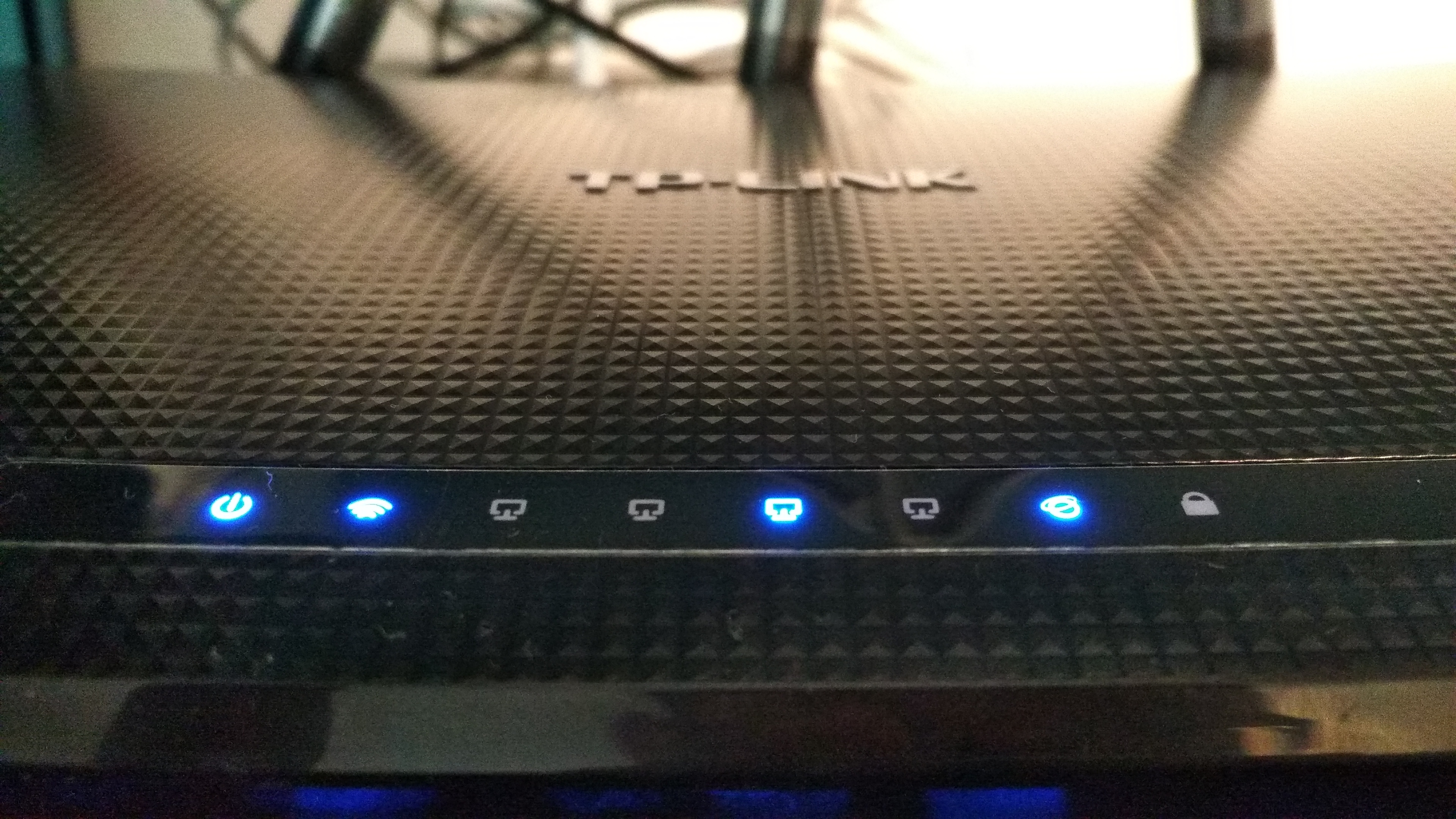
    Natomaist, after establishing a connection with the Router, the disconnection takes place every few minutes / hours (the lamp on the router lights up, which indicates that there is no internet). Every time when in such a situation the CISCO modem is restarted -> the internet appears temporarily and then the fault returns.
    In the end, I bought a new TP link router, I thought that the old one was used up after a few years - but the fault has not disappeared.
    I rummaged through a dozen or even tens of forums to find a solution. Despite various treatments such as:
    1.I changed the cable connecting the PC with the router
    2. I changed my DNS setting to 8.8.8.8
    3. I turned off DHCP temporarily
    4. I colonized MAC
    5.Changed my lan IP from 192.168.0.1 to 192.168.2.1
    6. I have updated the firmware to the newest one dedicated to my new router
    7. I restarted the whole set several times in the order Modem-> router> PC (with full shutdown and turning on in this order)
    8. I uninstalled antiviruses and firewalls (it detected several worms)
    9. I scanned for viruses before uninstalling
    10.after uninstalling, I reinstalled the antivir and firewall and scanned again qksee virus detected -> removed
    None of the above steps solved the problem.
    I will be grateful for any suggestions - while writing this post, the internet broke down on me 3 times :) I'm really fed up.
    The network card in the PC is: Realtek PCIe GBE Family Controller
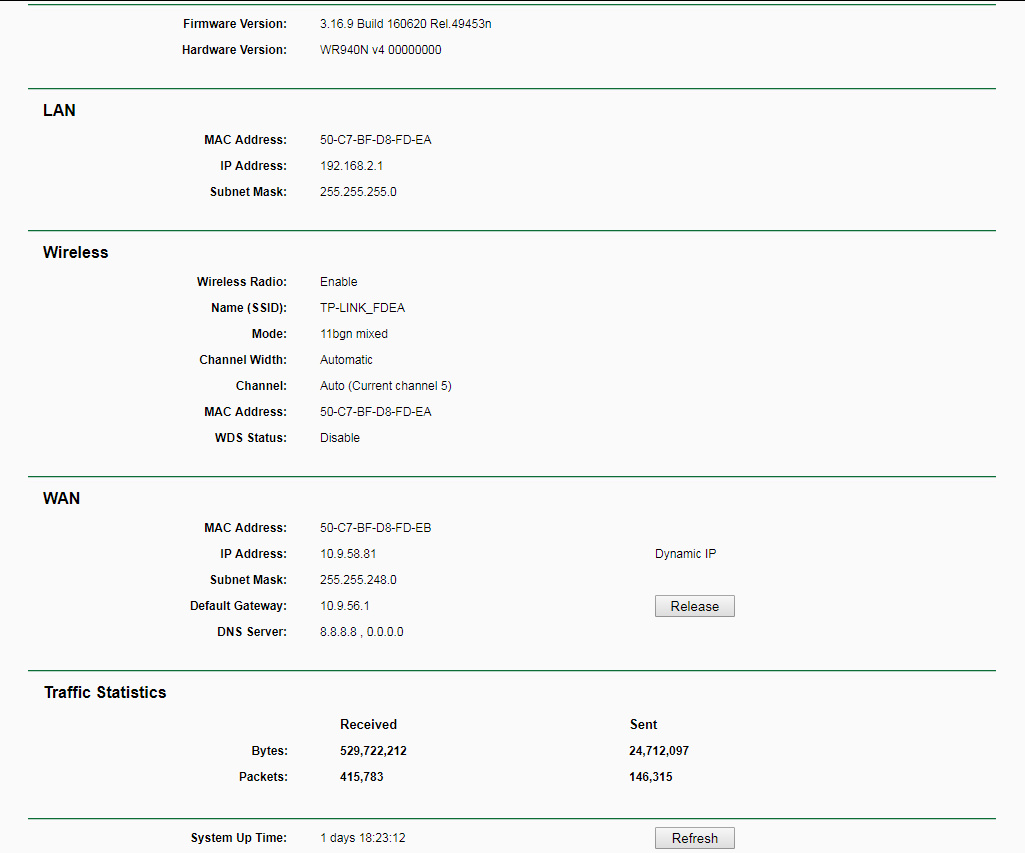
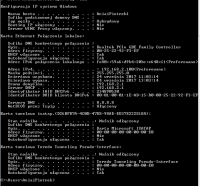
    The attachment also adds the status from the router and ipconfig
    CISCO EPC3208 modem and TP link routers - constant Internet disconnection
    CISCO EPC3208 modem and TP link routers - constant Internet disconnection
  • ADVERTISEMENT
  • #2 16717520
    bogiebog
    Level 43  
    Posts: 24793
    Help: 2569
    Rate: 1528
    pitermxa wrote:
    I would like to ask for help regarding the cooperation of my CISCO EPC3208 modem with TP link WR340G and TP Link WR940N routers
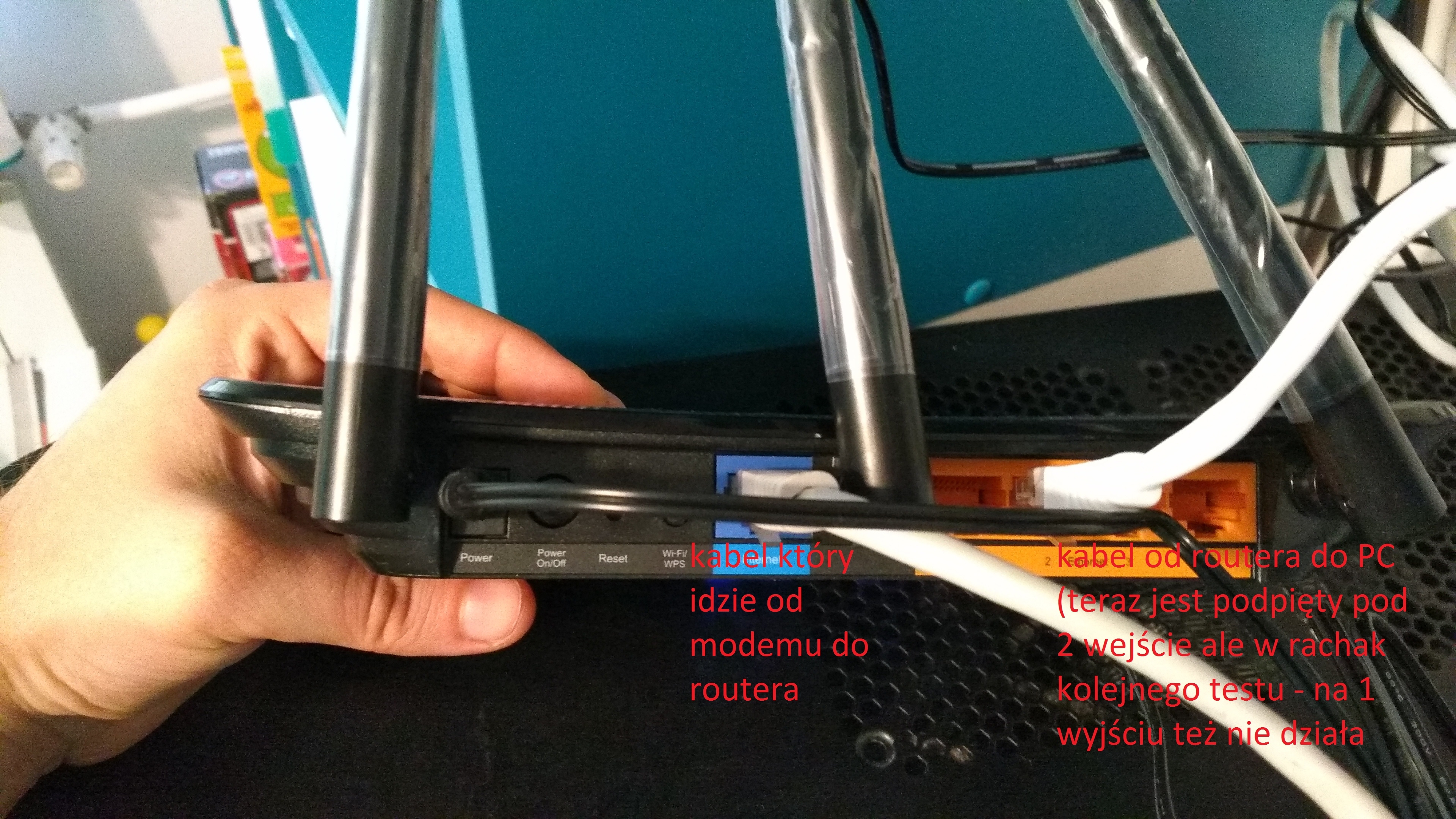
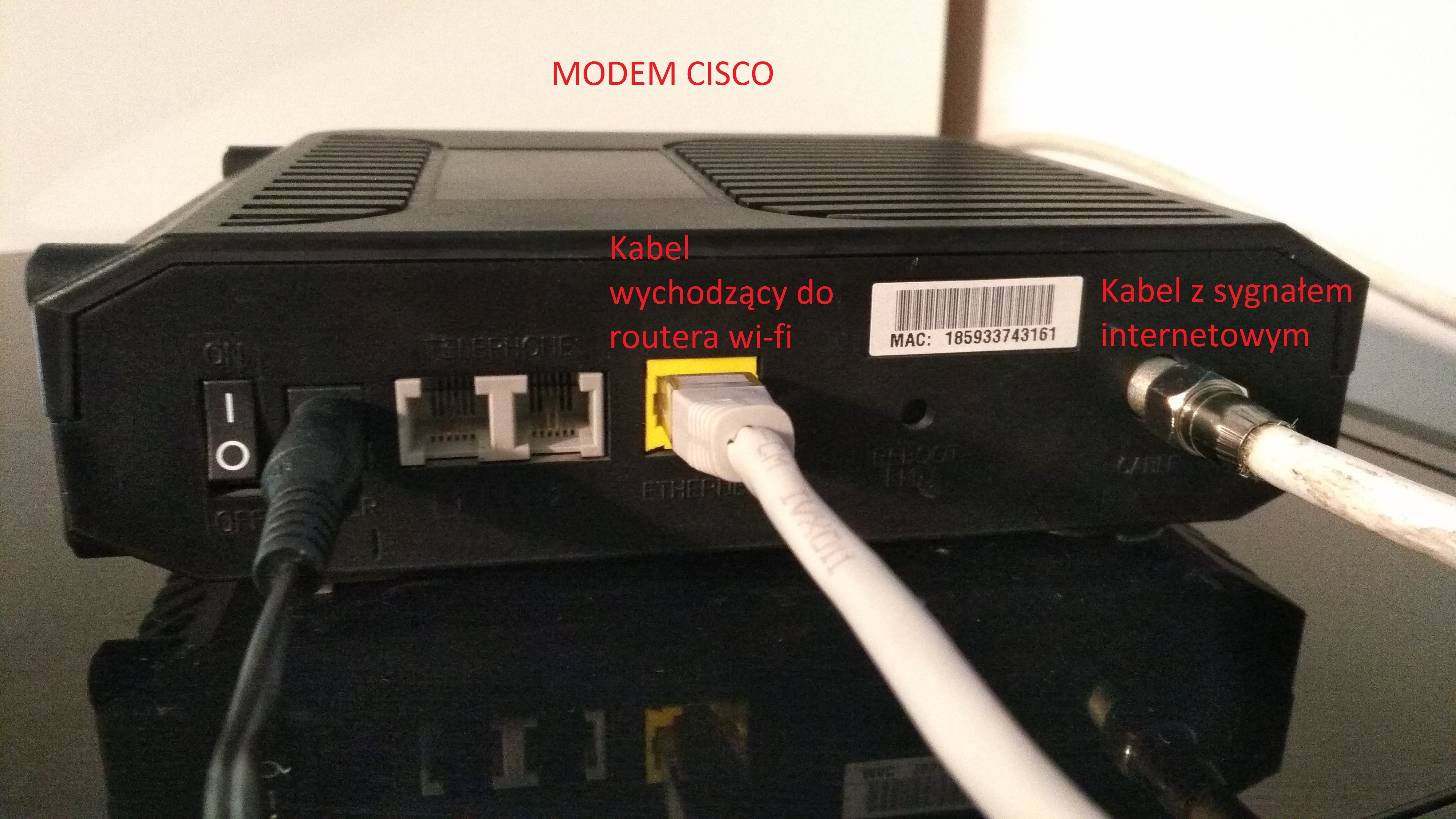
    My home network looks like I have a CISCO modem (toya), a TP link router connected to it (by cable) AND also a cable connected PC.


    in series or in parallel?

    Draw the diagram, mark the ports on the routers.
  • ADVERTISEMENT
  • #3 16717622
    pitermxa
    Level 18  
    Posts: 248
    Help: 25
    Rate: 15
    CISCO EPC3208 modem and TP link routers - constant Internet disconnection CISCO EPC3208 modem and TP link routers - constant Internet disconnection CISCO EPC3208 modem and TP link routers - constant Internet disconnection
  • ADVERTISEMENT
  • #4 16717655
    bogiebog
    Level 43  
    Posts: 24793
    Help: 2569
    Rate: 1528
    Where is the second router in the diagram? select models.

    Have you tried resetting the router to factory settings?

    How old are routers?

    Check the power supply:
    - or take another power supply with the same voltage and equal or greater current efficiency
    - or measure the supply voltage with a connected router and compare it with the rated voltage.
  • ADVERTISEMENT
  • #5 16717668
    pitermxa
    Level 18  
    Posts: 248
    Help: 25
    Rate: 15
    The story is that I started having this problem on the old WR340 wifi router and thought there was a kaput.
    I bought a new WR940 and now tests everything only on this one.
    It is probably not a matter of power supplies because both modems behave identically, but one WR940 is completely new. But I'll try to figure out a meter and measure it.

    I also reset the router to factory settings.

    Added after 32 [minutes]:

    We managed to check - the power supply has 9V -> measurement 9.68V
  • #6 16717780
    jimasek
    VIP Meritorious for electroda.pl
    Posts: 35287
    Help: 3783
    Rate: 2671
    pitermxa wrote:
    Natomaist, after establishing a connection with the Router, the disconnection takes place every few minutes / hours (the lamp on the router lights up, which indicates that there is no internet).

    Maybe I will ask what lamp exactly do you mean?
  • #7 16717823
    pitermxa
    Level 18  
    Posts: 248
    Help: 25
    Rate: 15
    The second counter from the right -> if it is blue - the internet is there. When the internet fades it turns orange.
    CISCO EPC3208 modem and TP link routers - constant Internet disconnection
  • #8 16717825
    jimasek
    VIP Meritorious for electroda.pl
    Posts: 35287
    Help: 3783
    Rate: 2671
    Have you replaced the cable connecting the modem to the router? There seems to be some switch from 1000Mb / s to 100Mb / s.
  • #9 16717836
    pitermxa
    Level 18  
    Posts: 248
    Help: 25
    Rate: 15
    The mouthpiece began to appear with a completely intact set.
    After buying a new router, I got a new ethernet cable in the set - so far it worked on the connection between the router and the PC. Now I swapped it with this one between the modem and the router. I will let you know if the connection continues.

    Added after 1 [hours] 10 [minutes]:

    The cable replacement did not help. I also replaced the cable between the modem and the router with another one. It keeps me disconnected all the time.
  • Helpful post
    #10 16718250
    jimasek
    VIP Meritorious for electroda.pl
    Posts: 35287
    Help: 3783
    Rate: 2671
    Try to use the TP-link as AP and check its stability.
  • Helpful post
    #11 16718338
    kpodstawa
    Level 33  
    Posts: 1806
    Help: 234
    Rate: 244
    The photos show that your physical connections are correct - the modem is connected to the WAN port of the router, i.e. the blue one. The router gets the network configuration from the modem or from the operator (the modem is "transparent"). I do not like this Google DNS, because it should be from the operator or second.
    Yes, for full diagnostics, I suggest connecting the modem to the LAN ports (yellow) of both routers. Then the WAN port is bypassed and the router works as a normal switch with the AP. The lamps should permanently indicate the lack of internet. This corresponds to the direct connection of the modem to the computer.
    I wouldn't mess with DNS 8.8.8.8 on my computer. Let the computer receive all network configuration from the DHCP server, i.e. the router. From the computer, you should be able to access the router's management panel via a browser. Then one part of the link is proven: PC - router.
    Then something can be said after this additional diagnosis.
    Do you have protected access to the router's management panel from the radio side? I will not pretend that I know the reason for your failure, but it reminds me a bit of a situation when a "parasite" joined the network via WiFi and fumbled with settings. Therefore, during the tests, turn off the radio link in the router.
    Do you have access to the modem's management panel and does the contract with the operator allow you to change the settings?
    Of course, do what the discussion participants wrote about before my post.
    Krzysztof Podstawa
  • #12 16724884
    KOCUREK1970
    Network and Internet specialist
    Posts: 35131
    Help: 3786
    Rate: 5326
    @pitermxa
    Also RESET the Cisco modem with the button on its casing (30-second reset - you keep this button pressed for so long, then release and wait 10 minutes, Cisco will reset to factory settings and download the CMTS configuration again).
  • #13 16725414
    pitermxa
    Level 18  
    Posts: 248
    Help: 25
    Rate: 15
    @ KOCUREK1970 - shouldn't I reset the modem informing my operator (TOYA) about it?

    @kpodstawa - I will still test the switch mode - And I'll see.

    In the meantime, an interesting thing happened. Something hit me and I connected my old worn-out Wr340 router for a while and it turned out that it started working, although in the week I do not have much time for testing (which is why I was not active on the forum), but I will try to load this old router a bit over the weekend and we will see.
    On the other hand, it's very strange that this old router suddenly started working. Maybe you have an idea what happened?
    I did not configure anything in it additionally as it was so I connected it and it worked.
  • Helpful post
    #14 16726337
    KOCUREK1970
    Network and Internet specialist
    Posts: 35131
    Help: 3786
    Rate: 5326
    pitermxa wrote:
    KOCUREK1970 - shouldn't I reset the modem informing my operator (TOYA) about it?

    No - you can reset the modem up to 300 times a day.
    The operator does not condition when it can be done.
    pitermxa wrote:
    this old router suddenly started working. Maybe you have an idea what happened?

    Maybe Toya has his MAC address entered in his database, or you cloned the MAC of your cable modem in this grandpa.
  • #15 16733380
    pitermxa
    Level 18  
    Posts: 248
    Help: 25
    Rate: 15
    Hi,
    Another unexpected situation happened over the weekend - the modem's power supply was burnt.
    Perhaps the symptoms I described earlier were related to the fact that the modem's power supply was not working properly.
    Unfortunately, I did not have another power supply that could replace the burned one, but today I will have a visit from a Toya technician and I will have a new power supply.
    Then I will try to test both routers and let me know if the problem is solved.

    Added after 7 [hours] 6 [minutes]:

    After a few hours of internet load, I confirm that the problem was most likely a faulty modem power supply.
    The topic from my side to be closed.
    Thanks a lot everyone for the advice!

Topic summary

✨ The discussion revolves around issues with a CISCO EPC3208 modem and TP-Link routers (WR340G and WR940N) experiencing random internet disconnections. The user confirmed that the modem functions correctly when directly connected to a PC, indicating the problem lies with the router setup. Various troubleshooting steps were suggested, including checking physical connections, resetting routers to factory settings, and testing power supply voltages. The user replaced the old WR340G with a new WR940N, but disconnections persisted. Eventually, it was discovered that a faulty power supply for the modem was likely the root cause of the disconnections, which was resolved after a technician replaced it.
Generated by the language model.

FAQ

TL;DR: After ~7 hours of load testing, the fix was replacing a burnt Cisco EPC3208 power supply. “After a few hours of internet load, I confirm that the problem was most likely a faulty modem power supply.” [Elektroda, pitermxa, post #16733380]

Why it matters: This FAQ helps TP-Link users solve random drops with Cisco EPC3208 by isolating power, WAN/AP mode, cabling, and resets.

Quick Facts

How do I fix random disconnects between a Cisco EPC3208 and TP-Link WR940N/WR340G?

Start with power. Replace the EPC3208 power supply if it runs hot, hums, or is aged. Reboot sequence: modem → router → PC. Test with modem direct to PC; if stable, suspect router or PSU. Try AP/switch mode to bypass WAN. Replace short Ethernet patch leads. If drops stop after swapping the modem PSU, you found the root cause. Many intermittent drops trace to failing wall adapters. [Elektroda, pitermxa, post #16733380]

What does the orange Internet LED on a TP-Link WR940N mean?

On WR940N, the second LED from the right turns orange when the router sees no internet. Blue indicates the link is up. If it flips to orange during outages, the router lost upstream connectivity, even if Wi‑Fi stays on. This helps distinguish WAN issues from LAN or Wi‑Fi problems during troubleshooting. “When the internet fades it turns orange.” [Elektroda, pitermxa, post #16717823]

How can I bypass the router’s WAN to isolate the fault (AP mode test)?

Use the router as an Access Point (AP) to check stability.
  1. Connect the modem to a yellow LAN port on the TP‑Link.
  2. Disable Wi‑Fi temporarily and let the PC get DHCP from upstream.
  3. Verify you can reach the router’s UI; WAN LED may show no internet. This test proves PC↔router switching while bypassing the WAN port and NAT. “The WAN port is bypassed and the router works as a normal switch with the AP.” [Elektroda, kpodstawa, post #16718338]

Do I need to inform my ISP (Toya) before resetting the Cisco modem?

No. You can reset the modem without notifying Toya. The provider does not impose a limit on when you can do it. One expert noted you could reset it “up to 300 times a day,” though you should only reset for troubleshooting. This guidance simplifies field diagnostics during intermittent outages. [Elektroda, KOCUREK1970, post #16726337]

What’s the correct way to do a 30‑second hard reset on the EPC3208?

Press and hold the recessed reset button for about 30 seconds, then release. Wait roughly 10 minutes while the modem reboots and re-downloads its CMTS configuration. Do not power-cycle during this period. This restores factory defaults and refreshes provisioning. “30‑second reset… then release and wait 10 minutes.” [Elektroda, KOCUREK1970, post #16724884]

Could a bad modem power supply cause random drops before it dies?

Yes. A failing EPC3208 power adapter can cause intermittent WAN loss that looks like router failure. In the thread, random drops stopped after the modem PSU was replaced. The supply later burned out, confirming it as the root cause. Replace suspect adapters early to avoid repeated outages and potential hardware damage. Extended load testing verified stability after replacement. [Elektroda, pitermxa, post #16733380]

How do I check a TP‑Link router power adapter with a multimeter?

Set your multimeter to DC volts. Measure across the barrel plug with the router powered on. Compare the reading to the adapter’s rating. In this case, a 9 V adapter read 9.68 V under load, which is within a normal tolerance. If voltage sags or fluctuates, replace the adapter. Always match voltage and meet or exceed current. [Elektroda, pitermxa, post #16717668]

Should I force Google DNS (8.8.8.8) or just use DHCP here?

Use DHCP from the router or operator for baseline tests. Avoid overriding DNS during diagnostics, because it can mask provisioning or upstream issues. Ensure you can access the router’s management panel from the PC. Prove PC↔router first, then adjust DNS if needed after stability returns. “Let the computer receive all network configuration from the DHCP server.” [Elektroda, kpodstawa, post #16718338]

What is MAC cloning, and when would I use it with Toya?

MAC cloning copies a device’s hardware address to another device. Some ISPs bind service to the first seen MAC. If Toya registered your old router’s MAC, cloning it to the new TP‑Link can restore connectivity. Use the TP‑Link’s MAC Clone feature, then reboot the modem and router. “Maybe Toya has his MAC address entered in his database.” [Elektroda, KOCUREK1970, post #16726337]

Why does modem-to-PC work, but adding the router causes drops?

This pattern points to the router path, its WAN port, cabling, or power. Direct modem-to-PC tests remove the router from the chain, proving the ISP link. When the router is reinserted, drops reappear if it or its power path is unstable. Always test with known-good cables and power supplies. [Elektroda, pitermxa, post #16717494]

Can a bad Ethernet cable cause speed/duplex switches and disconnects?

Yes. Damaged or low-quality patch leads can force links to renegotiate from 1000 Mb/s to 100 Mb/s and drop intermittently. Replace the modem↔router and router↔PC cables first. Keep runs short and use Cat5e or better. Re-test after each swap to isolate the failing segment. [Elektroda, jimasek, post #16717825]

How do I secure the router admin panel during troubleshooting?

Set a strong admin password and disable remote management. During tests, turn off Wi‑Fi to prevent unauthorized changes. Access the router UI only from a cabled PC to confirm PC↔router works. This reduces variables while you isolate upstream issues. “Do you have protected access to the router’s management panel… turn off the radio link.” [Elektroda, kpodstawa, post #16718338]
Generated by the language model.
ADVERTISEMENT