logo elektroda
logo elektroda
X
logo elektroda
Dostępna jest polska wersja

Czy wolisz polską wersję strony elektroda?

Nie, dziękuję Przekieruj mnie tam

Underfloor Heating in 40m2 Flat: Setting & Troubleshooting Tips (Valves, Models, Brands)

domel.spi 18030 19
ADVERTISEMENT
Treść została przetłumaczona polish » english Zobacz oryginalną wersję tematu
  • #1 16717603
    domel.spi
    Level 10  
    I warmly welcome.

    I am renting a flat with underfloor heating and it will be my first winter so I would like it to be all as due.

    I put a bake on the test to check that everything works and I have the impression that the flooring can not do it. The flat is 40m2, so it is not a large heating surface, and as for my eye after about 10 hours should already feel a slight warmth.

    I am completely green in the subject. I called the owner and told me that the previous tenants were mixing something at the installation and will not tell me what to do today.
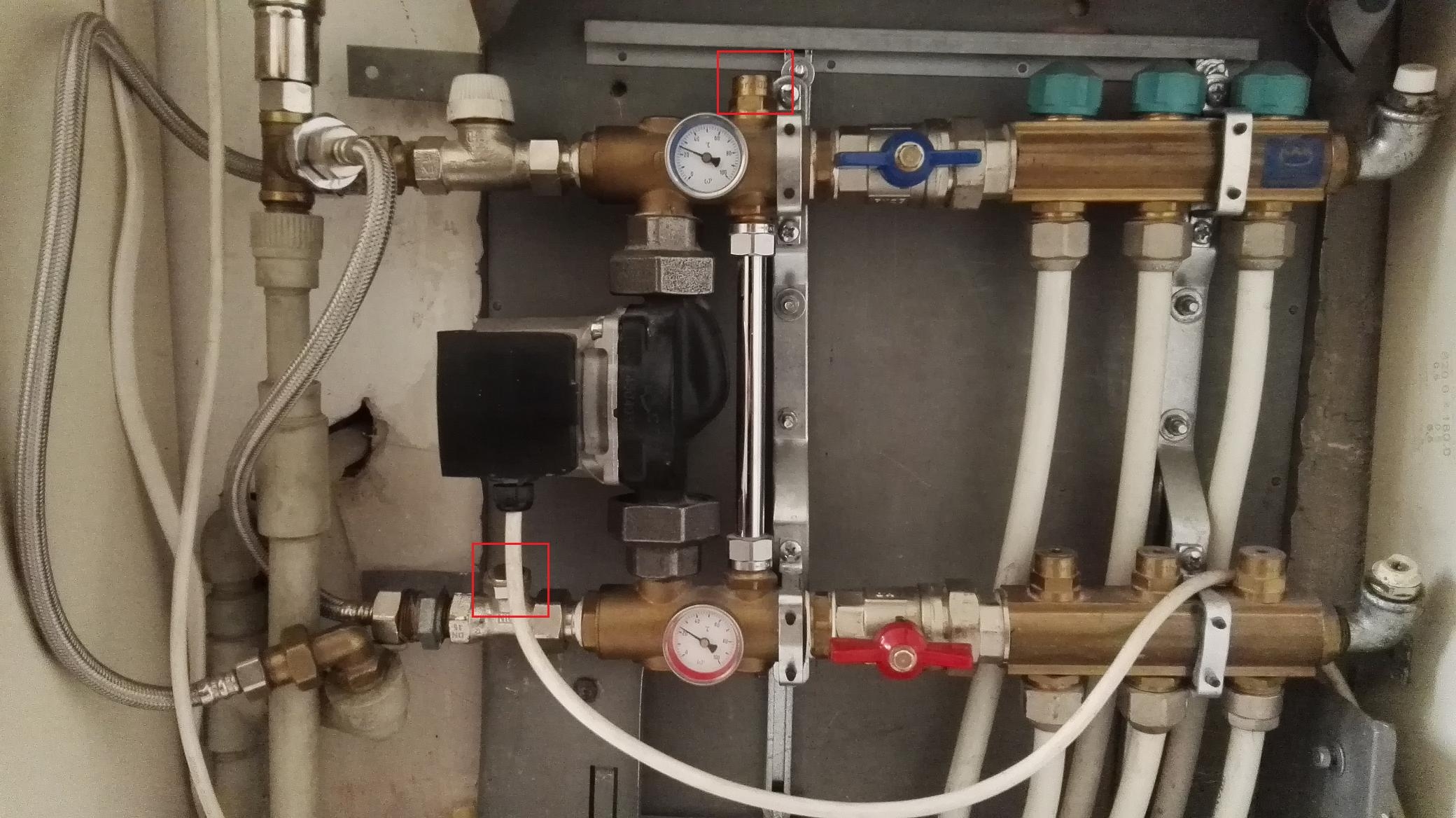
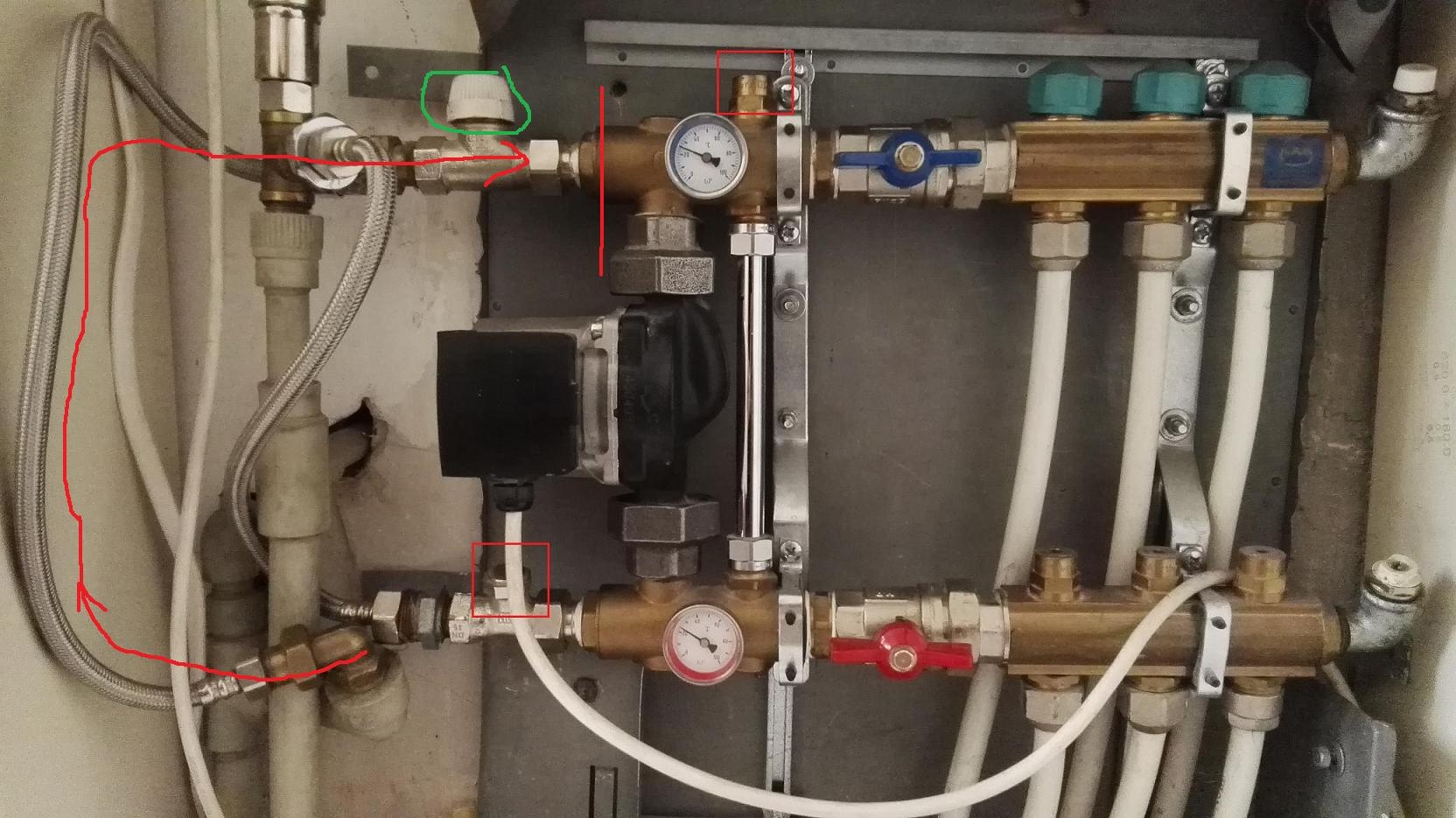
    The installation is from what I noticed 2 valves at which you can turn something (I marked on the pictures
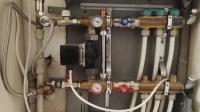
    Underfloor Heating in 40m2 Flat: Setting & Troubleshooting Tips (Valves, Models, Brands) ).
    Do you need to set them properly to heat up as due?
    I will add the bake today is from 8:00

    I will be very grateful for the hints
  • ADVERTISEMENT
  • #2 16718610
    gersik
    Level 33  
    What kind of serpents was there? The feed pipe from the boiler to the distributor is what? I can see that someone has become alienated by pions. There is the floor mixer itself because the pipes are still going somewhere in the wall. What boiler - gas? No thermostat with capillary on the valve.
  • #3 16718645
    Arbiter
    Level 15  
    Looking at the colors of the valves, the power is on the bottom strip and on the upper back. The temperature at the bottom and the top is the same 23C, so nothing is flying there. I suggest unscrewing the upper valve with white plastic mushroom on the left. Maybe something will move. I have not seen the artist yet so that the power supply of the floor heating manifold was connected with a hose to the battery
  • #4 16718696
    gersik
    Level 33  
    It's not about the colors of the valves. The floor heating power supply is to be at the bottom but the distributor does not supply anymore. Should go to the top beam. That's why I asked for the boiler feed.
  • #5 16718751
    domel.spi
    Level 10  
    gersik wrote:
    There is the floor mixer itself because the pipes are still going somewhere in the wall. What boiler - gas?


    Beretta dual-purpose boiler.

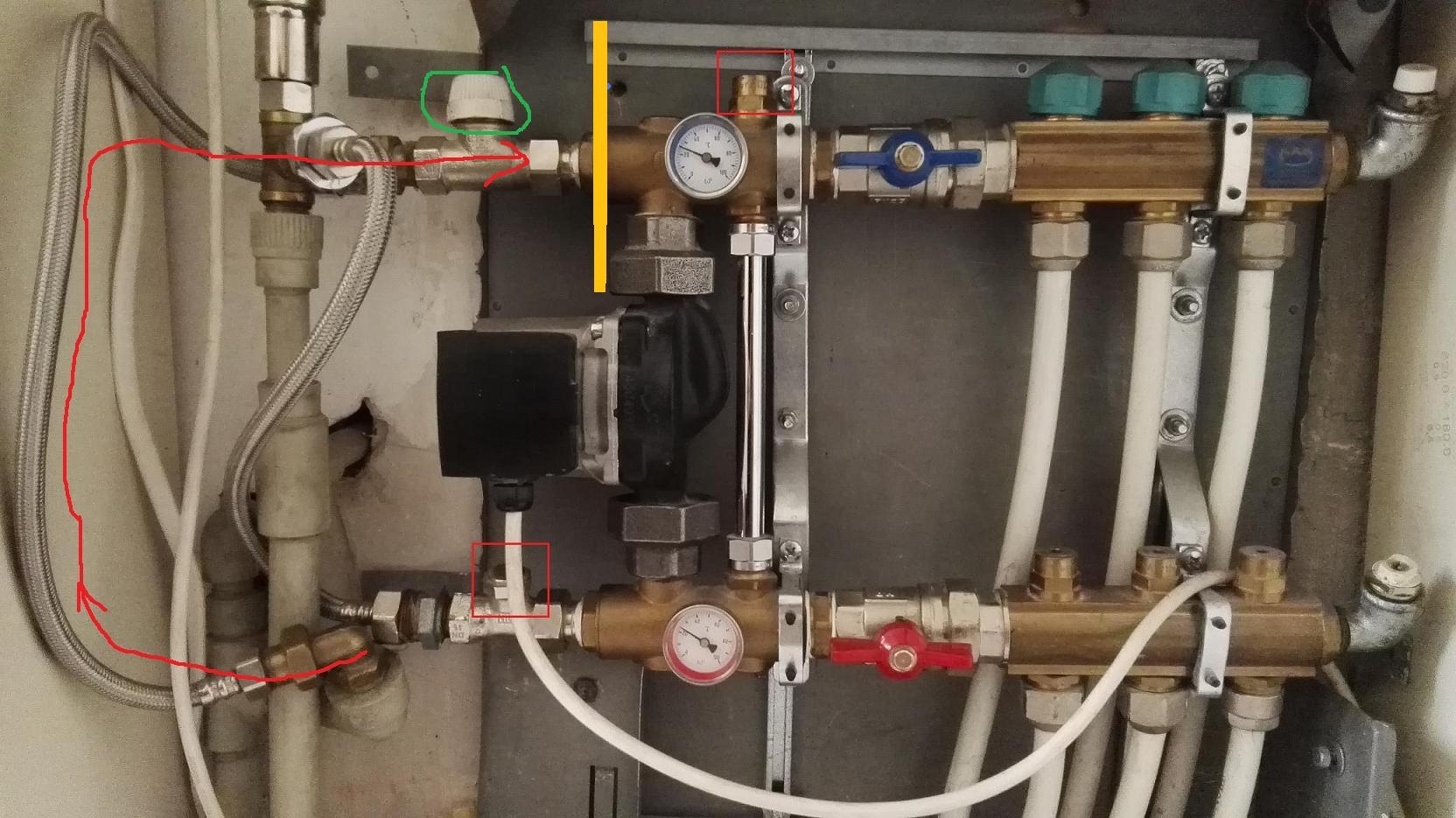
    When it comes to power, after hot water, the water has direction as the arrows are flying.The vertical line is the hot water cut, i.e. it is possible that the valve was said to be used by the arbiter The referee needs to be unscrewed.

    Underfloor Heating in 40m2 Flat: Setting & Troubleshooting Tips (Valves, Models, Brands)

    Added after 16 [minutes]:

    Arbiter wrote:
    this valve with a white plastic mushroom on the left. Maybe something will move


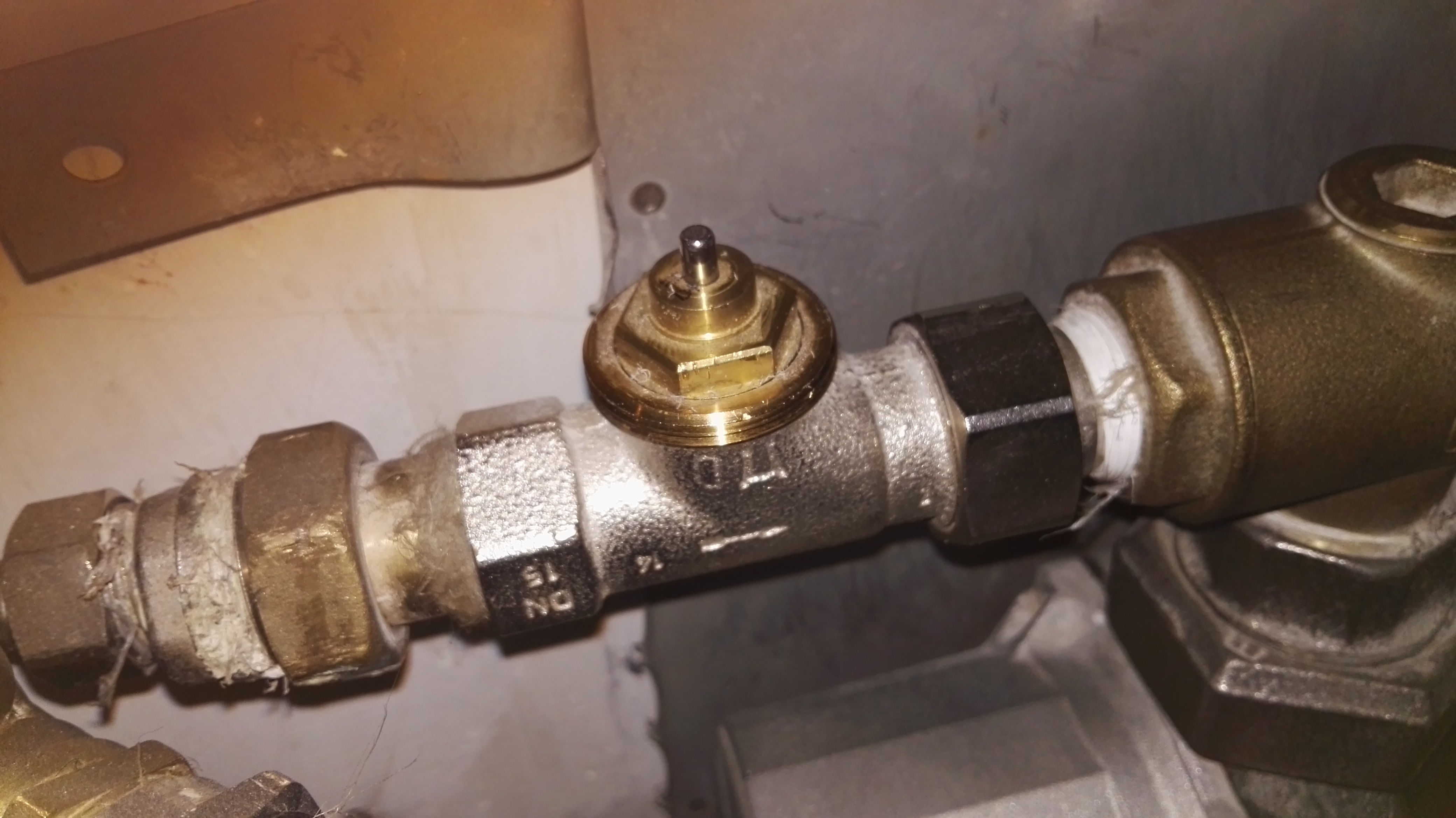
    Underfloor Heating in 40m2 Flat: Setting & Troubleshooting Tips (Valves, Models, Brands)

    when it comes to this valve, white plasters are cracked and nothing can be done with it.
  • #6 16718809
    gersik
    Level 33  
    If it's like you drew it, you should still have a thermostat. Do it this way. gently open the plastic knob and regulate the flow with the bypass valve (the one that you marked on the top bar) Remember that the temperature on the bottom bar is not higher than 40 ° C. If there are no radiators (you have not written) and the boiler is condensing, you do not need this type of lowering heating water temperature.
    At this point, you should have such a thermostat:
    https://obrazki.elektroda.pl/5222776900_1395689194.jpg

    Added after 1 [minutes]:

    See if there is any air on these manual vents.
  • ADVERTISEMENT
  • #7 16718828
    Arbiter
    Level 15  
    domel, if the plastic is cracked it does not matter - because by default, the valve is opened by unscrewing it. However, something may have been suspended, but you should try to squeeze this pip. Under normal conditions, this pip is controlled by a thermostat, or plastic is pressed in). If the button is knocked up, the valve is open to the max. Maybe I can not come back

    The valve which at the bottom you have marked with a square is probably blinded with a nut and after unscrewing it you get to the gusset. but I do not think anyone turned it down
  • #8 16718840
    domel.spi
    Level 10  
    gersik wrote:
    If it's like you drew it, you should still have a thermostat.


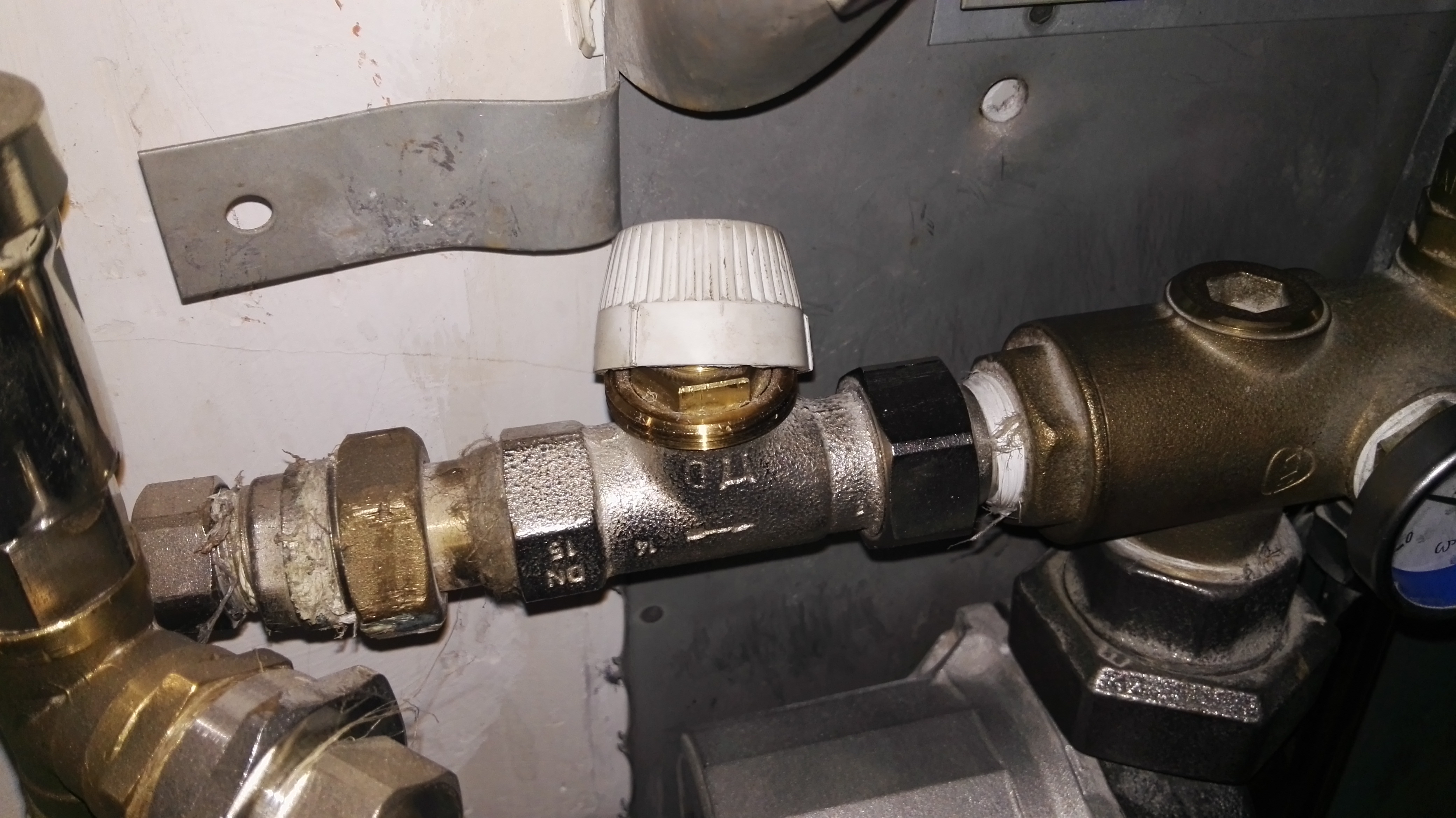
    thermostat or this valve with a white plastic, which is cracked? because there is nothing else here.

    Underfloor Heating in 40m2 Flat: Setting & Troubleshooting Tips (Valves, Models, Brands)

    gersik wrote:
    if there are no radiators (you have not written)


    the radiator is one in the bathroom, I forgot to write.

    gersik wrote:
    See if there is any air on these manual vents.

    checked - vented
  • #9 16718846
    gersik
    Level 33  
    This is a valve. The thermostat is to be screwed into it instead of the cap.

    Added after 45 [seconds]:

    I showed in the picture.
  • #10 16718912
    domel.spi
    Level 10  
    gersik wrote:
    This is a valve. The thermostat is to be screwed into it instead of the cap.


    there is no thermostat. The cap is cracked so the valve comes out of it being open to the max and the hot water stops at the place where I marked the yellow thick line in the picture.

    Underfloor Heating in 40m2 Flat: Setting & Troubleshooting Tips (Valves, Models, Brands)

    what else I noticed that when the pump is turned off, the temperature at the top increases, but when it is switched on, it drops, but nothing happens at the bottom. Strange things happen here: /

    Added after 4 [minutes]:

    Arbiter wrote:
    The valve which at the bottom you have marked with a square is probably blinded with a nut and after unscrewing it you get to the gusset. but I do not think anyone turned it down


    it's closed
  • #11 16718932
    Arbiter
    Level 15  
    is the hood closed, but not the valve? Well, if the valve is curled, there is no way to circulate the heat and not to heat it.
  • #12 16718941
    domel.spi
    Level 10  
    Arbiter wrote:
    is the hood closed, but not the valve? Well, if the valve is curled, there is no way to circulate the heat and not to heat it.


    my mistake, I'm sorry. The one at the bottom, however, the one that I marked on the square with the red square turned out.
  • #13 16719493
    gersik
    Level 33  
    And do you have open green caps on the manifold?
  • ADVERTISEMENT
  • #14 16724643
    domel.spi
    Level 10  
    gersik wrote:
    And do you have open green caps on the manifold?


    so everything and at the top and bottom is utwarte
  • #15 16725011
    andrzej lukaszewicz
    Level 42  
    That this mushroom valve is warm at all?
    Did you check whether the pump is working and is it bled? (unscrew the cap on the left side of the pump from the forehead and check that water flows out and the rotor is spinning.
    Unscrew the breathers on the knees on the right side of the beams.
    Move the stem from the thermostatic valve violently up and down - perhaps the mushroom has stuck together when the cap has been screwed for a long time.
    In addition, these snakes have too small cross-sections for such purposes. Necessarily to be replaced with larger diameters.
  • ADVERTISEMENT
  • #16 16725120
    domel.spi
    Level 10  
    andrzej lukaszewicz wrote:
    That this mushroom valve is warm at all?


    it's so warm. I indicated the yellow line where heat water ends (that is before the pump).

    andrzej lukaszewicz wrote:
    Did you check whether the pump is working and is it bled? (unscrew the cap on the left side of the pump from the forehead and check that water flows out and the rotor is spinning.
    Unscrew the breathers on the knees on the right side of the beams.


    I checked the pump and vent on the right (everything is ok - water flows out)

    andrzej lukaszewicz wrote:
    Move the stem from the thermostatic valve violently up and down - perhaps the mushroom has stuck together when the cap has been screwed for a long time.


    everything works, even today I unscrewed this valve and checked if something is not there - everything is ok

    andrzej lukaszewicz wrote:
    In addition, these snakes have too small cross-sections for such purposes. Necessarily to be replaced with larger diameters.


    still, a season ago, apparently, everything worked so the tales gave advice. I do not know what to do: /
  • #17 16741857
    jamrjan
    Level 13  
    Hello
    I had a similar problem with such a manually controlled valve.
    If it was too much closed (a very small flow set), it became clogged with particles of filings and rust circulating in the system. It helps by repeatedly fast and energetically pressing the valve plug (this protruding rod from the valve).
    This applies to both valves. The mixing pump serves only to protect against excessive heat in underfloor heating. I suggest you do not turn it on first.
    Besides, if you have not dealt with underfloor heating, I recommend patience. My floor-standing in the kitchen in bathrooms (about 12m2 + 2x9m2) heats up about 10 hours.
    I suggest you do not turn on the pump, leave the supply valve open, and put the RTL valve on the return valve to the floor heating (price around PLN 100) and you can sleep well.
  • #18 16744318
    gersik
    Level 33  
    jamrjan wrote:
    The mixing pump serves only to protect against excessive heat in underfloor heating

    To protect against too high liquid temperature in the underfloor heating circuit, the RTL valve is used. The pump only gives mixed liquid to the circuit.
  • #19 16744802
    jamrjan
    Level 13  
    RTL valve is mounted on the output not on the input - there is no such valve in the presented system.

    The layout of colleague domel.spi is quite strange, there is a restriction valve on the input, the pump mixes the liquid in the system and the other valve is on the output.

    To start the system quickly at full power, you must open both valves and turn off the mixing pump. if the general circulation is forced then it will start to heat. Provided that the inlet and outlet valves are unobstructed. Unfortunately, as in nature, everything uses the principle of "the least resistance line" - it may turn out that the flow will be through the pump because there is the smallest flow resistance. Unfortunately, the "installer" did not insert the check valve into the pump circulation.
    I am not an installer, but I would not come up with a solution like in the picture.
    Even this system has a chance to work properly - the condition of replacing the valve installed on the return to the RTL valve, which will introduce a simple temperature regulation, and the mixing pump will set the flow evenly.
  • #20 16744883
    gersik
    Level 33  
    jamrjan wrote:
    there is no such valve in the presented system.

    And this is at the upper beam on the left is "h ..."? It is a liquid flow control valve and that there is no thermostatic head with a capillary on it is no longer our brożka.
    "domel" But you rent a place. Suspend the rental fee until the defect is corrected.

Topic summary

✨ The discussion revolves around troubleshooting underfloor heating in a 40m2 flat, particularly focusing on valve settings and system functionality. The user reported inadequate heating after 10 hours of operation. Responses highlighted the importance of checking the boiler type (Beretta dual-purpose), ensuring proper valve adjustments, and verifying the operation of the pump. Suggestions included unscrewing valves to check for blockages, ensuring the thermostat is functioning, and confirming that both supply and return valves are open. Users emphasized the need for patience as underfloor heating can take time to warm up, and recommended not using the mixing pump initially to allow for better heat distribution.
Generated by the language model.

FAQ

TL;DR: Typical floors need ~10 hours to feel warm; “press the valve stem energetically” if it’s stuck. Open supply/return, bleed, keep supply ≤40°C, and fit an RTL or thermostatic head if missing. [Elektroda, jamrjan, post #16741857] Why it matters: This quick setup helps renters and new owners fix no-heat issues on small underfloor systems without calling a tech.

Quick Facts

How do I start heating a 40 m² flat with underfloor loops safely?

  1. Open both supply and return valves on the manifold.
  2. Bleed vents and verify the pump spins via its front cap.
  3. Set supply to ≤40°C and wait 8–12 hours for warmth. If loops still stay cold, press the valve stem repeatedly to free it. [Elektroda, jamrjan, post #16741857]

Which manifold valves should be open for heat?

Open the supply on the lower beam and the return on the upper beam so hot water reaches loops and returns properly. If a return valve is closed or stuck, circulation stops and floors stay cold. “If the valve is curled, there is no way to circulate the heat.” [Elektroda, Arbiter, post #16718932]

What temperature should I set for floor heating supply?

Target a supply around 35–40°C at the manifold. This protects floor coverings and still provides comfortable heating once the slab saturates. An expert advised, “Remember that the temperature on the bottom bar is not higher than 40°C.” [Elektroda, gersik, post #16718809]

The top rail gets warm, then cools when the pump starts—what’s happening?

Flow may be short-circuiting through the pump path because of the layout or missing check valve. Open both valves fully first, then test with the mixing pump off to force flow through loops. Reintroduce pumping after confirming circulation. [Elektroda, jamrjan, post #16744802]

How do I bleed and check the circulation pump?

Open manual air vents on the right of the beams to release trapped air. Briefly unscrew the pump’s front cap; a little water should emerge and the rotor should spin. Tighten afterward and check for leaks. [Elektroda, andrzej lukaszewicz, post #16725011]

What is an RTL valve and where does it go?

An RTL (return temperature limiter) is a thermostatic valve that caps the loop return temperature. It mounts on the loop’s return (outlet) and helps prevent overheated floors while allowing steady circulation. It’s a simple retrofit for missing control. [Elektroda, jamrjan, post #16741857]

Do I need a thermostatic head with capillary on the valve?

Yes, the manifold valve is designed to accept a thermostatic head with capillary. The head senses temperature and modulates the valve automatically. Without it, the loop may be stuck fully open or rely on manual caps. [Elektroda, gersik, post #16718846]

How long should underfloor heating take to feel warm?

Expect noticeable warmth after about 10 hours in small zones, because the slab must store heat first. Larger or thicker floors can take longer. Avoid frequent on/off cycling; steady operation is more effective. [Elektroda, jamrjan, post #16741857]

The white plastic cap on my valve is cracked—what now?

That cap is only a cover. The valve opens when the internal pin rises. Push the pin up and down to free it if stuck. “If the pip is knocked up, the valve is open to the max.” Replace the cap or fit a proper head. [Elektroda, Arbiter, post #16718828]

Both rails read ~23°C and the floor is cold—what does that indicate?

Equal temperatures on supply and return suggest no flow through loops. Open valves, bleed the manifold, and check the pump and control head. Once flow starts, the supply should read warmer than the return. [Elektroda, Arbiter, post #16718645]

Could a stuck valve or debris block my loop?

Yes. Very low flow settings can accumulate filings or rust, clogging the valve seat. Press the valve stem repeatedly to dislodge debris and restore movement, then reopen and recheck temperatures. [Elektroda, jamrjan, post #16741857]

What should I check on a Beretta dual-purpose boiler feeding UFH?

Confirm the heating circuit is enabled and the boiler provides hot water to the manifold feed. Verify the flow direction matches the arrows and that any isolation valves are open. Then monitor manifold temperatures and loop return. [Elektroda, domel.spi, post #16718751]

How do I verify the green caps and manual vents are set correctly?

Ensure all green caps on the manifold are open so each loop can receive flow. Then open the manual vents to release air until water appears, and close them snugly. Recheck temperatures after circulation resumes. [Elektroda, gersik, post #16719493]

I’m renting—what should I ask the landlord to fix or install?

Request a thermostatic head with capillary or an RTL valve on the return for safe control. Document no-heat conditions, temperatures, and steps taken. If unresolved, discuss rent adjustments until restored. [Elektroda, gersik, post #16744883]
Generated by the language model.
ADVERTISEMENT