FAQ
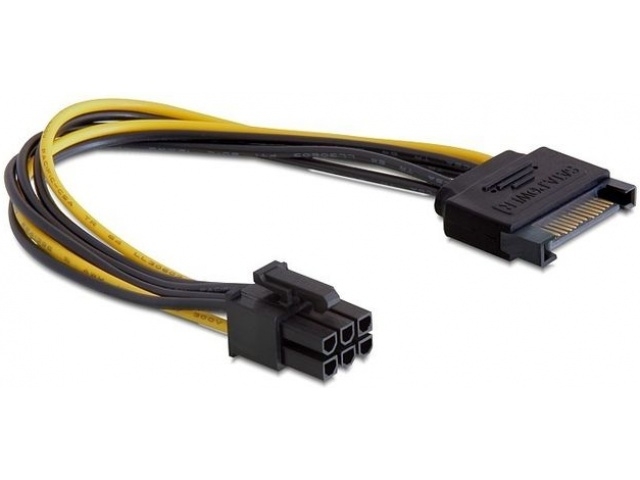
TL;DR: For low‑draw GPUs, a SATA→6‑pin can work because SATA 12V delivers ~54 W max; “The efficiency of the SATA power plug is 1.5A per contact.” [Elektroda, dt1, post #16778339]
Why it matters: It helps you avoid melted plugs, crashes, or buying unnecessary cables—especially when you just need to power a modest GPU.
Quick Facts
- SATA 12V rail uses 3 contacts × 1.5 A each ≈ 4.5 A, about 54 W available. [Elektroda, dt1, post #16778339]
- GeForce GTX 1050 Ti total draw is up to 75 W, partly from the PCIe slot. [Elektroda, dt1, post #16779779]
- High‑draw GPUs (up to ~250 W) can overload SATA adapters and overheat connectors. [Elektroda, dt1, post #16778339]
- Chieftec CFT‑650‑14C includes two native 6‑pin PEG leads; use these if present. [Elektroda, Kasek21, post #16779603]
- Real‑world report: 30–55°C GPU temps under load via adapter, stable operation for hours. [Elektroda, Loaderer, post #16780067]
Is a SATA to 6‑pin PCIe adapter safe for powering a GPU?
It can be safe for low‑power GPUs if the adapter carries no more than about 54 W from 12V. SATA has three 12V contacts at 1.5 A each, so exceeding this risks hot plugs, instability, or connector damage. For cards needing much more power, use native PCIe leads. “The efficiency of the SATA power plug is 1.5A per contact.” [Elektroda, dt1, post #16778339]
Will a GeForce GTX 1050 Ti work with a SATA→6‑pin adapter?
Yes. The 1050 Ti draws up to 75 W total, with part supplied by the PCIe slot, so the adapter isn’t asked to deliver the full amount. As confirmed in the thread, this class of card “does not consume any large amounts of power,” and operation should be stable. [Elektroda, dt1, post #16779779]
My Chieftec 650W (CFT‑650‑14C) PSU—do I even need an adapter?
Probably not. That model includes two native 6‑pin PEG connectors. Use the PSU’s own PCIe leads whenever possible for the safest, coolest connection. If your unit is missing its modular cables, source proper replacements for that exact model. [Elektroda, Kasek21, post #16779603]
What happens if a GPU tries to pull ~150 W through a SATA adapter?
You risk overheated contacts, melted plastic, and shutdowns. SATA’s 12V path is about 54 W; forcing triple that through an adapter is unsafe. The post warning against feeding a 150 W load from SATA explains why the advice to avoid it was sound. [Elektroda, dt1, post #16778339]
How can I tell if my current adapter setup is stable?
Look for consistent temperatures, no throttling, and hours of error‑free gaming or benchmarks. In the thread, the card idled near 30°C and peaked around 55°C with stable performance, indicating adequate power delivery for that case. [Elektroda, Loaderer, post #16780067]
Can software show the exact voltage coming into the GPU power plug?
The thread did not confirm a reliable software readout for per‑plug voltage. Users judged stability by temperatures and performance instead. If everything works under load without crashes or throttling, it is generally acceptable for that setup. [Elektroda, Kasek21, post #16780279]
Do thicker adapter wires make it automatically safe?
Thicker wires help with heat and voltage drop, but they don’t change the SATA connector’s contact limit of about 54 W on 12V. Respect the connector rating first, then choose quality cables. Wire size cannot fix an overloaded plug. [Elektroda, dt1, post #16778339]
What is a PEG 6‑pin connector?
PEG 6‑pin is the standard 12V auxiliary GPU power plug from a PSU. In the discussed PSU, two such native 6‑pin leads are available, which are preferred over adapters. Use them when present for best reliability. [Elektroda, Kasek21, post #16779603]
I bought a used PC and the modular PCIe cables are missing. What should I do?
Avoid random custom cables. Get the correct PCIe leads for your exact PSU model, or replace the PSU if you cannot source them. As the OP noted, paying for a homemade cable offered at 110 zł wasn’t necessary once proper options were identified. [Elektroda, Loaderer, post #16778059]
Someone told me an adapter would be fine—can I trust that?
For low‑draw cards it often works, and forum replies confirmed success in this case. However, verify your GPU’s demand and the connector limits first. When in doubt, use the PSU’s native PCIe outputs. [Elektroda, lukasixthm, post #16778046]
What’s the practical maximum I should pull from one SATA power plug?
About 54 W on the 12V line. That comes from three 12V contacts at 1.5 A each. Staying within this keeps temperatures down and avoids browned connectors during sustained loads. [Elektroda, dt1, post #16778339]
How do I stress‑test after installing a SATA→PCIe adapter?
- Run a GPU stress or a demanding game for at least one hour.
- Watch temperatures and clocks; aim for consistent behavior (e.g., 30–55°C observed).
- Check for crashes, throttling, or artifacts; any of these means stop and re‑wire. [Elektroda, Loaderer, post #16779535]
Does a 650 W PSU guarantee the adapter will be safe?
No. Total PSU wattage doesn’t change the SATA plug limit. A strong PSU can still overheat a SATA connector if the GPU draws more than ~54 W from that path. Use native PCIe outputs when available. [Elektroda, dt1, post #16778339]
Is steady temperature a reliable sign of good power delivery?
It’s a good sign. In the thread, the GPU held a steady 30–55°C with no performance dips over hours, suggesting the adapter wasn’t overloaded. Always pair this with a visual check of the connector for discoloration. [Elektroda, Loaderer, post #16780067]
Bottom line: should I keep using the adapter if everything works?
If your GPU is low‑draw and testing shows stable temps and performance, you can keep using it. A forum responder closed with, “If you already have it and everything works, it will work.” [Elektroda, Kasek21, post #16780279]