FAQ
TL;DR: Reverse‑polarity on 12 V strips often won’t kill them (LEDs tolerate ~5 V reverse), and “On a stabilized power supply, non‑junk tapes will calmly spend a few years.” [Elektroda, Zygaqra, post #16781093]
Why it matters: This FAQ helps DIYers wire 12 V LED strips safely, choose a suitable power supply, and avoid early failures.
Quick Facts
- DC label with a solid line over a dashed line means DC output; 1.0 A max on that adapter. [Elektroda, MiernikZKauflanda, post #16780910]
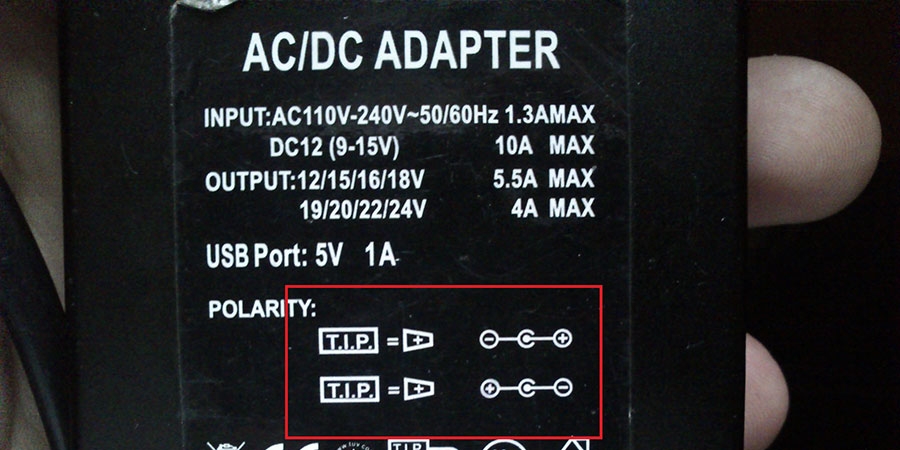
- Typical barrel‑plug polarity for such chargers: center plus, outer minus. “Usually + is inside and - outside.” [Elektroda, MiernikZKauflanda, post #16780885]
- You can test polarity using an LED with a 2–5 kΩ resistor or a multimeter. [Elektroda, icosie, post #16780915]
- Reversed 12 V strip connection won’t light and usually survives due to ~5 V reverse per LED (3 LEDs in series). [Elektroda, Zygaqra, post #16781093]
- Place the switch on the positive lead; best is a double switch cutting both leads. [Elektroda, icosie, post #16781071]
Which side is plus and minus on common 12 V barrel connectors?
For typical wall adapters used here, the center pin is positive and the outer sleeve is negative. “Usually + is inside and - outside.” Always confirm on the label or by measuring before connecting your strip. [Elektroda, MiernikZKauflanda, post #16780885]
How do I read the DC symbols on my power adapter?
A solid line above a dashed line means DC output. The nearby number, like 1.0 A, is the maximum output current. Exceeding that can overheat or shut down the supply. [Elektroda, MiernikZKauflanda, post #16780910]
Is a 12 V 1 A adapter enough for my LED strip?
1 A may be insufficient for longer strips. The commenter flagged concern about powering unknown length from 1 A. If your strip draws more, the adapter can run hot or fail. Consider a higher‑current, stabilized 12 V supply. [Elektroda, MiernikZKauflanda, post #16780910]
How can I check polarity without a multimeter?
Make a simple tester: put a 2–5 kΩ resistor in series with an LED. Touch the longer LED leg to the suspected positive. If it lights, polarity is correct. Keep tests brief to protect the LED. [Elektroda, icosie, post #16780915]
Will reversing the power to a 12 V LED strip damage it?
With 12 V strips that have three LEDs in series, reverse connection generally won’t light them and often doesn’t kill them. LEDs tolerate about 5 V reverse, so the string usually survives. Still, wire correctly to avoid risk. [Elektroda, Zygaqra, post #16781093]
Where should I install the on/off switch—plus or minus?
Cut the positive lead. For extra isolation, use a double‑pole switch to interrupt both positive and negative. This reduces standby leakage and accidental shorts. [Elektroda, icosie, post #16781071]
Are generic phone‑style adapters good for LED strips?
They will power strips, but many lack current regulation. That can shorten LED module life under thermal or voltage stress. Choose a quality, stabilized 12 V unit sized for your strip’s current. [Elektroda, icosie, post #16780942]
Can I use a 12 V TV antenna adapter to power LED strips?
Yes, some stabilized 12 V antenna adapters can run LED strips reliably. One user reported TV power issues but said the same adapter powered strips fine. Verify current rating meets your strip’s needs. [Elektroda, piotr89699, post #16781246]
What happens if I overload a small adapter with too much strip length?
Overload can overheat the supply or cause failure. One response warned the charger could burn from overload, while the strip or its driver might fail first if wired wrong. Size the supply with margin. [Elektroda, MiernikZKauflanda, post #16780910]
What is a stabilized vs. unregulated 12 V supply?
A stabilized supply holds 12 V under load. An unregulated one can rise to ~18 V with no load, which can stress LEDs when connecting. Use stabilized 12 V for long life. “Non‑junk tapes” last years on it. [Elektroda, Zygaqra, post #16781093]
How do I quickly test adapter polarity with a DIY LED tester?
- Put a 2–5 kΩ resistor in series with an LED.
- Touch the longer LED leg to the suspected positive, shorter to negative.
- If it lights, polarity is correct; swap if not.
[Elektroda, icosie, post #16780915]
Is battery power a safe option for LED strips?
A suitable 12 V battery pack can drive strips directly and avoids adapter overload concerns. One contributor recommended a store‑bought battery pack as a simple, robust choice. Add a fuse for safety. [Elektroda, MiernikZKauflanda, post #16781353]
What does the center‑positive symbol mean on the label?
A diagram with a dot connected to + pointing to the inner ring indicates center positive; the - points to the outer sleeve. Match this to your strip’s + and − pads before powering. [Elektroda, icosie, post #16780868]
I have 2 m of strip—any special concerns?
The original poster ran 2 m and confirmed center‑positive wiring. Ensure your adapter’s current meets the strip’s demand; 1 A adapters are often marginal for multi‑meter runs. Upgrade if it warms up. [Elektroda, DrabU, post #16780926]
Could a wrong connection kill the charger or the strip first?
A miswire can burn the strip or its driver faster than the charger. Overload, however, can destroy the charger. Check polarity and current before powering. [Elektroda, MiernikZKauflanda, post #16780910]