logo elektroda
logo elektroda
X
logo elektroda

Chandelier 5 Bulbs 2+3 Connection: Wiring Help for 2, 3, or 5 Bulbs On (Photos Included)

zgorany 8262 11
ADVERTISEMENT
Treść została przetłumaczona polish » english Zobacz oryginalną wersję tematu
  • #1 16804465
    zgorany
    Level 10  
    Posts: 30
    Rate: 11
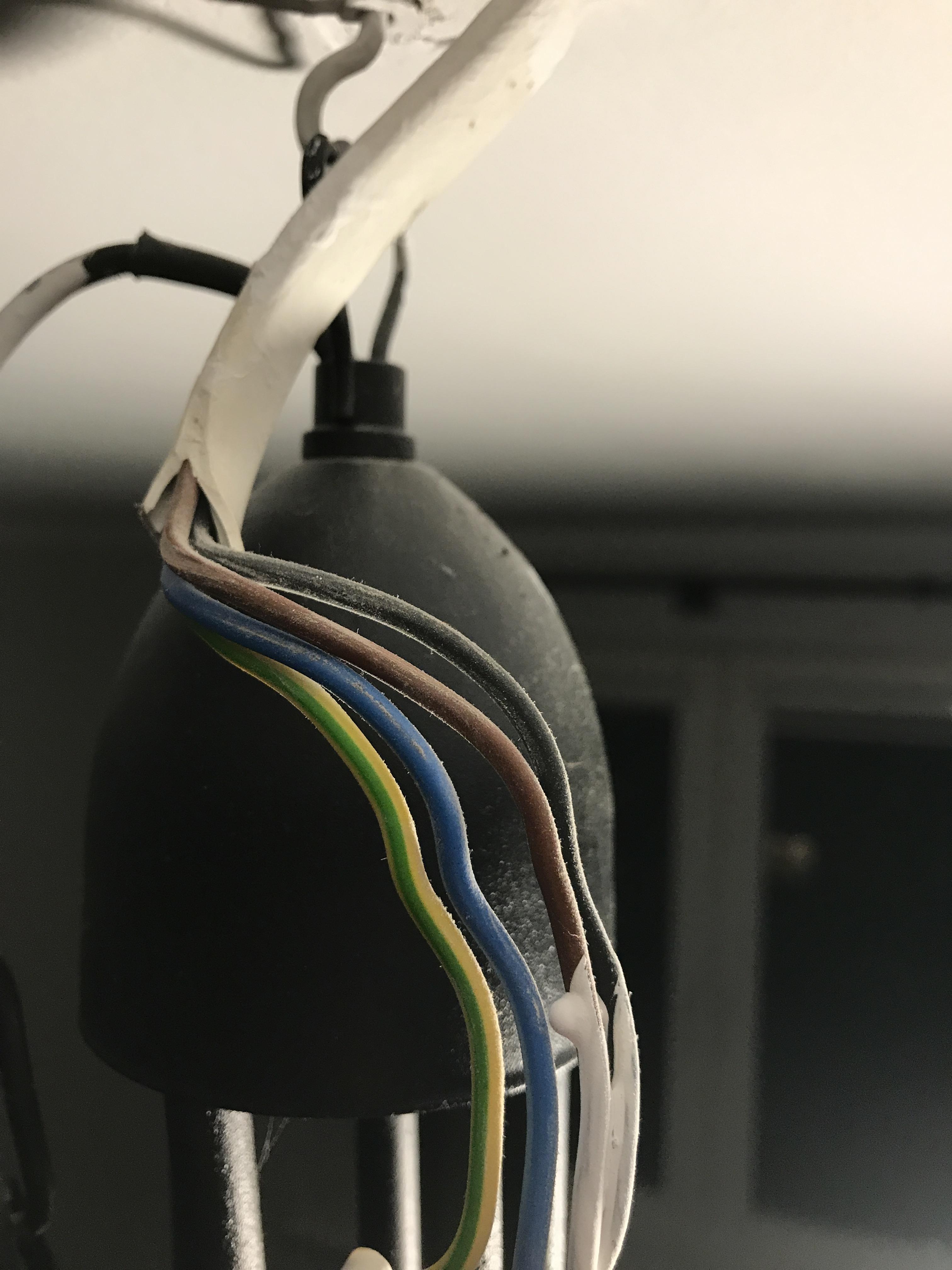
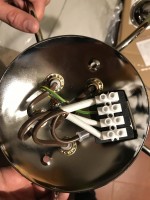
    Hello, I am asking for help in connecting the chandelier as in the subject, so that you can turn on 2 bulbs, 3 bulbs or 5 bulbs. Below photos of wires in the chandelier (from the bottom L2, L1, grounding, N) and on the ceiling. Thank you for your help. Chandelier 5 Bulbs 2+3 Connection: Wiring Help for 2, 3, or 5 Bulbs On (Photos Included)97EA091B-0...8FCB1.jpeg (1003.33 kB)You must be logged in to download this attachment. Chandelier 5 Bulbs 2+3 Connection: Wiring Help for 2, 3, or 5 Bulbs On (Photos Included)5469EEEF-3...F585E.jpeg (833.01 kB)You must be logged in to download this attachment.
  • ADVERTISEMENT
  • Helpful post
    #2 16804501
    Anonymous
    Anonymous  
  • ADVERTISEMENT
  • Helpful post
    #3 16804502
    MonikaMarcin
    Level 20  
    Posts: 393
    Help: 32
    Rate: 103
    L1 -black
    L2 - brown
    N-blue
    ground-to-ground
    The condition is that the installation is prepared for a double switch.
  • ADVERTISEMENT
  • Helpful post
    #4 16804503
    zumik998
    Level 15  
    Posts: 422
    Help: 25
    Rate: 70
    Welcome. But on 4 wires (including grounding) you will not realize such a configuration. Because one is PE, the other is N and the other two are phases switching on two circuits. It is not possible to control the circuits on two phase conductors. You can only connect to two configurations.

    Edit: It is possible - if two circuits are connected.
  • #5 16804505
    MonikaMarcin
    Level 20  
    Posts: 393
    Help: 32
    Rate: 103
    zumik998 wrote:
    It is not possible to control the circuits on two phase conductors

    Either 2, or 3, or 2 + 3 = 5.
  • ADVERTISEMENT
  • Helpful post
    #6 16804507
    kortyleski
    Level 43  
    Posts: 12262
    Help: 957
    Rate: 3833
    zumik998 wrote:
    Welcome. But on 4 wires (including grounding) you will not realize such a configuration. Because one is PE, the other is N and the other two are phases switching on two circuits. It is not possible to control the circuits on two phase conductors. You can only connect to two configurations.

    Of course I will. Note that the third combination is the result of the first two.
  • Helpful post
    #7 16804509
    zumik998
    Level 15  
    Posts: 422
    Help: 25
    Rate: 70
    Actually, I was wrong :) Sorry for confusion.
  • Helpful post
    #8 16804514
    Anonymous
    Anonymous  
  • #9 16806197
    zgorany
    Level 10  
    Posts: 30
    Rate: 11
    Gentlemen, thank you for all the advice, 2 +3 works on two switches. Only I have one problem, or rather a buzzer, because when one side (2 bulbs) or the other (3 bulbs) of the switch on the tube is on, there is voltage on the brown and black wires. Also, please advise how to connect the cable in the double switch, or is it supposed to be like that?
  • Helpful post
    #10 16807367
    Anonymous
    Anonymous  
  • Helpful post
    #11 16807384
    MonikaMarcin
    Level 20  
    Posts: 393
    Help: 32
    Rate: 103
    zgorany wrote:
    the test tube has voltage on the brown and black wires.

    "Something" is induced in the unloaded cable,
    which runs parallel to the laden.
    I would only call it potential, not tension.
    You can check it on your own skin.
    If the black vein bulbs are lit, touch N to this unloaded brown vein
    and the potential will disappear. There will be no short circuits.
    YOU HAVE NO IDEA DON'T RISK !!! ;-)
    The test tube is an electrician's "weak" tool. :-(

    Added after 4 [minutes]:

    zgorany wrote:
    or is it supposed to be this way?

    It will be like that.
    Don't stress :-)
    OK.
  • #12 16951549
    zgorany
    Level 10  
    Posts: 30
    Rate: 11
    Thank you for the advice!

Topic summary

✨ The discussion revolves around wiring a chandelier with 5 bulbs to allow for configurations of 2, 3, or all 5 bulbs to be turned on using a double switch. Users provided detailed wiring instructions, identifying wire colors: L1 (black), L2 (brown), N (blue), and ground (yellow-green). It was noted that a proper setup requires a double switch to control the two circuits effectively. One user reported success with the 2+3 configuration but encountered voltage on the brown and black wires when only one side of the switch was activated. Further advice was given on connecting the wires in the switch box and addressing induced voltage in unloaded cables.
Generated by the language model.

FAQ

TL;DR: To wire a 5‑bulb chandelier for 2, 3, or all 5 bulbs, use a dual (two‑gang) switch feeding two live leads (L1 black, L2 brown) plus N and PE—giving 3 modes. Expert tip: “Either 2, or 3, or 2 + 3 = 5.” [Elektroda, MonikaMarcin, post #16804505] Why it matters:** This setup lets you tailor light levels without smart hardware—ideal for dining rooms, halls, and living spaces.

Quick Facts

How do I wire a 5‑bulb chandelier for 2+3 control with two switches?

Connect PE to PE, N to N, L1 (black) to switch output 1, and L2 (brown) to switch output 2. Use a dual switch with a single permanent live feeding both rockers. Turning one rocker gives 2 or 3 bulbs; turning both gives all 5. [Elektroda, MonikaMarcin, post #16804502]

Which wire colors go where on the chandelier and ceiling?

Match colors: L1 to black, L2 to brown, N to blue, and PE to yellow‑green. These markings are typical for such fixtures and were confirmed in the thread photos. “L1 black wire, L2 brown wire, N blue, PE yellow‑green.” [Elektroda, 762302, post #16804501]

Do I need a dual (two‑gang) wall switch for 2+3 control?

Yes. The condition for 2+3 or 5 is a dual switch and wiring prepared for two switched lives. Without that, you cannot separate the two lamp groups. [Elektroda, MonikaMarcin, post #16804502]

Why do both L1 and L2 show voltage on a neon tester even when only one side is on?

Parallel runs can induce a potential on the unused core. A neon test pen will light, but it is not a true load. “The test tube is an electrician’s ‘weak’ tool.” Use a real meter or load for verification. [Elektroda, MonikaMarcin, post #16807384]

What should the wiring look like inside the switch box?

Expect three conductors: one permanent live feeding the common ‘L’ of the dual switch, and two switched lives returning to L1 and L2 at the chandelier. Tighten terminals and label them for clarity. [Elektroda, 762302, post #16807367]

Can I get 2, 3, and 5 bulbs with just two switched wires?

Yes. Each switched wire feeds one group (2 or 3 bulbs). The third state—5 bulbs on—happens when both switches are on. “The third combination is the result of the first two.” [Elektroda, kortyleski, post #16804507]

Is it normal for the tester to light on both black and brown when one group is on?

Yes, that indicated induced potential in the idle conductor running beside the live one. It disappears under load and does not indicate a fault. Don’t panic; verify with neutral applied through a proper tester. [Elektroda, MonikaMarcin, post #16807384]

How do I connect the dual switch correctly?

Feed the permanent live into the ‘L’ common of the dual switch. Connect the two outputs to the chandelier’s L1 and L2 returns. Ensure neutrals and PE are joined appropriately in the ceiling rose or box. [Elektroda, 762302, post #16807367]

What if my ceiling has only one switched live available?

You will not achieve independent 2 and 3 control. The dual‑circuit arrangement needs two switched lives from the switch to the chandelier. Upgrade cabling or use a different control method. [Elektroda, 762302, post #16807367]

How are the 2‑bulb and 3‑bulb groups chosen inside the fixture?

Fixtures with L1/L2/N/PE terminals typically pre‑assign lamp holders to L1 and L2. You connect to those labeled points; no internal rewiring needed. The original photos showed L2, L1, N, and PE marked on the fitting. [Elektroda, zgorany, post #16804465]

Quick 3‑step: how do I finish the 2+3 install safely?

  1. Isolate power; verify dead. 2. Connect PE‑PE, N‑N, L1‑switch A, L2‑switch B. 3. In the wall box, feed live to ‘L’ and route two outputs to L1/L2. Test each rocker, then both for 3 modes. [Elektroda, MonikaMarcin, post #16804502]

Will turning both rockers on damage the chandelier?

No. That’s the intended third mode: all five lamps on. Users in the thread confirmed 2+3 works as designed with a dual switch. This yields three operating states in one fixture. [Elektroda, 762302, post #16804514]

I wired it and now 2+3 works, but I still see ghost voltage. Is that a problem?

No. That behavior matches induced potential on the unused core. Load it and the reading collapses. Quote: “It will be like that. Don’t stress.” Use a proper meter for diagnostics. [Elektroda, MonikaMarcin, post #16807384]

What troubleshooting step should I try if one group doesn’t light?

Confirm the switched live from that rocker reaches the correct chandelier terminal (L1 or L2). Also check that the permanent live feeds the switch’s common ‘L’ properly. Tighten any loose terminations. [Elektroda, 762302, post #16807367]

Any final confirmation from the original poster?

Yes. The OP reported that 2+3 works on two switches and later thanked everyone. Remaining “voltage” reports were explained as induced potential and considered normal. [Elektroda, zgorany, post #16951549]
Generated by the language model.
ADVERTISEMENT