FAQ
TL;DR: Reported fixes replace 2 transistors and a 15 V zener; “motor drive and brake transistors were damaged.” [Elektroda, stasiekb100, post #16821788]
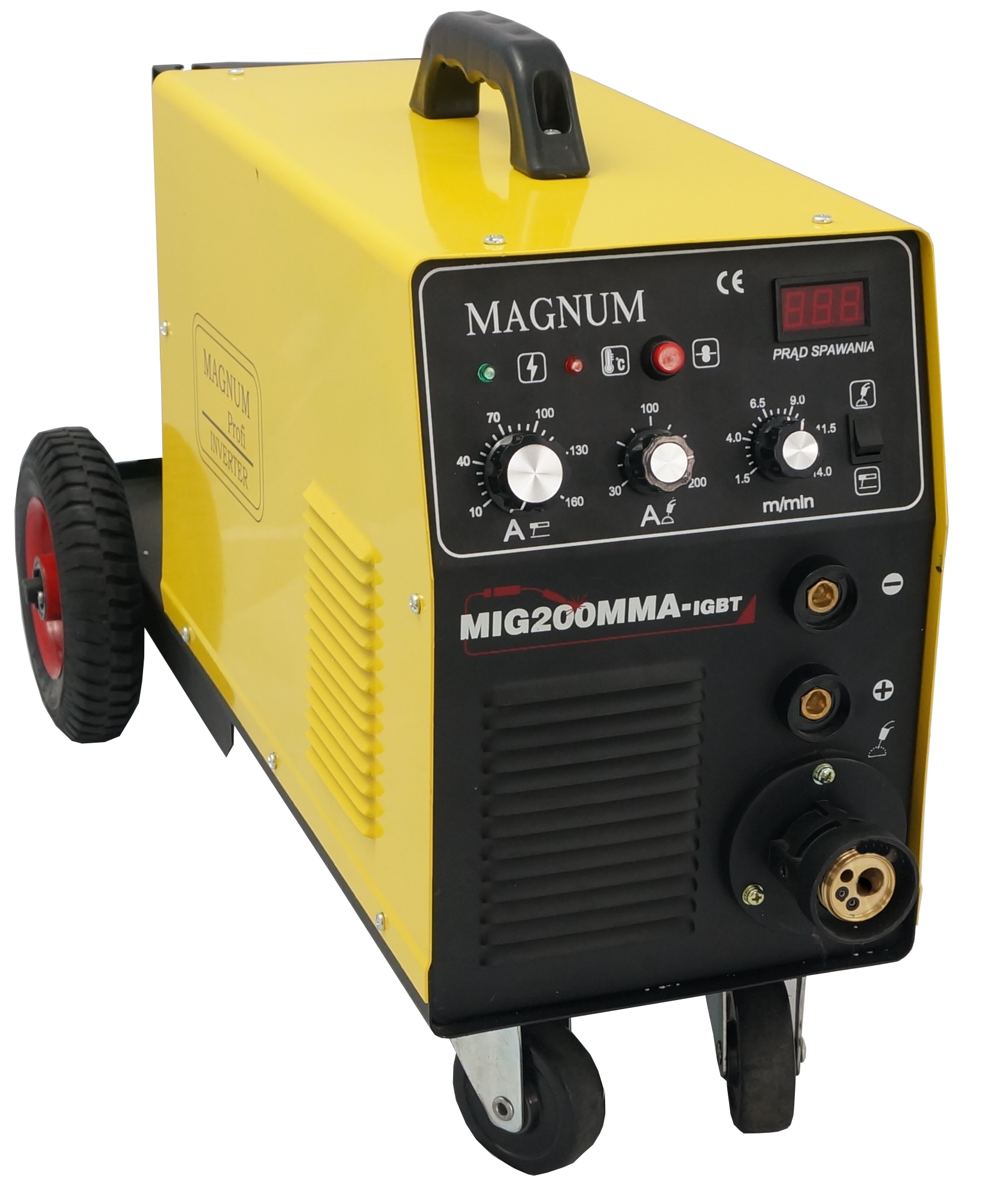
Why it matters: This FAQ helps owners diagnose and fix continuous wire feed and dead display on Magnum MIG 200MMA/280MMA IGBT units.
Quick Facts
- Symptom snapshot: continuous wire feed even with torch unplugged, dead display, heating smell from boards. [Elektroda, daniel9541, post #16818451]
- Root cause reported: failed motor drive transistor, failed motor brake transistor, and a 15 V zener in the gate circuit. [Elektroda, stasiekb100, post #16821788]
- Confirmed outcome: replacing motor drive transistors restored normal welder operation. [Elektroda, xavi77, post #17189748]
- Parts seen in repairs: VT1 IRFZ44 MOSFET and Q5 8050 small-signal transistor. [Elektroda, xavi77, post #17136804]
- Sanity checks: IRF9Z24 device and 7805/7812 voltage regulators often verified during troubleshooting. [Elektroda, feniks_, post #17188955]
What causes my Magnum MIG 200MMA to feed wire continuously and show no display?
Failures in the wire-feed control path are typical. Users reported a burned motor drive transistor, a failed motor brake transistor, and a shorted 15 V zener in the gate circuit. These faults force the motor on and can drop logic rails, blanking the display. Replacing those parts restored operation. “Motor drive and brake transistors were damaged.” [Elektroda, stasiekb100, post #16821788]
How do I quickly diagnose the continuous wire-feed fault?
Check for constant voltage at the motor terminals with the trigger disconnected. Inspect the motor drive transistor, the brake transistor, and the 15 V zener in the gate network. If the zener has failed, the drive device may run linearly and overheat. Replace failed parts before power testing again. [Elektroda, stasiekb100, post #16821788]
Where are the relevant components on the control board?
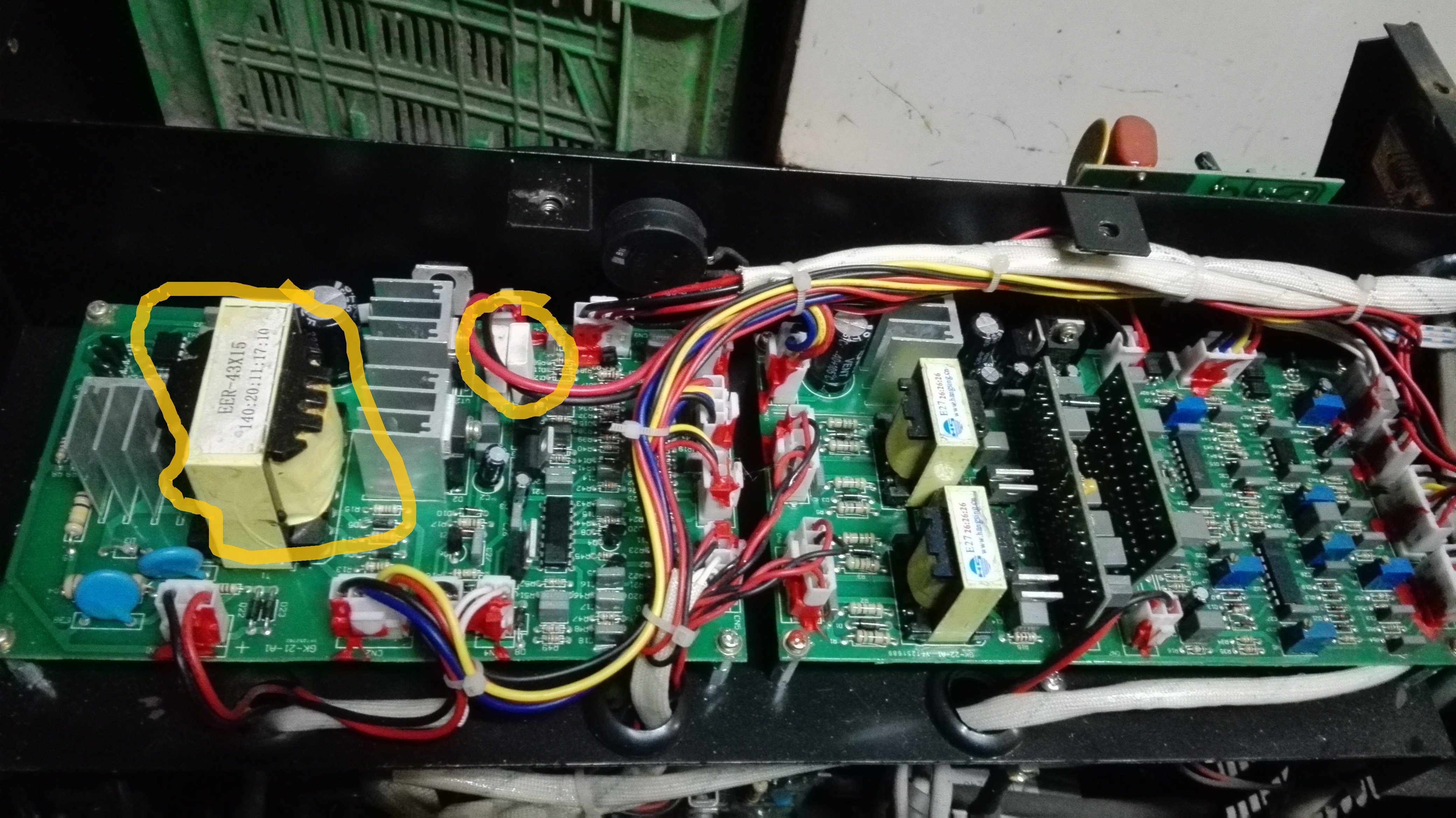
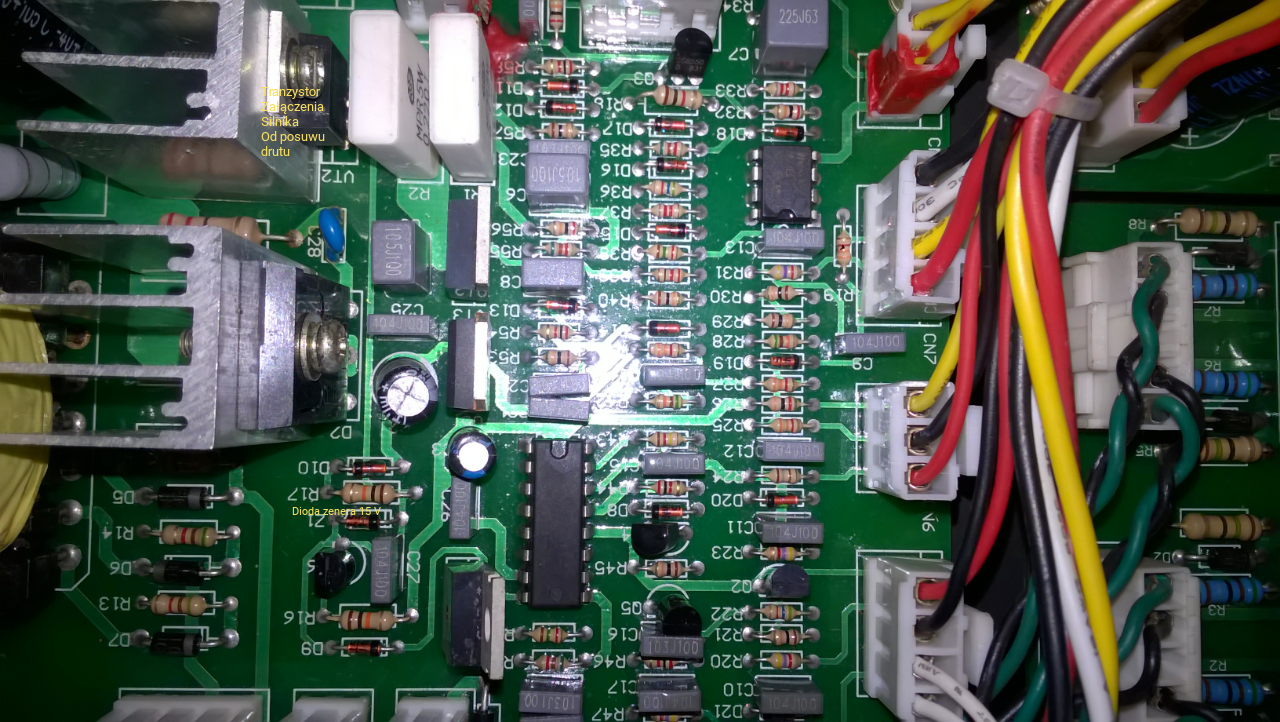
A contributor shared a marked board image showing the motor drive section and associated parts. Use that diagram to locate the motor MOSFETs, brake transistor area, and protection zener. Match silkscreen designators onsite. Print the image for bench reference during probing and replacement. [Elektroda, stasiekb100, post #17099538]
What parts have users actually replaced to fix this issue?
Reported replacements include the motor drive transistor, the motor brake transistor, and a 15 V zener diode tied to the drive gate. After replacement, machines returned to normal behavior, stopping the motor and restoring the display. One user confirmed success after these swaps. [Elektroda, stasiekb100, post #16821788]
Which additional components should I test if the fault returns after partial repair?
Test VT1 IRFZ44 (motor drive MOSFET) and Q5 8050. Verify the torch trigger path and observe the gas valve click during trigger presses. A user saw the valve actuate but the motor stay off until further parts were replaced. This indicates remaining faults around the motor drive. [Elektroda, xavi77, post #17136804]
Do I need to check the 5 V and 12 V regulators?
Yes. Measure the 7805 and 7812 outputs under load. Low or unstable rails can blank the display and upset motor control. Also recheck the IRF9Z24/“igbt9z24” device if present in your board revision, as it may fail again when rails misbehave. [Elektroda, feniks_, post #17188955]
What is the motor brake transistor and why does it matter?
The brake transistor momentarily shorts the motor leads after feed to stop the wire quickly. If it fails short, the motor can behave erratically or stress the drive transistor. If it fails open, stopping becomes sluggish and control loops misread speed. Replace it with the correct rated part. [Elektroda, stasiekb100, post #16821788]
What is a zener diode in the gate circuit and how can it fail?
The zener clamps gate voltage to protect the MOSFET. A failed 15 V zener can force the MOSFET into linear mode, overheating it and causing continuous feed. Replace the zener with the same value and check the gate resistor network for collateral damage. [Elektroda, stasiekb100, post #16821788]
How can I tell if my repair worked before full reassembly?
Power the unit with the torch unplugged. The display should light, the feed motor should be stopped, and no overheating smell should appear. Then connect the torch and tap the trigger to confirm momentary feed. One user reported full recovery after transistor replacements. [Elektroda, xavi77, post #17189748]
Can a partial fix make the problem come back when I press the feed?
Yes. One case worked at idle but failed again after enabling feed: the display went off and the motor ran continuously. This indicates another bad device in the drive/brake path remained, requiring further parts replacement before stability returned. [Elektroda, xavi77, post #17111459]
What’s a safe 3-step process to replace the faulty parts?
- Isolate power, discharge caps, and document wiring/photos.
- Desolder and replace the motor drive transistor, brake transistor, and 15 V zener; inspect pads.
- Verify 5 V/12 V regulators, then cold-start and test feed with torch disconnected. [Elektroda, stasiekb100, post #16821788]
Does replacing the motor drive transistors alone ever resolve it?
Yes. One user replaced the motor drive transistors and confirmed the welder worked again. Always verify supporting components first, but this shows the drive devices can be the primary failure. Document part numbers before ordering replacements. [Elektroda, xavi77, post #17189748]
What are the typical user-reported symptoms before repair?
Continuous wire feeding even with the torch disconnected, a nonfunctional display, and noticeable heating with odor from internal parts. These signs point to a shorted drive path and stressed power rails. Use these cues to focus diagnostics on the motor control section. [Elektroda, daniel9541, post #16818451]
Is this issue limited to the 200MMA, or seen on other Magnum MIG models?
A 280 model exhibited the same failure set and was fixed by replacing the motor drive transistor, the brake transistor, and the 15 V zener. This suggests a shared control design across models, so methods may transfer. [Elektroda, stasiekb100, post #16821788]
What’s one expert tip to avoid repeat failures after repair?
“Replace the zener with the drive transistor; the transistor went linear and burned out when the zener failed.” Pairing these parts reduces callbacks and protects the new MOSFET during test. Check for solder bridges around the gate network. [Elektroda, stasiekb100, post #16821788]
When should I stop DIY and use a service center?
If you lack isolation tools, can’t verify 5 V/12 V rails, or the motor still runs after replacing listed parts, seek professional service. Remote diagnosis has limits; measured data on your exact board is essential for safety and accuracy. [Elektroda, bearq, post #16818890]