logo elektroda
logo elektroda
X
logo elektroda
Dostępna jest polska wersja

Czy wolisz polską wersję strony elektroda?

Nie, dziękuję Przekieruj mnie tam

FAAC 740 Sliding Gate Actuator - Radio Connection, Pilot Coding, Terminal Guide (COM, NC, NO)

piomar93 30465 14
ADVERTISEMENT
Treść została przetłumaczona polish » english Zobacz oryginalną wersję tematu
  • #1 16824575
    piomar93
    Level 5  
    Hello, gentlemen, automation engineers!

    Well, I have an actuator for the sliding gate FAAC 740. I have already connected everything but I stopped on one thing: how to connect the radio to the entire drive system. The terminals have the following terminals: COM, NC, NO. I think I should connect the negative pole (-) to the COM and the end of the NO contact to the OPEN A terminal (total opening). I will add that I made a local switch via the bell switch (the one with the spring) and this option works correctly. The second problem is coding the control panel and coding the pilots to FAAC.
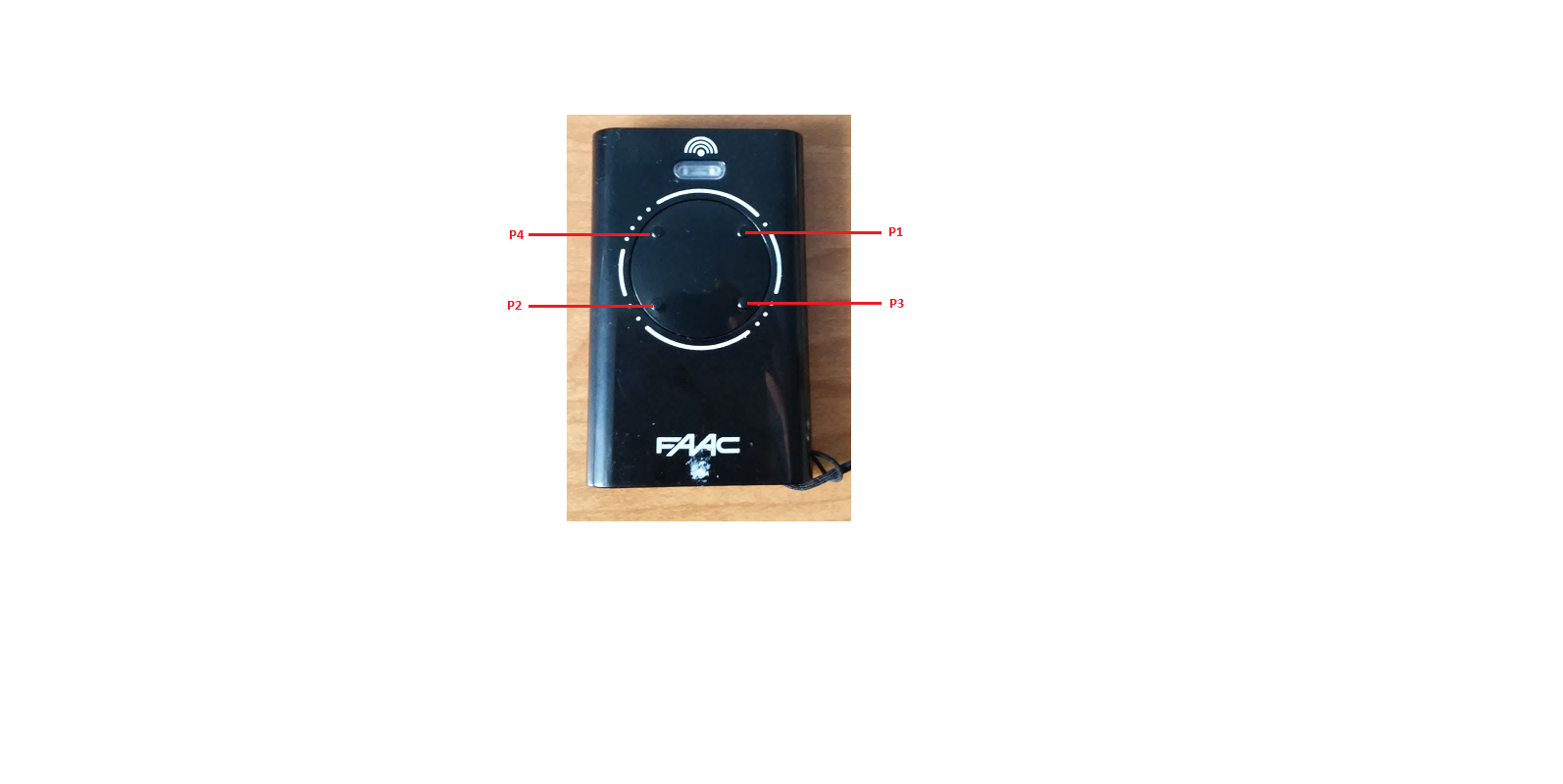
    I add pictures of the radio and pilots:
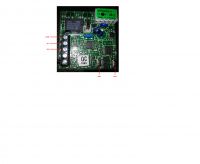
    FAAC 740 Sliding Gate Actuator - Radio Connection, Pilot Coding, Terminal Guide (COM, NC, NO) FAAC 740 Sliding Gate Actuator - Radio Connection, Pilot Coding, Terminal Guide (COM, NC, NO)
    I am asking for a hint.
  • ADVERTISEMENT
  • #2 16824862
    zybex
    Helpful for users
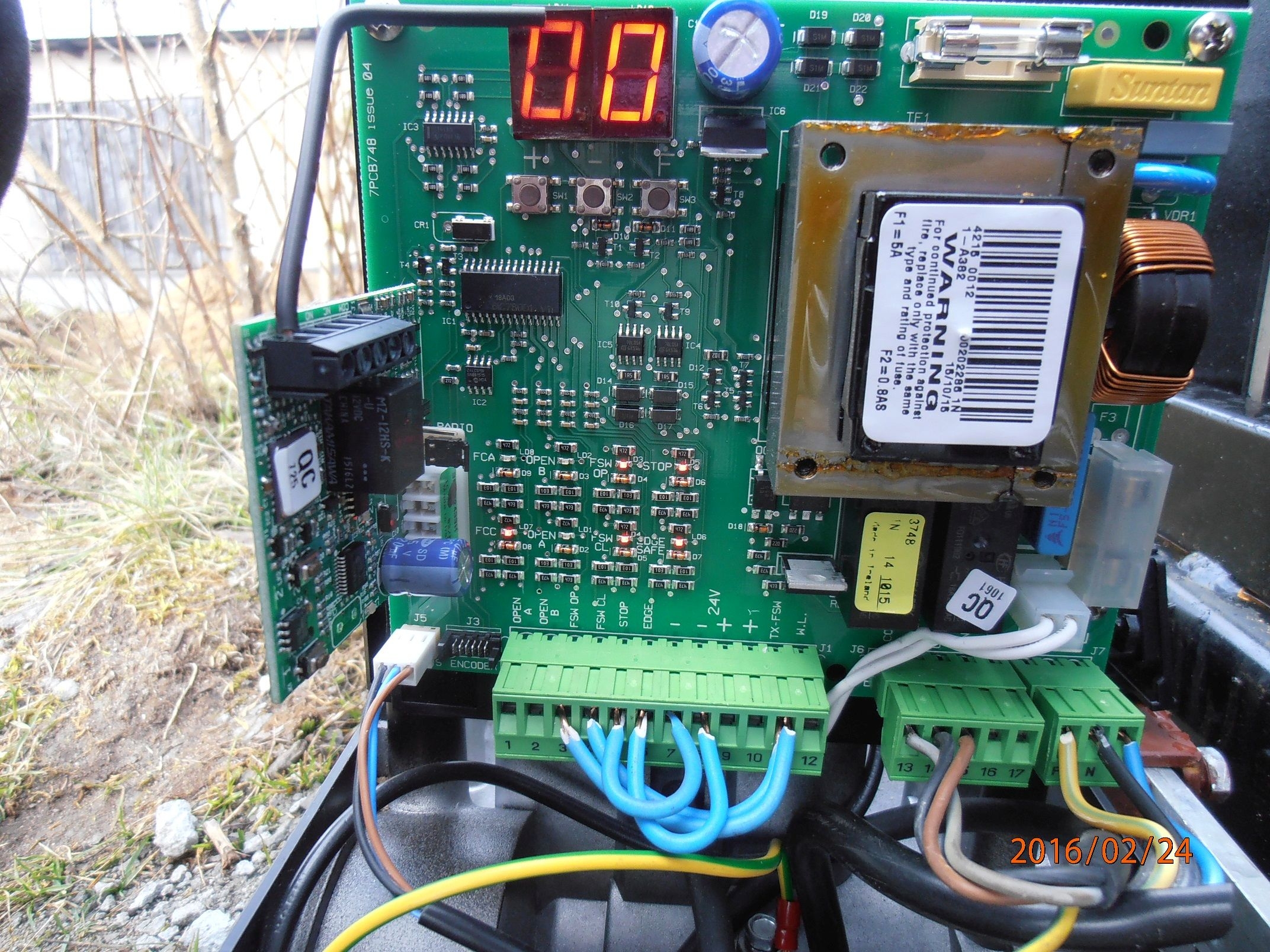
    Place the receiver in the connector and do not connect anything. It must work. The connector in question has a green sticky note attached.
    This is to look like in the picture below (found on the net).

    FAAC 740 Sliding Gate Actuator - Radio Connection, Pilot Coding, Terminal Guide (COM, NC, NO)

    One channel of this receiver is just output there (except for power supply). At this point, you should already control the remote in the same way as the button connected directly to the drive. I do not know if they are already trained in the receiver when they buy the remote controls. If not, then there must be some instruction to teach them.

    If you deal with this and the drive will work properly (set limit switches and possibly photocells), then you will be able to use the second channel that this receiver has. It can be controlled by something extra, eg garage door or wicket function, or lighting). Then you use the contacts shown in the first picture (COM, NC, NO).
    Is everything now fairly clear?
  • #3 16825902
    piomar93
    Level 5  
    I understand, but write me exactly how to code the control panel and remotes. And what are the two buttons for the two channels for?
  • ADVERTISEMENT
  • #5 16826055
    kotbury
    Gantry automation specialist
    PS. I would like to add that channel 1 is received by the central unit through a pin connector and is used for normal gate commissioning (ie step by step) and channel 2 does not support the second channel through the connector - you can connect the COM and NO terminals of the receiver to 7 and 2 of the control panel by connecting them to the function partial opening (wicket) or using peripherals for other purposes (eg to operate an electronic bistable relay and through it to turn the lighting on and off).
  • ADVERTISEMENT
  • #6 16829277
    piomar93
    Level 5  
    Gentlemen, I set everything as it should, according to the instructions and everything works correctly. Also, I can confidently close the topic.
  • #7 19010271
    chinczyk3000
    Level 11  
    Hello,

    He will heat up the old cutlet so as not to create a new topic. How to connect another receiver to this Faac 740 drive? e.g. Proxima NW1. I want a gate and garages on one remote. There are 5 pins on the drive board. The radio has a power supply, an antenna and a contactor. Someone something ?
  • ADVERTISEMENT
  • #8 19010305
    xury
    Automation specialist
    Why do you want to connect Proxima to the pins from the radio?
    You have everything you need on the connectors. 24V power supply and openA and openB opening
  • #9 19010987
    chinczyk3000
    Level 11  
    I thought that when I get rid of the original radio, the replacement must be connected to the same pins, but OK, I already know that it is not. How is openA different from openB? understand ground control.
  • #10 19010996
    xury
    Automation specialist
    Open A is complete opening. Open B is a partial set aside, the so-called wicket.
    Of course, as in 90% of modern electronics, mass control.
    By the way, the radio pins are the same signals as on the connectors.
  • #11 19015775
    chinczyk3000
    Level 11  
    Thank you for your answer :) Everything works as I wanted :)
  • #12 19379474
    chinczyk3000
    Level 11  
    Another question for this drive - is there a signal on the connectors or somewhere that can be pulled out to know if the gate is closing, is it closed or open?
  • #13 19379845
    zybex
    Helpful for users
    On the disc (post 2) you can see 8 LEDs that turn on and off when the drive is running. This is some information for the installer, service technician. Unfortunately, this information is not pulled onto the connector.
    The only information I get out is that the gate is moving (no matter which way). This is powering the beacon.
  • #14 19380643
    xury
    Automation specialist
    On the new boards, it is possible to extract information about the open or closed gate from the connector of the control panel. It is not described in all versions of the manual.
  • #15 19380773
    kotbury
    Gantry automation specialist
    Maybe not so much new, but with a richer version of the firmware (I just met one with older copies). You can recognize the presence of the rP function in the menu (release before the limit switch), and the WL lamp also has an electromagnetic lock mode - and better signaling of the gate status (it blinks when it is moving, it lights up when it is open and stopped, it goes out when it is closed).
    If you have a drive with a "trimmed" firmware (WL repeats the rooster in the signaling mode), you can always connect the Proxima AKZ device between the switch and the drive board. It is a "transparent" repeater of the limit switch state on separate contacts for the drive.
    If you are a haunted DIY, you can put a phototransistor with signaling circuit on the FCA LED (it will work in the dark with the box closed ...)

Topic summary

✨ The discussion revolves around connecting a radio receiver to the FAAC 740 sliding gate actuator. The user seeks guidance on wiring the radio to the actuator's terminals (COM, NC, NO) and coding the control panel and remotes. Responses clarify that the receiver should be connected to the appropriate terminals, with COM linked to the negative pole and NO to the OPEN A terminal. Instructions for coding the remotes are provided via a link to a programming manual. Additional queries about connecting a different receiver (Proxima NW1) and understanding the functions of the Open A and Open B terminals are addressed, with explanations on their respective uses for complete and partial gate openings. The conversation concludes with successful implementation of the setup.
Generated by the language model.

FAQ

TL;DR: 90% of modern gate electronics use ground-trigger control, and "Open A is complete opening." Plug the FAAC radio into the header for channel 1; wire COM/NO for extras on channel 2. [Elektroda, xury, post #19010996]

Why it matters: This FAQ helps DIYers and installers quickly wire radios, pair remotes, and read signals on FAAC 740 without trial-and-error.

Quick Facts

How do I connect the FAAC plug-in radio to a 740 controller?

Insert the receiver into the 5‑pin header marked for radio; do not add extra wires. Channel 1 will work like your spring-loaded bell button input. Set limits and safety devices first, then configure channel 2 if needed. [Elektroda, zybex, post #16824862]

What do COM, NC, and NO on the radio receiver do for FAAC 740?

Use COM and NO to trigger another function from channel 2. Connect COM and NO to controller terminals 7 and 2 for partial (wicket) opening, or drive a relay for lighting or another device. Leave NC unused for typical tasks. [Elektroda, kotbury, post #16826055]

What’s the difference between Open A and Open B inputs?

"Open A is complete opening. Open B is partial, the so‑called wicket." Both are ground-triggered, matching the radio header signals. This mapping lets one remote button open fully and another do a pedestrian opening. [Elektroda, xury, post #19010996]

Can I use a third‑party receiver (e.g., Proxima NW1) with FAAC 740?

Yes. Power the receiver from the controller’s 24V supply and wire its dry contact to OpenA (full open) or OpenB (partial). You don’t need the internal radio pins; the screw terminals expose the same signals. [Elektroda, xury, post #19010305]

How do I pair FAAC remotes (XT2/XT4) to the receiver?

Follow the FAAC programming guide linked in the thread: enter learn mode on the receiver, press the chosen remote button, then exit learn mode. Repeat for each remote or channel. Keep remotes near the receiver during learning. [Elektroda, glider33, post #16826023]

Do new FAAC 740 boards provide gate open/closed status on a connector?

Some newer or revised firmware boards expose open/closed state via the control-panel connector, but not every manual describes it. Check your board’s menu and documentation revision before wiring a status circuit. [Elektroda, xury, post #19380643]

I only need movement status. Where can I get it?

Use the flashing beacon output. The controller’s eight on‑board LEDs show internal states for diagnostics, but those signals are not available on external connectors. The beacon indicates the gate is moving. [Elektroda, zybex, post #19379845]

My WL lamp only mimics the flasher; can I still report gate status?

If your firmware is “trimmed,” WL may not provide rich status. Add a Proxima AKZ between the limit switches and the board to mirror open/closed on separate contacts. "Transparent" repeaters avoid firmware limits. [Elektroda, kotbury, post #19380773]

Are the radio header pins different from the screw terminals?

They carry the same control signals. Channel 1 on the plug‑in receiver maps to the step-by-step input; using the screw terminals lets you duplicate functions without the header. Mass (ground) triggers the inputs. [Elektroda, xury, post #19010996]

Will new remotes work out of the box or need training?

Some sets arrive pre‑learned, but many need pairing. If a button does not actuate the drive like the local push-button, teach it using the receiver’s learn procedure from the instructions. [Elektroda, zybex, post #16824862]

What are the two receiver channels typically used for?

Channel 1 handles normal step-by-step gate control via the header. Channel 2 is free for extras: partial opening (connect COM/NO to 7 and 2), a garage door input, or lighting through a relay. [Elektroda, kotbury, post #16826055]

Is the FAAC 740 input style positive-trigger or ground-trigger?

It uses ground-trigger control. As one installer put it, "in 90% of modern electronics, mass control." Wire your push-button or receiver contact between the input and ground. [Elektroda, xury, post #19010996]

How do I wire a bell switch (spring push-button) for local control?

Connect the switch between the step-by-step input and ground. This mirrors channel 1 of the plug-in receiver and gives open–stop–close sequencing from the button. Verify limits and photocells first. [Elektroda, zybex, post #16824862]

Can I read gate state from LEDs on the FAAC 740 board?

You can observe eight diagnostic LEDs during motion, but they’re not broken out to a connector. For external indication, use the beacon output or add a status module. [Elektroda, zybex, post #19379845]

What’s a “wicket” function on sliding gates?

It’s a partial opening for pedestrian access, controlled by Open B. Assign a second remote button or receiver channel to OpenB for convenience and safety. [Elektroda, xury, post #19010996]

Quick 3‑step: add partial opening on channel 2 (COM/NO) to FAAC 740

  1. On the receiver, select channel 2 and pair a remote button.
  2. Wire receiver COM and NO to controller terminals 7 and 2 (OpenB).
  3. Test: press the button to confirm wicket travel and adjust limits if needed. [Elektroda, kotbury, post #16826055]
Generated by the language model.
ADVERTISEMENT