FAQ
TL;DR: If idle current is ~20 mA, "the KBC is damaged in 99%"; start by checking PD304, ADAPTER_ID, and 3.3/5 V rails. [Elektroda, sk1977, post #16847853]
Why it matters: This FAQ helps bench techs quickly revive Lenovo Z50-70 NM-A273 boards that power but don’t POST, saving diagnosis time.
Quick Facts
- ADAPTER_ID resistances: 65 W ≈ 285 Ω, 90 W ≈ 548 Ω from center pin to GND; wrong value blocks start. [Elektroda, adamadi33, post #16847773]
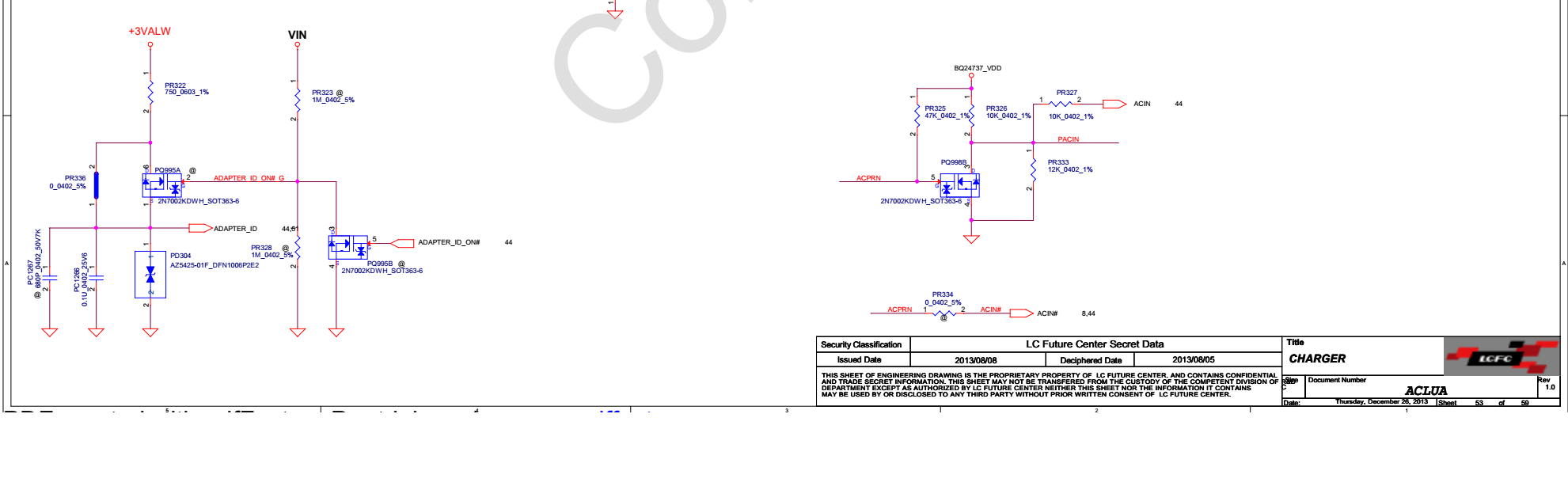
- PD304 is the Lenovo ID-line protector (AZ5425-01F class); failure can short both ways and kill KBC. [Elektroda, lisek, post #16848599]
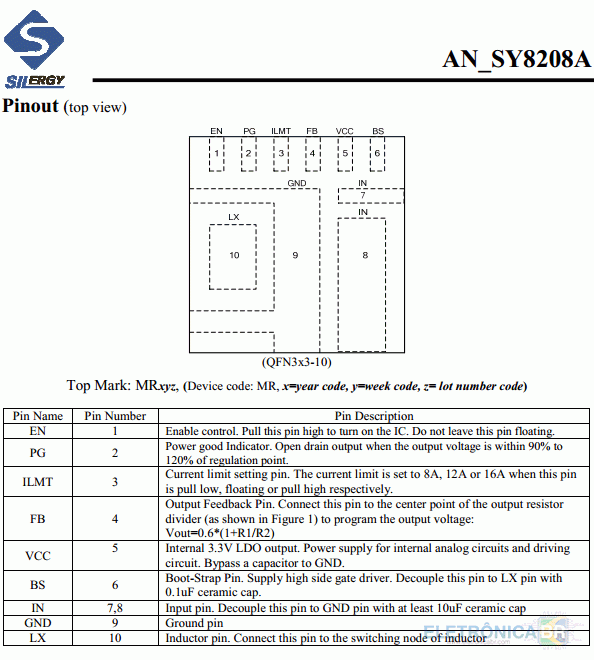
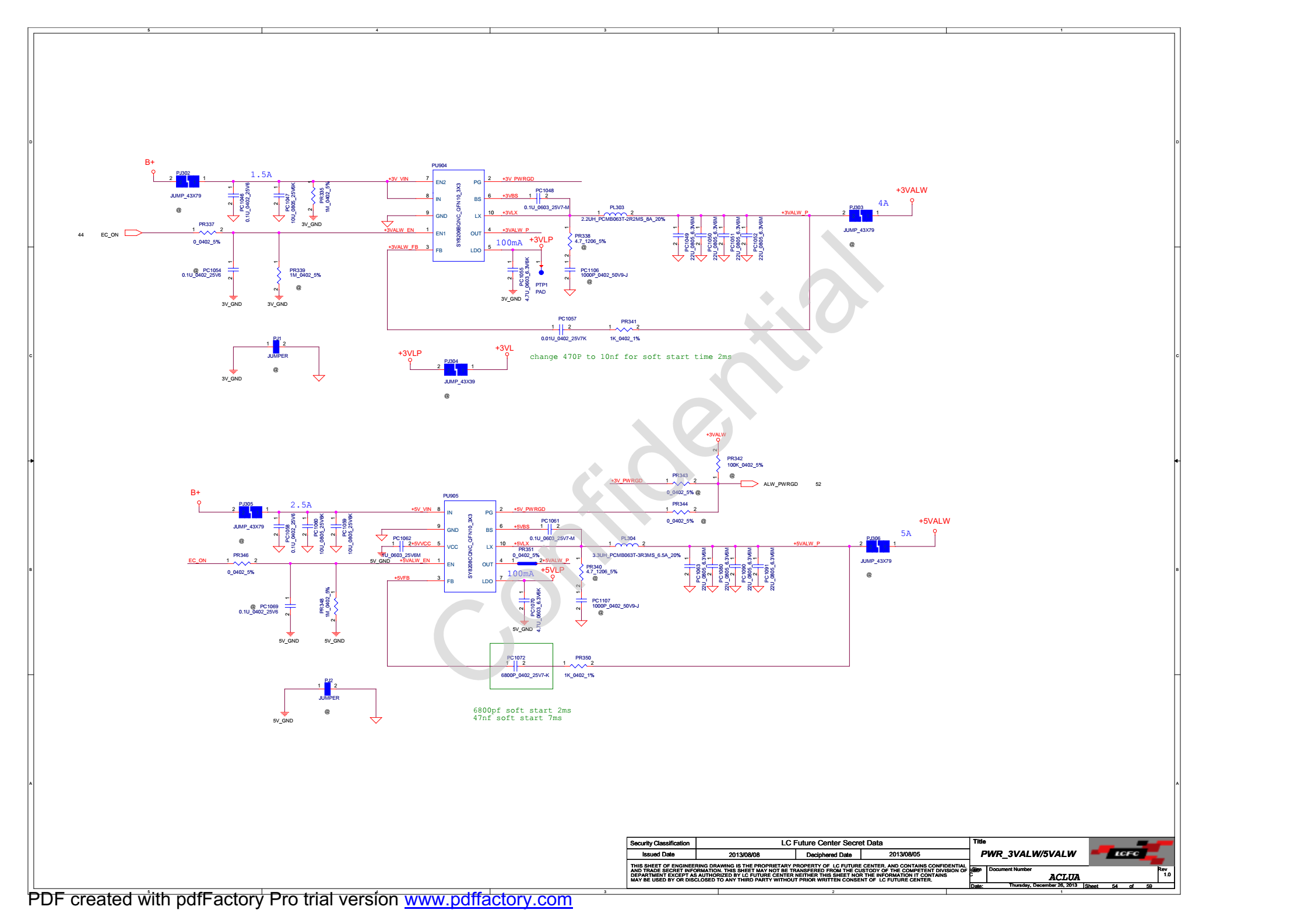
- Core always-on rails are 3.3 V and 5 V from SY8206/8208 converters; verify before deep debug. [Elektroda, lisek, post #16845852]
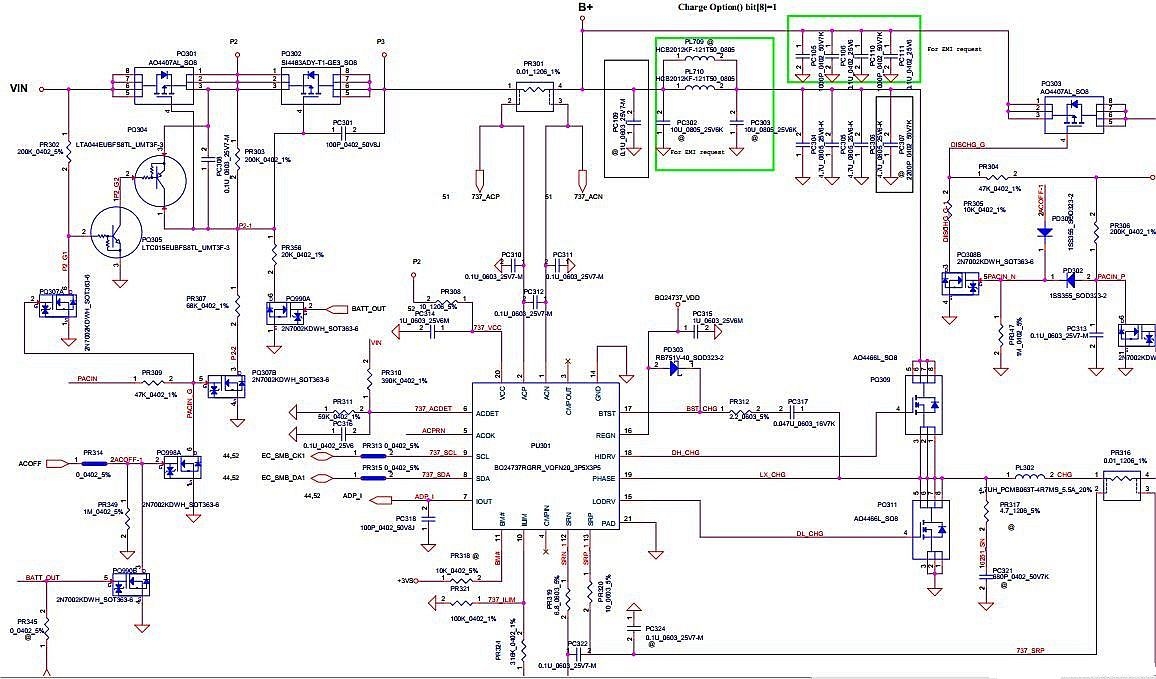
- PQ301 (N‑ch) and PQ302 (P‑ch) gate-chain opens after ACOK; faults here stop power-up. [Elektroda, lisek, post #16845381]
- A steady ~14.8 V appears on battery charge; 1.9 V after removal indicates board-only measurement. [Elektroda, janko23, post #16841592]
What does the voltage behind PD304 tell me on NM-A273?
It encodes the power-supply identification. The KBC reads this level to accept the adapter. If the board starts and the battery charges, that voltage is considered correct. Low resistance on CPU or iGPU rails can still block POST, so check those coils too. “It identifies the power of the power supply.” [Elektroda, sk1977, post #16843172]
What are the correct Lenovo adapter ID resistances for this model?
Typical values measured from the center ID pin to ground: about 285 Ω for 65 W, and about 548 Ω for 90 W Lenovo 20 V adapters. If your reading is far off, the KBC may not authenticate the adapter and the board will not sequence. [Elektroda, adamadi33, post #16847773]
Is it safe to inject ~1.4 V into the center ID pin to test?
Do not feed 1.4 V into the ID pin. That risks creating a second fault. Instead, log current draw, confirm ADAPTER_ID_ON#, and check the PQ995 path and PR336 option. “Unless you want to introduce another bug.” [Elektroda, sk1977, post #16847434]
Which power rails must be present before pressing Power?
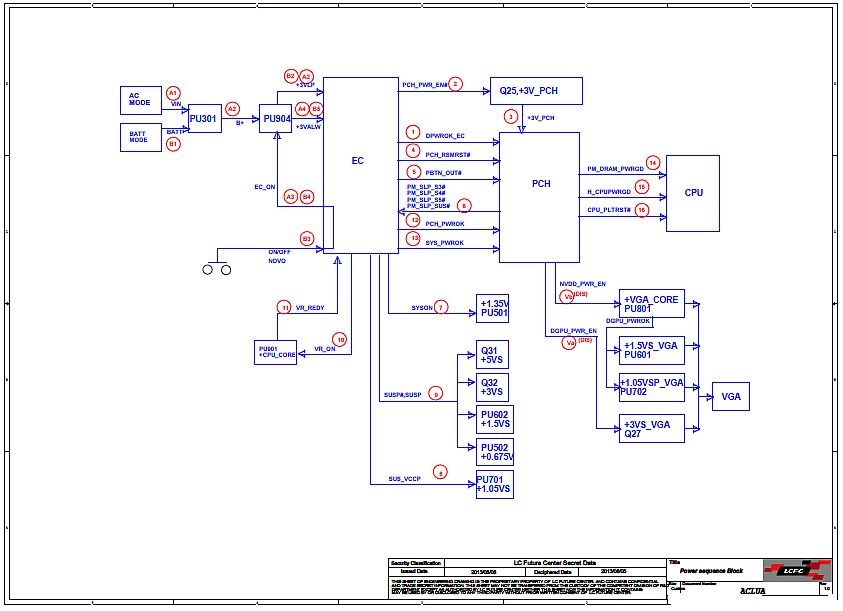
Confirm the always-on 3.3 VALW and 5 V rails from the SY8206/SY8208 regulator pair (PU904/PU905). Lack of these rails means the EC/KBC will not assert EC_ON and nothing else will sequence. Inspect those converters first. [Elektroda, lisek, post #16845852]
How do I interpret very low idle current on bench supply?
If the board draws around 20 mA at idle, suspect a failed KBC. In the cited case, such current indicated KBC damage with very high likelihood. Replace or reprogram the controller only after ruling out shorts on the ID line and PD304. [Elektroda, sk1977, post #16847853]
How is power passed through PQ301 and PQ302 during adapter insert?
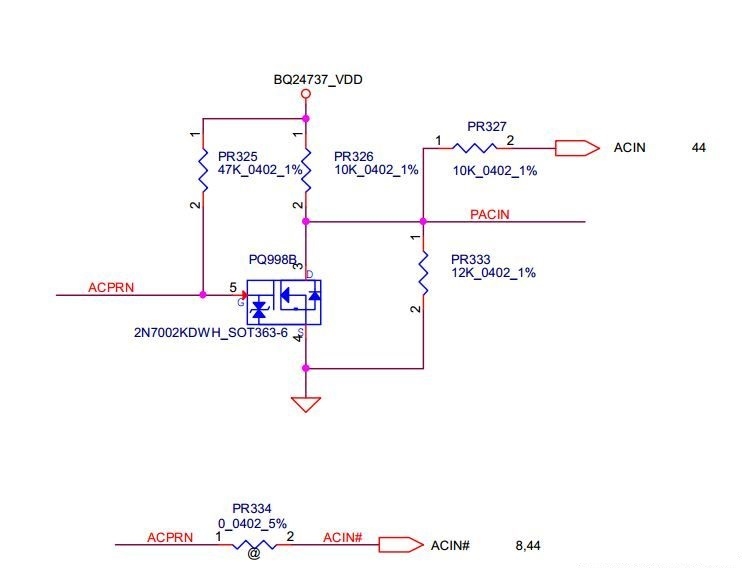
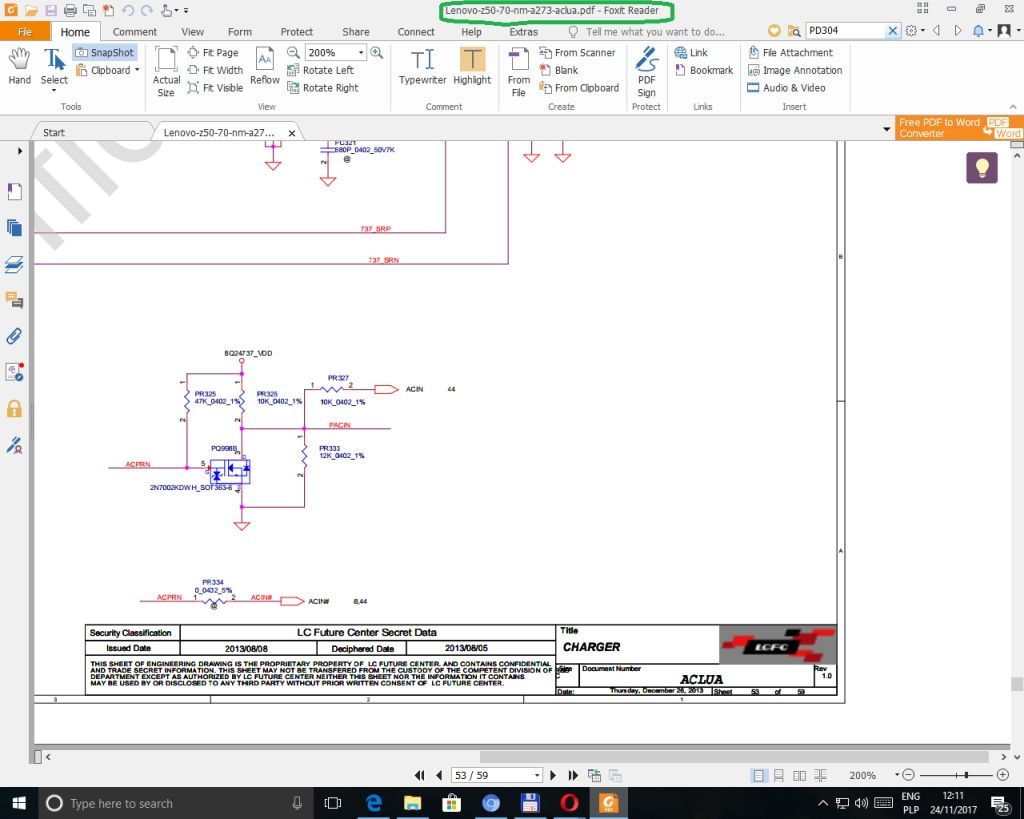
The charger IC asserts control so PQ990B opens PQ307B, which then drives PQ301 and PQ302 to pass 19 V. Verify BQ24737 VDD and that ACOK# is active. Faults in this chain stop system rails from rising even with a good adapter. [Elektroda, lisek, post #16845381]
What is the KBC and how does PD304 failure affect it?
The KBC (keyboard controller/EC) sequences power and reads the adapter ID. A shorted PD304 can present low resistance both ways on the ID line and often takes out the KBC, sometimes leaving a visible hole. Inspect and replace as needed. [Elektroda, lisek, post #16848599]
How do I test for a PD304 short on the bench?
With power removed, measure resistance across PD304 in both directions. A failed part often reads low in both polarities. Then buzz from the jack’s center pin through PR322 to KBC pin N72 to find other damaged parts on the ID path. [Elektroda, janko23, post #16855812]
What battery voltage should I see during charging on this platform?
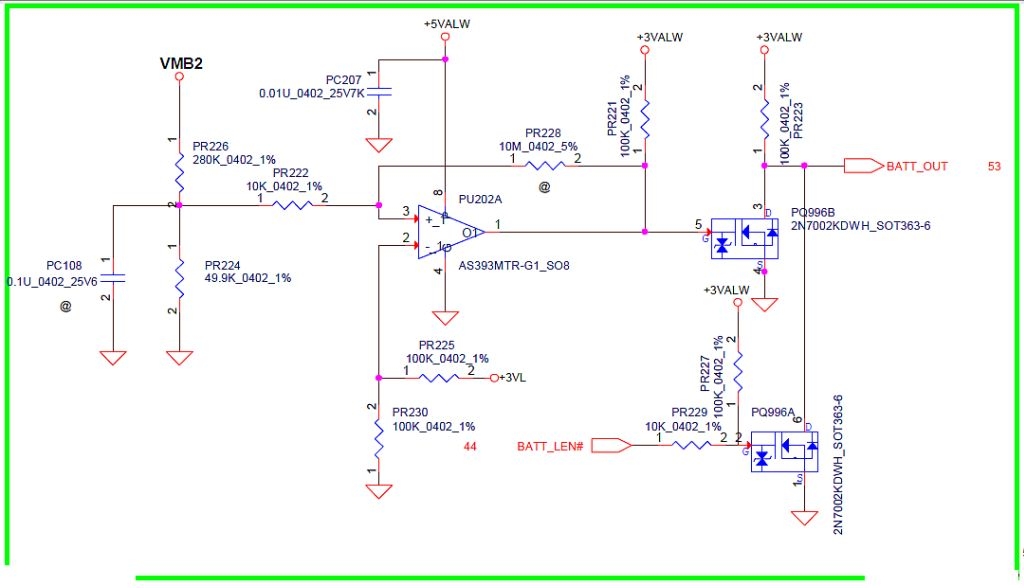
Around 14.8 V during charge is typical for the Z50‑70 pack. After removing the battery, a measurement of about 1.9 V reflects board-side sensing and not pack voltage, which is normal for this scenario. [Elektroda, janko23, post #16841592]
Where do I find the 3VLP/+3VL rail and what generates it?
The +3 VLP (LDO) and the 3.3 V rail originate in the 3.3 V SY8206BQNC regulator. Check pin 5 for the LDO output. Absence of LDO indicates a regulator-side fault rather than a charger issue. [Elektroda, adamadi33, post #16847773]
Can I bypass adapter identification to continue diagnostics?
Yes. Temporarily bridge PR336 to bypass PQ995 and feed a valid ID-level to the KBC for testing. Use only with a known-good 20 V Lenovo adapter and remove the bridge after diagnosis. [Elektroda, sk1977, post #16847434]
What should I verify on the BQ24737 charger?
Confirm BQ24737_VDD is present and that ACOK# is asserted low (active). Without these, the upstream FET chain will not enable, and system rails will not come up. Trace the enable sequence through the named FETs. [Elektroda, lisek, post #16845381]
My board lacks PU401; is my diagram wrong?
This board uses two SY8206BQNC devices for the 3.3 V and 5 V rails, not a single PU401 block. Locate SY8206 packages near the coil pair for 3.3/5 V to continue checks. [Elektroda, adamadi33, post #16845217]
How-to: quick power-up triage on NM-A273?
- Measure idle current; if ~20 mA, suspect KBC.
- Check ADAPTER_ID_ON#, PQ995 path, and bridge PR336 only for testing.
- Verify 3.3/5 V rails are present before pressing Power.
[Elektroda, sk1977, post #16847434]
What finally fixed the case discussed in the thread?
The fault stack was PQ301, a bad KBC (replaced and programmed), and a rewritten BIOS. After these, the board resumed normal signaling and charging behavior. [Elektroda, janko23, post #16855812]
Edge case: the fan never spins but LEDs blink five times—what then?
Blink sequences with no fan can still point to ID-line or KBC issues. In the case described, repeated five-blink cycles preceded total loss of the power LED, and the repair required KBC and BIOS work. [Elektroda, janko23, post #16855812]