


FAQ
TL;DR: Owner reports losing 1 liter of coolant every 300 km; “engine runs evenly and quietly.” Likely head/gasket or cracked head, not a valve. [Elektroda, mavi, post #16954767]
Why it matters: This FAQ helps BMW E46 318ti (N42B20) owners diagnose oil–coolant mixing safely and decide next repair steps.
Quick Facts
- Bypassing the oil cooler risks oil overheating and seizure, even in winter city driving. [Elektroda, 762302, post #16947647]
- Symptom snapshot: ~1 L coolant loss/300 km, steam from exhaust, dipstick “mayonnaise.” [Elektroda, mavi, post #16954767]
- Oil-cooler leaks need bench leakage testing; guessing doesn’t confirm the fault. [Elektroda, 762302, post #16947800]
- On N42 engines, cracked cylinder heads are a known failure path besides the gasket. [Elektroda, robokop, post #16955379]
- A hardened O-ring between the filter housing and cooler can cause issues; replace to rule it out. [Elektroda, Coolbit, post #17014916]
Can I disconnect the coolant hoses from the N42 oil cooler to test it?
Avoid bypassing the cooler for driving. It increases oil temperature and reduces lubrication, risking seizure. If you must test, restrict it to a brief, static diagnostic, then restore normal flow. “Oil overheating will reduce engine lubrication.” Use a bench leak test to confirm cooler integrity. [Elektroda, 762302, post #16947647]
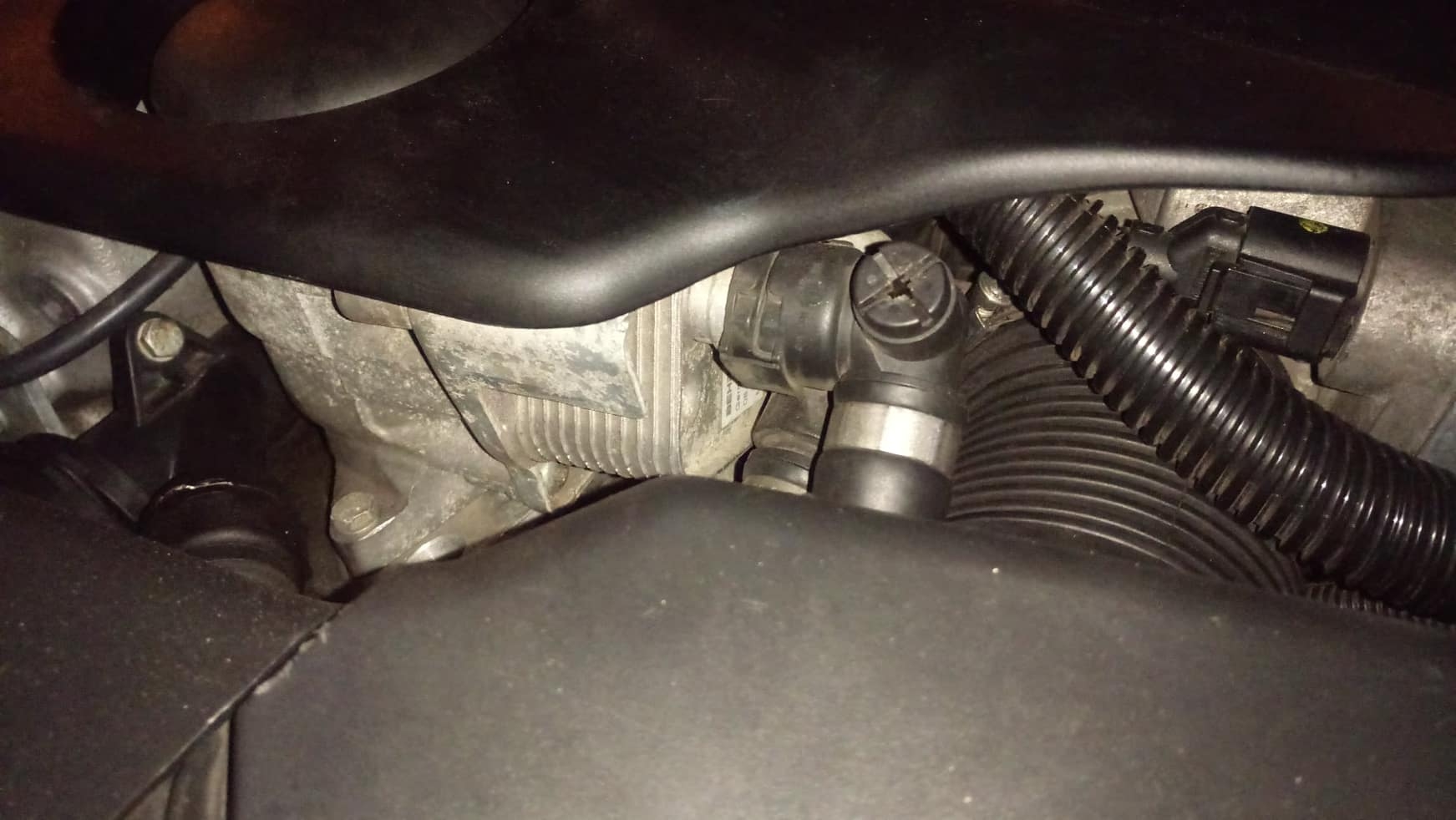
Is that round “knob” on the oil filter housing a shutoff valve?
No. It’s a vent, not a valve. Do not turn or tamper with it while troubleshooting. Misusing it can introduce air, worsen lubrication, and mislead diagnosis. “This is not a valve, just a vent.” [Elektroda, robokop, post #16955379]
I lose about 1 liter per 300 km and see dipstick mayonnaise—what does it indicate?
Coolant is entering the oil. Common sources are a failed head gasket or a cracked head on the N42. Continued driving degrades lubrication and bearings. Park the car, change the oil, and diagnose before further use. The owner in-thread added ~1 L/300 km with steam and mayonnaise. [Elektroda, mavi, post #16954767]
Could the oil cooler be the culprit if I have water in oil but no oil in coolant?
Less likely. A cooler core perforation typically sends oil into coolant because oil pressure is higher. In the thread, responders point instead to head/gasket issues for water-in-oil cases. Confirm with a combustion-gas test in the coolant and a bench test of the cooler. [Elektroda, blurow, post #16978748]
What’s the safest short-term step if coolant has contaminated my oil?
Change the oil and filter immediately to restore lubrication. Keep the oil at the max mark to reduce overheating risk until proper diagnosis. Do not road-test hard or long. Watch the oil level/overheat warning behavior as a minimal safeguard. [Elektroda, helmud7543, post #16947794]
How do I quickly check for a head-gasket leak on my N42?
Do a combustion-gas (CO₂) test at the expansion tank. 1) Warm engine fully. 2) Use a block-tester fluid per kit directions. 3) Color change indicates combustion gases in coolant, supporting a head/gasket fault. Follow with teardown confirmation. [Elektroda, blurow, post #16978748]
What’s an oil cooler and why is it tied to the cooling system?
The oil cooler uses engine coolant to stabilize oil temperature, preserving viscosity and lubrication. Removing it from the circuit raises oil temps and can precipitate failure, even in winter queues. That’s why bypassing it isn’t recommended for driving. [Elektroda, 762302, post #16947647]
Could an N42 cylinder head crack instead of the gasket failing?
Yes. Experienced members note BMW heads can crack, producing oil–coolant cross‑contamination. A pressure test and inspection during teardown confirm the fault. Plan for higher repair cost if a crack is found. “BMW is famous for cracking heads.” [Elektroda, robokop, post #16955379]
Is there a simple part to replace before tearing down the head?
Yes. Replace the O‑ring between the oil filter housing and the cooler. It hardens over time and can cause leaks. It’s inexpensive and quick, and helps rule out an external-path issue before major work. [Elektroda, Coolbit, post #17014916]
What’s the professional way to verify if the cooler core is leaking internally?
Remove the cooler and perform a sealed bench leak test. Shop rigs pressurize and isolate the oil and coolant passages to detect cross‑leaks. Visual checks alone won’t confirm integrity. “The only thing that can be checked is disassembly and leakage test on a workbench.” [Elektroda, 762302, post #16947800]
Why doesn’t winter weather protect me from oil overheating if I bypass the cooler?
Low ambient temperature barely offsets oil’s heat under load or extended idling. Even in winter, longer runs can overheat oil without cooling. Short trips might seem fine, but it’s a trap for the next long drive. [Elektroda, helmud7543, post #16947794]
My engine runs smoothly and holds temperature—can it still have a bad head gasket?
Yes. Smooth running and normal coolant gauge do not exclude a head/gasket leak. Oil–coolant mixing plus steam and repeated top‑ups strongly suggest internal leakage. Proceed with a gas test and teardown if positive. [Elektroda, mavi, post #16954767]
What is an OBD oil level/temperature warning trying to tell me here?
On this platform, the yellow oil light behavior can indicate low level or high temperature after events. If it lights on route, add oil and drive gently; lit after shutdown means add soon. Treat any alert seriously during contamination events. [Elektroda, helmud7543, post #16947794]
How-To: perform a safe, minimal diagnostic without driving hard
- Change oil and filter to remove coolant-contaminated lubricant. 2. Perform a coolant CO₂ test at the expansion tank. 3. If positive, schedule head removal; if negative, bench-test the oil cooler before further road use. [Elektroda, blurow, post #16978748]
Edge case: Can a small leak self-clear after short trips and oil changes?
No. Moisture may evaporate on short trips, masking symptoms, but the underlying breach persists. Continuing to drive risks bearing damage and cam wear. Do not delay definitive testing and repair. [Elektroda, helmud7543, post #16947794]
Bottom line—should I drive while diagnosing oil–coolant mixing?
No. Multiple responders advise against continued driving because lubrication is compromised. Park it, refresh oil, test for combustion gases, and prepare for head work if indicated. “Do not drive like this.” [Elektroda, Cobrat, post #16955361]