FAQ
TL;DR: Peugeot 307 weak/no heat often traces to air in the heater, stuck blend flaps, or a clogged heater core; check the 2 heater hoses first. “Have both 2 hot pipes from the heater?” [Elektroda, Pedros050, post #16959293]
Why it matters: This FAQ helps 2001–2008 Peugeot 307 owners quickly diagnose uneven or no cabin heat without guesswork.
Quick Facts
- Symptom pattern: intermittent warm air, fan OK, engine holding ~90°C; thermostat initially reported OK. [Elektroda, obadaw, post #16959116]
- Primary causes flagged: air in heater circuit or poor coolant circulation through the core. [Elektroda, Pedros050, post #16959251]
- Side-to-side temp split often means blend-air flaps aren’t routing air through the heater matrix. [Elektroda, Pedros050, post #16973625]
- Definitive fix in-thread: new heater core plus twin-pipe restored full heat. [Elektroda, obadaw, post #17087210]
- Quick check: feel inlet and return hoses; equal warmth can mislead if flow is restricted. [Elektroda, obadaw, post #16959299]
Why does my 307 blow warm, then cold, then warm again?
Air trapped in the heater circuit can cause intermittent heat. Flow surges move bubbles, so outlet temperature swings. A partially restricted core can mimic this. Purge air and verify circulation before chasing electronics. "Air in the heater or there is a need for replacement" is a known pattern here. [Elektroda, Pedros050, post #16959251]
How do I bleed the Peugeot 307 heater circuit?
Use the bleed point on the heater line. 1) Warm engine, set heat to max, blower on low. 2) Crack the bleed cap until coolant flows steadily without bubbles. 3) Top up coolant to spec, cap, and recheck after a drive. The user confirmed coolant immediately exited when the cap was opened. [Elektroda, obadaw, post #16959299]
Both heater hoses feel warm, but the cabin is still cold—what next?
Equal hose warmth does not guarantee sufficient flow. Inspect for partial blockage in the core and confirm return-line temperature under load. If return cools rapidly or airflow stays cold, suspect a restricted core or internal scaling. Replace the core if circulation is weak. [Elektroda, Pedros050, post #17070781]
Why is the passenger side cold while the driver side is warm?
A blend-air flap is not routing air through the heater matrix on one side. The actuator may be jammed, out of calibration, or its door is broken. "The air supply flaps do not work and the air flows from outside and not through the heaters." Inspect actuators and flap shafts before replacing parts. [Elektroda, Pedros050, post #16973625]
Should I buy a flap actuator or a repair kit first?
Do not buy parts blind. Expose the HVAC box and observe actuator motion while changing temperature. Repair kits help when flaps crack or slip. Replace the motor only if it fails to move or calibrate. "First, undress so that you can see what is happening and then you will buy." [Elektroda, Pedros050, post #16973840]
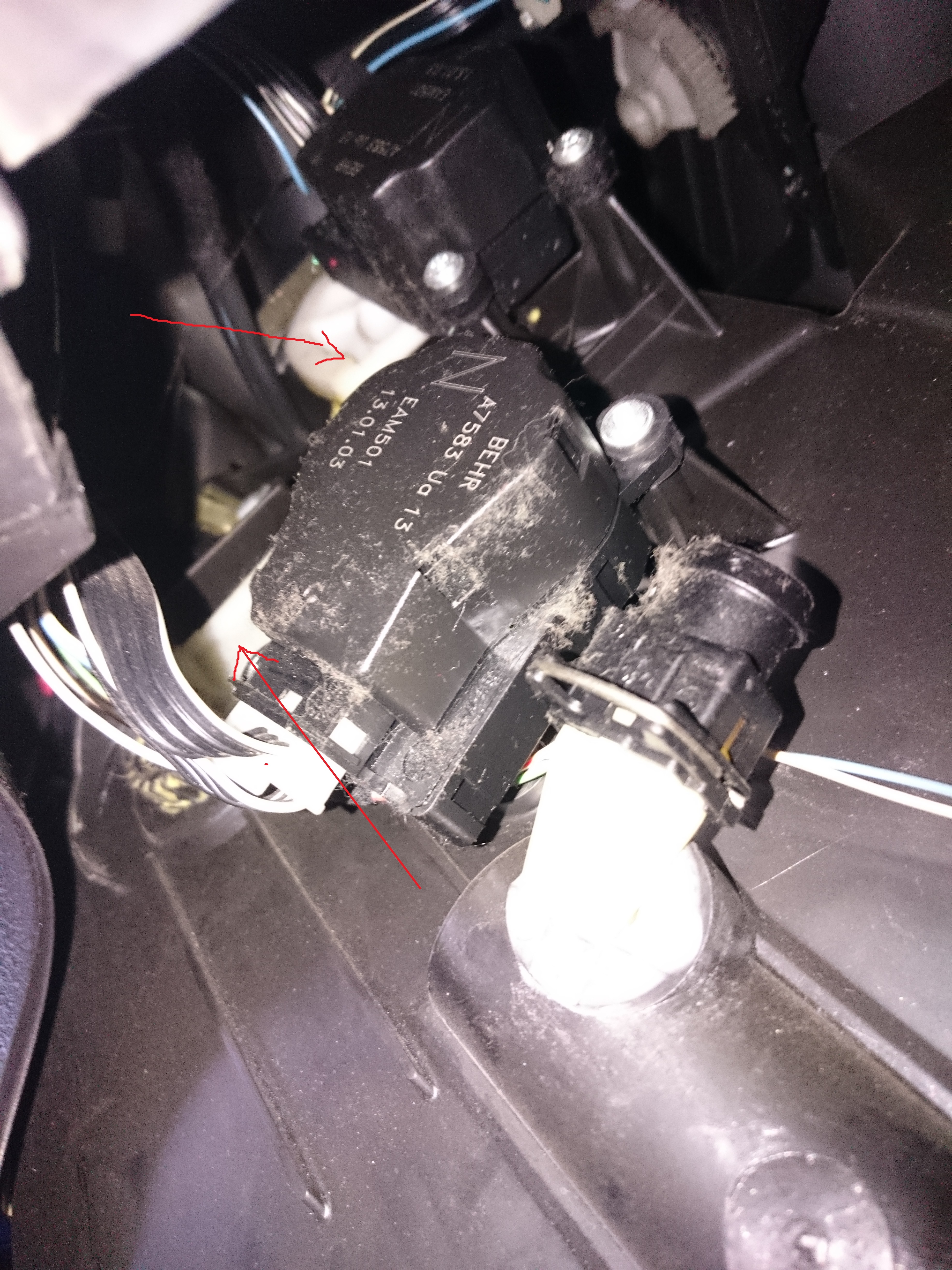
How many HVAC actuators are on the passenger side, and which one handles temperature?
Expect multiple actuators; the user identified two in view and noted a third located higher. Temperature control uses the blend actuator linked to the heater flap. Trace the lever connected to the heater box to find it. This car showed three modules in that area. [Elektroda, obadaw, post #16973869]
What finally fixed the weak/no heat in this thread?
Replacing the heater core along with its twin-pipe feed restored full heat output. After earlier checks and actuator tests, this hardware change resolved the cabin temperature issue completely. The owner reported, "The heat returned." [Elektroda, obadaw, post #17087210]
How can I tell if the heater core is clogged versus an actuator fault?
If actuators move correctly but heat is weak or uneven, feel the return hose during a steady 2,000 rpm hold. A notably cooler return or slow warm-up suggests restriction. If both hoses stay only lukewarm, flow may be insufficient due to scaling. Replace the core if flushing fails. [Elektroda, Pedros050, post #17070781]
Can a thermostat cause poor cabin heat on the 307?
Yes. A stuck-open thermostat lowers coolant temperature to the heater. In this case, replacing the thermostat improved cabin temperature, but a side-to-side split remained, pointing to flaps or the core. Thermostat fixes general warmth, not distribution. [Elektroda, obadaw, post #16973566]
My fan works but air stays cool—does that rule out HVAC faults?
No. Blower operation only proves airflow, not heating. You can have a strong fan with cold air when coolant flow is poor or blend flaps bypass the core. The user noted the fan reacted correctly while heat was inconsistent. [Elektroda, obadaw, post #16959116]
What is a blend flap actuator?
It’s a small electric motor with gears that positions internal HVAC doors to route air through or around the heater core. Faults cause wrong temperature or distribution. The user considered both a repair kit for flaps and a used actuator when diagnosing. [Elektroda, obadaw, post #16973828]
What is the heater core and twin-pipe on a 307?
The heater core is a small radiator inside the dash. Hot coolant enters via a twin-pipe assembly, transfers heat to air, and returns to the engine. Replacing both restored normal heating in this case. [Elektroda, obadaw, post #17087210]
Is 90°C engine temperature normal for good cabin heat?
Yes. The owner reported the engine reached and held about 90°C. That’s sufficient for strong heater output if flow and flaps are correct. If heat is weak at this temperature, focus on air bleeding, the core, and the blend system. [Elektroda, obadaw, post #16959116]
Edge case: both hoses hot, passenger cold, actuators move—what then?
The flap door can crack or slip on its shaft, so the actuator turns but the door doesn’t. Use a repair kit or fix the door interface. Visually confirm door movement, not just motor motion, before closing up. [Elektroda, obadaw, post #16973869]
Quick 3-step diagnostic for uneven heat on a 307
- Feel both heater hoses at operating temp; note inlet–return difference. 2. Watch blend actuators while changing setpoint. 3. If flow is weak or split persists, bleed and, if needed, replace the heater core/twin-pipe. [Elektroda, Pedros050, post #17070781]