logo elektroda
logo elektroda
X
logo elektroda

[Solved] Samsung UE40D5000 - Overheating Issue in BN44-00473B Power Supply Module after PFC Failure Repair

michas 16350 12
ADVERTISEMENT
This content has been translated flag-pl » flag-en View the original version here
  • #1 17044110
    michas
    Level 23  
    Hello, the receiver had a blown mains fuse and a punctured key in the PFC system in the power supply module BN44-00473B . In the vicinity of this key (QP801s) a dark brown plate - symptoms of prolonged high temperature of the key. I replaced the key with a new one, although I used an IGBT transistor with parameters corresponding and current exceeding the original K12A60D.
    I started the power supply "through" a 100W bulb, i.e. only in standby there was no short circuit (I did not know then that PFC in this model starts with the main converter)
    When starting the TV set it turned on and it came for 3 minutes, the key warmed up and got a short circuit again.
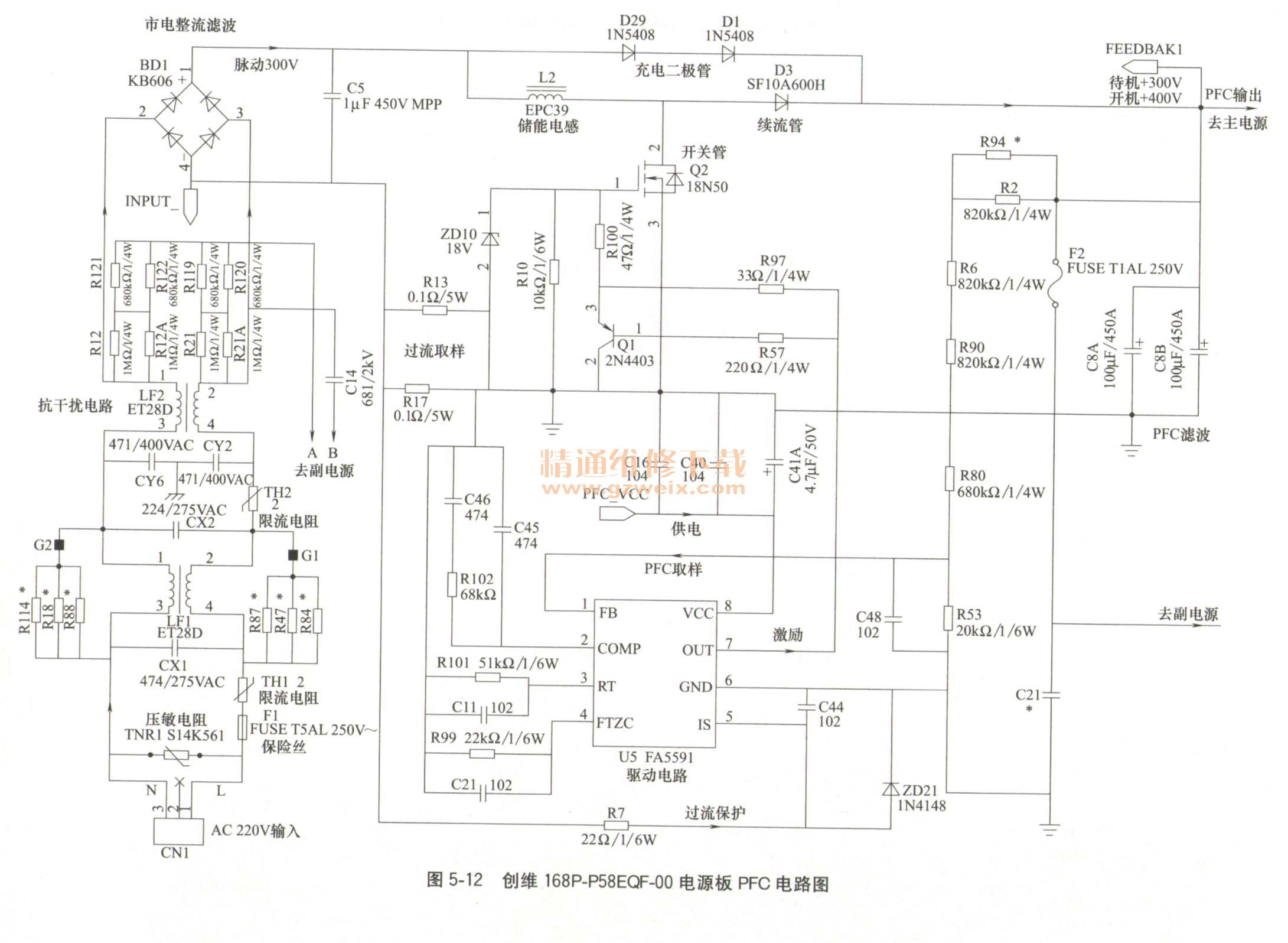
    Now I replaced the key with a 2sk3797 mosfet with very similar parameters to the original and the FA5591 driver. After this exchange, the receiver works, but the key heats up a lot. I'm afraid to leave the receiver for a long time - I suppose the key will break again. Maybe some of you have worked on the topic and will help. I found a diagram of a similar BN44-00358 power supply on the same controller, but here two such keys are used in parallel and they are controlled directly from the controller in my power supply, control is via a buffer of 2 NPN + PNP transistors connected in push-pull.

    Thanks in advance
    Michael
  • ADVERTISEMENT
  • ADVERTISEMENT
  • #3 17044331
    michas
    Level 23  
    Thanks for the response, but although the marking of the power supply is the same, it is not this diagram.
    best regards
    Michael
  • ADVERTISEMENT
  • #5 17044618
    michas
    Level 23  
    Thank you for the diagram from the first drawing in pdf really similar elements differ in value, but almost the same can come up with something. Maybe the system wakes up somehow. If I control the key incorrectly, I have to "harness" the oscilloscope to make some measurements. For now, I carefully follow how it works so as not to let anything go, I was able to turn it on with the artificial load of the 5V and 13V branches in the form of light bulbs.

    Thank you, maybe someone else will say something in the subject.

    Regards, Michał

    Added after 1 [hours] 17 [minutes]:

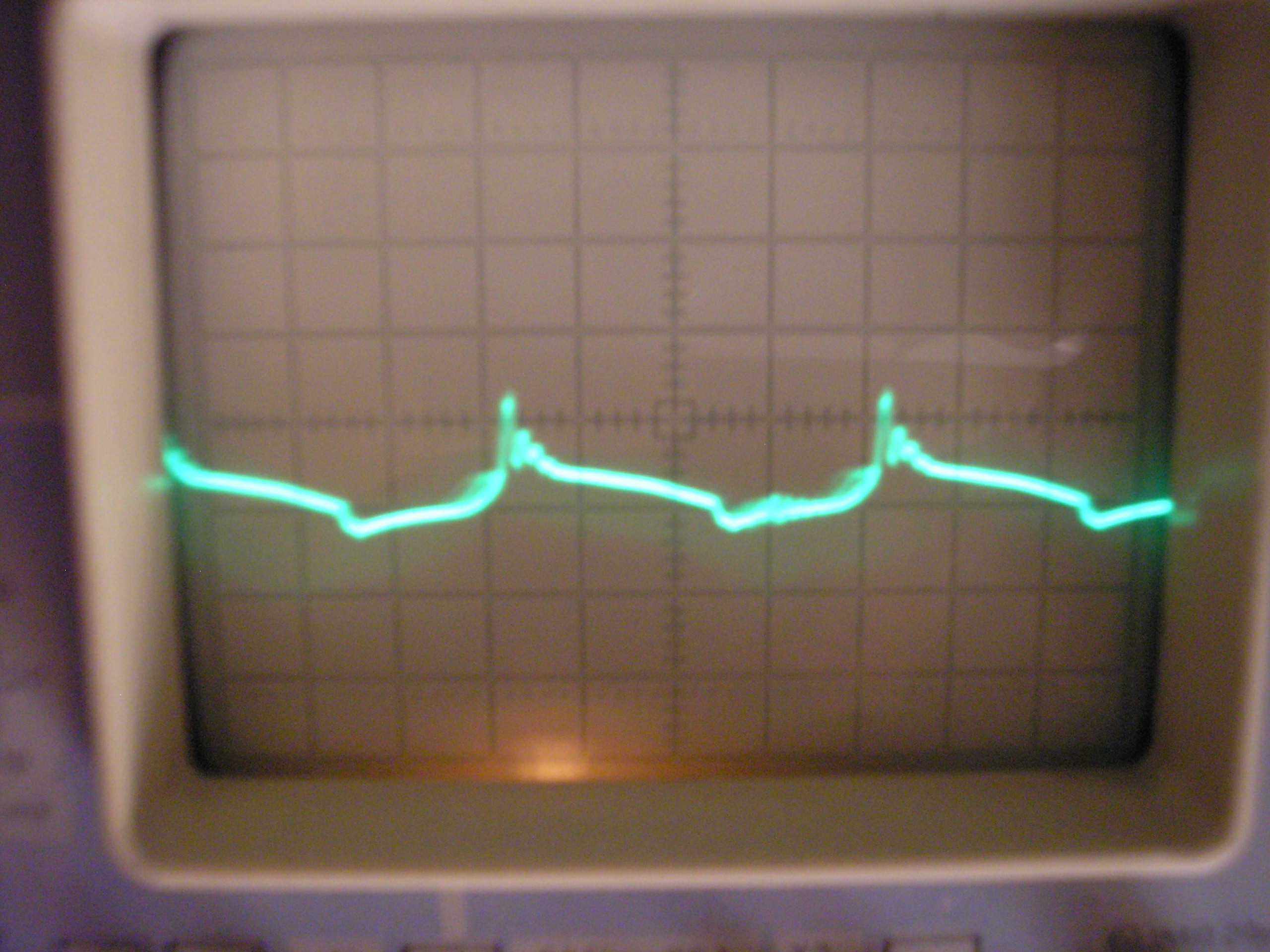
    I made measurements at the output of the chip from PFC (FA5591), it turned out that for a moment after plugging the plug into the socket there is a nice square wave with an amplitude of about 10V and as soon as the converter starts, the main waveform increases its frequency and turns into pins with slight oscillations with amplitude ok 20V. He certainly does not stand it well and the key becomes very warm after a while, and the power supply works practically without load. Instead of a fuse, a 220V / 100W light bulb is turned on to protect the key from damage.
    I made oscilloscope measurements: the PFC key control output directly from the IC these higher pins and waveforms on the gate after the buffer and matching elements (the waveforms could not be better synchronized) Y gain 5V / d time base 1us
    Samsung UE40D5000 - Overheating Issue in BN44-00473B Power Supply Module after PFC Failure Repair Samsung UE40D5000 - Overheating Issue in BN44-00473B Power Supply Module after PFC Failure Repair

    best regards
    Michael
  • ADVERTISEMENT
  • #6 17066337
    klakiermp
    Level 12  
    Hello. The same poverty happened to me, tomorrow I'm going to get the transistor. I searched the forums, and found the problem of overheating of this transistor (MDF11N60), it turns out that the problem is the LP801S transformer, he wrote that the conversion helped. This has to be checked. best regards
  • #7 17066548
    lisek
    Service technician RTV
    Samsung UE40D5000 - Overheating Issue in BN44-00473B Power Supply Module after PFC Failure Repair

    About FA5591 also written on this forum, e.g. Link
    Link

    :idea: as the field fell> to replace (without measuring) elements in the gate, field, capacitors on the connector. Field DS, FA5591 and improved soldering of "high-ohm" resistors in pin 1 (FB) / * it is worth measuring them (after coming out of the board)

    Helpful e.g. SM under BN44-00422B
    * ICP801 (code 5591) FA5591
  • #8 17067849
    klakiermp
    Level 12  
    Thanks for the answer, I was hoping it would work out, I do not have the IC (2 weeks to order it), so I took the risk and put almost the original MDF11N65, after turning it on the fuse shot after 5 seconds, I gave 3.15A. I checked the elements in the area where there were suspicions of cold solder and corrected, I found nothing else that was damaged. You can see this overheated place, almost black under the heat sink.
    The transistor blew into two halves ha haha. OKAY. I order parts and one more approach.
  • #9 17067866
    michas
    Level 23  
    Hello, you made a basic mistake, you did not give a 220V / 100W bulb instead of a fuse. It helps when starting the inverters; the principle is simple: a light bulb, not a key :P
    You run the power supply "on the table" with a dummy load in the form of light bulbs, one "flashlight", the other "Christmas tree" for the appropriate voltage of 5V and 13V. This way you will avoid losses.

    best regards
    Michael
  • #10 17067920
    klakiermp
    Level 12  
    Thanks yes i know you already talked about what a loss ?? one transistor ?? i think in this case this is a risk talked about sooner why not take a chance? Or maybe my case is different?
  • #11 17067948
    michas
    Level 23  
    Then order ten keys at once, you will save on shipping :)
  • #12 17067958
    klakiermp
    Level 12  
    You're right why I didn't think about it.

    Added after 5 [minutes]:

    I really appreciate humor, professionalism and good advice.
  • #13 17067972
    michas
    Level 23  
    I improved working conditions.

Topic summary

✨ The discussion revolves around the overheating issue of the BN44-00473B power supply module in the Samsung UE40D5000 TV after a PFC failure repair. The original problem involved a blown mains fuse and a damaged key in the PFC system, which was replaced with an IGBT transistor exceeding the original specifications. After initial testing with a 100W bulb, the TV operated briefly before the key short-circuited again. Subsequent replacements with a 2SK3797 MOSFET and FA5591 driver led to continued overheating concerns. Participants suggested checking the LP801S transformer and improving soldering on high-ohm resistors. The importance of using a light bulb as a dummy load during testing was emphasized to prevent further damage. The conversation included troubleshooting steps, component replacements, and shared experiences with similar issues.
Generated by the language model.

FAQ

TL;DR: Fixing Samsung UE40D5000 BN44-00473B PFC overheating? Measured 10–20 V gate swings and "the key becomes very warm"; start with a 220 V/100 W series bulb. This FAQ gives step-by-step checks, safe power-up, and parts to replace so your repair sticks. [Elektroda, michas, post #17044618]

Why it matters: It helps you stop repeat MOSFET failures and quickly diagnose FA5591-driven PFC issues on Samsung D‑series TVs.

Quick Facts

How do I safely power up a BN44-00473B after PFC repair?

Use a series bulb and dummy loads. 1) Fit a 220 V/100 W bulb in place of the mains fuse. 2) Bench-run with light‑bulb loads on the 5 V and 13 V rails. 3) Power on and watch bulb brightness and rail stability. This limits inrush and protects the PFC key during first starts. "A light bulb, not a key" applies here. [Elektroda, michas, post #17067866]

What FA5591 gate-drive waveform should I expect on BN44-00473B?

Measured output shows a clean ~10 V square at plug-in. When the main converter starts, the drive increases frequency and shows ~20 V with pin-like oscillations. Heating occurred even with minimal load. Capture at IC output and at the gate after the push‑pull buffer. Suggested scope setup: 5 V/div, 1 µs/div. [Elektroda, michas, post #17044618]

Why is my PFC MOSFET overheating on a Samsung UE40D5000 BN44-00473B?

Suspect the FA5591 driver path and gate network first. Replace the MOSFET, gate resistors/diodes, and electrolytics on the connector. Verify MOSFET DS and the FA5591 itself. Desolder and measure high‑ohm resistors at pin 1 (FB), then resolder. Expert tip: "to replace (without measuring) elements in the gate" when the MOSFET has failed. [Elektroda, lisek, post #17066548]

Is 2SK3797 a good substitute for K12A60D at QP801S?

It can run, but overheating may persist if the driver/buffer is unhealthy. One repair worked with 2SK3797, yet the key ran very hot. This board drives the PFC key via a 2×NPN + PNP push‑pull buffer, not directly from FA5591, so fix drive issues first. [Elektroda, michas, post #17044110]

I installed MDF11N65 and the 3.15 A fuse blew after 5 seconds. What now?

That indicates a remaining fault in the PFC path. In one case, the transistor split in two and the area under the heatsink was nearly black. Stop, inspect for carbonized PCB, and replace suspect parts before re‑powering. Do not keep swapping fuses. [Elektroda, klakiermp, post #17067849]

Could LP801S be the reason my PFC transistor runs hot?

Yes, one report tied persistent MOSFET overheating to the LP801S PFC inductor/transformer. A modification (“conversion”) of LP801S resolved the issue for that repair. If your key overheats repeatedly, inspect LP801S for shorts, arcing, or saturation. [Elektroda, klakiermp, post #17066337]

Why doesn’t the PFC switch in standby on this model?

On BN44-00473B, the PFC engages only when the main converter starts. You won’t see PFC activity in standby, which can mislead early tests. Plan measurements during active startup with an appropriate load. [Elektroda, michas, post #17044110]

What visual signs indicate prolonged overheating near QP801S?

Look for a dark brown PCB area around QP801S and under its heatsink. Discoloration signals sustained thermal stress on the key and nearby parts. Treat this as evidence to inspect the gate network and driver path thoroughly. [Elektroda, michas, post #17044110]

The BN44-00473B schematic I found online doesn’t match. What should I do?

One linked BN44-00473B schematic did not match the board under repair. Verify silkscreen designators and values on your PCB before trusting a drawing. Use a close variant only as a guide, not as ground truth. [Elektroda, michas, post #17044331]

Is the BN44-00473A schematic similar enough to guide BN44-00473B repairs?

A shared BN44-00473A PDF was described as “really similar,” though several element values differed. It can help you trace FA5591, the buffer, and PFC blocks, but confirm every value against your board. [Elektroda, michas, post #17044618]

Any other service manual that helps with FA5591 troubleshooting?

Yes. A BN44-00422B service manual was cited as helpful for FA5591 reference. On BN44-00473B, FA5591 is marked as ICP801. Use it to cross‑check pin functions and feedback networks. [Elektroda, lisek, post #17066548]

Do I need an oscilloscope? What settings captured the issue?

An oscilloscope helped confirm abnormal gate behavior. Suggested settings were 5 V/div vertical gain and 1 µs/div timebase. Probe both the FA5591 output and the gate after the push‑pull buffer. Expect imperfect synchronization across the two points. [Elektroda, michas, post #17044618]

Why use a series bulb instead of fuses during testing?

The bulb limits current and saves the MOSFET during faults. It also shows load state by brightness. As one expert put it: “a light bulb, not a key.” Fit a 220 V/100 W bulb in place of the fuse while diagnosing. [Elektroda, michas, post #17067866]

How long should I stress-test after repair to catch thermal faults?

Monitor for at least several minutes. One failure occurred roughly 3 minutes after power-up, pointing to thermally triggered trouble. Watch MOSFET temperature and the bulb’s brightness while rails remain stable under load. [Elektroda, michas, post #17044110]
Generated by the language model.
ADVERTISEMENT