logo elektroda
logo elektroda
X
logo elektroda

Geberit Cistern Slow Fill Issue: Tips to Fix Concealed Cistern with Limited Access

wolp3 81852 17
Best answers

How do I fix a concealed Geberit cistern that fills very slowly after flushing?

A very slow refill in a concealed Geberit cistern is usually caused by the fill valve or inlet being clogged, not the siphon; remove the flush button, shut off the water supply, then disassemble and clean the fill valve [#17657278][#17657257] Check the inlet filter and the hose/pipe feeding the cistern for dirt, kinks, or too much restriction, and test the water flow with the hose disconnected [#20460705][#20460744] If the cistern is new, make sure any transport lock or foam block has been removed [#20460903] On Geberit float valves, a tiny pinhole under the red rubber band can be blocked by limescale or plastic residue, so clean it carefully with a torch/magnifier and vinegar if needed [#21367140] If water keeps running into the bowl after flushing, also clean the main valve seal/seat and related rubber parts [#21367140]
Generated by the language model.
ADVERTISEMENT
Treść została przetłumaczona polish » english Zobacz oryginalną wersję tematu
  • #1 17657222
    wolp3
    Level 9  
    Posts: 28
    Rate: 27
    I warmly welcome,

    Can anyone give me a hint how I can fix the cistern that fills up very slowly after draining. Due to the fact that it is a concealed cistern, there is extremely limited manual and visual access. Thank you in advance for your help.
  • ADVERTISEMENT
  • #2 17657243
    Parowy
    Level 22  
    Posts: 950
    Help: 55
    Rate: 227
    forehead,

    Are we sure we are talking about concealed siphon?
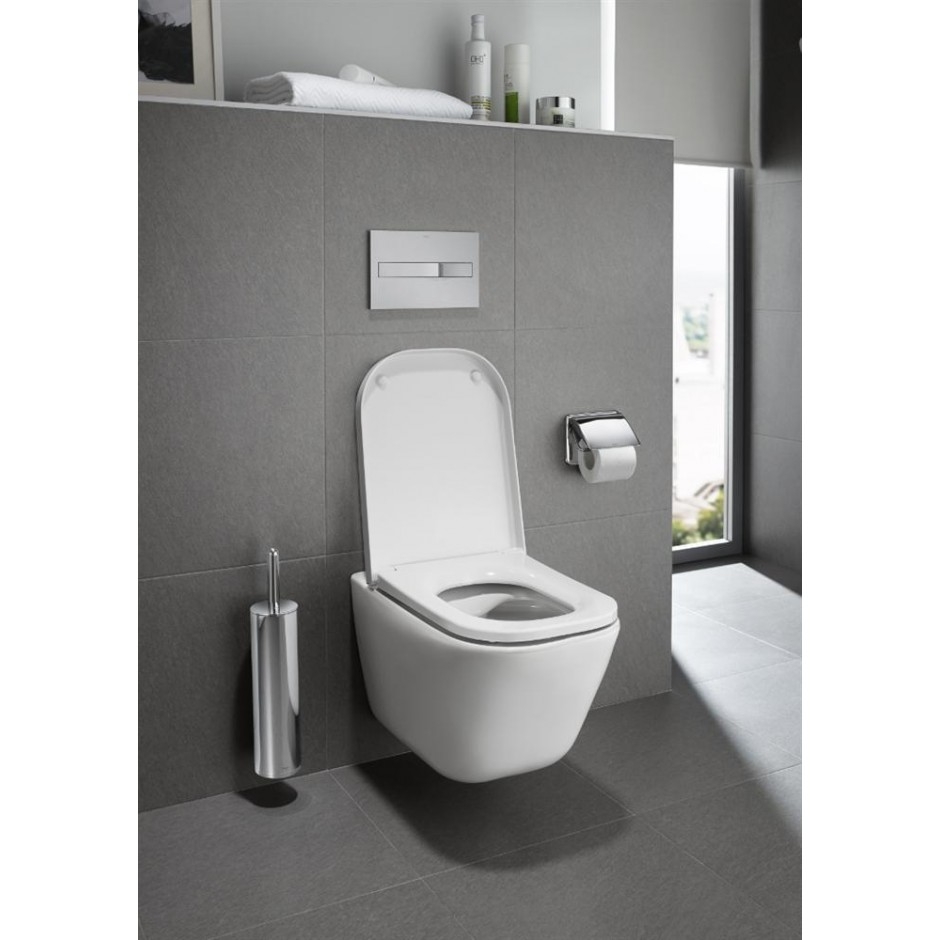
    By chance, not a concealed frame? :)
    Eg.
    Geberit Cistern Slow Fill Issue: Tips to Fix Concealed Cistern with Limited Access

    The filling valve is to blame, because the system is clogged with water, or the installation before the cistern is stuffed. Rest of taps, battery working properly? In the sense of water is flowing in a strong stream?
  • #3 17657248
    wolp3
    Level 9  
    Posts: 28
    Rate: 27
    Yes, concealed frame :P only the siphon is a problem. Is there a schematic of how to fix it?
  • ADVERTISEMENT
  • #4 17657257
    Parowy
    Level 22  
    Posts: 950
    Help: 55
    Rate: 227
    wolp3 wrote:
    ... there is a problem only with the siphon.


    There is no siphon in the cistern, it is in the toilet bowl but it has nothing to do with filling the tank.

    How about water pressure in other devices?
  • #5 17657263
    wolp3
    Level 9  
    Posts: 28
    Rate: 27
    Elsewhere, it's just a toilet :)
  • ADVERTISEMENT
  • #6 17657278
    Parowy
    Level 22  
    Posts: 950
    Help: 55
    Rate: 227
    So clearly the filling valve, you need to remove the button, get inside the cistern tank, close the water supply to the cistern, disassemble the filling valve, disassemble, clean, put everything together :)
    Simple ;)

    It would be good to know what specific model you have?
    Which year
    A photo could help.
  • #7 17657280
    wolp3
    Level 9  
    Posts: 28
    Rate: 27
    Ok thanks as soon as I take it I will try to take pictures and post them here
  • #8 17657288
    Parowy
    Level 22  
    Posts: 950
    Help: 55
    Rate: 227
    You were looking for info on this topic for example YT?

    There is a lot of it, as well as types of cisterns :)
    Eg.
    https://youtu.be/ja0KJByTgCU
  • ADVERTISEMENT
  • #9 17657296
    wolp3
    Level 9  
    Posts: 28
    Rate: 27
    I looked but I did not find exactly how to replace this valve
  • #11 17657316
    wolp3
    Level 9  
    Posts: 28
    Rate: 27
    that's how I saw it, I think I can do it :D
  • #12 20460230
    mickry
    Level 13  
    Posts: 143
    Help: 2
    Rate: 19
    Hello, I have a brand new geberit, I have probably checked everything that is there, nothing is dirty, clogged, I opened the filling valve, etc. and cleanly there, and the water is poured too slowly in my opinion ... in addition, after rinsing the water, the rest of the bowl flows for a while water as if this valve from the cistern did not close perfectly. you do with it?
  • #13 20460246
    ppwielki
    Level 27  
    Posts: 1636
    Help: 71
    Rate: 284
    Do you have the installation in alupex technology, plastic? New installation? You don't have a twisted hose?
  • #14 20460703
    mickry
    Level 13  
    Posts: 143
    Help: 2
    Rate: 19
    ppwielki wrote:
    Do you have the installation in alupex technology, plastic? New installation? You don't have a twisted hose?

    I have the installations on Pex, the installation is new. By the hose do you mean the valve or is it not twisted?
  • #15 20460705
    Zbych034
    Level 39  
    Posts: 4636
    Help: 543
    Rate: 1399
    There is a filter at the entrance. Unscrew the hose and see if it is clean and how water flows from the hose itself.
  • #16 20460744
    ppwielki
    Level 27  
    Posts: 1636
    Help: 71
    Rate: 284
    [url=]Link[/url] Zbych034 you see, it is not known what slow filling means. A friend wrote that he checked everything and did not know that the hose could be twisted or bent. As for alupex fittings, it does not matter that the pipe is 16mm long, since the clearance of the fitting is 6mm. Why did I ask about the installation? Because many contractors do the installation with one, the cheapest pipe size, and when there are several elbows or tees, there are such resistances that the water does not flow, it just drips.

    ps. after starting the new installation, various garbage clogs all filters, so check again what you checked and, as Zbych034 wrote, test the water only with a hose.
  • #17 20460903
    sq3evp
    Level 39  
    Posts: 6340
    Help: 210
    Rate: 833
    I don't know what it could be, but I had a problem with similar equipment because the lock was not removed for transport - the foreman who assembled it did not have a complete manual (probably it was not in the Polish distribution). The Polish representative sent one pdf page with a description of how to remove it - after removing a piece of styrofoam from the chamber with a button, it improved. The symptoms were similar, but I don't know if it's the same cause.
  • #18 21367140
    Dorianix
    Level 11  
    Posts: 19
    Rate: 11
    Geberit seem to have used the same method of filling and shutting off the water in all their float valves. The movable arm (the one clipped to the 'screw') has a red soft rubber band on the inside - you can see it when you remove this arm from the rest of the plug or this stationary part. In this part is a small hole the thickness of a pin and it is this hole that is closed and opened by this rubber band. When it closes this hole in the chamber where the water enters, a vacuum is created and the water does not continue to flow. If this opening is blocked with limescale, deposits or plastic residue from new use, the water will either not flow or will trickle out. I've taken my car apart four times and only with a torch and magnifying glass could I see the hole, or rather the fact that it was clogged with scale. After cleaning it, it runs like new. And the fact that the water still flies a little afterwards is more the fault of not having cleaned the main mechanism, rubber bands etc. and lubricated with a waterproof agent (how often this is done is anyone's guess). The hole in the cistern itself (at the very bottom, where the rubber band of the main mechanism rests) may be responsible for the water generally dripping into the toilet. To clean it is an acrobatics - first spray often with vinegar, then remove the limescale residue with some kind of brush on a long (flexible) handle. Or nail down the tiles, remove the whole Geberit i......

Topic summary

✨ The discussion addresses a slow-filling issue in a concealed Geberit cistern with limited access. The primary cause is often the filling valve, which may be clogged with limescale, debris, or plastic residues from installation. Cleaning the filling valve involves removing the flush button, shutting off the water supply, disassembling the valve, and inspecting the small pinhole controlled by a red rubber band inside the float valve mechanism. Blockage of this hole can cause slow or continuous water flow after flushing. Other potential causes include low water pressure, twisted or bent supply hoses, clogged inlet filters, or installation issues such as undersized pipes or multiple elbows causing flow resistance. Some users noted that transport locks or protective styrofoam pieces inside the cistern may impede valve function and should be removed. Visual inspection is challenging due to limited access, but photos and videos can assist. Testing water flow directly from the supply hose after disconnecting it helps isolate the problem. The problem is common in new installations where debris clogs filters and valves. Proper cleaning and ensuring unobstructed water flow typically restore normal filling speed.
Generated by the language model.

FAQ

TL;DR: 6 mm fitting clearance can choke flow; "the water does not flow, it just drips." To fix a slow‑filling Geberit, clean the inlet filter, test supply by removing the hose, and straighten any kinked lines. [Elektroda, ppwielki, post #20460744]

Why it matters: For homeowners and installers with concealed frames and limited access, this FAQ speeds diagnosis and fixes slow fills and post‑flush drips.

Quick Facts

How do I fix a Geberit concealed cistern that fills slowly?

Start at the service opening. Remove the flush plate, close the cistern shut‑off, then pull the fill valve out. Disassemble and clean the valve and screens, then reassemble and test.
  1. Remove the button/plate.
  2. Close supply and extract the fill valve.
  3. Rinse debris, reassemble, and set float height. [Elektroda, Parowy, post #17657278]

How do I check the inlet filter and water supply to the cistern?

Unscrew the flexible hose at the cistern inlet valve. Inspect and clean the small inlet filter at that connection. Open the shut‑off and observe flow from the hose only. Strong hose flow means a valve issue; weak flow points upstream. [Elektroda, Zbych034, post #20460705]

Is the fill valve or my water pressure to blame?

Compare pressure at other taps or showers. If they run strong, focus on the cistern valve. "The filling valve is to blame." If other fixtures are also weak, investigate the supply line. [Elektroda, Parowy, post #17657278]

My brand-new Geberit fills slowly and leaks a bit—what should I check?

Look for a transport lock or packing foam left in the actuator chamber. One installer fixed the issue by removing a styrofoam piece. Request the removal page from your distributor if necessary. After removal, filling and shutoff normalized. [Elektroda, sq3evp, post #20460903]

Why does water keep trickling into the bowl after flushing?

Scale on the main seal seat can prevent complete closure, causing a slow drip. Soak the seat with vinegar, then scrub using a long, flexible brush. Clean and lightly lubricate rubber components with a waterproof agent. This restores sealing and stops the trickle. [Elektroda, Dorianix, post #21367140]

How do I clean the tiny pinhole in the Geberit float valve?

Remove the movable arm and find the red rubber band inside. Under it is a pinhole that controls flow and shutoff. Use a torch and magnifier to spot scale, then clear the pinhole. "A vacuum is created and the water does not continue to flow." One user needed four disassemblies to see it. [Elektroda, Dorianix, post #21367140]

Can a twisted or bent hose slow down cistern filling?

Yes. A kinked or twisted hose restricts flow and mimics valve failure. Inspect the hose routing and straighten or replace if needed. This quick check can restore normal refill speed. [Elektroda, ppwielki, post #20460246]

Does PEX/AluPEX piping affect cistern fill speed?

Yes. Multiple elbows or tees add friction and reduce flow to the cistern. Even with 16 mm pipe, some fittings have only 6 mm clearance. That restriction can limit fill to a slow trickle. Confirm by testing flow at the hose. [Elektroda, ppwielki, post #20460744]

What access do I have on a concealed frame to service the valve?

Use the flush button opening as the service port. Remove the plate to reach the shut‑off and the fill valve body. Pull the valve through this opening for cleaning or replacement. Frames are designed for service from here. [Elektroda, Parowy, post #17657278]

What tools or supplies help with this repair?

A flashlight and magnifying glass help locate the tiny pinhole and scale. Vinegar softens limescale; use a long, flexible brush to scrub. After cleaning, apply a thin film of waterproof lubricant on rubber seals. Reassemble and test shutoff performance. [Elektroda, Dorianix, post #21367140]

Where can I see how the mechanism works before I open it?

Watch a short animation or video guide of the Geberit mechanism. Search YouTube for your model’s float valve. Seeing the sequence improves understanding and confidence before disassembly. Visuals clarify filling and shutoff timing. [Elektroda, Parowy, post #17657314]

How often should I re-check filters on a new installation?

Right after commissioning, debris can repeatedly clog small filters. Re-check and clean the inlet filter and valve screens soon after first use. If flow stays weak, test at the hose to isolate upstream restrictions. Repeat until the line runs clear. [Elektroda, ppwielki, post #20460744]
Generated by the language model.
ADVERTISEMENT