logo elektroda
logo elektroda
X
logo elektroda
Dostępna jest polska wersja

Czy wolisz polską wersję strony elektroda?

Nie, dziękuję Przekieruj mnie tam
[Solved] Connecting Photovoltaic Panels: Induction Loop, Cable Length & Parallel Wiring Tips

Waldemar-VUK 44670 48
Best answers

How do I route PV panel cables to minimize the induction loop area, and is it okay to add extra cable and run the conductors in parallel?

Run the return conductor alongside the supply conductor in parallel and use the simplest route, even if that means adding a dozen or so meters of cable; do not force a loop just to save cable. [#18794954][#18837519] The goal is to keep the outgoing and return paths together, not to eliminate the return wire entirely. [#18803229][#18807646] Several replies warn that every extra connector/crimp on the roof is another possible heating or failure point, so fewer joints are better and two connections to the inverter are preferable. [#18807637][#18807901] The thread repeatedly notes that PV cable is cheap, so saving a few meters is not worth making the installation more complex or less reliable. [#18807911][#18837519] In short: follow the traces, keep the conductors together, and choose simplicity and reliability over cable savings. [#18807637]
Generated by the language model.
ADVERTISEMENT
Treść została przetłumaczona polish » english Zobacz oryginalną wersję tematu
  • #31 18833956
    Anonymous
    Level 1  
  • ADVERTISEMENT
  • #32 18834190
    temptension
    Level 10  
    The installation was designed with modules horizontally taking into account the tech factors. and limitations of the type of shading, limited roof area, etc.
    It is no longer possible to change it, so there remains the question of the arrangement of the current and PE conductors. Please, give me a suggestion on this if there is a better solution.
    Greetings
  • #33 18837519
    Rhaavir
    Level 14  
    You have to "follow the traces" and that's it - there is no need to combine, save and invent.
    We run the cables "in parallel" and there is no point in inventing an induction loop anymore.
    "Half cut" panels - e.g. in QCells - the location does NOT matter - because the cables from the boxes go in opposite directions - we put the panels alternately "up / down" - simple reason - we connect without cutting the factory ties and we do not need to attach loose cables - just attach the "return" wire and that's it.
    I do not understand the dilemmas - the cable costs so little that saving on it does not make sense - especially saving not in accordance with the rules of art.
  • #34 18838327
    temptension
    Level 10  
    Hello, I am not going to save on cables, their cost is ridiculous ... I asked a specific question and attached a photo with a combination of modules. In that case, I put the "red" cable to the extreme modules and return it as in the picture. Greetings
  • #35 18885868
    Arkado
    Level 6  
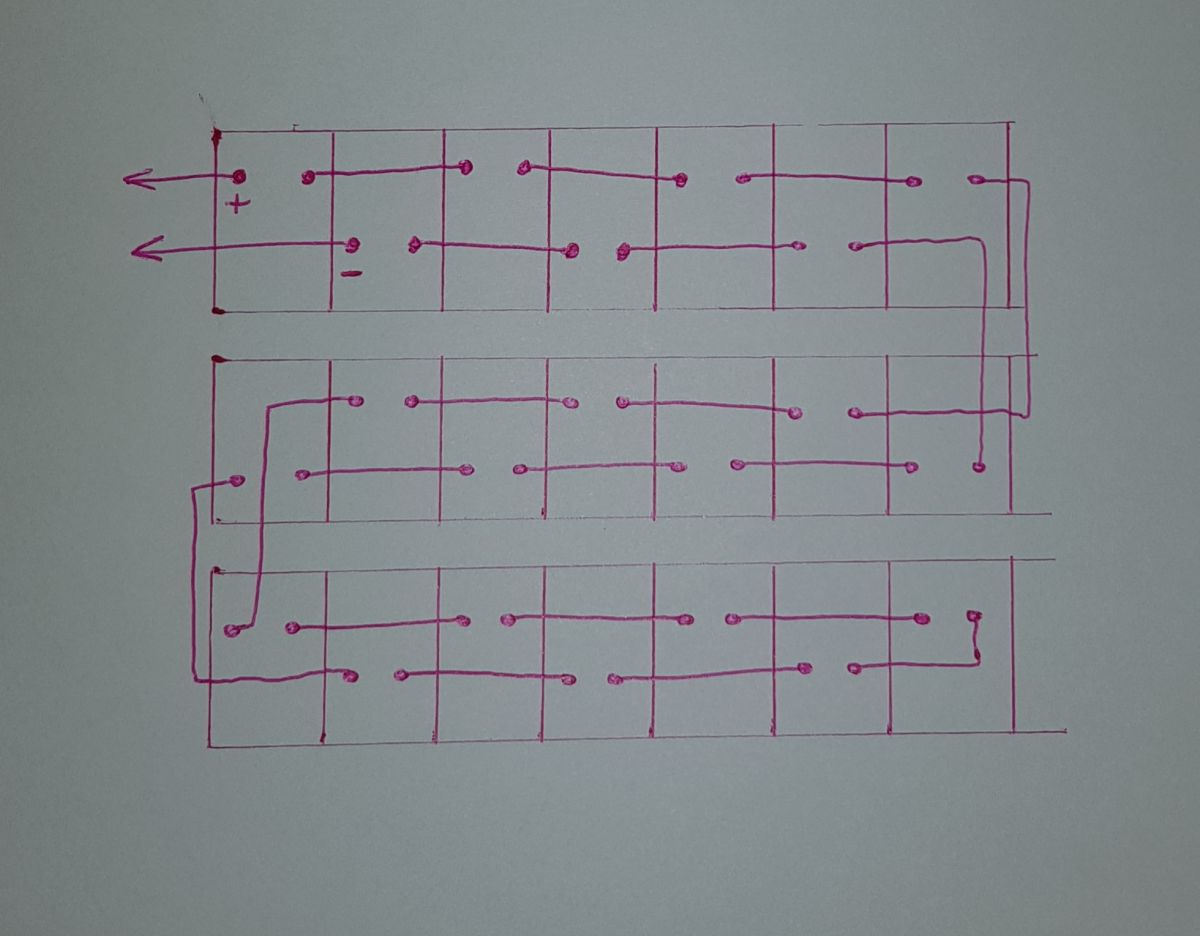
    Hello, I have the last stage of my micro-installation to perform and I have a dilemma with connecting the panels (Qcells G8 350W),
    please subject experts to evaluate my quick wiring diagram. The + and - cables will be placed on the bottom of the panel frame in clips, every other panel will be turned 180 °.
    greetings
    Arek Connecting Photovoltaic Panels: Induction Loop, Cable Length & Parallel Wiring Tips
  • ADVERTISEMENT
  • #36 18885982
    theo33
    Level 27  
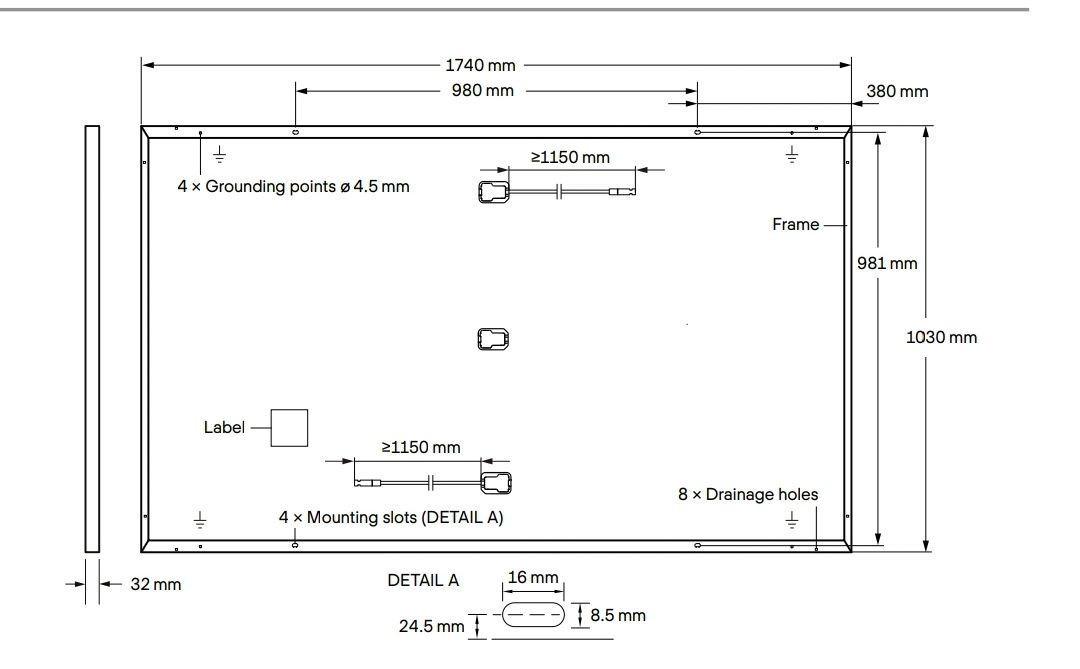
    These modules, as well as most, now have terminals in the middle and there will not be enough wires to lead the lower part of the frame, connecting every second, I would connect one by one and lead the mounting rail and the return pole from the last module led in parallel with the same rail
  • #37 18886079
    Arkado
    Level 6  
    theo33 wrote:
    These modules, as well as most, now have terminals in the middle and there will not be enough wires to lead the lower part of the frame, connecting every second, I would connect one by one and lead the mounting rail and the return pole from the last module led in parallel with the same rail

    As for Qcells, they are introduced on the side ?
    Connecting Photovoltaic Panels: Induction Loop, Cable Length & Parallel Wiring Tips
  • #38 18886133
    theo33
    Level 27  
    Exactly and in the middle of the length, you have 670 to the lower frame and half of the adjacent module 510 and the break for the handle 200 so we have 1370 and the cable at the module is 1150, unless I did not understand something here or you make cables with mc-4 plugs for each such connection so what is the purpose of rotating the modules?
  • #39 18886157
    andrzej20001
    Level 43  
    On the sides you have holes for ties or you put it on:
    Connecting Photovoltaic Panels: Induction Loop, Cable Length & Parallel Wiring Tips
  • #40 18886527
    Elwira Jerzyna
    Level 1  
    Well, there is no need to overdo it. I can see that my colleague wello above has a good pattern. The simpler the better
  • #41 18886546
    andrzej20001
    Level 43  
    The fewer connections the better
  • #42 18887122
    Arkado
    Level 6  
    andrzej20001 wrote:
    The fewer connections the better

    the same can be said about the cable, the less the better the connection.
  • ADVERTISEMENT
  • #43 18894791
    pief
    Level 17  
    Hello

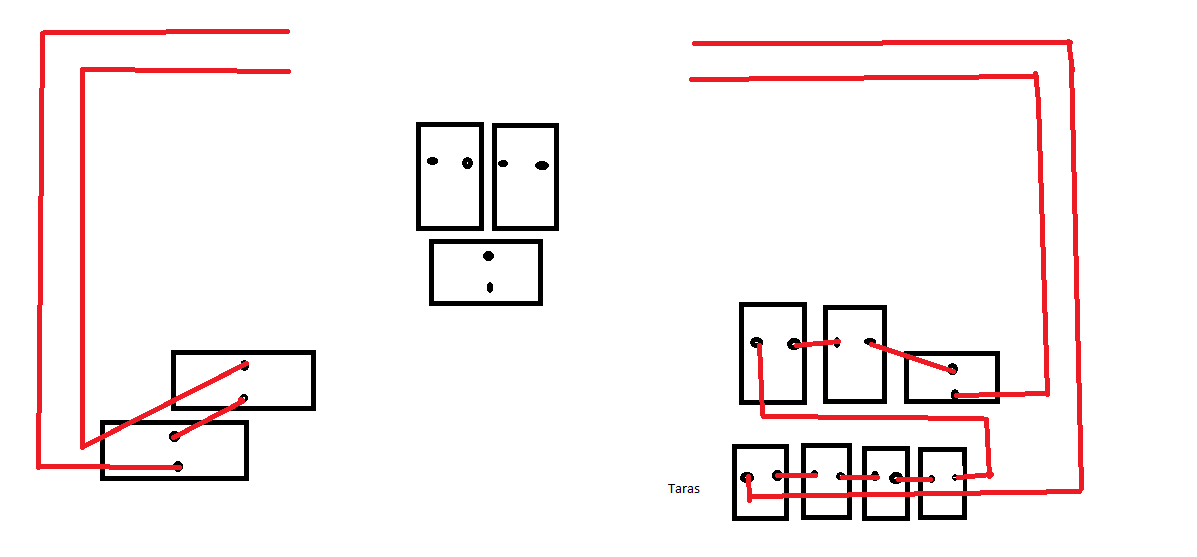
    I put the panels on my own, I'm at the stage of assembling screws and mounting rails, my roof is nasty, I can fit it
    8 Pv panels + 4 panels on the terrace (south side).
    The panels will be scattered across the slope, the cables will be run in a conduit over the ridge and corner rafters.

    "Scramble" how to fasten the panels to avoid loops when wires come from both sides.

    I scrawled a sorry illustrative drawing in the paint. Thanks for any suggestions.
    Connecting Photovoltaic Panels: Induction Loop, Cable Length & Parallel Wiring Tips
  • #44 18916622
    jurrrek
    Level 11  
    Hello, is it ok to connect as below (it is an induction loop) (the descent to the inverter will be under the second lower panel on the left, counting, as in the photo.I have already bought the cable for the return (following the trail) - after reading, analyzing and helping an active Andrzej's forum member :) - is it possible, the advantages are probably that there is less cable and the factory ones are better used).
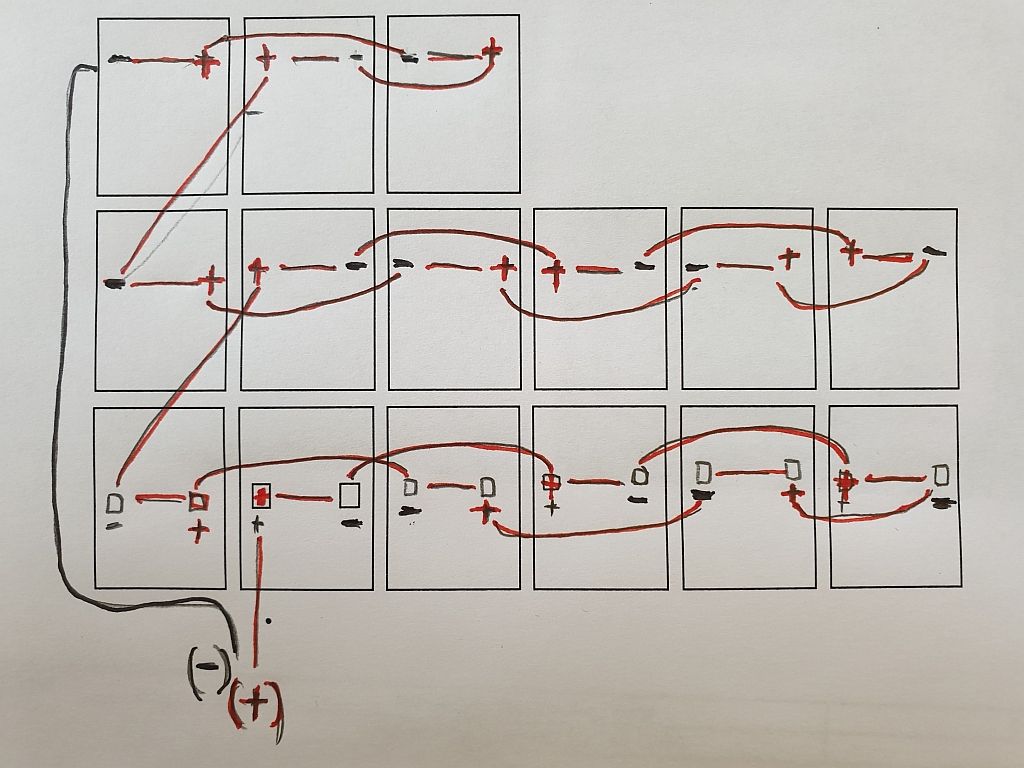
    greetings
    Connecting Photovoltaic Panels: Induction Loop, Cable Length & Parallel Wiring Tips
  • ADVERTISEMENT
  • #45 18916720
    wello
    Level 20  
    Can you tell me why these alpine combinations with reversing panels? :D See my post # 17, I'm connected this way and it can't be better. It will also suit you.
  • #46 18916735
    jurrrek
    Level 11  
    I fell for the reverse of this thread :) . The panels will lie flat, it may be a good idea to use the factory cables as much as possible, at least they will not be folded - apparently this is also contrary to the art. You will definitely have to be careful, the return cable, as I said, I bought so I am still struggling between the above and this
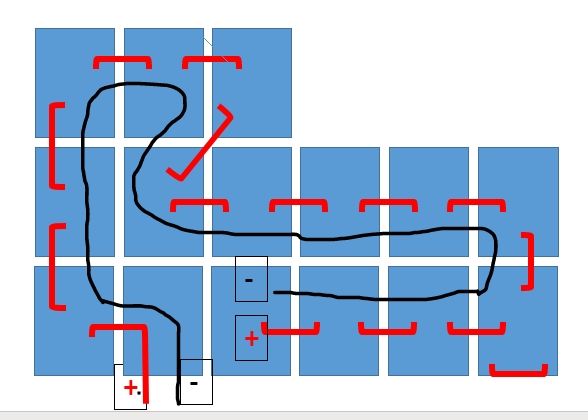
    Connecting Photovoltaic Panels: Induction Loop, Cable Length & Parallel Wiring Tips
  • #47 18917051
    wello
    Level 20  
    Now you have even worse. Do as I said :)
  • #48 18917823
    jurrrek
    Level 11  
    jurrrek wrote:
    Hello, is it ok to connect as below (it is an induction loop) (the descent to the inverter will be under the second lower panel on the left, counting, as in the photo.I have already bought the cable for the return (following the trail) - after reading, analyzing and helping an active Andrzej's forum member :) - is it possible, the advantages are probably that there is less cable and the factory ones are better used).
    greetings
    Connecting Photovoltaic Panels: Induction Loop, Cable Length & Parallel Wiring Tips


    I know that the combinations are unearthly, but I do it for myself, on a flat roof - I can spend more time, I realize that installers do not have time to play on the roof. Each panel (15 pieces) will get its number and I will address the outputs and I will make a connection table. However, I do not feel the issue of the induction loop - is the system correct in this respect? Let me ask "bare skin": the system will not worsen the expected parameters?
    Thanks in advance
  • #49 18947891
    Waldemar-VUK
    Level 10  
    I ran the cables according to my own idea and so far nothing bad has happened

Topic summary

✨ The discussion revolves around the optimal connection of photovoltaic panels, focusing on the arrangement of induction loops, cable lengths, and wiring methods. Participants emphasize the importance of running cables in parallel to avoid creating induction loops, suggesting that additional cable length is acceptable for effective installation. Various connection topologies are debated, with recommendations to minimize connectors to reduce potential heating issues. The necessity of following manufacturer instructions for panel connections is highlighted, particularly for brands like Longi and QCells. Concerns about the arrangement of panels and the implications of reversing polarity are also addressed, with suggestions for maintaining efficient wiring practices to ensure long-term performance.
Generated by the language model.

FAQ

TL;DR: Extra 10 m of 6 mm² PV cable adds just 0.004 Ω, under 0.02 % string loss, while “the cable is so cheap that its costs in small installations are negligible” [Elektroda, Marek006, post #18794954]; route supply/return together to kill induction loops.

Why it matters: A tiny layout tweak avoids EMI, hotspots and future fire-risk without hurting efficiency or budget.

Quick Facts

• A 1 m² loop in a 50 µT field induces ≈0.16 V at 50 Hz [NREL, 2019]. • EN 50618 H1Z2Z2-K solar cable: −40 °C…+90 °C, 25 years UV-rated [Prysmian, 2022]. • MC4 connector: ≤30 A DC, ≤0.25 mΩ contact resistance [Stäubli, 2023]. • 6 mm² PV cable ≈ €1.2 per m (<0.3 % of a 6 kWp system) [PV-Magazine, 2023]. • IEC 60364-7-712 caps domestic PV strings at 1 kV DC [IEC, 2020].
What is an “induction loop” in photovoltaic wiring?

It is the area enclosed when the outgoing (+) and return (–) conductors follow different paths. A larger area works like an open coil, picking up or radiating magnetic fields, adding voltage spikes and EMI [Elektroda, TIGIS, post #18805828]

Why should I run the supply and return cables side-by-side?

Parallel routing shrinks loop area almost to zero, cancelling magnetic flux and keeping induced voltage below 0.05 V on a typical roof array [NREL, 2019]. It also simplifies troubleshooting and makes future insulation tests easier [Elektroda, Darom, post #18803229]

Can I skip the return cable by daisy-chaining panels?

Yes, but you create extra MC4 joins. Every extra crimp increases contact resistance and may heat up, “one of the most frequent causes of installation problems, including fire” [Elektroda, Marek006, post #18807637] A single 15 m return wire is cheaper and safer than ten extra connectors.

Does adding 15 m of 6 mm² cable hurt performance?

No. 15 m adds 0.006 Ω. At 10 A string current the extra loss is 0.6 W—about 0.01 % of a 6 kWp array output [“Resistance of Copper Conductors”].

How do I visualise the loop area on my roof plan?

Sketch the outgoing path, then draw the return. The enclosed shape (often shaded blue) is the loop [Elektroda, TIGIS, post #18805828] Aim to collapse that shape into a single line by routing both conductors together.

What is the preferred wiring for half-cut panels with central junction boxes?

Mount alternate panels rotated 180 °, then link factory 1 m leads panel-to-panel and bring one uninterrupted return wire back along the rail [Elektroda, andrzej20001, post #18807806] This eliminates extra crimps and avoids loops.

Is rotating a module 180 ° harmful?

Electrically it is fine. Mechanically, junction boxes now face up, so water ingress risk rises; manufacturers allow it but advise drainage checks [Longi Mounting Manual, p.12].

Do roof-mounted PV cables need conduit?

Not required if you use EN 50618 cable, which is UV and ozone resistant. Installers still add flexible conduit where rubbing or rodents are possible [Elektroda, Anonymous, post #18810227]

How many MC4 crimps are acceptable on the roof?

Keep it to two per string (array output pair). Each crimp adds about 0.2 mΩ; ten extra crimps raise string resistance by 2 mΩ, doubling cable loss and raising hotspot risk [Stäubli, 2023].

What failures occur with badly crimped connectors?

Poor crimps arc under 1 kV DC, melt insulation and start roof fires; insurers list MC4 overheating among top three PV losses [FM Global, 2022].

Can alternating clockwise and counter-clockwise routing cancel inductance?

In theory, yes; opposing coils null field, as transformer windings show [Elektroda, Marek006, post #18794954] In practice it complicates roofs and gains nothing over a simple parallel run.

How-to: route cables to avoid loops in 3 steps

  1. Lay positive lead along the mounting rail toward last module.
  2. Clip negative lead to the same rail, returning beside the positive.
  3. Secure both every 25 cm with UV-rated ties; test continuity before inverter connection.

What’s cheaper: extra cable or extra connectors?

Extra 15 m of cable costs ≈€18; ten MC4 pairs plus labour cost ≈€50. Cable wins and improves reliability [PV-Magazine, 2023; Elektroda, Anonymous, #18807693].
Generated by the language model.
ADVERTISEMENT