I need your help in choosing an AX55 or AX56U Router? Which router will have better range?
I have fiber optic Internet 150 Mb / s, 53 m2 apartment with thick walls in an old building
Regards. Thank you in advance for your help
Czy wolisz polską wersję strony elektroda?
Nie, dziękuję Przekieruj mnie tamszymonit928 wrote:I need your help in choosing an AX55 or AX56U Router? which router will have better range
RobeMek wrote:You will find out about the range when you start using it, it also depends on the devices that are connected, but for a small apartment it is enough that it will be mounted more or less in the middle. AX55 is enough.
Erbit wrote:It also depends on interference - mainly on the networks of neighbors.
KOCUREK1970 wrote:Theoretically, both have the same, because the power of the wifi radio is regulated by law.
_cheetah_ wrote:Looking at wifi, I would take 55 due to the number of antennas that give more freedom in creating coverage, as long as they are movable. Other than that, they look identical on wifi. However, which in reality will give greater ranges, it is impossible to predict.
szymonit928 wrote:In tests, the ax55 had unstable wireless performance in the 2.4 GHz network, while others write that the ax55 has better performance than the ax56u, so I don't know what will be better for me. I am currently using an old wr340g with one antenna and have coverage throughout the house.
szymonit928 wrote:I see that two types of antennas were installed in the ax56u model. I saw some rounder ones similar to those in ax55, and the other ones that I saw thick flat ones with the Asus logo on the antennas, but it is not known if this also translates into range? and
szymonit928 wrote:...
Erbit wrote:It also depends on interference - mainly on the networks of neighbors.
I live in a detached house and have no problems with interference
KOCUREK1970 wrote:There is no point in asking even in stores what antennas or parameters have - descriptions are outdated, not to mention the photo. For them, "art is art".
_cheetah_ wrote:Of course, there will probably be some differences in the ranges between them, but this is usually incomparably less impact than the conditions I described above.
szymonit928 wrote:there will still be a lot of software updates, so coverage will definitely improve.
szymonit928 wrote:It seems to me that it is better to have these two antennas more,
szymonit928 wrote:Tell me now, is it worth paying PLN 300 more for ax58u?
szymonit928 wrote:seems to be strong in range
_cheetah_ wrote:And 55 and 58 are, in my opinion, significantly oversized. Why would you want to pay for 802.11ax when you have a 150Mbps connection, for which, if you were stubborn, 802.11n MIMO2x2 wifi could be enough? And 'ac' in MIMO2x2 is already with a large excess.
_cheetah_ wrote:And as for "thick walls" - if you have a lot of neighborhood networks and really good walls, there is a good chance that you will not jump in speed and speed on one router stability that you imagine after wifi. Did you at least check what kind of ether you have and whether it is possible to break through these walls in any sensible way?
_cheetah_ wrote:Sorry, what do you see???
szymonit928 wrote:_cheetah_ wrote:And 55 and 58 are, in my opinion, significantly oversized. Why would you want to pay for 802.11ax when you have a 150Mbps connection, for which, if you were stubborn, 802.11nw MIMO2x2 wifi could be enough? And 'ac' in MIMO2x2 is already with a large excess.
I'm probably oversensitive, because I tested the Archer C6 in such a way as you wrote and compared to my old wr340g it was very poor, but it's possible that I got a defective piece, I don't rule it out.
_cheetah_ wrote:And as for the "thick walls" - if you have a lot of neighborhood networks and really good walls, there is a good chance that you will not jump in speed and speed on one router stability that you imagine after wifi. Did you at least check what kind of ether you have and whether it is possible to break through these walls in any sensible way?
I checked, I only have one neighbor and no other devices, so I don't have crowded ether. I set it to a free channel, but the Archer C6 behind the other wall was breaking the connection and even the video on Youtube could not load. The signal -86 dBm and dropped to -89 dBm, where on the old TL-WR340G it worked without any problems, stably held -68 dBm, and nothing jammed in the same place.
_cheetah_ wrote:Sorry, what do you see???
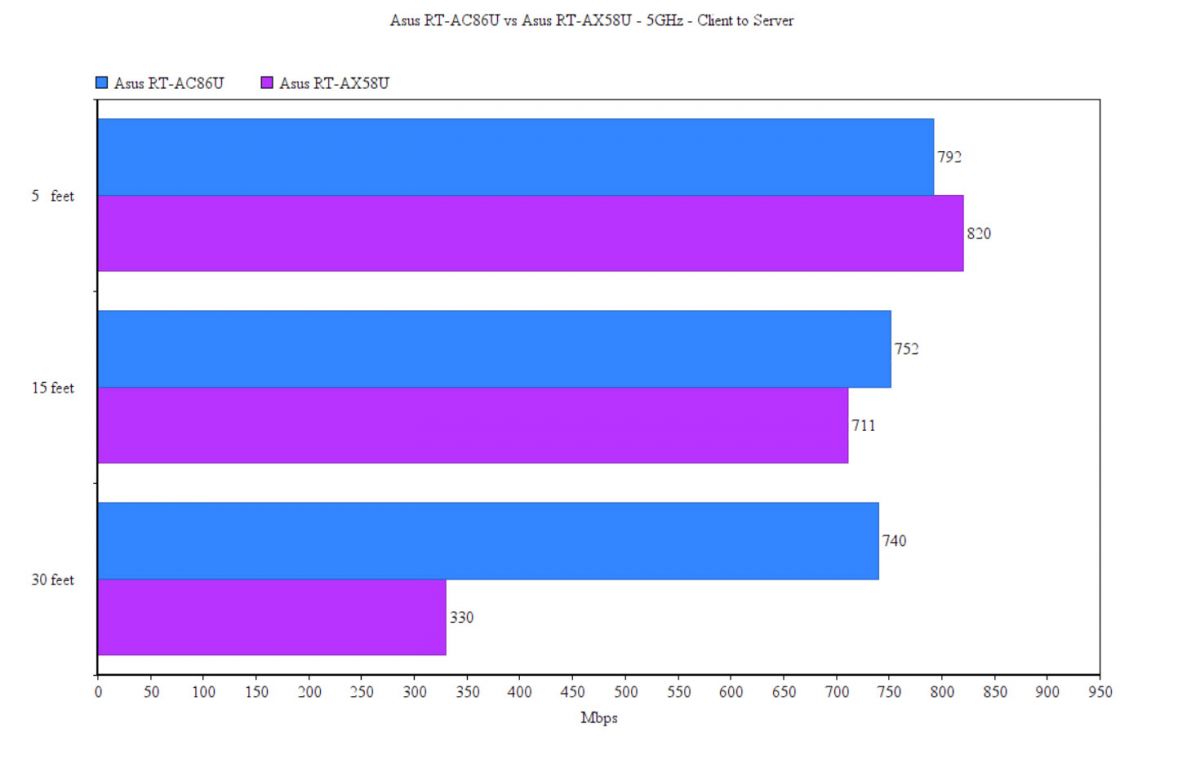
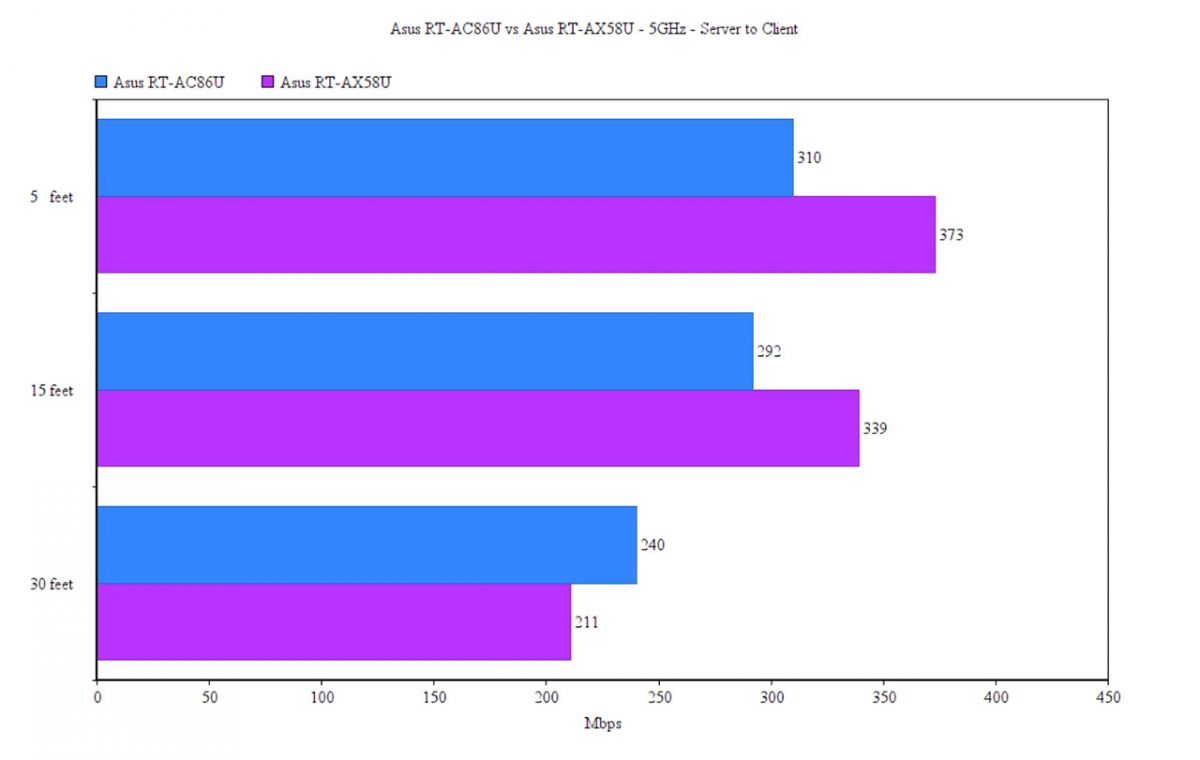
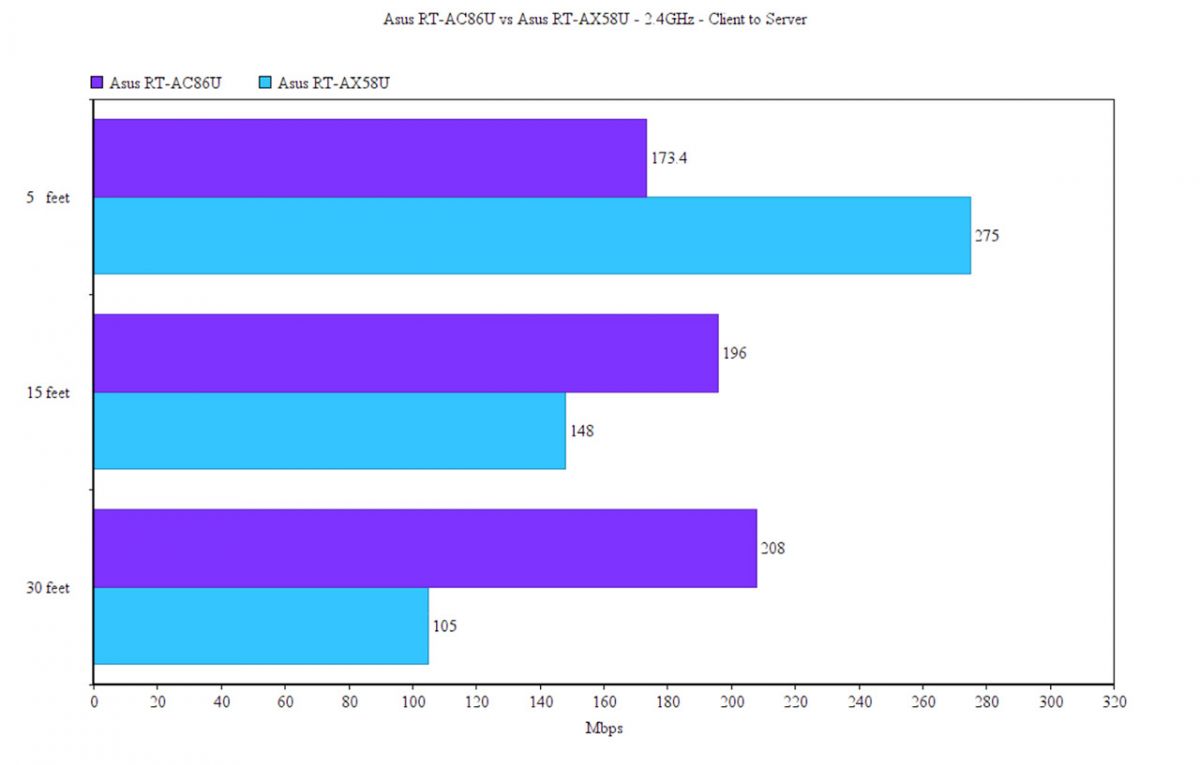
In the ax58u and ac86u tests I saw. The Asus ac86u had better wireless performance, but the ax58u still fared pretty well against it.
Interesant wrote:You had something misconfigured in Archer C6, e.g. the SSID name common to 2.4GHz and 5GHz, maybe you thought that 2.4GHz would break you, ps. the last update improved some things in C6, but not everything.
Quote:
Date of publication: 2020-04-22 Language: English File size: 8.18 MB
Modifications and Bug Fixes
1. Added OneMesh function.
2. Improvided the connection stability, fixed the issue that router disconnected because of frequent DHCP requests.
Notebook:
1. For Archer C6(EU) V2.
2. This FW has added some new features, it cannot be downgraded to former release once upgraded to this one.
Quote:
Date of publication: 2020-07-14 Language: English File size: 8.33 MB
Modifications and Bug Fixes
Improved connection stability.
Notebook:
For Archer C6(EU) V2.
Quote:
Date of publication: 2020-09-22 Language: English File size: 8.17 MB
Modifications and Bug Fixes
Optimized IPv6 connection, added the support for PD only.
Notebook:
For Archer C6(EU) V2.
szymonit928 wrote:I'm probably oversensitive, because I tested the Archer C6 in such a way as you wrote and compared to my old wr340g it was very poor, but it's possible that I got a defective piece, I don't rule it out.
szymonit928 wrote:.The signal -86 dBm and dropped to -89 dBm, where on the old TL-WR340G it worked without any problems, stably held -68 dBm, and nothing jammed in the same place.
_cheetah_ wrote:And 55 and 58 are, in my opinion, significantly oversized.
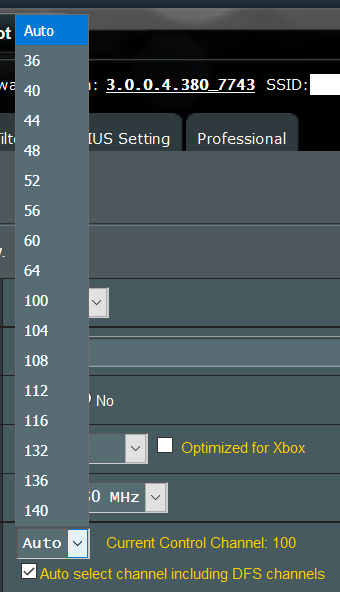
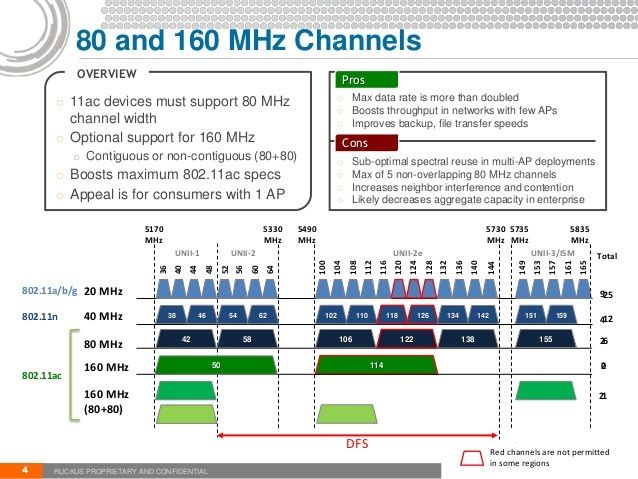
_cheetah_ wrote:By the way - ac86u seems to support DFS channels, which in blocks is sometimes decisive due to the crowd of neighboring networks.
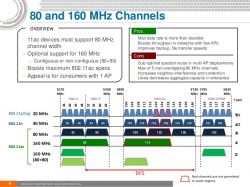
szymonit928 wrote:Yes, DFS has ac86u and ax58u
szymonit928 wrote:In the ac86u and ax58u tests of the ax58's wireless performance at 30ft, the speed dropped significantly.
szymonit928 wrote:And is it true if, for example, my devices support the WiFi 802.11ac standard, even if I change the Router to WiFi 6, my devices will work more stable than with the WiFi 5 Router? Reading various tests, they often mention it.
_cheetah_ wrote:And do you have somewhere written what channel range exactly?
_cheetah_ wrote:From a practical point of view - if the router does not get satisfactory results at a given distance and obstacles, it simply indicates that an additional AP is needed.
szymonit928 wrote:how long would ac86u be enough for me?
szymonit928 wrote:I can't find anything in detail about DFS in this model, on some forum someone added a picture of ac86u
szymonit928 wrote:So it turns out that if you buy a cheaper one, e.g. ax55, sooner or later you will have to buy another ax55 or ax56u for AiMesh, or maybe it's better to buy a more expensive ac86u or ax58u right away
szymonit928 wrote:And how long would ac86u be enough for me? will it not be too old, generally the router from 2017. WiFi 5 is no longer future-proof.
szymonit928 wrote:WiFi 5 is no longer future-proof.
_cheetah_ wrote:Oh, life teaches you that you can work on equipment for a very long time until it breaks down. Here, however, what may be more dangerous is what @KOCUREK1970 wrote above, i.e. the lack of support, patching the errors found in the software and improving security for wifi.
_cheetah_ wrote:So in general, the client should be better than -65dBm level to have high speeds and interference distance >20dB
szymonit928 wrote:What would you do if you were me, would you replace the ax55 with an ac86u? because I have the option.
_cheetah_ wrote:And how about interference after wifi, i.e. with neighborhood networks?
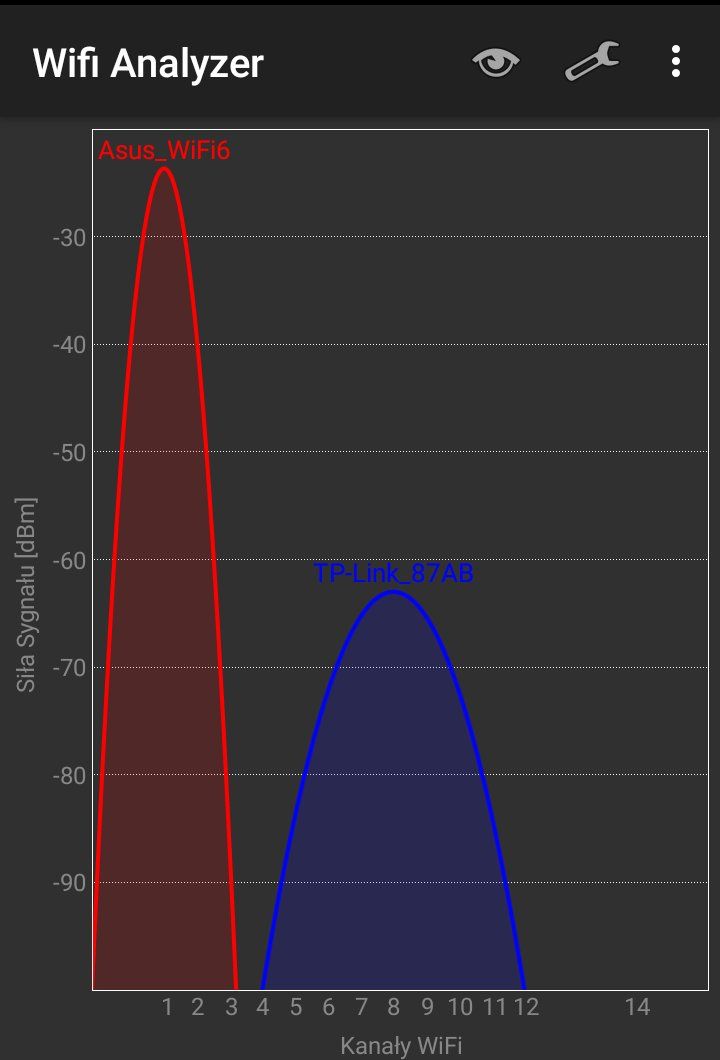
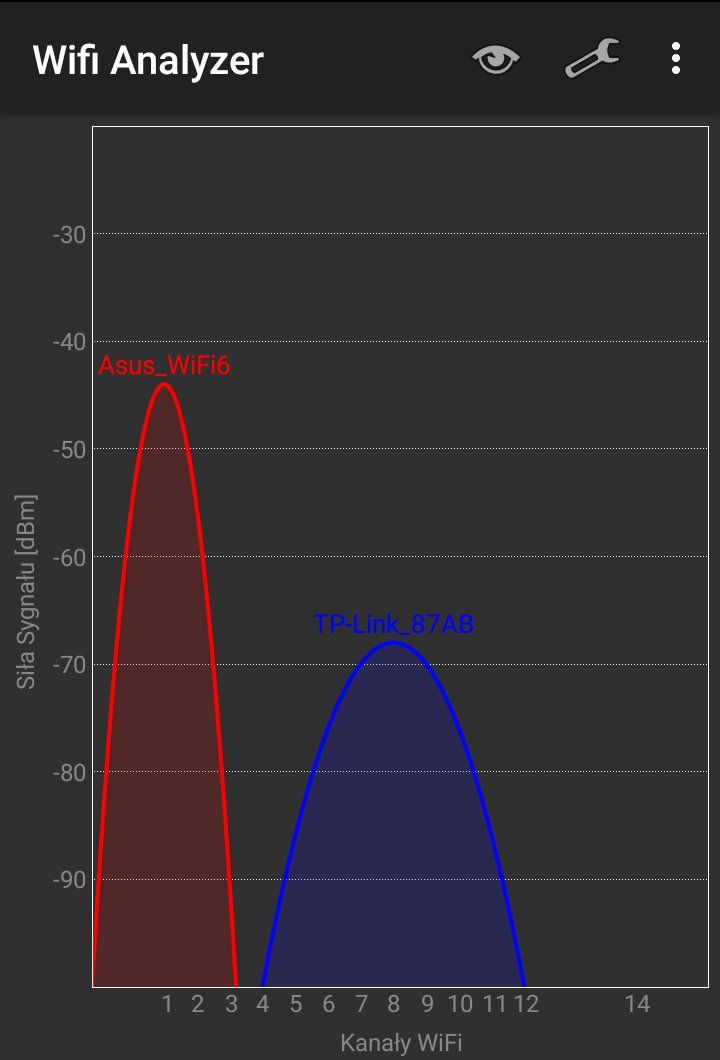
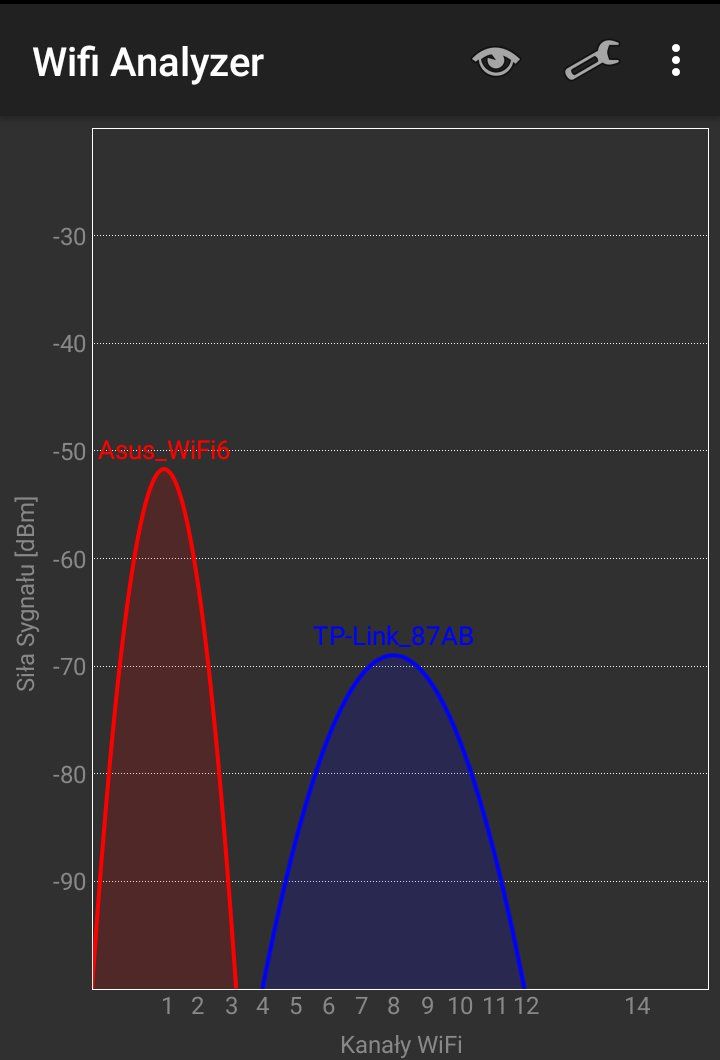
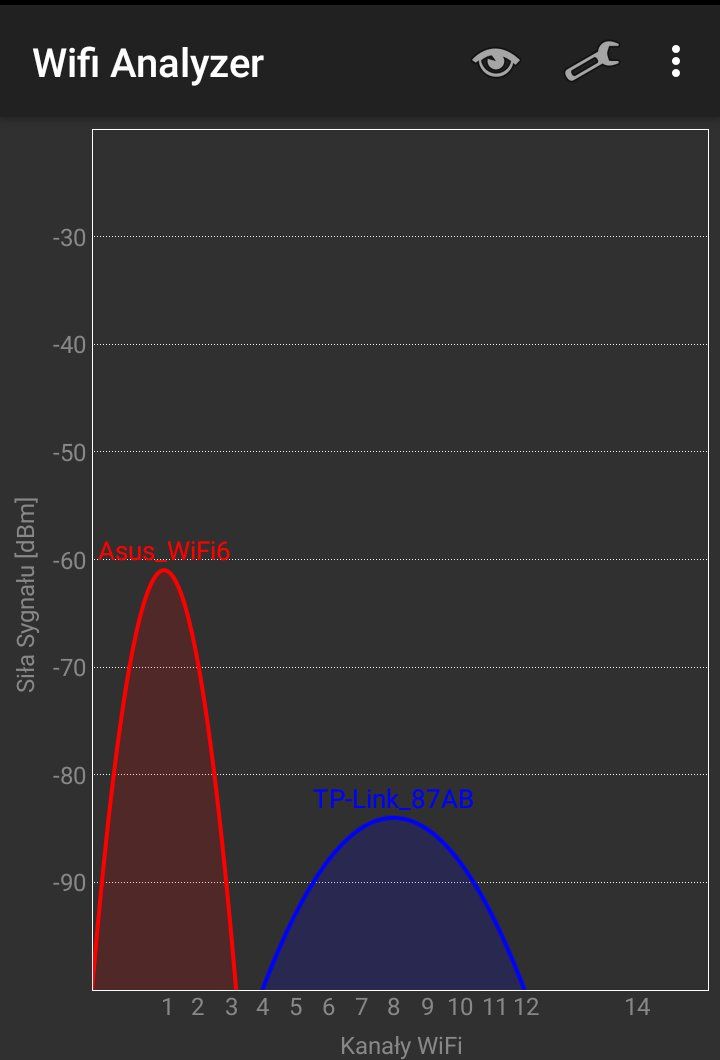
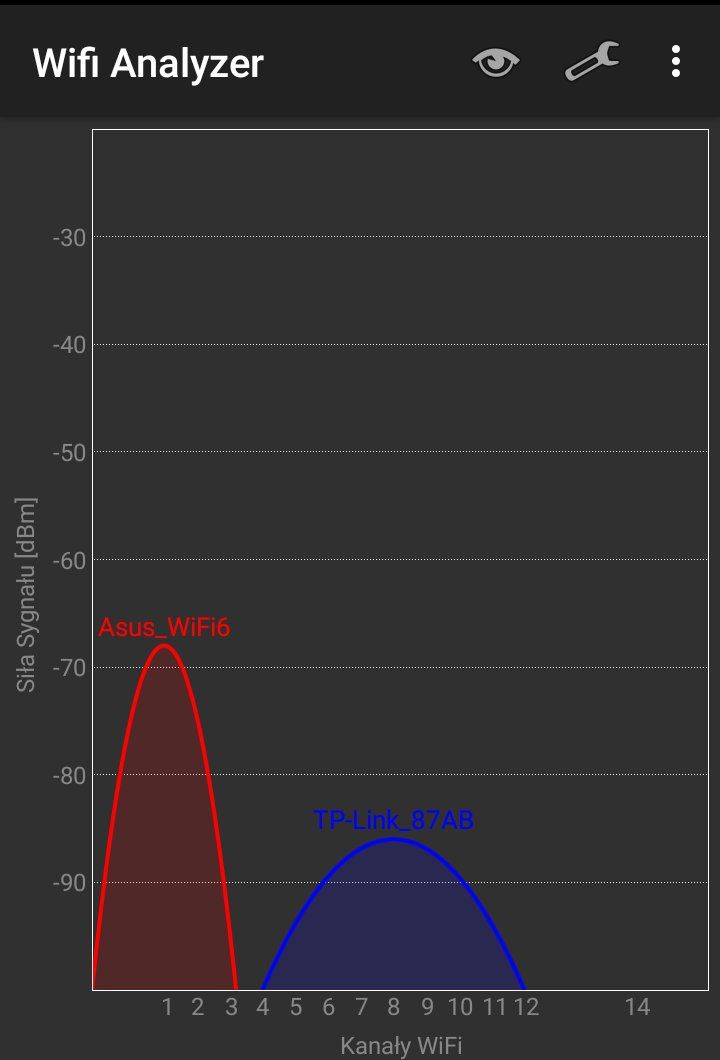
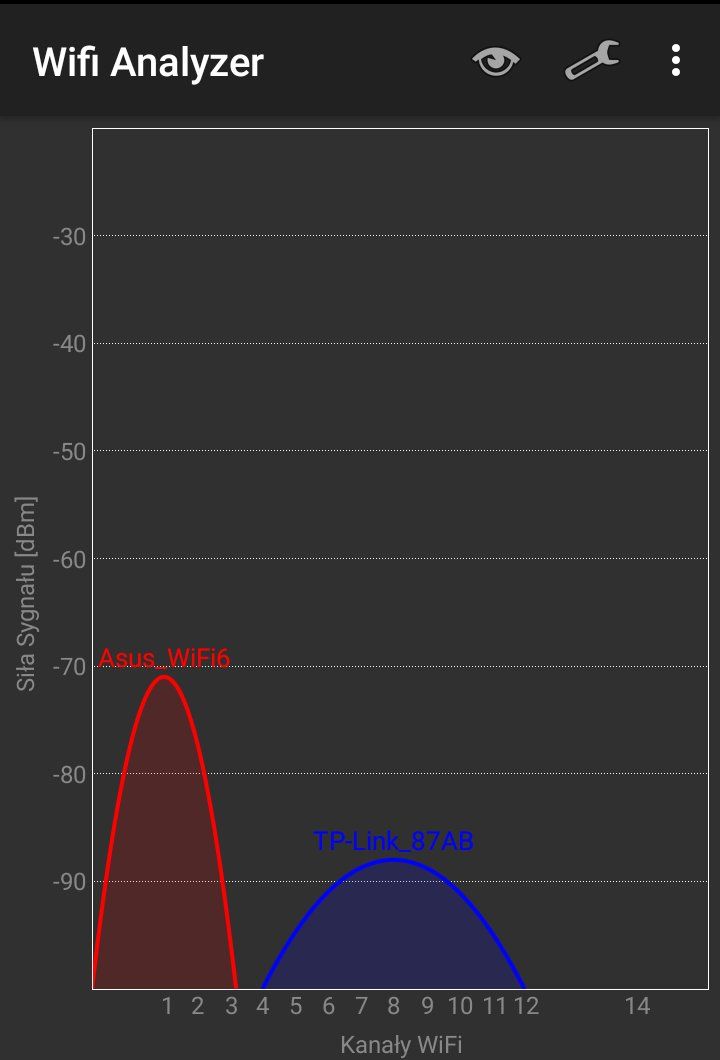
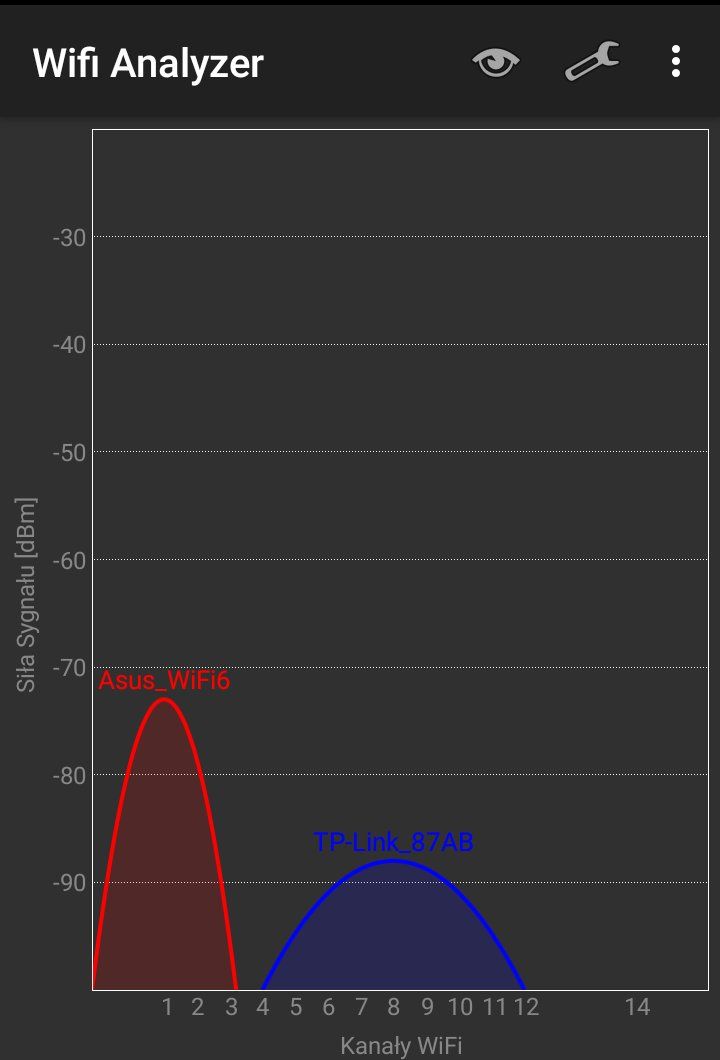
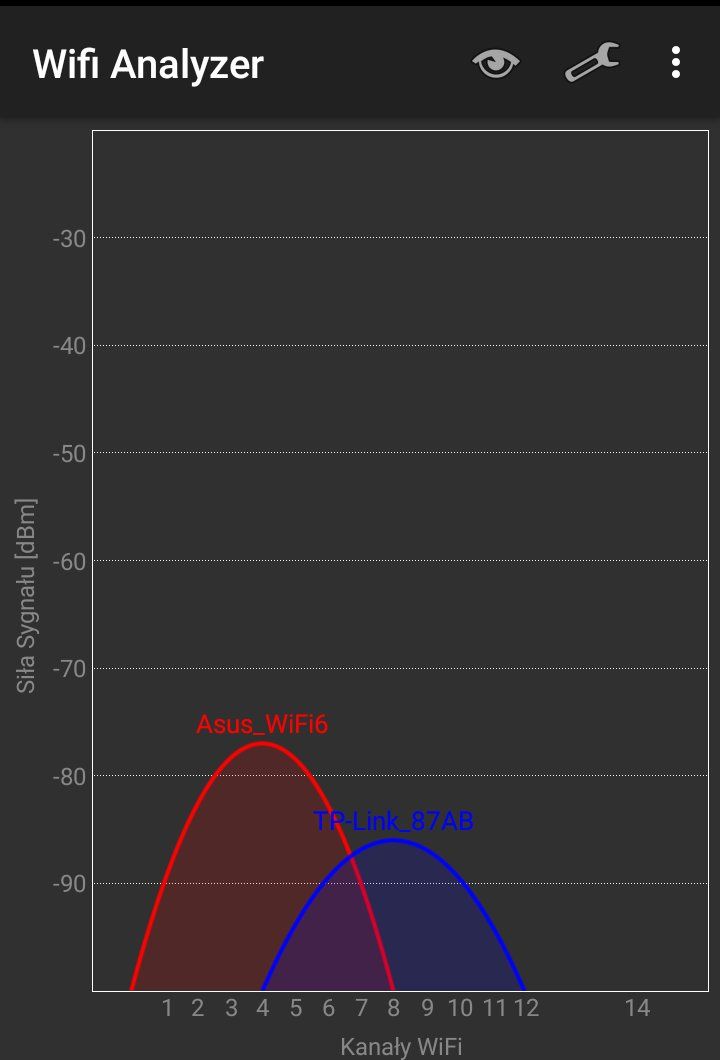
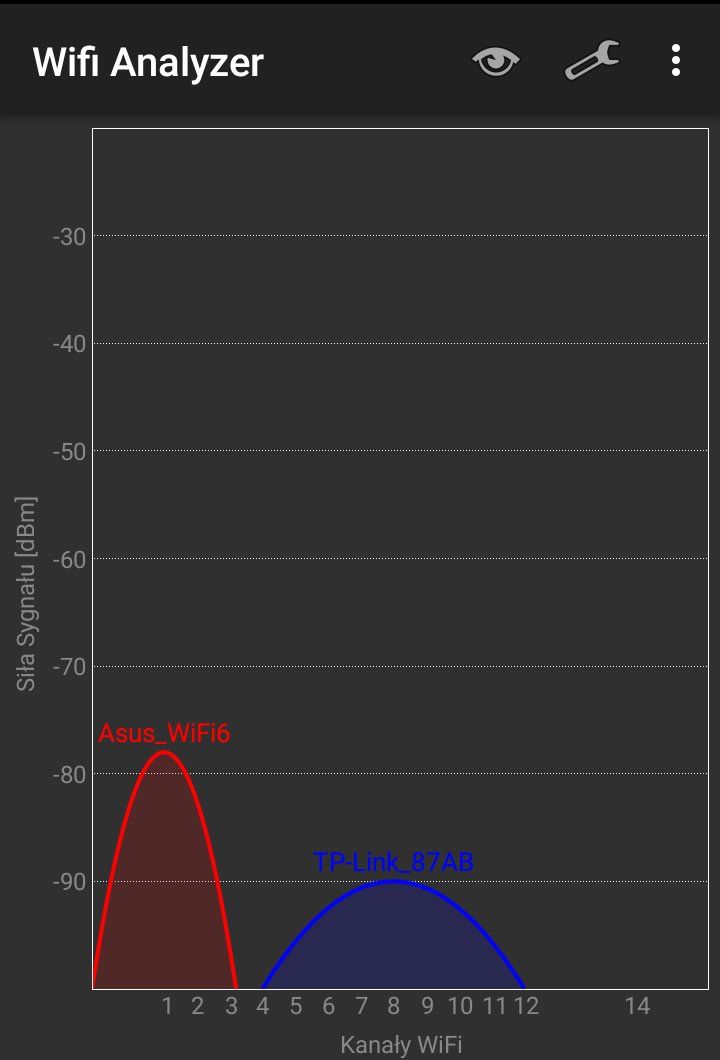
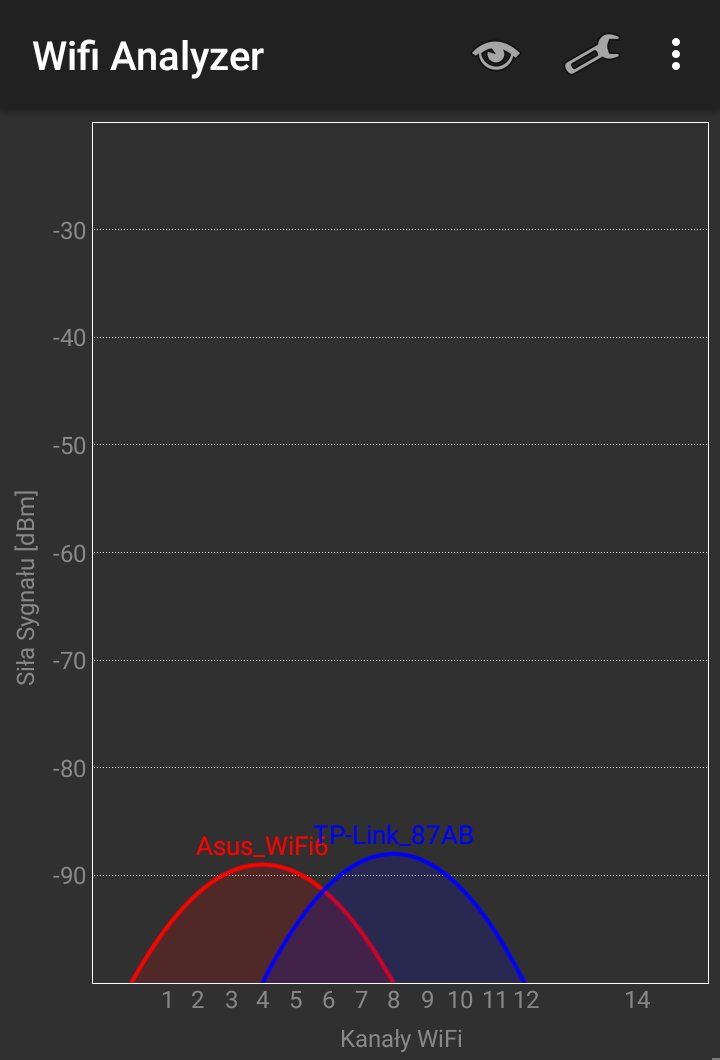
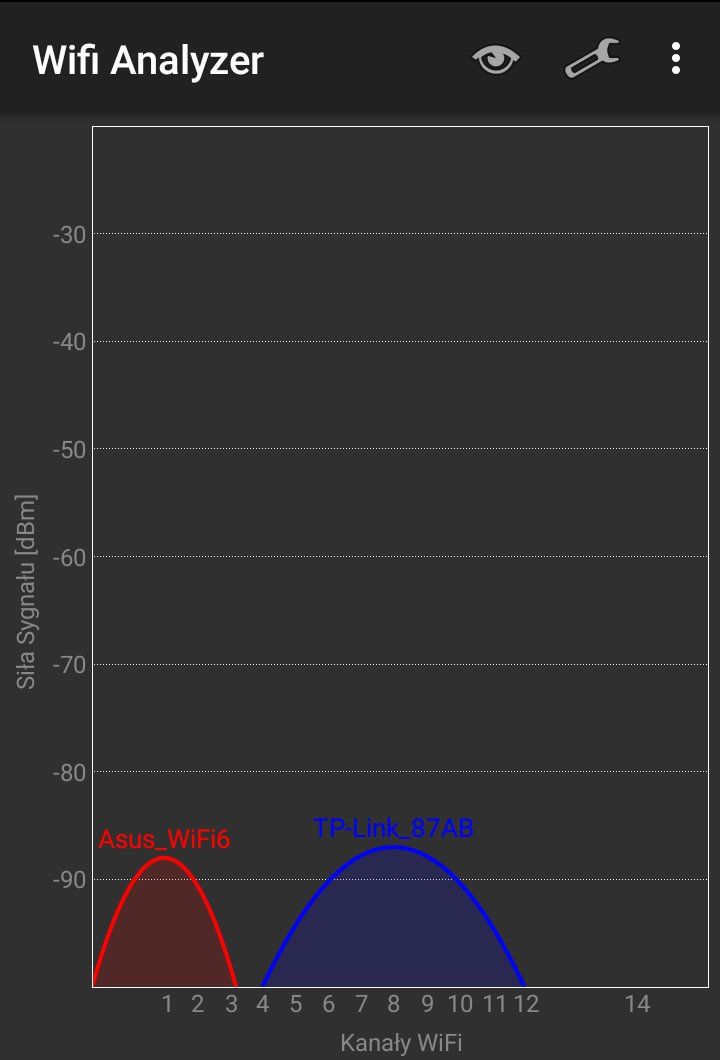
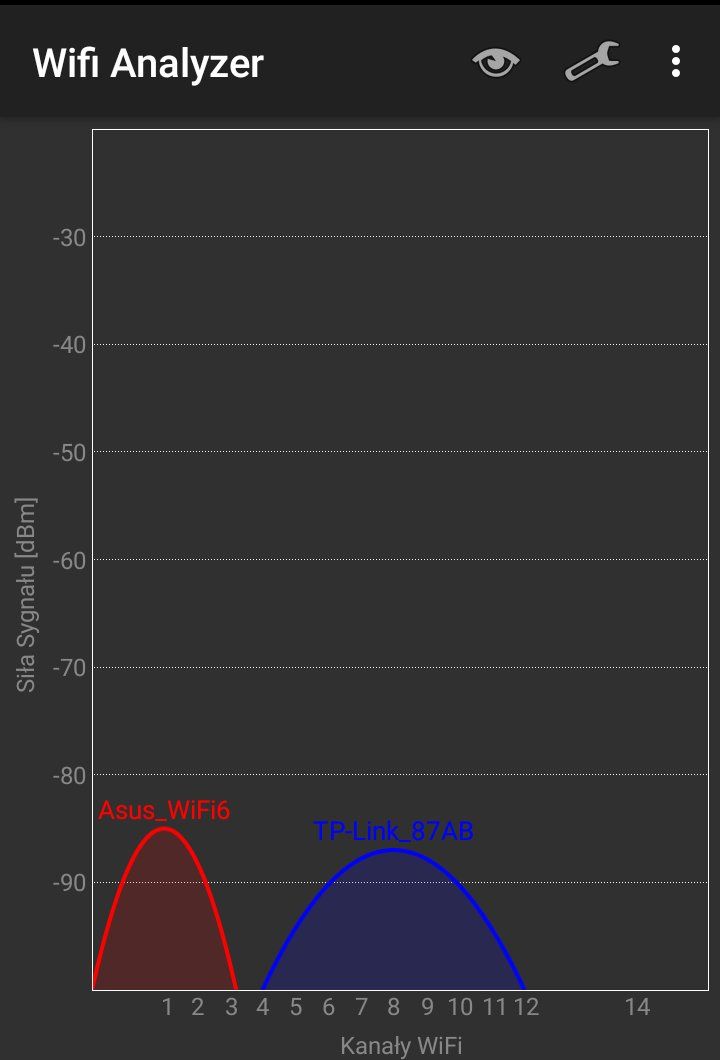
If you haven't done wifi diagnostics - do --> https://www.elektroda.pl/rtvforum/topic3158772.html
Preferably InSSIDer (Win), possibly Wifi Analyzer (Android).
One measurement DIRECTLY at the router
Subsequent measurements in typical places where mobiles are used.
And post the screen accordingly: https://obrazki.elektroda.pl/4257484200_1454694642.png / https://obrazki.elektroda.pl/9695492800_1454695020.png
ATTENTION : When using a laptop or smartphone, you need to orient it spatially (rotate) at each measurement point so that you always have the maximum signal at the measurement point. This is very important, because by changing the orientation of the phone or laptop in relation to the direction of the router / AP, the differences in signal measurement can be VERY large.
If the 5GHz band is empty - it could be ax55, and if it's clogged - ac86 with DFX could be better.
Interesant wrote:...
In the TP link, if it is yours, you have something mixed up, because in the "G" standard it sets up the connection and move it from 6 10 to 9 13 (40MHz).
Then set Asus to channel 3.
TL;DR: In real-world Wi-Fi 6 tests, throughput plateaus after –67 dBm RSSI; “walls attenuate about 10 dB each” [Cisco 2020; Elektroda, cheetah, #19508279]. RT-AX55 delivers similar reach to AX56U yet costs about €25 less.
Why it matters: Knowing the limits saves you from overpaying for specs that thick walls erase.
• Asus RT-AX55: AX1800 (574 + 1201 Mbps), 4 × external 5 dBi antennas, no USB, street price €75–90 [Asus Spec 2023]. • Asus RT-AX56U: AX1800, 2 × external 5 dBi antennas, 512 MB RAM, dual USB, €100–120 [Asus Spec 2023]. • EU Wi-Fi limits: 20 dBm @ 2.4 GHz, 23 dBm @ 5 GHz EIRP [ETSI EN 300 328]. • Brick wall attenuation: typically 8–15 dB per layer [Cisco 2020]. • DFS channels present on AC86U/AX58U, absent on AX55/AX56U [Elektroda, szymonit928, post #19502631]