logo elektroda
logo elektroda
X
logo elektroda

DIY Parkside Charger Repair: Fixing PLG 20 A1 with LED Issues & Photos Included (90 chars)

techtrendstudio 31827 18
Best answers

How can I troubleshoot a Parkside PLG 20 A1 charger that has no LED indication and does not charge?

Start by checking the F1 3.15 A fuse with the charger unplugged; it should have continuity [#20468370] If the fuse is good, inspect the main control transistor on the heatsink, the optocoupler, and look for any cold solder joints [#20481403] For live diagnostics, verify that 230 V AC reaches the board and that the main capacitor has about 300–350 V across it, but only with proper caution [#20641500]
Generated by the language model.
ADVERTISEMENT
  • #1 20467251
    techtrendstudio
    Level 2  
    Posts: 2
    Rate: 3
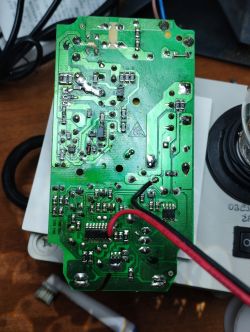
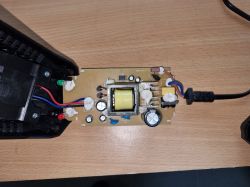
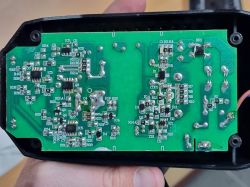
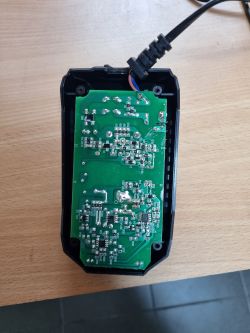
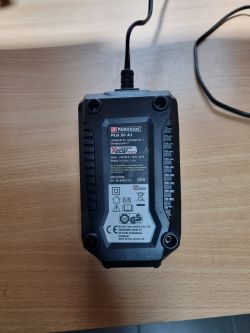
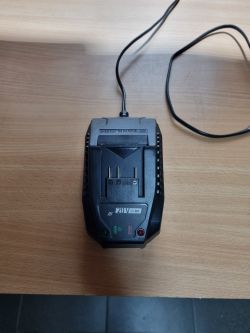
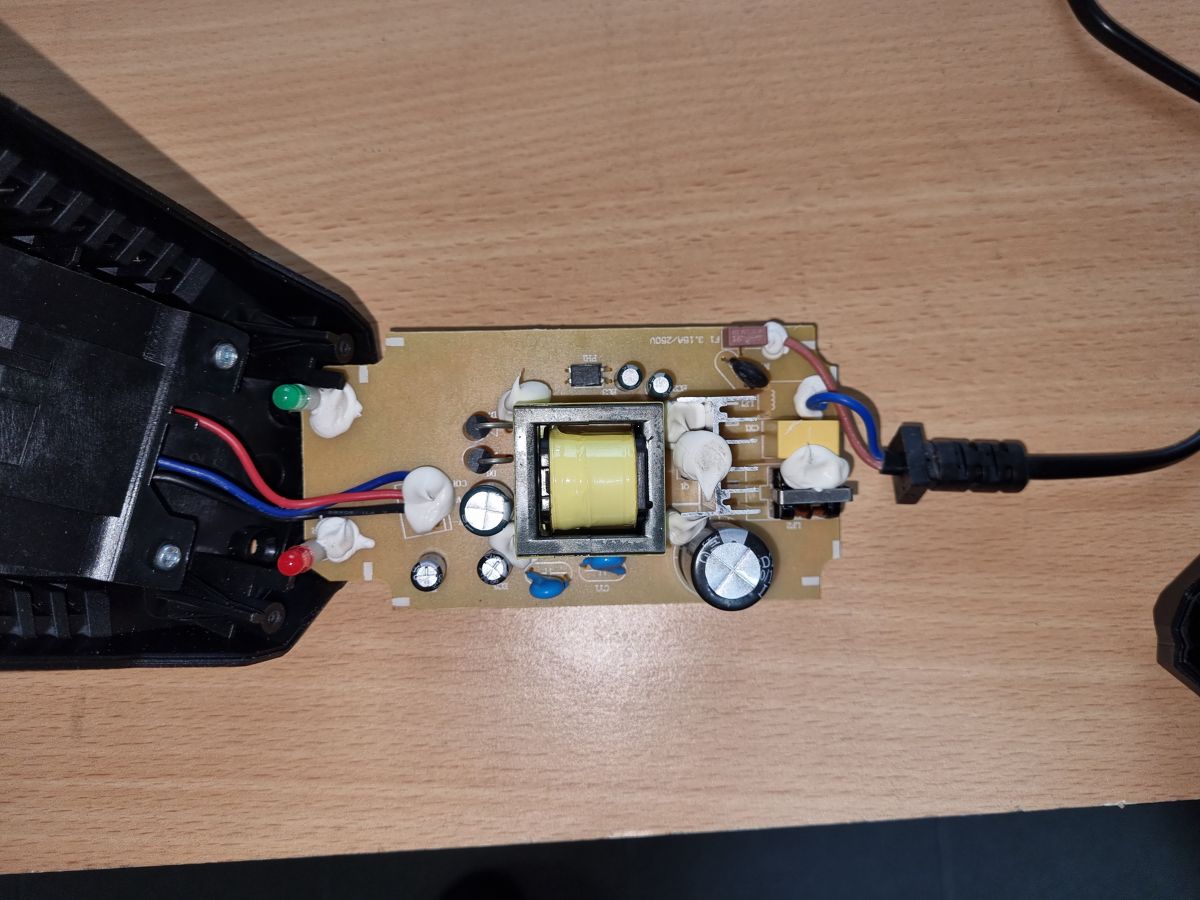
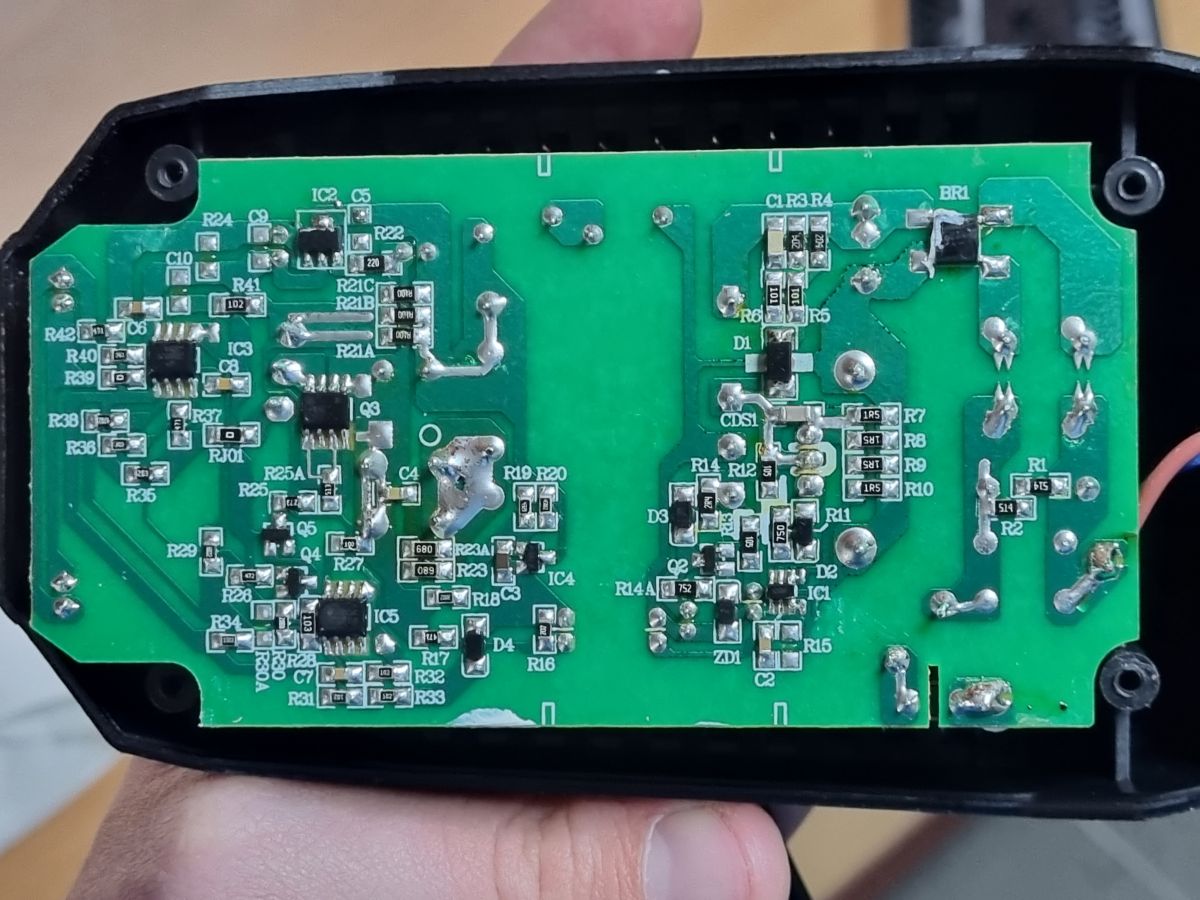
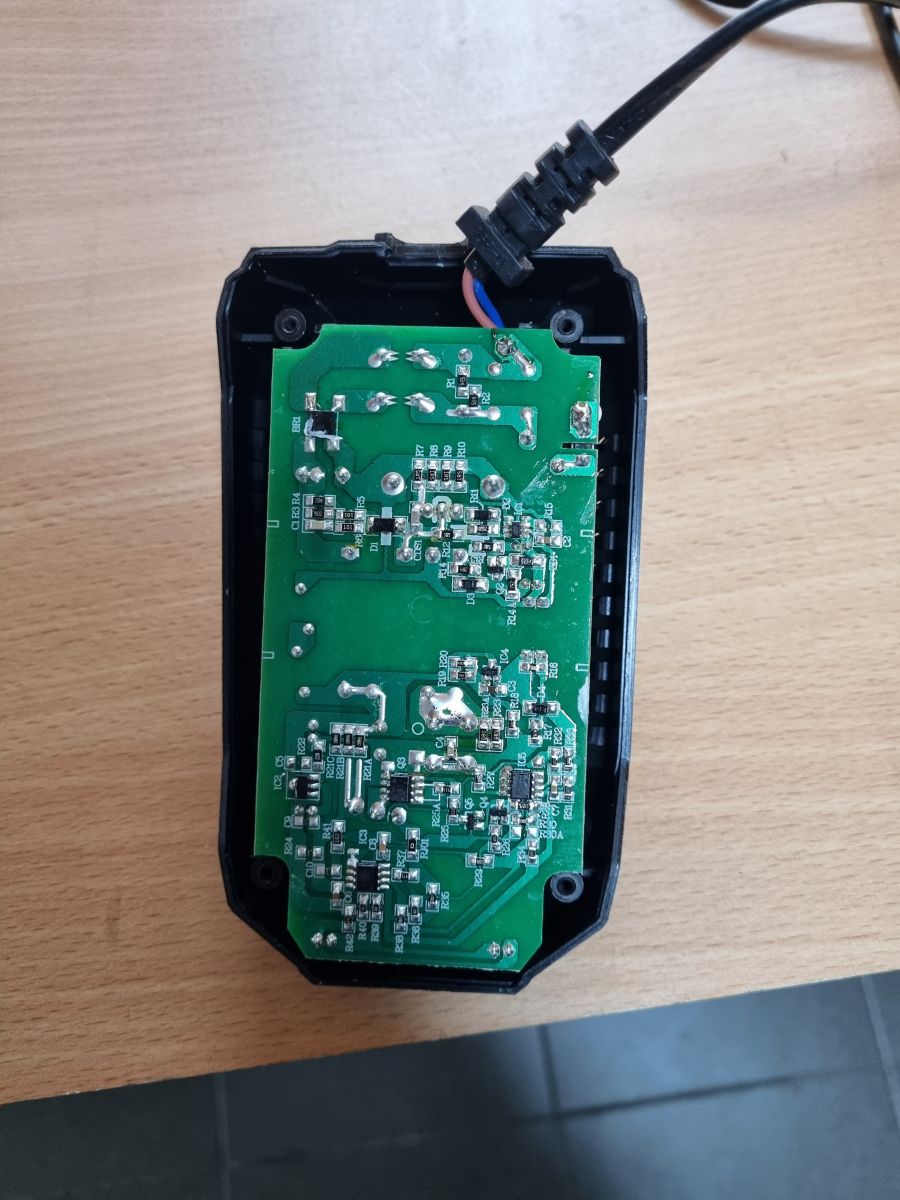
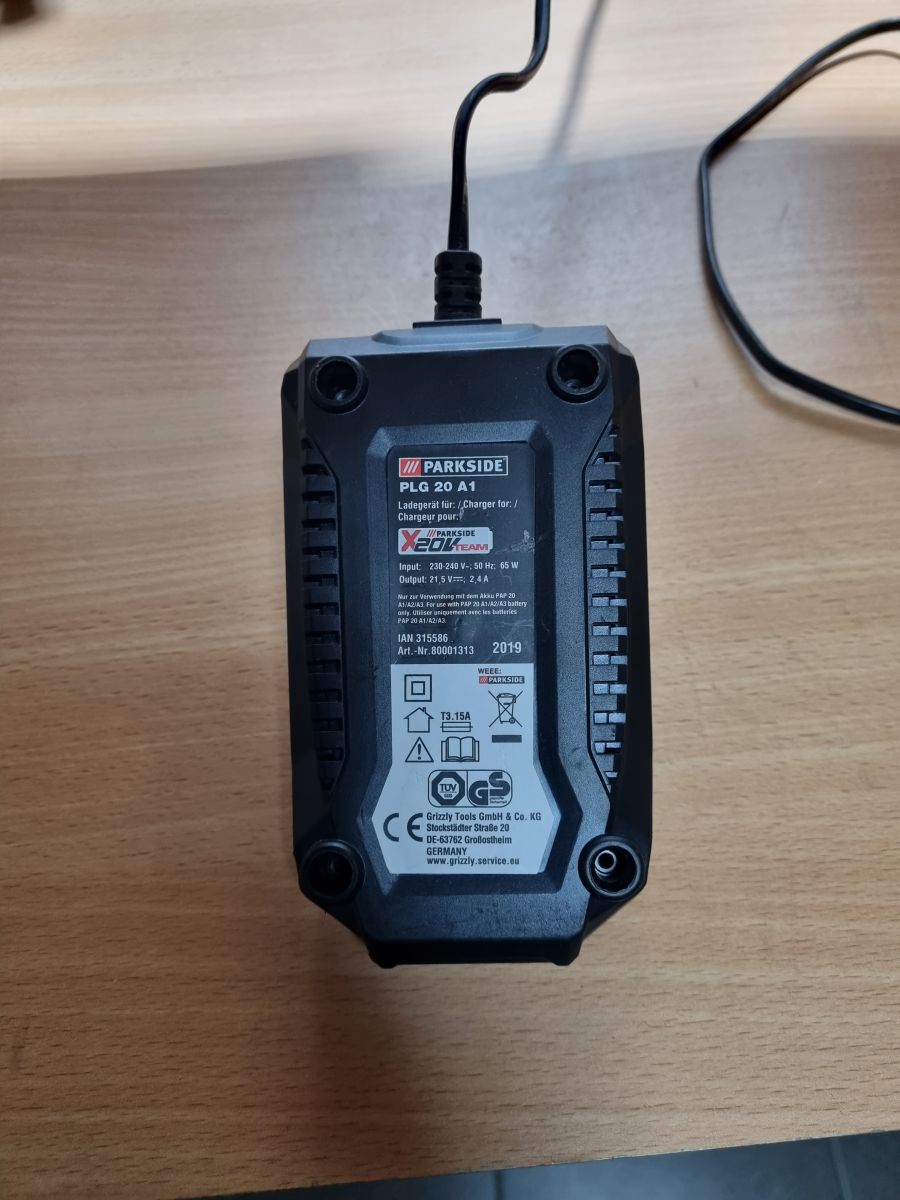
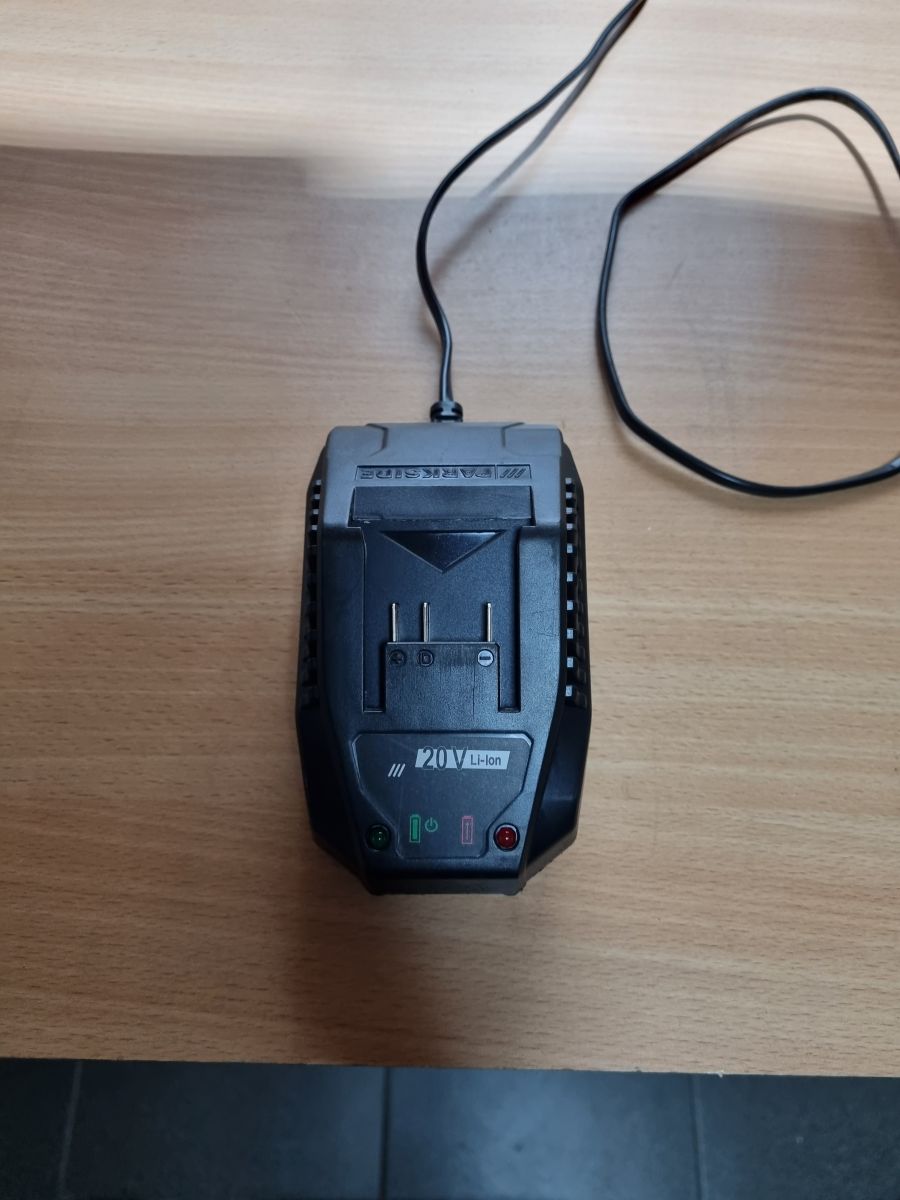
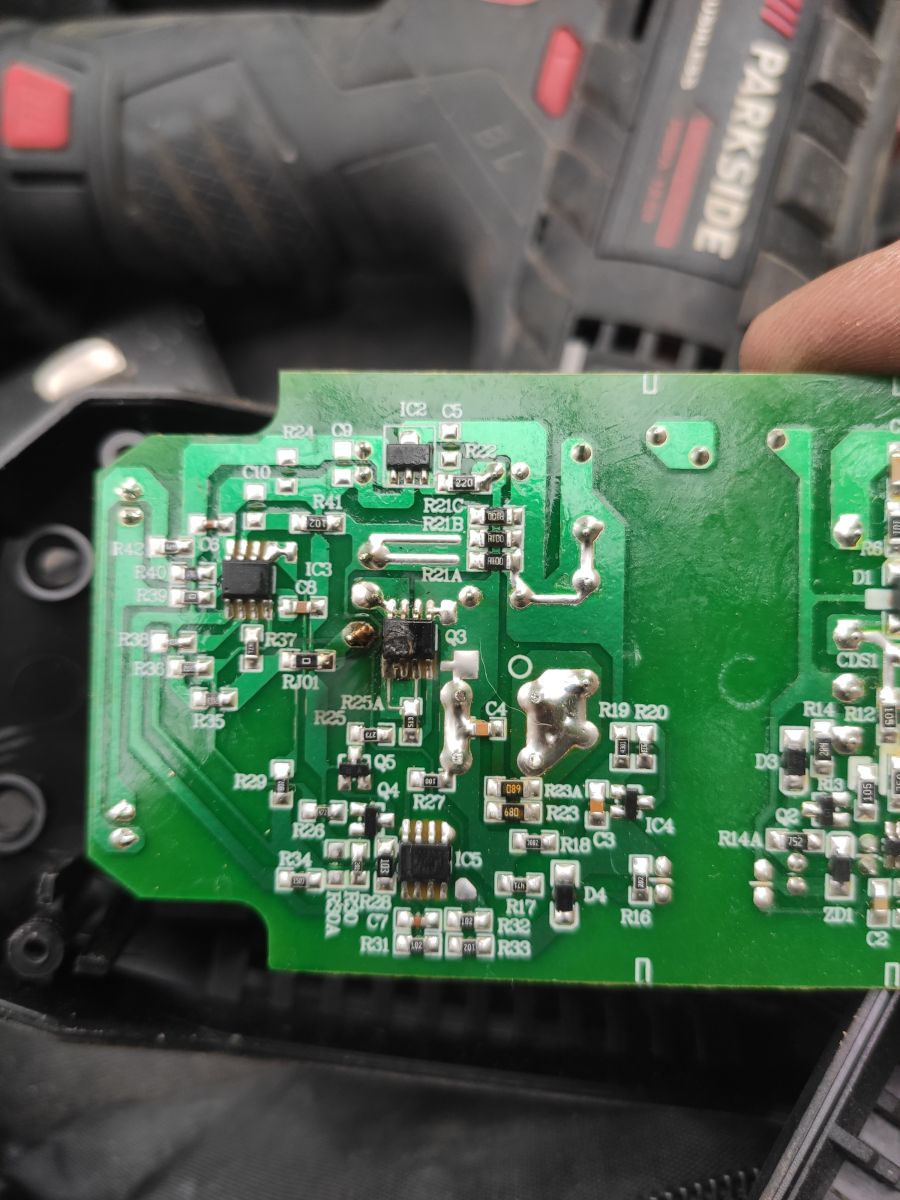
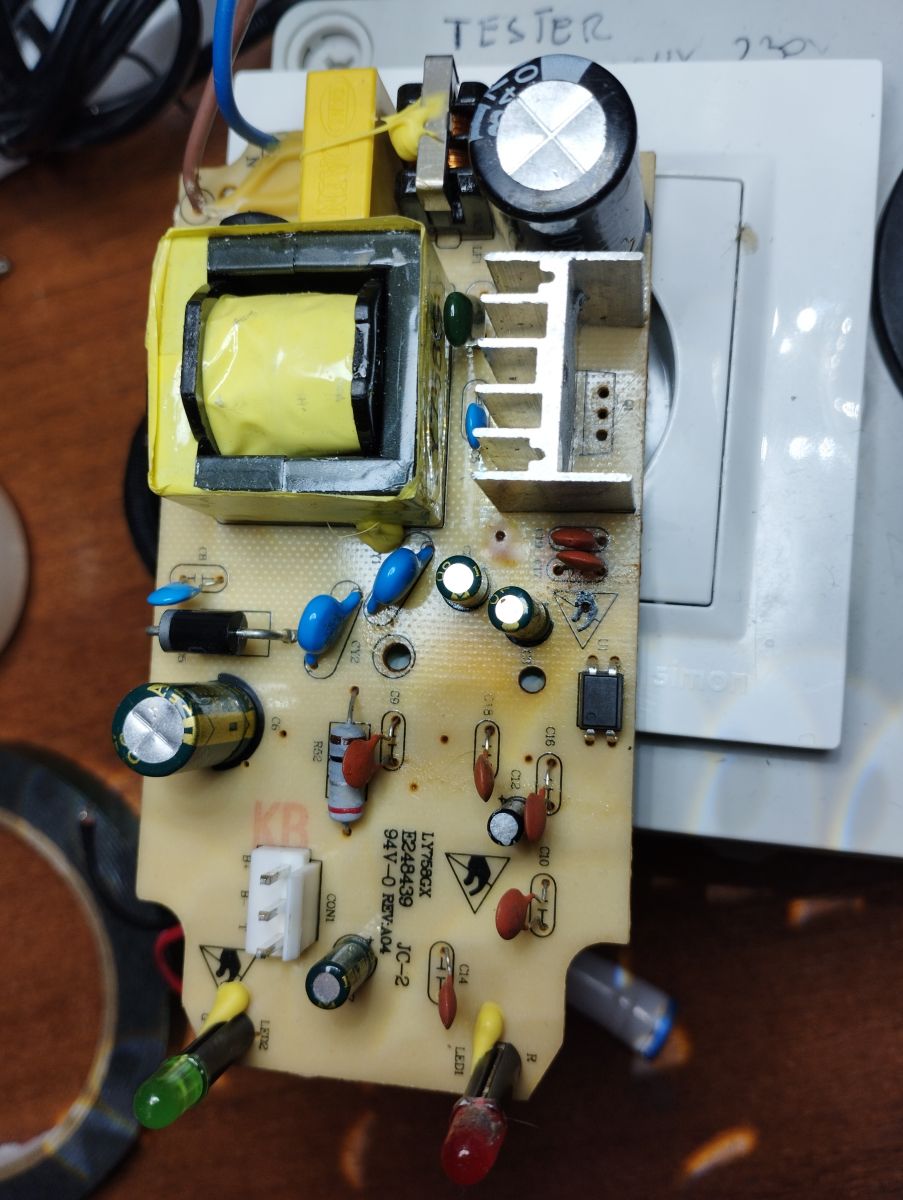
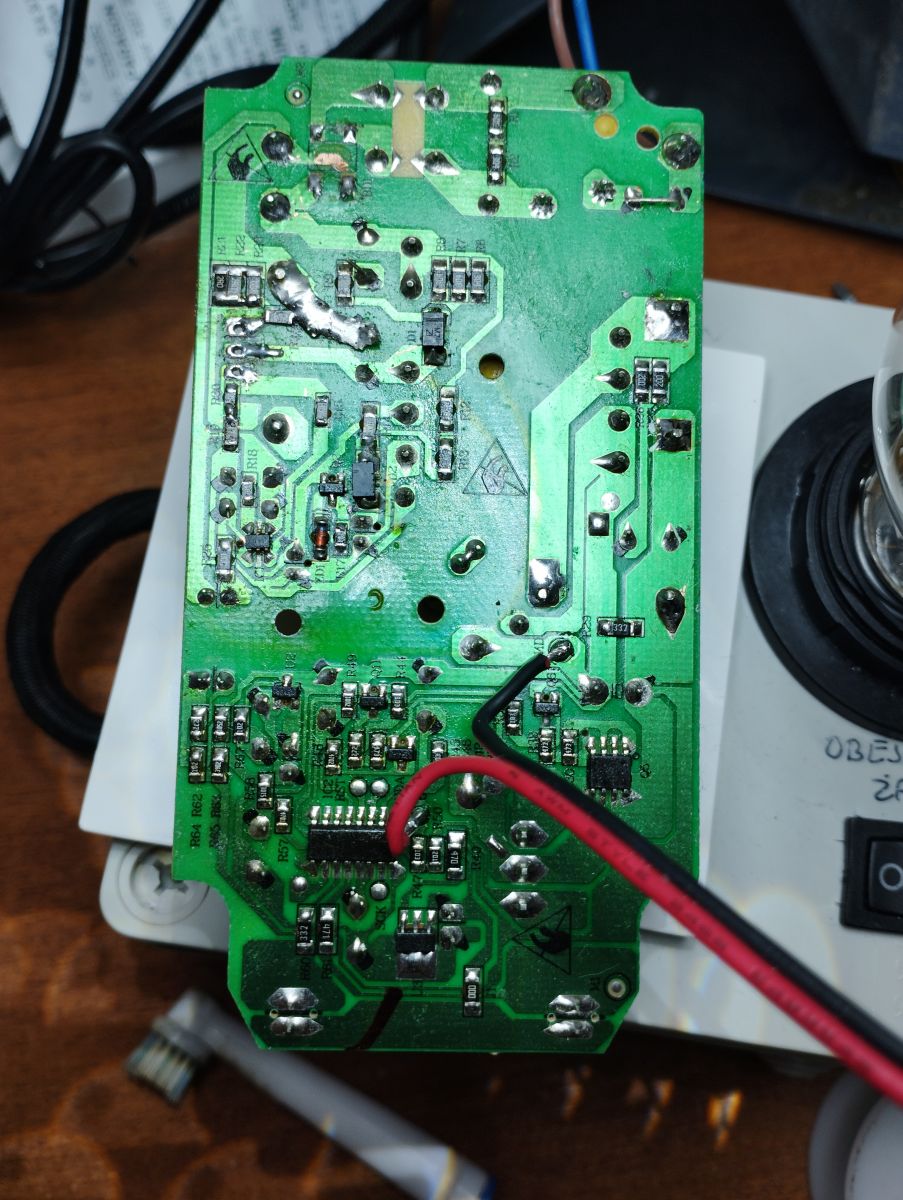
    Hi! My Parkside charger does not work anymore, the LEDs do not turn on at all and it does not charge. It would be nice if I could repair it myself. Could someone help me do this? I attach some photos with the charger. Any advice/instructions is welcome! Thanks!

    DIY Parkside Charger Repair: Fixing PLG 20 A1 with LED Issues & Photos Included (90 chars)
    DIY Parkside Charger Repair: Fixing PLG 20 A1 with LED Issues & Photos Included (90 chars)
    DIY Parkside Charger Repair: Fixing PLG 20 A1 with LED Issues & Photos Included (90 chars)
    DIY Parkside Charger Repair: Fixing PLG 20 A1 with LED Issues & Photos Included (90 chars)
    DIY Parkside Charger Repair: Fixing PLG 20 A1 with LED Issues & Photos Included (90 chars)
  • ADVERTISEMENT
  • #2 20468370
    E8600
    Level 41  
    Posts: 8853
    Help: 525
    Rate: 2473
    Board Language: polish
    Start by checking if the fuse F1 3.15 A is not blown (multimeter set to a continuity tester, of course, measurement with the charger disconnected).
  • #3 20473976
    techtrendstudio
    Level 2  
    Posts: 2
    Rate: 3
    E8600 wrote:
    Start by checking if the fuse F1 3.15 A is not blown (multimeter set to a continuity tester, of course, measurement with the charger disconnected).


    Thank you for your reply! I checked the fuse and it has continuity, so it's not that... Any other suggestion?
  • #4 20481403
    E8600
    Level 41  
    Posts: 8853
    Help: 525
    Rate: 2473
    Board Language: polish
    Next, check the main control transistor on the heat sink and the optocoupler. It is also worth looking at the solder pads to see if there are any cold solders anywhere.
  • #5 20641437
    catalinglinta5
    Level 1  
    Posts: 1
    Rate: 3

    I have the same problem, with the same model. Did you manage to fix it?
  • #6 20641500
    sigwa18
    Level 43  
    Posts: 11664
    Help: 1166
    Rate: 3257
    Board Language: polish

    Then it would be time for live measurements (CAUTION). Is there 230V AC on the cable to the board? Is there about 300-350V across the capacitor (the largest one)?
  • ADVERTISEMENT
  • #7 20674007
    teejayek
    Level 1  
    Posts: 1

    I have the same issue, but I have found part signed Q3 is blown. Does anyone know the type, please? Damaged circuit board with a burnt component labeled Q3.

    Thank you in advance.
  • #8 20864165
    Matbar1132021
    Level 2  
    Posts: 2
    Rate: 7
    Board Language: polish
    NCE4953
    1XKD5
  • #9 20976118
    piona5
    Level 10  
    Posts: 104
    Rate: 11
    Board Language: polish

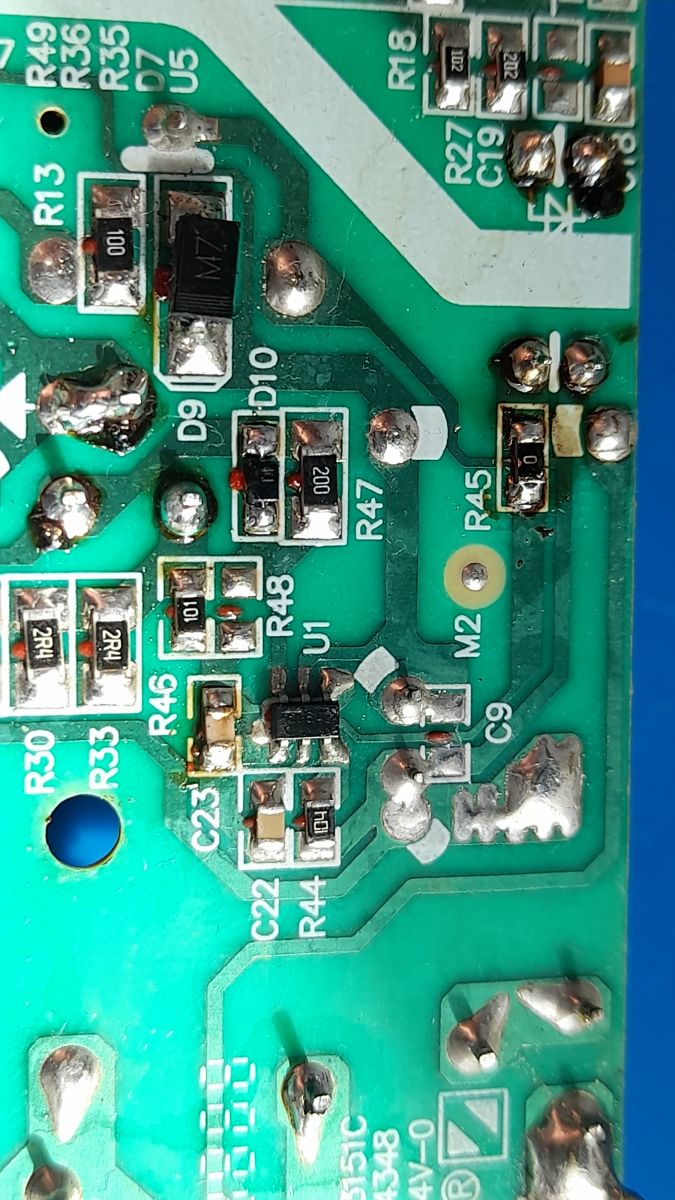
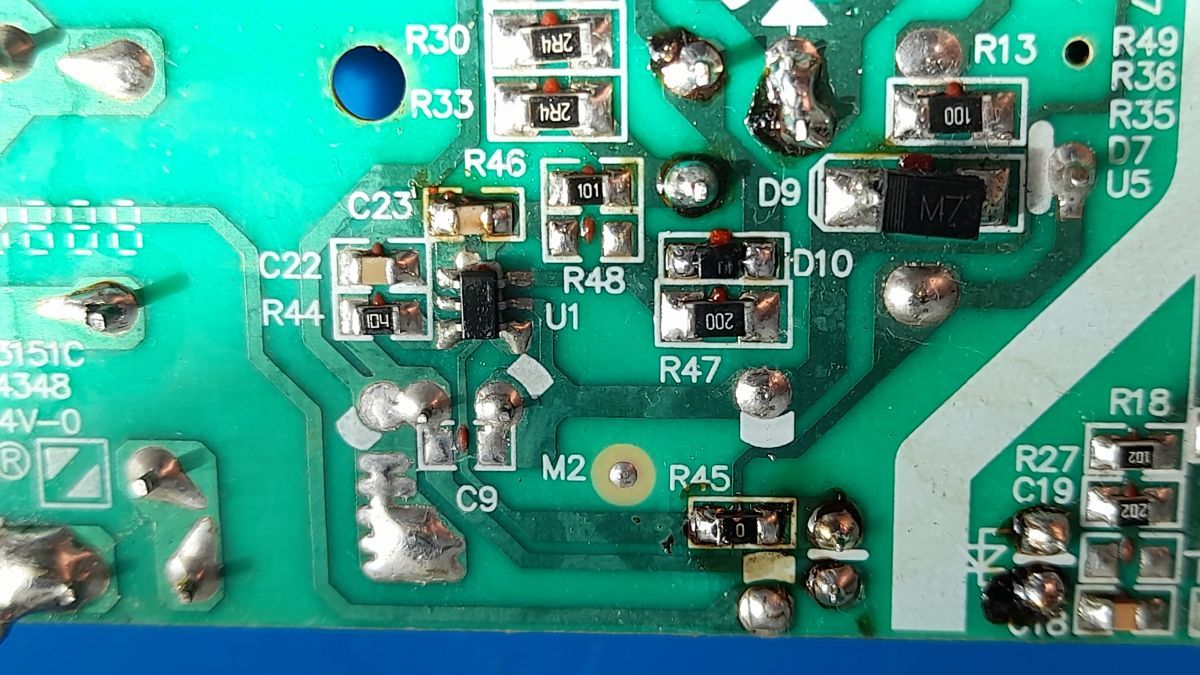
    I`ll approach you and ask for identification. Probably converters, (signed as 30642). In my case and in your case it is in a SOT23 housing with 6 legs. For me it`s signed on the laminate as U1, and for you as IC1. After desoldering the C23 capacitor on pins 1 and 4, I still have a short circuit. The SR4N60 transistor is functional, the SCHOTTKY 200V 5A SB5200 diode was replaced because it was short-circuited. The optocoupler is operational.
    Close-up of a circuit board with electronic components, including diodes, resistors, and an SOT23 six-pin integrated circuit labeled U1.
  • #10 21026956
    sebcio1991
    Level 11  
    Posts: 19
    Rate: 3
    Board Language: polish

    Hello, I will add to the topic whether anyone has managed to decipher the converter as ic1/u1?
    I have two chargers that need to be repaired and the system has the symbol Q2RF, I can't decipher what type of system it is. Maybe someone can help?
  • ADVERTISEMENT
  • #11 21027120
    piona5
    Level 10  
    Posts: 104
    Rate: 11
    Board Language: polish

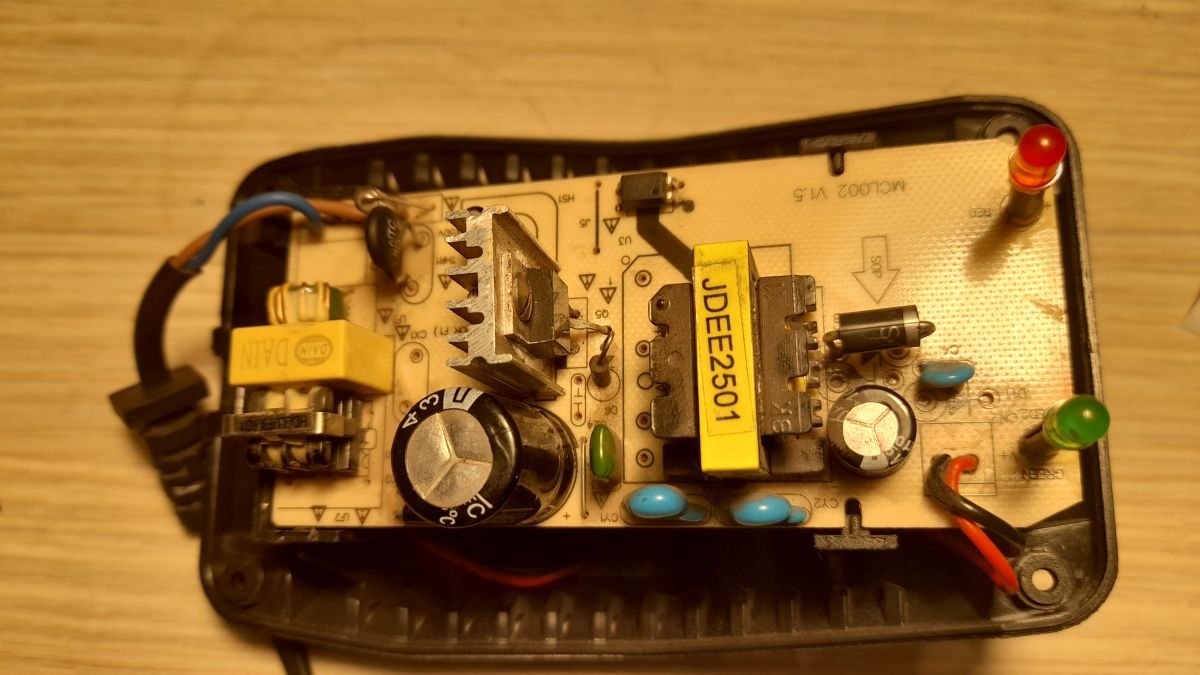
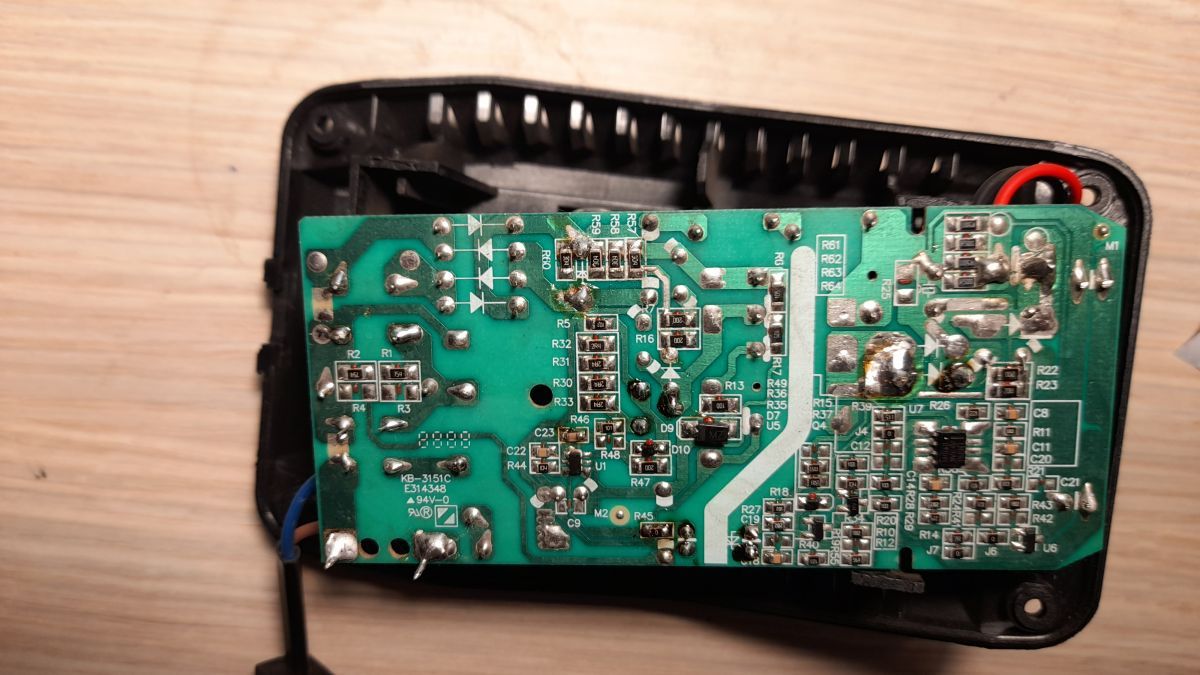
    After reading several topics on the electrode, I bought the SG6859ATZ chip from a Chinese guy, which turned out to be a replacement and the charger works. It seems that this system is a replacement for my AAJ system, my system with the number 30642 in SOT23-6 and probably many Parkside chargers. Also install SG6859ATZ :) unless you are from the Rzeszów area, I will provide you with art for free. I installed this system in the Vander VWA718 charger. - I noticed that most of these simple ones are made similarly...

    Close-up of a charger interior showing electronic components, including a JDEE2501 chip. Circuit board with electronic components of a charger. Close-up of a circuit board with various electronic components such as resistors and capacitors.
  • #12 21048208
    sebcio1991
    Level 11  
    Posts: 19
    Rate: 3
    Board Language: polish
    Thank you for your reply. According to your advice, I have purchased (still with us) this circuit. But it continues to torment me and keeps me up at night. After replacing the mosfet with a replacement 2SK1117, (isolated from the heatsink), the driver also went on swap, I also replaced the standard burnt 2 ohm resistors around the mosfet. No other low values in the measurements I noticed, (I have a second charger to check), the diodes at the transformer are working, the Schottky diodes and the whole secondary side is working. I don't know where to look next, and firing this set of components even through a light bulb will happen. Maybe someone can give me a hint to at least fix for knowledge and experience 😃

    The board after soldering the burnt components.
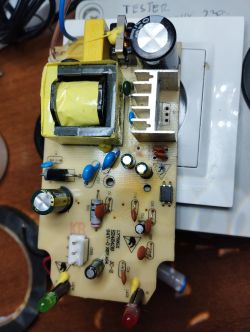
    Circuit board with various components like capacitors, resistors, and a transformer. Green circuit board with removed components, shown up close.


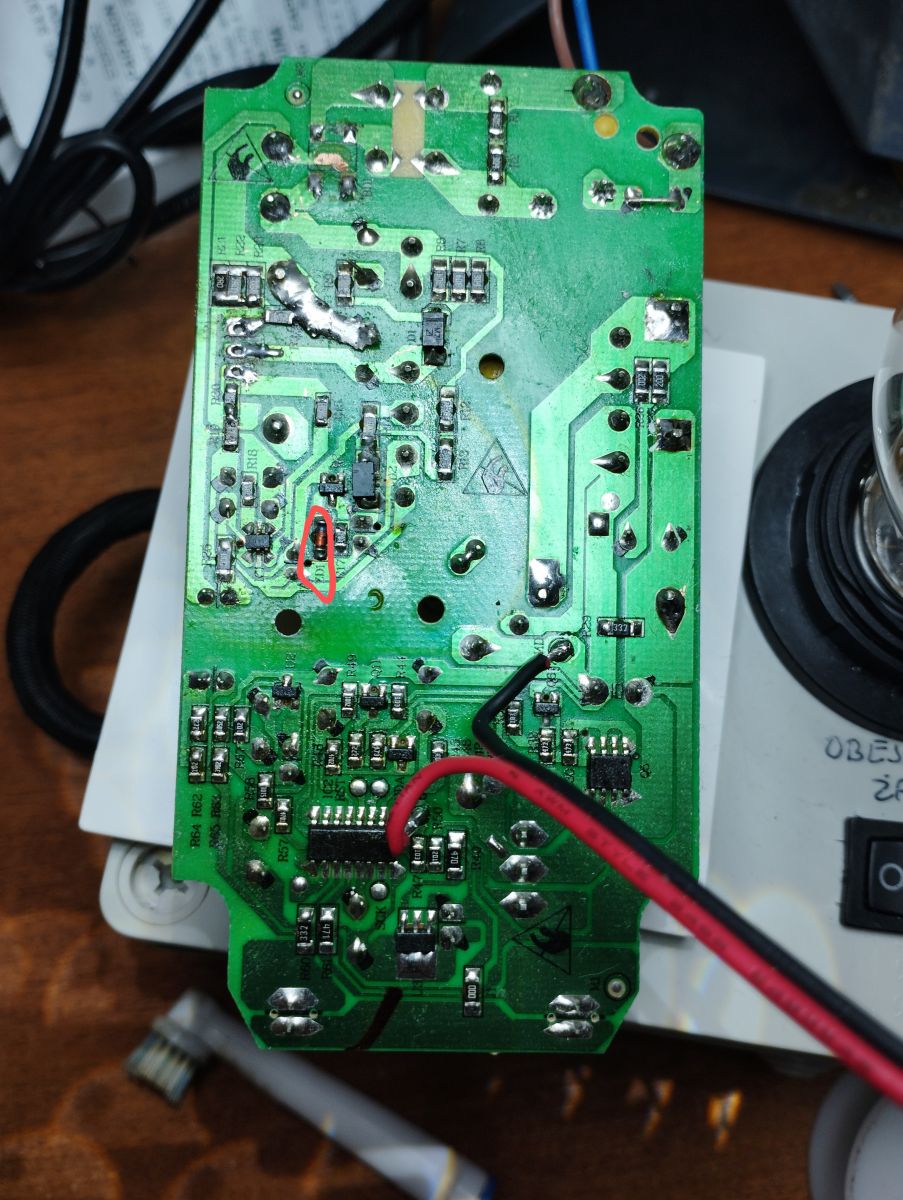
    Hello, I managed to get one working. However, I have a question for you guys on how many volts is that marked zener diode. Maybe someone could open their charger and take a look at this element😀.
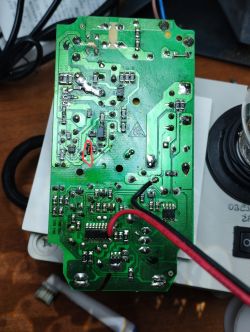
    Green printed circuit board with a highlighted diode. .
    Attachments:
    • DIY Parkside Charger Repair: Fixing PLG 20 A1 with LED Issues & Photos Included (90 chars) IMG_20240417_000507~2.jpg (2.72 MB) You must be logged in to download this attachment.
  • #13 21078337
    oggy17
    Level 11  
    Posts: 4
    Board Language: polish

    sebcio1991 wrote:
    How many volts is that marked Zener diode.

    There is no marking on the charger in front of me. I have measured the voltage on it and it is 14.8V. I came across the thread precisely because I also have one to fix. I have replaced the MOSFET transistor Q5 and have yet to replace D4.
    .
  • #14 21133771
    sylwekbil123
    Level 1  
    Posts: 1
    Board Language: polish
    See first fuse BR1
  • ADVERTISEMENT
  • #15 21202094
    grooven
    Level 11  
    Posts: 7
    Rate: 6
    Board Language: polish
    Hello, I have this problem with this Parkside PLG 20 A1 charger, namely the red LED does not go off when charged and the green LED does not come on. I don't know if it is charging at all. Please help.
  • #16 21604645
    plichta
    Level 17  
    Posts: 503
    Help: 23
    Rate: 66
    Board Language: polish
    DIY Parkside Charger Repair: Fixing PLG 20 A1 with LED Issues & Photos Included (90 chars) .

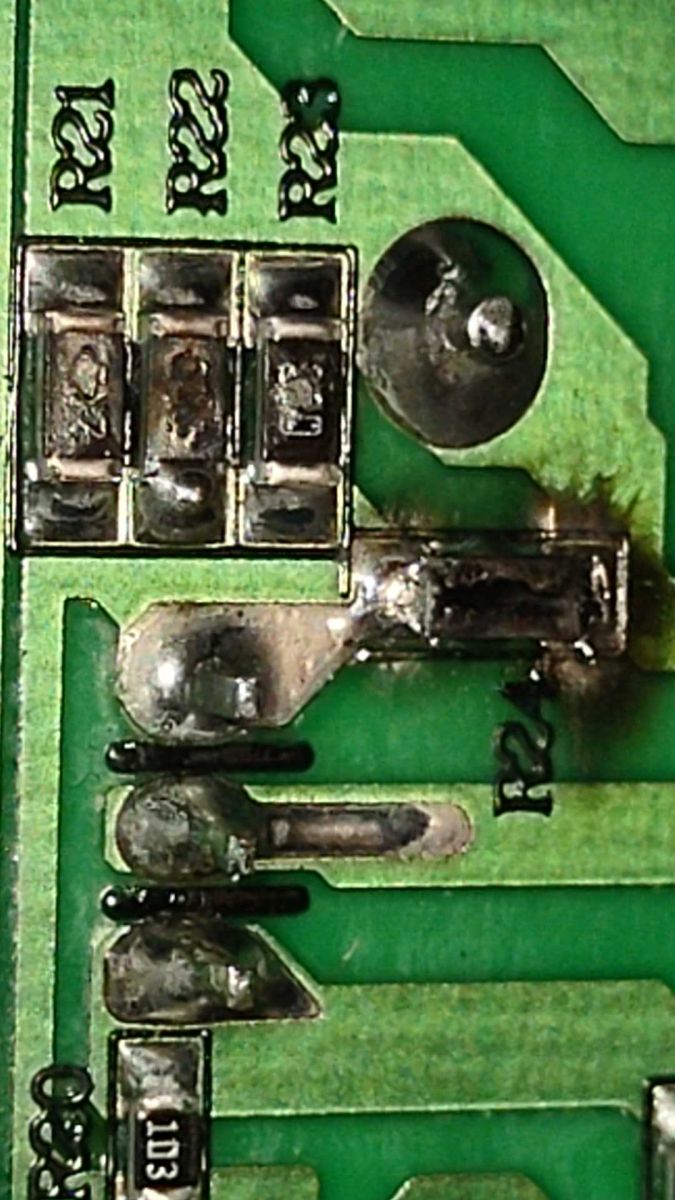
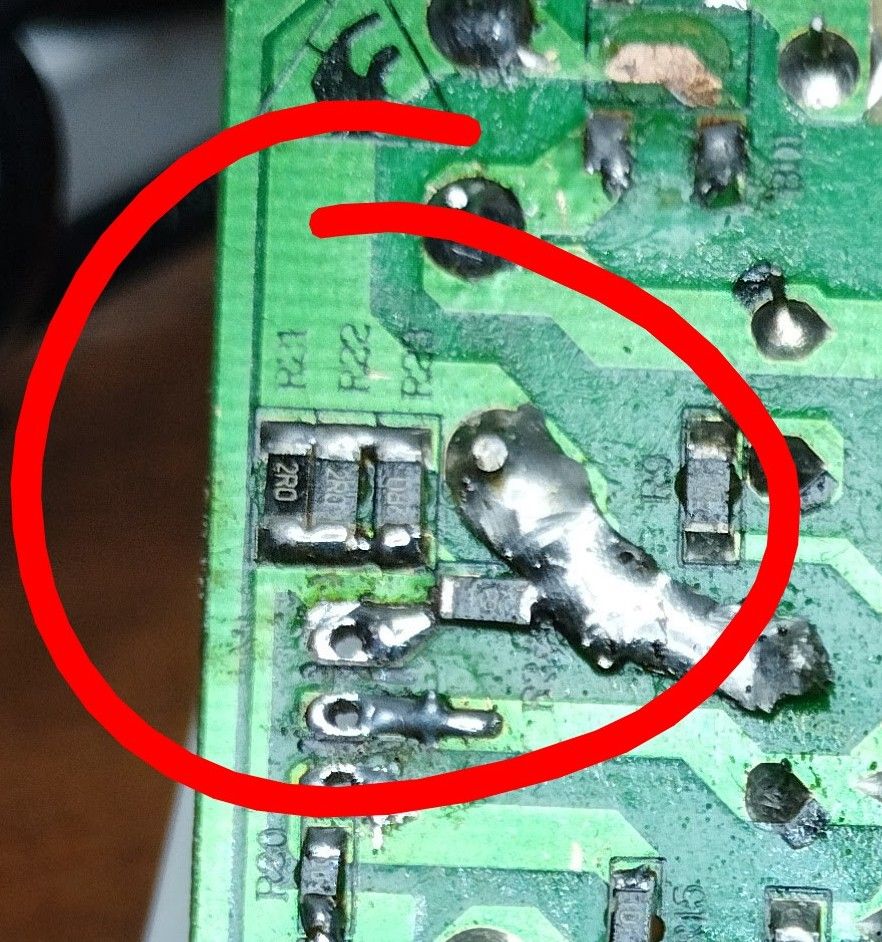
    Just now while charging the battery it banged, after taking apart burnt components as shown in the picture.Please identify.
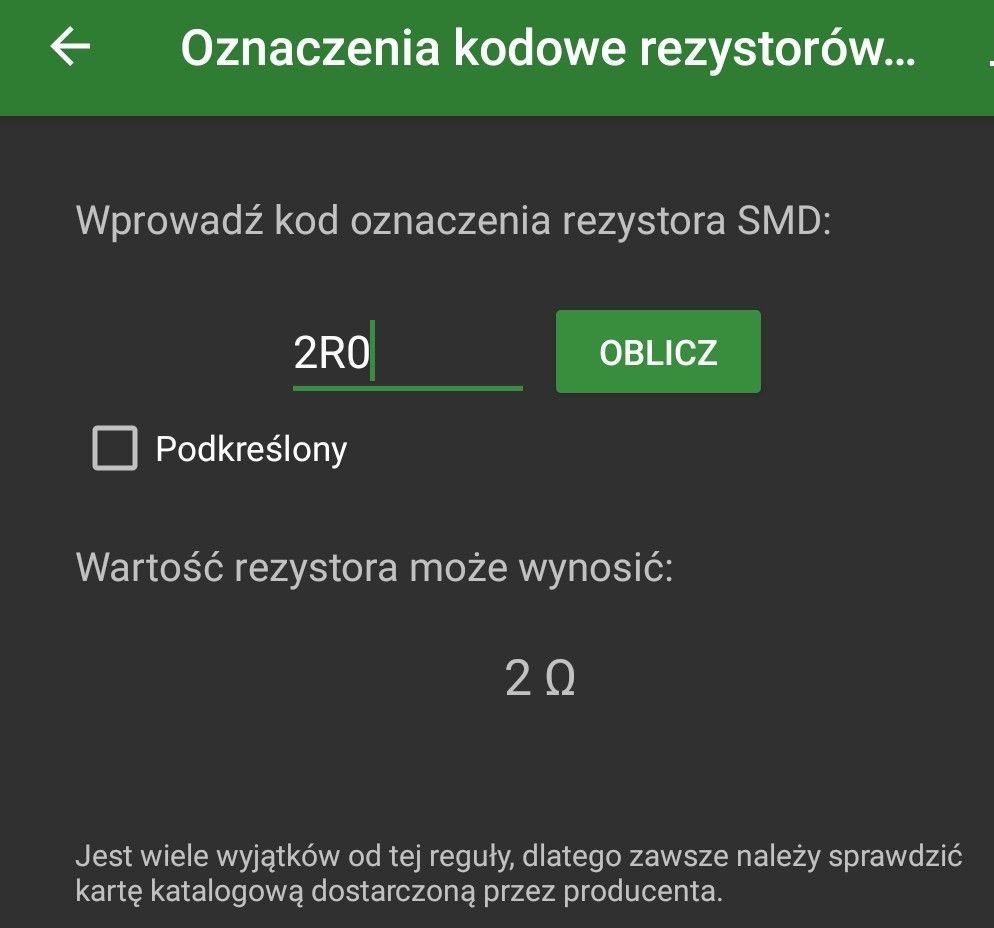
    From what I see in earlier posts, R21,R22,R23 are each 2ohms but I don't see the value of R24.
  • #17 21703795
    banesacom
    Level 1  
    Posts: 1
    >>21604645 From R21 to R24 number on resistor is 290. Means 29Ω. I can't even find that value so I'm in a dilemma whether to put 27 or 33 Ω
  • #18 21705766
    plichta
    Level 17  
    Posts: 503
    Help: 23
    Rate: 66
    Board Language: polish
    App screen showing SMD code “2R0” and calculated resistor value of 2 Ω Close-up of damaged PCB with resistor labeled 2R0 highlighted in red circle In the photos in the posts above I can see the writing on the R21 2R0.
  • #19 21887097
    SchedulerTweaker
    Level 1  
    Posts: 1
    Board Language: german
    Good morning, my PLG20c1 charger is not working.... I have opened it and I don't see the fuse. Where is it located here in the pictures?

Topic summary

✨ The discussion revolves around troubleshooting a malfunctioning Parkside PLG 20 A1 charger, which exhibits no LED activity and fails to charge. Initial suggestions include checking the fuse (F1 3.15 A) for continuity, inspecting the main control transistor and optocoupler, and examining solder joints for cold soldering. Users share experiences of similar issues, with some identifying blown components like Q3 and discussing replacements such as the SG6859ATZ chip. Others report successful repairs after replacing various components, including MOSFETs and diodes, while seeking further advice on persistent problems. The conversation emphasizes the importance of careful measurements and component identification in DIY repairs.
Generated by the language model.

FAQ

TL;DR: Troubleshooting a dead Parkside PLG 20 A1? Expect 300–350 V on the bulk cap; "Is there about 300–350 V across the capacitor?" Use live checks, then inspect F1, SR4N60, optocoupler, and U1/IC1. [Elektroda, sigwa18, post #20641500]

Why it matters: For DIY owners of Parkside PLG 20 A1 chargers, this guide targets no-LED/no-charge faults and safe checks.

Quick Facts

How do I do first live checks on a dead PLG 20 A1?

Use caution and take these measurements. 1. Confirm 230 VAC reaches the board input. 2. Measure around 300–350 VDC across the largest primary capacitor. 3. If missing, trace the input path and rectifier before the switcher. “Time for live measurements (CAUTION).” Expect 300–350 V on the bulk capacitor. [Elektroda, sigwa18, post #20641500]

Where is the fuse and how do I test it?

Locate F1 3.15 A on the primary side. Unplug the charger before testing. Set your multimeter to continuity and probe across F1. Replace if open. As one expert notes, take the “measurement with the charger disconnected.” [Elektroda, E8600, post #20468370]

LEDs still off but the fuse is fine—what next?

Check the main control transistor on the heatsink and the optocoupler. Inspect solder pads for cold joints and reflow suspect joints. Cold joints can mimic a dead supply and block startup. Focus on heat‑stressed parts and connectors. [Elektroda, E8600, post #20481403]

What is Q3 on the PLG 20 A1 board?

Q3 is identified as NCE4953, package code 1XKD5. Replace like‑for‑like and verify pinout and orientation. Clean pads before soldering. Test for shorts after installation. [Elektroda, Matbar1132021, post #20864165]

Which tiny 6‑pin controller is U1/IC1 (code 30642/AAJ), and what replacement works?

A user revived the charger by installing SG6859ATZ for the SOT23‑6 controller marked 30642/AAJ. The same chip also worked in a Vander VWA718 charger. “Also install SG6859ATZ :)” Confirm pinout and feedback connections. [Elektroda, piona5, post #21027120]

What output Schottky diode does this charger use?

One repair used an SB5200 on the secondary side, rated 200 V and 5 A. Test it for shorts out of circuit. Replace if shorted before powering the unit. Verify polarity during installation. [Elektroda, piona5, post #20976118]

What zener voltage should I expect on the primary reference rail?

A working charger measured 14.8 V across that zener. The PCB lacked a printed value. Use 14.8 V as your reference for checks. Replace only after confirming surrounding parts. [Elektroda, oggy17, post #21078337]

My red LED never turns green—where should I look?

Check Q5 and D4 in the regulation and indication path. One repair replaced Q5 and targeted D4 next. Confirm the 14.8 V zener rail is stable. Regulation faults can lock the LED state. [Elektroda, oggy17, post #21078337]

What primary MOSFET is used, and how do I test it?

Reported boards use an SR4N60 as the primary switch. With power removed, test for drain‑source shorts. If shorted, replace it and confirm gate resistors and snubbers before power‑up. [Elektroda, piona5, post #20976118]

How can I spot a failed switcher IC electrically?

With the controller removed from load parts, check for internal pin shorts. A documented case showed pins 1 and 4 shorted even after lifting C23. That indicated a failed controller IC. [Elektroda, piona5, post #20976118]

What values are R21, R22, R23, and R24?

Users reported R21, R22, and R23 as 2 Ω each. R24’s value was not identified in‑thread. Match from an identical charger or a clear photo of the same PCB revision. [Elektroda, plichta, post #21604645]

Should I check the bridge rectifier early in diagnostics?

Yes. If you lack bulk DC, verify the input cable, fuse path, and the bridge rectifier block BR1 first. A contributor explicitly advised checking BR1 early. [Elektroda, sylwekbil123, post #21133771]

Is a series light‑bulb limiter useful for first power‑up?

Yes. One repairer powered the board through a bulb limiter during diagnostics. It helps limit fault current after part swaps. Use proper insulation and safe probing technique when testing. [Elektroda, sebcio1991, post #21048208]

Any confirmed success cases from this model in the thread?

Yes. Replacing the 6‑pin controller with SG6859ATZ restored a non‑starting charger. That report has guided similar fixes on comparable boards. [Elektroda, piona5, post #21027120]
Generated by the language model.
ADVERTISEMENT