



logo elektroda
logo elektroda
X
logo elektroda

PCBWay Introduces Glow-in-the-Dark PCB at Embedded World 2025

(Sponsored) magic9 4515 9

TL;DR

  • PCBWay has introduced a glow-in-the-dark PCB with a special solder mask that emits light after exposure to light.
  • The phosphorescent layer adds aesthetic value and improves visibility in dimly lit areas, while designers can tune colour and light intensity.
  • PCBWay will exhibit it at Embedded World 2025 in Nuremberg, Germany, from 11 to 13 March 2025.
  • The solder mask is designed to survive standard manufacturing processes and keep its luminescent properties for a long time.
Generated by the language model.
ADVERTISEMENT
This content has been translated flag-pl » flag-en View the original version here
📢 Listen (AI):
  • PCBWay Presents Glow-in-the-Dark PCBs at Embedded World 2025
    .

    Major Information .
    - PCBWay is introducing a glow-in-the-dark PCB with a special solder mask that emits light in low-light conditions when charged with light.
    - The product will be exhibited at Embedded World 2025 in Nuremberg, Germany, from 11 to 13 March 2025, at stand 3A-523.
    - Customisation options include colour and light intensity, giving designers flexibility.

    Introduction .
    PCBWay, a leading provider of PCB prototyping and manufacturing services, has introduced an innovative dark glow-in-the-dark PCB . The product has a special descriptive layer that gently glows in the dark, providing both aesthetic value and practical functionality. It will be on display at the upcoming Embedded World 2025 trade show.
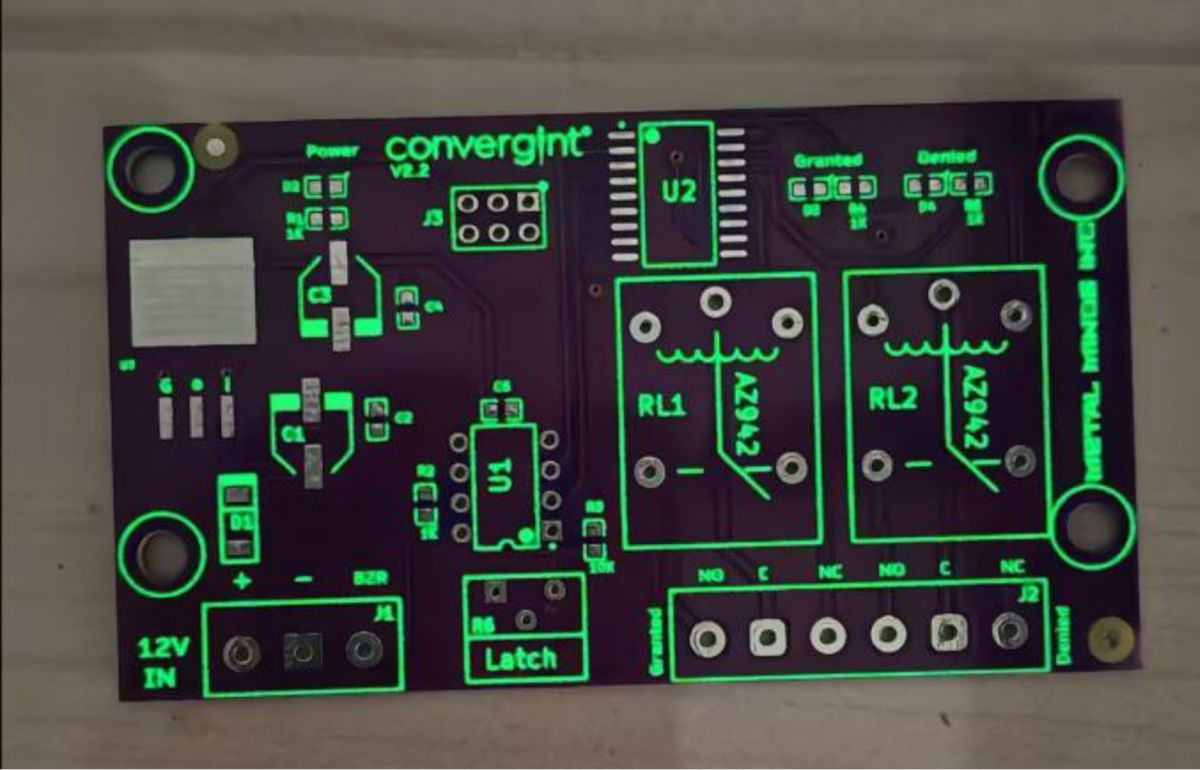
    Printed circuit board with electronic component markings and mounting holes.
    .

    Product details .
    The glow-in-the-dark PCB uses a unique descriptive layer with phosphorescent properties, emitting light when charged with light. This feature is not only visually appealing, but improves visibility in dimly lit areas. Designers can adjust the colour and intensity of the light to suit the specific needs of the project. The solder mask is durable and designed to withstand standard manufacturing processes, retaining the ability to glow for a long time.

    Event Information .
    Visitors can see the glow-in-the-dark PCB at Embedded World 2025, taking place from 11 to 13 March 2025 in Nuremberg. PCBWay will be present at stand 3A-532 , offering direct contact with this product.
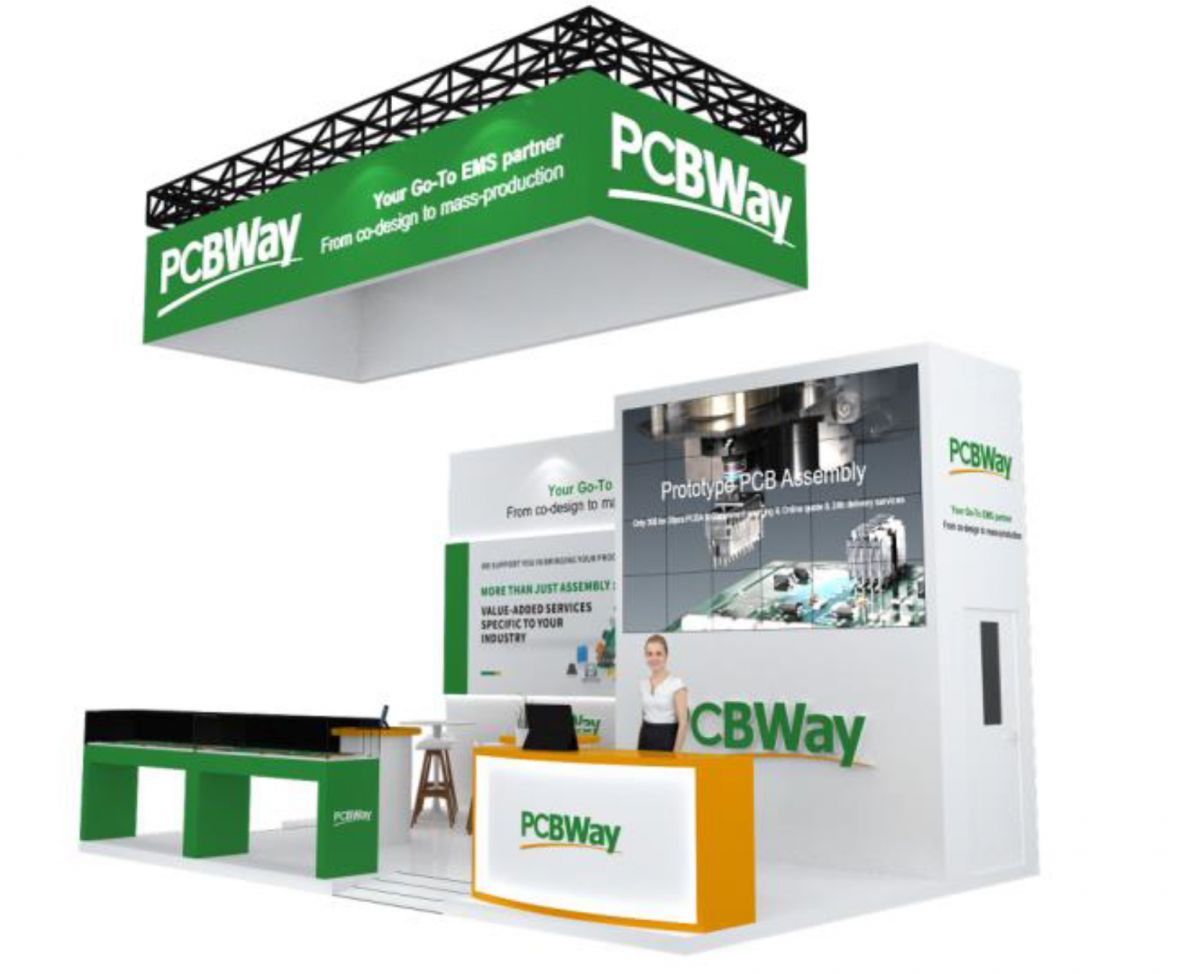
    PCBWay exhibition booth with large logo and promotional materials.
    .

    Surprising Personalisation .
    A surprising feature is the ability to personalise both the colour and intensity of the light, which opens up new creative possibilities for designers, especially in consumer electronics and security applications.


    Features of a glow-in-the-dark PCB:
    - Visual attractiveness: Luminescent effect gives a futuristic look, enhancing the aesthetics of electronic devices..
    - Practical Functionality: Can be used to illuminate displays, indicators or user interface elements in dark environments.
    - Personalisation: Selectable colour and illumination intensity, offering flexibility to match project requirements.
    - Permanence: The solder mask is resistant to standard PCB manufacturing processes, retaining its luminescent properties for a long time.


    [Advertising partnership with PCBWAY.COM Limited].

    Cool? Ranking DIY

    About Author
    magic9
    Editor
    Offline 
    magic9 wrote 1227 posts with rating 506, helped 18 times. Live in city Kielce. Been with us since 2010 year.
  • ADVERTISEMENT
  • #2 21453624
    gulson
    System Administrator
    For such a board, it's already a transparent casing so that everything can be seen nicely. I wonder if there will be a fashion so that you can see all the electronics inside. PCs already have transparent Plexiglas enclosures with nice backlighting inside.
  • ADVERTISEMENT
  • #3 21455456
    pikarel
    Level 39  
    As a practitioner and pragmatist, I conclude: the designer at PCBWay invented a non-existent problem out of boredom, which he then 'sweatily' solved.
    Well, fashion and gadgetry have their laws and nothing will change that, so there will certainly be orders for glowing PCBs. Such lovely, glowing ones. An artist-artist calls such works joyful creativity :) .
    I look forward to the presentation of such projects here. Seriously.

    We had an alarm clock at home manufactured by the USSR, having luminous hands.
    Now I have a contemporary Casio Lineage Solar watch, which also has phosphorescent hands and hour positions.
    In my opinion, this is the most practical application of the effect.
    Religious objects in the form of glow-in-the-dark crosses, rosaries, figurines of saints - also have a huge number of users.
  • #4 21455563
    Belialek
    Level 22  
    gulson wrote:
    For such a board, it's already a transparent enclosure so that everything can be seen nicely. I wonder if there will be a fashion to be able to see all the electronics inside. PCs already have transparent Plexiglas enclosures with nice backlighting inside.


    Such a fashion has been going on since the 1990s :) The Gameboy Pocket had a variant of the case made of transparent plastic (Clear Edition), I myself also had a first generation Xbox in the Crystal Edition version, where both the console and the pads were made of transparent (slightly "milky" plastic). Until now, electronics (especially gaming electronics) are very often available in such transparent variants.
  • ADVERTISEMENT
  • #5 21457699
    MadPan
    Level 17  
    It will be easier to solder in the dark ;) .
  • #6 21459661
    VPSA132
    Level 26  
    pikarel wrote:
    from boredom invent a non-existent problem which you then "sweatily" solved.
    .
    I fully agree with this :D .
    Referring to this as an "innovative tile" is rather an exaggeration. It's just an interesting idea to use luminous paint in a place where no one has used it before.
  • ADVERTISEMENT
  • #7 21466706
    szeryf3
    Level 30  
    A very innovative idea. Whether it will work, time will tell
    A man builds a device. Later he builds it and in order to show off his innovative tile to his friends he will remove the casing.
    This is the rantings of a grumpy old tetter, but I wish the company all the best with the development of these tiles. Please show off your stand at EL after 13 March as I am curious about the other colours myself.
  • #8 21468599
    tesla97
    Level 20  
    Is this an attempt at some sort of answer to the coloured soldermask from JLC? I personally probably prefer theirs as they have better prices, but I understand that PCBWay have taken out advertising here.
  • #9 21468887
    szeryf3
    Level 30  
    But I don't see glowing ones in their range.
  • #10 21471917
    sundayman
    Level 26  
    Quote:
    Will it work out then time will tell


    It has already shown - it will not work. Luminescent printing is not an invention of the last decade. A personalised engraving on the screws to the connecting rod ( as long as there are screws there... ) would make just as much sense.

    Well, but the function has been fulfilled, because it is being talked about. And that was probably the point.
    Because what can be invented new in PCB production ?
    Gold plating is already there, so is engraving, so are different colours.... Not much attractions can be added to beat the competition :) .

    Quote:
    Alarm clock of USSR manufacture, having luminous hands
    .

    But the best ones were those that had radium paint. Because they glowed decently all night ( and day ) and not just 2 hours after dark.
    As if they made a PCB with such a ( radium ) print it would even actually be worth a look <br/span>:) But I don't expect.
📢 Listen (AI):

FAQ

TL;DR: For the 3-day Embedded World 2025 event, PCBWay showed a glow-in-the-dark PCB with a phosphorescent solder mask described as offering "practical functionality." This FAQ helps electronics designers and buyers understand how the board glows, where it was announced in Nuremberg, and why forum reactions split between useful low-light visibility and pure marketing novelty. [#21453595]

Why it matters: PCB makers already offer gold finish, engraving, and colored solder masks, so any new visual feature must justify itself with either real usability or clear premium appeal.

Option Visual effect source Main purpose in the thread Forum takeaway
PCBWay glow-in-the-dark PCB Phosphorescent solder mask charged by light Visibility in low light and visual novelty Distinctive, but disputed practical value
Standard internal LED lighting Active backlighting inside clear enclosures Make internal electronics easy to see Seen as the more familiar display solution
Colored solder mask from competitors Static board color Cosmetic differentiation and pricing competition Cheaper-looking alternative, but not luminous

Key insight: The thread agrees the product is visually different. The disagreement is whether that difference solves a real design problem or mainly creates a memorable talking point.

Quick Facts

  • PCBWay announced the glow-in-the-dark PCB for Embedded World 2025 in Nuremberg, scheduled for 11-13 March 2025, which makes the launch window a fixed 3-day trade-show appearance. [#21453595]
  • The board uses a phosphorescent solder mask that emits light after being charged by light, and PCBWay says designers can tune both color and light intensity for a project. [#21453595]
  • The post claims the luminescent layer survives standard PCB manufacturing processes and keeps its glow capability for a long time, but it gives no measured duration in minutes or hours. [#21453595]
  • The announced booth number is inconsistent inside the same thread: the summary says 3A-523, while the event section says 3A-532, so visitors should verify the stand before travel. [#21453595]
  • Forum sentiment split quickly: some users saw a marketing gimmick, while others compared it with the long-running popularity of transparent consumer electronics cases dating back to the 1990s. [#21455563]

1. What is a glow-in-the-dark PCB, and how does PCBWay's phosphorescent solder mask actually work?

A glow-in-the-dark PCB is a printed circuit board with a solder mask that emits light after prior illumination. PCBWay describes it as a special phosphorescent layer that charges under light, then glows in low-light conditions while still passing normal PCB processing. "Phosphorescent solder mask" is a PCB surface coating that protects copper, adds board color, and here stores light energy so the board itself stays visible after the light source is removed. [#21453595]

2. What is phosphorescence in PCB materials, and how is it different from regular reflective or backlit effects?

Phosphorescence in this PCB means the board surface glows after exposure to light, instead of only reflecting ambient light or using powered LEDs. The thread contrasts this passive glow with the already common approach of clear cases plus internal backlighting in PCs and gaming hardware. "Phosphorescence" is a light-emission property that stores energy from prior illumination, then releases it slowly, so a PCB surface stays visible in low light without built-in LEDs or mirror-like reflection. [#21453624]

3. How do you charge a glow-in-the-dark PCB with light so it stays visible in low-light conditions?

You charge it by exposing the phosphorescent solder mask to light before moving the device into a darker space. The thread gives a simple sequence: 1. Illuminate the board with normal light. 2. Remove or reduce the light. 3. Use the remaining glow for low-light visibility. The post does not specify a charging time in seconds or minutes, so buyers should not assume a guaranteed afterglow duration from this thread alone. [#21453595]

4. Where can visitors see PCBWay's glow-in-the-dark PCB at Embedded World 2025 in Nuremberg, and what was the announced booth number?

Visitors could see it at Embedded World 2025 in Nuremberg from 11 to 13 March 2025. The booth number was announced inconsistently in the same post: the summary lists 3A-523, but the event section lists 3A-532. The safest reading is that PCBWay planned a hall 3A stand, but the exact three-digit number needed confirmation before attendance. [#21453595]

5. How can designers customize the color and light intensity of a PCBWay glow-in-the-dark PCB for a specific project?

Designers can customize both the glow color and the light intensity. The post presents that flexibility as a project-level option, aimed at matching the board to a product's aesthetic or visibility needs. The thread does not list preset colors, numeric brightness levels, or ordering codes, so the customization claim is real but still high-level in the available information. [#21453595]

6. What practical uses do glow-in-the-dark PCBs have in consumer electronics, indicators, displays, or security applications?

The thread presents glow-in-the-dark PCBs as useful for displays, indicators, user-interface elements, and some security-oriented designs in dim environments. The practical benefit is passive visibility after light exposure, not active illumination. That makes the concept more relevant where you want a visible board feature without adding extra LED hardware, especially in decorative consumer electronics or low-light status marking. [#21453595]

7. Why are some forum users calling the glow-in-the-dark PCB a gimmick rather than a real innovation in PCB manufacturing?

Some users call it a gimmick because they see no new engineering problem being solved. One commenter said calling it innovative was exaggerated and described it instead as using luminous paint in a place where no one had used it before. That criticism focuses on function: the board looks different, but the thread does not show a new electrical capability, manufacturing breakthrough, or measured performance gain. [#21459661]

8. How useful are glow-in-the-dark PCBs inside transparent enclosures compared with standard internal LED lighting?

Glow-in-the-dark PCBs are less direct than standard internal LED lighting when the goal is to show off electronics inside a clear enclosure. A forum user immediately connected the idea with transparent cases and noted that PCs already use Plexiglas-style windows plus internal lighting for a stronger visual effect. In this thread, the glow board reads as a passive aesthetic layer, while LEDs remain the more familiar and controllable showcase method. [#21453624]

9. What products have used transparent cases before, and why do clear electronics housings remain popular in gaming hardware?

Transparent housings have appeared for decades, including the Game Boy Pocket Clear Edition and the first-generation Xbox Crystal Edition. A commenter placed that trend back in the 1990s and added that gaming electronics still often use transparent or translucent shells. They remain popular because they expose the internals, reinforce a tech-forward look, and pair well with decorative lighting. [#21455563]

10. PCBWay glow-in-the-dark PCB vs JLCPCB colored solder mask: what are the differences in appearance, purpose, and likely value?

PCBWay's version aims for a glow effect after light exposure, while colored solder mask mainly changes the board's static appearance. In the thread, one user compared PCBWay with JLC on price and preferred the competitor on cost, but another replied that the competitor did not offer glowing boards in its range. The practical split is simple: one option emphasizes luminosity and novelty, the other emphasizes ordinary color choice and likely lower cost. [#21468887]

11. What is a solder mask on a PCB, and how could making it luminescent affect manufacturing durability?

A solder mask is the board coating that covers and protects the PCB surface, and PCBWay says its luminescent version still withstands standard manufacturing processes. That claim matters because a decorative layer has little value if it fails during normal fabrication or assembly. The thread does not report temperature limits, abrasion testing, or chemical resistance numbers, so durability is stated qualitatively rather than with measured specs. [#21453595]

12. How long should a phosphorescent PCB keep glowing after exposure to light, and what factors shorten or improve the effect?

The thread does not give a measured glow time, so no exact afterglow duration can be claimed from this source alone. One commenter contrasted older luminous materials by saying some non-PCB items glowed only about 2 hours after dark, while radium-painted examples lasted much longer, but that was a historical comparison, not a PCBWay specification. Light exposure before use clearly helps; missing charge time data remains the main limitation. [#21471917]

13. What manufacturing or assembly limitations should be checked before ordering a custom glow-in-the-dark PCB from PCBWay?

Check the exact booth or sales information, the available customization options, and the missing performance specs before ordering. The thread leaves open several practical gaps: no stated color list, no brightness scale, no afterglow duration, and no numeric durability data. Assembly teams should also verify whether the decorative effect still matters once the board sits inside an opaque enclosure, because several commenters questioned its real use case. [#21455456]

14. How safe are luminous PCB coatings compared with older radium-based luminous paints mentioned in the discussion?

The thread treats PCBWay's coating and old radium paints as different categories, and it does not claim radium is used in the PCB. A commenter mentioned radium-painted clock hands only as a historical benchmark for stronger, longer glow. That means the discussion supports one safe conclusion: this PCB is described as phosphorescent, not radium-based, and no radioactive material is announced anywhere in the post. [#21471917]

15. What new visual or premium PCB features can manufacturers still add today when gold plating, engraving, and colored solder masks are already common?

Manufacturers can still add features that make boards more visible, more customizable, or more conversation-worthy, even when gold plating, engraving, and color options are already common. One skeptical commenter argued that competition leaves few attractions to add, which explains why a glow effect gets attention even if its utility is debated. In that sense, premium PCB features now compete as much on memorability and presentation as on raw fabrication novelty. [#21471917]
Generated by the language model.
ADVERTISEMENT