logo elektroda
logo elektroda
X
logo elektroda

Practical test of the Govee TV Backlight 3 Lite - simple and effective LED lighting for your TV

(Sponsored) p.kaczmarek2 2355 10
ADVERTISEMENT
This content has been translated flag-pl » flag-en View the original version here
📢 Listen (AI):
  • Practical test of the Govee TV Backlight 3 Lite - simple and effective LED lighting for your TV
    Are you looking for a simple to run but effective LED strip for TV mounting? I've got something for you - treat yourself to a report on the installation, setup, calibration and month of using the LED light Govee TV Backlight 3 Lite tested on a 42-inch TV.

    What you need to know to get started
    The LED lighting presented here helps to significantly enhance the home cinema experience - a coloured LED strip is mounted on the back of the TV and dynamically adjusts the colours to match what is being displayed on the screen. This is determined by a camera mounted on top of the TV, so the whole thing does not occupy HDMI slots or require compatibility with a particular signal type and resolution.
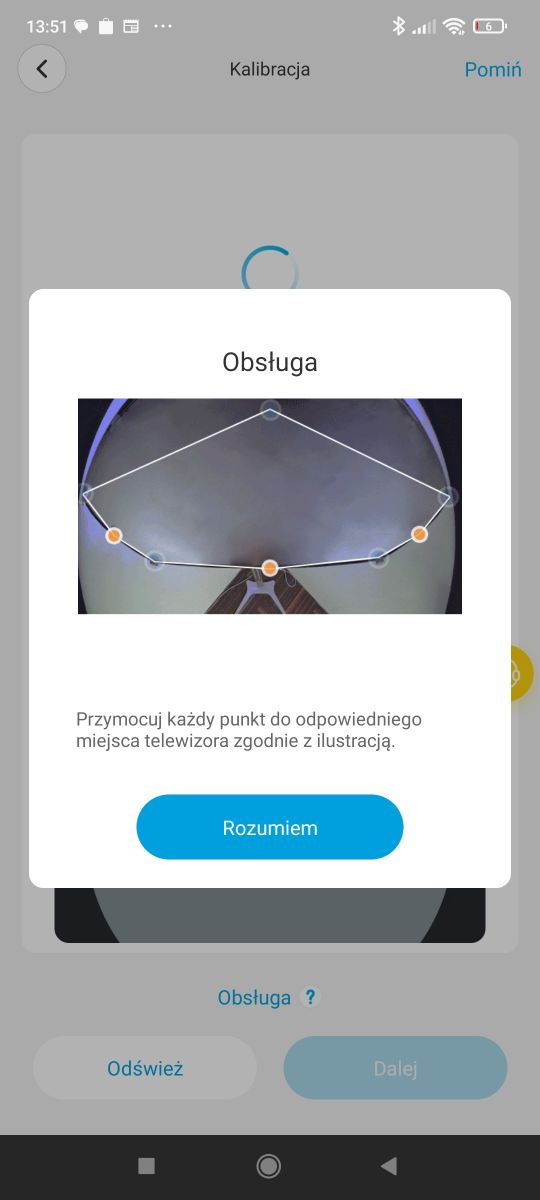
    How does the device know which LED is where? This is done by calibration - a very simple process, simply by first determining the orientation of the LEDs and then temporarily placing calibration dots on the screen.
    What else can the device show? First of all, we have remote control via an app, the ability to create your own effects, compatibility with Alexa voice control, Google Home, and the modern Matter protocol.
    In addition, the product shown here can work with other lights, further improving the effect.

    Set contents
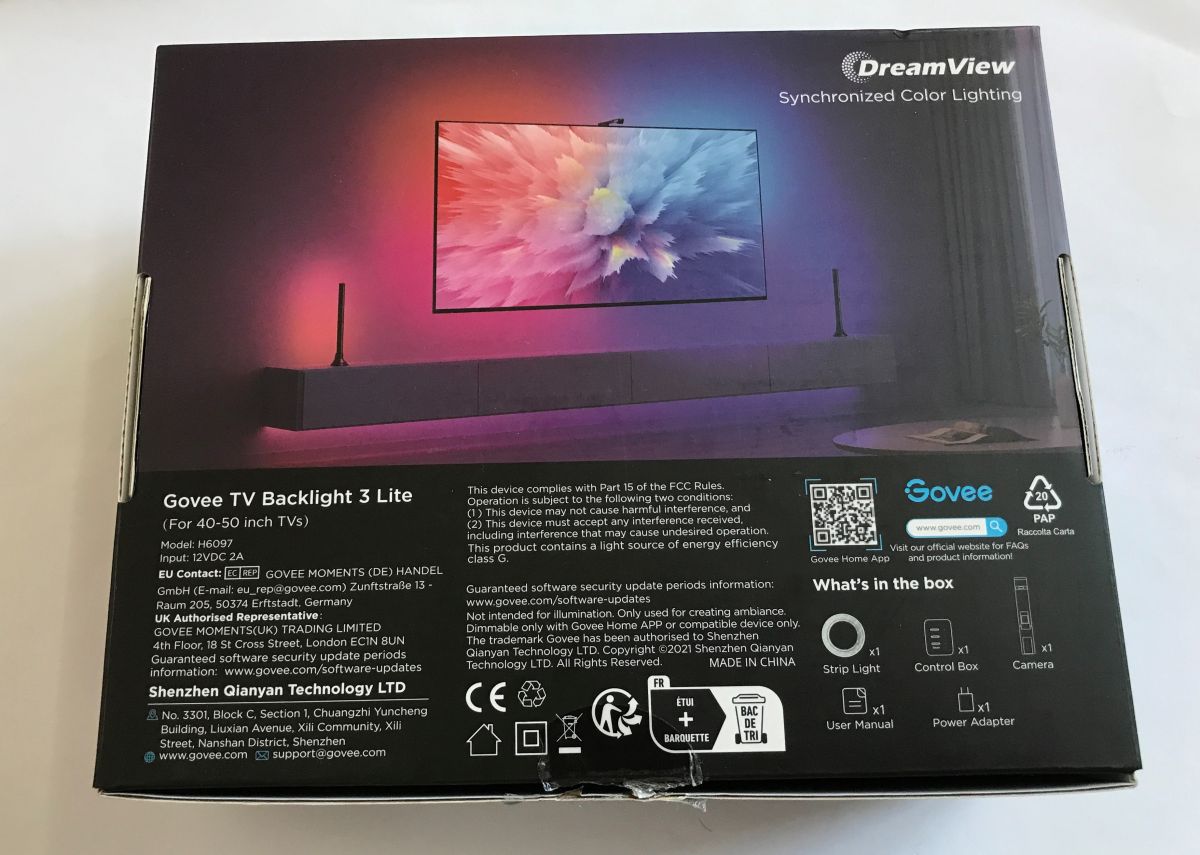
    In our case, we tested the set for a 40-50 inch TV, although there are separate sets on sale for larger TVs too. When purchasing, it is important to note which version you will need. They differ in the length of the LED strips.
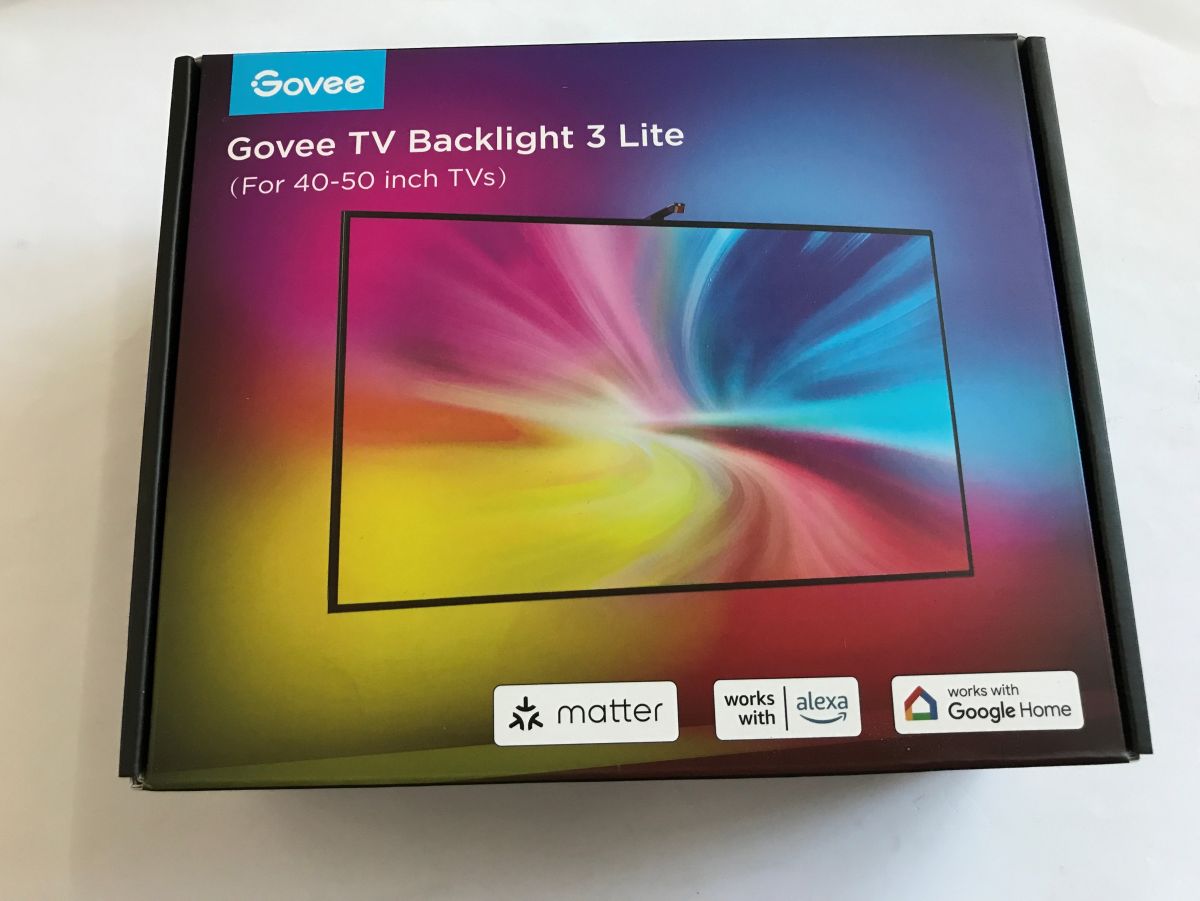
    Packaging of Govee TV Backlight 3 Lite for 40–50 inch TVs. .
    Govee TV Backlight 3 Lite box showing TV with dynamic LED lighting
    .

    In the kit we receive an LED strip (or more precisely four strips connected together, just in time for our TV), a 12V 2A power supply, a main controller with three buttons, a cable for connection, a camera (for examining the image), instructions and warranty card, isopropyl alcohol wipes (to clean the surface before installation), extra clips to grip the strip and orange calibration cubes.
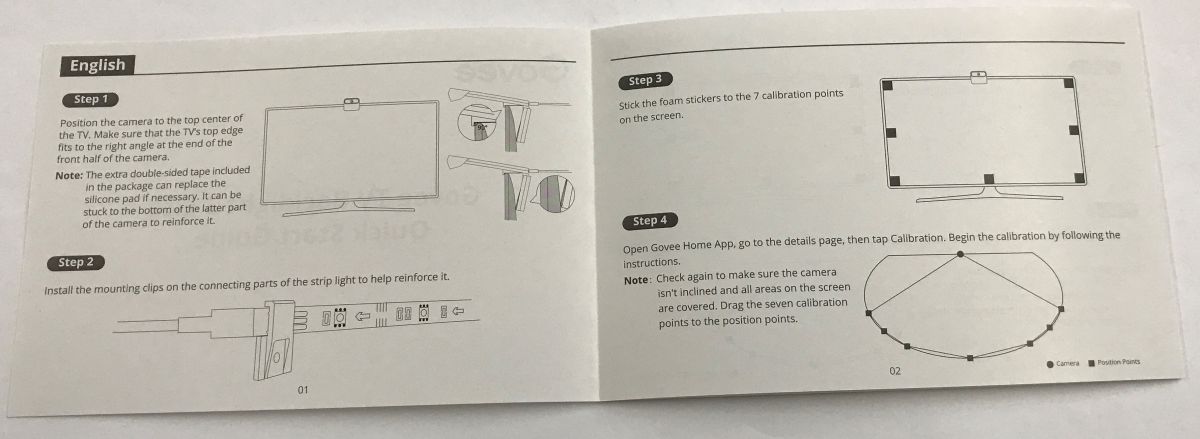
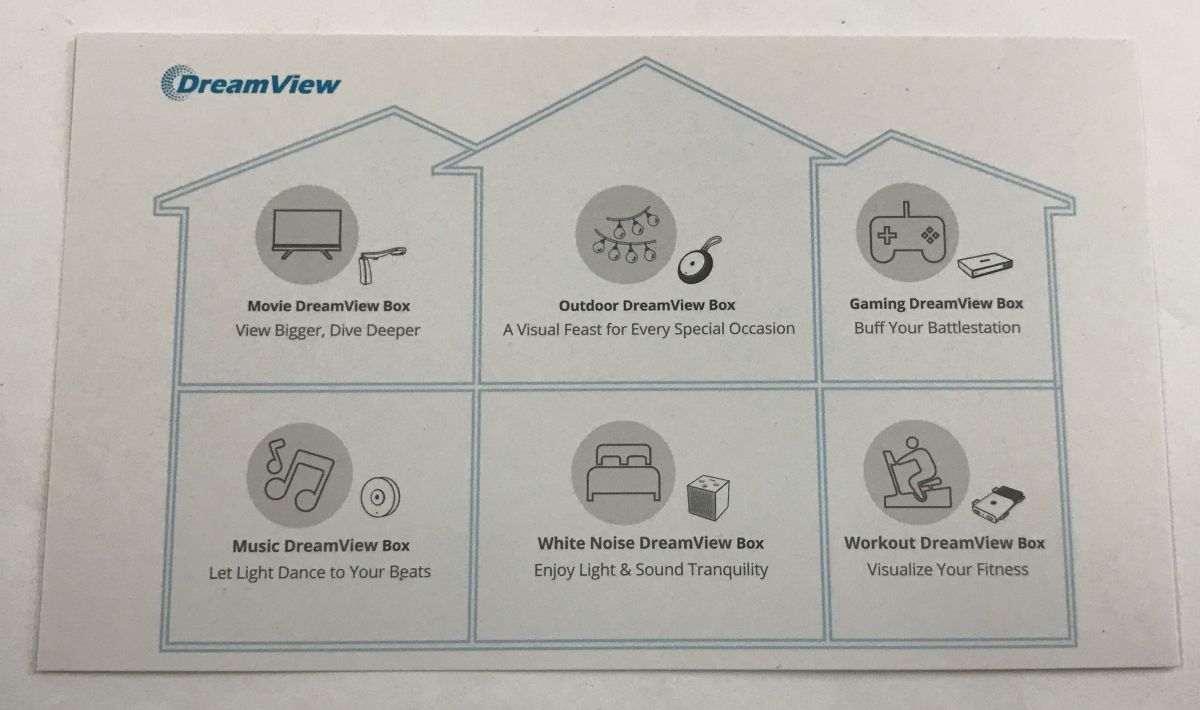
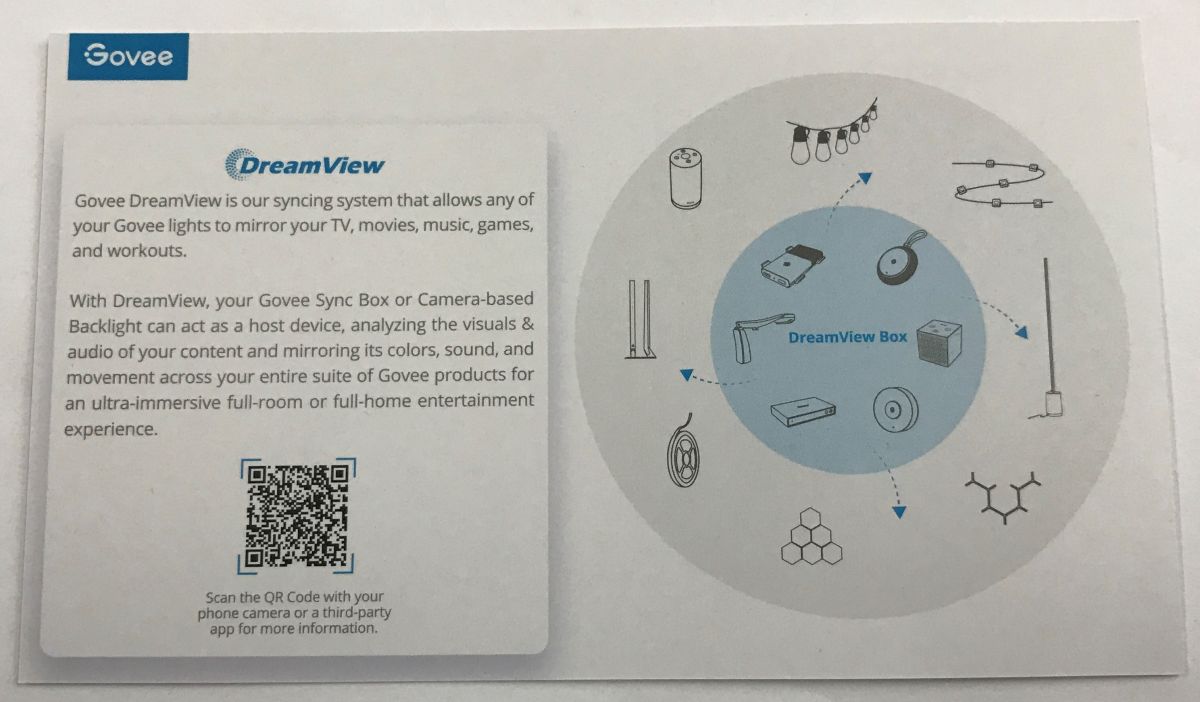
    Instructions for mounting the camera and calibration points for Govee LED lighting Board showing six types of DreamView boxes for different lighting scenarios Govee DreamView flyer showing system description and device integration diagram Govee DreamView flyer showing system description and device integration diagram
    .


    Mounting .
    First you need to lay the TV safely on the screen - this must necessarily be on a flat surface, otherwise you risk damaging the matrix.
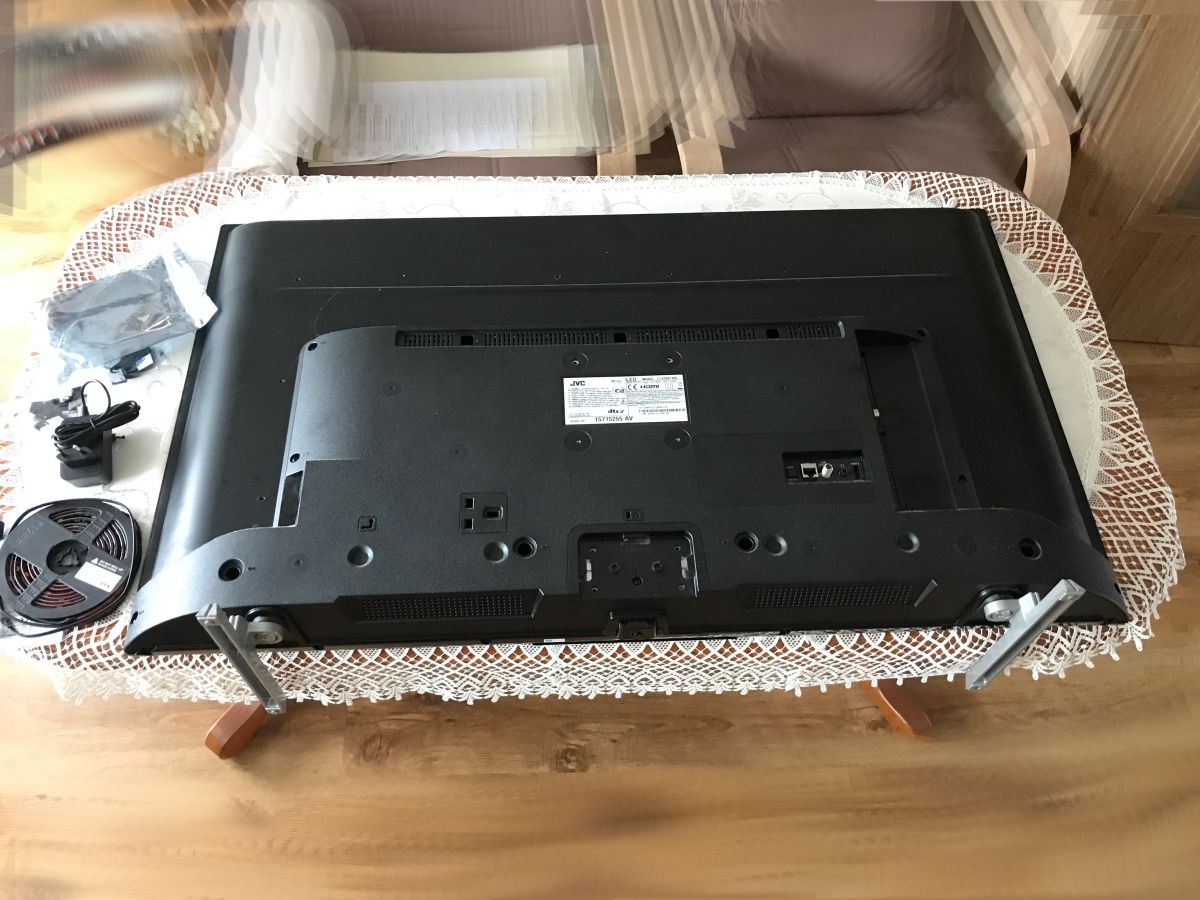
    TV lying screen-down prepared for Govee LED strip installation
    .

    Then the LED strip can be glued on. Before sticking it on, clean the surface with the wipes from the kit:
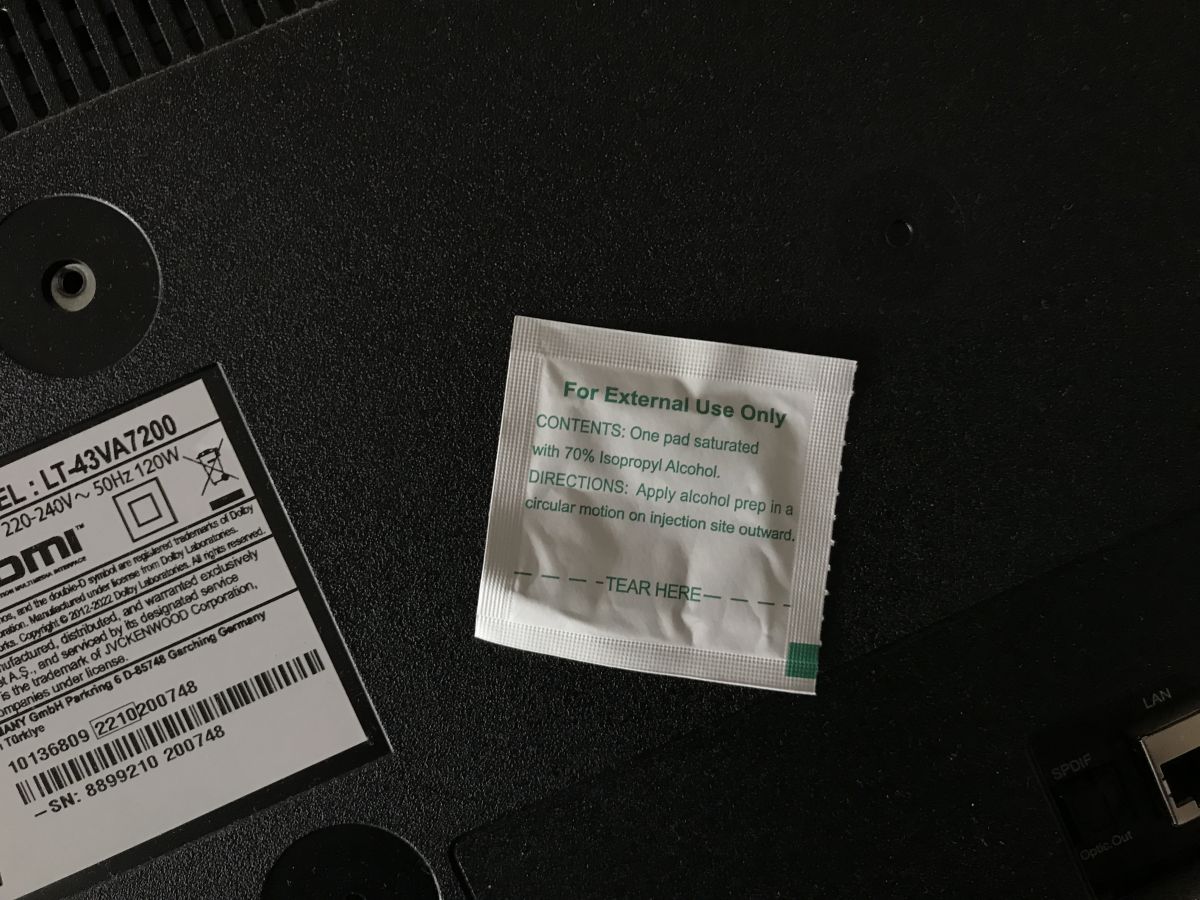
    Alcohol wipe pad on TV back panel with visible model label
    .

    The LED strip is on double-sided tape, just remove the foil from it.
    When fitting the strap, you can additionally help yourself with the hooks from the kit - these too have a piece of double-sided tape and stick to the plastic.
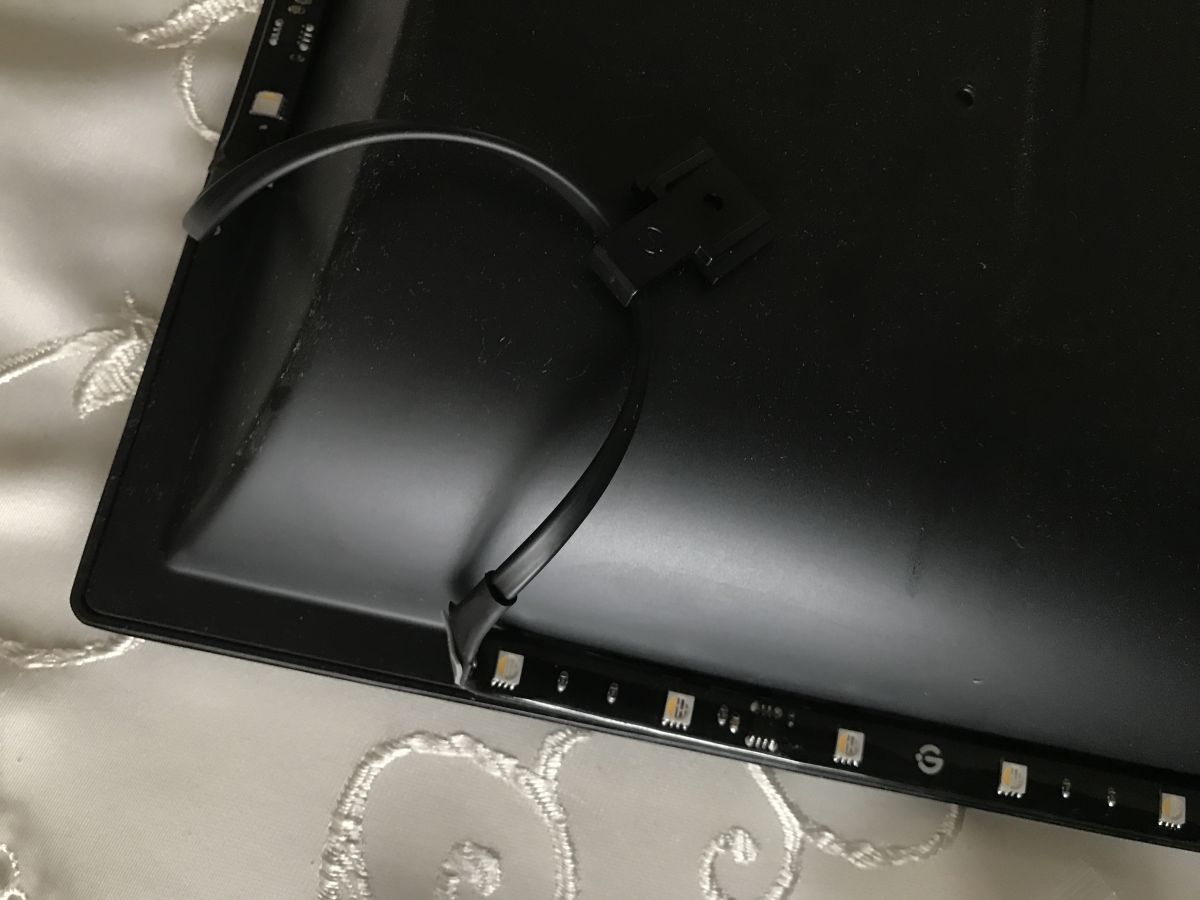
    Close-up of TV back showing mounted LED strip and securing clip with zip tie
    .

    Someone here might ask - which side to stick the strip on? It doesn't matter - later on in the configuration stage, the strip will simply highlight the two edges with the appropriate colours, and we can choose the matching configuration.
    At this stage you can already check that everything works:
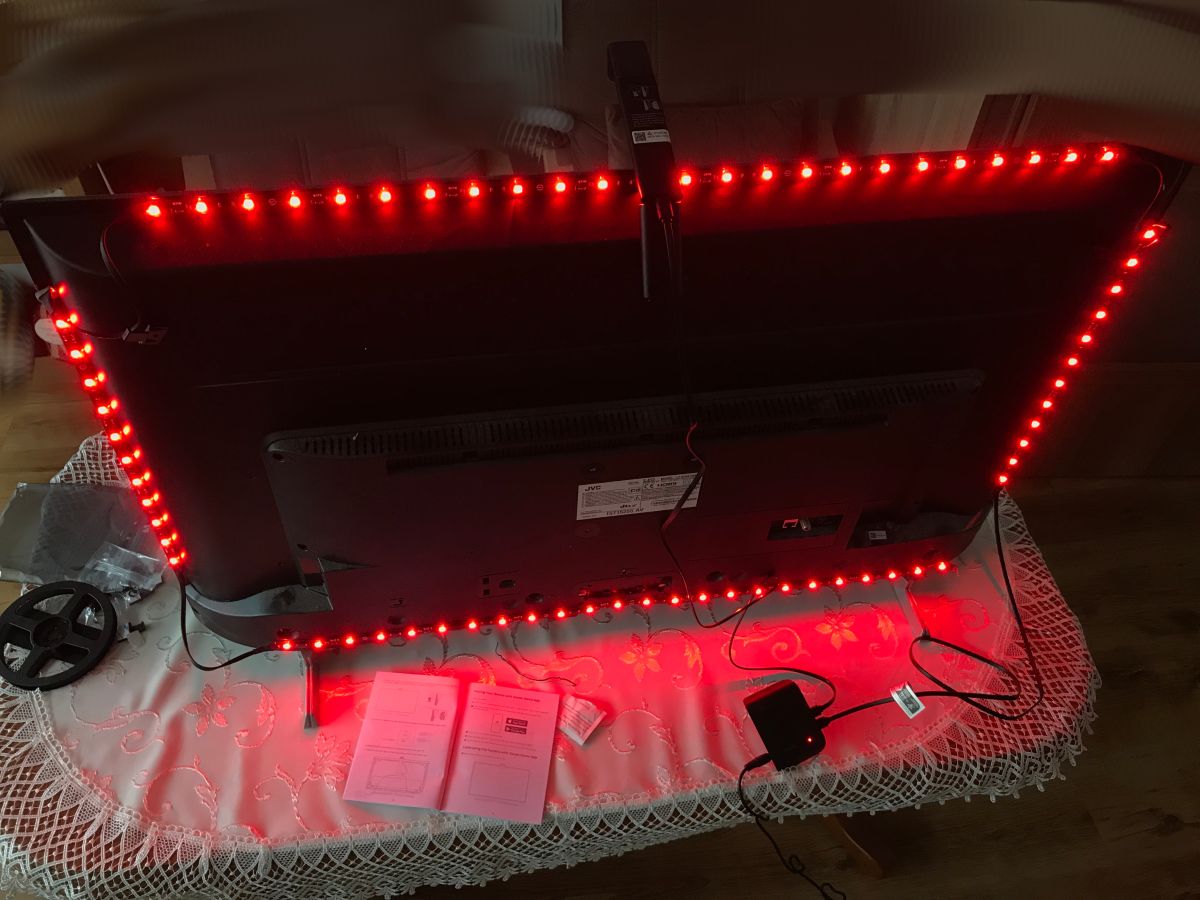
    Red Govee LED backlight installed on the rear of a 42-inch television
    .

    The camera must be mounted so that its foot holds a right angle to the TV screen:
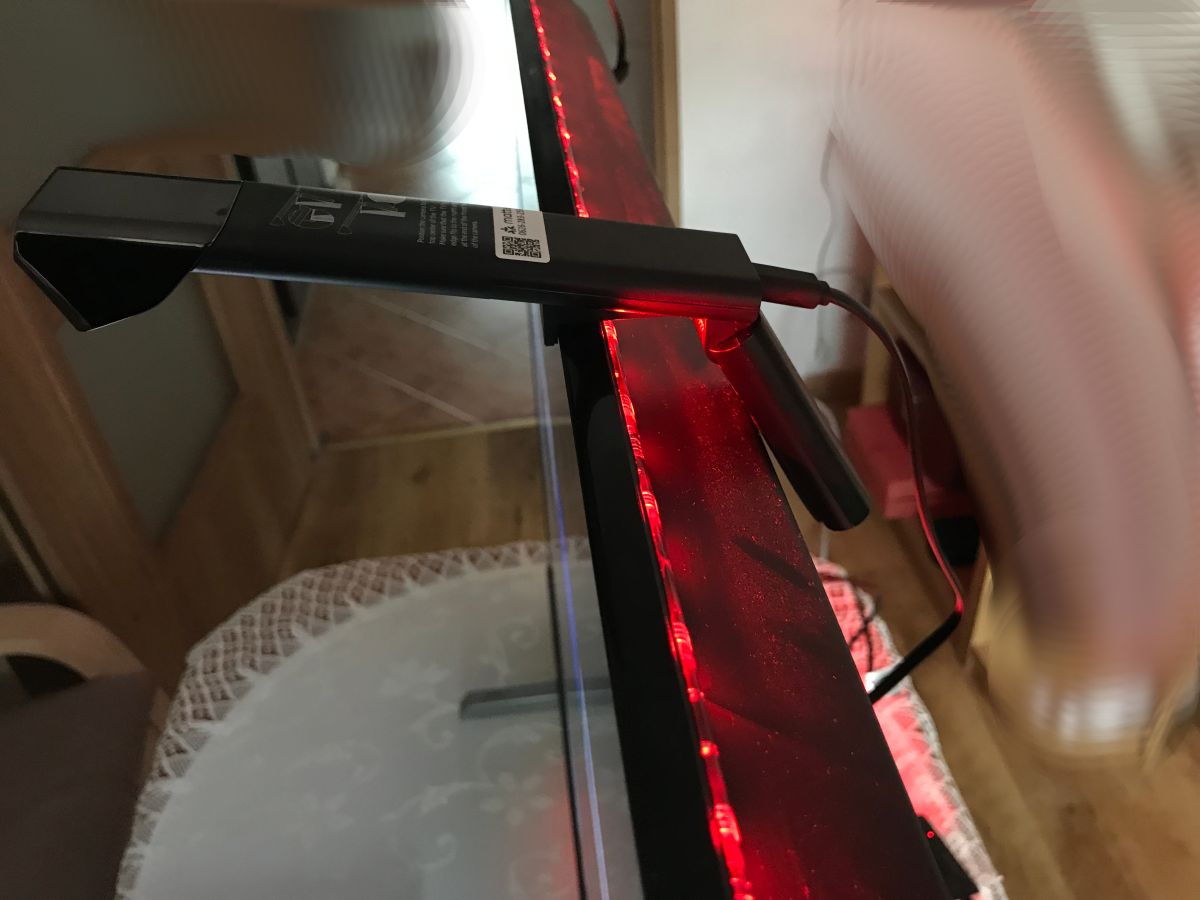
    Camera mounted on top of a TV and red LED strip on the back panel.
    .


    Application and calibration .
    We download the Govee Home app from the relevant shop (on Android it's Google Play, on iOS it's the AppStore):
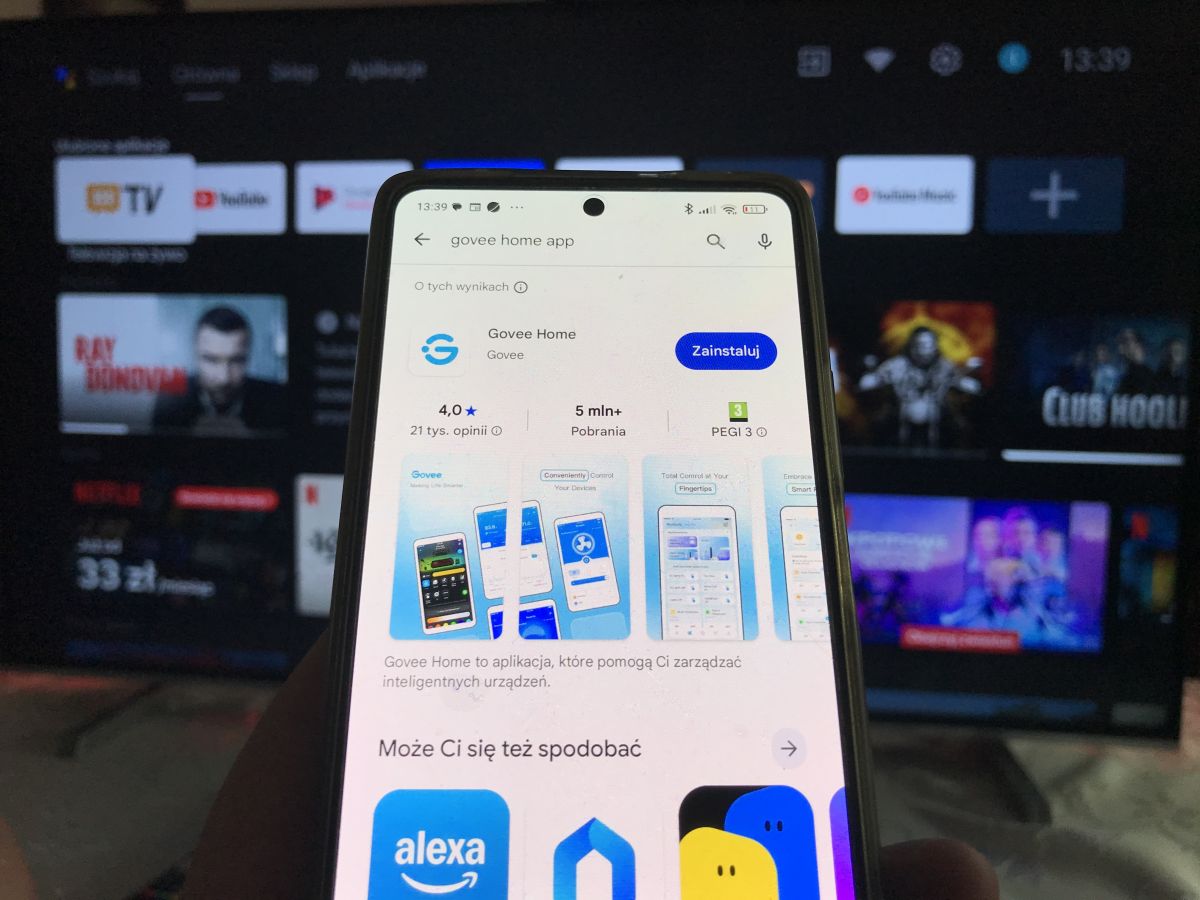
    Govee Home app install screen on smartphone in front of TV
    .

    You then need to set up an account, but this is not a problem - you just need to have an email address, no phone number. I tried to pair the device without an account, but although the hardware was detected, the pairing would not go any further.
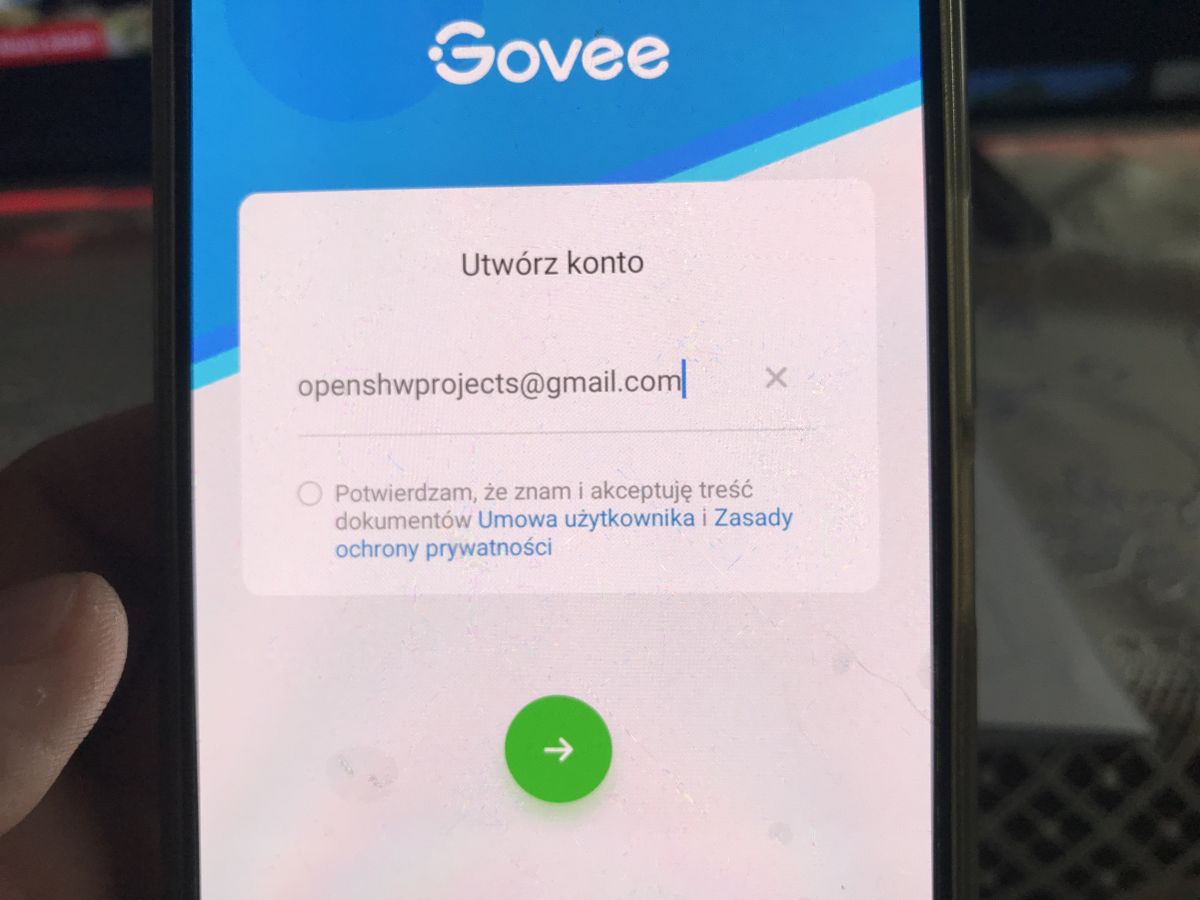
    Account registration screen in Govee app on smartphone with email entered
    .

    We enable Bluetooth, WiFi. We allow the application to access.
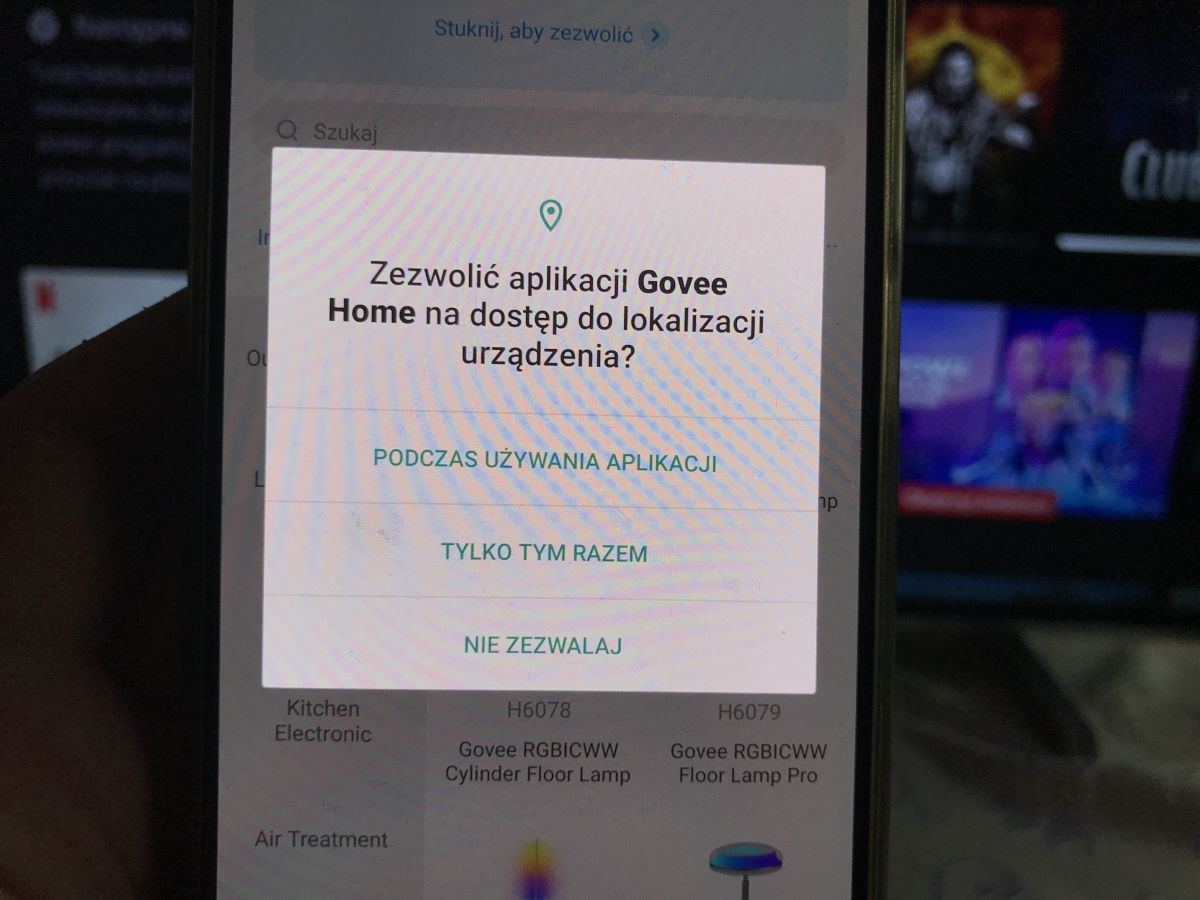
    Govee Home app prompt asking for device location access on smartphone screen
    .

    The application will detect the new device itself:
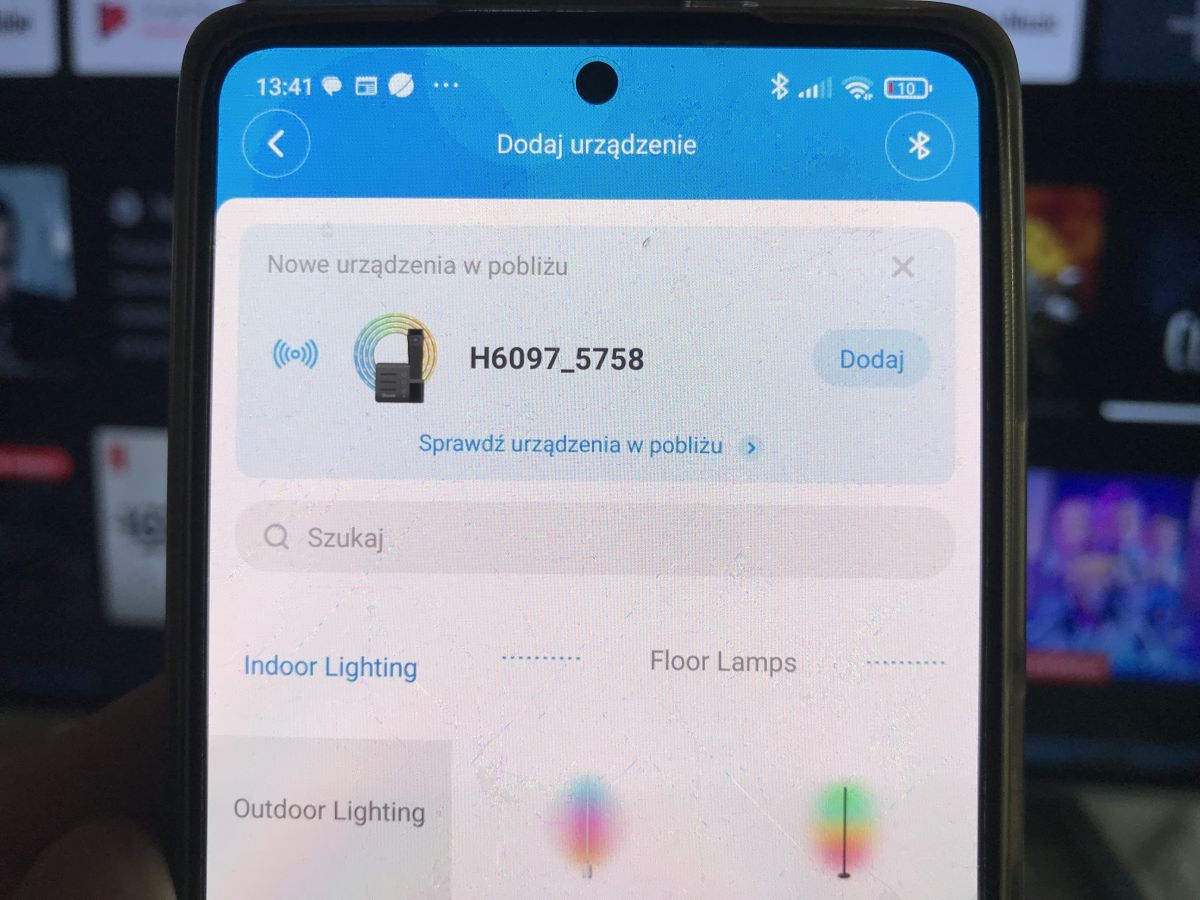
    Smartphone screen with Govee app detecting device H6097_5758.
    .

    The whole pairing process is an afterthought - you have to confirm it by pressing a physical button on the device, so your neighbour can't 'pick up' our equipment.
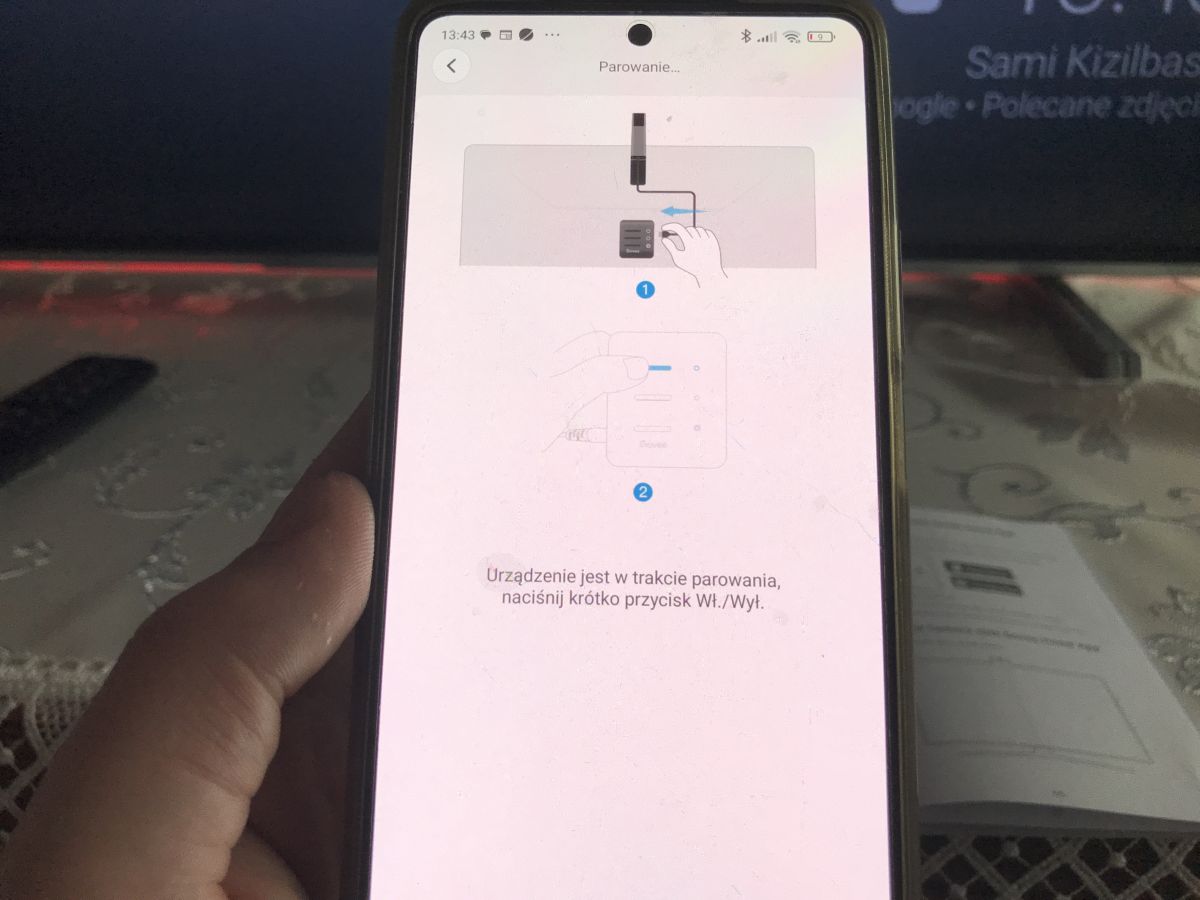
    Govee app pairing screen on smartphone with button press instruction


    You will also need to enter the name and password of our WiFi - the 2.4 GHz standard is supported.
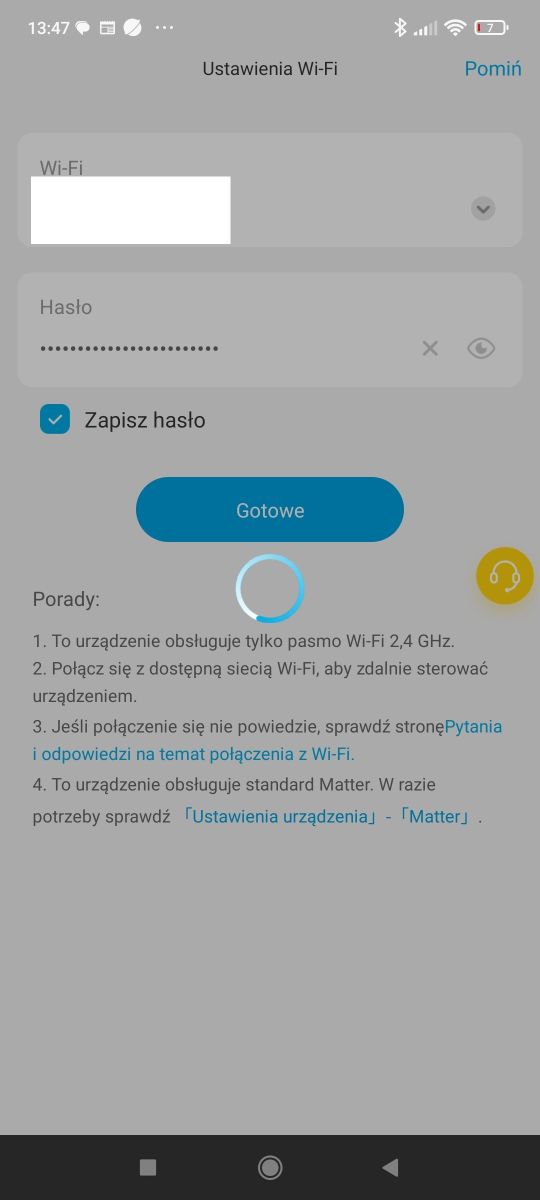
    App screen showing Wi-Fi setup for Govee device, password field filled in


    The pairing screen also shows us general instructions - you can't even go wrong here:
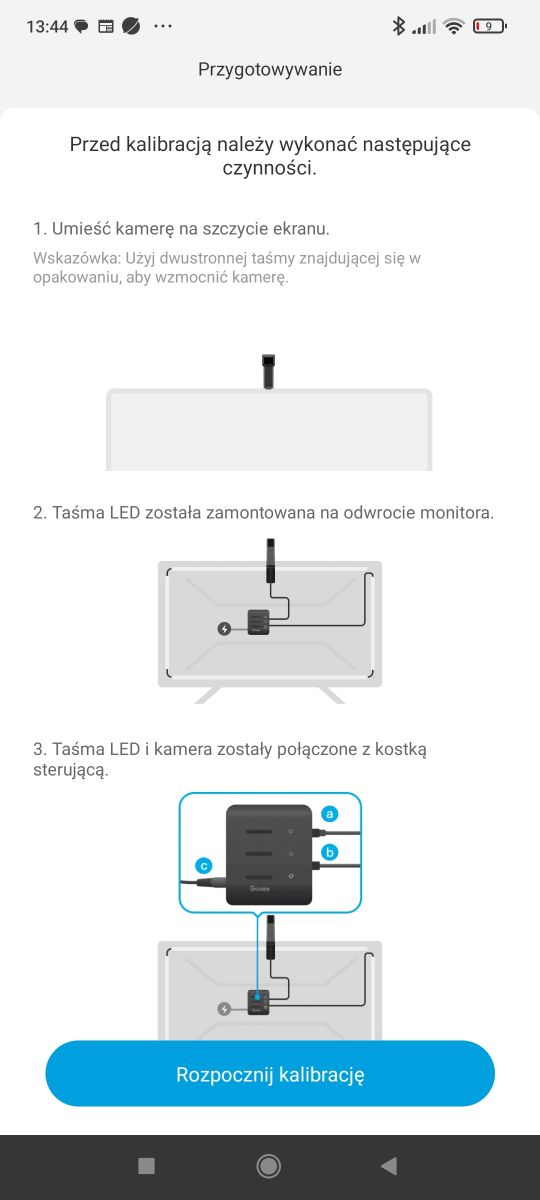
    App screen showing Govee TV LED setup instructions with diagrams and calibration button


    I mentioned at the beginning that the orientation (order of overlap) of the bar doesn't matter - oh well, here's an explanation of how it works. The app highlights two segments and we choose which edges of the screen they are mounted on:
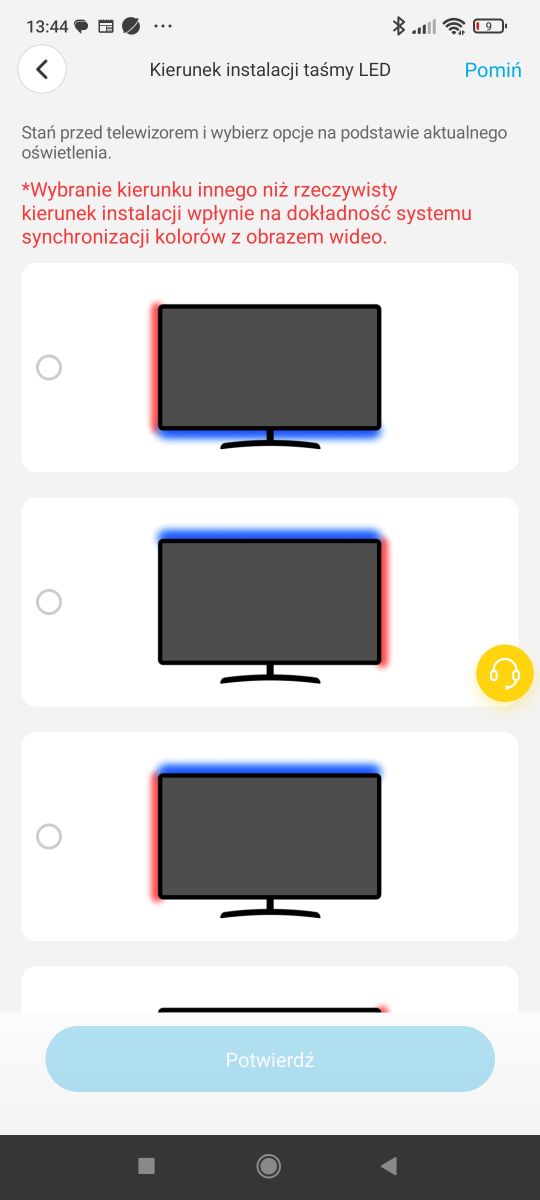
    App screen with LED strip orientation options for TV setup
    .

    The second part of the calibration is to stick the orange calibration blocks on the screen. We proceed gently, without pressing. The TV must be switched off, while the light in the room must be on so that the camera can recognise these blocks.
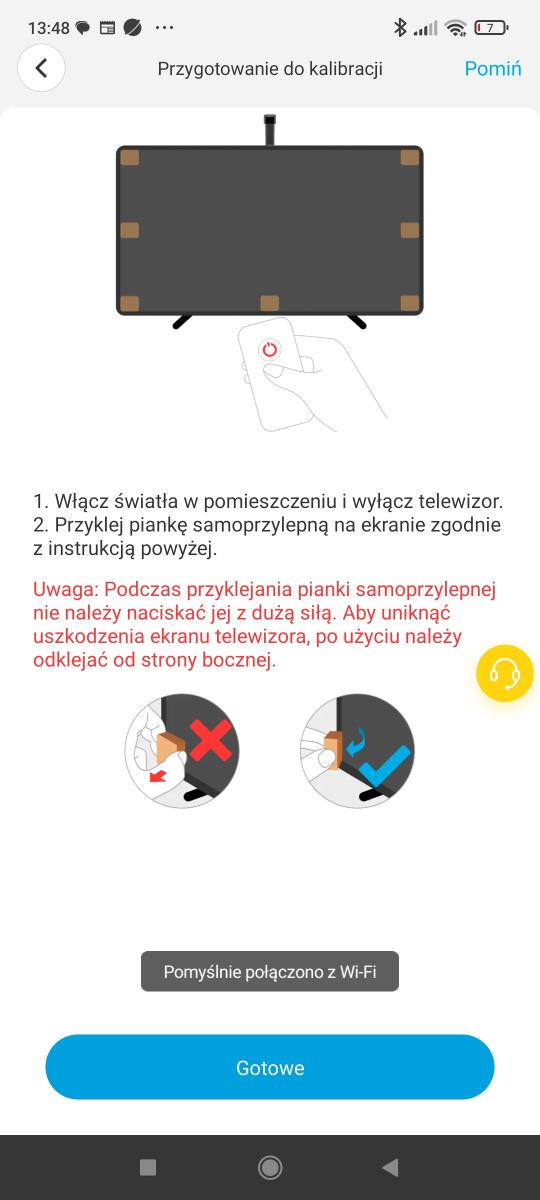
    Govee app screen with LED calibration instructions and foam placement diagram
    .

    I was sure it would be a bit of fun with this - but nothing could be further from the truth!
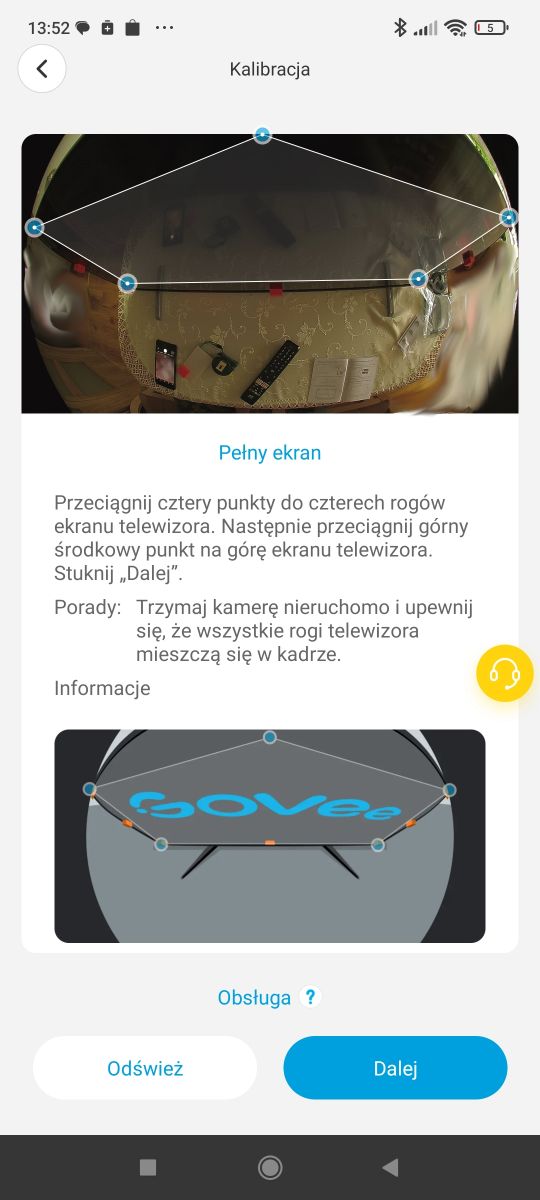
    Govee calibration screen showing camera view with corner points on TV screen. Govee app screen showing calibration points placement instructions for TV lighting


    Calibration is very simple. Simply adjust (drag) the virtual points to those set on the screen. In practice, there isn't even much of this adjustment - with me, the default setting almost perfectly matched already. In addition, we have a preview of the camera view, which makes everything even easier.


    Practical tests .
    To start with something simple - the colour test. Just search on Youtube for a suitable video. This is also useful for colour calibration - more on that later.


    .

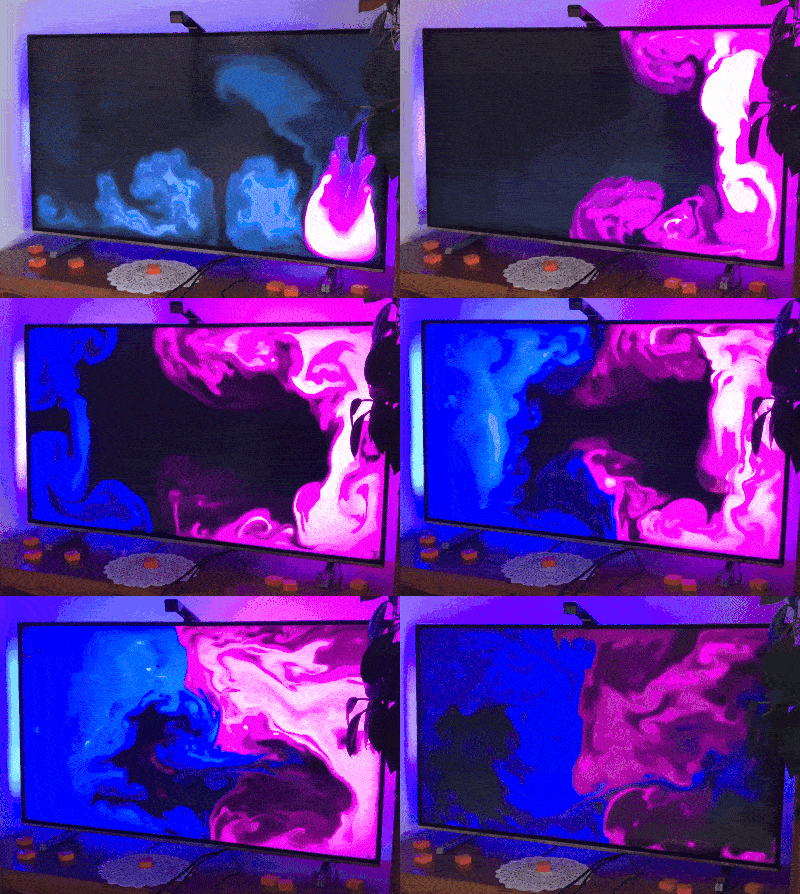
    Now for something better - the animation of the 'fireflies', you can very well see how the bar instantly reacts and adjusts its colours to what is happening on the screen:


    .

    Now a longer test - more colours:


    .

    Tests with sample video:

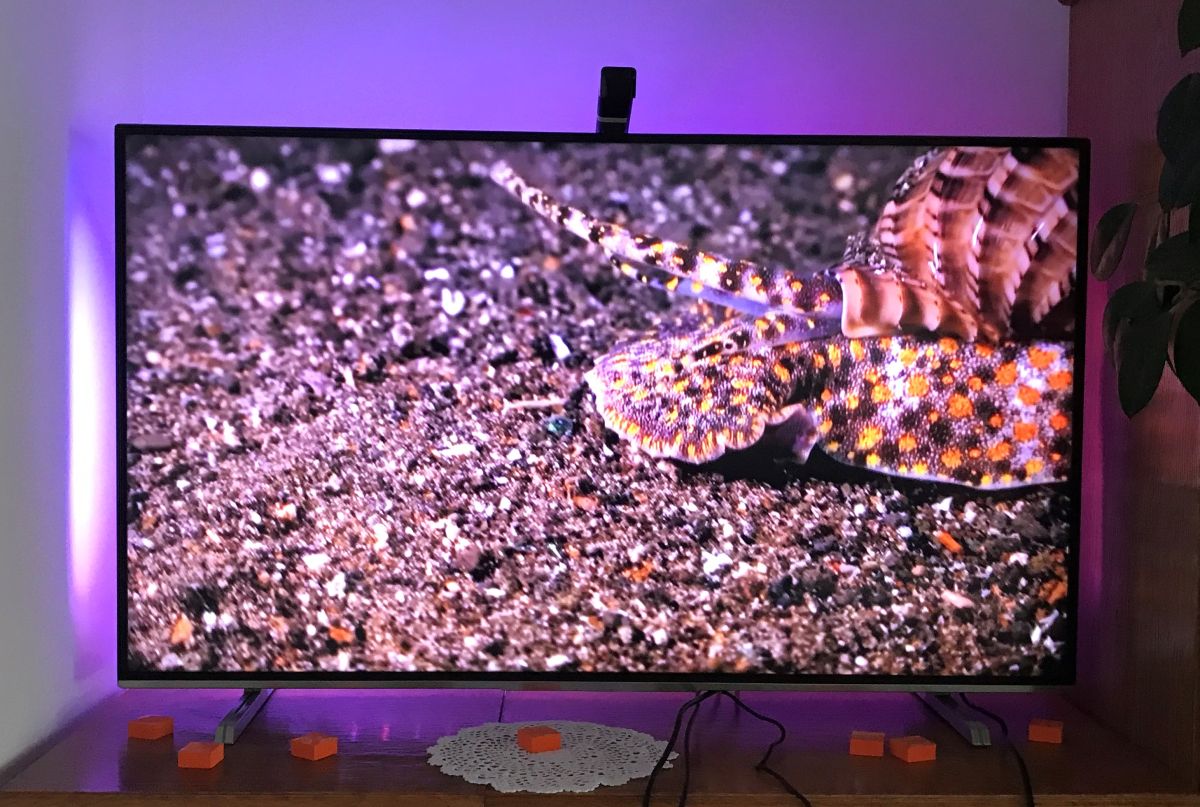
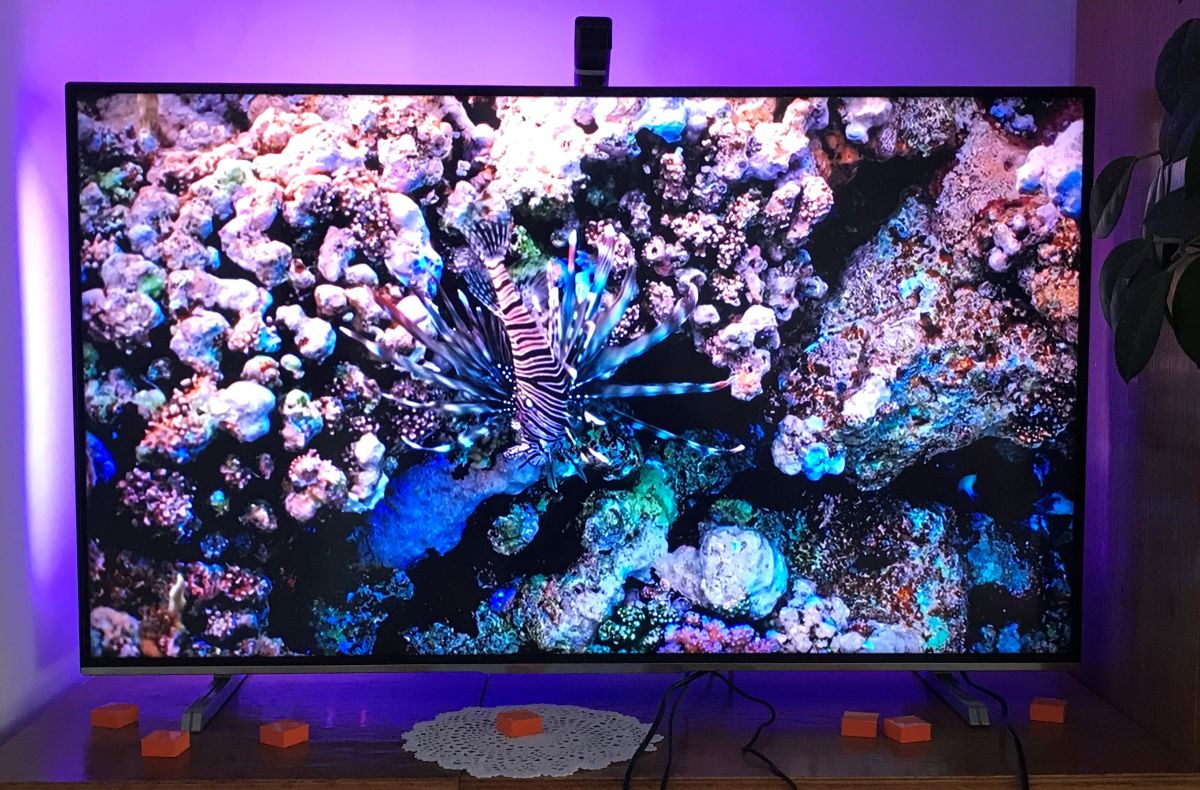
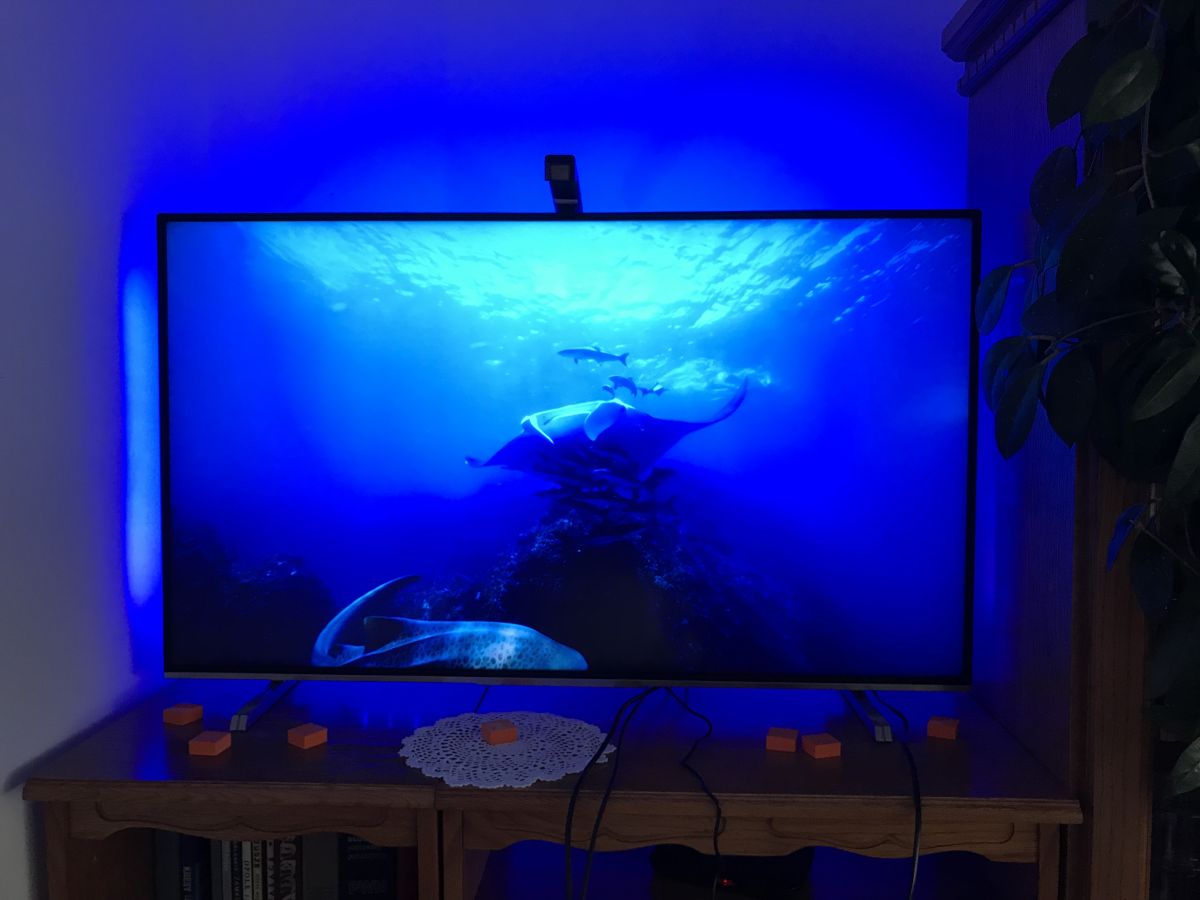
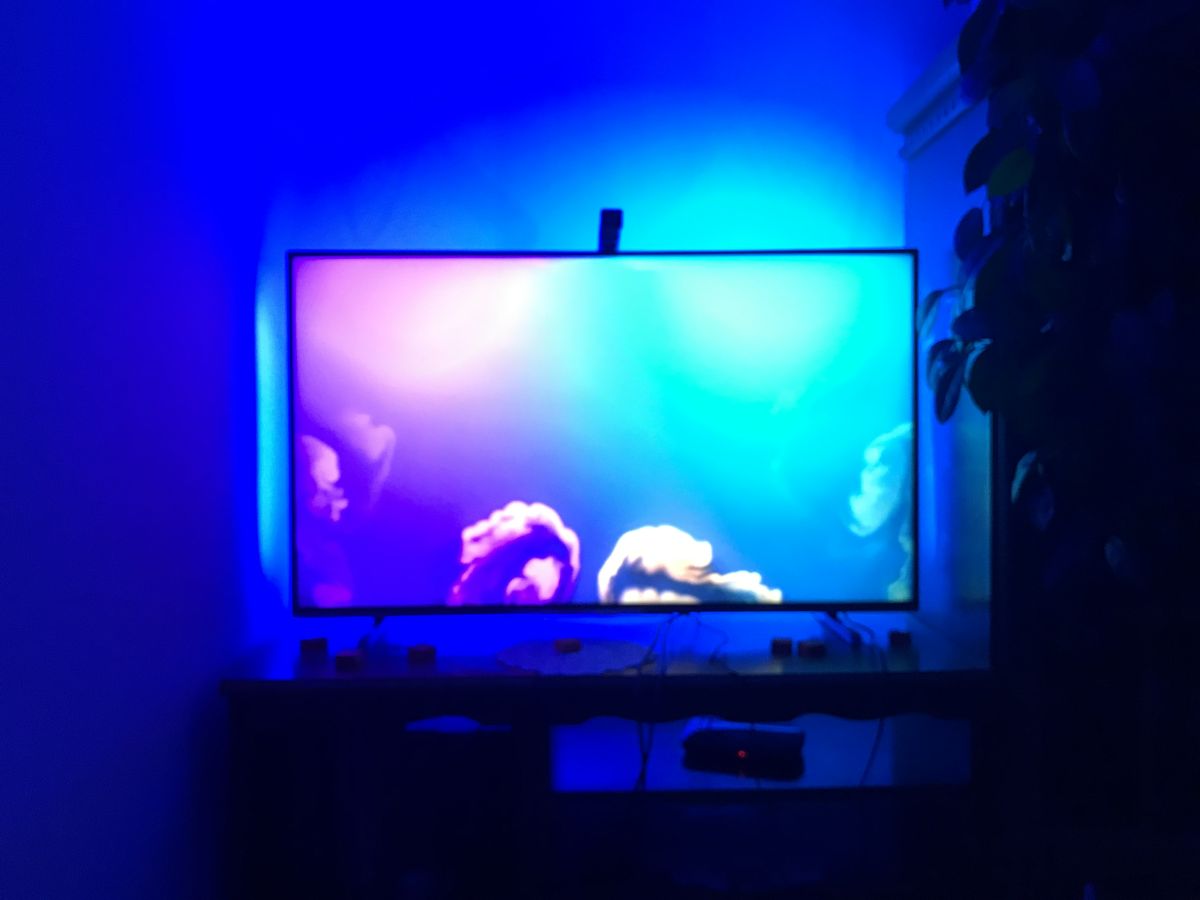
    TV screen with Govee LED backlight and calibration camera on top TV with active LED backlight and orange calibration blocks on the surface TV with active LED backlight and orange calibration blocks on the surface TV with blue LED backlight and a calibration camera mounted on top


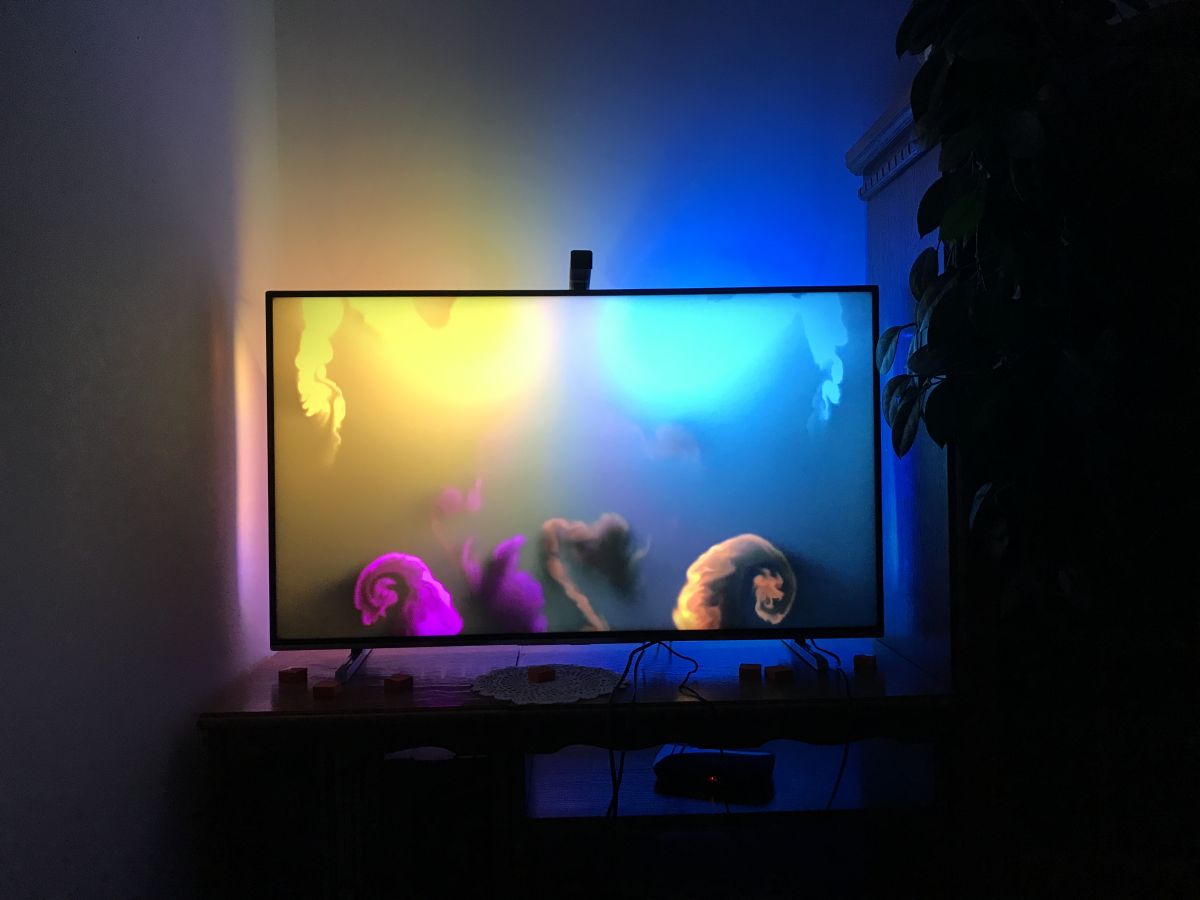
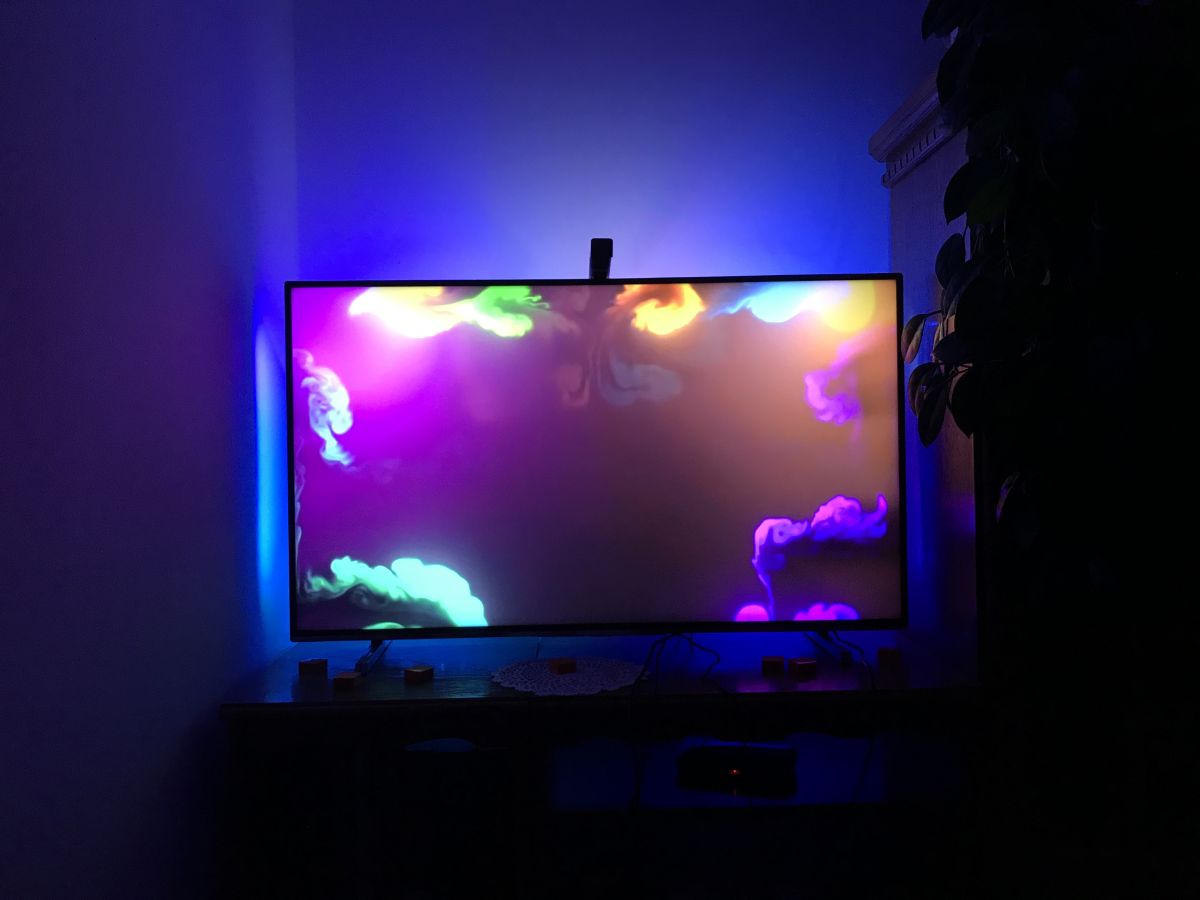
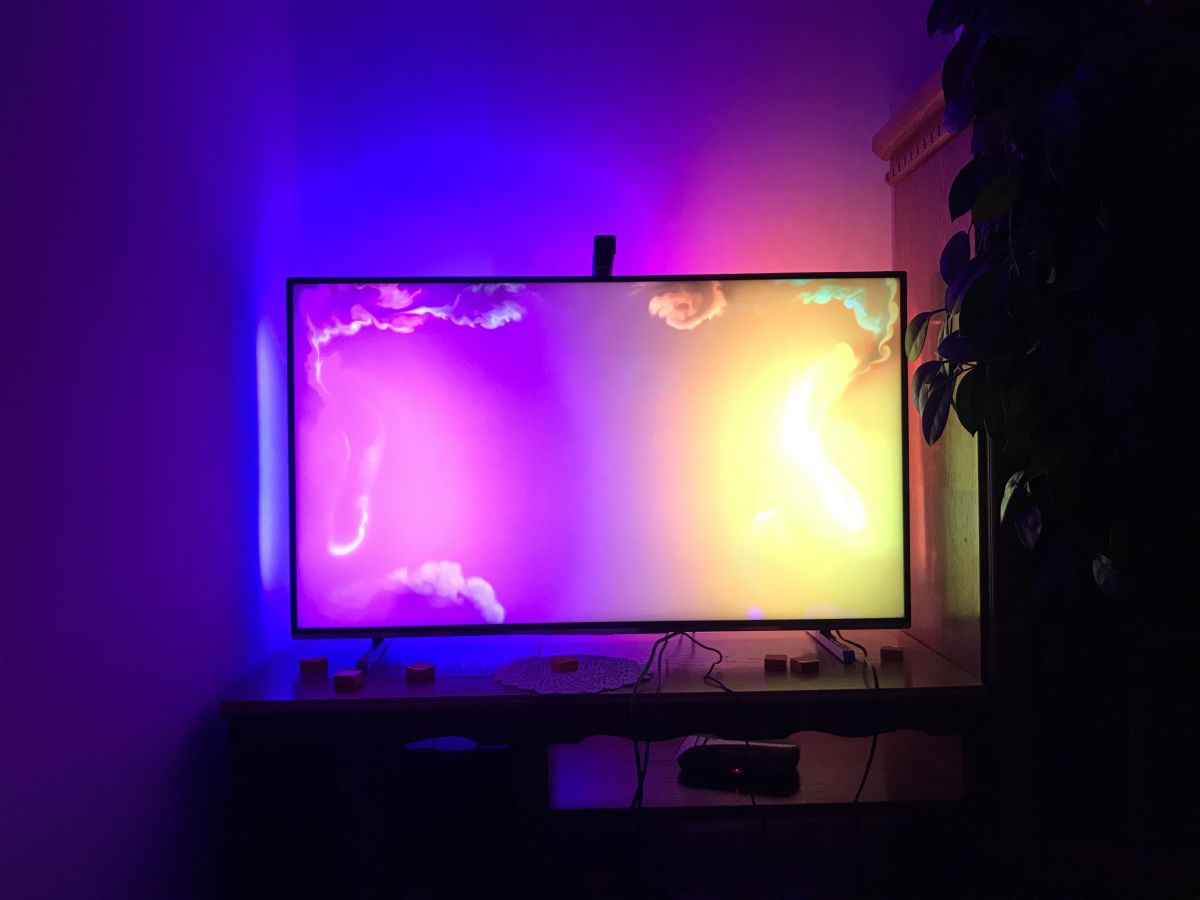
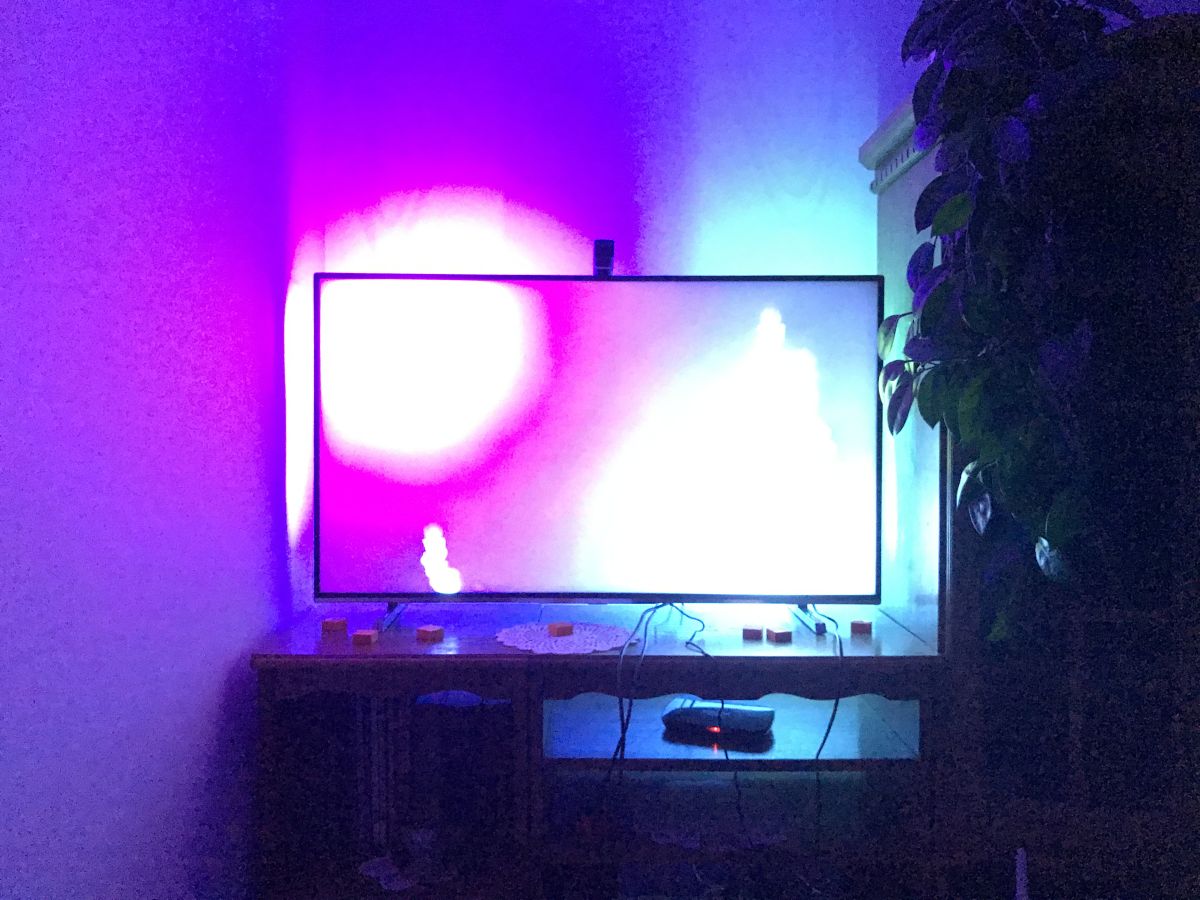
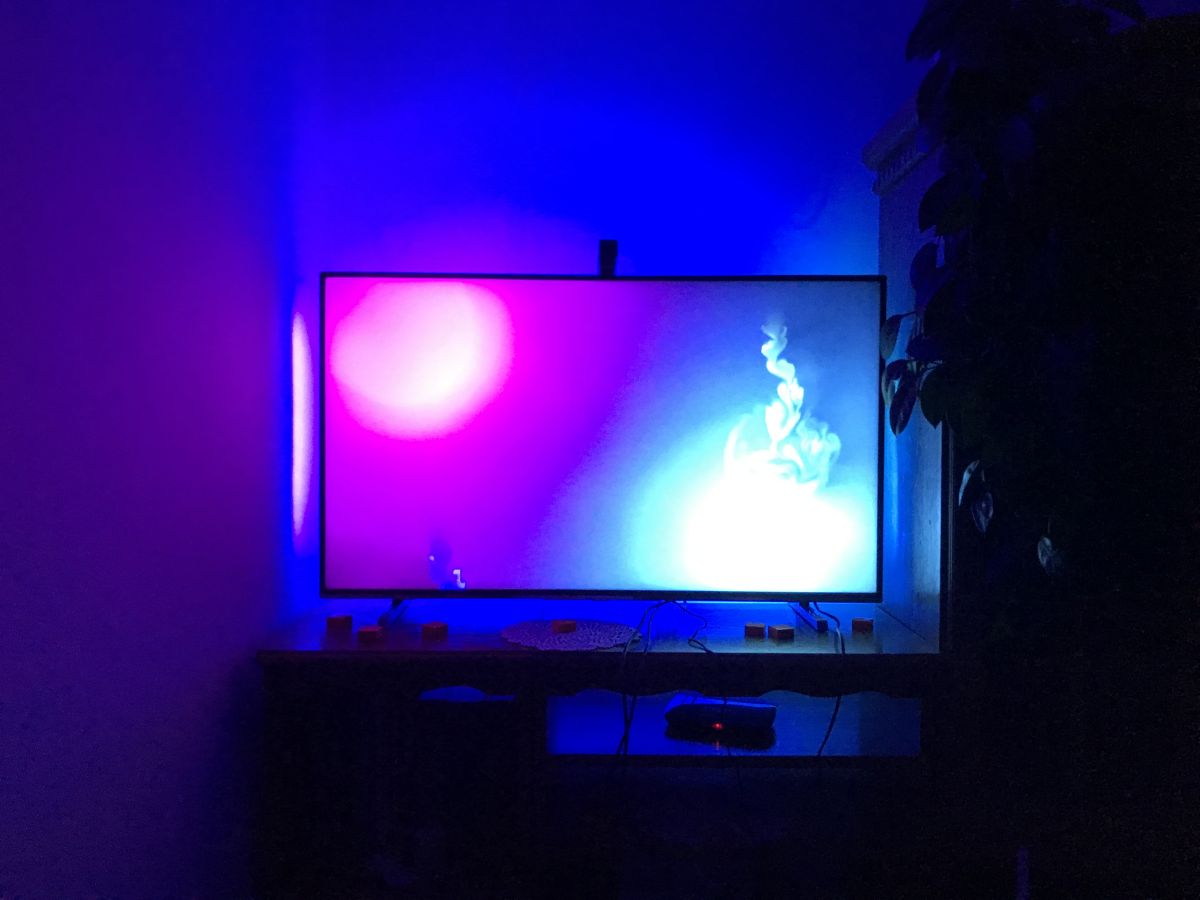
    Gallery of images taken at night, with the lights out:
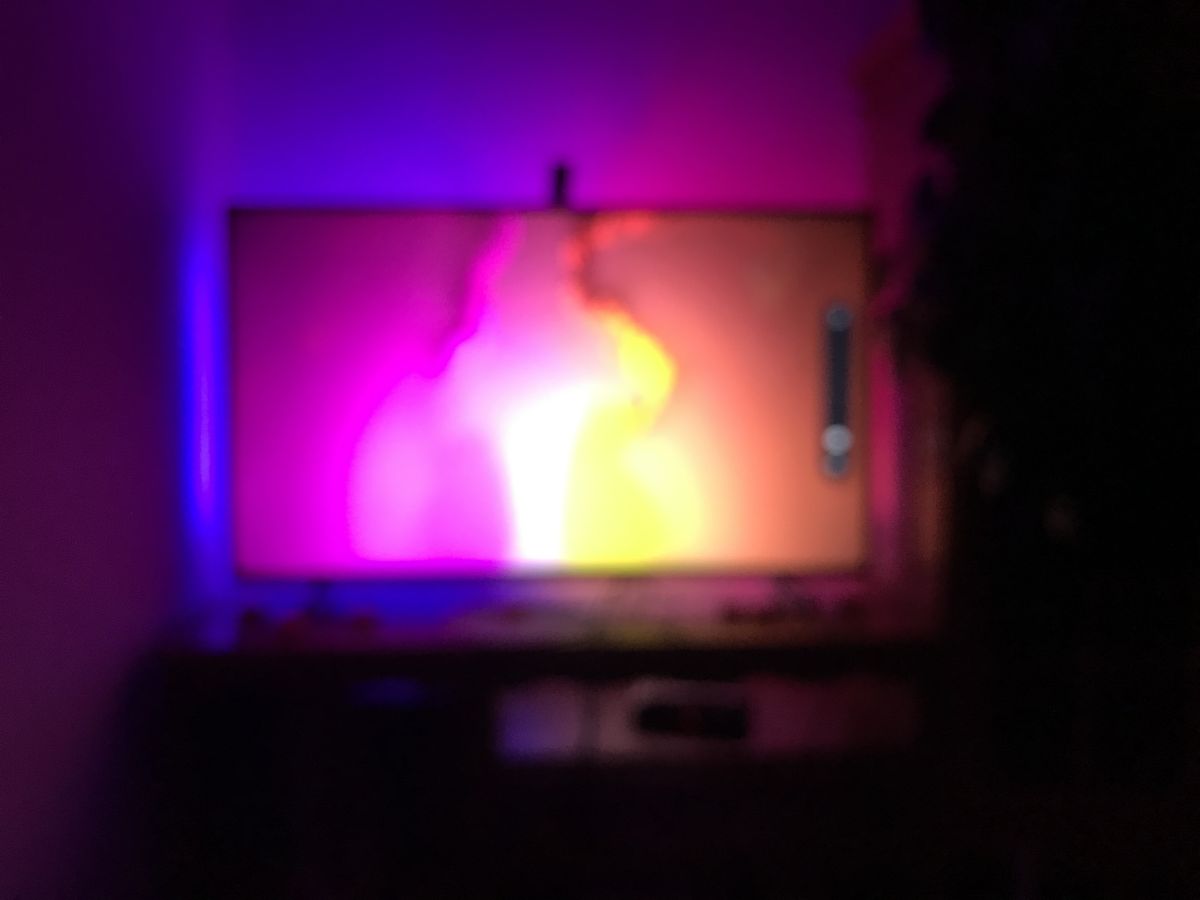
    TV with dynamic LED backlighting in purple, pink, and yellow tones TV with colorful LED backlight Govee mounted behind the screen TV with Govee LED backlight displaying colorful animation on the screen TV with active LED backlight glow in purple and yellow colors behind screen TV with active LED backlight glow in purple and yellow colors behind screen
    TV with blue and purple LED backlighting mounted on the wall behind it TV with colorful LED backlight glowing in purple and blue hues. Backlit TV with dynamic LED lighting in blue and purple tones in a dark room
    .


    Colour calibration .
    The device also allows you to adjust the colours to what we have displayed on the screen. Calibration is available from the mobile app, after entering additional options. Personally, I didn't need to use it, as the results are very good even without calibration.
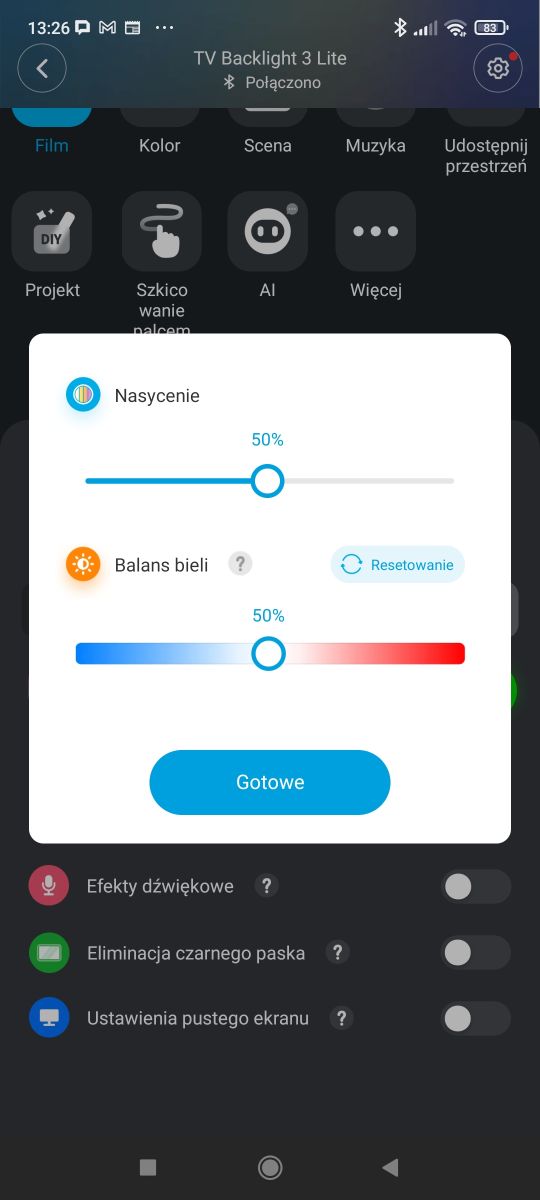
    Saturation and white balance settings in the Govee Home app
    .


    Custom animations .
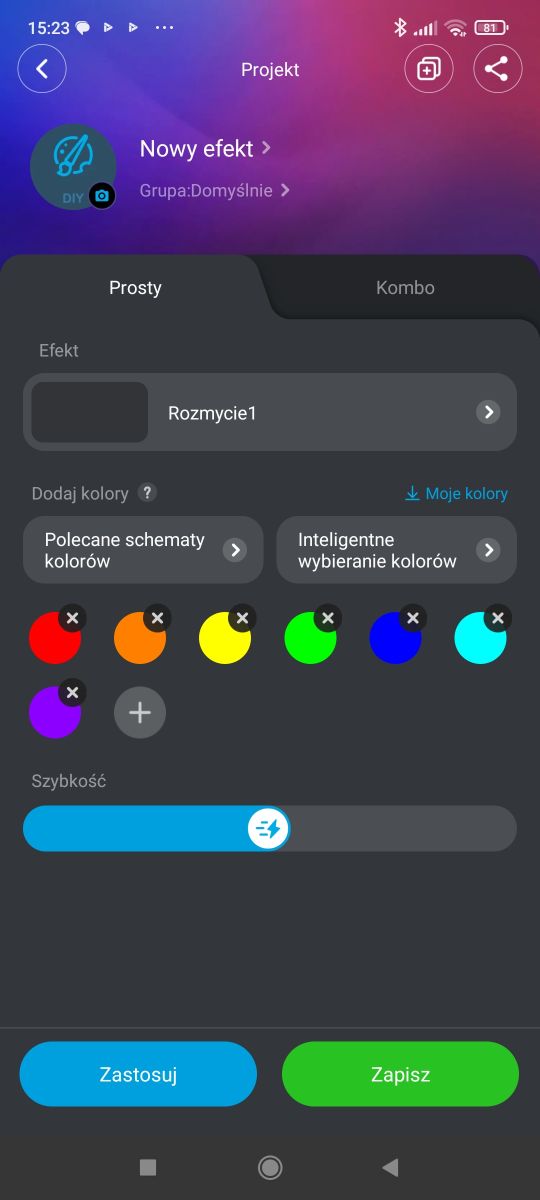
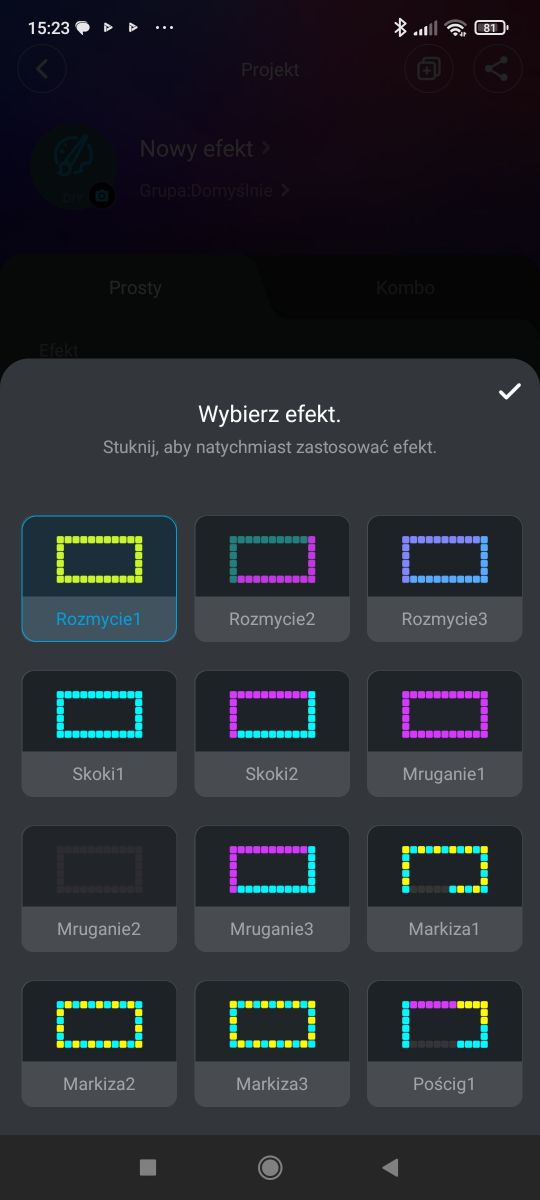
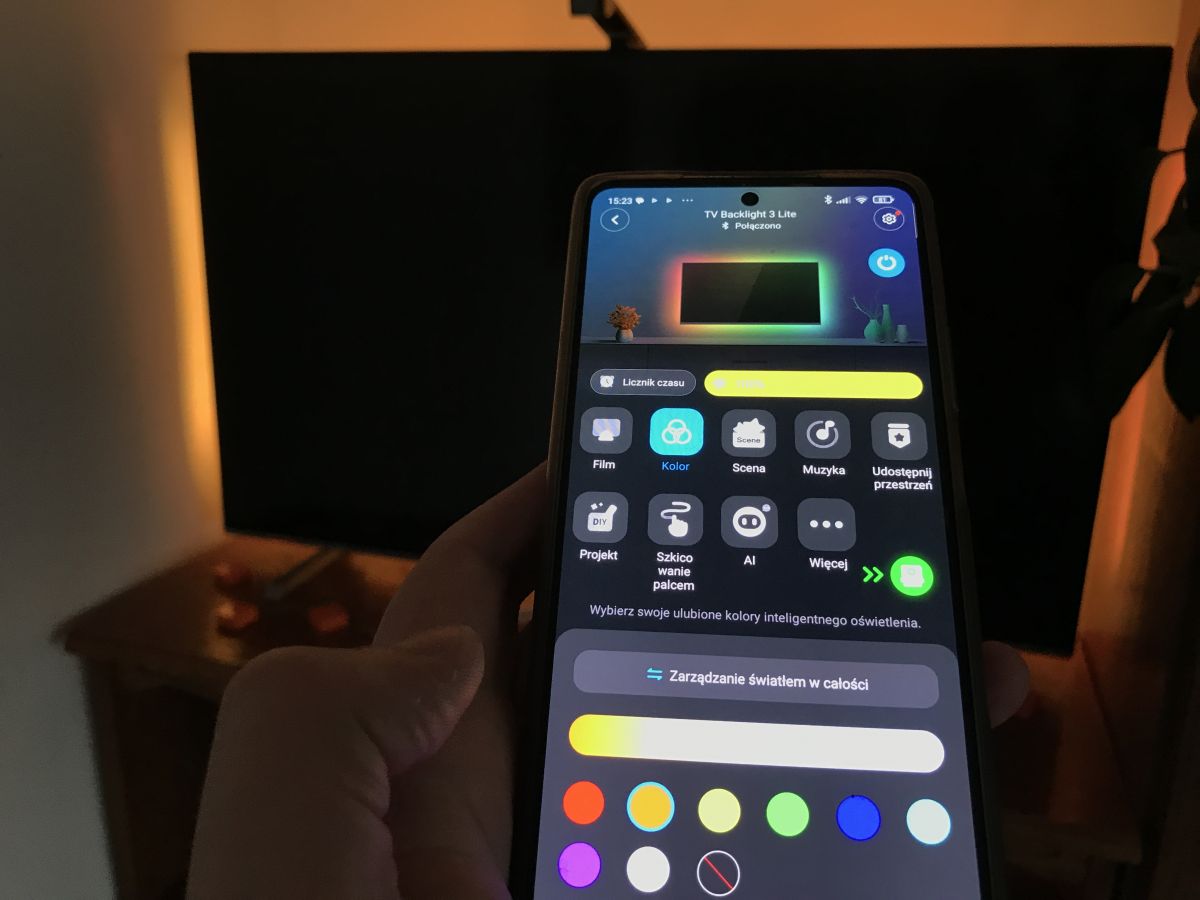
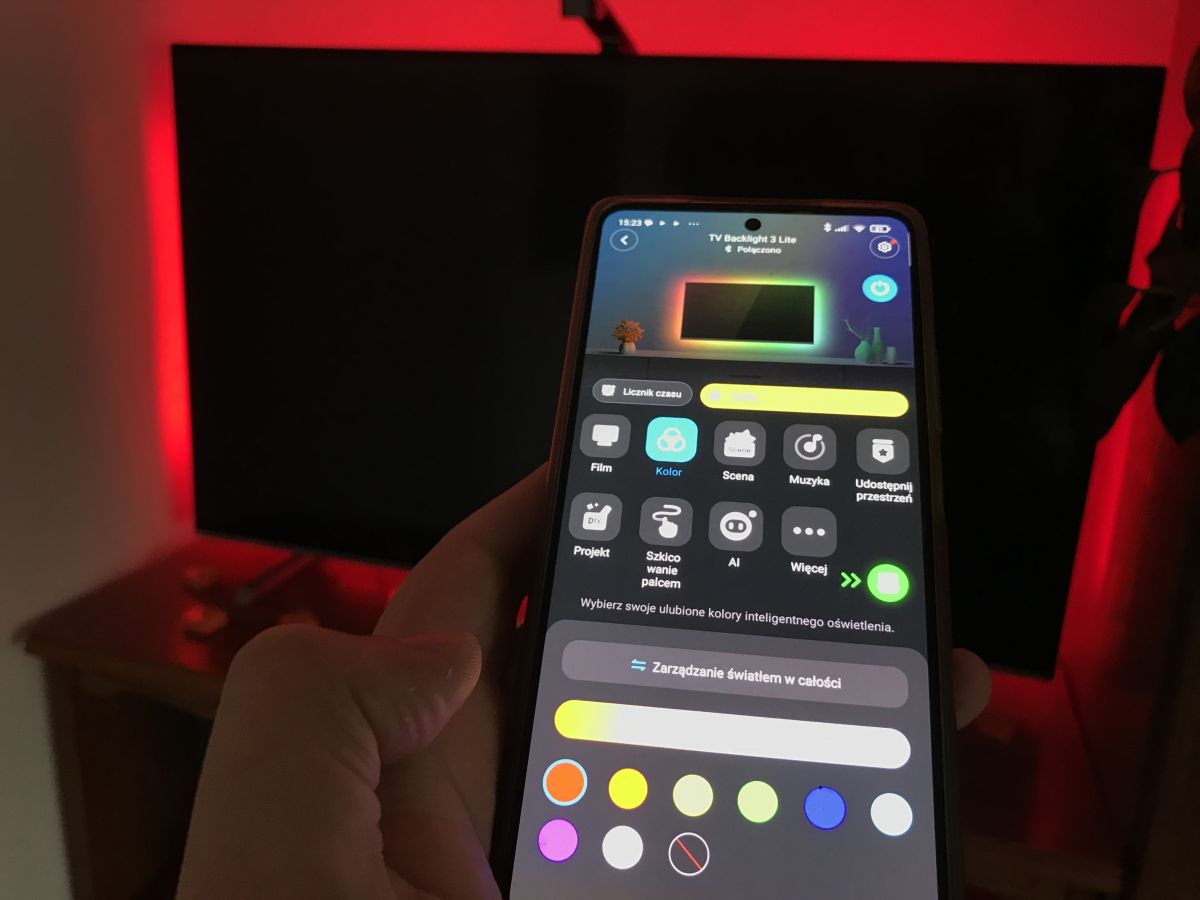
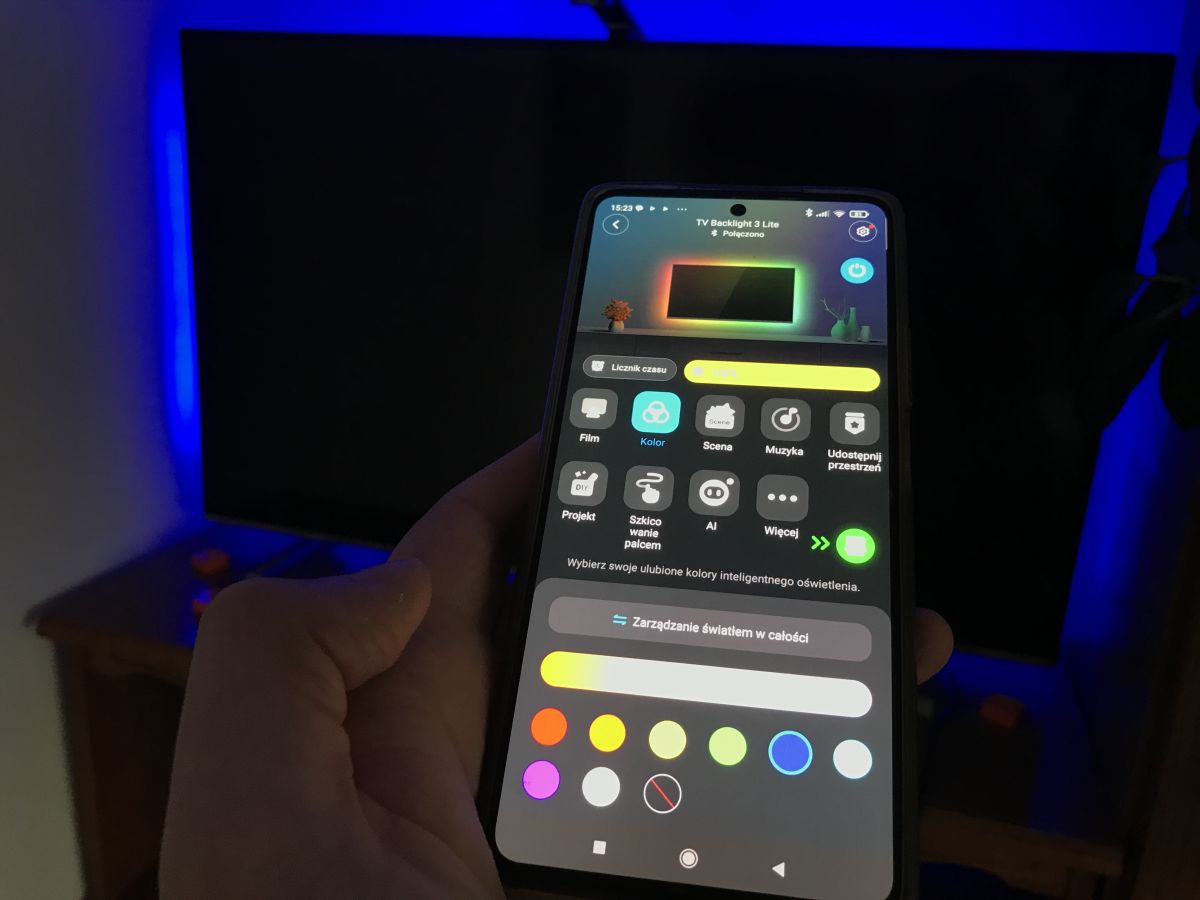
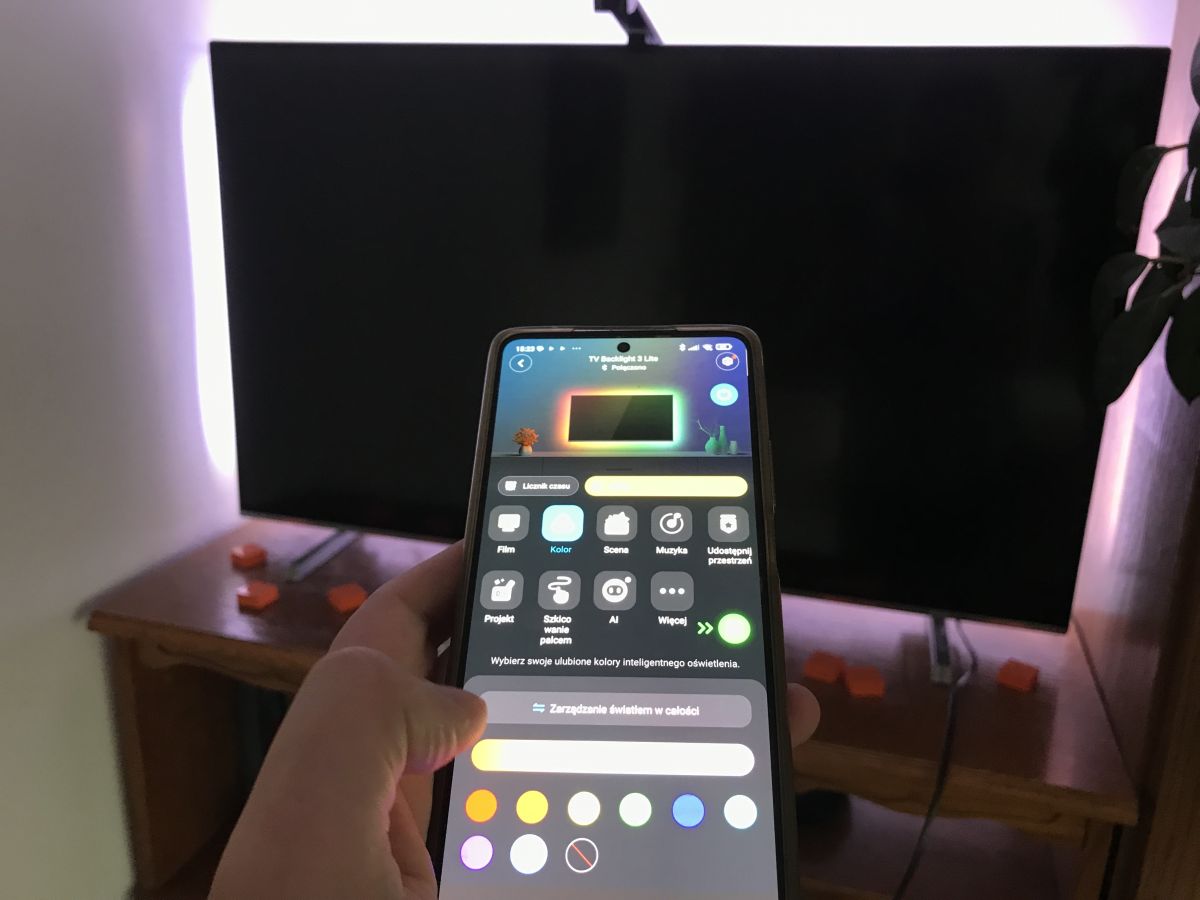
    The strip can also act as an ordinary LED strip. We can set predefined colours, play animations, and there is also a music mode (animation to the rhythm of music) and an animation configurator where we choose the LEDs and their colours ourselves.
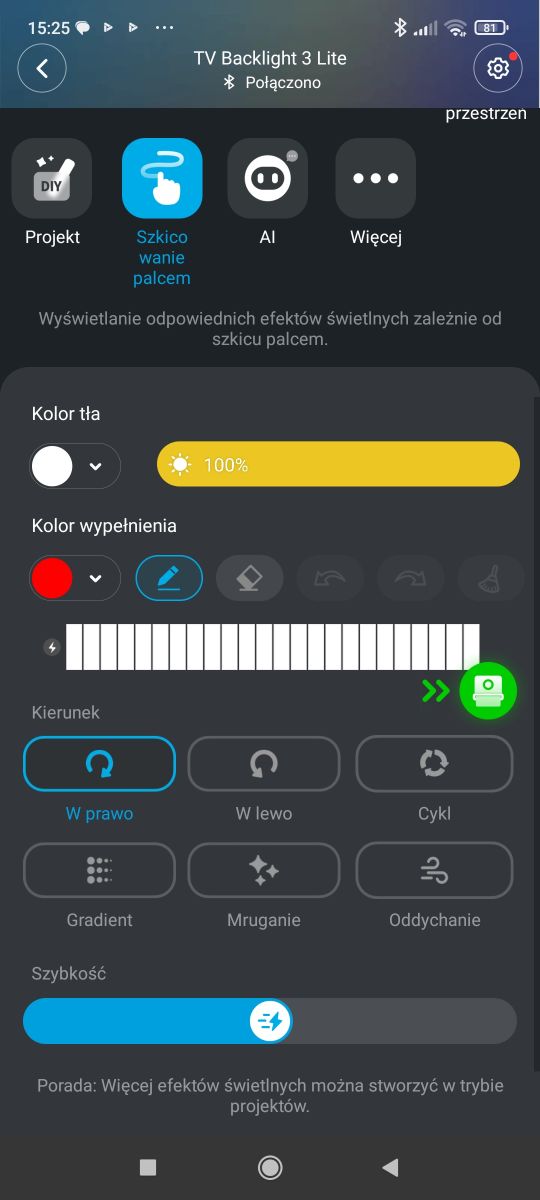
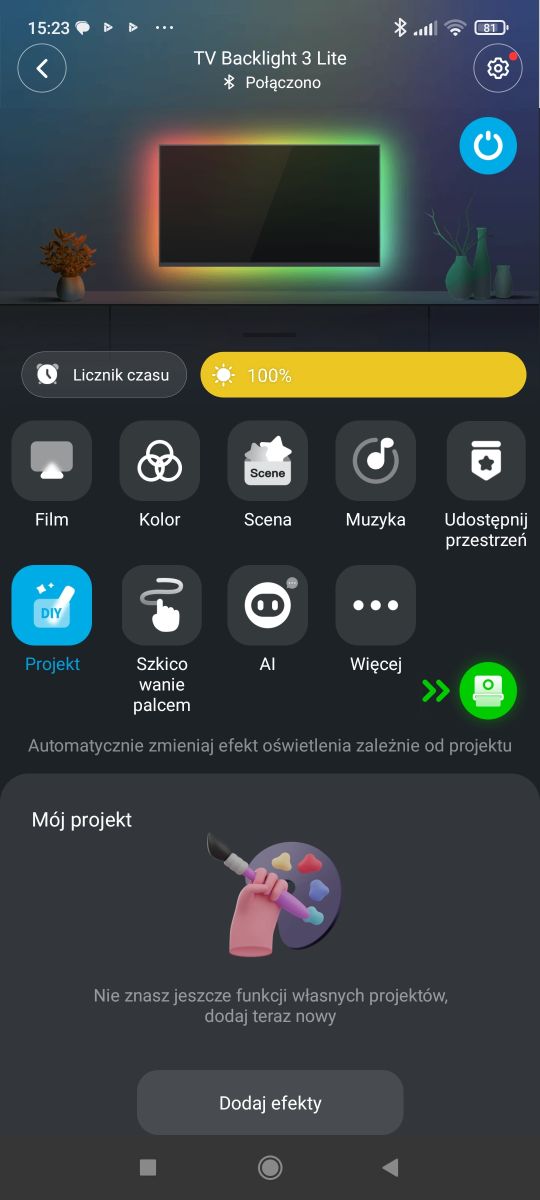
    Mobile Govee app screen showing LED strip settings: color, direction, animation modes. Govee app screen with LED backlight active around the TV Govee app screen showing lighting effect editor and color selection App screen showing selectable LED lighting effects for a TV backlight.
    .

    Example effects:

    Smartphone with Govee app in front of a TV with backlight LED turned on Smartphone with Govee app and red LED backlight behind TV Phone with Govee app in front of a TV backlit in blue Phone with Govee app in front of a TV backlit in blue .
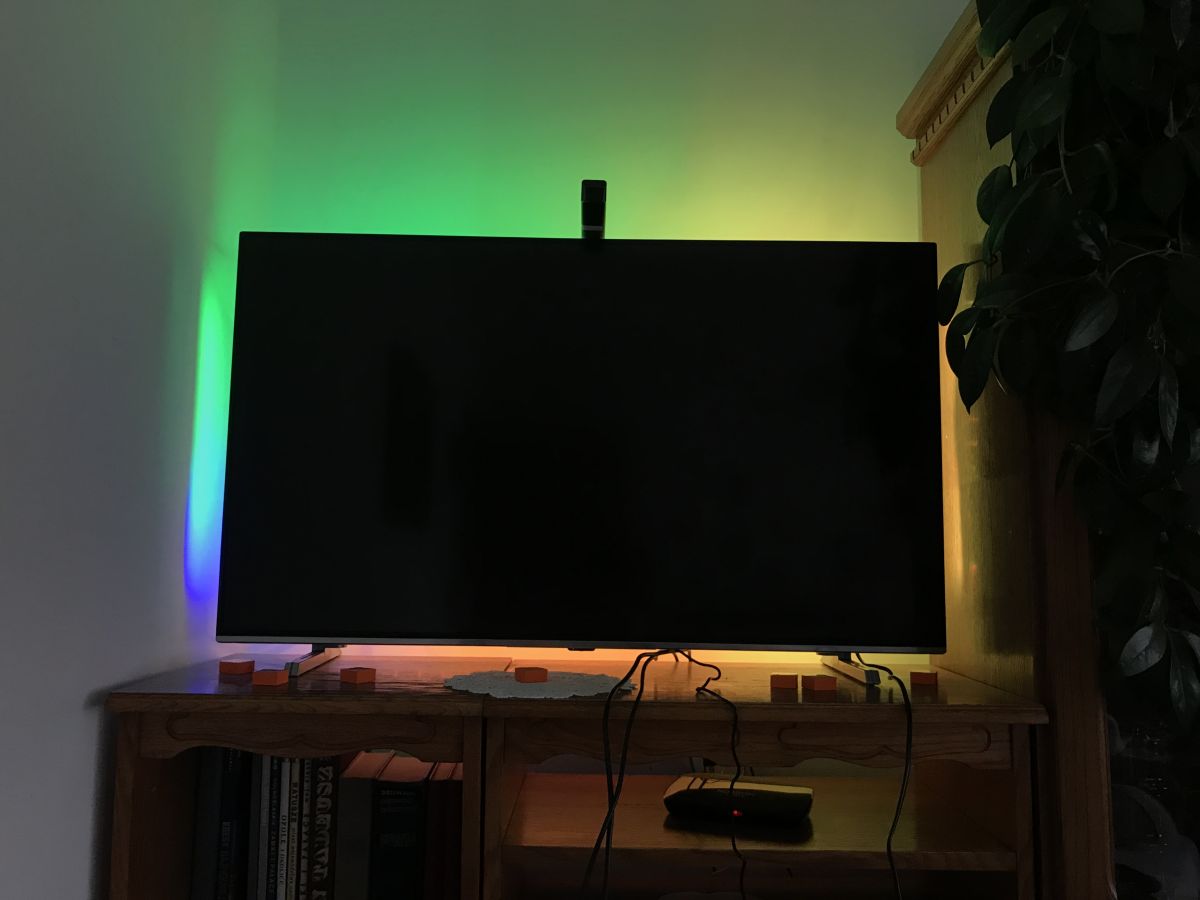
    Smartphone with Govee app in front of TV with active LED backlight TV screen on wooden cabinet with RGB backlight and visible cables
    .

    Example of a custom animation - a white strip with several LEDs in red and green:
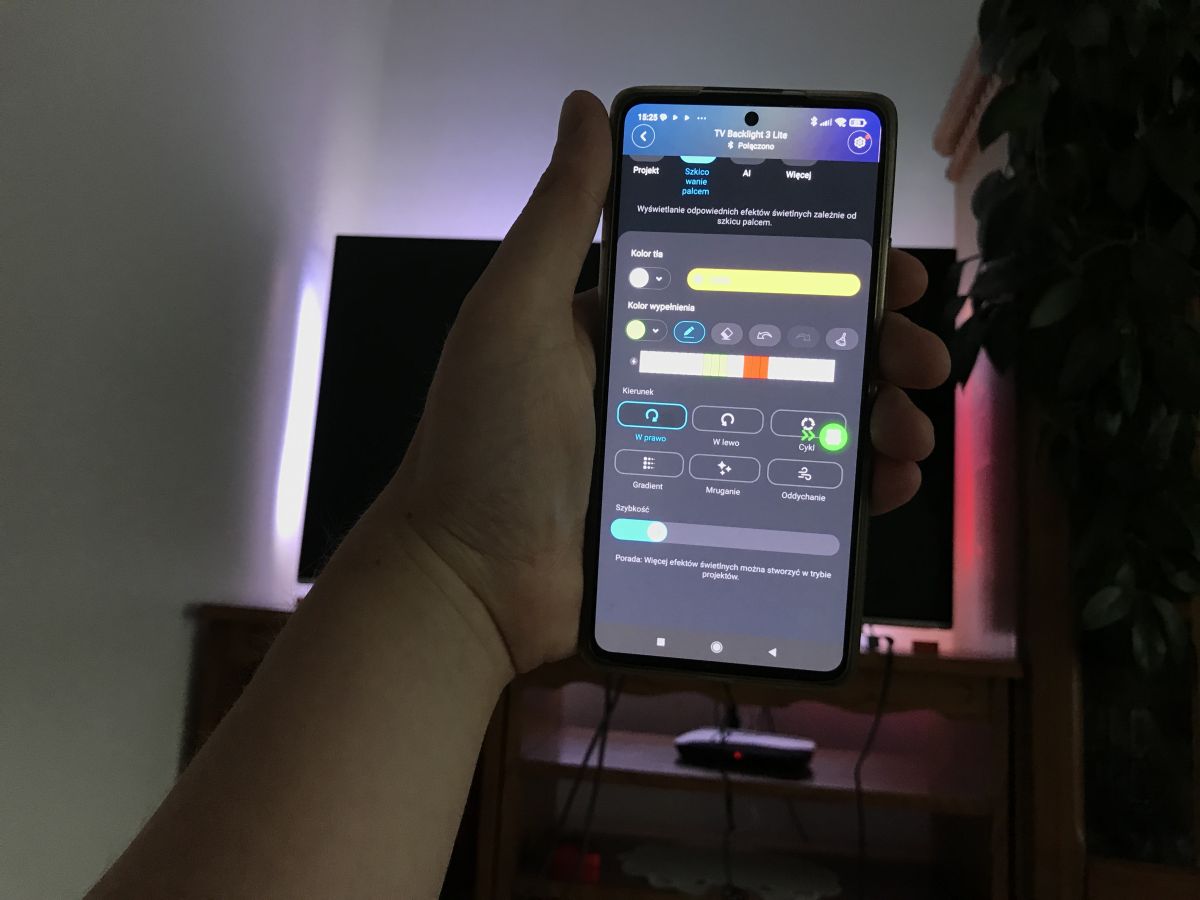
    Phone with LED backlight control app in front of a TV with ambient lighting
    .

    Same animation in the video - you can see the green and red. The rest is white light, although in my case a little bit of the colour of the furniture interferes with that.


    Multi-device synchronisation - DreamView effect .
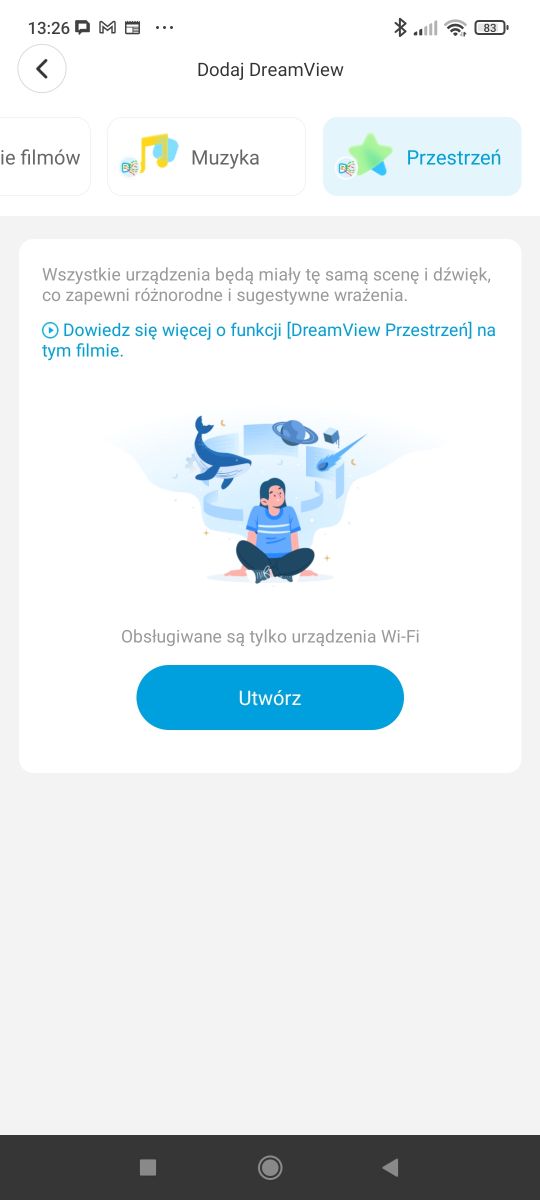
    The device also supports the Govee DreamView system that allows external lights to be synchronised with the LED strip discussed here. Simply add another device to the app and then select it in the Synchronisation Centre.
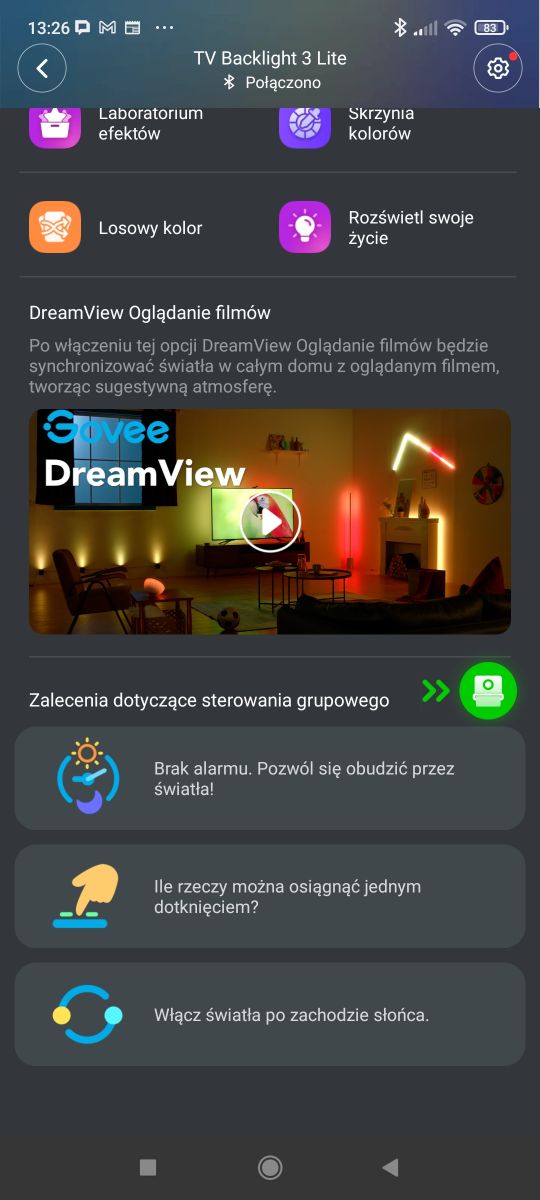
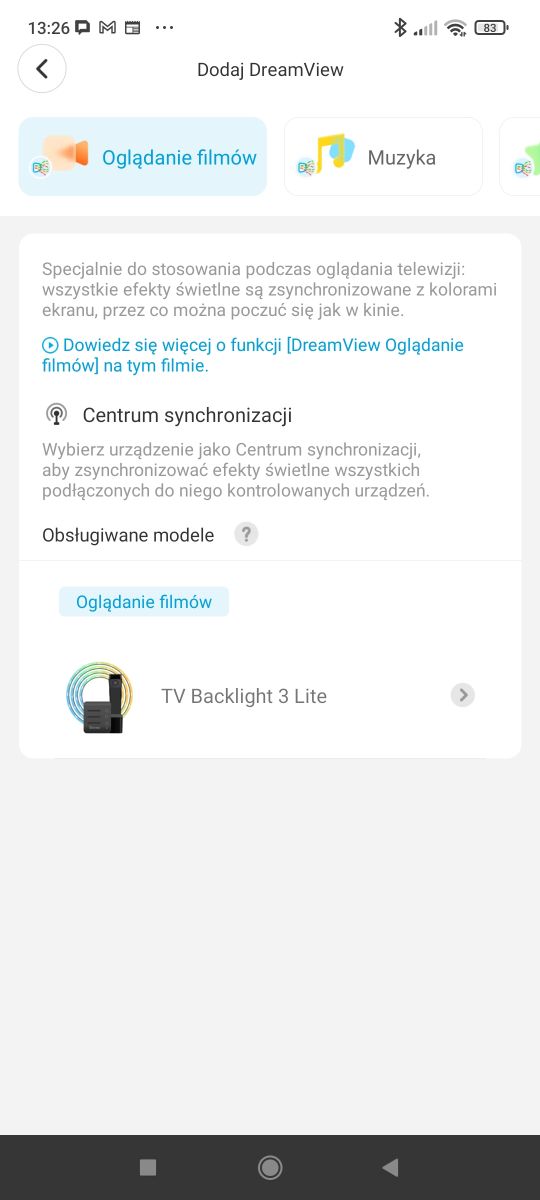
    Govee app screen showing LED light control features and DreamView mode. App screen showing DreamView lighting sync settings and connected device info. App screen showing DreamView setup with Create button highlighted App screen showing DreamView setup with Create button highlighted


    Support Matter .
    In the options, too, you can find the QR code needed to pair the device with the Matter. This allows you to make it available on Amazon Alexa/Google Home/Apple HomeKit. Detailed instructions can be found in the screenshots below.
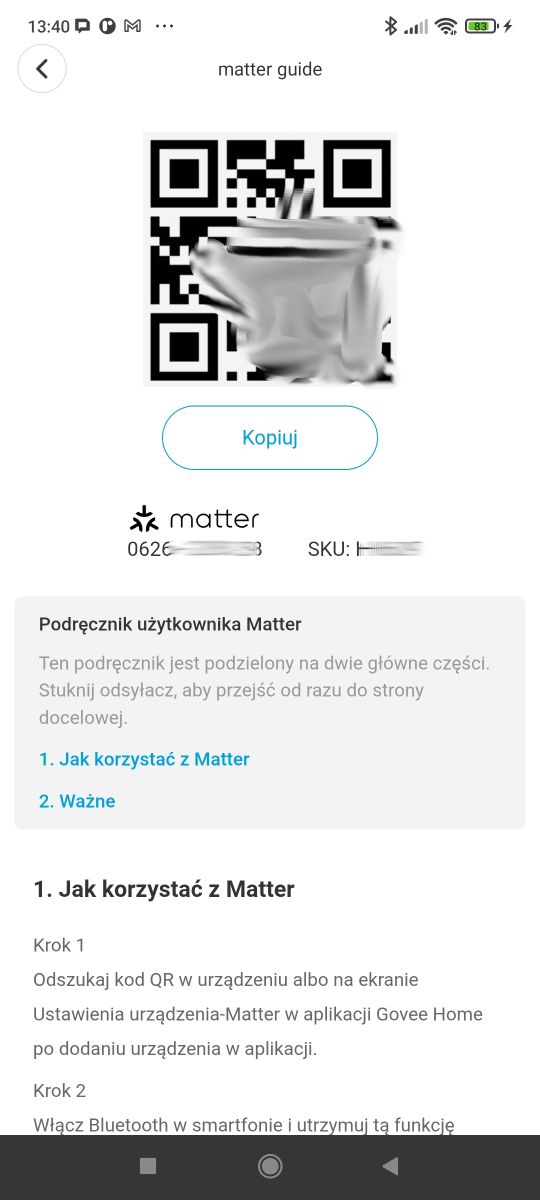
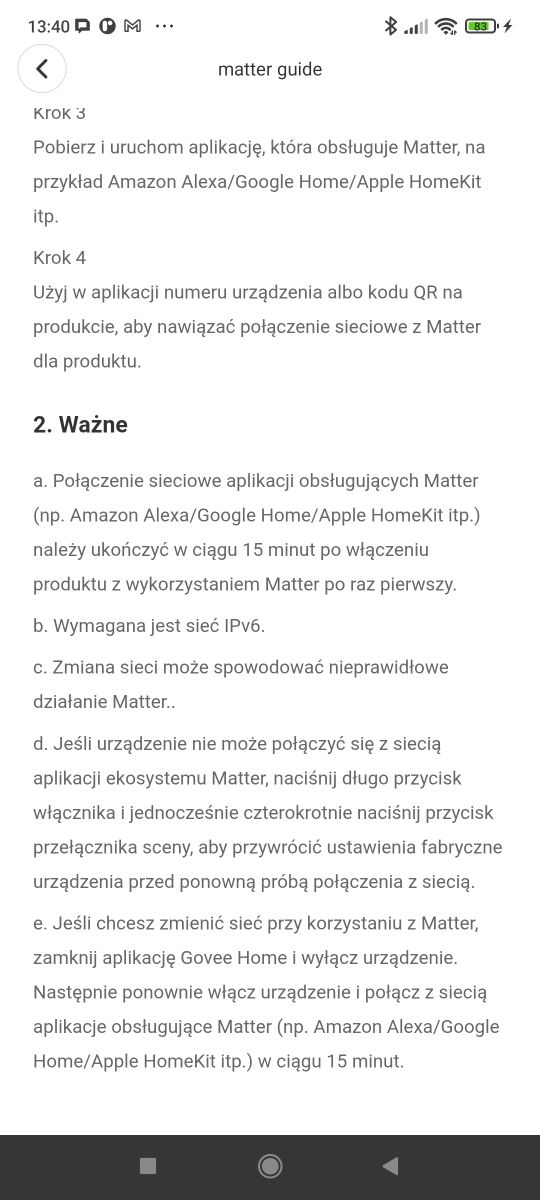
    App screen with a Matter guide, QR code, and setup instructions in Polish Smartphone screen showing instructions for setting up a Matter-compatible app
    .

    Four-colour diodes .
    It is also worth noting the construction of the LED strip shown here. This is not a normal RGB like the WS2812 - here we have RGBW LEDs, meaning that in addition to the basic colours (red, green, blue) we also have a separate white. This allows for much better colour reproduction and improves the visual experience.

    Power consumption measurements .
    Finally, a brief measurement - how much does it cost us to use such a belt? I show separately the maximum power I was able to record (cold white - the whole strip) and the standby power:
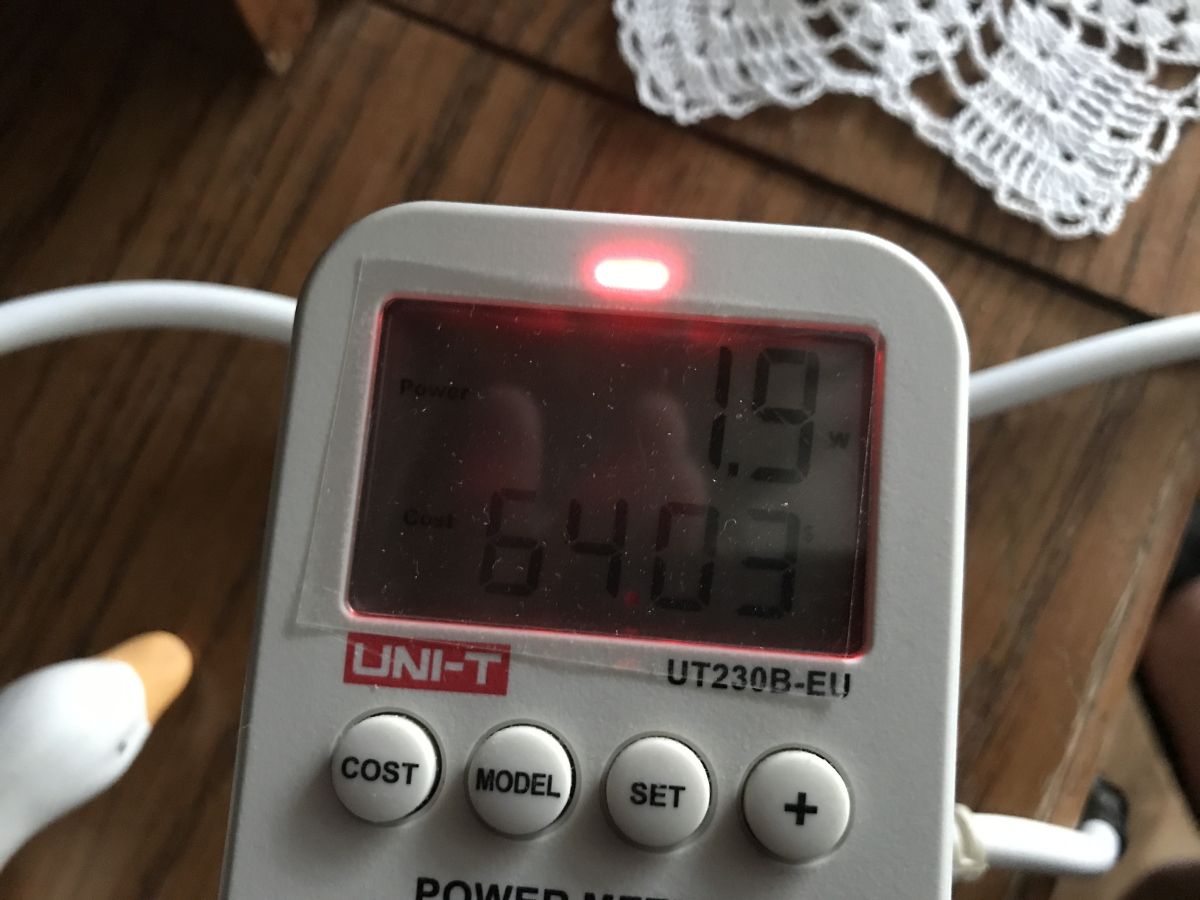
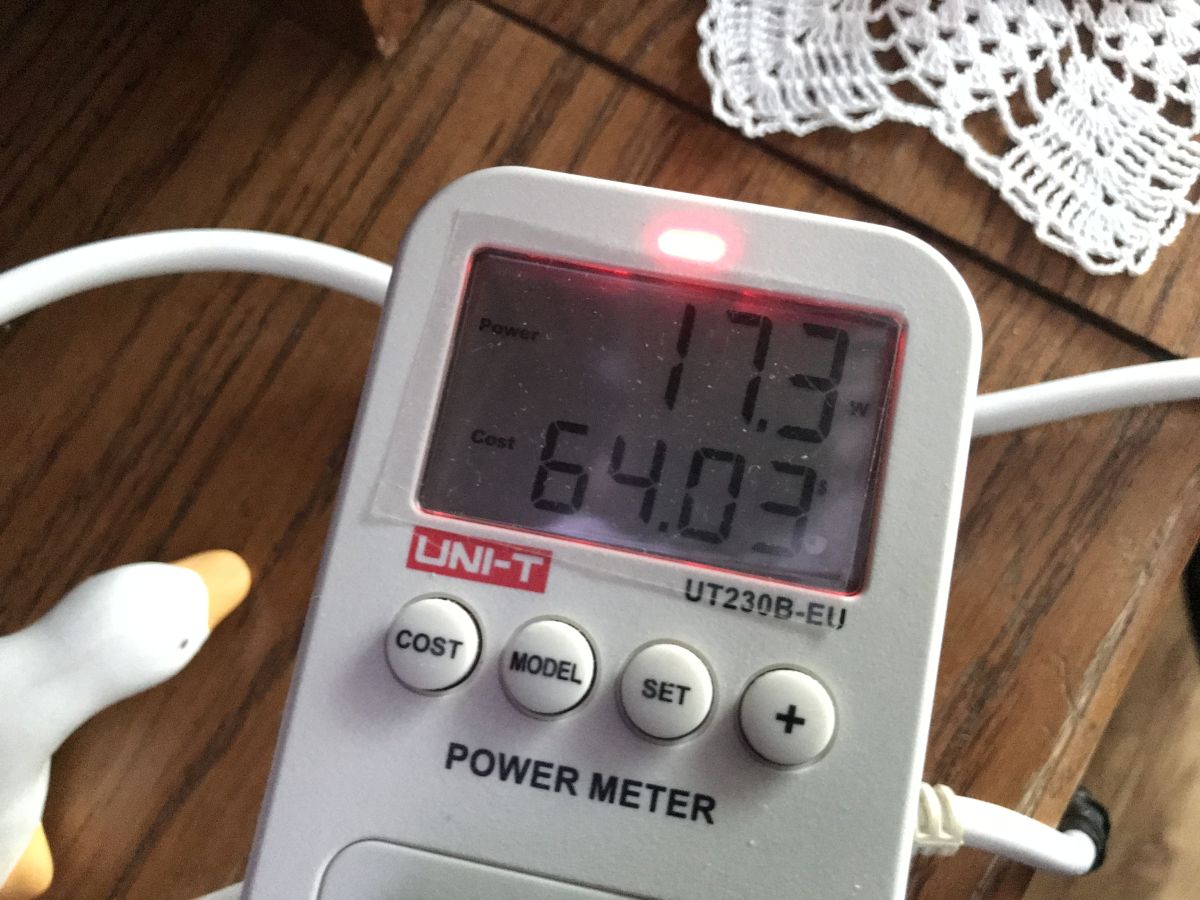
    UNI-T UT230B-EU power meter shows 1.9 W usage and cost value of 64.03 UNI-T UT230B-EU power meter shows 17.3 W usage and cost of 64.03.
    .

    The actual output during normal use is much lower, as only LEDs of one or two colours are usually lit.

    Presentation of effects and commentary - Youtube .
    We also invite you to read a summary of the material on our YouTube channel:


    .

    Summary .
    It's been a good month since I installed these lights on our TV. In that time we've managed to spend a few weekends watching and I can say in good conscience that the effect is really good. The colours are reproduced surprisingly well and the light from the LEDs blends in well with the background behind the TV, although in our case it would have been useful to move the cabinet back a little.
    The installation, initial commissioning and calibration of this product also surprised me - I thought it would be more difficult. Basically, it didn't need much tweaking. I think anyone can handle it without any problems.
    In addition, I liked the fact that the manufacturer has thought of everything - there are even physical buttons for people who don't like mobile apps. What's more, the product itself correctly turns off the LEDs when the TV is off, so it's basically maintenance-free.
    It should also not be forgotten that the stripe used here is more than just plain RGB - the LEDs used have an additional separate white channel, which allows even better colour reproduction.
    All in all, this backlighting will effectively liven up any living room or TV.

    [ Advertising collaboration with BATNA Ltd. ]

    Cool? Ranking DIY
    Helpful post? Buy me a coffee.
    About Author
    p.kaczmarek2
    Moderator Smart Home
    Offline 
    p.kaczmarek2 wrote 13211 posts with rating 11031, helped 611 times. Been with us since 2014 year.
  • ADVERTISEMENT
  • #2 21716315
    Zvirek
    Level 26  
    Cool effect, for watching films/programmes "out of the corner of your eye". - such a contemporary philips ambielight.

    But the real atmosphere, however, is only with a screen and projector, in total darkness - of course, this is my opinion.
  • #3 21716873
    pikarel
    Level 39  
    A factual description, with all the technical details, very useful for those who are less familiar with this type of device but want to use such a backlight.

    For the full "experience" of receiving the effects of backlighting light, however, the TV should be hung on an empty wall, as kol(_at_)p.kaczmarek2 described at the end of the article.
    Then nothing interferes with their viewing (except the device itself, placed in the field of view, just above the TV screen).
  • ADVERTISEMENT
  • #4 21717731
    ArturAVS
    Moderator
    I don't see any information regarding the LEDs used, something like WS2812 or something similar?
  • #5 21718545
    mongoł2000
    Level 18  
    In the videos you can see quite a lot of inaccuracy and as if the colours are a bit random - e.g. on black we have purple and sometimes there is no colour at all despite the bright object. Doesn't this cause annoyance during normal viewing of e.g. films?
    And what about the refresh rate - we won't see this on mild changes, it would be useful to test under real conditions such as a movie or games.
  • ADVERTISEMENT
  • #6 21718547
    p.kaczmarek2
    Moderator Smart Home
    Which second of which film do you mean?
    mongoł2000 wrote:
    .
    And what about the refresh rate - on mild changes we won't see that
    .
    For this reason, the first video of the "Practical Tests" is sudden colour changes, have you seen it? In my opinion the reaction is instantaneous, but someone can time-lapse to measure.
    Helpful post? Buy me a coffee.
  • ADVERTISEMENT
  • #7 21720908
    vulture30
    Level 11  
    Thanks for the factual test.
    Did you consider the T2 version?
    Could you write why you chose the T3?
  • #8 21722191
    p.kaczmarek2
    Moderator Smart Home
    I have not analysed the differences between specific versions, if you have any experience with this, please share.

    ArturAVS wrote:
    I don't see info, regarding the LEDs used, something like WS2812
    .
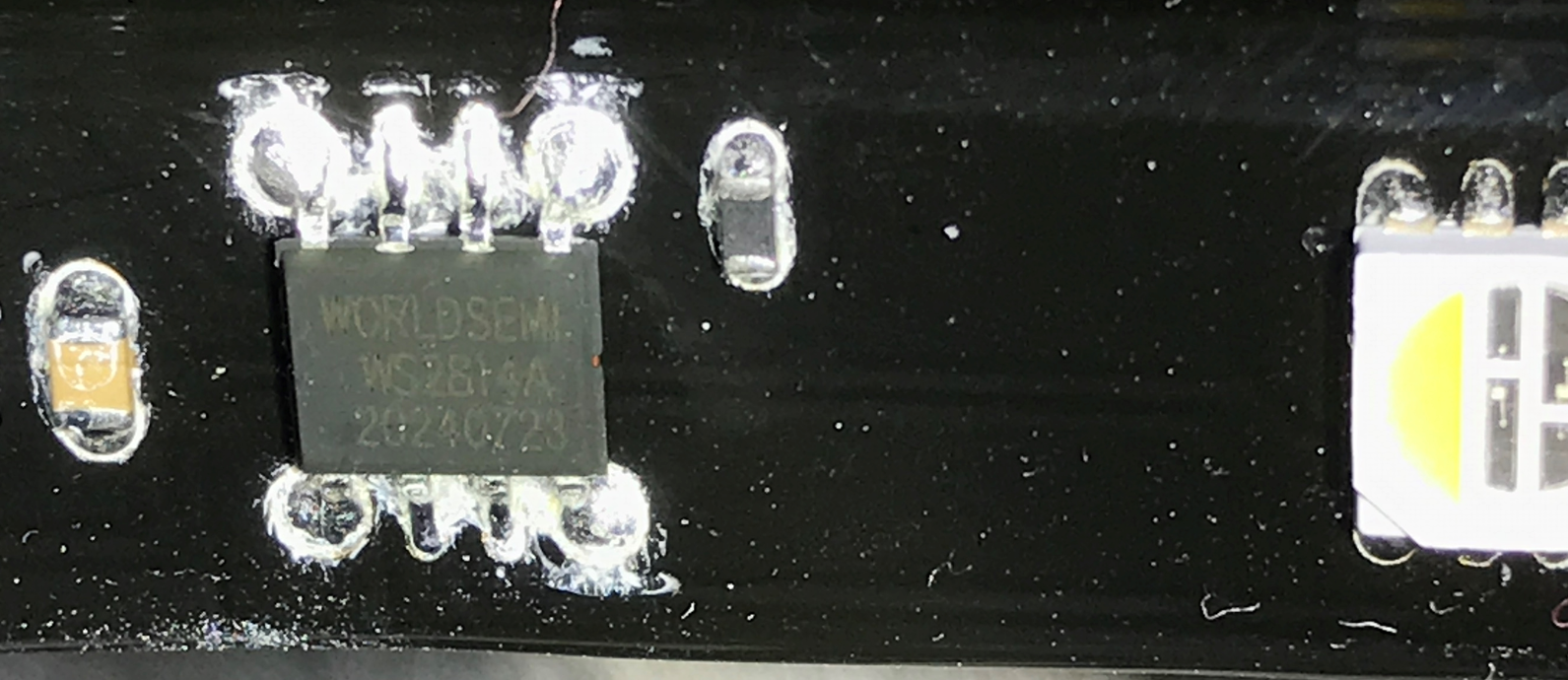
    Close-up of WS2814A controller on RGBW LED strip .
    The strip is based on the WS2814A with RGBW leds.
    Helpful post? Buy me a coffee.
  • #9 21729969
    keseszel
    Level 26  
    It is a pity that there is no price. Might be useful for some people. I have a Philips with ambilight(by the way - rubbish not tv) and I hardly use it. It's terribly annoying during the day, you have to remember to turn off those lights. For me it's as much a gadget as beads for Indians. But it's up to you - at first it makes you happy, then it's gone....
  • #11 21731311
    keseszel
    Level 26  
    Actually, I did not pay attention to the link. I have been in the habit of reading or scrolling titles for a long time. When I'm interested in a title I read, when I'm not I just scroll.
📢 Listen (AI):
ADVERTISEMENT