

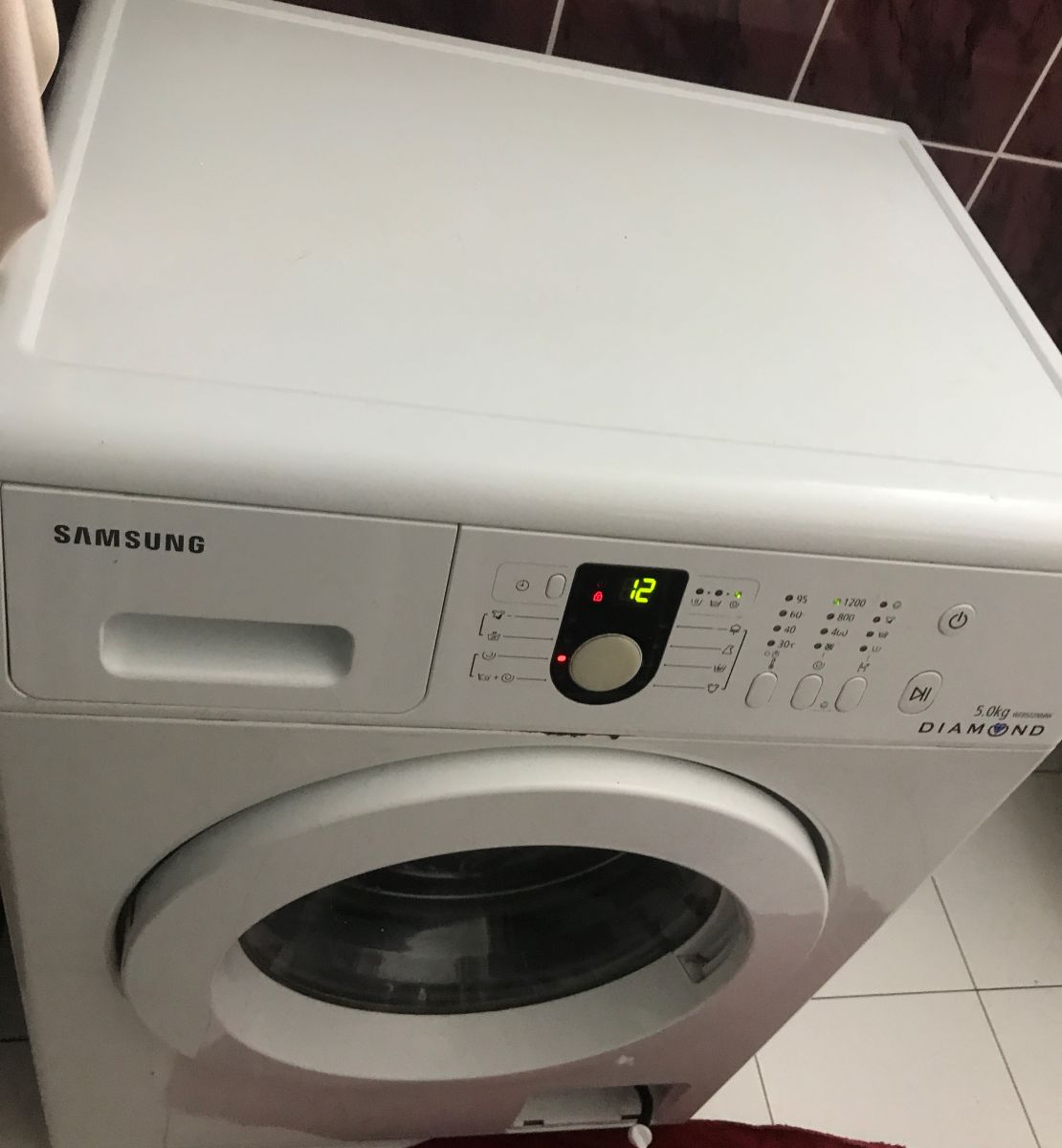
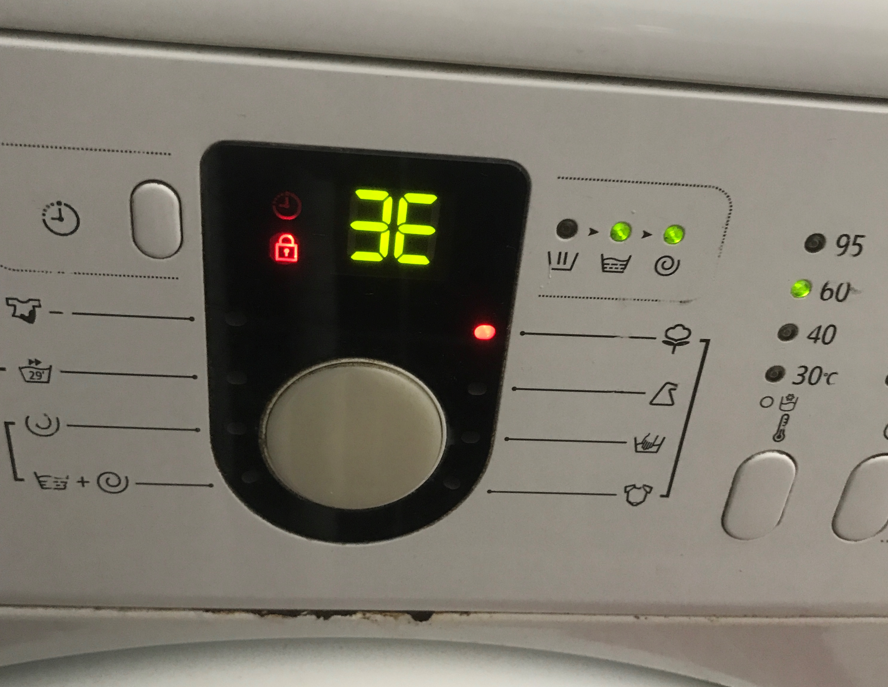
How do the brushes look after 10 years of use? Today I will present a simple washing machine repair, a process that anyone can do at home. The patient is a Samsung Diamond WF8502NMW, which occasionally shows code 3E and usually just doesn't start at all. When the spinning alone is switched on, the timer goes from 12 to 11 and then goes back to 12 again and the drum does not start spinning. In addition, the owner reports that strange black dust has been collecting under the washing machine for some time. It's time to check what's broken.
I didn't have time to take pictures, but I used the phone as a torch, so I have a video. Of course, first we unplug the unit from the mains. Access to the motor is very easy here.
The characteristic black dust comes from the brushes. Brushes are the current-carrying components in motors that come into contact with the commutator. Such brushes gradually wear away as the motor runs, causing fine carbon dust to settle inside the washing machine. It is time to check how worn down the brushes are in the unit being repaired. Access is easy and they can be unscrewed without further disassembly.
By the way, in the video, you can still see the RPM sensor on the 'end' of the motor - it too can be damaged.
The screws are on both sides - but the phone can help us locate them, I myself often use it as a substitute for an inspection camera.
Almost done, now the wires still need to be disconnected from them. Disconnect the flat connectors (pins), but don't pull, just push in the "tongue".
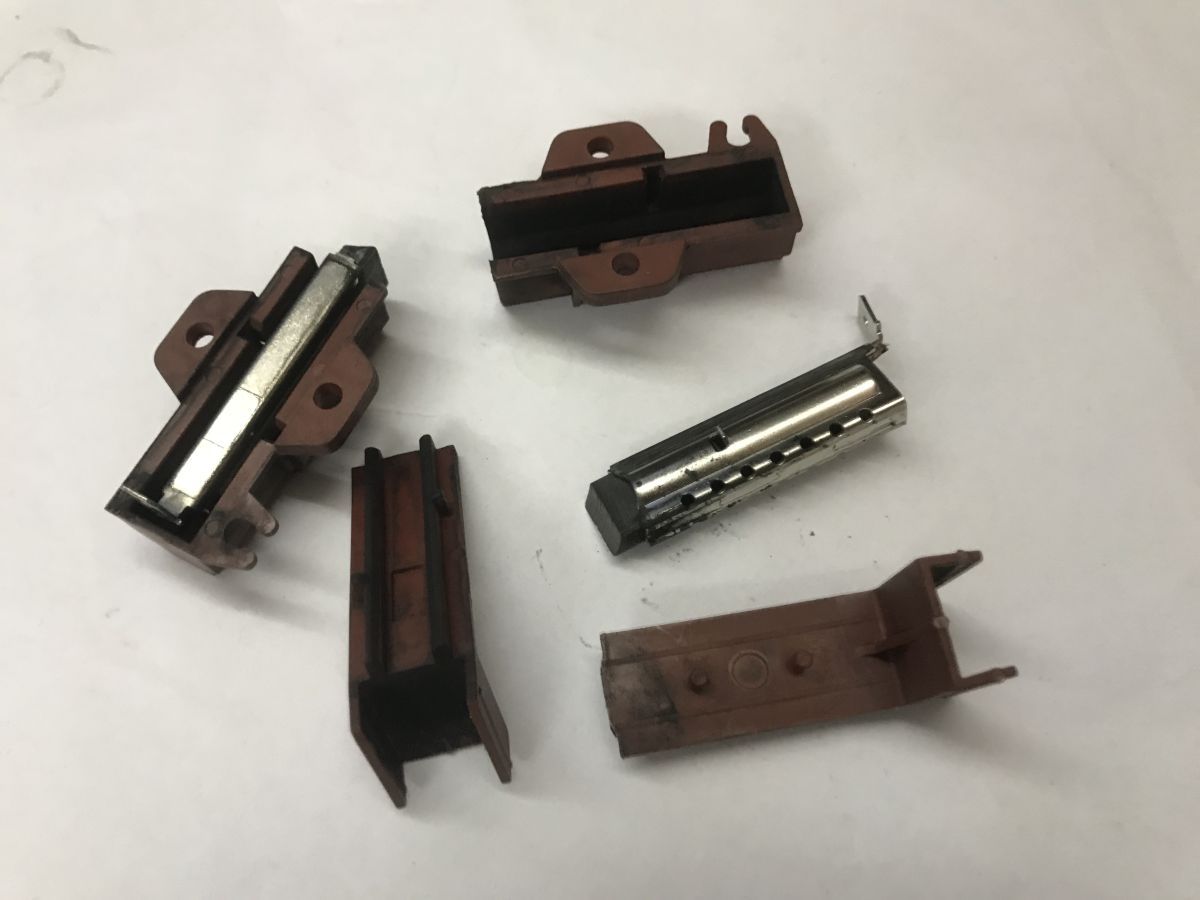
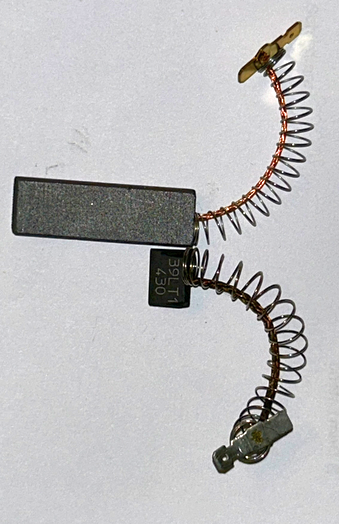
The brushes appeared to be very worn. Below is a comparison of the new and old ones:
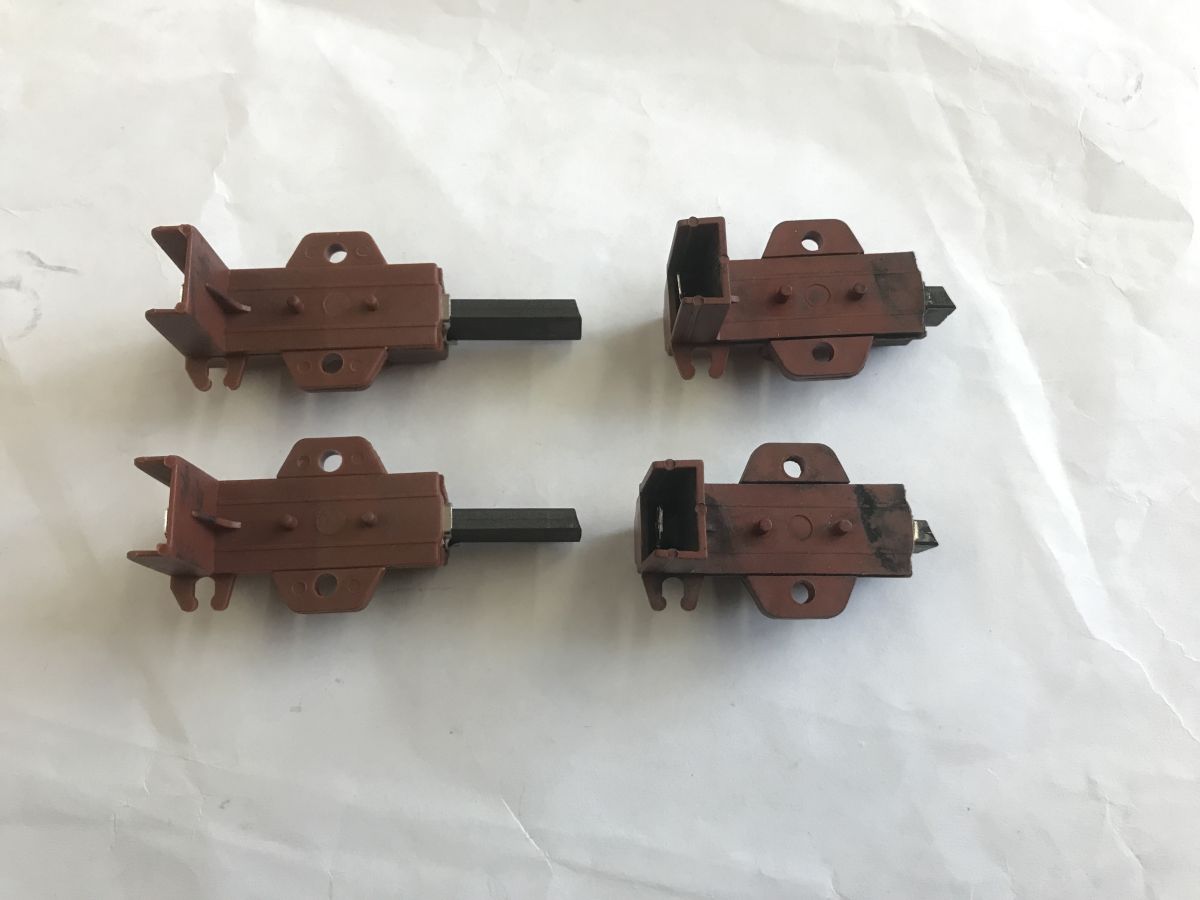
We managed to order 1:1 matching replacements, with the same shear angle as the original. We paid PLN20 two pieces. In addition, I still cleaned the inside of the dust, although I didn't lapped the brushes themselves as I thought they fitted well. I only checked after assembly to make sure they weren't sparking excessively, and let it spin a few times with an empty drum.
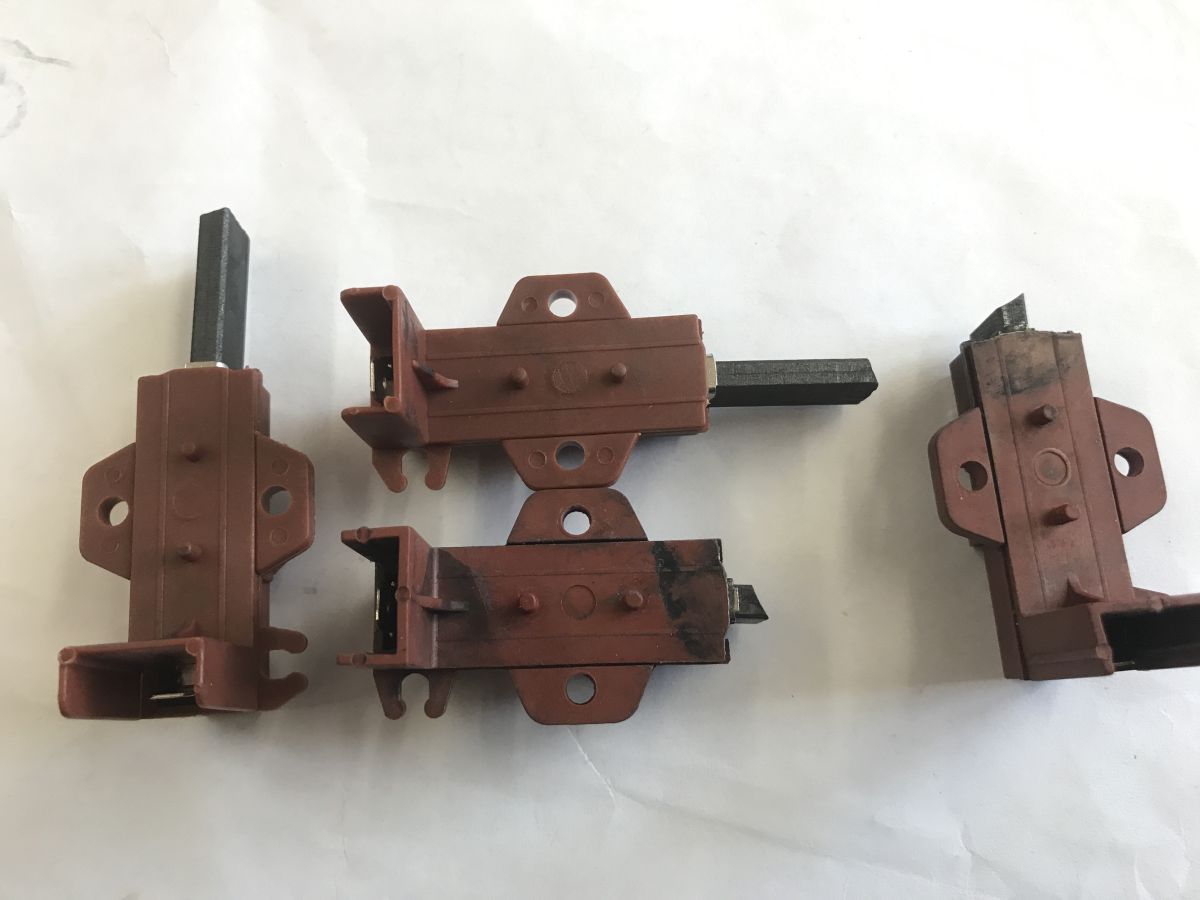
You can still see how the brush works - there is a spring in the middle, this is what presses it down:
In summary, the repair was done very late. The washing machine was no longer moving at all, and the unaware owner did not know that the mysterious black dust accumulating under the washing machine was the result of the brushes rubbing off. The brushes were replaced and the washing machine was cleaned, although I did not lapped the brushes themselves. The whole thing has now been running for a month without complaint. Do you also carry out this type of simple repair?
Cool? Ranking DIY Helpful post? Buy me a coffee.
 I showed my wife the receipt for 7,50zł and when asked "what's that" I replied "the cost of repairing the microwave". She was further offended and probably even more so