logo elektroda
logo elektroda
X
logo elektroda

Why Are Consumer pSLC SSDs Unavailable or Expensive Compared to Industrial Models?

Lexman 555 15
ADVERTISEMENT
  • #1 21774426
    Lexman
    Level 2  
    Hello, everyone!
    I am interested in a simple question: Why are there no p(SLC) technology SSDs available for sale at a reasonable price for consumer SSDs?

    There are some examples:
    https://www.bilibili.com/video/BV1Km4y1L7Nd/
    https://www.youtube.com/watch?v=qR-21tPLeYU
    https://www.saraba1st.com/2b/thread-2148975-1-1.html
    They are from China, but they are not sold anywhere.

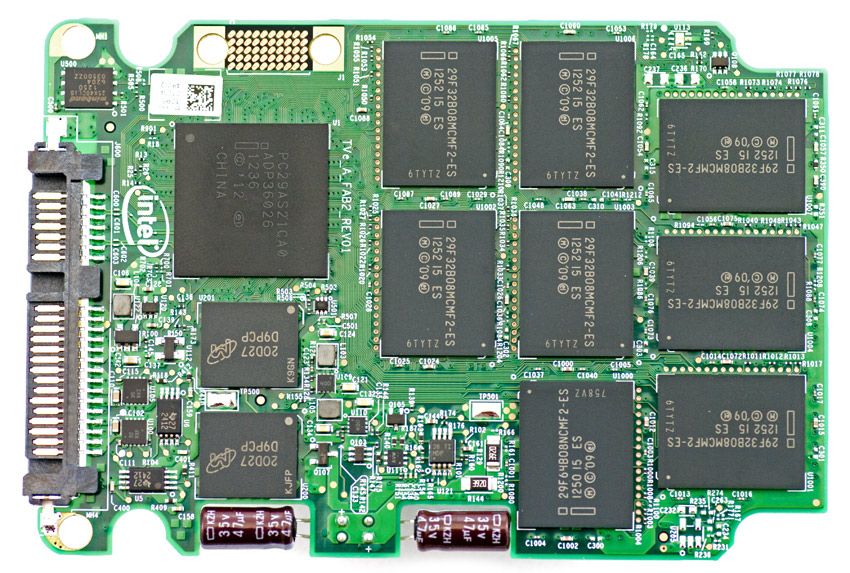
    SSDs manufactured 10-15 years ago had NOR flash for storing firmware, and capacitors to protect against rapid power loss. These components were very inexpensive for mass production, but now they are not installed, which greatly reduces the reliability of SSDs. WHY?
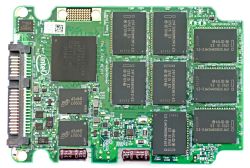
    SSD internal board with Intel controller and multiple NAND flash chips

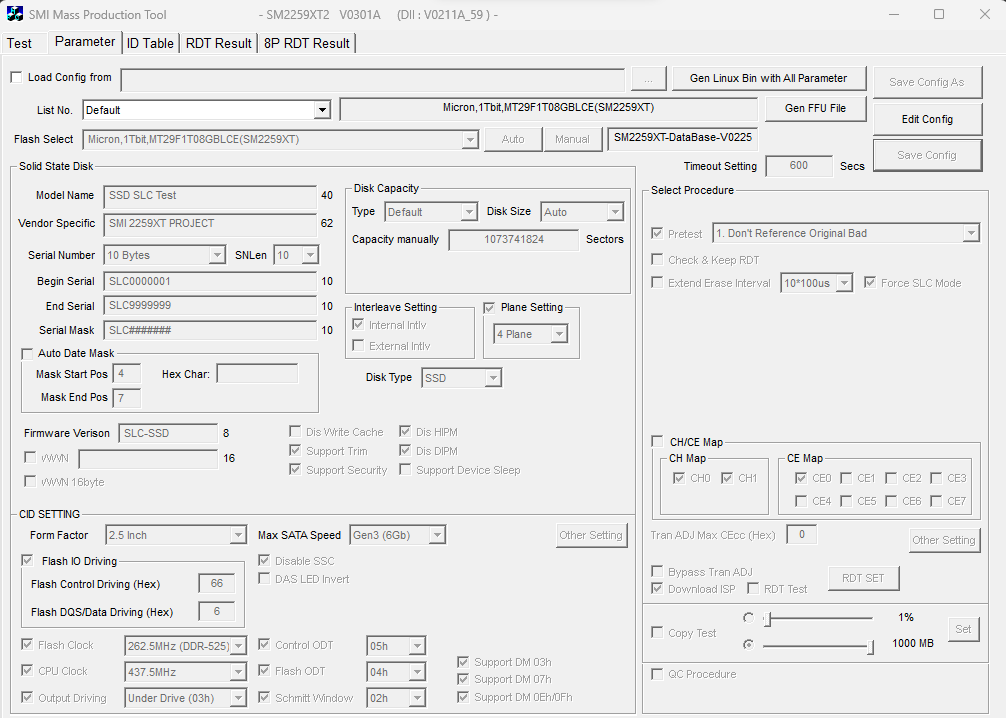
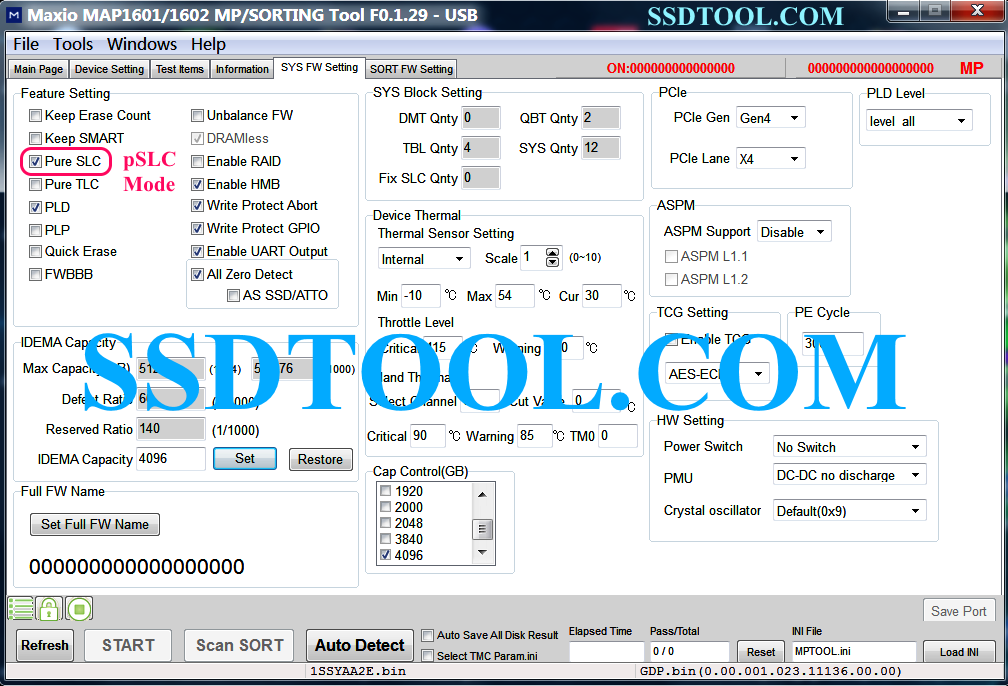
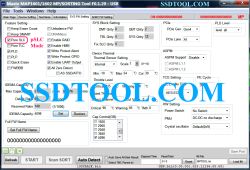
    Some enthusiasts working with SSDs have found a way to change the firmware to p(SLC) mode, which is very easy to do during production, but why isn't it being done?
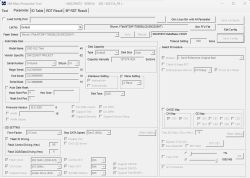
    SMI Mass Production Tool software interface for SSD configuration and testing Maxio MP Tool software interface for SSD setup with Pure SLC mode selected

    Industrial or corporate SSDs are currently sold at 2-4 times higher prices!
    https://www.bhphotovideo.com/c/product/1831777-REG/freefly_910_00798_high_endurance_pslc_ssd.html
    https://www.studiosport.fr/disque-dur-ssd-pslc-de-256tb-haute-endurance-freefly-a29172.html
    AI: Could you share what specific use case or workload you have in mind for pSLC SSDs in a consumer context?
    Mining cryptocurrency Chia.
    AI: Are there particular capacities, form factors, or performance requirements you’re looking for in a consumer pSLC SSD?
    No, this is a more general question.
  • ADVERTISEMENT
  • #2 21774588
    dt1
    Admin of Computers group
    Lexman wrote:
    I am interested in a simple question: Why are there no p(SLC) technology SSDs available for sale at a reasonable price for consumer SSDs?

    Hello.
    Most likely this is because 90 percent of customers, or maybe even more, do not care about the inner workings of the SSD they buy. Most of the SSDs manufactured today is QLC, so if you want to run them as pSLC that would decrease their size (4 bits needed to store a single bit of data) or increase the price (more memory chips needed to achieve same capacity). This would make such a disk much more expensive (and some higher capacities could not be achieved on a typical NGFF module due to space constraints).

    Another thing is that most drives are sold in notebook computers or prebuilt desktops and consumers are buying exactly what the manufacturer puts there. And the manufacturer picks the cheaper, because they advertise only capacity of the SSD, so the rest is not important.

    Lexman wrote:
    They are from China, but they are not sold anywhere.

    Most likely this does not come from the good of the heart, but because these units may be manufactured from scraps or memory that did not pass a quality test. So instead of trashing these chips it is better to sell them. I would not trust these units too much.

    Lexman wrote:
    SSDs manufactured 10-15 years ago had NOR flash for storing firmware, and capacitors to protect against rapid power loss. These components were very inexpensive for mass production, but now they are not installed, which greatly reduces the reliability of SSDs. WHY?

    Cost reduction. Also space reduction. Sata 2.5 inch form factor is barely used anymore.

    Lexman wrote:
    Some enthusiasts working with SSDs have found a way to change the firmware to p(SLC) mode, which is very easy to do during production, but why isn't it being done?

    Because most consumers will pick a unit of a higher capacity regardless of the technology it uses. Try to imagine a standard QLC SSD next to much smaller capacity QLC/pSLC unit priced equally on the shop shelf. Which one would sell better? Remember, 9 out of 10 customers do not know the difference.

    Lexman wrote:
    Industrial or corporate SSDs are currently sold at 2-4 times higher prices!

    Yes, and it makes a perfect sense.
  • ADVERTISEMENT
  • #3 21774656
    kaleron

    HDD and data recovery specialist
    Lexman wrote:
    flash NOR for firmware storage
    - in NOR memory you can store only a part of the firmware - the executable code, which basically does not change. All firmware modules that can change dynamically (in particular Flash Translation layer, defect lists, block wear information, SMART parameters...) are stored in NAND chips. NOR memories are still used, sometimes they are simply integrated in the controller. Capacitors are too - another issue is whether their capacitance is actually sufficient.
    Lexman wrote:
    changing the firmware to p(SLC) mode, which is very easy to do during production, but why is it not done?
    - pSLC (pseudoSLC) mode involves treating multi-state chips (storing many bits in one transistor) like SLC. The consequence is a significant reduction in the volume of data that can be stored in the chips. Manufacturers aim to sell the highest capacity drives at the lowest possible price. Selling pseudo-SLC drives would spoil the capacity-to-price ratio and call into question the desirability of manufacturing multi-state chips. There is no market for this. If reliability was really important to customers and they were prepared to pay for it, multi-state technology would never have displaced SLC chips.
    Lexman wrote:
    Industrial or enterprise SSDs are now being sold at prices 2-4 times higher!
    - because that's the segment of customers who are willing to pay for quality and reliability. For coprophagists, there is cheap QLC.
    Lexman wrote:
    Chia cryptocurrency mining.
    - this is an application that heavily stresses the SSD with programming/deleting operations. Unfortunately, with an application like this you have to treat the SSD as a consumable and calculate for yourself whether it pays to buy a more expensive but more reliable drive, or a cheaper one that you will kill with writes in a few weeks. It's simply part of the cost of your business.
    Company Account:
    Kaleron sp. z o. o.
    Hirszfelda 4/18, Jelcz-Laskowice, 55-231 | Tel.: | Company Website: https://kaleron.pl
  • #4 21774724
    Lexman
    Level 2  
    I don't understand why consumers and users aren't interested in the internal structure and operation of SSDs. There are a lot of questions and articles about repairing and restoring SSDs on websites dedicated to discussing SSDs, which means that a lot of people have encountered failures and malfunctions in their SSDs.

    It's like buying a sports car and trying to save money on the brake system. That would lead to disaster, right? It's obvious, isn't it?

    The ROM memory can store dynamic firmware data: P/E over 1,000,000!
    A ROM memory chip is very small and can easily fit on an M.2 SSD, costing only a few cents for a large order.
    ROM memory for storing firmware will greatly increase the reliability and recoverability of SSDs.

    Or is this done deliberately to shorten the life of SSDs and make them impossible to repair and recover data from?
  • #5 21774982
    kaleron

    HDD and data recovery specialist
    Lexman wrote:
    I don't understand why consumers and users are not interested in the internal structure and performance of SSDs
    ...me either, but that doesn't change the fact that price is the primary criterion for purchasing decisions. This is why manufacturers strive to produce the cheapest, rather than the most reliable, storage media possible.
    Lexman wrote:
    ROM can store dynamic firmware data: P/E of more than 1,000,000!
    - in theory...in practice, note how long it takes to reprogram a NOR chip versus a NAND chip. And you would have to reprogram it every time the media moves, if only to update the Flash Translation Layer arrays. Therefore, a solution is used that does not kill device performance, i.e. the values that change dynamically are stored in the NAND chips.

    Lexman wrote:
    And maybe this is a deliberate measure to shorten the life of SSDs and prevent them from being repairable and recoverable?
    - no, this is just a side effect of cutting costs.
    Company Account:
    Kaleron sp. z o. o.
    Hirszfelda 4/18, Jelcz-Laskowice, 55-231 | Tel.: | Company Website: https://kaleron.pl
  • #6 21775445
    pawel1148
    Level 24  
    QLC stores 16x more information per memory cell, but at the same time does not reduce the life of the drive by as much as 16x over the old SLC. So taking into account the amount of data stored by a given number of cells QLC is sometimes about 3x better than SLC. After all, all you have to do is buy 16TB of QLC and only store 1TB in various places on the drive, just as if it was SLC 1TB.... (I don't know how much the controller will implement this by itself, and how much you have to take care of it yourself - theoretically this should be taken care of by the controller for you without any intervention). Theoretically in this competition QLC with the same number of memory cells should provide 3x more data written and read.

    This would be silly, as years ago RAID systems for disk failures were developed that don't require such fiddling, and are built into most modern motherboards, so if someone wants reasonably secure data, all they need to do is buy 2 drives and connect them in the right configuration, and 2 QLC drives will certainly be cheaper than 1 piece of SLC.... In the days of SLC, SSDs were so cheap that hardly anyone thought of replacing HDDs with SSDs.
  • ADVERTISEMENT
  • #7 21775561
    soltyk
    Level 27  
    pawel1148 wrote:
    QLC stores 16x more information in a memory cell, but at the same time does not reduce the life of the drive by as much as 16x over the old SLC. So taking into account the amount of data stored by a given number of cells QLC is sometimes about 3x better than SLC.

    How did that work out for you? SLC lasted 100,000 writes and QLC usually only 200 - that's not a difference of a dozen times, but hundreds! The basics.

    Quote:
    Already years ago RAID systems were developed for disk failures that don't require such fiddling, and are built into most modern motherboards, so if someone wants to have reasonably secure data, all they need to do is buy 2 drives and plug them into the right configuration


    RAID with SSD gives a false sense of security. It protects against accidental drive failure, but not against wear and tear - each write brings the SSD closer to the inevitable end, with the drives in the array writing exactly the same amount of data. There have been many occasions when both SSDs in RAID-1 have died simultaneously.
  • #8 21775614
    kaleron

    HDD and data recovery specialist
    pawel1148 wrote:
    QLC stores 16x more information in a memory cell,
    - not 16 x more information, just 16 distinguishable floating gate charge levels. Relative to two in SLC. 16/2=8. But that's only 4 times more information (look at the exponents of powers).
    pawel1148 wrote:
    QLC is sometimes about 3x better than SLC.
    very controversial statement - are you able to substantiate it?

    pawel1148 wrote:
    After all, you can buy 16TB QLC and only write 1TB to different parts of the drive as if it were SLC 1TB....
    - far from enough. PseudoSLC recording involves writing only two logic values to multistate circuits - e.g. for QLC these would be 0000 and 1111. And you need to handle the appropriate encoding/decoding at firmware level to make 0000 from the input 0 and 1111 from 1 and vice versa on the output. This will improve your signal-to-noise ratio, reduce bit errors and generally increase the performance and life of the media, but economically it makes little sense against a drive just factory SLC.

    pawel1148 wrote:
    Raid systems for disk failure,
    - note that two identical SSDs operating under identical operating conditions, often using chips from the same production batch and identically loaded with writes, are at huge risk of failure in a very short time interval. And I have seen more than one such RAID. I am not the only one:
    soltyk wrote:
    Many times both SSDs in RAID-1 have failed simultaneously.


    pawel1148 wrote:
    2 QLC drives will certainly be cheaper than 1 piece of SLC
    - while still being significantly less durable.
    pawel1148 wrote:
    Back in the days of SLC, SSDs were so cheap that hardly anyone thought of replacing an HDD with an SSD.
    quality costs money. HDDs were also more expensive per unit of capacity, with fewer failures, before the introduction of SMR technology.

    soltyk wrote:
    SLC lasted for 100,000 writes, while QLC usually only 200
    - even if 600 (such a value is usually stated by chip manufacturers in the documentation) and even if the decrease in chip life is not only due to denser bit packing ( more specifically - https://kaleron.pl/awarie-SSD.php ) - the fact is that the difference goes not in times, but in orders of magnitude.
    Company Account:
    Kaleron sp. z o. o.
    Hirszfelda 4/18, Jelcz-Laskowice, 55-231 | Tel.: | Company Website: https://kaleron.pl
  • ADVERTISEMENT
  • #9 21776358
    Lexman
    Level 2  
    Storing the main firmware in NOR memory, with the ability to recover from a critical failure in NAND (translator, etc.), will not result in complete SSD failure, but only in data loss.

    The SSD can be restored by completely erasing it with Linux commands. If the firmware is stored in NAND memory, as is currently the case, restoration is only possible using the Mass Production Tool, a factory program for flashing SSDs.

    I understand that most consumers are not interested and do not want to be interested in SSD devices, but they pay money, and there are many examples on disk repair forums of failure and data loss during non-intensive, normal use of disks.

    But there is a small percentage of people who are knowledgeable about technology or actively interested in SSD technology, so why don't they discuss the issue of p(SLC) on various forums (I haven't found much information)?
  • #10 21776577
    Łukasz_W

    HDD and data recovery specialist
    Lexman wrote:
    SSDs manufactured 10-15 years ago had NOR flash memory for firmware storage and capacitors to protect against rapid power loss

    And these capacitors - if damaged causing them to short out - damage the contents of this memory.
    As a result, more often than not, it is over data and over disk.
    kaleron wrote:
    - in NOR memory you can only store part of the firmware - the executable code, which basically does not change

    Well, not exactly.
    This extra memory - from what I've been able to check so far - is modified every time the contents of the disk are changed / switched off(?).

    Just to clarify, the above solution is not a revelation either.


    Lexman wrote:
    I understand that most consumers are not interested and do not want to be interested in SSD devices, but they are paying money

    Basically, what are you getting at? If you see a gap in the market, it remains to fill it.
    Company Account:
    HEX SERWIS
    Smołdzinska 2B/16, Kobysewo, 83-304 | Tel.: | Company Website: https://hex-serwis.pl
  • #11 21776606
    kaleron

    HDD and data recovery specialist
    Lexman wrote:
    will not cause the SSD to fail completely, only the loss of data.
    usually the value of the contents significantly exceeds the value of the media itself.

    Lexman wrote:
    The SSD can be restored by completely wiping it using Linux commands.
    What do you mean?
    Lexman wrote:
    If the firmware is stored in NAND, as it is today, restoration is only possible using Mass Production Tool, the factory's SSD flashing software.
    - usually for a short time. Physical wear and tear on the chips cannot be undone by you. Therefore, repairing a degraded SSD by re-flashing the firmware often gives a very short-lived result.
    Lexman wrote:
    most consumers are not interested and do not want to be interested in SSD devices,
    - and are generally unable to understand how they work and why they break, but this is the case with most other tech devices.
    Lexman wrote:
    why aren't they discussing p(SLC) on various forums (I couldn't find much information)?
    - because it's a prosthetic solution to the problem. you want a reliable SSD, you buy an industrial grade SLC for adequate money. You want cheap - you buy the cheapest one from Aliexpress.
    Łukasz_W wrote:
    it is modified every time the contents of the drive change / shut down(?).
    - have you been able to work out what is changing?
    Company Account:
    Kaleron sp. z o. o.
    Hirszfelda 4/18, Jelcz-Laskowice, 55-231 | Tel.: | Company Website: https://kaleron.pl
  • #12 21776632
    Łukasz_W

    HDD and data recovery specialist
    kaleron wrote:
    - have you been able to determine what is changing?

    Individual fragments. But that's not in every model either.
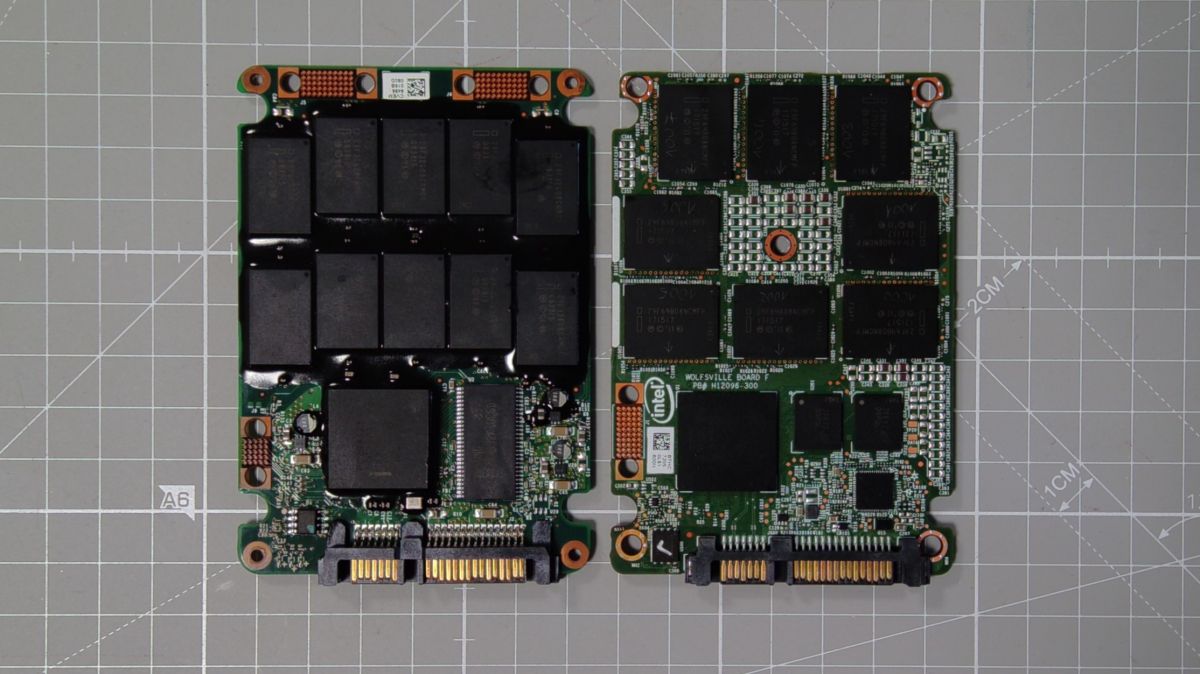
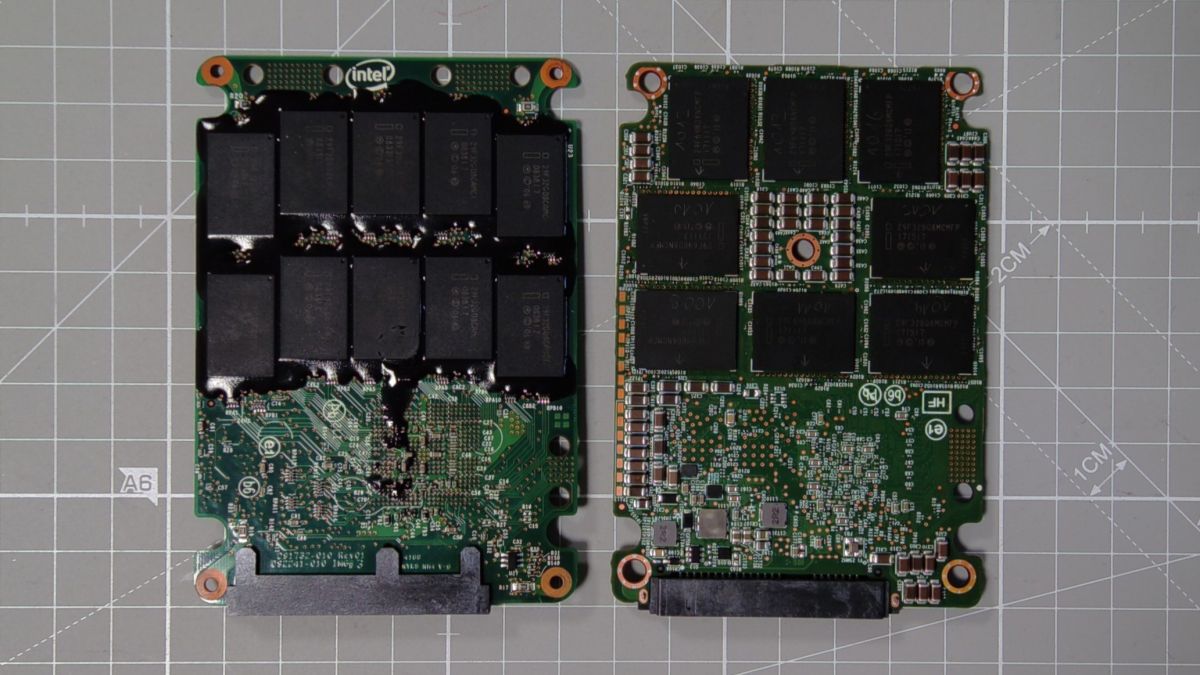
    For example, in the SSDSA2MH080G1GN, the NOR content (25X40AVNIG) remains the same, but this is also explained by the design - there is no capacitor bank.
    But already in the SSDSC2BX800G4N (25X40CLIG and 35V support on capacitors) there are individual changes in content.
    In both models, the NOR content is individual and cannot be transferred (or it) between drives.

    Unfortunately I have too little data to say more.


    Two Intel SSD PCBs with memory chips and SATA connectors on a grid background.
    Two disassembled Intel SSDs showing chips and surface-mounted components on PCBs
    Company Account:
    HEX SERWIS
    Smołdzinska 2B/16, Kobysewo, 83-304 | Tel.: | Company Website: https://hex-serwis.pl
  • #13 21777171
    Lexman
    Level 2  
    I am not a sales manager or marketer, but many people on various forums want to buy p(SLC) SSDs at the same price, i.e., 4 TB (TLC) for $350 or 1,280 GB p(SLC) for $350, but there is no such choice.

    Added after 5 minutes:

    Linux command: erase SSD
    https://www.cyberciti.biz/faq/linux-remove-all-partitions-data-empty-disk/
    https://partedmagic.com/secure-erase/

    Physical wear (TLC) is not the same as p(SLC) wear; differentiated data storage voltage has more different levels the more bits there are in a cell. In other words, a worn SSD (TLC) can function normally in p(SLC) mode.
  • #14 21777299
    kaleron

    HDD and data recovery specialist
    Lexman wrote:
    many people on various forums want to buy SSD p(SLC) drives at the same price,
    I also know many people who want to buy a Ferrari at the price of a Fiat, but somehow it doesn't work out.

    Lexman wrote:
    Linux comand erase SSD
    logically erasing the SSD, is not repairing it.
    Lexman wrote:
    physical wear (TLC) is not the same as p(SLC) wear;
    and how is it different? in pSLC you have a better signal-to-noise ratio at the price of capacity loss, it is also simpler and less burdensome to program, but once wear occurs, the
    Lexman wrote:
    wearable SSD (TLC) can operate normally in p(SLC) mode.
    is not true.
    Company Account:
    Kaleron sp. z o. o.
    Hirszfelda 4/18, Jelcz-Laskowice, 55-231 | Tel.: | Company Website: https://kaleron.pl
  • #15 21777524
    soltyk
    Level 27  
    Lexman, in most cases, if you store data on a drive, you want to be sure that your data won't be lost one day and that you can read it later. Therefore, most people store important data on spinning rust (preferably in RAID-1/5/6/10 of them, as HDDs are also subject to failure) and this won't change in the foreseeable future.

    Optionally, you can use a SSD - or RAID-0 from SSDs - to store data you don't care about: OS and software, other data that can be easily restored from backup, or for a workspace. In this case, QLC disks are the best offer due to their price/TB.

    There is no demand for type of SSD you're talking about. In consumer sector, shutting down PCs and downtime needed to replace such a drive isn't a problem, so more durable SLC/MLC became a thing of the past.

    Lexman wrote:
    Linux comand erase SSD


    Any operating system can do this: Windows, Unix and BSD.
  • #16 21777643
    kaleron

    HDD and data recovery specialist
    soltyk wrote:
    In this case, QLC disks are the best offer due to their price/TB.
    Looking at the one-time cost of the purchase, yes. Assuming the drives fail quickly enough for the manufacturer to replace them under warranty, perhaps they will too. However, if you look at it long-term, I think buying a more expensive but more durable and reliable device might make sense.
    Company Account:
    Kaleron sp. z o. o.
    Hirszfelda 4/18, Jelcz-Laskowice, 55-231 | Tel.: | Company Website: https://kaleron.pl

Topic summary

Consumer-grade pSLC (pseudo-SLC) SSDs are scarce and expensive compared to industrial models primarily due to market positioning, cost structures, and manufacturing priorities. Industrial SSDs use pSLC mode to enhance endurance and reliability by programming one bit per cell, which significantly increases lifespan and data retention, making them suitable for harsh environments and critical applications. However, this comes at a higher cost and lower storage density, which conflicts with consumer market demands for larger capacities at lower prices.

Consumer SSDs typically use TLC or QLC NAND flash to maximize storage density and reduce costs, sacrificing endurance and reliability. The absence of NOR flash for firmware storage and power-loss protection capacitors in modern consumer SSDs is a cost-saving measure, as these components increase manufacturing complexity and price. Industrial SSDs retain these features to ensure data integrity and reliability under power loss conditions.

Firmware modification to enable pSLC mode is technically feasible and sometimes performed by enthusiasts, but manufacturers do not widely implement this in consumer products due to market demand, cost implications, and the need to balance performance, capacity, and price. Additionally, the firmware and controller designs in consumer SSDs are optimized for multi-level cell operation rather than pSLC, making such modifications non-trivial for mass production.

In summary, the unavailability and high cost of consumer pSLC SSDs stem from economic trade-offs, market segmentation, and technical design choices prioritizing capacity and cost over endurance and industrial-grade reliability.
Summary generated by the language model.
ADVERTISEMENT