logo elektroda
logo elektroda
X
logo elektroda

Oscyloskop podłączony do diody z latarki: skąd sygnał 50Hz 33mV w ciemności?

dzimus 339 10
ADVERTISEMENT
  • #1 21790205
    dzimus
    Level 12  
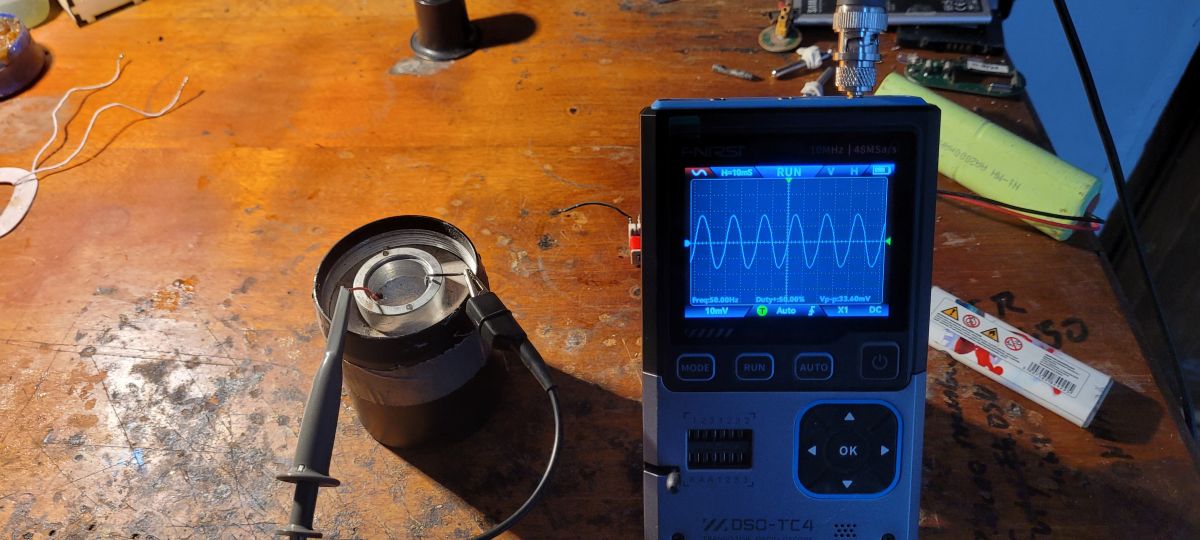
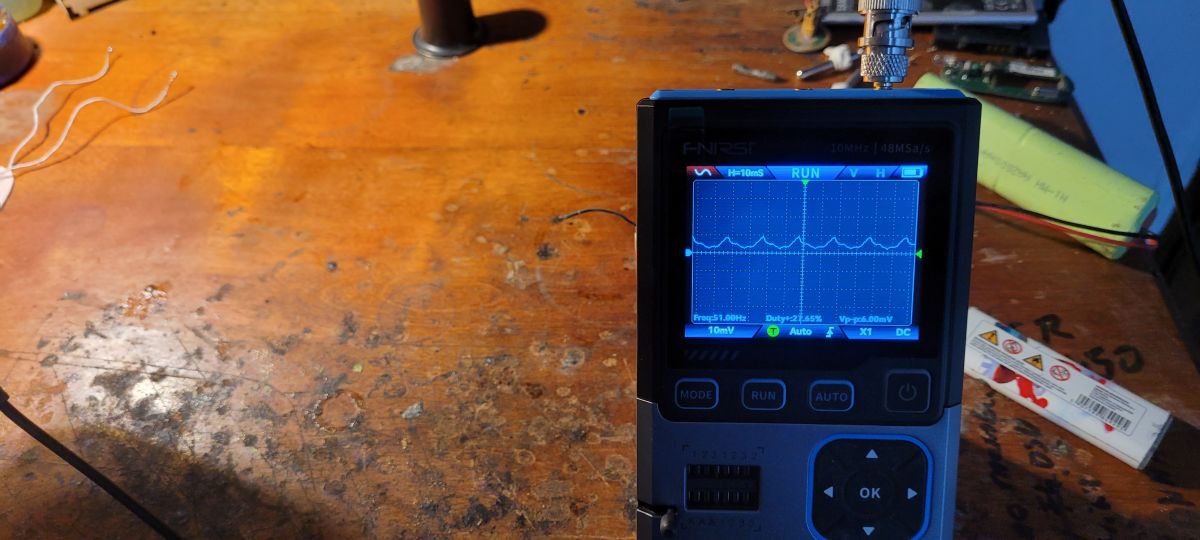
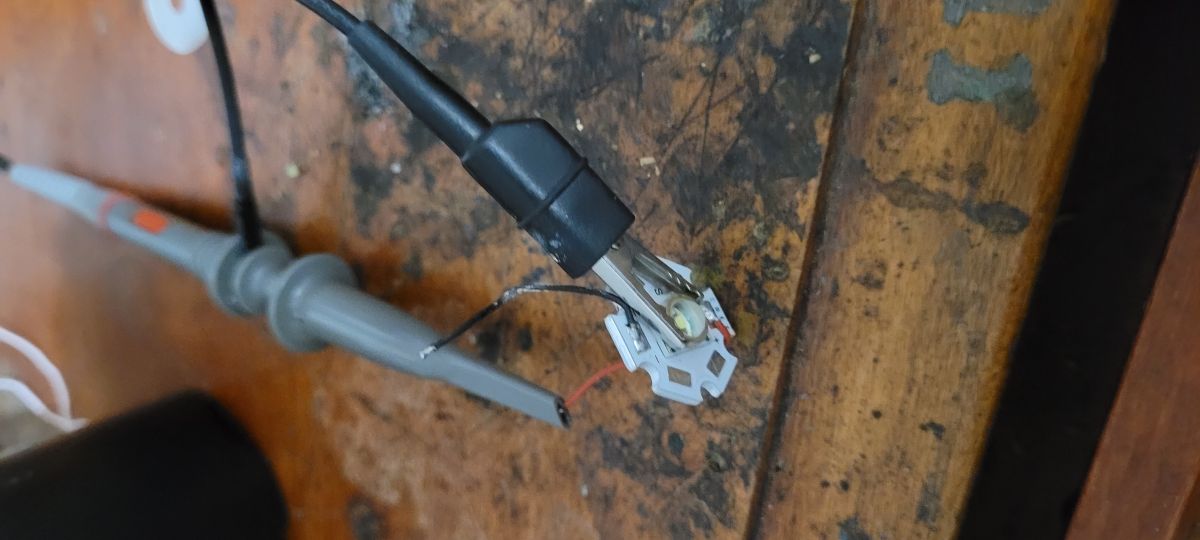
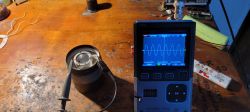
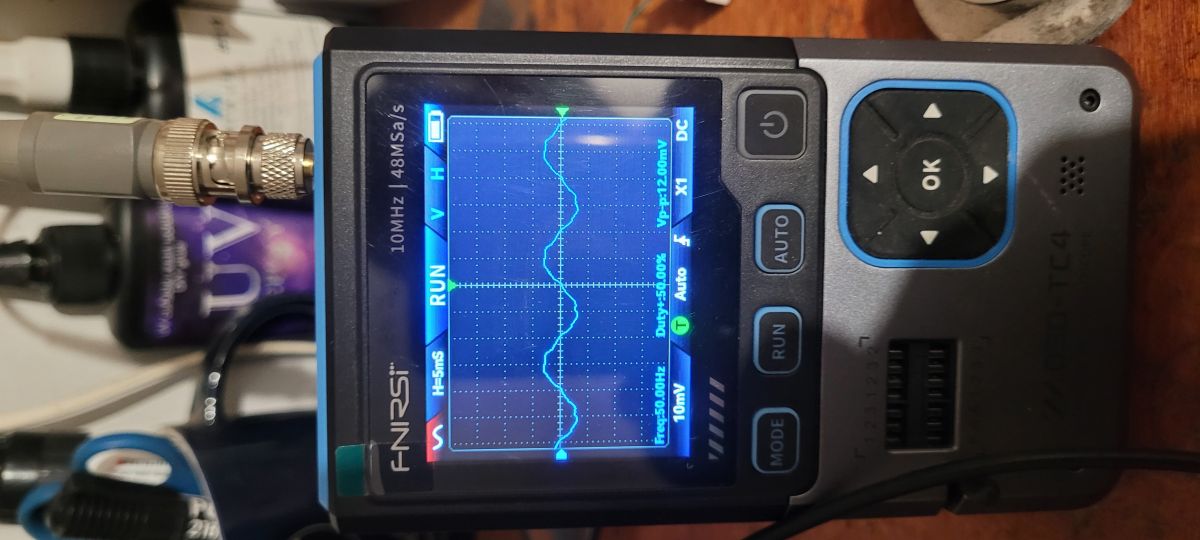
    Dzień dobry. Czy ktoś mógłby wyjaśnić mi to zjawisko? Oscyloskop podłączam do diody z latarki. Częstotliwość równo 50 Hz, wypełnienie 50%, Vp 32-33 mV. W ciemności, gdy zbliżam do światła, wszystko zanika. Nic z tego nie rozumiem.DSO-TC4 oscilloscope connected to an acoustic transducer on a wooden workbenchCompact digital oscilloscope on a workbench displaying a waveform on the screen
  • ADVERTISEMENT
  • #2 21790283
    ArturAVS
    Moderator
    No shielding. Connect the ground of the probe to the metal housing of the diode. 10 mV/dz is quite high sensitivity. It certainly catches interference from the mains.
  • ADVERTISEMENT
  • #3 21790711
    astony
    Level 14  
    Or maybe from your fingers.
    Try not to touch the electrode of the oscilloscope. (Some paper, cloth).
  • #4 21790797
    dzimus
    Level 12  
    Czy można to zjawisko wykorzystać FNIRSI digital oscilloscope showing sinusoidal waveform on screenOscilloscope probe connected to an LED on a wooden workbench do pomiaru jakichś wartości? Dlaczego po wartości odczytu spadają do zera po oświetleniu diody? >>21790283
  • #5 21790814
    _jta_
    Electronics specialist
    Perhaps take care to ground the torch hand and ground in common with the oscilloscope?
  • #6 21790840
    jarek_lnx
    Level 43  
    When the diode is illuminated, its dynamic resistance decreases. The lower the resistance, the more strongly interference from the mains is suppressed.
  • ADVERTISEMENT
  • #7 21790989
    _jta_
    Electronics specialist
    If the oscilloscope has an input impedance of 1 MΩ (this is the standard), a photocurrent below the detection threshold with a typical meter already gives a lower diode impedance.
  • #8 21790994
    dzimus
    Level 12  
    Dioda się świeci?
    Dioda nie jest podłączona do źródła zasilania.
    Uziemienie jest podłączone.
    Ludzie kochani, o czym wy piszecie?
    Jest tutaj ktoś trzeźwy.
    Interesuje mnie biometria i metrologia ogólnie.
    Dlaczego rośliny mają różne potencjały tętniące z różną częstotliwością?
  • #9 21791117
    _jta_
    Electronics specialist
    dzimus wrote:
    The diode lights up?

    A photocurrent flows when it is illuminated .

    dzimus wrote:
    Ground is connected.

    And how and to what?

    dzimus wrote:
    Why do plants have different pulse potentials at different frequencies?

    Why do plants have different pulse potentials at different frequencies?
    And do they have? Does the method of measurement generate them?
  • #10 21791269
    jarek_lnx
    Level 43  
    dzimus wrote:
    There is someone here who is sober.

    If you don't understand the answer then don't cast doubt on the consciousness of those responding, because that won't help you. People answer, normally, culturally and truthfully.

    All it takes is a bit of intelligence and a few simple experiments to observe when a 50Hz waveform appears on an oscilloscope, what the amplitude depends on and to deduce where it comes from. Is it even necessary to connect to a diode to see 50Hz?
    A little is easy to say...

    dzimus wrote:
    Why do plants have different pulse potentials at different frequencies?
    I don't know anything about waveforms from plants, but for other bio-potentials, protecting the signal from grid interference is a challenge.
  • ADVERTISEMENT
  • #11 21791697
    aksakal
    Tube devices specialist
    The electrical potential of a plant is generated by the movement of ions (K+, Na+, Cl-) across cell membranes.
    The potential changes significantly in response to light, mechanical damage, temperature or the presence of pathogens.
    Oscyloskop podłączony do diody z latarki: skąd sygnał 50Hz 33mV w ciemności?

Topic summary

Podłączając oscyloskop do diody LED z latarki, obserwuje się sygnał o częstotliwości 50 Hz i amplitudzie około 32-33 mV, z wypełnieniem 50%. Sygnał ten pojawia się w ciemności i zanika po oświetleniu diody. Przyczyną jest brak ekranowania i podłączenia masy sondy do metalowej obudowy diody, co powoduje rejestrowanie zakłóceń sieciowych (mains interference) o częstotliwości sieci 50 Hz. Wysoka czułość oscyloskopu (10 mV/dz) sprzyja wykrywaniu tych zakłóceń. Zjawisko to można potencjalnie wykorzystać do pomiarów, jednak sygnał zanika pod wpływem światła, co wskazuje na wpływ oświetlenia na parametry diody i jej zdolność do rejestrowania zakłóceń.
Summary generated by the language model.
ADVERTISEMENT