

Hello to all the skinny roosters 
I bought on AliExpress and on Allegro CH341 programmers for my rooster so that it would lather well and it turned out that they required modifications.
I will therefore describe what I reworked and how.
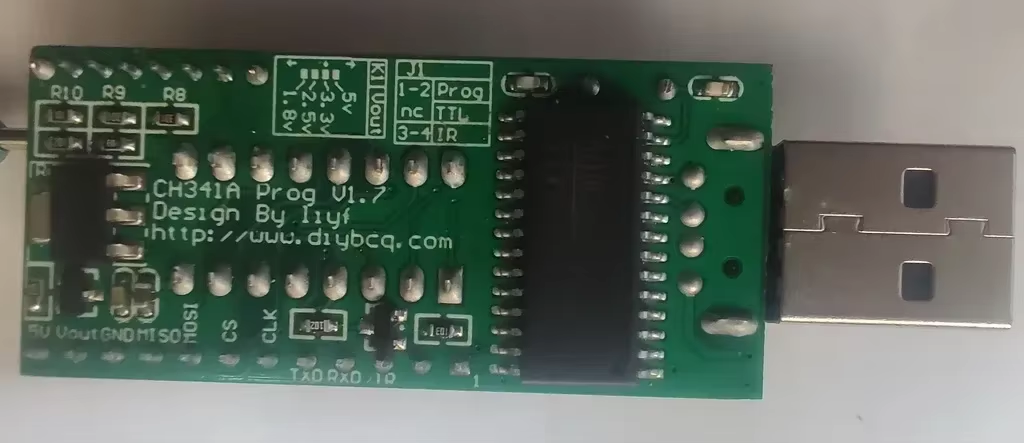
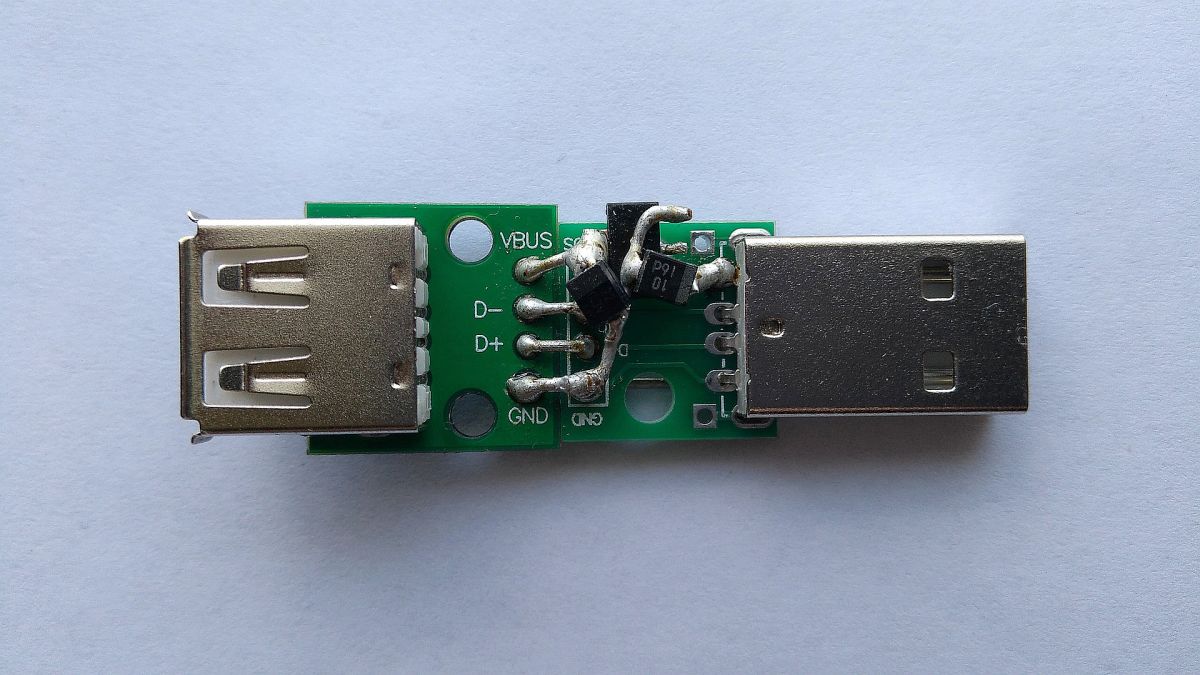
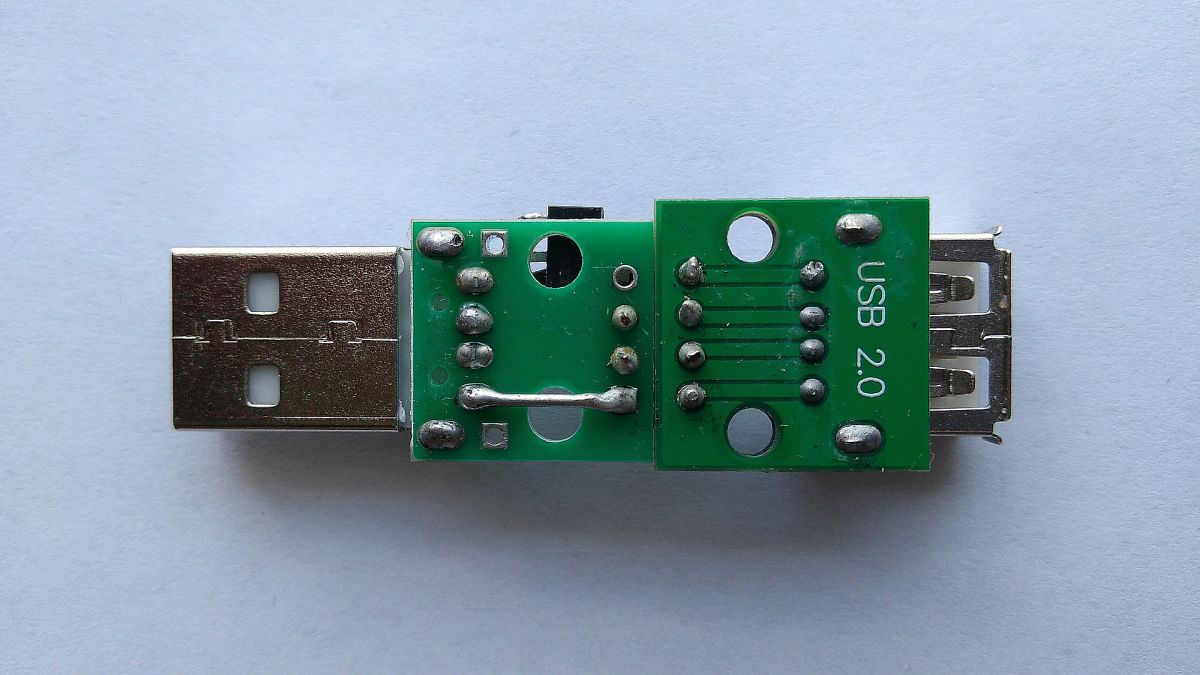
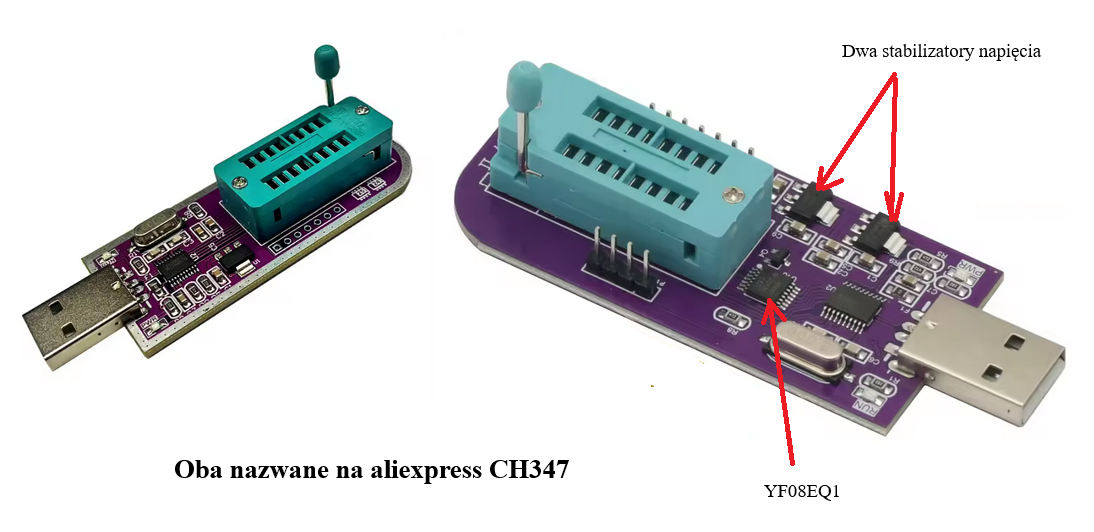
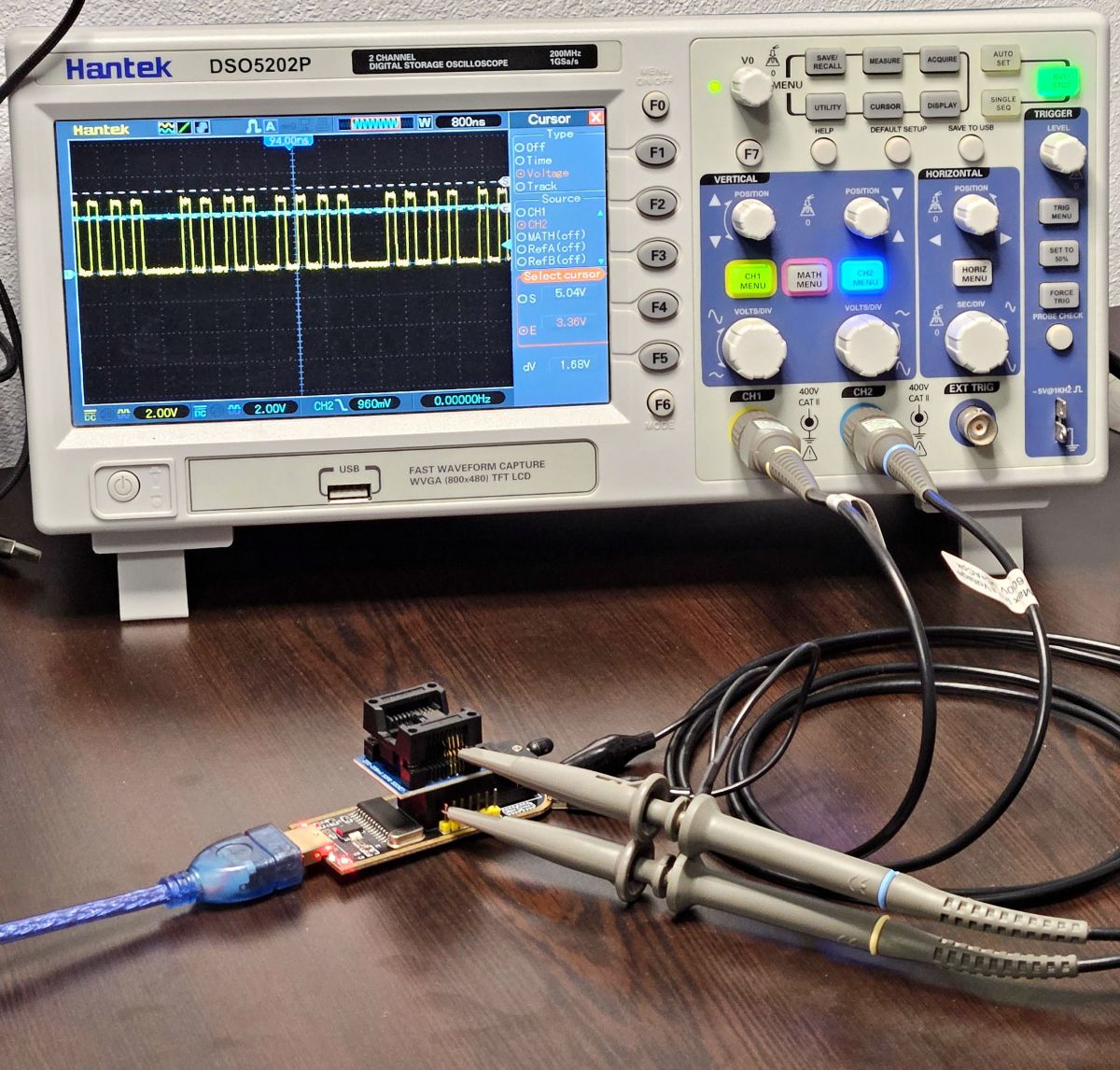
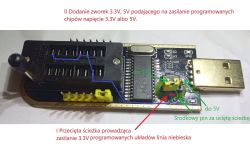
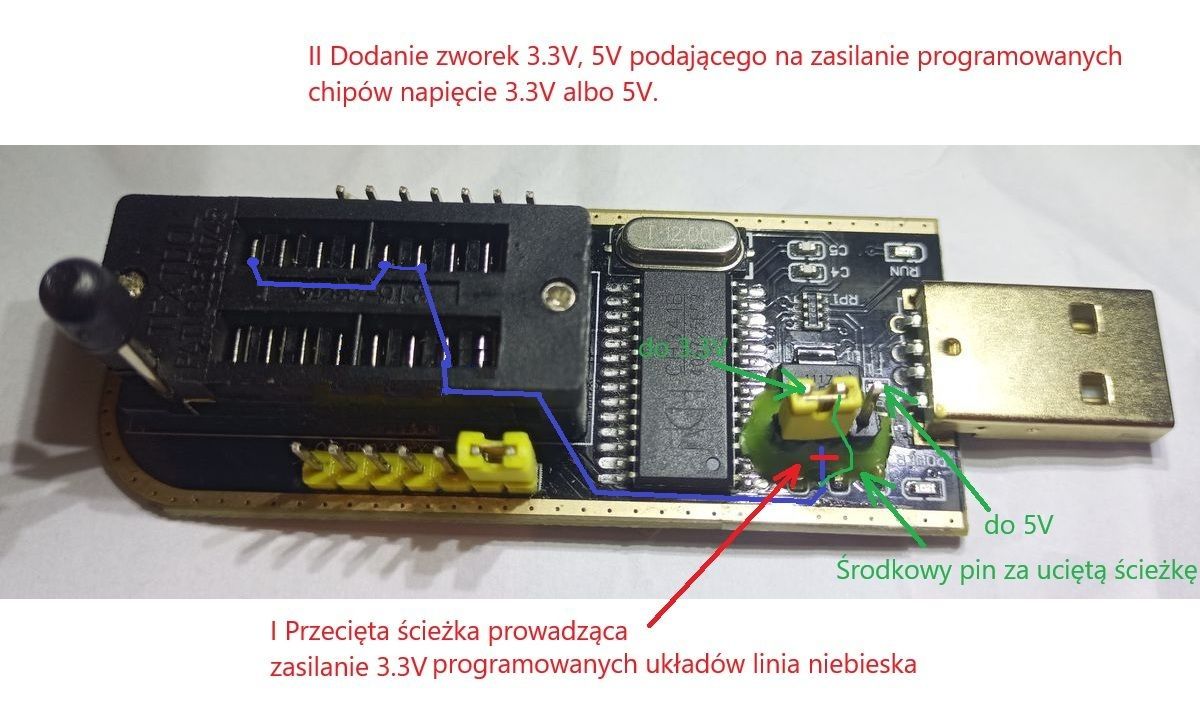
The first one from AliExpress did not feed 5V to the chip to be programmed, only 3.3V, which did not allow chips such as the M95160 to be programmed. A path was cut and a jumper added that feeds either 3.3V or 5V to the power supply of the programmable chip. The CH341 chip is powered by 5V. In my opinion, no modification is needed to power the CH341 to 3.3V, as everyone is writing about, a specialist in the A-film denounces these lies. But a modification is needed so that either 3.3V or 5V can be applied to the power supply of the programmable bone, he discusses this in movie B.
video A https://www.youtube.com/watch?v=J8-Sh7DjiXw
video B https://www.youtube.com/watch?v=hPKckby54uA
I reworked it as shown in the picture, different from film B, where it permanently gave 5V to the power supply of the programmable chip without switching.
Everything is soldermasked and UV cured. When curing, don't forget to layer and heat, I heated it at 130C.
The lower parts of the pins can be bent and undercut so that they can be soldered directly to 5V, 3.3V and the cut path.
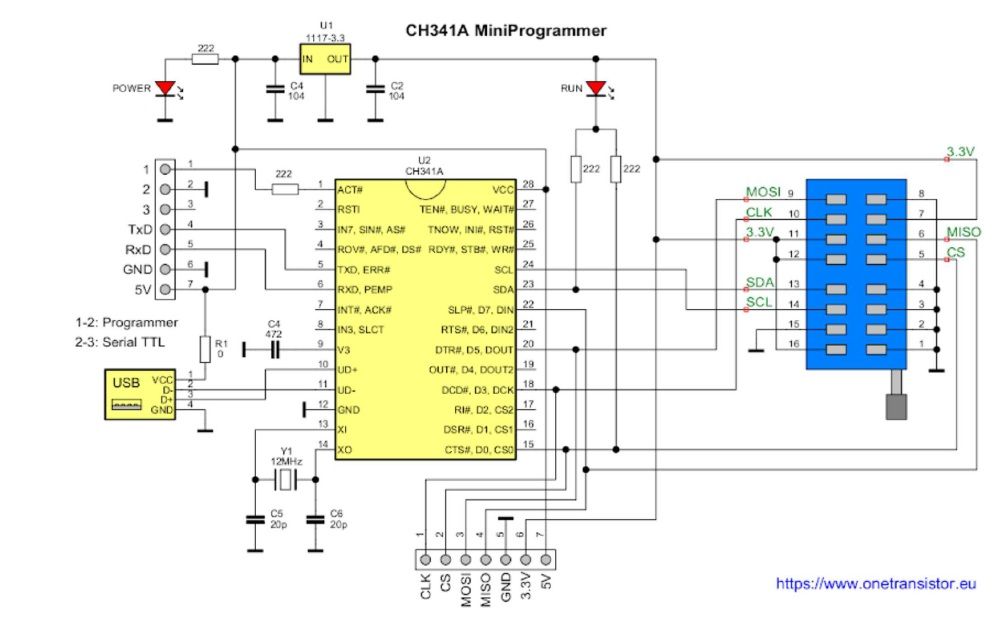
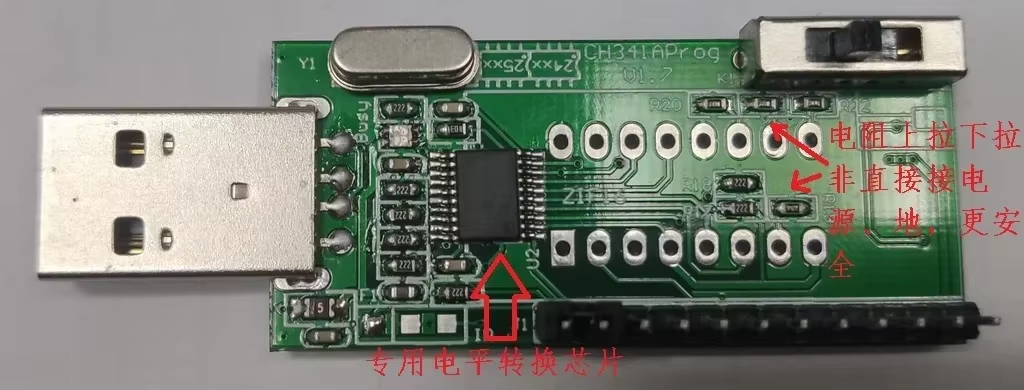
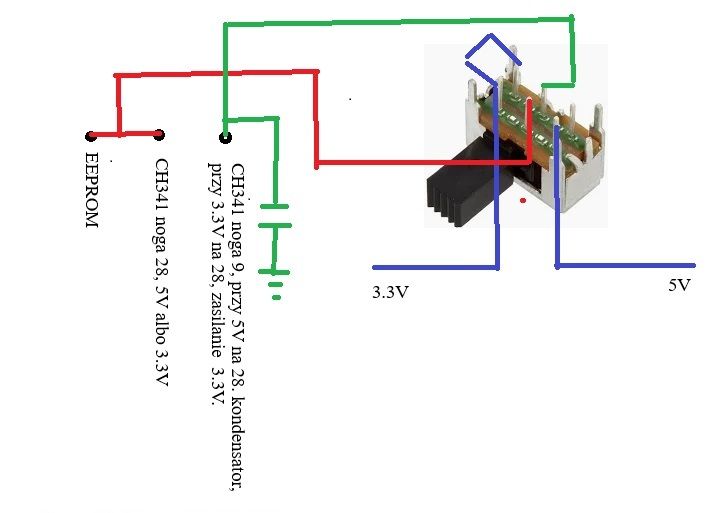
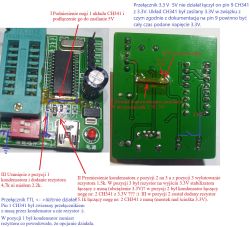
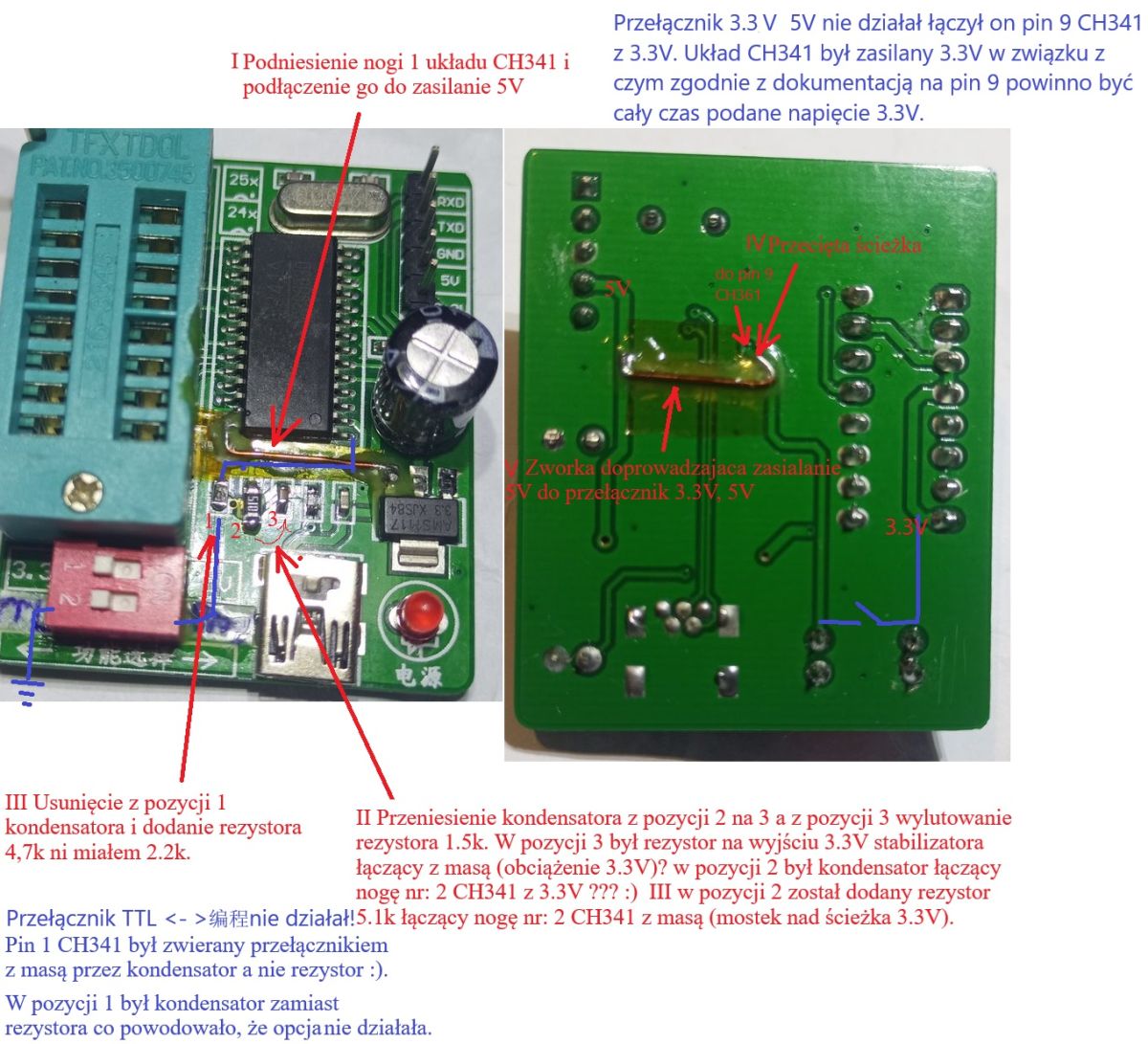
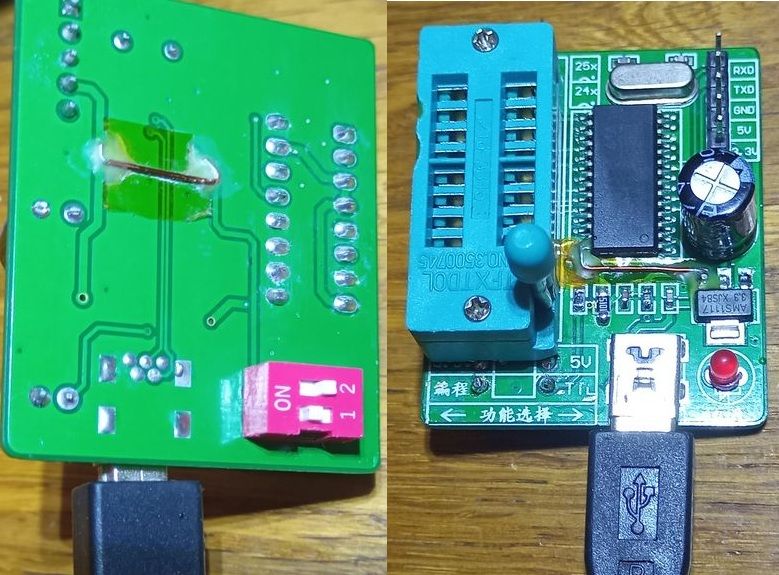
There was a bigger problem with reworking the other programmer from Allegro, which had a 3.3V switch, but it didn't switch anything - it didn't work . The TTL <-> 编程 switch did not work on this circuit either. In addition there were incorrectly soldered capacitors and resistors. After reworking, everything works correctly. The CH341 chip has a 5V supply, and either 3.3V or 5V can be supplied to the programmable chip supply. The TTL option <-> 编程 also works. The 3.3V, 5V power switch works on the principle that when switched to 5V it short-circuits the output to the input of the 3.3V stabiliser. I've checked: some stabilisers draw current when shorted like this, others don't; the one on this board doesn't draw current when shorted like this, so that's why it can be done, unless I'm mistaken?
The conversion of the Chinese junk from Allegro is described in picture 2
Perhaps it will be of use to someone? I will put a decent negative to this Chinese Allegro 3.3V to 5V switch - such a mockery????
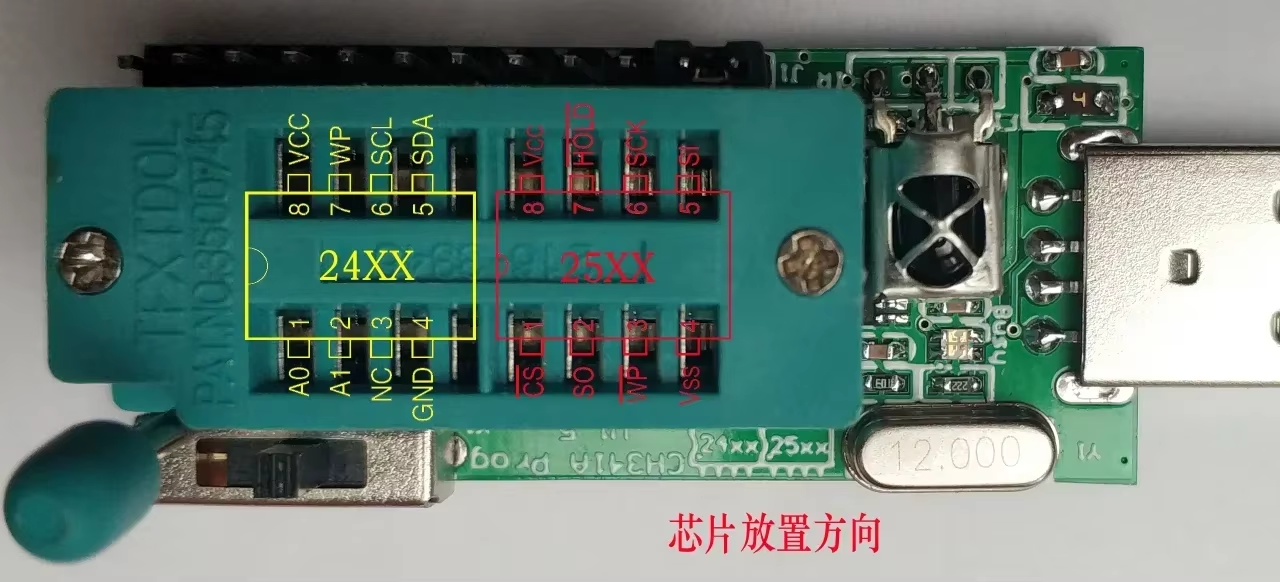
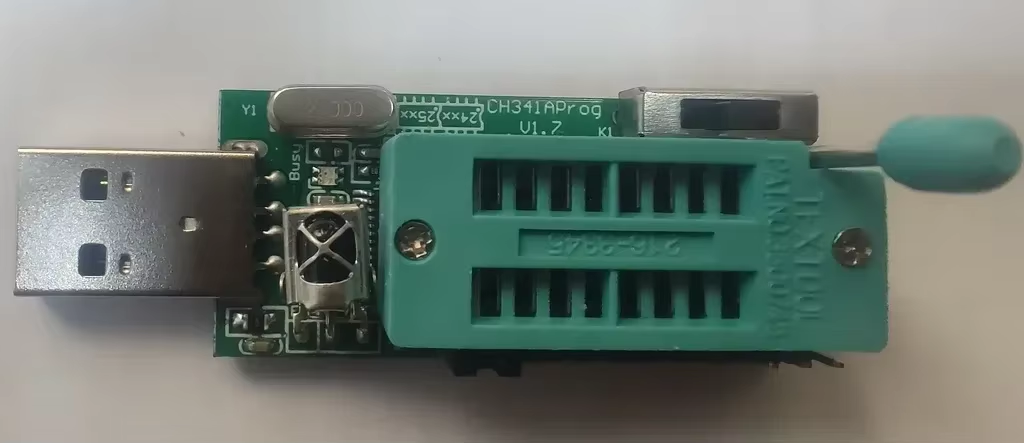
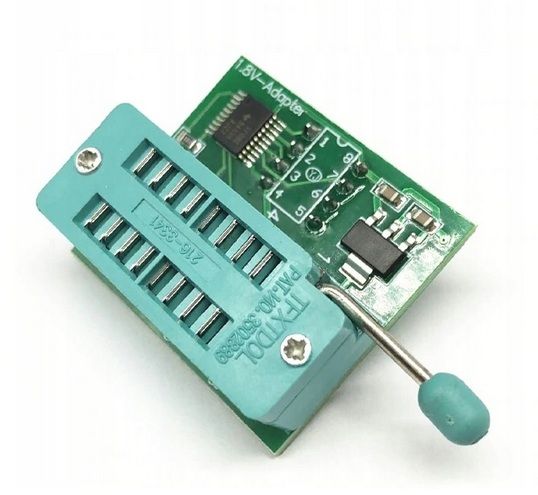
In addition, the ZIF connector is oriented the other way and it is not possible to plug in the adapter for 1.8V because it interferes with the handle, which I finally bent to the side The ZIF connector also cannot be soldered the other way because on the other side there is a switch where the handle would come out. Such a Chinese bubble I made a complaint and he is supposed to refund me for it.
Or do any of the roosters have a different opinion on the CH341 power supply and the spec in the A-film is banging the crap out of it?
I'll still add the turnout of the different dice as in video B. Further failed to write this Microchip 24LC21-1 bone which has an extra Vclg pin on leg 7, supposedly they write that Vpp as in PIC processors???? Unfortunately the PicProm programmer I used to program the PICs for me doesn't work on my laptop's COM port and the desktop one did. Programmers on COM such as the JDM mini, or JDM had resistors on the lines or they didn't have them and didn't fire the EEPROM and the RS232 on the computer had +12V to -12V on the outputs.
Anyway, apart from the Chinese, the Poles are also offering us crap.
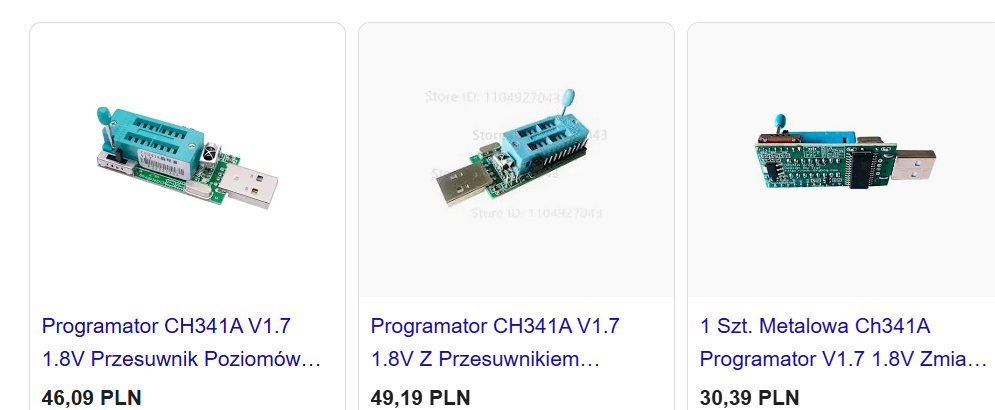
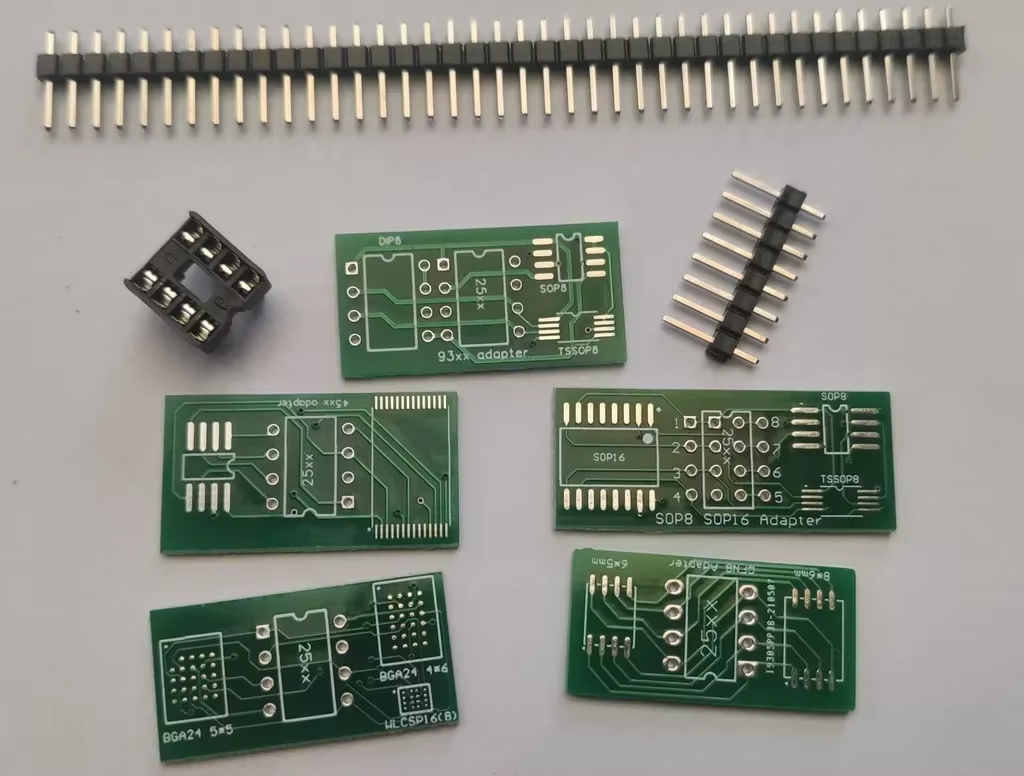
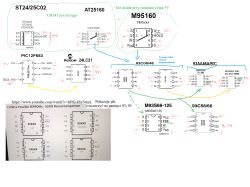
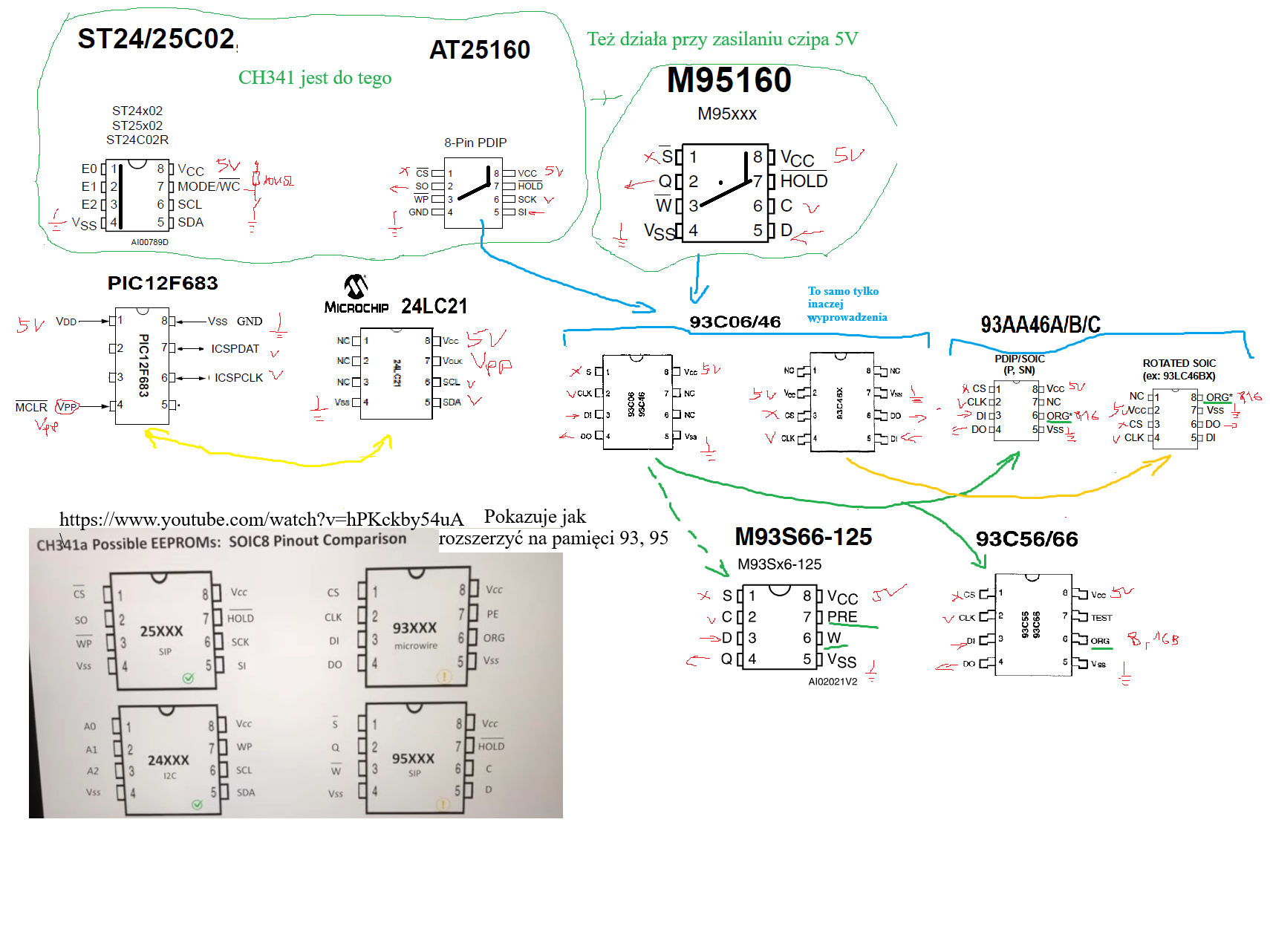
On an Allegro auction the seller msalamon_en offers a junk with an adapter for 93xx/95xx, which does not allow programming of the 93C48X, 93LC46BX and M93S66-125 chips.
Above picture. The first two have pins brought out differently, and the third has an additional analogue control signal. Instead of doing 93xx/95xx on the adapter, there should be two 93xx types there.
The 95xx chip itself can be programmed on a 25xx with the supply voltage increased to 5V. These are the kind of bobbles we are offered by our compatriots on Allegro
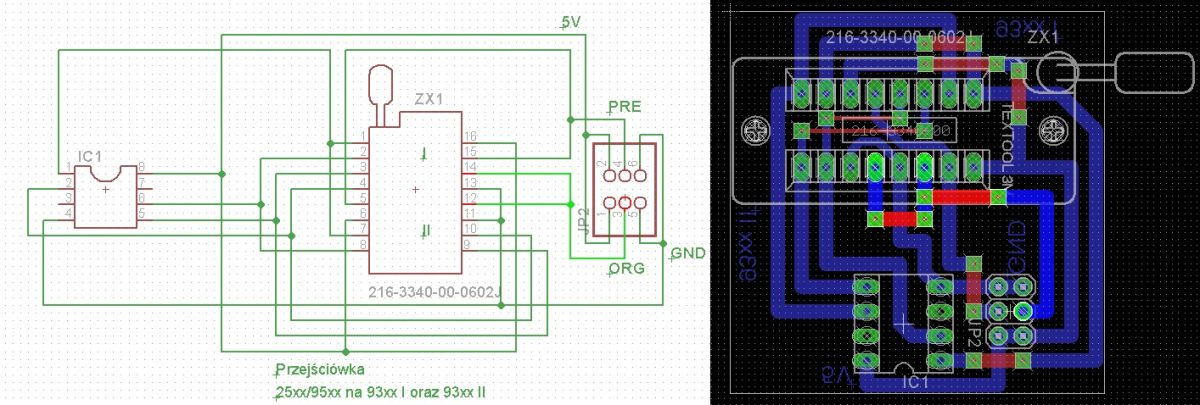
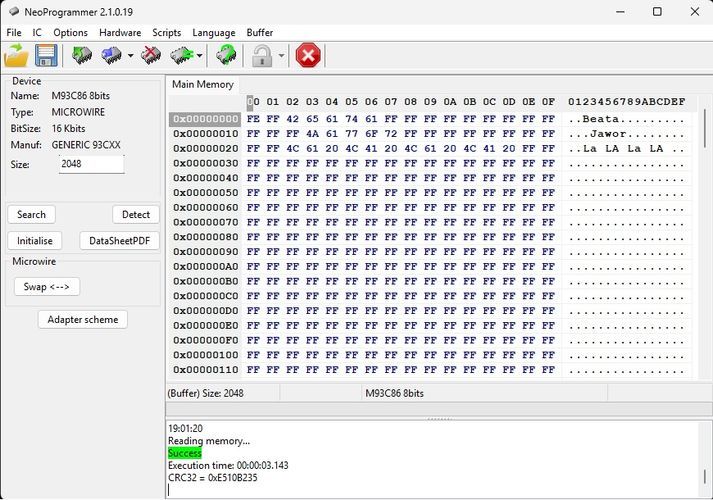
In a few days I will add here a design for an adapter to the CH341 for the two types of 93xx chips with two jumpers to select 8-bit, 16-bit memory organisation and a second jumper to switch W Write Enable as in the M93S66-125 chip, where there are two digital signals W and PRE. In general there should be two jumpers for setting 0-1 on the NC pins: in one version of the 93xx chips these are pins 6, 7, in the other version pins 1, 8. And the adapter itself should provide programming for both versions of the 93xx, why the 95xx there.
Greetings to all yappy and skinny roosters A good rooster is a skinny rooster
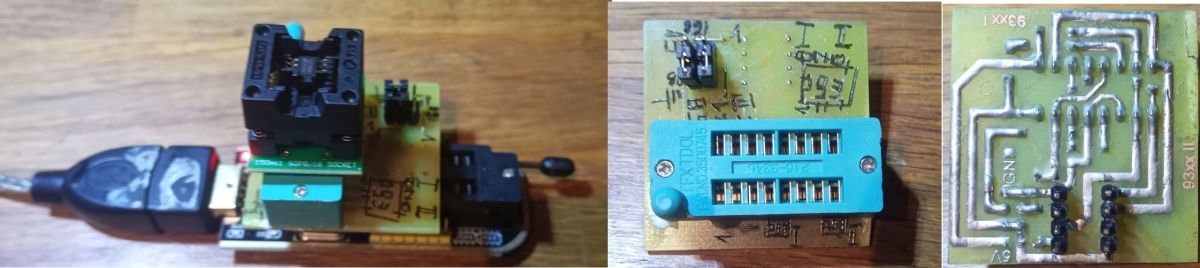
In a bubble from an allegro from the seller "salomon", I still soldered the socket by 180 so that the 1.8V adapter would go in, and a switch to the other side of the board so that the cock from the socket would close. Now the circuit is fully functional.
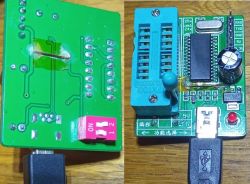
I bought on AliExpress and on Allegro CH341 programmers for my rooster so that it would lather well
and it turned out that they required modifications.
I will therefore describe what I reworked and how.
The first one from AliExpress did not feed 5V to the chip to be programmed, only 3.3V, which did not allow chips such as the M95160 to be programmed. A path was cut and a jumper added that feeds either 3.3V or 5V to the power supply of the programmable chip. The CH341 chip is powered by 5V. In my opinion, no modification is needed to power the CH341 to 3.3V, as everyone is writing about, a specialist in the A-film denounces these lies. But a modification is needed so that either 3.3V or 5V can be applied to the power supply of the programmable bone, he discusses this in movie B.
video A https://www.youtube.com/watch?v=J8-Sh7DjiXw
video B https://www.youtube.com/watch?v=hPKckby54uA
I reworked it as shown in the picture, different from film B, where it permanently gave 5V to the power supply of the programmable chip without switching.
Everything is soldermasked and UV cured. When curing, don't forget to layer and heat, I heated it at 130C.
The lower parts of the pins can be bent and undercut so that they can be soldered directly to 5V, 3.3V and the cut path.
There was a bigger problem with reworking the other programmer from Allegro, which had a 3.3V switch, but it didn't switch anything - it didn't work
. The TTL <-> 编程 switch did not work on this circuit either. In addition there were incorrectly soldered capacitors and resistors. After reworking, everything works correctly. The CH341 chip has a 5V supply, and either 3.3V or 5V can be supplied to the programmable chip supply. The TTL option <-> 编程 also works. The 3.3V, 5V power switch works on the principle that when switched to 5V it short-circuits the output to the input of the 3.3V stabiliser. I've checked: some stabilisers draw current when shorted like this, others don't; the one on this board doesn't draw current when shorted like this, so that's why it can be done, unless I'm mistaken?
The conversion of the Chinese junk from Allegro is described in picture 2
Perhaps it will be of use to someone? I will put a decent negative to this Chinese Allegro
3.3V to 5V switch - such a mockery????
In addition, the ZIF connector is oriented the other way and it is not possible to plug in the adapter for 1.8V because it interferes with the handle, which I finally bent to the side
The ZIF connector also cannot be soldered the other way because on the other side there is a switch where the handle would come out. Such a Chinese bubble I made a complaint and he is supposed to refund me for it.
Or do any of the roosters have a different opinion on the CH341 power supply and the spec in the A-film is banging the crap out of it?
I'll still add the turnout of the different dice as in video B. Further failed to write this Microchip 24LC21-1 bone which has an extra Vclg pin on leg 7, supposedly they write that Vpp as in PIC processors???? Unfortunately the PicProm programmer I used to program the PICs for me doesn't work on my laptop's COM port and the desktop one did. Programmers on COM such as the JDM mini, or JDM had resistors on the lines or they didn't have them and didn't fire the EEPROM and the RS232 on the computer had +12V to -12V on the outputs.
Anyway, apart from the Chinese, the Poles are also offering us crap.
On an Allegro auction the seller msalamon_en offers a junk with an adapter for 93xx/95xx, which does not allow programming of the 93C48X, 93LC46BX and M93S66-125 chips.
Above picture. The first two have pins brought out differently, and the third has an additional analogue control signal. Instead of doing 93xx/95xx on the adapter, there should be two 93xx types there.
The 95xx chip itself can be programmed on a 25xx with the supply voltage increased to 5V. These are the kind of bobbles we are offered by our compatriots on Allegro
In a few days I will add here a design for an adapter to the CH341 for the two types of 93xx chips with two jumpers to select 8-bit, 16-bit memory organisation and a second jumper to switch W Write Enable as in the M93S66-125 chip, where there are two digital signals W and PRE. In general there should be two jumpers for setting 0-1 on the NC pins: in one version of the 93xx chips these are pins 6, 7, in the other version pins 1, 8. And the adapter itself should provide programming for both versions of the 93xx, why the 95xx there.
Greetings to all yappy and skinny roosters
A good rooster is a skinny rooster
In a bubble from an allegro from the seller "salomon", I still soldered the socket by 180 so that the 1.8V adapter would go in, and a switch to the other side of the board so that the cock from the socket would close. Now the circuit is fully functional.
Cool? Ranking DIY

 Not everyone knows Chinese like they know English
  That's why when you write something in Chinese you write it in Polish in parentheses