Hi all,
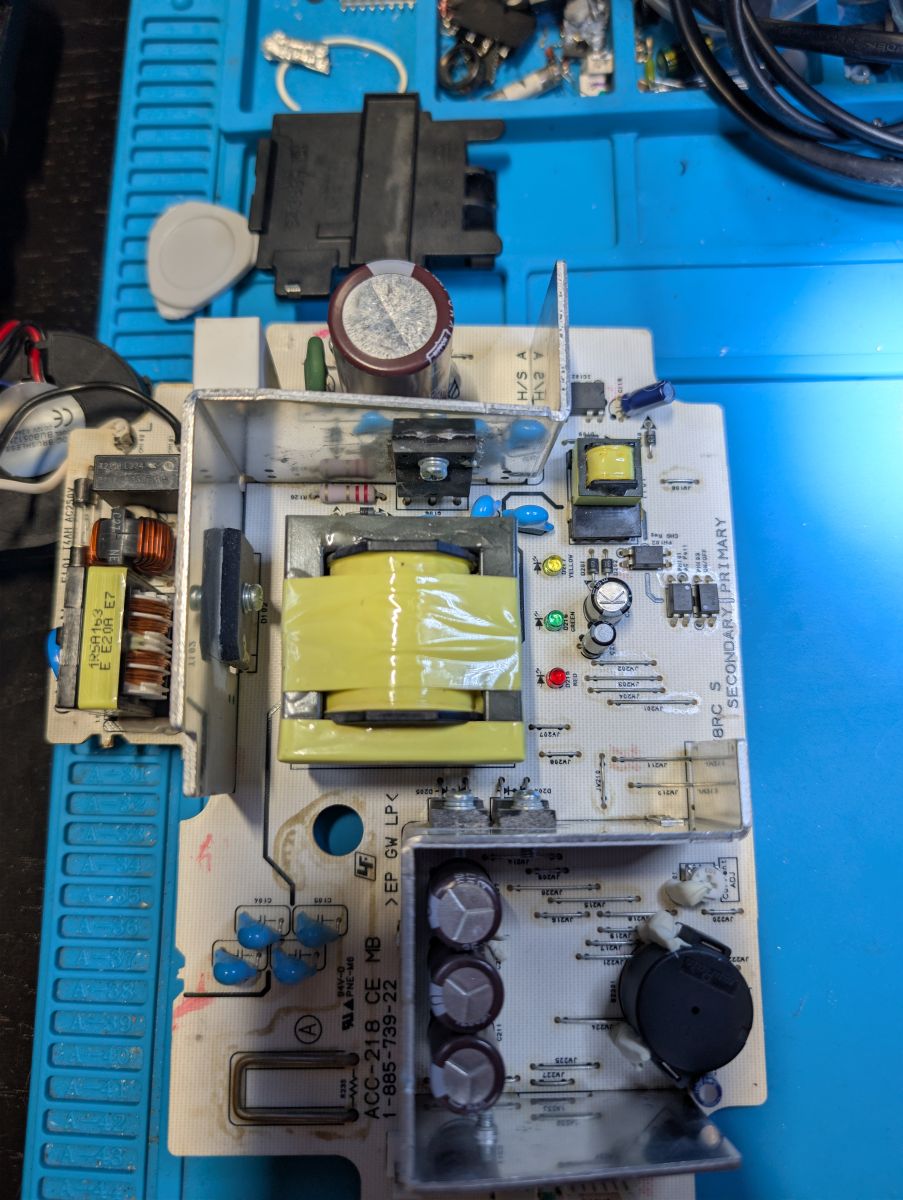
I got a Makita Dual Charger DC18RD sitting here that had visible overvoltage input damage.
Fuses have already been repaired as well as the MOVs.
The first board had the main MOS transistor blown that produces the charger voltage across the big transformer.
I fixed that together with the Source track fusable resistor that was blown and that half is working great since.
The second boards main transistor is fine, because there the Idle circuit ate the overvoltage and the MIP2K2 chip had a hole in the roof.
Hence it also did not blink the LEDs on the secondary side after plugging it in. I since have swapped the MIP2k2 against a new one and also repaired it's source track fusable resistor and since then the secondary side is alive again and is blinking green. But when I plug a battery in to charge it it goes to dail red-green blinky blinky within seconds.
I was wondering why until I tried my only non genuine Makita battery with a chinese board. That did not work either, but kept working on tools. But I then noticed this one would not charge anymore, it was not even recognized as being plugged in. So something fried the comms circuit on this chinese battery board.
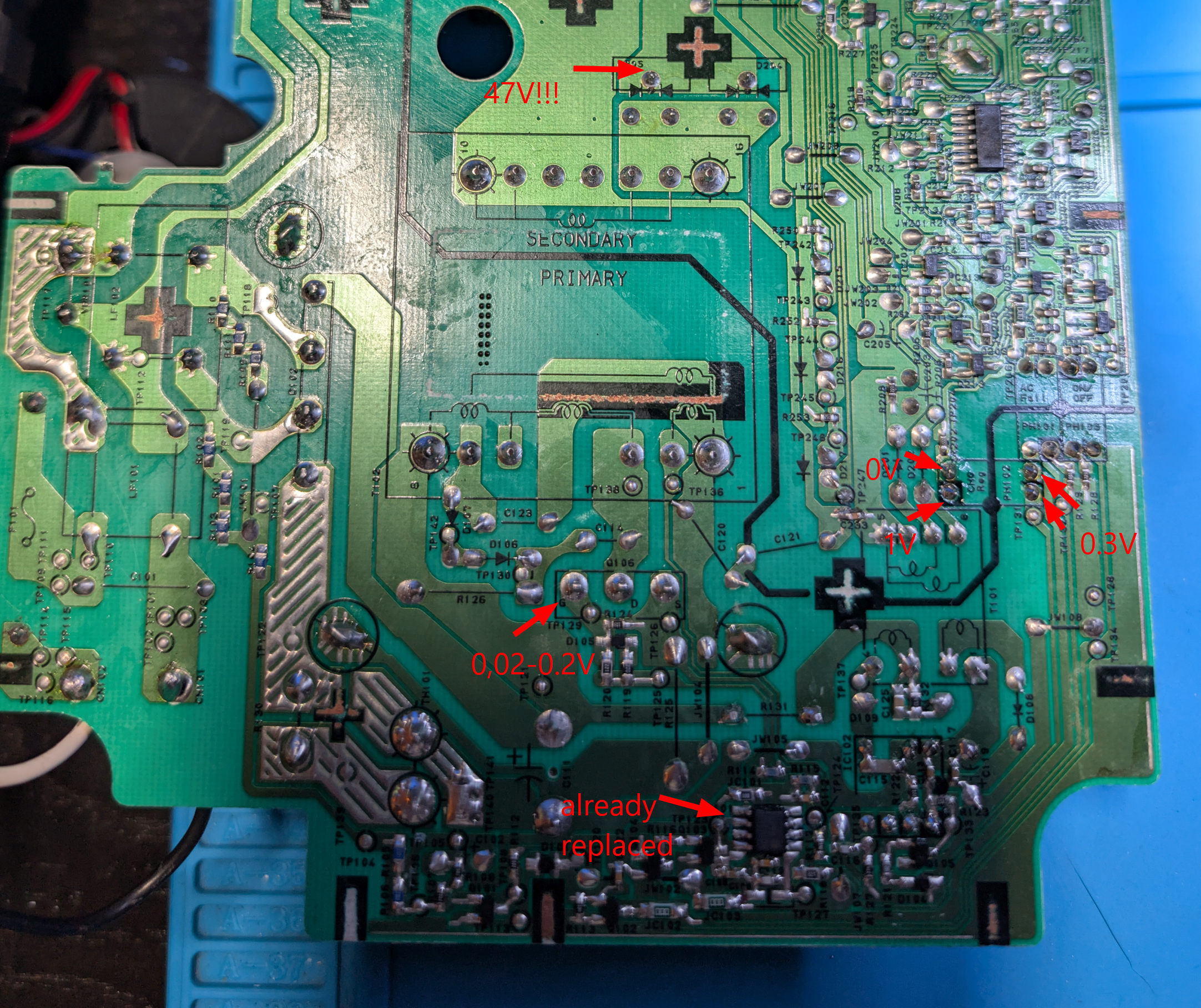
This then led me to measure the secondary side during idle, and I noticed the charge port voltage was sitting at 47 (!!) Volts without anything plugged in. On the good half it's bang zero because nothing is being switched. As it should be.
So the charger fried the chinese battery board with 47V. Made sense. I then started digging and I'm slowly lost for words, I do not understand this.
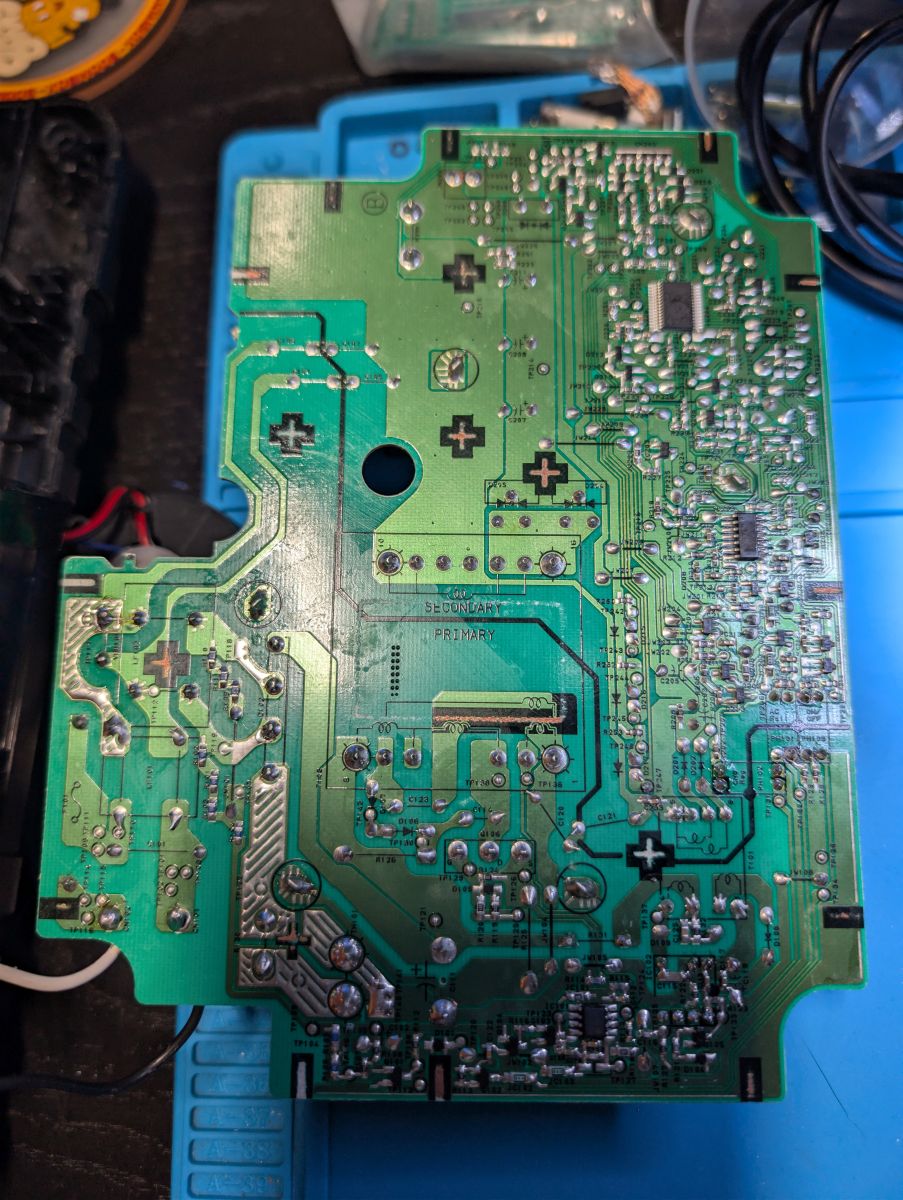
Seondary side itself seems 100% fine control wise. All Diode measure ok, no shorts across capacitors, Diodes blinking means the controller is working, Fan has also has it's voltage.
So the electronics fed by the idle circuitry are fine I believe. Also all windings across the transformers measure identically between good and bad board.
I then turned back to the primary side to understand why it would not stop switching the main transistor. I at some point settled on the main switching IC, so I replaced that. Exact 100% same behavior. So that was not it.
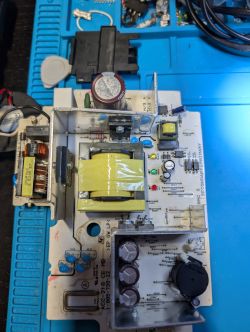
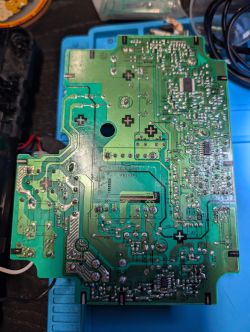
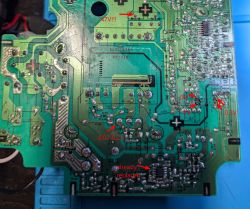
I have marked the only differences I found during live measuring on one screenshot. There are 3 optocoupler in different directions on the board. The AC Fail and On/Off measure identical. But the one labeled 'CHG Reg' (probably for charger regulation, makes sense) measures identical on the photo diode side (1 and 0 volts, so the drop against the photo diode) on both, but the mains side is left with about 0.3V on both pins of the output photo transitor. Great I though, damaged optocoupler. But: Nah. Desoldered it, bench-tested it, it is 100% fine. If I feed the photo diode with 20mA from a lab supply it is low impedance on the output, when I remove the current it goes completely open circuit on the output, as it should be.
So something else prevents proper PWM regulation because the CHG reg line does not go to dead 0.000 as it does on the good board.
But I cannot find it.
Any hints are appreciated. This would be the first Makita charger in my life I could not fix and this would make me very sad haha.
EDIT: More info. Shorted out the output of the opto. Still at 0.3 and not 0. So that is not it. (but with 0.3 on both ends we already know it opens properly so the grounding fails elsewhere.) I also touched one probe of the MM onto the gate. On the good board the frequnecy reads 100Hz. That is exactly rectified mains. Ont he bad board I read 180kHz, which is a super typical switching frequency. So something causes the thing to think it needs to switch.
Added after 3 [hours] 21 [minutes]:
Ok...this is bonkers.
I probed around like a maniac for a couple more hours and finally found that the base voltage of the very first NPN on the high voltage input reacted dodgy.
Then I measured it again. suddenly stable 7.8. Then I measured it again at the negative of the main electrolytic cap. 8.2V. There a direct trace there, there should not be a 0.3V drop.
I then said to myself: ok, let's just resolder stuff now because I am out of ideas.
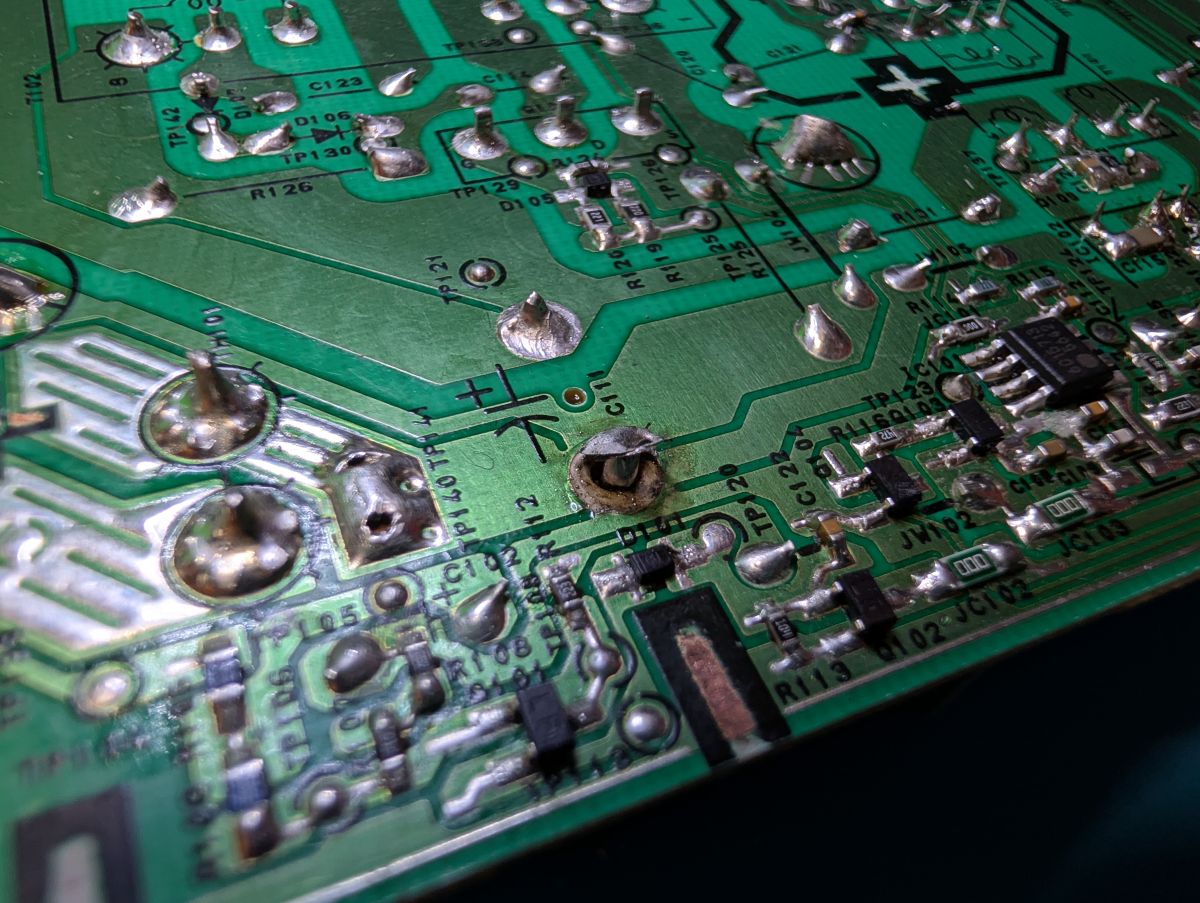
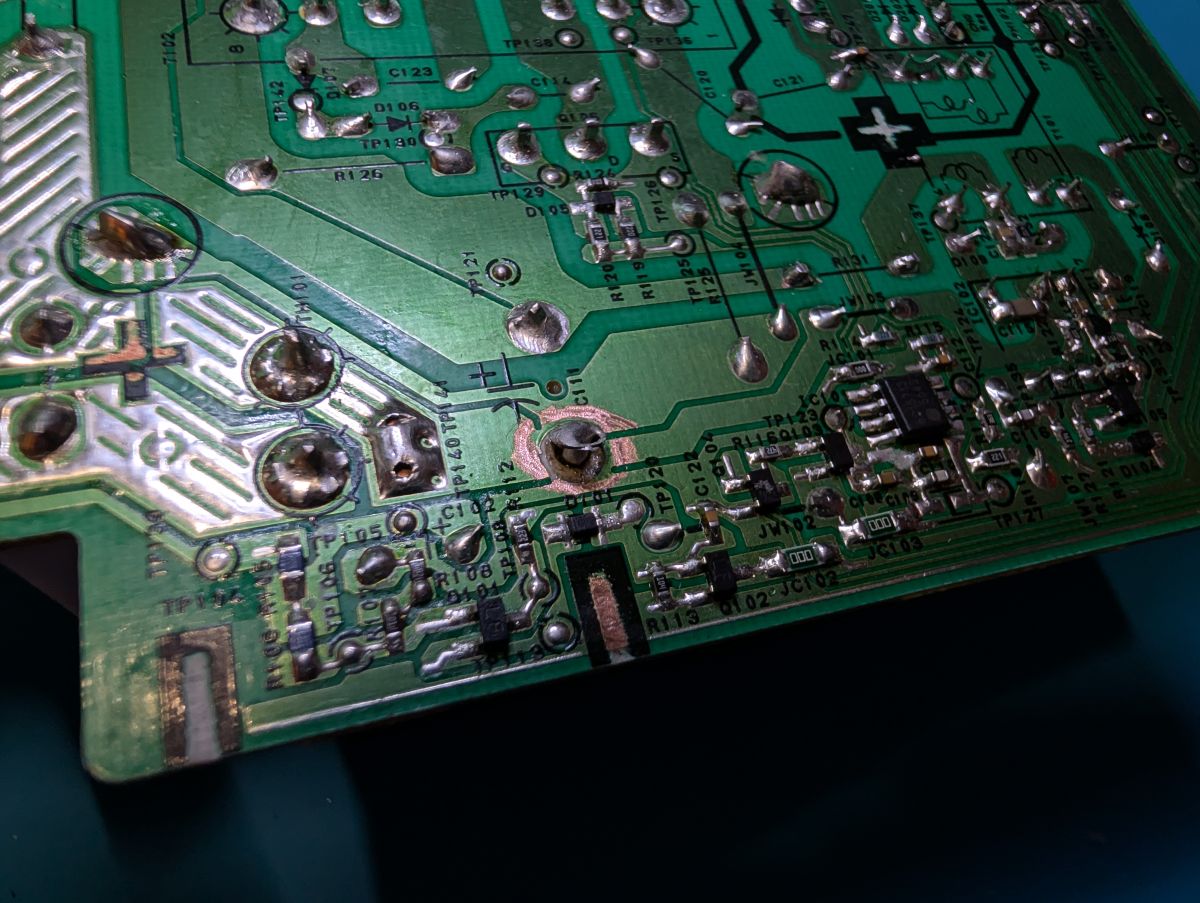
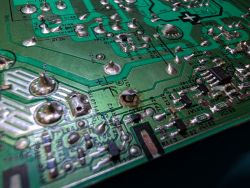
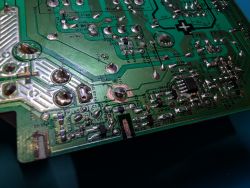
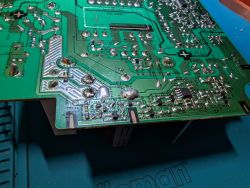
And guess what: the overvoltage had cooked the negative pad off of the main electrolytic cap negative trace. And this trace has a junction to all different points directly where the cap comes through (makes sense as a star point).
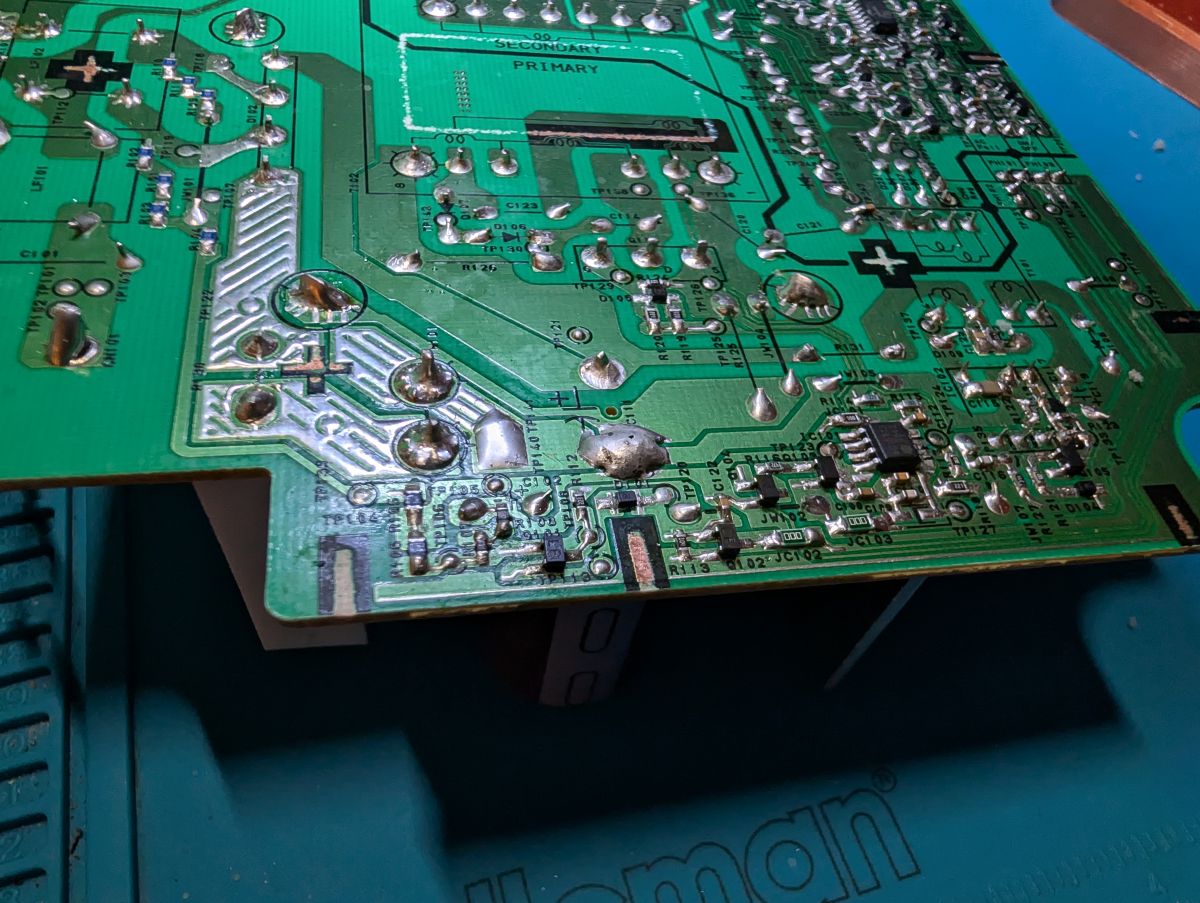
So I ground off the solder mask and refittet the cap+pad with a solid big blob of solder so the star point was reconnected.
And guess what: IT WORKS NOW
As Dave Jones would say: Classic chasing the red herring down the garden path.
Unbelievable.
I got a Makita Dual Charger DC18RD sitting here that had visible overvoltage input damage.
Fuses have already been repaired as well as the MOVs.
The first board had the main MOS transistor blown that produces the charger voltage across the big transformer.
I fixed that together with the Source track fusable resistor that was blown and that half is working great since.
The second boards main transistor is fine, because there the Idle circuit ate the overvoltage and the MIP2K2 chip had a hole in the roof.
Hence it also did not blink the LEDs on the secondary side after plugging it in. I since have swapped the MIP2k2 against a new one and also repaired it's source track fusable resistor and since then the secondary side is alive again and is blinking green. But when I plug a battery in to charge it it goes to dail red-green blinky blinky within seconds.
I was wondering why until I tried my only non genuine Makita battery with a chinese board. That did not work either, but kept working on tools. But I then noticed this one would not charge anymore, it was not even recognized as being plugged in. So something fried the comms circuit on this chinese battery board.
This then led me to measure the secondary side during idle, and I noticed the charge port voltage was sitting at 47 (!!) Volts without anything plugged in. On the good half it's bang zero because nothing is being switched. As it should be.
So the charger fried the chinese battery board with 47V. Made sense. I then started digging and I'm slowly lost for words, I do not understand this.
Seondary side itself seems 100% fine control wise. All Diode measure ok, no shorts across capacitors, Diodes blinking means the controller is working, Fan has also has it's voltage.
So the electronics fed by the idle circuitry are fine I believe. Also all windings across the transformers measure identically between good and bad board.
I then turned back to the primary side to understand why it would not stop switching the main transistor. I at some point settled on the main switching IC, so I replaced that. Exact 100% same behavior. So that was not it.
I have marked the only differences I found during live measuring on one screenshot. There are 3 optocoupler in different directions on the board. The AC Fail and On/Off measure identical. But the one labeled 'CHG Reg' (probably for charger regulation, makes sense) measures identical on the photo diode side (1 and 0 volts, so the drop against the photo diode) on both, but the mains side is left with about 0.3V on both pins of the output photo transitor. Great I though, damaged optocoupler. But: Nah. Desoldered it, bench-tested it, it is 100% fine. If I feed the photo diode with 20mA from a lab supply it is low impedance on the output, when I remove the current it goes completely open circuit on the output, as it should be.
So something else prevents proper PWM regulation because the CHG reg line does not go to dead 0.000 as it does on the good board.
But I cannot find it.
Any hints are appreciated. This would be the first Makita charger in my life I could not fix and this would make me very sad haha.
EDIT: More info. Shorted out the output of the opto. Still at 0.3 and not 0. So that is not it. (but with 0.3 on both ends we already know it opens properly so the grounding fails elsewhere.) I also touched one probe of the MM onto the gate. On the good board the frequnecy reads 100Hz. That is exactly rectified mains. Ont he bad board I read 180kHz, which is a super typical switching frequency. So something causes the thing to think it needs to switch.
Added after 3 [hours] 21 [minutes]:
Ok...this is bonkers.
I probed around like a maniac for a couple more hours and finally found that the base voltage of the very first NPN on the high voltage input reacted dodgy.
Then I measured it again. suddenly stable 7.8. Then I measured it again at the negative of the main electrolytic cap. 8.2V. There a direct trace there, there should not be a 0.3V drop.
I then said to myself: ok, let's just resolder stuff now because I am out of ideas.
And guess what: the overvoltage had cooked the negative pad off of the main electrolytic cap negative trace. And this trace has a junction to all different points directly where the cap comes through (makes sense as a star point).
So I ground off the solder mask and refittet the cap+pad with a solid big blob of solder so the star point was reconnected.
And guess what: IT WORKS NOW
As Dave Jones would say: Classic chasing the red herring down the garden path.
Unbelievable.